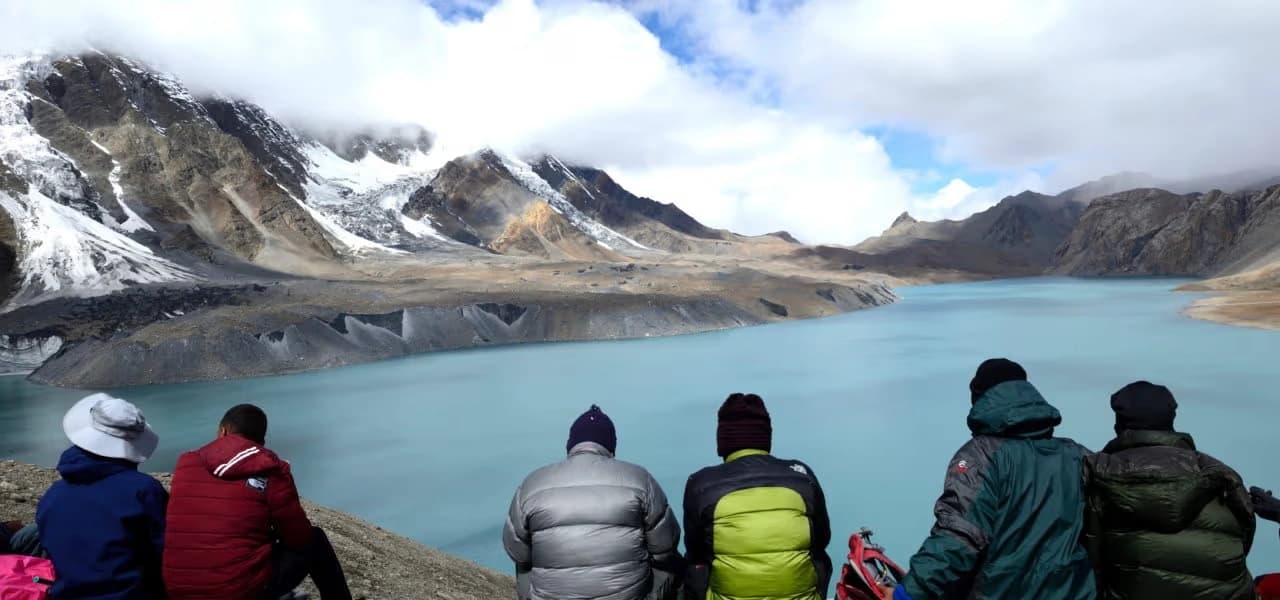
Nepal in November is the heart of the autumn trekking season, offering dry weather, stable trails, low rainfall, and some of the clearest Himalayan visibility of the year. The post-monsoon atmosphere creates excellent conditions across Kathmandu, Pokhara, the Everest region, Annapurna, Manaslu, Langtang, and Upper Mustang, while temperatures become progressively colder with elevation. Popular routes such as Everest Base Camp, Annapurna Circuit, Annapurna Base Camp, Manaslu Circuit, Langtang Valley, and Upper Mustang remain accessible, although high-altitude passes can receive early snow and nights above 4,000 meters can fall well below freezing. November also brings peak trekking crowds, busy teahouses, and greater demand for domestic flights and mountain accommodation.
Planning a November trip to Nepal requires more than choosing a trekking route. Trekkers need to match the itinerary with altitude, fitness, available days, and cold-weather tolerance; prepare winter-grade clothing and equipment; understand acclimatization and altitude-sickness precautions; arrange conservation-area or restricted-area permits; and account for guide requirements on routes such as Manaslu and Upper Mustang. Advance planning is particularly important for Everest-region flights through Manthali Airport, teahouse availability, and popular routes during the busiest weeks of the month. This guide brings together Nepal's November weather and temperatures, rainfall and snowfall, mountain visibility, route-specific trekking conditions, trail and crowd conditions, packing requirements, permits, altitude preparation, flights, accommodation, and practical planning advice in one complete travel guide.
What Is Nepal's Weather Like in November?
November delivers Nepal's driest, clearest, and most stable weather of the year. The monsoon retreats by late September, and by November the atmosphere has shed its humidity. Daytime skies stay largely cloudless across the mid-hills and high Himalaya, while overnight temperatures drop sharply at altitude as winter approaches.
Kathmandu and Pokhara experience warm, dry days and cool evenings during this month. In the mountains, the same dry air that produces clear views also strips away the moisture that would otherwise trap heat overnight, so temperature swings between day and night become more extreme the higher you climb. This combination, dry trails plus a wide day-night temperature range, defines almost every planning decision for a November trek in Nepal.
What Temperatures Can You Expect Across Nepal in November?
Temperatures in November range from a mild 18°C to 25°C in Kathmandu's daytime to below -15°C at night above 5,000 meters. Elevation drives the swing far more than the calendar date does.
In Kathmandu (1,400m), daytime highs run between 18°C and 25°C, dropping to around 7°C after dark. Pokhara, at a similar elevation, tracks close behind. Once you climb into trekking territory, the numbers shift fast:
Lukla and Phakding (2,600m–2,800m): daytime highs of 6°C to 12°C, nights of 0°C to 4°C
Namche Bazaar and Tengboche (3,400m–3,800m): daytime highs of -3°C to 5°C, nights of -8°C to -12°C
Dingboche and Lobuche (4,400m–4,900m): daytime highs of -5°C to 0°C, nights of -12°C to -18°C
Gorak Shep and Kala Patthar (5,140m–5,545m): daytime highs of -5°C to -10°C, nights of -15°C to -20°C by late November
What most people overlook is how fast the drop happens once the sun goes behind a ridge. A comfortable afternoon at a teahouse can turn into a sub-zero evening within the hour, well before dinner. Early-November trekkers get noticeably milder nights than late-November trekkers; the difference between a November 5 departure and a November 25 departure at Base Camp can be five degrees or more.
How Much Rain and Snow in Nepal Can You Expect in November?
November carries the lowest rainfall of any trekking month in Nepal, with most regions recording only one or two days of light precipitation across the entire month. The southwest monsoon has withdrawn completely by early October, and the winter westerly systems that bring snow to the high passes typically do not arrive in force until December.
Snow does appear, but it stays confined to elevations above roughly 4,500m and usually falls as a light dusting rather than an accumulating storm. High passes such as Thorong La on the Annapurna Circuit and the approach to Larkya La on the Manaslu Circuit can pick up a fresh layer overnight, which typically melts or gets packed down by midday sun. In real-world use, this means trail conditions in November stay firm and dry underfoot for the vast majority of the trek, a sharp contrast to the slick, muddy trails of September or the deeper snowpack of January and February.
How Clear Are the Mountain Views of Nepal in November?
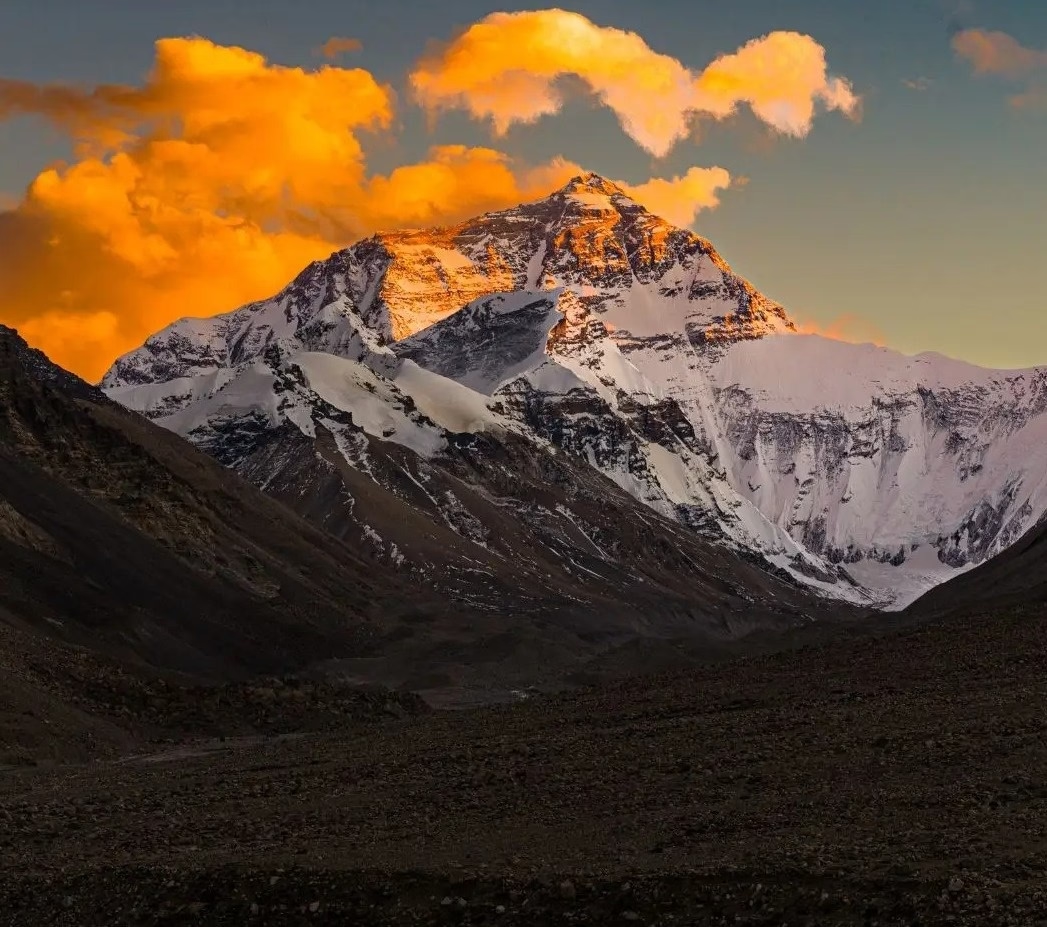
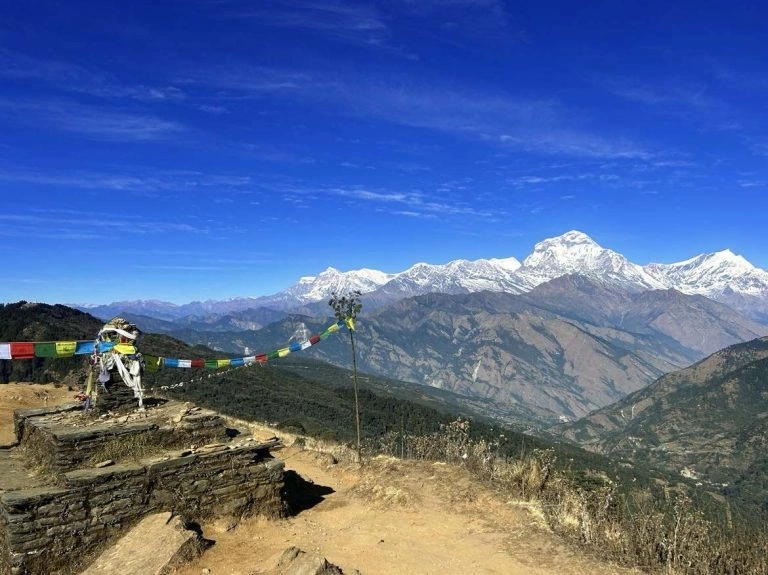
Mountain views in November rank among the clearest of the year, with dry air producing unobstructed sightlines to peaks 50 kilometers or more away on most mornings. Humidity, haze, and monsoon cloud cover, the three factors that most commonly block mountain views during other seasons, are largely absent.
Visibility tends to peak in the early morning before thermal winds pick up moisture and dust in the afternoon. Trekkers who reach viewpoints such as Kala Patthar, Poon Hill, or the Larkya La pass before 9 a.m. get the sharpest results. Afternoon haze can build in the lower valleys by December, but through November the pattern holds: clear mornings, gradually softening light by early afternoon, and near-guaranteed sunrise and sunset views on peaks like Ama Dablam, Machhapuchhre, and Dhaulagiri.
Which Treks in Nepal Are Best in November?
The best treks in Nepal for November are Everest Base Camp, the Annapurna Circuit, Annapurna Base Camp, the Manaslu Circuit, the Langtang Valley, and Upper Mustang, each suited to a different combination of altitude, difficulty, and crowd tolerance. Every major trekking route in the country runs in good condition this month; the real decision comes down to how much solitude, technical challenge, or cultural depth you want.
Is the Everest Base Camp Trek Suitable in November?
Yes, Everest Base Camp is highly suitable in November and ranks among the two best months of the year for the trek, alongside October. Trails stay dry, Lukla flights (operating from Manthali Airport in Ramechhap through the peak season) run with fewer weather delays than in the cloudier monsoon shoulder months, and views of Everest, Lhotse, Nuptse, and Ama Dablam stay consistently open.
The trade-off is cold. Nighttime temperatures at Gorak Shep and Dingboche regularly fall between -15°C and -20°C by late November, so a trek that starts in the first week of the month sits noticeably more comfortable than one starting in the last week. Trekkers with limited cold tolerance or a fear of early-winter conditions do better booking for the first half of November rather than the second. The route requires no technical climbing skill, only sustained aerobic fitness and a properly paced acclimatization schedule, since altitude sickness remains the primary risk on this trek regardless of season.
Is the Annapurna Circuit Trek Suitable in November?
Yes, the Annapurna Circuit is well suited to November, though the Thorong La pass (5,416m) demands careful weather judgment in the back half of the month. The circuit crosses a wider range of elevation and climate zones than any other classic trek in Nepal, from subtropical rice terraces near Besisahar to alpine desert on the Mustang side of the pass.
Early snowfall on Thorong La becomes more likely as November progresses, and a heavier dump can close the pass for a day or two until porters and lodge owners pack down a route. Trekkers who build one buffer day into their itinerary near High Camp or Thorong Phedi rarely lose their crossing window entirely. Below the pass, conditions stay excellent: the Marsyangdi and Kali Gandaki valleys run dry, teahouses operate at full capacity, and the Manang side offers some of the clearest views of Annapurna II, III, and Gangapurna available anywhere on the route.
Is the Annapurna Base Camp Trek Suitable in November?
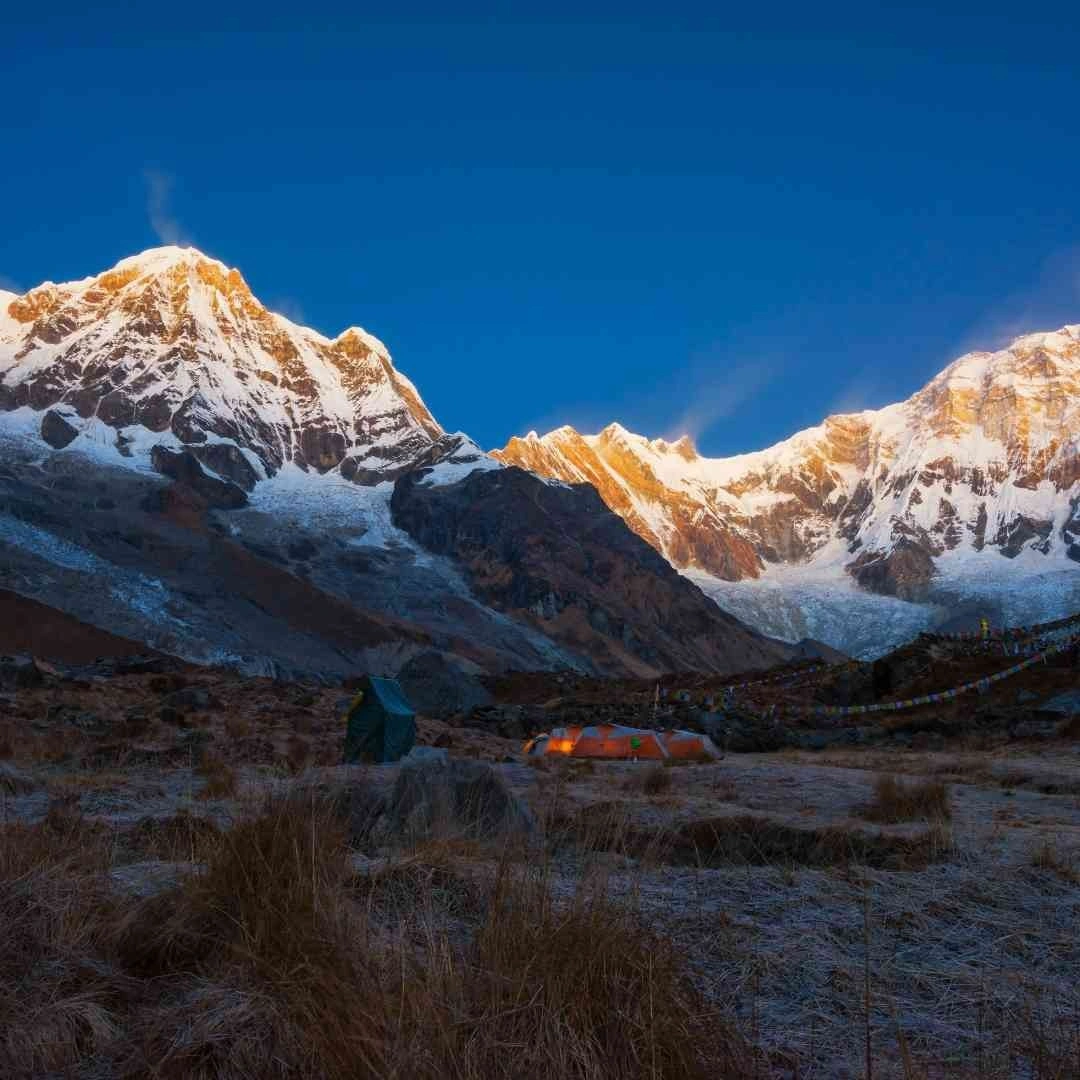
Yes, Annapurna Base Camp is one of the most reliable November treks in Nepal, combining moderate altitude with consistently stable weather. Topping out at 4,130m, ABC sits well below the altitude thresholds that make Everest or Manaslu risky for less-acclimatized trekkers, which keeps the route accessible to a broader range of fitness levels.
The trail passes through rhododendron and bamboo forest before opening into the natural amphitheater at Base Camp, ringed by Annapurna I, Machhapuchhre, Hiunchuli, and Gangapurna. November's dry trail conditions and clear skies make this amphitheater view a near-certainty on a standard 7- to 8-day itinerary, something that isn't guaranteed during the hazier pre-monsoon months. Nights at Base Camp itself drop to around -5°C to -10°C, cold but manageable with a standard four-season sleeping bag.
Is the Manaslu Circuit Trek Suitable in November?
Yes, the Manaslu Circuit runs in excellent condition in November, which also happens to be its highest-fee period under Nepal's restricted area permit system. The route circles the eighth-highest mountain in the world through a conservation area that still sees a fraction of Everest or Annapurna's foot traffic, giving it a quieter, more remote feel even at the peak of trekking season.
The Larkya La pass (5,160m) crossing benefits from the same dry-trail conditions as Thorong La, with early-morning starts advisable to avoid afternoon wind on the pass. Because Manaslu is a restricted area, solo trekking is not permitted; every trekker needs a licensed guide and a minimum group size of two, arranged through a registered Nepali trekking agency. Permit costs run higher from September through November than in the December-to-August window, a detail worth factoring into a November Manaslu budget.
Is the Langtang Valley Trek Suitable in November?
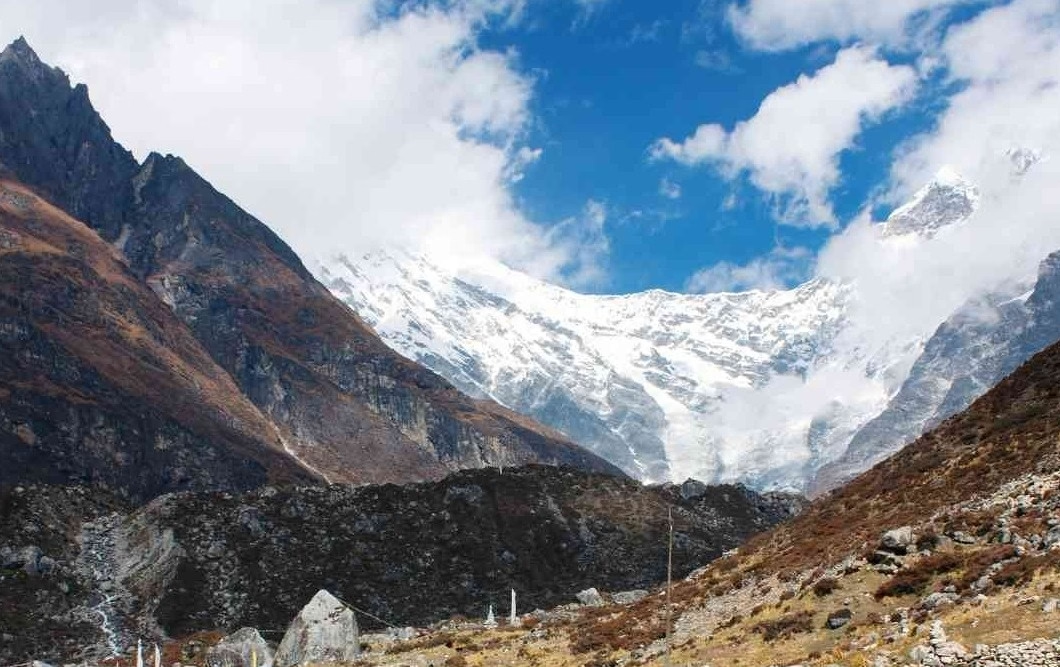
Yes, Langtang Valley is well suited to November and offers one of the shortest access times to high-Himalayan scenery of any trek in Nepal, reachable from Kathmandu by road in a single day. The valley sits closer to the capital than Everest or Annapurna, which makes it a strong choice for trekkers with 7 to 10 days rather than the two-plus weeks that EBC or the Annapurna Circuit typically demand.
Langtang also carries genuine cultural weight: the valley's Tamang communities and the rebuilt village of Langtang, destroyed in the 2015 earthquake, give the trek a lived-in, human dimension that pure mountain-scenery routes don't always offer. November trail conditions stay dry and firm, and views of Langtang Lirung (7,227m) from Kyanjin Gompa rank among the most accessible high-mountain panoramas in the country for the amount of walking required.
Is the Upper Mustang Trek Suitable in November?
Yes, Upper Mustang suits November trekkers particularly well, since the region sits in the rain shadow of the Annapurna and Dhaulagiri ranges and receives minimal precipitation in any season. This high desert landscape of eroded canyons, whitewashed monasteries, and the walled former royal capital of Lo Manthang delivers Tibetan-plateau scenery unlike anywhere else on Nepal's standard trekking circuit.
November days stay cool and dry, though wind picks up noticeably in the afternoons across the open, treeless terrain, a factor worth building into daily start times. Upper Mustang is a restricted area requiring a special permit, a licensed guide, and a minimum of two trekkers per group, the same structural requirements as Manaslu. Because the region's dry climate holds steady across most of the year, the case for trekking Mustang specifically in November comes down more to combining it with better-known autumn routes than to any unique November-only advantage.
What Are the Benefits of Trekking in Nepal in November?
Trekking in Nepal in November delivers four core benefits: stable dry weather, the clearest mountain visibility of the year, firm and predictable trail conditions, and a fully operational teahouse and lodge network at peak capacity. These four factors compound: dry weather keeps trails firm, firm trails keep pace times predictable, and predictable pace times make multi-day itineraries easier to plan around lodge availability.
Why Is November Considered a Peak Trekking Season in Nepal?
November holds peak-season status because it combines the driest weather window with the clearest mountain visibility, right after the monsoon clears and just before winter cold and snow set in. This narrow overlap, roughly mid-October through late November, produces conditions that neither the pre-monsoon spring season nor the deep winter months can match simultaneously.
Spring treks (March to May) offer warmer nights and rhododendron blooms but carry more haze and a higher chance of afternoon cloud buildup obscuring peaks. Winter treks (December to February) offer maximum solitude but bring serious cold, closed high passes, and reduced teahouse operations at higher elevations. November threads the gap: warm enough to keep infrastructure running at full capacity, dry enough to guarantee views, and early enough in the cold season to avoid the heaviest snow.
How Do Trail Conditions Affect November Treks in Nepal?
Trail conditions in November stay firm, dry, and predictable across nearly every major route, cutting the risk of slips, mud, and leech encounters that define the monsoon months to almost zero. Firm ground also means more consistent daily walking times, which matters directly for itinerary planning and acclimatization scheduling.
The one exception sits above roughly 4,500m, where early snow can dust high passes overnight. This snow rarely accumulates into a hazard on its own; the risk comes from ice forming on packed sections during cold nights, particularly on shaded, north-facing switchbacks near passes like Thorong La and Larkya La. A trekking pole and microspikes (or crampons for higher, icier stretches) address this risk directly and belong in every November high-pass packing list.
How Busy Are Nepal's Trekking Routes in November?
Nepal's major trekking routes reach their highest annual foot traffic in November, with Everest Base Camp and the Annapurna Circuit experiencing the most crowding of any month. Teahouses along the standard Everest Base Camp and Annapurna Circuit routes routinely fill by early-to-mid afternoon during the second and third weeks of the month, the period that overlaps with the largest number of international trekkers.
Three practical consequences follow directly from this crowding:
Book teahouse rooms one to two days ahead rather than arriving and hoping for space
Expect queues at popular viewpoints such as Kala Patthar and Poon Hill around sunrise
Choose less-trafficked alternatives, such as Manaslu, Langtang, or the Annapurna Base Camp route via Ghandruk, for a quieter experience with comparable weather
Trekkers who prioritize solitude over convenience often shift toward Manaslu or the Kanchenjunga region, both of which see a fraction of Everest's or Annapurna's November traffic while offering equally clear November skies.
What Mountain Views in Nepal Can You Expect in November?
November trekkers can expect close, unobstructed views of Everest, Lhotse, Ama Dablam, Annapurna I through IV, Machhapuchhre, Dhaulagiri, Manaslu, and Langtang Lirung, depending on the route chosen. Each region delivers a signature panorama: Kala Patthar for Everest and its neighboring 8,000m peaks, Poon Hill for the Annapurna and Dhaulagiri massifs at sunrise, and Larkya La for a 360-degree sweep that includes Manaslu, Himlung Himal, and Cheo Himal.
What competitors' guides frequently miss is the timing detail that determines whether these views actually materialize: cloud buildup, when it happens at all in November, tends to arrive from the south by early afternoon. Scheduling summit or viewpoint pushes for sunrise or mid-morning, rather than afternoon, removes most of the residual risk that November's otherwise reliable clarity still carries.
What Should You Pack for Trekking in Nepal in November?
Packing for a November trek in Nepal requires a layering system built around a 30 to 40°C daily temperature swing between valley floors and high camps, plus dedicated high-altitude gear for any route crossing 4,000m. The core mistake trekkers make is packing for the daytime warmth they'll feel walking and underestimating the cold that hits the moment they stop moving.
What Clothing Is Suitable for Nepal's November Temperatures?
A three-layer system, a moisture-wicking base layer, an insulating mid-layer, and a windproof/waterproof outer shell, covers the full range of November conditions from Kathmandu's warm afternoons to sub-zero high-camp nights. Cotton has no place in this system; it holds sweat and loses insulating value the moment it gets damp, which becomes dangerous rather than merely uncomfortable above 4,000m.
Core clothing list for a November trek:
Merino wool or synthetic base layers, top and bottom, for daily wear
A mid-weight fleece or synthetic insulating jacket for evenings and rest stops
A down jacket rated to at least -15°C for high-altitude sections above 4,000m
A waterproof, windproof outer shell to block the wind that consistently picks up on exposed ridgelines
Trekking trousers with a fleece-lined or thermal layer for cold mornings
Wool hiking socks, plus a warm hat, neck gaiter, and insulated gloves for camp and pass crossings
Do You Need Winter Gear for High-Altitude Treks?
Yes, any November trek that crosses 4,000m requires genuine winter-grade gear, not three-season equipment, because nighttime temperatures at that elevation regularly fall below -15°C. This applies directly to Everest Base Camp, the Annapurna Circuit's Thorong La crossing, the Manaslu Circuit's Larkya La crossing, and Annapurna Base Camp.
A common mistake first-time Himalayan trekkers make is renting a three-season sleeping bag rated to 0°C or -5°C because it's cheaper in Kathmandu's gear shops. That bag leaves a genuine cold-injury risk at Gorak Shep or Thorong Phedi in November. A sleeping bag rated to at least -15°C to -20°C, paired with a sleeping bag liner for added warmth and hygiene, matches the actual overnight lows these routes see this month.
What Trekking Equipment Is Essential in November?
Beyond clothing, five equipment categories are essential for a November trek: footwear, trekking poles, a headlamp, a water treatment system, and a first-aid kit built around altitude-specific needs. Each addresses a specific, recurring failure point on Himalayan trails.
Waterproof, broken-in trekking boots with ankle support, not new boots straight out of the box
Adjustable trekking poles for the descent-heavy stretches that cause the most knee strain
A headlamp with spare batteries, since sunset arrives by 5:30 p.m. in November and early starts before dawn are common on summit-push days
A water purification method (tablets, UV pen, or filter) rather than relying solely on bottled water
A basic altitude-aware first-aid kit including Diamox (acetazolamide) after consultation with a doctor, blister treatment, and any personal medication
What Should You Know Before Visiting Nepal in November?
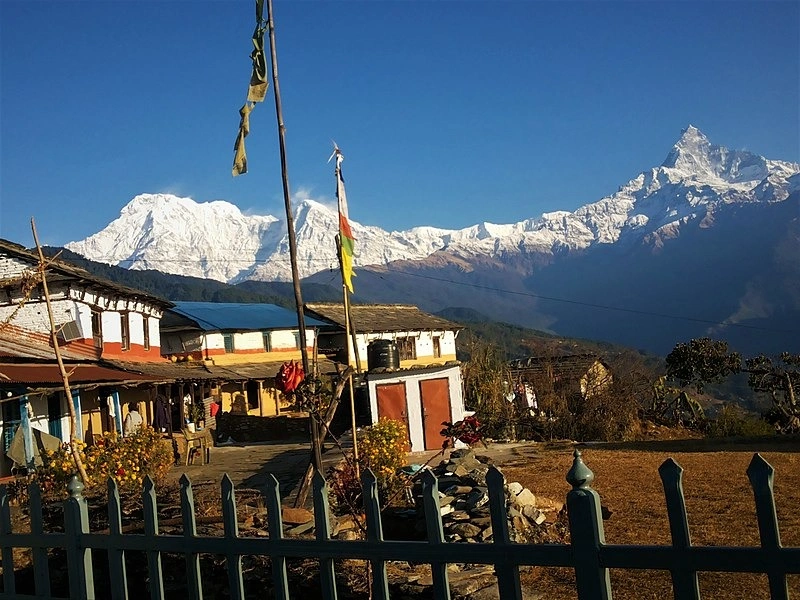
Before visiting Nepal in November, trekkers need to secure the correct permits, prepare a realistic acclimatization schedule, plan around peak-season crowding, and book flights and key teahouses in advance. These four items cause the majority of avoidable problems on November treks, far more often than weather or fitness.
What Trekking Permits Do You Need in November?
Permit requirements in Nepal vary by region: conservation area permits and TIMS cards for popular routes, and restricted area permits for border regions like Manaslu and Upper Mustang. Under current Nepal Tourism Board (NTB) regulations, independent and solo trekking is strictly illegal on most major routes, including Annapurna, Langtang, Manaslu, and Upper Mustang, where hiring a licensed guide through a registered agency is mandatory. All permits for these routes must be processed through an authorized agency.
Standard permit costs for foreign nationals, per current government fee schedules:
Annapurna Conservation Area Permit (ACAP): NPR 3,000, required for the Annapurna Circuit and Annapurna Base Camp
Sagarmatha National Park entry permit: NPR 3,000, required for Everest Base Camp
Khumbu Pasang Lhamu Rural Municipality entry fee: NPR 3,000, required in place of the TIMS card for the Everest region specifically
Langtang National Park permit: NPR 3,000
TIMS card: Flat rate of NPR 2,000 for all non-SAARC foreign nationals, obtainable exclusively through a registered trekking agency when hiring a mandatory guide
Manaslu Restricted Area Permit: USD 100 for the first 7 days in the September-to-November window, plus USD 15 per additional day, on top of Manaslu Conservation Area Permit and ACAP fees of NPR 3,000 each
Upper Mustang Restricted Area Permit: USD 500 for the first 10 days, plus USD 50 per additional day
Restricted area permits for Manaslu, Upper Mustang, Tsum Valley, and Upper Dolpo carry two additional requirements: a minimum group size of two trekkers and a mandatory licensed guide. Solo trekking is strictly prohibited in these regions.
The Everest Exception: The Khumbu region operates under local government authority via the Khumbu Pasang Lhamu Rural Municipality. It does not enforce the NTB guide mandate or require a TIMS card, making the Everest region the only major trekking area in Nepal where independent and solo trekking remains legally viable.
What Altitude Challenges Should You Prepare For?
Altitude sickness, not cold or fitness, represents the leading cause of trek termination on Nepal's high routes, and it strikes regardless of age or athletic background. Above roughly 2,500m, the body needs time to adjust to falling oxygen levels, and ignoring that timeline causes the majority of cut-short treks in the Everest, Annapurna, and Manaslu regions.
A standard, well-designed itinerary builds in dedicated acclimatization days, typically at Namche Bazaar and Dingboche on the EBC route, or at Manang on the Annapurna Circuit, rather than pushing straight to altitude. The rule that holds across every major medical guideline is simple: above 3,000m, daily sleeping elevation should not increase by more than 300 to 500m, with a rest day scheduled every 3 to 4 days of ascent. Symptoms to treat as a stop signal, not something to push through, include persistent headache, nausea, loss of appetite, and disturbed sleep that doesn't improve with rest.
How Should You Prepare for Crowded Tea Houses and Trails in November?
Preparing for November's crowds means booking accommodation ahead through a trekking agency, starting daily walks early to beat trail bottlenecks, and building flexibility into the itinerary for delayed room availability. Waiting until arrival at a teahouse to secure a room during the second and third weeks of November routinely results in a colder, less comfortable overflow room or a longer walk to the next village.
Guided treks booked through an established Nepali agency typically have rooms reserved ahead of the trekking group's arrival at each stop, removing this friction entirely. For those trekking the Everest region, the only major route where independent trekking without a guide remains legal,starting each day's walk by 7 a.m. is essential to secure a teahouse room before the afternoon rush and to catch mountain views before midday clouds build.
What Travel and Accommodation Arrangements Should You Book Early?
International flights into Kathmandu, domestic Lukla or Manthali flights for Everest-region treks, and teahouse bookings for the peak second and third weeks of November all require advance arrangement, ideally two to three months ahead. November's status as Nepal's single busiest trekking month means every part of this chain fills up faster than in shoulder-season months.
Lukla flights, which now depart from Manthali Airport in Ramechhap during the main season, face particularly tight capacity in November; delays from weather or overbooking can cascade into missed trekking days if no buffer is built into the schedule. A minimum two-day buffer around any Lukla flight, on both the outbound and return legs, protects the rest of a fixed-length itinerary from a single weather delay.
How Can Nepal Intrepid Treks Help You Plan Nepal in November?
Nepal Intrepid Treks & Expedition Pvt. Ltd., a Nepal-based trekking company founded under the leadership of Lal Gurung, handles the permit applications, guide arrangements, and teahouse bookings that a well-timed November trek depends on. Since permits for restricted regions like Manaslu and Upper Mustang must go through a registered agency by law, and since peak-season accommodation fills fastest in the exact weeks November trekkers most want to travel, working with a locally based operator removes the two biggest points of friction from the planning process.
Our guides work these routes through the same November conditions covered throughout this guide: the Thorong La snow risk on the Annapurna Circuit, the Lukla flight bottleneck for Everest Base Camp, and the acclimatization pacing that prevents altitude sickness from ending a trek early. That local, on-the-ground familiarity with how each route actually behaves in November, rather than how it behaves in general, is what turns a good itinerary into one that survives contact with the trail.
Can Nepal Intrepid Treks Arrange a November Trek in Nepal?
Yes, Nepal Intrepid Treks arranges November departures across Nepal's major routes, including Everest Base Camp, the Annapurna Circuit, Annapurna Base Camp, the Manaslu Circuit, Langtang Valley, and Upper Mustang. Given November's status as peak season, earlier booking secures better teahouse placement and Lukla flight slots, particularly for departures in the second and third weeks of the month when demand peaks.
Trekkers weighing which November route fits their timeframe, fitness level, and altitude tolerance can reach out directly for a route-specific recommendation and a full permit and cost breakdown before committing to dates.
What Are the Key Takeaways About Visiting Nepal in November?
November stands as Nepal's most reliable trekking month, built on four pillars: dry weather, clear mountain views, firm trail conditions, and a fully staffed teahouse network. Every major route, from Everest Base Camp to Upper Mustang, runs in good condition this month, with the choice between them coming down to altitude tolerance, crowd preference, and available time.
The trade-offs worth remembering: expect the year's heaviest crowds on Everest Base Camp and the Annapurna Circuit, expect nighttime temperatures below -15°C on any route crossing 4,000m, and expect restricted regions like Manaslu and Upper Mustang to require a licensed guide, a minimum group of two, and permits arranged well before departure. Trekkers who book flights and teahouses early, pack a genuine winter-grade layering system, and build real acclimatization days into their itinerary consistently report the smoothest November treks. For anyone still deciding which route fits their November window, a direct conversation with a locally based operator remains the fastest way to match the trek to the trekker.