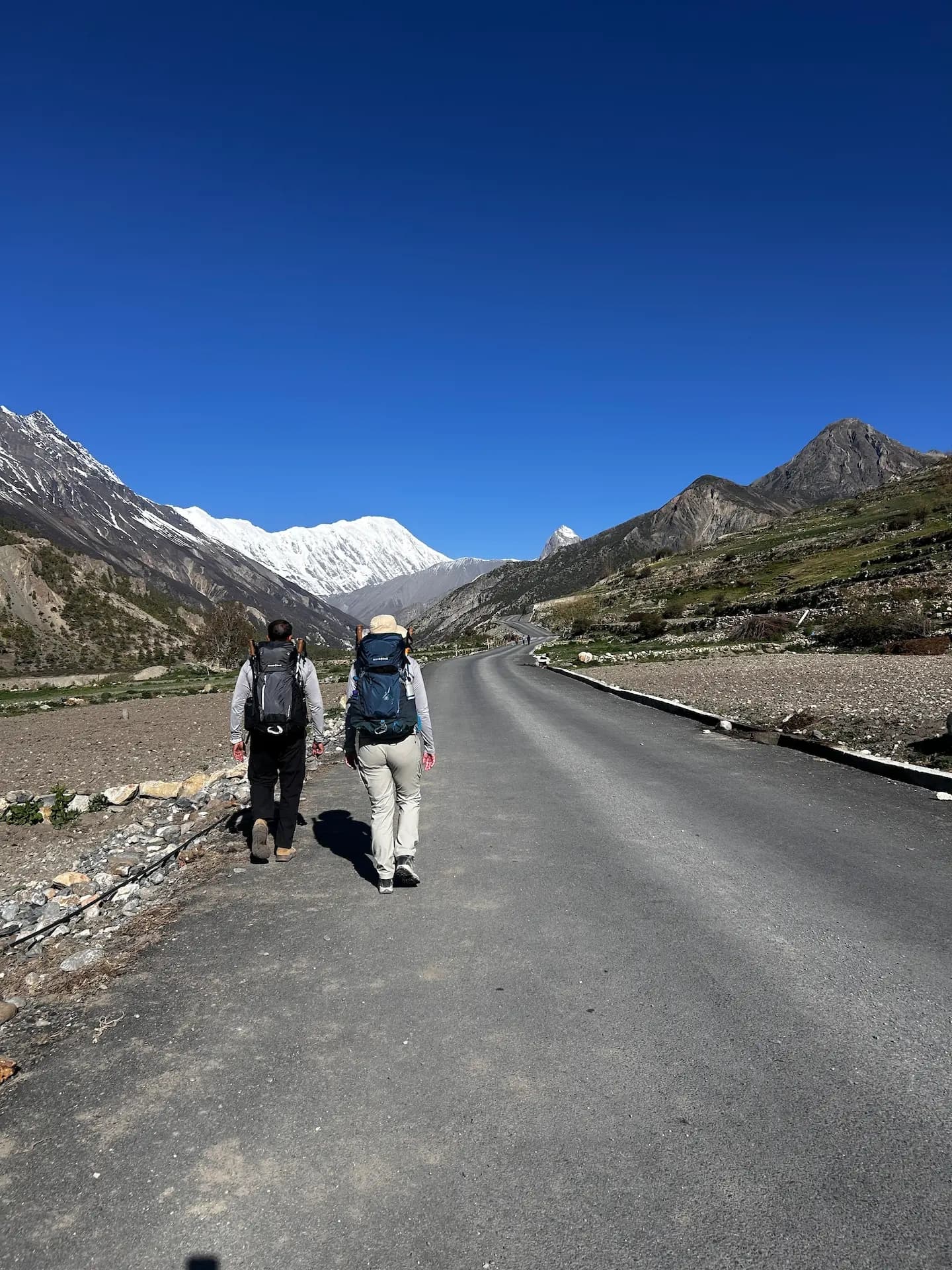
November is an exceptional month for exploring Nepal, when the monsoon has ended, mountain skies are generally clear, trails are dry, and daytime conditions remain comfortable across the Kathmandu Valley, mid-hills, and Terai. The best places to visit in Nepal in November include Kathmandu, Pokhara, Everest Base Camp, the Annapurna region, Chitwan National Park, Lumbini, Nagarkot, Bandipur, and Upper Mustang, covering Nepal's major cultural, Himalayan, wildlife, and scenic destinations.
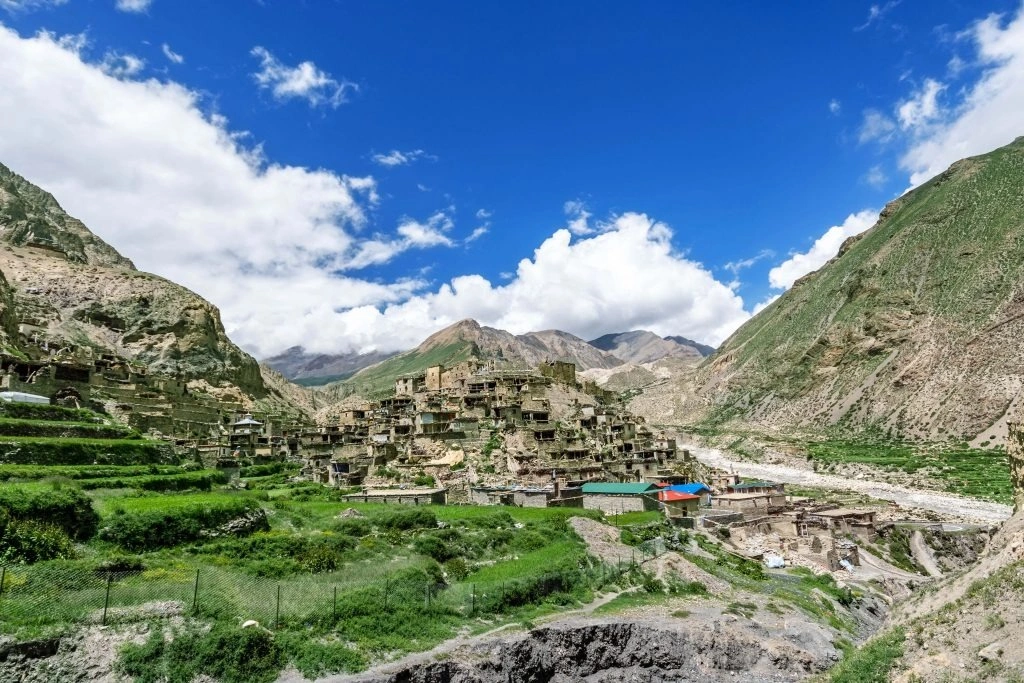
Kathmandu brings historic Durbar Squares, Buddhist stupas, Hindu temples, and Tihar celebrations; Pokhara combines Fewa Lake, Himalayan viewpoints, paragliding, and access to the Annapurna trails; while Nagarkot and Bandipur provide shorter hill escapes with clear mountain panoramas. Lumbini adds Buddhist heritage in the Terai, and Chitwan National Park offers dry-season opportunities to see greater one-horned rhinoceros, crocodiles, migratory birds, and other wildlife.
November also creates a strong trekking window for Everest Base Camp, Poon Hill, Annapurna Base Camp, the Annapurna Circuit, and Upper Mustang, with stable conditions and excellent visibility of peaks such as Everest, Lhotse, Ama Dablam, Annapurna I, Dhaulagiri, Machhapuchhre, and Nilgiri. Each route offers a different Himalayan experience, from high-altitude teahouse trekking in the Khumbu and Annapurna regions to the dry, Tibetan-influenced landscapes and ancient monasteries of Upper Mustang.
Travelers can combine these treks with cultural sites, jungle safaris, lakeside activities, short hikes, and hill-town stays to build a varied November itinerary. The following guide covers what to see and do in each destination, November weather and trail conditions, major attractions, trekking options, wildlife experiences, practical preparation, and the permits, guides, flights, and advance planning needed for a successful trip.
1. Kathmandu
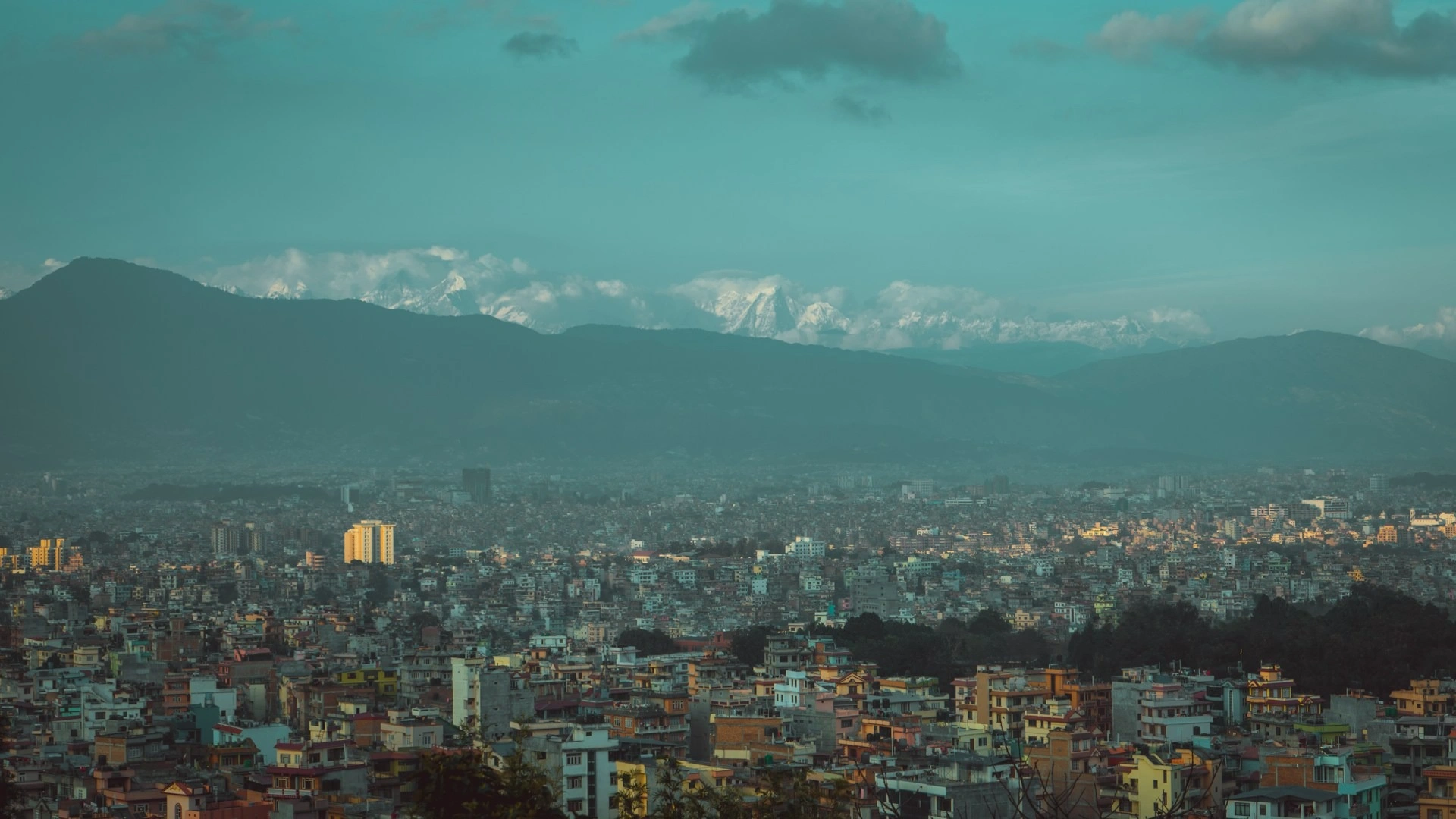
Kathmandu in November pairs clear, haze-free skies with the Tihar festival, giving travelers mild days near 20°C and unobstructed views of heritage sites that monsoon cloud cover hides for half the year.
What Can You Explore in Kathmandu During November?
Kathmandu Durbar Square, Swayambhunath Stupa, Boudhanath Stupa, and Pashupatinath Temple form the four anchor sites of a Kathmandu Valley visit, and November's dry pavement and clear light make walking between them comfortable for a full day.
Patan Durbar Square and Bhaktapur Durbar Square, roughly 5 kilometers and 13 kilometers from central Kathmandu, hold their own UNESCO World Heritage listings and show Newar wood-carving and pottery traditions that the capital's main square has partly lost to earthquake reconstruction. Most visitors underestimate Bhaktapur: a half-day there, away from Kathmandu's traffic, delivers denser medieval architecture than the capital itself.
Why Is November Weather Ideal for Kathmandu Sightseeing?
Kathmandu's November daytime temperature averages 15-20°C with near-zero rainfall, following the monsoon's full withdrawal by late September. Mornings start near 7-8°C, so a light jacket for the first two hours outdoors is worth packing, though by late morning the sun makes T-shirt weather common in the valley's open squares.
Haze returns by mid-December as the dry season's dust builds up; November sits in the narrow window where fresh post-monsoon air has not yet given way to that haze, which is why valley-rim viewpoints like Nagarkot deliver their sharpest mountain panoramas this month.
Which Cultural Experiences Should You Include in Kathmandu?
Tihar, Nepal's five-day festival of lights, usually falls in late October or November, and it transforms Kathmandu's streets with oil lamps, marigold garlands, and the Bhai Tika ritual between siblings. Witnessing Tihar, even as a guest of a guide or homestay host, shows a side of Kathmandu that temple tours alone do not. A sunset walk around Boudhanath's 36-meter stupa, joining the evening circumambulation with resident monks and local Tibetan families, adds a quieter cultural layer.
A common mistake is scheduling only one day in Kathmandu before heading to the mountains; two full days lets Tihar, the Durbar Squares, and Boudhanath fit without rushing.
2. Pokhara
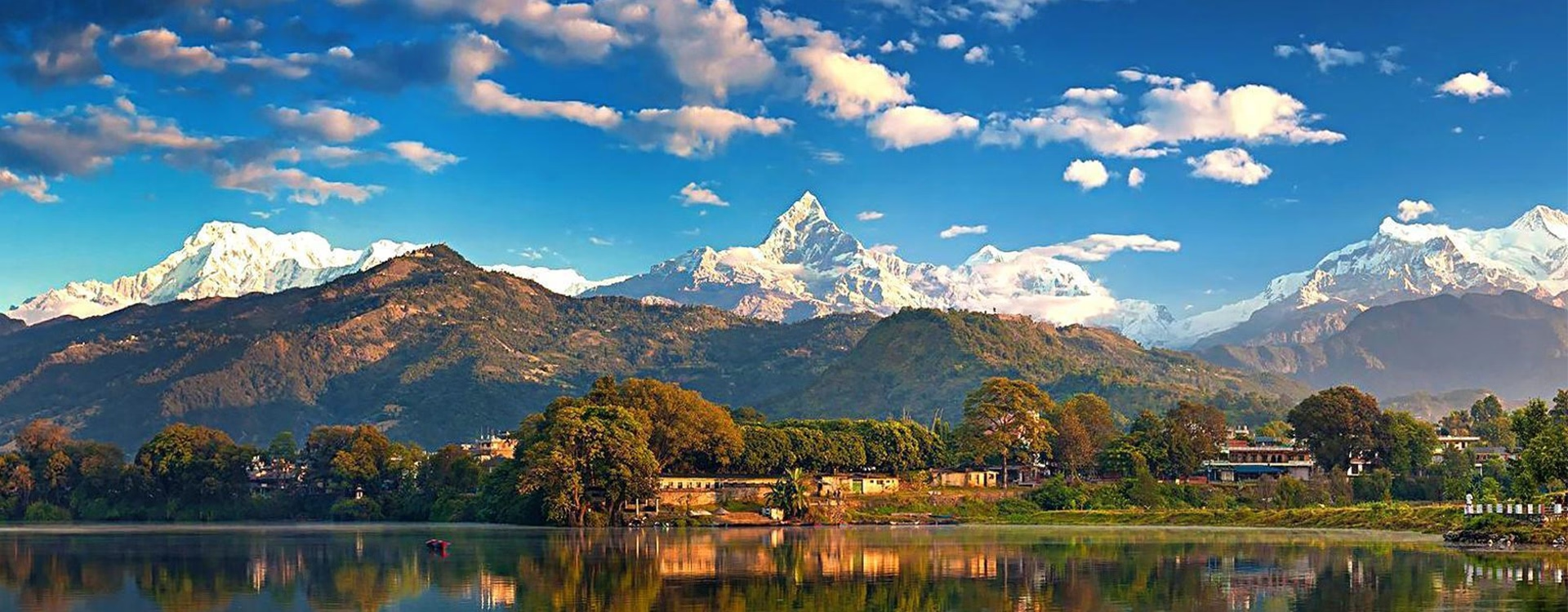
Pokhara in November offers the clearest Annapurna and Machhapuchhre views of the year from Sarangkot, stable paragliding conditions from the new Mandredhunga launch site, and daytime temperatures around 24°C that keep lakeside cafés comfortable into the evening.
What Are the Best Things to Do in Pokhara in November?
Boating on Fewa Lake toward the Tal Barahi Temple, visiting the World Peace Pagoda on the lake's southern ridge, and exploring the Davis Falls and Gupteshwor Cave system cover a full day without leaving the Lakeside area. Paragliding runs daily in November, launching between 9 a.m. and 3 p.m. when thermal winds are most stable; however, due to the operation of Pokhara's new international airport, launch sites have shifted from Sarangkot to nearby Mandredhunga, with operators reporting October and November as their busiest and safest months.
The International Mountain Museum, 2 kilometers from Lakeside, explains Himalayan geology and Sherpa mountaineering history for travelers who want context before heading into the hills.
Where Can You Enjoy Mountain Views Around Pokhara?
Sarangkot, at 1,600 meters and a 30-minute drive from Lakeside, gives the single best sunrise panorama of the Annapurna range, Dhaulagiri, and the fishtail peak of Machhapuchhre. Early arrival matters: the viewpoint fills with hundreds of visitors on clear November mornings, so arriving 20 minutes before official sunrise secures an unobstructed spot at the main tower. The World Peace Pagoda, reached by a 45-minute hike or a short boat-and-climb combination, trades Sarangkot's crowd for a quieter angle on the same mountain range plus a direct view down onto the lake.
Why Is Pokhara Ideal for Adventure and Relaxation in November?
Stable wind patterns in November support not only paragliding but also ultralight flights and zip-lining, while dry trails make the half-day hike to Australian Camp or Dhampus accessible for travelers without trekking gear. Pokhara's lakeside cafés and bookshops give the slower half of a Nepal trip its best setting: unlike Kathmandu's traffic-heavy streets, Lakeside's pedestrian stretch runs directly along the water.
Most itineraries treat Pokhara only as a gateway to Annapurna treks; travelers who assign it two full standalone days get far more value from the paragliding and lake activities than a single rushed afternoon allows.
3. Everest Base Camp
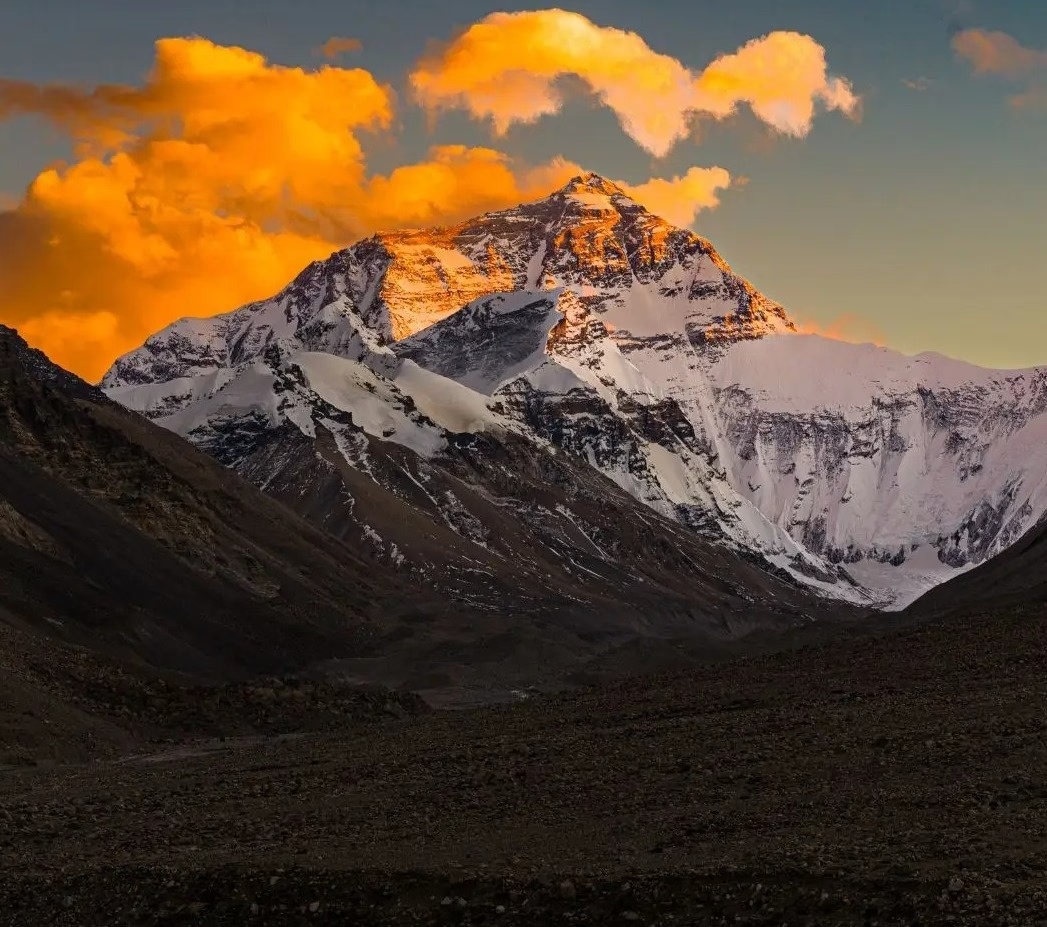
November ranks among the four best months for the Everest Base Camp trek, with stable high-pressure weather, daytime temperatures of 5-10°C at lower villages, and clear views of Everest, Lhotse, and Ama Dablam before December's deeper cold sets in.
What Makes November Suitable for the Everest Base Camp Trek?
The monsoon's retreat by late September leaves November's trails dry and the Khumbu's skies free of the haze and cloud buildup that blocks afternoon mountain views in spring. Teahouses along the route, from Phakding to Gorak Shep, operate at full capacity in November, so trekkers find reliable food, charging, and Wi-Fi at every stop without the closures that affect the deep-winter months of January and February.
Flight reliability from Kathmandu to Lukla also peaks in November, since clear morning skies reduce the weather-related delays that strand trekkers in Kathmandu during cloudier seasons.
What Can You Expect From Everest Region Weather in November?
Daytime temperatures at Namche Bazaar (3,440 meters) average 8-12°C in early November and drop toward 2-5°C by month's end, while nighttime temperatures at Gorak Shep (5,170 meters) fall below -10°C throughout the month. Snowfall is rare before late November at trail elevations but not impossible higher up, so packing a down jacket rated for at least -15°C is standard practice for any November departure.
Wind picks up noticeably above Dingboche, and afternoons turn sharply colder than mornings, which is why guided itineraries schedule the most exposed sections, like the climb to Kala Patthar, before 8 a.m.
How Should You Prepare for the Everest Base Camp Trek?
Two permits cover the standard route: the Sagarmatha National Park entry permit, priced around NPR 3,000 (roughly $22-25), and the Khumbu Pasang Lhamu Rural Municipality permit, which is strictly NPR 3,000; both are checked at Monjo and Lukla and together cost most foreign nationals around $45-50. A standard itinerary runs 12-14 days round trip from Lukla, covering roughly 130 kilometers with two built-in acclimatization days at Namche Bazaar and Dingboche.
What most first-time trekkers overlook: acclimatization days are not rest days from walking, they are shorter uphill hikes to a higher point followed by a return to sleep lower, which is the actual mechanism that reduces altitude sickness risk. Trekking poles, a four-season sleeping bag, and a personal first-aid kit round out the non-negotiable gear list, and any altitude medication belongs under a doctor's guidance rather than self-prescribed.
4. Annapurna Region
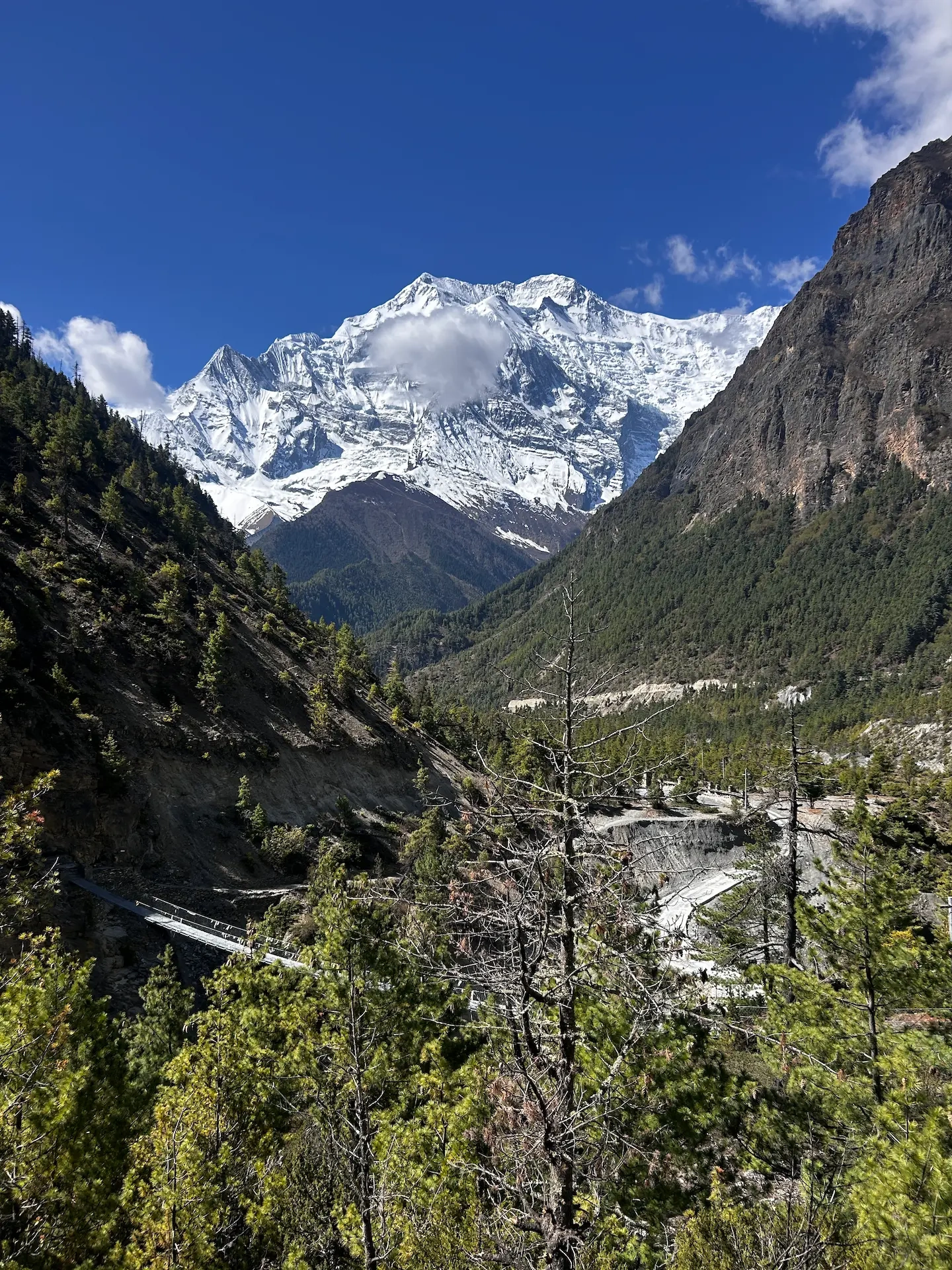
November suits three Annapurna treks at once: the 4-6 day Poon Hill trek, the 7-12 day Annapurna Base Camp trek, and the 12-18 day Annapurna Circuit, each offering dry trails and close-range views of peaks above 7,000 meters.
Which Annapurna Treks Are Suitable for November?
Poon Hill, reaching 3,210 meters near Ghorepani, suits travelers with 4-6 days and limited high-altitude experience, since the route stays below 3,500 meters throughout. Annapurna Base Camp, at 4,130 meters, takes most trekkers 7-12 days round trip from Pokhara and places them inside the Annapurna Sanctuary, a natural amphitheater ringed by peaks on three sides.
The Annapurna Circuit, historically the region's flagship trek, crosses the Thorong La pass at 5,416 meters over 12-18 days; November is the last reliably open month before heavy snow regularly closes this pass until spring, so late-November circuit departures carry real risk of a weather-forced reroute.
What Mountain Views Can You Expect in the Annapurna Region?
Annapurna I (8,091 meters), Dhaulagiri (8,167 meters), and Machhapuchhre (6,993 meters, unclimbed and considered sacred) dominate the skyline from nearly every point along these three routes. From Poon Hill at sunrise, more than a dozen named peaks are visible in a single wide arc, which is the main reason this short trek draws disproportionate crowds for its distance.
At Annapurna Base Camp itself, the summit of Annapurna I sits less than 3 kilometers away, close enough that avalanche activity on the south face is visible and audible from camp on clear mornings.
What Makes November a Popular Time for Annapurna Trekking?
Post-monsoon trail conditions mean fewer landslide-damaged sections on routes like the Circuit's lower Marsyangdi valley stretch, and teahouse owners stock their highest-season inventory of food and fuel in November, anticipating the month's peak demand. The ACAP permit, required for every Annapurna route, costs NPR 3,000 (about $30) for foreign nationals and funds trail maintenance, reforestation, and local school programs across the 7,629-square-kilometer conservation area; permit and guide requirements in this region update periodically, so confirming current rules before departure is worth the extra step.
Independent trekking is no longer permitted in the Annapurna Conservation Area; under current Nepal Tourism Board regulations, all foreign trekkers are legally required to hire a government-licensed guide regardless of group size, which must be factored into your November booking timeline.
5. Chitwan National Park
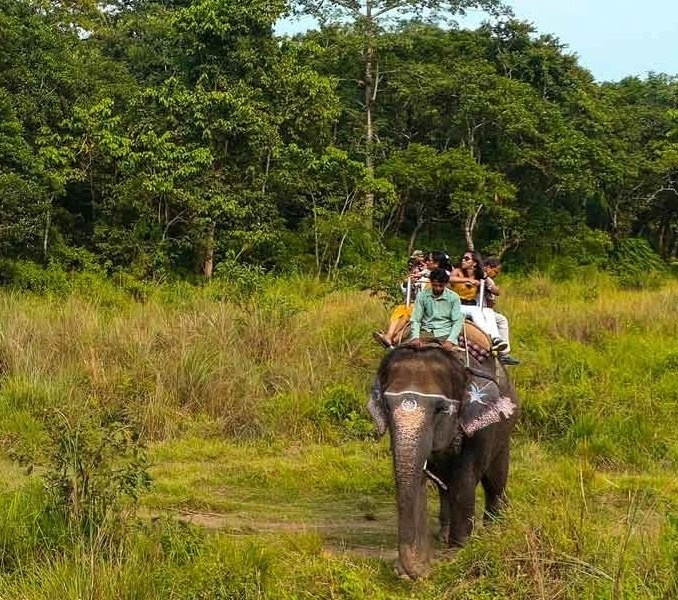
November places Chitwan National Park at the start of its dry season, when receding floodwaters concentrate wildlife near rivers and grasslands, giving jeep and canoe safaris their best sighting odds of the year for the greater one-horned rhinoceros, gharial crocodiles, and over 500 recorded bird species.
What Wildlife Can You See in Chitwan During November?
The greater one-horned rhinoceros, with an officially recorded population of 694 individuals in Chitwan (out of over 750 nationwide), is the park's most reliably sighted large mammal, typically grazing in open grassland at dawn and dusk. Bengal tigers, gharial and mugger crocodiles, four-horned antelope, and more than 68 recorded mammal species share the park's 952.6 square kilometers, though tiger sightings remain rare and depend heavily on luck and guide experience.
Migratory birds arrive in Chitwan from September through November, adding species like the Asian openbill and various storks to the resident population of kingfishers, hornbills, and peacocks that birders track along the Rapti and Narayani rivers.
Which Safari Activities Can You Enjoy in Chitwan?
A jeep safari, typically a half-day or full-day drive through the park's core grassland zones, offers the highest rhino-sighting rate of any Chitwan activity and suits travelers with limited time. Canoe trips along the Rapti River, paddled in traditional dugout canoes, bring travelers close to gharial crocodiles basking on sandbanks and give a different wildlife angle than a jeep's elevated vantage point. Walking safaris, which require two armed guides by park regulation, carry the most risk but also the most intimate wildlife encounters; first-time visitors are better served starting with a jeep safari before attempting a walk.
Elephant-back safaris, once standard, have declined sharply as ethical-tourism concerns have grown, and most responsible operators now steer clients toward jeep, canoe, and walking options instead.
Why Is November a Good Month for Chitwan National Park?
Chitwan's entry fee for foreign nationals runs NPR 2,000 (about $15) per person, with jeeps charged a separate NPR 5,000 entry fee; park data shows October and November drawing the highest monthly visitor numbers of the year, a direct result of dry trails and comfortable daytime temperatures near 28-30°C. Humidity drops sharply from the monsoon's peak, grass that grew tall during the rains has not yet been cut back for the following year's harvest, and water levels in the Rapti River are low enough for canoe routes to run reliably.
Pairing Chitwan with Pokhara or Kathmandu on either side, via a 5-6 hour drive or a short domestic flight, is the standard way Nepal itineraries combine jungle and mountain experiences in a single November trip.
6. Lumbini
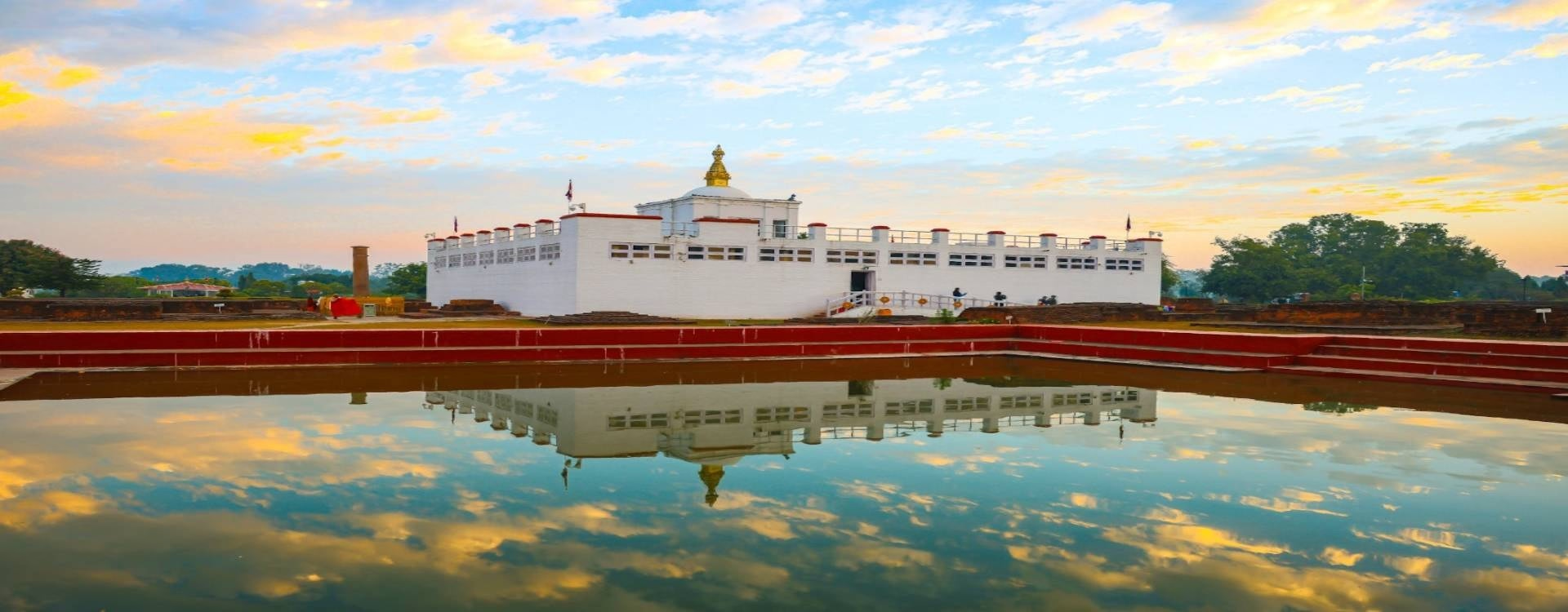
Lumbini, the UNESCO-listed birthplace of Siddhartha Gautama, pairs comfortable November temperatures near 25°C with dry, dust-free paths through the Sacred Garden and Monastic Zone, making it one of the few Terai destinations as pleasant to walk in November as it is historically significant.
What Buddhist Attractions Can You Explore in Lumbini?
The Maya Devi Temple, built over the marker stone identifying Buddha's birth spot, anchors the Sacred Garden alongside the 3rd-century BCE Ashoka Pillar and the Puskarini sacred pond, where tradition holds Queen Maya Devi bathed before giving birth. Beyond the Sacred Garden, the Lumbini Development Zone splits into an East Monastic Zone, built by Theravada Buddhist countries, and a West Monastic Zone, built by Mahayana and Vajrayana traditions; together they hold more than 25 monasteries representing nations from Myanmar to Germany.
The Lumbini Museum, at the northern end of the development zone, gives archaeological and historical context that the temple sites alone do not provide, and most visitors save it for the end of their walk.
Why Is November Comfortable for Visiting Lumbini?
The Terai lowlands, where Lumbini sits at roughly 150 meters elevation, run far hotter and more humid than Kathmandu or Pokhara through most of the year; November is the month this changes, with daytime highs around 25-28°C and overnight lows near 10-12°C replacing the oppressive heat of pre-monsoon spring. Unlike the monsoon months, November keeps the Sacred Garden's unpaved monastery paths dry, which matters because the development zone spans several square kilometers and most visitors cover it on foot, bicycle, or a shared electric cart.
Which Cultural Experiences Can You Have in Lumbini?
Joining the evening prayer and butter-lamp lighting at one of the monasteries, several of which welcome respectful visitors, gives a direct view into living Buddhist practice rather than only archaeological ruins. Cycling between the East and West Monastic Zones, a common and inexpensive rental option in Lumbini, covers more ground in less time than walking and suits the flat, paved development-zone roads well.
What most itineraries miss: pairing Lumbini with nearby Tilaurakot, the excavated ancient city identified as Kapilavastu where Buddha spent his first 29 years, adds deeper historical context less than 30 kilometers away for travelers with an extra half-day.
7. Nagarkot
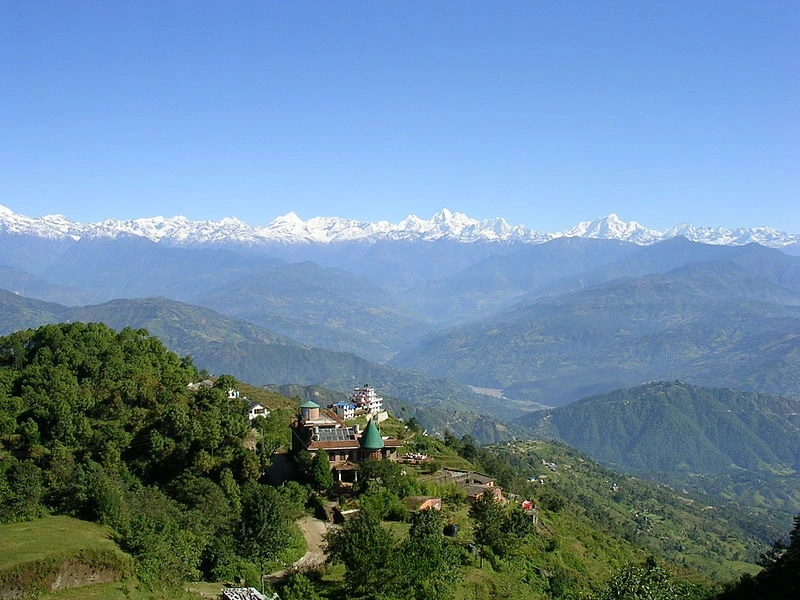
Nagarkot, a hilltop village at 2,175-2,195 meters just 32 kilometers east of Kathmandu, delivers one of Nepal's most accessible Himalayan sunrise views in November, when clear post-monsoon skies reveal Langtang, Ganesh Himal, Dorje Lakpa, and, on exceptional mornings, Mount Everest itself.
What Sunrise and Himalayan Views Can You See From Nagarkot?
The Nagarkot View Tower, the highest point in the immediate area, gives an unobstructed sweep that on clear November mornings includes eight of Nepal's named Himalayan ranges, a wider spread than Sarangkot near Pokhara offers for the Annapurna range alone. Sunrise in November falls between roughly 6:15 and 6:30 a.m., and the 15-20 minutes before the sun clears the horizon produce the most dramatic light, as the snow line turns gold and pink before flattening into daytime white.
November's low humidity is the direct cause of this visibility: spring sunrises, by contrast, are regularly dulled by pre-monsoon haze that November has not yet accumulated.
Why Is November Ideal for a Nagarkot Visit?
Evening temperatures in Nagarkot drop to around 8-10°C even while the Kathmandu Valley floor stays closer to 12-15°C, since elevation adds a cooling effect that catches underprepared day-trippers off guard; a packable fleece or light down layer is worth carrying even for a single overnight stay. The lack of rainfall through November keeps the single access road from Kathmandu reliably passable, unlike monsoon months when landslide-related delays are common on the same stretch.
Which Short Hikes Can You Take Around Nagarkot?
The hike from Nagarkot to Changu Narayan Temple, Nepal's oldest Hindu temple and a UNESCO World Heritage Site in its own right, covers roughly 10 kilometers of mostly downhill forest and ridge trail in 4-5 hours, ending at a site most Kathmandu-only itineraries skip entirely. Shorter options include a 1-hour loop to the Nagarkot Buddha Peace Park or a half-day walk through terraced fields toward Mulkharka village, both suited to travelers without dedicated trekking time.
A common mistake is driving to Nagarkot only for sunrise and leaving immediately after; staying one night, rather than attempting a same-day round trip from Kathmandu, roughly doubles the odds of catching a cloud-free sunrise given November's occasional morning mist in the valley below.
8. Bandipur
Bandipur, a car-free hilltop town at 1,030 meters between Kathmandu and Pokhara, gives November travelers a rare combination: a preserved 18th-century Newar trading town, unobstructed Himalayan views to the north, and a far quieter atmosphere than either of Nepal's two largest cities.
What Makes Bandipur Special for Travelers in November?
Bandipur's main bazaar street, closed to vehicle traffic and lined with restored Newar merchant houses, sees far fewer visitors than Kathmandu or Pokhara despite sitting directly on the highway route between them, making it one of Nepal's clearest examples of a well-preserved town that package itineraries still regularly skip. Dry November air keeps the brick-paved streets and the surrounding Tundikhel viewpoint comfortable for walking throughout the day, with temperatures in the high teens to low 20s Celsius and minimal haze over the valley below.
Which Heritage Attractions Can You Explore in Bandipur?
The town's architecture, built by Newar traders from the Kathmandu Valley who settled Bandipur as a stop on the Tibet-India trade route in the 18th century, survives largely intact because Bandipur's trade importance declined after a new highway bypassed it in the 1970s, inadvertently preserving the old town from modern redevelopment. Khadga Devi Temple, Thani Mai Temple, and the colonial-era Notre Dame school building are the three heritage sites most walking tours include, with Thani Mai, a 20-30 minute climb above the bazaar, offering the best combined view of the old town and the valley.
What Mountain and Village Experiences Can You Enjoy in Bandipur?
From the Tundikhel, a flat promontory at the edge of town, the Manaslu, Himalchuli, and Annapurna ranges are visible on clear November days, giving Bandipur a mountain view that rivals Nagarkot's despite its lower elevation and more southerly position. The Siddha Gufa cave system, roughly 30 minutes below town, is one of Nepal's largest limestone caves and suits travelers wanting an activity beyond temple-and-viewpoint walking.
What most itineraries overlook: Bandipur works best as an overnight stop between Kathmandu and Pokhara rather than a day trip, since its best qualities, the empty evening streets and the early, uncrowded morning light on the mountains, only appear once day-trip traffic has left.
9. Upper Mustang Trek
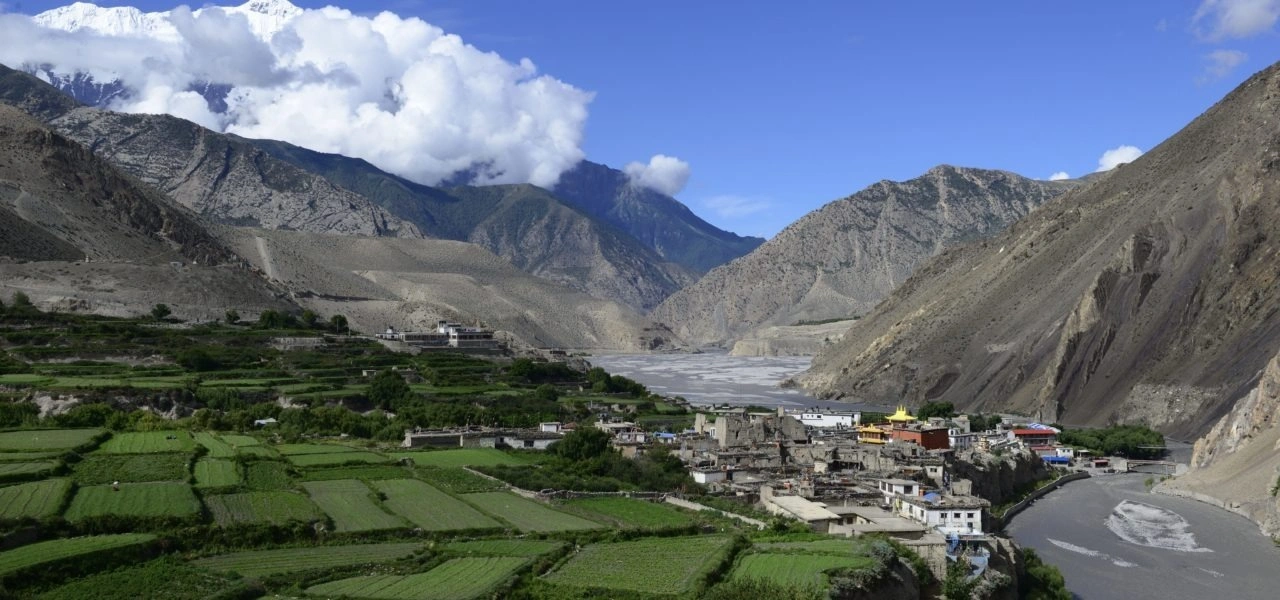
Upper Mustang, the former Kingdom of Lo sealed to outsiders until 1992, suits November better than almost any other trek in Nepal because the region sits in the Himalayan rain shadow, where November's dry, cold-desert climate and clear light reveal red cliffs, eroded canyons, and Tibetan Buddhist monasteries with little of the cloud cover that affects routes further south.
What Makes the Upper Mustang Trek Suitable for November?
Upper Mustang's position north of the Annapurna and Dhaulagiri ranges blocks most monsoon moisture year-round, which means its trekking season runs later into the cold months than any other major Nepal route; November adds only moderate cold to a trail that is already dry for most of the year. Daytime temperatures in November average 10-15°C in the walled city of Lo Manthang, dropping below freezing at night, conditions that are demanding but manageable with standard high-altitude gear rather than the expedition-grade equipment winter treks elsewhere in Nepal require.
What Landscapes and Mountain Views Can You Expect in Upper Mustang?
The trail passes through eroded canyon systems, wind-carved rock formations, and centuries-old sky caves cut into cliff faces, a landscape that resembles Tibet's plateau far more than Nepal's green mid-hills, a direct result of the region's historical and geographic ties to the Tibetan cultural zone.
Lo Manthang itself, walled and dating to the 15th century, holds royal palace ruins and several of the oldest Buddhist monasteries in the Himalaya, including the Thubchen and Jampa gompas with mural work rarely found elsewhere in such original condition. Dhaulagiri (8,167 meters) and Nilgiri (7,061 meters) appear at several points along the route, visible across the Kali Gandaki gorge, among the deepest gorges in the world measured from peak to river.
How Should You Prepare for Trekking in Upper Mustang in November?
Two permits are mandatory: the Restricted Area Permit, priced at $500 per person for the first 10 days with a $50-per-day charge for each additional day, and the Annapurna Conservation Area Permit, priced at NPR 3,000 (about $30), since Upper Mustang sits inside the wider Annapurna Conservation Area. Independent trekking is not permitted here; every foreign trekker must travel with a registered agency and a licensed guide, and most agencies also require a minimum group size of two to process the Restricted Area Permit.
What most first-time Mustang trekkers underestimate: the region's dryness, not its altitude, is the main physical challenge, since relentless wind and low humidity cause dehydration and cracked lips faster than the trek's moderate elevation gain alone would suggest, making lip balm, sunscreen, and deliberate water intake as important as any cold-weather layer.
How Can You Experience the Best Places to Visit in Nepal in November With Nepal Intrepid Treks?
Nepal Intrepid Treks, a Kathmandu-based trekking and trekking company, who has led the Everest Base Camp trek over 100 times, builds itineraries that combine these nine November destinations into single, logistically coordinated trips rather than separate bookings.
Covering Kathmandu, Pokhara, Chitwan, Lumbini, Nagarkot, and Bandipur alongside the Everest, Annapurna, and Mustang trekking regions in one itinerary, rather than booking each location through a different operator, removes the scheduling risk that comes from coordinating flights, permits, and guides independently across Nepal's varied terrain.
Nepal Intrepid Treks, a registered member of the Trekking Agencies Association of Nepal (TAAN) and the Nepal Mountaineering Association (NMA), handles permit processing for both open trekking regions like Everest and Annapurna and restricted areas like Upper Mustang, where agency sponsorship is a legal requirement rather than a convenience.
Can Nepal Intrepid Treks Help You Plan a November Nepal Trekking Adventure?
November's status as Nepal's second-busiest season, after October, means flights, teahouses, and Upper Mustang's limited guide availability book out several weeks ahead; working with an established local operator reduces the risk of arriving to find Lukla flights full or Mustang permits delayed.
Nepal Intrepid Treks customizes itineraries around a traveler's available days, fitness level, and destination mix, whether that means a short Kathmandu-Nagarkot-Bandipur cultural loop, Everest Base Camp trek, or a combined Chitwan-and-Pokhara add-on to a longer Himalayan itinerary. Reaching out several weeks before a planned November trip, rather than days before, gives the most room to secure the specific permits, flights, and guide availability that a November departure requires.
What Are the Key Takeaways About the Best Places to Visit in Nepal in November?
November delivers Nepal's most reliable combination of dry trails, clear mountain visibility, and festival culture, making Kathmandu, Pokhara, Everest Base Camp, the Annapurna region, Chitwan National Park, Lumbini, Nagarkot, Bandipur, and Upper Mustang each worth including in a single, well-sequenced itinerary rather than a single-destination trip.
Trekkers gain the most from November's stable high-pressure weather on the Everest Base Camp, Annapurna, and Upper Mustang routes, where dry trails and clear peak views define the month, while travelers prioritizing culture and wildlife find Kathmandu's Tihar festival, Lumbini's monasteries, and Chitwan's concentrated dry-season wildlife equally well-timed.
Nagarkot and Bandipur work best as short additions between the larger stops rather than standalone destinations, each adding a half-day to two-day Himalayan view or heritage-town experience without the logistics a full trek requires. Booking permits, flights, and guides several weeks ahead of a November trip, given the month's status as Nepal's second-busiest season, remains the single most effective step toward securing the specific dates and routes outlined above.