Trekking in Nepal requires more than simply packing warm clothes. Nepal's trekking routes pass through subtropical valleys, alpine forests, high mountain passes, and glaciated Himalayan terrain, exposing trekkers to rapid weather changes, intense ultraviolet radiation, strong winds, rainfall, snowfall, and significant temperature fluctuations. Whether you are trekking to Everest Base Camp, crossing Thorong La on the Annapurna Circuit, or exploring remote regions above 4,000 meters, the clothing and gear you choose directly affect comfort, safety, mobility, and overall trekking performance. A well-planned trekking outfit helps regulate body temperature, manage moisture, protect against the elements, and reduce common trail problems such as blisters, cold stress, and excessive fatigue.
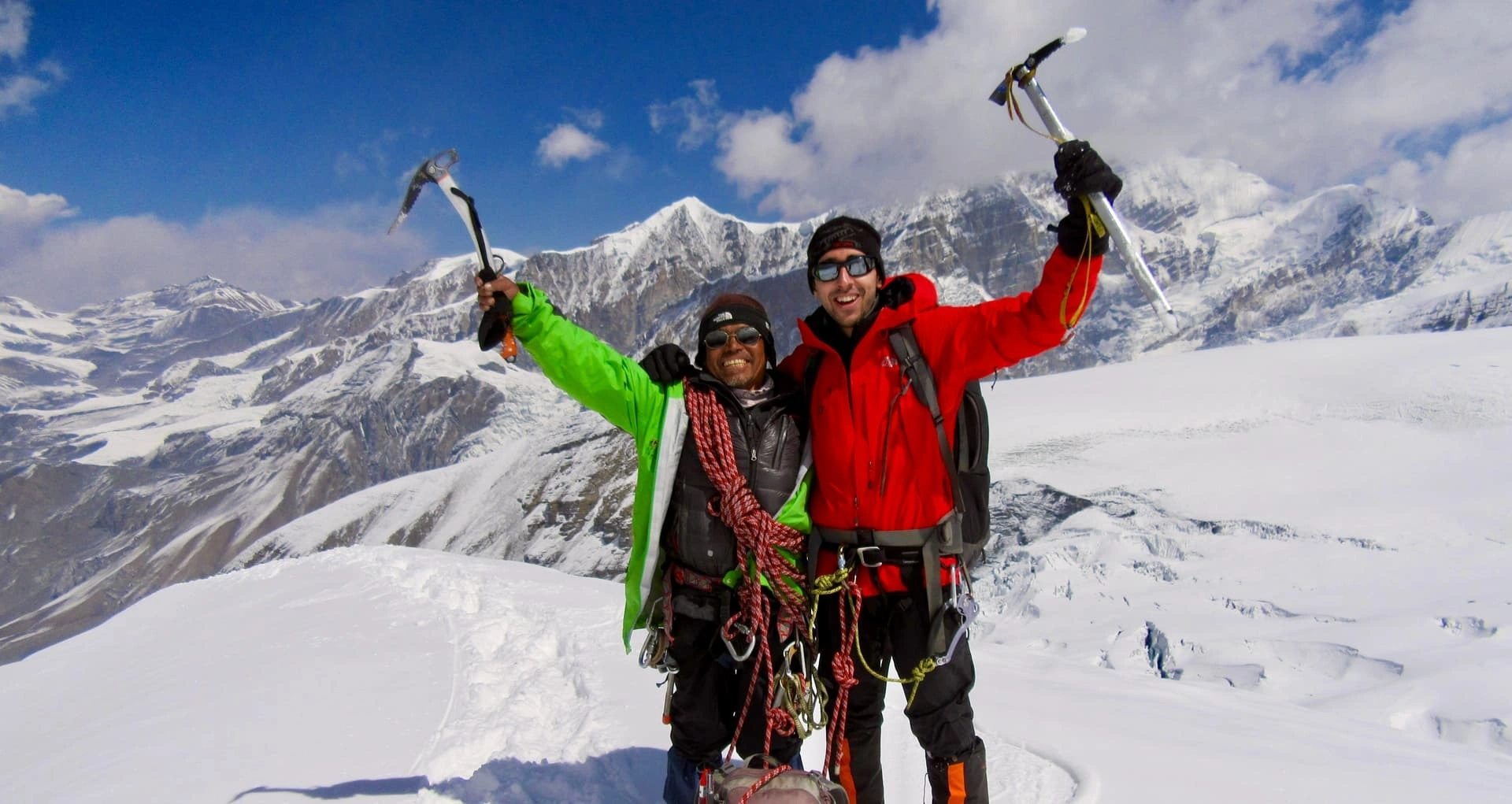
The most effective approach to dressing for trekking in Nepal is a layered clothing system that combines moisture-wicking base layers, insulating mid layers, weather-resistant outer shells, technical trekking pants, supportive footwear, and high-altitude accessories. Clothing requirements vary according to trekking season, route elevation, daily weather conditions, and trip duration, making it important to match every layer to the specific demands of your trek. This guide explains what to wear for trekking in Nepal across different seasons and altitude zones, covering base layers, insulation, waterproof protection, trekking boots, socks, accessories, route-specific clothing recommendations, and the most common packing mistakes trekkers should avoid.
Why Does Clothing Choice Matter for Trekking in Nepal?
Clothing choice on Nepal treks directly determines safety, comfort, and summit success. Nepal's trekking terrain spans elevations from 800 meters in subtropical foothills to 5,364 meters at Everest Base Camp. Temperature swings of 20°C between midday and midnight are recorded regularly at elevations above 3,500 meters.
Unlike day hikes where you return to stable shelter, multi-day Nepal treks expose trekkers to 6–14 days of continuous outdoor conditions. Wet cotton clothing loses 90% of its insulating value when damp, accelerating hypothermia risk at high elevation. Cold stress from poor clothing choices is one of the fastest triggers of altitude sickness in Himalaya, particularly above 4,000 meters where recovery takes far longer. Breathable, quick-dry synthetic and wool fabrics retain warmth and manage perspiration across the 15–25 km daily trekking distances common on major routes. When planning your itinerary, consulting the Wilderness Medical Society Clinical Practice Guidelines ensures adherence to evidence-based ascent rates and early symptom recognition for altitude sickness in Himalaya.
Poorly chosen clothing creates 3 compounding problems: excess pack weight from bulky items, inadequate thermal protection above 4,000 meters, and blisters or skin irritation from non-technical fabrics. Every clothing decision carries a functional consequence across Nepal's vertical terrain.
How Do Nepal's Trekking Seasons Affect What You Wear?
Nepal has 4 primary trekking seasons, pre-monsoon spring (March–May), post-monsoon autumn (September–November), winter (December–February), and monsoon (June–August), each requiring distinct clothing configurations.
Autumn (September–November) delivers the clearest skies and most stable conditions. Daytime temperatures at 3,500 meters average 10–15°C, while nights drop to -5°C to -10°C. Trekkers pack 2 base layers, 1 fleece mid layer, 1 insulated jacket, and a waterproof shell.
Spring (March–May) brings warming temperatures but higher precipitation risk. Afternoon cloud build-up triggers rain and snowfall above 4,000 meters regularly. The clothing system matches autumn packing, with added emphasis on waterproof reliability.
Winter (December–February) trekking demands 3 base layers, a heavyweight fleece, a down jacket rated to -20°C, and waterproof/windproof outer layers. Temperatures at Gorak Shep (5,164 m) fall to -20°C overnight. Only experienced cold-weather trekkers undertake Everest Base Camp in winter.
Monsoon (June–August) trekking is viable on rain-shadow routes like Upper Mustang and Dolpo. Waterproof clothing becomes the primary priority, breathable rain jackets rated above 15,000 mm hydrostatic head rating and quick-dry pants replace standard trekking configurations. For a full breakdown of how each season shapes your planning, see our guide on the best time to trek in Nepal.
To determine the best time to trek in Nepal, researchers analyzing Himalayan Rescue Association Manang aid post data from 2018–2023 tracked 337 acute altitude illness cases across peak seasonal transition windows.
How Do Altitude Changes Influence Clothing Needs?
Altitude directly reduces temperature at a lapse rate of 6.5°C per 1,000 meters of elevation gain, meaning a trekker ascending from Lukla (2,840 m) to Everest Base Camp (5,364 m) experiences a 16°C temperature drop by altitude alone, before windchill.
Nepal's trekking routes fall into 3 altitude zones, each demanding distinct layering:
Low zone (under 2,500 m): Subtropical and temperate conditions. 1 moisture-wicking base layer plus a light waterproof jacket handles most days. Temperature range: 15–25°C.
Mid zone (2,500–4,000 m): Active layering begins. Base layer plus fleece mid layer plus waterproof shell covers daytime exertion and evening cold. Temperature range: 0–15°C.
High zone (above 4,000 m): Full 4-layer system required. Add an insulated down or synthetic jacket between the fleece and shell. Temperature range: -15°C to 10°C.
Wind becomes a critical factor above 5,000 meters. The windchill index at Kala Patthar (5,645 m) drops effective temperature by 8–12°C in moderate winds. Clothing rated only for still-air temperatures fails at exposed ridgelines and summits.
What Base Layers Should You Wear While Trekking in Nepal?
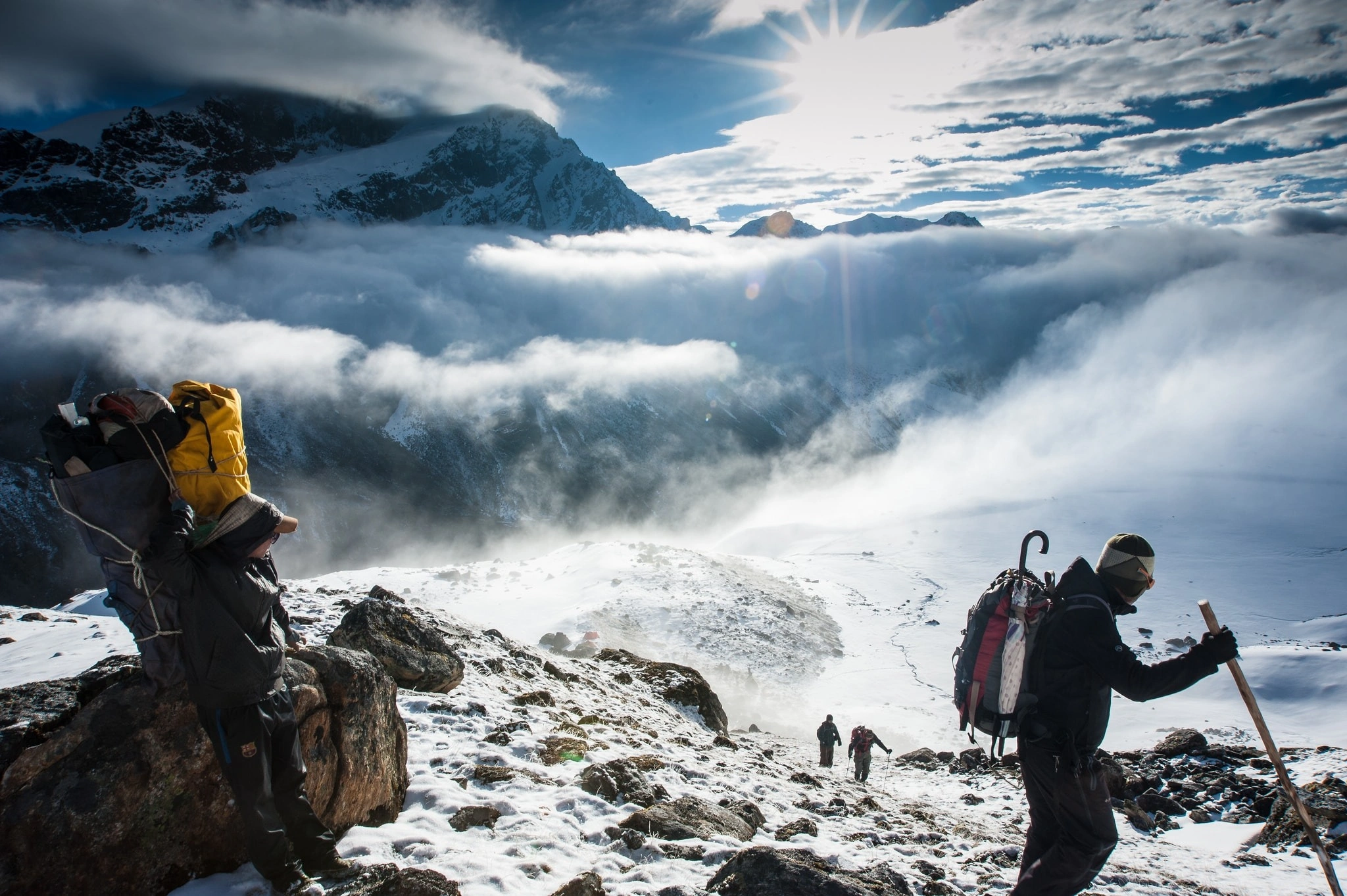
Base layers for Nepal trekking perform 1 primary function: move perspiration away from skin before it cools and causes chilling. A trekker generating heat on a 1,000-meter ascent sweats continuously. Cotton traps that moisture against skin. Merino wool and synthetic polyester transfer moisture outward through capillary action.
Which Fabrics Work Best for Moisture Management?
Merino wool and polyester are the 2 superior fabrics for Nepal trekking base layers, each with distinct performance profiles.
Merino wool (150–250 gsm weight) resists odor for 3–5 days of continuous wear, critical on multi-day treks where laundry access is limited. Merino regulates temperature bidirectionally, providing warmth when cool and cooling properties when warm. The fabric remains comfortable against skin with no chafing, even over 10+ hour trekking days. Major brands producing technical merino include Icebreaker, Smartwool, and Ortovox.
Polyester synthetics dry 60% faster than merino after washing and cost 40–60% less. Brands like Patagonia Capilene and Arc'teryx Phase produce high-wicking polyester base layers used by expedition teams on 8,000-meter peaks.
Cotton fails as a Nepal trekking base layer. Wet cotton against skin below 3,000 meters causes discomfort; above 4,000 meters, wet cotton produces genuine hypothermia risk within 2 hours of stopping activity.
How Many Base Layers Should You Pack?
Pack 3 base layer tops and 2 base layer bottoms for a 10–14 day Nepal trek. This number allows 1 layer worn, 1 layer drying, and 1 reserve, the minimum viable rotation given the drying times at altitude. Trekkers doing shorter routes can reference the complete Mardi Himal trek packing list as a baseline template for shorter, lower-altitude itineraries.
When assembling your Mardi Himal trek packing list, materials science research on the Influence of Multilayer Fabric Construction confirms that wetted inner layers accelerate heat loss by increasing thermal conductivity.
At elevations above 4,000 meters, daytime temperatures and low humidity accelerate drying. A washed synthetic base layer dries completely in 4–6 hours hung outside teahouse windows at Namche Bazaar (3,440 m). Merino requires 8–10 hours.
Many experienced trekkers reduce to 2 tops by choosing merino, using its odor resistance across 2–3 consecutive days before washing. This pack reduction saves 200–400 grams of total kit weight.
What Mid Layers Help You Stay Warm on Nepal Treks?
Mid layers trap warm air generated by the body, creating an insulating barrier between the moisture-managing base layer and the weather-blocking outer shell. The 2 primary mid layer options are fleece jackets and lightweight insulated jackets.
When Should You Wear a Fleece Jacket?
Wear a fleece jacket during active trekking at elevations between 2,500 and 4,000 meters, when temperatures range from 2°C to 12°C and precipitation risk remains low. Fleece provides active insulation, retaining warmth while the body generates heat through movement.
A 200-weight fleece jacket (Polartec 200 or equivalent) weighs 300–450 grams and compresses to the size of a water bottle. It functions effectively as the sole insulating layer in autumn and spring at mid-elevations.
The critical limitation: fleece lacks wind resistance. Wind penetrates standard fleece fabric at speeds above 20 km/h, eliminating its thermal benefit. Above treeline on Nepal's ridgelines, always layer the fleece beneath a windproof outer shell.
Is a Lightweight Insulated Jacket Necessary?
A lightweight insulated jacket (down or synthetic fill) rated to -10°C is necessary for any Nepal trek above 3,500 meters. It serves as the primary warmth layer during rest stops, teahouse evenings, and cold-weather trekking days.
Down insulation (800+ fill power) delivers the best warmth-to-weight ratio, a 220-gram down jacket provides warmth equivalent to a 450-gram fleece. The critical downside: down loses 80% of insulating value when wet. Use down only with a waterproof outer shell or in dry winter conditions.
Synthetic insulated jackets (PrimaLoft Gold or Thermore fill) retain 85% of insulating value when damp, the better choice for spring trekkers navigating Nepal's unpredictable precipitation. The weight penalty versus down averages 80–120 grams for comparable warmth ratings.
What Outer Layers Protect You From Nepal's Weather?
Outer layers on Nepal treks block wind, rain, and snow while allowing internal moisture vapor to escape. The outer shell is the trekker's primary defense against hypothermia-inducing wet conditions.
What Features Should a Waterproof Jacket Have?
A Nepal trekking waterproof jacket requires 4 specific features: a hydrostatic head rating of 15,000 mm or higher, a moisture vapor transmission rate (MVTR) of 10,000 g/m²/24h or higher, fully taped seams, and a helmet-compatible hood.
Gore-Tex Pro, eVent DValpine, and Pertex Shield+ are the 3 waterproof-breathable membranes used in expedition-grade jackets. Gore-Tex Pro delivers the highest durability across 100+ days of use before requiring re-treatment with DWR (Durable Water Repellency) spray.
Pit zip vents provide active ventilation during steep climbs without removing the jacket, a practical feature undervalued by first-time trekkers. Jacket weight for a 3-layer waterproof shell ranges from 380 grams (ultralight) to 650 grams (expedition durability). Before finalising your outer layer selection, cross-reference our complete Nepal trekking equipment checklist to confirm you haven't missed any gear category.
Reviewing the official Nepal Tourism Board InFocus Report and Guide Regulations ensures your Nepal trekking equipment checklist aligns with mandatory government safety mandates.
Do You Need Waterproof Trekking Pants?
Waterproof trekking pants are necessary for Everest Base Camp and Annapurna Circuit treks above 4,000 meters, particularly in spring and winter seasons. Below 3,500 meters in autumn conditions, a waterproof jacket combined with water-resistant trekking pants provides adequate protection.
Full waterproof pants trap leg perspiration during sustained ascents, causing discomfort. The practical solution used by experienced Nepal trekkers: wear water-resistant softshell pants as the primary leg layer and carry waterproof over-pants for use during rain and snow, rather than trekking in full waterproofs all day.
Lightweight waterproof over-pants pack to 180–250 grams and fit over standard trekking pants in under 30 seconds.
What Pants Are Best for Trekking in Nepal?
The best pants for trekking in Nepal are technical trekking pants made from nylon-elastane blends (typically 90% nylon, 10% elastane), offering stretch, durability, and water resistance.
Should You Choose Convertible or Standard Trekking Pants?
Convertible trekking pants, which zip off at the knee to become shorts, provide practical versatility across Nepal's elevation transitions. A trekker descending from Thorong La Pass (5,416 m) to Muktinath (3,760 m) within 4 hours experiences a 12°C temperature rise. Convertible pants eliminate the need to pack separate shorts.
The trade-off: zip-off seams add 60–80 grams of weight and create potential friction points at the knee during long descents. Standard trekking pants eliminate this issue and typically cost 20–30% less.
For Everest Base Camp treks where descent distances are shorter and temperatures remain consistently cold above 3,500 meters, standard trekking pants outperform convertibles. For Annapurna Circuit treks with dramatic elevation changes, convertibles justify their weight penalty.
What Materials Perform Best on Multi-Day Treks?
Nylon-elastane blend pants outperform cotton, denim, and polyester fleece pants on Nepal's multi-day trekking routes across 5 measurable performance categories:
Durability: Nylon withstands abrasion from rocky trail surfaces without pilling or tearing
Moisture management: Nylon dries 3x faster than cotton after rain or perspiration
Stretch: 10% elastane content allows full hip-flexion range of motion on steep ascents
Weight: Technical nylon pants weigh 280–380 grams versus 500–700 grams for cotton trail pants
Wind resistance: Tightly woven nylon provides moderate wind blocking without a separate shell layer
Avoid polyester fleece pants below the summit zone. Fleece picks up trail dust, dries slowly after rain, and restricts movement on technical terrain.
What Footwear Should You Wear for Trekking in Nepal?
Footwear for trekking in Nepal consists of 3 components: mid-cut to high-cut leather or synthetic trekking boots, technical trekking socks, and optional camp sandals for teahouse evenings.
How Do You Choose the Right Trekking Boots?
Choose trekking boots with 4 non-negotiable features for Nepal: ankle support above the malleolus, a Vibram or equivalent rubber outsole with 4+ mm lug depth, a waterproof-breathable lining (Gore-Tex or equivalent), and a stiff midsole rated for trail terrain.
Boot categories for Nepal trekking break into 2 viable options:
Mid-cut trail boots (400–600 grams per boot) handle routes below 4,500 meters in dry autumn conditions. The Salomon X Ultra 4 Mid GTX and Scarpa Zodiac Tech represent proven choices in this category used by Nepal trekking guides.
High-cut mountaineering-style trekking boots (600–900 grams per boot) handle snow, ice, and the sustained cold above 4,500 meters. La Sportiva Trango Tech and Hanwag Tatra II provide the ankle support and thermal insulation required for Everest Base Camp and Thorong La crossings.
Break boots in thoroughly before departure, 60–80 km of trail walking minimum. Unbroken boots cause blisters in the first 3 days of a Nepal trek, creating infections that force early evacuation. This is the single most common reason trekkers abandon routes.
What Socks Help Prevent Blisters?
Merino wool trekking socks with cushioning zones at the heel and ball of the foot prevent blisters through 3 mechanisms: moisture management, friction reduction, and volume stability.
Wear 2 sock layers, a thin liner sock (polyester or silk) directly against skin, topped by a cushioned merino wool sock, for treks involving 10+ hours of daily walking. The liner sock intercepts friction before it reaches skin.
Pack 4 pairs of trekking socks for a 10-day trek: 2 merino cushioned outer socks and 2 liner socks. Rotate daily. Merino's odor resistance allows 2-day wear before washing on sections with limited water access.
Avoid cotton socks entirely. Cotton socks accumulate moisture, lose cushioning when wet, and create blister conditions within 3–4 hours of active trekking.
What Accessories Should You Pack for Comfort and Protection?
Accessories for Nepal trekking include 7 essential items: a warm hat, sun hat or baseball cap, trekking gloves, heavyweight gloves or mittens, a neck gaiter or buff, sunglasses, and SPF 50+ sunscreen.
Why Are Hats, Gloves, and Buffs Important?
Hats, gloves, and buffs protect the 3 highest heat-loss areas of the body, the head, hands, and neck, which collectively account for 40% of total body heat loss in cold conditions.
A warm wool or fleece hat covering the ears is non-negotiable above 3,500 meters. The common mistake: packing a single lightweight hat for all elevations. Carry 2 hats, a sun-blocking baseball cap for daytime UV protection and a wool or fleece hat for evenings and high-altitude cold.
Trekking gloves serve dual roles: wind and cold protection at altitude and sun protection at elevations where UV radiation intensifies. At 5,000 meters, UV radiation is 50% more intense than at sea level. Pack 2 glove systems: a lightweight liner glove for active trekking and a heavyweight insulated glove or mitten for rest stops and extreme cold.
A buff or neck gaiter weighs 60–80 grams and performs 4 functions: neck insulation, face mask in wind and dust, balaclava in extreme cold, and sweat band on hot descents. It ranks among the highest utility-to-weight accessories in any Nepal trekking kit.
Do You Need Sunglasses for High-Altitude Trekking?
Sunglasses rated to Category 3 or Category 4 UV protection are medically necessary above 3,500 meters on Nepal treks to prevent photokeratitis, a sunburn of the cornea caused by UV reflection from snow, ice, and high-altitude solar intensity.
Photokeratitis symptoms include intense eye pain, temporary vision loss, and light sensitivity. The condition renders trekkers unable to continue for 24–48 hours and requires descent to lower elevation for recovery.
Choose wraparound glacier glasses with side shields for snow sections above 4,500 meters. Standard fashion sunglasses with open sides allow reflected UV to reach the cornea from below. Lens categories on certified sunglasses define protection level: Category 3 blocks 82–92% of visible light; Category 4 blocks 92–97% and is mandatory for glacier and snowfield crossings.
How Should You Dress for Popular Trekking Routes in Nepal?
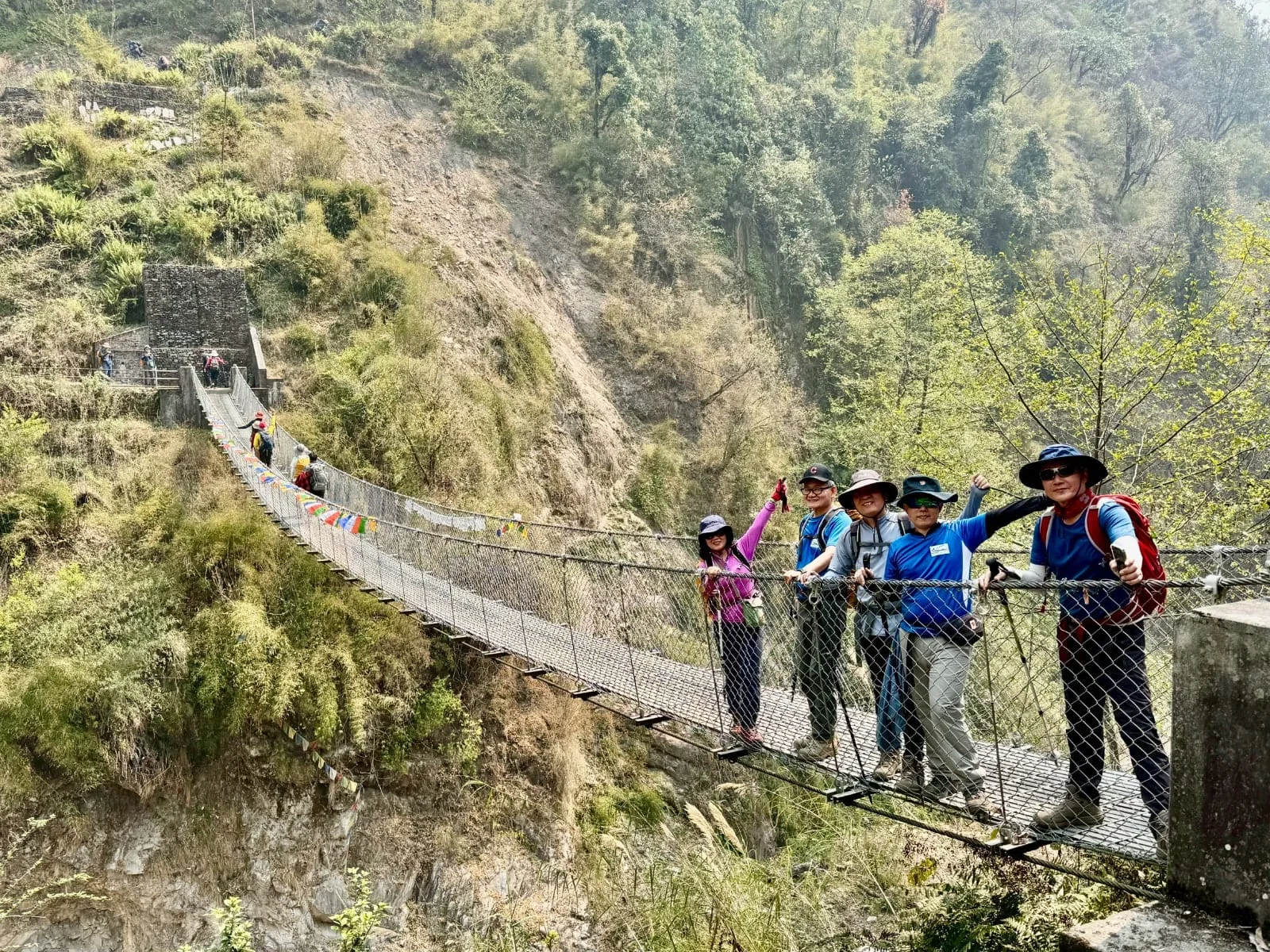
Clothing requirements vary across Nepal's 10 major trekking routes based on maximum elevation reached, seasonal conditions, and route-specific terrain. The 2 highest-traffic routes, Everest Base Camp and Annapurna Circuit, represent opposite ends of the packing spectrum.
What Should You Wear on the Everest Base Camp Trek?
The Everest Base Camp Trek requires a complete 4-layer clothing system rated for temperatures down to -20°C at Gorak Shep. The route ascends from Lukla (2,840 m) to Kala Patthar (5,645 m) over 12–16 days, crossing 4 distinct climate zones.
The EBC packing list for clothing includes these essential layers:
3 merino wool or synthetic base layer tops (lightweight 150 gsm and midweight 200 gsm)
2 base layer bottoms (thermal leggings for evenings and cold mornings above 4,000 m)
1 midweight fleece jacket (200-weight Polartec or equivalent)
1 800-fill down jacket or synthetic insulated jacket rated to -10°C
1 waterproof-breathable hardshell jacket (Gore-Tex or equivalent, 15,000 mm HH)
2 trekking pants (1 standard, 1 convertible or waterproof over-pants)
High-cut waterproof trekking boots broken in before arrival
4 merino trekking socks plus 2 liner socks
Glacier sunglasses, warm hat, sun hat, liner gloves, insulated gloves, and buff
The Khumbu Valley receives 180–220 mm of precipitation annually concentrated in May–June. Autumn EBC trekkers encounter significantly drier conditions than spring trekkers, but night temperatures at Lobuche (4,940 m) still reach -12°C in October–November.
What Should You Wear on the Annapurna Circuit Trek?
The Annapurna Circuit Trek requires adaptable layering for elevations ranging from 760 meters at Besisahar to 5,416 meters at Thorong La Pass, completed across 15–20 days.
Trekkers undertaking the Annapurna Circuit Trek encounter intense solar radiation; biophysical models published in Scientific Reports demonstrate that high-altitude UV exposure induces second-degree skin burns within 90 minutes.
The circuit's defining clothing challenge is the 4,656-meter elevation gain between the subtropical Marsyangdi Valley and Thorong La. A trekker in short sleeves at Jagat (1,300 m) reaches a snow-covered pass wearing 4 layers just 8 days later.
Pack the same 4-layer system as EBC, but a convertible pant replaces standard trekking pants given the route's dramatic temperature transitions. The descent from Thorong La to Muktinath covers 1,600 meters of elevation loss, trekkers remove the insulated jacket and outer shell within 90 minutes of crossing the pass.
The Annapurna region receives monsoon rains from the south. The Pisang to Manang section lies in Annapurna's rain shadow and stays dry even in early June. Pack waterproof layers for Besisahar to Manang segments; treat post-Thorong La terrain as semi-arid desert requiring only light rain cover.
What Clothing Mistakes Should Trekkers Avoid in Nepal?
The 5 most common Nepal trekking clothing mistakes are: packing cotton, underpacking insulation for high altitude, overpacking non-technical clothing, wearing unbroken boots, and relying on Kathmandu rental gear for technical sections.
Which Items Are Unnecessary or Too Heavy?
These 6 items add weight without functional value on Nepal treks:
Jeans or heavy cotton pants: 600–800 grams, slow-drying, no stretch, inferior on every metric to nylon trekking pants
Heavy cotton hoodies or sweatshirts: 400–600 grams with poor moisture management, replaceable by a 300-gram fleece
Multiple changes of casual clothing: Teahouses on major routes provide the same standard comfort, extra casual clothing serves no trekking function
Bulky cotton towels: Microfiber travel towels weigh 80–120 grams versus 400–600 grams for standard cotton equivalents
A second pair of heavy boots: Camp sandals (200–250 grams) replace this need for teahouse use
Umbrella instead of rain jacket: Umbrellas block frontal rain but fail on Nepal's high ridgelines where wind drives precipitation laterally
How Can Poor Clothing Choices Affect Your Trek?
Poor clothing choices on Nepal treks produce 3 categories of consequence: medical emergencies, route abandonment, and permanent physical injury.
Hypothermia represents the primary medical risk from inadequate clothing above 4,000 meters. The condition progresses from shivering (mild) to confusion (moderate) to cardiac irregularities (severe) when core body temperature drops below 35°C. Wet cotton clothing accelerates mild-to-moderate hypothermia progression by 3–5x compared to technical layering systems.
Blisters from poor socks or unbroken boots cause 23% of Everest Base Camp trek abandonments, according to data compiled by Himalayan Rescue Association from 2018–2023 medical consultations at Manang and Pheriche aid posts. Infected blisters at altitude heal 40–60% slower than at sea level due to reduced oxygen availability for tissue regeneration.
Sun exposure from inadequate UV protection causes photokeratitis within 2–4 hours above snowline. Sunburn at altitude penetrates more deeply than at sea level, creating second-degree burns from unprotected forearms after 90 minutes of midday exposure at 5,000 meters.
How Can You Prepare for Trekking in Nepal With the Right Gear?
Preparing the correct clothing system for a Nepal trek involves 4 sequential steps: route and season selection, altitude zone mapping, layering system assembly, and pre-departure breaking in of footwear and kit.
Start preparation 90–120 days before departure. This window allows ordered gear to arrive, be tested on local trail walks, and returned if unsuitable. Trekking brands like Patagonia, Arc'teryx, Rab, and Mountain Equipment offer 60-day return policies for gear tested on trail.
Step 1: Route and season selection determines the temperature range, precipitation type, and maximum elevation your clothing system addresses.
Step 2: Altitude zone mapping identifies which of the 3 altitude zones (low, mid, high) the route crosses and for how many days, directly informing the insulation weight and waterproofing level required.
Step 3: Layering system assembly builds the 4-layer stack (base, mid-insulating, outer-insulating, shell) with cross-compatibility verified, all layers zip and layer over each other without bunching, restricting movement, or creating pressure points.
Step 4: Pre-departure testing involves wearing the complete system on 3–5 day hikes in variable weather before flying to Kathmandu. This identifies fit issues, pressure points, and thermal gaps before they become problems on remote Himalayan trails.
Can Professional Trekking Support Help You Choose Appropriate Clothing?
Registered local trekking guides and agencies with Nepal Tourism Board (NTB) certification provide route-specific clothing recommendations based on current trail conditions, seasonal data, and 3–5 years of direct trail experience.
A licensed guide's clothing knowledge extends beyond published packing lists to include: current teahouse blanket quality on each route (which affects how much you rely on your sleeping and clothing layers), which sections experience the strongest windchill at specific elevations, and whether snowfall has altered conditions above Thorong La or Lobuche in the current week.
Trekking agencies licensed by the Nepal Tourism Board must maintain trail condition logs and guide certifications, selecting an NTB-registered agency ensures both safety accountability and locally accurate preparation guidance.
What Are the Key Takeaways About What to Wear for Trekking in Nepal?
Clothing for trekking in Nepal follows 1 central principle: a tested, layered system of technical fabrics matched to route elevation and season outperforms any single garment or improvised packing approach.
The 8 most critical clothing decisions for Nepal trekking are:
Base layers: Merino wool or synthetic polyester, never cotton
Mid layer: 200-weight fleece jacket for active use at 2,500–4,000 meters
Insulated layer: 800-fill down (dry conditions) or synthetic (mixed conditions) rated to -10°C
Outer shell: Waterproof-breathable hardshell, 15,000 mm HH minimum, fully taped seams
Pants: Nylon-elastane trekking pants, convertible for routes with major elevation transitions
Boots: Mid-cut or high-cut waterproof trekking boots, broken in 60–80 km before departure
Socks: Merino wool with liner system; 4 pairs minimum for a 10-day trek
Accessories: Category 3–4 UV sunglasses, 2-hat system, insulated gloves, buff, mandatory above 3,500 meters
Trekking in Nepal through the Himalayas is one of the most rewarding walking experiences on Earth. The clothing system you choose directly determines whether you reach your destination or turn back early. Invest in technical gear, test it before departure, and match every layer to the altitude your route demands.
Ready to put this clothing system to use? Browse our full Everest Base Camp Trek itinerary for route-specific packing guidance, current trail conditions, and NTB-licensed guide support before your departure date.