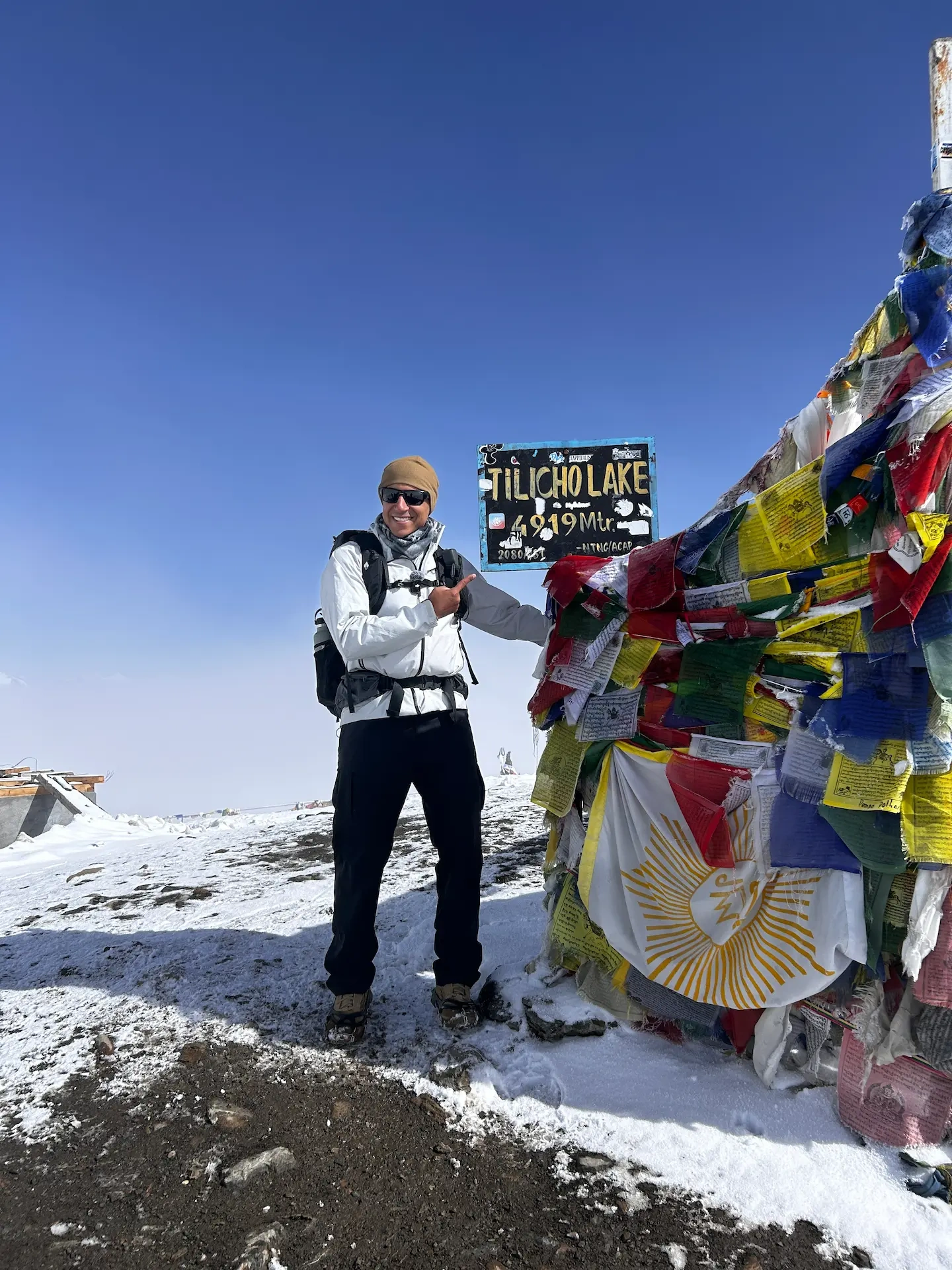
The Tilicho Lake Trek in October is a high-altitude trekking route in Nepal's Annapurna region that reaches Tilicho Lake at 4,919 meters in Manang district. October falls within the post-monsoon autumn trekking season, bringing predominantly dry trails, clearer mountain views, and reliable access to the villages and teahouses along the route. The journey passes through key settlements such as Chame, Pisang, Manang, Khangsar, and Tilicho Base Camp before the final ascent to the lake. Trekkers completing the Annapurna Circuit can continue toward Thorong La at 5,416 meters, while a shorter out-and-back itinerary focuses specifically on Tilicho Lake.
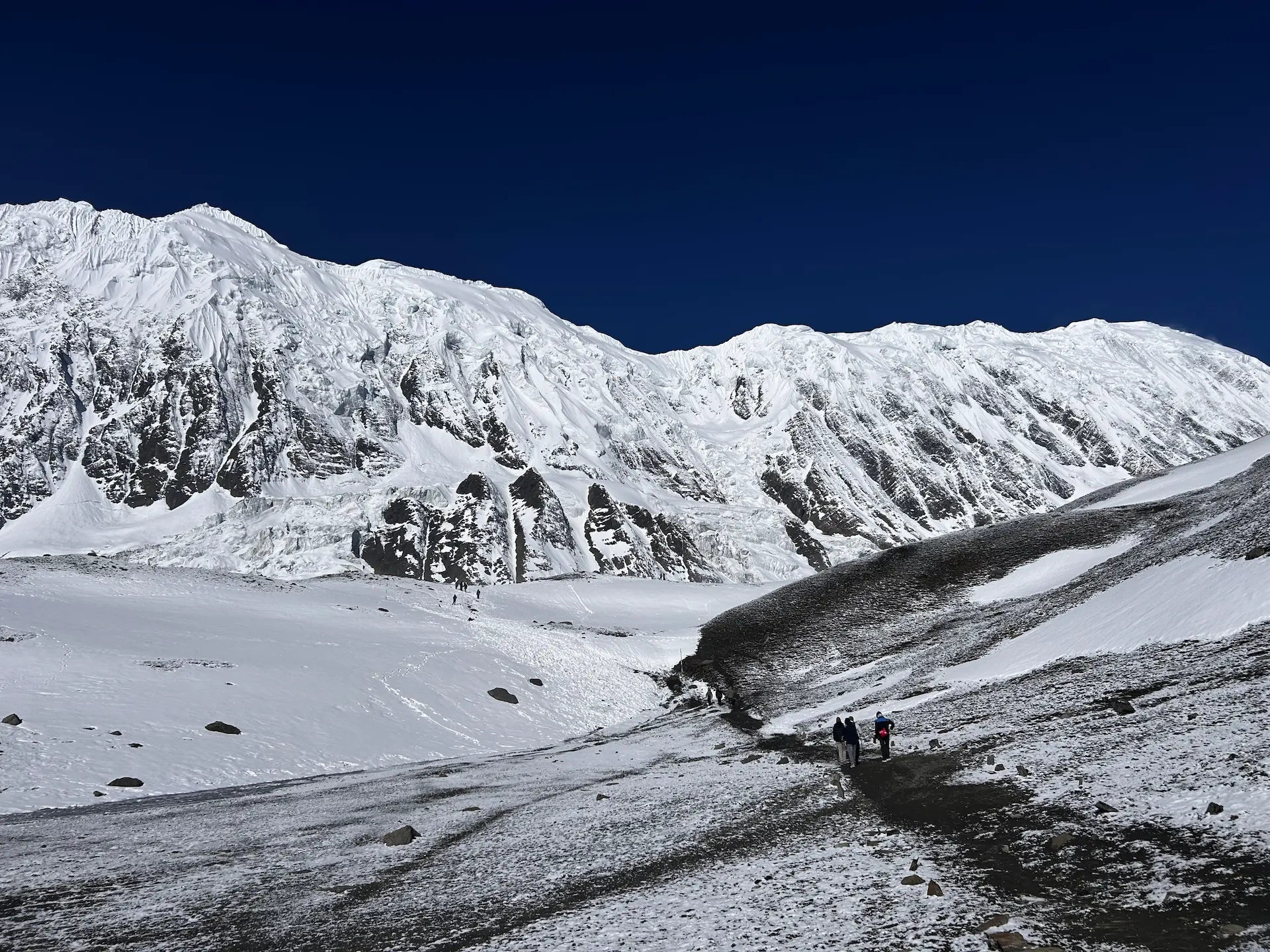
Planning this trek in October requires attention to more than favorable weather. The combination of rapid elevation gain, cold conditions near 4,919 meters, the exposed scree traverse toward Tilicho Base Camp, and the need for proper acclimatization makes pacing, equipment, and route planning essential. October is also peak trekking season, so guides, teahouse rooms, transport, permits, and overall trip costs require advance planning. For the 2026 October trekking season, Dashain runs from October 11 to 25, with Tika on October 21, potentially affecting the availability of local guides, porters, and lodge staff. This guide covers October weather and temperatures, trekking conditions, itineraries, difficulty, packing, altitude acclimatization, permits, guide requirements, costs, trail traffic, and practical preparation for the Tilicho Lake Trek.
What Is the Weather Like on the Tilicho Lake Trek in October?
October delivers the driest, clearest weather of the trekking calendar on the Tilicho Lake route. The monsoon clears out of the Annapurna region in the final days of September, leaving behind washed skies, sharp mountain visibility, and a wide daily temperature swing that grows more extreme the higher you climb.
What Temperatures Can Trekkers Expect Around Tilicho Lake in October?
Kathmandu and Pokhara sit in the 20°C to 25°C range through the month. Once the trail climbs past Chame (2,630m) and Pisang (3,300m), daytime highs drop to roughly 15°C to 18°C, with nights cooling to 3°C to 8°C. Manang (3,519m), where most itineraries build in an acclimatization day, holds daytime temperatures of 8°C to 14°C, and nights fall to -5°C to -10°C. Above Khangsar, at Tilicho Base Camp (4,150m to 4,200m) and the lake itself (4,919m), daytime highs rarely exceed 5°C, and clear nights routinely drop to -10°C to -20°C by late October. Early-month trekkers face milder nights than those arriving in the final week, since the cold deepens steadily as autumn advances toward winter.
Location | Elevation | Early Oct daytime | Early Oct night | Late Oct daytime | Late Oct night |
Manang | 3,519m | 10–14°C | -3 to -6°C | 8–12°C | -8 to -10°C |
Tilicho Base Camp | 4,150–4,200m | 3–7°C | -8 to -12°C | 0–4°C | -15 to -18°C |
Tilicho Lake | 4,919m | 0–5°C | -10 to -14°C | -2 to 2°C | -18 to -20°C |
The gap between an early-October and a late-October departure often decides how many layers a trekker actually needs at the lake itself, so booking dates near the start of the month suits trekkers who feel the cold more than most.
How Much Sunshine and Rainfall Can You Expect on Tilicho Lake Trek in October?
Most days deliver 7 to 9 hours of direct sunshine, with mornings offering the clearest views before afternoon cloud sometimes builds against the peaks. Rainfall drops sharply compared to September, though the first week of October occasionally still carries the tail end of the retreating monsoon, particularly at lower elevations below Chame. By the second week, the trail typically runs fully dry, and this window through Tihar in early November represents the most reliable stretch of clear weather all year.
Mountain views peak in the first two hours after sunrise, before afternoon convection cloud builds against the Annapurna and Chulu ranges, so guides on this route schedule the walk to Tilicho Lake as an early-morning departure rather than a late-start day, which also matters more for safety than for photography.
How Does October Weather Affect Tilicho Lake Trekking Conditions?
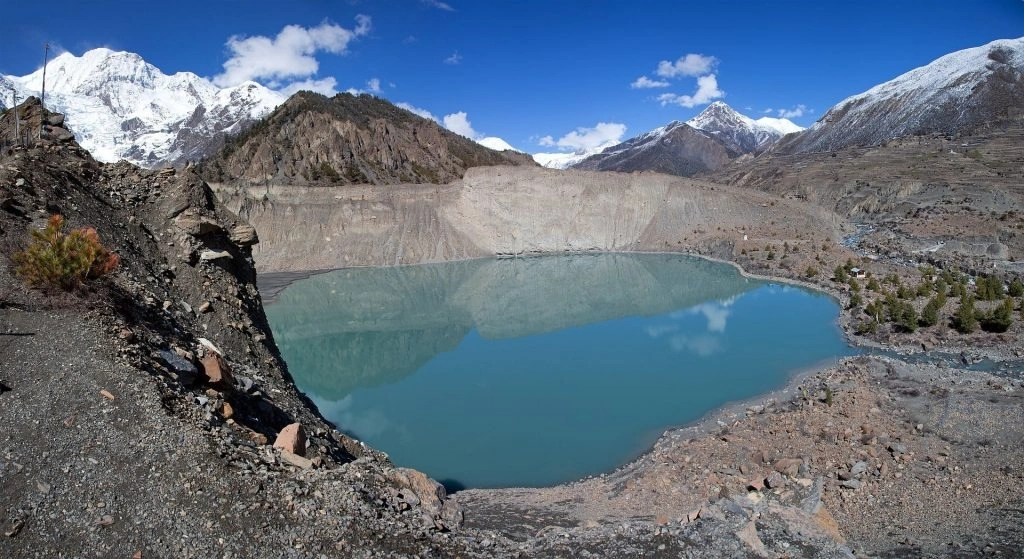
Dry weather firms up the trail on the lower and middle sections of the route, reducing the mud and leech exposure that defines the monsoon months. The exception sits on the exposed traverse between Khangsar and Tilicho Base Camp, a steep, loose scree slope with a documented history of rockfall and small landslides. Wind picks up on this section most afternoons, loosening debris on the slope above the trail. Guides on this route cross it in the early morning, before 10 a.m. whenever possible, and this single scheduling habit prevents more incidents than any piece of gear on the packing list.
Is October a Good Time for the Tilicho Lake Trek?
October ranks among the two best months for this trek, alongside April and May, because it pairs stable weather with fully operational teahouses. The trade-off is a busier trail and a tighter window for booking guides and rooms.
What Are the Main Advantages of Trekking to Tilicho Lake in October?
Post-monsoon skies give the clearest possible views of Annapurna II, Annapurna III, Gangapurna, and Tilicho Peak, all visible without the haze that builds later in the dry season. Trail surfaces stay firm and predictable across the lower and mid-elevation stretches. Teahouses along the route generally operate at full capacity with complete menus, though staffing levels temporarily dip during the peak Dashain festival days in mid-October. Snow risk at Thorong La, for trekkers continuing the full circuit, stays low until later in November, keeping the pass open on a predictable schedule.
The month suits the two main audiences on this trail differently. International trekkers get their one reliable window of clear high-altitude photography without fighting monsoon cloud or winter closures, and most build their entire Nepal trip around this single month. Nepali trekkers, who make up a smaller but steady share of Tilicho traffic, often combine the trek with a Dashain homecoming in the Annapurna foothills before continuing up to the lake once the main festival days pass, turning the trip into both a cultural visit and a mountain trek in one journey.
What Challenges Can You Expect on the October Tilicho Lake Trek?
Room availability tightens in Manang, Khangsar, and at Tilicho Base Camp during the second and third weeks of October, and a same-day walk-in booking can mean sleeping in a dining hall rather than a private room. Prices for rooms and meals typically run 15% to 25% higher than in the quieter winter or spring shoulder months. Dashain, Nepal's largest festival, runs October 11 to 25 in 2026, and many Nepali guides, porters, and lodge staff travel home to their villages around the Tika day on October 21. Agencies that fail to confirm staffing in advance sometimes reassign trekkers to a substitute guide mid-trip or find a lodge running on a skeleton crew. Booking a guide and rooms at least four to six weeks ahead of an October departure avoids this entirely.
How Busy Is the Tilicho Lake Trail in October?
The core Annapurna Circuit villages between Chame and Manang carry the heaviest foot traffic of the year through mid-October to mid-November. The Annapurna Conservation Area Project typically records around 180,000 to 200,000 foreign visitors across the wider region during strong recovery years, with the Annapurna Circuit Trek specifically drawing roughly 40,000 of those tourists, most of whom arrive in the autumn and spring windows.
The Tilicho side trail itself sees a fraction of that circuit-wide volume, since it demands a multi-day detour that a large share of circuit trekkers skip. Trekkers who want mountain scenery without Everest Base Camp or Annapurna Base Camp-level crowding find Tilicho Lake noticeably quieter, even during its own peak season.
What Is the October Tilicho Lake Trek Itinerary?
The full Annapurna Circuit incorporating the Tilicho Lake side-trek runs 15 to 18 days round trip from Kathmandu, while a standalone, jeep-supported Tilicho Lake trek that skips Thorong La takes 11 to 13 days.
How Many Days Are Needed for the Tilicho Lake Trek in October?
Itinerary style | Typical duration | Route shape |
Full circuit with Tilicho Lake | 16–18 days | Kathmandu, Besisahar, Chame, Manang, Khangsar, Tilicho Lake, Thorong La, Muktinath, Jomsom, Pokhara, Kathmandu |
Jeep-supported, out-and-back | 11–13 days | Kathmandu, drive to Chame or Koto, trek to Tilicho Lake, return the same route, drive back |
Fast-paced private trip | 9–10 days | Kathmandu, fly or drive close to Manang, compressed acclimatization, Tilicho Lake, return by jeep |
The out-and-back option cuts the trip short by skipping Thorong La, which suits trekkers with limited time or those uneasy about a 5,416m pass crossing. It does not shorten the acclimatization requirement, since the elevation gain to Tilicho Lake matches most of the circuit's own altitude profile.
What Are the Main Stops on the October Tilicho Lake Trek?
The route runs through Besisahar or a jeep drop at Chame (2,630m), then Pisang (3,300m) or the higher Ngawal alternative, into Manang (3,519m) for a mandatory acclimatization day. From Manang, the trail branches off the main circuit toward Khangsar (3,734m), continuing up to Shree Kharka (4,000m), the final teahouse settlement before the high country, before crossing the landslide area to Tilicho Base Camp (4,150m to 4,200m). A single long day hike from base camp reaches Tilicho Lake (4,919m) and returns to the same lodge for the night, avoiding an overnight sleep at the lake's extreme elevation. Trekkers continuing the full circuit rejoin the main trail toward Yak Kharka, Thorong Phedi, and the Thorong La crossing into Muktinath and Jomsom.
Day | Stop | Elevation | Walking time |
1–2 | Kathmandu | 1,350m | Arrival, permit processing |
3 | Drive to Chame | 2,630m | 7–8 hrs by road |
4 | Trek to Pisang or Ngawal | 3,300m | 5–6 hrs |
5 | Trek to Manang | 3,519m | 4–5 hrs |
6 | Acclimatization day, Manang | 3,519m | Short side hike |
7 | Trek to Khangsar | 3,734m | 3–4 hrs |
8 | Trek to Tilicho Base Camp | 4,150–4,200m | 5–6 hrs |
9 | Day hike to Tilicho Lake and back | 4,919m | 6–8 hrs round trip |
10 | Trek to Yak Kharka (circuit continuation) | 4,000m | 5 hrs |
11 | Trek to Thorong Phedi | 4,450m | 4 hrs |
12 | Cross Thorong La to Muktinath | 5,416m pass | 7–9 hrs |
13 | Drive or fly, Jomsom to Pokhara | 900m | Flight or road |
14–16 | Pokhara to Kathmandu, departure | – | Flight or road |
Trekkers on the jeep-supported, out-and-back version stop after Day 9, retracing the route back to Chame or Koto by foot and jeep rather than continuing over Thorong La.
How Difficult Is the Tilicho Lake Trek in October?
Trekking agencies grade this route as strenuous, not because of technical climbing, but because of the sustained elevation gain and one specific obstacle: the loose scree traverse below Tilicho Base Camp, which demands sure footing and a head for exposure rather than any climbing skill. Daily walking hours run 5 to 7 hours across most stages, with the summit day to the lake and back stretching to 6 to 8 hours. Prior trekking experience at altitude helps, but this is a walking route, not a mountaineering one.
Trek | Highest point | Typical duration | Technical crux |
Tilicho Lake (with Thorong La) | 5,416m | 16–18 days | Scree traverse to base camp |
Annapurna Base Camp | 4,130m | 10–11 days | None; steady climb |
Everest Base Camp | 5,364m | 12–14 days | Sustained altitude, no scree crux |
Six to eight weeks of preparation built around stair climbing, weighted-pack hikes, and steady cardio work at 60% to 70% of maximum heart rate builds the stamina this route asks for. Strength in the legs and ankles matters more than raw speed, since the base camp traverse rewards a stable, deliberate step over a fast one.
What Is the Highest Elevation Reached on the Tilicho Lake Trek?
Tilicho Lake itself, at 4,919 meters, marks the highest point of the side trek. Trekkers who continue on to complete the full Annapurna Circuit push higher still, crossing Thorong La at 5,416 meters, which becomes the trip's true high point rather than the lake.
What Should You Pack for the Tilicho Lake Trek in October?
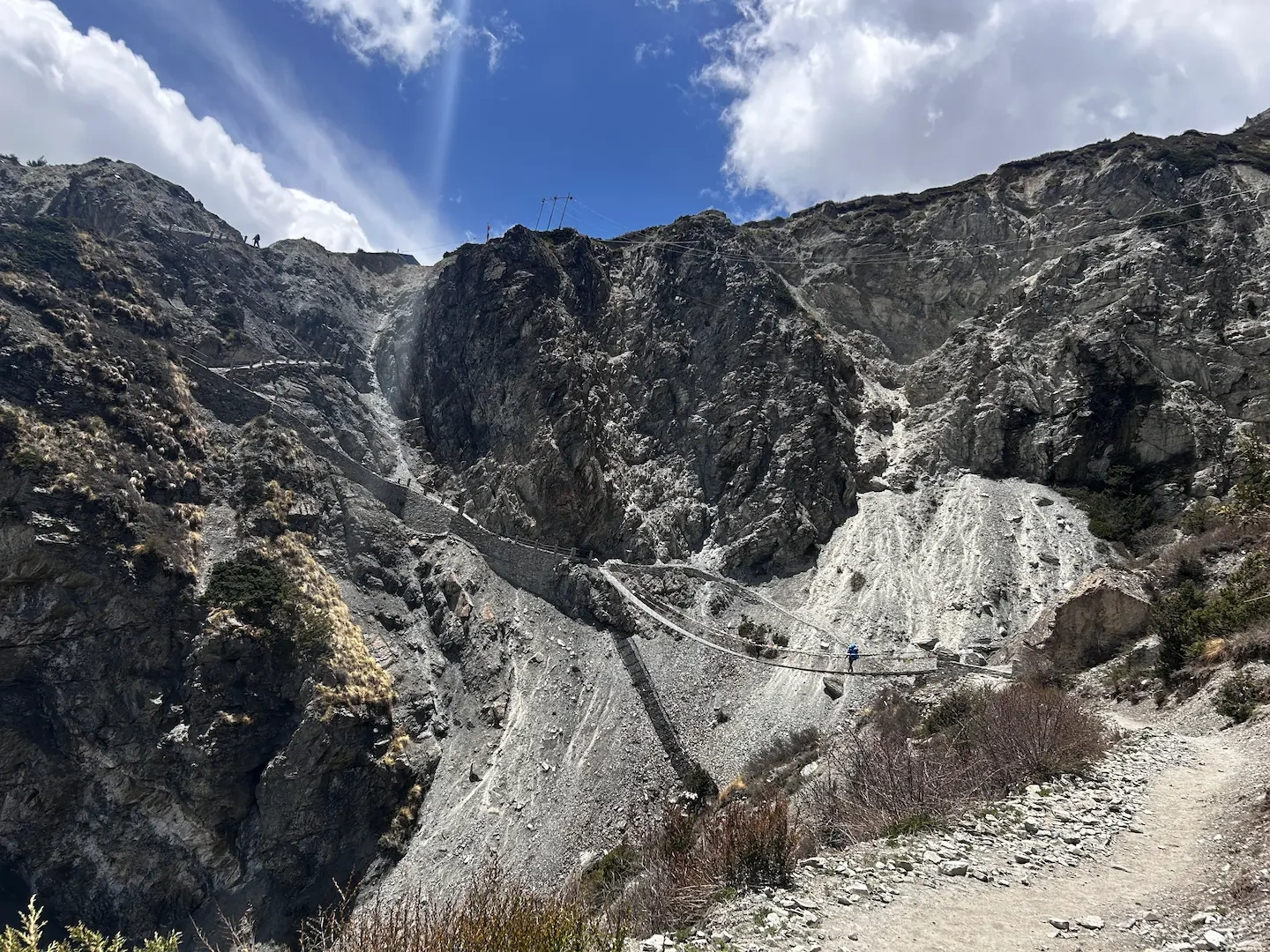
October's temperature swing, from 20°C in Kathmandu to -20°C at Tilicho Lake overnight, calls for a layered clothing system and standard trekking gear, with no technical mountaineering equipment required.
What Clothing Is Suitable for October Trekking in Tilicho?
Build the system in layers: a moisture-wicking base layer, an insulating fleece or light down mid-layer, and a windproof, waterproof outer shell. Add a down jacket rated for sub-zero temperatures for evenings above Manang, thermal leggings under trekking trousers, wool hiking socks, a warm hat and neck buff, and both a thin liner glove and an insulated mitten for the coldest mornings near the lake. Gaiters earn their place on the scree traverse near Tilicho Base Camp, where loose stone and dust work into low-cut boots. Trekkers arriving without a full high-altitude wardrobe can rent down jackets, sleeping bags, and trekking poles cheaply from the gear shops clustered in Kathmandu's Thamel district, a common choice for one-time visitors who do not want to buy expedition-grade clothing for a single trip.
Category | Essentials |
Base layers | Merino or synthetic wicking top and bottom, spare set |
Insulation | Fleece mid-layer, down jacket rated below -10°C |
Shell | Waterproof, windproof jacket and trousers |
Legs | Trekking trousers, thermal leggings, gaiters |
Extremities | Wool socks, liner gloves, insulated mittens, warm hat, buff |
Footwear | Broken-in trekking boots with ankle support |
What Trekking Gear Is Essential for the Tilicho Lake Trail?
Pack broken-in trekking boots with ankle support, adjustable trekking poles for the steep and loose sections, a headlamp with spare batteries, a sleeping bag rated to at least -15°C or a summer bag paired with a liner, and a reliable water purification method such as tablets, a filter, or a UV pen. Add a basic first-aid kit, high-SPF sunscreen, and glacier-grade sunglasses that block side glare, since snow and open water around the lake reflect intense UV even in mild air temperatures.
Do You Need Crampons or Other Winter Gear on Tilicho Lake Trek in October?
No. October sits ahead of the winter snow season on this route, and standard trekking boots handle the trail in an average year. An early, unseasonal snowfall in late October can dust the highest sections, so it is worth checking a fresh forecast with your guide before the summit day and packing a lightweight pair of microspikes as a contingency rather than a certainty.
How Can You Prepare for High Altitude on the Tilicho Lake Trek?
The standard itinerary already builds in a gradual ascent profile, but preparation still comes down to pacing, hydration, and honest symptom tracking above 3,500 meters.
What Acclimatization Strategy Helps on the October Tilicho Lake Trek?
The built-in rest day at Manang gives the body a chance to adjust before the push into thinner air near Tilicho. The itinerary's own structure follows a climb-high, sleep-low pattern: trekkers walk up to Tilicho Lake and back down to Base Camp for the night rather than sleeping at the lake itself. A useful rule above 3,000 meters caps net sleeping elevation gain at roughly 400 to 500 meters a day, and the standard Tilicho schedule tracks close to this pace by design.
The Manang rest day works best as an active one rather than a day spent lying in a lodge: a half-day hike up to Ice Lake (4,600m) or Gangapurna Lake, or a visit to the centuries-old Braga Gompa monastery just below Manang, gains altitude during daylight hours and drops back down to sleep, which trains the body far more effectively than a full day of rest at a single elevation.
What Symptoms of Altitude Sickness on Tilicho Lake Trek Should Trekkers Watch For?
Mild acute mountain sickness shows up as headache, nausea, dizziness, loss of appetite, fatigue, and disrupted sleep, and it responds to rest, hydration, and holding elevation steady for a day. Severe symptoms demand immediate descent: confusion or loss of coordination signal high-altitude cerebral edema, and breathlessness at rest, a persistent cough, or chest tightness signal high-altitude pulmonary edema.
Both conditions turn dangerous within hours, and descent remains the only reliable treatment until the trekker reaches lower elevation and, if needed, medical care. Many trekkers carry acetazolamide (Diamox) as a preventive aid above 3,000 meters, taken only after a consultation with a doctor before departure, and most licensed guides on this route now carry a pulse oximeter and check oxygen saturation and heart rate each evening above Manang as a routine, low-effort early warning check.
How Can You Stay Hydrated and Energized at High Altitude?
Aim for 3 to 4 liters of water a day, since cold, dry mountain air pulls moisture from the body faster than trekkers expect at sea level. Favor carbohydrate-heavy meals like dal bhat, which most teahouses serve with unlimited refills, and skip alcohol entirely above Manang, since it worsens dehydration and masks early symptoms of altitude sickness.
Short, steady rest breaks every 45 to 60 minutes work better for energy management than long stops that let muscles cool down. Garlic soup appears on nearly every teahouse menu above Manang, a long-standing local remedy that trekkers and guides alike credit with easing altitude symptoms, and while it lacks a strict clinical trial behind it, the ritual of a hot bowl before bed does no harm and adds real calories to a thin-air appetite that often shrinks just when the body needs fuel most.
What Permits Are Required for the Tilicho Lake Trek in October?
Every trekker on this route needs an Annapurna Conservation Area Permit, and since April 2023, foreign nationals also need a licensed guide, since independent solo trekking is no longer permitted in Nepal's protected areas.
Which Trekking Permits Are Needed for Tilicho Lake?
Permit | Foreign nationals | SAARC nationals | Nepali citizens |
Annapurna Conservation Area Permit (ACAP) | NPR 3,000 (approx. USD 20) | NPR 1,000 (approx. USD 7) | Nominal fee with citizenship ID |
TIMS Card | Policy has shifted since 2023; confirm current requirement with your agency | Same | Not required |
The ACAP funds trail maintenance, waste management, and community projects across villages including Manang and Khangsar, and it stays valid for the full duration of a single visit to the conservation area. Enforcement of the TIMS card on Annapurna routes has varied since Nepal's 2023 permit reforms, with some checkpoints no longer requesting it separately from the ACAP; a registered agency will confirm the exact current requirement before departure rather than relying on outdated blog posts.
A smaller number of experienced trekkers exit toward Jomsom over the Mesokanto La pass (around 5,100m) instead of returning through Manang, a route that sits well outside the standard itinerary and demands a specialist guide, extra acclimatization days, and a higher tolerance for exposed, unmarked terrain. This alternative stays firmly in expedition territory rather than the standard trekking package described in this guide, and most agencies reserve it for small groups with prior high-altitude experience.
Unlike Nar Phu Valley or Upper Mustang nearby, the standard Tilicho Lake route itself does not cross into a government-restricted area and needs no separate restricted-area permit. International trekkers need a passport copy, a valid Nepal tourist visa, and two to four passport-sized photos to process the ACAP; Nepali trekkers need only a citizenship certificate, and the agency handles the paperwork on both counts before the trek begins.
Do October Tilicho Lake Trekkers Need a Licensed Guide or Porter?
Yes, for any foreign national. Nepal's Tourism Board ended independent trekking permits for foreigners in protected areas on April 1, 2023, making a government-licensed guide mandatory for the Annapurna Conservation Area, including the Tilicho Lake route. Nepali citizens remain exempt from this requirement. A porter is optional rather than mandatory, but carrying a full multi-day pack at altitude adds real fatigue, and most trekkers find a shared porter between two people a worthwhile trade for the daily fee.
How Much Does the Tilicho Lake Trek Cost in October?
A full-service Tilicho Lake package for October runs roughly USD 1,200 to USD 2,200 for 15 to 18 days, with peak-season pricing sitting at the higher end of that range compared with quieter months.
What Expenses Are Included in a Tilicho Lake Trek Package?
Standard packages bundle the ACAP permit, a licensed guide, teahouse accommodation for the trekking days, three meals a day on the trail, ground transport between Kathmandu and the trailhead, and often a domestic flight between Jomsom and Pokhara for trekkers completing the full circuit. A porter typically appears as an optional add-on rather than a default inclusion.
Package tier | Approx. cost (USD) | What changes |
Budget, shared guide | 1,200–1,500 | Basic rooms, group guide, no porter |
Standard | 1,500–1,900 | Private guide, better rooms, transport included |
Full-service | 1,900–2,200+ | Dedicated guide and porter, Kathmandu hotel nights, airport transfers |
Meal prices climb steadily with elevation, since every sack of rice, vegetable, and gas canister above Manang arrives on the back of a porter or a mule rather than a truck. Expect the same plate of dal bhat to cost noticeably more, often close to double, by the time you reach Tilicho Base Camp compared with what you paid for it in Chame.
What Additional Costs Should Trekkers Budget For Tilicho Lake Trek?
Budget separately for travel insurance that specifically covers high-altitude trekking and helicopter evacuation up to at least 6,000 meters, since standard travel policies frequently exclude this. Add the Nepal tourist visa fee, hotel nights in Kathmandu before and after the trek, and small daily costs on the trail: hot showers, wifi, and device charging typically run NPR 200 to NPR 500 each at higher-elevation lodges, and bottled or treated water adds up if you skip a personal purification method.
Customary tips for a guide and porter at the end of the trek, and any personal gear rental such as a sleeping bag or down jacket, round out the realistic budget. A rough tipping guideline on a 15 to 18 day trip runs USD 10 to USD 15 per day for a guide and USD 8 to USD 12 per day for a porter, typically pooled and handed over on the final day rather than paid daily. A local NTC or Ncell SIM card gives patchy but usable data signal as far as Manang, and coverage becomes unreliable to absent beyond Khangsar, so treat the last confirmed signal in Manang as the point to send any message home before a few days offline.
Manang and Khangsar carry a strong Tibetan Buddhist cultural imprint, visible in the chortens, mani walls, and prayer flags that line the trail. Custom asks visitors to pass mani walls and chortens on the left, keeping them on the right-hand side of the body, and to ask before photographing monks or ceremonies inside a gompa. These small courtesies cost nothing and go a long way in villages that see a steady stream of trekkers every autumn.
How Can Nepal Intrepid Treks Help With the Tilicho Lake Trek in October?
A registered, ACAP-affiliated local operator handles the permit paperwork, assigns the licensed guide now required by law, and adjusts the itinerary around the specific scheduling pressures of an October departure, including the Dashain festival window.
Can Nepal Intrepid Treks Arrange a Safe October Trek to Tilicho Lake?
Nepal Intrepid Treks, based in Kathmandu, arranges the ACAP permit, assigns a government-licensed guide as required for all foreign trekkers, and books teahouse rooms ahead of the peak-season crunch that hits Manang and Khangsar in mid-October. For a 2026 departure, confirming a guide and rooms four to six weeks in advance, and asking directly how staffing is planned around the October 11 to 25 Dashain period, prevents the last-minute substitutions that catch unprepared trekkers off guard.
A well-run operation also verifies each trekker's travel insurance covers high-altitude helicopter evacuation before departure, briefs the group on the base camp scree crossing, and keeps a flexible buffer day in the schedule to absorb a weather delay near the pass without forcing the whole itinerary to slip. Reach out with your preferred October dates and group size for a route plan built around the current weather window and trail conditions.
What Are the Key Takeaways About the Tilicho Lake Trek in October?
The Tilicho Lake Trek in October combines the clearest mountain views of the year with firm, dry trail conditions and fully staffed teahouses, making it one of the two strongest months for this route alongside spring. The details worth carrying forward:
Temperatures swing from summer-like warmth in Kathmandu to -20°C nights near the lake, so pack a genuine layering system rather than a single heavy jacket.
Book a licensed guide, required by law for every foreign trekker since April 2023, and reserve rooms in Manang and Khangsar well ahead of the mid-October rush, particularly around this year's Dashain festival from October 11 to 25.
Respect the built-in acclimatization day at Manang, watch for altitude symptoms honestly, and keep a working pulse oximeter or a guide who carries one above 3,500 meters.
Treat the loose scree traverse near Tilicho Base Camp as the trip's real technical crux rather than the altitude itself, and cross it in the early morning before the afternoon wind loosens the slope.
Budget for the permit, the guide, and the daily extras separately, since hot showers, charging, and meal prices all climb with elevation on this route.
With the right preparation, October remains the month that puts Tilicho Lake's turquoise water and its ring of 7,000-meter peaks on full display, on a trail quiet enough to actually enjoy the silence once you reach it.

.avif&w=1920&q=75)