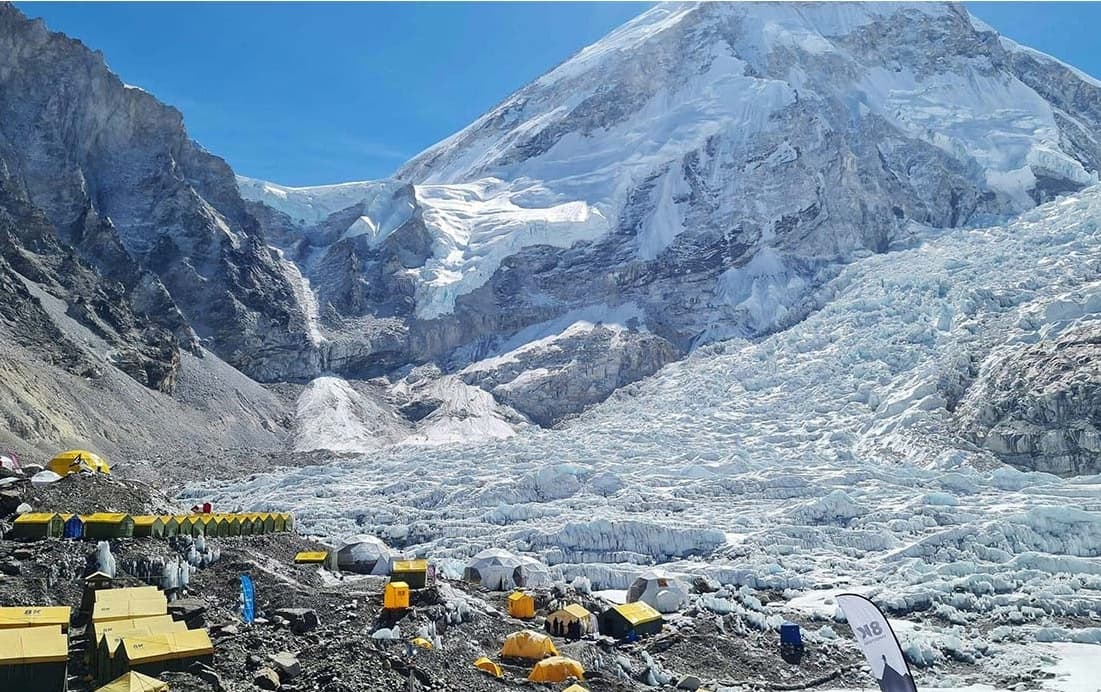
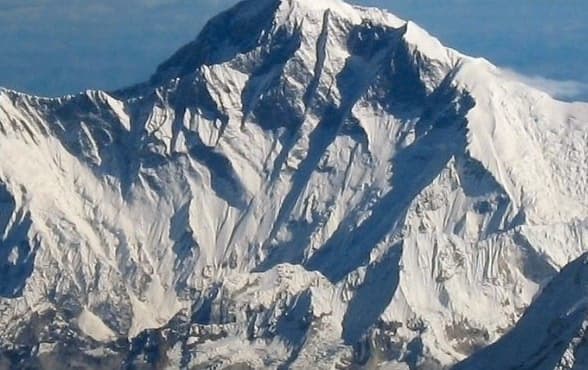
The Manaslu Circuit Trek is a restricted-area Himalayan trek in Nepal that solo travelers can legally do in 2026, but only as a guided solo trek through a registered trekking agency with a licensed guide. Solo on Manaslu does not mean trekking independently without support. It means one trekker traveling privately with one licensed guide on a 177 km route through Gorkha District, across Tibetan-influenced villages, and over Larkya La Pass at 5,160 m. The standard full circuit requires the Restricted Area Permit (RAP), Manaslu Conservation Area Permit (MCAP), and Annapurna Conservation Area Permit (ACAP), with checkpoint registration from Jagat through Dharapani.
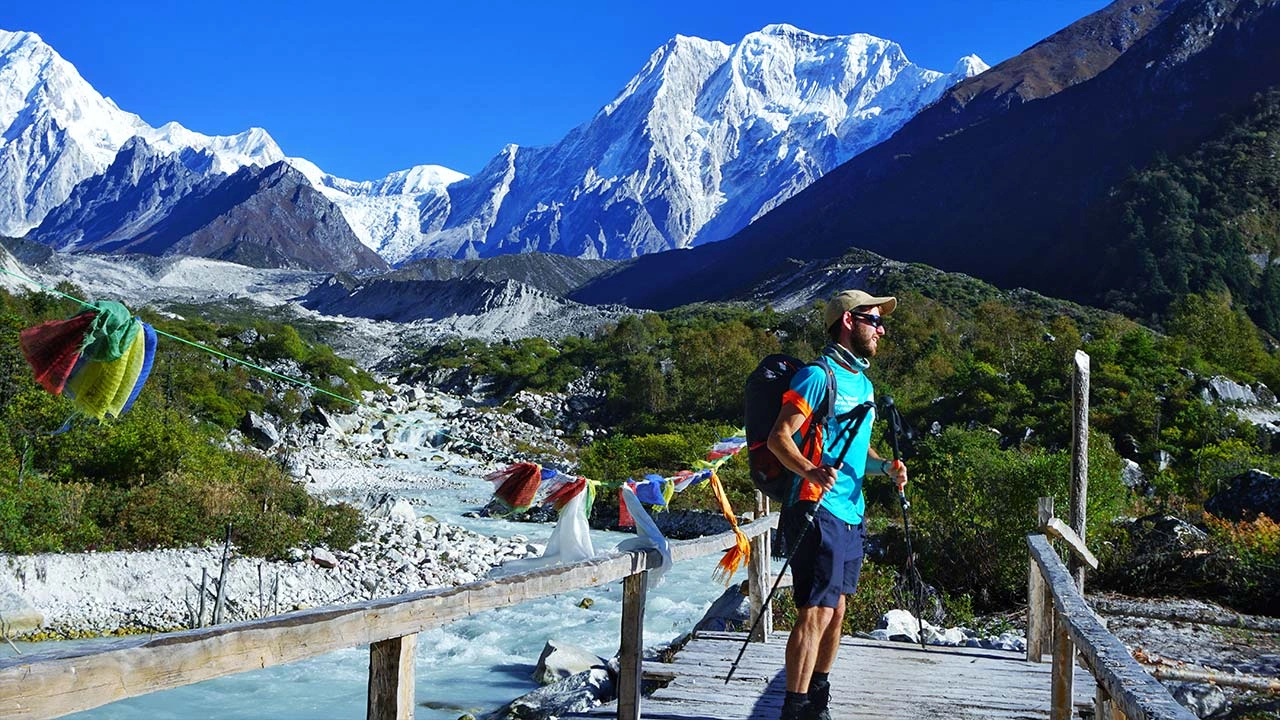
A solo Manaslu trek offers private pacing, flexible acclimatization, and full itinerary control, but it also involves higher per-person guide costs, stricter permit compliance, and greater altitude and remoteness risk than open trekking routes such as the Annapurna Circuit or Everest Base Camp. Most trekkers complete the route in 14 to 17 days, usually with acclimatization stops at Samagaon and Samdo, and must plan carefully for permits, transport, teahouses, weather delays, and emergency evacuation. This guide explains the 2026 solo trekking rules, permit structure, agency and guide requirements, route sections, itinerary length, total cost, altitude safety, and whether solo-with-guide travel is better than joining a group.
Can You Legally Trek Manaslu as a Solo Traveler?
Solo trekking on the Manaslu Circuit is legal in 2026, provided the trekker applies through an authorized trekking agency and travels with a licensed trekking guide. A solo traveler receives an individual restricted-area permit, complies with checkpoint regulations, and registers at every teahouse checkpoint along the 177 km route.
For the classic Manaslu Circuit, the Department of Immigration issues the restricted-area permit, while NTNC issues the MCAP and ACAP conservation permits. Both bodies classify the route as a restricted trekking zone under the Restricted Area Permit system. A solo traveler who enters without a licensed guide faces permit cancellation and a fine at any of the active checkpoints between Arughat and Dharapani.
Does Solo Mean Fully Alone or Solo With a Guide?
"Solo" on the Manaslu Circuit means one trekker traveling without other clients, not one person trekking without professional support. The solo trekker hires 1 licensed guide independently, separate from a group arrangement. The guide accompanies the trekker for the full duration of the route, from the first checkpoint at Jagat to the exit checkpoint at Dharapani.
A trekker who arrives at the permit checkpoint in Jagat without a licensed guide receives no entry authorization. Nepal's restricted-area framework draws a direct distinction between "independent solo" travel, which is prohibited, and "guided solo" travel, which is fully authorized. Before the March 2026 rule change, Manaslu restricted-area permits were issued only to group trekkers traveling with a licensed guide; the 2026 update newly allows single trekkers to apply through an authorized agency with a guide.
Do You Still Need an Agency and Licensed Guide?
Every solo trekker on the Manaslu Circuit requires both a Nepal Tourism Board–registered trekking agency and a Nepal government–licensed trekking guide. The agency processes the restricted-area permit application. The licensed guide holds a valid trekking guide license issued by the Tourism Department.
Porters are optional for solo trekkers. Hiring 1 porter reduces daily carry weight to under 10 kg, which is relevant above 4,000 m where trail gradient increases sharply. Once the paperwork is complete, official processing is typically same day if submitted before 1:00 PM, otherwise by the next day before noon; agency preparation time can still add extra lead time.
Why Is Manaslu Different From Open Trekking Routes?
The Manaslu Circuit passes through a government-designated restricted zone in Gorkha District, bordering Tibet, which requires a special permit not required on open routes such as the Annapurna Circuit or Everest Base Camp trail. Restricted status means access is controlled, monitored at checkpoints, and tied to guide requirements.
Nepal's trekking route classification system divides trails into 3 categories: open routes, restricted routes, and prohibited zones. The Manaslu Circuit falls under restricted routes. Open routes like the Annapurna Circuit require no special permit beyond the ACAP conservation fee. The Manaslu Circuit requires 3 separate permits and mandatory guide engagement.
Is the Manaslu Circuit in a Restricted Area?
The classic Manaslu Circuit includes a restricted-area section requiring a Department of Immigration permit, plus conservation-area sections covered by MCAP and, for the standard full-circuit exit, ACAP. The restricted designation applies because the route runs along the Nepal–Tibet border in Gorkha District, a sensitive boundary zone under bilateral Nepal–China agreements.
The Manaslu Conservation Area covers 1,663 sq km. The trek traverses the full eastern boundary of this conservation area. The restricted zone starts at Jagat village (1,340 m) and extends through Samagaon, Samdo, and Dharamsala to the Larkya La Pass at 5,160 m. The non-restricted lower section between Arughat and Jagat serves as the approach corridor but is still subject to checkpoint registration.
Which Route Sections Need Special Permits?
The restricted-area permit activates at Jagat (1,340 m) and covers all route sections north of that checkpoint, including Samagaon, Samdo, Larkya La Pass (5,160 m), and the descent to Bimtang. The 3 permits covering the full Manaslu Circuit route are the Restricted Area Permit (RAP), the Manaslu Conservation Area Permit (MCAP), and the Annapurna Conservation Area Permit (ACAP).
The ACAP activates on the southern descent from Bimtang through Dharapani, where the Manaslu route merges with the Annapurna Circuit trail. This 2-permit overlap at the route junction is unique to the Manaslu Circuit among Nepal's major trekking routes. Trekkers who skip the Annapurna descent section and exit directly from Bimtang by vehicle require only the RAP and MCAP.
Which Permits Does a Solo Manaslu Trek Require?
A standard full Manaslu Circuit trek requires three permits: the Manaslu restricted-area permit (RAP), plus MCAP and ACAP. The current Manaslu-specific Immigration page lists the RAP at USD 70 per person for the first 7 days in September–November and USD 50 per person for the first 7 days in December–August, while MCAP and ACAP are NPR 3,000 each. All 3 are processed in Kathmandu before departure.
The RAP is the primary access document. Without it, trekkers are denied entry at the Jagat checkpoint. The MCAP and ACAP are conservation fees collected by the National Trust for Nature Conservation (NTNC). All 3 permits require a passport-size photograph and a valid passport copy at the time of application.
How Does the Manaslu Restricted-Area Permit Work?
The Manaslu Restricted Area Permit (RAP) is a week-based permit issued per trekker, priced at USD 100 per person for the first week and USD 15 per additional day during the September–November peak season. The permit is valid for one entry and covers the entire restricted section from Jagat to the Larkya La Pass exit zone.
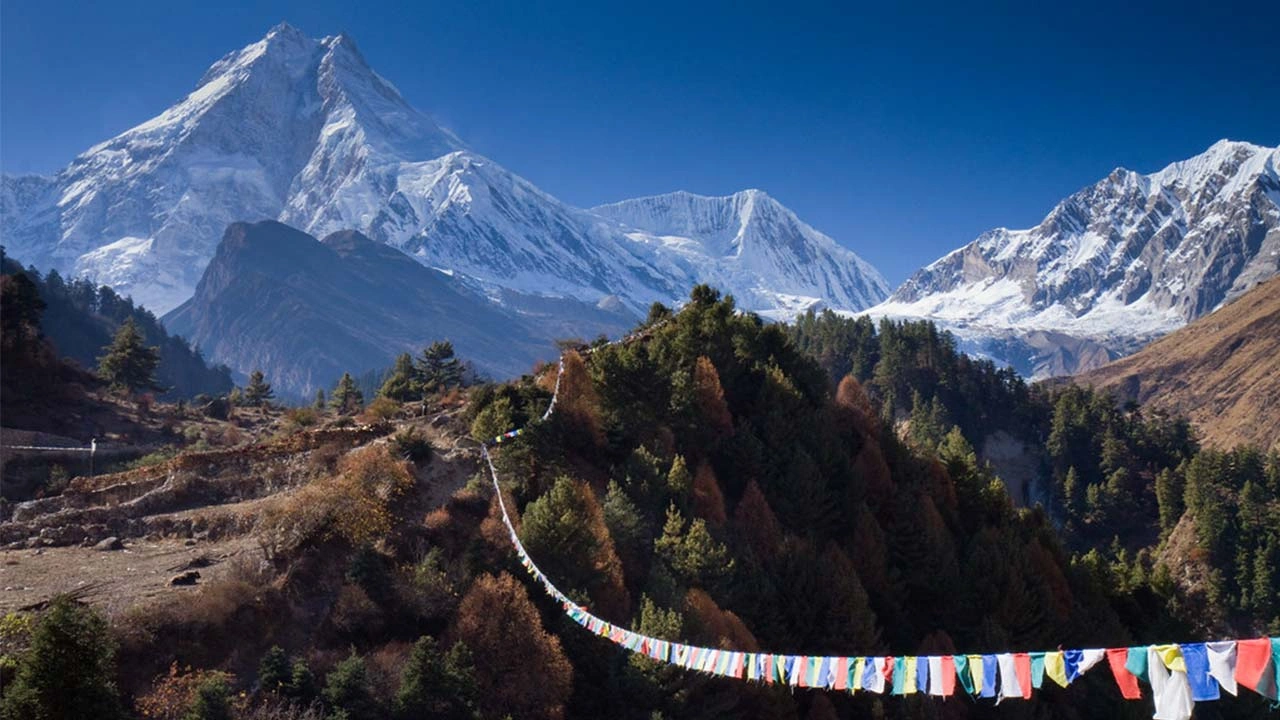
The RAP application is submitted through an authorized trekking agency to the Department of Immigration in Kalikasthan, Kathmandu. Processing takes 1 working day when submitted with complete documents: passport copy, 2 photographs, agency letter, and licensed guide details. The permit lists the trekker's full name, permit number, entry date, and exit date. Checkpoint officers at Jagat, Deng, Namrung, Samagaon, and Samdo verify this permit manually.
Do You Also Need MCAP and ACAP Permits?
Solo trekkers need both the MCAP at NPR 3,000 (~USD 22) and the ACAP at NPR 3,000 (~USD 22), bringing the combined conservation permit cost to NPR 6,000 (~USD 44) per trekker. The MCAP covers the Manaslu Conservation Area from Arughat to Bimtang. The ACAP covers the Annapurna Conservation Area from Dharapani to Besisahar.
The MCAP is issued at the Manaslu Conservation Area office in Gorkha or through the NTNC office in Kathmandu. The ACAP is issued at NTNC offices in Kathmandu or at the Besisahar entry point. Both permits require passport copies and are valid for one complete traverse of their respective conservation areas. Trekkers who exit the route before Dharapani skip the ACAP and pay only 2 permit fees.
What Changed for Solo Manaslu Trekkers in 2026?
Nepal’s Department of Immigration announced in March 2026 that single trekkers may receive restricted-area trekking permits for Manaslu, provided they apply through an authorized trekking agency and are accompanied by a licensed trekking guide.
The 2-person minimum rule, enforced from 2019 onward, required at least 2 paying trekkers to qualify for a Manaslu RAP. This rule effectively blocked single trekkers from obtaining permits independently. The January 2026 regulatory update removed the minimum group size clause while maintaining all other access conditions, including mandatory guide engagement and agency registration.
Can One Trekker Now Get a Restricted-Area Permit?
One trekker receives a Manaslu restricted-area permit in 2026 as an individual applicant, without pairing with another trekker. The permit fee structure remains identical to group permits: USD 100 per person for the first week in peak season. No surcharge applies to solo single-person permits under the 2026 framework.
The removal of the 2-person minimum does not affect guide requirements. A solo trekker still registers 1 licensed guide on the permit application. The agency submits the permit as a single-trekker application, listing guide name, license number, and trekker passport details. The Department of Immigration processes single-trekker applications through the same workflow as group applications, with a 1-day standard processing time.
What Conditions Must Solo Trekkers Follow?
Solo trekkers on the Manaslu Circuit in 2026 follow 4 mandatory conditions: hire a licensed guide, register through a registered agency, report at all 6 route checkpoints, and carry valid copies of all 3 permits throughout the trek. Failure to meet any of these 4 conditions results in permit revocation.
The 4 conditions apply equally to solo and group trekkers. Checkpoint officers at Jagat, Deng, Ghap, Namrung, Samagaon, and Samdo record each trekker's permit number, entry date, and guide's license number. Solo trekkers without a guide present at checkpoints face immediate detention and escort to Arughat. Travel insurance covering high-altitude evacuation above 5,000 m is strongly recommended and verified by some agencies at the time of permit processing.
What Does a Practical Solo Manaslu Itinerary Look Like?
A standard solo Manaslu Circuit itinerary covers 177 km in 14 to 18 days, starting from Soti Khola (700 m) or Arughat (610 m) and finishing at Besisahar (760 m), crossing the Larkya La Pass (5,160 m) on day 12 or 13. Most solo trekkers complete the full circuit in 16 days to allow 2 acclimatization days above 3,500 m.
The itinerary divides into 3 distinct elevation phases: the approach valley between 700 m and 1,400 m (days 1–3), the mid-altitude gorge and forest zone between 1,400 m and 3,500 m (days 4–9), and the high-altitude alpine zone between 3,500 m and 5,160 m (days 10–14). Each phase requires different acclimatization strategies and teahouse accommodation planning.
How Many Days Do Most Solo Manaslu Itineraries Need?
Most solo trekkers complete the Manaslu Circuit in 14 to 17 days, with 16 days being the most frequently used itinerary length when incorporating 2 dedicated acclimatization days at Samagaon (3,530 m) and Samdo (3,860 m). A 14-day itinerary is possible for trekkers with prior high-altitude experience above 4,500 m.
The 16-day itinerary allocates days as follows: 3 days on the approach from Soti Khola to Deng, 4 days from Deng to Samagaon, 1 acclimatization day at Samagaon, 1 day to Samdo, 1 acclimatization day at Samdo, 1 day to Dharamsala (High Camp at 4,460 m), 1 day crossing Larkya La and descending to Bimtang, 2 days descending to Dharapani, and 2 days trekking to Besisahar. Solo trekkers add 1 buffer day to this framework to account for weather delays at Larkya La, where snowfall blocks the pass between November and April.
Where Do Most Trekkers Start and Finish?
Most Manaslu Circuit trekkers start at Soti Khola (700 m) or Arughat (610 m) in Gorkha District and finish at Besisahar (760 m) in Lamjung District, a route traversal distance of 177 km. Kathmandu to Arughat by road takes 7 to 8 hours (approximately 165 km via Prithvi Highway to Gorkha). Besisahar connects to Kathmandu by a 6-hour drive (approximately 175 km).
Soti Khola serves as the official trek start point for most permit arrangements because the first MCAP checkpoint is located there. Arughat, located 22 km before Soti Khola, is the road-access point where jeeps terminate during the monsoon season. The counterclockwise direction (Soti Khola → Larkya La → Besisahar) is the standard direction. Clockwise trekking is technically possible but places the high-altitude section early in the itinerary, reducing acclimatization time.
How Much Does a Solo Manaslu Trek Cost?
A solo Manaslu Circuit trek costs between USD 1,200 and USD 2,000 for a 16-day guided itinerary, covering 3 permits (USD 244), licensed guide fees (USD 25–35 per day), agency service fees (USD 100–200), accommodation (NPR 400–1,200 per night), and food (NPR 600–1,500 per day). Porter fees of USD 15–20 per day are optional.
The total cost breaks into 4 budget categories: permit fees at approximately USD 244, guide and support staff at USD 400–700 for 16 days, agency and logistics fees at USD 100–200, and on-trail expenses including food and accommodation at USD 400–650. Solo trekkers pay the same per-person permit fees as group trekkers but absorb agency fixed costs independently, increasing the per-person total compared to a 4-person group split.
Which Permit Fees Change by Season?
The Manaslu Restricted Area Permit fee changes by season: USD 100 per person per week during the September–November peak season, and USD 75 per person per week during the March–May spring season and December–August off-season periods. The MCAP and ACAP fees remain fixed at NPR 3,000 each, regardless of season.
The following table shows the 3-permit cost breakdown by season for 1 solo trekker completing a 2-week circuit:
The table below shows total permit costs per solo trekker across the 3 seasonal pricing windows, based on a 14-day (2-week) permit duration.
Permit | Peak (Sep–Nov) | Spring (Mar–May) | Off-Season |
RAP (2 weeks) | USD 215 | USD 165 | USD 165 |
MCAP | USD 22 | USD 22 | USD 22 |
ACAP | USD 22 | USD 22 | USD 22 |
Total | USD 259 | USD 209 | USD 209 |
RAP pricing applies as USD 100 for the first week and USD 15 per additional day in peak season, and USD 75 for the first week and USD 10 per additional day in spring and off-season periods.
Does Solo Still Save Money Once a Guide Is Required?
A solo trekker pays more per person than a group trekker once guide costs are calculated, because the licensed guide's daily fee of USD 25–35 is absorbed by 1 person rather than split across 3 to 8 group members. A solo trekker's guide cost for a 16-day trek reaches USD 400–560, compared to USD 50–140 per person in a group of 4 to 8.
Solo trekking saves money on 3 line items: no group-tour markup fees, no shared accommodation price inflation during peak season, and full flexibility on daily pace. Solo trekking costs more on 1 critical line item: guide fee absorption. A group of 4 trekkers sharing 1 guide pays USD 100–140 each for the guide over 16 days. A solo trekker pays USD 400–560 for the same guide service. Total savings from solo teahouse flexibility reduce this gap by approximately USD 100–200 over 16 days.
What Risks Matter Most on a Solo Manaslu Trek?
The 3 highest-risk factors on a solo Manaslu Circuit trek are acute mountain sickness (AMS) above 3,500 m, trail isolation between Samdo and Larkya La where rescue access takes 12–18 hours, and weather-related pass closures at Larkya La (5,160 m) that strand trekkers at Dharamsala (4,460 m) for 1–3 days. A licensed guide mitigates all 3 risks through route knowledge, symptom monitoring, and checkpoint communication.
Manaslu's remote geography is the primary risk amplifier for solo trekkers. The nearest helicopter landing zone to the Larkya La area is at Bimtang (3,720 m), a 4-hour descent from the pass. Helicopter evacuation from Bimtang to Kathmandu costs USD 2,500–4,500 depending on altitude and cloud cover. Travel insurance covering high-altitude helicopter evacuation is available from Nepal Insurance Company and other domestic providers at USD 80–120 for a 3-week policy.
How Do Altitude and Remoteness Change the Plan?
Altitude on the Manaslu Circuit becomes a clinical risk factor above 3,500 m, where acclimatization days at Samagaon (3,530 m) and Samdo (3,860 m) reduce AMS incidence by approximately 60% compared to trekkers who skip rest days. Remoteness extends evacuation time to 12–18 hours from any point above Namrung (2,630 m).
The Lake Birendra area near Samagaon at 3,530 m is the last location with reliable teahouse communication infrastructure before the high-altitude zone. Above Samagaon, teahouse satellite phone service is available at Samdo and Dharamsala but unreliable during snowfall. Solo trekkers carry a personal locator beacon (PLB) or satellite messenger device (Garmin inReach or SPOT) as standard practice above 4,000 m. Guide agencies in Kathmandu rent PLB devices at NPR 500–800 per day.
How Should Solo Trekkers Handle Emergencies?
Solo trekkers on the Manaslu Circuit follow a 4-step emergency protocol: notify the licensed guide immediately, contact the nearest checkpoint officer for official incident registration, call the trekking agency emergency line in Kathmandu, and activate travel insurance for helicopter evacuation authorization. Response time from activation to helicopter dispatch averages 3–5 hours in clear weather.
The 4 emergency contacts every solo Manaslu trekker carries are: agency emergency number (Kathmandu-based), licensed guide's mobile number, Nepal Tourism Board helpline (+977-1-4256909), and travel insurance emergency line. Checkpoint officers at Samagaon and Samdo maintain radio contact with Gorkha District rescue coordination. The Manaslu Conservation Area office in Gorkha coordinates ground rescue teams for cases where helicopter access is blocked by weather above 4,500 m.
How Does Solo Manaslu Compare With Group Trekking?
Solo Manaslu trekking with a guide offers complete schedule flexibility and a customized daily pace, while group trekking distributes permit and guide costs across 4 to 12 members, reducing per-person expenses by 30–50%. Solo-with-guide travel suits experienced high-altitude trekkers. Group join treks suit first-time Himalayan trekkers prioritizing cost efficiency and social support.
.webp)
The 2 formats produce different daily experiences on the same 177 km route. A solo trekker and guide depart checkpoints at any time, pause at any location, and adjust itinerary length based on acclimatization response. A group trek follows a fixed itinerary with 8–14 members, 1 lead guide, and 1–2 assistant guides or porters per group. Group treks reach teahouses earlier in the day, securing accommodation during peak season when teahouse beds fill between 4:00 PM and 5:30 PM.
Who Is Better Suited to Solo-With-Guide Travel?
Solo-with-guide travel on the Manaslu Circuit is best suited to trekkers with 3 specific qualifications: prior trekking experience above 4,000 m, physical fitness for 6–9 daily trekking hours on technical terrain, and comfort with remote environments 18+ hours from urban medical infrastructure. Trekkers meeting all 3 qualifications extract maximum value from solo-with-guide format.
Trekkers with prior experience on routes such as the Annapurna Circuit, Langtang Valley, or Everest Base Camp approach Manaslu with relevant altitude adaptation knowledge. A solo trekker without prior experience above 4,000 m faces a steeper learning curve at Samagaon and Samdo acclimatization zones. Solo format also requires stronger personal organization: managing 3 permits, tracking 6 checkpoints, and coordinating guide logistics without group-level administrative support from a tour leader.
When Is a Group Join Trek the Better Choice?
A group join trek is the better choice in 3 situations: when per-person budget is under USD 1,200, when the trekker has no prior Himalayan trekking experience, and when the trekker prefers structured daily schedules with built-in social support. Group join trek pricing starts at USD 800–1,100 per person for a 16-day Manaslu Circuit package from Kathmandu.
Group join treks are organized by Kathmandu-based agencies with fixed departure dates, typically 6–8 departure windows in October, November, March, and April. A group of 8 trekkers shares 1 lead guide and 1 assistant guide, reducing per-person guide costs to USD 50–90 over 16 days. First-time Himalayan trekkers benefit from the group dynamic: real-time peer feedback on altitude symptoms, shared acclimatization monitoring, and experienced group leaders who recognize AMS progression before it becomes acute.
How Should You Plan Solo Manaslu With an Agency?
Planning a solo Manaslu trek with a registered agency takes 5 steps: select a Nepal Tourism Board–registered agency, confirm licensed guide availability, submit permit applications 5–7 days before departure, arrange travel insurance covering helicopter evacuation above 5,000 m, and complete pre-trek logistics including transport to Arughat. All 5 steps execute from Kathmandu within 3–5 working days for a fully prepared solo trekker.
Nepal Tourism Board registration verification is the first quality check. A legitimate agency's registration number is searchable on the Nepal Tourism Board website (ntb.gov.np). The agency assigns a licensed guide whose credentials are verifiable through the Trekking Agencies' Association of Nepal (TAAN) guide registry. Solo trekkers confirm guide license number, experience record on Manaslu specifically, and language proficiency before finalizing the contract.
Can a Licensed Agency Arrange a Solo Manaslu Trek?
A licensed agency arranges a solo Manaslu trek as a standard service offering, covering restricted-area permit processing, guide assignment, porter arrangement, and checkpoint registration documentation within 3–5 working days of confirmed booking. Agency service fees for solo trek arrangements range from USD 100 to USD 200, covering administrative and processing costs.
The agency's core deliverables for a solo Manaslu arrangement are: RAP application submission to the Department of Immigration, MCAP purchase from the NTNC office, ACAP procurement, guide contract with full license documentation, route briefing document, and emergency contact registration. Solo trekkers receive a permit package folder containing all 3 original permits, guide assignment letter, and agency emergency contact card. This folder is presented at every checkpoint on the 177 km route.
What Are the Key Takeaways About Solo Manaslu Trekking?
Solo Manaslu Circuit trekking is legally authorized in 2026 for individual trekkers, requires 3 permits totaling USD 209–259 per person, mandates 1 licensed guide hired through a registered agency, covers 177 km in 14–17 days, and carries significant altitude and remoteness risks managed through acclimatization days and travel insurance. The 2026 removal of the 2-person minimum makes individual permits fully accessible.
The Manaslu Circuit Trek remains one of Nepal's most demanding and rewarding routes, combining the cultural landscape of Gorkha District's Tibetan-influenced villages with the physical challenge of the Larkya La Pass at 5,160 m. Solo trekking with a licensed guide on the Manaslu Circuit delivers the full route experience with personal schedule control, at a higher per-person cost than group travel but with complete itinerary autonomy. Trekkers who prepare permits in Kathmandu, engage a licensed guide, carry emergency communication devices, and schedule 2 acclimatization days above 3,500 m complete the Manaslu Circuit safely and on schedule.