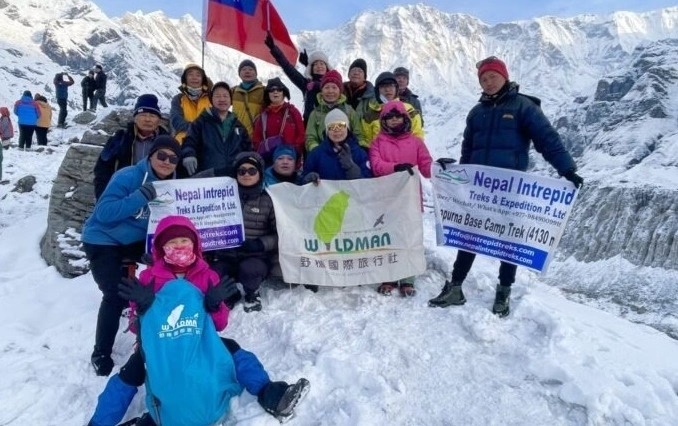
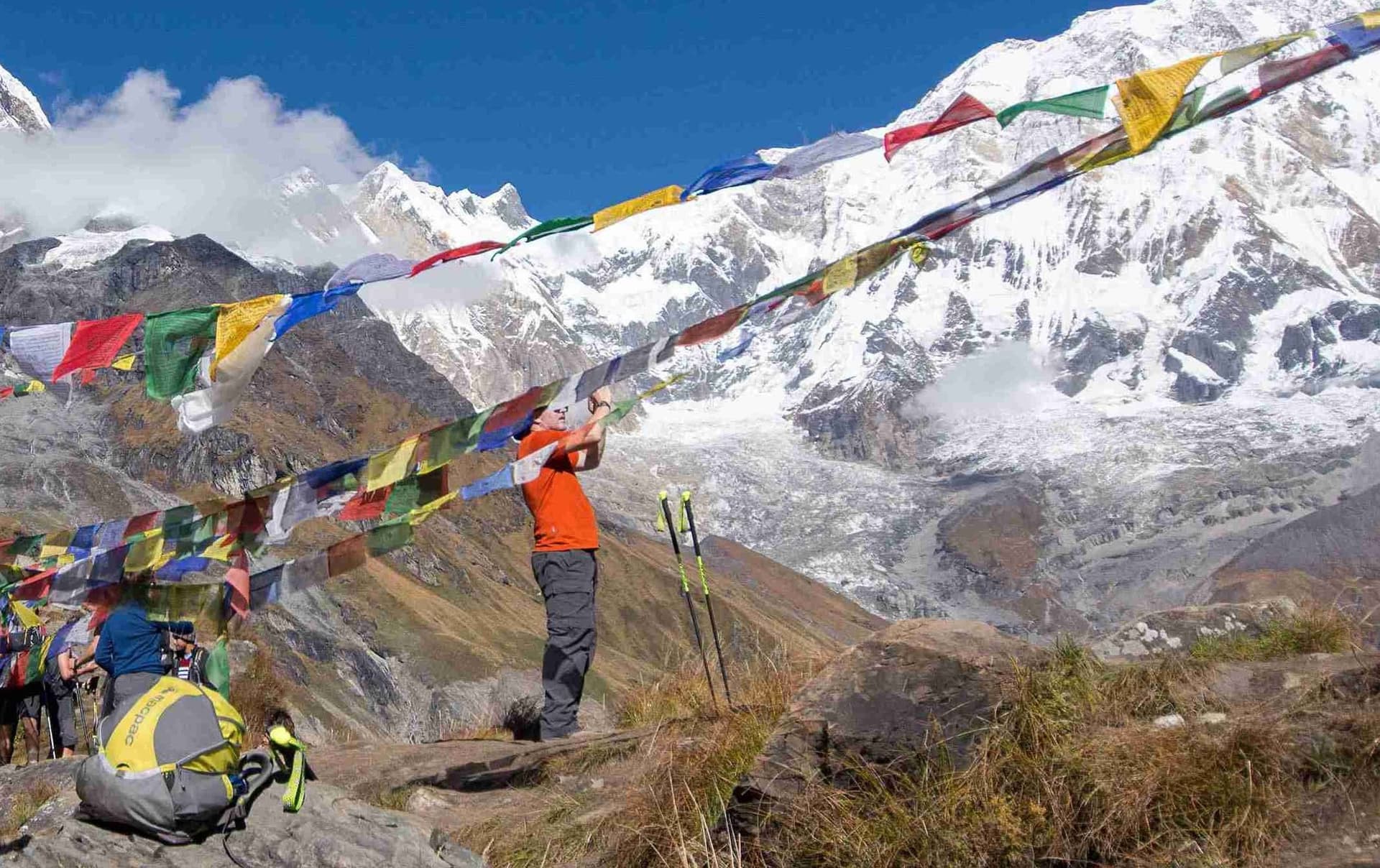
Beginner trekking in Nepal takes place across one of the most structured high-altitude hiking environments in the world, within the Himalayan region of Nepal, where established trail networks, teahouse lodges, and regulated permit systems make multi-day mountain travel accessible without technical climbing experience. Routes through areas such as Annapurna Conservation Area and Langtang National Park combine dramatic Himalayan scenery with predictable logistics, marked trails, and emergency support systems that reduce navigational and accommodation uncertainty for first-time trekkers.
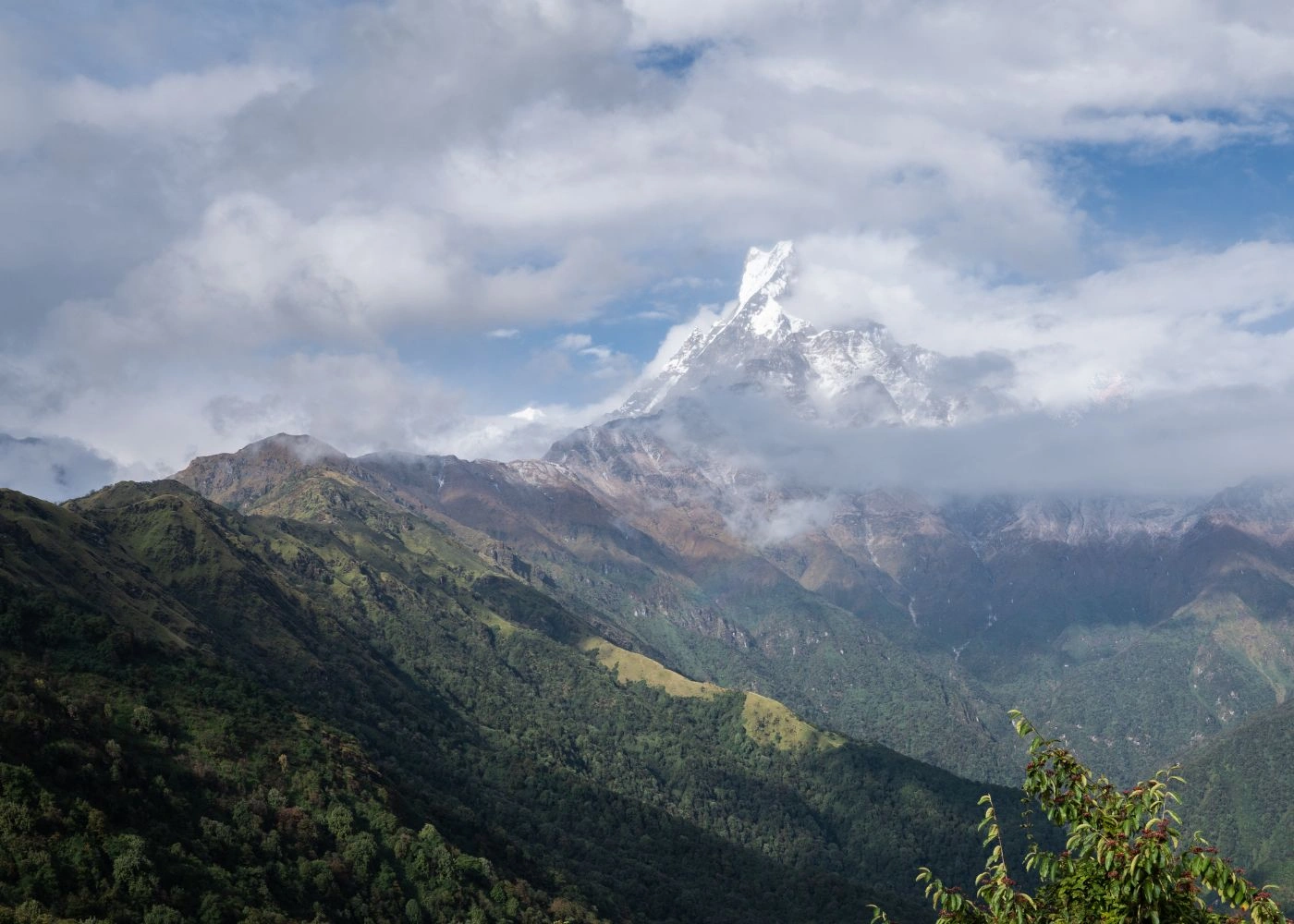
Despite this infrastructure, beginner trekking still involves sustained walking at altitude, daily elevation gains, and exposure to physiological limits such as reduced oxygen levels above 2,500 meters. This guide consolidates every essential element needed to plan a first trek in Nepal, including route selection (such as Ghorepani Poon Hill and Langtang Valley), seasonal timing, permit requirements, physical training, packing systems, safety protocols, and realistic budgeting, providing a complete framework for preparing, executing, and completing a safe and well-informed Himalayan trekking experience.
Why Is Nepal Ideal for Beginner Trekkers?
Nepal is ideal for beginner trekkers because it combines world-class mountain scenery with an infrastructure built specifically for non-technical hiking. Teahouse lodges, marked trails, and English-speaking local guides exist at nearly every major trailhead, removing the logistical barriers that make mountain travel difficult elsewhere.
What makes Nepal's trails beginner-friendly?
Nepal's trails are beginner-friendly because of 4 structural advantages: well-marked paths, consistent teahouse accommodation, established rescue systems, and graduated elevation gain.
Unlike remote alpine environments in Patagonia or Alaska, Nepal's most popular trekking corridors, the Annapurna Circuit, Langtang Valley, and Ghorepani Poon Hill, feature teahouses spaced 2–4 hours apart. Trekkers walk during daylight, sleep in staffed lodges, and eat hot meals nightly without carrying camping equipment. The Nepal Tourism Board (NTB) maintains trail signage across 11 designated trekking areas. TIMS card checkpoints along major trails log trekker movements every 6–8 hours, creating a de facto safety net. Rescue helicopter access is available from most major trailheads within 90 minutes.
What most beginners overlook: trail friendliness is not the same as trail easiness. Even beginner routes in Nepal involve 5–8 hours of daily walking on uneven terrain with cumulative elevation gains of 600–1,200 meters per day. The infrastructure lowers logistical risk, it does not reduce physical demand.
How does altitude affect first-time trekkers?
Altitude affects first-time trekkers through reduced oxygen levels, which begin to impact physical performance at elevations above 2,500 meters. The Ghorepani Poon Hill trek peaks at 3,210 meters; Langtang Valley reaches 3,870 meters. At these elevations, atmospheric oxygen concentration drops to approximately 68–72% of sea-level levels.
Acute Mountain Sickness (AMS) affects a significant portion of trekkers, with a 2024 HRA Manang retrospective analysis identifying an 11.6% incidence of altitude-related illness among nearly 3,000 visitors treated between 2018 and 2023. The Lake Louise Score is the standard diagnostic tool for AMS; a score of 3 or above indicates AMS onset.
4 factors accelerate AMS risk in beginners:
Ascending more than 500 meters per day above 3,000 meters
Flying directly from sea level into Lukla or Jomsom without buffer days
Dehydration (trekkers lose 1–2 liters of water per hour in dry mountain air)
Prior AMS history, which increases recurrence probability by 60%
Acclimatization days, rest days at the same altitude, significantly reduce AMS risk according to the 2024 WMS Altitude Illness Update, which provides the latest evidence-based prevention protocols.
Which Are the Best Beginner Trekking Routes in Nepal?
The 3 best beginner trekking routes in Nepal are the Ghorepani Poon Hill trek, the Langtang Valley trek, and the Chisapani-Nagarkot trek. These routes share 4 common traits: reliable teahouse networks, maximum elevation under 4,000 meters, round-trip durations of 4–9 days, and access without technical climbing equipment.
Why is the Ghorepani Poon Hill trek popular?
The Ghorepani Poon Hill trek is popular because it delivers panoramic views of 7 Himalayan peaks, including Dhaulagiri (8,167m), Annapurna I (8,091m), and Machhapuchhre (6,993m), within a 4–5 day itinerary that requires no prior trekking experience.
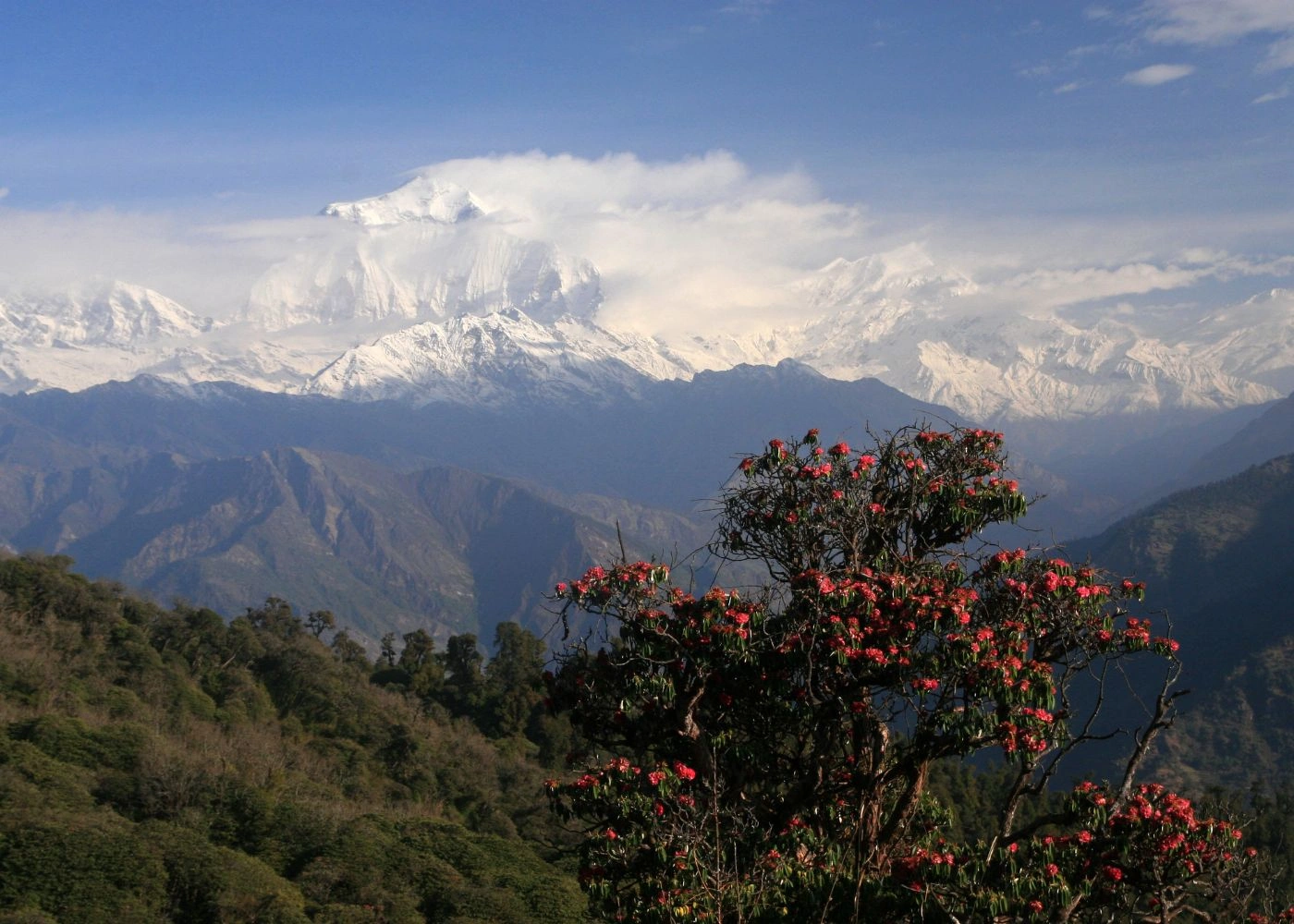
The standard Poon Hill trek begins in Nayapul (1,070m), ascends through rhododendron forests to Ghorepani (2,860m), and culminates at Poon Hill viewpoint (3,210m) for a pre-dawn sunrise panorama. Total trail distance is approximately 50 kilometers. Daily walking time averages 5–6 hours on stone-paved trails. Maximum elevation gain on the steepest day, the ascent from Tadapani to Ghorepani, is 900 meters.
Teahouses on this route offer private rooms priced at NPR 300–600 (USD 2.25–4.50) per night in 2026, with meals priced separately. WiFi availability exists in Ghorepani village. Helicopter evacuation from Ghorepani takes 25 minutes to Pokhara.
The Ghorepani trek runs through Annapurna Conservation Area (ACAP), which charges a separate entry fee from the TIMS card, a distinction 40% of first-time trekkers miss when budgeting.
Is the Langtang Valley trek suitable for beginners?
The Langtang Valley trek is suitable for beginners with moderate physical fitness and 7–9 days available, provided they follow a strict acclimatization schedule above 3,000 meters.
Langtang Valley, located 52 kilometers north of Kathmandu in Rasuwa District, sits within Langtang National Park, Nepal's first Himalayan national park (established 1976). The trail begins at Syabrubesi (1,460m) and extends to Kyanjin Gompa (3,870m). Total trekking distance is 65 kilometers round trip. Daily elevation gains between Lama Hotel and Langtang Village average 700 meters per day.
The key advantage of Langtang for beginners: proximity to Kathmandu. The trailhead is a 7–8 hour bus journey from Kathmandu, compared to a 35-minute flight for Lukla-based Everest treks. This eliminates domestic flight delays, a logistical problem that remains significant; the 2025 CAAN Flight Movement Report notes that while Lukla handled record traffic, weather still causes multi-day disruptions for thousands of trekkers annually.
One practical detail most first-timers miss: Langtang Village was severely damaged in the 2015 Gorkha earthquake. Rebuilt teahouses are now structurally reinforced, but trekkers visiting the village witness memorials and resettlement history that add cultural depth rarely found on more touristed routes.
When Is the Best Time to Trek in Nepal?
The best time to trek in Nepal is during 2 distinct seasons: spring (March–May) and autumn (September–November). These 4-month windows offer stable weather, clear mountain views, dry trails, and temperatures between 10°C and 20°C at lower elevations.
How do seasons affect trekking conditions?
Seasons affect trekking conditions across 4 measurable variables: trail visibility, precipitation, trail congestion, and temperature range.
Season | Months | Trail Conditions | Temperature (2,000–3,500m) |
Spring | March–May | Dry, rhododendrons in bloom | 5°C–18°C |
Pre-monsoon | Late May–June | Increasing cloud, haze | 10°C–22°C |
Monsoon | July–August | Heavy rain, leeches, trail erosion | 12°C–24°C |
Autumn | September–November | Clear, dry, peak visibility | 2°C–18°C |
Winter | December–February | Snow above 3,000m, sparse crowds | -8°C–10°C |
Autumn (September–November) provides the highest trail visibility in Nepal. Post-monsoon skies clear by mid-September, and Himalayan views from Poon Hill and Langtang Valley reach 80–100 kilometers of horizontal distance on clear days. October remains Nepal's busiest trekking month, with the 2025 Nepal Tourism Statistics recording over 128,000 arrivals in that month alone as the region continues to see record-breaking visitor growth.
Spring (March–May) brings rhododendron blooms below 3,500 meters, with over 30 rhododendron species in the Annapurna region, and offers a quieter alternative to autumn with comparable trail conditions.
Is winter trekking safe for beginners?
Winter trekking in Nepal is safe for beginners on routes below 3,000 meters but carries 3 specific risks above that elevation: trail icing, snowfall-blocked passes, and teahouse closures.
The Ghorepani Poon Hill trek is completable in December and January, but snow at Poon Hill (3,210m) is common from late December onward. Teahouses in Ghorepani remain open year-round. The Langtang Valley trail above 3,500 meters accumulates snowpack from December through February, making trail navigation difficult without crampons and prior mountain experience.
.webp)
The practical advantage of winter trekking for beginners: trail congestion drops by 70% compared to October. Teahouse prices fall by 30–40%. Permit queues at the ACAP office in Pokhara average under 15 minutes versus 45–60 minutes in peak season.
What Permits Are Required for Trekking in Nepal?
Trekking in Nepal requires 2 core documents: a TIMS (Trekkers' Information Management System) card and a National Park or Conservation Area permit. Exact permit combinations depend on the specific trekking region.
Do beginners need TIMS and park permits?
Beginners need both a TIMS card and a conservation/national park permit for every major trekking route in Nepal, including Ghorepani Poon Hill and Langtang Valley. Trekking without valid permits results in fines at checkpoint stations.
The TIMS card, issued by the Trekking Agencies' Association of Nepal (TAAN) or Nepal Tourism Board, costs Nrs 2000 per person for individual trekkers and Nrs 1000 per person for those trekking through registered agencies (2026 rates). TIMS cards serve a dual purpose: registering trekker details for rescue coordination and generating data for trail management.
Park permit costs in 2026:
Annapurna Conservation Area Permit (ACAP): NPR 3,000 (USD 22.50) for foreign nationals
Langtang National Park Entry Permit: NPR 3,000 (USD 22.50) for foreign nationals
Sagarmatha (Everest) National Park Permit: USD 30 per person
Restricted area permits, required for Upper Mustang, Dolpo, and Manaslu, cost USD 500–700 per person per week and require mandatory licensed guide accompaniment. These areas are not classified as beginner routes.
How can you obtain trekking permits easily?
Trekking permits are obtained through 3 verified channels: Nepal Tourism Board offices in Kathmandu and Pokhara, registered trekking agencies, and (for some permits) online through the NTB portal.
The NTB head office in Pradarshani Marg, Kathmandu, and the NTB branch office in Lakeside, Pokhara, process TIMS cards and conservation area permits simultaneously. Processing time is 30–60 minutes with a valid passport copy, 2 passport-sized photos, and payment in Nepali rupees or USD. ACAP permits are issued from the ACAP office on Damside Road in Pokhara and require the same documentation.
The most common mistake beginners make: attempting to obtain all permits on the first day of travel. For a step-by-step walkthrough of getting the ACAP permit in Nepal, including office locations, opening hours, and documentation needed, plan your permit day at least 24 hours before the trek starts. Arriving in Pokhara on a Friday evening before a Saturday start leaves no time for permit processing. Planning permits 1 full day before the trek departure eliminates this problem.
How Difficult Is Beginner Trekking in Nepal?
Beginner trekking in Nepal rates a 2–3 out of 5 on the Nepal Tourism Board's trekking difficulty scale, requiring sustained aerobic fitness, mental resilience on multi-day routes, and the physical capacity to walk 15–22 kilometers per day on uneven terrain.
What fitness level is needed for easy treks?
Easy treks in Nepal require a baseline aerobic fitness level equivalent to completing a 10-kilometer walk in under 2 hours without recovery stops. This is not elite fitness, it reflects consistent daily activity rather than athletic training.
Trekkers who walk 45–60 minutes daily in the 8 weeks before departure manage the Ghorepani route without significant fatigue. The Langtang Valley trek demands higher endurance, trekkers walking 90 minutes daily across varied terrain 5 times per week for 8 weeks perform noticeably better above 3,000 meters, where reduced oxygen increases perceived effort by 30–40%.
3 fitness markers that predict trekking success for beginners:
Resting heart rate below 75 bpm: indicates cardiovascular efficiency
Ability to climb 10 consecutive flights of stairs without stopping: reflects leg endurance under load
Body weight carried comfortably for 5+ hours: most trekkers carry 7–12 kg day packs
Age is not a limiting factor on beginner routes. Trekkers ranging from 16 to 72 years old complete Poon Hill and Langtang Valley treks regularly each season.
How do elevation gains impact difficulty?
Elevation gain transforms trail difficulty because the human body's oxygen-carrying efficiency decreases by approximately 3% for every 300-meter altitude gain above 2,500 meters, directly increasing cardiovascular load even at identical walking speeds.
A 600-meter ascent at 1,000 meters elevation feels significantly easier than the same 600-meter ascent at 3,200 meters. This physiological reality catches most beginners off guard because they train at low altitude and arrive in Nepal assuming their fitness transfers directly to high-altitude performance. It does not transfer at a 1:1 ratio.
The "climb high, sleep low" acclimatization principle, developed through Himalayan high-altitude research, means trekkers ascend to a high point during the day but descend 200–400 meters to sleep. This technique accelerates red blood cell production and reduces AMS onset by forcing the body to adapt during active hours while recovering at lower oxygen pressure during sleep.
What Should You Pack for a Beginner Trek in Nepal?
A beginner trekker in Nepal packs a day pack of 7–12 kg containing 4 essential categories: clothing layers, safety equipment, navigation tools, and personal health items. Porters hired through trekking agencies carry main luggage (up to 15 kg per porter) at rates of NPR 800–1,200 per day.
What clothing is essential for mountain weather?
Mountain weather in Nepal demands a 3-layer clothing system: a moisture-wicking base layer, an insulating mid-layer, and a waterproof outer shell. Temperature swings of 20°C between morning and afternoon are normal above 2,500 meters.
The 3-layer system functions as follows:
Base layer (merino wool or synthetic): wicks sweat from skin; avoid cotton, which retains moisture and accelerates hypothermia when wet
Mid-layer (fleece jacket or down vest): traps body heat; down insulation rated to -5°C is standard for Poon Hill and Langtang
Outer shell (Gore-Tex or equivalent): blocks wind and precipitation; must have taped seams for effective waterproofing above 3,000 meters
Below-the-waist essentials: convertible trekking pants (zip-off shorts for warm lower elevations), thermal leggings for mornings above 3,000 meters, and wool or synthetic hiking socks changed daily to prevent blister formation. Trail runners rated for wet conditions outperform heavy leather boots on Nepal's stone-paved lower trails; mid-height trekking boots provide ankle support above 2,500 meters where loose rock sections increase ankle twist risk.
What gear is most important for safety and comfort?
The 5 most important gear items for beginner trekking safety and comfort are: trekking poles, a quality sleeping bag, a water purification system, a first aid kit with AMS medication, and a headlamp with spare batteries.
Trekking poles: Reduce knee joint load on descents by 22–27%, according to the Journal of Experimental Biology. Adjustable aluminum poles weighing 500–700 grams per pair are standard on teahouse routes
Sleeping bag: Teahouses provide blankets, but their insulating quality varies. A sleeping bag rated to 0°C covers conditions on Poon Hill and Langtang; rated to -10°C for routes above 4,000 meters
Water purification: Waterborne illness from untreated water affects 15–20% of unaware trekkers. SteriPen UV purifiers or iodine tablets treat 1 liter in 90 seconds; water purification tablets cost NPR 200 per pack at Pokhara pharmacies
First aid kit with AMS medication: Acetazolamide (Diamox), prescribed at 125–250 mg twice daily, reduces AMS risk by 75% when started 24 hours before ascent. Paracetamol for headache, rehydration salts, blister plasters, and wound dressing complete the essential kit
Headlamp: Early morning Poon Hill summit attempts begin at 4:00–4:30 AM in complete darkness. Rechargeable headlamps with 200+ lumen output and USB-C charging (compatible with Nepali power banks) are standard in 2026
How Should You Prepare Physically for Trekking in Nepal?
Physical preparation for Nepal trekking requires 8–12 weeks of progressive cardiovascular and lower-body strength training, structured around the specific elevation profiles and daily distances of the target route.
What training helps improve endurance before trekking?
A structured 8-week training program improves trekking endurance through 4 key exercises: sustained uphill walking, stair climbing under load, long-distance flat walking, and lower-body strength work targeting quadriceps and calves.
Weekly training structure for beginners (Weeks 1–4):
3 uphill walks per week at 60–75% maximum heart rate for 45–60 minutes
2 stair sessions per week climbing 15–20 floors continuously with a 5–8 kg backpack
1 long day walk of 15–20 kilometers on varied terrain
Weekly training structure for intermediates (Weeks 5–8):
Increase uphill walk duration to 90–120 minutes
Add descent-specific training: quadricep load on downhill sections prevents knee fatigue, which accounts for 35% of beginner trail injuries in Nepal
1 multi-day back-to-back session: walk 18–20 kilometers on Saturday followed by 15 kilometers on Sunday
Yoga and stretching, specifically hip flexor and hamstring stretches, reduce injury risk by 20% on multi-day routes where repetitive motion creates chronic muscle tightness.
How can beginners adapt to altitude conditions?
Beginners adapt to altitude conditions through 3 evidence-based strategies: spending 2–3 acclimatization days in Kathmandu (1,400m) or Pokhara (827m) before the trek, following a maximum 500-meter altitude gain per day above 3,000 meters, and hydrating 3–4 liters of water per day on the trail.
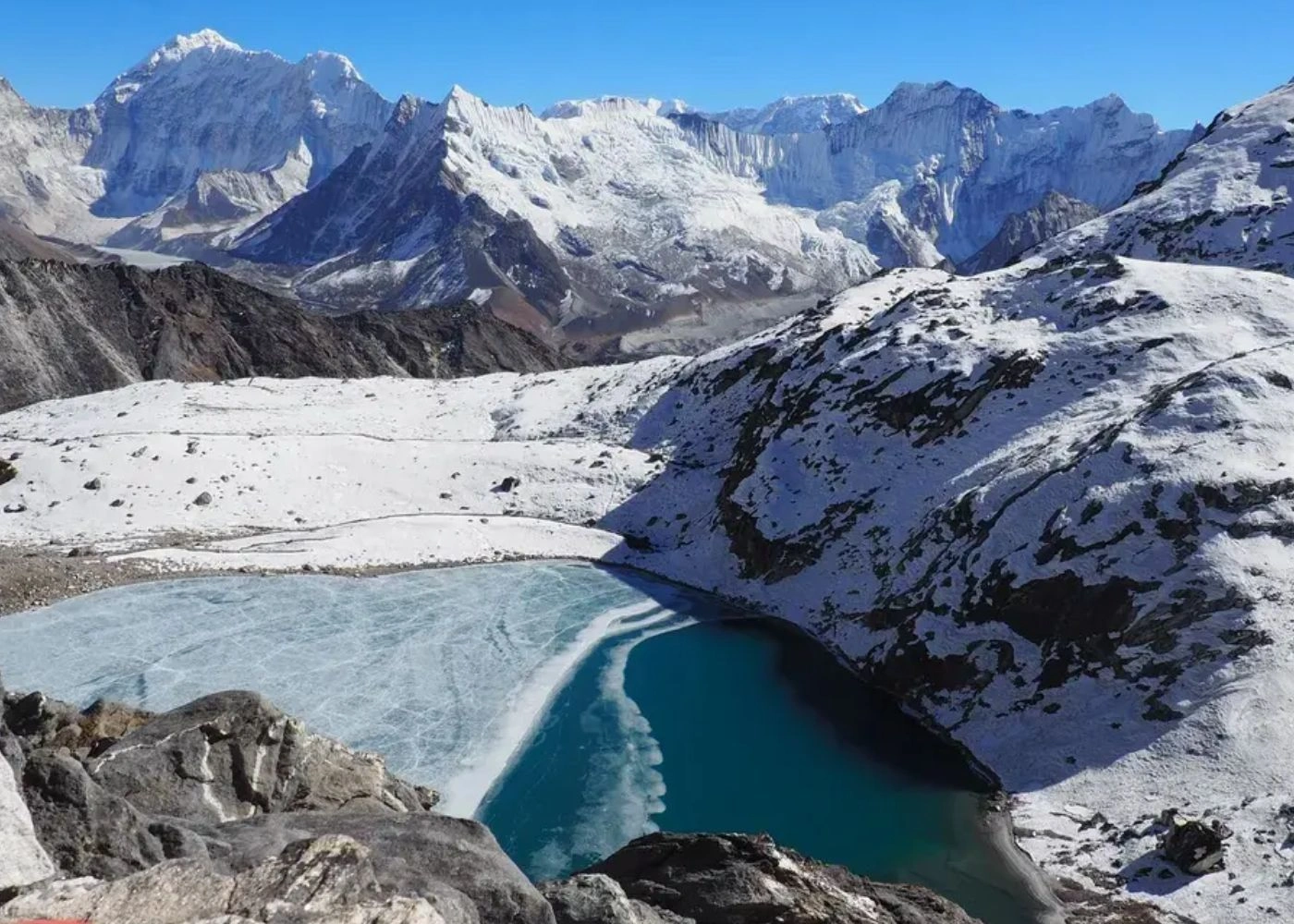
Pre-trek altitude exposure, spending 2 nights in Kathmandu before ascending, triggers early red blood cell production and reduces AMS incidence by 30% compared to trekkers who begin ascending the day after arrival from sea level. Pokhara's lower elevation (827m) makes it a less effective pre-acclimatization base than Kathmandu (1,400m), but both cities are significantly better than beginning from sea level with no buffer.
Supplemental iron, 200 mg ferrous sulfate daily for 4 weeks before travel, supports hemoglobin production and has been shown in 3 peer-reviewed studies to improve exercise performance at altitude in iron-sufficient adults. Consult a physician before supplementing.
What Safety Tips Should First-Time Trekkers Follow in Nepal?
First-time trekkers in Nepal follow 5 non-negotiable safety principles: acclimatize correctly, register with TIMS, purchase travel insurance covering helicopter evacuation, carry AMS medication, and never ascend with unresolved AMS symptoms. These 5 principles prevent 90% of serious trekking emergencies.
How do you prevent altitude sickness?
Altitude sickness prevention rests on 4 practical rules: ascend slowly, hydrate consistently, avoid alcohol above 2,500 meters, and descend immediately at any AMS symptom score of 3 or above.
The Himalayan Rescue Association clinic in Manang and Pheriche treats 2,000–3,000 AMS cases annually. Understanding altitude sickness in Himalaya in depth helps beginners avoid the same 3 mistakes HRA data consistently identifies in severe AMS cases:
Ascending more than 1,000 meters in a single day above 3,000 meters
Continuing to ascend after a headache onset, attributing symptoms to dehydration
Using sleeping pills at altitude, which suppress respiratory drive and reduce nighttime oxygen absorption
Pulse oximeters, available for NPR 1,500–2,500 at Kathmandu pharmacies, measure blood oxygen saturation (SpO2) directly. SpO2 readings below 85% at rest above 3,500 meters indicate significant AMS risk and warrant a rest day or descent.
The rule that saves lives: descent is the definitive treatment for AMS. Descending 300–500 meters resolves moderate AMS symptoms within 2–4 hours in 95% of cases, according to HRA clinical records.
Why is hiring a guide helpful for beginners?
A licensed guide provides beginners with 5 distinct advantages: route navigation, real-time altitude health monitoring, local emergency network access, cultural interpretation, and permit verification support.
Guides certified by the Nepal Tourism Board and Nepal Mountaineering Association complete 45-day wilderness first aid and altitude medicine courses. A certified guide identifies AMS symptoms earlier than self-assessment, accesses helicopter rescue coordination through local radio networks unavailable to independent trekkers, and navigates trail junctions that remain unmarked on GPS apps in remote sections.
Guide cost in 2026: USD 25–35 per day for trekking guides on standard routes, plus separate porter costs of USD 15–20 per day. The combined guide-porter cost for a 7-day Langtang trek averages USD 280–385, less than 1 helicopter evacuation from Langtang Valley, which costs USD 1,200–1,800.
Hiring a guide also generates direct economic benefit for mountain communities. Approximately 120,000 Nepali households depend on trekking employment as their primary income source, according to the Trekking Agencies' Association of Nepal.
What Are the Costs of Beginner Trekking in Nepal?
Total beginner trekking costs in Nepal range from USD 600 to USD 1,200 for a 7-day trek, covering flights to Kathmandu, permits, accommodation, food, guide, porter, and equipment rental. Budget trekkers spending NPR 3,000–4,000 (USD 22–30) per day and premium trekkers spending NPR 6,000–8,000 (USD 45–60) per day both access identical trails.
How much do permits, guides, and lodging cost?
Permits, guides, and lodging represent the 3 largest fixed costs of Nepal trekking in 2026:
Expense | Cost (USD) | Notes |
TIMS Card (individual) | 20 | Per person, one-time |
ACAP / Langtang NP Permit | 37.50–45 | Per person, per trek |
Licensed guide | 25–35/day | Minimum 7 days recommended |
Porter | 15–20/day | Carries up to 15 kg |
Teahouse room | 2.25–6/night | Meals priced separately |
Breakfast + dinner at teahouse | 8–15/day | Lunch trail-side adds USD 3–5 |
Equipment rental (Kathmandu) | 3–8/day | Sleeping bag, poles, jacket |
Teahouse accommodation on the Poon Hill and Langtang routes uses a standard model: room costs are low (sometimes NPR 0–300 if meals are purchased from the teahouse kitchen) because teahouse owners derive primary revenue from food and beverage sales. Trekkers who cook their own instant noodles and refuse teahouse food in cold, remote locations damage the economic model that sustains trail infrastructure, a nuance that guidebooks rarely explain.
What budget should beginners plan for daily expenses?
Beginners plan a daily on-trail budget of USD 30–45 excluding guide and porter fees, covering accommodation (USD 2–6), 3 meals (USD 12–18), hot drinks (USD 3–6), and miscellaneous expenses including WiFi, phone charging, and hot showers.
Price inflation above 3,000 meters is real and measurable. A dal bhat (the Nepali trekking staple: lentil soup, rice, vegetables, and pickles) costs NPR 300–400 in Pokhara and NPR 700–900 in Ghorepani, reflecting the pack-horse and porter transport costs for all food and fuel above the road head. Building a 20% altitude price premium into the daily budget prevents under-preparation.
Emergency contingency fund: USD 500 minimum for unexpected medical costs, extended route days due to weather, or transport disruptions. Travel insurance covering helicopter medical evacuation up to USD 100,000 is non-negotiable for trekking above 3,000 meters in Nepal.
What Mistakes Should Beginners Avoid in Nepal Trekking?
The 5 most common beginner trekking mistakes in Nepal are: underestimating altitude sickness risk, rushing the itinerary, under-packing layers, overloading the day pack, and skipping physical preparation in the 8 weeks before travel.
Why do beginners underestimate altitude and weather?
Beginners underestimate altitude because altitude sickness carries no correlation with age, gender, or general fitness level, a fact that surprises 70% of first-time trekkers who assume physical fitness eliminates altitude risk.
Experienced marathon runners have been helicoptered off the Annapurna Circuit with severe AMS. Sedentary trekkers with slow ascent profiles have completed Everest Base Camp (5,364m) without symptoms. Altitude acclimatization is genetically influenced and individually variable; fitness provides no immunity.
Weather underestimation produces a different but equally serious problem. Afternoon weather on Nepal's high routes, particularly the Annapurna massif, follows a documented pattern: clear mornings followed by cloud buildup from 11:00 AM onward, with afternoon rain or snow arriving between 1:00–3:00 PM above 3,000 meters during spring and post-monsoon periods. Trekkers who ignore this pattern and begin late-morning ascents arrive at high camps in wet conditions with degraded trail grip and reduced visibility.
How can poor packing affect trekking success?
Poor packing affects trekking success through 3 direct failure modes: blister formation from inadequate footwear, hypothermia risk from missing insulation layers, and fatigue acceleration from overweight packs.
Day pack weight above 12 kg increases perceived exertion by 35% at 3,000 meters compared to a 7 kg pack carrying identical survival items, according to biomechanical research from the Journal of Sports Sciences. Beginners consistently over-pack by including duplicate items (2 raincoats, 3 extra pairs of pants) while under-packing in critical categories, specifically, a quality sleeping bag and a reliable water purification system.
Footwear is the single most impactful packing decision. Hiking in new, unbroken boots purchased the week before departure causes debilitating blisters by day 2 on any multi-day route. Boots require 40–60 hours of break-in walking before they conform to foot anatomy. For a complete item-by-item reference, use the Nepal trekking equipment checklist to confirm nothing essential is left behind.
How Should You Start Planning Your First Trek in Nepal?
Planning a first trek in Nepal follows a 6-step sequence: select the route, set the travel dates, book flights to Kathmandu, engage a registered trekking agency, obtain permits, and confirm equipment lists 4 weeks before departure. This sequence takes 8–12 weeks to execute properly.
Can trekking agencies in Nepal help beginners?
Registered trekking agencies in Nepal provide 4 concrete planning services for beginners: customized itinerary design, permit processing, guide and porter assignment, and emergency coordination.
The Nepal Tourism Board maintains a directory of 1,400+ registered trekking companies. Companies registered with the Trekking Agencies' Association of Nepal (TAAN) hold verified safety and employment standards. Agencies charge USD 40–80 per person per day on all-inclusive packages covering permits, guide, porter, accommodation, and meals, a rate that includes logistics coordination worth 8–10 hours of independent planning time.
What agencies cannot provide: the physical preparation, mental resilience, and altitude awareness that determine individual trekking success. Agencies handle logistics. Trekkers handle readiness.
What key steps summarize beginner trekking in Nepal?
Beginner trekking in Nepal succeeds through 7 sequential steps: physical training for 8 weeks, route selection based on fitness and available days, permit procurement before arrival at the trailhead, guide hire through a registered TAAN agency, strict acclimatization adherence above 3,000 meters, comprehensive kit assembly including emergency AMS medication, and travel insurance covering helicopter evacuation to USD 100,000.
Nepal's trail network is genuinely accessible to beginners. The Ghorepani Poon Hill trek in 4–5 days and the Langtang Valley trek in 7–9 days provide Himalayan experiences with professional support infrastructure, manageable elevation profiles, and defined emergency protocols that exist nowhere else in high-altitude trekking at equivalent cost.
The single variable that separates successful first-time trekkers from those who descend early: preparation. Trekkers who train consistently for 8–12 weeks, respect acclimatization schedules, carry complete emergency kit, and hire a licensed guide complete 94% of beginner-grade Nepal treks without medical incident, according to aggregated Himalayan Rescue Association seasonal reports. Before you book, confirm you're choosing the best time to trek in Nepal for your target route, timing is the final piece that preparation starts with, not the Kathmandu airport.