Poon Hill Trek 5 Days
- DestinationAnnapurna Region
- Duration5 days
- Group TypeFeatured
- ActivitiesTrek
- AccommodationHotel, Lodge and Guesthouse
- Max. Elevation3210m.
- Group SizeMin. 1 Pax
- Vehicle Private Vehicle
- Meals Breakfast Lunch & Dinner (BLD)
- Activity Per Day4-7 hours trek
Trip Overview
The Poon Hill Trek is a wonderful blend of simplicity and stunning spectacle. It is a short Himalayan adventure that feels far richer than its duration. Nestled in the Annapurna foothills, this trek takes you through winding trails, lush forests and terraced villages of the lower Annapurna regions, all while offering some of the most breathtaking mountain panoramas Nepal has to offer. Every step of the Poon Hill Trek 5 Days itinerary reveals a new face of the region, and each day will feel like a completely new adventure.
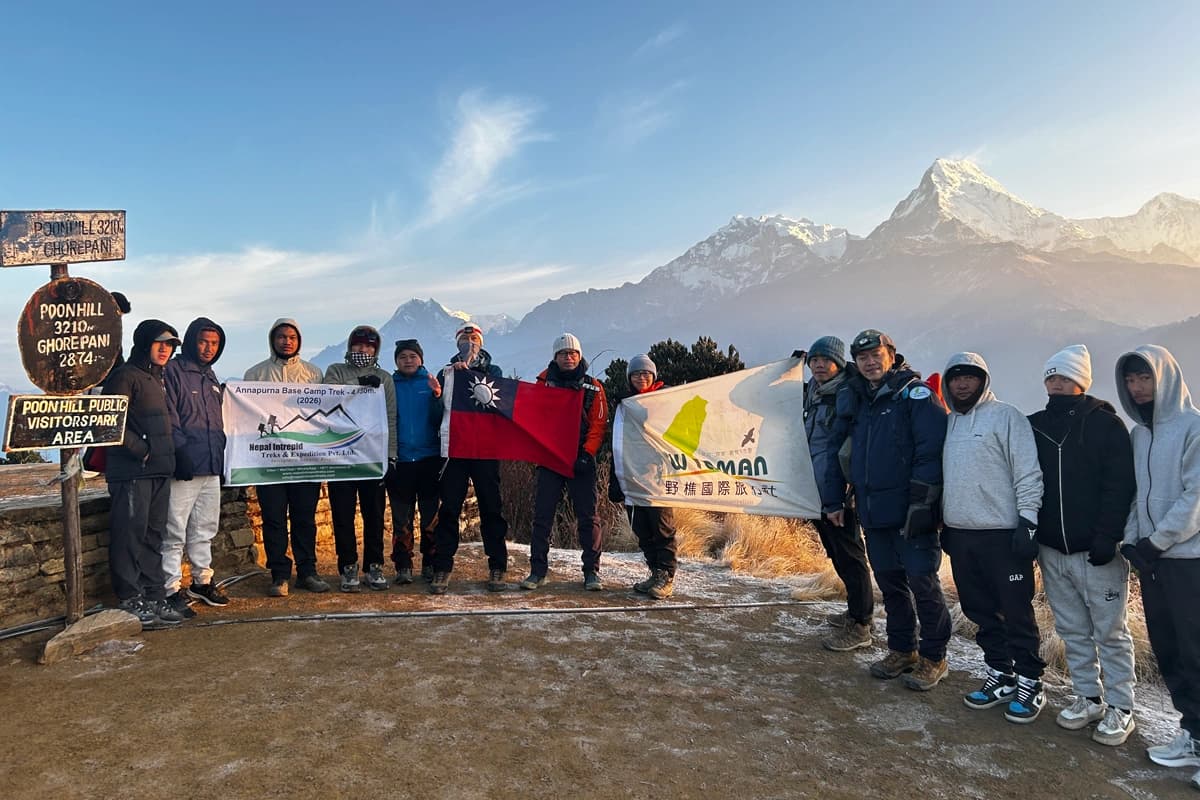
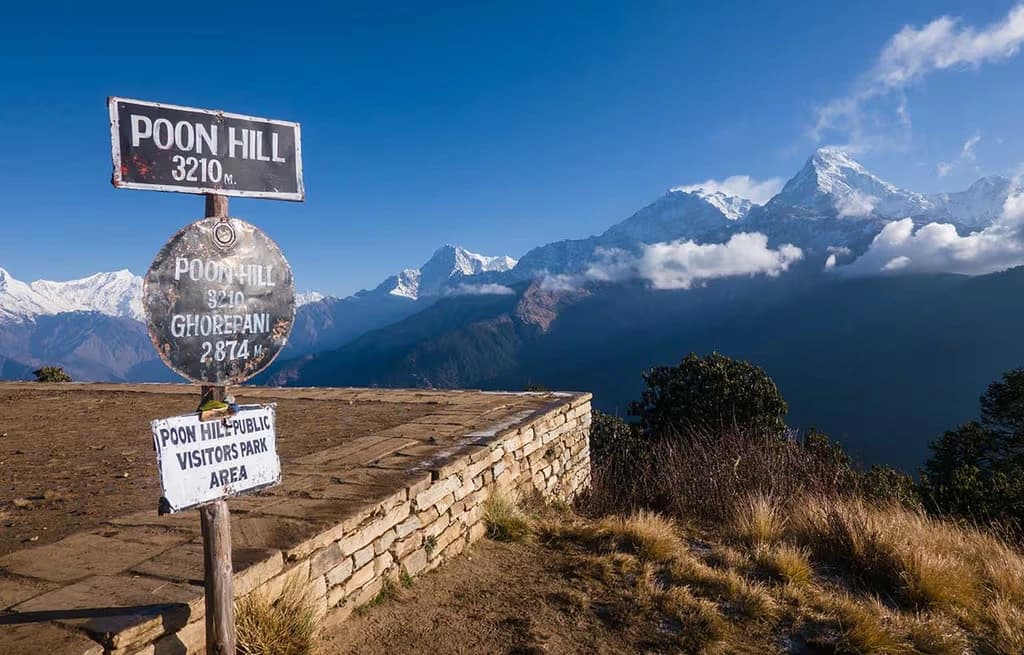
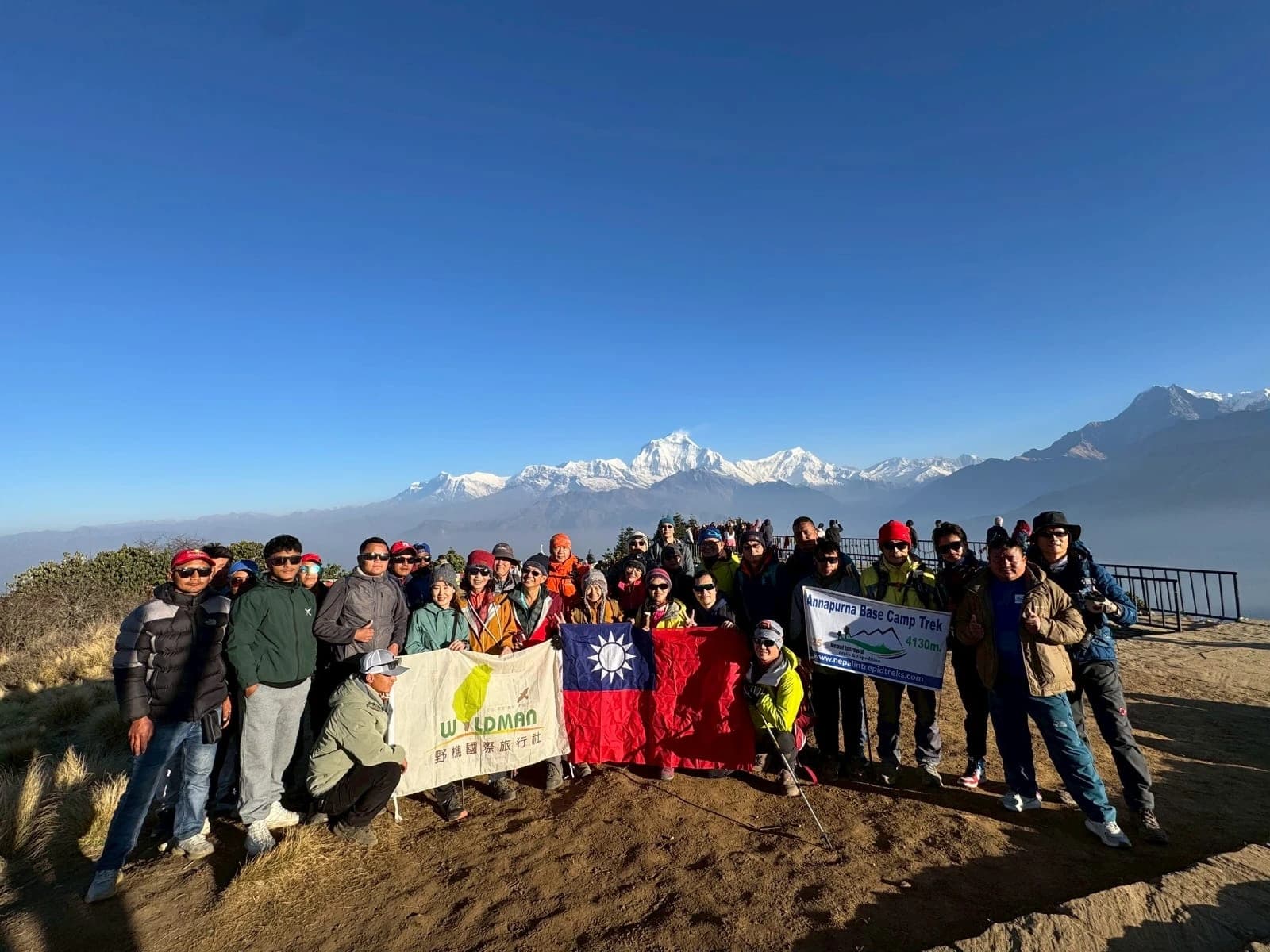
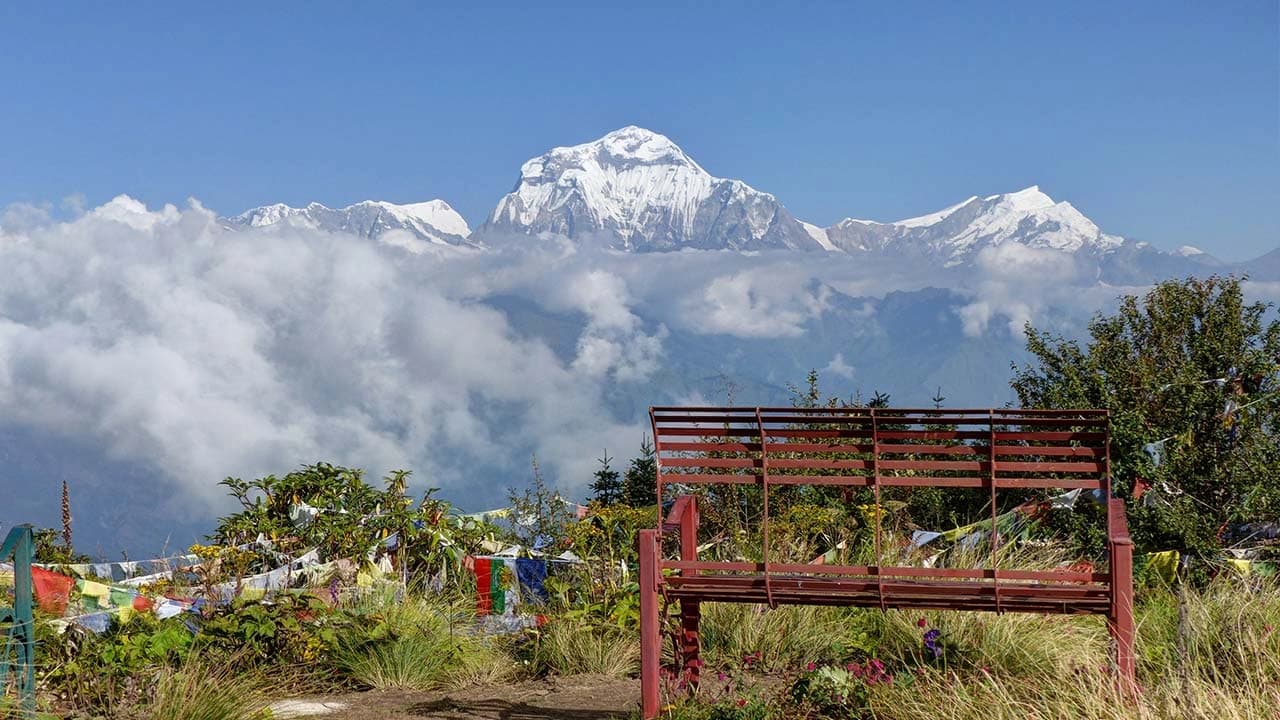
The highlight of this journey, of course, is the early morning hike to Poon Hill (3,210 m). Standing on the ridge as the sun slowly hits the pristine stone of Annapurna, Dhaulagiri, Machhapuchhre and Hiunchuli will be an unforgettable moment that will stay with you long after the trek ends. But the overall journey itself is equally memorable, ascending through lush rhododendron and oak forests, pausing in small Gurung and Magar villages and resting in cosy teahouses will be a warm reminder of Himalayan beauty and hospitality.
Designed for beginners and time-conscious travellers alike, the Poon Hill Trek Ghorepani is short in distance but immense in experience. It is an odyssey that will awaken your senses, challenge your legs just enough to feel accomplished and leave your mind at peace amidst the quiet tranquillity of the mountains. By the end of the trek, it is not just the sunrise or the peaks that will stay in your mind. The feeling of connection to the mountains, the trails and the vibrant life of the Annapurna region will be your treasured memory down the lane.
Outline Itinerary Plan
Day 01: Drive from Pokhara (822 m / 2,697 ft) to Nayapul (1,070 m / 3,510 ft) | Distance: 42 km (26 miles) | Duration: 1.5 hours, and start the ascent toward Ulleri (2,050 m / 6,725 ft) | Distance: 11 km (6.8 miles) | Duration: 5 hours
Day 02: Continue trekking from Ulleri uphill to Ghorepani (2,880 m / 9,448 ft) | Distance: 8.3 km (5.1 miles) | Duration: 5 hours
Day 03: Early hike to Poon Hill (3,210 m / 10,531 ft) for sunrise views, then proceed on the trail to Chuile (2,560 m / 8,398 ft) | Distance: 13 km (8 miles) | Duration: 6-7 hours
Day 04: Journey from Chuile down to Jhinu Danda (1,780 m / 5,840 ft) | Distance: 11.8 km (7.3 miles) | Duration: 6 hours
Day 05: Drive to Pokhara (822 m / 2,697 ft) | Distance: 55.1 km (34.1 miles) | Duration: 3 hours
Trip Itinerary
Your poon Hill Trek begins with an early morning drive from Pokhara. You will move along the winding road that passes through terraced fields, local markets and small settlements along the Modi Khola. After about two hours of driving, you will arrive at Nayapul. This is the trailhead that marks the true start of your adventure. From here, you will begin your on-foot journey slowly following a gentle trail through the lively village of Birethanti. You will need to register your permits here and then you will cross a suspension bridge fluttering with prayer flags.
The trail follows the Bhurungdi Khola upstream and past settlements like Sudame and Hille, where trekkers often stop for tea or a light meal. Beyond Hille, the real climb of this day’s journey begins. You will follow a steep stone staircase that leads you up through Tikhedhunga and into the forested ridge toward Ulleri.
As you climb higher, the air grows cooler and the views start to open up, revealing lush valleys below and the hint of snow peaks above. After a few hours of uphill walking, you finally reach Ulleri. This is a picturesque Magar village that is perched on a hillside. From here, you can relish the view of Annapurna South that peeks through the horizon.
Included/Excluded
-
All ground transportation, including airport pickup and drop off.
-
1 night's accommodation in Pokhara in a 3-star category hotel on a BB basis.
-
Daily three-time meals (breakfast, lunch and dinner) with a cup of tea during the trek
-
Best available twin-sharing basis lodge to lodge accommodation during the trek.
-
Required documentation: Trekking TIMS and Permit costs to enter Annapurna Sanctuary.
-
Highly experienced English-speaking guide and porter (1 porter will be available to two guests). including their food, salary, accommodation and insurance, etc
-
Seasonal fruits during the trek
-
Required first aid medical kit with provision of an Oximeter to monitor oxygen level and heartbeat
-
Nepal Intrepid Treks T-shirt, Douffle Bag, Trekking Map.
-
Sleeping bag and down jacket during the trek
-
Trip Achievement Certificate
-
Government taxes and office service charges during travel.
Nepal entry visa fee
International airfare
Travel insurance
Lunch and Dinner in Pokhara
All cold drinks, water, and any beverages are not included in your trip price.
We provide such service with an extra charge.
(Note: – Our option excursions are culture trips, Festival trips, monastery meditation with Lama and Monks, Bird watching, Farming trip, and other things as per the client's interest).
Trekking Equipment: (Note: Clients have to arrange personal trekking equipment such as trekking poles.)
Tips for drivers, guides, and porters are not included in the cost of your package.
Others:-
Personal expenses such as phone calls, Internet, laundry, bar bill, and extra porters
Costs arising out of landslide, road blockage, rescue of any form, cancellation of flight, or reasons beyond our control
Any other expenses that are not mentioned in the price include sections
Dates & Prices
Group departures are coming soon.
Pick a private date to lock in your adventure.
Good to Know
FAQS
Traveller Review
 5.0 Rating out of 5 based on 156 Reviews
Incredible, once in a lifetime trekking experience
We had an incredible experience with Nepal Intrepid Trek and Expedition on our 17-day Annapurna Circuit trek. From the moment we arrived until the end of the trip, the service and guidance were outstanding. Our guide, Hemlal, and porter were excellent companions, and ensured every detail was handled professionally and thoughtfully.The accommodations were excellent both in the cities and throughout the trek, and the included sightseeing tour was a great addition to the experience. We were consistently impressed with the quality of the rooms, the food, and the overall organization.What truly stood out was the level of care, advice, and support we received throughout the entire journey. The team made us feel comfortable, prepared, and welcomed every step of the way. Their knowledge, responsiveness, and attention to detail made this one of the best travel experiences we’ve had.We would absolutely recommend Nepal Intrepid Trek and Expedition to anyone considering trekking in Nepal, and we are already planning to return and use them again for future adventures. Their fee is reasonable and well-worth the cost for a safe and memorable trekking experience. 
Ibrahim Attya 28th May, 2026 Khopra Hill Trek with Nepal Intrepid Treks was an amazing
I recently completed Khopra Hill Trek in Nepal with Nepal Intrepid Treks, and I cannot recommend them highly enough. From start to finish, the entire experience was absolutely seamless and deeply memorable.Nepal Intrepid Treks run by Mr Lal Gurung made the entire planning process flawless. The communication from the initial inquiry right up to the start of the hike was professional, prompt, and incredibly reassuring. Everything was organized to perfection, allowing me to just focus on enjoying the journey.While the logistics were excellent, what truly made this trip extraordinary was my guide, Mr Hem Gurung. I cannot say enough good things about him. Hem is an absolute gem of a guide. He took incredible care of me throughout the entire hike, always prioritizing my safety, comfort, and well-being.Beyond his flawless professionalism, Hem’s warm personality, constant encouragement, and attentiveness made my experience great. He truly goes above and beyond for his guests.If you are planning a trekking trip to Nepal, do yourself a favor and book with Nepal Intrepid Treks and if you get the chance, absolutely ask for Hem as your guide.Thank you to the entire team for an unforgettable Himalayan adventure! Langtang Valley Trek and Blue Lake
Great responsible team, very careful and careful, so that you can rest assured in walking, is a good Nepalese hiking company (Nepal Intrepid Treks). This time I walk to Blue Lake Langtang Valley Trek, very beautiful, along the way there are forests, streams, canyons, glaciers, Tibetan Mani walls, turning wheels, Tibetan Fosta, five-coloured flags, lamas, bulls, sheep, strange birds, small wooden bridges and a safe solid railway bridge. There are beautiful colourful hills and tea houses, high snowstones, golden mountain sunshine, now let back home will miss a spiritual hiking holy road. I highly recommend everyone have the opportunity to go through Nepal Intrepid Treks and I would like to go with them again. Namaste and thank you so much. EBC, Chola Pass and Gokyo Lake Trek in Nepal
3/28 ~ 4/15 from Taiwan to Nepal's Kathmandu, this walking route is EBC, Chola Pass and Gokyo Lake Trek, the scenery is beautiful, most of the weather is good, only GOKYO falls in several rows with a little snow, but no obstacles.It is less convenient to descend to Nansaki Poche Road due to melting snow, but it is still peaceful to walk slowly.This high mountain trip is a long way, but I have a feeling that I have made some progress, which is the success of over-the-counter 🙂EBC is a popular road trip in Nepal. From spring 3 to May, and from autumn 9 to November, there are fewer people walking gokyo for the season, but I believe that more people will travel this route in the future.In fact, I take high mountain fitness as a high mountain trip, I like to see human life at different altitudes, high mountain fitness does not need to compare flat mountain climbing ability, because there are people who are usually strong, but because the altitude and environmental adaptation influence physical and mental will also be difficult to predict what happens to retreat, on the contrary, the usual heart relaxation will also have unexpected gains, this is the usual mind, is also the reading of life, and the road to practice it as a method of meditation.Nepal is the home of Buddha, I love Buddha, I love Nepal. Walking is to get me to stand up and walk out and practice from the puddle, I will not compare, I will accept such as practicing sitting and sitting meditation.Nepal Intrepid Treks The company's guides and staff are very responsible, caring for the team, and everyone lives together like a family.Recommended for everyone visiting Nepal for reference, the Nepal Intrepid Treks company has many Nepal hiking routes, you can easily find the right hiking route for yourself.Namaste🙏🙏 Mardi Himal Trek & unforgettable experience
Our recent journey through the Nepal Intrepid Treks was truly an unforgettable experience from start to finish. Every aspect of the expedition was planned exceptionally well, ensuring a smooth and enjoyable adventure. The natural scenery was impeccable, providing breathtaking panoramic views at every turn of the trail. We were incredibly fortunate to have Kamal leading our expedition team. He directed a highly capable crew and consistently went above and beyond to guarantee our comfort and safety. Throughout the trek, his leadership and organizational skills were evident in every detail.On the challenging day when we set off to reach the 4,500-meter elevation, our resilience was thoroughly tested. During this demanding ascent, the entire crew proved to be especially caring and supportive. They paid close attention to each of us, making sure we were physically well and properly acclimated to the high altitude. Their unwavering attentiveness allowed us to tackle the difficult terrain with confidence and peace of mind. As we faced the harsh conditions together, our group developed a genuine sense of brotherhood and camaraderie with the staff.The seamless coordination and warm hospitality of the porters and guides significantly enriched our daily trekking experience. Looking back, the combination of professional guidance and authentic human connection made this trip deeply meaningful. This remarkable journey has easily made Nepal one of my most treasured travel destinations. The unparalleled beauty of the mountains and the kindness of the local people have left an everlasting impression on me. I am absolutely certain that I will return to Nepal in the future for another great adventure with Nepal Intrepid Treks. Thank you so much. Most Rewarding trip of my Life to EBC and Gokyo Lake via Chola Pass
I am beyond thrilled to share my second trekking experience with Nepal Intrepid Treks. This time, I completed the Everest Base Camp Trek and Gokyo Lake via Chola Pass, and it was absolutely extraordinary. The beauty of the region is unparalleled, and the journey, though physically demanding, was awe-inspiring at every turn.The success of my trip can be attributed to the flawless logistics and unwavering support from the entire Nepal Intrepid Treks team. Their professionalism, care, and expertise made all the difference. Last year, I completed the Mardi Himal Trek with them in November. Even this year, I chose to trek in November over October, which is generally considered the best time for trekking in Nepal. I remember last year, Managing Director Lal mentioned to us during our Mardi Himal Trek that if you're comfortable with the cold, November and December are perfect times for hiking to Everest Base Camp Trek—and I can confidently say that this was a great decision after completing the trek. The weather during our trek was fantastic. From the start, Nepal Intrepid Treks was incredibly responsive. The booking process was seamless, and they provided clear and detailed information about every aspect of the trek, from the itinerary to useful tips, equipment recommendations, and the ideal timing for the trek. The Everest Base Camp Trek itself was a rewarding challenge. Though demanding, the views and the route were exceptional. The well-paced itinerary allowed for proper acclimatization, and the team made sure we were always well-prepared for each ascent. The guesthouses and hotels we stayed in were comfortable, and the food was delicious throughout the journey. From our airport pick-up to the final farewell, Nepal Intrepid Treks took care of everything, ensuring our trek was a once-in-a-lifetime adventure. So, if you're wondering if I'd do it again—absolutely! If I ever decide to do another trek in Nepal, I wouldn’t hesitate to choose Nepal Intrepid Treks again and again. Their attention to detail and dedication to making your trek unforgettable is truly unmatched. Thank you so much Nepal Intrepid Treks team for making our trip so wonderful and amazing. Amazing Annapurna Base Camp Trek
My wife and I did the Annapurna Base Camp trek with Nepal Inrepid Treks from November 16 to 20, 2025, and it was an unforgettable experience. From start to finish, the team went above and beyond. Lal Gurung was extremely helpful during the planning phase—he customized the itinerary to fit our needs and kept us informed with clear, honest communication, especially when weather conditions looked uncertain.Our guide, Hemal Gurung, was outstanding—calm, encouraging, and resourceful. Even when his luggage was delayed by Buddha Airlines, he remained composed and handled everything smoothly. He was quick to adapt, always kept our comfort and safety in mind, and captured so many beautiful photos and videos for us along the way. Our porters, Santosh and Tek Gurung, were friendly, dependable, and always ready to help. The local logistics, managed by Santa Gurung, were smooth, and every lodge and meal exceeded expectations. We stayed in some of the best tea houses, enjoyed wholesome meals, and felt genuine care throughout the trip. Our team stood out by spreading their positive energy and simple, low-key attitude. We’ve trekked on different continents before, but this experience truly stood out.Nepal Inrepid Treks delivered everything they promised and more. Every detail was handled with professionalism and heart. We wouldn’t hesitate to recommend them to anyone planning a trek in Nepal. I know several of our friends from the USA will use their services. In fact, we are strongly considering them again for the Everest Base Camp Trek in 2026. Namaste Nepal Intrepid Treks has great guides and treat their people well
We did the Annapurna Circuit Trek with Nepal Intrepid Treks. The Intrepid Group Leader, Ritesh, was terrific. He was informative, safety conscious, patient, organised, and connected us to Nepalese culture through his personal insight and experience.Nepal Intrepid’s values are excellent, they treat their staff well and porters are not overloaded (unlike other providers, whose porters struggled with their loads).Thanks to Nepal Intrepid Treks for your wonderful service to us. Amazing Experience in Upper Mustang with Nepal Intrepid Treks
I came to Nepal to do the Upper Mustang trek with my friends in March 2025. We started our trek from Kagbeni, accompanied by my friend and guide. The blend of Tibetan and Hindu cultures was fascinating, and I especially enjoyed learning about the traditions of Buddhism. The people in that area were very kind.I was amazed by the monasteries we visited; the entire region was fantastic. The ancient villages perched on the hills surprised us with their unique history and architecture. The variety of colorful paintings and decorations left a lasting impression.I want to sincerely thank Nepal Intrepid Treks for supporting our trek, as well as our guide and Lal Gurung, Managing Director of Nepal Intrepid Treks. Unforgettable Luxury Everest Base Camp Trek – Beyond Expectations!
I did not expect the Everest Base Camp trek to be this incredible, but the Luxury Everest Base Camp Trek I booked with Nepal Intrepid Treks turned out to be one of the best experiences of my life.From the very beginning, their top-notch service truly impressed me. I never imagined I could enjoy coffee, pizza, and snacks at such high altitudes. The hotel accommodations were surprisingly comfortable and the hospitality was outstanding.What stood out the most were the breathtaking views of Mt. Everest, especially from Everest Base Camp and the iconic Everest View Hotel. Having breakfast with such a view was an unforgettable moment.My guide and porter were extremely helpful and friendly throughout the trek, making the journey safe and enjoyable.Special thanks to Lal Gurung, Managing Director of Nepal Intrepid Treks, for organizing everything so well. His team made sure everything went smoothly from start to finish.I highly recommend Nepal Intrepid Treks to anyone looking to experience the Himalayas in comfort and style.Thank you so much! Incredible Manaslu Circuit Trek with Nepal Intrepid Treks
I recently completed the Manaslu Circuit Trek in April 2025 and would like to formally express my deepest appreciation to the entire team at Nepal Intrepid Treks. Their comprehensive logistical support and unwavering dedication were absolutely essential to the successful completion of this rigorous Himalayan journey. Throughout the expedition, the panoramic views of Mount Manaslu were nothing short of breathtaking. The stunning alpine landscapes and pristine wilderness combined to make this one of the most memorable and rewarding experiences of my life.I want to extend my special recognition to Mr. Lal Gurung for his outstanding leadership and exceptional professionalism in organizing my itinerary. His deep-rooted knowledge of the local terrain and culture truly enriched the adventure. Additionally, my lead guide provided exemplary service, expert navigation, and constant care as we traversed the challenging high-altitude trails. Their proactive approach to safety and comfort allowed me to fully immerse myself in the cultural and natural beauty of the region. Because of their commitment to excellence, I wholeheartedly recommend Nepal Intrepid Treks to any adventurer seeking a world-class trekking experience in Nepal. Manaslu Circuit Trek – The Closest Mountain Experience
I believe the Manaslu Circuit Trek offers the best mountain experience with an up-close view of the peaks with our naked eyes. Thanks to Lal Gurung, Managing Director of Nepal Intrepid Treks, for suggesting this incredible trek.During this trek, I got to see Mount Manaslu very closely. I have also completed the Annapurna Circuit and Annapurna Base Camp treks, but among these, the Manaslu Circuit stands out for how near the mountain feels.Special thanks to Lal Gurung for being a wonderful guide and providing excellent service throughout the journey.
Similar Trips
Best Price
US $710
Group Tours
US $470
Group Tours
US $765