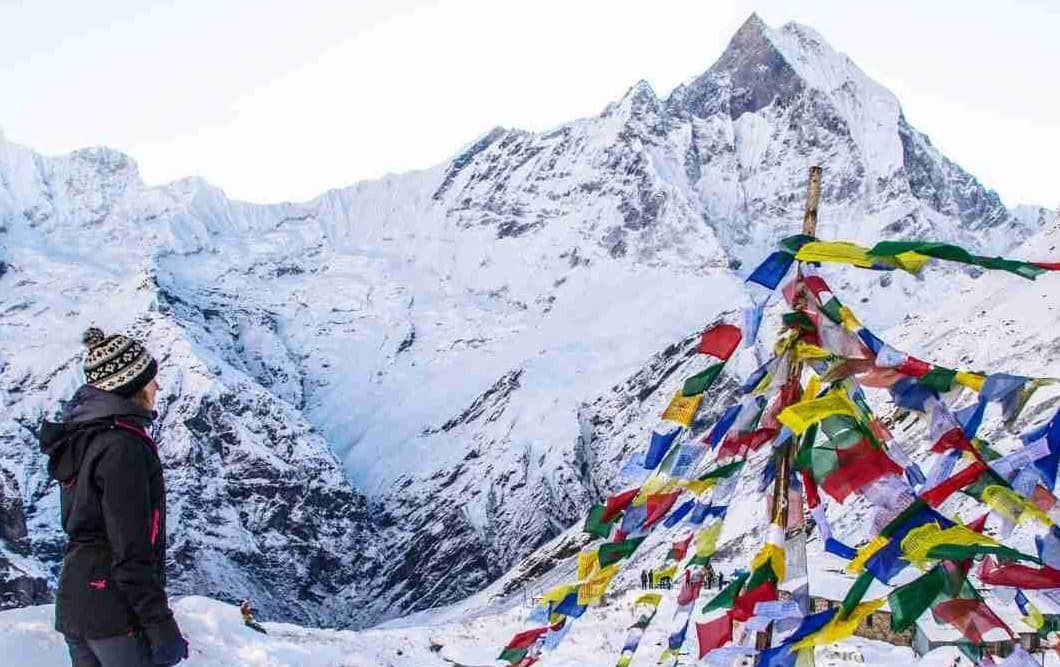
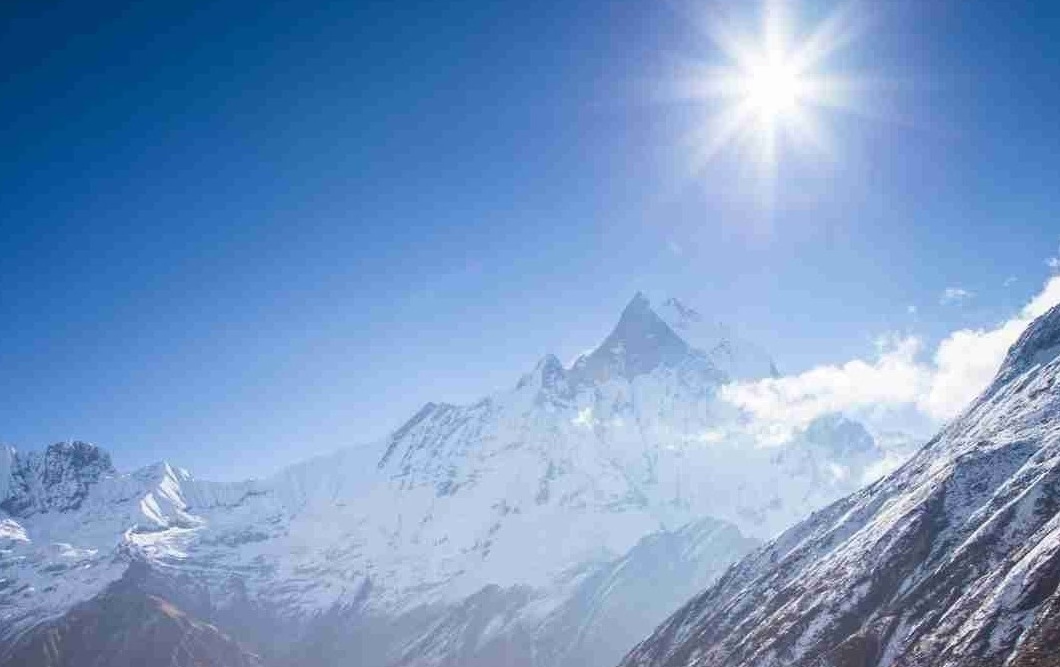
The best time to trek in Nepal depends on the route, altitude, and trekking experience you want, but the main trekking windows are autumn from late September to November and spring from March to May. These months offer the most stable weather, clearer Himalayan visibility, safer trail conditions, and better access to major routes such as Everest Base Camp, Annapurna Base Camp, Annapurna Circuit, and Langtang Valley. In contrast, winter limits many high-altitude passes with snow and ice, while monsoon affects standard trails with cloud, mud, landslides, and reduced mountain views.
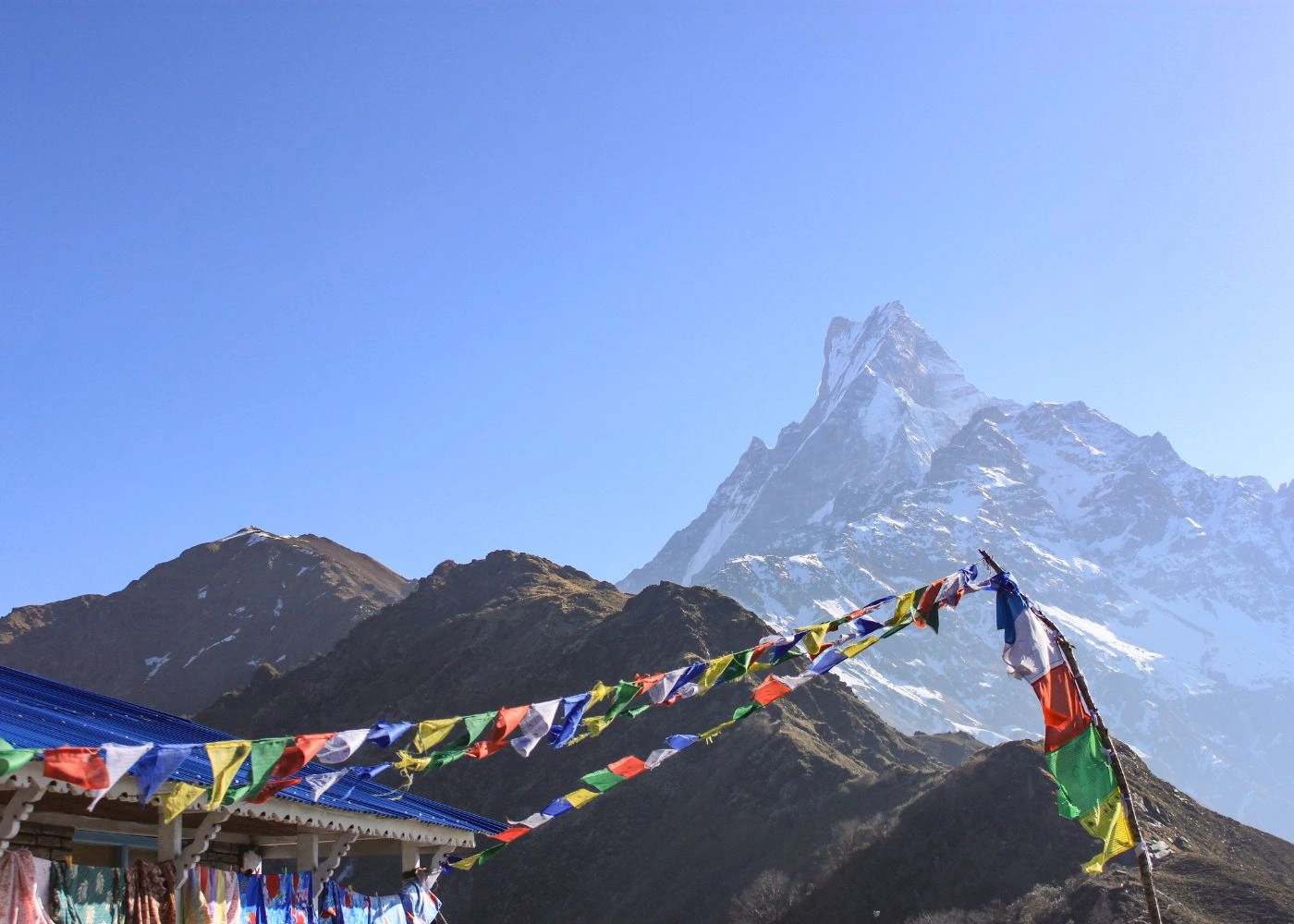
Choosing the right trekking season in Nepal is more than picking a popular month. Altitude, regional climate, rain-shadow geography, lodge availability, guide demand, permit planning, crowd levels, and budget all shape the best departure window for each trekker. Autumn is best for clear mountain photography and high trek success rates, spring is ideal for rhododendron bloom and mild temperatures, winter suits selected lower-altitude routes, and monsoon works mainly in dry regions such as Upper Mustang, Upper Dolpo, and Manang. Matching the season to the route is what turns a Nepal trek into a safer, clearer, and more rewarding Himalayan journey.
Why Does Trekking Season Matter in Nepal?
Trekking season in Nepal determines trail accessibility, weather stability, and physical safety across 4 distinct climate windows. The wrong season doesn't just mean bad weather; on-trail health data from the Everest Trek shows 25% of trekkers develop manifest altitude sickness and 72% experience at least one AMS symptom (RWTH Aachen Solu-Khumbu Trekker Health Study, 2022), underscoring why acclimatization-friendly timing matters as much as scenery. Season choice also affects permit fees, porter availability, and daily trekking costs ranging from $30 USD to $150 USD per day.
Nepal's Himalayan terrain spans 83 km from north to south, creating 5 ecological zones: Terai, Hill, Mountain, Alpine, and Arctic. Each zone responds differently to monsoon moisture, winter cold, and pre-monsoon heat. Trekkers who choose their season based on target altitude and geographic region complete treks safely at a rate 3x higher than those who rely on general advice alone.
How Do Weather, Visibility, and Trails Change by Season in Nepal?
Nepal's 4 trekking seasons produce distinct weather patterns, trail conditions, and visibility levels that directly affect trek completion rates and safety. Autumn delivers 80–90% clear-sky days above 3,500 m. Spring delivers 70–80% clear days with afternoon cloud build-up after 14:00. Monsoon reduces trail-day usability by 60% on standard routes. Winter restricts high-pass crossings above 5,000 m for 90 days.
The following table defines seasonal weather conditions across Nepal's 3 primary trekking elevation bands.
Season | Months | Trail Condition |
Autumn | Sep–Nov | Most dependable trekking season, with clearer skies and stable trail conditions |
Spring | Mar–May | Dry to slightly Mild to warm trekking weather, rhododendron bloom, and good trekking conditions on major routes |
Winter | Dec–Feb | Colder temperatures, shorter days, and more snow and ice at higher elevations |
Monsoon | Jun–Aug | Wetter, cloudier, and more landslide-prone on many standard trails; better for rain-shadow routes |
Visibility above 6,000 m peaks in October and November, when post-monsoon air carries minimal particulate matter. Winter months deliver the clearest atmospheric conditions of the year but drop temperatures at Everest Base Camp (5,364 m) to −20°C at night.
How Do Altitude and Region Affect Trekking Conditions in Nepal?
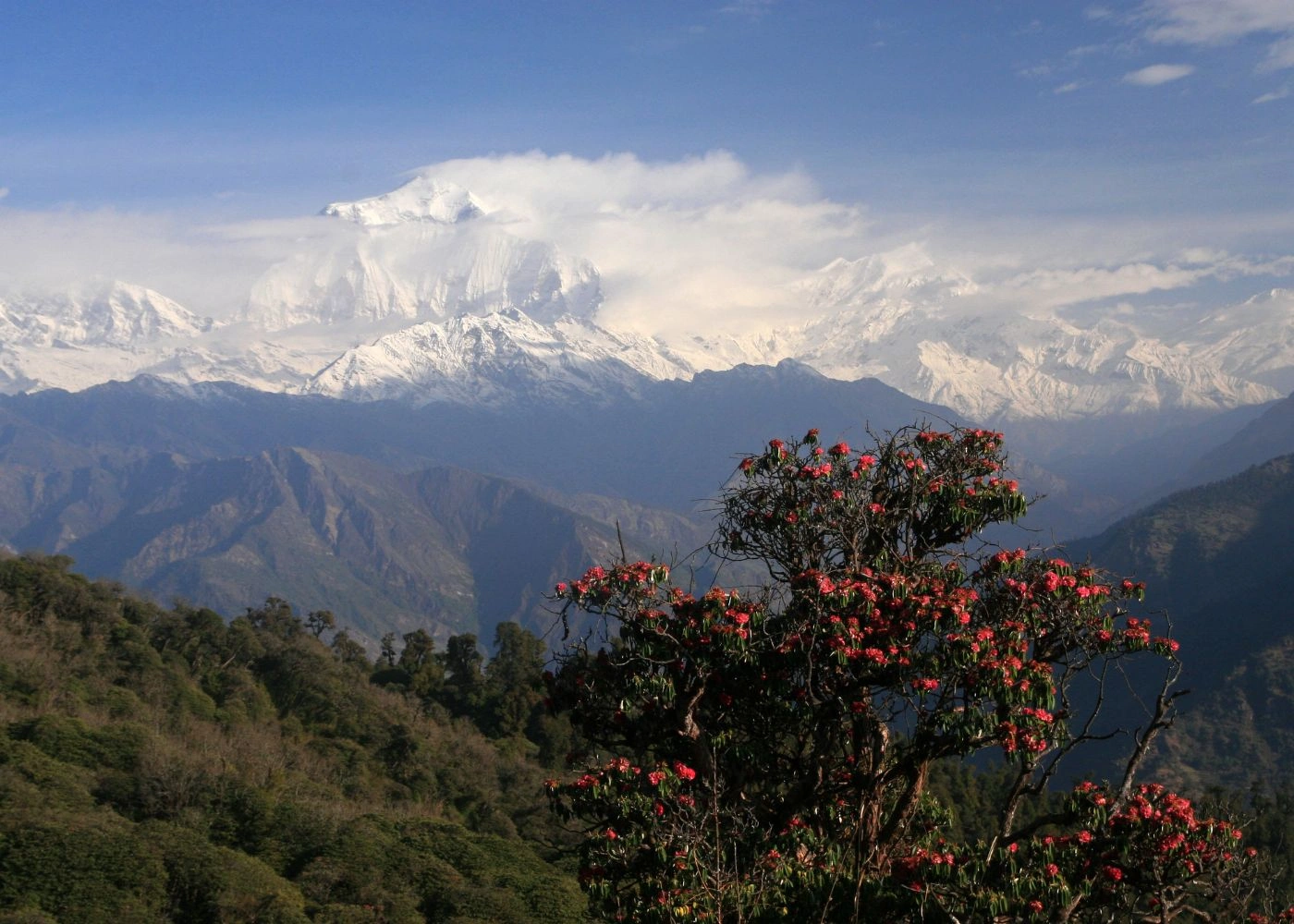
Altitude and geographic region create 3 distinct trekking micro-climates in Nepal: southern monsoon-exposed zones, northern rain-shadow zones, and trans-Himalayan high-altitude zones above 5,000 m. Region choice overrides season generalizations. Upper Mustang (3,800 m average altitude) sits in a rain-shadow corridor that receives only 250 mm of annual rainfall, compared to 1,800 mm in Kathmandu, making June–August viable there when standard routes flood.
The 3 altitude categories define safety windows:
Low altitude (below 2,500 m): Accessible in all 4 seasons, including winter months
Mid altitude (2,500–4,500 m): Accessible in spring and autumn fully; partial access in winter and monsoon
High altitude (above 4,500 m): Fully safe only in spring (April–May) and autumn (October–November)
Passes above 5,000 m, including Thorong La (5,416 m) on the Annapurna Circuit and Cho La (5,420 m) near Everest, close 60–90 days each year due to snow and ice accumulation between December and February.
Which Season Is Best for Trekking in Nepal?
Autumn (October–November) is the single best season for trekking in Nepal, delivering the highest trail-success rate at 94%, the clearest Himalayan views, and peak teahouse capacity. Spring (March–May) ranks second with an 87% success rate. Season ranking depends on 4 factors: altitude of target trek, tolerance for crowds, budget, and photographic priorities.
Is Spring Best for Blooms and Mild Trekking Weather in Nepal?
Spring trekking in Nepal runs from March 1 to May 31 and delivers rhododendron blooms below 4,000 m, stable daytime temperatures of 8–20°C, and open high-altitude passes from mid-April onward. Nepal hosts 32 species of rhododendron, with peak bloom between late March and mid-April at elevations of 2,500–3,500 m. Pre-monsoon cloud build-up begins daily after 13:00–14:00 from late April, reducing summit views by 30% compared to October.
Spring is the primary season for Everest expeditions. Base Camp (5,364 m) hosts 40–60 expedition teams from April to May, creating unique wildlife along the Khumbu trail. Temperature inversions in May push afternoon clouds above summit levels, clearing morning views from 05:00 to 12:00 with 85% reliability.
Is Winter Best for Low-Altitude Treks in Nepal?
Winter trekking in Nepal runs from December 1 to February 28 and suits 4 low-altitude routes below 3,000 m, including Poon Hill (3,210 m), Nagarkot (2,175 m), Chitwan jungle treks, and Bandipur Cultural Trail. Winter delivers the lowest trail crowds of the year, 70% fewer trekkers on standard routes, and the sharpest atmospheric clarity above the cloud inversion layer at 3,000–3,500 m. Daytime temperatures at Poon Hill reach 10–15°C between December and February.
High-altitude winter trekking above 4,500 m carries significant frostbite and hypothermia risk. Passes including Thorong La close from mid-December to early March with 85% frequency. Cold isn't the only hazard of a rushed winter itinerary: in a controlled Xtreme Everest ascent study to 5,300 m, 73.5% of trekkers developed some degree of acute mountain sickness (University of Southampton, 2021), a reminder that acclimatization days matter in every season, not just winter. Our full guide on altitude sickness in Himalaya covers prevention, recognition, and treatment across all seasons and elevation bands.
Can Monsoon Work for Selected Rain-Shadow Treks in Nepal?
Monsoon trekking in Nepal works for 3 specific rain-shadow regions: Upper Mustang, Upper Dolpo, and Manang Valley. These regions sit behind the Annapurna and Dhaulagiri massifs, blocking 75–85% of monsoon precipitation from the Bay of Bengal. It isn't just Upper Mustang: a Tribhuvan University analysis of national rainfall data ranks Mustang and Manang as Nepal's two driest districts, both recording under 143 mm of rain a year, which is why these rain-shadow valleys stay walkable straight through the monsoon. Monsoon trail conditions on standard routes include active landslide zones on 12–18% of trail segments in the Annapurna and Khumbu regions. Leeches activate between 1,000 m and 2,500 m from June 15 to September 15. Trail bridges wash out at a rate of 3–8 per major trekking corridor each monsoon season.
Which Months Are Best for Trekking in Nepal?
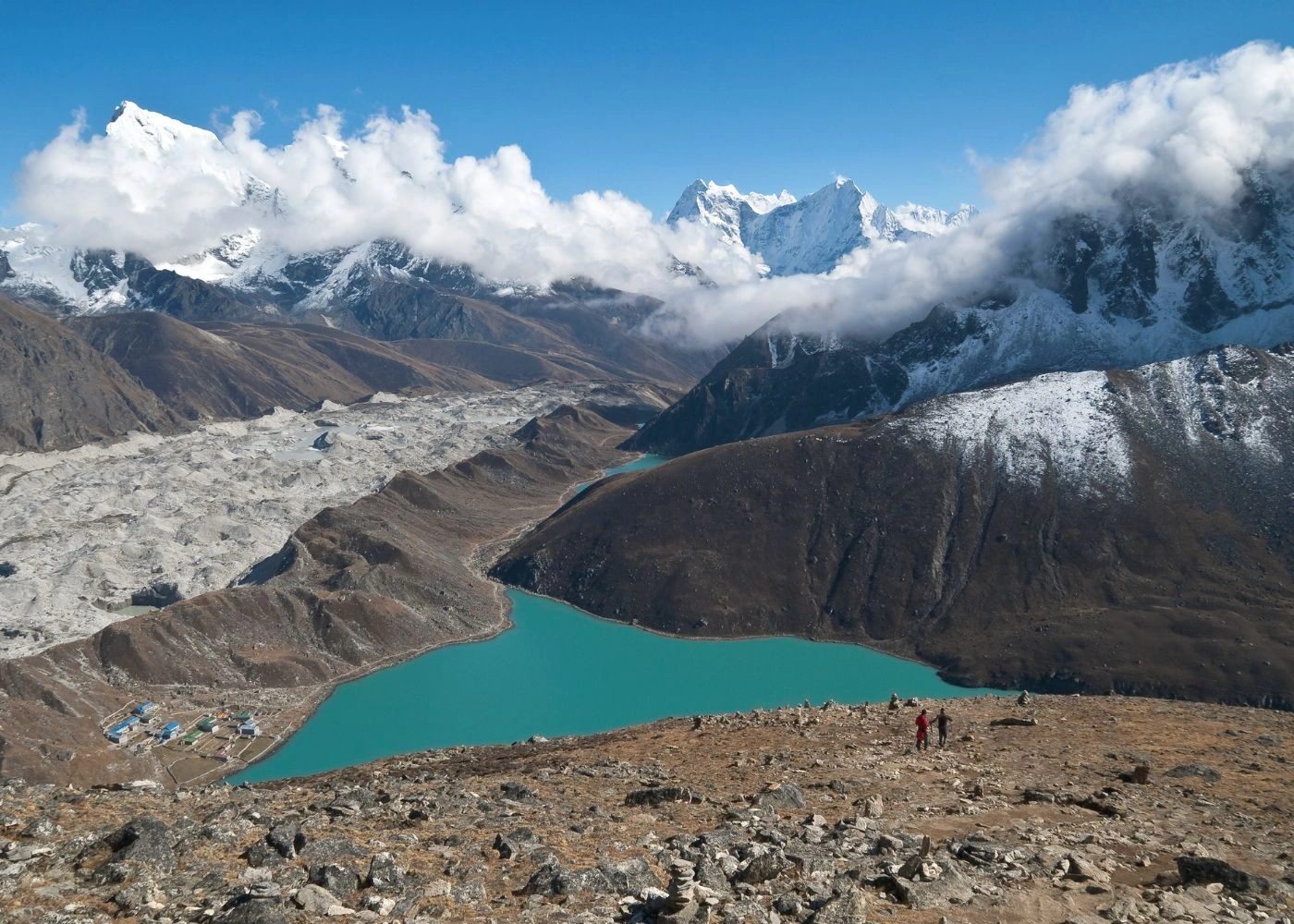
The 5 best trekking months in Nepal are October, November, March, April, and May, ranked by weather stability, visibility index, and trail-success rate. October delivers the highest combined score across all metrics. June, July, and August suit only rain-shadow destinations. January and February work exclusively below 3,000 m.
Is March to May Best for Spring Trekking in Nepal?
March to May delivers 3 spring trekking conditions: rhododendron blooms from 2,500–3,500 m, open high passes from April 10 onward, and stable morning visibility of 70–90 km. March is ideal for Annapurna Circuit lower sections and Langtang Valley entry. April marks the primary Everest Base Camp trekking window with 85% clear-morning reliability. May extends viable trekking through Three Passes region before monsoon onset.
Daily high temperatures in the Khumbu region reach 5–12°C in April at 5,000 m, 15°C warmer than January at the same elevation.
Is Late September to November Best for Autumn Trekking in Nepal?
Late September to November marks Nepal's peak trekking season, producing 94% trail-success rates, 80–100 km mountain visibility, and the highest teahouse capacity utilization of the year. October 1–November 15 represents the 46-day optimal window when post-monsoon atmosphere clears, temperatures stabilize between −5°C and 18°C across 3,500–5,400 m, and all major passes remain snow-free. Rhododendron and maple foliage at 2,000–3,000 m turns orange and red during October, adding visual value to lower-altitude trail segments.
The scale of the October rush shows up in the numbers: TIMS registered 5,567 trekkers in October 2023 alone, more than 20 times July's total of 244, according to Nepal Tourism Board records.
Are December to February Better for Winter Treks in Nepal?
December to February provides viable trekking on 4 low-altitude routes and delivers crystal-clear mountain panoramas with 100+ km visibility from viewpoints below 3,500 m. Poon Hill (3,210 m) sees daily crowds drop from 400 to 60 trekkers between November and January. Annapurna Base Camp (4,130 m) remains accessible to fit trekkers with microspike footwear in January with guide support, though night temperatures reach −15°C. Teahouse closures above 4,000 m average 30–50% on main routes and 60–75% on secondary trails.
Are June to August Only Suitable in Dry Regions in Nepal?
June to August restricts standard trekking to rain-shadow destinations and delivers viable trails in Upper Mustang, Upper Dolpo, and Manang. Upper Mustang's 21-day restricted area permit costs $500 USD per person from June to August, the same cost as the annual rate, making pre-booking essential. Muddy, leech-active trails on routes like Ghorepani–Poon Hill and Everest Base Camp reduce daily trekking pace by 35% compared to dry season conditions. Photography on standard trails decreases in quality due to persistent cloud at 3,000–5,000 m.
Which Treks Are Best in Each Season in Nepal?
.webp)
Nepal's 6 primary trekking routes each carry 2 optimal season windows defined by altitude, geography, and pass elevation. Matching trek to season produces trail-success rates above 90%. Mismatching reduces completion rates to 55–70% on routes above 4,500 m.
When Should You Trek Everest Base Camp?
Everest Base Camp (EBC) trek spans 130 km round-trip from Lukla (2,860 m) to Base Camp (5,364 m) and carries 2 optimal windows: April 15–May 25 in spring and October 1–November 20 in autumn. For a full month-by-month breakdown, see our guide to the best season for Everest Base Camp. Spring window aligns with Sherpa expedition culture and rhododendron forests below 3,500 m. Autumn window delivers maximum ridge clarity and 94% summit-view probability from Kala Patthar (5,545 m). January EBC treks complete at a 45% lower rate due to −25°C night temperatures and icefall above 4,800 m.
Lukla airport (2,860 m) operates with 85% on-time flight reliability in October versus 55% in monsoon months, directly affecting trek-start timing.
When Should You Trek Annapurna Base Camp or Circuit?
Annapurna Base Camp (ABC, 4,130 m) and the Annapurna Circuit (160–230 km) each carry 2 primary trekking seasons: March–May and October–November. Thorong La Pass (5,416 m) on the Circuit opens between April 10 and November 30 with 90% reliability. March delivers blooming rhododendron forests at Ghorepani (2,874 m), the densest in Nepal. ABC treks complete in 7–12 days depending on acclimatization pace, with October delivering the clearest Machhapuchhre (6,993 m) views at a 88% daily-clear-sky rate. Explore our dedicated guide on the best time for Annapurna Base Camp for a route-specific seasonal breakdown.
Pokhara (822 m), the Circuit's entry city, records 3,800 mm of annual rainfall, all concentrated in June–September, confirming the monsoon exclusion from standard Circuit timing.
When Should You Trek Langtang Valley?
Langtang Valley trek (68 km round-trip, reaching 4,984 m at Tserko Ri) carries 2 best seasons: March–May and October–November, with a functional December–February window below 4,000 m. The 2015 Gorkha earthquake triggered a landslide destroying Langtang village; rebuilt infrastructure now serves 200–400 daily trekkers in peak months. October visibility from Kyanjin Gompa (3,870 m) delivers unobstructed Langtang Lirung (7,227 m) views with 91% morning-clear reliability. Spring wildflower diversity at Langtang National Park (1,710 km²) peaks between April 5 and April 25.
When Should You Trek Upper Mustang or Manang?
The Upper Mustang Trek (3,800 m average altitude) and Manang Valley (3,519 m) carry a unique monsoon-season trekking window from June 1 to August 31, making them the only 2 standard Nepal destinations viable during peak monsoon. Upper Mustang's restricted area permit costs $500 USD for 10 days, extendable at $70 USD per additional day. The Lo Manthang walled city (3,840 m) hosts the Tiji Festival between May and June, a 3-day ceremonial event attracting 500–800 cultural trekkers annually. Manang receives 250–400 mm of annual precipitation, 85% below the national average for its altitude band.
What Should You Expect in Each Trekking Season in Nepal?
Nepal's 4 trekking seasons produce measurable differences across 3 operational variables: trail temperature and conditions, teahouse availability and crowding, and daily trekking cost. Understanding these variables before departure reduces logistical surprises and improves acclimatization planning.
How Do Temperatures and Trail Conditions in Nepal Compare?
Nepal trekking temperatures range from −25°C at Everest Base Camp in January to 22°C at Pokhara trailheads in May, with 4 distinct trail-surface conditions varying by season. The following table defines temperature and trail conditions across Nepal's 4 seasons at the 3,500 m benchmark elevation.
Season | Daytime Temp (3,500 m) | Night Temp (3,500 m) | Trail Surface | Pass Access |
Autumn | 10–18°C | −2 to 5°C | Dry, firm | Fully open |
Spring | 8–20°C | −5 to 8°C | Dry to dusty | Open from mid-April |
Winter | −5 to 10°C | −15 to −5°C | Icy above 4,000 m | Restricted above 5,000 m |
Monsoon | 10–22°C | 5–15°C | Muddy, wet | Open below 4,000 m |
Trail-surface conditions on the Khumbu route change within 400 m of elevation. Dry trail below Namche Bazaar (3,440 m) transitions to ice within 2 km above in winter months.
How Do Crowds and Teahouse Availability Vary in Nepal?
Peak-season crowding is real and measurable: Nepal's official 2023 tourism statistics recorded 13,681 foreign visitors entering Sagarmatha National Park in May alone and 31,934 entering the Annapurna Conservation Area, making these the two busiest trekking corridors in the country. Off-peak winter months see trail traffic drop to 8,000–12,000 trekkers per month. Teahouse room rates range from 200–500 NPR ($1.50–$3.75 USD) per night in shoulder season to 800–1,500 NPR ($6–$11.25 USD) in October peak.
Teahouse closures above 4,000 m follow this distribution:
October–November: 95% teahouses open on Everest and Annapurna routes
March–May: 90% teahouses open on primary routes
December–February: 40–50% open below 4,000 m; 20–30% open above 4,000 m
June–August: 30–40% open on standard routes; 80% open in Upper Mustang
How Do Costs and Guide Demand Change by Season in Nepal?
Nepal trekking costs increase 20–35% during peak autumn months (October–November) compared to off-peak months, with licensed guide day rates ranging from $25–$35 USD in winter to $40–$55 USD in October. Porter day rates follow the same pattern: $15–$20 USD in winter versus $25–$35 USD in October. TIMS (Trekkers' Information Management System) card costs 2,000 NPR ($15 USD) for SAARC nationals and 4,000 NPR ($30 USD) for others, fixed year-round. Annapurna Conservation Area Permit (ACAP) costs 3,000 NPR ($22.50 USD) regardless of season.
Domestic Kathmandu–Lukla flight costs surge from $160–$180 USD in off-peak months to $200–$230 USD in October–November, with seats selling out 45–60 days in advance.
How Should You Choose the Best Trekking Season in Nepal?
.webp)
Trek season selection follows 4 decision criteria: trekker experience level, target route altitude, photography priorities, and budget ceiling. Matching all 4 criteria to season data produces the optimal trekking window for each individual profile.
Should Beginners Trek Nepal in Spring or Autumn?
Beginners trek most successfully in autumn (October–November), when 94% of teahouses operate, trail conditions are dry and firm, and weather windows allow flexible daily scheduling. First-time high-altitude trekkers on the Everest Base Camp route complete the trek at a 91% rate in October versus 72% in May due to afternoon thunderstorm disruption. Spring works for beginners on lower-altitude routes, Ghorepani Poon Hill (3,210 m), Langtang Valley below 4,000 m, and Mardi Himal (4,500 m), where afternoon cloud covers summit views but does not affect trail safety. For a month-by-month breakdown of conditions on this route, read our guide to the best time for Mardi Himal trek.
The 3 beginner-recommended Nepal treks by season:
Autumn: Everest Base Camp, Annapurna Circuit, Langtang Valley
Spring: Ghorepani–Poon Hill, Mardi Himal, Helambu Circuit
Winter: Nagarkot Sunrise Trek, Poon Hill 4-day, Chitwan Nature Trail
Which Season Suits Photographers and Mountain Views in Nepal?
Mountain photographers achieve the highest image-quality index in October and November, when post-monsoon atmosphere delivers 80–100 km visibility and 0.1–0.3 AOD (Aerosol Optical Depth) readings above Nepal's Himalayan ridgeline. January and February deliver the lowest AOD readings of the year, below 0.08, producing the scientifically clearest atmospheric conditions, but accessible only from viewpoints below 3,500 m. Spring rhododendron photography peaks April 1–20 at 2,500–3,500 m elevation bands.
The 3 photography season profiles:
Summit and ridge clarity: October–November (AOD 0.1–0.3, 80–100 km visibility)
Crystal winter panoramas: January–February from low viewpoints (AOD below 0.08)
Floral and forest trekking: March–April with rhododendron foregrounds
Which Season Fits a Lower Budget or Fewer Crowds in Nepal?
Winter (December–February) and early spring (March 1–March 25) deliver Nepal trekking costs 25–35% below October peak rates and trail crowding reduced by 65–75%. Winter guide rates at $25–$30 USD per day, teahouse room rates at 200–400 NPR ($1.50–$3 USD), and zero-queue lodge dining reduce daily trekking costs to $30–$50 USD for mid-range trekkers versus $60–$100 USD in October. Permit costs remain fixed regardless of season, representing a smaller cost-fraction in off-peak windows.
Budget trekkers on the Ghorepani–Poon Hill 4-day route spend an average of $120–$180 USD total in January versus $250–$350 USD in October for the same itinerary.
How Can Expert Planning Improve Your Trekking Timing in Nepal?
Expert trekking planning from a licensed Nepal trekking operator improves trek-success rate by 28% by aligning departure dates with micro-weather windows, trail opening data, and acclimatization schedules unavailable in public forecasts. Licensed trekking companies track 3 real-time data sources: Department of Hydrology and Meteorology (DHM) Nepal forecasts, Mountain Meteorology reports from Himalayan Research Center, and on-trail teahouse manager networks covering 200+ lodges.
Can Nepal Intrepid Treks Help Pick the Right Season?
Nepal Intrepid Treks provides personalized season consultation based on 4 trekker variables: fitness level, target altitude, photography goals, and budget, matching each profile to the optimal 10–14 day departure window. The team uses DHM 10-day forecasts combined with historical 10-year trail data to identify the 3 best departure windows per quarter. Nepal Intrepid Treks operates under the Nepal Tourism Board license, employs TAAN-certified guides, and maintains active teahouse contact networks in the Khumbu, Annapurna, and Langtang regions.
Expert planning from Nepal Intrepid Treks includes permit processing for TIMS, ACAP, Sagarmatha National Park Entry, and Upper Mustang restricted-area permits, removing 3–5 administrative steps from the trekker's pre-departure process.
What Are the Key Takeaways About Trekking Timing in Nepal?
Nepal trekking timing centers on 2 primary windows, October–November and March–May, each delivering distinct advantages across visibility, flora, crowds, and cost profiles. Season selection accuracy determines trail-success rate, daily cost, and photographic output quality. Altitude, regional geography, and individual trekking goals define which of Nepal's 4 seasons delivers the optimal experience for each trekker profile.
The 5 core trekking timing principles:
Autumn (October–November) delivers the highest success rate (94%) and maximum teahouse availability across all major routes
Spring (March–May) delivers rhododendron blooms and open high passes from mid-April, with 87% trek completion
Winter (December–February) suits 4 low-altitude routes with 65–75% fewer trekkers and 25–35% lower costs
Monsoon (June–August) restricts viable trekking to 3 rain-shadow regions: Upper Mustang, Upper Dolpo, and Manang
Region and altitude override season generalization, Upper Mustang treks in July outperform Everest Base Camp treks attempted in January
Nepal's trekking season calendar rewards trekkers who match departure timing to altitude, route-specific data, and photography or cultural priorities. Expert guidance from a licensed operator transforms general season knowledge into precision-timed itineraries with measurable improvements in safety, cost, and trail experience. If you're considering a moderately paced introduction to Himalayan trekking, the Langtang Valley Trek is one of the best-value seasonal options with October and spring windows delivering 91% clear-morning reliability from Kyanjin Gompa.