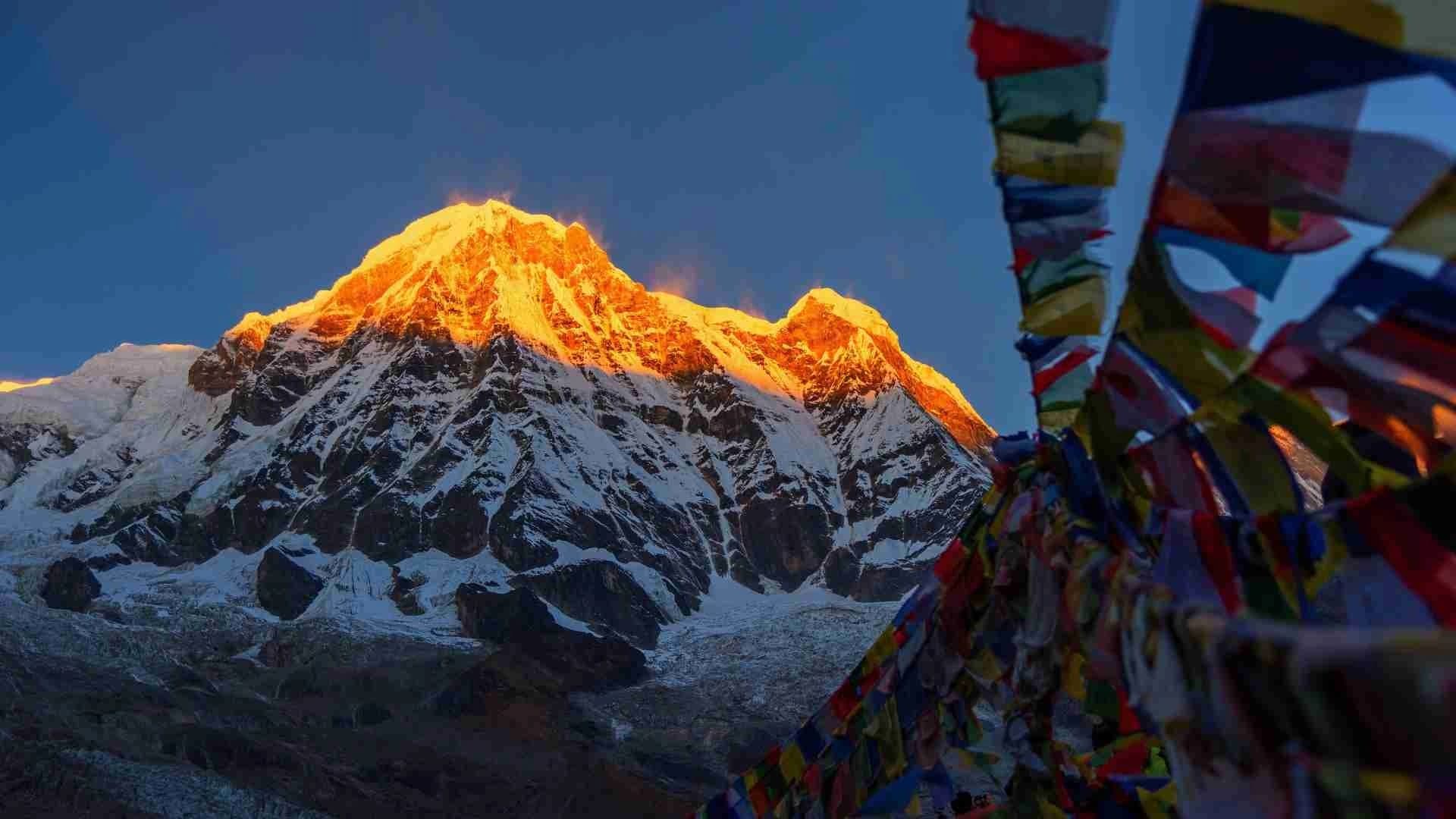
The Mardi Himal Trek in October is a moderate Himalayan trekking route in Nepal’s Annapurna region, offering dry trails, stable autumn weather, clear mountain visibility, and panoramic views from the forested approaches to the high ridge and Mardi Himal Base Camp. The route typically runs from Kande through Deurali, Forest Camp, Low Camp, and High Camp to the Upper View Point and Base Camp at around 4,200–4,500 meters, before descending toward Siding Village and Pokhara. October brings favorable conditions for viewing Machhapuchhre (Fishtail), Annapurna South, Annapurna I, Hiunchuli, Annapurna III, and Gangapurna, while rhododendron-oak forests, alpine meadows, Himalayan monal, and other Annapurna Conservation Area wildlife add variety to the trek. Morning departures are particularly valuable because the clearest mountain views generally occur before afternoon cloud develops around the peaks.
Planning the Mardi Himal Trek in October requires more than choosing the right weather window. Daytime temperatures range from mild conditions around Kande to near-freezing temperatures at the highest elevations, while High Camp and the Upper View Point can become cold and wind-exposed before sunrise. Dry footing makes the route easier than during the monsoon, but steep ridge sections, elevation gain above 3,000 meters, and the final climb toward the Upper View Point still require appropriate pacing and acclimatization. Trekkers should prepare layered clothing, warm sleep gear, sturdy trekking boots, poles, rain protection, sun protection, water treatment, and travel insurance, while arranging the required ACAP and TIMS permits according to current regulations. October is also the busiest period on the route, making High Camp accommodation, guide arrangements, itinerary planning, and advance booking important considerations for both Nepali and international trekkers.
Why Is October Considered a Popular Month for Mardi Himal Trek?
October follows the monsoon's retreat and precedes winter's cold, placing the Mardi Himal Trek in its most stable weather window of the year. Monsoon clouds clear from the Annapurna region by the last week of September, and October inherits dry air, low humidity, and minimal cloud buildup. This combination produces the trek's best visibility, its firmest trail surfaces, and its most predictable daily weather pattern.
Trekkers gain three practical advantages during this month. Daytime hiking stays comfortable without monsoon humidity or winter cold. Trail conditions stay dry and grippy on the steep ridge sections between Low Camp and High Camp, cutting the slip risk that muddy July trails or icy January trails create. Teahouses along the route run at full operation, with complete menus and reliable hot water, since October marks peak trading season for lodge owners in Forest Camp, Low Camp, and High Camp.
What most first-time trekkers overlook is that October's popularity creates its own trade-off: exceptional weather draws the year's highest trekker volume onto a trail with genuinely limited bed capacity at High Camp. Trekkers who value solitude alongside clear skies often shift toward early October or the final days of the month, trading a few degrees of night-time warmth for thinner crowds.
What Weather Can You Expect on Mardi Himal Trek in October?
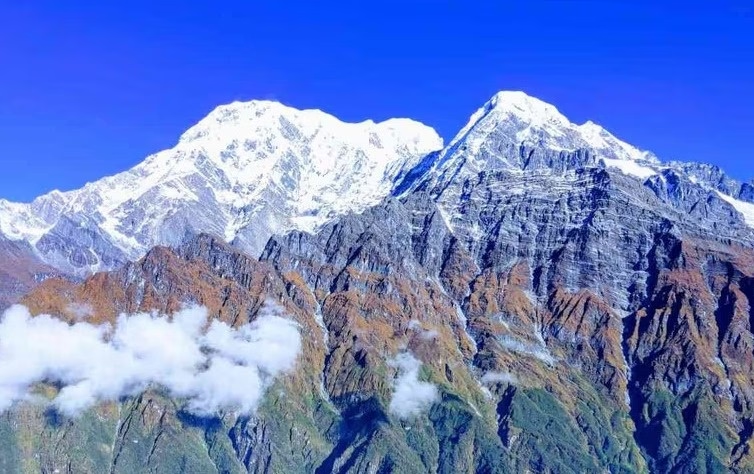
October weather on the Mardi Himal Trek combines dry air, minimal rainfall, and daily temperature swings tied directly to altitude. Skies typically run clear through the morning, with afternoon cloud buildup around the peaks that dissolves again by evening.
How Clear Are the Mountain Views on Mardi Himal Trek in October?
Mountain visibility on the Mardi Himal Trek reaches its yearly peak in October. Post-monsoon air carries far less dust and haze than pre-monsoon spring air, and this clarity gives October a genuine information edge over March-to-May trekking: spring rhododendron blooms draw color-focused trekkers, but October delivers sharper, farther-reaching mountain photography.
Morning hours between 6:00 AM and 10:00 AM offer the clearest conditions, before afternoon convection builds thin cloud cover around the highest peaks. Trekkers photographing Machhapuchhre or Annapurna South from High Camp or the Upper View Point get consistently sharper results by shooting before 10:00 AM rather than waiting for midday light. On the clearest October mornings, the entire Annapurna massif stands free of cloud from base to summit, a condition that occurs on a minority of days even within this favorable month.
How Does October Compare With September and November on Mardi Himal Trek?
October sits between a still-transitioning September and a colder, thinner-crowded November on the Mardi Himal Trek, and each month suits a distinct type of trekker.
Month | Daytime Temp (Low Camp) | Night Temp (High Camp) | Trail & Crowd Conditions |
September | 15°C to 18°C | Around 5°C | Occasional early-month showers; trails still drying; fewer trekkers |
October | 15°C to 20°C | 2°C to 5°C | Driest, clearest month; heaviest teahouse demand |
November | 10°C to 15°C | Below 0°C by late month | Very dry and clear; thinning crowds; colder mornings |
September rewards patient trekkers willing to accept a slightly unsettled first half in exchange for a quieter trail. November suits trekkers who prioritize solitude and can handle sub-zero nights at High Camp. October occupies the middle ground: the most stable weather of the three months, paired with the largest number of fellow trekkers on the ridge. Trekkers who dislike crowded teahouse dining halls but still want dry, clear conditions often choose the final week of October, when the weather pattern still holds but the peak crowd has begun thinning toward November.
What Is the October Weather Like Along the Mardi Himal Trek?
October weather changes meaningfully with elevation along the Mardi Himal route, moving from mild, forested lower sections to a cold, exposed ridge above 3,500 meters. Each stage of the trail carries its own temperature, rainfall, and trail-condition profile.
What Are the Daytime and Nighttime Temperatures of Mardi Himal Trek?
Daytime temperatures on the Mardi Himal Trek in October range from roughly 20°C at the lower trailhead to a brisk 5°C to 10°C at Base Camp, while night temperatures drop well below zero at the highest camps.
Location | Altitude | Day Temp | Night Temp |
Kande / Deurali | 1,770m–2,100m | 18°C to 22°C | 8°C to 10°C |
Forest Camp | 2,600m | 16°C to 19°C | 5°C to 8°C |
Low Camp | 2,970m–3,050m | 15°C to 18°C | 2°C to 5°C |
High Camp | 3,550m–3,600m | 10°C to 15°C | 2°C to -3°C |
Base Camp / View Point | 4,200m–4,500m | 5°C to 10°C | -3°C to -8°C |
This table defines the temperature range a trekker experiences across a single trekking day, since the route gains roughly 2,700 meters from the trailhead to Base Camp. In real-world use, trekkers layer up at every overnight stop and layer down again once the sun clears the ridge each morning, since the swing between a 10:00 AM ascent and a 6:00 PM dinner stop at the same camp regularly exceeds 15°C.
How Much Rainfall Can You Expect on Mardi Himal Trek in October?
Rainfall drops to its lowest point of the year on the Mardi Himal Trek during October. The monsoon officially withdraws from the Annapurna region by late September, and October carries only the rare leftover shower, concentrated almost entirely in the first week of the month. By mid-October, multi-day dry stretches become the norm rather than the exception.
What competitors' guides rarely mention is the pattern within a rainy October day: on the uncommon occasion when precipitation does occur, it arrives as a short afternoon or evening cloudburst rather than sustained all-day rain, since it typically traces back to localized convective buildup around the peaks rather than a genuine monsoon system. Morning trekking segments stay reliably dry even during an unsettled week, which is why guides on this route schedule the steepest climbing sections for early morning departures.
What Are the Chances of Snow on the Mardi Himal Trail?
.avif)
Snow chances on the Mardi Himal Trek in October stay low but rise toward the end of the month at the highest elevations. Forest Camp, Low Camp, and the lower ridge sections essentially never see snow in October. High Camp and the approach to the Upper View Point can receive a light dusting during the final week of the month, particularly following a cold front, though accumulation rarely exceeds a few centimeters and clears within a day or two under the strong autumn sun.
A common mistake we see among trekkers booking late-October departures is packing as though for a summer trek because "it's still autumn." Nights at High Camp regularly sit at or below freezing by the last week of October, and the pre-dawn push to the Upper View Point crosses genuinely cold, wind-exposed ridge terrain regardless of how mild the valley felt at the start of the trek.
How Do October Weather Conditions Affect Mardi Himal Trekking?
October weather shapes three practical trekking decisions on the Mardi Himal route: departure timing, trail footing, and viewpoint scheduling. Dry conditions keep trail surfaces firm rather than muddy, which reduces slip risk on the steep switchbacks between Forest Camp and High Camp and shortens overall walking time compared to a wet-season pace on the same terrain.
Afternoon cloud buildup around the peaks, while it rarely produces rain, does block mountain views by early-to-mid afternoon on most October days. This pattern pushes the smart scheduling choice toward early starts: reaching High Camp or the Upper View Point before 9:00 AM secures the clearest photography window, while afternoon arrivals at the same viewpoints frequently face a cloud-obscured Annapurna range. Morning frost near High Camp and above also affects footing on exposed rock sections, so trekking poles and a slower pace during the first hour after sunrise reduce fall risk on frost-slicked stone.
What Can You See During Mardi Himal Trek in October?
The Mardi Himal Trek in October delivers close-range Himalayan peaks, dense rhododendron and oak forest, resident Annapurna Conservation Area wildlife, and some of the clearest sunrise and sunset color of the year. Each element peaks at a different point along the route, from dense lower-elevation forest to the open, exposed ridge above the tree line.
Which Himalayan Peaks Are Visible From Mardi Himal?
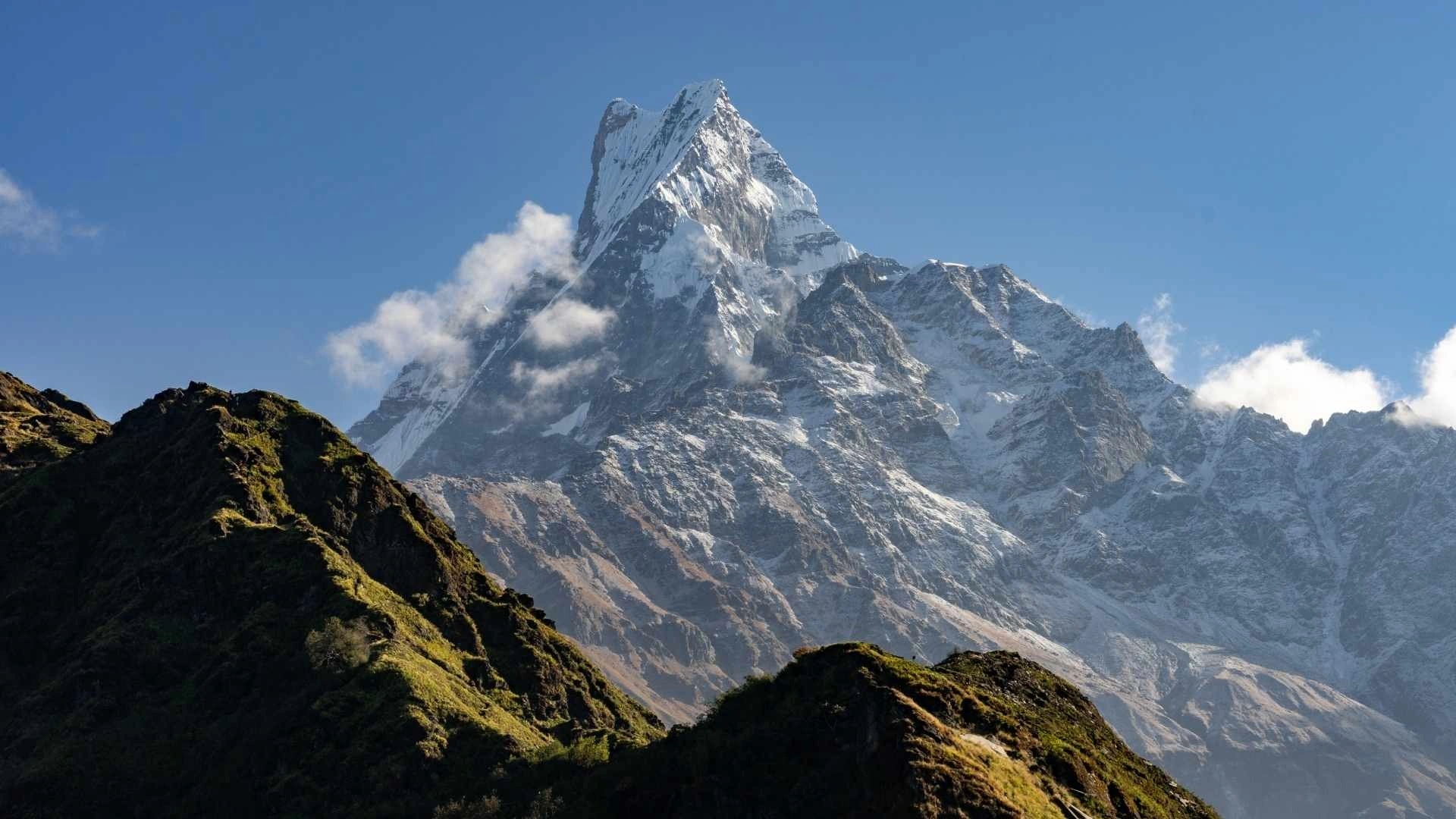
Eight named Himalayan peaks dominate the skyline from the Mardi Himal ridge and Base Camp in October, led by Machhapuchhre, Annapurna South, and Annapurna I. Machhapuchhre (6,993m), known internationally as Fishtail Mountain, sits closest to the trail and dominates the view from High Camp onward. Annapurna South (7,219m), Hiunchuli (6,441m), Annapurna I (8,091m), Annapurna III (7,555m), and Gangapurna (7,455m) form the wider panorama visible from the Upper View Point and Base Camp at 4,200m to 4,500m. Mardi Himal peak itself (5,587m) rises directly beside the trail's high point, close enough that its ridgelines fill the immediate foreground.
On exceptionally clear October mornings, Dhaulagiri (8,167m) becomes visible to the west, and Manaslu (8,163m) occasionally appears as a distant silhouette to the east from the highest points on the ridge. Machhapuchhre carries particular cultural weight: the peak remains officially unclimbed and closed to summit attempts, a status that adds to its sharp, untouched profile compared with the more climbed peaks surrounding it.
What Landscapes and Rhododendron Forests Can You Explore on Mardi Himal Trek?
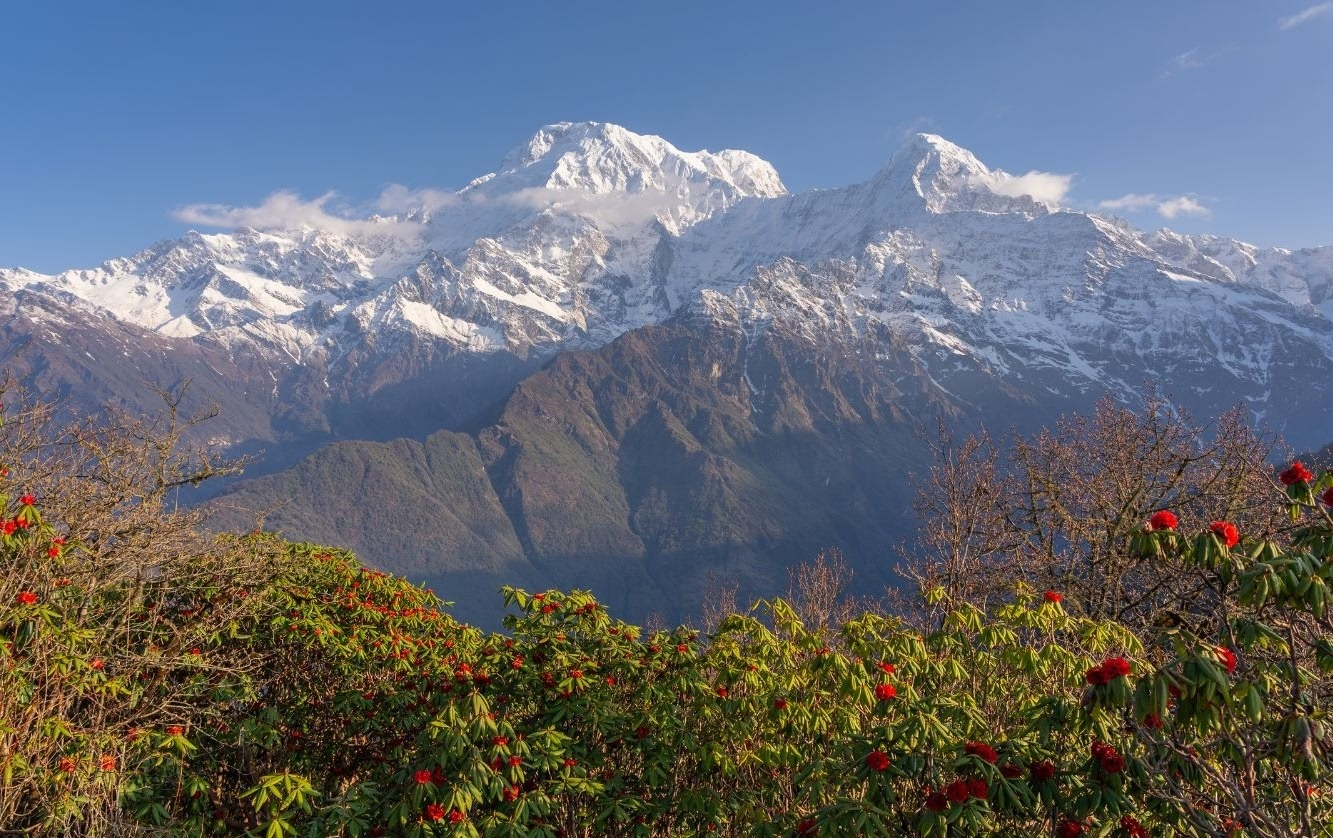
The Mardi Himal Trek moves through four distinct landscape zones between Kande and Base Camp: subtropical lower forest, dense rhododendron-oak-hemlock forest, high alpine meadow, and exposed high-altitude ridge. Rhododendron forest dominates the middle section of the trail, from Deurali through Forest Camp and into Low Camp, mixing with oak, birch, maple, and hemlock across roughly 2,000m to 3,300m in elevation.
October rhododendron forest looks structurally different from the famous March-to-April bloom, since the flowers themselves have long since faded by autumn. What October offers instead is dense, deep-green forest canopy at its fullest coverage, filtering trail light into the kind of shaded, atmospheric walking conditions that spring's flowering season, with its thinner early-season leaf cover, does not match. Above 3,300m the forest thins into open grassland and rock, and the trail emerges onto the narrow ridge that gives Mardi Himal its defining panoramic character, with the Modi Khola and Mardi Khola river valleys dropping away on either side.
What Wildlife and Birdlife Might You Encounter on Mardi Himal Trek?
The Annapurna Conservation Area supports Himalayan thar, barking deer, long-tailed langurs, and, on rare occasions, leopards along the forested lower and middle sections of the Mardi Himal Trek. October's dry conditions and reduced ground cover slightly improve wildlife sightings compared with the dense monsoon-season foliage, since animals become easier to spot against thinner undergrowth.
Birdlife runs particularly rich through the rhododendron and oak forest zone. The Himalayan monal, known locally as Danphe and recognized as Nepal's national bird, inhabits this elevation band alongside the Kalij pheasant and a wide range of forest songbirds. Trekkers moving quietly through the Forest Camp-to-Low Camp section in early morning hold the best odds of a monal sighting, since the bird favors the cooler, low-light hours before trail traffic builds.
What Makes Mardi Himal Trek on October Sunrise and Sunset Views Special?
October sunrise and sunset views on the Mardi Himal Trek stand out for their color saturation and consistency, a direct result of the month's dry, low-haze atmosphere. Sunrise from High Camp or the Upper View Point paints Machhapuchhre's summit in a shifting sequence from deep pink through orange to bright white as direct light climbs down the mountain's south face, a sequence that plays out clearly on most October mornings given the month's high proportion of cloud-free dawns.
Sunset delivers a mirrored but softer effect, with the Annapurna range holding warm alpenglow for several minutes after the sun drops below the western ridgeline. Photographers focused on peak color intensity generally rate October's dry-air sunsets above the hazier, moisture-heavy skies of pre-monsoon spring, even though spring adds rhododendron color to the foreground.
What Is the Mardi Himal Trek Route Like in October?
The Mardi Himal Trek route in October follows a fixed path from Kande through Forest Camp, Low Camp, and High Camp to Base Camp, then descends via a separate trail through Siding Village back to Pokhara. Dry October trail conditions keep this route at its most straightforward footing of the year, though the ridge sections above High Camp remain steep and exposed regardless of season.
Where Does the Mardi Himal Trek Start and End?
The Mardi Himal Trek starts at Kande, a village roughly one hour by jeep from Pokhara at 1,770m elevation, and ends at Siding Village before a final vehicle transfer back to Pokhara. Some operators begin instead at Phedi or Dhampus, both within the same one-hour radius of Pokhara and joining the main trail within the first day of walking.
The descent route via Siding Village differs from the ascent route, giving trekkers new scenery on the way down rather than retracing the same path. This one-way loop design distinguishes Mardi Himal from out-and-back treks and adds Gurung village culture to the second half of the journey, since Siding sits within a traditional Gurung farming community at 1,750m to 1,885m elevation.
What Are the Main Stops Along the October Mardi Himal Trek?
Seven main stops structure the standard Mardi Himal Trek itinerary between Kande and Base Camp, each separated by four to seven hours of walking.
Stop | Altitude | Typical Trekking Day |
Kande | 1,770m | Trailhead |
Deurali / Pothana | 2,100m | Day 1 |
Forest Camp | 2,600m | Day 2 |
Low Camp | 2,970m–3,050m | Day 3 |
High Camp | 3,550m–3,600m | Day 4 |
Base Camp / Upper View Point | 4,200m–4,500m | Day 5 (day hike from High Camp) |
Siding Village | 1,750m–1,885m | Descent day |
This table lays out the elevation and pacing structure that every Mardi Himal itinerary builds around, whether compressed into five days or extended across seven. Most trekkers overnight at High Camp both before and after the Base Camp push, using it as the acclimatization anchor for the entire trek, then descend directly to Siding in a single long day rather than retracing steps through Low Camp and Forest Camp.
How Difficult Is the Mardi Himal Trek in October?
The Mardi Himal Trek rates as a moderate-difficulty trek in October, suitable for reasonably fit beginners without prior high-altitude experience. Daily walking runs four to seven hours, with the steepest, most sustained climbing concentrated on the Low Camp-to-High Camp and High Camp-to-Base Camp segments, where the trail narrows onto an exposed ridge.
October's dry trail surface removes the mud-related difficulty of monsoon trekking and the ice-related difficulty of deep winter, leaving altitude and daily elevation gain as the primary physical challenges. The steepest single push, from High Camp to the Upper View Point, gains roughly 650m over a narrow, wind-exposed ridge, and this section, not the total trek length, causes most of the physical strain reported by first-time trekkers on Mardi Himal.
How Many Days Are Needed for Mardi Himal Trek?
Most Mardi Himal Trek itineraries run five to seven trekking days, with full packages including Pokhara-to-Pokhara transport and a Kathmandu buffer extending to seven to nine total days. A minimum viable itinerary compresses the route into four days for fit, time-limited trekkers, while itineraries that add an extra acclimatization night at Low Camp or High Camp extend to eight or nine days.
Trekkers combining Mardi Himal with the Annapurna Base Camp Trek on a single extended itinerary typically budget ten to twelve days total, since the two routes connect through shared trail sections in the upper Modi Khola valley. For a standalone October trek, six days strikes the most common balance between pacing comfort and total time commitment among trekkers booking through licensed operators.
What Should You Pack for Mardi Himal Trek in October?
October packing for the Mardi Himal Trek centers on a layered clothing system, sturdy waterproof-capable footwear, and cold-weather sleep gear rated well below the daytime temperatures a trekker feels at the trailhead. The roughly 2,700m elevation gain from Kande to Base Camp means a single day's pack must cover conditions from short-sleeve warmth to sub-zero cold.
Which Clothes Are Suitable for October Temperatures of Mardi Himal Trek?
A three-layer clothing system covers October temperatures on the Mardi Himal Trek: a moisture-wicking base layer, an insulating mid layer, and a windproof-waterproof outer shell. Pack two to three base layers in quick-dry synthetic or merino wool fabric, a fleece or light down mid layer for camp evenings, and a heavier down jacket rated to at least -10°C for High Camp and Base Camp mornings.
Add trekking trousers with a fleece-lined or thermal option for the coldest nights, a warm hat, sun hat, buff or neck gaiter, and insulated gloves alongside lighter liner gloves for variable-temperature hours. Trekkers moving through Kande and Forest Camp in short sleeves at midday routinely need the full down layer within six hours, once they reach High Camp for the evening, which makes packing for the coldest expected point of the trek, rather than the warmest, the safer strategy.
What Trekking Gear and Footwear Should You Bring?
Waterproof, ankle-supporting trekking boots form the essential footwear choice for the Mardi Himal Trek, broken in well before departure to avoid blister risk on the multi-day ascent. Pair boots with moisture-wicking trekking socks and a lightweight camp shoe for evening comfort at teahouses.
Trekking poles reduce knee strain on the steep Low Camp-to-High Camp climb and provide stability on frost-slicked rock near High Camp in October mornings. A headtorch with spare batteries supports the pre-dawn departure to the Upper View Point, and a daypack in the 30-to-40-liter range holds daily essentials while a porter or duffel carries the main load on guided itineraries.
Do You Need Rain Gear for Mardi Himal Trek in October?
Rain gear remains a sensible inclusion for the Mardi Himal Trek in October despite the month's low rainfall, since a lightweight waterproof jacket and pack cover double as an effective windbreaker on the exposed ridge sections above High Camp. Pack a compact rain jacket and a pack cover rather than heavier full monsoon gear, since October's occasional shower runs short and localized rather than sustained.
The same shell layer that blocks an unlikely afternoon shower also blocks the sharp wind that regularly hits the open ridge between High Camp and Base Camp, making this a dual-purpose item rather than a rain-specific one.
What Personal Essentials Should You Carry?
Personal essentials for the Mardi Himal Trek include a first-aid kit with altitude-sickness medication, water purification tablets or a filter, sunscreen rated SPF 50 or higher, UV-protective sunglasses, and a reusable water bottle or hydration bladder. Carry cash in Nepali rupees, since teahouses above Forest Camp accept no card payment and the nearest ATMs sit back in Pokhara.
Pack a portable power bank, since electricity access at High Camp and Base Camp runs limited and often carries a per-hour charging fee. Travel insurance covering high-altitude trekking and emergency helicopter evacuation counts as a non-negotiable essential given the trek's 4,500m maximum altitude.
What Should You Know Before Trekking Mardi Himal in October?
Trekkers preparing for Mardi Himal in October need clarity on four practical points before departure: permit requirements, trail crowding, accommodation booking, and altitude acclimatization. Each factor shifts specifically because October is the trek's busiest month.
What Permits Are Required for Mardi Himal Trek?
Two permits cover the Mardi Himal Trek: the Annapurna Conservation Area Permit (ACAP) and the Trekkers' Information Management System (TIMS) card. The Annapurna Conservation Area Project issues the ACAP as an entry fee into the protected conservation area the trail passes through, while the Nepal Tourism Board issues TIMS as a trekker registration record used for safety tracking and rescue coordination.
Permit | Foreign Nationals | SAARC Nationals | Nepali Citizens |
ACAP | NPR 3,000 (~USD 23) | NPR 1,000 (~USD 8) | NPR 100 (nominal) |
TIMS | NPR 2,000 (~USD 15) | NPR 1,000 (~USD 8) | Not required |
This table sets out the current fee structure by nationality, obtainable in Kathmandu, in Pokhara, or through a licensed trekking agency ahead of departure. Since the Nepal Tourism Board revised its trekking framework, TIMS card verification alongside the mandatory guide rule remains strictly monitored at checkpoints throughout the Annapurna region, making it a non-negotiable legal requirement. Nepali citizens trek without a TIMS card and pay only the nominal ACAP fee, making permit cost a minor factor for domestic trekkers compared with international visitors.
How Busy Is the Mardi Himal Trail in October?
October carries the heaviest trekker volume of any month on the Mardi Himal Trail, a direct consequence of the same clear, stable weather that makes the month attractive in the first place. Forest Camp and Low Camp, with their larger lodge capacity, absorb the crowd comfortably, but High Camp's limited bed count turns into the trek's genuine bottleneck during peak October weeks.
While Nepali domestic travelers can still hike independently, foreign trekkers must be accompanied by a licensed guide under current regulations. Regardless of your group type, arriving late in the day at High Camp during mid-October means you occasionally find every proper room full and end up sleeping in a dining hall. Trekkers who value a quieter trail experience without sacrificing October's weather advantages generally shift toward the first several days or the final week of the month, when volume drops noticeably from the mid-month peak.
Should You Book Accommodation in Advance for Mardi Himal Trek?
Advance accommodation booking makes a measurable difference for the Mardi Himal Trek in October, particularly for High Camp, where bed capacity runs well below peak-season demand. Trekkers booking through a licensed operator typically get rooms reserved ahead of arrival as a standard part of the package, removing this specific stress point.
Domestic trekkers or those traveling without an operator's advance block-booking face a real risk of overcrowded dining halls and full lodges during the second and third weeks of October, the trek's busiest stretch. Confirming High Camp accommodation three to four weeks ahead of an October departure date represents sound practice, whether arranged directly with a teahouse contact or through an agency that maintains standing relationships with lodge owners along the route.
What Altitude and Acclimatization Considerations Apply?
Altitude sickness becomes a genuine consideration above 3,000m on the Mardi Himal Trek, a threshold the route crosses at Low Camp on day three of a standard itinerary. The trek's relatively fast elevation gain, climbing from 1,770m at Kande to 4,500m at Base Camp within five days, concentrates altitude risk more than the total trek length might suggest.
Standard acclimatization guidance for elevations above 3,000m recommends limiting single-day altitude gain to roughly 500 meters, and the Mardi Himal itinerary's High Camp overnight, used both before and after the Base Camp push, effectively builds this buffer into the standard route. Watch for headache, nausea, and unusual fatigue as early acute mountain sickness symptoms, and treat any of these signs at High Camp or above as a signal to pause ascent rather than push through to the Upper View Point. Descent remains the most reliable treatment for worsening symptoms at any point on the trail.
How Can Nepal Intrepid Treks Help With Mardi Himal Trek in October?
Nepal Intrepid Treks & Expedition supports Mardi Himal Trek planning through licensed guiding, permit processing, and accommodation coordination during October's high-demand weeks. As a Nepal-registered trekking outfitter operating across the Annapurna region, the team handles ACAP and TIMS processing ahead of departure, removing the permit-office visit from a trekker's Pokhara schedule.
For October specifically, the practical value centers on High Camp bed reservations, since independent trekkers face the greatest crowding risk at exactly this bottleneck point in the itinerary. Licensed guides also bring route-specific acclimatization pacing, adjusting daily walking targets around a trekker's response to the 3,000m-plus sections rather than following a fixed itinerary regardless of how individuals adapt.
Can Nepal Intrepid Treks Organize a Mardi Himal Trek in October?
Nepal Intrepid Treks organizes both group and private Mardi Himal departures for October, with itineraries adjustable to a trekker's fitness level and available time. Custom scheduling accommodates trekkers targeting either the clearer, busier mid-month weeks or the quieter early and late-October windows.
Trekkers weighing whether to book independently or through an operator for this specific month should factor in October's High Camp accommodation bottleneck as the deciding consideration, since this single logistical point causes more trip friction during October than any other month on the Mardi Himal calendar. Reach out directly to discuss October dates, group sizes, and itinerary length before finalizing a Mardi Himal Trek booking.
What Are the Key Takeaways About Mardi Himal Trek in October?
The Mardi Himal Trek in October offers the year's clearest mountain views, driest trail conditions, and most stable weather, paired with its highest trekker volume and tightest High Camp accommodation. Daytime temperatures range from roughly 20°C at the trailhead to near freezing at Base Camp, while High Camp nights drop to 2°C and below, colder still by the final week of the month.
Rhododendron forest, resident wildlife including the Himalayan monal, and close-range views of Machhapuchhre, Annapurna South, and Annapurna I define the route's scenic core, reached across a moderate-difficulty five-to-seven-day itinerary from Kande to Siding Village. ACAP and TIMS permits, advance High Camp booking, and a layered cold-weather packing list round out the essential preparation. Trekkers weighing October against September or November should treat crowd tolerance, not weather quality, as the real deciding factor, since October's weather advantage over its neighboring months is real but modest, while its crowd difference is not.