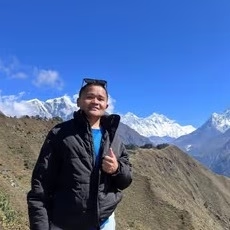
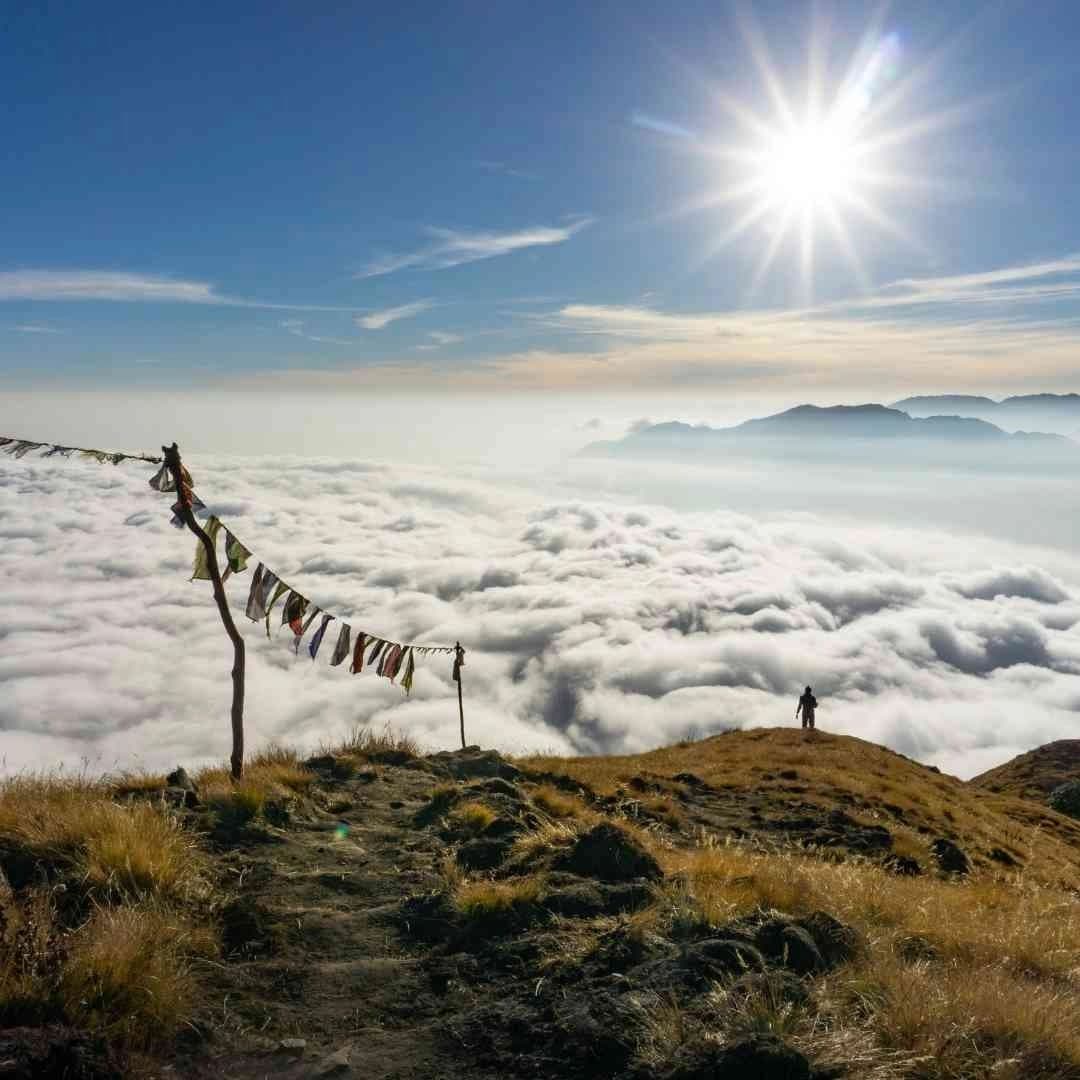
Nepal in winter, from December to February, offers clear Himalayan views, dry trekking trails, cultural festivals, and wildlife experiences. Kathmandu and Pokhara enjoy daytime temperatures of 19°C to 21°C, while high-altitude trekking routes can experience nighttime lows of -25°C. The best places to visit include Kathmandu Valley, Pokhara, Chitwan National Park, and Himalayan viewpoints such as Nagarkot, Sarangkot, and Poon Hill.
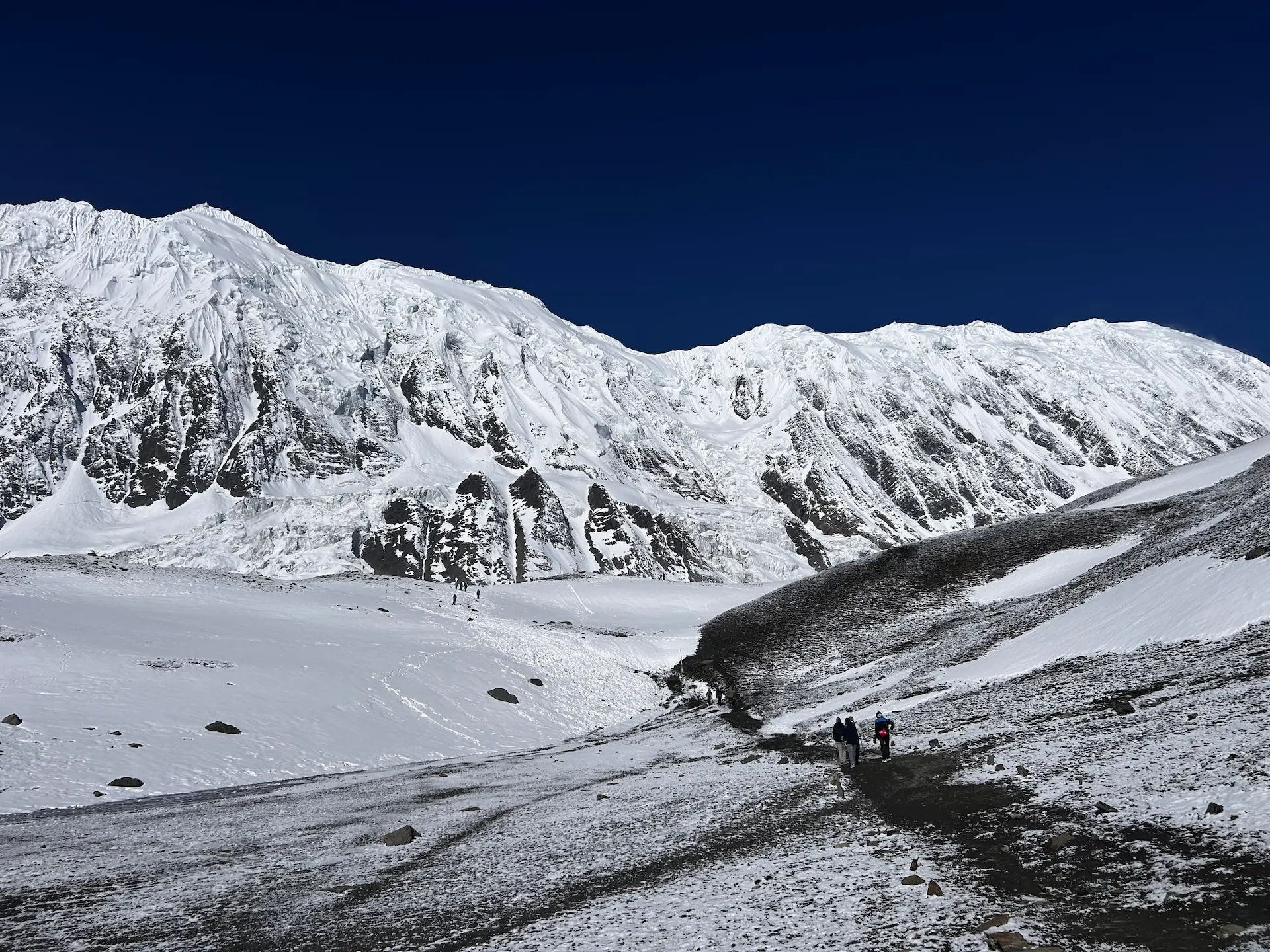
Winter is also a rewarding time to explore Nepal’s trekking routes, including Ghorepani Poon Hill, Mardi Himal, Everest View, and Langtang Valley, with the right preparation for snow, icy trails, and freezing nights. This guide covers regional weather, the best time to visit, winter trekking conditions, packing essentials, permits, altitude safety, travel costs, and trekking packages to help you plan a practical and enjoyable winter trip to Nepal.
What Is the Weather Like in Nepal During Winter?
Nepal's winter weather runs dry, sunny, and cold from December to February. Kathmandu and Pokhara reach 19°C to 21°C by day and fall to 3°C and 8°C at night, while Himalayan trails above 3,000 m drop below freezing every night.
Winter is the dry season. According to the Department of Hydrology and Meteorology (DHM), rainfall from December 2025 to February 2026 stayed below normal, and the Kathmandu Post reported on 28 January 2026 that Nepal had endured a hot, dry winter for the fourth year running. Pokhara averages only 11.5 mm of rain in December. Dry air gives mountain views their best clarity of the year, mostly between sunrise and 09:00, before cloud builds in the hills.
Daylight lasts about 10.5 hours in December. Trekking days end by 15:30, and temperatures fall fast after sunset.
How Cold Does Nepal Get in Winter?
Nepal gets as cold as -25°C at night in Gorak Shep (5,170 m) on the Everest Base Camp trail and stays as mild as 21°C by day in Pokhara. Temperature falls 6.5°C for every 1,000 m of altitude, so elevation sets the cold.
The table below lists typical December readings at 6 stops from valley floor to Everest Base Camp. Trail values are altitude-adjusted estimates.
Location | Altitude | Day high | Night low |
Pokhara | 820 m | 21°C | 8°C |
Kathmandu | 1,400 m | 19°C | 3°C |
Ghorepani | 2,880 m | 8°C | -5°C |
Namche Bazaar | 3,440 m | 9°C | -4°C |
Kyanjin Gompa | 3,870 m | 3°C | -13°C |
Gorak Shep | 5,170 m | 0°C | -16°C to -25°C |
The table shows a 46°C gap between a Pokhara afternoon and a Gorak Shep night.
Mid-winter delivers the sharpest cold. According to Nepal's Meteorological Forecasting Division, the last week of December and the first week of January bring the coldest days. According to DHM readings reported by Nepali media, Kathmandu's minimum fell to 3.5°C on 21 and 26 January 2026, and Jumla in Karnali recorded -0.71°C on 26 January 2026. Wind chill adds 5°C to 10°C on exposed ridges.
Which Regions of Nepal Have the Best Winter Weather?
The Kathmandu Valley, Pokhara, and the Chitwan lowlands have the best winter weather in Nepal. All 3 sit below 1,500 m, reach daytime highs of 19°C to 24°C, and receive little rain from December to February.
The table below compares 6 regions by winter comfort and names the main trade-off in each. Chitwan values are typical January averages.
Region | Day / night | Strength | Trade-off |
Pokhara and Gandaki foothills | 21°C / 8°C | Sarangkot sunrise, lakes, trek trailheads | Cold hotel rooms at night |
Kathmandu Valley | 19°C / 3°C | 7 UNESCO sites, 5 festivals | PM2.5 near 50 µg/m³ |
Chitwan and the Terai | 24°C / 9°C | Rhino and bird sightings | Dense morning fog |
Annapurna and Langtang trails (2,000 m to 3,900 m) | 8°C / -5°C to -13°C | Clear peaks, quiet lodges | Snow above 3,000 m |
Everest region (Khumbu) | 0°C to 9°C / -4°C to -25°C | Sharpest views | Lukla flight delays, unheated rooms |
Far west (Karnali, Sudurpaschim) | Below 0°C at night | Snow and solitude | Road closures after snowfall |
Choose the Terai for warmth, Pokhara for balance, and trail corridors above 2,000 m for mountain clarity. What most people overlook: the Terai holds the warmest air and the thickest fog. Fog thickens in late December and January and lifts by mid-morning, so jungle activity runs best after 08:00.
Does It Snow in Nepal During Winter?
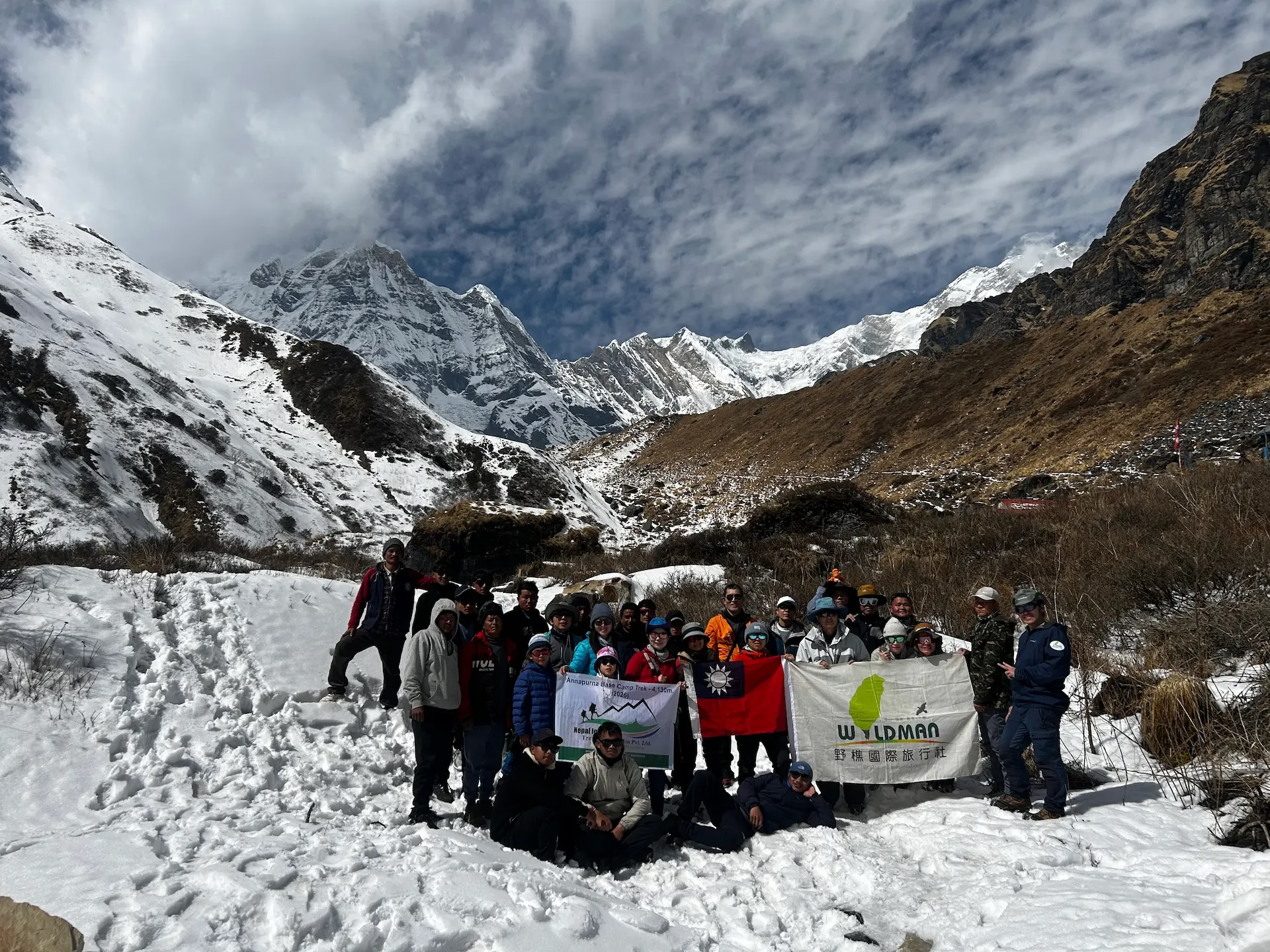
Yes, snow falls in Nepal above about 2,000 m from December to February. Kathmandu city almost never sees it, but Phulchowki (2,782 m), Chandragiri, and Nagarkot whiten in cold spells, and trails above 3,000 m hold snow through most of December.
Snow in Kathmandu is a rarity. According to the Kathmandu Post, heavy snow buried the valley on 6 January 1945. Nepali Times reported flurries in the urban valley in 2019, the first since 2007. Rim snow arrives more often and draws day-trippers to Chandragiri, Phulchowki, Shivapuri, Daman, and Nagarkot.
Recent winters ran dry. According to the International Centre for Integrated Mountain Development (ICIMOD), the 2024-25 winter recorded snow persistence about 24% below normal, a 23-year low across the Hindu Kush Himalaya. Snow still arrives in episodes: on 25 January 2026, snowfall in Karnali and Sudurpaschim suspended traffic on nearly a dozen road sections, according to the Kathmandu Post. For reliable snow without a trek, Kalinchowk (3,842 m, about 150 km from Kathmandu) holds snow from December to February.
Expect dry trails with ice patches below 3,000 m and packed snow above. On Annapurna routes, storms arrive as 1 to 2 day events, then clear.
What Are the Best Places to Visit in Nepal in Winter?
The 4 best places to visit in Nepal in winter are the Kathmandu Valley, Pokhara, the Himalayan viewpoints (Nagarkot, Sarangkot, and Poon Hill), and Chitwan National Park. Each combines mild daytime weather with clear mountain air or reliable wildlife.
A 10-day loop connects all 4: 3 nights in Kathmandu, 1 night in Nagarkot, 3 nights in Pokhara, and 2 nights in Chitwan.
Why Is Kathmandu Valley Worth Visiting in Winter?
Kathmandu Valley is worth visiting in winter because 7 UNESCO World Heritage Sites sit under dry skies and 19°C afternoons. Pashupatinath, Boudhanath, Swayambhunath, Changu Narayan, and 3 Durbar Squares stay open daily, and 5 festivals fall between 24 December 2026 and 11 February 2027.
Low winter sun at 07:30 turns the Patan and Bhaktapur squares gold, and Boudhanath fills with Tibetan Buddhist pilgrims walking the kora, the circular path around the stupa. According to Nepal's 2083 BS public holiday list, the winter festivals fall on these dates:
Yomari Punhi, 24 December 2026: Newar families steam yomari, rice-flour dumplings filled with molasses and sesame, to mark the rice harvest.
Tamu Lhosar, 30 December 2026: the Gurung New Year.
Maghe Sankranti, 15 January 2027: the first day of the month of Magh, marked by ritual river baths and sesame sweets.
Sonam Lhosar, 7 February 2027: the Tamang New Year.
Basanta Panchami, 11 February 2027: Saraswati Puja, when students offer books and pens to the goddess of learning.
Air quality is the trade-off. According to ICIMOD's Khumaltar station, PM2.5 (fine particulate matter) averaged 45 µg/m³ in December 2025 and about 50 µg/m³ across December to February. The World Health Organization's 24-hour guideline is 15 µg/m³, so winter air runs 3 times above it. Limit the valley to 2 to 3 nights, carry an N95 or FFP2 mask, and schedule walking tours for the afternoon, when sun lifts the morning haze. The guide 10 Best Natural Places to Visit in Kathmandu lists green escapes on the valley rim.
What Makes Pokhara a Great Winter Destination?
Pokhara is a great winter destination because it combines 21°C days, Annapurna and Machhapuchhre views from Sarangkot, and a lakeside setting at 820 m with 8°C nights. A 25-minute flight from Kathmandu lands at Pokhara International Airport.
Sarangkot (1,600 m) sits a 30-minute drive from Lakeside, and the Annapurna range turns pink at about 06:50 in December. Phewa Lake offers boating at midday, the World Peace Pagoda adds a hill walk, and Paragliding launches from Sarangkot. Photographers shoot Sarangkot at dawn and Phewa reflections around 08:00. Families use the warm window between 11:00 and 15:00 on the water.
Pokhara also serves as the trailhead city for Poon Hill, Mardi Himal, and Annapurna Base Camp. Nayapul, the start of the Poon Hill route, sits 1.5 to 2 hours away by road. Most budget and mid-range hotels lack central heating, so request an electric heater and extra blankets at booking.
Which Himalayan Viewpoints Offer the Best Winter Scenery?
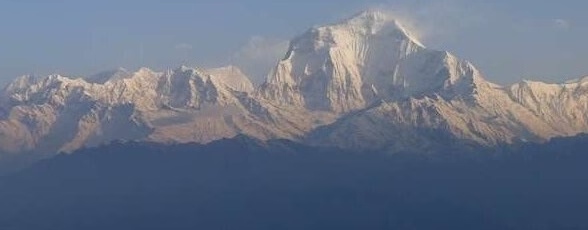
Poon Hill (3,210 m), Nagarkot (2,175 m), Sarangkot (1,600 m), Chandragiri Hills (2,551 m), and Daman (2,322 m) offer the best winter scenery. Cold, dry air gives these viewpoints their sharpest visibility between sunrise and 09:00.
The table below lists 5 viewpoints with access details and the peaks each frames.
Viewpoint | Altitude | Access | Peaks in view |
Poon Hill | 3,210 m | 4 to 5 day trek from Nayapul | Dhaulagiri I (8,167 m), Annapurna I (8,091 m) |
Nagarkot | 2,175 m | 32 km east of Kathmandu | Langtang, Ganesh Himal, Gaurishankar ranges |
Sarangkot | 1,600 m | 30 minutes from Pokhara Lakeside | Annapurna range, Machhapuchhre (6,993 m) |
Chandragiri Hills | 2,551 m | Cable car, 16 km from Kathmandu | Langtang and Ganesh Himal ranges, Kathmandu Valley |
Daman | 2,322 m | Tribhuvan Highway, about 80 km from Kathmandu | Central Himalaya panorama from a viewing tower |
Haze collects in the Kathmandu bowl, so viewpoints above 2,000 m often rise above it. Overnight stays at Nagarkot or Daman beat day trips, because the cleanest light arrives before 08:00 and the drive from Kathmandu eats the best hour.
Can You Explore Chitwan National Park in Winter?
Yes, you can explore Chitwan National Park in winter, and December to February sits inside the October to early March peak season. Jungle safaris run daily, and greater one-horned rhinoceros, gharial crocodiles, and deer appear most reliably after morning fog lifts.
Chitwan became Nepal's first national park in 1973. According to the Department of National Parks and Wildlife Conservation, the park holds 694 of Nepal's 752 rhinoceroses (2021 census), and the park lists more than 500 bird species, including winter migrants. Tigers are rare sightings in any season.
According to the Chitwan National Park office, entry costs NPR 2,000 per foreigner per day, and a jeep adds NPR 5,000. Visitors reached 226,876 by mid-April in fiscal year 2025/26. January highs reach 24°C and nights fall to about 9°C, so open-jeep dawn safaris at 06:30 feel cold. Pack a fleece and a windproof layer. Walking safaris and canoe rides suit midday, when fog has cleared.
What Are the Best Winter Treks in Nepal?
The 4 best winter treks in Nepal are Ghorepani Poon Hill, Mardi Himal, Everest View, and Langtang Valley. All 4 keep the highest sleeping altitude between 2,880 m and 3,870 m, which limits cold exposure and altitude risk from December to February.
The guide 10 Best Treks in Nepal in December 2026: Winter Guide compares 10 routes, including Pikey Peak, Khopra Danda, and Gosaikunda.
Why Is the Ghorepani Poon Hill Trek Ideal for Winter?
The Ghorepani Poon Hill trek is ideal for winter because it sleeps no higher than 2,880 m, finishes in 4 to 5 days, and delivers a 3,210 m sunrise over Dhaulagiri I (8,167 m) and Annapurna I (8,091 m). Altitude sickness risk stays low.
Ghorepani, the trek's highest overnight village, falls to -5°C on December nights. Poon Hill reaches -7°C before sunrise. Lodges heat only the dining room with a stove, and December leaves rooms empty, so choose the bed closest to the stove. The stone staircase above Ulleri tests knees in the first 2 days. The 5-day Poon Hill Trek package costs US$415.
What most people overlook: the 40-minute wait for sunrise at -7°C is the coldest hour of the trek. Wind chill adds 5°C to 10°C. Carry the down jacket in the daypack, not the duffel, and keep the phone and a power bank inside the jacket.
Can You Do the Mardi Himal Trek in Winter?
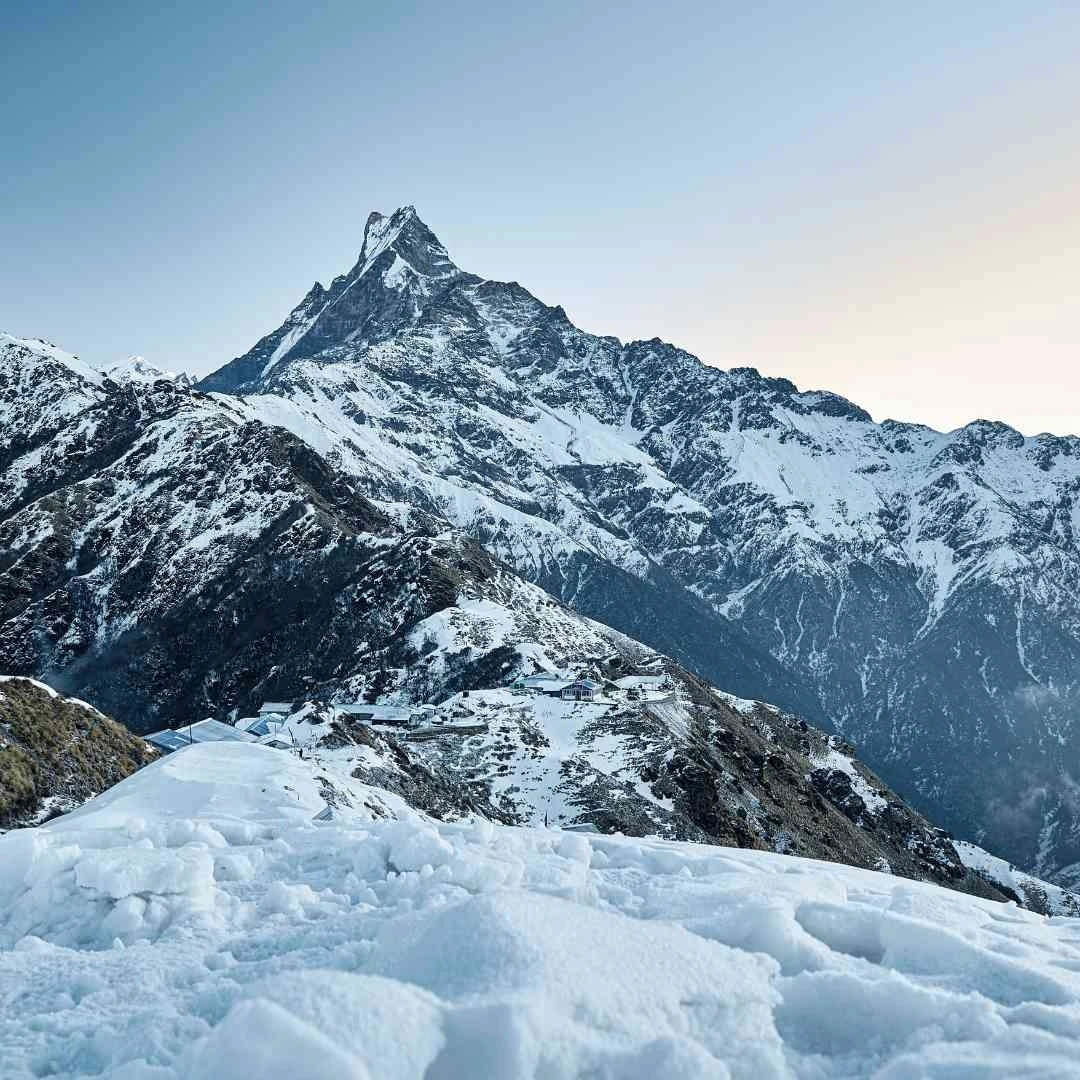
Yes, you can do the Mardi Himal trek in winter with a licensed guide, microspikes, and a -15°C sleeping bag. The ridge route reaches 4,500 m, holds snow through most of December, and keeps High Camp (3,580 m) lodges open.
Nights fall to -10°C at High Camp and -16°C near the 4,500 m viewpoint. The trail climbs from Forest Camp (2,550 m) to Low Camp (3,050 m) and High Camp, and Machhapuchhre (6,993 m) stands beside the ridge for 2 full days. The summit of Machhapuchhre stays unclimbed because Nepal restricts ascents.
Plan 6 to 8 days and add 1 buffer day for snow. Guides turn the group around when fresh snow buries the ridge line, and that call protects the trip. Mardi Himal suits fit beginners and works as the step up from Poon Hill. Read Mardi Himal Trek in December 2026: Weather & Winter Guide for day-by-day conditions.
Is the Everest View Trek Suitable for Winter?
Yes, the Everest View Trek is suitable for winter because its highest point, Hotel Everest View at 3,880 m, sits 1,484 m below Everest Base Camp (5,364 m). Namche Bazaar nights reach -4°C, and Lukla flights leave from Kathmandu in the off-peak months.
The Everest View Trek is a 5 to 9 day Khumbu route. Trekkers fly to Lukla, walk to Phakding (2,610 m) and Namche Bazaar (3,440 m), then hike to Hotel Everest View above Syangboche and descend through Khumjung (3,780 m). The Phakding to Namche climb gains 830 m, well above the 500 m nightly guideline, so every itinerary includes a rest day at Namche. The hotel hike gains 440 m and returns to sleep at 3,440 m.
Winter Lukla flights run with fewer departures and higher disruption. According to a June 2026 Lukla guide, flights depart from Kathmandu outside spring and autumn, and one-way fares sit near US$240. Add 2 spare days. Permits total NPR 5,000: the Sagarmatha National Park permit (NPR 3,000) and the Pasang Lhamu Rural Municipality permit (NPR 2,000 for SAARC and NPR 3000 for Foreign nationals). Operators price the 5 to 9 day route between US$620 and US$1,200. The Everest Base Camp Trek needs 16 days and a -20°C sleeping bag, and the Everest Region page lists both options.
Can You Trek to Langtang Valley in Winter?
Yes, you can trek to Langtang Valley in winter. The 8 to 11 day route to Kyanjin Gompa (3,870 m) stays open all season, nights reach -13°C, and snow lies on the trail above Lama Hotel (2,470 m) through most of December.
Langtang Valley lies 7 to 8 hours by road from Kathmandu, inside Langtang National Park (established 1976). The valley rebuilt after the 2015 earthquake, and winter trails carry more yaks than trekkers. The sleeping gain from Langtang Village (3,430 m) to Kyanjin Gompa adds 440 m, under the 500 m guideline. Day hikes reach Kyanjin Ri (4,773 m) and Tserko Ri (4,984 m), and the first belongs on the first morning.
Shaded ice between Ghoda Tabela and Langtang Village causes more slips than snow does. Permits total NPR 5,000: Langtang National Park (NPR 3,000) and the TIMS card (NPR 2,000). The Langtang Valley Trek runs 11 days for US$880.
Which Short Treks in Nepal Are Best for Winter Beginners?
Chisapani to Nagarkot, Ghorepani Poon Hill, Mohare Danda, and the Tamang Heritage Trail are the best short treks for winter beginners. Each lasts 3 to 10 days, tops out between 2,175 m and 3,300 m, and keeps altitude sickness risk low.
The table below compares the 4 routes. Night lows describe the coldest lodge on each route, and Chisapani is an altitude-adjusted estimate.
Trek | Days | Highest point | Coldest lodge night |
Chisapani, Nagarkot, Dhulikhel | 3 to 5 | 2,175 m | -2°C |
Ghorepani Poon Hill | 4 to 5 | 3,210 m | -5°C |
Mohare Danda | 5 to 6 | 3,300 m | -8°C |
Tamang Heritage Trail | 6 to 10 | 3,165 m | -2°C |
First-timers choose the valley-rim route for a 3-day taste of trekking, Poon Hill for a famous sunrise, and Tamang Heritage for culture, homestays, and hot springs at Tatopani. Families with children under 12 stay on the Chisapani route.
Is Winter a Good Time for Trekking in Nepal?
Yes, winter is a good time for trekking in Nepal on routes that sleep below 4,000 m. December to February delivers dry trails, clear mountain views, and quiet lodges, but it demands cold-rated gear and flexible schedules.
Winter trekking is no longer fringe. According to the Nepal Tourism Board, January 2026 arrivals ran 14% above January 2019, and February 2026 arrivals (105,441) ran 8.8% above February 2025.
What Are the Advantages of Trekking in Nepal During Winter?
The 5 main advantages of trekking in Nepal during winter are clear air, quiet trails, spare lodge beds, dry paths, and festival access. January 2026 arrivals (92,573) ran 23% below March 2026 (120,516), so trails carry fewer people.
Visibility: cold air holds less haze, and Machhapuchhre, Annapurna South, and Gangapurna look closer.
Solitude: lodge owners have time to talk, and dining rooms stay quiet.
Availability: spare beds remove the need to pre-book every night, though upper lodges still need a call.
Dryness: no monsoon mud and no leeches on lower trails.
Culture: Tamu Lhosar on 30 December 2026 falls inside the Poon Hill and Mohare Danda window.
Budget trekkers gain negotiating room, because teahouses discount rooms for guests who eat dinner and breakfast on site. Photographers gain low-angle light from 07:00 to 09:00.
What Challenges Should Winter Trekkers Expect in Nepal?
Winter trekkers in Nepal face 6 main challenges: freezing nights, 10.5-hour daylight, frozen water, upper-lodge closures, Lukla flight disruptions, and snow or avalanche zones after storms. Each challenge has a practical answer.
Freezing nights: rooms stay unheated, and dining-room stoves die around 20:00. Use a -15°C sleeping bag and a hot water bottle.
Short days: start at 07:00 and reach the lodge by 15:30.
Frozen water: store bottles upside down inside the sleeping bag.
Lodge closures: some owners close high lodges in mid-to-late December and move down-valley. Guided groups hold pre-arranged beds.
Flight disruptions: fog at Kathmandu and low cloud at Lukla cancel flights. Keep 2 spare days.
Snow zones: fresh snow slows days by 1 to 2 hours and closes avalanche-prone sections.
The common mistake we see: trekkers pack for the daytime high and forget the night low. A 9°C afternoon at Namche becomes -4°C by dinner.
Which High-Altitude Treks Should You Avoid in Winter?
Avoid the Annapurna Circuit (Thorong La, 5,416 m), Manaslu Circuit (Larkya La, 5,106 m), Everest Three High Passes (Kongma La, 5,535 m), and Upper Mustang in winter. Snow closes passes, upper lodges shut, and helicopter rescue depends on weather windows.
Each route crosses a pass above 5,000 m or depends on lodges that close after November. Upper Mustang is a restricted area, with a permit fee of US$500 for the first 10 days, and its winter nights sit far below the -15°C mark. Gosaikunda (4,380 m) and Khayer Lake (4,660 m) suit only experienced winter trekkers. Everest Base Camp stays open, but it requires a -20°C sleeping bag, 2 spare days, and prior altitude experience.
Spring (March to May) and autumn (September to November) fit these routes. The article 10 Hardest Treks in Nepal: Most Challenging Routes ranks them by difficulty. Travelers who want Everest or Annapurna views without a pass crossing choose Poon Hill, Mardi Himal, or a helicopter tour.
What Should You Pack for a Winter Trip to Nepal?
Pack 4 clothing layers, a -15°C sleeping bag (-20°C above 4,500 m), waterproof boots, microspikes, insulated gloves, a headlamp, and category 4 sunglasses. Kathmandu and Pokhara need only light layers plus a warm evening jacket.
Lukla flights cap luggage at 10 kg checked plus 5 kg hand carry, and winter gear fills that allowance fast. Rent the sleeping bag and down jacket in Thamel, or choose a package that supplies both. The Nepal Intrepid Treks Annapurna Base Camp package includes a sleeping bag and down jacket.
What Clothing Layers Keep You Warm While Trekking?
A 4-layer system keeps you warm while trekking: a merino or synthetic base layer, a fleece mid-layer, a down insulating jacket, and a waterproof shell. Add insulated gloves, a beanie, a neck gaiter, and 3 pairs of wool socks.
Each layer has one job. The base layer wicks sweat, the fleece traps warmth, the down jacket insulates during rest stops, and the shell blocks wind and snow.
Base layer: 2 tops and 2 bottoms in merino or synthetic fabric.
Mid-layer: 1 fleece or light synthetic jacket.
Insulation: 1 down jacket rated for -10°C or colder.
Shell: 1 waterproof jacket and 1 pair of shell trousers.
Accessories: 2 pairs of gloves, 1 beanie, 1 neck gaiter, and 3 pairs of wool socks.
Add the down jacket within 3 minutes of stopping, because sweat chills fast. Cotton hoodies, brand-new boots, and a single pair of thin gloves cause most winter complaints. Kathmandu evenings at 3°C need a down jacket even in the city.
Which Trekking Gear Is Essential for Snow and Ice?
Essential gear for snow and ice includes microspikes, trekking poles, gaiters, category 4 sunglasses, and a headlamp with spare batteries. Insulated water bottles, a power bank, and a -15°C sleeping bag complete the winter kit.
Traction: microspikes grip packed snow and ice on stairs, ridges, and shaded sections.
Balance: trekking poles protect knees on long descents.
Cover: gaiters keep snow out of boots.
Eyes: category 4 sunglasses prevent snow blindness at altitude.
Light: a headlamp with spare batteries handles pre-dawn starts, because cold drains charge fast.
Hydration: insulated bottles slow freezing, and a metal bottle filled with hot water warms the sleeping bag at night.
Power: a 10,000 mAh power bank lives inside the sleeping bag overnight.
How Can You Prevent Altitude Sickness in Winter?
Prevent altitude sickness in winter by limiting sleeping-altitude gain to 500 m per night above 3,000 m, adding a rest day every 3 to 4 days, drinking 3 to 4 litres of water daily, and descending at the first sign of worsening symptoms.
Acute mountain sickness (AMS) is the mildest altitude illness. Symptoms include headache with nausea, dizziness, fatigue, or poor sleep above 2,500 m. According to the Wilderness Medical Society's 2024 guidelines, gradual ascent is the primary prevention, and descent is the primary treatment for moderate to severe illness. The same guidelines list acetazolamide at 125 mg twice daily for moderate- and high-risk itineraries. A doctor prescribes it before travel.
Winter adds 3 risks. Dry cold air suppresses thirst, short days push groups to rush, and cold fingers give false low oxygen readings on a pulse oximeter, so warm the hand first. Check each route's nightly gains. Mardi Himal's Low Camp (3,050 m) to High Camp (3,580 m) adds 530 m, just above the guideline, so a slow pace matters. Confusion, loss of coordination, or breathlessness at rest signals HACE or HAPE, and those cases require immediate descent. Buy insurance that covers helicopter evacuation.
How Much Does a Winter Trip to Nepal Cost?
A winter trip to Nepal costs about US$700 to US$1,900 per person for 9 to 16 days, excluding international flights. The trek package sets most of the total, from US$415 for Poon Hill to US$1,485 for Everest Base Camp.
The estimate adds a 30-day visa (US$50), tips at 10% of the package price, 3 extra hotel nights at US$30 per person in twin share, and US$100 for city meals and entry fees. The table below lists the main cost items in 2026-27.
Cost item | 2026-27 price |
Tourist visa, 30 days | US$50 |
Poon Hill Trek package (5 days) | US$415 |
Mardi Himal Trek package (8 days) | US$710 |
Annapurna Base Camp package (12 days) | US$920 |
Everest Base Camp package (16 days) | US$1,485 |
ACAP, Langtang, or Sagarmatha permit | NPR 3,000 each |
TIMS card or Pasang Lhamu permit | NPR 2,000 |
Chitwan entry, per day | NPR 2,000 (jeep NPR 5,000) |
Lukla flight, one way | About US$240 |
Package prices already include permits, guide, porter, and lodging. Permit lines apply to independent budgets and to extension itineraries.
Are Winter Trekking Packages in Nepal More Affordable?
Winter trekking packages in Nepal are not cheaper in headline price, but winter lowers the total through negotiable teahouse rooms and spare beds. Cold-weather gear, buffer days, and heating charges offset part of that saving.
Package prices follow group size, not season. The Annapurna Base Camp package costs US$920 per person for groups of 2 to 4, US$1,120 for a solo traveler (22% more), and US$765 for groups of 13 to 20 (17% less). Group size outweighs any seasonal saving. Some operators advertise winter discounts near 5%, and January arrivals 23% below March give teahouses room to bargain.
Winter adds its own costs. Hot showers cost US$2 to US$4, device charging US$1 to US$3, and a weather day costs US$50 to US$100. Rent or buy cold-rated gear before the trek, and compare the total, not the sticker price.
What Factors Affect the Cost of Winter Trekking?
Seven factors set the cost of winter trekking in Nepal: route, group size, flights, guide and porter, accommodation grade, gear, and insurance. Route and group size move the total most.
Route: Poon Hill at US$415 and Everest Base Camp at US$1,485 differ by US$1,070.
Group size: solo travelers pay up to 22% more per person.
Flights: Lukla flights cost about US$240 each way, and Kathmandu to Pokhara adds a short domestic flight.
Guide and porter: guides charge US$25 to US$40 per day, and porters US$20 to US$25 per day, in 2026 operator listings.
Accommodation: teahouse rooms cost US$5 to US$15 per night, and meals US$25 to US$45 per day.
Gear: rental costs less than buying for a single trip.
Insurance: cover must include helicopter evacuation.
Tips run US$10 to US$15 per day for a guide and US$5 to US$10 per day for a porter. What most people overlook: 1 to 2 buffer days at US$50 to US$100 each belong in the budget from the start.
What Should You Know Before Planning a Winter Trip to Nepal?
Know 3 things before planning a winter trip to Nepal: the best month for your route, the permit and guide rules, and the snow-safety basics. Confirm lodge openings 7 days before departure.
When Is the Best Month to Visit Nepal in Winter?
The best month to visit Nepal in winter is early December for trekking and February for culture and warmth. Early December (1 to 12 December) offers clear air and open lodges, while the coldest days arrive between 24 December and 7 January.
The table below compares 4 winter windows with 2026-27 festival dates.
Window | Conditions | Best for | Festivals |
1 to 12 December | Clear air, open lodges | Poon Hill, Mardi Himal, Langtang | None |
13 to 31 December | Mid-winter cold begins, some upper lodges close | Chitwan, Pokhara, low treks | Yomari Punhi (24 Dec), Tamu Lhosar (30 Dec) |
January | Coldest weeks, dry, snow episodes | Culture, Chitwan, short treks | Maghe Sankranti (15 Jan) |
February | Gradual warming, rising pollution | Everest View, Poon Hill, culture | Sonam Lhosar (7 Feb), Basanta Panchami (11 Feb) |
Late winter brings a pollution trade-off. On 9 March 2026, IQAir ranked Kathmandu the third most polluted city in the world, with PM2.5 at 241 µg/m³. February trips beat March trips on air quality.
Are Trekking Permits and Guides Required in Winter?
Yes, trekking permits are required in winter, and Nepal Tourism Board rules direct foreign trekkers to hire a licensed guide. Annapurna, Langtang, and Sagarmatha permits cost NPR 3,000 each, and your agency files them.
The ACAP is the Annapurna Conservation Area Permit. The TIMS card is the Trekkers' Information Management System card, which adds NPR 2,000 on routes where checkpoints ask for it. In the Khumbu, the Pasang Lhamu Rural Municipality permit (NPR 2,000) replaces TIMS.
The guide rule has a history. The Nepal Tourism Board announced mandatory licensed guides for foreign trekkers from 1 April 2023. Khumbu authorities rejected it, and checkpoints on most open trails never opened, so enforcement varies by route. Restricted areas follow stricter rules: updated Department of Immigration regulations took effect on 22 March 2026, and the department reinforced the guide requirement in 2026. In winter, a guide decides turnaround on snow and ice, so treat the guide as safety equipment, not paperwork.
Tourist visas cost US$30 (15 days), US$50 (30 days), or US$125 (90 days). Extensions cost US$45 for 15 days and US$3 per day after, capped at 150 days per visa year.
How Can You Stay Safe on Snowy Himalayan Trails?
Stay safe on snowy Himalayan trails by starting at 07:00, reaching camp by 15:30, wearing microspikes on packed snow, avoiding avalanche slopes for 24 to 48 hours after heavy snowfall, and following your guide's turnaround call.
Start early: afternoon cloud and wind arrive after 09:00 at viewpoints.
Wear traction: microspikes go on at the first packed snow, not after the first slip.
Hold position: guides stop groups at Deurali or Machhapuchhre Base Camp for 1 to 2 days after heavy snow on the Annapurna Base Camp route.
Watch hands and face: shivering, slurred speech, and numb white fingers signal hypothermia or frostbite.
Share the route: leave the itinerary with the agency and carry insurance details.
Mountain weather turns fast. In January 2020, an avalanche in the upper Annapurna sanctuary killed 7 people, highlighting the critical danger of sudden winter storms on exposed Himalayan trails. Fresh snow slows a day by 1 to 2 hours, and the schedule absorbs that delay only when buffer days exist.
How Can Nepal Intrepid Treks Help You Plan a Winter Adventure in Nepal?
Plan your winter dates with Nepal Intrepid Treks. Send your travel window, group size, and hiking history through WhatsApp +977 9849009919. The team returns a day-by-day plan and quote.
Nepal Intrepid Treks helps you plan a winter adventure through licensed guides, permit handling, winter-rated gear, and itineraries with weather buffers. The company operates from Nayabazar-16, Kathmandu, and holds a 5.0 rating across 159 TripAdvisor reviews.
The company has run Himalayan treks for more than 10 years and holds affiliations with the Nepal Tourism Board, the Nepal Mountaineering Association, and the Trekking Agencies' Association of Nepal. Founder Lal Gurung started as a porter, became a guide, and has 20 years of Himalayan experience. Guides carry pulse oximeters and first-aid kits, and the corporate social responsibility programme funds education and healthcare in remote villages. Beginners receive Poon Hill or Mohare Danda plans, and strong walkers receive plans with extra acclimatization nights.
Which Nepal Intrepid Treks Packages Are Best for Winter Travelers?
The best Nepal Intrepid Treks packages for winter travelers are Poon Hill (US$415), Mardi Himal (US$710), Langtang Valley (US$880), and Annapurna Base Camp (US$920). Everest Base Camp (US$1,485) and the heli tours suit experienced or time-limited travelers.
The table below lists 7 packages with duration and starting price.
Package | Duration | From | Winter fit |
5 days | US$415 | First-time winter trekkers | |
8 days | US$710 | Fit beginners, ridge views | |
11 days | US$880 | Culture and gradual ascent | |
12 days | US$920 | Trekkers with a buffer day | |
16 days | US$1,485 | Experienced cold-weather trekkers | |
4 days | US$1,700 | Views without a high-altitude trek | |
1 day | US$1,700 | Single-day mountain flight |
Custom itineraries cover Mohare Danda, Khopra Danda, Pikey Peak, and the Tamang Heritage Trail.
What Are the Key Takeaways for Planning a Winter Trip to Nepal?
Plan a winter trip to Nepal around 5 decisions: travel in early December or February, choose a route that sleeps below 3,900 m, pack for -15°C nights, hire a licensed guide, and add 1 to 2 buffer days.
Travel in early December for the clearest trekking window and in February for warmth and festivals.
Choose Poon Hill, Mardi Himal, Everest View, or Langtang for a first winter trek.
Pack 4 layers, a -15°C sleeping bag, microspikes, and category 4 sunglasses.
Limit sleeping-altitude gain to 500 m per night above 3,000 m.
Budget US$700 to US$1,900 per person, plus NPR 3,000 to NPR 6,000 for permits when booked separately.
Avoid the Annapurna Circuit, Manaslu Circuit, and Everest Three High Passes until spring or autumn.
Confirm lodge openings 7 days before departure.
Spend no more than 2 to 3 nights in Kathmandu to limit exposure to PM2.5.
Nepal in winter delivers clear Himalayan views, quiet trails, and cold nights. Match the route to your fitness, pack for the night low, and keep 2 spare days in the schedule.