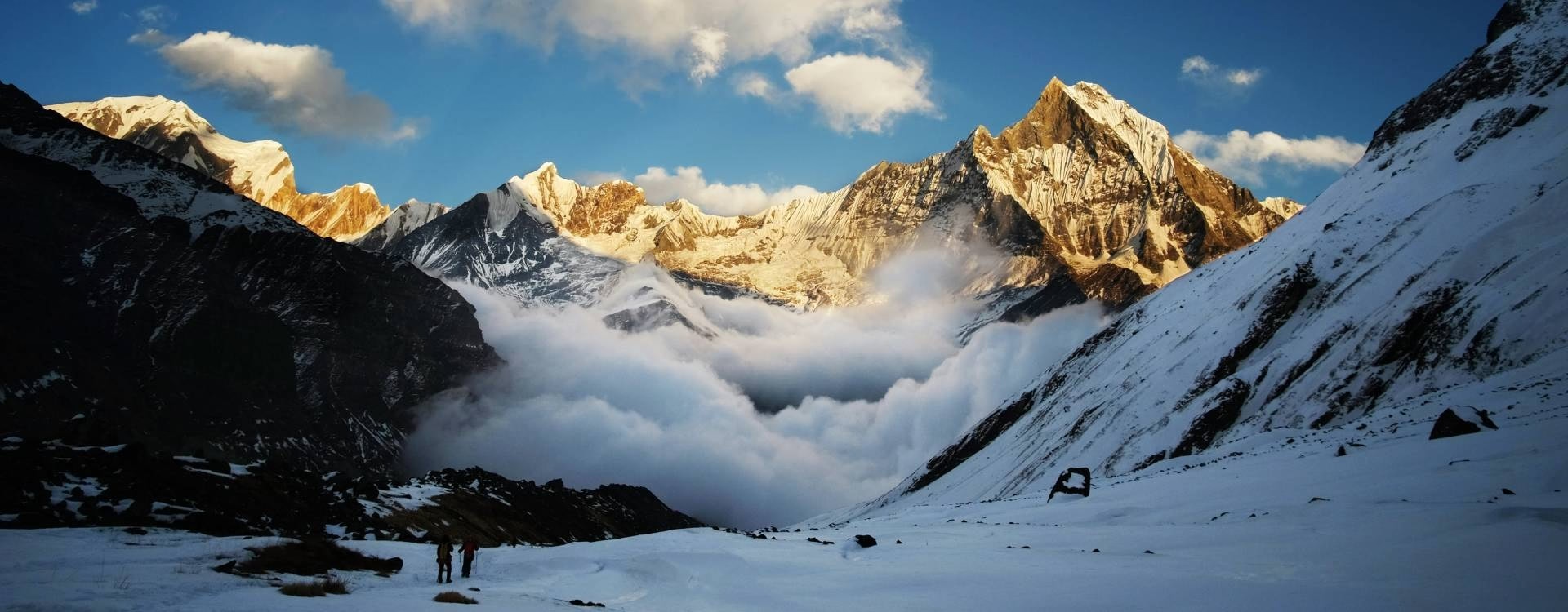
The Mardi Himal Trek in December is a winter trekking adventure in Nepal’s Annapurna Conservation Area, known for clear Himalayan panoramas, quiet ridge trails, and close-up views of Machhapuchhre (6,993 m), Annapurna South, and Hiunchuli. The route passes through oak–rhododendron forests, alpine ridges, and snow-covered terrain before reaching Mardi Himal Base Camp at 4,500 m. Daytime walks are generally manageable, but temperatures at High Camp (3,550 m) can fall to −8 °C to −15 °C, with snow and ice becoming more common above 3,000 m from mid-December.
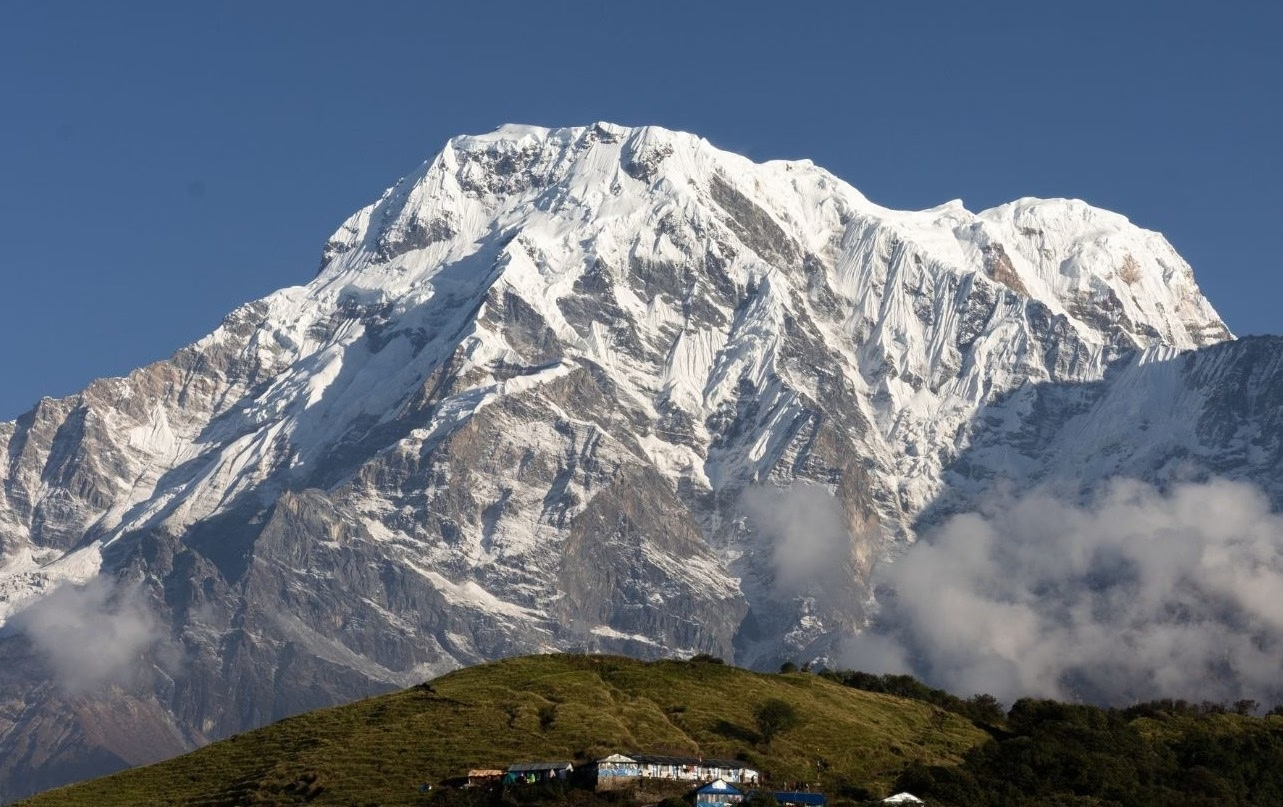
December trekking rewards prepared hikers with fewer crowds, crisp mountain views, and peaceful teahouse stays, but cold nights, shorter daylight hours, and snowfall can affect trail conditions and Base Camp access. Early December generally offers more reliable access, while late-month departures benefit from flexible itineraries and 1–2 spare days. Proper winter clothing, microspikes, a suitable sleeping bag, gradual acclimatization, and a licensed guide help manage the risks. This guide explains December weather, trekking difficulty, route options, mountain views, packing essentials, accommodation, permits, and costs to help you plan your Mardi Himal trek with confidence.
What Is the Mardi Himal Trek in December Like?
The Mardi Himal Trek in December is a dry, cold, uncrowded ridge walk of 4–6 hours per day. Forest sections stay mild, the ridge above 3,000 m carries frost and snow, and the Annapurna skyline appears sharper than in any other month.
The route follows one ridge. The first 2 trekking days cross terraced farmland and oak–rhododendron forest at 10–17 °C. Days 3 and 4 climb above the tree line onto an exposed crest where wind, frost, and snow shape every step. Summit day runs from High Camp (3,550 m) to Mardi Himal Base Camp (4,500 m) and starts before dawn at about −10 °C.
December delivers 10 hours 20 minutes of daylight at the winter solstice, against 13 hours in June. That shorter window sets the daily rhythm: depart by 7:00–7:30 am, arrive at the lodge by 3:00 pm, and eat dinner by 6:30 pm.
Three types of trekkers describe the experience differently:
First-time trekkers find the walking easy and the nights hard. Cold, not distance, is the challenge.
Experienced winter hikers find the trail straightforward and the solitude exceptional.
Photographers get the cleanest light of the year, with frost on the ridge and no monsoon haze.
What most people overlook is the temperature pattern. Cold concentrates in mornings, evenings, and above 3,000 m. At midday the sun lifts High Camp to about 5 °C, so a layering system you add and remove all day beats a single heavy jacket.
What Is the Weather Like on the Mardi Himal Trek in December?
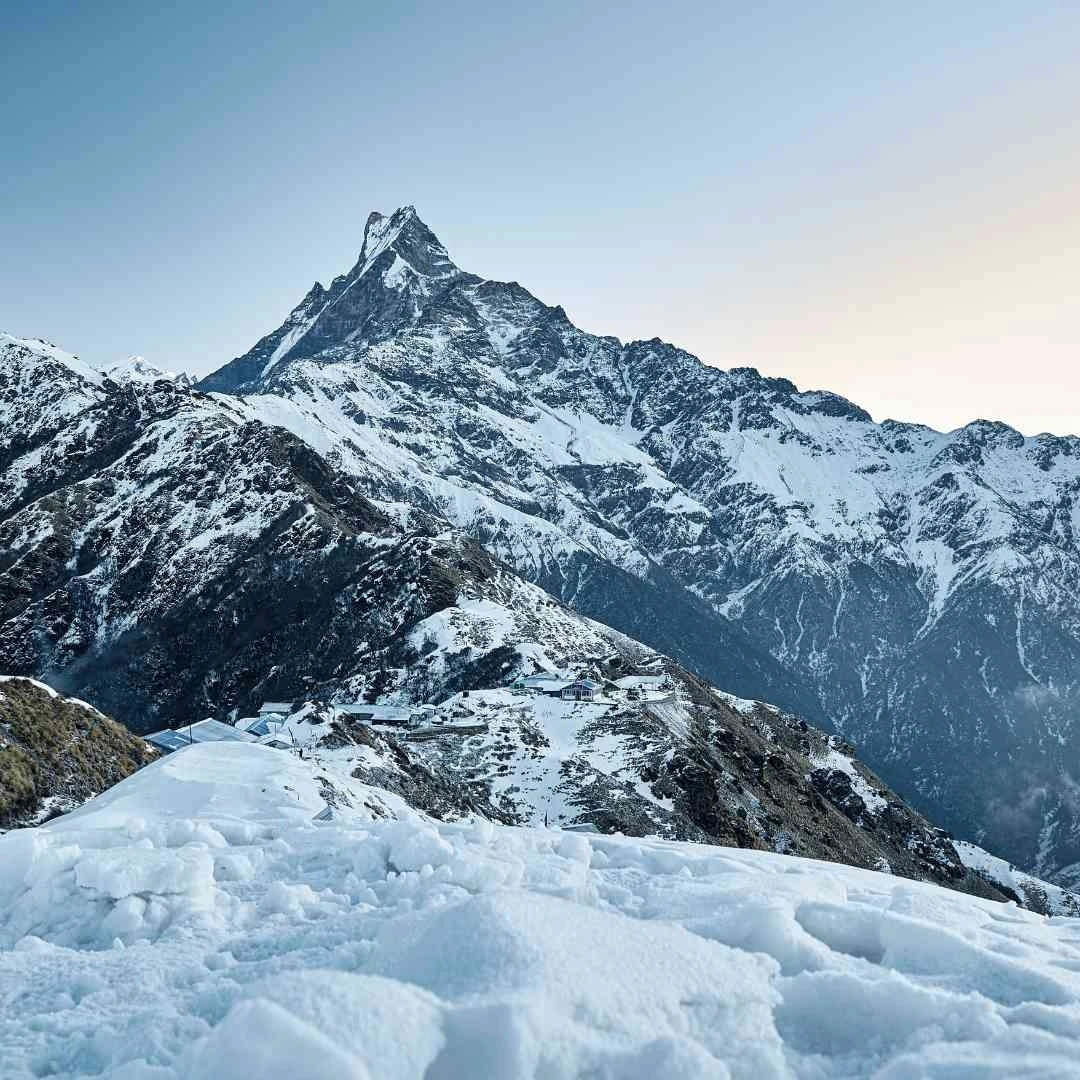
December weather on Mardi Himal is stable and dry, with clear skies, freezing nights above 3,000 m, and first serious snowfall around mid-month. Rain is rare. Cloud and snow arrive in short bursts, then clear air returns.
Winter storms called western disturbances drive the snow. A western disturbance is an extratropical weather system that crosses northern South Asia from the west between December and March. Each one brings 1–3 days of cloud and snow to the Annapurna ridge, followed by the clearest air of the month.
How Cold Does It Get on the Mardi Himal Trek in December?
It gets as cold as −15 °C at High Camp (3,550 m) on the Mardi Himal Trek in December. Operator reports place High Camp nights between −8 °C and −15 °C, and Mardi Himal Base Camp sits about 5 °C colder than High Camp because temperature falls roughly 5 °C per 1,000 m of climb.
Wind multiplies the cold. A 20 km/h ridge wind turns −10 °C into a wind-chill equivalent near −18 °C, which is the temperature your face and fingers feel on the summit-day climb.
The cold also sets gear limits. Lodge rooms at High Camp have plywood walls and no heating, so the room temperature tracks the outside air. A sleeping bag rated to a comfort temperature of −10 °C or lower removes most of the risk. A standard 3-season bag does not.
How Much Snowfall Can You Expect on the Mardi Himal Trek in December?
Expect 15–30 cm of snow at High Camp by late December, a snow line near 3,000 m by mid-month, and light snow above Badal Danda (3,210 m). Snowfall blocks the High Camp to Base Camp section on 15–20 days per year, according to Nepal Intrepid Treks seasonal data.
Snowfall builds in stages across the month:
Dec 1–10: frost and dusting; trail mostly dry.
Dec 11–20: first serious snow above 3,000 m; trail packed by passing trekkers.
Dec 21–31: continuous cover above High Camp; fresh drifts after each storm.
In real-world use, the depth that matters is not the total but the fresh snow after the last trekker passes. A packed trail 30 cm deep is easier to walk than 10 cm of untouched powder over loose rock. December traffic is low, so fewer boots pack the trail, and guides read this before committing to summit day.
What Are the Daytime and Nighttime Temperatures During the Mardi Himal Trek in December?
Daytime temperatures run from 20 °C in Pokhara to 0–5 °C at High Camp, and nighttime temperatures fall from 7 °C in Pokhara to −8 °C to −15 °C at High Camp. The table below shows typical December ranges by trekking zone, compiled from operator reports and the standard lapse rate of 5–6.5 °C per 1,000 m.
Zone | Altitude | Daytime | Nighttime |
Pokhara (start and finish) | 822 m | about 20–22 °C | about 7–9 °C |
Pitam Deurali to Forest Camp | 2,100–2,650 m | 10–17 °C | about 0–5 °C |
Low Camp to Badal Danda | 3,050–3,210 m | 5–10 °C | about −3 °C to −8 °C |
High Camp | 3,550 m | 0–5 °C | −8 °C to −15 °C |
Mardi Himal Base Camp (pre-dawn) | 4,500 m | −5 °C to −10 °C | not occupied overnight |
The table shows a 25 °C gap between the lowest and highest sleeping points. That gap is why December packing lists differ from autumn lists: you wear short sleeves on day 1 and a down jacket indoors on day 4.
Is the Mardi Himal Trek Safe in December?
Yes, the Mardi Himal Trek is safe in December for fit trekkers who use winter gear, a licensed guide, and a gradual ascent. The Trekking Agencies' Association of Nepal (TAAN) reported in October 2026 that the Mardi Himal route operates as usual.
Safety data from the Annapurna region supports that view. While the Mardi Himal Trek is statistically one of the safer high-altitude routes in the Annapurna region due to its rapid descent options, altitude sickness remains a serious medical risk above 3,000 m. Strict adherence to acclimatization schedules is mandatory. While winter conditions introduce snow and ice, these environmental risks are strictly managed by using microspikes and hiking with an experienced guide who understands the winter terrain.
What Are the Main Risks of Trekking Mardi Himal in December?
The 5 main risks of trekking Mardi Himal in December are hypothermia, frostbite, slips on ice, altitude sickness, and early darkness. Each risk grows with altitude, and each has a direct counter.
Hypothermia: body core temperature falls when sweat soaks a base layer; swap damp layers at every stop.
Frostbite: fingers, toes, and nose freeze first at −15 °C with wind; wear liner gloves under mittens.
Slips on ice: frozen steps and snow-covered rock cause most trail injuries; wear microspikes above 3,000 m.
Altitude sickness: High Camp sits at 3,550 m; control the ascent rate.
Early darkness: sunset arrives near 5:20 pm; carry a headlamp with spare batteries, because cold drains lithium cells faster.
Rescue timing is the hidden variable. Helicopter evacuation depends on cloud, and a winter storm grounds flights for 24 hours or more. That delay makes early descent, not rescue, the safest response to symptoms.
Can Snow and Ice Make the Mardi Himal Trail Difficult?
Yes, snow and ice make the Mardi Himal trail harder above High Camp, where the path narrows to a ridge with steep drops on both sides. Below 3,000 m the trail stays dry stone steps and forest soil.
Three conditions turn a snowy trail into a hard one:
Fresh powder over rock: hides loose footing and slows the walking pace.
Morning ice: shaded sections stay frozen until mid-morning.
Wind-packed drifts: form cornices on the ridge edge, so the path hugs the inside of the crest.
Microspikes fix most of this. They are chain-and-spike traction devices that slip over trekking boots and grip hard snow and ice. Full mountaineering crampons are unnecessary because the route has no glacier, no steep ice, and no technical sections.
Is Altitude Sickness a Concern on the Mardi Himal Trek?
Yes, altitude sickness is a real concern on the Mardi Himal Trek because High Camp sits at 3,550 m, inside the "very high altitude" band of 3,500–5,500 m. According to the CDC Yellow Book, acute mountain sickness (AMS) affects about 25% of visitors who sleep above 2,450 m.
Sleeping altitude matters more than the highest point reached. According to the Wilderness Medical Society, above 3,000 m sleeping elevation must not rise by more than 500 m per day, with a rest day every 3–4 days. The standard 8-day route jumps from Rest Camp (2,650 m) to High Camp (3,550 m), a 900 m gain in one day. Adding a night at Low Camp (about 3,050–3,150 m) splits that jump into two gains of about 450 m.
Symptoms to report to your guide immediately:
Headache that paracetamol does not clear
Nausea or loss of appetite
Dizziness and poor sleep
Breathlessness at rest, wet cough, or stumbling gait (danger signs of pulmonary or cerebral oedema)
Never ascend with symptoms, and descend when they worsen. Ask a travel-medicine doctor about acetazolamide before departure.
Is December a Good Time to Trek Mardi Himal?
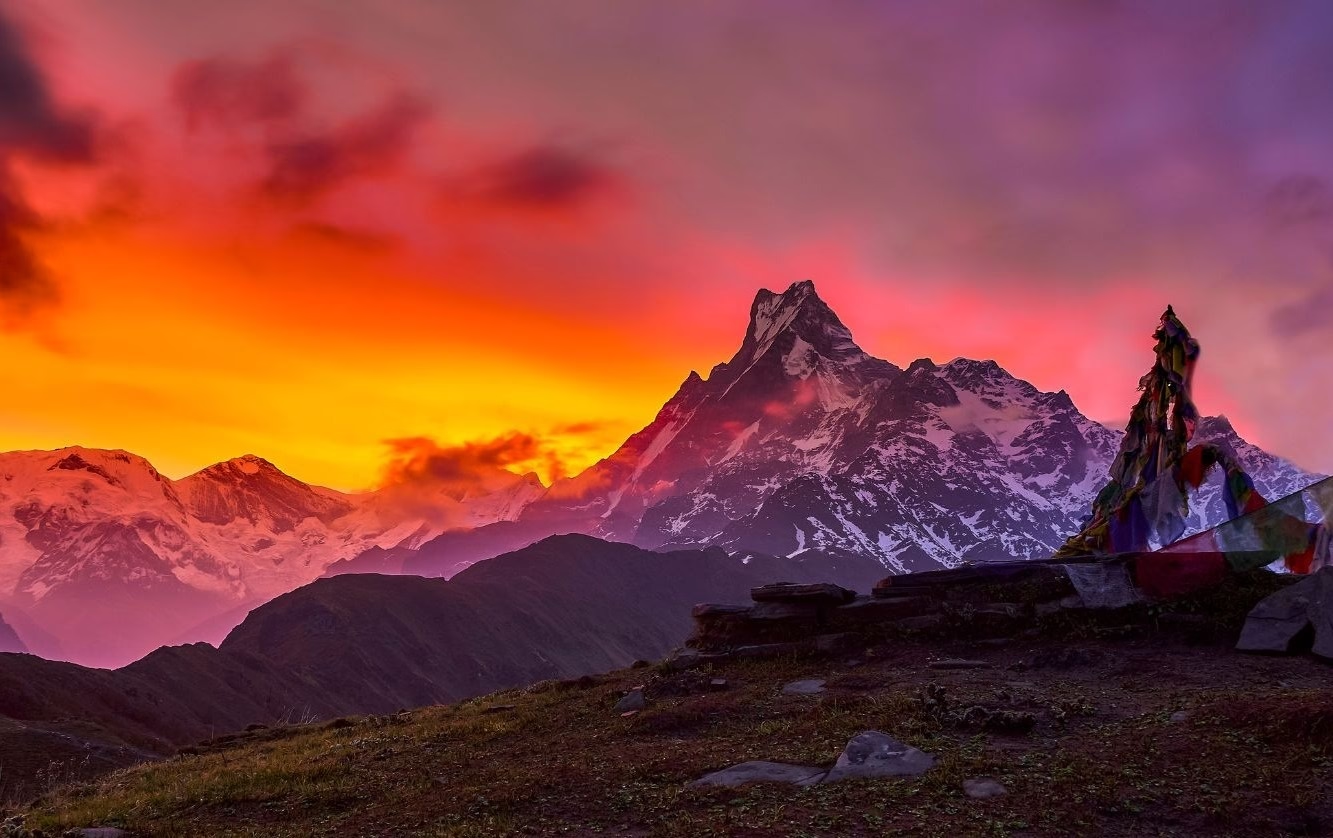
December is a good time to trek Mardi Himal for trekkers who want solitude, clear skies, and snow, and a poor time for trekkers who want warmth and flexibility. The first 2 weeks of the month give the best balance of stable weather and open trail.
December sits between peak autumn (October–November) and deep winter (January–February). It keeps autumn's clarity and adds snow, at the price of cold nights and a smaller margin for error.
What Are the Advantages of Trekking Mardi Himal in December?
The 5 advantages of trekking Mardi Himal in December are clear mountain views, empty trails, snow scenery, easy lodge availability, and crisp photography light.
Clear views: dry air gives the sharpest Annapurna panorama of the year, mostly before 10:00 am.
Empty trails: crowds drop sharply after November; for context, Annapurna region received 21,048 foreign visitors in September 2026 alone, a peak-season month.
Snow scenery: frost on the ridge and a white High Camp create images unavailable in autumn.
Lodge availability: you choose rooms without booking weeks ahead.
Cloud-free mornings: sunrise over Machhapuchhre is most reliable in stable winter air.
Pokhara adds a bonus. Lakeside restaurants, gear rental shops, and lodges are quiet, so post-trek recovery costs less and feels calmer.
What Are the Disadvantages of Trekking Mardi Himal in December?
The 4 disadvantages of trekking Mardi Himal in December are extreme cold at High Camp, possible snow-blocked Base Camp access, reduced teahouse services, and shorter daylight.
Extreme cold: nights reach −15 °C, and unheated rooms make sleep the hardest part of the trek.
Blocked Base Camp: heavy snow shuts the High Camp to Base Camp section on some days.
Reduced services: hot showers freeze, charging slows, and some lodges above Low Camp cut menus in heavy-snow years.
Shorter days: 10 hours 20 minutes of light leaves no room for late starts.
One more trade-off appears in logistics. Group-join departures run only in spring and autumn, so a December trek is a private trek. That raises the per-person price for solo travellers (see the cost section).
Is Early December Better Than Late December for the Mardi Himal Trek?
Yes, early December (Dec 1–10) is better than late December for the Mardi Himal Trek because snow is lighter, Base Camp stays open more often, and nights are about 5 °C milder. Operators consistently rate the first 2 weeks above the last 2.
The table below compares the 3 parts of the month on the factors that decide whether a December trek succeeds.
Factor | Dec 1–10 | Dec 11–20 | Dec 21–31 |
High Camp night temperature | −5 °C to −10 °C | −8 °C to −12 °C | −10 °C to −15 °C |
Snow above High Camp | Frost, light dusting | First packed snow | 15–30 cm, fresh drifts |
Base Camp access | Open most days | Open, microspikes required | Blocked on some days |
Pokhara hotel pressure | Low | Low | High (Christmas–New Year) |
Best for | First winter trek | Confident hikers | Experienced trekkers with spare days |
The table shows one clear rule. Choose Dec 1–10 for a first Himalayan winter trek. Choose Dec 11–20 with microspikes and a flexible itinerary. Choose Dec 21–31 only with 1–2 spare days built in.
What Does the Mardi Himal Trek Route Look Like in December?
The Mardi Himal Trek route in December follows the standard Kande–Pitam Deurali–Rest Camp–High Camp–Base Camp–Badal Danda–Sidhing line, with snow cover from High Camp upward and ice on the early-morning ridge. The route itself does not change in winter; the pace and the weather margin do.
The trail stays on one ridge with no river crossings, so winter adds snow and ice but no new hazards such as flooded streams.
How Many Days Does the Mardi Himal Trek Take in December?
The Mardi Himal Trek takes 5 trekking days in December, or 8 days from arrival in Kathmandu to departure. The 8-day package covers Kathmandu, Pokhara, 5 days of walking, and 2 days of transfer and flights.
A 6- or 7-day version suits December better. One extra night at Low Camp improves acclimatisation, and one spare morning at High Camp protects the summit attempt from a storm. Strong, experienced trekkers cover the route in 3–4 days, but those versions rush the ascent and remove every weather buffer, which is a poor trade in winter.
What Are the Main Stops on the Mardi Himal Trek Route?
The 7 main stops are Kande, Pitam Deurali, Forest or Rest Camp, Low Camp, High Camp, Mardi Himal Base Camp, and Badal Danda, followed by Sidhing. The table lists altitudes and December conditions at each stop on the Mardi Himal Trek route.
Stop | Altitude | December conditions |
Kande (trailhead) | about 1,770 m | Dry, 15–18 °C at midday |
Pitam Deurali | 2,100 m | Dry forest, cool nights |
Rest (Forest) Camp | 2,650 m | Frost at dawn, lodges open |
Low Camp | about 3,050–3,150 m | Snow line by mid-month, 9 lodges |
High Camp | 3,550 m | −8 °C to −15 °C nights, snow |
Upper View Point | about 4,200 m | Strong wind, best fallback viewpoint |
Mardi Himal Base Camp | 4,500 m | Snow, −15 °C pre-dawn |
Badal Danda | 3,210 m | Open ridge, 360° views |
Sidhing | about 1,750 m | Warm, road pickup to Pokhara |
Stop names vary by lodge and map. Rest Camp and Forest Camp refer to the same area, and Low Camp appears on some itineraries and not on others.
How Difficult Is the Mardi Himal Trek in Winter?
The Mardi Himal Trek is moderate in winter: no technical climbing, but cold, snow, and altitude raise the effort level above its easy-to-moderate autumn rating. Daily walking runs 4–6 hours.
Three days decide the difficulty:
High Camp day: 900 m of sleeping altitude gain over exposed ridge.
Summit day: 950 m up from High Camp to Base Camp, a start at 4:30 am, and a total of 7–9 hours including the descent to Badal Danda.
Descent day: 1,290 m of knee-punishing downhill from Base Camp to Badal Danda, then more steps toward Sidhing.
Fitness prepares you for the first and third days. Sleep and warmth decide the second. Four weeks of stair climbing and loaded hill walks before departure is the standard preparation.
Can You Reach Mardi Himal Base Camp in December?
Yes, most December trekkers reach Mardi Himal Base Camp (4,500 m), and Upper View Point (4,200 m) serves as the fallback when snow, wind, or cloud blocks the final section. Heavy snow closes the High Camp to Base Camp stretch on 15–20 days per year, so success depends on timing and buffer days.
Guides decide using 3 checks: the depth of fresh snow, the wind speed on the crest, and visibility. A turnaround time of 9:30–10:00 am applies in winter, because afternoon cloud rolls up from the Pokhara valley and removes the view you climbed for.
Upper View Point delivers nearly the same panorama of Machhapuchhre, Annapurna South, and Hiunchuli for 300 m less climbing. Trekkers who reach it have not failed; they have chosen the safer summit.
What Can You See During the Mardi Himal Trek in December?
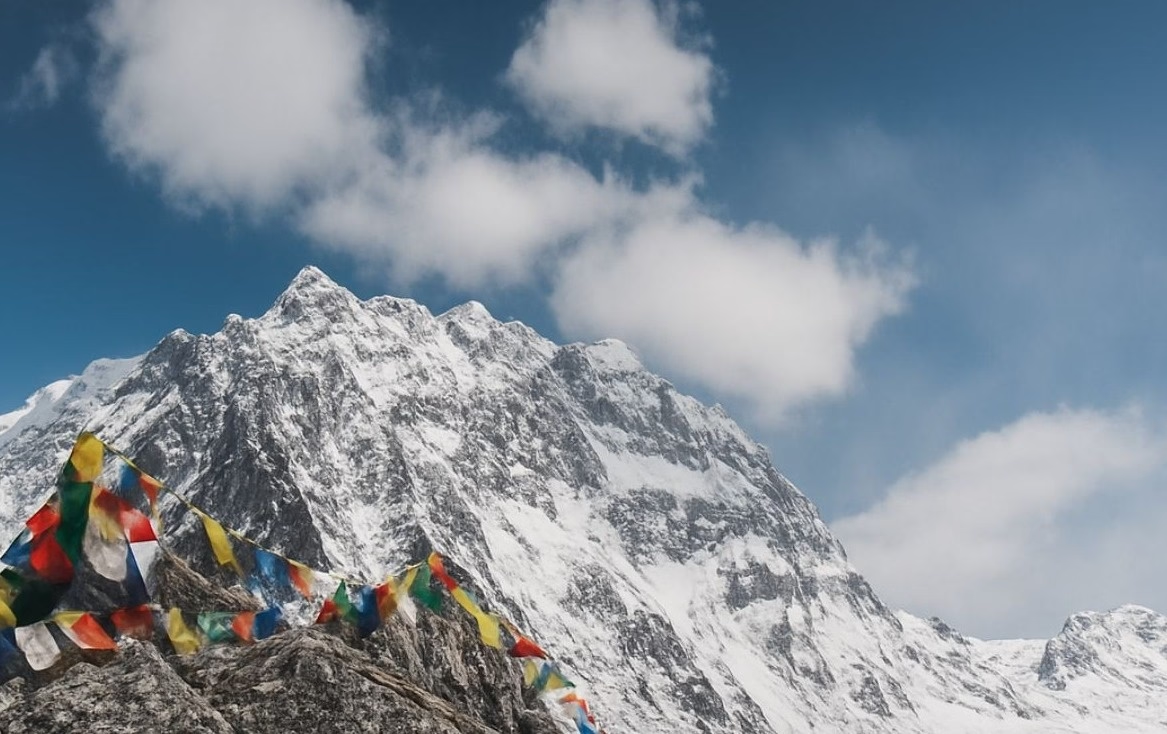
During the Mardi Himal Trek in December you see Machhapuchhre, the Annapurna range, frosted ridgelines, cloud-filled Pokhara valley, oak–rhododendron forest, and Himalayan wildlife on lower slopes. Views peak before 10:00 am.
Can You See Machhapuchhre and the Annapurna Range During Mardi Himal Trek in December?
Yes, you see Machhapuchhre (6,993 m), Annapurna South (7,219 m), Hiunchuli (6,441 m), Annapurna III (7,555 m), and Gangapurna (7,455 m) from High Camp and Base Camp in December. Annapurna I (8,091 m) appears from Upper View Point and Base Camp.
Machhapuchhre, or "Fishtail," earns its name from a twin summit. A British expedition led by Jimmy Roberts reached about 50 m below the top in 1957, and Nepal then closed the mountain to climbers. The peak remains unclimbed and sacred, which means the view from Mardi Himal shows a summit that no one has stood on.
Mardi Himal itself (5,587 m) towers above Base Camp. The close range is the draw: at High Camp, Machhapuchhre fills the sky directly ahead.
Are the Mountain Views Clear on Mardi Himal Trek During December?
Yes, mountain views are clear on most December mornings because dry winter air removes monsoon haze, but afternoon cloud often rises from the Pokhara valley by 10:00–11:00 am. The clearest window runs from sunrise to 9:30 am.
Cloud behaviour follows a pattern:
Before 9:00 am: cloud-free peaks, valley filled with white cloud below you.
10:00–11:00 am: cloud climbs the ridge from Pokhara.
After a storm: the 24–48 hours following a western disturbance give the cleanest air of the month.
Plan the summit morning around this pattern. Start at 4:30 am, reach Base Camp by 8:00–8:30 am, and photograph before the cloud arrives.
What Wildlife and Landscapes Can You Experience on the Mardi Himal Trek?
You experience 4 landscape zones on the Mardi Himal Trek: terraced farmland, oak–rhododendron forest, alpine ridge meadow, and snow-covered moraine. Wildlife includes Himalayan monal, Himalayan tahr, langurs, and barking deer.
The zones climb in sequence. Terraces and Gurung and Magar villages fill the lowest slopes. Oak, maple, hemlock, and rhododendron forest covers 2,100–3,000 m. Open grass ridge and then snow-dusted moraine take over above 3,000 m.
The Himalayan monal, called danphe in Nepali and the national bird, sits in forest at 2,500–3,500 m. Winter snow pushes monal and tahr to lower slopes, which concentrates sightings between Forest Camp and Low Camp. Rhododendron, the national flower, blooms in March and April, so December shows its bare branches rather than red petals.
What Should You Pack for the Mardi Himal Trek in December?
Pack a 4-layer clothing system, waterproof insulated boots, microspikes, a sleeping bag rated to −10 °C comfort or lower, and sun protection for snow glare. Rent heavy items in Pokhara Lakeside to save luggage weight. Common mistakes we see: bringing cotton base layers, relying on a 3-season sleeping bag, forgetting sunglasses, and wearing new boots untested.
What Winter Clothing Do You Need for Mardi Himal?
You need 4 clothing layers for Mardi Himal in December: a moisture-wicking base, a fleece mid-layer, a down jacket, and a waterproof shell. Add insulated gloves, a warm hat, and 3 pairs of wool socks.
Base layer: merino or synthetic top and leggings (never cotton).
Mid layer: 200-weight fleece or light insulated jacket.
Insulation: down jacket rated for −15 °C, worn at lodges and on summit day.
Shell: waterproof, windproof jacket and trousers.
Hands and head: liner gloves, insulated mittens, wool hat, and a buff or balaclava.
Pack a down jacket even if you own a good fleece. Winter evenings in the lodge dining room sit near 0 °C, and a down jacket is the single item trekkers wear most.
Which Trekking Boots and Accessories Are Best for Snowy Trails?
The best boots for snowy Mardi Himal trails are waterproof, ankle-high, stiff-soled trekking boots sized half a size up to fit thick socks, paired with gaiters and microspikes. Insulated or winter-rated boots add warmth for 3,550 m nights.
Accessories that matter in winter:
Gaiters: block snow from entering boot tops.
Microspikes: strap on for grip above 3,000 m.
Trekking poles: cut knee load on the 1,290 m descent from Base Camp.
Insulated bottle: keeps water from freezing; fill with hot water at dawn.
Sunglasses (category 3–4): protect against snow glare at altitude.
Camp shoes: dry, warm footwear for the lodge.
Break new boots in over 40–60 km before departure. Blisters at 3,000 m heal slowly and cost summit days.
Do You Need Crampons, Trekking Poles, or Other Winter Gear?
You do not need full crampons for Mardi Himal in December, but you do need microspikes, trekking poles, and gaiters. The trail has no glacier, no technical ice, and no rope sections.
The decision splits clearly:
Microspikes: required from mid-month above High Camp; rent in Pokhara for a few dollars per day.
Trekking poles: strongly recommended for balance and knee protection.
Ice axe and rope: unnecessary.
Snowshoes: not used; guides postpone summit day after heavy fresh snow.
Hot-water bottle: a leak-proof 1-litre bottle filled with boiled water warms your sleeping bag for the first 4–5 hours.
What Are the Accommodation and Food Options on the Mardi Himal Trek in December?
Accommodation on the Mardi Himal Trek in December means family-run teahouses with twin-share rooms, shared bathrooms, and unheated bedrooms, serving dal bhat, noodles, soup, and hot drinks. Services thin out with altitude.
Are Teahouses Open Along the Mardi Himal Trail in December?
Yes, teahouses stay open along the Mardi Himal trail in December at Pitam Deurali, Forest Camp, Low Camp, Badal Danda, and High Camp. Some lodges above Low Camp cut services in heavy-snow years.
Low Camp held about 9 teahouses in a 2021 trekker count, and High Camp has several more. December crowds are small, so rooms are available without long advance booking, but lodges close early when no guests arrive.
Know the winter limits before you go:
Rooms: unheated, with blankets; ask for 2 extra.
Dining room: the warmest space, often with a stove or insulated walls.
Hot showers: unreliable above 3,000 m because pipes freeze.
Charging and Wi-Fi: limited and paid; bring a power bank and keep batteries inside your sleeping bag.
Payment: cash in NPR; there are no ATMs above Pokhara.
A guide phones ahead to confirm lodge status and book rooms, which removes the biggest December surprise.
What Meals and Hot Drinks Are Available During the Mardi Himal Trek?
Teahouses on Mardi Himal serve dal bhat, noodles, fried rice, soup, pasta, Tibetan bread, eggs, and porridge, with ginger tea, lemon-honey-ginger, hot chocolate, and coffee for drinks. Dal bhat (rice, lentils, vegetables, and pickle) comes with free refills at most lodges.
Vegetarian food is the safest choice at altitude because fresh meat travels slowly up the ridge. Meals cost about US$5–$10 each, and prices rise with every 500 m of altitude because porters carry the supplies.
Hot drinks do more work in winter than in other seasons. Drink 3–4 litres of fluid a day; cold air dries the body faster than warm air, and dehydration worsens altitude symptoms. Garlic soup is a popular trail tradition, though no clinical trial shows that it prevents altitude sickness.
How Much Does the Mardi Himal Trek Cost in December?
The Mardi Himal Trek costs US$585–$940 per person in December for an 8-day Kathmandu-to-Kathmandu package, depending on group size. Nepal Intrepid Treks lists these 8-day package prices per person:
Group size | Price per person |
1 trekker | US$ 940 |
2–4 trekkers | US$ 710 |
5–8 trekkers | US$ 685 |
9–12 trekkers | US$ 635 |
13–20 trekkers | US$ 585 |
The package includes airport transfers, Kathmandu and Pokhara hotels, flights between the two cities, a licensed guide, porter service per group size, ACAP and TIMS permits, teahouse stays, and full-board meals on trekking days. International flights, Nepal visa, travel insurance, tips, and personal gear sit outside the price.
What Factors Affect the Cost of the December Mardi Himal Trek?
The 6 factors that affect the December Mardi Himal Trek cost are group size, trek length, domestic flights versus bus, gear rental, lodge services, and spare days.
Group size: a solo trekker pays US$940; a group of 13 pays US$585.
Trek length: each extra night adds about US$50–$80 per person for guide, room, and meals.
Transport: flights between Kathmandu and Pokhara cost more than the tourist bus (6–8 hours), but save a day. Winter fog can delay flights.
Gear rental: sleeping bag, down jacket, and microspikes cost a few dollars per day each in Pokhara.
Lodge extras: hot showers, charging, and Wi-Fi cost US$2–$5 each, and meals run US$20–$35 per day.
Spare days: a snow buffer day is the best-value insurance in December.
Nepal visa fees add US$30 for 15 days or US$50 for 30 days, paid on arrival or online.
What Permits and Guide Services Do You Need for Mardi Himal?
Trekkers require two main permits: the Annapurna Conservation Area Permit (ACAP) at NPR 3,000 (about US$23) and the mandatory e-TIMS card at NPR 2,000 (about US$15). There are no additional rural municipality entry fees required for the Mardi Himal route.
The Nepal Tourism Board strictly enforces a mandatory guide rule for all foreign trekkers in the Annapurna Conservation Area. An e-TIMS card (NPR 2,000) is legally required and is only issued when accompanied by a licensed guide booked through a registered trekking agency like Nepal Intrepid Treks. In December, a guide is not just a legal requirement but a critical safety asset for navigating snow-covered trails.
How Can You Prepare for the Mardi Himal Trek in December With Nepal Intrepid Treks?
You prepare for the Mardi Himal Trek in December by choosing a start date in the first 2 weeks, building in 1–2 spare days, training for 4 weeks, and booking a guided itinerary that includes an acclimatisation night at Low Camp.
Nepal Intrepid Treks (Nayabazar-16, Kathmandu) is a Nepal-based operator with 12+ years of experience and a 5.0 rating from 159 TripAdvisor reviews. Use these 5 steps for any December departure:
Check fitness: confirm you walk 4–6 hours a day on hills without strain.
Fit the gear: test sleeping bag, boots, and microspikes before the trek.
Set the dates: place the trek in Dec 1–20 where the calendar allows.
Add the buffer: reserve 1–2 days for snow or flight delays.
Brief the team: review symptoms, turnaround times, and descent rules on the evening before departure.
Can Nepal Intrepid Treks Arrange a Guided Mardi Himal Trek in December?
Yes, Nepal Intrepid Treks arranges guided Mardi Himal treks in December as private departures, available every day on request. Group-join departures run only in spring and autumn, so a December trek is a custom, private trip.
We tailor each December itinerary to your fitness and dates:
Start point: Kathmandu or Pokhara.
Length: 6, 7, or 8 days, with an optional Low Camp night.
Team: licensed English-speaking guide and porter per group size.
Included: permits, teahouse stays, full-board meals, and first-aid support.
Talk to a trek planner. Send your dates, fitness level, and group size through Contact Us, or message +977 9849009919 on WhatsApp or Viber. We reply with a December itinerary and price.
What Are the Key Things to Know Before Trekking Mardi Himal in December?
Before trekking Mardi Himal in December, know 7 facts: High Camp nights reach −15 °C, snow starts mid-month, Base Camp access is not guaranteed, the best window is Dec 1–10, a sleeping bag rated −10 °C comfort is essential, a licensed guide is the safe choice, and 1–2 spare days protect the trek.
The Mardi Himal Trek in December rewards preparation. The route is non-technical, the lodges are open, and the mountain views are the clearest of the year. The risks are cold, ice, and altitude, and each one has a direct counter: layers, microspikes, and a slow ascent.
Three decisions shape the outcome more than any other. Choose the date (early December), choose the pace (6–7 days with a Low Camp night), and choose the support (a licensed guide who checks lodges, weather, and your health every day).
Trekkers who follow these 3 decisions finish the Mardi Himal Trek in December with Base Camp reached, frost on their boots, and the Annapurna range to themselves.