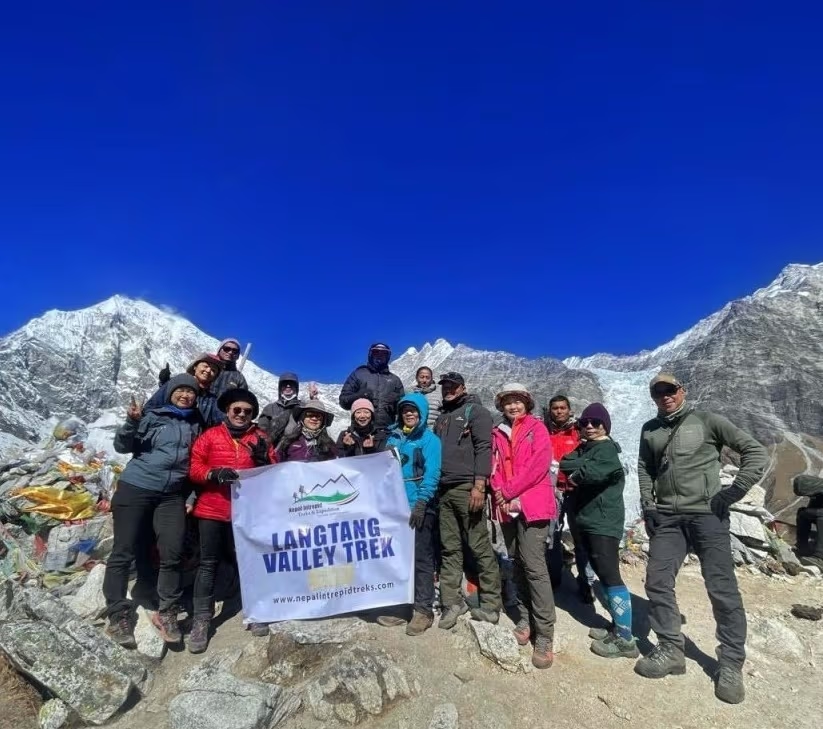
Langtang Valley Trek
- DestinationLangtang Region
- Duration11 days
- Group TypeGroup Tours
- ActivitiesTrek
- AccommodationHotel | Tea House
- Max. Elevation4984m.
- Group SizeMin. 1 Pax
- Vehicle Private Vehicle
- Meals Breakfast Lunch & Dinner (BLD)
- Activity Per Day3-7 hours trek
Trip Overview
The Langtang Valley Trek is an 11-day Himalayan trekking journey through Langtang National Park, combining mountain scenery, forests, traditional Tamang villages, Buddhist culture, glaciers, alpine landscapes, and high-altitude viewpoints in a relatively compact itinerary. Located north of Kathmandu, the Langtang region offers an accessible alternative to longer Himalayan adventures while still providing a genuine high-altitude trekking experience.
The journey begins with a scenic overland drive from Kathmandu to Syabrubesi at approximately 1,450 meters, where the road journey gives way to trekking. From Syabrubesi, the trail follows the Langtang Khola through dense forests, waterfalls, suspension bridges, and mountain settlements before reaching Lama Hotel, Langtang Village, and eventually Kyanjin Gompa at around 3,830 meters.
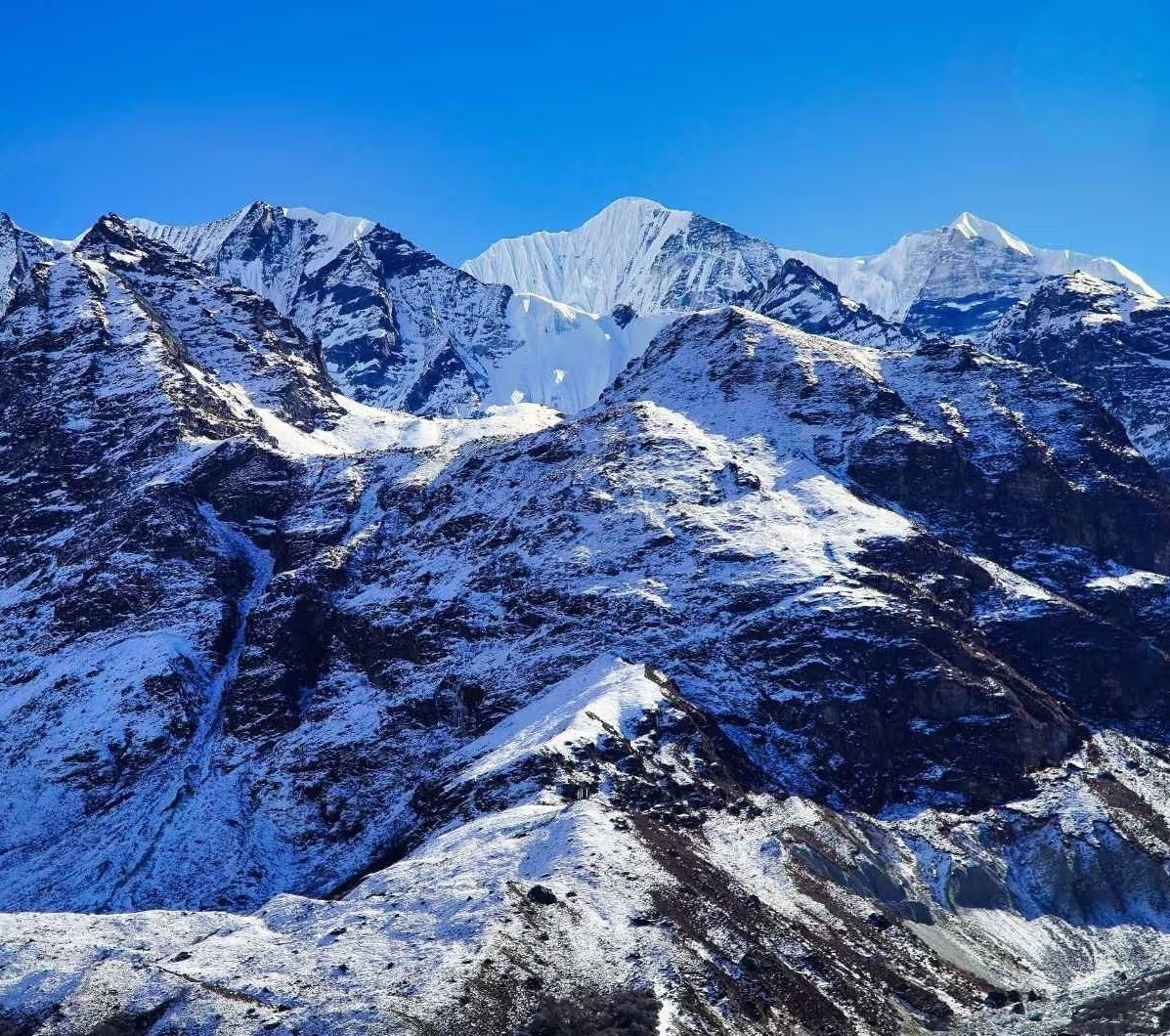
As the valley rises, the landscape changes from forested hillsides to open alpine terrain surrounded by snow-covered peaks. From Kyanjin Gompa, trekkers can explore the spectacular upper Langtang Valley and undertake the challenging ascent toward Tserko Ri at 4,984 meters, the highest elevation identified in the trekking package. The viewpoint provides an expansive Himalayan panorama and makes the upper valley one of the major highlights of the journey.
The return follows the valley back toward Syabrubesi before the road journey to Kathmandu. Unlike trekking routes that require domestic flights to reach the mountain region, the Langtang Valley Trek is accessed entirely by road, making it an efficient option for travelers who want to spend more of their available time walking and less time managing internal flights.
A Short Himalayan Trek With Remarkable Variety
One of the strongest features of the Langtang Valley Trek is how much geographical and cultural diversity is packed into a relatively short journey.
The route begins in a lower-elevation environment where forests, rivers, cultivated land, and villages dominate the landscape. As the trail climbs, the vegetation changes and the valley gradually becomes wider and more exposed. Near Kyanjin Gompa, the environment takes on a distinctly alpine character, with rocky slopes, open meadows, glaciers, and snow-covered Himalayan peaks surrounding the settlement.
This progression means travelers can experience several different Himalayan environments during one trek:
Subtropical and temperate forest
Rhododendron and oak woodland
Bamboo forest
River valleys and waterfalls
Traditional mountain villages
Alpine meadows
Glacial landscapes
High-altitude mountain terrain
The transition is especially noticeable during the ascent from Syabrubesi toward Kyanjin Gompa, making the trek rewarding not only for mountain enthusiasts but also for travelers interested in nature and landscape photography.
Trek Through Langtang National Park
Much of the Langtang Valley Trek passes through Langtang National Park, one of Nepal's important protected mountain areas.
The national park protects a broad range of ecosystems extending from lower forested elevations toward high Himalayan terrain. Trekkers travel through habitats that support a variety of plant and animal species while following an established mountain trail through the valley.
The forest sections are characterized by trees and vegetation including rhododendron, oak, bamboo, and pine. With patience and favorable conditions, travelers may also encounter signs of wildlife along the trail.
Possible wildlife sightings in the broader Langtang environment include:
Red panda
Himalayan langur
Musk deer
Himalayan birds
Other mountain wildlife
Wildlife sightings are never guaranteed, and the trekking experience should not depend on seeing a particular species. The changing forest and mountain ecosystems themselves are an important part of the journey.
From Kathmandu to Syabrubesi
The adventure begins with a road journey from Kathmandu toward Syabrubesi, the principal trekking gateway for the Langtang Valley.
The drive covers approximately 122 kilometers and normally takes around 5 to 6 hours, depending on road and traffic conditions. Unlike a standard highway journey, the road passes through changing landscapes and mountainous terrain, making the journey itself part of the experience.
Upon reaching Syabrubesi, trekkers leave the main vehicle route and begin walking toward the upper Langtang Valley.
The use of private ground transportation provides a convenient connection between Kathmandu and the trailhead without requiring a domestic flight.
Trekking Along the Langtang Khola
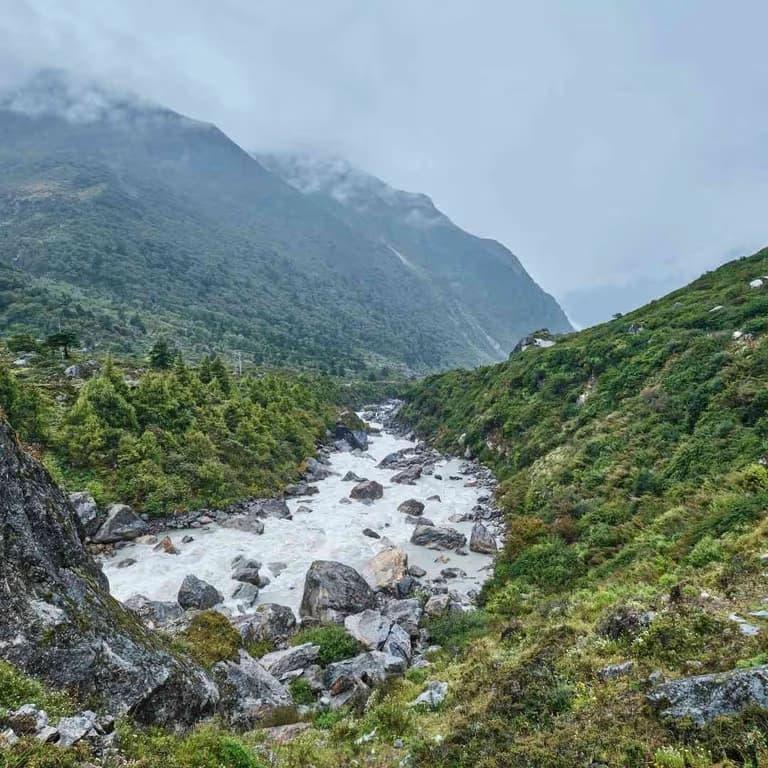
From Syabrubesi, the trail enters the Langtang Valley and follows the Langtang Khola through forested terrain.
The early trekking stages feature:
Dense forests
Rivers and streams
Suspension bridges
Waterfalls
Rocky trails
Stone steps
Small settlements
Mountain views gradually becoming more prominent
The lower section provides a refreshing introduction to the trek because the surroundings remain relatively green and enclosed by forest.
As the trail gains elevation, the valley begins to open and the mountains become increasingly visible.
Lama Hotel and the Forested Valley
Lama Hotel at approximately 2,480 meters is an important overnight stop during the ascent.
The surrounding landscape remains heavily forested, and trekkers can expect a combination of gradual climbs, steeper sections, streams, bridges, and changing vegetation.
The Lama Hotel section represents the transition between the lower valley and the increasingly elevated environment ahead.
For many travelers, this is where the trek begins to feel distinctly Himalayan, with the combination of increasing altitude, mountain air, waterfalls, forest trails, and more remote settlements.
Ghodatabela and the Opening Valley
As the trail continues beyond Lama Hotel, the dense forest gradually begins to give way to more open terrain.
The area around Ghodatabela is an important visual transition point. The valley becomes broader, mountain views become more pronounced, and the surrounding landscape begins to reveal the scale of the Himalayan environment.
This section provides excellent opportunities for travelers who enjoy landscape photography because the changing trail environment creates a natural progression from enclosed forest scenes to expansive mountain views.
Langtang Village and Local Mountain Life
The trail eventually reaches Langtang Village at approximately 3,430 meters, one of the most important settlements along the trekking route.
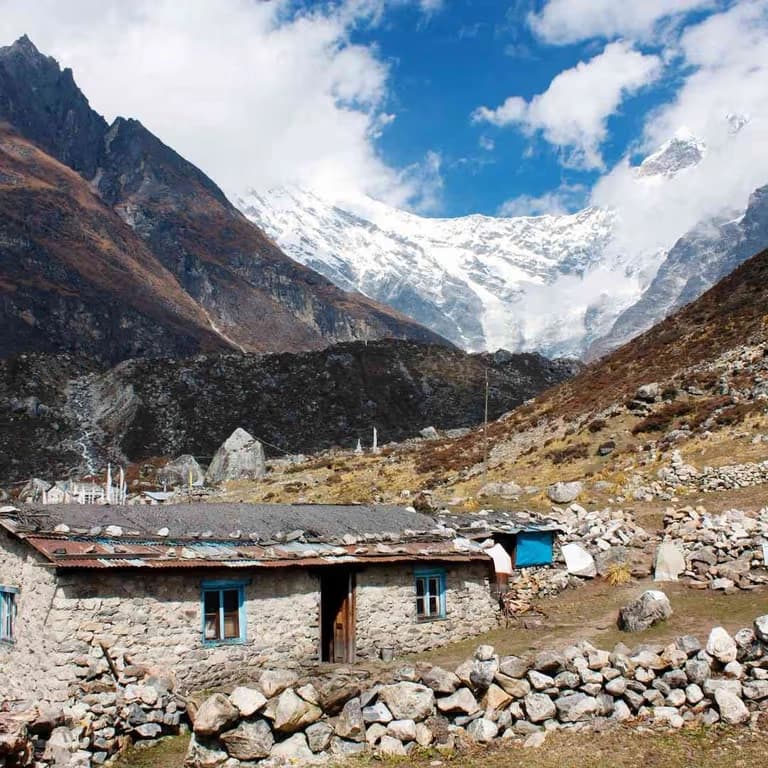
Langtang Village offers an opportunity to observe the local mountain lifestyle and the cultural character of the region. Traditional architecture, prayer flags, Buddhist influences, agricultural practices, and local hospitality form an important part of the experience.
The community also represents the remarkable resilience of the Langtang region following the devastating 2015 earthquake. The valley has undergone substantial rebuilding and recovery, and tourism continues to play an important role in the local economy.
For travelers, visiting Langtang Village is therefore more than a simple overnight stop. It provides cultural context for the communities whose lives are closely connected with the mountains and the trekking economy.
Kyanjin Gompa, the Heart of the Upper Langtang Valley
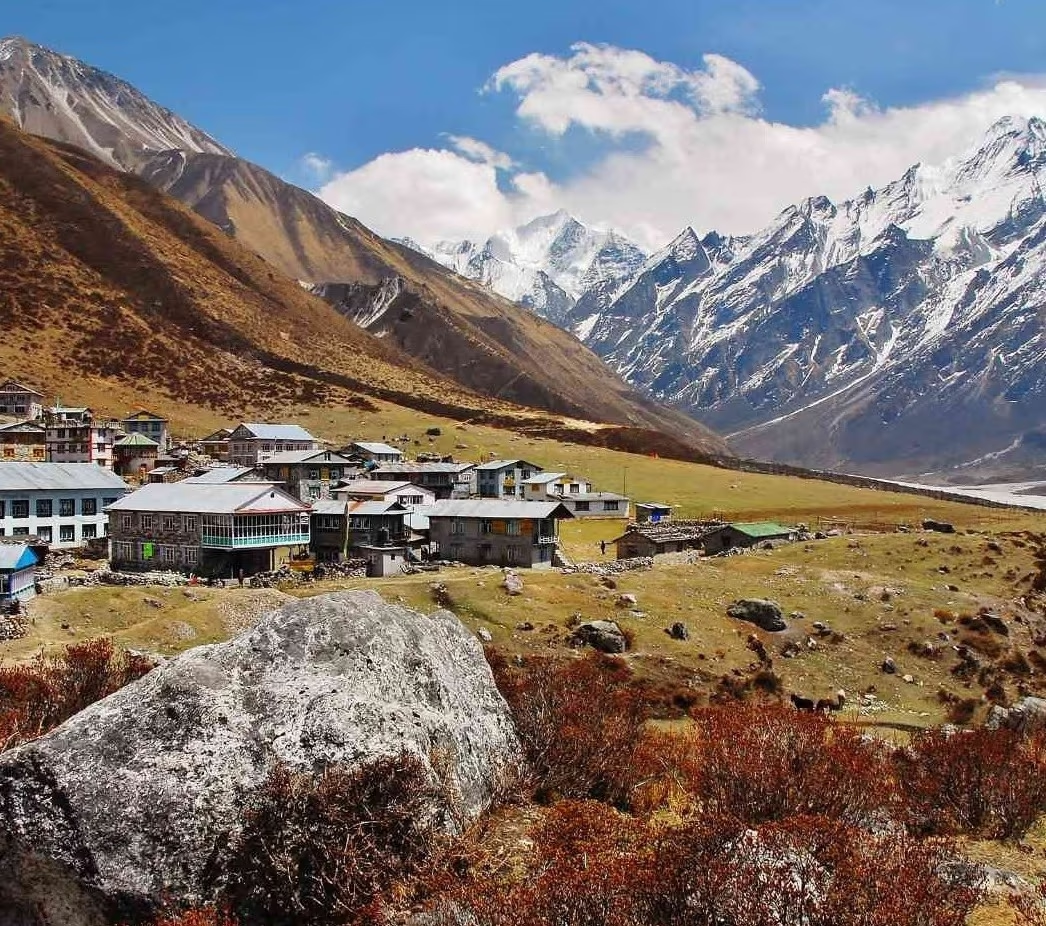
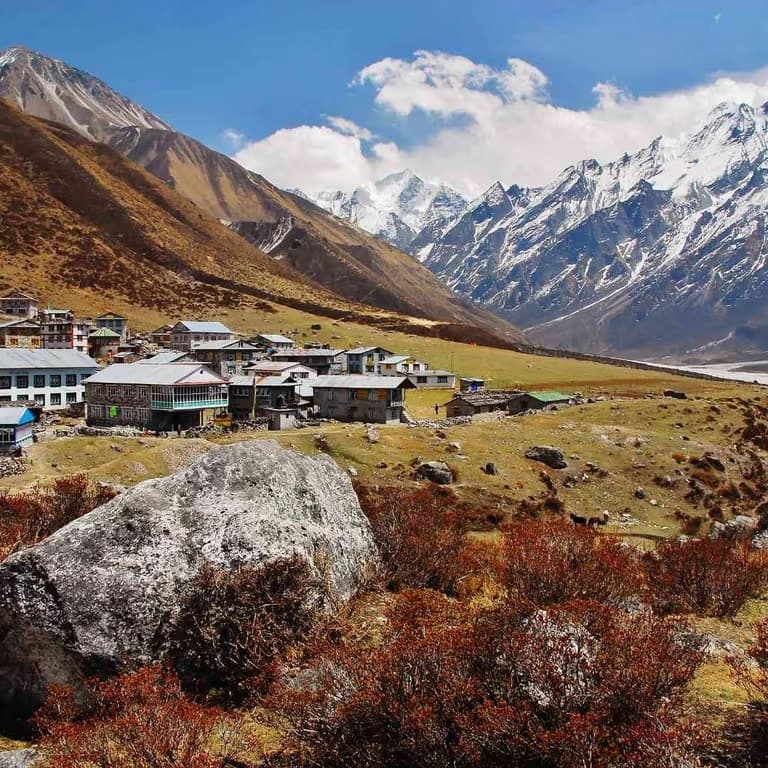
The trek continues to Kyanjin Gompa at approximately 3,830 meters, the highest major settlement on the standard route and the central destination of the upper Langtang Valley.
Kyanjin Gompa is surrounded by an impressive collection of Himalayan peaks, rocky ridges, glaciers, and open alpine terrain.
The area provides access to several important experiences, including:
Mountain viewpoints
Buddhist cultural sites
Glacial landscapes
Alpine meadows
Yak grazing areas
Local cheese production
High-altitude photography
Day hikes toward surrounding viewpoints
Kyanjin Gompa is not simply another overnight settlement. It is where the character of the trek changes most dramatically, moving from a forest-and-village journey into a high alpine mountain environment.
Tserko Ri at 4,984 Meters
For travelers seeking the highest viewpoint on the standard package, the ascent toward Tserko Ri at 4,984 meters is one of the defining experiences of the Langtang Valley Trek.
The climb is physically demanding because it combines a substantial elevation gain with high-altitude conditions. An early start is useful for making the most of the available daylight and mountain visibility.
From the upper viewpoint, trekkers can enjoy expansive views across the surrounding Himalayan landscape, including prominent peaks and high mountain ridges.
The ascent is not a technical mountaineering climb, but it is a serious high-altitude hiking day. Good fitness, appropriate pacing, hydration, suitable clothing, and responsible altitude management are important.
Travelers who are not comfortable with the full summit hike can discuss alternative viewpoints and a less demanding day around Kyanjin Gompa with the trekking team.
Langtang Lirung and the Himalayan Panorama
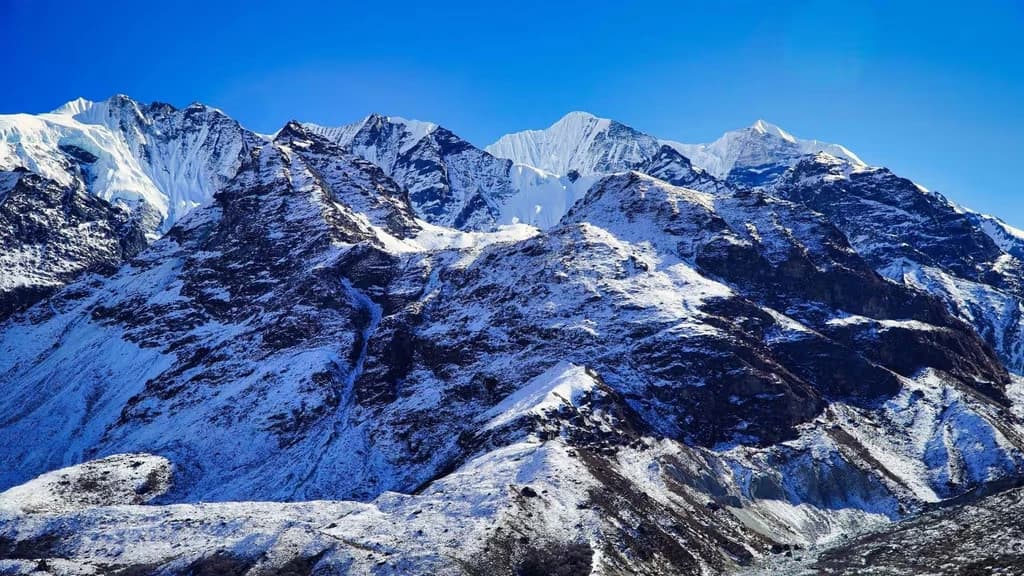
The upper Langtang Valley is dominated by dramatic Himalayan scenery, with Langtang Lirung at 7,246 meters among the most prominent peaks visible from the region.
Other major peaks associated with the surrounding landscape include Dorje Lakpa, Yala Peak, Gang Chenpo, and Naya Kanga.
The mountains are not simply distant scenery. Their presence changes continuously along the route as trekkers move from enclosed forest sections toward the open upper valley.
This makes Langtang particularly attractive for photographers and travelers who want strong mountain scenery without committing to one of Nepal's longest trekking itineraries.
Glaciers, Alpine Meadows and Mountain Landscapes
The upper Langtang Valley provides a dramatic contrast to the forested lower trail.
Around Kyanjin Gompa, travelers encounter:
Rocky alpine terrain
Open mountain slopes
Glaciers
High ridges
Snow-covered peaks
Alpine vegetation
Yak grazing areas
Broad Himalayan viewpoints
The combination of these landscapes provides the trek with a strong sense of progression.
Rather than spending the entire journey in one type of environment, travelers experience a gradual transition from green forests and river valleys to high, open Himalayan terrain.
Tamang Culture and Buddhist Heritage
The Langtang Valley is culturally significant as well as geographically impressive.
Many communities along the route have strong Tamang cultural traditions, while the broader upper valley reflects Tibetan Buddhist influence.
Travelers encounter cultural elements such as:
Prayer flags
Mani walls
Prayer wheels
Buddhist shrines
Monasteries
Traditional village houses
Local agricultural practices
Mountain livestock
Community-based teahouses
Kyanjin Gompa provides an especially important cultural component of the trek and complements the surrounding high-altitude landscape.
The cultural experience is best approached respectfully, particularly when visiting religious sites or photographing local residents.
Kyanjin Yak Cheese Factory
The upper Langtang Valley is also known for its local dairy tradition.
The Kyanjin Yak Cheese Factory provides an opportunity to learn about traditional high-altitude cheese production and local livelihoods.
Yak and other livestock play an important role in mountain communities, providing milk, transport, food, and other resources.
For travelers interested in local food and rural economies, visiting the cheese factory adds another dimension to the trekking experience beyond scenery and physical adventure.
A Trek Designed Around Accessibility
The Langtang Valley Trek's location close to Kathmandu is one of its strongest practical advantages.
Travelers do not need to fly to Lukla or another remote mountain airport to begin the journey. Instead, they travel overland directly toward the trekking gateway at Syabrubesi.
This makes Langtang particularly attractive for travelers who:
Have limited time in Nepal
Prefer road travel over internal flights
Want a shorter Himalayan trek
Are trekking in Nepal for the first time
Want to combine trekking with Kathmandu sightseeing
Prefer a more compact itinerary
Want high-altitude mountain scenery without a very long expedition
The shorter access time does not mean the trek lacks serious mountain terrain. The route still reaches nearly 5,000 meters at Tserko Ri and requires proper physical preparation.
Suitable for Beginners and Moderate Trekkers
The Langtang Valley Trek is commonly considered an intermediate-level Himalayan trek and can be appropriate for reasonably fit beginners.
The route does not require technical climbing skills on the standard trekking itinerary. However, travelers should be prepared for several consecutive days of walking, substantial uphill sections, uneven trails, altitude gain, and a challenging high-altitude viewpoint day.
Typical daily activity ranges from approximately 3 to 7 hours, depending on the day's route and conditions.
Good preparation can include regular hiking, stair climbing, uphill walking, cardiovascular exercise, and leg-strength training before arrival in Nepal.
A Balanced Combination of Nature, Culture and Adventure
One of the main advantages of Langtang is the balance between its major attractions.
The trek combines:
Nature: Forests, rivers, waterfalls, wildlife habitats, glaciers, and alpine landscapes.
Culture: Tamang communities, Buddhist traditions, monasteries, prayer flags, local architecture, and mountain lifestyles.
Adventure: Long trekking days, altitude gain, alpine terrain, and the demanding ascent toward Tserko Ri.
Accessibility: A direct road connection from Kathmandu without the need for an internal mountain flight.
This balance makes Langtang suitable for travelers who do not want a trek focused exclusively on either mountain scenery or cultural sightseeing.
Teahouse Trekking Experience
The Langtang Valley Trek is a teahouse-based trekking journey.
Travelers stay in locally operated mountain guesthouses along the route. Accommodation is generally simple, practical, and designed around the needs of trekkers.
Rooms are commonly arranged on a twin-sharing basis, while dining areas provide a place for meals, relaxation, and interaction with other travelers.
Facilities vary according to elevation and settlement size. Travelers may encounter:
Basic private or shared rooms
Shared bathrooms
Hot showers at selected locations
Electricity
Charging facilities
Wi-Fi in some areas
Dining rooms
Limited heating at higher elevations
The accommodation becomes more basic as the route moves farther into the remote upper valley.
Full-Board Trekking Meals
The standard package includes breakfast, lunch, and dinner during the trek, together with tea and coffee according to the package arrangement.
Mountain menus typically include a mixture of Nepali, Tibetan-influenced, and familiar international trekking foods.
Common options can include:
Dal bhat
Rice dishes
Noodles
Pasta
Momos
Soup
Tibetan bread
Chapati
Porridge
Potatoes
Eggs
Vegetables
The exact selection varies between lodges and locations.
Travelers with dietary restrictions should communicate their requirements before the trek so suitable arrangements can be considered.
Guide and Porter Support
The organized Langtang Valley Trek includes an experienced English-speaking guide and porter support according to the package arrangement.
The guide assists with:
Route navigation
Daily trekking coordination
Accommodation
Local communication
Altitude awareness
Safety
General logistics
Cultural interpretation
Porter support reduces the amount of main luggage that travelers need to carry during daily trekking.
Travelers should keep essential items such as personal medication, documents, valuables, water, electronics, and important clothing layers in their own daypack.
Private Ground Transportation
The package uses private ground transportation for the main road sections.
This arrangement connects Kathmandu with Syabrubesi at the beginning of the trek and returns travelers to Kathmandu after completing the mountain journey.
Because mountain roads are affected by traffic, weather, construction, and local conditions, the planned driving duration should be treated as an estimate rather than a guaranteed arrival time.
Langtang Valley Without Domestic Flights
A major practical advantage of this trek is that it does not require a domestic mountain flight.
Travelers simply travel by road between Kathmandu and Syabrubesi, then complete the main route on foot before returning by road.
This can simplify travel planning and eliminates the need to coordinate an internal flight before beginning the trek.
It also makes Langtang a useful option for travelers who prefer a predominantly overland Himalayan journey.
An 11-Day Himalayan Journey
The standard package provides an 11-day structure that combines Kathmandu sightseeing and preparation with the complete Langtang trekking journey.
The route progresses logically:
Kathmandu: Arrival, preparation, and sightseeing.
Syabrubesi: Trekking begins.
Lama Hotel: Forested mountain environment.
Langtang Village: High-altitude cultural settlement.
Kyanjin Gompa: Upper Langtang alpine environment.
Tserko Ri: Highest viewpoint of the itinerary.
Syabrubesi: Completion of the trekking section.
Kathmandu: Return by road.
This structure provides a compact but substantial Himalayan experience.
Who Is the Langtang Valley Trek Best For?
The Langtang Valley Trek is particularly suitable for travelers who want a shorter Himalayan adventure without sacrificing major mountain experiences.
It is a strong option for:
First-time Himalayan trekkers
Solo travelers
Couples
Families with suitable fitness
Small private groups
Experienced trekkers seeking a shorter route
Nature lovers
Photographers
Cultural travelers
Travelers interested in Buddhist Himalayan traditions
Travelers with limited time in Nepal
Travelers who prefer road access instead of domestic flights
The best itinerary depends on the traveler's fitness, trekking experience, preferred pace, and interests.
What Makes Langtang Different?
The Langtang Valley Trek stands out because of the combination of accessibility, high-altitude scenery, cultural depth, and route diversity.
Everest Base Camp and the Annapurna Circuit are longer and more widely traveled trekking experiences. Langtang provides another approach to experiencing the Himalayas, with a comparatively short journey from Kathmandu into a dramatic glacial valley.
The trek moves from forests and rivers to traditional villages and then into high alpine terrain, making the journey itself as important as the final viewpoint.
The Complete Langtang Valley Experience
The Langtang Valley Trek is more than a route to a high viewpoint. It is a progression through changing ecosystems, mountain communities, Buddhist heritage, and increasingly dramatic landscapes.
From the drive to Syabrubesi and the first forest trails to Lama Hotel, Langtang Village, Kyanjin Gompa, and the high viewpoint around Tserko Ri, every stage introduces a different part of the region.
With organized transportation, teahouse accommodation, trekking meals, guide and porter support, permit arrangements, and pre-trip preparation, Nepal Intrepid Treks provides a structured way to experience the Langtang region within an 11-day itinerary.
For travelers looking for a short, accessible, and rewarding Himalayan trek near Kathmandu, the Langtang Valley Trek offers a strong combination of mountain adventure, Tamang culture, wildlife, alpine scenery, and high-altitude trekking without requiring a domestic flight.
Langtang Valley Trek Highlights
The Langtang Valley Trek brings together high Himalayan scenery, protected natural landscapes, traditional Tamang communities, Buddhist heritage, alpine valleys, glaciers, and a challenging high-altitude viewpoint within an 11-day trekking journey. The route is particularly attractive to travelers who want a genuine Himalayan experience without the longer duration and domestic flight requirements associated with some of Nepal's other major trekking routes.
From the road journey to Syabrubesi to the forests around Lama Hotel, the cultural landscape of Langtang Village, and the spectacular upper valley around Kyanjin Gompa, the experience changes continuously as the trail gains elevation. The high point of the standard package is the hike toward Tserko Ri at 4,984 meters, which provides one of the most expansive mountain viewpoints of the trek.
Trek Through Langtang National Park
One of the defining features of the Langtang Valley Trek is its passage through Langtang National Park.
The park protects a diverse Himalayan environment extending from lower forested areas toward high alpine terrain. Trekking through the protected landscape gives travelers the opportunity to experience changing vegetation, mountain ecosystems, rivers, forests, and wildlife habitats within a relatively short journey.
The trail passes through forest containing species such as:
Rhododendron
Oak
Bamboo
Pine
The environment changes noticeably as elevation increases, creating a natural progression from dense woodland to more open alpine terrain.
Scenic Drive From Kathmandu to Syabrubesi
The adventure begins before the trekking itself with the journey from Kathmandu to Syabrubesi, the principal trailhead for the Langtang Valley.
The drive of approximately 122 kilometers generally takes around 5 to 6 hours, depending on traffic and road conditions.
The route provides changing views of:
Hillside settlements
Terraced farmland
Rivers
Forested slopes
Mountain roads
Rural Nepalese landscapes
Private ground transportation included in the trekking arrangement makes the journey more straightforward and eliminates the need for a domestic flight before starting the trek.
Follow the Langtang Khola Through the Valley
After reaching Syabrubesi, the route follows the Langtang Khola through a changing mountain environment.
The early trail combines:
Forest paths
Stone steps
Suspension bridges
Streams
Waterfalls
Rocky sections
Small mountain settlements
The river remains an important visual feature during the lower and middle portions of the trek, while the surrounding valley gradually becomes broader and more mountainous.
Forests, Waterfalls and Mountain Trails
The lower Langtang Valley is characterized by dense forests and water-rich landscapes.
As travelers walk toward Lama Hotel and beyond, they encounter a combination of woodland, waterfalls, streams, moss-covered surfaces, and steep mountain slopes.
These sections provide some of the most atmospheric walking on the route, particularly during spring when rhododendrons add seasonal color to parts of the forest.
The forest environment also provides a sharp contrast with the high alpine landscapes encountered later around Kyanjin Gompa.
Lama Hotel at 2,480 Meters
Lama Hotel at approximately 2,480 meters is an important overnight destination along the ascent.
The settlement is surrounded by forest and provides a clear transition between the lower valley and the increasingly elevated sections of the trek.
The route around Lama Hotel includes sustained uphill walking and uneven terrain, making it an important part of the physical progression of the journey.
Ghodatabela and Expanding Mountain Views
Beyond Lama Hotel, the forest begins to open and the mountains become increasingly visible.
The area around Ghodatabela offers an important transition in scenery. Instead of being enclosed primarily by trees, trekkers begin to experience broader views of the valley and surrounding Himalayan peaks.
This gradual visual opening is one of the most rewarding aspects of Langtang because the mountain panorama develops naturally as travelers gain elevation.
Langtang Village and Tamang Heritage
Langtang Village at approximately 3,430 meters provides one of the most important cultural experiences of the trek.
The village reflects the traditions and lifestyle of the local mountain communities, with Tamang cultural influences visible in architecture, religious practices, daily life, and hospitality.
Travelers can experience:
Traditional mountain homes
Prayer flags
Buddhist cultural features
Local agriculture
Mountain livestock
Community teahouses
Himalayan village life
Langtang Village also represents the resilience of the local community following the 2015 earthquake and the subsequent rebuilding of the region.
Kyanjin Gompa at 3,830 Meters
Kyanjin Gompa is the central destination of the Langtang Valley Trek and one of its most memorable highlights.
At approximately 3,830 meters, the settlement sits within a dramatic alpine environment surrounded by high mountain peaks, rocky slopes, glaciers, and broad open landscapes.
Kyanjin Gompa provides access to a variety of experiences, including:
Himalayan viewpoints
Buddhist cultural sites
Glacial scenery
Alpine walks
Yak grazing areas
Local cheese production
High-altitude photography
Day hikes toward surrounding viewpoints
For many travelers, arriving at Kyanjin Gompa marks the moment when the trek reaches its most spectacular mountain environment.
Tserko Ri at 4,984 Meters
The ascent to Tserko Ri at 4,984 meters is one of the biggest highlights and physical challenges of the standard itinerary.
The viewpoint provides broad views across the surrounding Himalayan landscape and offers a stronger sense of altitude and exposure than the previous trekking stages.
The summit day requires:
Early departure
Sustained uphill walking
Good physical endurance
Careful pacing
Adequate hydration
Warm clothing
Protection from strong sunlight and wind
Although Tserko Ri is not a technical climbing peak on the standard trekking route, the elevation makes the hike physically demanding.
Travelers who are not comfortable with the full ascent can discuss alternative high-altitude viewpoints around Kyanjin Gompa with the trekking team.
Langtang Lirung and Surrounding Himalayan Peaks
The upper Langtang Valley offers impressive views of the surrounding Himalayan mountains.
Langtang Lirung, at 7,246 meters, is one of the most prominent peaks in the region and forms an important part of the landscape around the upper valley.
Travelers may also see peaks and mountain formations associated with:
Dorje Lakpa
Yala Peak
Gang Chenpo
Naya Kanga
Other surrounding Himalayan ridges and summits
The scenery changes constantly as the trekking route moves deeper into the valley, creating numerous opportunities for panoramic views and photography.
Glaciers and Alpine Landscapes
The area around Kyanjin Gompa provides a major change from the green forests of the lower valley.
The upper valley is characterized by:
Glaciers
Rocky slopes
Alpine meadows
High ridges
Snow-covered mountains
Open mountain valleys
Cold, dry terrain
This high-altitude environment gives the Langtang Valley Trek its distinctive Himalayan character.
Travelers do not simply reach a single mountain viewpoint and return. The trail itself passes progressively through different environments, making the journey visually diverse.
Kyanjin Yak Cheese Factory
The Kyanjin Yak Cheese Factory offers an interesting cultural and agricultural attraction in the upper valley.
Local dairy production is closely connected with mountain livelihoods, particularly the use of livestock adapted to high-altitude conditions.
Visiting the cheese factory provides travelers with an opportunity to see a different side of life in the Himalayas and understand how local communities make use of available mountain resources.
For travelers interested in food, agriculture, and local livelihoods, it adds an important cultural dimension to the trek.
Tamang Hospitality and Mountain Communities
The cultural character of Langtang is one of its major attractions.
Travelers pass through communities with strong Tamang traditions, where local hospitality is closely connected with the trekking economy and mountain lifestyle.
The journey provides opportunities to observe:
Traditional homes
Local food
Mountain farming
Livestock raising
Community teahouses
Buddhist customs
Prayer flags
Mani walls
Religious monuments
Interacting respectfully with local communities makes the experience more meaningful.
Tibetan Buddhist Influence
The upper Langtang Valley has strong Tibetan Buddhist cultural influences.
Travelers can encounter:
Prayer wheels
Mani walls
Prayer flags
Buddhist shrines
Monasteries
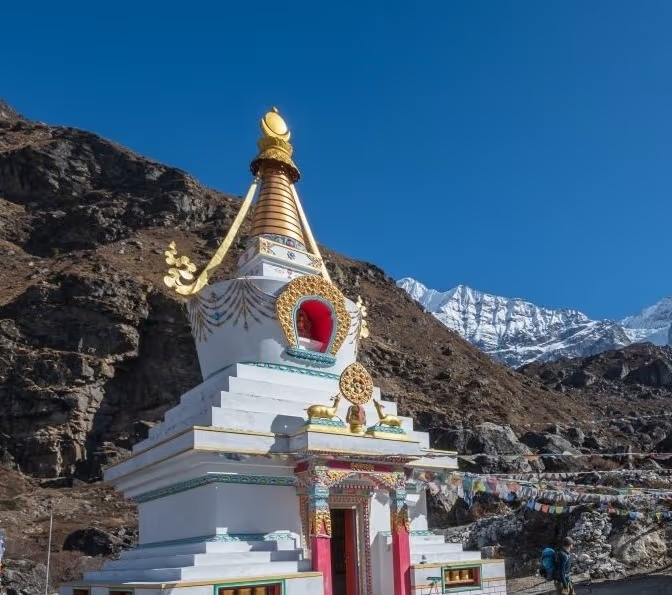
Chortens
Traditional religious artwork
Kyanjin Gompa is an important cultural landmark and complements the dramatic alpine landscape surrounding it.
A local guide can provide context about religious traditions and help travelers understand appropriate behavior when visiting sacred places.
Diverse Himalayan Wildlife
Langtang National Park is home to a diverse range of Himalayan wildlife.
The protected environment provides habitat for species including:
Red panda
Himalayan langur
Musk deer
Numerous Himalayan bird species
Wildlife sightings depend on season, location, weather, and chance. Trekkers should not expect to see a particular animal, but the possibility of encountering wildlife adds another dimension to the forest sections.
Travelers should avoid feeding animals, disturbing wildlife, or leaving food waste along the trail.
Seasonal Rhododendron Landscapes
During spring, sections of the Langtang trail can feature blooming rhododendrons.
The combination of flowering forest, mountain views, streams, and changing elevations makes spring particularly attractive for nature lovers and photographers.
The exact flowering period varies with altitude and seasonal conditions, so different parts of the route can show different stages of bloom.
A Dramatic Change in Vegetation
One of the most memorable features of the Langtang Valley Trek is the ecological transition along the trail.
Travelers move from:
Lower valley: Green vegetation, farmland, rivers, and dense forest.
Middle elevation: Rhododendron, oak, bamboo, and pine environments.
Upper valley: Open terrain, alpine vegetation, rocky landscapes, and glacial surroundings.
This change takes place within a relatively short trekking itinerary, making Langtang especially rewarding for travelers interested in natural diversity.
Traditional Himalayan Architecture
The villages along the trail feature architecture adapted to the local mountain environment.
Travelers can see:
Stone structures
Traditional roofs
Wooden details
Compact village layouts
Buddhist decorative elements
Architecture changes subtly as travelers move through different settlements, providing useful insight into the relationship between local culture, climate, available materials, and mountain life.
Langtang's Post-Earthquake Resilience
Langtang was severely affected by the 2015 earthquake, and the region has undergone significant rebuilding and recovery.
Travelers visiting today encounter communities that have rebuilt homes, guesthouses, religious structures, and tourism infrastructure.
The continuation of responsible trekking tourism contributes to local livelihoods and helps support the communities that depend on tourism.
This history gives the Langtang Valley Trek a deeper social dimension beyond scenery and physical adventure.
High Mountain Photography
Langtang is particularly attractive to photographers because of its changing visual environments.
Potential photography subjects include:
Forest trails
Waterfalls
Suspension bridges
Mountain villages
Prayer flags
Buddhist structures
Yak herds
Alpine meadows
Glaciers
Snow-covered peaks
Sunrise and sunset landscapes
Tserko Ri panoramas
The upper valley around Kyanjin Gompa provides especially strong opportunities for wide mountain landscapes.
Photographers should balance equipment with trekking practicality because carrying unnecessary weight can make long walking days more difficult.
Sunrise From the High Mountains
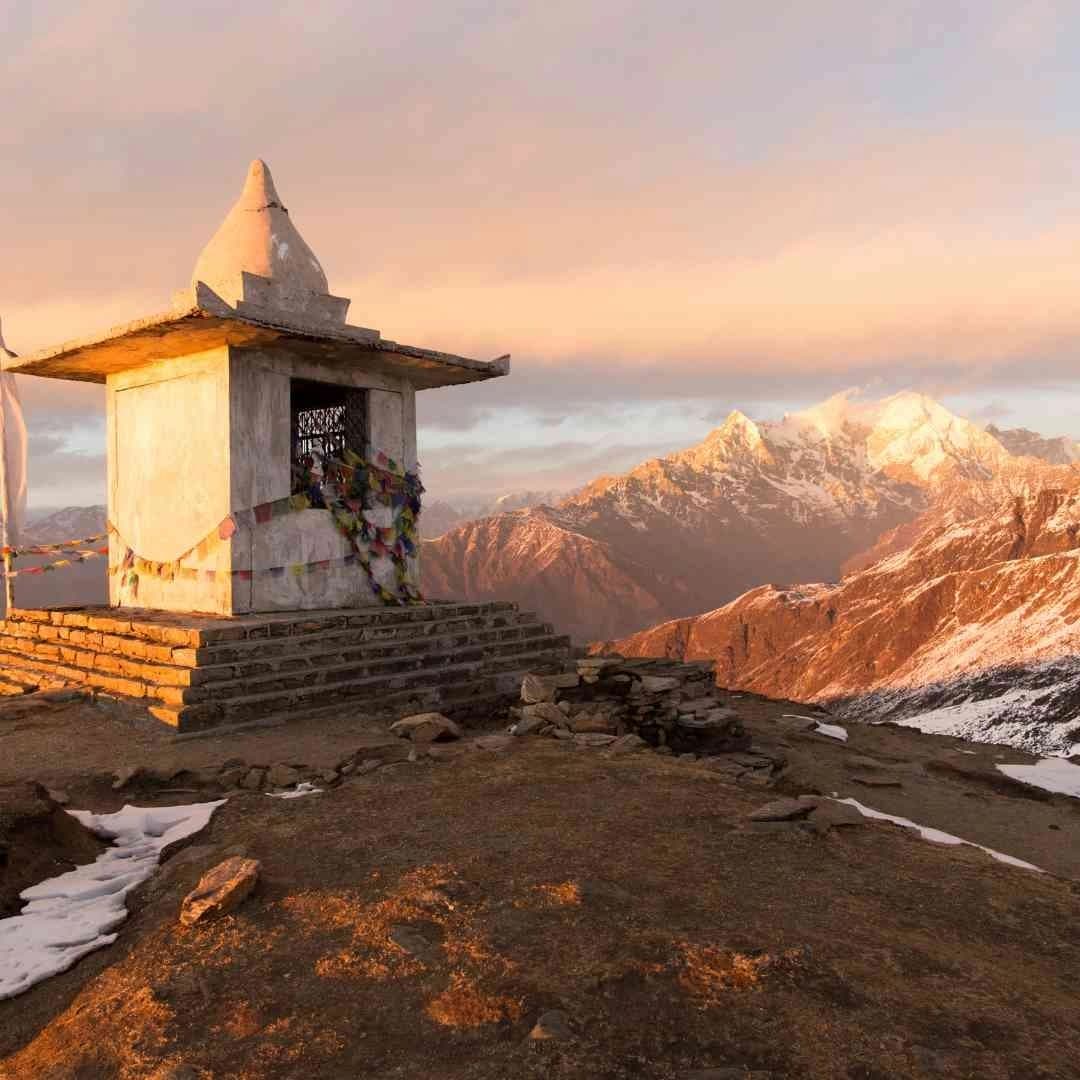
Early morning conditions around the upper Langtang Valley can provide particularly clear mountain views.
The Tserko Ri day is an especially important opportunity for travelers interested in sunrise and early-day Himalayan photography, depending on the itinerary, weather, and guide recommendations.
Warm clothing and a headlamp are important for early high-altitude departures.
A Compact Alternative to Longer Himalayan Treks
The Langtang Valley Trek offers a high-altitude Himalayan experience within an 11-day package, making it attractive to travelers with limited vacation time.
Compared with longer trekking routes, Langtang offers:
Shorter overall duration
Direct road access from Kathmandu
No required domestic mountain flight
High-altitude mountain scenery
Cultural experiences
Wildlife opportunities
Alpine landscapes
A demanding viewpoint hike
This combination makes it an effective choice for travelers who want to experience Nepal's Himalayas without committing to a substantially longer expedition.
No Domestic Flight to Reach the Trek
Another practical highlight is the complete overland access between Kathmandu and the trailhead.
Travelers do not need to arrange a flight to Lukla or another mountain airport.
Instead, the package uses private ground transportation between Kathmandu and Syabrubesi.
This provides:
Simpler logistics
Fewer flight-related uncertainties
More direct travel planning
A road journey through rural Nepal
Reduced dependence on domestic aviation
The trade-off is that mountain roads can be slower and more variable than urban highways.
Teahouse Trekking Experience
Staying in local teahouses is part of the experience rather than simply a logistical necessity.
Travelers can expect evenings spent in mountain lodges, where trekkers gather for meals and rest after the day's walk.
Depending on the location, facilities may include:
Simple rooms
Twin-sharing accommodation
Dining area
Electricity
Charging facilities
Hot showers
Wi-Fi
Facilities become more basic as elevation and remoteness increase.
Full-Board Meals During the Trek
The trekking package includes breakfast, lunch, and dinner during the trekking section, along with tea and coffee according to the package arrangement.
The food experience itself is another part of the journey, with travelers able to try local and familiar dishes in mountain surroundings.
Popular trekking meals include:
Dal bhat
Momos
Noodles
Rice
Pasta
Soup
Tibetan bread
Chapati
Porridge
Potatoes
Vegetables
Eggs
Local dairy products around Kyanjin Gompa can add another regional food experience.
Porter Support and a Lighter Walking Load
Porter service allows travelers to keep the amount carried during the walking day relatively light.
The main luggage can be transported while travelers carry only the essentials in their daypack.
This is especially useful during:
Long uphill stages
High-altitude days
The Tserko Ri ascent
Multi-hour trekking sections
Keeping the daypack light can improve comfort and reduce unnecessary fatigue.
An Ideal Trek for Nature Lovers
The Langtang Valley Trek is particularly rewarding for travelers interested in natural landscapes.
Within one journey, travelers can experience:
Forests
Waterfalls
Rivers
Wildlife habitats
Mountain villages
Alpine meadows
Glaciers
Snow-covered peaks
The gradual transition between these environments makes the trek feel varied from beginning to end.
An Ideal Trek for Cultural Travelers
Travelers interested in culture can experience Tamang traditions and Tibetan Buddhist influences throughout the route.
The combination of villages, religious landmarks, architecture, local food, and mountain livelihoods makes Langtang much more than a landscape-focused trek.
The slower pace of walking also provides opportunities to observe everyday village life rather than simply moving between major viewpoints.
An Ideal Trek for First-Time Himalayan Trekkers
The Langtang Valley Trek can be a strong introduction to Himalayan trekking for travelers with reasonable fitness.
It offers many of the experiences associated with longer Nepalese treks, including:
High-altitude walking
Mountain villages
Teahouse accommodation
Himalayan peaks
Buddhist culture
Alpine landscapes
A demanding high-altitude viewpoint
At the same time, the route is comparatively compact and accessible from Kathmandu.
Proper preparation remains essential because the trek reaches nearly 5,000 meters at Tserko Ri.
An Ideal Trek for Photographers
Photographers can benefit from the route's exceptional variation.
The lower forests provide intimate nature scenes, while the upper valley offers expansive mountain landscapes.
Key photography opportunities include:
Forest textures
Waterfalls
Village architecture
Prayer flags
Local culture
Mountain peaks
Glaciers
Yak herds
Alpine landscapes
High-altitude panoramas
Private trekking is particularly useful for photographers who need more flexibility around scenic stops and changing light.
A Strong Choice for Limited-Time Travelers
The 11-day itinerary provides a practical balance between travel time and mountain exposure.
Travelers can experience the Langtang Valley without dedicating the length of time required for many longer Himalayan trekking programs.
The direct road connection from Kathmandu further simplifies the journey.
This makes Langtang particularly attractive to travelers who want to combine:
A Himalayan trek + Kathmandu sightseeing + cultural experiences within a relatively compact Nepal itinerary.
Core Langtang Valley Trek Highlights at a Glance
Highlight | Experience |
Langtang National Park | Forests, wildlife and protected mountain ecosystems |
Syabrubesi | Trekking gateway north of Kathmandu |
Lama Hotel | Forested mountain environment |
Langtang Village | Tamang culture and mountain community |
Kyanjin Gompa | High-altitude cultural and scenic center |
Tserko Ri | 4,984 m high-altitude viewpoint |
Langtang Lirung | Major Himalayan peak visible from the upper valley |
Glaciers | Dramatic alpine landscapes |
Yak Cheese Factory | Local dairy and mountain livelihood |
Buddhist heritage | Prayer flags, mani walls, monasteries and gompas |
Wildlife | Red panda, langur, musk deer and Himalayan birds |
Teahouses | Local mountain accommodation and dining |
Private road access | Kathmandu to Syabrubesi without a domestic flight |
The Complete Langtang Highlight Experience
The strongest part of the Langtang Valley Trek is the way its highlights build upon one another.
The journey begins with the road from Kathmandu to Syabrubesi, continues through forests and waterfalls toward Lama Hotel, opens into the higher valley around Langtang Village, and reaches the spectacular alpine environment of Kyanjin Gompa. The Tserko Ri ascent then provides the highest point of the itinerary before the trail retraces the valley toward Syabrubesi and Kathmandu.
Along the way, travelers experience Langtang National Park, Tamang culture, Buddhist heritage, mountain villages, wildlife habitats, glaciers, yak-based livelihoods, and some of the region's most impressive Himalayan scenery.
With the combination of accessibility, cultural depth, natural diversity, and high-altitude adventure, the Langtang Valley Trek offers a complete Himalayan trekking experience within a comparatively short itinerary.
Why Choose Nepal Intrepid Treks for the Langtang Valley Trek
Choosing the right trekking company can make a significant difference to the overall Langtang Valley Trek experience. The route may be shorter and more accessible than several of Nepal's longer Himalayan treks, but it still involves high-altitude walking, remote mountain villages, changing weather, limited mountain infrastructure, and detailed transportation and accommodation logistics.
Nepal Intrepid Treks organizes the Langtang Valley Trek as an 11-day guided trekking package, combining the major logistical services travelers need with local trekking support throughout the journey. The package is designed around the route from Kathmandu to Syabrubesi, the trek through Langtang National Park to Kyanjin Gompa, the high-altitude hike toward Tserko Ri, and the return journey to Kathmandu.
Local Experience in the Langtang Region
Local knowledge is especially valuable on a trek where conditions can change considerably between the lower valley and the high-altitude area around Kyanjin Gompa.
A local trekking team understands the practical characteristics of the route, including:
Trail conditions
Mountain weather
Local accommodation
Village logistics
Transportation
Altitude progression
Cultural practices
Communication with local communities
The guide also provides context about the Tamang communities, Buddhist traditions, mountain livelihoods, and the natural environment of Langtang National Park.
This local connection helps travelers experience Langtang as more than a sequence of trekking destinations.
A Complete 11-Day Trekking Package
The Langtang Valley Trek is organized as a complete 11-day journey, rather than requiring travelers to arrange each component independently.
The package combines the major services needed for the trip, including Kathmandu accommodation, Kathmandu sightseeing, transportation, trekking accommodation, meals, guide and porter services, permits, and specified trekking equipment.
This provides a practical structure from arrival in Nepal through the completion of the trek.
The standard itinerary includes:
Kathmandu: Arrival, sightseeing, and trek preparation.
Syabrubesi: Road journey to the trekking gateway.
Langtang Valley: Multi-day trekking through forests and mountain villages.
Kyanjin Gompa: High-altitude base for exploring the upper valley.
Tserko Ri: High-altitude viewpoint at 4,984 meters.
Syabrubesi: Completion of the trekking section.
Kathmandu: Return by private ground transportation.
Experienced English-Speaking Guide
An experienced English-speaking guide accompanies the trekking journey.
The guide's role extends beyond showing the direction of the trail. A professional guide helps coordinate the daily trekking experience and provides practical assistance with:
Route navigation
Daily walking schedules
Accommodation
Meal arrangements
Local communication
Altitude awareness
Weather-related decisions
General trekking safety
Cultural interpretation
The guide also becomes an important point of contact when travelers encounter unexpected situations on the trail.
Guide Support at High Altitude
The upper Langtang Valley requires more careful trekking than the lower forest sections.
Kyanjin Gompa is approximately 3,830 meters, while Tserko Ri reaches 4,984 meters. The guide helps travelers approach these elevations at an appropriate pace and remain aware of changing conditions.
This is particularly useful for first-time Himalayan trekkers who may not be familiar with how their bodies respond to increasing elevation.
Travelers should communicate openly with the guide about unusual fatigue, headaches, dizziness, breathing difficulties, or other concerning symptoms rather than attempting to maintain the itinerary at all costs.
Porter Support for a More Comfortable Trek
The standard package provides porter support, with one porter for two guests according to the published arrangement. The porter carries the main trekking luggage, allowing travelers to walk with a lighter daypack.
This can make a noticeable difference during the longer trekking stages, particularly when the trail gains elevation.
Travelers should keep essential personal items in their own daypack, including:
Water
Personal medication
Important documents
Phone
Power bank
Sunglasses
Snacks
Warm or waterproof layers needed during the day
The main luggage can contain clothing and other items that are not needed continuously during the day's walk.
Private Transportation From Kathmandu to Syabrubesi
The package includes private ground transportation, including airport transfers and the road journey between Kathmandu and Syabrubesi.
The approximately 122-kilometer journey to Syabrubesi normally takes around 5 to 6 hours, depending on traffic and road conditions.
Private transportation provides greater convenience because travelers do not need to coordinate separate public transportation arrangements before beginning the trek.
Mountain roads can be affected by traffic, construction, weather, landslides, and other local conditions, so the stated driving time should be understood as an approximate duration.
Organized Langtang National Park Permits
The trekking package includes the necessary documentation and permit costs for entering Langtang National Park.
This means travelers do not need to independently manage the standard permit process before starting the trek.
The trekking team can coordinate the required documentation based on the traveler's passport and itinerary details.
Travelers should still provide accurate personal information during the booking process because permit processing depends on correct traveler details.
Teahouse Accommodation Along the Route
The Langtang Valley Trek is a teahouse-based Himalayan journey.
Nepal Intrepid Treks arranges accommodation in the best available guesthouses during the trekking section, with twin-sharing accommodation according to the standard package.
Mountain teahouses provide practical accommodation close to the trail and are generally locally operated.
Travelers can expect facilities that become increasingly basic as the route moves higher, particularly around the upper valley.
The experience includes staying in the same types of mountain communities that form part of the cultural character of the trek.
Kathmandu Hotel and Trek Preparation
The package includes three nights of accommodation in a three-star category hotel in Kathmandu, with breakfast.
This provides a comfortable base for the beginning and end of the journey and gives travelers time to complete practical preparations before entering the mountains.
The Kathmandu stay can be used for:
Rest after international travel
City sightseeing
Trek briefing
Equipment preparation
Money exchange
Final purchases
Luggage organization
Meeting the trekking team
Kathmandu Valley Sightseeing
The standard itinerary includes a Kathmandu Valley sightseeing day, with entry fees, a tour guide, and private vehicle according to the package arrangement.
This creates an opportunity to combine Himalayan trekking with a cultural introduction to Kathmandu's historic and religious heritage.
For international travelers, the sightseeing day also provides useful time to recover from long-distance travel before beginning the physically demanding mountain section.
Full-Board Meals During the Trek
The package includes breakfast, lunch, and dinner during the trekking section, together with tea and coffee, as specified in the package. Seasonal fruits are also included.
The trekking menu can include familiar Nepali and Himalayan dishes as well as common trekking meals.
Travelers can expect options such as:
Dal bhat
Rice
Noodles
Pasta
Momos
Soups
Tibetan bread
Chapati
Porridge
Potatoes
Vegetables
Eggs
Meal availability varies between individual lodges and locations.
Travelers with dietary requirements should communicate those needs before departure.
Trekking Equipment Support
Nepal Intrepid Treks provides several useful trekking items as part of the package.
The published package includes:
Duffle bag
Sleeping bag
Down jacket
Trekking map
Nepal Intrepid Treks T-shirt
Travelers are responsible for their personal trekking equipment unless another arrangement has been confirmed.
This distinction makes it easier to prepare the packing list without carrying unnecessary duplicate items.
First-Aid and Basic Medical Support
The package includes a first-aid medical kit with basic medicines.
This provides basic trekking support but should not be interpreted as a replacement for personal medication, appropriate travel insurance, or professional medical treatment.
Travelers should bring their own required prescription and personal medication and keep essential medication in their daypack.
Practical Altitude Management
One of the most important parts of guided support is managing the transition into higher elevations.
The trek progresses from approximately 1,450 meters at Syabrubesi to 3,830 meters at Kyanjin Gompa, with the Tserko Ri hike reaching 4,984 meters.
The trekking team can help travelers maintain a sensible pace and recognize situations in which additional rest or a change of plan may be appropriate.
The guide also helps travelers prepare for the more demanding Tserko Ri day, where the combination of elevation and sustained uphill walking creates the greatest physical challenge of the standard itinerary.
A Route Suitable for First-Time Himalayan Trekkers
The Langtang Valley Trek provides an accessible introduction to high-altitude trekking because the route can be reached by road from Kathmandu and the standard itinerary does not require technical climbing.
At the same time, it remains a genuine Himalayan trek with substantial elevation gain and a high-altitude viewpoint.
This balance makes it particularly attractive to travelers who want:
Their first major Himalayan trek
A relatively short trekking itinerary
High mountain scenery
Cultural experiences
Teahouse trekking
A guided experience
No domestic mountain flight
Reasonable fitness and preparation remain important despite the route's accessibility.
Support for Solo Travelers
The package can be arranged for individual travelers, with the published minimum group size listed as one person.
Solo travelers can benefit from having a professional guide and porter rather than having to manage mountain navigation and logistics independently.
A private arrangement can also provide more flexibility in daily pace and personal preferences.
Solo travelers should still maintain suitable travel insurance, emergency contacts, sufficient cash, and personal preparation.
Support for Couples and Families
Couples and families can use a private arrangement to create a more personalized trekking experience.
A private itinerary allows the trekking pace to be adjusted around the group rather than requiring every member to follow a fixed pace.
This can be particularly helpful when:
Travelers have different fitness levels
Children need additional rest
One traveler wants more photography time
The group prefers a slower schedule
Additional acclimatization is desired
The suitability of the standard itinerary should be assessed according to the youngest or least experienced member of a family.
Support for Photographers and Nature Travelers
Langtang provides excellent opportunities for landscape and nature photography, with the scenery changing from dense forest to high alpine terrain.
A private trekking arrangement can allow additional time for:
Mountain photography
Sunrise and sunset views
Village photography
Wildlife observation
Glacial landscapes
Local cultural scenes
The guide can also help travelers understand the route and local environment while ensuring that photography does not interfere with the trekking schedule or cultural etiquette.
Cultural Interpretation Along the Route
A local guide helps travelers understand cultural features that might otherwise be overlooked.
The journey passes through Tamang communities and areas influenced by Tibetan Buddhism. Travelers encounter:
Prayer flags
Mani walls
Prayer wheels
Buddhist shrines
Monasteries
Traditional architecture
Mountain agriculture
Yak-related livelihoods
The guide can explain the significance of these cultural features and help travelers interact respectfully with local communities.
Local Knowledge of Langtang's Environment
Langtang is more than a mountain-viewing destination. The route passes through a protected national park with changing ecosystems and diverse wildlife habitats.
Travelers move through forest environments containing rhododendron, oak, bamboo, and pine before reaching the alpine landscape around Kyanjin Gompa.
A local guide can help travelers understand the differences between these environments and improve their awareness of wildlife, vegetation, conservation, and local livelihoods.
Planning Around the Tserko Ri Day
The Tserko Ri hike is one of the most demanding and rewarding parts of the standard itinerary.
At 4,984 meters, it is considerably higher than Kyanjin Gompa and requires an early start, sustained uphill walking, and preparation for cold and changing weather.
The trekking team helps organize the day so travelers can approach the viewpoint at an appropriate pace.
Because the summit day involves substantial physical effort, travelers should prepare their daypack the night before with:
Water
Snacks
Warm clothing
Windproof or waterproof layer
Sunglasses
Headlamp
Personal medication
Camera equipment where required
Private Trekking and Flexible Dates
The current package offers both group fixed departures and private-date options, allowing travelers to choose between shared-cost group travel and a more flexible private schedule.
Private dates are particularly useful for:
Couples
Families
Friends
Solo travelers
Photography groups
Travelers with fixed vacation periods
Groups requesting itinerary modifications
The private format also makes it easier to discuss additional acclimatization, slower walking, or selected route extensions.
Support When Conditions Change
Mountain journeys cannot always follow a rigid timetable.
Road conditions, weather, trail conditions, health concerns, or other unforeseen circumstances may require adjustments.
The local trekking team can assist with practical decisions involving:
Transportation
Accommodation
Daily walking schedules
Additional rest
Route adjustments
Emergency support
The objective is to maintain a safe and practical journey rather than forcing travelers to follow the original schedule when conditions make that inappropriate.
Clear Organization From Arrival to Departure
Nepal Intrepid Treks handles the major organized elements of the journey from the time travelers arrive in Nepal until they return to Kathmandu.
The standard package includes the core services required for the journey:
Service | Standard Package Arrangement |
Duration | 11 days |
Guide | Experienced English-speaking guide |
Porter | 1 porter for 2 guests |
Transportation | Private ground transportation |
Kathmandu hotel | 3-star category, breakfast |
Trek accommodation | Best available guesthouses, twin sharing |
Trek meals | Breakfast, lunch and dinner |
Permits | Langtang National Park documentation and permit costs |
Equipment | Duffle bag, sleeping bag, down jacket, map, T-shirt |
Medical support | First-aid kit with basic medicines |
Maximum elevation | 4,984 m |
The final booking confirmation should always be treated as the definitive record of the services included in an individual trip.
Pre-Trip Planning and Preparation
Support begins before travelers reach the trailhead.
Before departure, travelers can prepare for:
Trekking equipment
Fitness
Travel insurance
Documents
Permits
Dietary requirements
Money
Transportation
Accommodation
Altitude
Weather
The Kathmandu preparation period provides an opportunity to identify any missing equipment or practical requirements before beginning the trek.
A Balanced Langtang Trekking Experience
Nepal Intrepid Treks combines local trekking support with the practical services required for an organized Himalayan journey.
The result is a trek that allows travelers to concentrate on the landscapes, villages, mountain culture, wildlife, and high-altitude experience rather than managing every logistical detail themselves.
The combination of private ground transportation, experienced guides, porter support, teahouse accommodation, included trekking meals, permit arrangements, and trekking equipment support creates a structured foundation for exploring the Langtang Valley.
Why Choose Nepal Intrepid Treks?
For travelers comparing Langtang trekking options, the main advantages of choosing Nepal Intrepid Treks include:
Local Langtang support: Experienced trekking staff familiar with the region.
Complete 11-day organization: Major trekking and travel logistics arranged within one package.
Private ground transportation: Direct transportation between Kathmandu and Syabrubesi.
Professional guide: English-speaking guide throughout the trekking journey.
Porter service: Main luggage transported so travelers can walk with a lighter load.
Teahouse experience: Accommodation arranged along the mountain route.
Full-board trekking meals: Breakfast, lunch, and dinner included during the trek.
Permit assistance: Langtang National Park documentation arranged as part of the package.
Equipment support: Sleeping bag, down jacket, duffle bag, trekking map, and T-shirt provided according to the package.
Flexible travel options: Group departures and private-date arrangements available.
Pre-trip coordination: Support with preparation, itinerary, transportation, and practical trekking requirements.
Begin the Langtang Valley Trek With an Organized Local Team
The Langtang Valley Trek combines a manageable overall duration with genuine high-altitude Himalayan terrain. The route reaches Kyanjin Gompa at approximately 3,830 meters and continues toward Tserko Ri at 4,984 meters while passing through forests, Tamang villages, Buddhist cultural sites, glaciers, and alpine landscapes.
Nepal Intrepid Treks brings the major logistics together within an 11-day package, allowing travelers to begin the trek with transportation, accommodation, meals, permits, guide and porter support, and specified trekking equipment already organized.
For travelers looking for a guided, well-organized and accessible Himalayan trekking experience from Kathmandu, Nepal Intrepid Treks provides a practical way to explore the Langtang Valley from Syabrubesi to Kyanjin Gompa and the high mountain viewpoints beyond.
Langtang Valley Trek 11-Day Itinerary
The 11-day Langtang Valley Trek itinerary is designed to provide a complete Himalayan trekking experience without requiring a domestic flight to reach the trailhead. The journey begins in Kathmandu and travels overland to Syabrubesi, the main gateway to the Langtang Valley. From there, the trail climbs gradually through forests, river valleys, waterfalls, mountain settlements, and traditional Tamang communities before reaching Kyanjin Gompa at approximately 3,830 meters.
The upper valley is the scenic and adventurous heart of the trek. After reaching Kyanjin Gompa, the itinerary allows a dedicated day for a high-altitude viewpoint hike toward Tserko Ri at 4,984 meters, offering expansive mountain views across the surrounding Himalayan landscape. The trail then retraces its route through the Langtang Valley before the final drive back to Kathmandu.
The itinerary balances trekking, acclimatization, cultural exploration, mountain scenery, local accommodation, and practical transportation. Daily walking generally ranges from approximately 3 to 7 hours, with the longest or most demanding days occurring around the ascent toward Kyanjin Gompa and the high-altitude viewpoint day.
Langtang Valley Trek Itinerary at a Glance
Day | Itinerary | Elevation | Approx. Distance | Activity |
Day 1 | Arrival in Kathmandu | 1,355 m | - | Airport transfer and trek preparation |
Day 2 | Kathmandu Valley Sightseeing | 1,355 m | - | Cultural sightseeing and preparation |
Day 3 | Kathmandu to Syabrubesi | 1,450 m | 122 km | Private drive, 5-6 hours |
Day 4 | Syabrubesi to Lama Hotel | 2,480 m | 11.3 km | Trek, about 6 hours |
Day 5 | Lama Hotel to Langtang Village | 3,430 m | 13 km | Trek, about 6-7 hours |
Day 6 | Langtang Village to Kyanjin Gompa | 3,830 m | 6.5 km | Trek, about 3 hours |
Day 7 | Kyanjin Gompa to Tserko Ri and return | 4,984 m | 15 km round trip | High-altitude hike, about 6-7 hours |
Day 8 | Kyanjin Gompa to Lama Hotel | 2,480 m | 19.5 km | Descent, about 6-7 hours |
Day 9 | Lama Hotel to Syabrubesi | 1,450 m | 11.3 km | Descent, about 5-6 hours |
Day 10 | Syabrubesi to Kathmandu | 1,355 m | 122 km | Private drive, 5-6 hours |
Day 11 | Departure | - | - | Airport transfer |
The distances and durations are approximate and can vary according to trail conditions, weather, individual walking pace, and transportation conditions.
Trip Itinerary
The Langtang Valley Trek begins with your arrival at Tribhuvan International Airport in Kathmandu. A Nepal Intrepid Treks representative receives you at the airport and arranges your transfer to the designated hotel.
After checking in, you have time to rest, recover from your international journey, and settle into Kathmandu. For travelers arriving after a long international flight, this first day is intentionally less physically demanding.
Kathmandu provides an excellent introduction to Nepal before the journey moves into the mountains. The city combines historic neighborhoods, traditional architecture, Buddhist and Hindu religious sites, busy markets, and the distinctive atmosphere of the Kathmandu Valley.
Depending on your arrival time, you can spend the remainder of the day exploring the surrounding area, resting at the hotel, or preparing personal trekking equipment.
The trekking team normally uses the arrival period to ensure that travelers are comfortable and have the practical information required for the journey. The Langtang Valley Trek briefing can cover the route, daily walking schedule, accommodation, food, equipment, transportation, altitude considerations, and general safety.
This is also a useful time to check your trekking gear and identify anything that may still need to be purchased or adjusted before leaving Kathmandu.
Keep your essential documents, travel insurance information, personal medication, and other important belongings organized from the first day. These items should remain accessible throughout the trek.
The first evening is an opportunity to rest well before the following day's cultural sightseeing and preparation.
Included/Excluded
All ground transportation in a private vehicle, including airport pick-up and drop-off
Three nights' Accommodation in Kathmandu will be in a 3-star category hotel, which is inclusive of breakfast only
Kathmandu city tour including all entry fees, a tour guide, and a private vehicle
Accommodation on a twin-sharing basis in the best available guesthouse during the trek
Three times full board meals with a cup of tea and coffee (breakfast, lunch, and dinner) during the trek
Seasonal fruits during the trek
First aid medical kit with basic medicines.
Necessary documentation and permit costs to enter Langtang National Park.
All necessary staff with an experienced English-speaking guide (require porters: two clients 1 porter), including their food, salary, accommodation, insurance, etc. (Personal Sherpa guide provided upon request with extra charge)
Nepal Intrepid Treks T-shirt, Duffle bag, and Trekking map
Sleeping Bag and down Jacket during the trek
Trip Achievement Certificate as a token of their successful journey, recognizing their accomplishment and endurance
Expenses related to our staff (guide and porter)
Government taxes and office service charges
Nepal entry visa fee
International airfare
Travel insurance
Lunch and Dinner in Kathmandu
All cold drinks, water, and any beverages are not included in your trip price.
We provide such service with an extra charge.
(Note: Our option excursions are culture trips, Festival trips, monastery meditation with Lama and Monks, Bird watching, Farming trips, and other things as per the client's interest).Trekking Equipment:
(Note: Clients have to arrange personal trekking equipment, such as a trekking pole)Tips for drivers, guides, and porters are not included in the cost of your package.
Others:-
Personal expenses such as phone calls, Internet, laundry, bar bills, and extra porters.
Costs arising out of landslide, road blockage, rescue of any form, cancellation of flight, or reasons beyond our control.
Any other expenses not mentioned in the price section are not included.
Dates & Prices
Sort By Date
No group departures for this selection.
Choose another month/year or book a private date instead.
Langtang Valley TrekVideo
Good to Know
FAQS
Traveller Review
 5.0 Rating out of 5 based on 165 Reviews
Langtang Valley Trek and Blue Lake
Great responsible team, very careful and careful, so that you can rest assured in walking, is a good Nepalese hiking company (Nepal Intrepid Treks). This time I walk to Blue Lake Langtang Valley Trek, very beautiful, along the way there are forests, streams, canyons, glaciers, Tibetan Mani walls, turning wheels, Tibetan Fosta, five-coloured flags, lamas, bulls, sheep, strange birds, small wooden bridges and a safe solid railway bridge. There are beautiful colourful hills and tea houses, high snowstones, golden mountain sunshine, now let back home will miss a spiritual hiking holy road. I highly recommend everyone have the opportunity to go through Nepal Intrepid Treks and I would like to go with them again. Namaste and thank you so much.