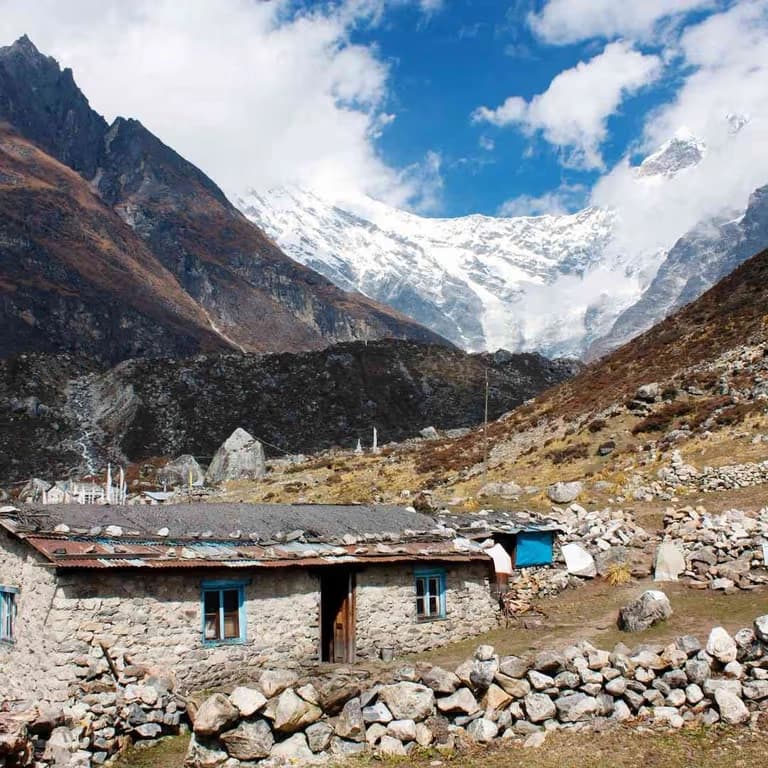
Choosing the best trekking company for the Mardi Himal Trek in Nepal requires more than comparing package prices. A reliable trekking agency should have valid government registration, licensed and experienced guides, transparent costs, properly insured porters, and a clear emergency evacuation plan. Mardi Himal reaches 4,500 m beneath Machhapuchhre, and its steep altitude gains, limited High Camp accommodation, and restricted access above Rest Camp make route-specific expertise essential for a safe and well-organized trek.
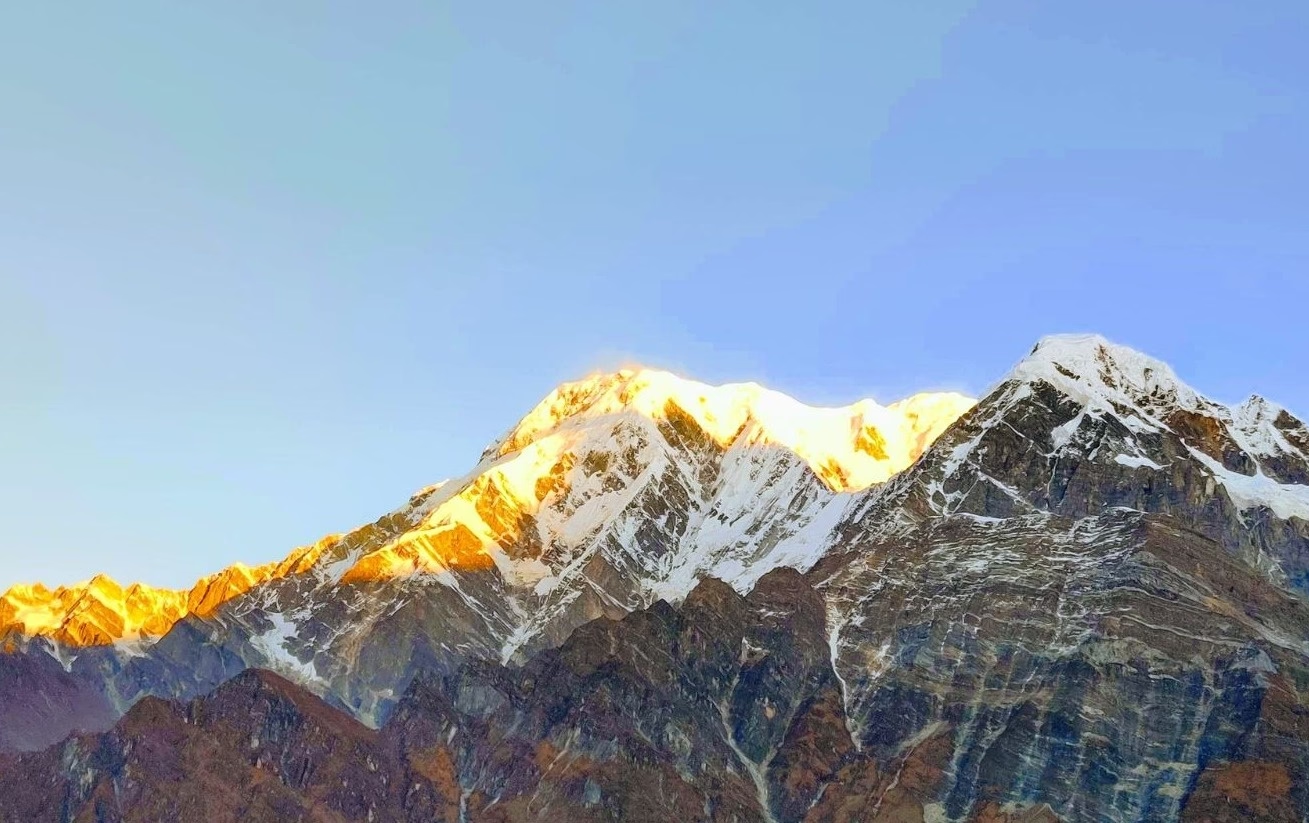
Before booking, compare Mardi Himal trekking packages by checking permit arrangements, accommodation, meals, transportation, guide-to-trekker ratios, altitude management, and refund policies. This guide explains how to verify trekking companies, identify hidden costs and misleading offers, evaluate safety and responsible porter practices, and choose an itinerary that fits your budget, fitness level, and travel dates. These practical checks will help you select a trustworthy trekking agency for your Mardi Himal adventure.
Why Should You Choose a Reputable Trekking Company for the Mardi Himal Trek?
A reputable trekking company turns Mardi Himal into a managed trip: it holds the legal license, secures permits and lodges, supplies a trained guide, and runs a tested emergency plan. Those 4 functions protect your safety, budget, and summit-day timing.
Mardi Himal sits inside the Annapurna Conservation Area, a protected zone with a permit system, limited bed capacity at altitude, and weather that turns within hours. The 3 sections below explain what makes the route distinct, what a company adds, and which risks it removes.
What Makes the Mardi Himal Trek Different From Other Nepal Treks?
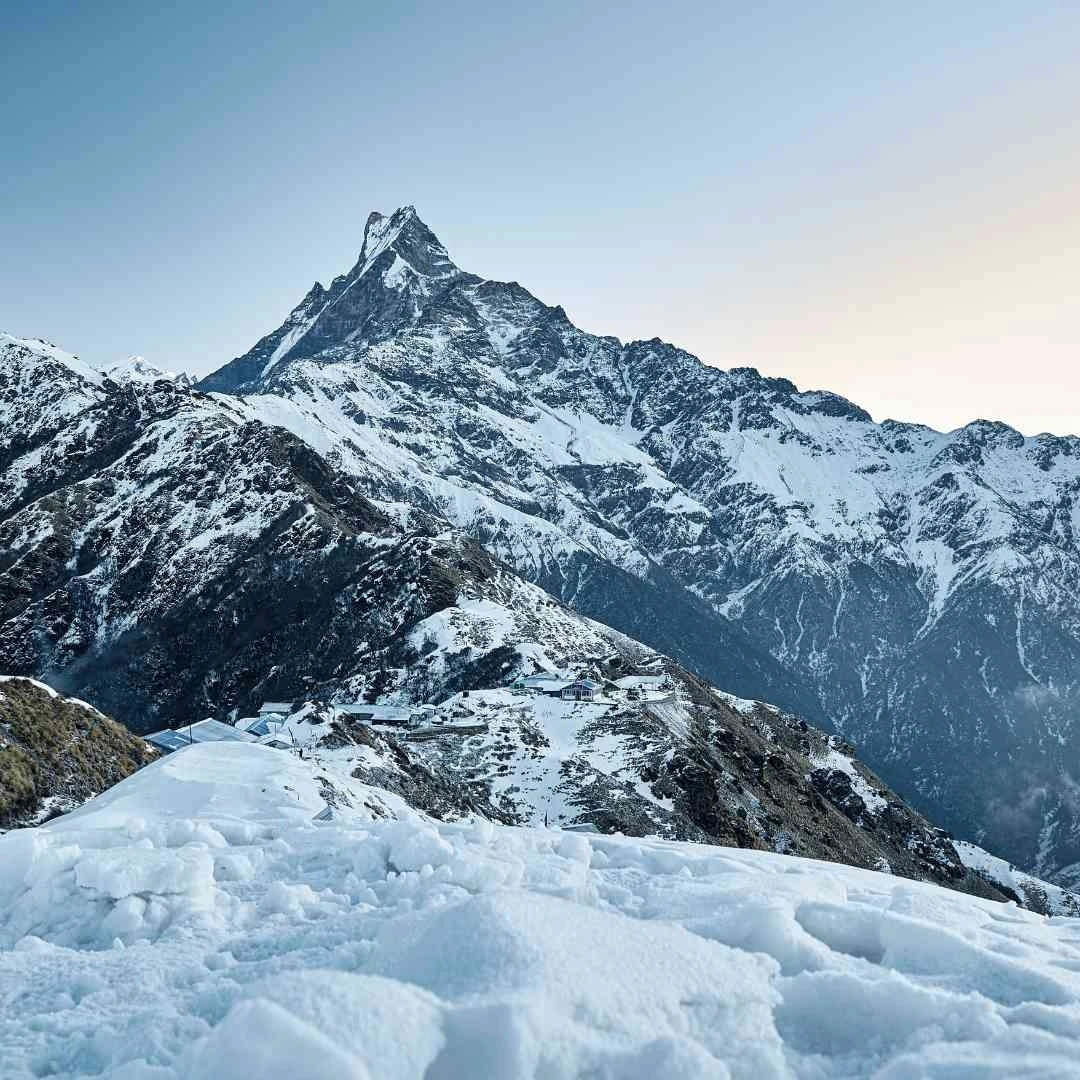
Mardi Himal is a short ridge trek that reaches 4,500 m beneath Machhapuchhre (6,993 m), takes 5 days on the trail, and starts by road from Pokhara. It draws fewer people than Annapurna Base Camp and offers fewer exit points than a village-to-village circuit.
The standard route runs from Kande through Pitam Deurali (2,100 m), Rest Camp (2,650 m), and High Camp (3,550 m) to Mardi Himal Base Camp (4,500 m), then down through Badal Danda (3,210 m) to Sidhing. Three features of that route change how you pick a company. Sleeping altitude jumps 900 m between Rest Camp and High Camp. Above Rest Camp the trail is one ridge with no road, so an evacuation means a helicopter or a long walk down. High Camp holds a small cluster of basic lodges, so rooms fill in peak weeks.
Annapurna Base Camp (4,130 m) offers a useful contrast. It strings together more villages, more lodges, and more ways out. Mardi Himal rewards a company that plans ahead because the ridge leaves little room to improvise.
How Can a Trekking Company Improve Your Mardi Himal Trek Experience?

A strong company improves the trek in 4 ways: it paces the ascent, reserves lodges, adjusts the schedule to the forecast, and settles every permit and payment before you reach the trailhead. You walk. They absorb the logistics.
In real-world use, the difference shows on Day 4 and Day 5. A well-run team starts the High Camp climb early, shifts the summit push by a day when the forecast turns, and keeps a room waiting at Badal Danda. The benefit changes by traveler:
First-time trekkers: gain a guide who sets a pace that protects the legs and lungs
Photographers: gain a pre-dawn departure that reaches the viewpoint for first light on Machhapuchhre
Families: gain flexibility to shorten a day or add a night when a child tires
What Risks Can a Professional Trekking Company Help You Avoid?
A professional company reduces 5 risks: altitude illness, unlicensed operators, overloaded porters, undisclosed costs, and schedule collapse after a flight or weather disruption.
Altitude illness: a trained guide screens symptoms twice a day and stops the ascent when they appear
Unlicensed operators: they leave guides and porters without proper insurance and leave you without legal recourse when something fails
Overloaded porters: they injure the people who carry your gear and signal a company that cuts corners elsewhere
Undisclosed costs: they surface at the Pokhara hotel desk, after you have paid the deposit
Schedule collapse: Kathmandu–Pokhara flights take about 25 minutes when the weather allows and get delayed when it does not, so a company holds a road fallback and spare time
The most common mistake travelers make is treating the cheapest quote as the baseline. The cheapest quote usually lacks a line item that the others include.
What Should You Look for in a Mardi Himal Trekking Company?
Look for 5 verifiable signals: government registration, route-specific experience, licensed guides, recent reviews, and a written safety plan. Each signal can be checked independently, without relying on the company's own marketing.
The 5 sections below show how to check each signal in order.
How Can You Verify a Trekking Company's Registration and Licenses in Nepal?
Verify a trekking company against 4 records: company registration with the Office of the Company Registrar, a trekking license from the Department of Tourism, PAN or VAT tax registration, and active membership in the Trekking Agencies' Association of Nepal (TAAN).
TAAN, founded in 1978, is the national umbrella body of trekking agencies and administers the TIMS system. Follow this sequence:
Request the license number, company registration number, and TAAN membership number in writing.
Match the registered company name to the name on the website, the invoice, and the bank account.
Confirm the TAAN membership on TAAN's official website.
Check the license renewal date, because Department of Tourism licenses renew every year.
Two details catch weak operators. A request to pay into a personal account instead of a company account signals an unregistered business. Nepal Mountaineering Association (NMA) membership matters for peak climbing, not for a trekking route like Mardi Himal, so its absence is not a red flag.
Why Do Local Trekking Experience and Mardi Himal Expertise Matter?
Route-specific experience matters because Mardi Himal's risks sit in details a generalist misses: which lodges hold beds at High Camp, where the upper trail ices in winter, and when cloud closes the viewpoint.
Many agencies sell dozens of treks and hand Mardi Himal to a subcontractor. Ask 3 questions to expose that: Does your own staff lead this trek? How many Mardi Himal departures ran last season? Which lodges do you use at Rest Camp and High Camp?
Specific answers, such as lodge names, owner names, and the hour of the summit-day start, signal a company that walks this trail. Vague answers such as "good teahouses" signal resale. Experience on the Everest or Annapurna Circuit routes does not transfer to ridge judgment, such as the 4 a.m. go or no-go call on summit day.
How Can You Evaluate Trekking Guides' Qualifications and Experience?
Evaluate a guide on 5 credentials: a government trekking-guide license, first-aid training, altitude-illness training, working English fluency, and documented Mardi Himal trips.
The Government of Nepal issues guide licenses after training at the Nepal Academy of Tourism and Hotel Management and a written examination. Porters and assistant guides need no license, so ask which role each crew member holds. Request the lead guide's name and license number before you pay.
Book a 10-minute video call and ask the guide to explain the Lake Louise Score, the standard checklist for rating acute mountain sickness. A trained guide answers in plain terms. A guide who has never used it is a warning. Reject any contract that says "your guide will be assigned later," because that clause lets the company substitute whoever is free.
What Do Recent Customer Reviews Reveal About a Trekking Company?
Recent reviews reveal how a company behaves when plans break: delayed flights, sick trekkers, bad weather, and billing disputes. Read reviews from the last 12 months and filter for problems before praise.
Sort by lowest rating first. Read the 3-star and 4-star entries, because they describe real friction. Strong reviews name the guide, name the camps, and describe how the company handled a delay or an illness. A reply from the owner within days adds weight.
Check at least 3 platforms: TripAdvisor, Google Maps, and Facebook. A company with 100+ reviews spread evenly across months beats a company with 30 perfect reviews posted in a single week.
How Can You Check a Trekking Company's Safety Standards and Emergency Plans?
Request 5 answers in writing: the altitude protocol, the evacuation plan, the first-aid kit contents, the insurance cover for guides and porters, and the communication method above Rest Camp.
Strong answers look like this:
Altitude protocol: a rule to stop ascending at the first symptoms and descend when they worsen
Evacuation plan: who calls the insurer, who pays the helicopter deposit, and how long a rescue from High Camp takes
First-aid kit: a pulse oximeter, altitude-illness medication under guide control, bandages, and rehydration salts
Staff insurance: accident and medical cover for the whole crew
Communication method: the phone network or satellite device the guide carries above Rest Camp
Confirm your own policy too. Travel insurance must cover helicopter evacuation to 4,500 m, and some standard policies cap cover at lower altitudes.
How Much Does a Mardi Himal Trekking Company Cost?
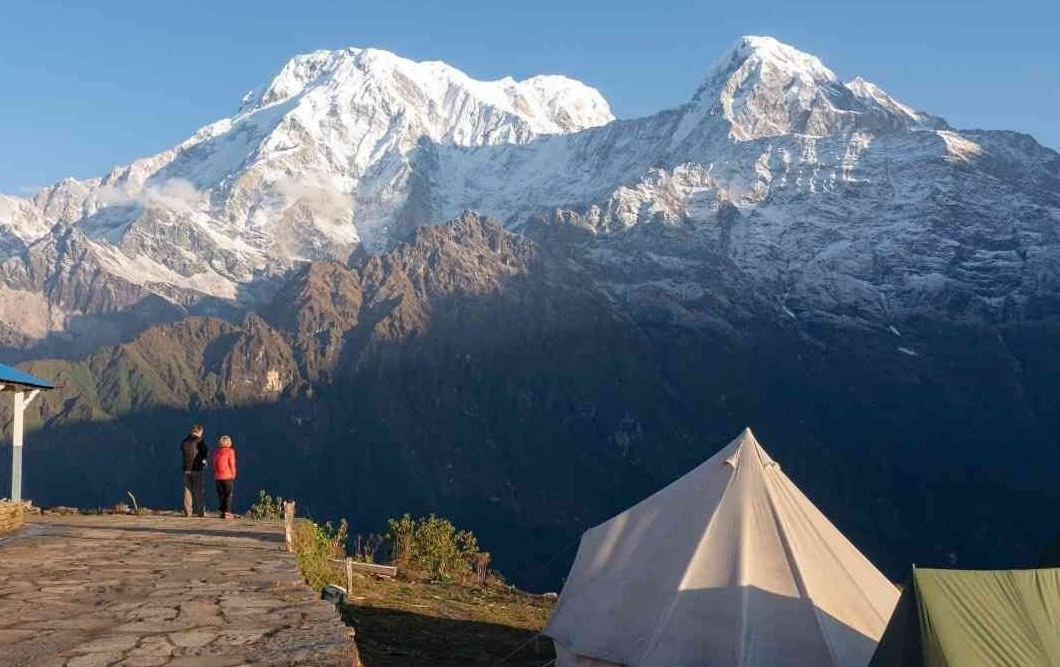
Guided Mardi Himal packages cost roughly US$400 to US$1,000 per person in 2026, with price set by trek length, group size, and whether flights and Kathmandu hotels are included. Any guided quote under US$230 falls below the cost of delivering the service.
The 4 sections below break the price into tiers, inclusions, extras, and the risk of going cheap.
What Is the Average Cost of a Mardi Himal Trek Package?
The average guided Mardi Himal package costs US$450 to US$750 per person for 5 to 8 days in 2026. Solo trekkers pay the top of the range, and groups of 5 or more pay the bottom, because guide and transport costs divide across the group.
The following table groups published 2026 rates from Nepal-based operators into 3 tiers by what the price buys.
Tier | Price per person (US$) | What the price buys |
Budget | 300–450 | 5 days from Pokhara, shared transport, basic teahouses, guide, no porter |
Standard | 450–800 | Licensed guide, shared porter, permits, all trail meals, twin-share teahouse rooms |
Premium | 900–1,500 | Private guide, dedicated porter, Kathmandu–Pokhara flights, upgraded lodges |
An 8-day Kathmandu-to-Kathmandu package with both flights and hotel nights sits in the upper Standard tier. Group size drives the rest: a 2-person private trip carries 2 shares of the guide and vehicle cost, while a 9-person trip carries 9.
What Should Be Included in a Mardi Himal Trekking Package?
A complete package includes 9 items: the Annapurna Conservation Area Permit (ACAP), a licensed guide, porter service, teahouse lodging, trail meals, ground transport, guide and porter insurance, a first-aid kit, and government taxes. An 8-day Kathmandu-to-Kathmandu package adds airport transfers, hotel nights, and both Pokhara flights.
Demand the inclusions as a line-by-line list. A sentence reading "all-inclusive" protects no one. Check the 3 lines most often missing: the porter, the insurance for guide and porter, and the hotel nights in Pokhara.
Which Hidden Costs Should You Check Before Booking Mardi Himal Trek?
Check 8 common extras before paying: the Nepal visa, international flights, travel insurance, meals in Kathmandu and Pokhara, hot showers, charging and Wi-Fi, tips, and extra nights after delays.
Tips carry the largest surprise. Published 2026 operator guidance puts guide-and-porter tips at US$8 to US$15 per day combined, which adds US$40 to US$75 across 5 trail days. Showers and charging are priced per use and climb with altitude, with High Camp the most expensive stop.
Delay costs follow the contract. When the Pokhara flight cancels, the extra hotel night falls on you unless the terms say otherwise.
Is a Cheap Mardi Himal Trek Package Worth the Risk?
A cheap package is worth the risk only when its price clears the ground-cost floor of about US$230 per person for 5 trail days. Below that line, the operator is cutting the guide, the porter, the insurance, or the wages.
The following table calculates that floor for 2 trekkers on a 5-day trek from Pokhara, using published 2026 rates for a guide (US$25–35 per day), a shared porter (US$18–25 per day), the ACAP permit (NPR 3,000), teahouse lodging, trail meals, and local transport.
Cost line | Per person (US$) | Basis |
Guide share | 63–88 | 5 days × US$25–35, split by 2 |
Porter share | 45–63 | 5 days × US$18–25, split by 2 |
ACAP permit | 23–25 | NPR 3,000 |
Teahouse lodging | 12–32 | 4 nights × US$3–8 |
Trail meals | 75–125 | 5 days × US$15–25 |
Local transport | 13–25 | Pokhara–Kande and Sidhing–Pokhara, split by 2 |
Floor total | 231–358 | Before agency margin, hotels, flights, insurance |
A guided quote of US$199 cannot cover those lines without a cut somewhere. The cuts land in 3 places: the guide becomes unlicensed or doubles as the porter, the porter works uninsured under an oversized load, and the lodges go unreserved.
Cheap is not always dishonest. An experienced trekker who accepts shared rooms and set menus can run a lean trip at the low end legitimately. The test is whether the line items add up, not whether the price is low.
What Services Should the Best Mardi Himal Trekking Company Provide?
The best Mardi Himal trekking company provides 6 core services: lodging and meals, transport, permits, a right-sized guide team, porter support, and a safety plan covering first aid and evacuation. The next 4 sections show what each service looks like in practice.
What Accommodation and Meals Should You Expect on the Mardi Himal Trek?
Expect twin-sharing teahouse rooms with shared bathrooms and 3 meals a day built around dal bhat, noodles, fried rice, soup, eggs, and tea. Comfort drops and prices rise with altitude, and High Camp is the most basic stop on the route.
Teahouse rooms run NPR 300 to NPR 1,200 per night (about US$2 to US$9), and meals run NPR 350 to NPR 900 per plate (about US$2.50 to US$6.50). Prices climb with every stage because porters and mules carry the supplies. Hot showers, charging, and Wi-Fi cost extra and are not guaranteed. Vegetarian meals are the safest choice at altitude.
Ask which lodge the company uses at High Camp and whether it is reserved before departure. Report allergies and dietary needs at booking, at least 2 weeks ahead.
Should Your Trekking Package Include Transportation and Permits?
Yes. Include transport and permits so the quote equals the price you pay: Kathmandu–Pokhara flights or bus, a drive to Kande, return transport from Sidhing, and the ACAP permit at NPR 3,000 (about US$23 to US$25).
The flight takes about 25 minutes and the road takes 6 to 8 hours. Flights delay in bad weather, so ask for the written fallback plan.
ACAP is the one permit every source agrees on. Rules on the TIMS card and mandatory guides differ across 2026 sources: Nepal Tourism Board's TIMS guidance lists routes that require a licensed guide and agency-issued TIMS, while operators report inconsistent TIMS checks on Annapurna trails. A reputable company states the current rule in writing, buys the permits itself, and includes the guide in the price either way.
What Is the Ideal Guide-to-Trekker Ratio for Mardi Himal?
The ideal ratio is 1 guide for every 4 to 6 trekkers, with an assistant guide added for groups above 6. Tighter ratios of 1:1 or 1:2 suit private trips, families with children, and anyone with a history of altitude illness.
The reason shows on Day 5. One trekker with altitude symptoms forces a descent. With 1 guide and 8 trekkers, either the sick trekker walks down alone or the whole group turns around. An assistant guide solves it: one guide descends with the trekker while the other continues.
Ratio also governs monitoring. A guide watching 12 people cannot track each person's breathing, color, and appetite. Get the ratio in writing and confirm the assistant guide is included in the price.
Does the Company Offer Porters and Responsible Luggage Handling?
Choose a company that assigns 1 porter per 2 trekkers, caps each load at 30 kg (the International Porter Protection Group limit for Nepal), and weighs bags before the trail starts.
Each trekker's share of the porter load runs about 10 kg. Domestic flights between Kathmandu and Pokhara cap baggage near 15 kg, so a 10 kg share fits the airline limit as well. Leave the rest of your luggage in a Pokhara hotel.
Ask 2 follow-ups. Does the company issue porters a jacket and boots suited to the altitude? Does it insure them against accident and illness? A company that answers yes to both treats the crew as staff, not disposable labor.
How Can You Compare Mardi Himal Trekking Companies Before Booking?
Compare companies on 4 axes: answers to the same questions, itinerary pacing, refund terms, and review authenticity. Normalize every quote to identical inclusions before comparing prices.
A shortlist of 3 companies is enough. The 4 sections below give you the tools for each axis.
Which Questions Should You Ask Before Choosing a Trekking Agency?
Ask these 8 questions and compare the written replies.
Which license number and TAAN membership number does the company hold?
Who leads my group, and what is that guide's license number?
What is the sleeping altitude on each night?
Which items does the price exclude?
How many porters travel with us, and what are their load limit and insurance?
What is the evacuation procedure, and who pays the helicopter deposit?
What are the refund terms when a flight is cancelled?
Which lodges do we use at Rest Camp and High Camp?
Grade the replies on 2 traits: specificity and speed. A reply naming lodges, license numbers, and guide names within 24 hours beats a brochure paragraph that dodges the question.
How Can You Compare Mardi Himal Trek Itineraries and Daily Walking Hours?
Compare itineraries by sleeping altitude and the hardest day, not by day count or average walking hours. The standard route averages 4 to 6 hours of walking, but Day 4 gains 900 m and Day 5 combines a 4,500 m climb with a descent to 3,210 m.
According to the Wilderness Medical Society's 2019 clinical practice guidelines, climbers above 3,000 m do not raise their sleeping elevation by more than 500 m per day, and include a rest day every 3 to 4 days. The following table lists the sleeping altitude per night on the standard 8-day itinerary, using the figures published by Nepal Intrepid Treks.
Night | Location | Sleeping altitude (m) | Change from previous night (m) |
Day 1 | Kathmandu | 1,355 | — |
Day 2 | Pitam Deurali | 2,100 | +745 |
Day 3 | Rest Camp | 2,650 | +550 |
Day 4 | High Camp | 3,550 | +900 |
Day 5 | Badal Danda | 3,210 | −340 |
Day 4 is the only night where the gain exceeds the 500 m ceiling above 3,000 m, and the descent on Day 5 limits exposure to a single night at 3,550 m. A 6- or 7-day version adds a night to split that jump. Treat 3- and 4-day Mardi Himal offers as red flags for first-timers, because they compress the same altitude into fewer nights.
Ask for the Day 5 hours in writing. The Base Camp climb plus the descent to Badal Danda is the longest day on the route, well above the 4 to 6 hour average.
What Cancellation and Refund Policies Should You Review?
Review 5 policy terms: deposit size, free-change window, refund schedule by days before departure, flight-cancellation handling, and force-majeure rules for weather, strikes, and landslides.
Read each term for its trigger and its payer. A refund "at company discretion" is not a policy. Separate the 2 directions: what you receive when you cancel, and what you receive when the company cancels or reroutes. Permits and flight tickets become non-refundable once issued, so ask which costs the company absorbs.
Buy travel insurance with trip-cancellation cover shortly after your first deposit, since many policies set a purchase deadline from that date. Keep every payment receipt and written confirmation.
How Can You Identify Fake Reviews and Misleading Trekking Offers?
Fake reviews cluster: many 5-star posts within days, generic wording, no guide names, and no mention of specific camps. Misleading offers hide the cost: a low headline price with permits, porter, or hotels missing from the inclusions.
Watch for these 6 red flags:
Bursts: 10+ reviews posted within one week
Copied phrasing: the same sentence structure across different reviewers
Missing specifics: praise with no camp, guide, or date
Personal payment: requests to transfer money to an individual's account
Pressure timers: "last-minute deal ends tonight" banners
Borrowed photos: images from Everest or Langtang on a Mardi Himal listing
Verify by messaging 2 past travelers directly and asking for the guide's name. Real customers reply with details. Fake ones do not exist.
How Do Safety and Sustainability Affect Your Choice of Trekking Company?
Safety and sustainability separate operators who protect people from operators who protect margins: the company that enforces slow ascents also insures porters, caps loads, and manages waste. The 3 sections below cover altitude, weather and emergencies, and responsible practice.
What Altitude Sickness Prevention Measures Should Your Guide Follow?
Your guide follows 5 measures: ascend slowly, check symptoms twice daily, schedule water and food, refuse further ascent when symptoms appear, and descend immediately when symptoms worsen.
According to the CDC Yellow Book, acute mountain sickness (AMS) affects 25% of visitors who sleep above 2,450 m in Colorado. Mardi Himal's highest sleeping point is 3,550 m, well above that baseline. The Wilderness Medical Society sets the prevention rule: no more than 500 m of sleeping-altitude gain per night above 3,000 m.
Symptoms include headache, nausea, shortness of breath, dizziness, poor sleep, and loss of appetite. Report the first one to your guide. The common mistake is hiding a headache to protect the summit schedule, which turns a manageable symptom into an evacuation. Discuss acetazolamide with your doctor before departure, since only a physician prescribes it.
How Should a Trekking Company Handle Weather Changes and Emergencies?
A strong company builds weather slack into the plan, makes the go or no-go call before dawn on summit day, and activates a clear evacuation chain: guide assessment, descent, insurer call, and helicopter when required.
Weather changes the trail by season. Monsoon (June to August) brings mud, leeches, and cloud. Winter (December to February) brings snow, ice, and strong wind above High Camp. A company that runs trips in those months holds buffer days and lodge alternatives.
The evacuation chain works only when roles are fixed in advance. The guide assesses and descends the trekker. The office contacts your insurer. The insurer guarantees payment to the helicopter operator. Ask the company to describe this sequence for High Camp specifically, since no road reaches it.
Does the Company Follow Responsible Tourism and Fair Porter Practices?
A responsible company follows International Porter Protection Group (IPPG) standards across 5 areas: clothing and footwear, shelter and food, medical care and insurance, care on descent when ill, and appropriate loads.
The IPPG, founded in 1997, campaigns for porter welfare in the mountain tourism industry. KEEP, the Kathmandu Environmental Education Project, runs porter-awareness workshops that teach porters their rights. Ask the company which standards it follows and request the answer in writing.
Sustainability extends to the trail. Ask whether the crew uses water purification instead of bottled water, carries out non-biodegradable waste, and supports the villages it uses.
When Is the Best Time to Book a Mardi Himal Trekking Company?
Book 8 to 12 weeks ahead for the October–November and March–April peaks, and 2 to 4 weeks ahead for winter or monsoon trips. Peak weeks fill domestic flights and High Camp rooms first.
Two decisions drive timing: which season you trek and how far ahead you commit. The next 2 sections answer both.
Which Trekking Seasons Offer the Best Mardi Himal Mountain Views?
Autumn (late October to November) and spring (late March to April) offer the best Mardi Himal views, with November clearest and April adding rhododendron bloom. Sunrise delivers the sharpest views in every season.
According to 1991–2020 Pokhara climate normals from the World Meteorological Organization and Nepal's Department of Hydrology and Meteorology, October brings 159.2 mm of rain over 8 days and 6.1 hours of daily sun, while November brings 17.2 mm over 1.3 days and 7.4 hours of sun. April records 141.7 mm over 10.5 rain days. The following table compares the 4 seasons on views, trail conditions, and trade-offs.
Season | Months | Views | Trail conditions | Trade-off |
Autumn | Late Oct–Nov | Sharpest of the year | Dry and stable | Cold nights at High Camp; October is busiest |
Spring | Late Mar–Apr | Excellent, plus rhododendron bloom | Mild | Afternoon haze builds in late April |
Winter | Dec–Feb | Sharp | Snow and ice above High Camp | Strong cold wind |
Monsoon | Jun–Aug | Poor, mostly cloud | Mud and leeches | Quiet trail, green forest |
From High Camp and the viewpoint, the skyline holds Machhapuchhre (6,993 m), Annapurna South (7,219 m), Hiunchuli (6,441 m), and Mardi Himal (5,587 m). Choose November for clarity, April for color, and October for the most reliable teahouse service despite the crowds.
How Far in Advance Should You Book Your Mardi Himal Trek?
Book 8 to 12 weeks ahead for peak-season trips, 4 to 6 weeks ahead for shoulder months, and 2 to 3 weeks ahead for winter and monsoon. Private departures run on shorter notice than fixed group dates.
Peak demand clusters around 3 pressure points: domestic flights, High Camp rooms, and the Dashain and Tihar festival weeks, when buses and flights fill with domestic travelers. Book your international flight and visa on a separate timeline, and align them with the trek start date, not the reverse.
From late October 2026, the spring 2027 window is the one to book. March and April departures fill earlier than the dates suggest, so a deposit by January secures the best flight and lodge slots.
How Can Nepal Intrepid Treks Help You Choose the Right Mardi Himal Trek?
Nepal Intrepid Treks is a Kathmandu-based, government-registered trekking company with 12+ years of experience, a 5.0 rating across 159 TripAdvisor reviews, and a published 8-day Mardi Himal Trek with itemized inclusions.
Our company Legal Documents page shows its company registration, tourism license, TAAN certificate, NMA certificate, cottage-industry registration, and PAN. It lists associations with the Nepal Tourism Board, TAAN, NMA, and KEEP, and its office sits at Nayabazar-16, Kathmandu.
The following table shows the published 8-day Kathmandu-to-Kathmandu rate by group size in October 2026.
Group size | Price per person (US$) |
1 person | 940 |
2–4 people | 710 |
5–8 people | 685 |
9–12 people | 635 |
13–20 people | 585 |
The package covers airport pick-up and drop-off, hotels in Kathmandu and Pokhara, both Kathmandu–Pokhara flights, a private drive to Kande, return transport from Sidhing, teahouse lodging, full-board meals on the trail, an English-speaking licensed guide, porter service by group size, ACAP and TIMS permits, guide and porter salary and insurance, basic first aid, and all government taxes. The exclusions are the Nepal visa, international airfare, travel insurance, lunch and dinner in Kathmandu and Pokhara, personal gear, paid extras such as showers, Wi-Fi, and charging, drinks, tips, and extra hotel nights.
Can Nepal Intrepid Treks Provide a Safe and Personalized Mardi Himal Trek?
Yes. Nepal Intrepid Treks runs private departures every day on request, group joins on selected spring and autumn dates, and custom itineraries of 6 or 7 days that slow the ascent.
Safety rests on 4 published commitments: licensed English-speaking guides, porters assigned by group size, insurance and meals for the guide and porter team, and guide monitoring of each trekker's condition throughout the trek. The 6- or 7-day version answers the Day 4 altitude jump directly by adding a night to the ascent.
Personalization covers the start point (Pokhara or Kathmandu), the return route, the accommodation style, and extensions to other Annapurna routes. Send your age, fitness level, and dates, and the team recommends the version that fits.
What Should You Consider Before Booking Your Mardi Himal Trek?
Before booking, confirm 7 points: license and TAAN membership, guide name and license, itemized inclusions, sleeping-altitude plan, porter and insurance terms, refund policy, and travel-insurance cover to 4,500 m.
Use a 3-step method to finish. Shortlist 3 companies. Send each the same 8 questions. Compare the written replies after normalizing every quote to identical inclusions. The company that answers fastest, with the most specific details, and with a price that clears the US$230 floor is the right choice for you.
The best trekking company for the Mardi Himal Trek proves its license, names its guide, explains its altitude plan, and puts every cost on paper before you pay.
Next step: Message the Nepal Intrepid Treks team on WhatsApp at +977 9849009919 with your dates, age, and fitness level. You receive a written itinerary and quote to compare against any other company.