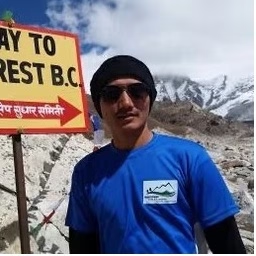
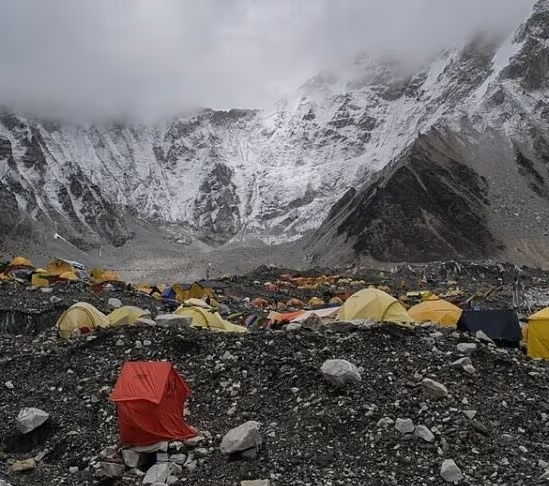
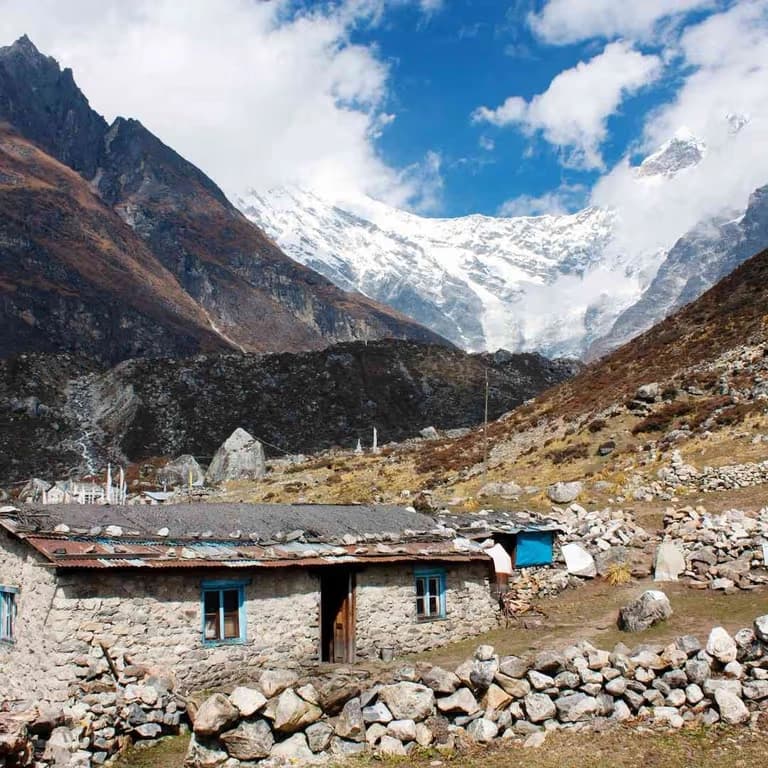
Hiking in Nepal in December 2026 offers clear Himalayan views, dry weather, quieter trails, and attractive off-season travel costs. Popular winter hiking routes include Ghorepani Poon Hill, Mardi Himal, Helambu, Langtang Valley, and the Everest View Trek, while Everest Base Camp and Annapurna Base Camp suit experienced trekkers who can manage freezing temperatures and changing trail conditions. Choosing the right route depends on altitude, snowfall, trekking experience, and departure dates.
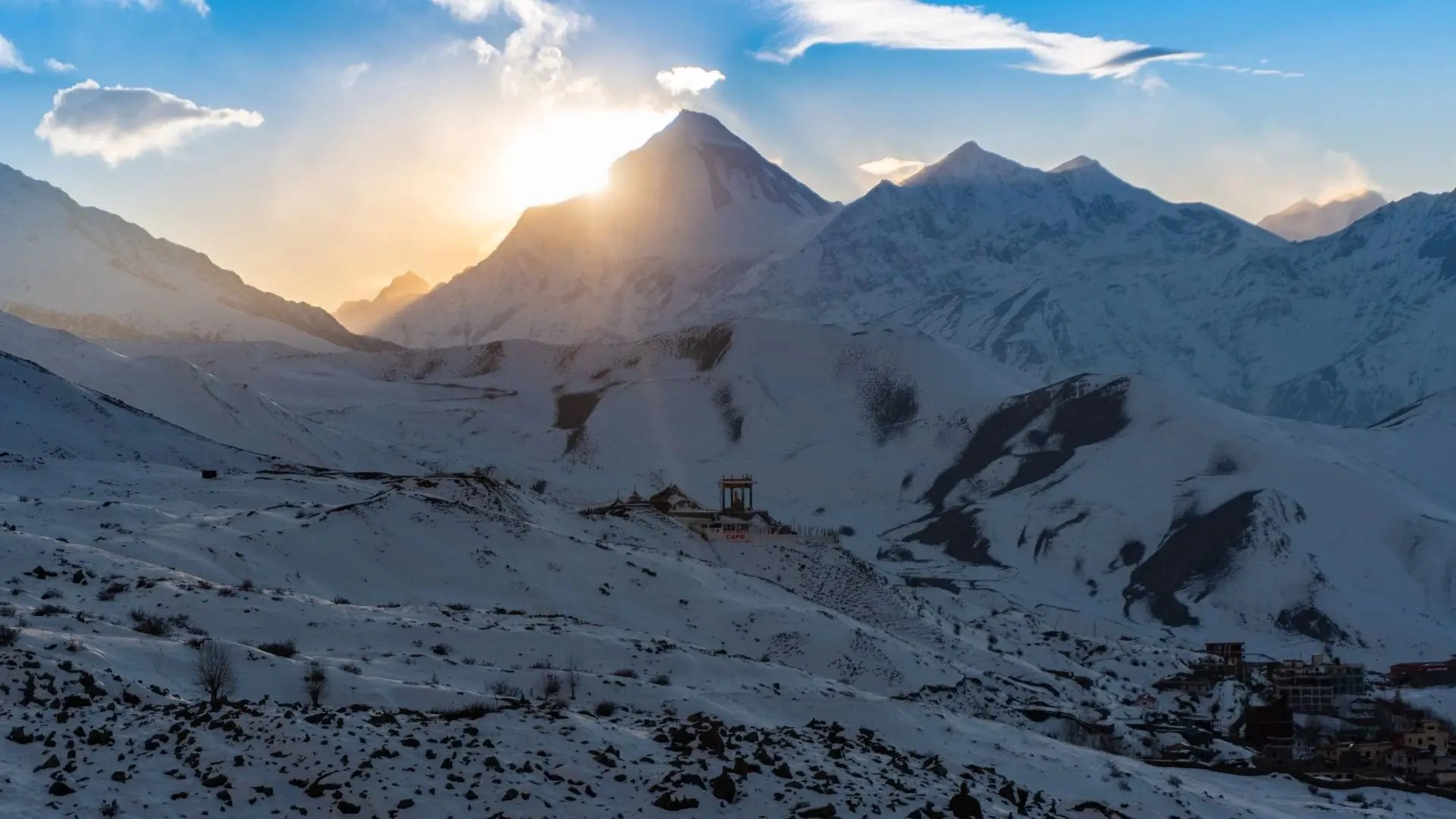
December hiking in Nepal requires careful planning around temperatures as low as −16°C at Everest Base Camp, shorter daylight hours, icy trails, and snow-related pass closures. Proper winter clothing, a subzero sleeping bag, gradual acclimatization, and flexible itineraries help reduce these risks. This guide covers the best December hiking trails, weather conditions, safety measures, essential equipment, trekking permits, and 2026 costs, helping you plan a winter adventure that matches your experience, schedule, and budget.
What Is the Weather Like for Hiking in Nepal in December?
December weather in Nepal is dry, cold, and clear. Daytime highs reach 19°C in Kathmandu and 7°C at Namche Bazaar (3,440 m). Night lows fall to 3°C in Kathmandu and −16°C at Everest Base Camp. Rainfall stays near zero, and morning visibility passes 100 km.
December opens Nepal's winter dry season. The monsoon leaves in late September, and the autumn rush ends in mid-November. Stable high pressure remains, interrupted by western disturbances: low-pressure systems that travel from the Mediterranean across Central Asia and drop snow on the Himalaya.
Altitude, time of day, and sun exposure define a December day. A sunny lunch stop at 3,400 m feels like 12°C; the same spot at 6:00 a.m., in shade, reads −8°C. Cloud builds above 4,000 m after 1:00 p.m., so we schedule every viewpoint climb, including Poon Hill and Kala Patthar, in the first two hours after sunrise.
The table below compares December temperatures at 6 locations, from Chitwan's lowlands to Everest Base Camp, so trekkers match clothing to elevation.
Location | Elevation | Typical daytime high | Typical night low |
Chitwan (Terai) | 150 m | 25°C | 10°C |
Pokhara | 820 m | 20°C | 8°C |
Kathmandu | 1,400 m | 19°C | 3°C |
Nagarkot | 2,175 m | 12°C | −1°C |
Namche Bazaar | 3,440 m | 7°C | −6°C |
Everest Base Camp | 5,364 m | 4°C | −16°C |
Temperature falls about 6.5°C for every 1,000 m of climb, and that rule predicts night lows on any trail within roughly 3°C. Dingboche (4,410 m) lands near −10°C inside an unheated room. Pack for that number, not for Kathmandu's forecast.
Kathmandu adds one December problem: air quality. A winter inversion traps particulates in the valley, and morning AQI regularly passes 150, so pack an N95 mask for the city.
How Cold Does It Get in Nepal's Himalayan Regions in December?
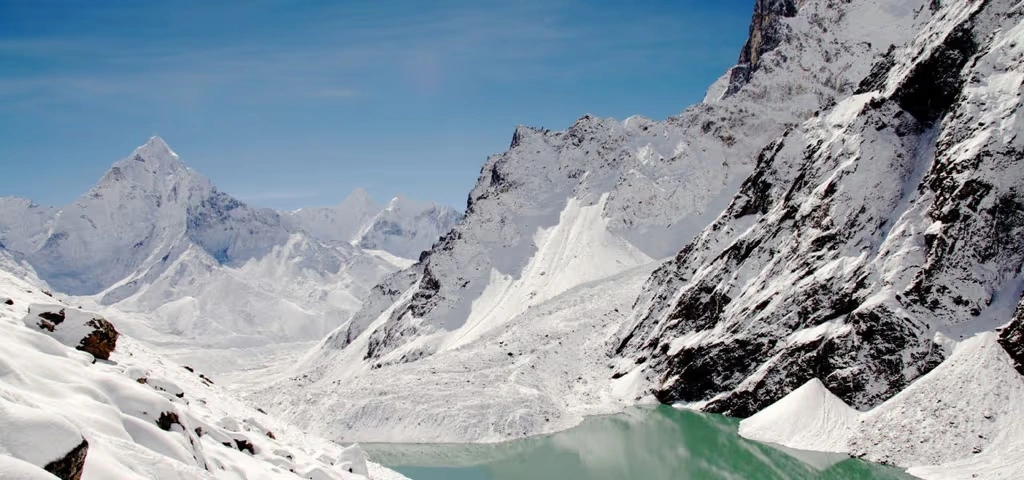
Nepal's Himalayan regions reach −10°C to −16°C on December nights above 4,000 m, and daytime highs stay between 0°C and 7°C. Wind multiplies the cold: a 30 km/h wind at −10°C produces a wind-chill near −20°C.
The coldest hours fall between 4:00 a.m. and 7:00 a.m. Water bottles freeze overnight above 3,500 m, so trekkers store them upside down inside the sleeping bag. Lodge bedrooms have no heating, and the dining-hall stove burns only from about 5:00 p.m. to 8:30 p.m.
The coldest moment of a December day is the 5:30 a.m. step out of the sleeping bag. Seasoned guides solve it with one habit: tomorrow's base layer and boot liners sleep inside the bag with you. You dress warm in 60 seconds instead of shivering for 10 minutes.
How Much Snowfall Can Hikers Expect in December?
Snow falls above 3,000 m in December, most often in the second to fourth weeks, and Kathmandu and Pokhara stay snow-free. Heavy snowfall of 30 cm or more closes passes above 5,000 m for 2 to 4 days.
Snowfall differs by region. The Annapurna massif receives more precipitation than Khumbu because it faces the moisture that arrives from the south, so Annapurna Base Camp sees snow in most Decembers while Everest Base Camp stays clear in many. Light snow dusts Ghorepani (2,860 m) and Namche Bazaar after a storm. Heavy snow blocks Thorong La (5,416 m), Cho La (5,420 m), and Larkya La (5,106 m).
The storm day is not the hard day. The 2 to 3 days after a storm are, because snow melts in sun, refreezes in shade, and turns stone steps into ice that lasts until noon. Clear sky after a storm also produces the best photographs of the month. Plan one flexible day after any forecast snowfall, and the cost of a storm drops to a late start.
How Many Hours of Daylight Are Available for Hiking in Nepal in December?
Nepal receives about 10 hours 20 minutes of daylight on December 21, with Kathmandu sunrise near 7:00 a.m. and sunset near 5:20 p.m. Deep valleys cut the usable walking window to 6.5 to 7 hours, compared with about 9 hours in October.
Ridgelines block the low winter sun. In valleys such as Langtang and Khumbu, direct sun reaches the trail around 8:30 a.m. and leaves by 3:30 p.m. Temperature then falls about 1°C every 10 minutes. A standard December day therefore runs like this:
Start walking at 7:30 a.m., once the first sun touches the trail.
Stop for lunch by 12:00 p.m.
Reach the next lodge by 3:30 p.m., before the shade arrives.
Arriving after 4:30 p.m. means walking the last hour in cold shade. Carry a headlamp and 2 spare sets of lithium batteries, because alkaline batteries lose charge quickly in freezing air.
What Are the Best Hiking Trails in Nepal in December?
The 5 best low-altitude hiking trails in Nepal in December are Ghorepani Poon Hill, Mardi Himal, Everest View, Langtang Valley, and Helambu. Each stays below 4,000 m at its sleeping points and offers a stove-heated dining room every night.
The table below compares the 5 trails by length, highest sleeping altitude, trailhead, and December difficulty, so trekkers match a route to their schedule and experience.
Trail | Days | Highest sleeping point | Trailhead | December difficulty | Best dates |
Ghorepani Poon Hill | 4–6 | 2,860 m (Poon Hill 3,210 m) | Nayapul, 1.5 hours from Pokhara | Easy to moderate | Dec 1–25 |
Mardi Himal | 5–8 | 3,580 m (viewpoint 4,500 m) | Kande or Dhampus | Moderate | Dec 1–20 |
Everest View | 5–7 | 3,880 m | Lukla (flight) | Moderate | Dec 1–15 |
Langtang Valley | 7–10 | 3,870 m (Kyanjin Ri 4,773 m) | Syabrubesi, 7–8 hours by road | Moderate | Dec 1–20 |
Helambu | 5–7 | 3,490 m | Sundarijal, 1 hour from Kathmandu | Easy to moderate | Dec 1–31 |
Is Ghorepani Poon Hill a Good December Hiking Destination?
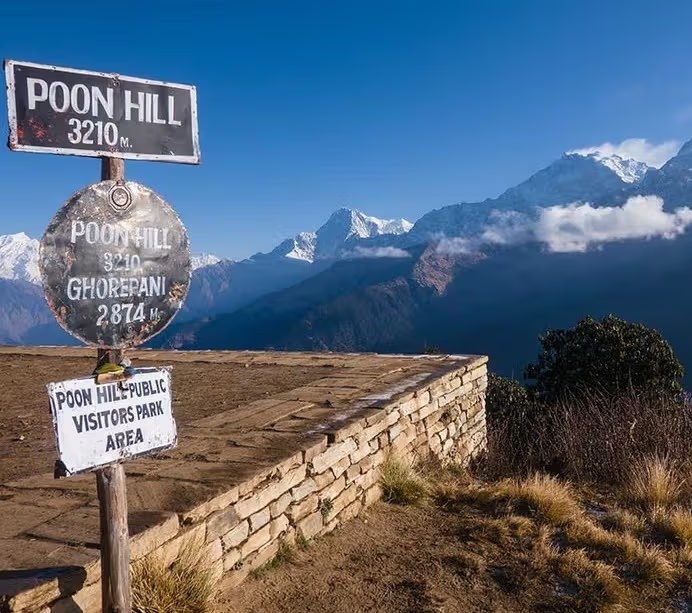
Yes. Ghorepani Poon Hill is the most reliable December hike in Nepal. It reaches 3,210 m in 4 to 6 days, shows Dhaulagiri (8,167 m) and Annapurna I (8,091 m) at sunrise, and offers a lodge stove in every village.
The route runs from Nayapul to Tikhedhunga, where a steep stone staircase of about 3,300 steps climbs up to the village of Ulleri, before continuing to Ghorepani, Poon Hill, Tadapani, and Ghandruk. The sunrise at Poon Hill arrives near 6:50 a.m. Trekkers leave Ghorepani at 4:45 a.m. with a headlamp and reach the top 20 minutes before first light, in air near −5°C.
Most trekkers plan one sunrise, and clouds decide the result. A better plan books 2 nights in Ghorepani, which gives 2 sunrise attempts for the price of one extra bed. Snow covers the upper trail after storms, and microspikes rented in Pokhara keep the final 350 m safe.
Poon Hill suits first-time Himalayan hikers, families with teenagers, and anyone with a fixed 5-day window.
Can You Hike the Mardi Himal Trek in December?
Yes. Mardi Himal is hikeable in December, with a ridge walk above the forest line and close views of Machhapuchhre (6,993 m). High Camp (3,580 m) records nights near −8°C, and the upper viewpoint at 4,500 m closes after fresh snow.
The route climbs from Kande or Dhampus through Forest Camp (2,550 m), Low Camp (3,050 m), and High Camp, then reaches the viewpoint on a 3 to 4-hour round trip that starts near 4:30 a.m. High Camp sits 530 m above Low Camp, so that middle section is the acclimatization checkpoint. An ACAP permit (NPR 3,000, about US$ 22) and a TIMS card cover the route.
A few lodges at Low Camp and High Camp close after heavy snow, so a guide confirms status by phone before each climb. A cloudy morning at the viewpoint produces no view, and a spare day at High Camp rescues the hike.
Is the Everest View Trek Suitable for December?
Yes. The Everest View Trek suits December because it stays below 3,880 m, avoids the −16°C nights of Gorak Shep, and shows Everest, Lhotse, Ama Dablam, and Thamserku. It runs 5 to 7 days from Lukla.
The Everest View Trek is a short Khumbu circuit from Lukla (2,860 m) through Phakding and Namche Bazaar to Khumjung, Khunde, and the Everest View Hotel (3,880 m), then back down the same valley.
The weak point is the flight, not the trail. Lukla flights run directly from Kathmandu in low season, while flights shift to Manthali (Ramechhap), 132 km away, during spring and autumn peaks. Fog cancels flights at either airport, so add 2 buffer days.
Permits cost NPR 3,390 for Sagarmatha National Park (NPR 3,000 plus 13% VAT) and NPR 3,000 for the Khumbu Pasang Lhamu Rural Municipality card. A TIMS card is no longer required in the Everest region in 2026.
Is the Langtang Valley Trek Possible in December?
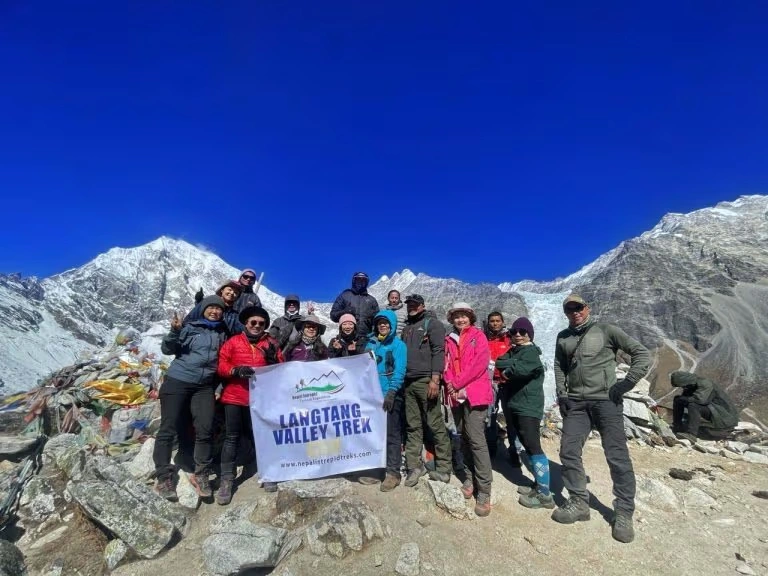
Yes. The Langtang Valley Trek is possible in December, climbing from Syabrubesi (1,550 m) to Kyanjin Gompa (3,870 m) in 5 to 6 walking days. Nights reach −8°C near Kyanjin, and lodges in Langtang, Mundu, and Kyanjin keep heated dining rooms.
Langtang has one December advantage: a dry road. The 7 to 8-hour drive from Kathmandu to Syabrubesi crosses landslide-prone slopes that stay stable once the monsoon ends. The 2015 earthquake and avalanche buried Langtang village, and December visitors now support rebuilt lodges and families whose winter income is the thinnest of the year.
Kyanjin Ri (4,773 m) is the standard acclimatization hike. Ice covers the summit in December, and the 2.5-hour climb suits most groups. Langtang National Park charges NPR 3,390 (NPR 3,000 plus 13% VAT), and a TIMS card is also required.
Can Beginners Enjoy the Helambu Trek in December?
Yes. Helambu is the most beginner-friendly trek in Nepal in December. The classic 5 to 7-day circuit starts at Sundarijal (1,350 m), 1 hour from Kathmandu, peaks at Tharepati (3,690 m), and stays lower and warmer than Langtang or Khumbu.
Helambu is a hill region north of Kathmandu, home to the Hyolmo people, whose monasteries and stone villages define the route. The trail passes Chisapani (2,215 m), Kutumsang (2,470 m), Tharepati, Melamchi Gaon (2,530 m), and Tarke Gyang (2,600 m). Clear mornings at Chisapani show Langtang Lirung and Dorje Lakpa.
Three features make Helambu forgiving: roads reach both ends, lodges sit every 2 to 3 hours of walking, and a vehicle is never more than 1 day away. The pass to Gosaikunda, Laurebina La (4,610 m), closes in December.
What Are the Best High-Altitude Treks in Nepal in December?
The 3 best high-altitude treks in Nepal in December are Everest Base Camp (5,364 m), Annapurna Base Camp (4,130 m), and, in the first week only, the Manaslu Circuit (5,106 m at Larkya La). All 3 demand experience, 2 spare days, and early-December departures.
Mountain medicine classifies 3,500 to 5,500 m as very high altitude. At those heights, cold, wind, and thin air compound each other, and a small delay produces a large consequence. Trekkers with no prior experience above 3,500 m choose a trail from the previous section.
Is the Everest Base Camp Trek Safe in December?
Yes. The Everest Base Camp Trek is safe in December with a licensed guide, a −15°C sleeping bag, and a departure before December 12. Nights reach −16°C at base camp and colder at Gorak Shep (5,164 m), and snow after December 15 closes high lodges.
The standard route climbs from Lukla through Namche Bazaar (2 nights), Tengboche (3,860 m), Dingboche (4,410 m, 2 nights), Lobuche (4,940 m), and Gorak Shep, then reaches base camp (5,364 m) and Kala Patthar (5,545 m). Many trekkers miss one fact: base camp itself sits on glacier ice with no view of Everest. Kala Patthar delivers the famous view, and December's dry air makes it the clearest of the year.
Our December EBC schedules carry 2 spare days. Fog in Kathmandu or Lukla cancels flights even when the Khumbu weather is perfect, and a tight itinerary turns one cancelled flight into a lost trip. Trekkers with a fixed international departure choose a lower trail instead.
Lukla airfares were revised on March 1, 2026, and a round trip costs roughly US$ 300 to US$ 500 per person. A shared helicopter from Kathmandu or Manthali costs US$ 400 to US$ 600 per person.
Can You Complete the Annapurna Base Camp Trek in December?
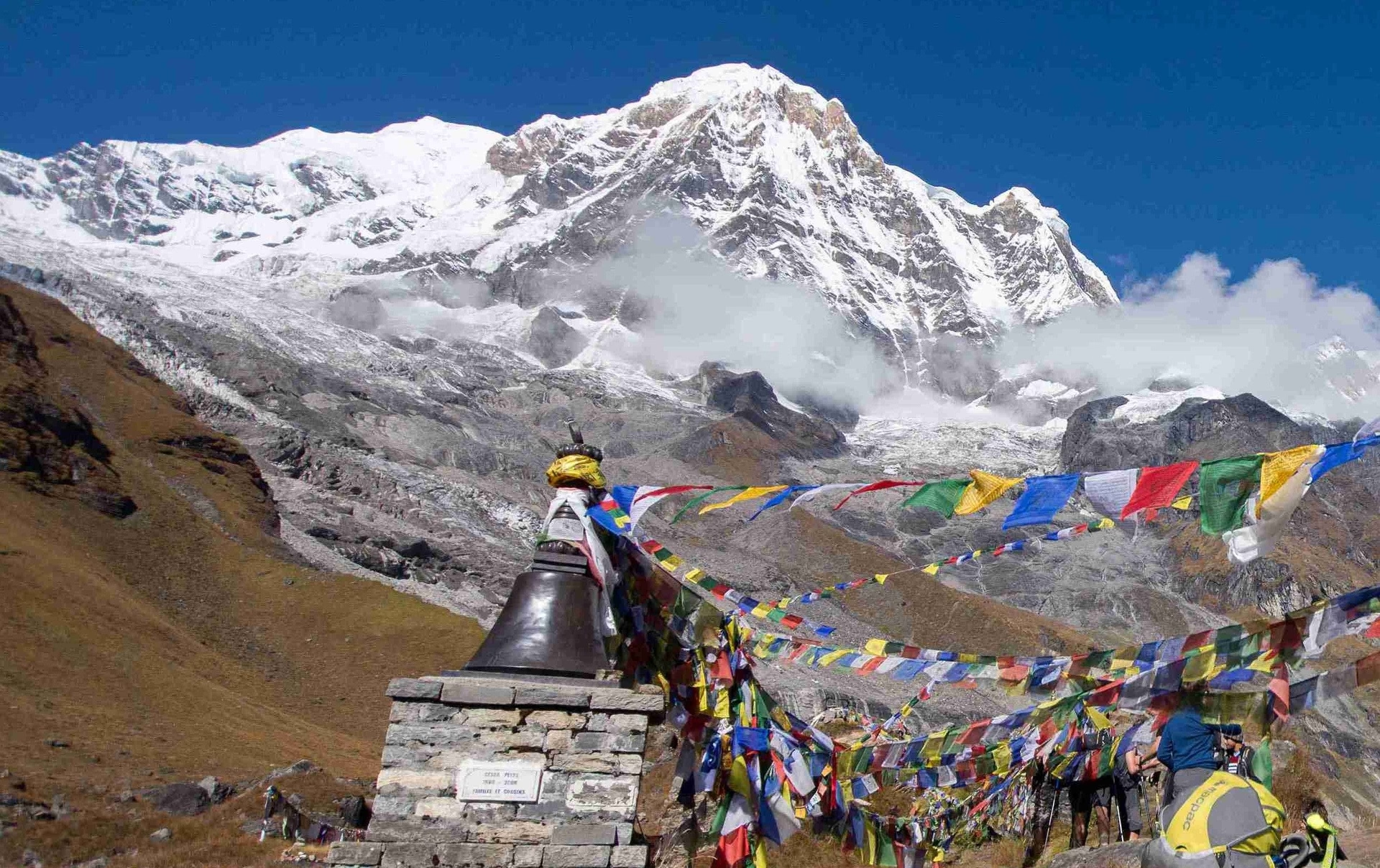
Yes, in the first half of December. Annapurna Base Camp (4,130 m) is completable from December 1 to about December 15 in stable weather, with snow certain above Himalaya village (2,920 m) and avalanche risk between Deurali (3,230 m) and Machhapuchhre Base Camp (3,700 m).
An avalanche is a mass of snow that slides down a slope, and fresh snowfall loads the slopes above this section of trail. Our guides check the previous 48 hours of snowfall before crossing. Snow above 30 cm means the group waits a day or turns back. A trekker who argues with that call creates the real danger.
The route starts at Nayapul, climbs the stone staircase to Chomrong (2,170 m), and follows the Modi Khola gorge to Machhapuchhre Base Camp and the sanctuary. December reverses the usual logic that Annapurna Base Camp is easier because it sits 1,234 m lower than Everest Base Camp: the sanctuary is a ring of peaks that holds cold air, receives sun after about 9:00 a.m., and loses it before 3:00 p.m.
Is the Manaslu Circuit Trek Recommended in December?
The Manaslu Circuit is recommended in December only for experienced trekkers who start in the first 7 to 10 days of the month and carry 3 spare days. Larkya La (5,106 m) closes after heavy snow, and lodges at Samdo (3,860 m) and Dharamsala (4,460 m) run reduced service.
Manaslu is a restricted area, which means the government limits entry through a special permit. The Restricted Area Permit costs US$ 75 for the first 7 days from December to August plus US$ 10 per extra day (compared to US$ 100 plus US$ 15 per extra day from September to November). The Manaslu Conservation Area permit costs NPR 3,000, and the Annapurna Conservation Area permit adds NPR 3,000 for the exit section toward Dharapani. Law requires a licensed guide and at least 2 trekkers.
Most travelers do better elsewhere in December. A closed Larkya La forces a long retreat, so Annapurna Base Camp in early December or Langtang Valley delivers high-mountain scenery with less downside.
Which High-Altitude Trails Are Most Affected by Snow in December?
The 6 high-altitude crossings most affected by December snow are Thorong La, Cho La, Renjo La, Kongma La, Larkya La, and Laurebina La. All 6 are steep, wind-loaded, and unsheltered, so a storm closes each for 2 to 4 days.
The table below lists the 6 passes by altitude, trek, and December status, so trekkers see which itineraries carry closure risk.
Pass | Altitude | Trek | December status |
Kongma La | 5,535 m | Everest Three High Passes | Closed after most storms |
Cho La | 5,420 m | Gokyo-Everest link | Closed after most storms |
Thorong La | 5,416 m | Annapurna Circuit | Crossable early, closes after snow |
Renjo La | 5,360 m | Gokyo Lakes | Closed after most storms |
Larkya La | 5,106 m | Manaslu Circuit | Crossable early, closes after snow |
Laurebina La | 4,610 m | Helambu-Gosaikunda | Closed in most years |
Out-and-back routes carry the lowest closure risk, because a closed trail means a short retreat. Everest Base Camp and Annapurna Base Camp both follow out-and-back valleys. Pass crossings in December need 4 buffer days.
What Are the Advantages and Disadvantages of Hiking in Nepal in December?
December hiking in Nepal offers 5 advantages: clear views, 15.8% fewer arrivals than November, lower package prices, dry roads, and easy lodge booking. It carries 5 disadvantages: freezing nights, short days, snow-blocked passes, reduced lodge service, and flight delays.
Why Is December a Good Month for Mountain Views and Photography in Nepal?
December delivers the clearest mountain views of the year because dry, dust-settled air pushes visibility past 100 km. The low winter sun also creates long side-light on ridgelines from 6:30 a.m. to 9:00 a.m., which gives peaks depth that high summer sun flattens.
Clouds build after 1:00 p.m., so photographers work the morning hours. Alpenglow, the orange light that touches summits after sunset, returns around 5:00 p.m. on clear days. Fresh snow on a foreground ridge adds contrast that autumn images lack.
Cold affects equipment before it affects the photographer. Camera batteries drain fast below 0°C and phones shut down, so keep spares in an inside pocket. A camera moved from a freezing trail into a warm dining room fogs, so seal it in a bag for 20 minutes.
What Challenges Do Cold Temperatures and Snow Create in Nepal?
Cold temperatures and snow create 5 challenges: frozen water, unheated rooms, icy steps, shortened walking days, and higher altitude-illness risk. Each challenge has a direct counter: insulated bottles, a −15°C sleeping bag, microspikes, 7:30 a.m. starts, and a 500 m cap on sleeping-altitude gain.
Frozen pipes mean lodge toilets lose running water above 3,500 m, so hand sanitizer replaces handwashing. Solar showers stop working in December, and gas-heated showers replace them at US$ 3 to US$ 5. Cold also suppresses thirst, and lower intake raises altitude-illness risk, so hot tea and soup at every lodge keep fluids on track.
Are Nepal's Hiking Trails Less Crowded in December?
Yes. According to the Nepal Tourism Board's Tourism Insight report released in January 2026, Nepal received 98,190 international arrivals in December 2025, compared with 116,553 in November and 128,443 in October. That is 15.8% fewer than November and 23.6% fewer than October.
Western markets, which supply most trekkers, fell further. Arrivals from the United States dropped 41% from November (11,254) to December (6,605), and arrivals from the United Kingdom dropped 47% (7,189 to 3,793). Australian arrivals fell 18% (5,393 to 4,419). India supplied 30,093 of the December total, a market centered on Kathmandu, Pokhara, and Chitwan rather than high trails, so the headline figure understates how quiet the mountains become.
Quiet trails carry two trade-offs. Fewer trekkers mean fewer open lodges and no pre-packed snow path, so your group breaks trail after a storm. The Christmas to New Year week also fills Kathmandu and Pokhara hotels between December 20 and January 2, so book those nights 3 to 4 weeks ahead.
What Should You Pack for Hiking in Nepal in December?
Pack 5 clothing layers, a sleeping bag with a −15°C comfort rating, waterproof ankle-high boots, microspikes, UV protection, and a first-aid kit. Keep your personal load under 10 kg, because porters carry a combined 20 kg for 2 trekkers.
Thamel in Kathmandu and Lakeside in Pokhara sell and rent every item below, and down jackets and sleeping bags rent for US$ 1 to US$ 2 per day. Our Equipment Checklist lists every item by trek. Leave cotton at home, because wet cotton pulls heat from the body.
Which Winter Clothing Layers Are Essential for December Hiking?
Five layers are essential for December hiking in Nepal: a merino base layer, an insulating fleece, a down jacket, a waterproof shell, and thermal bottoms. Add a hat, gloves, and a neck gaiter. Layers trap warm air, and you add or remove them as altitude and sun change.
Base layers: 2 merino or synthetic tops and 1 thermal bottom
Mid layers: 1 fleece and 1 lightweight synthetic puffer
Outer layers: 1 down jacket rated to −15°C and 1 waterproof shell with rain trousers
Hands and head: 1 liner glove, 1 insulated mitten, 1 wool beanie, and 1 neck gaiter
Legs and feet: 2 trekking trousers and 4 pairs of merino socks
Two items get overlooked. A dedicated evening layer, such as down booties and a dry sleeping top, keeps hiking clothes from absorbing dining-room damp. Sunglasses with side shields matter too: according to the World Health Organization, fresh snow reflects up to 80% of ultraviolet radiation.
What Footwear and Equipment Help Prevent Slips on Snow and Ice?
Microspikes, waterproof ankle-high boots with stiff midsoles, gaiters, and trekking poles prevent most slips on snow and ice. Microspikes are chain-and-spike traction devices that stretch over a boot, weigh about 400 g, and handle every trail in this guide except the high passes.
Crampons, the heavier steel frames used on glaciers, are not required for Poon Hill, Helambu, Langtang Valley, or the Everest Base Camp valley route. Guides supply technical gear for pass crossings. The most common mistake is putting microspikes on after the first slip. Fit them at the first icy shaded step, and clip them to the outside of the pack so they stay reachable.
Boots need 30 km of break-in before departure, and a half-size larger fits thick socks without cutting circulation. Poles with snow baskets reduce knee load on the 1,000 m descents that end most treks. Ice forms first on shaded stone staircases such as Ulleri and Namche Bazaar, so use short, flat-footed steps.
Do You Need a Sleeping Bag Rated for Subzero Temperatures?
Yes. A sleeping bag with a −15°C comfort rating suits any December trek that sleeps above 3,000 m. A −10°C bag works below 3,000 m on Poon Hill and Helambu. Lodges provide blankets, but blankets do not hold heat in a room at −8°C.
Choose by comfort rating, not by the limit or extreme numbers. Under the ISO 23537 standard, the comfort rating is the temperature at which a standard woman sleeps without waking cold, while the limit rating describes a standard man curled up and enduring the night. A bag sold as "−20°C" often carries a comfort rating of −12°C or higher.
Three additions lift any bag by several degrees: a fleece or silk liner, a hot-water bottle filled with boiling water at 8:00 p.m. and placed near the feet, and dry socks reserved for sleeping.
How Can You Stay Safe While Hiking in Nepal in December?
Stay safe through 5 practices: limit sleeping-altitude gain to 500 m per night above 3,000 m, hire a licensed guide, carry insurance with helicopter evacuation, check weather daily, and set a turn-back rule before each climb. Winter shortens daylight, and shorter daylight shrinks rescue windows.
How Can You Prevent Altitude Sickness During Winter Treks in Nepal?
To prevent altitude sickness on a winter trek, ascend slowly, drink 3 to 4 liters of fluid daily, and rest every 3 to 4 days. According to the Wilderness Medical Society's 2024 clinical practice guidelines, hikers above 3,000 m limit sleeping-altitude gain to 500 m per day.
Acute mountain sickness (AMS) is the mildest form of altitude illness. Symptoms include headache plus nausea, dizziness, fatigue, or poor sleep. Two severe forms follow when AMS is ignored: high-altitude cerebral edema (HACE), which shows as loss of balance and confusion, and high-altitude pulmonary edema (HAPE), which shows as breathlessness at rest and a wet cough. Descent of 300 to 1,000 m is the primary treatment for all 3.
December adds three twists. Cold suppresses thirst, so hot-tea breaks matter. Alcohol and sleeping pills slow breathing at night, and both belong at home. A pulse oximeter gives a trend, not a verdict: readings of 85% to 90% at 4,000 m are common in healthy trekkers, and a falling trend over 2 days matters more than one number. Acetazolamide, a prescription drug for prevention, requires a doctor's consultation before the trip. A "climb high, sleep low" day hike, such as Namche to the Everest View Hotel and back, protects acclimatization best.
What Should You Know About Snowstorms, Icy Trails, and Hypothermia?
Hypothermia begins when core body temperature falls below 35°C (95°F), according to Mayo Clinic. Prevent it by staying dry, eating every 2 to 3 hours, and changing wet layers within 15 minutes. Set storm and ice turn-back thresholds before the walk begins.
Early hypothermia shows as shivering, then clumsiness, slurred speech, and irritability. Guides call these the "umbles": stumbles, mumbles, fumbles, and grumbles. Treatment starts with shelter, dry insulation, and warm sweet drinks, and the patient moves gently. Frostbite, which is freezing of skin and tissue, starts in fingers, toes, nose, and ears. Never rub frostbitten skin, and rewarm only when no risk of refreezing remains.
Snowstorms demand three decisions. In whiteout, groups stop and wait, because trail edges disappear. On avalanche-prone slopes, the guide checks the prior 48 hours of snowfall, and the group crosses one person at a time with 50 m of spacing. On icy stone steps, trekkers use microspikes and poles.
Rescue helicopters need daylight and visibility, and in December the useful window runs about 9:00 a.m. to 3:00 p.m. A storm delays evacuation by 24 to 48 hours, so policies must cover helicopter evacuation up to 6,000 m. Insurance for a short trek costs US$ 50 to US$ 80, a fraction of one helicopter bill.
Should You Hire a Guide or Porter for December Hiking in Nepal?
Yes. Hire a licensed guide for every December trek, and a porter for any trek longer than 4 nights. A guide costs US$ 30 to US$ 40 per day and a porter US$ 20 to US$ 25 per day. Winter adds snow decisions that a licensed guide makes in real time.
Nepal's tourism authorities announced a licensed-guide requirement for foreign trekkers in April 2023, but the Everest region (Khumbu Pasang Lhamu Rural Municipality) operates under its own jurisdiction and still permits independent, unguided trekkers as of 2026. Annapurna and Langtang checkpoints apply rules unevenly, so confirm the current rule with the Nepal Tourism Board before travel. Restricted areas such as Manaslu require a licensed guide and at least 2 trekkers by law.
A guide in December tracks avalanche reports, confirms which lodges are open, reads altitude symptoms, and arranges evacuation. A porter carries up to 10 kg per trekker, and the saved energy improves acclimatization. Choose an operator that follows International Porter Protection Group standards: porters receive insurance, a warm sleeping bag, and proper clothing.
A group of 3 to 6 friends cuts per-person cost by 25% to 40% through a shared package.
How Much Does Hiking in Nepal Cost in December?
Hiking in Nepal in December costs US$ 415 to US$ 1,500 per person for a guided 5 to 16-day package. Add US$ 50 to US$ 80 for insurance and US$ 100 to US$ 250 for tips. Winter lowers hotel and package prices but not teahouse menu prices.
Prices below use an exchange rate of about NPR 133 per US$ 1 and reflect 2026 published rates. Fees change by notice, and Nepal's tourism offices publish the current schedule.
What Are the Typical Costs of Permits, Accommodation, and Meals During Treks in Nepal?
Permits cost NPR 3,000 to NPR 6,390 per person on most December trails, teahouse rooms cost US$ 2 to US$ 10, and a dal bhat meal costs US$ 4 to US$ 11. Dal bhat is Nepal's standard meal of rice, lentil soup, and vegetables, with free refills.
The table below lists permit fees by trek region, with Nepali rupee (NPR) and US dollar equivalents, so trekkers budget before arrival.
Region (trek) | Permits required | Cost per foreign trekker |
Annapurna (Poon Hill, Mardi Himal, ABC) | ACAP permit and TIMS card | NPR 3,000 (US$ 22) plus TIMS |
Everest (Base Camp, Everest View) | Sagarmatha National Park and Khumbu Pasang Lhamu card | NPR 6,390 (US$ 48) |
Langtang (Langtang Valley) | Langtang National Park and TIMS card | NPR 3,390 (US$ 25) plus TIMS |
Manaslu (Circuit) | Restricted Area Permit, MCAP, ACAP | US$ 75 plus US$ 10 per extra day, plus NPR 6,000 |
The Everest fee combines NPR 3,390 (NPR 3,000 plus 13% VAT) for Sagarmatha National Park and NPR 3,000 for the local card. TIMS stands for Trekkers' Information Management System, and the card costs a flat NPR 2,000 for standard foreign trekkers outside the Everest region.
On-trail prices rise with altitude, because every kilogram arrives on a porter's back or a mule's.
Item | Below 3,000 m | Above 3,500 m |
Teahouse room | US$ 2–5 | US$ 5–10 |
Dal bhat | US$ 4–6 (NPR 530–800) | US$ 7–11 (NPR 930–1,460) |
Hot shower | US$ 3 | US$ 4–5 |
Device charging | US$ 2 | US$ 3–5 |
Wi-Fi | US$ 3 | US$ 4–5 |
Room prices tie to meals: the lodge expects dinner and breakfast under its roof. Carry Nepali rupees in small notes, because ATMs stop above Namche Bazaar and Chomrong.
How Much Should You Budget for a Guided Winter Trek in Nepal?
Budget US$ 350 to US$ 600 for a guided Poon Hill trek and US$ 1,300 to US$ 1,900 for Everest Base Camp. A guided package covers permits, a licensed guide, a porter, lodging, meals, and ground transfers. Flights, insurance, tips, and gear sit on top.
Trek | Days | Guided package range |
Ghorepani Poon Hill | 4–6 | US$ 350–600 |
Mardi Himal | 6–8 | US$ 500–800 |
Annapurna Base Camp | 9–12 | US$ 650–900 |
Langtang Valley | 8–11 | US$ 650–950 |
Manaslu Circuit | 14–16 | US$ 1,100–1,600 |
Everest Base Camp | 12–16 | US$ 1,300–1,900, plus Lukla flights |
A full budget adds 5 extras to the package: insurance (US$ 50–80), tips, gear rental, extra hotel nights, and international flights. Tip pools run US$ 10 to US$ 15 per guide-day and US$ 7 to US$ 10 per porter-day. An illustrative 8-day Mardi Himal budget totals about US$ 935: US$ 710 package, US$ 65 insurance, US$ 100 tips, and US$ 60 for extra city nights and snacks.
How Can You Plan a Successful Hiking Trip in Nepal in December With Nepal Intrepid Treks?
Plan with Nepal Intrepid Treks. Nepal Intrepid Treks plans December hikes in 4 steps: choose altitude by experience, lock dates inside December 1 to 20, add 2 spare days, and arrange permits and insurance before arrival. Our Kathmandu team builds each itinerary from your dates, fitness, and cold-weather experience, not from a template.
Nepal Intrepid Treks and Expedition is a Kathmandu-based operator with more than 10 years of Himalayan trekking experience, affiliated with the Nepal Tourism Board and the Trekking Agencies' Association of Nepal. The company holds a 5.0 rating across 159 Tripadvisor reviews, and founder Lal Gurung, who began as a porter, has 20 years of mountain experience. Our office sits at Nayabazar-16, Kathmandu.
Our December planning covers four areas:
Itinerary design: altitude profiles that keep sleeping-altitude gain under 500 m per day above 3,000 m
Permits: ACAP, Sagarmatha, Langtang, and TIMS arranged before arrival
Safety: licensed guides, daily weather checks, oximeter readings, and a written turn-back rule
Logistics: Lukla flight rebooking buffers, jeep transfers, and gear rental in Kathmandu
A trekker with a fixed return flight and 8 free days receives a 6-day Poon Hill or Mardi Himal plan with 2 buffer days. A trekker with 16 free days and prior high-altitude experience receives an Everest Base Camp plan that reaches Kala Patthar before December 15.
Which December Hiking Packages Does Nepal Intrepid Treks Offer?
December packages from Nepal Intrepid Treks. Five packages fit December: Poon Hill, Mardi Himal, Langtang Valley, Annapurna Base Camp (early-December departures), and Everest Base Camp (departures before December 12). Prices start from the figures below and vary by group size and season.
Package | Duration | Starting price |
5 days, 4 nights | US$ 415 | |
8 days, 7 nights | US$ 710 | |
11 days, 10 nights | US$ 880 | |
12 days, 11 nights | US$ 765 | |
16 days, 15 nights | US$ 1,485 |
The Manaslu Circuit Trek stays off our December shortlist because of Larkya La closure risk. Helambu and Everest View itineraries build as custom treks on request.
Next step. Send your travel dates, fitness level, and cold-weather experience through the Nepal Intrepid Treks contact page or WhatsApp +977 9849009919. We reply with a day-by-day itinerary, a permit list, and a price for the trek that fits your month.
What Are the Key Takeaways for Planning a December Hiking Adventure in Nepal?
Hiking in Nepal in December rewards trekkers who respect the cold and plan around daylight, altitude, and dates. Skies are dry, mountains are clear, and trails are quiet. Early December behaves like late November, and late December behaves like January.
Choose a trail by maximum sleeping altitude: below 4,000 m for first winter trips, above 5,000 m for experienced trekkers only
Schedule high points before December 15, and finish passes before the first week ends
Add 2 spare days to every itinerary, because fog cancels flights and snow closes passes
Plan walking days around 6.5 to 7 hours of usable light, with arrival at the lodge by 3:30 p.m.
Pack 5 layers, a −15°C comfort-rated sleeping bag, microspikes, and UV-rated sunglasses
Hire a licensed guide, and carry insurance with helicopter evacuation up to 6,000 m
Budget US$ 415 to US$ 1,500 for a guided package, NPR 3,000 to NPR 6,390 for permits, and extra for tips and insurance
Book Kathmandu and Pokhara hotels 3 to 4 weeks ahead for December 20 to January 2
For festivals, cities, and wildlife parks beyond the trails, read Nepal in December 2026: Weather, Treks & Costs. Hiking in Nepal in December gives the clearest views of the Himalaya at the lowest crowd levels of the main season, and the right trail, matched to the right dates, delivers all of it safely.