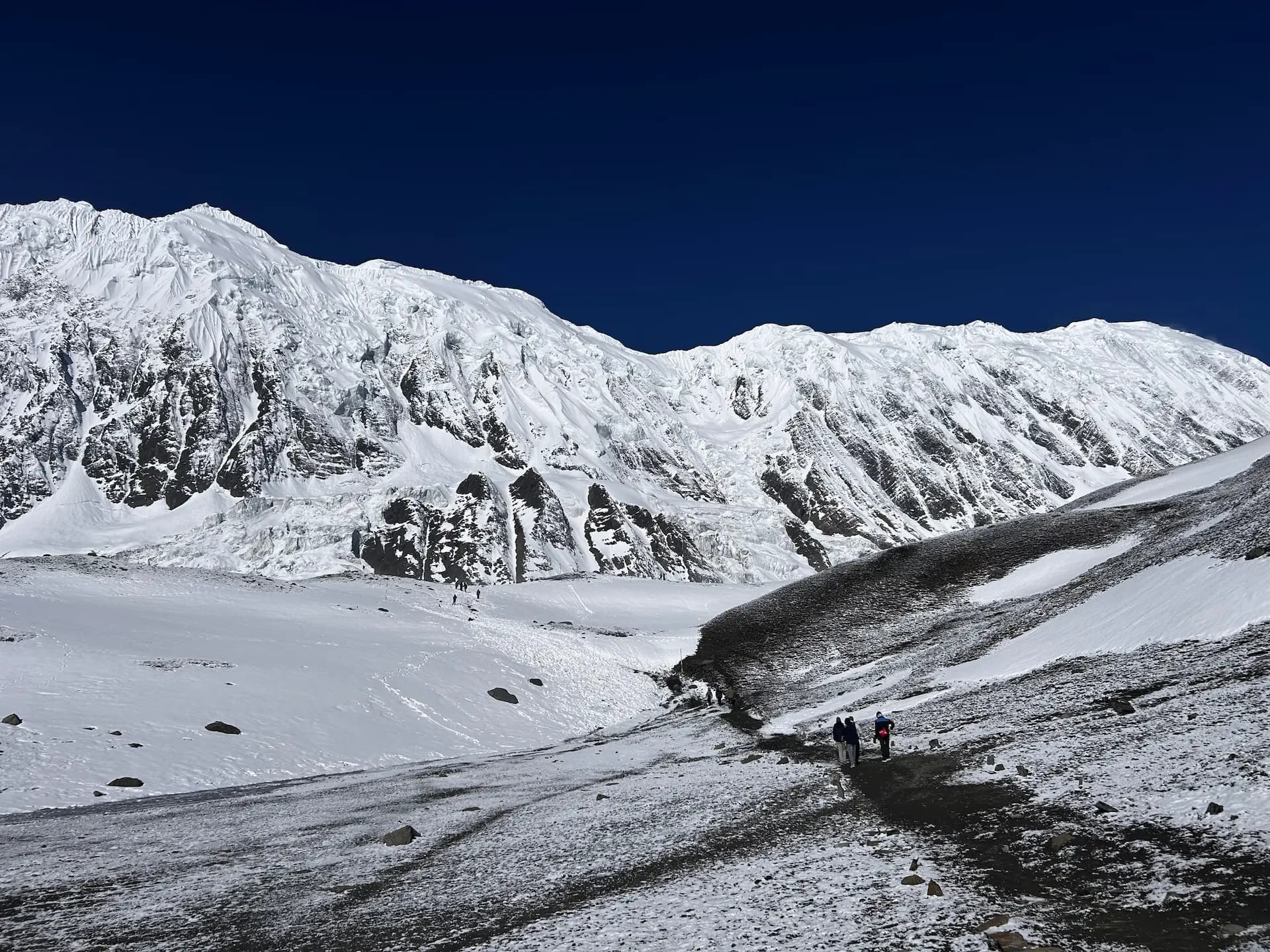
Choosing the best trekking company for the Langtang Valley Trek means finding a reliable Nepal trekking agency with experienced local guides, valid permits, transparent pricing, and proven safety procedures. The Langtang Valley Trek passes through Langtang National Park, traditional Tamang villages, and high-altitude landscapes, reaching Kyanjin Gompa at 3,830 m. Road access, changing mountain weather, altitude sickness, and limited emergency evacuation options make local expertise and responsible trek management essential.
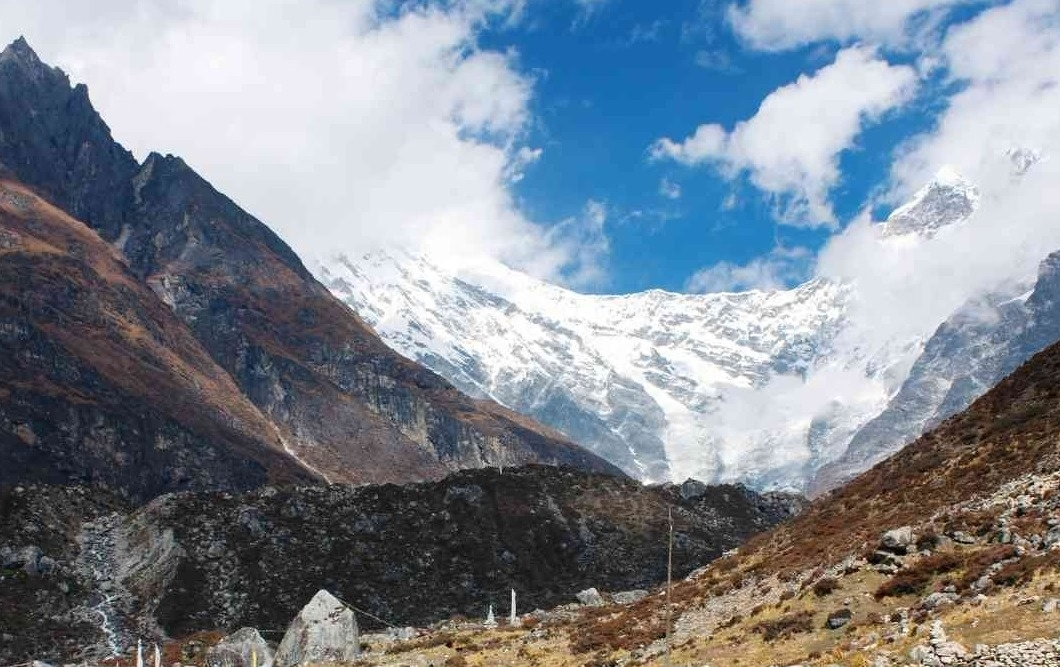
Before booking, compare Langtang trekking companies based on government registration, guide qualifications, recent independent reviews, porter welfare, package inclusions, and written emergency evacuation arrangements. Understanding trekking costs, hidden fees, insurance requirements, accommodation, and permit arrangements will help you evaluate operators beyond their advertised prices and choose a trustworthy company for a safer, well-organised Himalayan trekking experience.
Why Should You Choose a Reputable Trekking Company for the Langtang Valley Trek?
A reputable trekking company turns the Langtang Valley Trek into a managed operation with licensed guides, valid permits, insured staff, pre-booked lodges, and a tested evacuation chain. A trekking company (also called a trekking agency) is a business licensed by Nepal's Department of Tourism to organise treks, supply guides and porters, and file trekker permits.
Reputation is the visible record of that operation. A company with a decade of Langtang departures has already solved the recurring problems: landslide-blocked roads, full lodges at Kyanjin Gompa, and clients who struggle above 3,400 m. A new or unlicensed operator solves those problems for the first time on your trek.
What Makes the Langtang Valley Trek Different from Other Treks in Nepal?
The Langtang Valley Trek differs from Everest and Annapurna treks in 4 ways: road access from Kathmandu, a 3,830 m overnight high point at Kyanjin Gompa, a Tamang cultural setting, and a lodge network rebuilt after the 2015 earthquake. Each difference changes what a good company must do.
The Langtang Valley Trek is a Himalayan route inside Langtang National Park, Rasuwa district, Bagmati Province. Nepal established the park in 1976 as its first Himalayan national park, and it covers 1,710 km². Most Everest Base Camp itineraries begin with a flight to Lukla, where weather cancellations are routine. Langtang begins with a 5–6 hour drive and carries no airstrip risk.
The same road-only access creates the main safety question. From Kyanjin Gompa, the nearest road lies 2 walking days away: 19.5 km to Lama Hotel and 11.3 km on to Syabrubesi on a standard 11-day schedule. An emergency above Langtang Village therefore relies on a helicopter or a long carry. On 25 April 2015, the Gorkha earthquake buried Langtang Village under a glacier avalanche, so lodges above Lama Hotel are largely rebuilt and limited in number. A company without local relationships struggles to secure rooms there in October.
What Risks Can a Professional Trekking Company Help You Avoid?
A professional trekking company helps you avoid 7 risks: altitude illness, permit errors, road disruption, unlicensed guides, overloaded porters, evacuation fraud, and lodge shortages. Each risk has a specific control that you can verify before booking.
Altitude illness: Daily oximeter readings, paced sleeping altitudes, and a guide trained to turn the group around.
Permit errors: Correct Langtang National Park and TIMS paperwork filed before the first checkpoint at Syabrubesi.
Road disruption: A buffer day and a backup vehicle when monsoon landslides close the Syabrubesi road.
Unlicensed guides: A guide whose government license number matches the company's staff records.
Overloaded porters: A weighed load limit of 30 kg per porter, the maximum set by the International Porter Protection Group (IPPG) for Nepal.
Evacuation fraud: A written rule that no helicopter flies without your informed consent and your insurer's authorisation.
Lodge shortages: Pre-booked rooms at Langtang Village and Kyanjin Gompa, the two stops with the fewest beds.
How Can a Trekking Company Improve Your Langtang Valley Trek Experience?
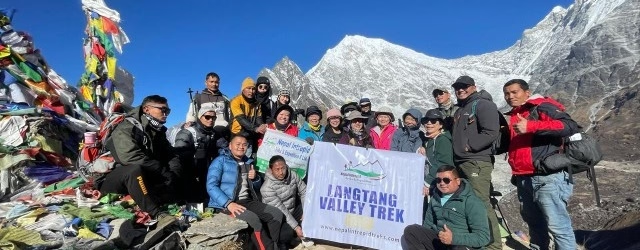
A strong trekking company improves the Langtang experience through 4 mechanisms: realistic pacing, local interpretation, lodge pre-booking, and trail-day flexibility. These mechanisms decide whether an 11-day trek feels rushed or restorative.
Pacing comes first. The standard schedule includes 6 walking days of 3–7 hours each, and the 3-hour Day 6 walk into Kyanjin Gompa doubles as an acclimatisation buffer. Interpretation follows. A Langtang-trained guide explains why trekkers pass mani walls on the left, which Tamang household runs which lodge, and how yak cheese from Kyanjin's cheese factory reaches the lodges below.
Flexibility is what most people overlook. A guide with authority to move the Tserko Ri start from 5:00 a.m. to 4:00 a.m. beats cloud that builds by late morning. A guide without that authority follows a printed itinerary into a grey summit. Ask who holds the decision: the guide on the trail or the office in Kathmandu.
What Should You Look for in a Langtang Valley Trekking Company?
Look for 6 qualities in a Langtang Valley trekking company: government registration, Langtang-specific experience, licensed guides, written safety protocols, transparent pricing, and responsive pre-trip communication. The next 4 sections test the first 4 qualities with documents and direct questions.
Should You Choose a Government-Registered Trekking Company in Nepal?
Yes. A government-registered trekking company holds a Department of Tourism license, a company registration, and PAN/VAT registration, and only registered agencies file TIMS cards, assign licensed guides, and carry legal responsibility for rescue arrangements. An unregistered operator offers none of those protections.
The Department of Tourism issues the trekking license under the Travel and Trekking Agency Rules. Industry estimates count more than 3,000 registered trekking agencies in Nepal, so registration alone does not signal quality. Registration is the minimum, not the verdict.
The law now places liability on the agency. According to a March 2026 Department of Immigration notice on restricted areas, the facilitating agency is fully responsible for emergency rescue and logistics, and one licensed guide may lead at most 7 trekkers. Langtang is not a restricted area, and reports on guide requirements for non-restricted trails have varied since the Nepal Tourism Board's April 2023 announcement. Confirm the current rule with your agency and the Nepal Tourism Board before travel. Booking through a licensed agency satisfies every version of the rule.
How Can You Verify a Trekking Agency's Licenses and Certifications?
To verify a trekking agency, request 5 documents and check each at its source: the Department of Tourism license number, the company registration certificate, the PAN/VAT certificate, the TAAN membership number, and the guide's license card. Logos on a website prove nothing; certificate numbers prove registration.
The Trekking Agencies' Association of Nepal (TAAN) is the industry body that lists member agencies. The following table shows what each document proves and how to check it.
Document | Issued by | What it proves | How to check |
Tourism license | Department of Tourism | Legal right to operate treks | Ask for the number; confirm it matches the company name |
Company registration | Office of the Company Registrar | The business exists as a legal entity | Compare the registered name with the invoice name |
PAN/VAT certificate | Inland Revenue Department | The company pays tax and issues valid invoices | Confirm the PAN appears on your quote |
TAAN membership | Trekking Agencies' Association of Nepal | Industry membership and permit access | Search the member list on TAAN's official site |
Guide license card | Government of Nepal | The guide passed the national guide exam | Ask for a photo of the card before departure |
The table covers the paperwork. Four extra steps close the gaps. Call the company's landline, not only its WhatsApp. Confirm that the payment account carries the company's registered name. Ask whether the agency holds Nepal Rastra Bank authorisation to receive foreign currency. Request the guide's name 14 days before departure so you can verify the license card.
A common mistake we see is trusting a polished website from a company that rents a desk in Thamel. Ask for the office address and visit it when you arrive in Kathmandu.
Why Do Local Knowledge and Langtang Trekking Experience Matter?
Local knowledge matters because Langtang has specific decisions that general Himalayan experience does not cover: the Day 5 altitude jump, afternoon cloud, limited rooms above Langtang Village, and an evacuation route that starts at one helipad. A company that guides Everest and Annapurna but rarely Langtang learns those decisions on your trek.
Test local knowledge with 4 questions. Where does the guide stop on Day 5 when a client walks slowly? Which lodge hosts the group at Kyanjin Gompa, and who owns it? How long does the walk from Kyanjin Gompa to the Syabrubesi road take? What time does cloud usually cover Tserko Ri in the target month? A Langtang guide answers each in one sentence. A generalist answers with the brochure.
How Can You Evaluate a Trekking Company's Safety Standards?
Evaluate safety standards by requesting evidence of 5 practices: daily oximeter checks, written turnaround authority for the guide, insured staff, a documented evacuation chain, and wilderness first-aid training. Evidence means a document, a photo, or a named procedure, not a reassurance.
Ask for the safety protocol as a one-page PDF. A real protocol names the oximeter threshold that triggers a rest day, lists the guide's first-aid certificate, and states who in Kathmandu authorises a helicopter. Compare 2 companies by the same questions. The company that answers in writing within 48 hours has a protocol. The company that answers "don't worry, we are experienced" does not.
The later section on safety and emergency services covers the on-trail details.
How Can You Compare Langtang Valley Trek Packages and Prices?
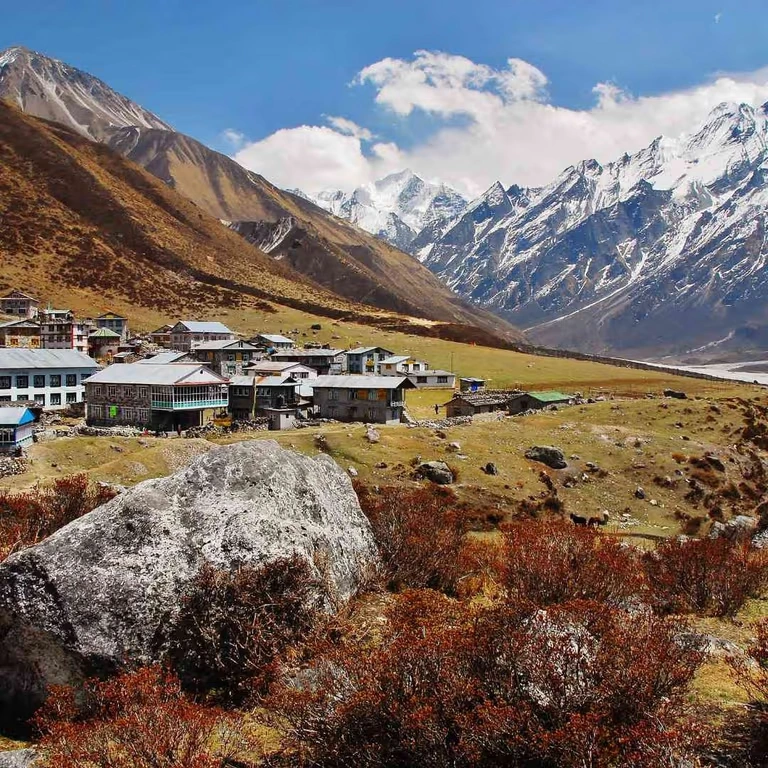
Compare Langtang packages on a like-for-like basis: the same number of days, the same group size, the same inclusions, and the same guide-to-trekker ratio. In 2026, published prices span US$590 to US$1,500, so a price alone tells you little.
Build a 6-column grid before comparing: total days, walking days, nights above 3,000 m, group size, porter ratio, and exclusions. A standard 11-day schedule has 6 walking days and 3 nights above 3,000 m (Langtang Village, then 2 nights at Kyanjin Gompa). A 9-day package that cuts the Kyanjin rest night saves money by cutting acclimatisation.
What Is the Average Cost of the Langtang Valley Trek?
The Langtang Valley Trek costs about US$650–850 independently, US$590–1,190 on group departures, and US$1,100–1,500 for premium private packages in 2026. The spread reflects group size, hotel grade, and service level.
The following table defines the 3 trekking styles and what each price covers.
Trekking style | 2026 price per person | What the price covers |
Pay-as-you-go (agency-arranged guide & permits) | US$650–850 for 10 days | Agency fees for TIMS and licensed guide, plus your out-of-pocket costs for local bus, teahouses, and meals |
Group departure | US$590–1,190 | Transfers, Kathmandu hotel, guide, porter share, trek meals, permits |
Premium private package | US$1,100–1,500 | Private vehicle, upgraded hotels, dedicated guide and porters |
Independent and premium ranges come from a 2026 cost guide by Nepal Hiking Team. The group range merges the US$590–880 scale published by one Kathmandu operator and the US$685–1,190 listings from other 2026 packages. A guide earns US$25–35 per day, which means US$250–350 for a 10-day trek before any other cost.
The table shows that group size drives price more than service quality does. A 15-person group costs less per head than a 2-person group on the same route with the same company.
What Should Be Included in a Langtang Valley Trek Package?
A complete Langtang package includes 9 items: private airport and trailhead transfers, Kathmandu hotel nights, a licensed guide, porters, teahouse lodging, 3 daily meals on trek, all permits, staff insurance, and a first aid kit. Missing items reappear later as extra charges.
The following table compares the standard to expect against the red flag for each item.
Item | Standard to expect | Red flag |
Transfers | Private vehicle, Kathmandu–Syabrubesi–Kathmandu (122 km each way, 5–6 hours) | "Transport included" with no vehicle type |
Kathmandu hotel | 3 nights, 3-star, breakfast | Hotel name withheld |
Guide | Licensed, English-speaking, wages and insurance paid | No license number |
Porters | 1 porter per 2 trekkers, insured | Porter's pay depends on tips |
Lodging | Twin-share teahouse rooms | Dormitory beds not disclosed |
Meals | Breakfast, lunch, dinner with tea or coffee | "Full board" with no meal count |
Permits | Langtang National Park permit and TIMS card | "Permits at your cost" with no price |
Medical | First aid kit and oximeter | Kit "available on request" |
Gear | Sleeping bag and down jacket on loan | Rental fees revealed in Kathmandu |
Are Budget Trekking Packages Worth the Savings?
Budget packages are worth the savings only when the price still covers the cost floor of a licensed guide, permits, transport, lodging, and insured staff; below that floor, the operator recovers money somewhere else. The floor tests the price, not the brand.
A guide costs US$250–350 for 10 days and permits cost about US$35, which makes US$285–385 before a vehicle, a porter share, teahouse meals, Kathmandu hotels, insurance, and the office margin. A package priced under that sum cannot be paying everyone.
Cuts show up in 5 places: unlicensed or underpaid guides, uninsured porters, oversized groups, undisclosed shopping or hotel commissions, and evacuation kickbacks. Travel writers covering the 2026 rescue case argue that unusually cheap operators on aggregator sites depended on insurance payouts to stay profitable. Treat that claim as analysis, not proof, and apply the cost floor yourself.
One exception deserves mention. Low prices from scale are legitimate. A 15–20 person group at US$590 per head on a licensed operator's published scale reflects shared vehicles and guides. Compare prices at the same group size, and a low number at a small group size becomes the warning sign.
What Hidden Costs of Langtang Valley Trek Should You Check Before Booking?
Check 9 hidden costs before booking: travel insurance, the Nepal visa, Kathmandu lunches and dinners, hot showers, Wi-Fi, device charging, bottled drinks, tips, and rescue or road-closure expenses. Each is small alone and material together.
Travel insurance: Excluded from most packages; the policy must cover trekking to 5,000 m and helicopter evacuation.
Nepal visa: Starts at US$30 for 15 days; confirm the current fee with the Department of Immigration.
Kathmandu meals: Lunch and dinner on the 3 hotel nights usually cost extra.
Hot showers: US$2–3 per use at teahouses.
Wi-Fi: US$2–3 per day where available.
Device charging: US$1–2 per charge.
Drinks and snacks: Bottled water, soft drinks, and chocolate cost more with every 300 m of elevation.
Tips: Guide, porter, and driver tips are separate; ask the company for its recommended range.
Rescue and disruption costs: Helicopter rescue is commonly quoted at US$3,000–10,000 or more, and landslide, road-closure, or flight-cancellation costs usually sit outside the package.
How Do Private and Group Langtang Valley Trek Packages Compare?
Group packages cost less per person and add companionship, while private packages cost more and give control over pace, itinerary, and acclimatisation days. One Kathmandu operator's published scale runs from US$880 per person for 2–4 trekkers to US$590 for 15–20 trekkers.
The following table compares the two formats on 6 criteria.
Criterion | Group departure | Private trek |
Price per person | Lower; falls as the group grows | Higher; fixed by a small headcount |
Pace | Set by the slowest walker | Set by you and the guide |
Itinerary | Fixed dates and stops | Adjustable, including an extra Kyanjin night |
Companions | Strangers with mixed fitness | People you chose |
Guide attention | Shared across the group | Concentrated on you |
Flexibility on weather | Limited by the group's schedule | High |
Three traveller profiles show the trade-off. A first-time trekker benefits from a private date or a group of 4–6 because the guide spots early altitude symptoms. A couple or family gains a private pace and a tailored rest schedule. A solo traveller on a budget joins a group and asks who else is booked before paying.
Next step: Before requesting quotes, write down your 4 fixed variables: dates, group size, budget ceiling, and comfort level above 3,000 m. Every company then quotes against the same brief, and the comparison grid fills itself.
How Can You Check Trekking Company Reviews and Reputation?
Check a trekking company's reputation by reading reviews on 3 independent platforms, filtering for the last 12 months, and confirming each key claim with a past client. Reviews on the company's own website carry the least weight.
Reputation work takes about 2 hours and removes most bad bookings. The four sections below cover where to look, what to distrust, why dates matter, and what to ask.
Where Can You Find Reliable Reviews of Trekking Companies in Nepal?
Reliable reviews appear on 4 types of platforms: TripAdvisor, Google Maps, Trustpilot, and trekking forums such as the Nepal community on Reddit. Independent platforms verify accounts, keep negative reviews visible, and let the company reply publicly.
TripAdvisor: Lists trekking operators with traveller photos, trip dates, and owner responses.
Google Maps: Shows reviews tied to a physical Kathmandu office, which confirms the business exists.
Trustpilot: Flags invited reviews and displays unresolved complaints.
Trekking forums: Surface unfiltered experience, including complaints that companies prefer to bury.
Cross-check at least 2 platforms. A company rated 5.0 on its own site and 3.8 on Google Maps tells you which number to trust. Tourism bodies such as TAAN and the Nepal Tourism Board handle formal complaints, and a company that has faced no recorded complaints in 10 years deserves a question about how it resolves disputes.
How Can You Identify Fake Trekking Reviews and Misleading Testimonials?
Spot fake reviews through 6 signals: review bursts, generic wording, missing trek details, one-review accounts, stock photography, and testimonials hosted only on the company's own site. Real reviews contain verifiable specifics.
Burst timing: 10 reviews posted in 3 days, then silence for months.
Generic praise: "Great team, amazing trek" with no guide name or lodge name.
Missing Langtang detail: No mention of Lama Hotel, Kyanjin Gompa, Tserko Ri, or the Syabrubesi drive.
Thin profiles: Reviewers with 1 review and no photo.
Stock images: Photos that appear on other websites in a reverse image search.
Closed testimonials: Quotes with first names only and no link to a platform profile.
A genuine review reads like a diary. It names the guide, the weather on Day 7, the price paid, and a minor problem the company fixed. Minor problems solved well are the strongest trust signal in the review set.
Why Should You Check Recent Langtang Valley Trek Reviews?
Check recent reviews because guides rotate, rules change, and trail conditions shift each season; reviews older than 12 months describe a different operation. The 2026 rescue investigation and revised permit rules make older praise less relevant than it looks.
Filter to the last 12 months and read at least 10 reviews that mention Langtang specifically. Count how many name the same guide, because repeated names signal a stable team. Look for reviews from the same month as your planned departure. A November review describes trail and lodge conditions that an April review cannot. Landslide damage to the Syabrubesi road, lodge closures, and price changes also appear first in recent reviews.
What Questions Should You Ask Previous Trekking Clients?
Ask previous clients 8 questions about the guide, the invoice, the porters, the safety checks, and the surprises. Request 3 references from the last 6 months; a confident company supplies them within a day.
Did the final invoice match the written quote?
Did the guide check your oxygen saturation every day?
Did the lodges match the ones promised?
Did the porters wear proper clothing and boots?
Did the guide change the plan because of weather or health?
Did anyone pressure you into tipping or extra purchases?
Did the company answer messages during the trek?
Would you book the same company again, and for which group size?
The answers to questions 2 and 5 reveal the safety culture. A company whose clients say "the guide turned us around at Langtang Village for one night" runs a safer trek than a company whose clients say "we always hit the schedule."
How Important Are Trekking Guides and Porters for the Langtang Valley Trek?
Guides and porters matter more than any other variable because the guide monitors altitude, leads decisions, and interprets the valley, while porters carry the loads that make a 6-walking-day trek possible. A trekking company is only as good as its field staff.
A trekking guide is a government-licensed professional who leads the group, handles first aid, and decides on pace and turnaround. A porter carries luggage and needs no license, but works under welfare standards set by the International Porter Protection Group (IPPG). The standard ratio on Nepal Intrepid Treks' Langtang package is 1 porter per 2 trekkers, and a standard group of 4 therefore walks with 1 guide and 2 porters.
What Qualifications Should a Langtang Valley Trekking Guide Have?
A Langtang Valley trekking guide holds 5 qualifications: a government trekking guide license, wilderness first-aid training, altitude-illness training, Langtang route experience, and working English or the client's language. The license is mandatory; the other four separate good guides from adequate ones.
The Government of Nepal issues the trekking guide license after a training course at the Nepal Academy of Tourism and Hotel Management and a written and practical exam. Ask for the license number and a photo of the card. Ask for the date of the guide's last first-aid certificate. Ask how many Langtang treks the guide led in the past 2 years: 10 or more indicates local fluency, and fewer than 3 indicates an Everest or Annapurna guide on loan.
How Can You Evaluate a Guide's Local Experience and Communication Skills?
Evaluate a guide with a 15-minute video call before booking, using 1 scenario question, 1 route question, and 1 communication check. The call costs nothing and tells you more than any brochure.
Ask the scenario question: "A client reaches Langtang Village at 3,430 m with a headache and nausea. What do you do?" A strong answer stops ascent, rests the client, increases fluids, rechecks symptoms and oxygen saturation, and descends if symptoms worsen or balance fails. A weak answer offers a pill and continues the schedule.
Ask the route question: "Where do we sleep on Day 5 and what is the altitude?" A Langtang guide answers with lodge, altitude, and walking hours. Run the communication check by noting whether the guide explains in plain words, asks about your health history, and admits what he does not know. Clear communication on a video call predicts clear communication at 4,000 m in cloud.
What Ethical Standards Should a Trekking Company Follow for Porters?
An ethical trekking company follows 6 porter standards: a load limit of 30 kg, insurance, seasonal clothing, food and shelter, medical care, and fair pay. The IPPG sets these standards and defines 30 kg as the maximum load in Nepal.
Limit loads: Cap each porter at 30 kg, which means 15 kg per trekker when 1 porter carries for 2 clients.
Insure porters: Provide accident and medical insurance for the full trek.
Equip porters: Supply boots, a jacket, and gloves suited to altitude and season.
Feed and house porters: Pay for meals and a bed instead of deducting them from wages.
Treat illness: Give porters the same medical attention a trekker receives.
Pay fairly: Set wages at or above the rates agreed with TAAN and Nepal's labour union.
Ask the company 3 questions: Who insures the porters? Who pays for their lodging? How are loads weighed? Pack your duffel at 10–12 kg when the company supplies a sleeping bag and down jacket, so the pair of bags stays under the limit.
What Safety and Emergency Services Should a Langtang Trekking Company Provide?
A Langtang trekking company provides 5 safety services: a written evacuation plan, insurance coordination, first aid with altitude monitoring, weather and trail decision protocols, and 24-hour communication with its Kathmandu office. Each service has a verifiable form.
The earlier safety question screened the company before booking. This section covers the services that operate on the trail, where a 30 km walk separates Kyanjin Gompa from the road.
Does the Company Have an Emergency Evacuation Plan?
A sound evacuation plan names 4 elements: the trigger criteria, the decision chain, the payment route, and the descent-first rule. Ask for it in writing, one page, before paying the deposit.
Trigger criteria: Severe altitude illness signs such as confusion, inability to walk a straight line, breathlessness at rest, or injury that stops walking.
Decision chain: Guide, then Kathmandu office, then your insurer's assistance line, then the helicopter operator.
Payment route: Insurer direct billing, or you pay and claim afterwards.
Descent-first rule: Descent is the definitive treatment for altitude illness, and a helicopter is the tool when the patient cannot walk.
The 2026 fraud case makes one more element essential: consent. According to the charge sheet seen by AFP in April 2026, investigators allege that some guides made travellers sick, including with baking soda in food, to justify helicopter evacuations, and that trekkers were pressured into airlifts for minor illness. These are allegations before the court. The protective rule is simple: no helicopter takes off without your informed consent, a documented symptom record, and your insurer's authorisation, except where life is at immediate risk. Ask the company to confirm this rule in writing.
Nepal's tourism ministry announced a "zero-tolerance" policy in April 2026 and a task force of police, tourism board, and aviation officials to audit operators and verify that guides and agencies hold licenses. Regulation is catching up, and your questions complete the check.
How Does Travel Insurance Affect Emergency Rescue Arrangements?
Travel insurance determines who pays for a helicopter, so the policy must cover trekking up to at least 5,000 m, emergency evacuation, medical treatment, and repatriation. Tserko Ri reaches 4,984 m, and a policy capped at 4,000 m leaves the summit day uninsured.
Insurance guides commonly quote helicopter rescue at US$3,000–10,000 or more. Four insurance details decide whether a claim succeeds:
Altitude cap: Confirm the policy covers 5,000 m or higher.
Pre-authorisation: Many insurers require a call to their assistance line before dispatch, and a flight arranged without that call risks a denied claim.
Documentation: Keep the guide's symptom notes, oximeter readings, and hospital invoices.
Active coverage for Nepal: The insurer Traveller Assist warned the Ministry of Tourism in early 2026 that it would stop issuing Nepal policies unless fake rescues ended, so verify that your insurer still covers the country.
Send the policy number and the 24-hour assistance line to the company 7 days before departure. Print a copy and give it to the guide. A helicopter rescue subscription is not travel insurance: it covers the flight only, not hospital treatment in Kathmandu.
What First Aid and Altitude Sickness Prevention Measures Should Be Provided?
A Langtang company provides 4 prevention measures: a stocked first aid kit, a daily pulse oximeter routine, an ascent profile that respects altitude guidelines, and a briefing on symptoms. These measures cost the company little and protect you most.
The Wilderness Medical Society's guidelines advise that above 3,000 m, trekkers increase sleeping elevation by no more than 500 m per night and add a rest day every 3–4 days. A standard Langtang profile sleeps at Syabrubesi (1,450 m), Lama Hotel (2,480 m), Langtang Village (3,430 m), and Kyanjin Gompa (3,830 m). The Day 5 climb to Langtang Village adds 950 m and crosses the 3,000 m line, so the pace on that day matters. Ask how the guide manages it: a slow start, extra fluids, an oximeter check on arrival, and a short Day 6 walk of 3 hours. The Kyanjin Ri hike (4,773 m) on the rest day follows the "climb high, sleep low" pattern.
Altitude illness has 3 forms that your guide must recognise. Acute mountain sickness brings headache, nausea, and fatigue. High-altitude cerebral edema brings confusion and loss of balance. High-altitude pulmonary edema brings breathlessness at rest and a persistent cough. Cerebral or pulmonary edema demands immediate descent. Ask your doctor about acetazolamide before departure, and drink 3–4 litres of water per day on the trail.
How Should a Trekking Company Handle Weather Changes and Trail Disruptions?
A trekking company handles weather and trail disruptions with 3 tools: a buffer day in the schedule, a guide empowered to change the day, and a stated plan for road closures. Without those tools, a landslide becomes your cost.
Seasons set the risk. Autumn (September–November) and spring (March–May) offer the clearest trekking weather, winter (December–February) brings cold and snow above Langtang Village, and monsoon (June–August) brings rain, slippery trails, and landslide risk on the Syabrubesi road. Package terms commonly place road-blockage and landslide costs outside the price, so ask what the company pays and what it passes on.
Ask 3 direct questions. Does the itinerary include a spare day? Who decides to hold, turn back, or reroute? What happens to unused nights if the group loses a day? A company that answers with a specific policy has run through disruptions. A company that answers "it never happens" has not.
What Permits and Logistics Should a Langtang Valley Trekking Company Arrange?
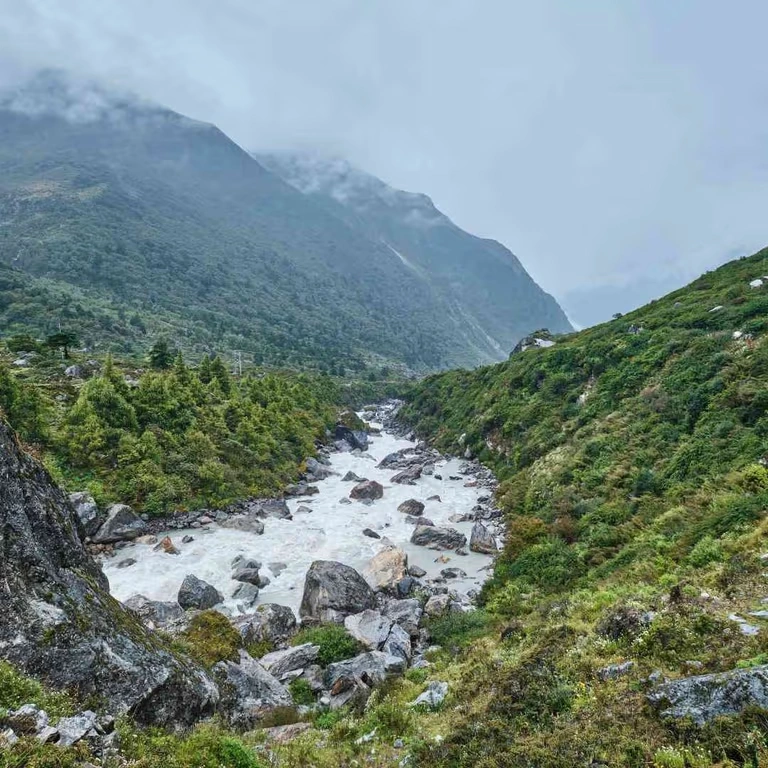
A Langtang Valley trekking company arranges 4 logistics: permits, Syabrubesi transport, lodging, and meals. Each logistic appears on your invoice as a line item or an inclusion, never as a surprise.
The agency files permits before you reach the first checkpoint, books a vehicle for the 122 km drive, reserves lodges at the pinch points, and confirms meal arrangements with teahouse owners. The three sections below show what to verify for each.
Which Permits Are Required for the Langtang Valley Trek?
The Langtang Valley Trek requires 2 permits: the Langtang National Park entry permit at NPR 3,000 (about US$21–25) and the TIMS card at NPR 2,000 when booked through an agency. Your agency arranges both.
The following table summarises the 2026 permit costs and issuing points.
Permit | 2026 cost | Where issued | Notes |
Langtang National Park entry | NPR 3,000 for non-SAARC nationals; NPR 1,500 for SAARC nationals; children under 10 exempt | Nepal Tourism Board, Kathmandu, or the park gate at Dhunche or Syabrubesi | One fee per entry, regardless of days |
TIMS card | NPR 2,000 for all foreign trekkers | Through a registered trekking agency only | Lists your route, agency, and emergency contact |
One 2026 fee guide lists NPR 3,390 for the park permit once 13% VAT is added, which brings the combined permit cost to NPR 5,390 (about US$40) when including the NPR 2,000 TIMS card. Checkpoints operate at the park entrance near Syabrubesi and along the route at Bamboo, Langtang Village, and Kyanjin Gompa, so carry copies. Ask the company for the TIMS number and the permit receipts before departure.
Should Your Trekking Company Arrange Transportation to Syabrubesi?
Yes. Your trekking company arranges transportation to Syabrubesi because the 122 km drive takes 5–6 hours by private vehicle, up to 9 hours by public bus, and depends on a road that landslides close in monsoon. A private vehicle protects both schedule and nerves.
Confirm 4 details: vehicle type (a 4WD jeep or a van), departure time (6:00–7:00 a.m. clears the afternoon traffic through Trishuli and Dhunche), the backup plan for a breakdown, and the return transfer on Day 10. Ask whether the driver is the company's employee or a hired contractor, because a company that owns its transport controls its timing. A buffer day between the return drive and your international flight protects the connection when a landslide delays the road.
How Can You Check Accommodation, Meals, and Daily Trekking Arrangements?
Check accommodation, meals, and daily arrangements by requesting the lodge list, the room type, the meal plan, and a day-by-day schedule with walking hours. Teahouses are locally run guesthouses with twin-share rooms, shared dining halls, and gas or solar hot showers.
Three questions expose the quality of arrangements. Which lodges host the group at Lama Hotel, Langtang Village, and Kyanjin Gompa? Does the price include a private room, and what does a single room cost? Who chooses the meals, and does the guide check kitchen hygiene? Dal bhat (rice, lentil soup, and vegetable curry with refills) is the staple, and menus shrink above Langtang Village as supplies cost more. Boiled or purified water is available at a charge.
What Questions Should You Ask Before Booking a Langtang Valley Trek?
Ask 3 groups of questions before booking: itinerary and walking hours, cancellation and refund terms, and the exact contents of your contract. Written answers become the standard the company is held to.
Send all questions in one email and wait 48 hours. Speed, specificity, and tone of the reply are data. A company that replies fast with numbers is organised. A company that replies with discounts and urgency is selling.
What Should You Ask About the Langtang Valley Trekking Itinerary and Daily Walking Hours?
Ask for a day-by-day itinerary with distance, walking hours, start and end altitude, and overnight lodge for each of the 11 days. Walking hours reveal the real difficulty.
The standard 11-day schedule lists these walking days: Syabrubesi to Lama Hotel at 11.3 km and 6 hours; Lama Hotel to Langtang Village at 13 km and 6–7 hours; Langtang Village to Kyanjin Gompa at 6.5 km and 3 hours; the Tserko Ri round trip at 15 km and 6–7 hours; the descent to Lama Hotel at 19.5 km and 6–7 hours; and Lama Hotel to Syabrubesi at 11.3 km and 5–6 hours.
Ask 5 follow-ups. Do the stated hours include breaks? Is Tserko Ri optional? What is the plan for a slower walker? Does the itinerary hold a buffer day? What is the sleeping altitude on each night? A schedule with the same daily distance on every day suggests a template; a schedule with specific hours and altitudes suggests a route the company has walked.
What Is the Company's Cancellation, Refund, and Booking Policy?
A clear policy states 6 terms: the deposit, the refund schedule by days before departure, date-change rules, company-cancellation refunds, force majeure handling, and accepted payment methods. Get all 6 in writing.
Refunds shrink as departure approaches because the agency pre-pays permits, vehicles, and lodges. Ask for the refund percentage at 60, 30, and 14 days out. Ask what the company returns when it cancels for low numbers or unsafe conditions. Ask what happens to your money when a landslide blocks the road, since package terms commonly place those costs on the client. Pay by bank transfer or card to the company's registered business account and refuse personal accounts.
How Can You Confirm What Is Included in Your Langtang Valley Trekking Contract?
Confirm contract contents by checking 8 clauses: the itinerary, vehicles, hotel names, meal plan, staff ratios, equipment supplied, permits, and the rescue arrangement. The signed document, not the website, defines what you bought.
Itinerary: Dates, overnight stops, and altitudes.
Vehicles: Type and ownership for each transfer.
Hotels: Names and room types for Kathmandu and the trek.
Meals: Counts per day and what is excluded.
Staff: Guide license number, porter ratio, and insurance.
Equipment: Sleeping bag, down jacket, and duffel provided.
Permits: Names and costs, with 13% VAT stated.
Rescue: Insurer contact, consent rule, and who pays first.
Compare the contract to the website text line by line. Differences are negotiable before payment and expensive after. Confirm that taxes and service charges appear in the quoted total, since an itemised USD price with taxes included prevents surprises at the final invoice.
How Can Nepal Intrepid Treks Help You Choose the Right Langtang Valley Trek?
Nepal Intrepid Treks helps you choose by publishing its itinerary, group prices, inclusions, exclusions, and traveller reviews so that you can run every check in this guide against its own page. The company is a Kathmandu-based operator with an office in Nayabazar-16 and more than 12 years of operating experience, according to its website.
Its published group scale runs US$880 per person for 2–4 trekkers, US$790 for 5–8, US$690 for 9–14, and US$590 for 15–20. The package includes private ground transport, 3 hotel nights in Kathmandu with breakfast, a guide, porters at 1 per 2 trekkers, teahouse lodging, trek meals, permits, a first aid kit, a sleeping bag, and a down jacket. It excludes the visa, international flights, travel insurance, Kathmandu lunches and dinners, drinks, tips, and costs from rescue, landslides, or road blockages. Those exclusions match the hidden-cost list above, so you can plan the full budget before booking.
Why Should You Consider Nepal Intrepid Treks for Your Langtang Valley Adventure?
Consider Nepal Intrepid Treks if you want a licensed Kathmandu operator with a published itinerary, a transparent price scale, a Langtang-specific program, and a review record you can verify on independent platforms. Verification still belongs to you.
The company's website reports 159 TripAdvisor reviews with a 5.0 rating and lists associations with the Government of Nepal, Nepal Tourism Board, KEEP, the Nepal Mountaineering Association, and TAAN. Treat each as a claim to test using the verification table: ask for license numbers, call the landline, and read recent TripAdvisor reviews that mention the Langtang trek. A day-1 briefing in Kathmandu, with the guide present, gives you a final chance to ask the safety and evacuation questions in person before leaving for Syabrubesi.
What Should You Remember When Choosing the Best Langtang Valley Trekking Company?
Remember 5 checks when choosing the best trekking company for the Langtang Valley Trek: verified licenses, a licensed Langtang guide, a written evacuation plan with a consent rule, an itemised price above the cost floor, and recent independent reviews. A company that passes all 5 earns your deposit.
Verify licenses: Department of Tourism license, company registration, PAN/VAT, TAAN membership, and the guide's license card.
Meet the guide: Run a 15-minute video call and ask the Langtang Village headache scenario.
Demand the plan: Request the evacuation protocol, the consent rule, and the insurance coordination steps in writing.
Price the floor: Compare quotes at the same group size and reject any price below the guide, permit, transport, and insurance floor.
Read recent reviews: Use the last 12 months, 3 platforms, and 3 client references.
Four numbers anchor the decision: 122 km of road to Syabrubesi, 30.8 km of trail from Kyanjin Gompa to that road, 3,830 m at the valley's highest overnight stop, and US$590–1,500 as the 2026 price range. The distance makes your trekking company the safety system. The 2026 rescue cases make verification a necessity, not a courtesy. A Langtang Valley trek booked with a verified company delivers what the valley promises: glacier views, Tamang hospitality, and a safe route back to Kathmandu.