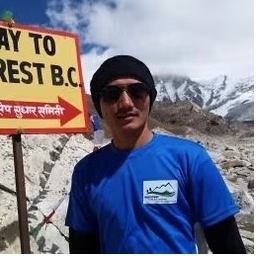
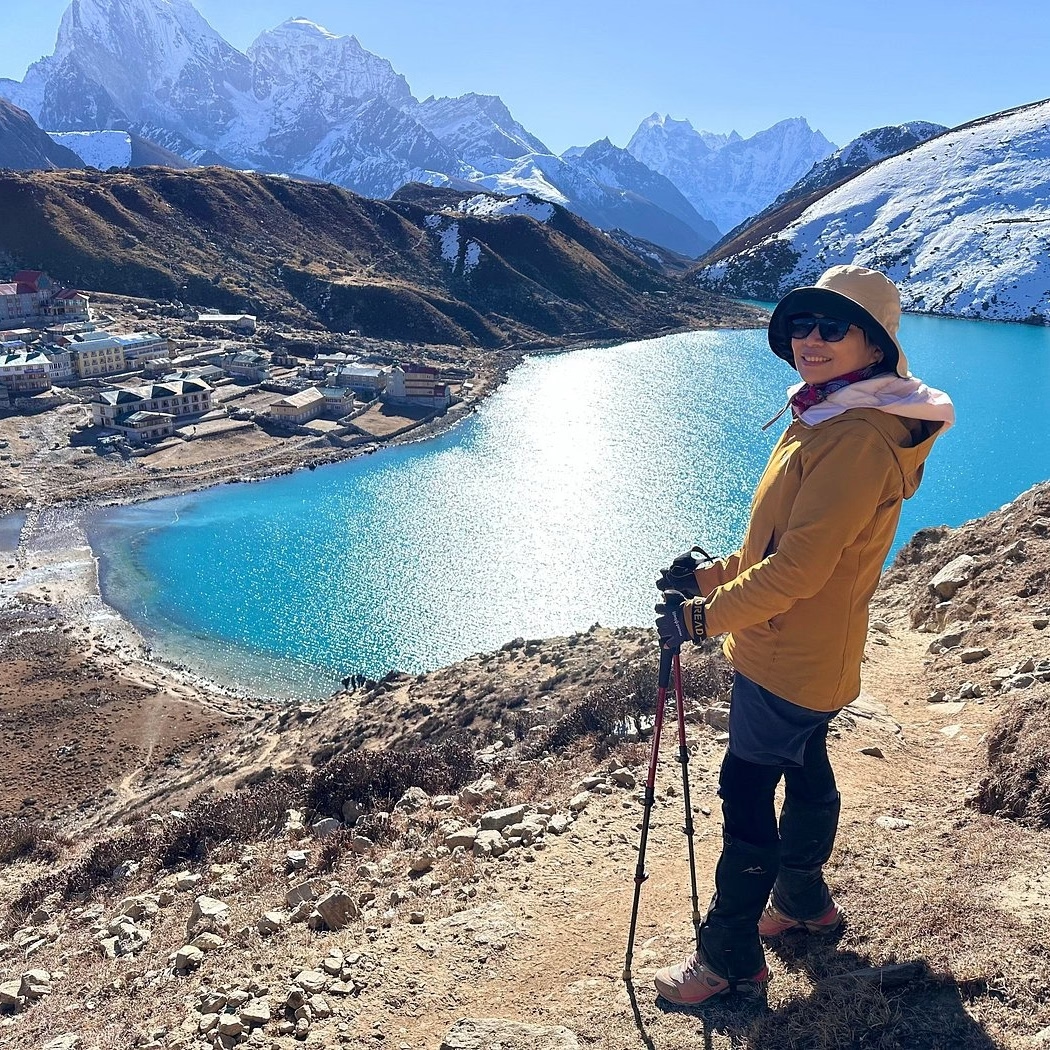
Winter trekking in Nepal is a seasonal Himalayan adventure that combines spectacular mountain panoramas, peaceful trails and authentic mountain culture with the challenges of cold temperatures, snowfall and high-altitude conditions. From the Everest and Annapurna regions to Langtang Valley, Nepal offers diverse winter trekking routes, including Everest Base Camp, Annapurna Base Camp, Ghorepani Poon Hill and Mardi Himal. The best route depends on elevation, weather conditions, trekking experience and the time of winter, as December, January and February each bring different opportunities and challenges.
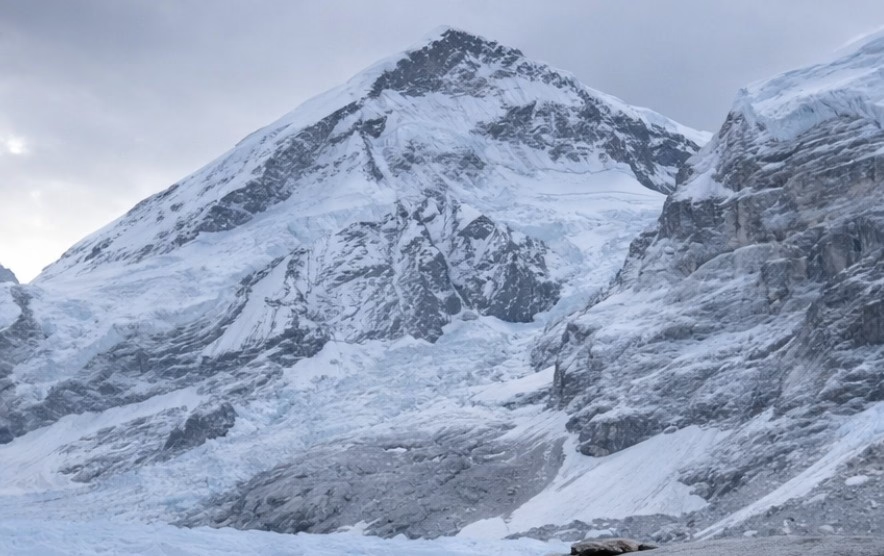
A successful winter trek in Nepal requires careful route selection, proper acclimatization and preparation for temperatures that can fall below -20°C at higher elevations. Suitable winter clothing, insulated sleeping bags, reliable trekking equipment and guidance from experienced, licensed guides help trekkers manage snow-covered trails, altitude sickness and extreme mountain weather. Whether you are looking for a short Himalayan getaway or a challenging high-altitude adventure, understanding trekking routes, seasonal conditions, safety requirements and package costs will help you plan a rewarding winter journey in Nepal.
Why Is Winter Trekking in Nepal Worth Experiencing?
Winter trekking in Nepal is worth it because the dry season delivers the clearest mountain views of the year, the emptiest trails and the lowest prices. The trade-off is cold. Trekkers who accept freezing nights get a version of the Himalaya that autumn visitors never see.
What Makes Nepal a Unique Winter Trekking Destination?
Nepal is a unique winter destination because 8 of the world's 14 peaks above 8,000 m stand here, and the dry season keeps them visible for weeks at a time. According to Nepal's Department of Hydrology and Meteorology, the monsoon from June to September delivers about 80% of annual rainfall. By December the atmosphere is dry and clean.
Nepal also sits at roughly 28°N, the latitude of Florida. The winter sun climbs high enough to warm south-facing trails to 10°C or more by midday, even at 3,500 m. The cold arrives when the sun drops behind the ridgelines.
The teahouse network completes the picture. A teahouse is a family-run mountain lodge with twin rooms, a shared dining hall and hot meals. Teahouses on the Everest, Annapurna and Langtang routes keep operating through winter, so trekkers carry no tents and no food.
What Are the Benefits of Trekking in Nepal During Winter?
The 5 main benefits are clear mountain views, quiet trails, lower prices, local festivals and dry, leech-free paths. Each one changes the trip in a practical way.
Clear mountain views: Morning visibility on Annapurna and Khumbu routes stays sharp for days between weather fronts.
Quiet trails: Lodges have rooms free without advance booking, and guides spend more time on each trekker.
Lower prices: Operators discount packages by 5% to 15%, and lodges drop room rates.
Local festivals: Gurung villages around Ghandruk and Ghorepani celebrate Tamu Lhosar on December 30. Tamang communities in Langtang celebrate Sonam Lhosar in late January or February.
Dry, leech-free paths: Monsoon mud and leeches vanish below 2,500 m.
One benefit competitors rarely mention is the cultural pace. Villagers spend winter at home, so conversations in kitchens last longer than in the harvest or trekking rush.
What Are the Challenges of Winter Trekking in Nepal?
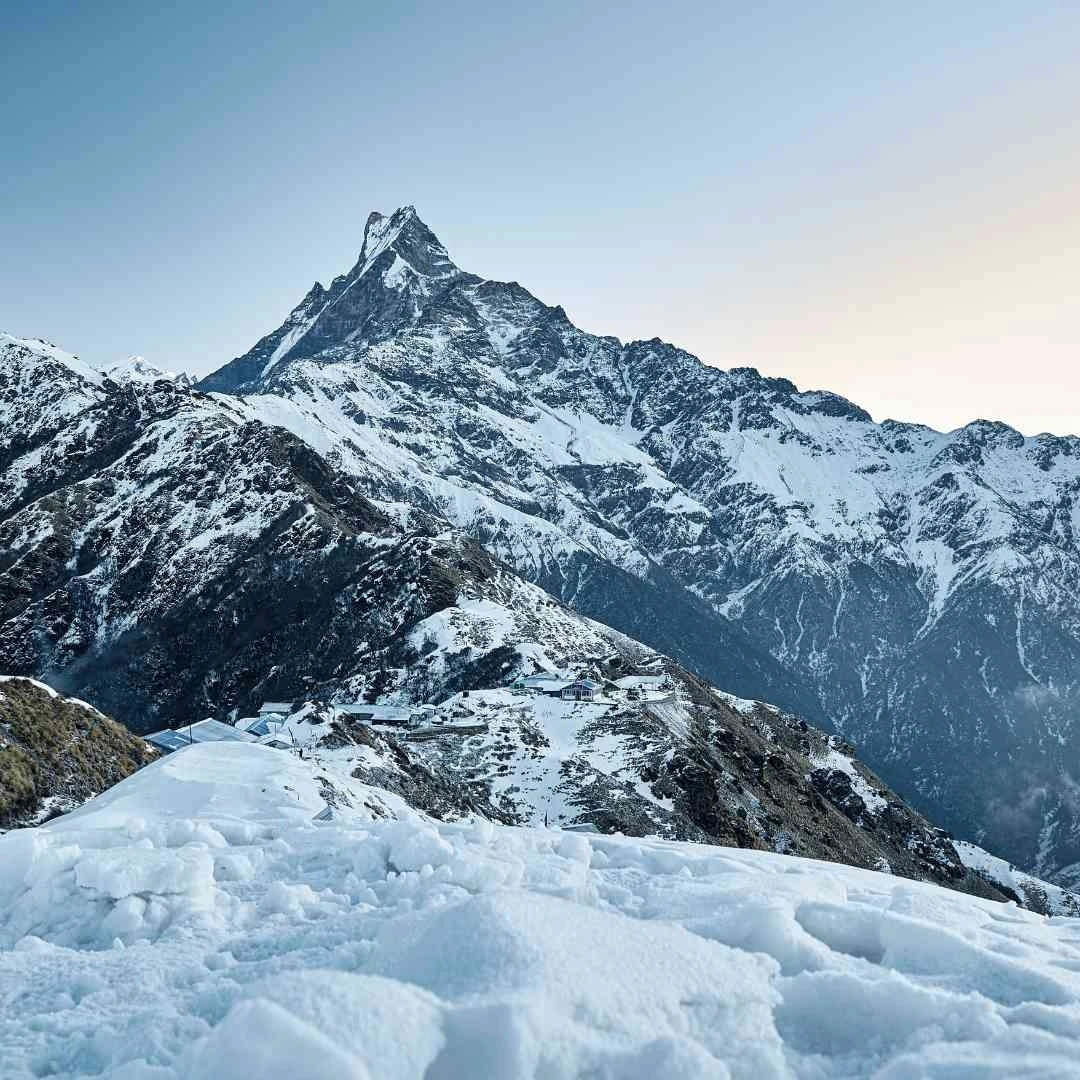
The 6 main challenges are freezing nights, short daylight, snow and ice, partial lodge closures, flight disruption and closed high passes. Each one has a manageable answer.
Nights above 3,500 m drop below -10°C, and bedrooms have no heating. Daylight lasts about 10.5 hours in late December, so walking days end by 15:30. Shaded stone steps hold black ice until noon. Lodges above 4,500 m on the Everest route and on the Khopra ridge reduce services or close. Lukla flights run less often and cancel more often in cold fog. Passes such as Thorong La, Cho La and Renjo La close after fresh snow.
Trekkers who plan around these six facts rarely have a bad winter trip. Trekkers who copy an October itinerary into January often do.
When Is the Best Time for Winter Trekking in Nepal?
The best time for winter trekking in Nepal is early December and mid-February, when temperatures are milder, skies are stable and snow depth is manageable. January is the coldest and quietest month.
Which Months Are Considered Winter in Nepal?
December, January and February are the winter months in Nepal. The Department of Hydrology and Meteorology groups them as the winter season, and dry conditions continue into early March at high elevations.
The following table defines each winter month by trekking character, daylight and the elevation range where trekking is comfortable.
Month | Character | Daylight (Kathmandu) | Comfortable trekking ceiling |
December | Stable skies, first cold nights, Lukla flights reliable | About 10.5 to 10.8 hours | 5,000 m with winter gear |
January | Coldest month, deepest snow risk | About 10.6 to 11.2 hours | 4,000 m |
February | Warming days, rising snow-melt, clearest peaks | About 11.2 to 11.8 hours | 4,500 m |
December suits first-time winter trekkers, January suits experienced ones and February suits anyone who wants clear views with a gentler cold. Daylight grows by about 1 hour between the winter solstice and the end of February.
What Are the Weather and Temperature Conditions During Winter?
Winter in the Nepal Himalaya is dry, cold and sunny, with temperatures falling about 6.5°C for every 1,000 m of elevation gained. Days are warm in direct sun. Nights are severe.
The following table lists typical January temperatures along the Everest Base Camp route, the coldest major teahouse route.
Location | Elevation | Day range | Night range |
Lukla | 2,860 m | -3°C to 9°C | -5°C to -10°C |
Namche Bazaar | 3,440 m | -6°C to 7°C | -10°C to -12°C |
Dingboche | 4,410 m | -15°C to 2°C | -15°C to -20°C |
Gorak Shep | 5,164 m | -14°C to -2°C | -20°C to -28°C |
Annapurna routes start lower, so lodges at the same stage of the trek feel milder. Poon Hill (3,210 m) sees nights of -5°C to -10°C, and Annapurna Base Camp sees -15°C to -20°C. Wind adds more. A 40 km/h wind turns -10°C into a wind chill near -20°C on exposed ridges such as Kala Patthar and Khopra.
Western disturbances drive winter weather. A western disturbance is a low-pressure system that travels east from the Mediterranean and drops snow on the Himalaya. Several pass over Nepal each winter, each lasting 1 to 2 days and followed by 5 to 10 clear days.
How Much Snowfall Can Trekkers Expect in Winter?
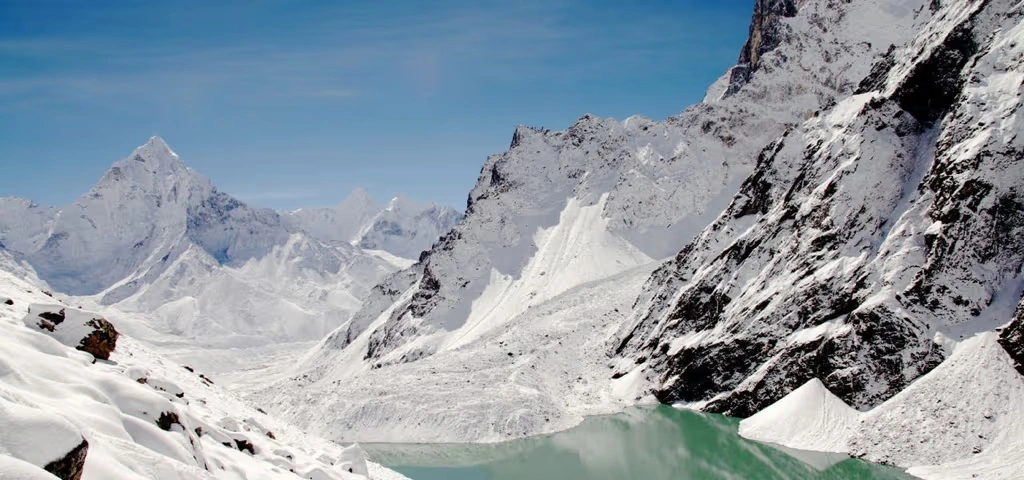
Snowfall in winter depends on elevation and year: trails below 2,500 m stay almost snow-free, trails at 3,000 m to 4,000 m see short storms, and trails above 4,000 m hold snow in shade for weeks. Winters are dry compared with spring, so snow arrives in storms rather than as constant cover.
Annual variation is large. According to the International Centre for Integrated Mountain Development (ICIMOD), snow persistence across the Hindu Kush Himalaya between November 2024 and March 2025 ran 23.6% below normal, the lowest in 23 years, and snowfall began late in January. A dry winter produces icy, dusty trails and frozen water pipes. A wet winter produces deep snow and closed passes. Trekkers cannot predict which one arrives.
A typical storm leaves 10 cm to 30 cm at 3,000 m to 3,500 m, and midday sun clears south-facing slopes within 1 to 3 days. Above 4,000 m, storms leave 20 cm to 60 cm, and drifts persist near Lobuche and Gorak Shep. Build in 2 buffer days for storm delays on every winter itinerary.
Are December, January, and February Suitable for Trekking?
All 3 winter months are suitable for trekking on the right route: December for high routes, January for low and mid-elevation routes, and February for nearly everything below 5,000 m.
December carries the best balance. Autumn crowds fade, flights hold, and the cold has not yet peaked. Trekkers can reach Everest Base Camp and Kala Patthar in early December with a good sleeping bag.
January delivers the deepest freeze. Everest Base Camp is possible, but nights at Lobuche and Gorak Shep reach -25°C, and several lodges close. We steer most January trekkers toward Poon Hill, Mardi Himal, Langtang Valley or the Everest View Trek.
February brings longer days and a gradual thaw. Annapurna Base Camp in February offers some of the clearest sunrises of the year, though the avalanche corridor near Deurali stays active until March.
A common mistake is choosing by calendar alone. Elevation matters more than month. A 3,200 m trek in January is gentler than a 5,000 m trek in December.
What Are the Best Winter Trekking Routes in Nepal?
The 7 best winter trekking routes in Nepal are the Everest View Trek, Everest Base Camp, Annapurna Base Camp, Ghorepani Poon Hill, Mardi Himal, Langtang Valley and Khopra Danda. They split into 3 groups by elevation. Low routes below 3,900 m suit every trekker. Mid routes between 4,000 m and 4,500 m suit fit trekkers with a guide. High routes above 5,000 m suit experienced trekkers in December and February only.
The following table compares the 7 routes by duration, highest point and winter rating.
Route | Typical duration | Highest point | Winter rating |
Ghorepani Poon Hill | 4 to 5 days | 3,210 m | Excellent |
Everest View Trek | 5 to 7 days | 3,880 m | Excellent |
Mardi Himal | 6 to 8 days | 4,500 m | Good, snow-dependent |
Langtang Valley | 8 to 10 days | 3,870 m (Kyanjin Gompa) | Good |
Annapurna Base Camp | 10 to 12 days | 4,130 m | Moderate, avalanche watch |
Everest Base Camp | 12 to 14 days | 5,364 m | Demanding, December or February |
Khopra Danda | 7 to 9 days | 3,660 m | Demanding, experienced only |
Low routes carry no winter penalty beyond cold. High routes carry real risk, which the sections below spell out.
Is the Everest View Trek Suitable for Winter?
The Everest View Trek is the best winter route in the Khumbu because its highest point is 3,880 m, so altitude risk stays low and daytime views of Everest, Lhotse and Ama Dablam are at their clearest. It follows the Lukla to Namche Bazaar trail, adds the Khumjung and Khunde villages and ends at the Everest View Hotel, one of the highest hotels in the world.
Namche Bazaar nights reach -10°C, which sounds severe. Compared with Gorak Shep, it is mild. The route needs an acclimatization day in Namche and nothing more. Lodges stay open through January.
For trekkers who want Everest scenery on a 5 to 7 day schedule, this route beats the base camp trek on cost, risk and comfort.
Can You Do the Everest Base Camp Trek in Winter?
Yes, the Everest Base Camp trek is possible in winter, and December and February are the practical months. The route reaches Everest Base Camp at 5,364 m and Kala Patthar at 5,545 m, and nights at Gorak Shep fall to -20°C or lower.
Winter changes 4 things on this route. Lukla flights depart from Kathmandu rather than Manthali during the low season, and a one-way foreign-passenger fare is about US$238 in 2026. Trails above Dingboche carry snow and ice. Dining halls are the only heated rooms, and stoves burn from about 17:00 to 20:00. Some lodges at Lobuche and Gorak Shep close in January.
One fact most guides skip: Everest Base Camp is empty in winter. Expedition tents appear in April and May. In December you reach a rocky glacier moraine with prayer flags and a sign. Kala Patthar at sunrise delivers the real payoff. Everest Base Camp Trek in Winter 2026/27: Weather & Costs covers daily temperatures and itineraries.
Is the Annapurna Base Camp Trek Possible During Winter?
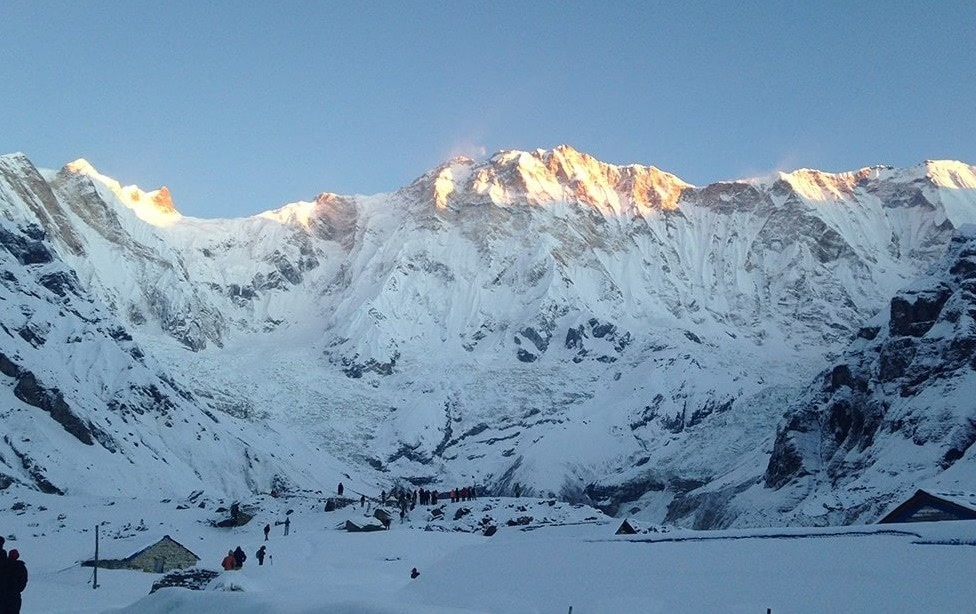
The Annapurna Base Camp trek is possible in winter, and trails stay open through most of the season, but the avalanche corridor between Deurali and Machapuchare Base Camp (MBC) requires daily guide judgment. ABC sits at 4,130 m and nights fall to -15°C or lower.
Deurali (3,200 m) often feels colder than ABC because cold air pools in the valley. Fresh snow loads the slopes of Hiunchuli and Annapurna South above the trail. In January 2020 an avalanche near Deurali killed seven people, among them South Korean trekkers and their Nepali guides. Local authorities sometimes close the section after heavy snow, and guides wait a day or two.
Winter rewards patience. Sunrises over Annapurna I and Machapuchare are cloud-free on most mornings. Allow 12 days and 2 buffer days. The Annapurna Base Camp Trek itinerary shows a winter-adjusted schedule.
Why Is Ghorepani Poon Hill a Popular Winter Trek?
Ghorepani Poon Hill is the most popular winter trek because it tops out at 3,210 m, takes only 4 to 5 days and offers a sunrise panorama of Dhaulagiri and Annapurna. Altitude sickness is rare at this elevation, and Pokhara access means no flight to a mountain airstrip.
Ghorepani (2,860 m) gets snow 2 to 4 times each winter. A dusting turns the rhododendron forest white and makes the sunrise climb to Poon Hill spectacular. Nights at Ghorepani drop to -5°C, and lodges have wood stoves in the dining room.
Poon Hill suits first-time trekkers, families and anyone with only a week. The Poon Hill Trek 5 Days route is the standard choice for a first Himalayan winter. Start the sunrise climb at 05:00 with a headlamp and an insulated flask.
Is Mardi Himal Trek a Good Winter Trekking Option?
Mardi Himal is a good winter option on stable weather, with High Camp at 3,580 m and the viewpoint at 4,500 m offering close views of Machapuchare, though snow can block the upper ridge for 1 to 3 days after storms. The route is quieter than Annapurna Base Camp in every season.
The upper ridge from High Camp to the viewpoint is a narrow, exposed climb of about 3 to 4 hours. Snow makes it slippery, and guides check conditions before dawn. Lodges at Low Camp and High Camp stay open in December and February and run limited service in January.
Winter Mardi Himal works for trekkers who want a high-viewpoint trek with low crowds and an 8-day commitment. The Mardi Himal Trek itinerary includes weather buffer days.
Can You Explore Langtang Valley During Winter?
Yes, Langtang Valley is a strong winter route because Kyanjin Gompa sits at 3,870 m, the trail follows a sheltered river valley and the trailhead is only 7 to 8 hours from Kathmandu by road. No flight is required, which removes the winter flight risk completely.
The valley runs north from Syabrubesi (1,550 m) to Kyanjin Gompa. Nights at Kyanjin reach -10°C to -15°C. Snow arrives in storms and the villages of Langtang and Kyanjin Gompa keep lodges open. The side climbs to Kyanjin Ri (4,773 m) and Tserko Ri (4,984 m) become icy and suit trekkers with microspikes and a guide.
The 2015 earthquake destroyed Langtang village, and the community rebuilt it. Winter visits keep lodge income flowing in the quietest season. Langtang National Park enforces the licensed-guide rule strictly. See the Langtang Valley Trek route for winter options.
Is the Khopra Danda Trek Suitable for Winter?
Khopra Danda is suitable for winter only for experienced trekkers on a flexible itinerary, because Khopra Ridge (3,660 m) holds deep snow, community lodges reduce service and the Khayer Lake side trip closes. It is the hardest route on this list per metre of elevation.
The trail climbs from Ghandruk or Ghorepani through oak and rhododendron forest to an open ridge with views of Annapurna South, Dhaulagiri and Nilgiri. Community-run lodges at Khopra operate on a seasonal basis, and winter opening depends on snowfall. Confirm lodge status in Pokhara 48 hours before departure.
Khopra rewards trekkers who want a remote winter trek with almost no other visitors. First-time winter trekkers get a better experience on Poon Hill. Plan 7 to 9 days with 2 spare days for snow delays, and hire a licensed guide, since the Annapurna Conservation Area requires one.
How Difficult Is Winter Trekking in Nepal?
Winter trekking in Nepal is moderate to hard: the same route is one grade harder than in autumn because cold drains energy, daylight is short and snow slows pace. Difficulty depends on the route. Poon Hill stays easy. Everest Base Camp becomes demanding.
What Fitness Level Is Required for Winter Treks?
A winter trek requires the ability to walk 5 to 7 hours a day for 8 to 12 days with a 6 kg to 8 kg daypack, and 8 to 12 weeks of preparation produces that fitness. Cold raises energy use, so winter trekkers burn 10% to 20% more calories than in warm weather.
A practical training plan has 4 parts. Walk or hike 3 times a week, and build one weekly session to 5 to 6 hours with a loaded pack. Climb stairs or hills for 45 minutes twice a week. Add squats and lunges for descending strength. Finish with a cold-weather test walk in the gear you will wear.
Fitness matters less than pace. Guides set a slow, steady rhythm of about 300 m to 400 m of climb per hour. Trekkers who start fast in the cold sweat, then freeze when they stop.
How Does Snow and Ice Affect Trekking Difficulty?
Snow and ice slow pace by 20% to 40%, raise fall risk on shaded stone steps and force earlier start times to use the daylight. The effect is strongest on descents, where black ice hides under a thin layer of snow.
Three surfaces cause most winter falls: shaded stone staircases at monasteries and villages, frozen stream crossings and compacted snow on steep switchbacks. Trails also lose their sun after about 15:00 in narrow valleys, and the temperature falls 5°C to 8°C within an hour.
Winter itineraries answer this with 7:00 starts, lunch stops before 12:30 and arrival at the lodge by 15:30. Trekkers who leave late in January walk the last hour in -10°C shadow with tired legs. That is the most common winter mistake we see.
What Are the Main Altitude Challenges During Winter?
Altitude sickness risk is the same at any season for a given elevation, but winter adds dehydration, poor sleep from cold and reduced appetite, all of which raise the risk. Acute mountain sickness (AMS) is the illness caused by rapid ascent above 2,500 m, and it produces headache, nausea, fatigue and dizziness.
According to guidance from the Himalayan Rescue Association, trekkers above 3,000 m limit sleeping-elevation gain to about 500 m per day and take a rest day every 1,000 m. Winter adds a second constraint. Cold air is dry, so trekkers lose fluid with every breath, and many drink less because water is cold. Target 3 to 4 litres a day, and ask lodges for hot water.
Oxygen saturation at 4,000 m to 4,500 m typically reads 82% to 90% at rest. Guides check readings twice a day. Readings below 80% with symptoms trigger a rest day or a descent.
What Should You Pack for Winter Trekking in Nepal?
Winter packing in Nepal rests on 4 systems: layered clothing, waterproof boots, traction for ice and a sleeping bag rated to -20°C. Most guided treks cap your duffel at 10 kg because porters carry 20 kg per pair of trekkers.
Which Winter Trekking Clothes Should You Bring?
Bring 5 clothing layers: base, mid, insulation, shell and accessories. The system works because trekkers add and remove layers within minutes as the sun rises and sets.
Base layer: 2 merino or synthetic tops and 2 bottoms, never cotton.
Mid layer: 1 fleece or grid-fleece jacket and 1 pair of fleece trousers.
Insulation: 1 down jacket rated to -15°C or lower, plus 1 light synthetic vest.
Shell: 1 waterproof, breathable jacket and trousers for snow and wind.
Accessories: liner gloves, insulated mittens, a balaclava, a warm hat, a neck gaiter and 4 pairs of merino socks.
Mittens beat gloves above 4,000 m because fingers share warmth. A common mistake is a single, heavy jacket. A heavy jacket overheats on the climb and offers no way to adjust.
What Footwear and Equipment Are Essential for Snowy Trails?
Essential footwear is a waterproof, insulated boot with a stiff sole, sized half a size up to fit thick socks. Break the boots in over 40 km before departure.
Add these items to the footwear kit:
Gaiters to stop snow entering the boot top.
Down booties or insulated camp shoes for evenings in the lodge.
Category 4 sunglasses because snow glare causes eye damage within hours.
A headlamp with spare lithium batteries, since cold drains alkaline cells fast.
A 1-litre insulated bottle to keep water liquid.
Store the bottle upside down in your pack. Ice forms at the surface first, so the cap stays free. Keep phones, cameras and power banks in an inner pocket by day and inside the sleeping bag at night.
Do You Need Crampons, Microspikes, or Trekking Poles?
Pack microspikes and a pair of trekking poles for winter, and skip crampons on teahouse routes. Microspikes are chain-and-rubber traction devices that stretch over a boot and grip ice up to about 10 cm deep. Crampons are rigid steel spikes for glaciers and steep snow, and teahouse treks do not require them.
Microspikes earn their place above Dingboche on the Everest route, between Deurali and Annapurna Base Camp, and on the upper Mardi Himal ridge. Poles reduce knee load on descents and add a third point of contact on ice. Cross high passes such as Cho La or Thorong La only with a guide and, on glaciated sections, rented crampons.
Rent microspikes in Kathmandu or Pokhara for about US$1 to US$2 per day, or buy a set for US$25 to US$50.
What Sleeping Gear and Personal Essentials Should You Pack?
Sleeping gear for winter is a sleeping bag rated -20°C comfort for Everest routes or -15°C comfort for Annapurna and Langtang routes, plus a liner. Teahouse bedrooms have no heating, and room temperatures match the outside air.
Pack these personal essentials:
A liner that adds 3°C to 5°C of warmth.
A 1-litre hot-water bottle filled at dinner and placed at your feet.
Earplugs and an eye mask for thin-walled rooms.
A first-aid kit with blister tape, rehydration salts and paracetamol.
A pulse oximeter for daily readings above 3,500 m.
Nepali rupees in small notes because ATMs end at Namche Bazaar and Pokhara.
Travel insurance that covers helicopter evacuation to 6,000 m.
Photocopy your passport, permits and policy number. Store one set in your duffel and one in your daypack.
How Can You Stay Safe During Winter Trekking in Nepal?
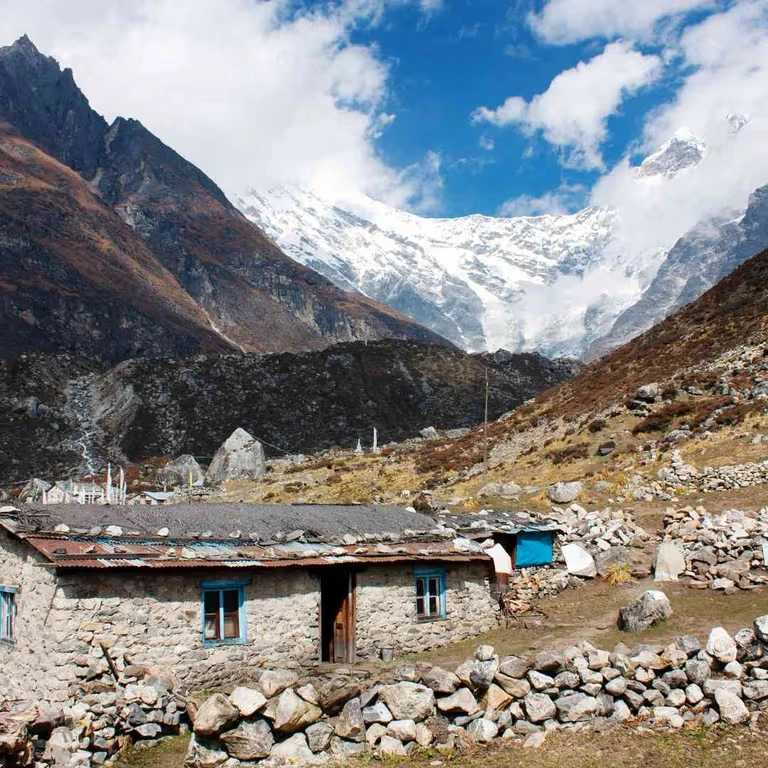
Staying safe during winter trekking in Nepal means managing 4 risks: cold injury, altitude illness, heavy snow and limited services. A licensed guide is required in national parks and conservation areas under the Nepal Tourism Board rule that took effect on April 1, 2023, and Langtang enforces it strictly.
How Can You Prevent Hypothermia and Frostbite?
Prevent hypothermia and frostbite by keeping dry, eating often, layering early and covering skin above 4,000 m. Hypothermia is a fall in core body temperature below 35°C. Frostbite is the freezing of skin and tissue, and it strikes fingers, toes, ears and the nose first.
Prevention comes down to 5 actions:
Layer before you feel cold.
Vent heat on climbs to avoid sweat.
Eat snacks every 2 hours.
Drink warm fluids all day.
Warm hands and feet in a sleeping bag every evening.
Early hypothermia shows as shivering, stumbling, mumbling and fumbling. Frostbite shows as white, waxy, numb skin. According to the Wilderness Medical Society, do not rub frostbitten skin, and rewarm it in 37°C to 39°C water only when refreezing cannot happen. Walking on a thawed foot causes more damage than walking on a frozen one. Descend, warm the trekker and call the guide.
How Can You Recognize and Prevent Altitude Sickness?
Recognize altitude sickness by a headache plus nausea, dizziness, fatigue or poor sleep above 2,500 m, and prevent it by climbing slowly, hydrating and resting every third day. Mild AMS clears with a rest day. Worsening symptoms demand descent.
Two severe forms exist. High-altitude cerebral edema (HACE) causes confusion and loss of balance. High-altitude pulmonary edema (HAPE) causes breathlessness at rest and a wet cough. Both are emergencies, and the only reliable treatment is descent of 300 m to 1,000 m plus oxygen.
Many travel-medicine doctors prescribe acetazolamide at 125 mg twice daily as prevention. Consult a doctor before departure. The Himalayan Rescue Association aid post at Pheriche staffs volunteer doctors in spring and autumn, so winter trekkers rely on their guide's oximeter and kit.
What Should You Do During Heavy Snowfall or Extreme Weather?
During heavy snowfall, stay in the lodge, follow the guide's decision and never cross a pass or an avalanche slope. Storms last 1 to 2 days, and trails reopen after porters and yaks break the snow.
Follow this sequence:
Stop walking and move to the nearest lodge.
Tell the guide about any symptoms of cold or altitude illness.
Wait for the weather window, which the guide reads from the forecast and local reports.
Resume only on the guide's call.
Weather can close the Himalaya outside winter too. According to reporting on the Annapurna Circuit, heavy snowfall in late October 2025 led local authorities in Myagdi and Mustang to halt treks. Helicopter evacuation depends on visibility, so a rescue request in a storm waits for a clear window. Build in 2 buffer days, carry insurance that covers evacuation and save the Nepal Tourist Police hotline, 1144.
Are Mountain Teahouses and Trails Open During Winter?
Yes, teahouses and trails on the main routes stay open in winter, while lodges above 4,500 m and on remote ridges reduce service or close. Reduced service means fewer menu items, fewer rooms and shorter dining-hall heating hours.
Routes differ. On the Everest route, Lukla, Phakding, Namche, Tengboche and Dingboche stay open, and Lobuche and Gorak Shep keep a few lodges. On Annapurna routes, Ghorepani, Tadapani, Chhomrong, Deurali, MBC and ABC operate with fewer rooms. Mardi Himal and Langtang lodges stay open in December and February. Khopra ridge lodges follow snowfall.
Flights are the weak point. Kathmandu to Lukla flights run in winter, with fewer daily departures and more cancellations in cold fog.
How Much Does Winter Trekking in Nepal Cost?
Winter trekking in Nepal costs about US$350 to US$550 for a 4 to 5 day Poon Hill trek and up to US$1,300 to US$1,900 for a 12 to 14 day Everest Base Camp trek on a guided, teahouse basis in 2026. Prices include guide, porter, permits, lodging and meals, and exclude international flights.
The following table shows typical 2026 guided package ranges for the 5 most booked winter routes, in US dollars per person.
Route | Typical days | Package range (US$) |
Ghorepani Poon Hill | 4 to 5 | 350 to 550 |
Mardi Himal | 6 to 8 | 600 to 900 |
Langtang Valley | 8 to 10 | 700 to 1,000 |
Annapurna Base Camp | 10 to 12 | 850 to 1,200 |
Everest Base Camp | 12 to 14 | 1,300 to 1,900 |
Costs rise with duration and with the Lukla flight. A longer route and a mountain flight explain most of the difference between rows.
What Factors Affect Winter Trekking Costs?
The 8 main cost factors are route length, flights, permits, visa, guide and porter, insurance, gear and delays. Each one moves the final bill.
Route length: Every extra day adds about US$60 to US$100 for lodging, meals and guide fees.
Flights: The Kathmandu to Lukla fare is about US$238 each way for foreigners in 2026.
Permits: National Park and Conservation Area entry fees base at NPR 3,000 (about US$22). National Parks like Sagarmatha and Langtang add a 13% VAT, whereas Conservation Areas like Annapurna charge a flat fee. Combined permits total roughly US$40 to US$45 on classic routes.
Visa: A Nepal tourist visa costs US$30 for 15 days, US$50 for 30 days, or US$125 for 90 days.
Guide and porter: Licensed guide fees are included in packages, though you should budget for tips of about US$8 to US$10 per day.
Insurance: Winter cover with evacuation up to 6,000 m costs US$60 to US$150 for a 2-week trek.
Gear: Renting a sleeping bag, down jacket and microspikes is cheaper than buying.
Delays: A cancelled flight adds US$50 to US$100 per day for lodging and food, and a stay of 1 or 2 extra days after a Lukla cancellation costs US$100 to US$200.
Is Winter Trekking More Affordable Than Peak-Season Trekking?
Yes, winter trekking is 5% to 15% cheaper than peak-season trekking on package price, but gear, insurance and delay costs cut the real saving to about 5% to 10%. Lodge rooms cost less, and operators discount low-season dates.
Winter adds costs that October does not. Sleeping bags and down jackets are rental items for most travelers, and a stay of 1 or 2 extra days after a Lukla cancellation costs US$100 to US$200. Lodges charge US$3 to US$8 for hot showers and device charging above Namche Bazaar, and charges rise with altitude.
Winter works best for trekkers who value space and views over the lowest possible total. Choose a lower route such as Poon Hill or Langtang Valley, and the saving holds.
How Can Nepal Intrepid Treks Help You Plan Your Winter Trekking Adventure?
Nepal Intrepid Treks is a Kathmandu-based trekking company with more than 10 years of operating experience that plans winter treks around route choice, weather buffer days and licensed guides. We work from our office in Nayabazar, Kathmandu, and support trekkers on WhatsApp and Viber around the clock.
Our company is associated with the Nepal Tourism Board, the Trekking Agencies' Association of Nepal (TAAN), the Nepal Mountaineering Association and the Kathmandu Environmental Education Project (KEEP).
Can Nepal Intrepid Treks Organize Safe and Memorable Winter Treks in Nepal?
Yes, we organize winter treks on all 7 routes in this guide, with a licensed guide, a porter, permits, lodging and meals handled before you land. We adjust each itinerary to the month: December for high routes, January for Poon Hill and Langtang, February for the widest choice.
Starting prices on our site (confirm winter dates when you inquire):
Poon Hill Trek 5 Days: from US$415.
Mardi Himal Trek: from US$710.
Langtang Valley Trek: from US$880.
Annapurna Base Camp Trek: from US$920.
Everest Base Camp Trek: from US$1,485.
Our team briefs every group on snow, ice and altitude each morning, checks oxygen readings and sets the day's pace to the weather. We rank safety above summit photos on every winter departure.
What Should You Know Before Choosing a Winter Trekking Package?
Before choosing a winter trekking package, verify 6 points: license, buffer days, insurance, gear, guide ratio and the cancellation policy. A strong package answers all six in writing.
Verify the operator's registration with the Nepal Tourism Board and TAAN.
Confirm at least 2 buffer days on routes above 4,000 m.
Check that your insurance covers helicopter evacuation to 6,000 m.
Compare what the price includes: permits, flights, porter, sleeping bag, down jacket and airport transfers.
Ask for the guide-to-trekker ratio, with 1 guide per 4 trekkers as a common limit.
Read the policy for weather cancellations and rebooking.
The cheapest quote rarely includes buffer days or winter gear, and those omissions cost more once the trek begins.
Plan your winter trek with us. Tell us your dates and fitness level, and we will recommend a route and send a day-by-day itinerary. Contact Nepal Intrepid Treks or message us on WhatsApp at +977 9849009919.
Winter trekking in Nepal rewards preparation more than any other season. Pick the right elevation for the month, pack for -20°C nights, hire a licensed guide and keep 2 buffer days in the schedule. Trekkers who do that walk empty trails under the clearest skies of the year.