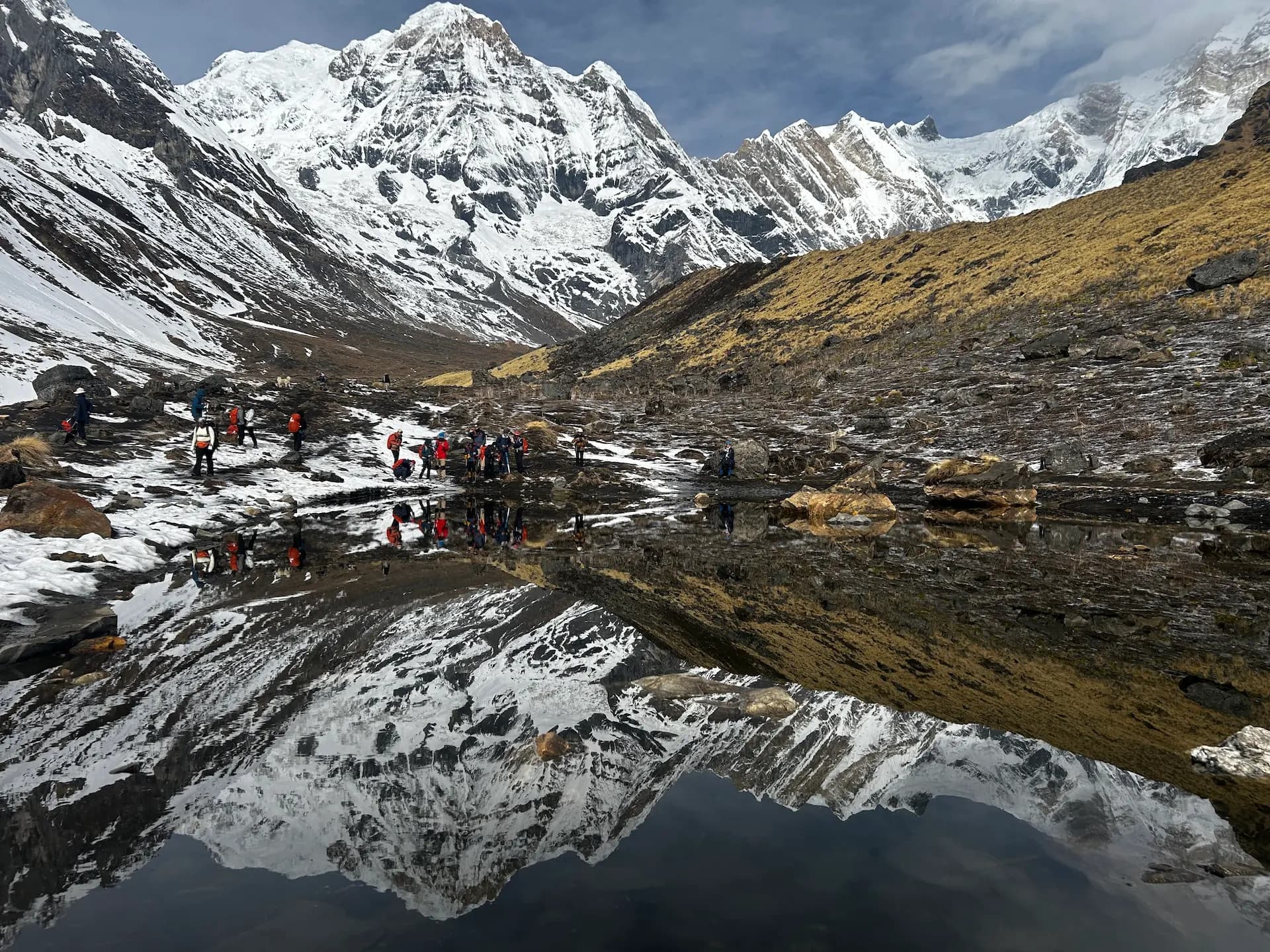
The Everest Base Camp trek in winter is a high-altitude Himalayan adventure that takes trekkers through Nepal’s Khumbu region to Everest Base Camp at 5,364 m. From December to February, the classic 130 km round-trip route offers clearer mountain views, quieter trails, and fewer crowds, but also brings freezing temperatures, icy paths, occasional snowstorms, and limited teahouse availability. Successful winter trekking requires the right season, proper cold-weather equipment, gradual acclimatization, and flexibility to handle changing mountain conditions.
Planning the Everest Base Camp trek in winter 2026/27 involves choosing suitable departure dates, preparing for temperatures as low as -20°C or below, and allowing 14 to 16 days for trekking, acclimatization, and potential flight delays. This guide covers winter weather, the best months to trek, route highlights, difficulty, safety precautions, packing essentials, accommodation, meals, and costs, including guided packages from approximately US$1,485 per person. These insights help trekkers understand the challenges, prepare effectively, and decide whether a winter journey to Everest Base Camp matches their fitness, experience, and expectations.
What Makes the Everest Base Camp Trek in Winter Unique?
Winter turns the Everest Base Camp trek into a cold, quiet, high-visibility trek: dry air gives the clearest mountain views of the year, trails hold far fewer trekkers than in October, and snow, short days, and closed lodges raise the difficulty.
Four features separate winter from the other seasons.
Clear skies. Winter is the dry season in the Khumbu. The monsoon haze that blurs Ama Dablam and Lhotse in spring is gone, and early mornings above Namche often show every summit without a cloud.
Empty trails. Lodges that turn away walk-ins in October have spare rooms in January. Yak caravans and porters outnumber trekkers on some days. You hear the Dudh Koshi river at Phakding instead of ten conversations.
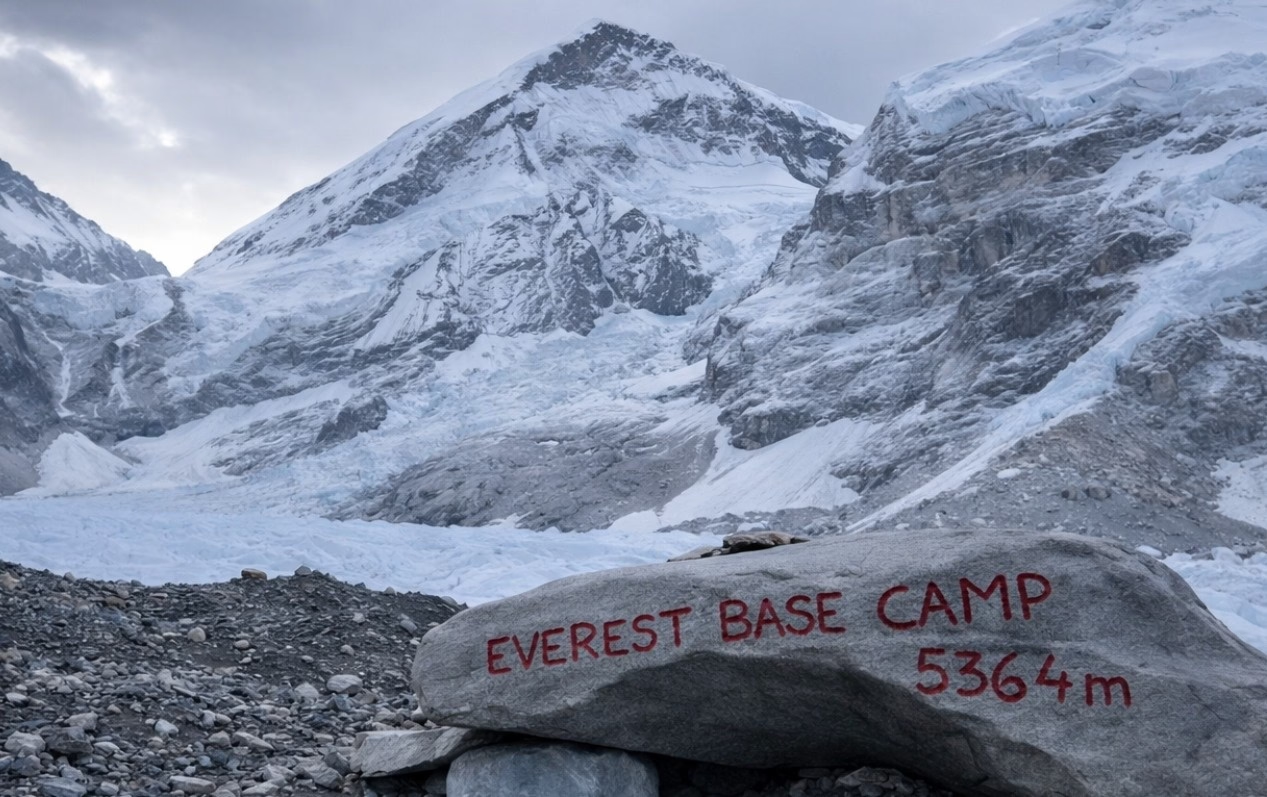
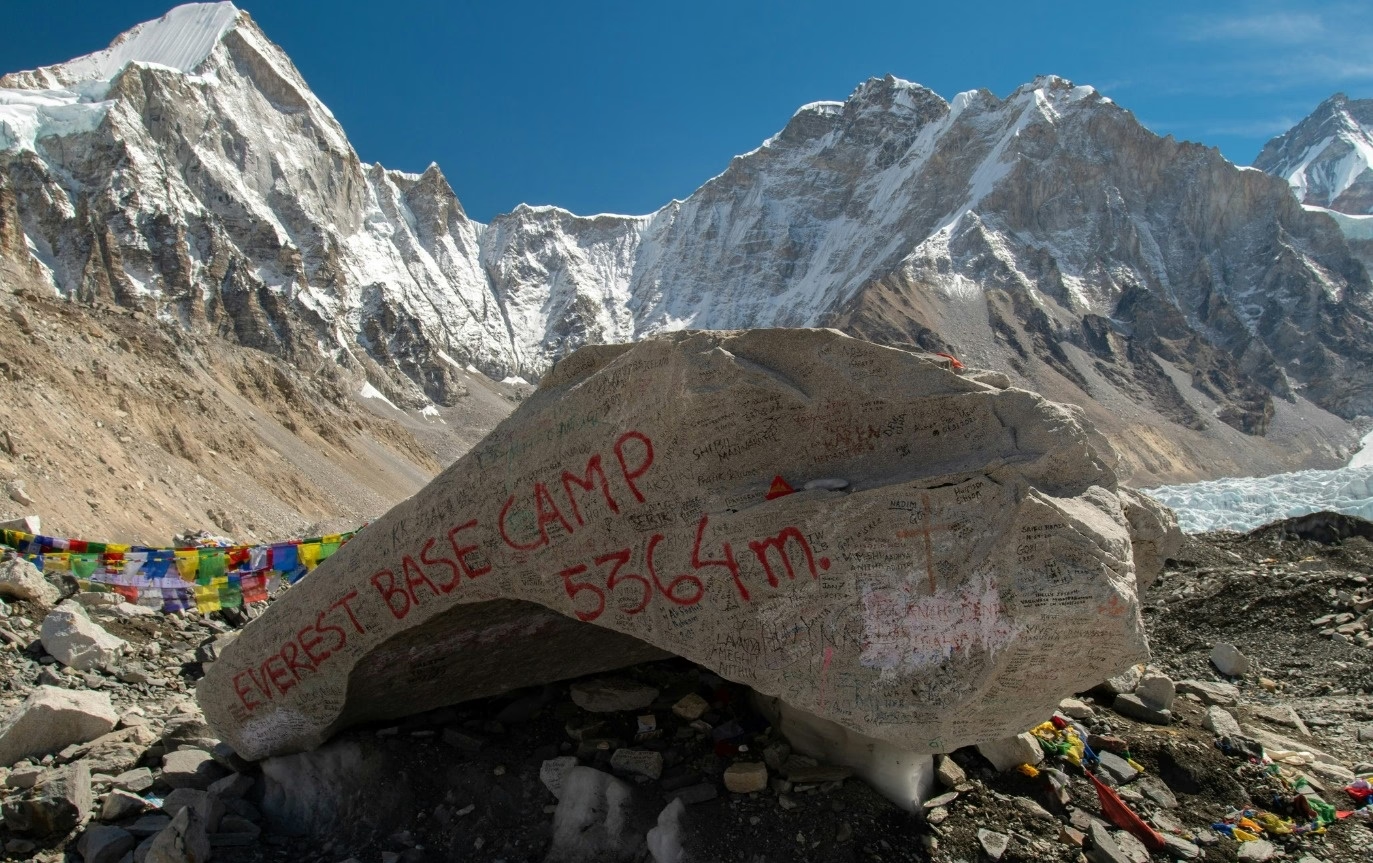
An empty base camp. Most readers don't know this: expedition tents appear at Everest Base Camp only in the spring climbing season, from about April to May. In winter you reach a moraine of rock, ice, and prayer flags with the Khumbu Icefall above it. It feels like standing at the end of the world, and it is a very different sight from the tent city in photos.
Real mountain cold. Sagarmatha National Park, established in 1976 and listed by UNESCO in 1979, covers 1,148 km² of high terrain. In winter that terrain behaves like high terrain. Water freezes inside rooms. Batteries die in minutes. Fingers go numb during a photo.
The trade-off is simple. You gain solitude and clarity, and you accept cold, shorter days, and some closed lodges. Trekkers who like quiet and prepare well rate winter as their favourite season. Trekkers who dislike cold sleep badly and enjoy little.
When Is the Best Time to Do the Everest Base Camp Trek in Winter?
The best time for the Everest Base Camp trek in winter is the first half of December or the last 10 days of February. Those windows combine stable dry weather with bearable temperatures. Mid-December to late January is the coldest stretch of the year.
Winter in Nepal means three months, and they are not equal. Early December still carries autumn's stable weather. January delivers the lowest temperatures and the most closed lodges. February brings longer days and the first hints of spring. Western disturbances, which are moisture-bearing weather systems from the Mediterranean, cross the Himalaya between December and February and produce the occasional snowstorm in all three months.
Is December a Good Month for the Everest Base Camp Trek?
Yes. December is the gentlest winter month for the Everest Base Camp trek, with dry air, clear mornings, and average daytime highs of 5 to 10 °C below Namche, though nights at Gorak Shep drop to about -18 °C.
Early December works best. Autumn crowds have thinned, lodges remain open, and snowfall is uncommon. Trekkers who start between December 1 and December 15 usually enjoy the most stable weather of the entire winter.
Late December changes the picture. Demand rises around Christmas and New Year, so Namche Bazaar and Dingboche rooms fill faster than the "winter is empty" reputation suggests. Book lodging early for departures between December 22 and January 2. Cold also deepens quickly after the winter solstice on December 21, when Namche gets about 10 hours and 24 minutes of daylight.
Common mistake we see: trekkers pick the Christmas week because of school holidays, then arrive with a three-season sleeping bag. Hold out for a proper -20 °C bag, or let the operator supply one.
Can You Trek to Everest Base Camp in January?
Yes, you can trek to Everest Base Camp in January, but it is the coldest and most demanding month, with night temperatures of -20 to -25 °C at Gorak Shep and a higher share of closed lodges above Dingboche.
Experienced trekkers do January successfully every year. The weather is often brilliantly clear. Wind is the main enemy, because a 30 km/h breeze at -15 °C produces a wind chill close to -25 °C on exposed ridges.
January suits trekkers who have already walked above 4,000 m, own proper winter gear, and can tolerate sleeping in an unheated room. It is a poor choice for a first high-altitude trek. Our advice for January: add one buffer day to the itinerary, carry hand warmers, and eat every meal in the lodge dining room, which holds the only stove.
Is February Suitable for the Everest Base Camp Trek?
Yes. February is suitable for the Everest Base Camp trek, especially after February 15, when days reach about 11 hours, average temperatures climb slowly, and lodges that closed in January start to reopen.
Daylight is the clearest advantage. Namche sees about 10 hours 52 minutes on February 1 and 11 hours 32 minutes by February 28. That extra hour changes how you pace your day.
February still carries snow risk. Western disturbances remain active, and a storm in the second week of February can drop a metre of snow above Dingboche. Losar, the Sherpa and Tibetan New Year, falls between February and early March, depending on the lunar calendar. Some lodge owners travel to celebrate, so check which lodges are open before you commit to a route.
For many trekkers we advise, late February is the best compromise of the entire winter. It gives winter's quiet with spring's lengthening days.
What Is the Weather Like on the Everest Base Camp Trek in Winter?
Winter weather on the Everest Base Camp trek is dry, cold, and mostly clear, with daytime highs from 10 °C at Lukla to -5 °C at Gorak Shep, nighttime lows down to -25 °C, occasional snowstorms, and about 10 to 11 hours of daylight.
Altitude drives the numbers more than the calendar. Every 1,000 m of climbing lowers the temperature by about 6 °C. The trail climbs from 2,850 m at Lukla to 5,545 m at Kala Patthar, so the gap between your first and last night is around 15 °C.
How Cold Does It Get at Everest Base Camp in Winter?
Everest Base Camp reaches -20 to -25 °C on winter nights and -5 to 0 °C during winter days, and the wind chill pushes the felt temperature below -30 °C on exposed ground.
The table below lists typical winter temperatures by trail zone, compiled from regional mountain forecasts and the readings our guides report. Conditions vary by 5 to 8 °C between storm and clear days.
Zone | Altitude | Typical daytime | Typical night |
Lukla, Phakding, Namche | 2,610 to 3,443 m | 5 to 10 °C | -5 to -10 °C |
Tengboche, Dingboche | 3,860 to 4,450 m | 0 to 5 °C | -10 to -15 °C |
Lobuche, Gorak Shep, EBC | 4,910 to 5,364 m | -5 to 0 °C | -20 to -25 °C |
The night figures matter more than the day figures. You spend 14 hours a day in the dark, and most heat comes from the dining room stove between about 4 pm and 9 pm. Bedrooms hold no heating at all. At Lobuche and Gorak Shep the water in your bottle freezes beside the bed unless you sleep with it.
Cold also slows you. Hands lose dexterity below -10 °C, so zips, camera buttons, and poles become tasks. Practise with your gloves before you fly.
How Much Snowfall Can You Expect on the Everest Base Camp Trek?
Snowfall on the winter Everest Base Camp trek is light and episodic: most days are dry, but one to three storms between December and February can leave 10 to 60 cm of snow on the trail above Namche.
The Khumbu receives most of its precipitation from the summer monsoon. Winter totals are low, often under 20 mm per month at the valley floor. Snow arrives when a western disturbance passes, usually as a one-to-three-day event, then clears with brilliant skies.
Here is the practical reading. Lower trail sections near Phakding and Namche see little lasting snow. Between Tengboche and Dingboche, north-facing slopes hold ice for weeks. Around Lobuche and the moraine to Gorak Shep, wind redistributes snow into drifts. Yak trains and porters pack a path within a day, so most storms delay you rather than stop you.
Fresh snow on a bright day creates a second hazard: snow blindness. Wear category 4 glacier glasses every day above 4,000 m.
How Many Hours of Daylight Are Available During Everest Base Camp Trek in Winter?
The Everest Base Camp trek in winter offers 10 hours 24 minutes to 11 hours 32 minutes of daylight, depending on the date, but deep valleys cut the usable walking window to about 8 hours.
The table shows calculated sunrise and sunset for the Namche Bazaar latitude in Nepal Time, assuming a flat horizon.
Date | Sunrise | Sunset | Day length |
December 1 | 6:32 am | 5:03 pm | 10 h 31 min |
December 21 | 6:44 am | 5:08 pm | 10 h 24 min |
January 15 | 6:50 am | 5:24 pm | 10 h 34 min |
February 1 | 6:45 am | 5:37 pm | 10 h 52 min |
February 28 | 6:25 am | 5:57 pm | 11 h 32 min |
Real sunlight differs. Mountains block the sun, so Dingboche and Pheriche sit in shade until about 8:30 am and lose direct sun by 4 pm. Temperatures drop sharply once the sun leaves. Plan to start walking at 7:30 am and reach your lodge by 3:30 pm.
Carry a headlamp with spare lithium batteries, because alkaline cells fail in the cold.
How Do Winter Weather Conditions Affect EBC Trekking Routes?
Winter weather affects EBC trekking routes through icy trail sections, snow-covered stone steps, frozen stream crossings, and closed high passes, but the main Lukla to Base Camp route stays open throughout the season.
Four effects change how you walk.
Ice in shade: Stretches below Tengboche and near the Dudh Koshi suspension bridges stay icy all day. Microspikes solve this.
Slower pace: Trail speed drops by 15 to 25 percent on snow, so a 6-hour day becomes 7.
Closed passes: The Cho La and Kongma La passes, used for the Three Passes circuit, hold snow and ice that demand crampons and ropes. Treat them as unavailable in winter.
Route flexibility: Guides reroute around fresh snow or move a rest day to wait out a storm.
Buffer days are the single best defence. A 16-day schedule with one spare day absorbs most weather delays without cutting your summit of Kala Patthar.
Is the Everest Base Camp Trek Safe in Winter?
The Everest Base Camp trek is safe in winter for fit, well-equipped trekkers who ascend slowly, travel with a licensed guide, and carry evacuation insurance, but the margin for error is thinner than in spring or autumn.
Winter does not make the Khumbu lethal. It removes slack. Cold converts a small problem, such as a wet glove or a skipped meal, into a serious one within hours. Emergency services also run thinner. The Himalayan Rescue Association aid posts operate on schedules built around the spring and autumn peaks, so treat them as unavailable in winter unless your operator confirms otherwise. Helicopter rescue still functions, although flights stop in storms and after dark.
What Are the Main Risks of Winter Trekking in the Everest Region?
The 5 main risks of winter trekking in the Everest region are acute mountain sickness, hypothermia, frostbite, slips on ice, and flight or weather delays that push you past your return date.
Each risk has a defined cause and defence.
Acute mountain sickness (AMS): Altitude headache, nausea, and fatigue. Cold air increases dehydration and breathing effort, which can worsen symptoms.
Hypothermia: Core temperature below 35 °C. Wet clothing and wind are the main triggers.
Frostbite: Frozen tissue in toes, fingers, nose, and ears. Tight boots and sweaty socks raise the risk.
Slips and falls: Ice on stone steps causes ankle and wrist injuries.
Schedule slippage: Cancelled Lukla flights can consume 1 to 3 days.
Guides catch most problems early, but only when you speak up. Trekkers who hide a headache create the cases that need evacuation.
How Can You Prevent Altitude Sickness During a Winter Trek?
To prevent altitude sickness during a winter trek, ascend slowly, sleep no more than 500 m higher each night above 3,000 m, take a rest day every 3 to 4 days, drink 3 to 4 litres of fluid daily, and descend at the first sign of severe symptoms.
According to the Wilderness Medical Society's 2024 clinical practice guidelines on acute altitude illness, the safest ascent rate above 3,000 m is a sleeping-altitude gain of 500 m per day with a rest day every 3 to 4 days. The standard EBC itinerary follows this through its acclimatization stops at Namche Bazaar and Dingboche.
Winter adds three specific points:
Drink more than you feel like. Cold suppresses thirst, and dry mountain air strips water through breath. Hot lemon and ginger tea count.
Track oxygen saturation. A pulse oximeter reading in the low to mid 80s at 5,000 m is common in healthy acclimatized trekkers. A resting reading in the 70s with symptoms signals trouble.
Ask your doctor about acetazolamide. The Wilderness Medical Society lists 125 mg twice daily as a prevention option. It is a prescription decision, not a packing-list item.
Descent is the only definitive treatment for severe altitude illness. Dexamethasone and oxygen buy time. They do not replace going down.
What Should You Do if Heavy Snowfall Blocks the EBC Trail?
When heavy snowfall blocks the EBC trail, stay in your lodge, follow your guide's call, use buffer days instead of forcing a crossing, and move only when trail crews and yak caravans have packed a path.
Most blockages last 24 to 48 hours. The lodge is the safest place to wait, and it has food, a stove, and communication. Your guide watches regional forecasts and talks to other guides, lodge owners, and porters on the trail ahead.
Common mistakes in this situation include leaving too early because "the sky is clear now," trekking without a guide to save a day, and ignoring avalanche signs on steep slopes above the path. Fresh snow on a clear day creates the highest avalanche danger, not the storm itself.
Have a plan B in writing before you leave Kathmandu. It covers an extra rest day, a shortened turnaround, or a helicopter return from Lukla. Reaching Gorak Shep matters less than returning on time.
Is Travel Insurance Necessary for the Everest Base Camp Trek in Winter?
Yes. Travel insurance is necessary for the Everest Base Camp trek in winter, and your policy must cover emergency helicopter evacuation, medical treatment, and trekking up to at least 6,000 m, because Kala Patthar reaches 5,545 m.
Helicopter rescue in the Khumbu costs several thousand US dollars per flight, and the pilot or operator typically asks for a guarantee of payment before takeoff. Insurers have also scrutinized Nepal evacuation claims more closely since fraud investigations in 2025, so keep your guide's written account, flight records, and receipts.
Check five clauses before you buy:
Maximum altitude covered (6,000 m or higher)
Helicopter evacuation and repatriation
Trip delay and cancellation, including flight delays at Lukla
Pre-existing medical conditions
Exclusions for "unguided" or "winter" trekking
Carry a printed copy of the policy and the insurer's 24-hour emergency number. Your operator covers its Nepali staff, but your own cover remains your responsibility.
What Is the Everest Base Camp Trek Route in Winter?
The winter Everest Base Camp trek follows the classic route from Lukla through Namche Bazaar, Tengboche, Dingboche, and Lobuche to Gorak Shep, then returns by the same trail, with added buffer days for weather.
The route covers about 130 km round trip and gains roughly 2,500 m of altitude from Lukla to Gorak Shep. It follows the Dudh Koshi valley, climbs through rhododendron and juniper forest to Namche, then rises above the treeline to the Khumbu Glacier. The winter route does not differ from other seasons. The pacing and the lodge choices do.
How Many Days Does the Winter Everest Base Camp Trek Take?
The winter Everest Base Camp trek takes 14 to 16 days from Kathmandu to Kathmandu, including 12 trekking days, 2 acclimatization days, and 1 to 2 spare days for weather and flight delays.
Nepal Intrepid Treks runs its Everest Base Camp trek in 16 days, with a Kathmandu arrival and briefing, a sightseeing day, 12 days of flights and trekking, and a closing leisure day before departure. Acclimatization stops at Namche Bazaar and Dingboche are built in.
Do not compress a winter itinerary to 12 days. Shorter plans raise altitude risk and leave no room for a grounded plane. We tell trekkers to book the international flight home at least 2 days after the scheduled trek end.
Which Villages and Landmarks Are Included on the Winter EBC Trek?
The winter EBC trek passes through 9 main stops: Lukla, Phakding, Namche Bazaar, Tengboche, Dingboche, Lobuche, Gorak Shep, Everest Base Camp, and Kala Patthar.
Stop | Altitude | Winter note |
Lukla | 2,850 m | Flight arrival; most lodges open |
Phakding | 2,610 m | Warmest night of the trek |
Namche Bazaar | 3,443 m | Cafes, bakeries, last ATM |
Tengboche | 3,860 m | Monastery; quiet in winter |
Dingboche | 4,450 m | Cold and shaded; some lodges closed |
Lobuche | 4,910 m | Few lodges open; coldest nights |
Gorak Shep | 5,180 m | Last settlement; limited rooms |
Everest Base Camp | 5,364 m | Empty of expeditions |
Kala Patthar | 5,545 m | Best Everest view |
Tengboche Monastery sits on a ridge facing Ama Dablam, and winter visits are quiet. Namche Bazaar, the Sherpa capital, keeps its cafes and shops open year-round and has the last ATMs on the route.
Can You Visit Kala Patthar During the Winter Everest Base Camp Trek?
Yes, you can visit Kala Patthar (5,545 m) during the winter Everest Base Camp trek, usually on the morning after Gorak Shep, though strong wind or fresh snow can delay or cancel the climb.
Kala Patthar, a black rocky ridge above Gorak Shep, gives the best direct view of Everest. Base Camp itself does not show the summit.
Winter changes the plan in 3 ways. Sunrise falls around 6:50 am in mid-January, so you climb in darkness at -20 °C or colder. Wind often peaks at first light. Your camera battery lasts about 10 minutes unless you keep it inside your jacket.
Some guides prefer a sunset climb on the afternoon you arrive, when the air is slightly warmer and the light on Everest turns gold. The catch is the descent in fading light, so carry your headlamp. Choose whichever slot the forecast supports.
Are Lukla Flights Reliable During Winter?
Lukla flights are moderately reliable in winter: mornings are often clear, but Kathmandu fog, afternoon cloud, and strong wind cause delays of 1 to 3 days, so keep spare days at both ends of your trek.
Lukla's Tenzing-Hillary Airport has a runway of about 527 m with a steep slope, and pilots fly by sight. Flights take place in the morning window before cloud and wind rise. Winter cold and dry air generally gives a stable Lukla, yet haze or low fog at Kathmandu grounds planes on some mornings.
Airport arrangements also change by season. During the spring and autumn peaks, most flights depart from Manthali Airport in Ramechhap, about 4 to 6 hours by road from Kathmandu. Off-peak, some flights return to Kathmandu. Ask your operator which airport applies to your dates.
How Difficult Is the Everest Base Camp Trek in Winter?
The Everest Base Camp trek in winter is rated moderate to challenging: walking days last 4 to 8 hours, altitude peaks at 5,545 m, and cold, ice, and short days make it harder than the same route in autumn.
Technical skill is not required. The trail is a footpath with stairs and suspension bridges. Difficulty comes from sustained effort, thin air, and cold. Plan for a trek that is roughly one grade harder than the autumn version.
What Fitness Level Is Required for Winter EBC Trekking?
Winter EBC trekking requires a good aerobic base: you can walk 5 to 6 hours with a 6 to 8 kg daypack, climb 600 to 800 m in a day, and recover for the next morning, ideally after 12 weeks of structured training.
Build fitness in four ways:
Walk or hike 2 to 3 times per week, with one long weekend session of 4 to 6 hours
Train cardio (running, cycling, swimming) 3 times per week for 30 to 45 minutes
Climb stairs or hills with a loaded pack
Add leg strength work: squats, lunges, step-ups
Winter adds one extra step. Train in cold weather when you can, because breathing cold air and managing layers on the move are skills. A few outdoor sessions at 0 °C teach you more about your clothing than any gym.
How Does Snow and Ice Affect EBC Trekking Difficulty?
Snow and ice slow your pace by 15 to 25 percent, raise slip and ankle-injury risk, and increase energy use, so each trail day feels one level harder than the same distance in autumn.
Three mechanisms drive this. Packed snow demands a shorter stride and constant balance. Ice in shaded sections hides under a thin dust layer. Cold air makes your body burn extra calories to stay warm, so you tire faster.
Gear and technique reduce the effect. Microspikes grip ice reliably. Trekking poles with snow baskets add stability. Short steps with the foot placed flat prevent most falls. Descents injure more people than ascents, so slow down when you are tired.
Is the Winter Everest Base Camp Trek Suitable for Beginners?
The winter Everest Base Camp trek suits fit beginners with a guide, a 16-day schedule, and the right gear, but first-time high-altitude trekkers do better choosing early December or late February over January.
"Beginner" means two different things. A trekker with no hiking history needs 3 to 6 months of preparation and a conservative schedule. A fit athlete who has never been above 3,000 m needs good acclimatization more than extra training.
Our honest view: the trek is doable for beginners, but winter removes the safety margin that makes autumn forgiving. Pick a private or small-group departure, so the pace matches you and not the fastest walker. Skip the idea of "just seeing how it goes" in January.
What Should You Pack for the Everest Base Camp Trek in Winter?
Pack a four-layer clothing system, insulated winter boots, a -20 °C sleeping bag, and cold-weather accessories such as liner gloves, mittens, a balaclava, and microspikes, and keep your total duffel weight under 15 kg.
Porters carry duffels up to 15 kg on the Lukla flight allowance, so weight discipline matters. Nepal Intrepid Treks supplies a sleeping bag, down jacket, and duffel bag for the trek. Personal gear is your responsibility.
Which Winter Trekking Clothes and Layers Are Essential for Everest Base Camp Trek?
The 4 essential layers for winter EBC trekking are a merino or synthetic base layer, an insulating fleece or light down mid-layer, a heavy down jacket rated to -20 °C, and a waterproof, windproof shell.
Layering lets you adjust to the 20 °C swing between a sunny climb and a shaded evening. Pack these:
2 to 3 thermal base tops and 2 thermal bottoms
1 fleece or synthetic insulated jacket
1 down jacket (700 to 800 fill power or higher)
1 waterproof shell jacket and trousers
2 pairs of trekking trousers, plus fleece-lined trousers for evenings
4 to 5 pairs of thermal socks
1 balaclava, 1 warm hat, 1 sun hat
Liner gloves and insulated mittens
Mittens are warmer than gloves because fingers share heat. Keep a spare dry pair in your daypack. A wet pair at 5,000 m is a real problem.
What Boots and Equipment Are Best for Snowy Trails?
The best boots for snowy EBC trails are waterproof, insulated, B1-rated mountaineering-style trekking boots, one size larger than normal, paired with microspikes, gaiters, trekking poles, and glacier sunglasses.
Break boots in over at least 50 km before departure. Size up by half or one full size so thick socks and blood flow fit without pressure, because tight boots cause frostbite faster than cold air does.
Add this equipment:
Microspikes: Rubber-chain spikes that slip over boots for icy sections
Gaiters: Block snow from entering above the boot
Trekking poles: Two poles with snow baskets
Glacier glasses: Category 4 lenses with side shields
Headlamp: Plus spare lithium batteries
Crampons are not required on the standard route. Microspikes cover the need.
Which Sleeping Bags and Cold-Weather Accessories Should You Bring?
Bring a sleeping bag with a comfort rating of -15 °C or lower, a fleece liner that adds 5 to 10 °C, a 1-litre insulated bottle, a hot water bottle, hand warmers, and a power bank kept inside your sleeping bag overnight.
Check the rating type. Many bags advertise their "extreme" limit, which is survival temperature, not comfort. A bag rated -20 °C comfort is right for Lobuche and Gorak Shep.
Use three old Himalayan tricks. Fill a leak-proof bottle with boiled water at bedtime and place it at your feet. Sleep with tomorrow's socks and electronics inside the bag. Keep a pee bottle in the room for night use, so you don't walk to a freezing toilet at -20 °C. Hand warmers and a thermos keep morning routines bearable.
Also bring sunscreen at SPF 50 and lip balm. Winter sun at 5,000 m burns skin, and snow reflection doubles the exposure.
What Are the Accommodation and Food Options During the Winter Everest Base Camp Trek?
Winter EBC trekkers sleep in twin-share teahouses and eat in a shared dining room, with menus of rice, noodles, soup, and hot drinks, and few heated spaces beyond the dining room stove.
Teahouses are family-run lodges with simple wood-panelled rooms, a bed and a pillow, and a communal dining hall. Winter reduces choice, but it also builds warmth. Every trekker and guide gathers around the same stove, and the evenings are some of the best parts of the trip.
Are Everest Base Camp Trek Teahouses Open in Winter?
Most Everest Base Camp trek teahouses below Dingboche stay open in winter, while a share of lodges at Dingboche, Lobuche, and Gorak Shep close from December to February, so booking through an operator who confirms rooms ahead is the safest approach.
Many Sherpa families move to lower villages or Kathmandu for the coldest months. Lodges at Lukla, Phakding, and Namche Bazaar operate throughout, and a reduced number remain open higher up. Those open lodges are fully booked less often than in autumn, but the choice is smaller.
Expect these conditions: no heating in bedrooms, a stove in the dining room lit from late afternoon, frozen taps in the morning, and attached bathrooms only at lower lodges. On our trips, attached hot-shower rooms are available in Lukla, Phakding, and Namche. Above that, washing means wet wipes and a bucket.
What Meals and Hot Drinks Are Available Along the Everest Trail?
Winter teahouse menus offer dal bhat (rice, lentils, and vegetables), noodle soup, momos, fried rice, pasta, eggs, pancakes, and porridge, plus ginger tea, hot lemon, masala tea, and hot chocolate.
Menus are similar in every lodge and prices rise with altitude. Dal bhat is the best value, because it comes with free refills of rice and lentils, and it gives steady energy for a day of cold walking.
Three practical rules apply. Order dinner and next morning's breakfast together at 5 pm, so the kitchen plans the evening stove time. Choose vegetarian meals above Namche, since meat travels for days by porter or yak. Eat every meal where you sleep, which is the lodge owners' expectation and how they earn a living in winter.
On our package, breakfast, lunch, dinner, tea, and seasonal fruit are included on the trek. Cold drinks, chocolate, and bottled water cost extra.
How Much Does the Everest Base Camp Trek in Winter Cost?
The winter Everest Base Camp trek costs from about US$1,485 per person for a private 16-day package with 2 to 4 trekkers, before international flights, insurance, visa, personal gear, tips, and spending money, which add roughly US$300 to US$500 on top.
Nepal Intrepid Treks lists its 16-day Everest Base Camp trek from US$1,485 per person for 2 to 4 trekkers, with other group-size rates available on request. Confirm the exact winter rate when you enquire, because availability and prices change by date. Independent trekkers who buy flights, permits, and lodging separately usually spend more once guide, porter, and logistics costs are added, and they carry the risk alone.
What Is Included in a Winter Everest Base Camp Trek Package?
A winter Everest Base Camp trek package typically includes airport transfers, Kathmandu hotel nights, round-trip Lukla flights, a licensed guide, porter support, permits, teahouse accommodation, and meals during the trek.
The Nepal Intrepid Treks package includes:
Private airport pickup and drop-off
4 nights in a 3-star Kathmandu hotel with breakfast
Round-trip Lukla flights and departure taxes
An experienced English-speaking guide
1 porter for every 2 trekkers
Sagarmatha National Park and Khumbu Pasang Lhamu Rural Municipality permits
Twin-share teahouse rooms
Breakfast, lunch, dinner, and tea during the trek
A sleeping bag, down jacket, duffel bag, and trekking map
Excluded are international flights, visas, insurance, personal gear, and costs caused by landslides, flight cancellations, or rescue. Read exclusions line by line before you book. Cheap packages usually leave out porters, hot water, or Kathmandu nights.
How Much Should You Budget for Permits, Meals, and Extra Expenses for Everest Base Camp Trek in Winter?
Budget about US$45 to US$60 for Everest permits, US$25 to US$40 per day for extras that are not in your package, and US$300 to US$500 in total for visa, insurance, tips, and emergency cash.
Sources list the Sagarmatha National Park permit at NPR 3,000 (about US$22 to US$25) and the Khumbu Pasang Lhamu local permit at NPR 3,000 (about US$22 to US$25), which together equal roughly US$44 to US$50. Your operator arranges them.
Expense | Typical cost (US$) |
Nepal tourist visa, 30 days | 50 |
Hot shower above Namche | 4 to 8 |
Device charging, per device | 2 to 5 |
Wi-Fi, per session | 3 to 10 |
Boiled water, per litre, higher lodges | 2 to 5 |
Guide tip, per day (group total) | 10 to 15 |
Porter tip, per day (group total) | 7 to 10 |
Emergency cash reserve | 200 to 300 |
Carry cash in Nepali rupees. ATMs work only up to Namche Bazaar and often run out of notes.
How Can Nepal Intrepid Treks Help You Plan the Everest Base Camp Trek in Winter?
Nepal Intrepid Treks plans winter Everest Base Camp trips with seasoned guides, weather buffer days, confirmed lodges, permits, flights, and a private itinerary, so you handle only the walking.
The company has run treks in Nepal for more than 12 years and holds a 5.0 rating on TripAdvisor across more than 150 reviews. In winter, planning is where most of the value sits. Someone must check which lodges are open at Lobuche, rebook a grounded Lukla flight, and decide whether to wait out a storm. A local team makes those calls in minutes.
Can Nepal Intrepid Treks Organize a Safe and Guided Winter Everest Base Camp Trek?
Yes. Nepal Intrepid Treks organizes safe, guided winter Everest Base Camp treks with experienced English-speaking guides, a 16-day schedule with acclimatization days at Namche Bazaar and Dingboche, and a mountain-safety-first policy.
Guides monitor each trekker's condition daily and adjust the pace when needed. Trips run privately from one person up, so the speed matches your fitness, not a group's average. The guide checks your oxygen saturation, hydration, and appetite each evening. Porters travel with insurance and fair pay, and staff food and accommodation are covered.
Read the full Everest Base Camp Trek itinerary for day-by-day details. For region background, see the Everest Region page.
What Should You Know Before Booking Your Winter Everest Base Camp Trek?
Before booking a winter Everest Base Camp trek, confirm your dates, the winter itinerary and buffer days, lodge availability, permit coverage, insurance, gear list, and payment terms, then book 8 to 12 weeks before departure.
Use this short checklist:
Pick a start date in early December or late February, unless you want deep winter.
Confirm the number of buffer days and which airport your Lukla flight leaves from.
Ask which lodges are open above Dingboche on your dates.
Buy insurance that covers 6,000 m and helicopter evacuation.
Check what the package excludes, such as personal gear and rescue costs.
Review the Payment Procedure for Trip Booking and the cancellation terms.
Read independent trekker accounts on our Reviews page, and see the Season to Visit Nepal guide to compare winter with other months. When you are ready, message our team through the Contact Us page with your dates and fitness background, and we will tell you honestly whether the Everest Base Camp trek in winter suits you.