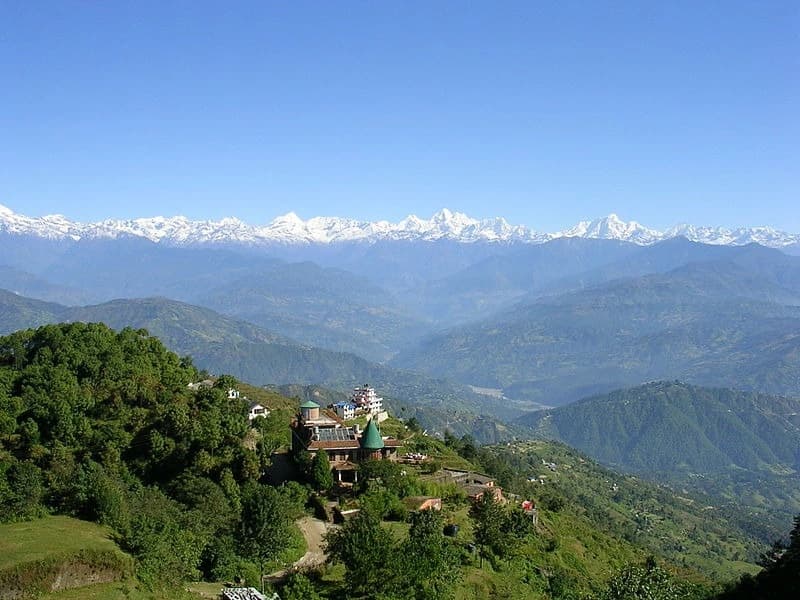
The Everest Base Camp trek in November is a high-altitude Himalayan trek through Nepal’s Khumbu region, following the classic route from Lukla through Phakding, Namche Bazaar, Tengboche, Dingboche, Lobuche and Gorak Shep to Everest Base Camp at 5,364 m. November is one of the most favorable periods for this journey because the post-monsoon atmosphere brings dry trails, low rainfall and some of the clearest mountain visibility of the trekking year, with Everest, Lhotse, Nuptse, Ama Dablam and Pumori often visible in sharp morning light.
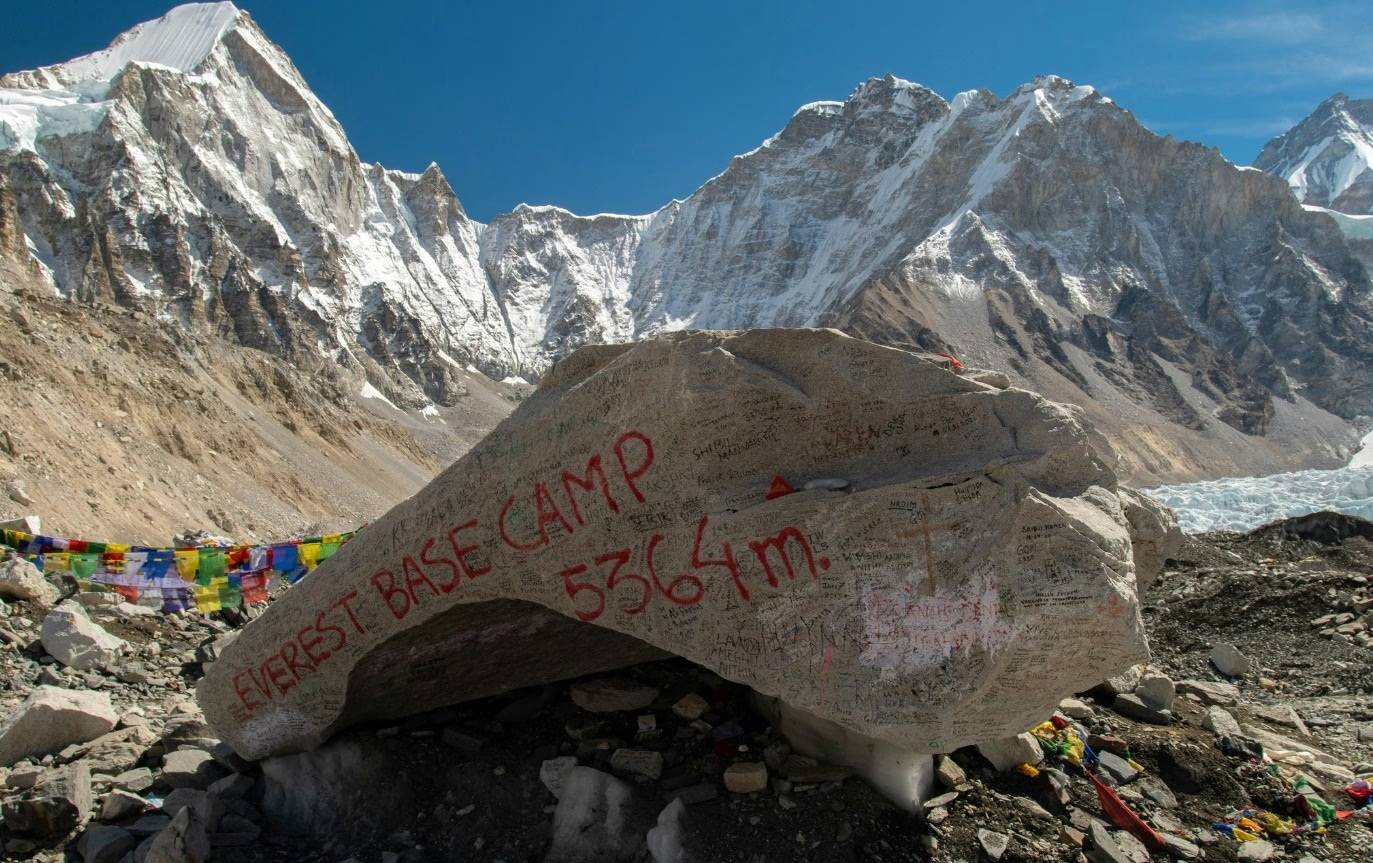
The same conditions also bring freezing nights, shorter daylight, icy sections and crowded lodges, particularly during the first three weeks of November. Trekkers should expect a demanding 12- to 14-day itinerary with two acclimatization stops and a pre-dawn climb of Kala Patthar at 5,644 m for the classic Everest panorama.
Planning an Everest Base Camp trek in November requires more than choosing a departure date. Weather, altitude, acclimatization, trail conditions, Lukla or Ramechhap flights, lodge availability, winter clothing, microspikes, sleeping equipment, fitness, travel insurance and emergency evacuation planning all affect the experience and overall cost.
This guide explains the November weather and temperatures, snowfall, mountain views, crowds, route and itinerary, packing list, trekking gear, difficulty and fitness requirements, altitude sickness prevention, safety measures, permits, flights, accommodation and 2026 costs in USD and NPR, with practical guidance for Nepali and international trekkers preparing for the Everest Base Camp route.
Why Is November Considered One of the Best Months for the Everest Base Camp Trek?
November ranks among the best months for the Everest Base Camp trek because the monsoon has fully cleared, rainfall hits its yearly low, and winds stay light below 4,500 m. Mornings are stable, mountain edges look sharp, and trails stay dry for most of the route.
Three conditions set November apart. The monsoon has washed dust from the air, so visibility on a good morning passes 100 km. A high-pressure system holds over the Himalaya through most of the month, which keeps skies clear from sunrise until about 11 AM. Daytime temperatures in the lower valley stay comfortable for walking in a base layer and a fleece.
October is warmer, but it brings more cloud in the first week and the heaviest crowds of the year. November trades warmth for stability. Our best window is 3 to 18 November 2026. Nights are cold but not extreme, and the trail has thinned slightly since October.
Tihar affects the calendar. Laxmi Puja falls on 8 November 2026, and Bhai Tika falls on 10 or 11 November depending on the patro. Domestic flights fill, and guides and porters with families in the hills often ask for leave. Confirm staffing and flight seats at booking.
November suits photographers, trekkers who dislike wet trails, and anyone with proper winter gear. It suits poor sleepers least, because lodge rooms in Lobuche and Gorak Shep drop below freezing.
What Kind of Weather Can You Expect on the Everest Base Camp Trek in November?
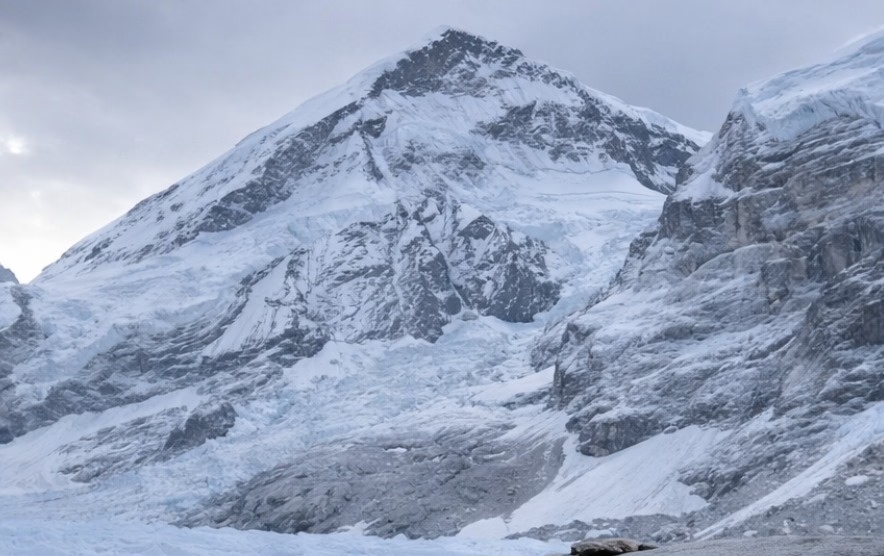
Expect clear, dry, cold weather. Daytime highs run from 12 to 15°C at Lukla down to about -5°C at base camp. Nights fall from 3°C at Lukla to -18°C at Gorak Shep. Rain is light below 3,500 m, and snow is occasional above 4,500 m.
The day follows a pattern. Skies are clear from 6 AM to 11 AM. Cloud builds from the valley floor after midday, and wind picks up after 2 PM. The sun sets near 5:00 PM, and the temperature falls fast once it does. Villages like Dingboche and Lobuche sit in mountain shadow, so direct sun reaches them later in the morning than a map suggests.
The first week of November runs 3 to 5°C warmer than the last. The weather also varies between years. In October 2014, the tail end of Cyclone Hudhud swept the Nepal Himalaya, dropping heavy snow that buried passes like Cho La and forced many teams to turn back toward the main Everest Base Camp route. While November is generally dry, historical post-monsoon blizzards demonstrate how fast the weather can turn, occasionally requiring widespread helicopter evacuations from the upper valleys.
How Clear Are the Mountain Views on Everest Base Camp Trek During November?
Mountain views are at their clearest in November. Everest, Lhotse, Nuptse, Ama Dablam and Pumori show sharp edges from sunrise until about 11 AM, and Kala Patthar at 5,644 m gives the only full view of Everest's summit on the standard route.
Ama Dablam (6,812 m) appears from Namche Bazaar onward and stays beside you for days. Everest first shows from the Top Danda viewpoint on the steep, forested climb just before reaching Namche Bazaar. Later, a much wider panorama opens at Syangboche, near the Everest View Hotel at 3,880 m, where the summit appears as a dark plume behind the Nuptse-Lhotse wall.
Base camp itself has no view of the summit. Many first-timers do not know this. Nuptse blocks the line of sight, and the view you came for is from Kala Patthar.
Start the Kala Patthar climb by headlamp around 4:30 to 5:00 AM and reach the top as the first light hits the summit pyramid. We advise sunrise over sunset, because the evening descent in fading light and falling temperature is where trekkers get into trouble. Keep a spare day in the schedule. A cloudy morning on your planned day is the most common reason people miss the view.
How Cold Does It Get at Everest Base Camp in November?
Everest Base Camp reaches daytime highs of -8 to -2°C in November. Nighttime lows near -18°C hit Gorak Shep, the last overnight stop, and wind chill pushes the felt temperature below -25°C on exposed ridges.
The coldest moment of the trip is rarely the night. It is the pre-dawn start to Kala Patthar, when you are stationary or moving slowly in wind. Fingers go first, so carry mitts rather than gloves for that morning.
Lodge rooms are unheated. Indoor room temperatures at Lobuche and Gorak Shep drop to -5 to -10°C by morning, and water bottles freeze overnight. The dining room is the only warm space. Staff light the stove around 4:30 to 5:00 PM, usually with dried yak dung and wood. Fill a bottle with boiled water (USD 3 to 5 at altitude) and put it in your sleeping bag as a foot warmer.
What Is the Everest Base Camp Trek Route Like in November?
The route follows the classic Lukla to Everest Base Camp trail. It runs about 65 km one way through Phakding, Namche Bazaar, Tengboche, Dingboche, Lobuche and Gorak Shep, and climbs from 2,860 m to 5,364 m on well-marked, teahouse-lined paths.
The round trip covers about 130 km. Teahouses appear every 2 to 3 hours of walking, so you never carry food. The trail crosses suspension bridges, climbs stone steps to Namche, and follows the Dudh Koshi and then the Khumbu Glacier moraine. November's dry ground makes the path firm and fast. It also makes it dusty, and a buff or scarf over the mouth keeps the cough down.
How Many Days Does the Everest Base Camp Trek Usually Take in November?
The Everest Base Camp trek takes 12 days from Kathmandu back to Kathmandu on the standard itinerary. It takes 14 days once an arrival day and a weather buffer day are added. The plan includes 2 acclimatization days, at Namche Bazaar and Dingboche.
The table below shows the standard 12-day schedule with sleeping altitudes and walking times. The sleeping altitude is the number that governs acclimatization, so read that column first.
Day | Route | Sleeping altitude | Walking time |
1 | Fly to Lukla, trek to Phakding | 2,610 m | 3 h |
2 | Phakding to Namche Bazaar | 3,440 m | 5 to 6 h |
3 | Acclimatization at Namche (hike to Everest View Hotel) | 3,440 m | 3 h |
4 | Namche Bazaar to Tengboche | 3,860 m | 5 to 6 h |
5 | Tengboche to Dingboche | 4,410 m | 5 to 6 h |
6 | Acclimatization at Dingboche (Nangkartshang ridge) | 4,410 m | 3 to 4 h |
7 | Dingboche to Lobuche | 4,940 m | 5 h |
8 | Lobuche to Gorak Shep, then Everest Base Camp | 5,164 m | 7 to 8 h |
9 | Kala Patthar sunrise, descend to Pheriche | 4,371 m | 6 to 7 h |
10 | Pheriche to Namche Bazaar | 3,440 m | 6 to 7 h |
11 | Namche Bazaar to Lukla | 2,860 m | 6 to 7 h |
12 | Fly Lukla to Kathmandu | 1,400 m | 35 min flight |
Add 2 buffer days if your international flight leaves soon after the trek. A Lukla delay of 24 to 48 hours is routine in the trekking season, and a missed connection costs far more than a spare day.
What Are the Main Stops and Highlights Along the November Everest Base Camp Trek Route?

The route has 8 main stops: Lukla, Phakding, Namche Bazaar, Tengboche, Dingboche, Lobuche, Gorak Shep and Everest Base Camp. Kala Patthar at 5,644 m is the best viewpoint. Each stop has a distinct role in the acclimatization sequence.
Lukla (2,860 m): Gateway airstrip with a 527 m runway, permit checks, and the last reliable ATMs.
Namche Bazaar (3,440 m): Sherpa trading town with a Saturday market, bakeries, gear shops and the first Everest sighting from Syangboche.
Tengboche (3,860 m): Monastery founded in 1916, set below Ama Dablam. The Mani Rimdu festival is held here in autumn, with the date set by the Tibetan lunar calendar, so confirm it before booking.
Dingboche (4,410 m): Stone-walled barley fields and the second acclimatization stop.
Lobuche (4,940 m): Memorial cairns at Thukla Pass for climbers lost on Everest, and the first stop where nights fall below -15°C.
Gorak Shep (5,164 m): The highest overnight stop, with a handful of lodges and the shortest sleep of the trek.
Everest Base Camp (5,364 m): A rocky moraine beside the Khumbu Icefall. Expedition tents are absent in November, so it is quiet.
Kala Patthar (5,644 m): The viewpoint that justifies the trip.
How Does the November Trek Compare With Other Seasons on the Everest Base Camp Route?
November delivers the best balance of dry trails, clear views and manageable crowds, but it is colder than October and spring. Spring is warmer with rhododendron and haze, monsoon brings rain and cancelled flights, and winter brings extreme cold.
The table compares five periods using typical temperatures at Gorak Shep, so you can weigh warmth against clarity.
Season | Gorak Shep day / night | Crowds | Views | Main trade-off |
Spring (Mar to May) | 0 to 8°C / -12 to -4°C | High, peaks in April and May | Good, hazier by May | Afternoon cloud, expedition traffic |
Monsoon (Jun to Aug) | 2 to 8°C / -2 to 2°C | Very low | Poor | Rain, leeches, flight cancellations |
October | 2 to 7°C / -10 to -6°C | Highest of the year | Excellent | Crowded lodges, early-month cloud |
November | -4 to 2°C / -18 to -12°C | High, then easing | Excellent | Cold nights, short days |
Winter (Dec to Feb) | -8 to -2°C / -25 to -18°C | Low | Excellent | Severe cold, some lodges closed |
Late spring is kinder to cold sleepers. November is kinder to anyone who wants the sharpest light and dry boots.
What Are the Temperature and Weather Conditions on the Everest Base Camp Trek in November?
November conditions split into three bands. Below 3,500 m is cool and comfortable, from 3,500 to 4,500 m is cold with freezing nights, and above 4,500 m is severe, with sub-zero days. Each 1,000 m of altitude lowers the temperature by about 6.5°C.
The first half of the month is milder than the second, and daylight shrinks from roughly 11 hours to 10.5 hours over the month. Plan to finish each day's walking by 3:30 PM, before the afternoon wind and the temperature drop arrive.
What Are Daytime and Nighttime Temperatures at Different Elevations of the Everest Base Camp Trek?
Daytime highs fall from 12 to 15°C at Lukla to -8 to -2°C at base camp. Nighttime lows fall from 2 to 5°C at Lukla to -20 to -14°C at Gorak Shep. These are typical ranges for early to mid November.
The table lists each stop with its typical November range. Subtract 3 to 5°C for the last week of the month.
Location | Altitude | Daytime | Nighttime |
Lukla | 2,860 m | 12 to 15°C | 2 to 5°C |
Namche Bazaar | 3,440 m | 8 to 12°C | -4 to 0°C |
Tengboche | 3,860 m | 5 to 9°C | -7 to -3°C |
Dingboche | 4,410 m | 2 to 6°C | -12 to -8°C |
Lobuche | 4,940 m | -1 to 3°C | -15 to -10°C |
Gorak Shep | 5,164 m | -4 to 2°C | -20 to -14°C |
Everest Base Camp | 5,364 m | -8 to -2°C | No overnight stays |
Kala Patthar (pre-dawn) | 5,644 m | -20 to -15°C at sunrise | Not applicable |
The night values decide what sleeping bag you carry. A bag rated to a comfort limit of -15°C or lower matches the Lobuche and Gorak Shep nights.
How Much Snow Can You Expect Along the Everest Base Camp Trail?
Snow in November is light and local. Namche Bazaar and below see snow on fewer than 1 day in the month, while Dingboche to Gorak Shep sees 0 to 3 snow days. Fresh snow melts or compacts within 24 to 48 hours.
Most trekkers walk the whole trail on bare ground with patches of ice in shade. The exception is a strong western disturbance, which drops 10 to 30 cm above 4,500 m and buries the upper trail for a day or two. That valley lies on the Tibetan side, but it shows how fast the weather turns in an otherwise dry month.
Are Rain and Snowfall Common on Everest Base Camp Trek During November?
Rain and snowfall are uncommon in November. Namche Bazaar receives about 10 mm of precipitation across the month, compared with several hundred millimetres in July, and most trekking days are fully dry.
Light rain is possible at Lukla and Phakding in the first week, and a rain jacket handles it. Above Namche the precipitation falls as snow. Spend your concern on wind and cold rather than wet. Clouds that gather after midday drop visibility, but they rarely produce steady precipitation.
What Are the Crowds and Trail Conditions Like on the Everest Base Camp Trek in November?
Crowds peak from 1 to 20 November and ease in the last ten days. Trail conditions are dry and firm with frozen mornings and heavy dust. The busiest bottlenecks are the Lukla airstrip, the Hillary suspension bridge, and Lobuche and Gorak Shep lodges.
Traffic on the trail is mostly trekkers, yak caravans and porters carrying loads of 30 kg or more. Expect conversation in six or seven languages at breakfast.
How Busy Is the Everest Base Camp Trail During November?
The trail is busy in November. According to Nepal Tourism Statistics 2025 from the Ministry of Culture, Tourism and Civil Aviation, Sagarmatha National Park received 47,524 tourists in 2025, and about 1,000 people enter the park daily at peak season.
According to the Civil Aviation Authority of Nepal, the Lukla airstrip safely handles well over 100 daily flight movements and processes upwards of 1,000 tourist arrivals on peak weather days in October and November. Early November runs at a similar pace.
Lodge beds at Lobuche and Gorak Shep are the scarce resource. Rooms are twin-share at best, and dormitory-style at worst. Reserve through your agency before you fly, rather than negotiating on arrival.
Three habits reduce crowding. Start walking by 6:30 AM, since most groups leave after 8:00 AM. Cross the Hillary bridge before 9:00 AM to avoid yak traffic. Stand on the uphill side of the trail whenever a yak train passes, because a yak will not step aside.
What Are the Benefits of Everest Base Camp Trekking Before or After the November Peak Period?
Trekking in the shoulder weeks, meaning the last days of October or the weeks from late November to mid-December, gives quieter trails, easier room bookings and more guide attention. The cost is colder nights, typically 3 to 5°C lower than early November.
There are three benefits. Lodges have free beds, so you choose rooms rather than accept leftovers. Photographers get empty viewpoints. Packages priced for peak demand often soften outside the first three weeks of November.
There is also a risk. The 360 Expeditions team in late October 2025 found crowds vanished after the storm, but the Cho La pass was buried and unsafe. Quiet trails and unstable weather sometimes arrive together. Choose shoulder weeks if you own proper winter gear and have a flexible return date.
How Do Trail Conditions Affect Everest Base Camp Trekking in November?
Trail conditions in November are dry and firm by midday and icy in the early morning. Dust affects breathing from Namche upward, and stream crossings between Dingboche and Lobuche freeze overnight. Pace slows 10 to 20% on icy sections.
Four conditions shape the walking. Frost on stone steps makes the first hour slippery, especially at Thukla Pass. Dust raised by yak trains triggers what trekkers call the Khumbu cough, a dry, persistent cough caused by cold, dry air. Moraine sections above Lobuche are loose rock rather than path. Shaded trail between Dingboche and Lobuche can hold ice until 10:00 AM.
Start slowly, use poles, and keep a buff over your mouth. These three habits prevent most problems.
What Should You Pack for the Everest Base Camp Trek in November?
Pack for -20°C nights and +15°C afternoons: a 5-layer clothing system, waterproof high-ankle boots, a four-season sleeping bag with a comfort rating near -15°C, microspikes, and a 40 to 50 litre daypack. Total porter-carried weight is limited to 10 to 12 kg per person.
Weight discipline pays off. Porters on the Lukla route typically carry up to 20 to 25 kg shared between two trekkers, and Lukla flights limit luggage to 15 kg per person including the daypack. Rent bulky items in Kathmandu, such as sleeping bags and down jackets, at about USD 1 to 2 per day.
Which Clothing Layers Are Essential on Everest Base Camp Trek for November?
Five layers are essential: a merino base layer, a fleece mid layer, a lightweight down jacket, a waterproof shell, and a heavy down parka rated to -20°C for evenings and summit mornings. Add trekking trousers, insulated trousers and a thermal hat.
Layers work because the temperature swing is 30°C between a Lukla afternoon and a Gorak Shep morning. Match the system to the moment:
Base layer: Two merino tops (150 to 200 gsm) and two bottoms, since cotton holds sweat and freezes.
Mid layer: One fleece or grid-fleece jacket for walking.
Insulation: One lightweight down jacket (700-fill or higher) and one heavy parka for lodges and Kala Patthar.
Shell: One waterproof, breathable jacket and trousers for wind and snow.
Extremities: Liner gloves, insulated mitts, a warm hat, a sun hat and a buff.
The most common mistake we see is trekkers carrying one very thick jacket and nothing in between. A single bulky layer cannot adjust to a 6-hour walking day.
What Trekking Gear and Equipment Should You Bring for Everest Base Camp Trek?
Bring 9 core items: waterproof boots, trekking poles, a four-season sleeping bag, a headlamp with spare batteries, insulated water bottles, a pulse oximeter, sunglasses with UV category 4 lenses, a 40 to 50 litre daypack, and a duffel for the porter.
Gear decisions in November hinge on cold. Boots must be broken in and stiff enough to take microspikes. Headlamp batteries lose capacity fast below -10°C, so keep spares in an inner pocket. Water bladders freeze at the tube, so carry two 1-litre insulated bottles instead. Teahouses sell boiled water, and purification tablets or a UV pen cover the rest.
Bring a power bank, because charging at lodges costs USD 2 to 5 per device and the cold drains phone batteries within hours. Keep devices in an inside pocket.
Do You Need Microspikes or Other Winter Gear in November?
Yes, carry microspikes in November. Wear them on icy mornings between Dingboche and Gorak Shep and on the Kala Patthar slope. Add gaiters and a pair of trekking poles with snow baskets for deeper snow. Crampons are not required.
Microspikes weigh 350 to 500 g and rent or sell in Namche and Kathmandu. Most days you carry them without using them. On the one morning you need them, they decide whether you reach Kala Patthar. Hardened ice on the Thukla climb and the upper Kala Patthar path is the most common place.
Full crampons and an ice axe belong to mountaineering and are not required on the standard route.
What Personal Essentials Should You Pack for High-Altitude Trekking?
Pack 8 personal essentials: a first-aid kit, altitude medication prescribed by your doctor, high-SPF sunscreen and lip balm, water purification tablets, a quick-dry towel, wet wipes, NPR cash, and printed copies of your insurance and permits.
The first-aid kit holds blister plasters, paracetamol, oral rehydration salts, antiseptic and a thermal blanket. Sunscreen of SPF 50 or higher matters because UV is strong at 5,000 m, even in the cold. Cash matters because ATMs above Namche are unreliable, and NPR 40,000 to 60,000 covers most personal spending on a 12-day trek. Travel insurance must include helicopter evacuation to 6,000 m. A private rescue flight from the Khumbu costs USD 3,000 or more, which is why we treat insurance as non-negotiable.
How Difficult Is the Everest Base Camp Trek in November?
The Everest Base Camp trek is moderate to challenging. It involves no technical climbing, but daily 5 to 7 hour walks at altitude. November adds cold nights and shorter days, which raise difficulty by roughly one grade compared with October.
Difficulty comes from three sources: thin air, repetition and cold. At 5,364 m the air holds about 50% of sea-level oxygen pressure, so every step costs more effort. Many trekkers find day 8, the Gorak Shep to base camp walk, their hardest. The sleep is poor, the air is thin, and the terrain is rocky.
What Level of Fitness Is Required for the November Everest Base Camp Trek?
A reasonable cardiovascular fitness is required: the ability to walk 5 to 7 hours daily for 9 days, carrying a 5 to 8 kg daypack, with 400 to 800 m of daily ascent. No prior mountaineering experience is required.
Age is a weak predictor. We have guided 60-year-olds who finished comfortably and 25-year-old marathon runners who turned back at Lobuche. Altitude tolerance varies by person and is not tied to fitness.
Aim for three benchmarks before departure: a 6-hour hike with 800 m of climbing, three consecutive training days, and stair climbing with a loaded pack. Nepali trekkers from lower-altitude districts like Jhapa, Morang and Sunsari should note the same applies: living in the plains gives no altitude advantage.
How Can You Prepare for Long Trekking Days and High Altitude of Everest Base Camp Trek?
Prepare over 12 to 16 weeks with 3 to 5 sessions per week: hiking with a loaded pack, stair climbing, leg strength work and aerobic cardio. Add back-to-back long hikes in the final 4 weeks and practice sleeping in your actual gear.
A simple plan works better than an elaborate one:
Walk uphill for 2 to 3 hours twice a week with a pack.
Run, cycle or swim for 40 minutes twice a week.
Strengthen legs and core with squats, lunges and step-ups once a week.
Complete a 6 to 8 hour weekend hike in weeks 8 to 12.
Break in boots over at least 50 km before departure.
Altitude cannot be trained at home, so build the buffer into the itinerary instead.
What Are the Main Challenges of Trekking to Everest Base Camp in November?
The 6 main challenges are cold nights, altitude, short daylight, dry air and dust, flight delays at Lukla, and crowded lodges at Lobuche and Gorak Shep. Each has a practical countermeasure.
Cold nights: Use a -15°C comfort-rated sleeping bag and a hot water bottle.
Altitude: Follow the 2-acclimatization-day schedule and descend if symptoms rise.
Short daylight: Leave by 6:30 AM and finish by 3:30 PM.
Dry air and dust: Wear a buff, drink 3 to 4 litres of fluid daily, and use throat lozenges.
Flight delays: Carry a buffer day and flexible onward tickets.
Crowded lodges: Confirm rooms through your agency before you leave Kathmandu.
Most trekkers who fail the trek in November fail because of cold sleep and poor hydration, not fitness.
How Can You Stay Safe and Acclimatized During the Everest Base Camp Trek in November?
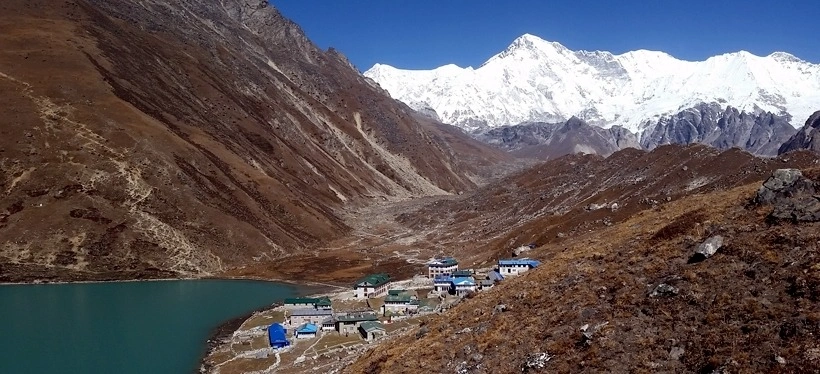
Stay safe by climbing slowly, sleeping low, hydrating, and reporting symptoms early. Gain no more than 500 m of sleeping altitude per day above 3,000 m, take rest days, and descend when symptoms worsen. Guides, oximeters and insurance form the safety net.
Acclimatization is the decisive skill on this trek. Strong trekkers who rush it get sick first.
How Does Altitude Affect Everest Base Camp Trekkers in November?
Altitude reduces the oxygen available per breath. At Gorak Shep (5,164 m) the air carries about half the oxygen pressure of sea level, which raises heart rate, disrupts sleep and slows recovery. November's cold and dry air amplify dehydration.
Common effects include a resting pulse 20 to 30 beats higher than normal, breathlessness on stairs, vivid dreams, and waking at night. Oxygen saturation readings in the low 80s are common at Dingboche and the mid-70s to low 80s at Gorak Shep. Cold constricts blood vessels, so hands and feet lose heat faster, and low humidity dries the throat. These add up to fatigue that feels worse than the altitude alone would suggest.
What Acclimatization Days Are Recommended for the November Everest Base Camp Trek?
Two acclimatization days are recommended: one at Namche Bazaar (3,440 m) and one at Dingboche (4,410 m). According to the CDC Yellow Book, above 3,000 m the sleeping elevation should rise by no more than 500 m per day, with a rest day every 3 to 4 days.
Use each rest day for a "climb high, sleep low" hike. From Namche, walk up to the Everest View Hotel at 3,880 m and return. From Dingboche, climb the Nangkartshang ridge to about 5,000 m for an hour and descend. Doing nothing on a rest day gives weaker acclimatization than a gentle hike.
Do not skip the second stop to save a day. A 12-day schedule with both rest days has a lower evacuation rate than a compressed 10-day itinerary, and we hold that line when clients push for speed.
How Can You Recognize and Prevent Altitude Sickness?
Recognize acute mountain sickness by a headache plus nausea, dizziness, fatigue or poor sleep. Prevent it with slow ascent, 3 to 4 litres of fluid daily, no alcohol, and descent at the first worsening sign. Never ascend with symptoms that are getting worse.
Three conditions matter:
Acute mountain sickness (AMS): Headache with nausea, dizziness or fatigue. Rest, hydrate and hold your altitude.
High-altitude cerebral edema (HACE): Confusion, loss of balance or unusual behaviour. This is an emergency, so descend immediately.
High-altitude pulmonary edema (HAPE): Breathlessness at rest, a wet cough, or blue lips. This is an emergency, so descend and arrange evacuation.
According to the Wilderness Medical Society guidelines, acetazolamide at 125 mg twice daily reduces the risk of AMS, and a doctor must prescribe it. The Himalayan Rescue Association post at Pheriche (4,371 m) runs altitude talks and treatment during the trekking season. Guides who check oxygen saturation and symptoms every morning and evening catch problems that trekkers hide.
How Much Does the Everest Base Camp Trek Cost in November?
A guided Everest Base Camp trek in November 2026 costs USD 1,250 to 1,800 per person for a standard group package and USD 1,800 to 3,000 for a private trek, based on 12 to 14 days from Kathmandu. Peak demand in the first three weeks lifts prices.
Independent costs run lower on paper but add logistics risk. The ranges below reflect 2026 market pricing from licensed Nepali operators.
What Factors Affect the Cost of an Everest Base Camp Trek in November?
Seven factors drive cost: group size, flight route, lodge standard, guide and porter ratio, season demand, insurance and extras. The Lukla flight alone adds USD 236 to 240 one way from Kathmandu or USD 160 to 185 from Ramechhap.
The table lists the typical 2026 cost of each line item.
Item | Typical 2026 cost |
Kathmandu to Lukla flight (one way) | USD 236 to 240 |
Ramechhap to Lukla flight (one way) | USD 160 to 185, plus USD 30 to 40 shared road transfer |
Sagarmatha National Park permit for foreigner | NPR 3,390 (includes 13% VAT) |
Khumbu Pasang Lhamu permit | NPR 3,000 (about USD 22 to 25) |
Licensed guide | USD 25 to 35 per day |
Porter | USD 18 to 25 per day |
Meals on the trail | USD 20 to 35 per day |
Tea, charging, Wi-Fi, hot showers | USD 2 to 7 per item |
Travel insurance with evacuation cover | USD 80 to 200 |
Lodge rooms cost little or nothing when you eat dinner and breakfast there, since food margins fund the room. Prices rise with altitude because every kilogram arrives by porter or yak.
Flight timing matters. During the busy months, Lukla flights often depart from Ramechhap's Manthali airport to ease congestion at Kathmandu. That means a 4 to 5 hour road transfer and a very early start (often departing Kathmandu between 1:00 AM and 2:00 AM), so ask which airport your operator expects for your dates.
What Is Usually Included in an Everest Base Camp Trek Package?
A standard package includes 8 items: airport transfers, Kathmandu hotel nights, Lukla flights, permits, a licensed guide, a porter, trekking-lodge accommodation and meals, and a basic medical kit. Quality varies, so compare line by line.
The list below shows the usual inclusions, with examples where they differ.
Transport: Airport pickups, Kathmandu to Lukla and return flights, and Ramechhap road transfers.
Permits: National park and Khumbu municipality fees.
Staff: Licensed guide and porter, with their insurance, food and lodging.
Accommodation: Twin-share lodge rooms along the trail and 2 to 3 Kathmandu hotel nights.
Meals: Three meals per day, often with tea or coffee included.
Safety: First-aid kit and a pulse oximeter.
Compare what is missing. Some budget packages leave out meals or porters, which changes the real price by hundreds of dollars.
Are Permits, Flights, Accommodation, and Guides Included in the Everest Base Camp Trek Cost?
Most guided packages include permits, domestic flights, lodge accommodation and a licensed guide. International flights, Nepal visa fees, travel insurance, personal gear, drinks, tips and rescue costs are excluded. Confirm each item in writing before paying.
The Khumbu Pasang Lhamu permit replaced the TIMS card on this route, so you do not buy a separate TIMS card. A Nepal tourist visa for 30 days costs USD 50. Budget tips of around 10% of the trek cost across the guide and porter team. Delays are another gap to check: ask who pays for extra nights in Lukla or Kathmandu when flights are cancelled, because policies differ.
How Can Nepal Intrepid Treks Help You Plan an Everest Base Camp Trek in November?
Nepal Intrepid Treks plans November Everest Base Camp departures with licensed guides, a 12 to 14 day itinerary that includes both acclimatization days, handled permits and flights, and a written gear list. We confirm lodge rooms in Lobuche and Gorak Shep before you leave Kathmandu.
November planning goes wrong in predictable places: late flight bookings, thin gear lists, and itineraries compressed to save a day. We build the schedule backwards from your return flight, add a weather buffer, and reserve rooms in the two tightest villages early.
Our pre-trek briefing in Kathmandu covers your gear, rental options and the symptoms to report. Nepali trekkers from Biratnagar, Dharan, Pokhara and beyond get the same briefing and a plan in NPR. We also check that your travel insurance covers evacuation to 6,000 m, since that is the most common gap we find.
Planning for November 2026? Send us your arrival date, group size and fitness background. We reply with a day-by-day plan and a written quote.
Can Nepal Intrepid Treks Arrange a Safe and Well-Planned November Everest Base Camp Trek?
Yes. Nepal Intrepid Treks arranges safe November treks through licensed guides, a conservative acclimatization schedule, daily oxygen and symptom checks, a defined evacuation plan, and a flexible itinerary that absorbs flight delays and snow days without forcing risky decisions.
Safety comes from process, not slogans. Our guides check oxygen saturation and symptoms each morning and evening, and they hold the right to stop an ascent. We hold the cold-weather gear check at Namche, where a forgotten glove or a thin sleeping bag is still fixable. If a storm closes the upper trail, we shift days rather than push through.
Costs stay transparent. Every package states what is included and excluded, with permit fees in NPR and flights in USD. Flexibility is built in. A spare day costs less than a missed flight, and a turnaround costs less than an evacuation.
What Are the Key Takeaways for Planning Your Everest Base Camp Trek in November?
The Everest Base Camp trek in November rewards trekkers who plan for cold and crowds: 12 to 14 days, two acclimatization stops, a -15°C sleeping bag, microspikes, early lodge bookings, and a USD 1,250 to 1,800 budget for a standard guided package.
Choose 3 to 18 November for the best balance of clarity and manageable cold.
Allow 12 to 14 days, including 2 acclimatization days and 1 weather buffer.
Expect daytime highs from 12 to 15°C at Lukla and nighttime lows near -18°C at Gorak Shep.
Pack five layers, a heavy down parka, a four-season sleeping bag and microspikes.
Climb Kala Patthar at sunrise, since base camp itself has no view of Everest's summit.
Train for 12 to 16 weeks with loaded hikes and back-to-back long days.
Sleep no more than 500 m higher each night above 3,000 m, and descend when symptoms worsen.
Book Lobuche and Gorak Shep rooms and Lukla flights early, and confirm Ramechhap versus Kathmandu departures.
Budget NPR 6,000 for permits, USD 236 to 240 per Lukla flight from Kathmandu, and insurance with evacuation cover.
Contact a licensed operator early, because November slots and lodge beds fill first.
The Everest Base Camp trek in November is a cold, clear and busy month on the Khumbu trail. Preparation turns that combination into the best trekking window of the year.