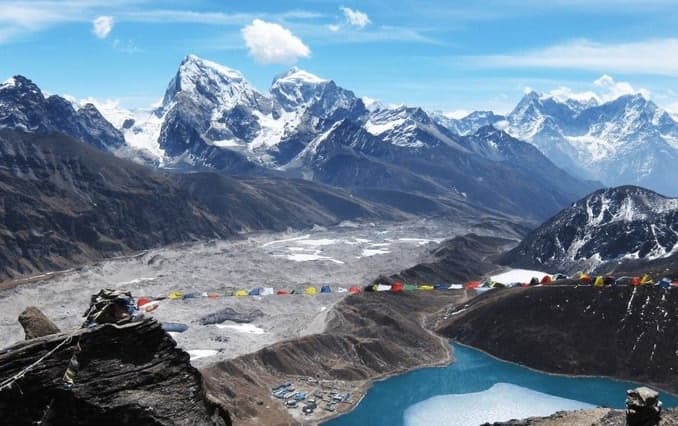
Trekking in Nepal is the experience of exploring the Himalayan mountain ranges through established trails that pass snow-capped peaks, alpine valleys, high mountain passes, glacial rivers, traditional villages, and protected national parks. Home to eight of the world's fourteen 8,000-meter mountains, Nepal offers everything from beginner-friendly teahouse treks to challenging high-altitude expeditions, making it the world's most diverse trekking destination. Every trek requires careful planning because factors such as trekking season, route difficulty, altitude, permits, fitness level, weather conditions, and logistics directly influence both safety and the overall experience.
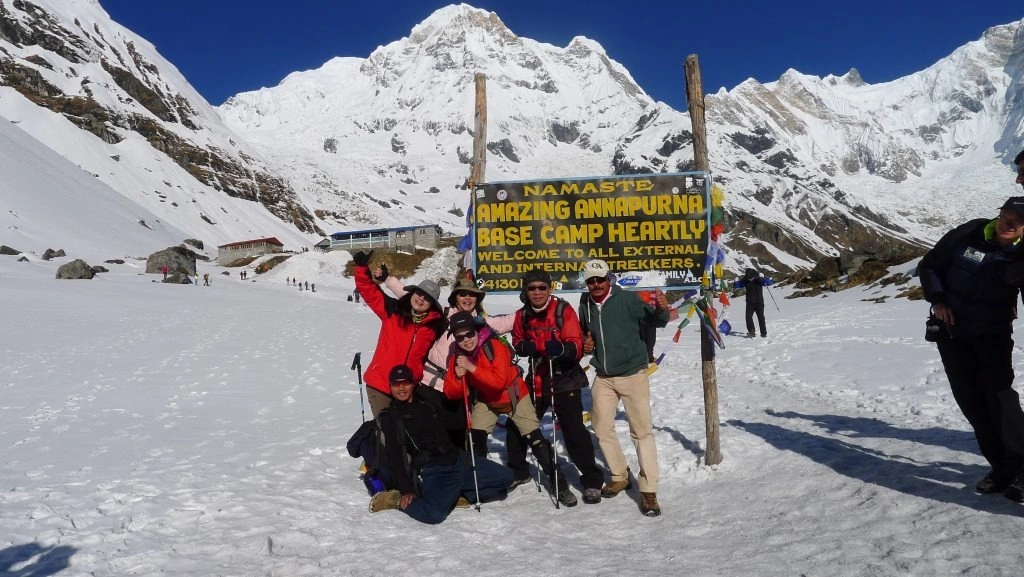
This complete Nepal trekking guide covers every essential step before you begin your journey. You'll learn how to choose the right trekking route, identify the best time to trek, understand permit requirements, prepare physically for high altitude, pack the right trekking gear, prevent altitude sickness, estimate trekking costs, decide whether to hire a licensed guide, and follow responsible trekking practices that respect local communities and the Himalayan environment. Whether you're planning Everest Base Camp, Annapurna Base Camp, the Annapurna Circuit, Langtang Valley, Manaslu Circuit, Upper Mustang, or another Himalayan trek, this guide provides the practical knowledge needed to plan a safe, rewarding, and well-prepared adventure in Nepal.
Why Is Nepal One of the World's Best Trekking Destinations?
Nepal ranks as the world's premier trekking destination because of 3 unmatched assets: the concentration of Himalayan peaks, the diversity of trekking terrain across 5 ecological zones, and a deeply embedded mountain culture that has supported trekkers since 1964.
No other country offers elevation ranges from 60 meters (Terai lowlands) to 8,848.86 meters (Mount Everest) within a single national boundary. That vertical diversity creates 7 distinct climate zones, each producing a different trekking landscape within hours of walking.
What Makes Trekking in Nepal Unique?
Trekking in Nepal differs from trekking anywhere else across 4 fundamental dimensions: altitude scale, cultural immersion, infrastructure depth, and route variety.
The Himalayan range in Nepal contains summits that dwarf any mountain on other continents. Everest, Kangchenjunga, Lhotse, Makalu, Cho Oyu, Dhaulagiri, Manaslu, and Annapurna, all 8 of these 8,000-meter giants are in Nepal or on its border. Trekkers walk beneath these summits at base camp elevations that already exceed the highest peaks in the Alps.
Cultural immersion is not a tourism feature here, it is a structural part of the trail. Routes pass through active Sherpa villages, Gurung farming communities, Tamang settlements, and Tibetan Buddhist monasteries. Many teahouses operating on the Everest Base Camp route have been owned by the same Sherpa families for 3 generations.
Infrastructure on the 3 major circuits, Everest, Annapurna, and Langtang, supports trekkers with teahouse accommodation, cooked meals, satellite phone access, and helicopter evacuation services, making these routes accessible to first-time trekkers who could not manage self-supported wilderness camping.
Which Types of Treks Can You Choose in Nepal?
Nepal offers 5 primary trek categories, each serving different objectives, time frames, and experience levels:
Teahouse trekking: Accommodation and meals at local lodges along fixed routes; the most accessible format, covering routes like Annapurna Base Camp and Everest Base Camp
Camping treks: Self-sufficient expeditions with tents, kitchen staff, and porters; used on remote routes like Kanchenjunga, Dolpo, and far western Nepal
Peak climbing treks: Routes combined with summit attempts on trekking peaks such as Island Peak (6,189m), Mera Peak (6,476m), or Lobuche East (6,119m)
Cultural circuit treks: Lower-elevation routes focused on heritage sites, temples, and village life; Tamang Heritage Trail and Annapurna Cultural Circuit are the primary examples
Off-the-beaten-path treks: Remote routes with minimal infrastructure, covering areas like Tsum Valley, Nar Phu, and Humla; these require full camping support and specialized permits
When Is the Best Time to Trek in Nepal?
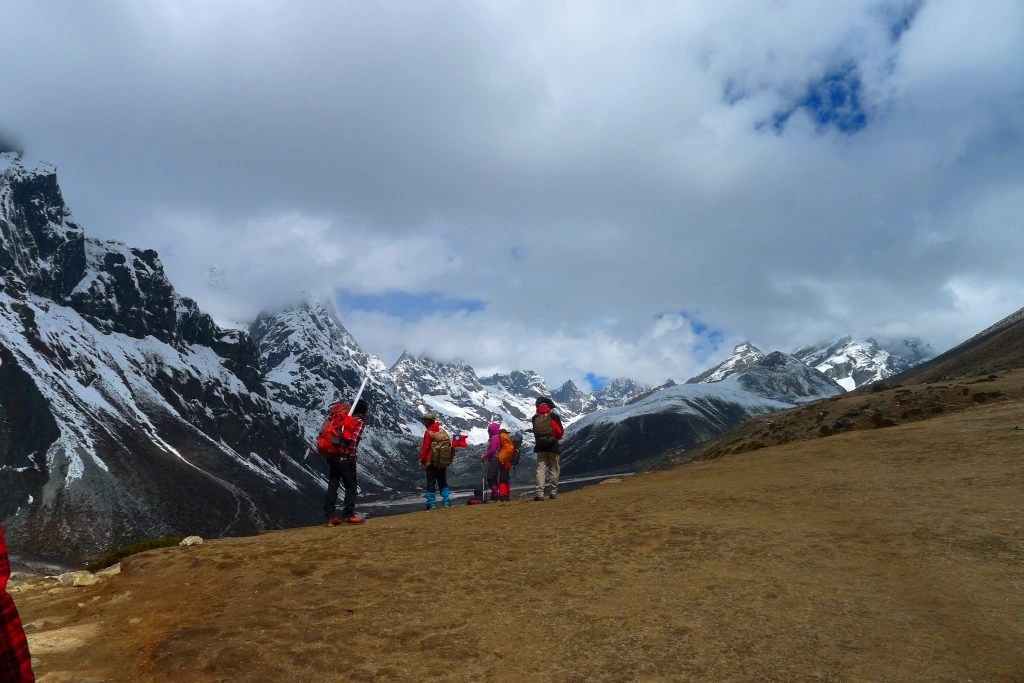
The 2 prime trekking seasons in Nepal are autumn (October–November) and spring (March–May). These 4 months deliver the clearest skies, most stable weather, and safest trail conditions across the majority of Nepal's trekking routes.
Timing determines visibility, trail safety, crowd density, and accommodation availability more than any other single planning factor.
How Do Spring, Autumn, Winter, and Monsoon Compare?
The table below defines each season's key characteristics across 5 decision-relevant criteria:
Season | Months | Temperature Range | Visibility | Trail Conditions |
Autumn | Oct–Nov | -5°C to 18°C (high altitude) | Excellent | Dry, firm, clear |
Spring | Mar–May | -3°C to 20°C | Very good | Dry with late-season blooms |
Winter | Dec–Feb | -20°C to 10°C | Clear but cold | Icy, snow-blocked high passes |
Monsoon | Jun–Sep | 5°C to 25°C | Poor (cloud cover) | Wet, leeches, landslide risk |
Autumn produces the highest visibility after monsoon clears the atmosphere. October delivers sharp mountain views combined with post-monsoon green vegetation. November extends excellent skies but introduces colder nighttime temperatures at elevations above 4,000m.
Spring brings rhododendron forests in full bloom from late March through April: a visual signature that makes Annapurna and Langtang routes particularly scenic. Visibility is excellent, though afternoon clouds build more frequently than in autumn as pre-monsoon moisture increases.
Winter trekking works well for lower-elevation routes such as Annapurna Base Camp (below 4,130m), Poon Hill, and Langtang Valley. High-altitude routes including Everest Base Camp and Annapurna Circuit are technically possible in winter but require crampons, experienced cold-weather gear, and acceptance of closed high passes.
Monsoon trekking remains viable in the rain-shadow regions north of the main Himalayan range, specifically Upper Mustang, Dolpo, and Nar Phu. These areas receive minimal monsoon rainfall because the Annapurna and Dhaulagiri ranges block incoming moisture from the Bay of Bengal.
Which Season Is Best for Different Trekking Goals?
Mountain photography → October–November (crystal visibility, low humidity)
Wildflower and rhododendron bloom → March–April (especially below 3,500m)
Fewer crowds on popular routes → December–February or June (off-peak)
Everest Base Camp trek → October or April (optimal window for both summit visibility and trail conditions)
Upper Mustang and Dolpo → June–September (the only viable window, as roads close after monsoon)
Budget trekking → December–February (teahouse rates drop 20–35% in low season)
How Do You Choose the Right Trek in Nepal?
Choosing the right trek in Nepal requires matching 4 variables: your current fitness level, available days, maximum elevation tolerance, and the type of landscape you prioritize. Route selection made without this framework leads to under-challenged or dangerously over-extended itineraries. For a wider look at Nepal's most iconic routes beyond the difficulty tiers below, see our top trekking destinations roundup.
Which Trek Matches Your Fitness Level?
Nepal Intrepid Treks categorizes trekking routes across 3 difficulty levels:
Moderate (Suitable for first-time trekkers with basic fitness)
Poon Hill Circuit: 5–6 days, maximum elevation 3,210m
Langtang Valley: 7–10 days, maximum elevation 3,870m
Annapurna Base Camp: 10–12 days, maximum elevation 4,130m
Strenuous (Requires 6–8 weeks of cardiovascular training)
Everest Base Camp: 12–14 days, maximum elevation 5,364m
Gokyo Lakes via Cho La Pass: 14–16 days, maximum elevation 5,420m
Manaslu Circuit: 14–18 days, maximum elevation 5,160m
Challenging/Remote (Experienced high-altitude trekkers only)
Annapurna Circuit with Thorong La Pass: 15–20 days, maximum elevation 5,416m
Kanchenjunga Base Camp: 18–24 days, maximum elevation 5,143m
Dolpo Circuit: 21–28 days, maximum elevation 5,360m
A common mistake trekkers make is selecting a route based on reputation rather than fitness. Everest Base Camp is frequently chosen as a first trek, yet it involves 12 consecutive days at elevations above 3,440m. Trekkers without altitude experience face a statistically higher risk of acute mountain sickness (AMS) on this route.
How Long Should Your Trek Be?
Trek duration depends on 3 factors: total available days in Nepal, the specific route's standard itinerary, and acclimatization days required at elevation.
Most teahouse treks on established routes require a minimum of 7 days. The Everest Base Camp trek's minimum safe itinerary is 12 days, adding an extra acclimatization day at Namche Bazaar (3,440m) and Dingboche (4,410m) reduces AMS risk by a documented margin.
Trekkers with 5–7 days in Nepal choose from these 4 viable short routes:
Poon Hill Circuit (5–6 days)
Ghorepani-Poon Hill (4–5 days)
Tamang Heritage Trail (5–6 days)
Annapurna Base Camp short version (7 days with helicopter return)
Trekkers with 14+ days access the full Annapurna Circuit, Everest Three Passes, or the Manaslu Circuit, routes that deliver complete geological, cultural, and altitudinal diversity.
What Should You Consider Before Selecting a Trekking Route?
5 practical factors determine route suitability beyond fitness:
Elevation ceiling: Every trekker responds differently to altitude; previous high-altitude experience predicts future tolerance more accurately than fitness alone
Group composition: Mixed fitness groups require moderate routes with flexible itineraries; the slowest member sets the pace for everyone's safety
Budget tier: Remote routes with camping logistics cost 2–3 times more per day than teahouse routes
Connectivity requirements: Everest and Annapurna circuits have reliable mobile data; Dolpo, Kanchenjunga, and Humla routes have minimal or no coverage
Return flexibility: High-altitude routes carry weather risk; knowing your helicopter evacuation and insurance provisions before departure is non-negotiable
What Permits Do You Need for Trekking in Nepal?
Most trekkers in Nepal require a minimum of 2 permits: a national park or conservation area entry permit, and a tracking permit. For areas like Annapurna, you need the E-TIMS card. However, the Everest region does not use the TIMS card; instead, it requires the Khumbu Pasang Lhamu Rural Municipality Permit (NPR 2,000), which is collected locally. Trekking without valid permits results in fines and forced exit from protected areas.
Which Treks Require TIMS and National Park Permits?
The TIMS card applies to all trekkers on non-restricted routes and costs NPR 2,000 per person for independent trekkers (approximately USD 15). Group trekkers registered with licensed agencies receive TIMS cards at NPR 1,000 per person.
National park and conservation area entry fees (2025–2026 rates):
Protected Area | Entry Fee (NPR) | Entry Fee (USD approx.) | Routes Covered |
Sagarmatha National Park | 3,000 | 22 | Everest Base Camp, Gokyo |
Annapurna Conservation Area (ACAP) | 3,000 | 22 | Annapurna Circuit, ABC, Poon Hill |
Langtang National Park | 3,000 | 22 | Langtang Valley, Gosaikunda |
Manaslu Conservation Area | 3,000 | 22 | Manaslu Circuit |
Makalu-Barun National Park | 3,000 | 22 | Makalu Base Camp |
Permits are issued at the Nepal Tourism Board office in Kathmandu or at designated checkpoints at trail entry points. Carrying both original permits and photocopies is standard practice, as checkpoint rangers collect permit details at 3–6 locations on major routes. For the exact documents, fees, and step-by-step process of buying an ACAP permit, see our dedicated permit guide.
Are There Restricted Areas With Special Permit Rules?
Nepal designates 5 primary restricted trekking zones requiring special permits beyond standard TIMS and national park fees:
Upper Mustang requires a restricted area permit that now operates on a daily rate of USD 50 per person per day (for example, USD 350 for a 7-day itinerary), replacing the old flat fee. Furthermore, as of March 2026, solo travelers can obtain this permit independently, provided they still hire a licensed guide through a registered agency.
Upper Dolpo requires USD 500 per person for 10 days. Lower Dolpo carries a separate fee of USD 30 per week.
Nar Phu Valley requires a restricted area permit costing USD 100 per week during the peak season (September through November) and USD 75 per week during the off-peak season (December through August), along with mandatory guide accompaniment.
Tsum Valley requires a restricted area permit costing USD 40 per week during the peak season (September through November) and USD 30 per week during the off-peak season (December through August), with a mandatory guide requirement.
Kanchenjunga Conservation Area requires a restricted area permit of USD 20 per week in addition to the standard conservation area fee.
Processing restricted area permits takes 1–3 working days through a registered trekking agency in Kathmandu. Trekkers cannot obtain restricted area permits independently from the Nepal Tourism Board.
How Fit Do You Need to Be Before Trekking?
Trekking fitness for Nepal means 3 specific physical capacities: sustained cardiovascular endurance over 5–8 hours of daily walking, leg strength for descents exceeding 1,200m of vertical drop, and respiratory efficiency at oxygen levels 40–55% lower than sea level. General gym fitness does not directly translate to trekking performance at elevation.
What Physical Preparation Is Recommended?
Physical preparation for Nepal trekking targets 4 systems: cardiovascular capacity, lower-body muscular endurance, load-bearing stability, and altitude adaptation.
Trekkers preparing for moderate routes (Annapurna Base Camp, Langtang) achieve adequate preparation through 6 weeks of consistent training. Trekkers targeting strenuous routes (Everest Base Camp, Annapurna Circuit) require a minimum of 10–12 weeks of structured preparation.
The 4 most effective preparation activities, ranked by trekking-specific carry-over:
Weighted hiking: Load a pack with 8–12kg and walk on inclines for 3–4 hours continuously; this is the most direct simulation of trekking conditions
Stair climbing: Consistent stair training builds quad and glute endurance for sustained descent; 30–45 minutes at moderate intensity, 4 times per week
Trail running: Builds cardiovascular base and proprioceptive foot stability on uneven terrain
Yoga or mobility work: Hip flexor and hamstring flexibility reduces injury risk during multi-week trekking; 20–30 minutes daily serves trekkers better than stretching before and after exercise alone
How Can You Train Before Your Trip?
A structured 12-week training plan for Everest Base Camp-level fitness progresses across 3 phases:
Weeks 1–4 (Base Building): Walk 5 kilometers, 5 days per week on mixed terrain. Introduce a 2-hour weighted hike with a 6kg pack on weekends. Focus on consistent daily activity rather than intensity.
Weeks 5–8 (Endurance Development): Increase weekend hikes to 4–5 hours with an 8–10kg pack. Add stair sessions (30 minutes, 3 times per week). Begin hiking on elevation gain routes where possible.
Weeks 9–12 (Trek Simulation): Complete back-to-back long hiking days (6–7 hours on day one, 4–5 hours on day two) with a 10kg pack. This simulates consecutive trek days and reveals recovery capacity before departure.
Trekkers arriving at Kathmandu without preparation face genuine risk on any route above 4,000m. The body's acclimatization process is non-negotiable, fitness accelerates adaptation but does not replace it.
What Should You Pack for a Trek in Nepal?
A Nepal trek requires 3 categories of gear: layered clothing for a 40°C temperature range within a single day, technical footwear for mixed terrain, and safety and medical essentials that teahouses do not supply. Overpacking is the second most common trekker mistake after underestimating altitude effects. Trekkers deciding exactly what to wear trekking at different elevations and seasons can check our full gear guide for layer-by-layer recommendations.
Which Essential Clothing and Gear Should You Bring?
Clothing system (layer-based):
Base layer: 2 moisture-wicking thermal sets (merino wool outperforms synthetic in odor management over multi-week treks)
Mid layer: 1 fleece or insulating down jacket rated to -10°C
Shell layer: 1 waterproof and windproof hardshell jacket (Gore-Tex or equivalent; poncho-style covers do not protect in sustained wind)
Trekking trousers: 2 pairs of quick-dry hiking trousers; convertible zip-off styles add versatility for lower-elevation heat
Warm hat and gloves: Mandatory above 4,000m; temperatures at Everest Base Camp in October average -10°C at night
Sun hat and UV-protective sunglasses: UV intensity at altitude causes sunburn within 30 minutes on exposed days; glacier glasses (Category 4 lenses) are required for high snow routes
Footwear:
Waterproof trekking boots: Broken in before departure; new boots cause blisters by day 3
Trekking socks: 4–5 pairs of wool-blend socks; cotton socks create blisters and retain moisture
Technical gear:
40–50 litre trekking backpack with rain cover
Trekking poles, Proven to reduce knee load by up to 25% on descents
Headlamp with spare batteries (trails before 6am and after 5pm require it)
Sleeping bag rated to -15°C (teahouse blankets are available but not reliably hygienic above 4,000m)
Water purification, Iodine tablets or a SteriPen; buying plastic water bottles on trail costs NPR 200–500 per bottle and produces waste
What Items Are Often Forgotten but Important?
7 commonly overlooked packing essentials:
Durable dry bags or ziplock bags: Rain and river crossings wet gear inside any pack; electronics and documents require waterproof containment
Electrolyte supplements: High exertion at altitude depletes electrolytes faster than sea level; standard water consumption does not compensate
Blister treatment kit: Moleskin, second-skin dressings, and antiseptic; blisters on day 2 of a 14-day trek become a trail-ending injury without treatment
Altitude medication (Diamox / Acetazolamide): Consult a doctor before departure; the standard prophylactic dose is 125mg twice daily, beginning 24 hours before ascending above 3,000m
Portable solar charger or power bank: Teahouse charging points cost NPR 300–500 per device; power cuts are frequent above 3,500m
Passport-sized photos and permit photocopies: Some restricted area checkpoints require physical copies, not digital
Cash in Nepalese Rupees (NPR): ATMs in trail areas (Namche Bazaar, Pokhara) are the last reliable cash points; routes beyond Namche are entirely cash-only
How Can You Stay Safe and Healthy During Your Trek?
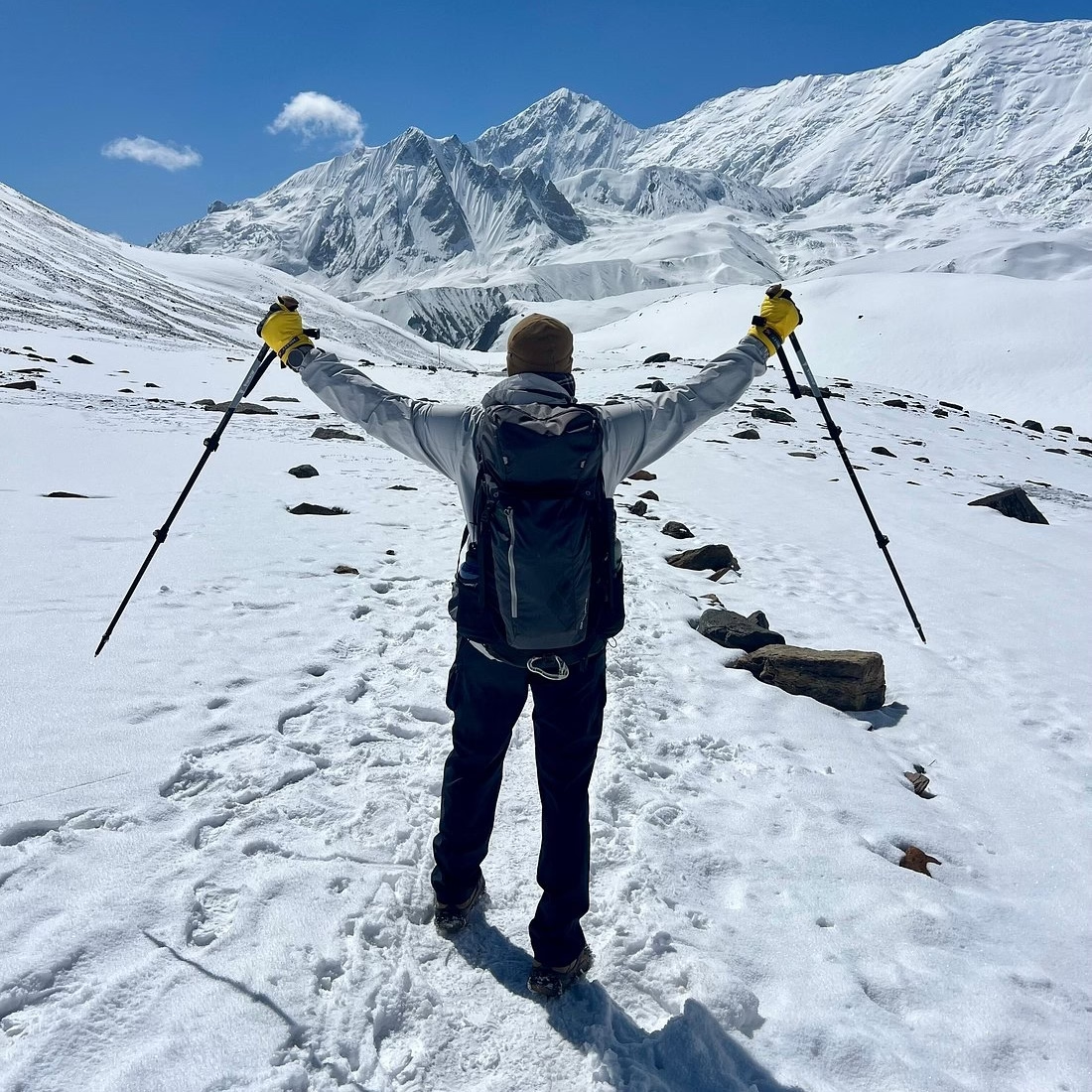
The 3 primary health risks on Nepal treks are altitude sickness (affecting approximately 50% of trekkers above 4,500m to some degree), contaminated water, and ankle injury from uneven trail surfaces. Each risk is preventable with specific preparation and in-trek behavior.
What Is Altitude Sickness and How Can You Prevent It?
Altitude sickness, medically defined as Acute Mountain Sickness (AMS), occurs when the body ascends faster than it adapts to reduced atmospheric oxygen pressure. The standard atmospheric oxygen level at sea level (21%) drops to approximately 12% at Everest Base Camp (5,364m).
AMS presents with 5 primary symptoms: headache, nausea, dizziness, fatigue, and disrupted sleep. Two escalated forms, High Altitude Pulmonary Edema (HAPE) and High Altitude Cerebral Edema (HACE), become life-threatening within 24–48 hours without descent.
The Wilderness Medical Society's established prevention protocol for AMS follows 3 rules:
Ascend no more than 300–500 meters per day above 3,000m. The popular Everest Base Camp teahouse itineraries already incorporate this into their standard 12–14 day schedules.
Climb high, sleep low. Day hikes to higher elevations followed by return to a lower sleeping altitude accelerate red blood cell adaptation.
Never ascend with AMS symptoms. Headache at altitude is AMS until proven otherwise. Rest or descend, do not continue climbing.
Diamox (Acetazolamide) accelerates acclimatization when taken prophylactically. The medication works by stimulating increased breathing rate, which raises blood oxygen saturation. Side effects include tingling in the extremities and increased urination. ConfConfirm medication suitability with a doctor before departure, Diamox is contraindicated for people with sulfa drug allergies. Beyond the Wilderness Medical Society's protocol above, our in-depth guide to preventing altitude sickness in the Himalayas covers hydration, diet, and warning-sign checklists in more detail.
How Can You Minimize Common Trekking Risks?
4 in-trek safety practices eliminate the majority of preventable trekking incidents:
Hire a licensed guide: Guides certified by Nepal's Trekking Agency Association of Nepal (TAAN) carry first aid training and satellite communication devices on remote routes; they make route decisions based on real-time weather, not assumptions
Register with your country's embassy in Kathmandu: Trek registration provides an emergency contact framework; the TIMS system also creates a database checkpoint trail for search and rescue
Purchase comprehensive travel insurance that explicitly covers helicopter evacuation above 5,000m: Helicopter rescues from Everest Base Camp cost USD 3,000–8,000; standard travel policies frequently exclude high-altitude rescue
Maintain a conservative ascent schedule: Most trekking accidents on the Everest route occur when trekkers skip acclimatization days at Namche or Dingboche to compensate for lost time caused by flight delays
How Much Does Trekking in Nepal Cost?
A complete Nepal trek costs between USD 800 and USD 3,500 per person depending on 4 variables: route remoteness, guide and porter hiring, accommodation tier, and international flight costs. The ranges below reflect 2025–2026 actual costs on the ground.
What Expenses Should You Budget For?
Fixed costs (same regardless of style):
Nepal visa: USD 30 (15 days), USD 50 (30 days), USD 125 (90 days)
TIMS card: USD 15 (independent) or USD 8 (agency)
National park entry: USD 22 per protected area
Travel insurance with evacuation coverage: USD 80–200 depending on duration and provider
Variable daily costs on teahouse routes:
Expense Category | Budget Range (USD/day) | Notes |
Teahouse accommodation | $8–25 | Single room with shared bathroom; prices increase with elevation |
Meals (3 per day) | $15–35 | Dal bhat is the most cost-effective option at $3–8 per plate |
Licensed guide | $25–35 | Per day, including the guide's accommodation and food |
Porter | $18–25 | Per day, per porter (max 20–25kg load per porter) |
Snacks and extras | $10–20 | Teahouse snacks, charging fees, hot showers |
Miscellaneous | $10–15 | Tips, extra acclimatization days, medication |
A 12-day Everest Base Camp trek with a guide and porter, staying in mid-range teahouses, costs approximately USD 1,200–1,800 per person excluding international flights. For a fuller Nepal trekking costs breakdown across budget, mid-range, and premium travel styles on other routes, see our complete pricing guide.
How Can You Reduce Costs Without Compromising Safety?
3 cost-reduction strategies preserve safety while reducing total expenditure:
Travel in a group of 2–4 people: Guide and porter costs are split across the group; a private guide for 4 people costs each person USD 6–9 per day instead of USD 25–35
Eat dal bhat daily: Nepal's national dish provides complete nutrition (rice, lentil soup, vegetables, pickles) at USD 3–8; trekking menus list the same pasta and pizza at 3–4 times the cost
Carry a 2-litre water bottle with purification tablets: Eliminating bottled water purchases saves USD 4–12 per day on high routes and reduces plastic waste
Cutting costs on guide services, insurance, or acclimatization days introduces real safety risk. These 3 line items are non-negotiable regardless of budget tier.
Should You Trek Independently or Hire a Guide?
Guided trekking is the safer and more logistically reliable option for 90% of trekkers in Nepal. Choosing a guide-run trekking agency over a business-run one adds first-hand trail experience to the decision. The choice between independent and guided trekking also depends on 3 factors: experience level, route remoteness, and comfort with self-managed emergency response.
What Are the Benefits of Hiring a Licensed Guide?
A licensed guide certified through TAAN delivers 6 distinct functional advantages:
Route navigation accuracy: Trails diverge frequently, especially after monsoon; experienced guides prevent 2–4 hours of daily navigation error on complex routes like Annapurna Circuit
Emergency medical decision-making: Guides trained in Wilderness First Aid assess altitude symptoms and make evacuation decisions faster than trekkers relying on apps or guides
Permit management: Guides coordinate checkpoint paperwork at all verification points along the route
Teahouse negotiation: Guides secure accommodation in peak season when rooms are fully booked by securing reservations 1–2 days ahead by phone
Cultural interpretation: Monasteries, festivals, and village customs become contextually meaningful with a guide who speaks Nepali and local dialects
Local economic impact: Licensed guiding employs over 30,000 Nepali workers; guide fees represent the primary income for Sherpa and Gurung mountain communities
When Is Independent Trekking a Good Option?
Independent, solo trekking without a guide is no longer legally permitted on major routes like Poon Hill, the Tamang Heritage Trail, or the Annapurna circuits. All foreign trekkers, regardless of budget or experience level, must hire a government-licensed guide through a registered trekking agency to enter these protected areas.
Trekkers choosing independent routes still obtain all required permits, register their itinerary with Nepal Tourism Board, and carry satellite communication devices on remote trails. Since 2023, Nepal has made guide hiring mandatory in certain restricted zones, trekkers verify current regulations through a registered agency before finalizing independent plans.
What Local Customs and Trekking Etiquette Should You Respect?
Trekking etiquette in Nepal follows 4 core principles: religious site respect, directional awareness on trails, community privacy, and environmental responsibility. Cultural insensitivity at sacred sites causes genuine offense and erodes the trust between mountain communities and trekking tourism.
How Should You Interact With Local Communities?
Interaction with local communities on Nepal's trails follows these 6 established practices:
Pass mani walls (stone prayer walls inscribed with Buddhist mantras) on the left side; turning right around a mani wall reverses the prayer's spiritual direction
Remove footwear before entering monasteries and temples; always confirm with a guide or local whether photography is permitted inside religious buildings
Ask permission before photographing local people, especially women and children; a simple gesture toward your camera with raised eyebrows communicates the request clearly across language barriers
Avoid public displays of affection in village areas; Nepali mountain communities maintain conservative social norms
Accept offered food or tea with both hands or right hand only; declining hospitality is culturally acceptable when done respectfully
Learn 5–10 Nepali phrases, "Namaste" (greeting), "Dhanyabad" (thank you), "Ramro" (good/beautiful), "Bistari" (slowly), and "Kati ho?" (how much?), these generate genuine warmth from locals and demonstrate respect for Nepali culture
What Environmental Practices Should Every Trekker Follow?
Nepal's trekking corridors face environmental pressure from more than 160,000 annual trekkers. Responsible trekking follows 4 non-negotiable environmental practices:
Pack out all non-biodegradable waste: Plastic packaging, batteries, and hygiene items do not decompose at altitude; the "carry in, carry out" principle applies to every trekker
Use teahouse-provided hot showers instead of river bathing with soap: Chemical soap contamination in glacial rivers affects downstream communities who depend on these water sources
Stay on designated trail paths: Trail widening from off-path walking accelerates erosion on steep Himalayan slopes
Support the ban on single-use plastics: Nepal's government issued regulations on single-use plastic in national parks; using refillable bottles and solid toiletries (shampoo bars, etc.) aligns with both law and conservation need
How Should You Prepare for a Successful Trek With Nepal Intrepid Treks?
Nepal Intrepid Treks provides complete pre-departure support across 4 service areas: route selection, permit acquisition, gear consultation, and safety briefing, all coordinated from our Kathmandu office before your first step on the trail.
Can Nepal Intrepid Treks Help You Choose the Right Trek?
Nepal Intrepid Treks matches trekkers to the right route through a structured consultation process covering fitness level, available days, elevation comfort, group size, and personal landscape priorities. Our guides hold TAAN certification and average 8 years of active guiding experience across Nepal's 3 major trekking regions.
We manage all permit applications, TIMS cards, national park fees, and restricted area permits, so trekkers arrive in Kathmandu ready to walk. Our pre-departure briefings include acclimatization protocols, emergency contact systems, and day-by-day itinerary review tailored to each group's specific route.
If you are considering a trek in Nepal and want expert guidance on route selection, perIf you are considering a trek in Nepal and want expert guidance on route selection, permit planning, or training preparation, connect with Nepal Intrepid Treks for a consultation. Ready to start planning? Browse our guided Everest Base Camp trek itinerary and let our team handle the permits, guide, and logistics. We help trekkers of all experience levels turn the world's greatest mountain landscape into a safe, informed, and unforgettable journey.
What Are the Key Takeaways Before Planning Any Trek in Nepal?
Planning a trek in Nepal successfully requires action on 8 critical preparation areas:
Select your season: Autumn (October–November) and spring (March–May) are the 2 optimal windows; all other seasons require route-specific adjustments
Choose the right route: Match route difficulty, elevation ceiling, and duration to your actual fitness level, not your aspirational one
Secure all permits in advance: TIMS cards, national park fees, and restricted area permits are mandatory; missing any document creates checkpoint delays
Train specifically for trekking: 8–12 weeks of weighted hiking, stair training, and back-to-back long days prepares your body for what high-altitude walking actually demands
Pack the layering system: A 40°C daily temperature range makes layered clothing non-negotiable; cotton is the only fabric that genuinely disqualifies you from high-altitude comfort
Understand altitude sickness: AMS affects 50% of trekkers above 4,500m; knowing the symptoms, the ascent rate rules, and the Diamox protocol makes you a safer trekker
Budget accurately: A 12-day Everest Base Camp trek with guide and porter costs USD 1,200–1,800 on the ground; build this into your total trip budget alongside flights and Kathmandu costs
Hire a licensed guide for any route above 4,000m: The guide's role extends beyond navigation to real-time medical assessment, emergency coordination, and cultural access that no app or online guide replaces
Nepal's trails reward trekkers who prepare. The mountain doesn't adjust to your schedule: you adjust to its conditions. Starting that adjustment before you land in Kathmandu is the single most reliable predictor of a successful trek.