Adventure photography in Nepal offers far more than mountain panoramas. The country combines some of the world's highest Himalayan peaks, diverse trekking routes, rich cultural traditions, and remarkable wildlife habitats into a single destination for photographers. From the Everest and Annapurna regions to the remote landscapes of Upper Mustang and the jungles of Chitwan National Park, Nepal provides opportunities to capture dramatic mountain scenery, expedition life, cultural festivals, wildlife encounters, and authentic human stories across multiple environments and elevations.
Creating compelling images in Nepal requires more than arriving at a famous viewpoint with a camera. Weather patterns, seasonal conditions, altitude, trekking logistics, cultural awareness, and equipment choices all influence the quality of the experience and the photographs produced. This guide explores the best photography locations in Nepal, the ideal seasons for different subjects, essential camera gear, composition techniques, safety considerations, and responsible photography practices to help adventure photographers plan successful journeys throughout the Himalayas.
What Makes Nepal a World-Class Destination for Adventure Photography?
Nepal combines extreme topography, year-round light variation, and living mountain cultures within walking distance of each other. Eight of the world's fourteen peaks above 8,000 meters sit inside Nepal's borders, and trekking trails run directly beneath most of them. No drive-up viewpoints exist; every composition is earned on foot, which keeps the access points uncrowded compared to drive-in alpine destinations in Europe or North America.
The country's east-west alignment also matters for photographers. Because the Himalayan range runs roughly parallel to the sun's daily east-west path, north-facing and south-facing trekking routes catch long sidelight on rock faces for most of the morning and evening, rather than the flat overhead light common on north-south ranges. Namche Bazaar, Ghorepani, and Lo Manthang all benefit from this orientation, producing strong shadow definition on ridgelines that photographers in the Alps or Rockies rarely get without specific aspect hunting.
How Do Nepal's Landscapes Create Unique Photo Opportunities?
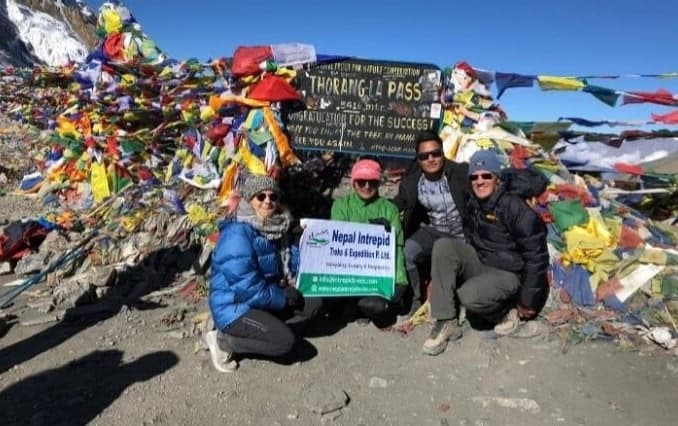
Nepal's terrain shifts through five distinct ecological zones within a single trek, giving photographers subtropical jungle, terraced farmland, pine forest, alpine meadow, and high desert in one itinerary. The Annapurna Circuit alone crosses from rice paddies at 800 meters to the cold, wind-scoured Tibetan plateau on the far side of Thorong La pass at 5,416 meters.
This compression creates compositions unavailable in single-biome mountain ranges. A photographer can shoot rhododendron forest in bloom one morning and bare scree slopes the same afternoon. Glacial rivers carve milky turquoise channels through the Khumbu and Gokyo valleys, fed by suspended rock flour that scatters light differently than the clear meltwater found in most temperate mountain ranges. Terraced hillsides near Pokhara and the Annapurna foothills add geometric pattern to wide shots, something flat alpine meadows in other ranges simply don't offer.
Why Do Photographers Travel to Nepal Throughout the Year?
Each of Nepal's four trekking seasons produces a different photographic record of the same landscape, so repeat visitors return for light and color rather than novelty. Autumn delivers the clearest peak visibility of the year. Winter brings empty trails and the sharpest air quality. Spring adds rhododendron color across mid-altitude forests. Summer monsoon produces dramatic, fast-moving cloud formations and the only window to photograph Upper Mustang's festivals in full green-valley contrast.
Photographers focused on a single subject, such as Ama Dablam at sunrise or the Tiji Festival masked dances in Lo Manthang, plan trips around that specific seasonal window rather than general trekking convenience. A landscape photographer chasing autumn clarity and a documentary photographer chasing monsoon festival color are, in effect, working two different countries.
Which Regions in Nepal Offer the Best Adventure Photography?
Nepal's trekking regions each photograph differently because of altitude, rock type, and cultural composition. Three regions account for most professional and serious amateur work: Everest (Khumbu), Annapurna, and Upper Mustang.
Why Is the Everest Region a Dream for Photographers?
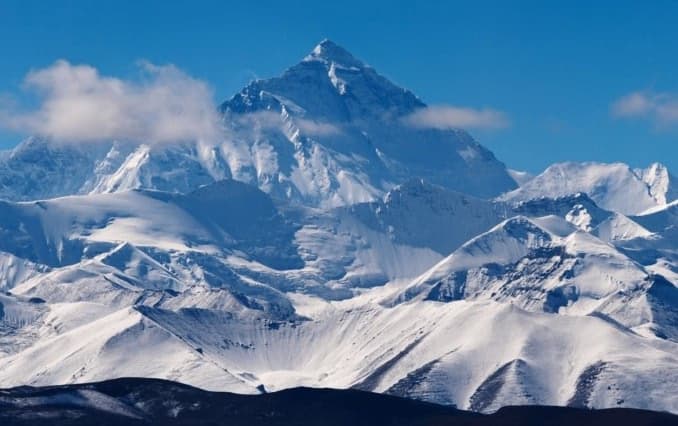
The Khumbu region delivers the highest concentration of named 6,000-to-8,000-meter peaks visible from a single trail in the world, including Everest, Lhotse, Nuptse, and Ama Dablam. Kala Patthar, at 5,545 meters, is the closest trailside viewpoint to Everest's summit and the standard sunrise shot for most visiting photographers, though Gokyo Ri across the valley offers a comparable view with roughly a third of the foot traffic.
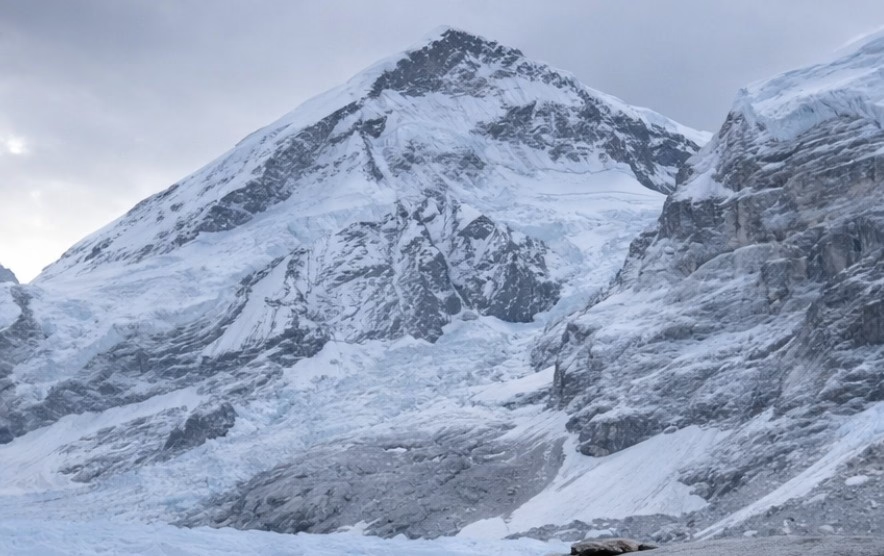
Tengboche Monastery, at 3,867 meters, frames Ama Dablam directly behind its courtyard and gives photographers a built environment against a technical peak in one composition. Namche Bazaar's amphitheater-shaped town adds layered rooftops and prayer flags for mid-altitude compositions before the trail climbs above the treeline. The Khumbu Icefall, visible from Everest Base Camp itself, is one of the few places where a moving glacier is photographable without mountaineering skills, since the base camp trail stops at its foot rather than crossing it.
What Makes the Annapurna Region Visually Diverse?
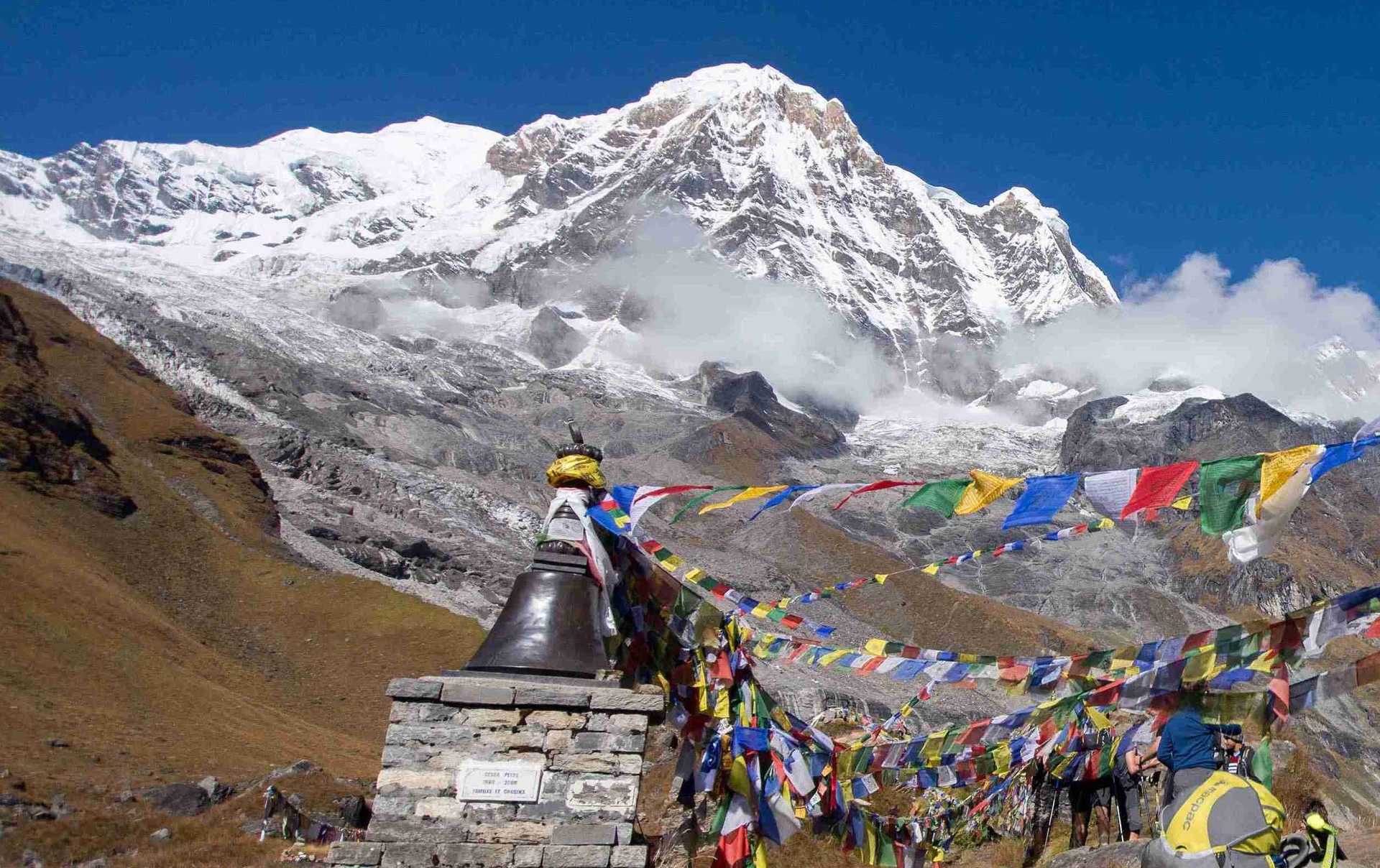
Annapurna packs subtropical lake towns, rhododendron forest, and high alpine basin into one trekking circuit, making it the most photographically varied single region in Nepal. Pokhara's Phewa Lake reflects the Annapurna massif on calm mornings, giving photographers a mirror-image composition unavailable in landlocked mountain regions elsewhere in the country.
The Poon Hill Trek climbs to 3,210 meters and delivers Nepal's most photographed sunrise viewpoint, looking directly at Dhaulagiri and the Annapurna range across a forested ridge. It draws crowds for that reason; photographers who want the same panorama without the viewpoint congestion shift one ridge over to Khopra Danda or push slightly higher to Mardi Himal viewpoint at 4,500 meters. Annapurna Base Camp, at 4,130 meters, sits inside a glacial amphitheater that places the photographer at the foot of the massif rather than across a valley from it, producing a noticeably different scale relationship in the frame than Everest Base Camp's broader basin.
How Does Upper Mustang Offer a Different Perspective?
Upper Mustang replaces glaciated peaks with eroded red-cliff desert, ancient sky caves, and a still-functioning medieval walled city, giving photographers a Himalayan trekking region that looks closer to the Tibetan plateau than to the green Annapurna foothills one valley away. The region sits in a rain shadow, so the dramatic, often golden-hour light common to desert photography elsewhere in the world appears here at 3,500 to 3,800 meters of elevation.
Lo Manthang, the walled former capital of the Kingdom of Lo, retains its 14th-century street layout and royal palace, giving photographers an intact built environment rather than ruins. The Tiji Festival, held in Lo Manthang each May, features masked monks performing ritual dances in red and gold costume against the city's white-washed walls, a subject combination that does not exist anywhere else in Nepal. The sky caves near Chhoser, carved into vertical cliff faces for burial and meditation centuries ago, photograph well with a wide lens and a human figure for scale, since their full height is difficult to register without one.
What Types of Adventure Photography Can You Capture in Nepal?
Nepal supports four distinct photographic disciplines on a single trek: expedition documentary, mountain landscape, wildlife and nature, and cultural portraiture. Most visiting photographers default to mountain landscape and miss the other three entirely, which is where the strongest, most differentiated portfolios usually come from.
How Can You Photograph Trekking Expeditions?
Trekking expedition photography documents the physical and logistical reality of the journey itself, including porters, suspension bridges, teahouse interiors, and acclimatization days, rather than only the summit or viewpoint shot. A porter carrying a basket load on a forehead strap, a yak train crossing a swinging bridge over the Dudh Koshi river, or trekkers queuing for a teahouse dal bhat dinner all tell a more complete story than peak shots alone.
Shoot these scenes candidly and from a slight distance with a short telephoto, around 70 to 135mm, to avoid disrupting the natural pace of the group. Buffer days built into the itinerary for acclimatization are usually the best opportunity for this kind of work, since the group is stationary and the light changes are predictable.
What Makes Mountain Photography So Rewarding?
Mountain photography rewards patience over equipment, since the best light on an 8,000-meter peak typically lasts 10 to 20 minutes around sunrise and again at sunset, and missing that window means waiting another full day. Alpenglow, the pink-to-orange light that hits snow and ice just before sunrise and after sunset, only appears when the sun is below the horizon but still illuminating the upper atmosphere at an angle, so a photographer positioned at the viewpoint 30 minutes before official sunrise gets the strongest version of the shot.
Cloud layers below the peak, common on Himalayan mornings, add a sense of scale that a clear sky cannot replicate. Photographers who treat a clear, cloudless summit shot as the only successful outcome often miss the more compelling image of a peak rising above a cloud inversion.
How Can You Capture Wildlife and Nature in Nepal?
Nepal's wildlife photography splits between high-altitude species in the trekking regions and lowland species in the Terai national parks, and the two require entirely different gear and patience. In the high alpine zones above 3,500 meters, photographers can encounter Himalayan tahr, blue sheep, and the danphe, Nepal's national bird, recognizable by its iridescent green, purple, and copper plumage. The snow leopard, the region's most sought-after subject, is genuinely rare in front of a camera and usually requires a dedicated, multi-week expedition with camera traps rather than a standard trek.
On a Chitwan Jungle Safari in the lowland Terai roughly 150 kilometers south of the high mountains, photographers can work with one-horned rhinoceros, gharial crocodile, and, with considerable patience, Bengal tiger from a jeep or elephant-back safari. Most photographers planning a "Nepal adventure photography" trip plan only for the mountains and skip Chitwan entirely, missing one of the most reliable large-mammal photography opportunities in South Asia.
Why Is Cultural Adventure Photography Equally Important?
Cultural photography in Nepal documents living Buddhist and Hindu practice still active inside the trekking routes, not historical reenactment, which is what separates it from staged cultural tourism photography elsewhere. Sherpa monasteries in the Khumbu, such as Tengboche, hold active daily prayer sessions that visitors can photograph respectfully from the back of the hall. Mani stones and chortens along the trail are working religious objects, not roadside decoration, and should be passed on the right side (clockwise) according to Buddhist custom, a detail worth knowing before composing a shot that includes a trekker walking past one.
In Mustang, the Loba people maintain Tibetan Buddhist practices that have largely disappeared from Tibet itself since 1959, making the region one of the more historically significant cultural photography subjects in the Himalaya. Festivals such as Mani Rimdu in the Khumbu (October or November) and Tiji in Mustang (May) offer the most concentrated cultural photography opportunities of the year.
When Is the Best Time to Photograph Nepal's Adventures?
Autumn (late September through November) and winter (December through February) produce the clearest mountain visibility in Nepal, while spring (March to May) adds forest color at the cost of some haze, and summer monsoon (June to September) suits documentary and Upper Mustang work. No single season is universally best; the right answer depends on the subject.
Which Seasons Offer the Clearest Mountain Views?
Autumn delivers the highest number of consecutive clear-sky days for peak photography, typically running from late September through late November, right after the monsoon clears dust and haze from the atmosphere. Winter, from December through February, often matches or exceeds autumn's clarity on any given day, since cold, dry air holds less atmospheric particulate, but shorter daylight hours and closed high passes (Thorong La and the Mustang routes frequently close after heavy snow) limit which itineraries are feasible.
Spring, March through May, brings noticeably more haze from regional agricultural burning and pre-monsoon dust, which softens distant peak contrast even on technically clear days. Photographers prioritizing maximum peak sharpness should weight their trip toward late October through mid-December.
How Does Each Season Change the Photography Experience?
Each season changes not just visibility but the subject matter available to photograph, from rhododendron forest color in spring to monsoon cloud drama in summer. Spring's rhododendron bloom, peaking in March and April between 2,000 and 3,000 meters, turns mid-altitude forest sections of the Annapurna and Helambu routes into a foreground subject that doesn't exist the rest of the year. Autumn, beyond clear peaks, coincides with Dashain and Tihar, Nepal's two largest national festivals, giving photographers strong cultural material in villages along the trail in late September and October.
Winter's near-empty trails suit photographers who want unobstructed compositions at popular viewpoints like Poon Hill or Kala Patthar without dozens of other trekkers in frame, though overnight temperatures below minus 15 degrees Celsius at altitude demand serious cold-weather gear management. Summer monsoon, from June through September, is the only season most of Nepal becomes difficult to shoot in due to persistent cloud cover and leech-heavy lower trails, but Upper Mustang sits in a rain shadow and stays largely dry and accessible throughout, making it the single best monsoon-season trekking photography destination in the country.
What Photography Gear Should You Bring to Nepal?
A Nepal trekking kit needs a weather-sealed mirrorless body, one wide-angle lens, one telephoto lens, a polarizing filter, and cold-rated spare batteries, with total camera bag weight kept under 4 kilograms to stay manageable on multi-day trekking days. Equipment choices here trade off against the physical demands of carrying gear above 3,000 meters for ten or more consecutive trekking days.
Which Camera Equipment Is Essential for Treks?
A 16-35mm wide-angle lens covers most landscape and trail compositions, while a 70-200mm or 100-400mm telephoto handles peak compression and wildlife, and a fast 35mm or 50mm prime covers low-light portrait and interior monastery work. A circular polarizing filter is close to mandatory at altitude, since UV intensity above 3,000 meters increases haze and washes out sky saturation more aggressively than at sea level; the filter also cuts glare off snowfields and glacial lake surfaces.
A compact carbon-fiber tripod, even a lightweight travel model under 1.5 kilograms, earns its weight for sunrise viewpoints like Kala Patthar and Poon Hill, where pre-dawn light levels require longer exposures, and for night photography of the Milky Way, which is consistently visible above 3,500 meters away from any town lighting. A headlamp with spare batteries is essential gear rather than optional, since most peak-view sunrise shoots start the hike in full darkness 60 to 90 minutes before sunrise.
How Can You Protect Your Gear in Remote Conditions?
Cold drains lithium-ion batteries far faster than at sea level, so carry spare batteries in an inner jacket pocket against body heat rather than in the camera bag, and expect roughly half the rated battery life above 4,000 meters. Dust on the lower trails and fine glacial silt at higher elevations both work into zoom mechanisms and weather seals over multi-week trips, so a simple rain cover and a daily lens-cloth wipe-down routine prevent the most common gear failures on Nepal treks.
Power access in teahouses above Namche Bazaar or Manang is limited and often charged per device, typically NPR 200 to 500 per charge, so a 20,000mAh power bank charged in Kathmandu before departure removes dependence on unreliable village electricity. Camera bags should use a dry-bag liner rather than relying on a rain cover alone, since sudden afternoon showers in the lower valleys arrive with little warning.
How Can You Improve Your Adventure Photography in Nepal?
The fastest improvement in Nepal trekking photography comes from shooting in the first and last two hours of daylight, composing with a human or yak for scale against the peaks, and slowing the itinerary down enough to wait for light rather than shooting whatever is in front of the camera at the moment the group arrives. Technical camera settings matter less here than timing and patience.
Which Composition Techniques Work Best in the Himalayas?
.avif)
Leading lines from trails, mani walls, and ridgelines draw the eye toward peaks, while a small human figure in the frame establishes scale that an empty mountain shot cannot convey on its own. Layering, placing a close foreground element such as a chorten or prayer flags against a mid-ground ridge and a distant snow peak, adds depth that a flat, single-plane mountain shot lacks. Framing through monastery windows, prayer wheels, or natural rock arches turns a standard wide shot into a more deliberate composition.
Shooting from a low angle that places the peak above the horizon line, rather than centered in an even sky, generally produces a stronger sense of height than a centered composition. Photographers consistently underestimate just how small the human figure needs to be in frame to convey true Himalayan scale; a person occupying more than 5 to 8 percent of the frame height often reads as too large against an 8,000-meter backdrop.
How Can You Capture Authentic Human Stories?
Authentic portraiture in Nepal starts with a verbal greeting and a clear request before raising the camera, never a candid shot taken without acknowledgment, particularly with monks, elders, and children. A simple "namaste" and a gesture toward the camera, even without shared language, is understood almost universally along the trekking routes and usually results in a more relaxed, genuine expression than a stolen shot.
Spending an extra ten minutes in a teahouse kitchen or a village courtyard, rather than photographing and immediately moving on, consistently produces stronger images, since the subject's posture relaxes once the photographer is no longer a stranger pointing a lens. Avoid offering money for posed photographs of children specifically, since the practice has created problem dynamics in some heavily trekked villages where children now approach trekkers expecting payment rather than genuine interaction.
How Can You Photograph Safely at High Altitudes?
Altitude sickness symptoms, including headache, nausea, and dizziness, can appear above 2,500 meters and should always take priority over getting a shot, since pushing through hypoxia to reach a viewpoint has caused serious medical emergencies on Nepal's trekking routes. A gradual ascent profile, limiting net elevation gain to 300 to 500 meters per day above 3,000 meters with built-in rest days, both protects health and creates more photography time at each stop.
Cold significantly slows hand dexterity and reaction time above 4,500 meters, so practicing camera settings changes with gloved hands before the trip prevents fumbling critical settings during a short sunrise window. Photographers traveling with a licensed guide benefit from a second set of eyes watching for AMS symptoms while attention is focused on composition rather than physical state.
What Challenges Should Adventure Photographers Expect?
The two largest challenges for adventure photographers in Nepal are unpredictable mountain weather that can erase a planned shot in minutes and logistics constraints, including domestic flight cancellations and strict baggage weight limits, that affect how much gear actually reaches the trailhead. Both challenges are manageable with buffer time built into the itinerary rather than a tightly scheduled trip.
How Can You Prepare for Unpredictable Weather?
Himalayan peaks are most reliably visible in the first few hours after sunrise, before afternoon convection cloud builds up and obscures the upper mountain, so photography days should be scheduled around early starts rather than leisurely mid-morning departures. Photographers who plan a single attempt at a key viewpoint without a buffer day frequently miss the shot entirely to cloud cover, since even peak season carries roughly a one-in-three chance of an obscured summit on any single morning.
Building one extra night into the itinerary at major viewpoints such as Gokyo, Kala Patthar's base at Gorak Shep, or Poon Hill's base village gives a second sunrise attempt without disrupting the rest of the trek schedule.
What Are the Biggest Logistics Challenges on Treks?
Domestic flights to Lukla, the gateway airstrip for the Everest region, are frequently delayed or cancelled by weather and carry strict baggage limits, typically around 15 kilograms total including hand luggage, which directly limits how much camera gear can travel with a photographer rather than by porter. A multi-day weather delay at the start or end of a Lukla-based trek is common enough that experienced operators build at least one buffer day into both ends of the itinerary.
Hiring a dedicated porter for camera equipment, separate from a general trekking porter, protects gear from the rougher handling that can occur with shared loads and frees the photographer to carry only the body and one lens for active shooting during the day.
Why Is Responsible Photography Important in Nepal?
Responsible photography protects the trust that gives photographers access to monasteries, homes, and ceremonies in the first place, and a single disrespectful interaction can change how an entire village treats visiting photographers afterward. Nepal's trekking economy depends on tourism revenue reaching local communities directly, and photography practices that ignore consent or cultural protocol undermine that relationship for everyone who visits after.
How Can You Respect Local Communities While Shooting?
Always ask before photographing people, religious ceremonies, or private home interiors, and accept a refusal without further negotiation. Some monasteries restrict or prohibit photography during active prayer sessions; a photographer should check with the monastery's caretaker before assuming a shot is permitted, even if other visitors appear to be shooting freely. Drone use in Nepal requires a permit from the Civil Aviation Authority of Nepal and is restricted or banned outright in national parks, conservation areas, and near many religious sites, a rule that catches a noticeable number of visiting photographers off guard each season.
Compensating porters and guides fairly, and avoiding the practice of paying children directly for posed photographs, keeps the economic relationship between photographers and host communities healthy rather than transactional in ways that distort normal village life.
How Can Sustainable Travel Protect Nepal's Beauty?
Choosing teahouses, guides, and porters from the local community rather than pre-packaged international operators routes trekking revenue directly into the regions photographers are shooting, which funds the trail maintenance and conservation programs that keep those landscapes intact. Conservation area and national park entry fees, typically NPR 3,000 for the Sagarmatha and Annapurna regions, fund park management and community development projects in the Everest and Annapurna areas specifically, so paying them promptly and in full supports the same landscapes being photographed.
Carrying out all trash, including spent batteries and memory card packaging, matters more in remote high-altitude regions where waste removal infrastructure is minimal to nonexistent above the last vehicle-accessible village.
How Can You Plan an Adventure Photography Journey in Nepal?
Planning a Nepal photography trip requires matching the season to the subject, building extra time into the itinerary for light and weather, and confirming gear-specific logistics such as Lukla baggage limits or Upper Mustang's restricted area permit before booking flights. Upper Mustang is a Restricted Area, meaning photographers must navigate strict permit regulations. The permit costs USD 500 for the first ten days, plus USD 50 for each additional day. Additionally, the government strictly requires a minimum of two foreign trekkers to issue this permit, meaning solo travel into Upper Mustang is not permitted, even with a licensed guide. These changes matter directly to photographers planning shorter, more targeted trips around specific light or festival windows rather than fixed ten-day blocks.
Can Nepal Intrepid Treks Help Adventure Photographers?
Nepal Intrepid Treks builds custom itineraries around photography priorities, including extra acclimatization and buffer days at key viewpoints, licensed guides familiar with sunrise and sunset timing at specific locations, and dedicated porter support for camera equipment. Because permit rules, baggage limits, and seasonal access change from year to year, working with a Nepal-based operator who tracks these details directly removes a layer of planning risk that generic trip-planning guides cannot account for, working with a Nepal-based operator who tracks these changes directly removes a layer of planning risk that generic trip-planning guides cannot account for.
We work with photographers planning everything from a focused shoot on our Mustang Tiji Festival Trek to a full Everest or Annapurna circuit built around sunrise viewpoint access. If you're mapping a Nepal photography itinerary and want local input on timing, permits, or porter support for gear, reach out to our team directly.
What Are the Key Takeaways About Nepal Photography?
Nepal's value to adventure photographers comes from the combination most other mountain destinations can't offer: extreme vertical relief, four photographically distinct seasons, living Buddhist and Hindu culture inside the trekking routes, and wildlife ranging from high-alpine snow leopard habitat to lowland tiger and rhino country in Chitwan. Autumn and winter give the clearest peak visibility, spring adds forest color at the cost of haze, and monsoon turns Upper Mustang's rain-shadow desert into the season's standout destination.
Gear choices should prioritize weather sealing, cold-rated batteries, and a polarizing filter over chasing the longest possible lens, since timing and altitude management consistently matter more than equipment specifications. Respectful, consent-based photography of people and ceremonies protects the access that makes Nepal's cultural images possible at all, and that access, more than any single viewpoint, is what keeps photographers returning to the same trails year after year.