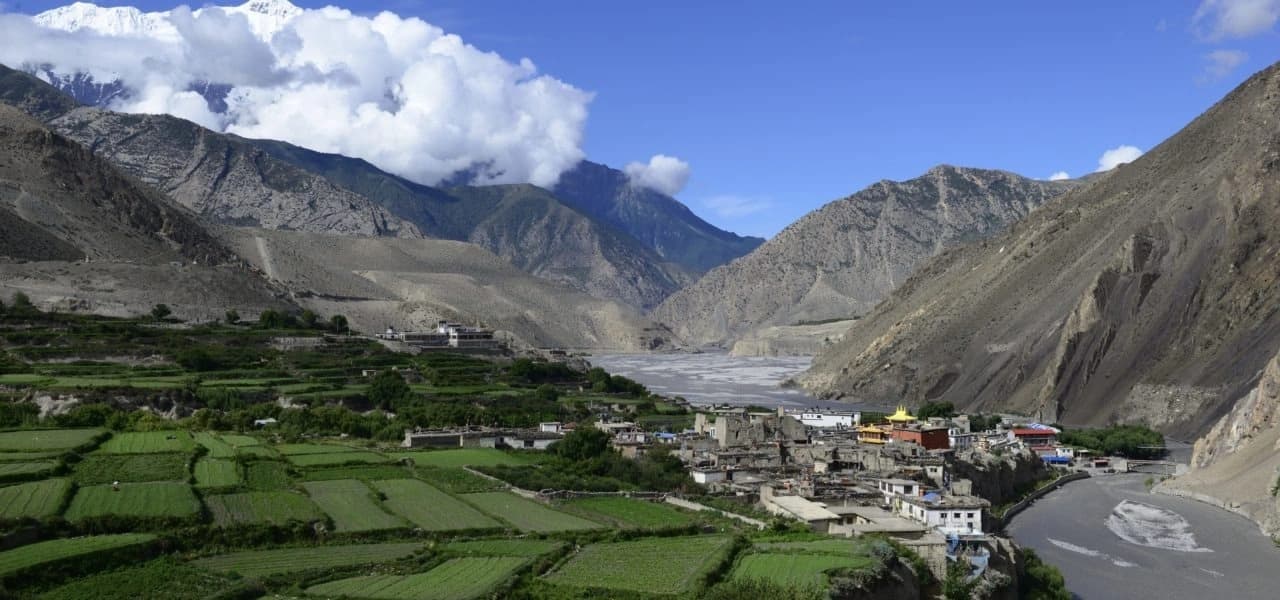
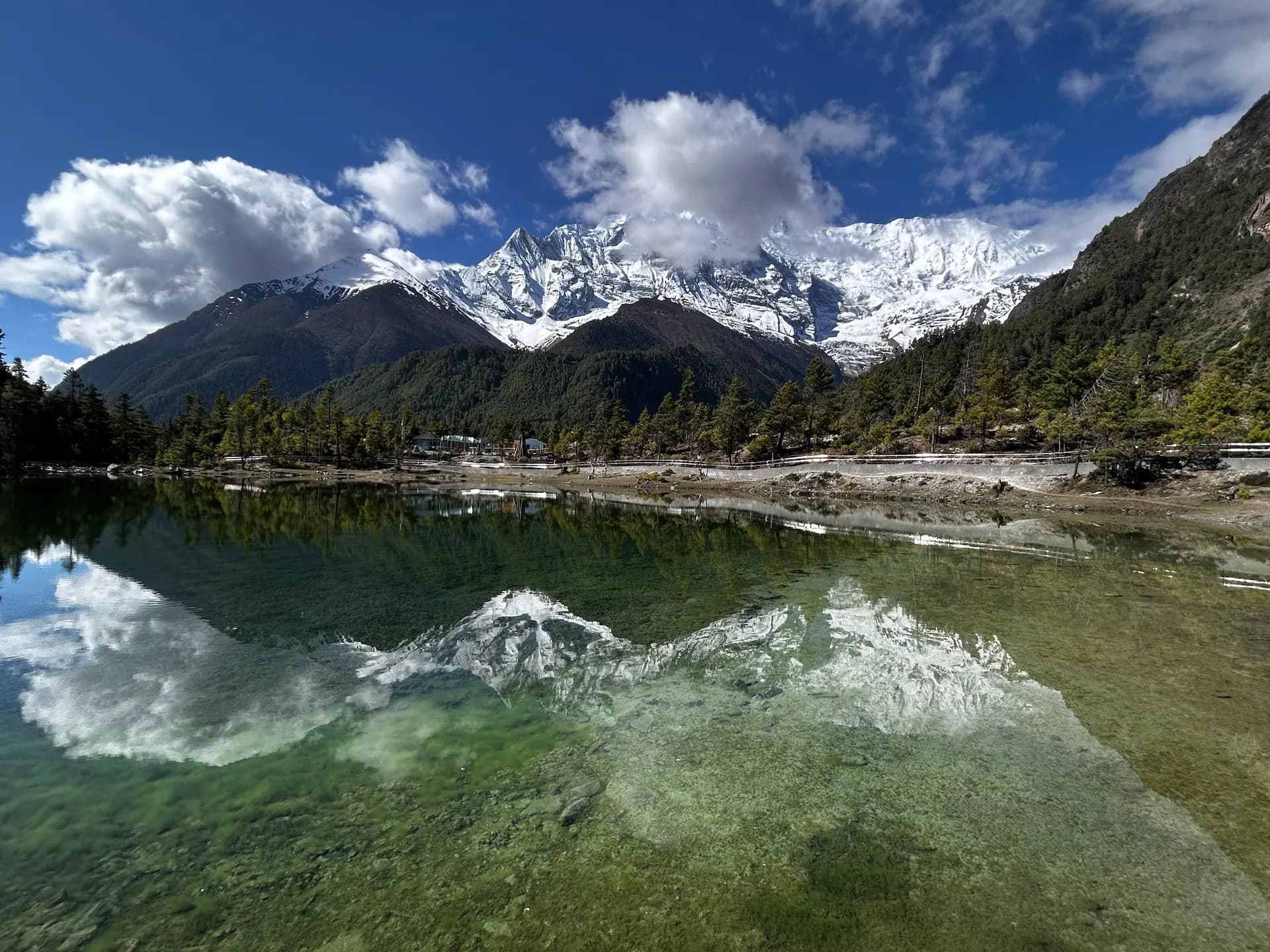
The Manaslu Circuit Trek in September is a high-altitude trek around Mount Manaslu (8,163 m) that crosses the remote Budhi Gandaki Valley, Tibetan-influenced mountain villages, the Manaslu Conservation Area, and the 5,106-meter Larkya La Pass before descending toward Dharapani. September creates a distinct trekking window between the summer monsoon and the main autumn season: the first half of the month can bring humid weather, rainfall, muddy trails, swollen rivers, and cloud-covered mountains, while conditions generally become drier and clearer from mid-September onward. The route combines dramatic Himalayan scenery with villages such as Machha Khola, Jagat, Namrung, Lho, Samagaon, Samdo, and Bimtang, offering views of Mount Manaslu, Himalchuli, Ngadi Chuli, Himlung Himal, and other high peaks as the trail gains elevation.
Planning a September Manaslu Circuit Trek requires more than choosing a departure date. Trekkers need to account for changing weather and trail conditions, daily walking distances, high-altitude acclimatization, freezing nights above 3,500 meters, the demanding Larkya La crossing, appropriate rain and cold-weather clothing, trekking equipment, restricted-area and conservation permits, guide requirements, travel insurance, transportation, and overall trekking costs. Late September generally provides a stronger combination of stable weather, dry trails, mountain visibility, and lower crowds, while early September can appeal to experienced trekkers prepared for residual monsoon conditions. Understanding the route, September weather, difficulty, altitude risks, packing requirements, permits, costs, safety measures, and preparation strategies helps you choose the right time and approach for a safer and more rewarding Manaslu Circuit Trek.
What Is the Manaslu Circuit Trek Like in September?
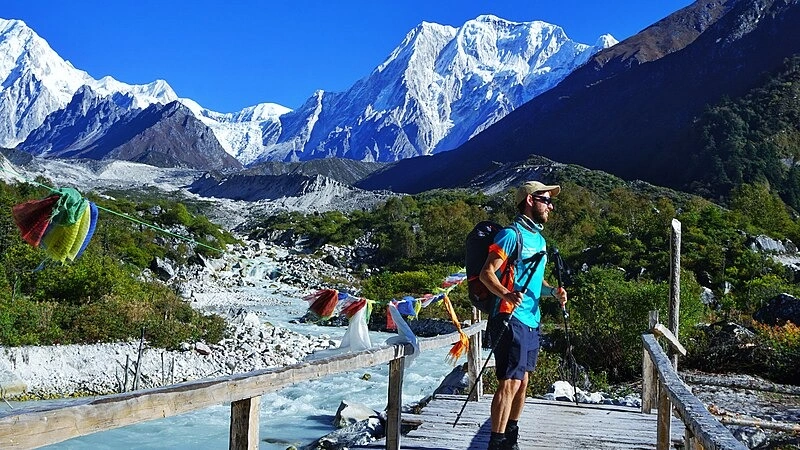
The Manaslu Circuit Trek in September is a transition-month trek: humid and rain-prone in the first half, then clear, dry, and mountain-view-rich from the middle of the month onward. The route, which spans roughly 130 to 160 kilometers depending on the exact starting trailhead and side trips, circles the eighth-highest mountain, Mount Manaslu (8,163 m), through the Manaslu Conservation Area and a section of the Annapurna Conservation Area.
Two distinct halves define the month. Early September (roughly the 1st through the 15th) carries the tail end of the summer monsoon into the lower Budhi Gandaki gorge, bringing afternoon showers, high humidity, and occasional muddy sections between Machha Khola and Jagat. Late September (the 16th through the 30th) shifts into early autumn: rainfall drops sharply, skies clear, and the high peaks become visible for most of the day.
What most people overlook is that this split means the same trek name describes two different experiences depending on your start date. A trekker departing on September 3rd faces different trail and packing needs than one departing on September 22nd, even though both walk the identical route. Trekking agencies in Kathmandu, including Nepal Intrepid Treks, typically recommend a start date after September 18th for trekkers who prioritize dry trails and mountain visibility over solitude.
What Weather Can You Expect on the Manaslu Circuit in September?
September weather on the Manaslu Circuit splits into a humid, shower-prone first half and a clear, stable second half, with daytime temperatures between 15°C and 25°C in the lower villages and near-freezing nights above 4,000 meters. The Manaslu Conservation Area Project and Nepal's Department of Hydrology and Meteorology classify September as the post-monsoon transition month for the central Himalaya.
Three factors govern trail experience during this month: retreating monsoon moisture, rising elevation, and daily temperature swing. Lower-elevation villages such as Machha Khola (869 m) and Jagat (1,340 m) stay warm and humid through the first half of the month. Mid-elevation villages like Namrung and Lho cool noticeably by the third week. Above Samagaon, night temperatures drop below freezing regardless of the exact date, because elevation, not calendar date, drives temperature at that height.
How Much Rainfall Occurs Along the Manaslu Circuit in September?
Rainfall in the first half of September commonly exceeds 100 mm in the lower gorge, then falls to occasional light showers or none at all by the last week of the month. August carries the heaviest monsoon rainfall of the year in this region; September inherits the tail of that pattern before the air dries out.
The practical effect shows up in three places. River levels along the Budhi Gandaki stay high and fast through the first two weeks, which slows crossings at temporary bridges. Waterfalls along the gorge run at their most dramatic during this period, a genuine visual reward for early-month trekkers. Leeches remain active in the forested sections below Jagat until the humidity drops, a detail that guidebooks frequently skip but that every experienced Manaslu guide mentions before departure.
What Are the Temperature and Trail Conditions of Manaslu Circuit in September?
Daytime temperatures range from 18°C to 25°C in lower villages and drop to between -6°C and 3°C near Larkya La Pass by late September, while trails shift from muddy and slippery early in the month to dry and stable by the final week. Nights at Samagaon (3,530 m) and Samdo (3,860 m) regularly fall below freezing throughout the entire month, independent of the rain pattern lower down.
Trail surface changes with both elevation and date. Between Soti Khola and Jagat, trekkers starting before September 15th find sections of packed mud and occasional landslide debris from monsoon runoff, especially on the exposed cliff paths above the river. Trekkers starting after September 20th find those same sections largely dried and firm. Above Namrung, the trail surface depends far less on the exact date, since rainfall at that elevation falls as light snow rather than heavy rain even in early September, and afternoon cloud rather than persistent precipitation is the more common obstacle to mountain views.
What Are the Main Highlights of the Manaslu Circuit Trek in September?
The main highlights of a September Manaslu Circuit Trek are close-range views of Mount Manaslu and its satellite peaks, Tibetan-influenced villages along the upper valley, and the crossing of Larkya La Pass at 5,106 meters. Each highlight becomes progressively more accessible as the trail gains altitude and the monsoon clears.
What separates a September crossing from an October one is crowd density at these same highlights. Samagaon's teahouses, Pungyen Gompa, and the Larkya La summit plateau all see noticeably fewer trekkers in September, Manaslu-area restricted-permit entries still totalled just 12,810 for all of 2024 according to Nepal Tourism Statistics 2024, compared with over a million total arrivals to Nepal that year, which gives more space at viewpoints and more attention from guides who are not yet managing peak-season group volume.
What Mountain Views Can You See During the September Manaslu Circuit Trek?
Trekkers see Mount Manaslu (8,163 m), Himalchuli (7,893 m), Ngadi Chuli (7,871 m), Himlung Himal (7,126 m), Cheo Himal (6,820 m), and Kang Guru (6,981 m) at various points along the route, with the widest combined panorama visible from Larkya La Pass. Each peak becomes visible from a different section of trail, not all at once.
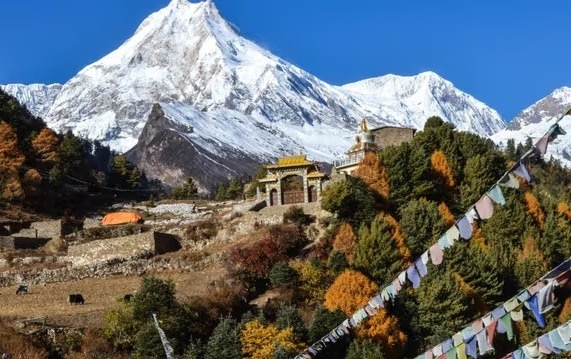
The village of Lho offers the first close, unobstructed view of Manaslu's north face, framed by the village's monastery in the foreground, a combination that draws photographers to linger an extra hour on the trail. Samagaon and neighboring Shyala open the widest valley-floor views of Manaslu, Himalchuli, and Ngadi Chuli together. From the pass itself, Himlung Himal, Cheo Himal, and Kang Guru dominate the northern horizon, with a distant glimpse of Annapurna II toward the south on exceptionally clear late-September mornings.
Which Villages and Cultural Sites Can You Explore on Manaslu Circuit Trek?
Trekkers pass through Machha Khola, Jagat, Deng, Namrung, Lho, Shyala, Samagaon, and Samdo, each showing a progressively stronger Tibetan Buddhist cultural influence as the route climbs toward the Nepal-Tibet border region. Lower villages reflect Gurung and Magar culture; upper villages reflect Tibetan-Buddhist tradition almost exclusively.
Lho holds one of the route's most photographed monasteries, positioned on a ridge with Manaslu directly behind it. Samagaon, the largest settlement above 3,000 meters on the circuit, functions as the region's acclimatization hub and hosts a side trip to Pungyen Gompa, a centuries-old monastery tied to local Manaslu mountain-worship traditions that most itineraries skip in favor of the more commonly marketed Manaslu Base Camp side trip. Samdo, the last permanent settlement before the pass, still trades yak products and salt across the nearby Tibet border, a practice with unbroken historical continuity that predates formal international borders in the region.
What Makes Larkya La Pass Special in September?
Larkya La Pass, at 5,106 meters, is snow-free or lightly dusted in September rather than fully snow-covered as it often becomes by late November, which makes footing more predictable while still testing endurance and altitude tolerance. This single seasonal detail changes the technical character of the crossing.
Crossing conditions in September rely on route-finding through loose moraine and rock rather than through deep snow, a trade many experienced trekkers prefer because rock footing is more predictable than snow that can hide crevasses or ice underneath. The approach from Dharamsala still starts before dawn, both to reach the summit before afternoon wind picks up and to descend the long far side into Bimtang before dark, since the crossing typically takes seven to eleven hours end to end regardless of season.
What Is the Manaslu Circuit Trek Route in September?
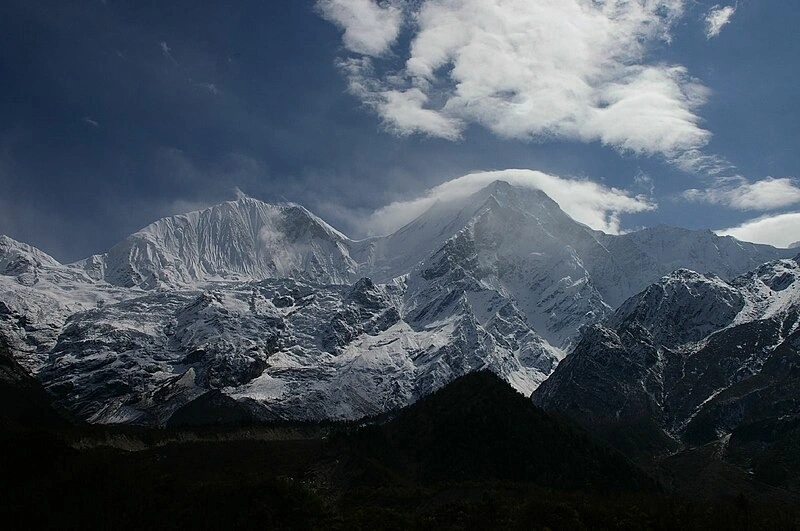
The Manaslu Circuit Trek route runs roughly 160 kilometers from Soti Khola or Machha Khola to Dharapani, climbing from 869 meters to 5,106 meters at Larkya La Pass before descending into the Annapurna region. September conditions affect the pace planned into this route more than they affect the route itself, since the trail path stays fixed year-round.
The route divides naturally into three stages: a river-gorge approach through subtropical forest, a mid-altitude cultural stage through Tibetan-influenced villages, and a high-alpine stage that crosses the pass and descends into the Annapurna Conservation Area. Each stage carries its own September-specific consideration, covered in the sections below.
How Does the Manaslu Circuit Trek Start and End in September?
The trek starts with a drive from Kathmandu directly to Machha Khola, the modern trailhead due to recent road extensions, taking roughly eight to ten hours, and ends at Dharapani, from where trekkers drive out to Besisahar or Pokhara. September's residual monsoon rain occasionally slows this access road with landslide clearance, a detail worth building a one-day buffer around before departure.
Most itineraries add a full day in Kathmandu before departure specifically because Nepal's Department of Immigration requires an original passport with visa sticker in hand to process the Restricted Area Permit, and immigration offices close on Saturdays and public holidays. Skipping this buffer is a common early-trip mistake that costs trekkers a delayed start rather than a canceled one.
Which Villages Are Included on the Manaslu Circuit Route?
The route passes through Machha Khola, Khorlabesi, Jagat, Deng, Namrung, Lho, Shyala, Samagaon, Samdo, Dharamsala, Bimtang, Tilje, and Dharapani, in that order, over roughly thirteen to sixteen trekking days. Each village typically corresponds to one overnight stop, though itineraries vary in exactly which villages get a rest day attached.
Jagat marks the checkpoint where the Restricted Area Permit is first verified, a formality that adds roughly twenty minutes to that day's walk. Samagaon and Samdo are the two villages where acclimatization days are built into nearly every reputable itinerary, since both sit at the altitude threshold where the body needs extra time to adjust before the final push to the pass.
How Does the Route Cross Larkya La Pass?
The route climbs from Samagaon through Samdo (3,860 m) and Dharamsala (4,460 m) to Larkya La Pass (5,106 m), then descends steeply to Bimtang (3,720–3,890 m), gaining roughly 1,250 meters and losing nearly 1,400 meters within a single trekking day. This day is universally treated as the most physically demanding of the entire circuit.
Guides start groups from Dharamsala between 3:00 and 4:00 a.m. specifically to summit before mid-morning, when winds on the exposed pass can exceed 50 km/h and visibility can drop sharply. The descent side into Bimtang is longer and steeper than the ascent side, which surprises trekkers who expect the hardest section to end once they reach the prayer-flag-covered summit marker.
How Difficult Is the Manaslu Circuit Trek in September?
The Manaslu Circuit Trek is a moderately strenuous to strenuous high-altitude trek in September, requiring five to seven hours of daily walking, a total elevation gain exceeding 4,000 meters, and a successful crossing of a 5,106-meter pass without technical climbing skill. September's wetter first half adds an extra layer of physical demand compared to the drier October window, mainly through slower, more cautious footing.
Difficulty on this route comes from three separate sources that trekkers frequently conflate: cardiovascular endurance for the daily distance, altitude adaptation for the elevation gain, and trail-surface caution for the September-specific mud and river conditions. A trekker fit enough for a demanding day hike at sea level still needs a dedicated altitude strategy, because fitness alone does not prevent altitude sickness. For a full breakdown of what makes each stage challenging, see our dedicated guide to Manaslu Circuit Trek difficulty.
How Many Hours Do You Walk Each Day?
Daily walking time on the Manaslu Circuit ranges from four to seven hours on most stages, extending to eight or eleven hours on the Larkya La Pass crossing day. Terrain, not distance alone, drives this range, since a short but steep climb can take longer than a long, flat stretch.
The lower gorge stages between Machha Khola and Deng involve repeated short ascents and descents around river cliffs, which slow pace despite modest total distance. Above Namrung, trails flatten somewhat along the valley floor, letting trekkers cover more ground per hour of walking. The pass-crossing day compresses roughly two average days of elevation change into a single push, which is why it runs several hours longer than every other stage combined.
What Altitude Challenges Should You Expect?
Altitude challenges intensify sharply above Samagaon (3,530 m), where the standard two-day gain from Samdo (3,860 m) to Larkya La (5,106 m) exceeds 1,200 meters, well above the widely cited safe daily gain limit of 300 to 500 meters above 3,000 meters. This single jump is the primary reason acclimatization days exist in every well-planned itinerary.
Common mistakes we see involve trekkers who feel strong at Samagaon and choose to skip a planned rest day there, reasoning that feeling well justifies moving faster. Understanding how altitude sickness in the Himalaya actually progresses helps explain why symptoms, including headache, nausea, and disrupted sleep, frequently appear a full day after the elevation gain that caused them, meaning feeling fine on the day of ascent is not a reliable signal that the body has adjusted.
How Can You Prepare for High-Altitude Trekking?
Effective high-altitude preparation combines a gradual ascent profile, two dedicated acclimatization days at Samagaon and Samdo, hydration of three to four liters of water daily, and a doctor's guidance on preventive medication such as acetazolamide. No single element substitutes for the others; altitude adaptation depends on the combination.
In real-world use, guides on this route watch for early symptoms far more closely than trekkers watch themselves, because impaired judgment is itself an early symptom of altitude sickness. A trekking partner or guide who insists on turning back at the first sign of worsening symptoms, rather than pushing to the next village, follows the accepted medical consensus for acute mountain sickness management in remote high-altitude settings.
What Should You Pack for the Manaslu Circuit Trek in September?
A September Manaslu packing list centers on a waterproof-first layering system, sturdy broken-in footwear, and a sleeping bag rated to at least -15°C, reflecting the month's combination of lingering rain at low elevation and freezing nights at high elevation. October and November packing lists shift emphasis toward pure cold-weather gear; September's list still needs genuine rain protection.
The single biggest packing mistake for this specific month is treating it as a standard autumn trek and under-packing for rain. Trekkers who copy an October Manaslu packing list wholesale often arrive without adequate waterproofing for the wetter first two weeks of September.
What Clothing and Rain Gear Do You Need for Manaslu Circuit Trek?
Essential clothing includes a moisture-wicking base layer, an insulating fleece or down mid layer, a waterproof and windproof outer shell, and a separate rain jacket and rain trousers distinct from the insulated shell. Layering, not any single heavy garment, handles the daily temperature swing between a humid lower valley and a freezing high camp.
Trekkers heading out before September 15th carry a dedicated rain jacket in addition to their insulated shell, since combining rain protection and insulation into one garment leaves that garment soaked and useless for warmth once the rain starts. A warm hat, liner gloves, and a buff round out the layering system for the cold mornings above Samagaon.
What Trekking Equipment Is Essential in September?
Essential equipment includes broken-in waterproof trekking boots, adjustable trekking poles, a sleeping bag rated to -15°C or colder, a headlamp with spare batteries, water purification tablets or a filter, and a personal first-aid kit with altitude medication. Cross-checking your gear against a complete trekking equipment checklist before departure helps confirm nothing on this list gets missed. Each item addresses a specific, predictable failure point on this route rather than a generic trekking concern.
Trekking poles matter more on the Manaslu Circuit than on many comparable treks because of the repeated stream crossings and suspension bridges in the lower gorge, where poles provide the stability that a wet, uneven surface removes. A headlamp becomes essential rather than optional on the pass-crossing day, since groups start walking in full darkness from Dharamsala.
Should You Bring Extra Protection for Wet Trail Conditions of Manaslu Circuit Trek?
Yes, a pack liner or dry bags, gaiters, and one or two extra pairs of quick-dry socks meaningfully improve comfort during the wetter first half of September, and are worth the added pack weight given the specific season. These items rank lower on generic Manaslu packing lists but rank higher for early-September starts specifically.
Gaiters keep mud and trail debris out of boots on the sections between Machha Khola and Jagat, where the trail surface stays soft longest. A pack liner protects sleeping bags and electronics from the sustained afternoon showers that define the first half of the month, a failure mode that dry bags alone do not fully prevent if the main pack fabric itself soaks through.
What Are the Permits and Requirements for Manaslu Trekking?
Manaslu trekking requires three permits: the Restricted Area Permit (RAP), the Manaslu Conservation Area Permit (MCAP), and the Annapurna Conservation Area Permit (ACAP), and a licensed guide from a government-registered trekking agency, with no TIMS card needed on this specific route. Nepal's Department of Immigration classifies the Manaslu region as a restricted border area, which is why the permit structure differs from open routes such as the Annapurna Circuit.
The permit process itself functions as a trust and safety mechanism as much as a revenue mechanism, since the restricted classification exists because the route runs close to the Tibet border. Every trekker crosses two physical permit checkpoints, at Jagat and at Philim, where officials verify the RAP against passport details.
Which Permits Are Required for the Manaslu Circuit?
The Restricted Area Permit costs USD 100 per person for the first seven days in the September-to-November season, plus USD 15 per additional day, while the Manaslu Conservation Area Permit (MCAP) and Annapurna Conservation Area Permit (ACAP) each cost 3,000 NPR (approximately USD 23) per person, valid for the full trip regardless of season. A standard 13- to 16-day September itinerary totals roughly USD 160 to USD 260 in permit fees alone, depending on exact trip length.
Permit | September–November Cost | December–August Cost |
Restricted Area Permit (RAP) | USD 100 for first 7 days + USD 15/extra day | USD 75 for first 7 days + USD 10/extra day |
Manaslu Conservation Area Permit (MCAP) | USD 30 per person | USD 30 per person |
Annapurna Conservation Area Permit (ACAP) | USD 30 per person | USD 30 per person |
TIMS Card | Not required on this route | Not required on this route |
This table reflects the season-based RAP structure that makes September and the wider autumn window more expensive to trek than the December-to-August off-season, since the restricted-area fee itself, not the conservation fees, drives most of the seasonal difference. MCAP and ACAP stay fixed year-round, which is a detail many trekkers assume incorrectly applies to the RAP as well.
Do You Need a Licensed Guide and Trekking Agency?
Yes, every foreign trekker on the Manaslu Circuit must trek with a licensed guide from a government-registered trekking agency, a requirement that did not change with the March 2026 removal of the two-person minimum group rule. The two rules address different things: group size and guide accompaniment.
Nepal's Department of Immigration maintains strict safety protocols for the region, requiring at least two foreign trekkers to share a single Restricted Area Permit application through a registered agency. A licensed guide remains mandatory regardless of group size, because the RAP itself can only be processed in the name of a registered agency and its assigned guide, not in the name of an independent trekker. For more on what changed and what still applies, see our detailed guide on trekking Manaslu Circuit Trek solo.
What Documents Should You Carry During the Manaslu Circuit Trek?
Trekkers carry an original passport with at least six months of remaining validity, a valid Nepal tourist visa, passport-sized photographs for permit processing, and travel insurance documentation that specifically covers high-altitude emergency evacuation up to at least 6,000 meters. Checkpoint officials at Jagat and Philim check the RAP against the original passport, not a photocopy.
Insurance coverage deserves particular attention because standard travel policies frequently exclude trekking above a set altitude threshold, commonly 4,000 or 5,000 meters, which falls short of the 5,106-meter pass on this route. Confirming helicopter evacuation coverage up to at least 6,000 meters before departure closes this specific gap.
How Much Does the Manaslu Circuit Trek Cost in September?
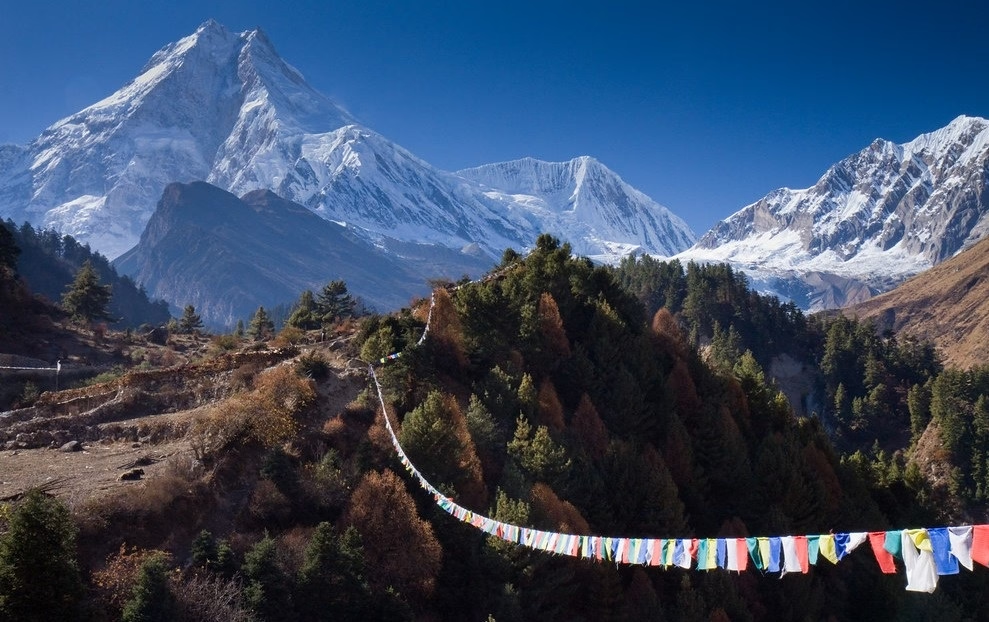
A full Manaslu Circuit Trek package in September, including permits, guide and porter fees, teahouse accommodation, meals on trail, and ground transport, typically costs between USD 1,200 and USD 2,200 per person, depending on group size and itinerary length. Solo travelers and small private groups pay toward the higher end of this range because fixed costs, including the guide's daily wage, spread across fewer people.
Cost on this trek varies more by service structure than by any single line item. A group of six sharing one guide and porter team pays substantially less per person than a solo trekker requiring the same guide and porter for one client.
What Is Included in a Manaslu Circuit Trek Package?
A standard package includes permit processing (RAP, MCAP, ACAP), a licensed English-speaking guide, porter service, teahouse accommodation, three meals a day on the trail, and ground transport between Kathmandu and the trailheads at each end of the circuit. Reputable agencies also include the guide's and porter's own food, salary, accommodation, and insurance within this quoted price, rather than passing those costs to the client separately.
Airport pickup and a hotel night or two in Kathmandu before and after the trek are commonly bundled into September packages as well, both because the immigration buffer day described earlier requires an extra Kathmandu night and because most trekkers arrive on international flights that land after domestic transport to Soti Khola has already departed for the day.
Which Extra Costs Should You Budget For Manaslu Circuit Trek?
Extra costs to budget for include international flights, additional Kathmandu hotel nights beyond the package, personal travel insurance, hot showers and device charging fees at teahouses (which increase with altitude), guide and porter tips, and any alcoholic drinks or bakery items purchased on the trail. These costs are excluded from most quoted package prices by design, since they vary by personal choice rather than by fixed logistics.
Charging and hot-shower fees rise noticeably above Samagaon, where solar power and limited fuel supply make these services genuinely more expensive to provide, not simply more expensive to sell. Tipping, while not contractually required, follows a well-established informal standard on Nepal treks and is typically planned for at 10 to 15 percent of the total package cost, split between guide and porter.
Can Manaslu Circuit Trekking Costs Vary by Itinerary on September?
Yes, itinerary length is the single largest cost variable in September, since the Restricted Area Permit charges USD 15 per day beyond the first seven days, and every added trekking day also adds a full day of guide, porter, and accommodation costs. A 13-day itinerary and a 16-day itinerary covering the identical route can differ by several hundred dollars once permit surcharges and extra logistics days are combined.
Adding the Tsum Valley with Manaslu side trip, a common September extension given the extra daylight and drier conditions later in the month, requires its own additional restricted-area permit, priced separately from the core Manaslu RAP, and adds three to four days to the standard itinerary.
How Can You Prepare for a Manaslu Circuit Trek in September?
Effective preparation for a September Manaslu trek combines eight to twelve weeks of cardiovascular and strength training, a wet-weather trail strategy for the first half of the month, and a clear altitude-safety plan agreed with your guide before departure. Physical fitness, weather readiness, and altitude strategy each need separate preparation, since strength in one area does not compensate for weakness in another.
Trekkers who prepare only for fitness and skip weather or altitude planning are the most common source of avoidable problems on this specific route, according to guide operators who run the trek repeatedly through this season.
What Fitness Training Should You Complete Before Trekking Manaslu Circuit?
Effective training includes hiking with a loaded backpack on hilly terrain, stair climbing or step-machine sessions, and at least two multi-hour training hikes per week for eight to twelve weeks before departure. Training volume matters less than training specificity; a runner with strong flat-ground endurance still needs dedicated uphill, loaded-pack sessions to prepare for this route's terrain.
Building leg strength for sustained descents deserves equal attention to uphill training, since the descent from Larkya La to Bimtang covers nearly 1,400 meters and stresses the knees and quadriceps more than any ascent on the route.
How Can You Prepare for Monsoon-Related Trail Conditions?
Preparation for monsoon-related conditions means building a one- to two-day schedule buffer for early-September river and landslide delays, confirming waterproof gear before departure rather than in Kathmandu at the last minute, and choosing a start date after September 15th if dry trails matter more to you than solitude. These three steps address the specific risk profile of trekking during the monsoon's retreat rather than after it has fully cleared.
Guides who run this route regularly through September plan alternate timing for river crossings, often starting river-adjacent stages earlier in the morning before afternoon rain raises water levels, a scheduling adjustment that independent trekkers without local guide knowledge frequently miss.
What Safety and Altitude Precautions Should You Follow?
Key precautions include ascending no faster than the recommended 300 to 500 meters of net elevation gain per day above 3,000 meters, taking the two standard acclimatization days at Samagaon and Samdo without skipping them, staying hydrated at three to four liters daily, and agreeing on a turnaround protocol with your guide before symptoms appear. Nepal's mountaineering and trekking safety consensus treats descent as the default and effective response to worsening altitude symptoms, the Wilderness Medical Society's 2019 guidelines specify a drop of 1,000 to 3,300 feet with supplemental oxygen where available as the most important treatment step.
Satellite communication coverage does not exist at Dharamsala, on the pass itself, or at Bimtang, a genuine safety gap that agencies increasingly close by carrying a satellite messenger device for the group, since standard mobile signal disappears well before the pass crossing begins.
How Can You Trek the Manaslu Circuit with Nepal Intrepid Treks?
Nepal Intrepid Treks and Expedition Pvt. Ltd. is a government-registered, Kathmandu-based trekking agency, led by Managing Director Lal Gurung, that organizes Manaslu Circuit itineraries with licensed guides, porter teams, and full permit processing for the September window. As a registered agency, it fulfills the legal requirement that every Manaslu RAP application be processed in the name of an agency and its assigned guide.
The agency's Manaslu packages bundle the trekking-specific permit, an experienced English-speaking guide, porter support, and trail meals and accommodation into a single itinerary, with airport pickup and Kathmandu hotel arrangements handled around the trek dates.
Can Nepal Intrepid Treks Help Plan Your September Manaslu Trek?
Yes, the agency builds September itineraries around the month's specific weather split, adjusting start dates, acclimatization scheduling, and packing guidance to match early-month wet conditions or late-month clear conditions. Since the RAP application requires an original passport and agency processing before departure, working with a registered agency directly resolves the permit and guide requirements described earlier in this guide within a single booking step.
Trekkers weighing a September date against October or November can raise both the weather trade-offs and the specific itinerary length with the agency directly, since exact day-count affects both trekking difficulty and total permit cost. Explore the full Manaslu Circuit Trek package to see exactly what a September itinerary with Nepal Intrepid Treks includes.
What Are the Key Takeaways About the Manaslu Circuit in September?
The Manaslu Circuit Trek in September rewards trekkers who plan around its two-part weather pattern rather than treating the month as a single uniform season. Early September brings humid, shower-prone trails in the lower gorge; late September brings some of the clearest, quietest mountain views available anywhere on the circuit for the entire year.
Five points summarize this guide: rainfall and trail conditions improve sharply after September 15th; the route climbs from 869 meters to 5,106 meters at Larkya La Pass over roughly thirteen to sixteen days; three permits (RAP, MCAP, ACAP) and a licensed guide are mandatory, with the RAP now obtainable solo since March 2026; total trip costs typically run USD 1,200 to USD 2,200 per person; and acclimatization days at Samagaon and Samdo are non-negotiable regardless of how strong you feel on arrival.
A well-timed September departure, built around realistic fitness preparation, correct wet-and-cold layering, and a guide who enforces acclimatization discipline, delivers one of the least crowded, most visually rewarding windows of the entire Manaslu trekking calendar.