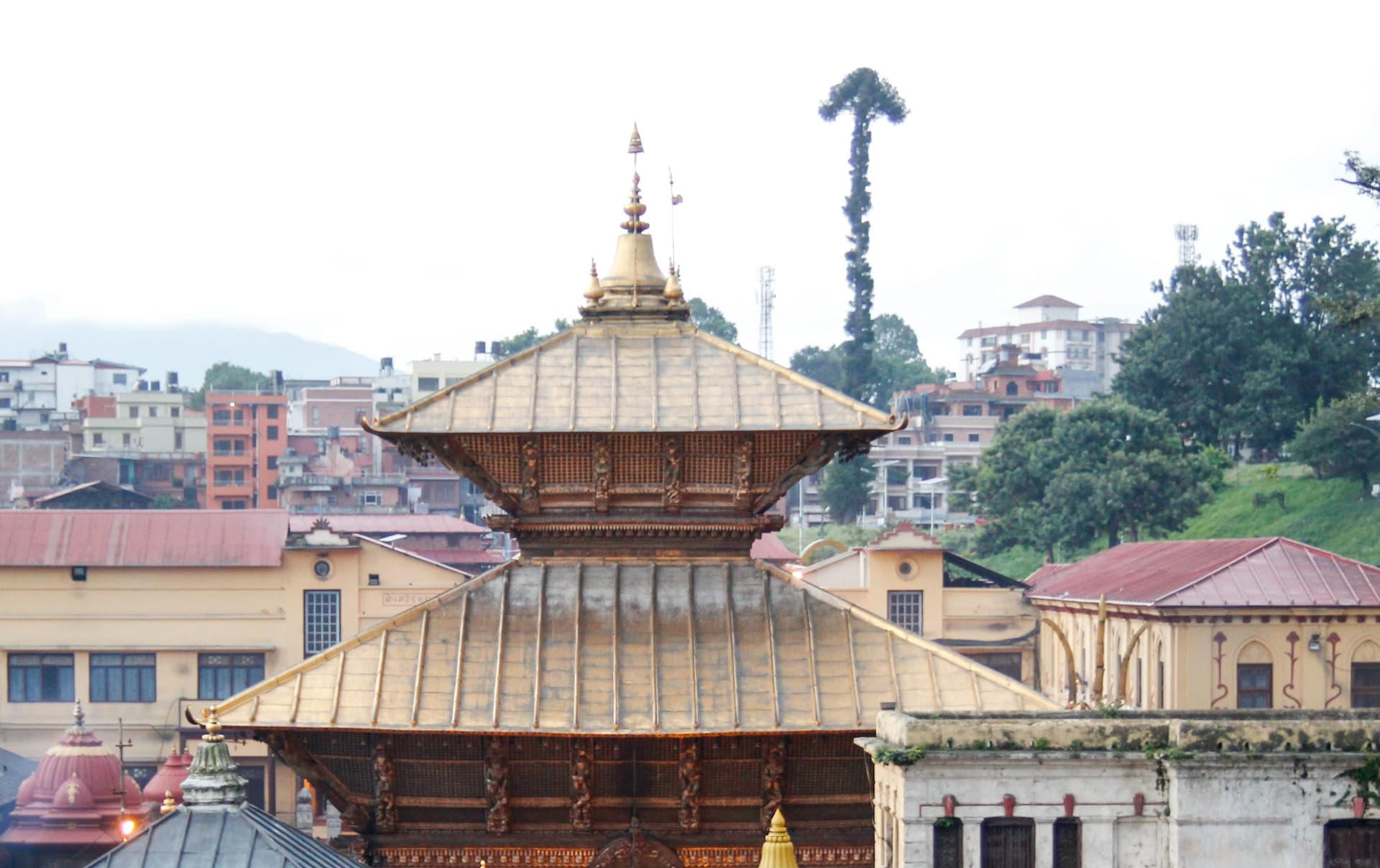
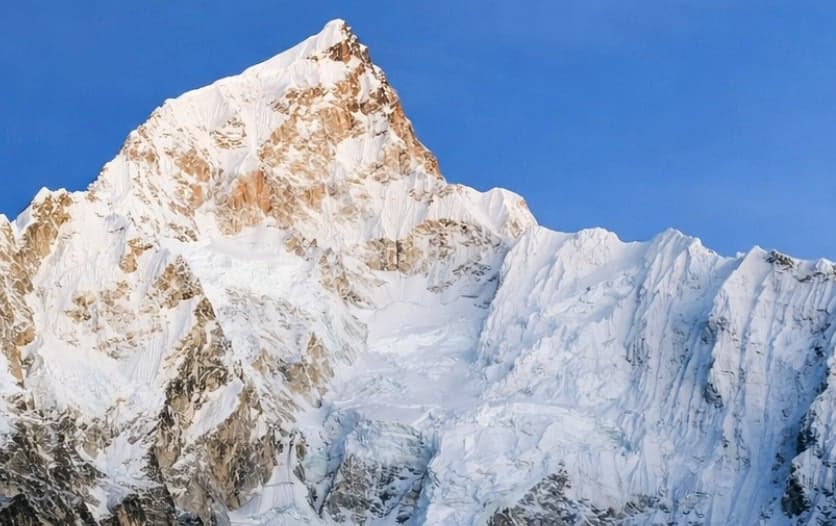
Nepal holds 8 of the world's 14 highest peaks, including Mount Everest at 8,849 meters, and delivers Himalayan trekking experiences that no other country replicates. Luxury trekking in Nepal upgrades the classic mountain trail experience with premium lodge accommodation, private certified guides, gourmet mountain meals, and helicopter access options, all without replacing the authentic trail environments that define each route.
The 7 best luxury treks in Nepal span altitudes from 3,840 meters to 5,545 meters, traverse 5 culturally distinct regions, Khumbu, Annapurna, Manaslu, Langtang, and Upper Mustang, and cover trek durations of 5 to 18 days. Luxury trekking in Nepal costs USD $150 to $300+ per day and includes premium lodges, gourmet-style meals, private guide service, and helicopter transport options. Each route below is analyzed by highlights, duration, accommodation, difficulty, and trekker suitability, giving you the complete picture to match your travel goals with the right trail.
1. Everest Base Camp Trek
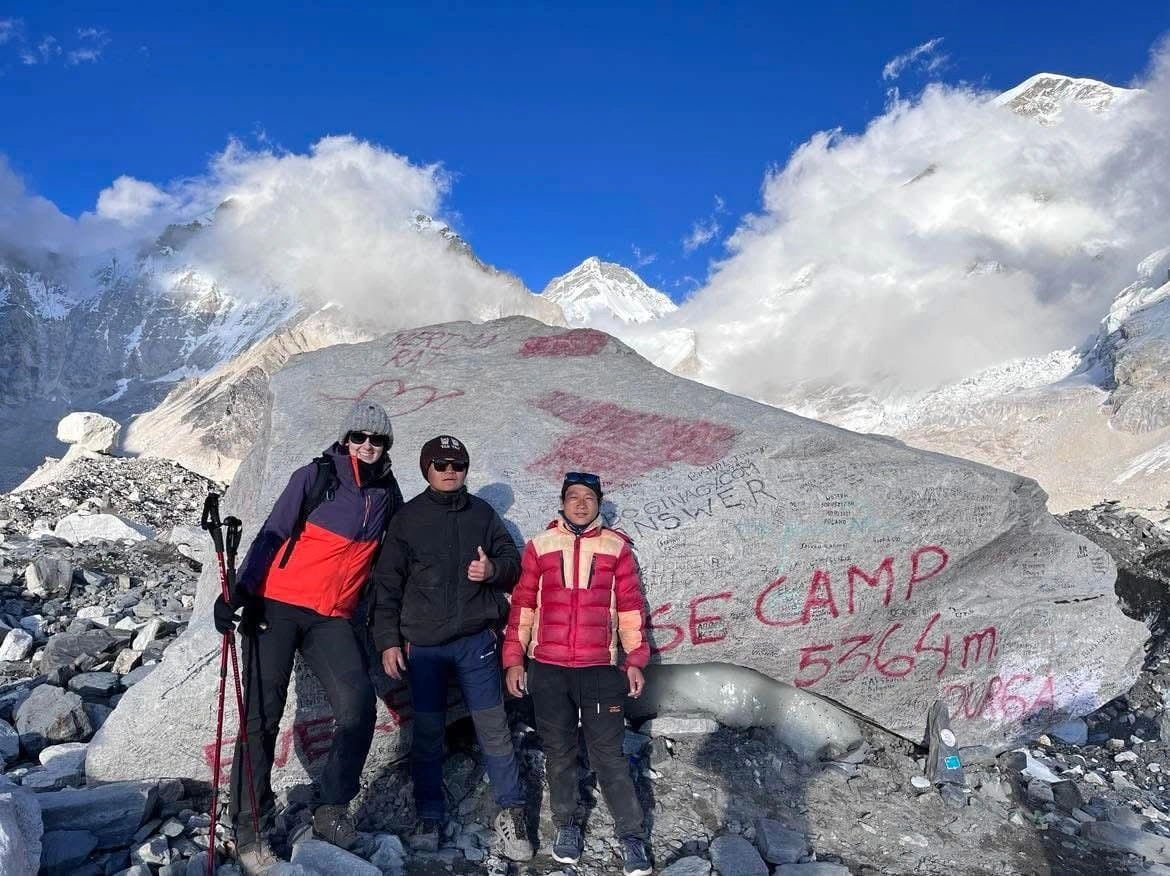
The Everest Base Camp Trek ascends 65 kilometers through Nepal's Khumbu Valley to the foot of the world's highest mountain at 8,849 meters, the most recognized trekking destination on Earth. The route passes through Sagarmatha National Park, a UNESCO World Heritage Site that welcomed 45,000 to 57,000+ annual visitors according to the IUCN Sagarmatha National Park 2025 Conservation Outlook Assessment. The luxury version replaces shared teahouse dormitories with Yeti Mountain Home lodge properties, private porter-supported upper-altitude camps, and helicopter access options that eliminate weather-dependent Lukla flight delays. No other Nepal trek combines Everest's global prestige with this level of premium infrastructure at sustained high altitude.
What Highlights Can You Expect on a Luxury Everest Base Camp Trek?
The Everest Base Camp Trek delivers 6 iconic highlights: close views of Mount Everest at 8,849 meters, Khumbu Glacier traversal, the Sherpa cultural capital of Namche Bazaar at 3,440 meters, Tengboche Monastery at 3,867 meters, Kala Patthar viewpoint at 5,545 meters, and Everest Base Camp itself at 5,364 meters.
Namche Bazaar functions as the trek's cultural anchor. The village sits in a natural amphitheater and contains the Sagarmatha National Park Visitor Centre, a Saturday market active year-round, and the Edmund Hillary School, established in 1961. Luxury itineraries dedicate 2 acclimatization days here, incorporating guided exploration of the village, local Sherpa bakeries, and the Khunde Hospital founded by Sir Edmund Hillary.
The Khumbu Glacier, one of the highest glaciers on Earth, runs from the Western Cwm at 6,100 meters down to Gorakshep at 5,140 meters. Trekkers walk alongside glacier moraines for 6 consecutive hours on the approach to base camp. At Kala Patthar, a 360-degree panorama reveals 10 peaks above 6,000 meters, with Everest's summit pyramid appearing 15 kilometers directly north.
Luxury EBC packages add a key access advantage: private helicopter transfers to Lukla eliminate the 3-4 hour commercial flight waiting time at Tribhuvan International Airport and reduce Lukla weather delay risk, the single most common itinerary disruption on this route.
How Long Does the Luxury Everest Base Camp Trek Take?
The Luxury Everest Base Camp Trek takes 14 days from Lukla to Everest Base Camp and back, incorporating 2 acclimatization days at Namche Bazaar (3,440 meters) and 1 additional rest day at Dingboche (4,410 meters). Standard packages extend to 16-18 days; luxury itineraries compress the timeline through helicopter segment options on the return.
A helicopter evacuation protocol is built into all premium EBC packages. This means any trekker showing symptoms of acute mountain sickness above 4,000 meters receives immediate evacuation coordination, a critical safety provision given that altitude-related illness affects a significant portion of trekkers on this route.
Luxury EBC packages with helicopter return and private lodge upgrades are priced between $3,500 and $5,500+ per person. Some operators offer a 12-day express itinerary using helicopter transfer from Gorakshep (5,140 meters) to Lukla on the return, maximizing time at altitude while reducing total trek days.
What Type of Accommodation Is Available on This Trek?
3 tiers of luxury accommodation serve the EBC route: premium teahouses with attached bathrooms and hot showers, boutique lodge properties, and Yeti Mountain Home lodges, the most established luxury lodge network on the Khumbu corridor. Nepal Intrepid Treks' Everest Base Camp luxury trek package covers all three accommodation tiers within a 16-day private itinerary with helicopter return.
Yeti Mountain Home operates 7 lodge properties between Phakding (2,610 meters) and Dingboche (4,410 meters). Each property features heated private rooms, Western-style bathrooms, filtered drinking water, and dining rooms serving items including Tibetan thukpa, pasta, and bakery items prepared by in-house kitchen teams.
Above Dingboche at 4,410 meters, construction logistics make premium lodge infrastructure impractical. Luxury operators bridge this gap by deploying private porter teams carrying sleeping bag upgrades, insulated mattress toppers, and satellite Wi-Fi hotspot devices to Lobuche (4,940 meters) and Gorakshep (5,140 meters), ensuring comfort at the highest trail elevations.
Who Is the Everest Base Camp Trek Suitable For?
The Everest Base Camp Trek suits fit adults aged 18-65 who maintain regular cardiovascular fitness, including activities such as 5-kilometer running, cycling, or sustained hill walking. No technical climbing skills are required anywhere on the route. The trail follows defined footpaths throughout, with Kala Patthar at 5,545 meters presenting the primary physiological altitude challenge.
Trekkers with prior high-altitude experience above 3,000 meters adapt more effectively to the acclimatization schedule. Trekkers without prior altitude exposure complete EBC successfully when itineraries include the 2 standard Namche rest days. The trek is unsuitable for individuals with uncontrolled hypertension, active respiratory conditions, or recent cardiac events, luxury operators conduct pre-trek health assessments before confirming bookings.
2. Annapurna Base Camp Trek
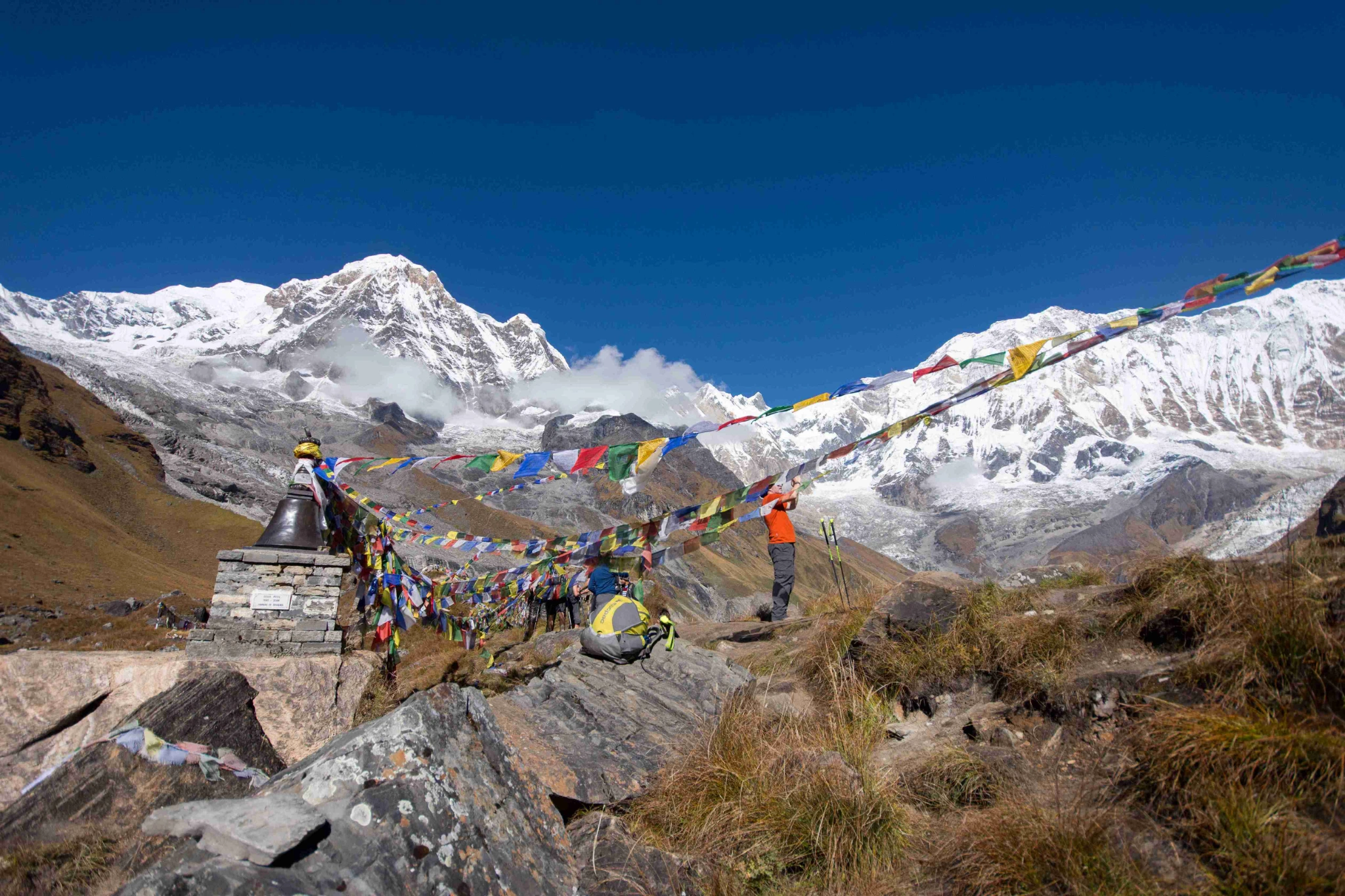
The Annapurna Base Camp Trek covers 115 kilometers through the Annapurna Conservation Area, Nepal's largest protected zone at 7,629 square kilometers, ascending from subtropical river valleys at 1,070 meters to a glacial amphitheater at 4,130 meters. The route passes through 14 Gurung and Magar villages, making it Nepal's most culturally active luxury trek in terms of direct community contact per trail kilometer. Luxury infrastructure concentrates most densely between Nayapul and Chomrong, with private porter teams maintaining service standards above the mid-trail transition point toward base camp. The combination of dense village life, botanical forest zones, and a complete mountain ring sanctuary at the summit makes ABC Nepal's most well-rounded luxury trekking experience across altitude, culture, and scenic variety.
What Scenic Attractions Make the Annapurna Base Camp Trek Special?
The Annapurna Base Camp Trek delivers 5 distinct scenic attractions not combined on any other Nepal route: the Annapurna Sanctuary amphitheater encircled by 13 peaks above 6,000 meters, the Modi Khola river gorge canyon approach, Machhapuchhre (Fishtail Mountain) at 6,993 meters from near-proximity viewpoints, rhododendron forests between 2,000-3,000 meters altitude, and the Gurung heritage village corridor below Ghorepani.
Annapurna Base Camp at 4,130 meters delivers a complete 360-degree mountain ring containing Annapurna I (8,091 meters, the world's 10th highest peak), Annapurna South, Gangapurna, and Machhapuchhre. On clear mornings between 5:30 AM and 6:30 AM, alpenglow illuminates all surrounding peaks simultaneously, a visual phenomenon no other Nepal base camp trek replicates at this completeness of mountain ring.
The rhododendron forests between Tadapani (2,610 meters) and Ghorepani (2,874 meters) bloom from mid-March through mid-May, creating trail canopies of red, pink, and white flowers. These sections host 70+ bird species, including the Himalayan monal (Lophophorus impejanus), Nepal's national bird.
How Challenging Is the Luxury Annapurna Base Camp Trek?
The Luxury Annapurna Base Camp Trek rates at moderate difficulty, with daily elevation gains between 400-900 meters and a maximum altitude of 4,130 meters, 1,234 meters lower than Everest Base Camp. This reduced maximum altitude lowers acclimatization demands and makes ABC accessible to a broader fitness range than EBC. The route traverses the Annapurna Conservation Area, part of a protected network where roughly 85 percent of Nepal's protected area tourists concentrate, as analyzed in the World Bank Protected Area Tourism Economic Impact Study.
The most physically demanding day covers the Deurali (3,230 meters) to Annapurna Base Camp section, a 900-meter elevation gain over 9 kilometers through a steep gorge that retains snow from November through March. Luxury operators provision microspike rentals for icy trail sections during the shoulder winter months.
The most underestimated challenge on this route is the descent from Poon Hill (3,210 meters) to Tikhedhunga (1,480 meters), covering 1,730 meters of elevation loss on 1,400+ stone steps. Luxury packages address this with pre-issued trekking poles, an extended lower-altitude day, and optional knee support provision for trekkers who report joint sensitivity. Covering trek durations of 5 to 18 days across 5 culturally distinct regions, luxury itineraries align closely with national arrival patterns where international visitors maintain an average length of stay of 13 to 15.1 days, as documented in the Nepal Tourism Statistics 2023 Report.
What Facilities Are Available Along the Route?
4 categories of facility serve the Annapurna Base Camp route: luxury lodges concentrated between Nayapul and Chomrong (2,170 meters), mid-range teahouses from Chomrong to ABC, solar-powered charging points at 12 defined stops along the trail, and helicopter landing pads at Dobhan, Chomrong, and ABC itself.
Premium lodge clusters operate most densely at Ghorepani, Tadapani, Ghandruk (1,940 meters), and Chomrong. The Gurung heritage stone-architecture lodges in Ghandruk offer panoramic Annapurna South and Machhapuchhre views, with traditional Gurung cultural dinners served in property dining rooms. Mobile network coverage from Nepal Telecom extends to 4G at Chhomrong; luxury operators provision satellite Wi-Fi devices above this point.
Who Should Choose the Annapurna Base Camp Trek?
The Annapurna Base Camp Trek suits 3 specific trekker profiles: first-time high-altitude hikers seeking a less demanding altitude ceiling than EBC, cultural travelers prioritizing Gurung and Magar village immersion along the route, and nature travelers targeting rhododendron forest biodiversity and Himalayan bird species.
The ABC route passes through 14 distinct villages with active community life, more village interaction than any other Nepal luxury base camp trek. The route also offers 3 well-defined early exit points at Ghorepani, Tadapani, and Ghandruk, allowing trekkers to access panoramic views and authentic Gurung villages without necessarily completing the full base camp approach. For a fully packaged itinerary with premium lodge pre-booking and helicopter return from base camp, see the luxury Annapurna Base Camp trek offered by Nepal Intrepid Treks.
3. Everest View Trek
The Everest View Trek delivers direct Himalayan peak sightlines from the Khumbu Valley without the 14-day time commitment of the full Everest Base Camp route. The trail reaches its highest point at Hotel Everest View, positioned at 3,962 meters near Syangboche, the world's highest hotel by Guinness World Record, with an unobstructed window-frame view of Everest's summit from the property terrace. The 5-7 day format covers 32-40 kilometers of well-maintained Sherpa trail through Namche Bazaar and Khumjung village, with full luxury lodge availability at each overnight stop. This trek represents Nepal's most accessible entry point for first-time high-altitude trekkers seeking the Everest region experience within a shorter time window.
What Can You See During the Everest View Trek?
The Everest View Trek delivers unobstructed sightlines to 11 Himalayan peaks from viewpoints between Lukla (2,860 meters) and Hotel Everest View at 3,962 meters. Visible peaks include Everest (8,849 meters), Lhotse (8,516 meters), Nuptse (7,861 meters), Ama Dablam (6,812 meters), Kantega (6,685 meters), and Thamserku (6,623 meters).
Hotel Everest View, positioned at 3,962 meters near Syangboche airstrip, holds the Guinness World Record for the world's highest hotel. Its panoramic windows face Everest directly, providing full mountain views without requiring ascent to base camp altitude. The hotel terrace delivers the clearest Everest-and-Ama-Dablam composition of any accommodation property on the Khumbu trail.
The Khumjung village on this route holds 2 culturally significant sites: the Hillary School (1961) and Khumjung Monastery, which displays a claimed yeti scalp that draws visitors from trekking groups worldwide. Luxury Everest View itineraries incorporate guided cultural visits to both, with a Sherpa heritage interpreter providing context on local history and Buddhist practices.
How Long Does the Everest View Trek Take?
The Everest View Trek takes 5-7 days as a luxury itinerary from Lukla. The 5-day version covers the core Namche-Syangboche-Khumjung circuit; the 7-day luxury extension adds a cultural day in Namche, an optional hike to Thame village (3,820 meters), and a Tengboche Monastery visit on the return.
This timeline makes the Everest View Trek Nepal's most time-efficient luxury mountain experience, delivering Khumbu Valley views, Sherpa cultural immersion, and high-altitude photography at 3,962 meters within a week-long window. Travelers who cannot commit to a 14-day EBC itinerary choose this trek as a complete Himalayan alternative.
A popular luxury add-on inserts a round-trip helicopter flight from Namche Bazaar to Kala Patthar (5,545 meters), allowing Everest View trekkers to access the classic EBC summit panorama without the 14-day walk, a 2-hour aerial excursion that covers the entire upper Khumbu Valley.
Why Is This Trek Suitable for Beginners?
The Everest View Trek suits first-time Himalayan trekkers for 4 specific reasons: a maximum altitude of 3,962 meters (below the 4,000-meter threshold where severe altitude sickness risk increases sharply), total trail distance of 32-40 kilometers spread across 5-7 days, no technical terrain or glacier crossings anywhere on route, and consistent luxury lodge availability at every overnight stop from Lukla to Syangboche.
Daily elevation gain averages 400 meters, within the recommended safe ascent rate of 300-500 meters for non-acclimatized trekkers. Adults who complete 3-4 hour moderate day hikes at lower altitude complete this trek without prior mountain training. Luxury operators assign a certified English-speaking mountain guide for the full duration, eliminating navigation, food selection, and altitude monitoring decisions for first-time participants.
4. Manaslu Circuit Trek
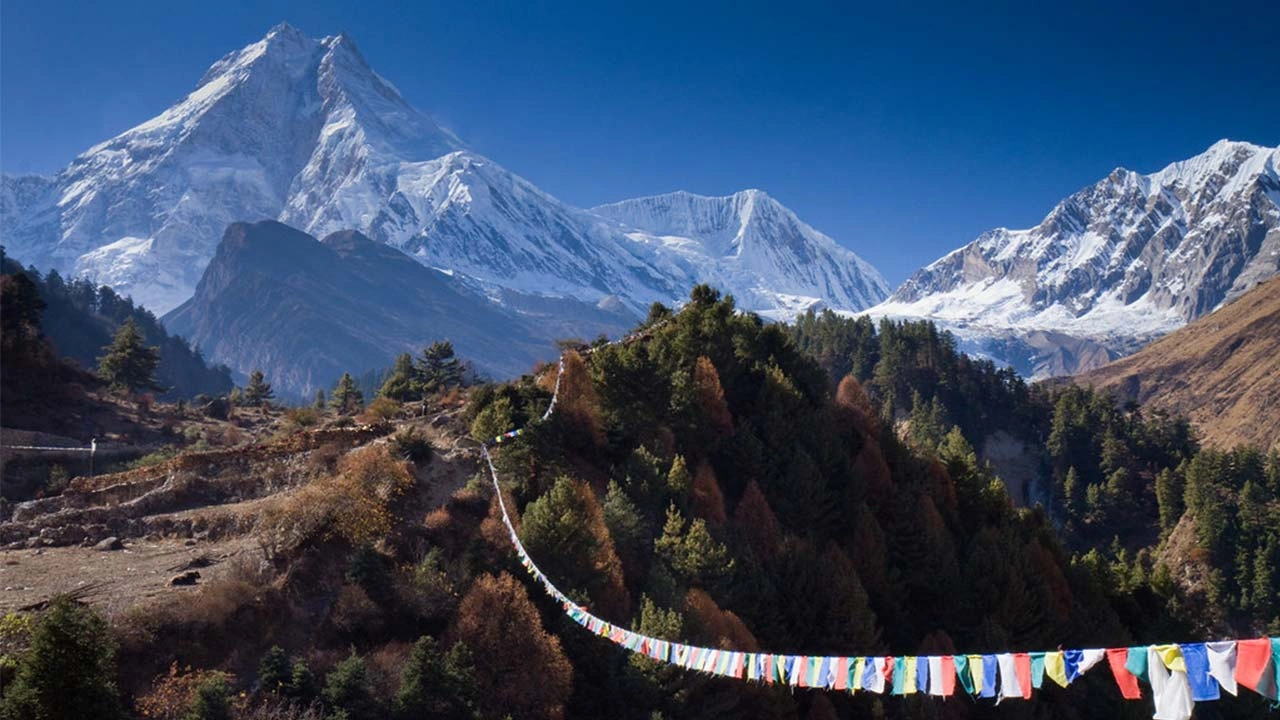
The Manaslu Circuit Trek circumnavigates Mount Manaslu at 8,163 meters, the world's 8th highest peak, across 177 kilometers of restricted-area Himalayan terrain in the Gorkha district. The route operates under a government-controlled permit system that actively limits annual trekker volume, preserving ecological and cultural conditions no longer available on the overcrowded Everest and Annapurna corridors. The circuit crosses the Larkya La Pass at 5,160 meters, traverses 12 Tibetan Buddhist villages between Arughat and Samagaon, and passes beneath Manaslu's north face at the Birendra Tal glacial lake at 3,450 meters. For experienced luxury trekkers prioritizing immersive depth over route familiarity, the Manaslu Circuit delivers Nepal's most complete single-circuit mountain experience.
What Makes the Manaslu Circuit Trek Unique?
The Manaslu Circuit Trek delivers 3 defining features absent from all other Nepal luxury treks: a complete circumnavigation of Mount Manaslu at 8,163 meters (the world's 8th highest peak), the Larkya La Pass crossing at 5,160 meters, and traversal through a government-restricted area requiring a special permit priced at approximately USD 90 per week in 2026.
The restricted area designation actively limits trekker volume, preserving cultural and ecological authenticity no longer available on the Everest or Annapurna corridors. The contrast is stark: annual trekker numbers on the Manaslu Circuit remain well under 15,000 per year compared to 54,000+ on the EBC route, meaning trails, teahouses, and monasteries operate without crowd pressure throughout the season. The valley requires a restricted area permit governed by national conservation policies, which regulate trekker volume to preserve fragile alpine ecosystems as outlined in the ICIMOD Mountain Tourism Sustainability Study.
The circuit passes through 12 Tibetan Buddhist villages between Arughat (600 meters) and Samagaon (3,530 meters), each maintaining active gompa complexes. Birendra Tal, a glacial lake at 3,450 meters directly beneath Manaslu's north face, provides a landscape composition no other circuit trek in Nepal replicates. Higher-cost permits and infrastructure challenges in the Manaslu region make this one of Nepal's premium trekking experiences with limited accessibility.
How Difficult Is the Luxury Manaslu Circuit Trek?
The Luxury Manaslu Circuit Trek rates at strenuous difficulty, with the Larkya La Pass crossing at 5,160 meters requiring 8-10 hours of sustained hiking on the crossing day. Total trail distance covers 177 kilometers across 14-18 days, with 5 consecutive days spent above 3,500 meters altitude.
The technical challenge peaks at 2 points: the Larkya La approach from Larkya Phedi (4,460 meters) gains 700 meters in elevation over 5.5 kilometers on a glaciated trail surface, and the subsequent descent to Bimthang (3,590 meters) covers 1,570 meters of elevation loss on loose scree. Luxury operators equip trekking parties with crampons, trekking pole provisioning, and dedicated Sherpa support for the crossing day.
Prior high-altitude experience at or above 4,000 meters is the primary prerequisite for this route. Trekkers without such experience complete the circuit at the extended 18-day pace, incorporating extra acclimatization days at Samagaon (3,530 meters) and Samdo (3,875 meters) before the pass attempt.
What Cultural Experiences Can You Enjoy Along the Route?
4 categories of cultural experience define the Manaslu Circuit: Tibetan Buddhist monastery visits (including Ribung Gompa at 3,400 meters, one of Nepal's oldest continuously active monasteries), Gurung and Bhotia community interactions, the restricted Tsum Valley detour for ancient cliff-cave monasteries, and the annual Yartung horse festival in Samagaon held each August-September.
The Tsum Valley extension, an 8-day side route from Jagat, accesses one of Nepal's last fully preserved Tibetan Buddhist communities. The valley requires a separate restricted area permit (approximately NPR 35,000 per person in 2026) and is accessible only through pre-arranged packages with a registered Nepal trekking agency. Individual walk-in permits are not issued here. Trekkers planning the full route can review the complete itinerary, permit costs, and logistics on the Manaslu Circuit Trek package page.
Luxury guides on the Manaslu Circuit include Gurung language speakers and trained cultural interpreters. These guides facilitate monastery visits, explain Buddhist iconography within active prayer halls, and arrange tea sessions with resident lamas, experiences that require local trust relationships built over multiple years of guided work. Trekkers who want both the Tsum Valley extension and the full circuit in a single itinerary can book the Tsum Valley with Manaslu Trek, which combines both restricted zones under one permit arrangement.
5. Langtang Valley Trek
Langtang Valley sits 32 kilometers south of the Tibet border and forms the core of Nepal's first dedicated Himalayan national park, covering 1,710 square kilometers of protected terrain established in 1976. The trek ascends from the Syabrubesi trailhead at 1,550 meters to the yak pasture settlement of Kyanjin Gompa at 3,870 meters, covering 60 kilometers of trail through Tamang ethnic communities, temperate wildlife forest, and glacial river terrain. Unlike every other major Nepal luxury trek, Langtang Valley reaches its trailhead by direct 4WD road from Kathmandu, operating completely independently of mountain flight schedules to Lukla or Pokhara. This road accessibility, combined with exclusive yak cheese culture and active red panda habitat, creates a luxury trekking profile that no other Himalayan route in Nepal replicates.
What Natural Beauty Awaits in Langtang Valley?
Langtang Valley presents 5 primary natural features: the Langtang River glacier between 3,800-5,000 meters altitude, Kyanjin Gompa with its working yak cheese factory at 3,870 meters, the Tserko Ri viewpoint at 4,984 meters, the Gosaikunda high-altitude lake system at 4,380 meters (accessible via 2-day side trail), and temperate forest zones between 2,400-3,200 meters containing red panda habitat.
Langtang National Park, established in 1976 as Nepal's first Himalayan national park, covers 1,710 square kilometers and contains 25 mammal species, including Himalayan thar, snow leopard, and Himalayan black bear. Luxury nature guides on this route carry optical spotting equipment and hold specialist training in red panda habitat identification within bamboo and rhododendron forest zones.
The Kyanjin Gompa yak cheese factory produces fresh chhurpi (hard yak cheese) and soft yak cheese daily using milk from local yak herds at 3,800+ meters. Luxury trekking itineraries include a guided cheese-making demonstration and tasting session, a gastronomic cultural experience exclusive to the Langtang Valley trail.
How Accessible Is the Langtang Valley Trek?
Langtang Valley is the most road-accessible luxury trek from Kathmandu, with a direct 4WD road connection to the trailhead at Syabrubesi (1,550 meters) via a 6.5-7 hour drive on the Rasuwagadhi Highway, eliminating the flight dependency affecting Everest and Annapurna routes entirely.
Flight cancellations to Lukla and Pokhara disrupt EBC and ABC itineraries regularly during the monsoon season and autumn weather windows. Langtang's direct road access creates zero flight dependency, making it Nepal's most weather-resilient luxury trekking option. Trekkers who lose booking days due to Lukla delays frequently substitute with a Langtang itinerary without changing their overall Nepal travel dates.
The 2015 Gorkha earthquake triggered a catastrophic avalanche that destroyed the original Langtang village at 3,430 meters, with reconstruction completed by 2018 using improved construction standards. A memorial park honoring the 243 victims forms part of culturally sensitive luxury itineraries, visited as a respectful heritage component, not a tourist attraction.
What Accommodation Options Are Available on This Route?
3 accommodation tiers serve the Langtang Valley route: luxury teahouses with private rooms and en-suite hot showers between Syabrubesi and Lama Hotel, upgraded lodge properties with mountain-view rooms from Lama Hotel to Langtang Village (3,430 meters), and Kyanjin Gompa's premium guesthouse properties offering the route's highest-altitude comfortable stay at 3,870 meters.
Luxury operators supplement lodge facilities above Kyanjin Gompa with private camping equipment for clients targeting Tserko Ri (4,984 meters). Private camp setup includes insulated tents, foam mattress systems, and hot meal delivery by dedicated porter teams, enabling summit day access without sacrificing sleep quality the night before.
The Gosaikunda extension requires 2 additional trail days and 1 overnight at the lakeside teahouse (4,380 meters). Luxury operators pre-position sleeping bag upgrades and a personal cook for this extension, transforming a basic shelter stay into a comfortable high-altitude camp experience.
6. Upper Mustang Trek
Upper Mustang occupies a high-altitude plateau north of the Annapurna and Dhaulagiri ranges at elevations between 2,750 and 3,840 meters, forming part of the historical Tibetan cultural sphere closed to foreign visitors until 1992. The region retains a restricted area classification requiring a USD 500 permit per 10-day entry, the highest-cost trekking permit in Nepal's standard route portfolio. Its defining geographic advantage is a rain shadow created by surrounding 8,000-meter peaks, delivering 300+ dry sunshine days annually and making Upper Mustang the only Nepal trekking destination fully operational during the June-September monsoon season. The walled medieval city of Lo Manthang at the route's northern terminus, inhabited continuously for 600+ years, provides a heritage access experience with no direct equivalent on any other trekking trail in Asia.
What Makes Upper Mustang Different From Other Treks?
Upper Mustang differs from all other Nepal luxury treks through 4 exclusive characteristics: a rain shadow location north of the Annapurna-Dhaulagiri barrier delivering 300+ annual sunshine days, a restricted area permit costing USD 500 per 10 days, Tibetan Plateau terrain with eroded canyon badland formations found nowhere else in Nepal's trekking landscape, and Lo Manthang, a walled medieval city at 3,840 meters inhabited continuously for over 600 years.
The rain shadow effect makes Upper Mustang the only Nepal trekking region that operates effectively during the full monsoon season (June-September), when every other major route experiences trail-disrupting rainfall, leeches, and reduced visibility. This 4-month exclusive window creates the single most differentiated seasonal advantage of any Nepal trek. The Upper Mustang Trek offers monsoon-season exclusivity within the Himalayan rain shadow, a regional climatic advantage highlighted in the UNESCAP Nepal Tourism Satellite Accounts Study.
The Mustang Kingdom only opened to foreign trekkers in 1992. Prior to that date, it functioned as a closed kingdom under Raja Jigme Dorje Palbar Bista. Luxury operators arrange access to the palace complex in Lo Manthang for cultural briefings, an audience that requires pre-booking through licensed agencies and represents a degree of heritage access unavailable on any trail in the standard trekking network.
What Historical and Cultural Attractions Can You Explore?
Upper Mustang contains 9 specific historical and cultural sites accessible through luxury itineraries: Lo Manthang walled city, Thubchen Gompa with 15th-century murals, Jampa Lhakhang Monastery, the Chhoser cave monastery network carved into 1,000-year-old cliff faces, Kagbeni village at the Kali Gandaki river junction, ancient sky burial cave cemeteries, Kali Gandaki salt trade archaeological sites, Ghar Gompa above Ghami village, and Muktinath Temple at 3,800 meters.
The Chhoser cave complex contains 40+ carved chambers used by 10th-13th century Tibetan monks as meditation retreats and residential quarters. Archaeological investigations since 2008 have recovered manuscripts, thangka paintings, and human skeletal remains from these caves. Luxury cultural guides arrange rope-assisted access to accessible cave chambers for interested trekking groups.
The Kali Gandaki gorge, the world's deepest by vertical measurement at 5,571 meters from Dhaulagiri's summit to the river bed, runs through the southern approach to Upper Mustang. The gorge riverbed yields shaligram fossils (ammonite stones sacred in Hindu tradition) that trekkers collect under guide supervision.
When Is the Best Season for the Upper Mustang Trek?
The Upper Mustang Trek operates across 2 primary trekking seasons: March-May for spring wildflower blooms and clear mountain views, and June-September for the exclusive monsoon-season window when the rain shadow keeps conditions dry and stable. Both seasons deliver fundamentally different but equally high-quality experiences.
October-November extends the Upper Mustang season with stable weather and daytime temperatures averaging 10-15°C in Lo Manthang. December-February allows cold-weather trekking with nighttime temperatures dropping to -10°C, delivering near-total trail solitude and crystal-clear high-altitude visibility. Travelers looking for a shorter time commitment in the Annapurna region during any season can also consider the Annapurna heli tour, which delivers base camp landings and panoramic views in a single day.
The Tiji Festival (Tenchi Festival), a 3-day Buddhist masked dance ceremony held in Lo Manthang each May, represents Upper Mustang's highest-demand cultural event. Luxury itineraries timed to coincide with Tiji require bookings 6-12 months in advance, Lo Manthang's accommodation capacity of approximately 150 beds fills entirely during the festival.
7. Mardi Himal Trek
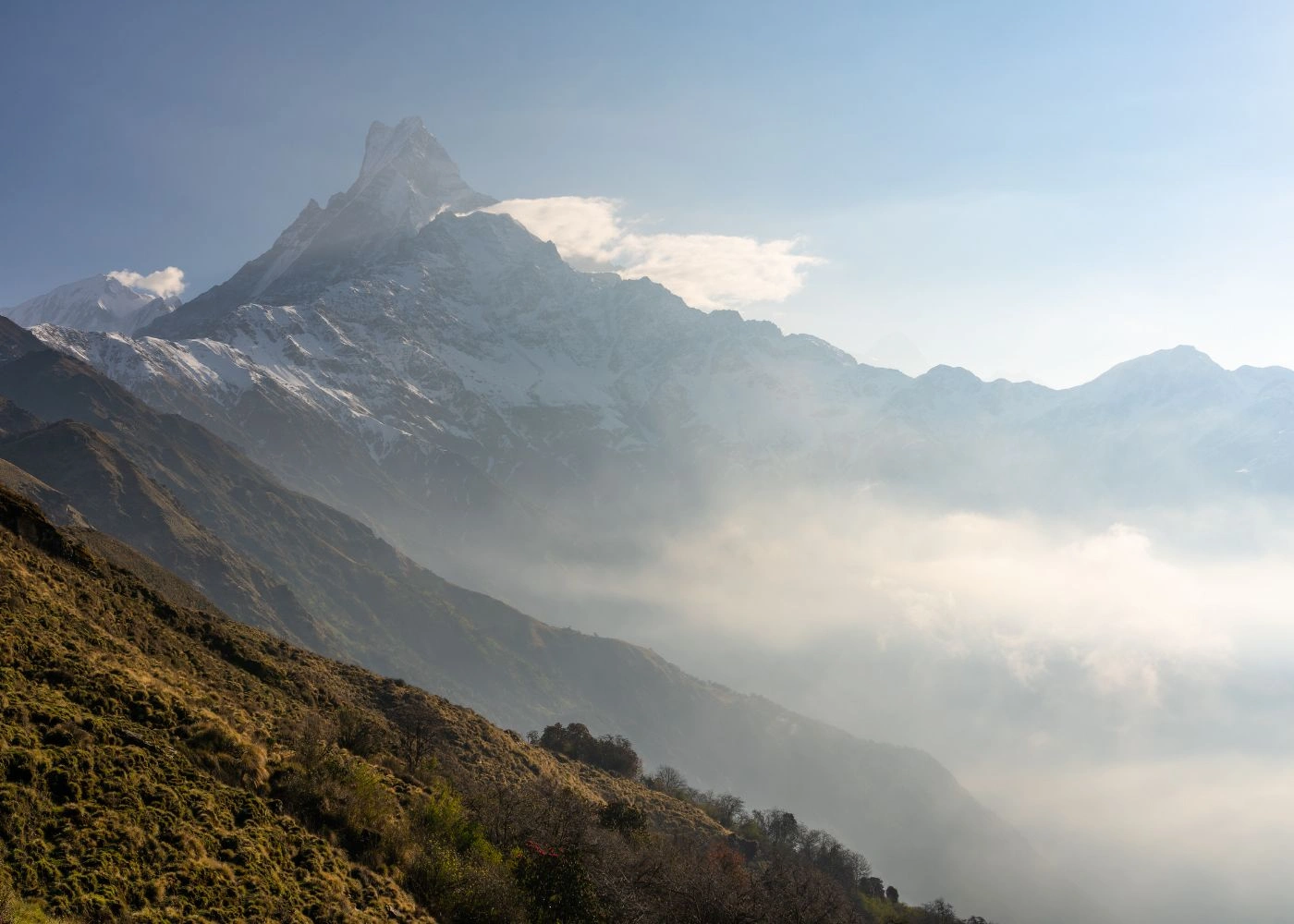
Mardi Himal Trek follows a high ridge on the eastern flank of Machhapuchhre within the Annapurna Conservation Area, officially opened to trekkers in 2012 and reaching a high camp at 4,500 meters. The route records daily trekker traffic of 40-80 people during peak season, one-fifth the volume of the EBC corridor, preserving the trail ambiance and lodge intimacy that overcrowded routes no longer deliver. The 6-8 day itinerary operates as a full circuit from Pokhara, with private 4WD transfers at both trailheads, eliminating flight dependency and route backtracking entirely. Mardi Himal delivers the closest legal approach to Machhapuchhre, Nepal's permanently off-limits sacred peak at 6,993 meters, of any trekking trail in the Annapurna region.
What Views and Landscapes Can You Expect on the Mardi Himal Trek?
The Mardi Himal Trek delivers close-range views of 6 peaks from its High Camp at 4,500 meters: Machhapuchhre (6,993 meters) from the closest accessible viewpoint of any Nepal trek, Mardi Himal summit (5,587 meters), Annapurna I, Annapurna South, Hiunchuli, and Gangapurna. The trail traverses 4 distinct ecological zones, subtropical forest, temperate rhododendron forest, alpine meadow, and high-altitude rocky ridge terrain.
Mardi Himal High Camp sits on a narrow ridge with a 270-degree unobstructed panorama. On clear mornings, Pokhara city and Phewa Lake are visible 3,000 meters below at the valley floor, a vertical scale compression that photography on no other Nepal trek recreates. This elevation contrast between the snow peaks above and the Pokhara valley below creates the route's defining visual signature.
Machhapuchhre's southern face dominates the final 2 trail days. Nepal's government declared the mountain sacred and permanently closed it to climbing expeditions in 1964, making Mardi Himal the closest any trekker legally approaches Machhapuchhre's upper slopes. No other Nepal trek brings trekkers within this proximity to a permanently off-limits peak of this size.
How Long Does the Luxury Mardi Himal Trek Take?
The Luxury Mardi Himal Trek takes 6-8 days from Pokhara, with 5 walking days and 1-2 additional cultural days in the Sidhing village area and Forest Camp. Its proximity to Pokhara, a 4-hour drive from Kathmandu or a 25-minute flight, makes this Nepal's most time-efficient luxury trek combining 4,500-meter altitude views with rapid access.
Luxury operators run the Mardi Himal circuit starting at Kande (1,770 meters) and ending at Lwang or Australian Camp, with private 4WD transfers at both trailheads. This circular design eliminates all route backtracking. Luxury trek packages in Nepal with private guide service and premium lodge accommodation reach USD $250+ per day. Express packages for Mardi Himal include a helicopter transfer from Pokhara directly to Forest Camp (2,620 meters), compressing the circuit to 4 walking days for time-limited travelers.
Who Is the Mardi Himal Trek Best For?
The Mardi Himal Trek suits 4 specific trekker profiles: photography enthusiasts targeting Machhapuchhre close-up compositions unavailable elsewhere, travelers with 6-8 day availability seeking maximum altitude view return per day invested, repeat Nepal visitors who completed EBC or ABC and want a substantially less-traveled alternative, and couples prioritizing remote trail ambiance with consistent luxury lodge availability.
Daily trekker traffic on Mardi Himal averages 40-80 people per day during peak season, compared to 300-500 on the EBC corridor. Luxury lodges at Forest Camp, Low Camp, and High Camp accommodate a maximum of 20 guests per night, creating an intimate mountain atmosphere that the high-traffic Everest and Annapurna routes no longer deliver. This low-density environment is the defining experiential advantage of Mardi Himal for repeat Nepal trekkers.
How Can You Choose the Right Luxury Trek in Nepal?
The right luxury trek in Nepal is determined by 4 decision variables: available days (5-day minimum to 18-day maximum), preferred maximum altitude (3,962 meters for beginners to 5,545 meters for experienced trekkers), cultural immersion priority (Sherpa Buddhist culture, Gurung heritage, or Tibetan Lo Mustang traditions), and travel season.
The table below maps each variable directly to trek suitability for efficient decision-making:
Trek | Duration | Max Altitude | Cultural Focus | Operational Season |
Everest Base Camp | 14 days | 5,545 m | Sherpa / Buddhist | Oct–Nov, Mar–May |
Annapurna Base Camp | 10–12 days | 4,130 m | Gurung / Magar | Oct–Nov, Mar–May |
Everest View Trek | 5–7 days | 3,962 m | Sherpa | Oct–Nov, Mar–May |
Manaslu Circuit | 14–18 days | 5,160 m | Tibetan / Bhotia | Oct–Nov, Mar–May |
Langtang Valley | 7–10 days | 4,984 m | Tamang | Oct–Nov, Mar–May |
Upper Mustang | 12–14 days | 3,840 m | Tibetan (Lo Kingdom) | Mar–Sep (incl. Monsoon) |
Mardi Himal | 6–8 days | 4,500 m | Gurung | Oct–Nov, Mar–May |
Trekkers choosing between 2 routes of similar difficulty prioritize scenic variety over altitude. The Manaslu Circuit delivers the widest combined cultural and landscape diversity on a single circuit; EBC delivers the highest global recognition and the most developed luxury lodge infrastructure. Upper Mustang and Manaslu rank as Nepal's higher-cost trekking regions due to restricted area permit fees and more complex logistics.
Budget planning as a secondary filter: luxury treks in Nepal comprising premium lodging, private transportation, and improved services cost USD $2,500–$5,000 or more depending on route and service level. Upper Mustang adds the USD $500 restricted area permit on top of package costs. Manaslu adds approximately USD $90 per week for its restricted area permit. These permit costs are non-negotiable government fees that fund conservation and local infrastructure in protected zones.
Can a Professional Trekking Company Help You Plan a Luxury Trek?
A licensed professional trekking company provides 6 services that independent trekkers cannot replicate: restricted area permit processing for Manaslu, Upper Mustang, and Tsum Valley; certified mountain guide assignment; porter hiring and day-to-day management; pre-trek Kathmandu and Pokhara hotel bookings; emergency evacuation coordination with helicopter rescue operators; and full itinerary customization based on pre-departure fitness assessment.
Nepal's Tourism Board requires all trekkers in restricted areas to travel under a licensed agency with a certified guide present. Attempting restricted-area treks independently results in checkpoint refusal and removal from the trail, not a penalty option but a legal certainty. For unrestricted routes, individual trekking is permitted by regulation, but luxury lodge pre-booking during October-November peak season requires agency intervention: premium properties on EBC, ABC, and Mardi Himal fill 6-12 weeks in advance.
Certified mountain guides carry Wilderness First Responder (WFR) or Wilderness First Aid (WFA) credentials alongside their Nepal mountaineering guide certifications. Their altitude monitoring protocols, acclimatization scheduling adjustments, and emergency medical kit access represent tangible safety infrastructure, not optional service upgrades. Above 4,000 meters, having no experienced guide to assess altitude symptoms or make route decisions creates genuine safety risk, not theoretical risk.
What Are the Key Takeaways About the 7 Best Luxury Treks in Nepal?
The 7 best luxury treks in Nepal span altitudes from 3,840 meters to 5,545 meters, traverse 5 culturally distinct regions, and cover trek durations of 5-18 days, making direct comparison meaningful only when filtered by the trekker's available time, altitude comfort level, and cultural priorities.
Everest Base Camp remains the world's most recognized trekking destination and the benchmark by which all Nepal luxury treks are assessed. Annapurna Base Camp provides the most accessible combination of high-altitude panorama and ethnic village diversity at a moderate altitude ceiling. Everest View Trek delivers the Khumbu landscape experience within a 5-7 day window. Manaslu Circuit delivers the deepest cultural immersion and lowest trekker density of any circuit route. Langtang Valley provides direct road access from Kathmandu with exclusive yak cheese cultural experiences. The Upper Mustang Trek offers monsoon-season exclusivity and 600-year-old walled city exploration. Mardi Himal combines maximum Machhapuchhre proximity with an intimate 40-80 trekker per day trail environment.
Luxury trekking in Nepal transforms the physical challenge of high-altitude mountain hiking into a managed, comfortable, and culturally enriching Himalayan journey, one that opens Nepal's extraordinary mountain landscape to travelers across a wider range of fitness levels, time availability, and experience backgrounds.