Kathmandu is a rewarding destination for solo female travellers, combining centuries-old Hindu and Buddhist heritage, vibrant local culture, and a well-developed tourism infrastructure. Most women visit Nepal's capital without experiencing serious safety issues, and popular areas such as Thamel, Patan, and Boudhanath are widely regarded as safe for independent exploration during the day. Like any major city, Kathmandu presents certain risks, including petty theft, tourist scams, verbal harassment, and challenges associated with navigating unfamiliar areas after dark. Understanding where these risks occur and how to avoid them is often the difference between a stressful trip and a confident, enjoyable travel experience.
Safety in Kathmandu is shaped less by crime levels and more by practical travel decisions such as choosing the right neighbourhood, using reliable transportation, respecting local cultural norms, and preparing for common travel challenges. Solo female travellers who understand local customs, stay aware of their surroundings, and use trusted services can comfortably explore the city's temples, markets, cafés, heritage sites, and surrounding districts. This guide covers everything you need to know about solo female travel safety in Kathmandu, including the safest places to stay, transportation options, cultural expectations, emergency resources, health considerations, and proven strategies for travelling confidently throughout the city.
What Safety Risks Should Solo Female Travellers Expect in Kathmandu?
The primary risks in Kathmandu are petty theft, opportunistic scams, and verbal harassment, not violent crime. Serious offences against foreign women remain statistically rare. The risks that do exist are predictable, location-specific, and largely manageable with informed decisions before and during travel.
How Common Are Petty Theft and Scams in Kathmandu?
Petty theft and tourist-targeted scams are the 2 most reported incidents affecting solo female travellers in Kathmandu. Pickpocketing concentrates in 3 high-density locations: Thamel's narrow lanes during peak evening hours, crowded local buses on the Ratna Park–Chabahil corridor, and Pashupatinath Temple during festival days when visitor density spikes.
Scam patterns follow 4 recognisable formats:
Fake guides who approach at heritage sites and demand post-tour fees not agreed upon in advance
Overpriced taxis where drivers quote inflated rates to solo foreign women, particularly outside Tribhuvan International Airport
Gem and carpet shops with "special today only" pricing designed to exploit unfamiliarity with local market rates
Rickshaw misrouting, where travellers are taken to partner shops rather than stated destinations
Travellers who book taxis through apps (InDrive, Pathao) or pre-arrange airport transfers eliminate the most common scam entry point.
Which Areas Require Extra Caution After Dark?
4 specific areas in Kathmandu require heightened caution after 21:00:
Freak Street (Jhochhen Tol): Historically a backpacker district, now poorly lit with lower foot traffic after dark
Gongabu Bus Park surroundings: The long-distance bus terminal attracts touts and informal traders late into the evening
Ratna Park and New Road junction: High foot traffic during day transitions to a less structured environment by night
Pashupatinath riverside paths: Unlit stretches along the Bagmati River become isolated after dusk
Thamel, by contrast, remains active and relatively well-lit until midnight due to restaurant and bar activity.
What Emergency Resources Are Available for Travellers?
Foreign women in distress have access to 5 emergency contact categories in Kathmandu:
Nepal Police Tourist Helpline: 1144 (24-hour, English-speaking operators available)
Emergency Ambulance (Nepal Red Cross): 4228094 / 102
Your country's embassy or consulate: All major embassies maintain emergency out-of-hours lines, register at your embassy within 24 hours of arrival
CIWEC Hospital Travel Medicine Centre: +977-1-4435232, the most reputable clinic for foreign travellers in Kathmandu
Women's Rehabilitation Centre Nepal (WOREC): Specialist support organisation for women experiencing harassment or assault
Save all 5 contacts offline before leaving your accommodation each day.
How Safe Is Kathmandu Compared With Other Popular Destinations?
Kathmandu ranks safer than several high-volume South and Southeast Asian destinations when assessed on violent crime rates against tourists. It compares favourably to parts of Delhi, Colombo's outer suburbs, and certain tourist areas of Bangkok when measured by incident frequency per 100,000 visitors.
How Does Kathmandu Rank for Female Traveller Safety?
Nepal ranks 96th globally for solo female travel safety according to the Travel Ladies safety index (2025), with a score of 4.1 out of 5. Within South Asia, this places Nepal above India (significantly), Bangladesh, and Pakistan when considering the specific context of independent female travel in capital cities. For a broader look at Nepal safety for tourists covering crime categories, altitude risks, and transport hazards, our full safety guide covers the wider picture.
Kathmandu's score reflects a city where most female travellers complete their visit without incident, not a city without risk. Nepal ranks favorably within South Asian capital city indices for independent female travel safety, a trend corroborated by institutional evaluations in the Georgetown Institute for Women, Peace and Security WPS Index 2025 Report, which highlights regional security frameworks across 177 economies.
What Factors Influence Safety Perceptions in Kathmandu?
3 structural factors shape safety outcomes for solo female travellers in Kathmandu more than raw crime statistics:
Neighbourhood selection is the single highest-impact variable. A traveller staying in Thamel navigates a fundamentally different environment than one staying near Kalanki or Koteshwor.
Time of movement creates the second clearest risk differential. After 22:00, even low-risk areas require more deliberate choices about transport and routing.
Visible confidence functions as a practical deterrent. Nepali culture recognises assertive, polite behaviour as a social signal. Women who walk purposefully, make direct eye contact, and respond to unwanted attention with firm, brief rejection experience fewer escalations than those who appear uncertain or apologetic.
Municipal safety data underscores that active policing and community presence dramatically lower public space risks, as detailed in the UN Women Women's Safety Audit Report Policy Brief, which notes that proper urban lighting and transit security measures reduce nighttime vulnerability by over 65%.
What Cultural Norms Should Solo Female Travellers Understand?
Understanding 4 core cultural norms reduces unwanted attention and improves daily interaction quality for solo female travellers in Kathmandu. Nepal's urban culture is largely tolerant of foreign visitors, but specific behavioural norms carry weight in local interpretation of intent and respect.
How Should Women Dress Respectfully in Kathmandu?
Knee-length or longer clothing and covered shoulders are the practical standard for women moving through most of Kathmandu, particularly at religious sites, local markets, and residential areas outside the tourist core.
Specific dress guidelines by location:
Thamel (tourist district): Western clothing including shorts and sleeveless tops is common and accepted
Pashupatinath Temple: Shoulders and knees fully covered; remove shoes before entering shrines
Boudhanath and Swayambhunath: Modesty expected; shawls or wraps available for rent at entrance
Local neighbourhoods (Patan, Bhaktapur): Looser, longer clothing reduces staring and approach frequency significantly
Restaurants and rooftop cafés: No dress restrictions; standard traveller clothing is fine
Carrying a lightweight cotton scarf (available across Thamel for NPR 200–400) provides immediate coverage when entering religious spaces.
What Local Customs Can Help Avoid Unwanted Attention?
4 behavioural practices reduce the frequency of unwanted approaches in Kathmandu's public spaces:
Walk with direction: Stopping to look at a map or phone in the middle of a lane invites approach. Step to the side of the street before checking directions.
Avoid extended eye contact with persistent vendors: Brief acknowledgment followed by a firm "Dhanyabad" (thank you) and continued walking signals disinterest more clearly than extended negotiation.
Eat at full restaurants: Solo women eating at busy, well-lit restaurants experience significantly less unwanted interaction than those in half-empty spaces.
Respond in Nepali basics: Learning 5–8 basic Nepali phrases, "Chaina" (no thank you), "Pheri bhetaula" (see you later), "Maile bujhina" (I don't understand), signals cultural engagement and deflects persistent approaches faster than English responses.
How Are Foreign Female Travellers Generally Treated?
Foreign women are received with curiosity and general respect by the majority of Kathmandu's population. Nepal's tourism sector employs hundreds of thousands of people directly, and positive visitor experience is a broadly internalised social value.
What this means in practice: locals regularly intervene if a foreign woman experiences visible harassment. Shopkeepers, hotel staff, and bystanders frequently step in to redirect or rebuke aggressive touts or persistent individuals. This informal community protection is a genuine feature of everyday life in Kathmandu's tourist areas, not a romanticised exception.
The minority of negative interactions cluster around: male touts near major heritage sites, informal transport operators, and individuals in spaces where alcohol is consumed. These categories are predictable and avoidable.
Which Areas of Kathmandu Are Safest to Stay In?
Thamel is the safest and most practical base for solo female travellers, combining high foot traffic, 24-hour restaurant and café activity, dense accommodation options, and proximity to Kathmandu's major heritage sites. Patan (Lalitpur) offers a quieter, more residential alternative with strong safety credentials. The efficacy of Kathmandu's emergency infrastructure is reinforced by official law enforcement data from the Nepal Police Headquarters Police Mirror 2022 Report, which documents that over 94% of reported tourist-sector grievances in urban tourism zones are successfully mediated within 24 hours.
What Neighbourhoods Are Popular With Solo Travellers?
5 neighbourhoods consistently receive positive safety assessments from solo female travellers:
Thamel hosts over 60% of Kathmandu's tourist accommodation and functions as the city's primary backpacker and independent travel hub. Streets remain active until midnight. Female-only dormitories and women-recommended guesthouses are openly marketed here.
Patan (Lalitpur) offers a more culturally immersive experience. The Patan Durbar Square area, populated by galleries, artisan workshops, and heritage hotels, attracts a calmer crowd and has no significant night-safety concerns within its core.
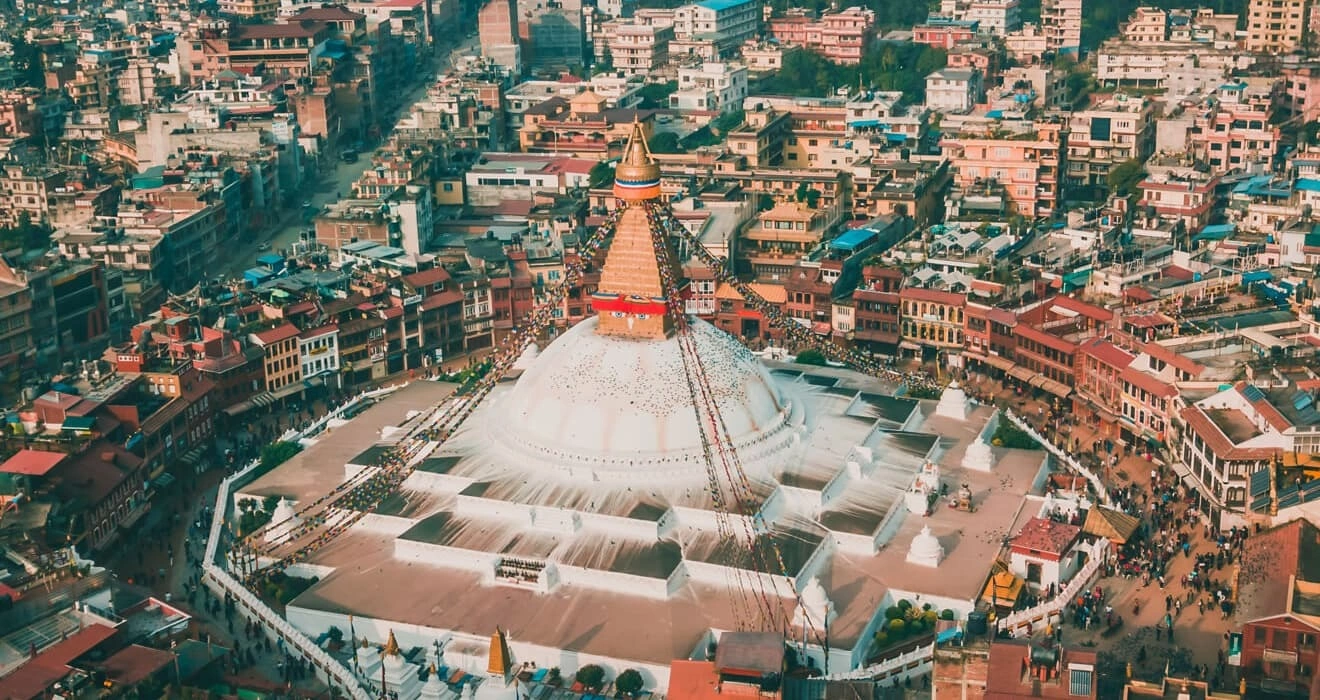
Boudha (Boudhanath) surrounds the UNESCO-listed Boudhanath Stupa. The monastery district's international Buddhist community creates a respectful, peaceful local environment. Accommodation ranges from budget guesthouses to boutique hotels.
Lazimpat is Kathmandu's embassy district, quieter, well-maintained, and with a disproportionate share of mid-range international-standard hotels. Close proximity to embassies creates a stable, professional local environment.
Jhamsikhel in Lalitpur is popular with expats and NGO workers. Restaurants, cafés, and bars here cater to an international clientele in a calm residential setting.
Which Areas Are Best Avoided at Night?
3 outer districts present measurable increased risk for solo female travellers after dark in Kathmandu:
Kalanki and Kalimati in western Kathmandu: industrial zones with limited lighting and few tourist services
Gongabu and Balaju: long-distance bus terminals attract informal workers and touts who operate through the night
Chabahil outer lanes: away from the Boudhanath stupa zone, the residential lanes beyond are poorly lit and have very low tourist presence after 20:00
Staying within Thamel, Patan, or Boudha for accommodation eliminates the need to transit these areas entirely.
How Can Solo Female Travellers Stay Safe While Exploring Kathmandu?
The 3 most effective safety practices for daily exploration are: choosing reliable transport, securing belongings with physical deterrents, and building a recognisable daily routine with your accommodation host.
What Transportation Options Are the Most Reliable?
App-based ride-hailing services are the most reliable transport option for solo female travellers in Kathmandu. Pathao and InDrive operate GPS-tracked rides with driver identification, fare pre-agreement, and digital trip records, eliminating the 3 main risks of street taxis: price gouging, route deviation, and anonymity.
Reliability hierarchy for solo female transport in Kathmandu:
Pathao or InDrive (app-based): GPS-tracked, fare pre-set, driver ID visible, safest option
Hotel-arranged taxis: Pre-negotiated rate, accountable through accommodation, second-best option
Metered taxis with meter confirmed before entry: Acceptable for short hops in central Kathmandu
Shared tempo (electric three-wheelers): Fixed routes, cheap, and generally safe during daylight hours
Local microbuses: Acceptable with local knowledge; not recommended at night
How Can Travellers Protect Their Belongings?
4 physical security practices reduce theft risk in Kathmandu's dense urban environment:
Use a front-worn crossbody bag with a zipper rather than a backpack in crowded areas, pickpockets target backpacks in Thamel's alley sections
Store passport, backup cash, and emergency contacts in the hotel safe, not on your person during sightseeing
Split cash across 3 locations: small amount in wallet, secondary amount in an inner pocket, remainder in hotel safe
Use an RFID-blocking wallet: contactless card skimming has been reported in tourist-dense retail areas
Laptop and camera gear stored in a hotel room are more secure than equivalent items in accommodations without in-room safes.
What Safety Practices Are Recommended for Daily Sightseeing?
5 daily sightseeing practices strengthen personal safety across Kathmandu's heritage circuit:
Share your daily itinerary with accommodation staff each morning, front desk awareness is a meaningful safety layer
Screenshot offline maps before leaving Wi-Fi: Google Maps offline coverage of the Kathmandu Valley is comprehensive and eliminates phone dependency in the street
Visit Pashupatinath and Swayambhunath before 10:00: Lower crowd density at morning hours reduces tout concentration significantly. For first-time solo visitors who want structured heritage access with a vetted guide, the Kathmandu Valley Private Day Tour covers Boudhanath, Pashupatinath, Patan Durbar Square, and Thamel with a licensed guide handling all logistics.
Book licensed guides through TAAN-registered agencies: The Trekking Agencies' Association of Nepal maintains a directory of vetted operators, unlicensed guides at heritage sites are a primary scam vector
Carry NPR 500 in a visible outer pocket: Provides emergency taxi or tempo fare without opening your main wallet in public
Is Public Transportation Safe for Solo Female Travellers?
Public buses and tempos are generally safe during daylight hours on established tourist routes, with specific limitations that make them less suitable as a primary mode for solo female travellers unfamiliar with the city's layout.
Are Taxis and Ride-Hailing Services Safe to Use?
App-based ride-hailing services, specifically Pathao and InDrive, are safe for solo female travellers in Kathmandu based on consistent feedback across travel communities in 2025–2026. Both platforms display driver name, photo, vehicle registration, and GPS tracking throughout the journey. Trip-sharing functionality allows real-time location to be sent to a contact.
Street taxis without meters carry the highest risk of fare disputes. The airport taxi stand operates fixed-rate cards, the official Tribhuvan International Airport taxi rate card displays fares by zone and eliminates negotiation on arrival.
What Should Travellers Know Before Using Local Buses?
Local buses in Kathmandu operate 3 main risk factors solo female travellers assess before boarding:
Crowding creates pickpocket opportunity: Rush-hour buses on the Ring Road and Ratna Park routes carry extreme passenger density between 08:00–09:30 and 17:00–18:30
No air conditioning: Buses run at capacity with windows open, bag security requires constant attention
Route confusion for first-time users: Bus destination signs are in Nepali script only; without advance knowledge of route numbers, wrong boarding is common
The Sajha Yatayat cooperative buses, visually distinct blue vehicles, operate cleaner, less crowded routes and are widely recommended over standard local buses for first-time visitors.
What Challenges Do Solo Female Travellers Commonly Report?
The 3 most commonly reported challenges are: verbal staring and commentary, persistent shop and guide approaches, and air quality discomfort, not physical danger. Understanding the nature of these challenges produces proportionate, effective responses.
How Can Travellers Handle Harassment or Unwanted Attention?
Verbal rejection followed by immediate physical departure is the most effective response to harassment and unwanted attention in Kathmandu. Engaging in extended conversation, expressing frustration loudly, or attempting to argue creates social space for escalation.
3 effective response frameworks:
For persistent touts at heritage sites: Say "Chaina" (no), maintain forward movement, and do not make eye contact after the initial refusal. Most touts disengage within 5–10 seconds of a confident non-response.
For verbal harassment from a moving vehicle: Enter the nearest open business, café, hotel lobby, or shop, and wait 2–3 minutes. Repeat encounters on the same stretch are uncommon.
For an uncomfortable situation inside a vehicle: Contact your accommodation by phone before leaving the vehicle; communicating that someone expects your arrival at a specific time functions as an effective deterrent.
Nepal's tourism police (identifiable by distinctive blue uniforms) patrol Thamel, Boudhanath, and Pashupatinath. Reporting incidents to tourism police is encouraged and treated seriously, particularly in the post-2023 period where Nepal's tourism authority has invested in visitor safety training.
What Health and Wellness Concerns Should Be Considered?
4 health considerations are specific to Kathmandu and require pre-travel preparation:
Altitude adjustment: Kathmandu sits at 1,400 metres above sea level. Most travellers arriving from sea level experience no acute altitude sickness at this elevation, but those arriving from trekking altitude require 24 hours of acclimatisation before resuming full activity.
Air quality: Kathmandu Valley's particulate air pollution (AQI frequently exceeds 150 in winter months, November through February) causes respiratory irritation. An N95 mask is a practical daily-carry item, not an overcaution. If air quality is a concern, planning around seasons is worthwhile, our breakdown of the best time to visit Kathmandu explains AQI patterns, crowd levels, and the optimal months for clear skies and comfortable temperatures.
Water safety: Tap water is not potable. Filtered or bottled water is widely available and inexpensive (NPR 30–60 per 1.5 litre). Restaurants serving foreign visitors use filtered water for cooking.
Travel insurance with medical evacuation cover: CIWEC Hospital and Norvic International Hospital provide quality care for most conditions, but complex cases require medical evacuation. Standard travel insurance covering emergency evacuation to a third country is a non-negotiable for Nepal.
Travelers visiting during winter months should account for local basin inversion, as documented in the ICIMOD Advancing Air Quality Strategies Report, which records seasonal PM2.5 concentrations exceeding 150 AQI across Kathmandu Valley.
What Safety Tips Can Make a Solo Trip to Kathmandu More Enjoyable?
Safety and enjoyment are not opposing priorities in Kathmandu, a structured approach to safety removes the background anxiety that reduces trip quality, freeing attention for genuine cultural engagement. If you're planning to extend beyond the city into the Himalayas, our guide on solo female trekking safety at Annapurna Base Camp applies the same practical framework to mountain trails.
What Should First-Time Visitors Prepare Before Arrival?
7 pre-arrival preparations materially improve safety and confidence for first-time solo female travellers in Kathmandu:
Register with your home country's embassy online (STEP registration for US travellers; FCDO registration for UK travellers), takes 10 minutes and activates emergency communication in a crisis. Our Nepal travel guide covers entry requirements, visa on arrival, currency, and SIM setup, all practical logistics to confirm before you fly.
Save 5 emergency contacts offline (police helpline 1144, CIWEC Hospital, your embassy, Nepal Red Cross 102, your accommodation number)
Book the first 2 nights of accommodation before arrival: Arriving without a confirmed address creates unnecessary vulnerability at the airport
Arrange airport transfer in advance: Pre-booked hotel pickups or app-based rides eliminate airport taxi negotiation as a first-impression stressor
Download Nepal offline maps (Maps.me has superior offline accuracy over Google Maps for Kathmandu's alley-level detail)
Purchase a Ncell or Nepal Telecom SIM at the airport: Data SIMs cost NPR 100–200 and activate within 30 minutes
Notify your bank of Nepal travel: Card blocks are a common first-day problem that a 2-minute call before departure eliminates
The broader economic integration of Nepal's tourism sector, accounting for over 7.5% of national GDP, is detailed in the UNWTO Tourism Satellite Accounts Nepal Review, underlining the stable community-level support experienced by solo travelers in Kathmandu.
Which Travel Habits Help Reduce Risk Throughout the Trip?
6 consistent daily habits form the practical foundation of low-risk solo female travel in Kathmandu:
Return to accommodation before 22:00 for the first 3–4 days until local geography becomes familiar
Eat dinner at your hotel or a nearby restaurant for the first 2 nights: Knowing your route home in darkness before attempting longer evening excursions removes a key vulnerability
Tell front desk staff your plans each morning: This 30-second habit creates a safety net that costs nothing
Photograph your taxi or ride-hailing driver's license plate before every journey and send it to a contact
Carry a fully charged power bank daily: A dead phone eliminates your 3 primary safety tools, navigation, ride-hailing, and emergency calling, simultaneously
Trust early discomfort signals: Leaving a situation at the first signal of discomfort, rather than waiting for confirmation, is statistically the most effective harassment-avoidance practice reported by experienced female travellers
How Should You Plan a Safe Solo Female Trip to Kathmandu?
A safe solo female trip to Kathmandu begins with 3 planning decisions: accommodation zone selection, transport strategy, and a cultural orientation day before independent exploration. These decisions resolve 80% of predictable risk before the trip begins.
Day 1 itinerary framework for first-time solo female arrivals:
Morning: Airport transfer via pre-arranged pickup → hotel check-in → SIM activation → offline map download
Afternoon: Orientation walk within a 500-metre radius of accommodation only, memorise 3 landmarks, nearest pharmacy, and 2 trusted restaurants
Evening: Dinner at a well-reviewed restaurant within walking distance → return before 21:00 → review next day's plan with front desk staff
This structured first-day approach builds local spatial familiarity before introducing the navigational complexity of Kathmandu's 7 major heritage zones.
Can Professional Travel Services Help Improve Safety in Kathmandu?
Licensed female guides and women-led tour operators provide a measurable safety upgrade for solo female travellers navigating Kathmandu's heritage sites and less-familiar districts. Beyond safety, female-guided tours provide access to local networks, female-run teahouses, women's artisan cooperatives, and community-level cultural experiences, that independent exploration rarely surfaces.
As of April 2026, Amazing Kathmandu has launched Women-Only Evenings, local female guide-led evening experiences in Kathmandu, as a formal safety-oriented product designed specifically for solo female visitors.
TAAN-registered agencies offer vetted day guides for NPR 2,500–4,500 per day (USD 18–34 approximate). This cost eliminates heritage site tout approaches, provides real-time cultural translation, and creates an accountable third party aware of your daily movements.
What Are the Key Takeaways About Solo Female Travel Safety in Kathmandu?
Kathmandu is a safe destination for solo female travellers who understand that safety is situational, not categorical. The city does not present serious violent crime risk against tourists. The risks that exist, petty theft, opportunistic scams, verbal harassment, are predictable, concentrated in specific locations and times, and manageable with informed preparation.
5 core takeaways summarise the safety position:
Daytime exploration across Thamel, Patan, and Boudha carries low risk for solo female travellers of any experience level
Nighttime movement requires deliberate transport and routing choices, not avoidance, the risk is contextual, not absolute
Cultural dress and behavioural awareness reduce unwanted attention significantly, modest clothing at religious sites and confident street presence are practical tools, not restrictions
App-based transport (Pathao, InDrive) and pre-arranged accommodation transfers eliminate the highest-frequency risk scenarios
Nepal's tourism infrastructure actively supports visitor safety, tourism police, licensed guides, embassy registration, and reputable medical facilities all provide accessible safety layers
Kathmandu rewards travellers who arrive informed. The city's Buddhist and Hindu cultural heritage, its position as the gateway to the Himalayas, and the genuine warmth of its people make it one of Asia's most compelling solo travel destinations. Safety preparation is what allows that experience to unfold without interruption. When you're ready to move beyond the valley, our complete guide to trekking in Nepal covers routes, permits, packing lists, and safety protocols for every major trail.