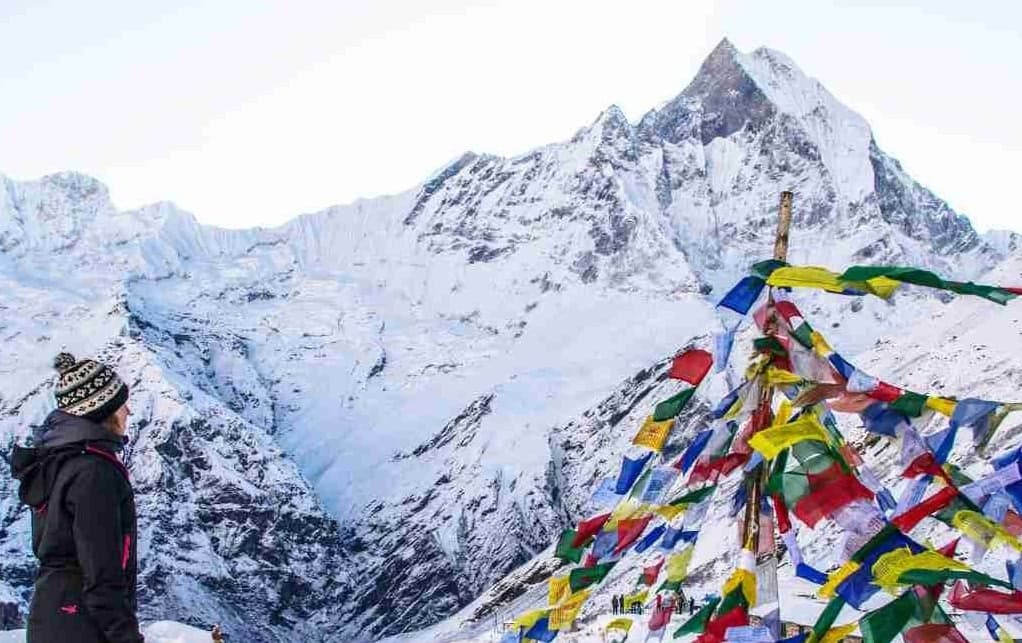
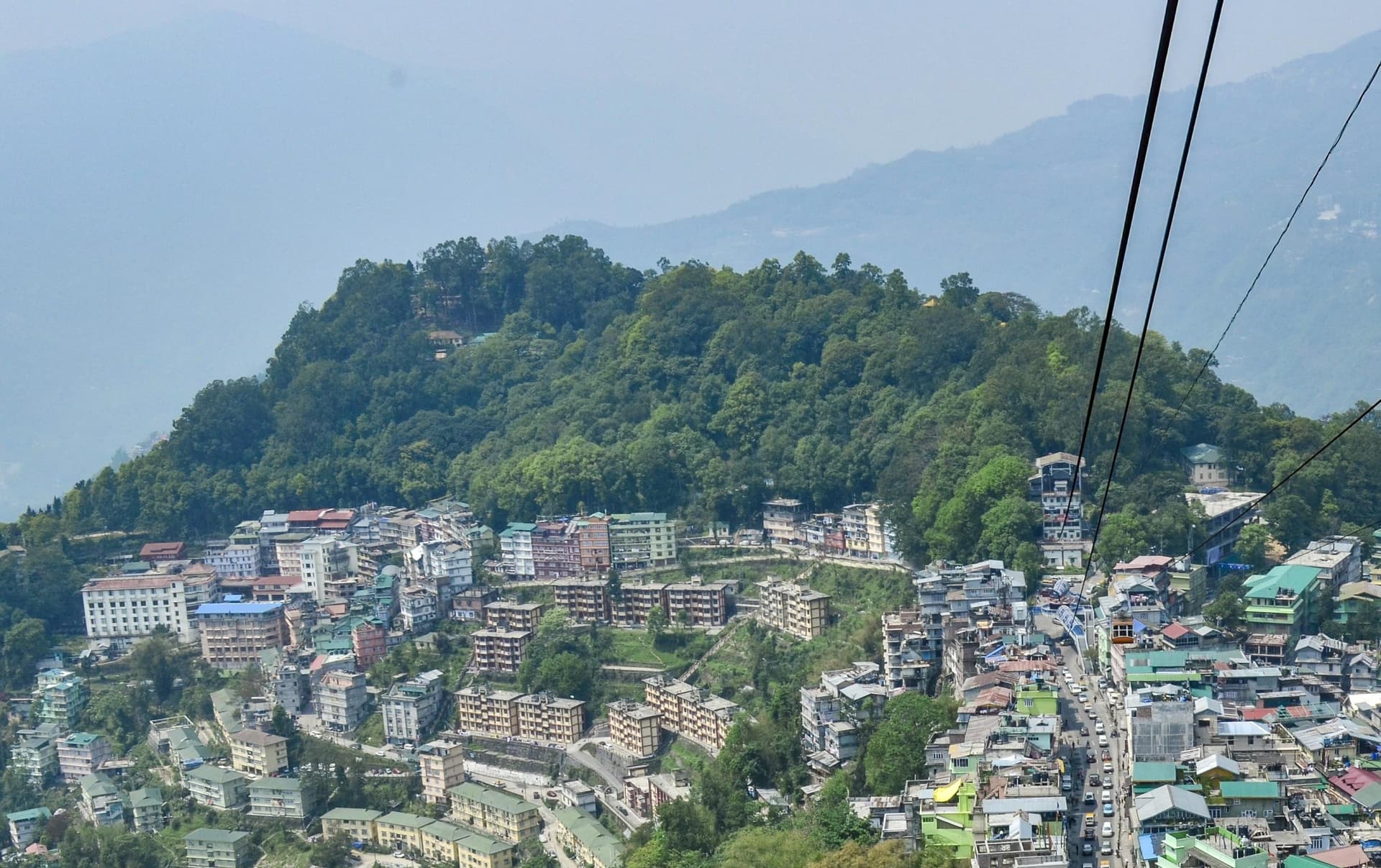
Kathmandu is Nepal’s capital, the cultural center of the Kathmandu Valley, and the main gateway to the country’s 7 UNESCO World Heritage Sites and Himalayan trekking routes. The best time to visit Kathmandu is October and November, when post-monsoon skies are at their clearest, temperatures stay comfortable at around 10°C to 25°C, and major festivals such as Dashain and Tihar fill the city with religious ceremonies, lights, and local movement. March to May is the second-best season, bringing warmer days, blooming rhododendrons, active trekking departures, and strong mountain views from nearby places such as Nagarkot and Shivapuri Nagarjun National Park.
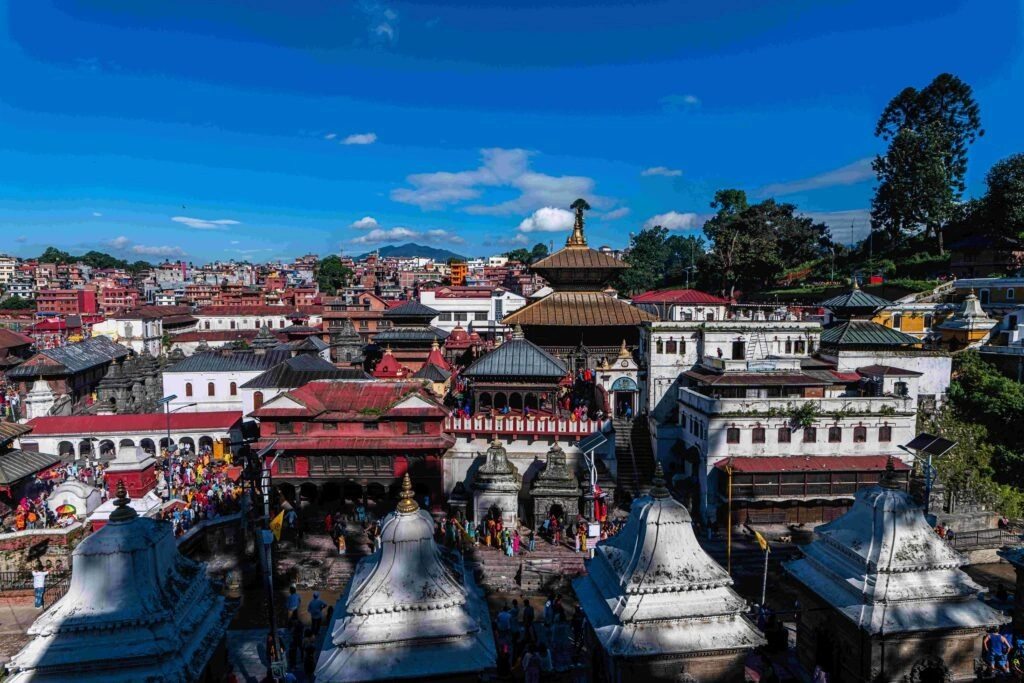
The right time to visit Kathmandu also depends on your travel goals. Autumn is best for sightseeing, festivals, and Himalayan visibility, spring is ideal for trekking and mild weather, winter suits budget travelers and photographers looking for lower crowds, and monsoon works best for valley-focused cultural trips with cheaper hotel rates. From Pashupatinath, Boudhanath, and Swayambhunath to Patan and Bhaktapur Durbar Squares, Kathmandu offers a different travel experience in each season, so the best month depends on whether you value clear skies, lower costs, religious festivals, or access to Nepal’s wider mountain circuits.
How Does Kathmandu's Weather Change by Season?
Kathmandu experiences 4 climatically distinct seasons: spring (March–May), monsoon summer (June–September), autumn (October–November), and winter (December–February). Per the Department of Hydrology and Meteorology's State of the Nepal Climate 2025 report, Nepal's 2024–25 winter was the third consecutive below-normal-rainfall winter nationally, reinforcing why winter in Kathmandu tends to feel dry and dusty rather than wet. Temperatures range from a low of 2°C in January to a high of 30°C in June. Rainfall peaks at 366 mm in July and drops to 3 mm in November. Elevation at 1,400 metres (4,593 feet) moderates Kathmandu's climate compared to lowland Nepal, producing cooler mornings and evenings year-round.
The Kathmandu Valley sits within the Bagmati Province and is enclosed by hills on 3 sides, creating a bowl-shaped topography that traps monsoon moisture from June through September. This topographic feature concentrates rainfall within the valley floor, affecting visibility at UNESCO World Heritage Sites including Pashupatinath Temple, Boudhanath Stupa, and Swayambhunath.
Rainfall averages 38 mm in October dropping to 7 mm in November, matching Tribhuvan University's 2025 rainfall-variability study of the Valley, which identifies November as Kathmandu Valley's driest month.
What Is Kathmandu Like in Spring?
Spring in Kathmandu runs from March through May, delivering daytime temperatures between 15°C and 25°C, 7–9 hours of daily sunshine, and the bloom of rhododendrons across the surrounding Shivapuri Nagarjun National Park. Precipitation averages 51 mm in March, rising to 98 mm in May as the pre-monsoon builds. Visibility reaches 80–100 kilometres on clear days, revealing the Ganesh Himal and Langtang ranges north of the city.
Spring marks the primary trekking season for Everest Base Camp and Langtang Valley circuits departing from Kathmandu. Temperatures at Tribhuvan International Airport average 19°C in April. Hotel occupancy rates in Thamel, Kathmandu's primary tourist district, peak at 85–90% during April and May, making advance bookings 60–90 days ahead the standard practice.
What Is Kathmandu Like in Summer and Monsoon?
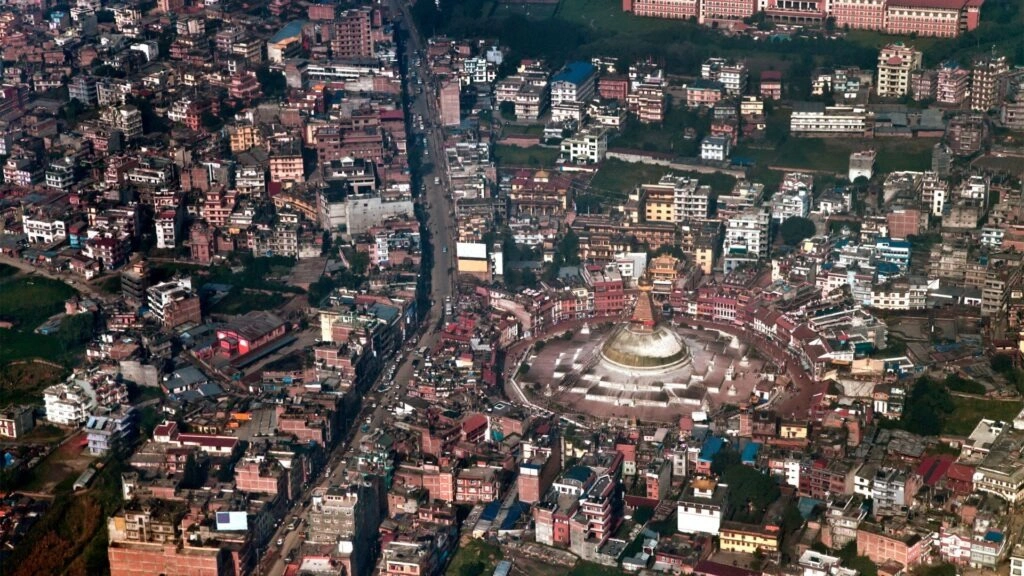
Kathmandu's monsoon season runs from June through September, bringing 80% of the city's annual rainfall of 1,400 mm concentrated into 4 months. July records the highest single-month rainfall at 366 mm. Temperatures remain warm, averaging 24°C in July, but persistent cloud cover reduces mountain visibility to near zero for 70% of monsoon days.
Trekking routes from Kathmandu to higher-altitude destinations face landslide risk, with the Prithvi Highway connecting Kathmandu to Pokhara recording 40–60 landslide events annually during the monsoon. Leeches appear on forest trails above 1,000 metres from July through August. The Kathmandu Valley itself remains accessible; Durbar Squares, museums, and religious sites operate normally. Accommodation rates in Thamel drop 30–40% below peak-season prices, making monsoon a cost-effective window for cultural tourism focused on the valley floor.
What Is Kathmandu Like in Autumn?
Autumn, October and November, delivers Kathmandu's most consistent weather, with daytime highs of 22–25°C, nighttime lows of 10–12°C, and average rainfall of 38 mm in October dropping to 7 mm in November. Post-monsoon air clarity produces Himalayan views on 85–90% of days. The Annapurna and Everest panoramas visible from Nagarkot, located 32 kilometres east of Kathmandu, reach peak visibility from mid-October through mid-November.
Autumn hosts Nepal's 2 largest Hindu festivals: Dashain (October) and Tihar (November). Dashain spans 15 days, during which Kathmandu's population returns from urban centres to family homes, creating a 3–5 day window in mid-October when tourist crowds thin even as the weather peaks. Tihar, also called the Festival of Lights, illuminates Kathmandu's neighbourhoods with oil lamps for 5 consecutive nights.
What Is Kathmandu Like in Winter?
Winter in Kathmandu spans December through February, with temperatures ranging from a daily low of 2°C in January to a daily high of 18°C in February. Snowfall in Kathmandu city is rare and should be treated as an exceptional event rather than a normal winter occurrence. Morning fog settles across the valley on 60–70% of December and January days, clearing by 10:00 AM.
Winter delivers Kathmandu's lowest visitor numbers and the lowest hotel rates of the year, 40–50% below autumn peak pricing. In 2025, Nepal received 79,991 international visitor arrivals in January, compared with 128,443 in October, a 3.3% year-on-year rise that puts the month at 95.8% of its pre-pandemic (2019) arrivals total, according to Nepal Tourism Board's October 2025 Tourism Insights. Mountain visibility from city viewpoints reaches its best levels between late January and mid-February, after fog patterns shift. Maha Shivaratri, Nepal's largest Shiva festival held at Pashupatinath Temple, falls in February or March, attracting 500,000–700,000 pilgrims annually.
Which Months Are Best for Visiting Kathmandu?
October and November are the best months to visit Kathmandu, combining stable weather with major festivals, Himalayan visibility, and full infrastructure access. March, April, and May rank as the second-best 3-month window. December through February offer low costs and clear skies but cold mornings. June through September bring rain and reduced visibility.
The table below compares Kathmandu's 4 seasonal travel windows across 5 key criteria.
Season | Months | Avg. Temp (°C) | Rainfall (mm/mo.) | Crowd Level | Relative Cost |
Spring | Mar–May | 15–25 | 51–98 | High | High |
Monsoon | Jun–Sep | 22–28 | 200–366 | Low | Low |
Autumn | Oct–Nov | 10–25 | 7–38 | Highest | Highest |
Winter | Dec–Feb | 2–18 | 3–15 | Lowest | Lowest |
This table covers temperature range, monthly average rainfall, crowd intensity, and relative accommodation cost for each seasonal travel window in Kathmandu.
Is March to May a Good Time to Visit Kathmandu?
March to May is a strong time to visit Kathmandu, with comfortable temperatures, visible mountain panoramas, and active trekking departures. The spring shoulder months of March and early April see 20–30% fewer tourists than October-November peak. Temperatures rise from 15°C in March to 25°C in May, with afternoon heat building toward the end of May.
The Buddha Jayanti festival (May) and Holi (March) represent 2 significant cultural events within the spring window. Rhododendrons, Nepal's national flower, bloom at elevations between 1,500 and 3,500 metres from late February through April. Visitors at Shivapuri Nagarjun National Park, accessible from northern Kathmandu, observe 7 rhododendron species in active bloom during March and April.
Is September to November the Best Time to Visit Kathmandu?
September through November is the best 3-month period to visit Kathmandu, with October ranked as the single optimal month by Nepal Tourism Board visitor data. Monsoon rains exit the valley by mid-September, leaving washed skies and temperatures settling to 20–25°C. In 2025, October accounted for about 11.1% of Nepal’s annual international visitor arrivals.
Flights to Tribhuvan International Airport reach maximum frequency in October and November, with direct connections from Delhi, Mumbai, Dubai, Bangkok, and Doha at full schedule. Hotel occupancy in Thamel and Lazimpat, Kathmandu's 2 primary tourist accommodation zones, peaks at 90–95% during the last 2 weeks of October. Booking accommodation 90–120 days in advance secures standard rates during the Dashain period.
Are December to February Kathmandu Trips Still Worth It?
December through February trips to Kathmandu deliver clear value for 3 specific traveller profiles: budget-conscious visitors, photography-focused travellers seeking mountain winter light, and festival pilgrims attending Maha Shivaratri in February or March. Accommodation prices fall 40–50% below October rates, and Tribhuvan Airport operates full-schedule international flights year-round.
The primary trade-off for winter travel is cold mornings. Temperatures drop to 2–5°C before sunrise, requiring layered clothing for early-morning visits to Pashupatinath's cremation ghats on the Bagmati River or sunrise viewpoints at Swayambhunath. Afternoons warm to 14–18°C from December through February. Bhaktapur Durbar Square and Patan Durbar Square, both UNESCO World Heritage Sites within 14 kilometres of central Kathmandu, operate at low crowd density throughout winter, enabling unobstructed photography and immersive exploration.
What Travel Goals Change the Best Time to Visit Kathmandu?
Travel goals shift the optimal Kathmandu season across 4 primary visitor profiles: sightseers prioritise autumn, festival visitors target October through February, budget travellers select June through September or December through February, and trekkers base decisions on whether Everest or Annapurna circuits are primary objectives.
Kathmandu functions as both a destination and a gateway city. 70% of Nepal's trekking permits originate from Kathmandu, making the city's seasonal calendar inseparable from the broader Himalayan travel planning process.
When Is Kathmandu Best for Sightseeing?
Kathmandu is best for sightseeing from October through November and March through April, when clear skies, moderate temperatures, and low rainfall allow full-day exploration of the 7 World Heritage Sites in Nepal within the Kathmandu Valley. These 7 sites include Pashupatinath Temple, Boudhanath Stupa, Swayambhunath Stupa, Changu Narayan Temple, and the 3 Durbar Squares at Kathmandu, Patan, and Bhaktapur.
October afternoons in Kathmandu reach 22–25°C, the precise temperature range that maximises outdoor walking comfort for 6–8 hours of continuous sightseeing. November delivers the same temperatures with 40% less rainfall than October and fewer peak-week festival crowds following Tihar's conclusion.
When Is Kathmandu Best for Festivals and Culture?
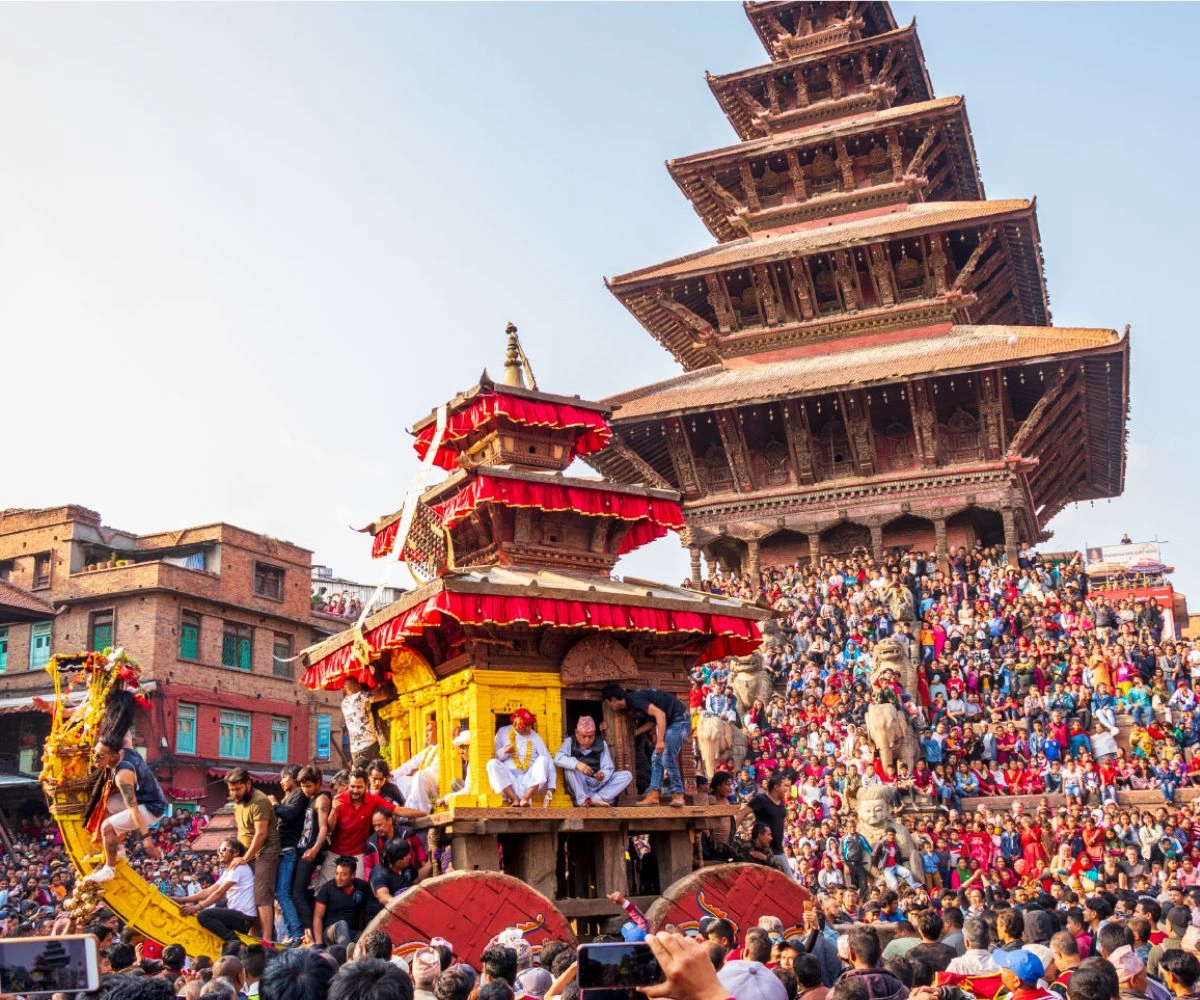
Kathmandu's 4 most significant festivals concentrate in October, November, February–March, and August. Dashain festival (October) is Nepal's longest national holiday, spanning 15 days with the main celebrations on the 10th and 15th days. Tihar Festival of Lights (November) runs for 5 days and includes Kukur Tihar (Dog Festival), Gai Tihar (Cow Festival), and Lakshmi Puja. Maha Shivaratri (February–March) draws 500,000–700,000 pilgrims to Pashupatinath. Indra Jatra (August–September) fills Kathmandu Durbar Square with chariot processions for 8 days.
Visitors attending Dashain observe goat and buffalo sacrifices at Hanuman Dhoka's Kot Courtyard on Maha Nawami (the 9th day). Tika exchanges between family elders and younger family members occur on Vijaya Dashami (the 10th day). Both events are publicly observable. During Tihar, Newar communities in Bhaktapur and Kirtipur conduct Mha Puja, the self-worship ritual, providing cultural access distinct from the Hindu Lakshmi Puja observed across Kathmandu.
When Is Kathmandu Best for Fewer Crowds and Lower Costs?
June through August and December through February deliver the lowest visitor numbers and lowest accommodation costs in Kathmandu. Monsoon months (June–September) see international arrivals drop to 60,000–80,000 per month compared to 130,000–140,000+ in October. Winter months (December–February) average 80,000–90,000 arrivals monthly.
Hotel rates in Thamel for 3-star properties average NPR 3,000–4,500 per night during monsoon and winter, compared to NPR 6,500–9,000 per night during October–November peak. Flight prices from Delhi to Kathmandu on Indian carriers drop 25–35% during monsoon compared to October. Crowd levels at Boudhanath Stupa, the largest stupa in the Kathmandu Valley, are generally lower in January and February than during the autumn peak.
When Should You Avoid Visiting Kathmandu?
No month makes Kathmandu entirely inaccessible, but June through August present the most challenging conditions for first-time visitors. Heavy rainfall, reduced Himalayan visibility, and active landslide risk on mountain highways create friction for itineraries combining Kathmandu with trekking or overland travel. Experienced Nepal travellers manage monsoon conditions successfully with adjusted expectations.
How Does Monsoon Season Affect Kathmandu Travel Plans?
Monsoon season (June–September) affects Kathmandu travel plans across 4 dimensions: trekking access, road connectivity, photography conditions, and health considerations. Trekking routes departing from Kathmandu, including the Langtang Valley trek and Gosaikunda circuits, become leeched and muddy from July through August, reducing trail comfort. The Prithvi Highway linking Kathmandu to Pokhara faces 40–60 landslide events annually during peak monsoon, extending bus journey times from 7–8 hours to 10–14 hours or forcing temporary closures.
Photography at Himalayan viewpoints produces consistent cloud coverage from June through September, eliminating mountain panorama shots available in other seasons. Internal flights from Kathmandu to mountain airports including Lukla (Tenzing-Hillary Airport, elevation 2,860 metres) face cancellation rates of 30–40% during monsoon due to cloud ceilings. Kathmandu city-level sightseeing, Durbar Squares, temples, museums, and cultural neighbourhoods, remains fully accessible throughout monsoon.
What Trade-Offs Should You Expect in Peak Season of visiting Kathmandu?
Peak season (October–November and March–May) delivers 4 specific trade-offs: higher accommodation costs, reduced booking availability, festival-period domestic travel congestion, and trekking route crowding. October hotel rates in Thamel reach NPR 7,000–12,000 per night for mid-range properties, compared to NPR 3,000–4,500 in off-peak months. Tribhuvan International Airport operates at 98–100% capacity during October festival weeks.
Dashain mid-festival (October days 10–15) triggers the largest domestic migration in Nepal, with 2–3 million Kathmandu residents returning to home districts. Public buses fill to capacity 5–7 days before Dashain concludes. Taxis and ride-share services in Kathmandu increase rates by 50–100% during peak Dashain and Tihar days. Trekking routes departing Kathmandu, particularly the Langtang circuit, see permit volumes of 800–1,200 trekkers per day at peak season entry points, compared to 100–200 per day in winter.
What Challenges Come With Winter Kathmandu Travel?
Winter travel in Kathmandu (December–February) presents 3 primary challenges: cold mornings, morning valley fog, and limited higher-altitude access. Temperatures fall to 2–5°C before 7:00 AM from December through February. The Kathmandu Valley's bowl topography traps cold air at night, producing ground frost at elevations above 1,600 metres within the valley rim. Valley fog reduces visibility at Tribhuvan International Airport on 40–50 mornings per year, concentrated in December and January, causing flight delays of 1–4 hours.
High-altitude trekking routes above 3,500 metres face snow closure from December through February. Thorong La Pass on the Annapurna Circuit (elevation 5,416 metres) and Renjo La Pass on the Everest region (elevation 5,360 metres) close intermittently. Lower-altitude valley circuits, Shivapuri Ridge Trek, Namobuddha Loop, and Dhulikhel circuit, remain open and less crowded throughout winter.
What Should You Pack for Each Kathmandu Season?
Kathmandu packing requirements divide across 3 seasonal profiles: warm-layer spring and autumn packing, waterproof monsoon packing, and insulated winter packing. All 3 profiles share 4 common essentials: UV-protective sunscreen (UV index reaches 9–11 at Kathmandu's elevation), a power bank, a dust mask or N95 respirator for Kathmandu's air quality, which peer-reviewed monitoring puts at 3.5–5.9 times the WHO annual PM2.5 guideline of 10 µg/m³, worst from December through April (Air-quality trend analysis, NPRC Journal of Multidisciplinary Research).
What Should You Wear in Spring and Autumn During visit to Kathmandu?
Spring and autumn Kathmandu visits require layered clothing across a 15°C daily temperature range. Morning temperatures of 10–15°C demand a fleece mid-layer or light down jacket for sunrise visits to Swayambhunath or Pashupatinath's 5:00 AM aarti (prayer ceremony). Afternoons reach 22–25°C, making a single breathable layer sufficient. Evenings cool rapidly after 6:00 PM, returning to conditions requiring a mid-layer.
Pack 2 moisture-wicking base layers, 1 fleece or light down jacket (100–200g fill weight), 1 waterproof outer shell for afternoon spring showers, and comfortable walking shoes with ankle support for Kathmandu's uneven stone pavements at Bhaktapur and Patan Durbar Squares. For visits to Pashupatinath, wear modest clothing and note that leather items including shoes, belts, and cameras are forbidden within the temple complex.
What Should You Pack for Monsoon Kathmandu Travel?
Monsoon travel to Kathmandu (June–September) requires waterproof gear for 4 specific conditions: afternoon downpours, muddy temple courtyard surfaces, high humidity averaging 85–90%, and leech exposure on forest trails above 1,000 metres.
Pack 1 lightweight packable rain jacket, 1 pair waterproof hiking sandals or quick-dry shoes, a 30-litre dry bag for electronics and documents, and salt or leeching socks for any forest or hill walking. A compact umbrella supplements the rain jacket for city movement at Asan Tole, Durbar Marg, and around Boudhanath's kora path. Anti-fungal foot powder addresses the humidity-related foot health concerns that affect 30–40% of monsoon trekkers in Nepal.
What Do You Need for Cold Mornings and Evenings in Kathmandu?
Winter and high-altitude cold in Kathmandu requires thermal layering across a 4-layer system: a moisture-wicking thermal base layer, a fleece mid-layer, a medium-weight down jacket (400–600g fill weight), and a windproof outer shell. This system manages temperatures from 2°C at 5:00 AM to 18°C at 1:00 PM across a single winter day in Kathmandu.
Pack thermal leggings for early morning temple visits, wool or synthetic hiking socks rated to −10°C, and gloves with liner capability. Wool scarves available in Thamel market from NPR 400–800 provide neck and face coverage for Nagarkot winter sunrise excursions. Hand warmers (single-use chemical type) available at outdoor stores on Tridevi Marg in Thamel supplement gloves on sub-5°C mornings.
How Many Days Do You Need in Kathmandu by Season?
4 days represent the minimum for Kathmandu's core UNESCO World Heritage circuit, covering Pashupatinath, Boudhanath, Swayambhunath, Patan Durbar Square, Bhaktapur Durbar Square, and Hanuman Dhoka in central Kathmandu. 7 days allow addition of 2 day trips within Kathmandu Valley plus festival attendance. 10–14 days enable connection to Nagarkot, Dhulikhel, Chitwan National Park, and a Langtang Valley trek departure.
Season affects the required day count through 2 mechanisms: travel disruptions add buffer days during monsoon (1–2 extra days for landslide contingencies), and festival periods compress itineraries as some sites close for 1–3 days during Dashain and Tihar.
Is a Short City Break Enough for Kathmandu?
A 4-day Kathmandu city break covers the 7 UNESCO World Heritage Sites within the valley, structured as 2 days for central Kathmandu and Boudhanath, 1 day for Patan (Lalitpur), and 1 day for Bhaktapur. This schedule requires departing accommodation by 8:00 AM daily to complete site visits before midday tourist peak and afternoon heat or rain.
A 4-day itinerary during autumn (October–November) achieves the following: Day 1, Swayambhunath and Thamel neighbourhood walking tour; Day 2, Pashupatinath morning aarti at 5:00 AM, Boudhanath kora, Bodhnath cafe quarter; Day 3, Patan Durbar Square, Patan Museum (the best-curated museum in Nepal), Mahabouddha Temple; Day 4, Bhaktapur Durbar Square, Nyatapola Temple (Nepal's tallest pagoda at 30 metres), Pottery Square.
Should You Add Day Trips Around Kathmandu Valley?
4 day trips extend Kathmandu's itinerary value across distinct geographic and cultural dimensions. Nagarkot (32 km, 1.5 hours east of Kathmandu) delivers Himalayan panorama viewpoints covering 8 ranges including Everest at 8,848.86 metres and Langtang Lirung at 7,227 metres. Dhulikhel (30 km, 1 hour east) offers Newari cultural immersion alongside mountain views. Chitwan National Park (150 km, 4–5 hours south) provides one-horned rhinoceros and Bengal tiger habitat access. Pokhara (200 km, 6–7 hours west by tourist bus or 25 minutes by flight) connects Kathmandu to Nepal's second tourism hub and Annapurna trekking gateway.
Day-trip viability differs by season. Nagarkot and Dhulikhel operate year-round with optimal mountain visibility from October through May. Chitwan roads remain passable through monsoon, with the National Park's wildlife sighting rates peaking in February–April when vegetation thins. Pokhara flights maintain year-round schedules with monsoon cancellation rates of 15–20%.
How Should You Plan Your Kathmandu Trip With Expert Help?
Expert travel assistance for Kathmandu delivers value across 3 planning dimensions: permit acquisition (trekking permits, TIMS cards, restricted area permits), itinerary synchronisation with festival calendars, and ground transport booking during peak occupancy periods.
Nepal's permit system requires 3 documents for most Himalayan treks departing Kathmandu: a TIMS (Trekkers' Information Management System) card, a National Park or Conservation Area permit, and, for Restricted Areas including Upper Mustang and Dolpo, a Restricted Area Permit costing USD 500 per 10 days. Travel specialists with Kathmandu-based operations process permits within 24–48 hours upon passport and photo submission.
Can a Travel Expert Help You Pick the Right Season to visit Kathmandu?
A Nepal travel expert aligns your visit to Kathmandu with 5 season-specific variables: your trekking objectives, festival attendance priorities, photography goals, budget parameters, and group composition. Solo travellers, family groups with children under 12, and seniors with altitude sensitivity each require different seasonal recommendations from the standard October–November guidance.
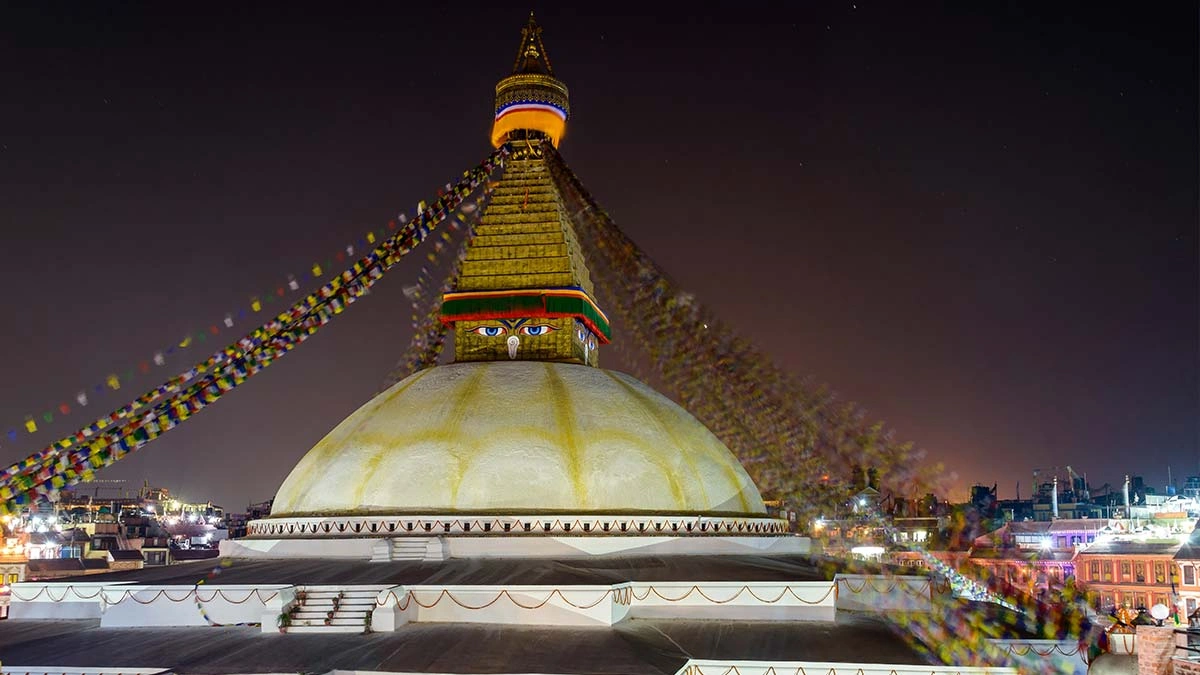
Families travelling with children benefit from Tihar's Festival of Lights (November) and the Holi festival (March) as culturally immersive, visually vibrant events accessible without physical exertion. Photographers targeting Himalayan alpenglow, the red-pink light on snow peaks at sunset, achieve optimal conditions from Nagarkot and Kakani (28 km northwest of Kathmandu) in October, November, and late February. Budget travellers pairing Kathmandu with Chitwan National Park maximise value in December and January when both destinations enter their low-season pricing windows simultaneously.
What Are the Key Takeaways About Visiting Kathmandu?
Kathmandu's best travel window is October and November, confirmed by visitor arrival data, weather records, and festival alignment. Spring (March–May) ranks as the second-best period. Winter (December–February) delivers value for budget and photography-focused travellers. Monsoon (June–September) suits cultural itineraries confined to the Kathmandu Valley floor.
Kathmandu, situated at 1,400 metres in Nepal's Bagmati Province, hosts 7 UNESCO World Heritage Sites, operates a major international airport with direct flights from 20+ cities, and anchors Nepal's trekking and Himalayan climbing seasons. For a broader view across all regions, our guide on the best season to visit Nepal covers timing for treks, tours, and wildlife safaris beyond the valley. A 4-day minimum city itinerary covers the UNESCO circuit. 7–10 days add valley day trips and festival participation. Every season offers a distinct and legitimate travel experience across Kathmandu's cultural, spiritual, and natural dimensions.
The best time to visit Kathmandu aligns with your specific travel goals: October for festivals and peak conditions, November for photography and post-festival calm, March–April for spring trekking and rhododendron bloom, and December–February for budget value and low-crowd exploration of the Kathmandu Valley's ancient Newari architecture and living Hindu-Buddhist heritage. Ready to plan your visit? Explore our guided Kathmandu city tour covering all 7 UNESCO sites across the valley.