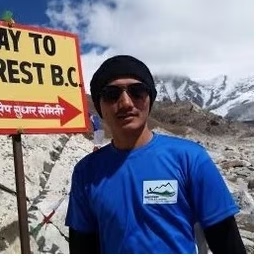
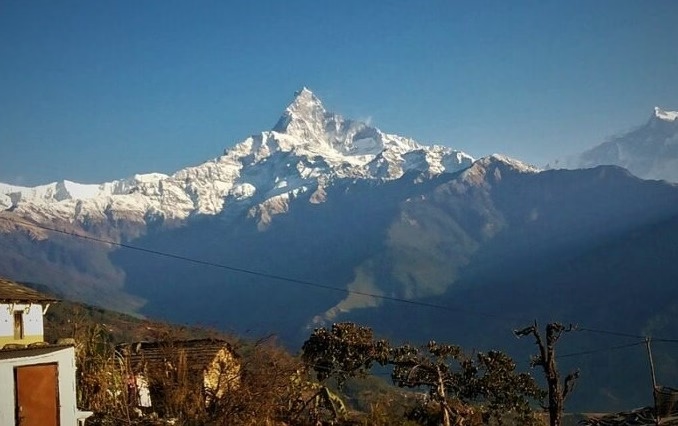
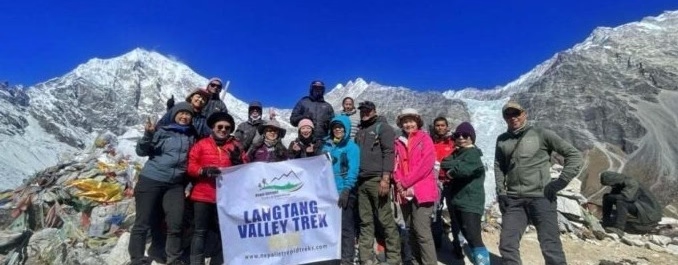
Everest Base Camp Trek is one of the world's most iconic high-altitude trekking adventures, leading hikers through Nepal's Khumbu region to Everest Base Camp (5,364 meters) at the foot of Mount Everest (8,848.86 meters), the highest mountain on Earth. The route passes through Sagarmatha National Park, a UNESCO World Heritage Site renowned for its dramatic Himalayan landscapes, Sherpa settlements, ancient Buddhist monasteries, and diverse alpine ecosystems. Unlike technical mountaineering expeditions, the Everest Base Camp Trek is a non-technical trek that allows well-prepared hikers to experience the Everest region, witness legendary Himalayan peaks, and achieve one of the world's most recognized adventure travel milestones without climbing the summit of Everest.
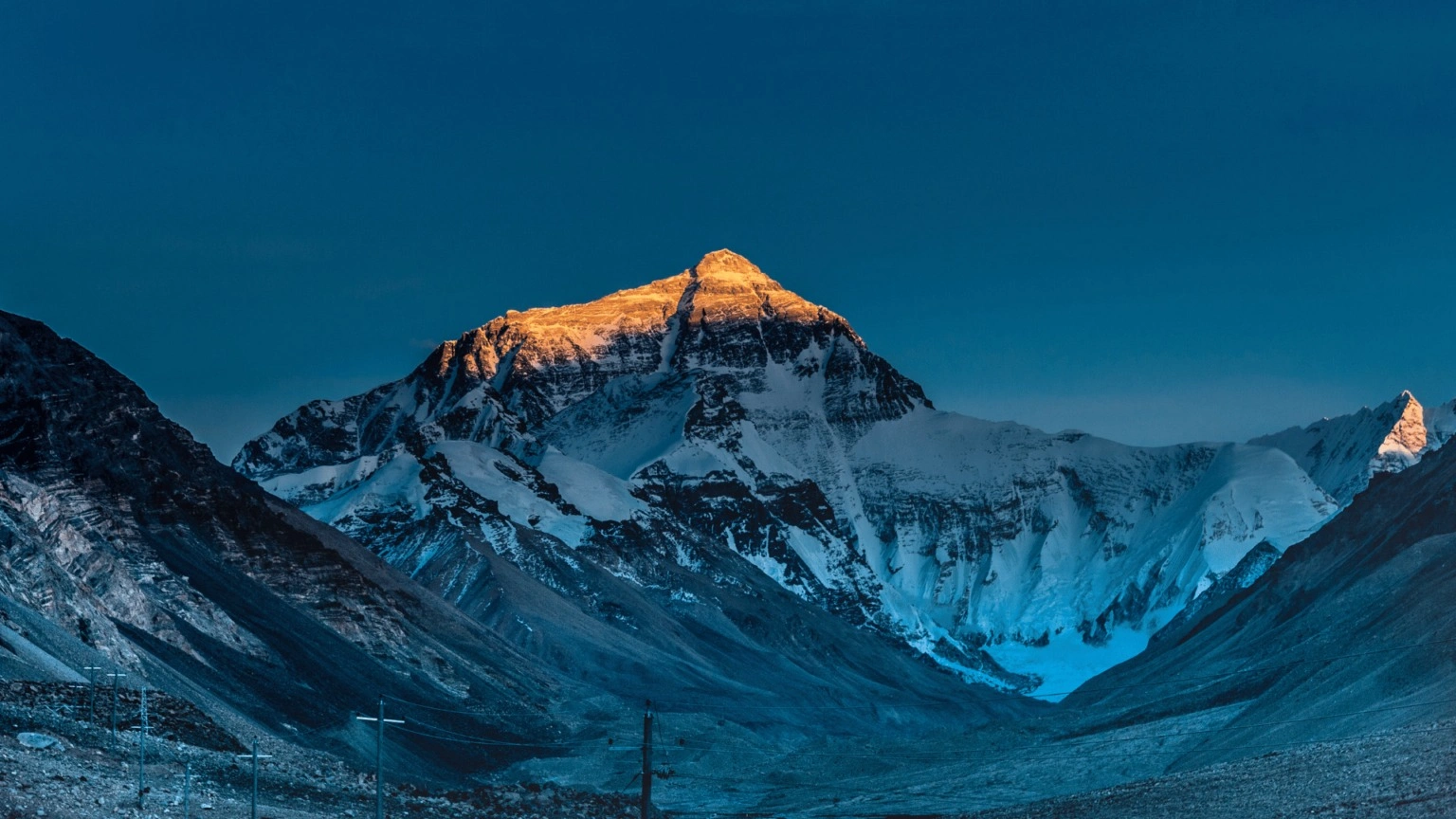
The global popularity of Everest Base Camp trekking extends far beyond reaching Base Camp itself. The journey combines spectacular mountain scenery, authentic Sherpa culture, progressive altitude challenges, historic trekking villages, and unforgettable viewpoints such as Kala Patthar into a single adventure that appeals to trekkers from around the world. This guide explores every aspect of the Everest Base Camp Trek, including why it has become the world's most popular high-altitude trek, the trekking route, mountain views, cultural experiences, difficulty level, fitness requirements, acclimatization, best trekking seasons, permits, essential gear, itinerary planning, and practical travel advice to help you prepare for a safe, rewarding, and memorable journey to the Everest region.
What Makes Everest Base Camp Trekking a Bucket-List Adventure?
Everest Base Camp earns its bucket-list status through a rare overlap of factors: it sits at the foot of Mount Everest, the highest point on Earth, yet requires no ropes, crampons, or climbing certification to reach. Trekkers walk through five distinct ecological zones, sleep in Sherpa-run teahouses, and stand on the same moraine that mountaineers have used as a staging ground since the 1950s.
Why Do So Many Travelers Dream of Reaching Everest Base Camp?
Mount Everest holds a position in global culture that no other mountain shares. Its height, 8,848.86 meters as confirmed by the Survey Department of Nepal's 2020 GNSS remeasurement of Sagarmatha, has been a fixed reference point in geography classrooms for generations. Reaching its base camp lets a non-climber stand within sight of that summit and touch a piece of mountaineering history connected to the 1953 first ascent by Tenzing Norgay and Edmund Hillary. Few other adventure goals carry that kind of built-in recognition before a person ever buys a plane ticket.
What Makes the Journey More Rewarding Than the Destination?
Base Camp itself is a stretch of grey rock and ice next to the Khumbu Icefall, with no clear view of the Everest summit from where trekkers stand. The two weeks spent getting there matter more than the ten minutes spent at the camp marker. Each day brings a new village, a new acclimatization milestone, and a new layer of the Khumbu's geography and culture. Trekkers who arrive expecting a single dramatic photo often leave talking instead about the suspension bridge crossings, the monastery bells at dawn in Tengboche, or the conversation with a guide over dal bhat at 4,400 meters.
Where Is Everest Base Camp and Why Is Its Location So Famous?
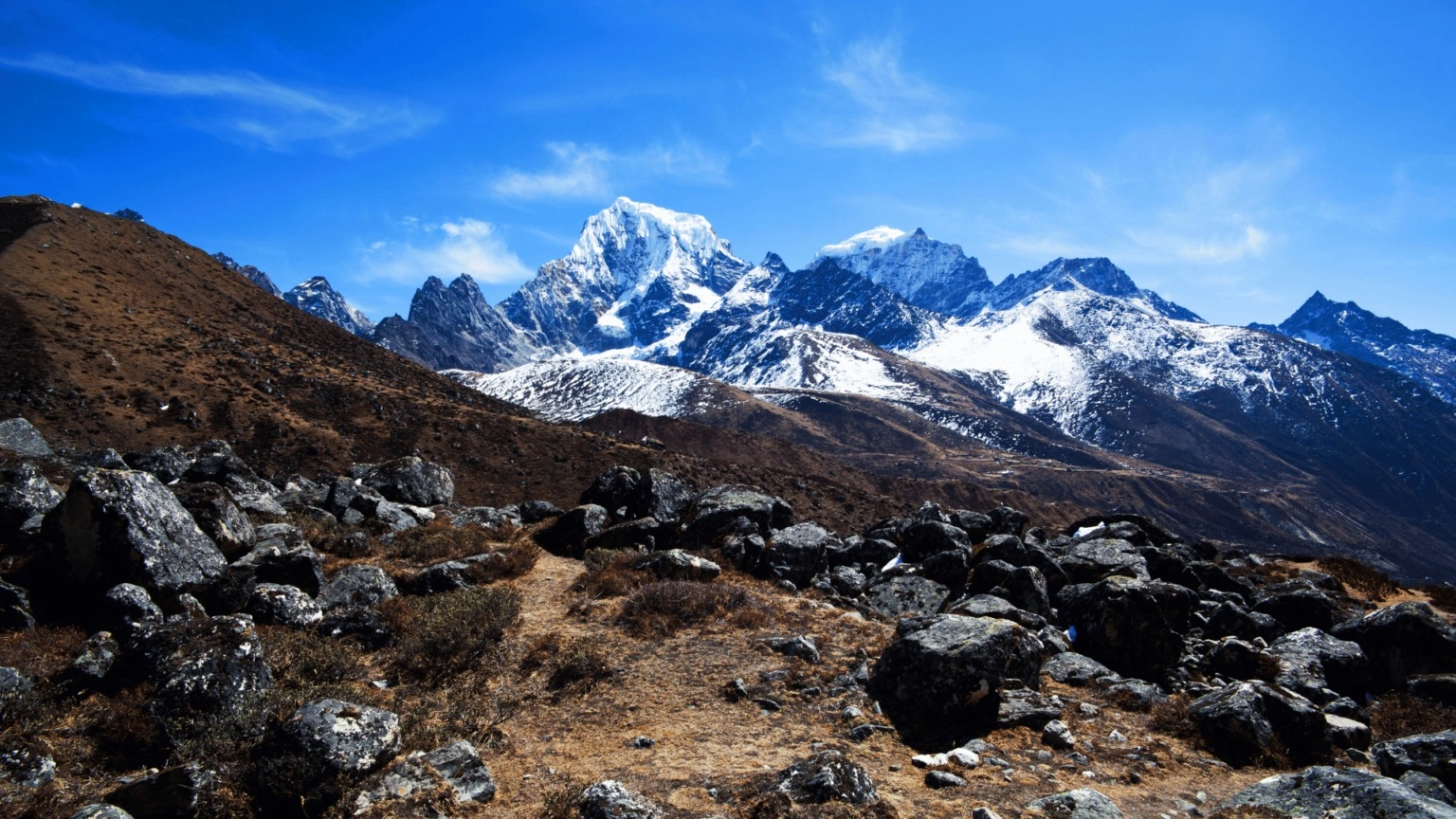
Everest Base Camp sits at 5,364 meters in Nepal's Solukhumbu district, inside Sagarmatha National Park, at the foot of the Khumbu Glacier on the southern flank of Mount Everest near the Nepal-Tibet border. Its fame comes directly from its neighbor: every expedition attempting Everest's southeast ridge route stages here before pushing through the Khumbu Icefall.
How Does Mount Everest Influence the Trek's Global Appeal?
Mount Everest, called Sagarmatha in Nepali and Chomolungma in Tibetan, defines the trek's identity more than any other single feature. Its scale changes how trekkers think about distance and effort. Walking toward a mountain that everyone recognizes by name, rather than toward an unfamiliar peak, gives the route an emotional pull that purely scenic treks rarely match. Sagarmatha National Park was established in 1976 to protect this landscape and, according to UNESCO's own State of Conservation record, gained UNESCO World Heritage status in 1979, formalizing its standing as one of the most significant protected mountain ecosystems on the planet.
What Is the Route to Everest Base Camp Like?
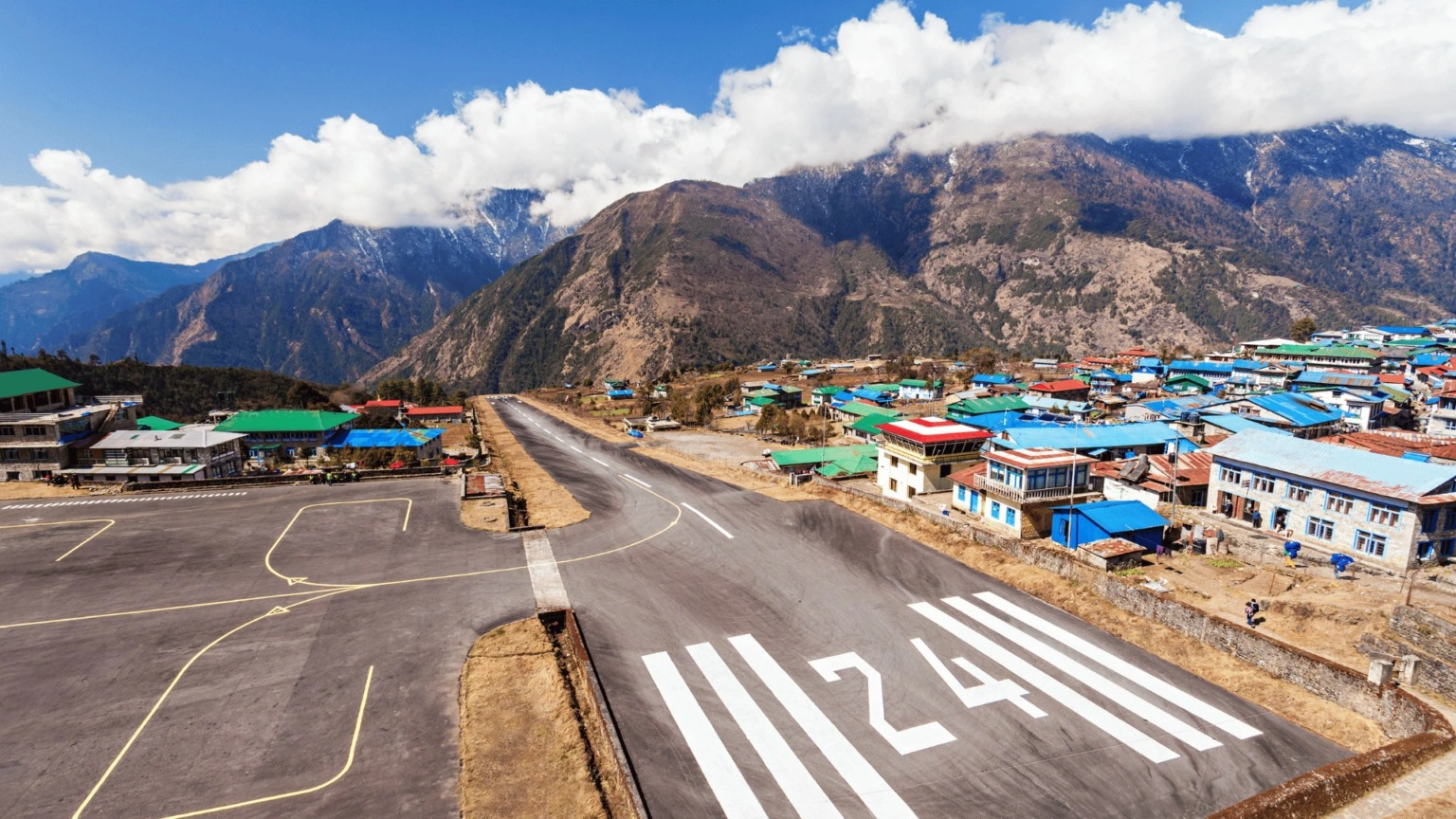
The standard route begins with a short flight from Kathmandu to Lukla at 2,860 meters, the gateway airstrip to the Khumbu. From Lukla, trekkers follow the Dudh Koshi river valley through Phakding, Namche Bazaar (3,440 m), Tengboche (3,860 m), Dingboche (4,410 m), and Lobuche (4,940 m) before reaching Gorak Shep (5,164 m) and finally Everest Base Camp. The round trip covers roughly 130 kilometers, about 65 kilometers each way, with a net elevation gain of more than 2,500 meters from Lukla. During spring and autumn, Lukla flights frequently shift to Ramechhap airport, a three- to five-hour drive east of Kathmandu, to ease congestion at the capital's single domestic runway. Trekkers booking flights for March, April, October, or November should plan for these seasonal Lukla flight changes rather than treat it as an unexpected delay. Trekkers who prefer not to fly at all can drive from Kathmandu to Phaplu or Salleri and walk in along the older approach route used before the Lukla airstrip opened in the 1960s. That option adds four to five extra trekking days each way, but it trades the uncertainty of mountain flights for a slower, quieter introduction to the lower Khumbu.
What Makes the Himalayan Scenery So Spectacular?
The Everest region compresses an unusual range of landscapes into one trail: subtropical forest at Lukla, rhododendron and pine woodland through Namche, and treeless alpine desert above Dingboche, all framed by six peaks over 6,500 meters visible directly from the path. Few treks anywhere shift this dramatically within two weeks of walking.
Which Mountain Views Can Trekkers Expect?
The trail delivers direct sightlines to Everest itself, Lhotse (8,516 m), Nuptse (7,861 m), Ama Dablam (6,812 m), Pumori (7,161 m), and Thamserku (6,608 m), each visible from a different stretch of trail without binoculars. Ama Dablam, with its distinctive hanging glacier, frequently draws more camera attention than Everest itself once trekkers reach Tengboche, since Everest's summit stays partially hidden behind Nuptse until the final days near Gorak Shep and Kala Patthar. Everest View Hotel, perched above Namche at 3,880 meters, gives early trekkers one of the first unobstructed looks at the summit, well before the trail climbs high enough at Tengboche or Dingboche to repeat that view up close.
How Do Changing Landscapes Enhance the Experience?
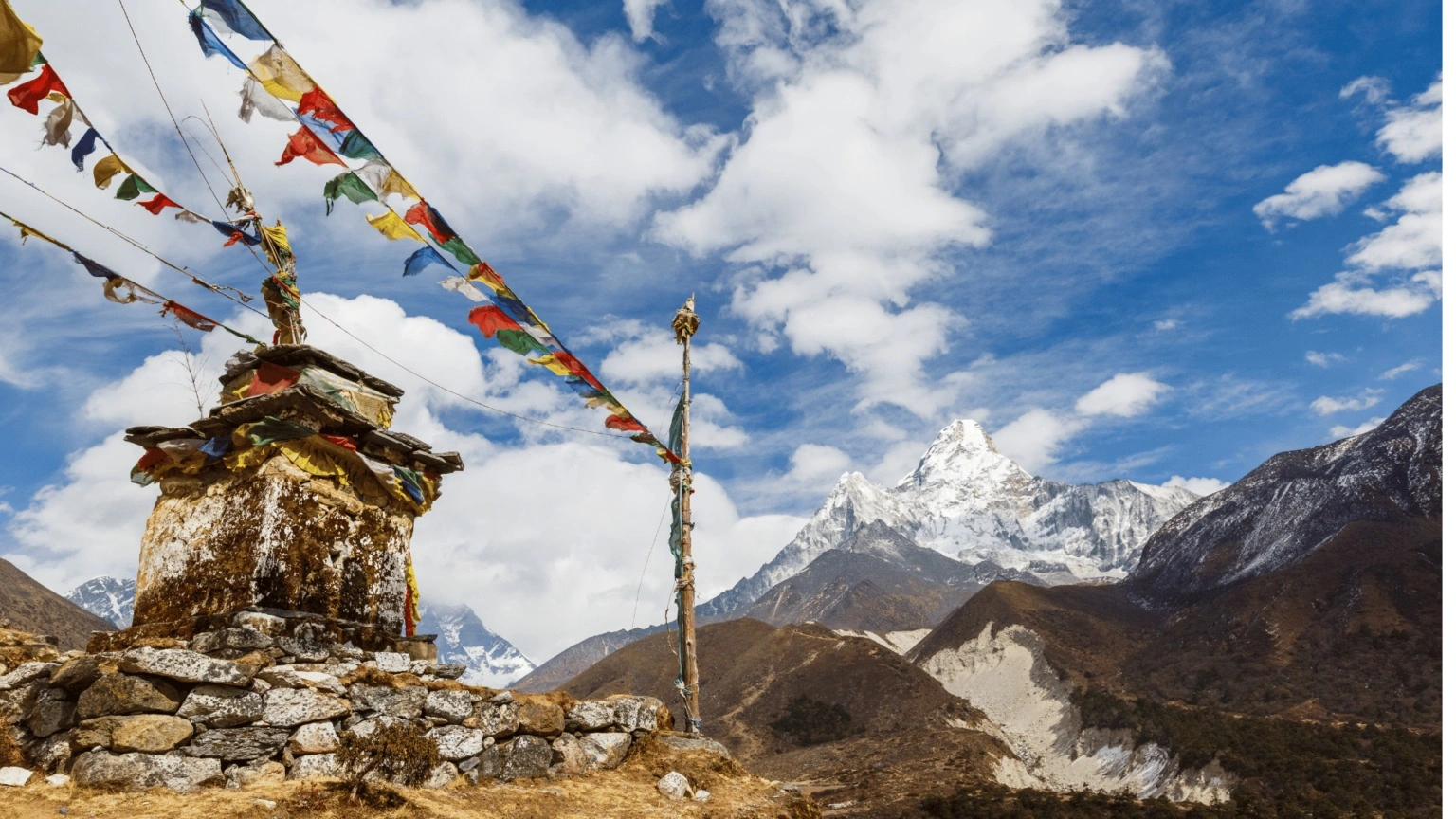
Lower sections of the trail run through forests that shelter the Himalayan tahr and the danphe pheasant, Nepal's national bird, particularly around Tengboche's rhododendron groves. By Dingboche, tree cover disappears entirely and the trail enters a wind-scoured alpine zone where temperature swings of 20 degrees Celsius between midday sun and night are normal. This compressed transition from forest to glacier, completed in roughly a week of walking, gives trekkers a tangible sense of changing altitude that flatter long-distance treks cannot replicate.
Why Is Sherpa Culture an Important Part of the Trek?
Sherpa communities, numbering around 3,000 families across the Khumbu, give the trek its cultural depth through Tibetan Buddhist traditions, a mountaineering heritage built over seven decades, and a teahouse hospitality system that defines daily trail life. Without this living culture, the route would be scenery alone.
What Cultural Experiences Await Along the Trail?
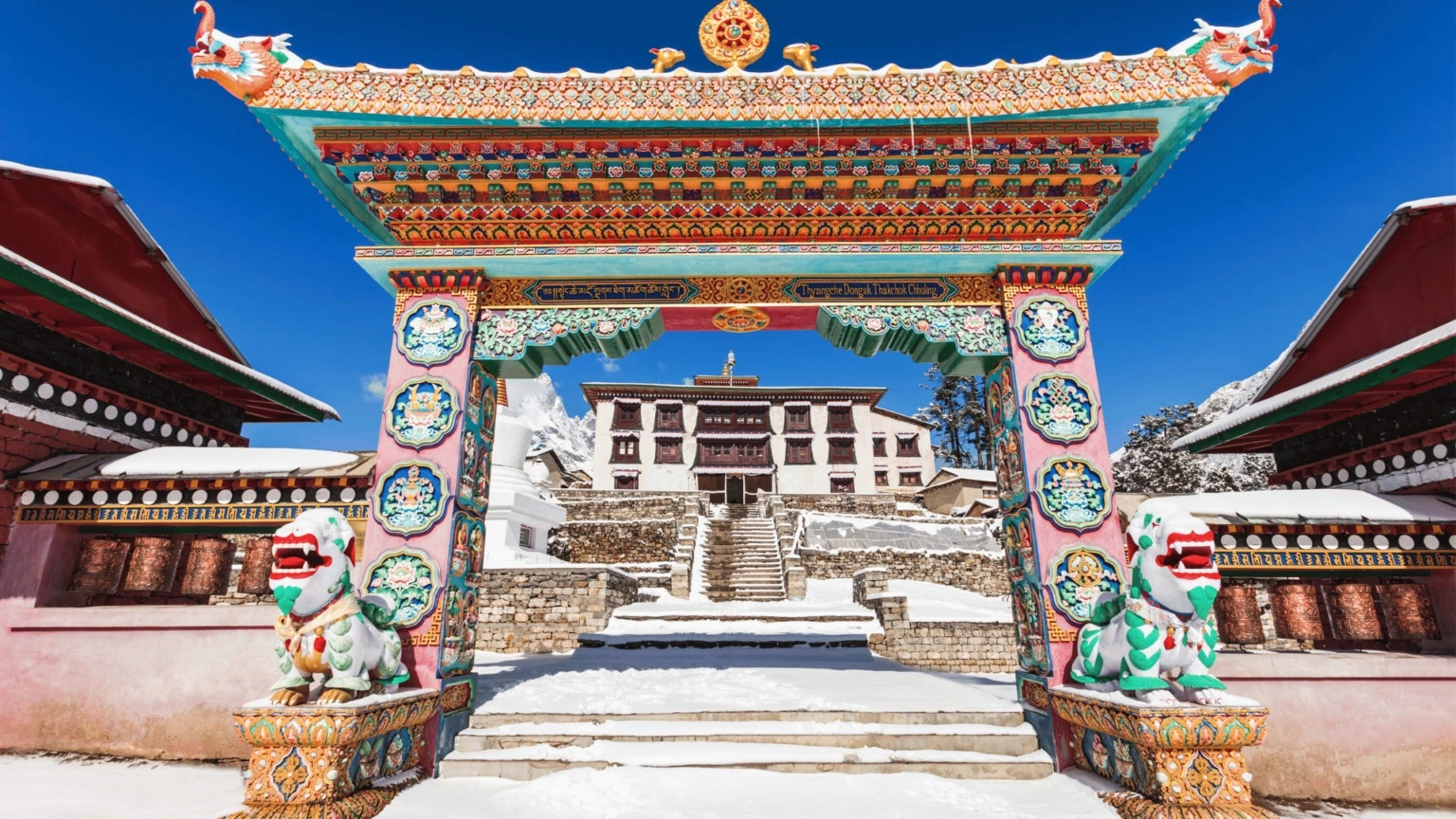
Trekkers pass through Tengboche Monastery, the largest and most significant Buddhist monastery in the Khumbu, which sits on a ridge with direct views of Ama Dablam and Everest behind it. Trekkers pass mani walls carved with Buddhist prayers, chortens marking the trail, and prayer wheels at nearly every village entrance. Namche Bazaar functions as the unofficial capital of the Sherpa community and hosts a Saturday market that has run since the era of salt trade with Tibet, long before trekking tourism existed.
How Do Local Traditions Make the Journey Unique?
The Mani Rimdu festival, held at Tengboche and other monasteries, draws Sherpa families from across the region for masked dances and ritual ceremonies tied to the Tibetan lunar calendar. Sherpa mountaineering expertise, built from generations of high-altitude trade across the Nangpa La pass into Tibet, now anchors nearly every expedition and trekking guide team operating in the Khumbu. Many families in the upper villages still speak a Tibetan-derived dialect alongside Nepali, a detail that reflects centuries of cross-border trade rather than any recent migration. This combination of religious tradition and technical mountain knowledge gives the Sherpa community a cultural role in the trek that goes well beyond hospitality.
What Makes Everest Base Camp Trek Suitable for Adventure Seekers?
The trek suits adventure seekers because it delivers extreme altitude and a serious physical test without requiring ropes, ice axes, or any technical climbing certification, while still placing trekkers higher than nearly every mountain peak outside the Himalaya and Andes. It rewards endurance and preparation rather than climbing skill.
Is Technical Climbing Experience Required?
No. The route to Everest Base Camp is a walking trail, with the only mildly technical stretch being the rocky scramble near the summit of Kala Patthar. While Nepal introduced a national mandatory guide rule for most regions in April 2023, the local Khumbu Pasang Lhamu Rural Municipality explicitly rejected it. As of 2026, the Everest region remains the major exception where independent, self-guided trekking is still fully legal and permitted. Whether trekking with a hired guide or going independently, the well-marked trail means the trek tests stamina and acclimatization far more than technical mountaineering ability. Unlike Mount Kilimanjaro's single multi-day push to a 5,895-meter summit, a rise of nearly 4,900 meters from the surrounding plain, per UNEP-WCMC's Kilimanjaro National Park profile, Everest Base Camp spreads its altitude challenge across nearly two full weeks of incremental gain.
What Personal Achievement Does Completing the Trek Offer?
Standing at Everest Base Camp puts a trekker higher than Mont Blanc (4,807 m), the tallest peak in the Alps, and higher than every mountain in the contiguous United States. Kala Patthar, the optional viewpoint most trekkers add on, sits at 5,545 meters and represents the highest point most people will ever reach on foot without a climbing permit. That combination of extreme altitude and achievable difficulty is rare among the world's adventure travel options.
When Is the Best Time to Trek to Everest Base Camp?
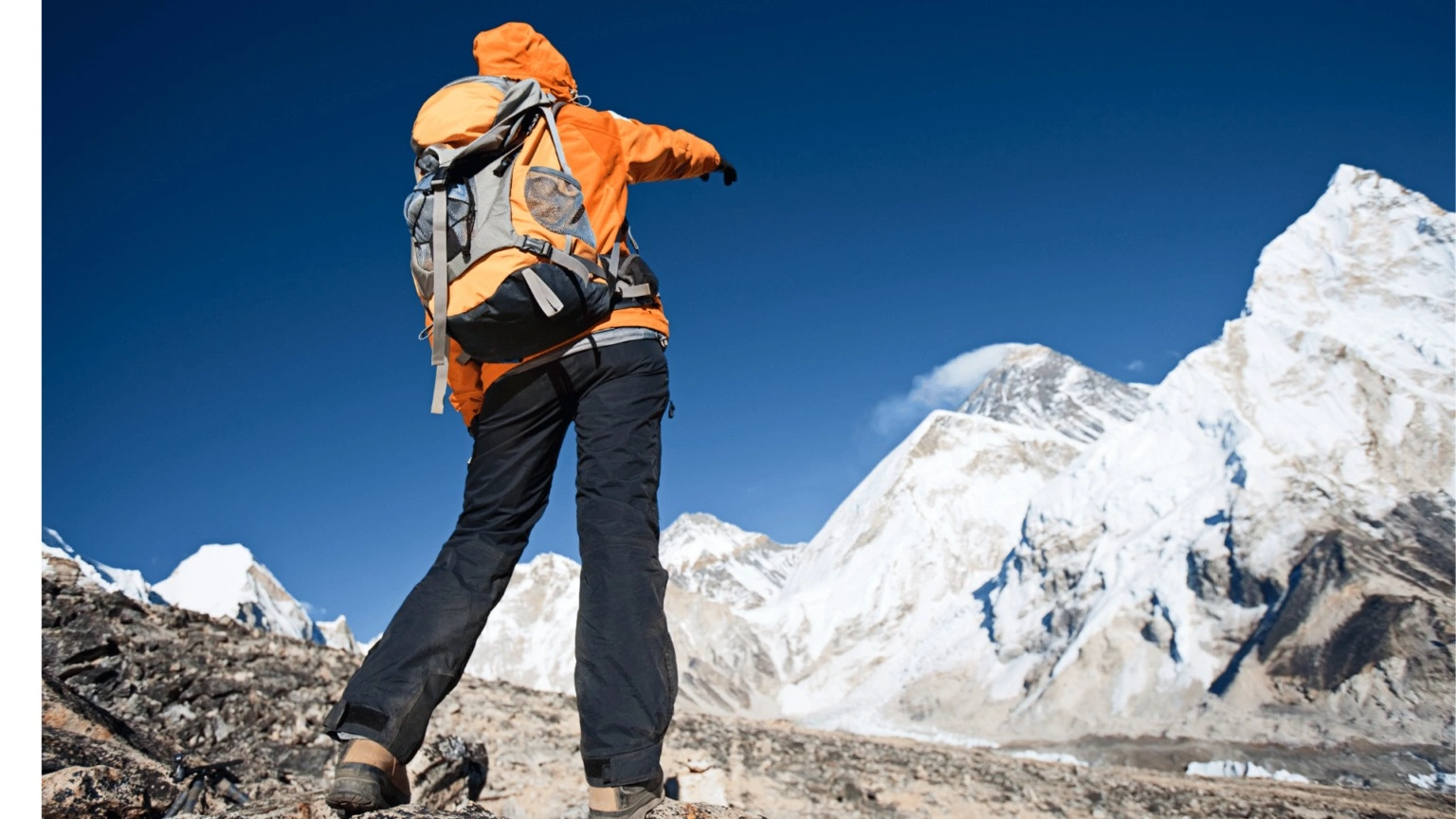
Spring (March through May) and autumn (mid-September through November) are the two best windows for the Everest Base Camp trek, offering the most stable weather, the clearest mountain visibility, and the safest Lukla flight conditions. These two seasons account for the majority of annual trekkers in the Khumbu.
Why Are Spring and Autumn the Most Popular Seasons?
Autumn arrives directly after the monsoon clears, leaving the sky washed clean and visibility at its sharpest, which is why October consistently ranks as the single busiest month on the trail. Spring brings warmer daytime temperatures and rhododendron forests in bloom through the lower Khumbu, particularly around Tengboche and Namche, alongside slightly hazier afternoon skies caused by pre-monsoon dust. Both seasons keep daytime highs in a manageable range and night temperatures at hBoth seasons keep daytime highs in a manageable range and night temperatures at higher elevations between minus 5°C and minus 15°C, conditions that proper gear handles without difficulty. Trekkers weighing exact monthly conditions can consult our full breakdown of the Everest Base Camp trekking season before locking in departure dates.
How Does Each Season Affect the Trekking Experience?
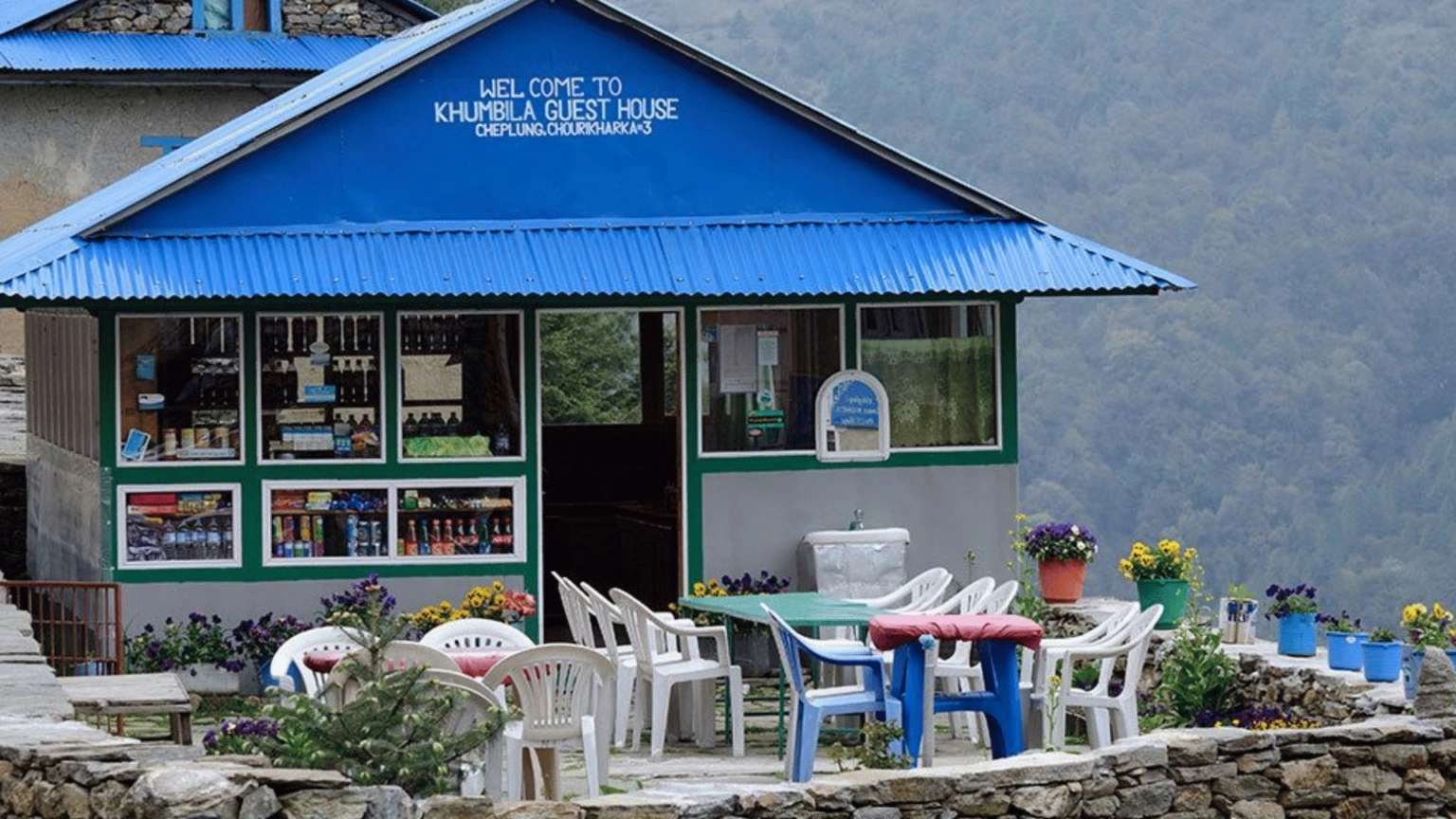
Winter, from December through February, drops overnight temperatures below minus 20°C at higher villages but rewards trekkers with the quietest trails and the longest unobstructed mountain views of the year, since cold deters most casual visitors. Monsoon season, June through August, brings daily rain, leech-prone lower trails, and frequent cloud cover that can hide the peaks for days at a time, making it the least recommended window despite lower teahouse prices. Trekkers choosing between October and April should know that October draws the heaviest crowds and the highest teahouse rates, while April offers comparable weather with marginally lighter trail traffic.
What Are the Main Highlights of the Everest Base Camp Trek?
The trek's core highlights are Namche Bazaar, Tengboche Monastery, the Khumbu Icefall viewed from Base Camp, and the sunrise panorama from Kala Patthar, each marking a distinct stage of the journey rather than a single climactic stop. No other Himalayan trek concentrates this many recognizable landmarks into one route.
Which Famous Landmarks Should You Expect to Visit?
Namche Bazaar, the trail's largest settlement at 3,440 meters, serves as the acclimatization hub and trading center for the entire Khumbu. The Hillary Suspension Bridge, the tallest and most photographed of the five bridges crossing the Dudh Koshi gorge between Lukla and Namche, marks the trek's first genuine adrenaline moment. Tengboche Monastery anchors the cultural midpoint of the trip, and the Khumbu Glacier and Icefall, visible directly from Base Camp, give trekkers a close look at the same terrain that climbing expeditions must navigate on their way to the summit.
Why Is Kala Patthar Considered a Must-Visit Viewpoint?
Everest Base Camp does not actually offer a view of the Everest summit, since Nuptse blocks the sightline from camp level. Kala Patthar, at roughly 5,545 meters on the ridge above Gorak Shep, solves that problem with the clearest unobstructed view of the summit pyramid available on foot, along with Lhotse, Nuptse, and Pumori in the same panorama. GPS surveys taken at the summit ridge have recorded readings closer to 5,643 meters, a discrepancy most guidebooks gloss over, though either figure places Kala Patthar above Everest Base Camp itself as the trek's true high point. Most trekkers climb it before dawn specifically to catch first light striking Everest's summit. For a closer look at what the ascent involves, see our full guide to the Kala Patthar viewpoint.
How Challenging Is the Everest Base Camp Trek?
The Everest Base Camp trek ranks as moderately to highly challenging, driven primarily by cumulative altitude gain rather than technical difficulty, with daily walks of five to seven hours over twelve to fourteen days and a total elevation gain exceeding 2,500 meters. Fitness and acclimatization strategy matter more than trekking experience.
What Fitness Level Is Recommended?
Trekkers should be able to walk five to seven hours on uneven terrain for multiple consecutive days without requiring rest days beyond those built into the itinerary. Daily distances range from 7 to 15 kilometers, but elevation gain matters more than horizontal distance on this route, since a single uphill day into Namche or Dingboche can involve 700 to 800 meters of vertical climbing. Building cardiovascular endurance through hiking, stair climbing, or running for six to eight weeks before departure makes a measurable difference on the steeper stretches between Namche and Tengboche and again above Lobuche. Trekkers with sedentary lifestyles routinely complete the trek, but they tend to struggle more on the final approach to Base Camp than those who arrive with a baseline level of cardio fitness already in place.
How Can Trekkers Prepare for High Altitude?
The itinerary's two scheduled acclimatization days, typically at Namche Bazaar and Dingboche, follow the standard mountaineering principle of climbing high during the day and sleeping at a lower elevation at night. Drinking three to four liters of water daily reduces the headache and fatigue symptoms that mimic early altitude sickness. Early acute mountain sickness symptoms, including headache, mild nausea, and disrupted sleep, typically surface above 3,500 meters and call for rest rather than continued ascent; guides trained in altitude management treat any worsening symptom, such as confusion or loss of coordination, as grounds for immediate descent rather than a wait-and-see approach. Our dedicated guide to Everest Base Camp trek acclimatization breaks down the climb-high-sleep-low strategy day by day. Many trekkers consult a travel medicine doctor before departure about preventive altitude medication, since acetazolamide is commonly discussed for this route, though any decision about using it belongs with a qualified physician rather than a packing list. The stretch between Lobuche and Gorak Shep produces the highest rate of altitude-related symptoms on the entire route, which is exactly why a measured pace matters more here than anywhere else on the trail.
What Should You Know Before Planning the Trek?
Before trekking, you need a Sagarmatha National Park entry permit and a Khumbu Pasang Lhamu Rural Municipality permit. Independent trekkers can obtain both upon arrival in Lukla or Monjo, while those on guided tours will have them arranged by their agency. You also need travel insurance covering high-altitude helicopter evacuation. The old TIMS card is no longer required for this specific route, so paying for one separately is an unnecessary cost.
The combined permit cost for most international trekkers breaks down as follows:
Sagarmatha National Park entry permit: roughly USD 22 to 25 per person
Khumbu Pasang Lhamu Rural Municipality permit: roughly USD 22 per person
Travel insurance with helicopter evacuation coverage up to at least 6,000 meters: required for permit issuance, with cost depending on the provider and trip length
Both park-related permits are checked at official checkpoints along the trail, so trekkers should keep printed or digital copies accessible rather than packed away at the bottom of a duffel bag. Permits are just one line item in the total budget, for flights, guides, gear, and teahouse prices, see our full breakdown of Everest Base Camp trek cost.
What Essential Gear Should You Pack?
A layered clothing system handles the temperature range better than any single heavy jacket. The core list most guides recommend includes:
A moisture-wicking base layer for active walking hours
An insulating mid layer, such as fleece or light down, for villages and rest stops
A windproof, waterproof outer shell for exposed ridgelines and unpredictable afternoon weather
A sleeping bag rated to at least minus 15°C for teahouse nights above 4,000 meters
Sturdy, broken-in trekking boots and a second pair of insulated socks
Trekking poles, a reliable headlamp, and a water purification method such as tablets or a filter
Down jackets and cold-weather sleeping bags are widely available to rent in Kathmandu, which spares trekkers from flying with bulky gear they may only use once.
How Many Days Does the Trek Usually Take?
Most standard itineraries run twelve to fourteen days from Lukla and back, including two acclimatization days, plus two to three days in Kathmandu for arrival, a pre-trek briefing, and departure. Trekkers who add the Gokyo Lakes or the Cho La pass extend the trip to sixteen or eighteen days, while the full Three Passes circuit, linking Kongma La, Cho La, and Renjo La, typically runs close to three weeks. Building in one or two buffer days for possible Lukla flight delays protects an international return flight from being put at risk by Himalayan weather.
Why Do Travelers Return With Life-Changing Memories?
Trekkers describe the experience as life-changing because it combines a measurable physical accomplishment, two weeks of disconnection from phones and routine, and direct contact with a culture and landscape unlike anything available closer to home. That combination is difficult to replicate in a shorter or lower-altitude trip.
What Personal Growth Can the Trek Inspire?
Completing consecutive days of sustained physical effort at altitude builds a form of patience and resilience that differs from short-burst challenges like marathons or single-day hikes. Trekkers consistently mention a shift in perspective that comes from spending two weeks at a walking pace, away from constant connectivity, surrounded by mountains that dwarf any obstacle in ordinary daily life. That shift tends to outlast the physical soreness by months.
Why Do So Many Trekkers Recommend the Experience?
Word-of-mouth recommendation runs unusually high for this trek compared to other adventure travel, and a meaningful share of trekkers return to the Khumbu region for a second or third trip, often choosing a variation like the Gokyo Lakes or Island Peak combination once the classic route is behind them. Trekking agencies report growing demand for these longer combination itineraries among repeat visitors who want a less crowded variation on a trail they already know. The shared difficulty of the trail builds a kind of camaraderie among trekking groups and with guides and porters that turns into the part of the trip people talk about most once they are home.
How Should You Choose an Everest Base Camp Trekking Company?
Choose a company that holds current TAAN registration, employs licensed guides with altitude and first aid training, pays porters fair wages with insurance coverage, and builds two full acclimatization days into every standard itinerary rather than rushing the schedule. These four checks separate a responsible operator from one cutting corners on safety.
Can Nepal Intrepid Treks Help You Plan a Safe and Memorable Everest Base Camp Trek?
Nepal Intrepid Treks, a Kathmandu-based operator founded in 2010 and led by Managing Director Lal Gurung, runs the standard Everest Base Camp itinerary alongside extended options that combine the classic route with Gokyo Lake, the Cho La pass, and Island Peak climbing for trekkers who want to go further than Base Camp alone. Every itinerary includes a licensed, English-speaking guide, a porter, government permits, and a built-in acclimatization schedule designed around the altitude profile described earlier in this guide. Trekkers planning a 2026 or 2027 Everest Base Camp trip can review the current Everest Base Camp itinerary and request a tailored departure date directly through Nepal Intrepid Treks.
What Are the Key Takeaways About Why Everest Base Camp Trekking Is So Popular in the World?
Everest Base Camp trekking holds its position as the world's most popular high-altitude trek because it asks for fitness and preparation rather than technical climbing skill, while still delivering proximity to the world's highest peak, deep Sherpa cultural immersion, and a measurable personal achievement above 5,300 meters. Spring and autumn remain the two seasons that consistently deliver the clearest views and most reliable Lukla flights. Twelve to fourteen days is the standard timeframe most trekkers need from Lukla to Base Camp and back, with Kala Patthar added on as the true high point for unobstructed Everest views. Choosing a registered operator with licensed guides and fair porter practices, though legally optional in the Khumbu region, unlike the rest of Nepal, remains the single most important planning decision for safety and peace of mind before departure. None of these requirements have slowed the trek's popularity, DNPWC's own Sagarmatha National Park management plan records visitor numbers climbing from roughly 6,000 in 1980 to tens of thousands a year today, and the structure that permits, guides, and acclimatization schedules now bring to the route has made Everest Base Camp trekking more consistent and more achievable for a wider range of trekkers than it was a decade ago.. If anything, the structure that permits, guides, and acclimatization schedules now bring to the route has made Everest Base Camp trekking more consistent and more achievable for a wider range of trekkers than it was a decade ago, which is precisely why it continues to draw walkers from every corner of the world year after year, Nepal Tourism Board data puts October 2025 international arrivals, the peak of the autumn trekking season, at 128,443, a 3.3% increase over the previous year and a near-full recovery to pre-pandemic levels.