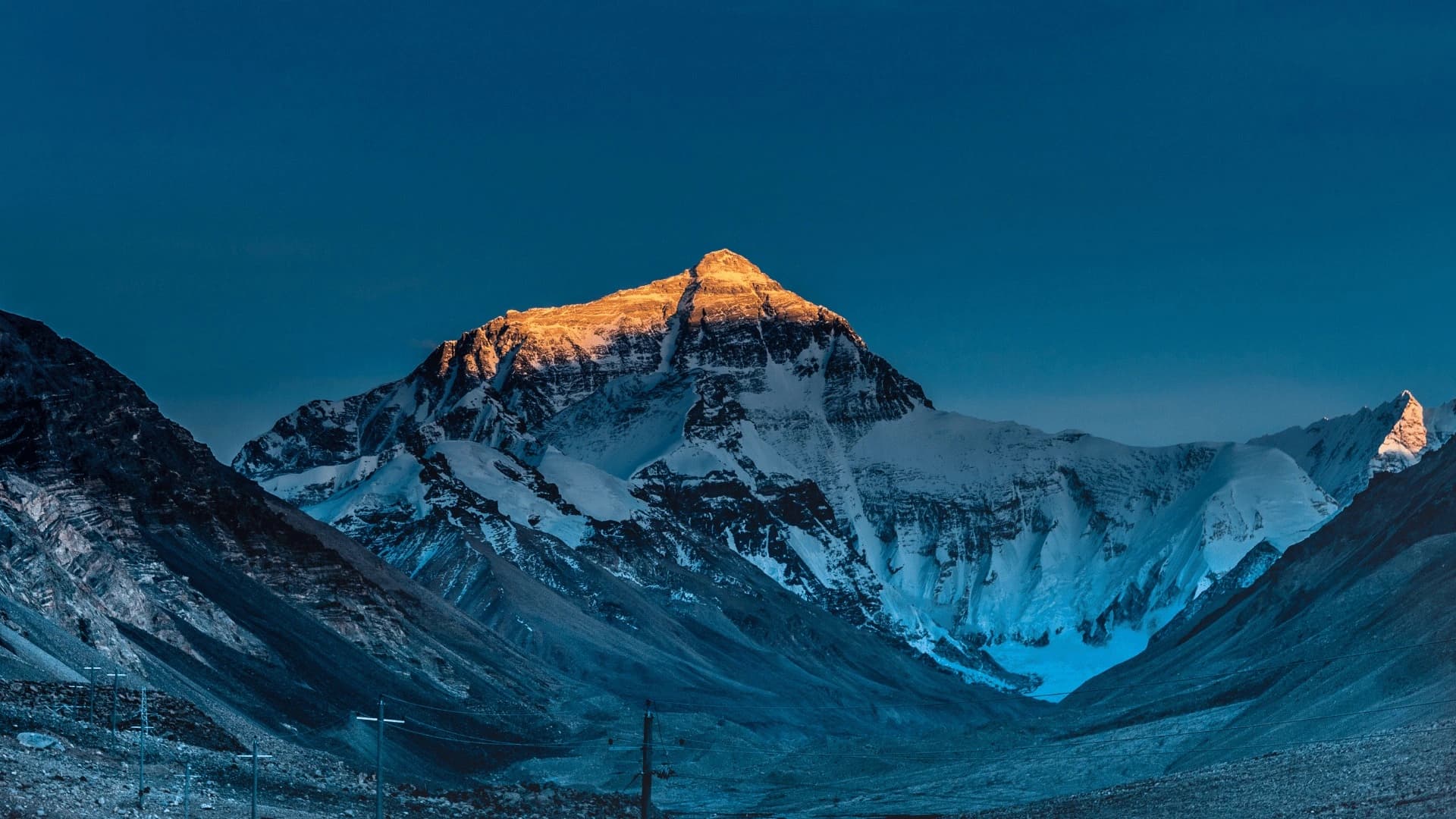
The Mardi Himal Trek in November is a moderate Himalayan trek through the Annapurna Conservation Area, combining rhododendron and oak forests, open alpine ridges, and close views of Machapuchare, Annapurna South, Hiunchuli, and Mardi Himal. The route rises from Kande to Mardi Himal Base Camp at 4,500 m, with overnight stops at Deurali, Forest Camp, Low Camp, and High Camp before the return to Siding.
.avif)
November brings some of the year's most reliable trekking conditions: post-monsoon skies, firm trails, low rainfall, and excellent early-morning visibility. The trade-off is cold, particularly above 3,000 m, where freezing nights, ridge wind, frost, and short daylight make appropriate clothing, pacing, and timing essential.
A 6-day itinerary provides a practical balance between gradual altitude gain, daily walking distances, and the early-morning Base Camp excursion, while a 7-day itinerary adds greater flexibility for acclimatization and weather changes. November trekkers need to plan for temperatures as low as -5°C at High Camp and around -10°C before sunrise near Base Camp, limited teahouse facilities, cash-only expenses, altitude-related risks, and changing trail traffic through the month.
This guide covers November weather and mountain visibility, trekking difficulty, daily elevation gains, itinerary and acclimatization, viewpoints, packing and cold-weather gear, teahouses and food, permits, insurance, altitude safety, transportation, and practical preparation for a safe and well-planned Mardi Himal trek.
Why Is November Considered a Good Month for the Mardi Himal Trek?
November is a good month for the Mardi Himal Trek because the monsoon has withdrawn, rain is rare, and mountain views stay clear until late morning. Trails are quieter than in October. The cost is cold: High Camp nights fall to between 0°C and -5°C.
According to Nepal's Department of Hydrology and Meteorology, the summer monsoon withdraws from the country by mid-October. Pokhara, the trailhead city, collects more than 3,500 mm of rain a year, yet November sits among its driest months with under 30 mm. That dry spell changes the trail. Forest sections that turn to mud and leeches in July become firm underfoot, and the ridge above 3,300 m stays free of slick clay.
October still beats November on warmth. Nights run about 4°C milder, and teahouses feel kinder. November beats October on space. Early November overlaps Dashain's aftermath and Tihar, but the last ten days of the month belong to whoever is willing to wear a down jacket at dinner.
The month suits trekkers who want empty viewpoints, first-time Himalayan walkers who pack well, and photographers who like low-angle light. It does not suit anyone unwilling to sleep at 0°C in an unheated room.
What Kind of Weather Can You Expect on the Mardi Himal Trek in November?
Expect dry, stable weather on the Mardi Himal Trek in November: daytime highs near 15°C at Forest Camp and 8 to 12°C at High Camp, with night lows from 5°C at Forest Camp to -5°C at High Camp and -10°C at Base Camp. Rain is rare. Wind builds on the ridge after noon.
The following table shows typical November air temperatures at each stop, split between the first and last weeks of the month. The ranges combine published trail data with guide observations and describe shade temperatures.
Stop (altitude) | Daytime high | Night low, early November | Night low, late November |
Pokhara (822 m) | 24 to 27°C | 12 to 14°C | 8 to 10°C |
Forest Camp (2,550 m) | 14 to 17°C | 5 to 8°C | 3 to 5°C |
Low Camp (3,050 m) | 10 to 14°C | 2 to 4°C | -1 to 2°C |
High Camp (3,580 m) | 8 to 12°C | 0 to -2°C | -2 to -5°C |
Mardi Himal Base Camp (4,500 m) | 4 to 8°C | -5°C | -10°C |
Late November runs 2 to 4°C colder than early November at every stop above Low Camp. Nobody sleeps at Base Camp, so the last row describes pre-dawn conditions on summit day.
The daily weather pattern repeats. Mornings are clear and still. Cloud climbs from the Pokhara valley between 11 a.m. and 2 p.m., often covering the viewpoints, and it clears near sunset. A western disturbance can bring flurries in the last week of November, though December and January are the real snow months. Daylight lasts about 10 hours 45 minutes in mid-November, with sunrise near 6:30 a.m. and sunset near 5:15 p.m.
How Clear Are the Mountain Views on Mardi Himal Trek During November?
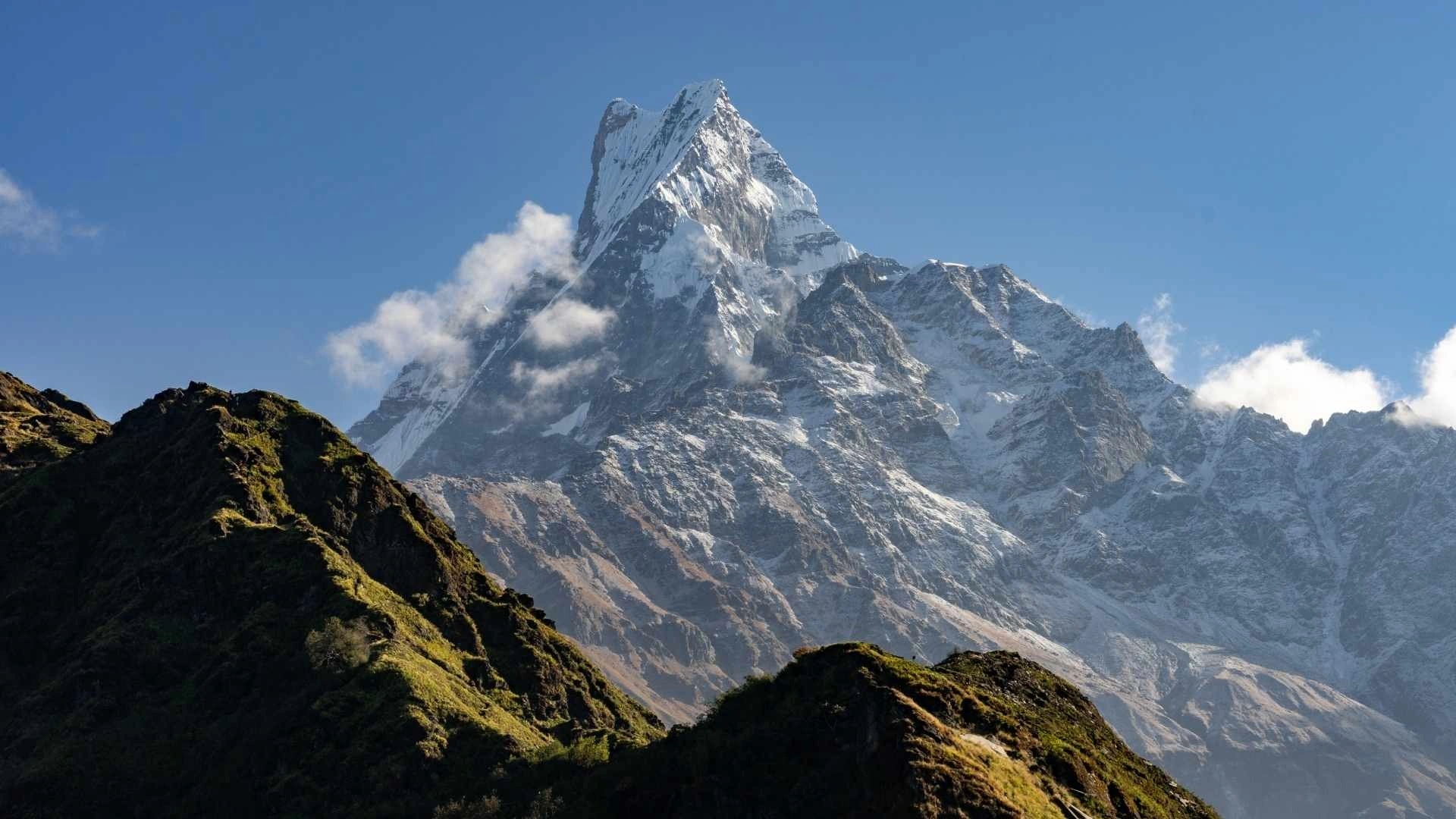
Mountain views on the Mardi Himal Trek in November are among the clearest of the year. Machapuchare (6,993 m), Annapurna South (7,219 m), and Hiunchuli (6,441 m) stand cloud-free on most mornings from Low Camp upward.
Post-monsoon air has been washed of dust, and the dry season has not yet loaded it with spring haze. One detail most guides skip: Pokhara itself often looks hazy at 9 a.m. in November because smoke and dust settle in an inversion layer over the valley. High Camp sits above that layer. Judging the trek's views from your hotel window misleads.
From High Camp you see Annapurna South, Hiunchuli, Machapuchare, Annapurna III (7,555 m), and Gangapurna (7,455 m). Upper Viewpoint adds the summit of Mardi Himal itself at close range. Machapuchare has been closed to climbers since the late 1950s because it is sacred to Shiva, so every photograph of it shows an unclimbed summit.
The best window runs from first light to 9:30 a.m. Night views also earn attention. The new moon on 9 November 2026 gives the darkest skies of the month, and the full moon on 24 November lights the ridge brightly enough to walk without a headlamp.
How Cold Does the Mardi Himal Trek Get in November?
Nights on the Mardi Himal Trek in November fall to about 0°C at Low Camp, between -2°C and -5°C at High Camp, and near -10°C at Base Camp before sunrise. Daytime feels mild in direct sun, then turns cold fast in shade and wind.
The cold follows a pattern. Sun leaves High Camp around 4 p.m., and the temperature drops 8 to 10°C within an hour. The coldest point arrives between 5:30 and 6:30 a.m., which is exactly when the Base Camp climb begins. A 25 km/h ridge wind at -5°C feels like -12°C under the standard wind-chill formula.
Teahouse rooms above Low Camp have no heating. Dining halls run a stove or gas heater in the evening only. Water bottles left outside freeze overnight, and phone batteries lose a third of their charge in a cold room. Two habits solve most problems: ask the kitchen for boiled water in an insulated bottle at bedtime (NPR 100 to 300), and sleep with your phone and power bank inside the sleeping bag.
What Is the November Trekking Experience Like on the Mardi Himal Route?
The Mardi Himal Trek in November follows a steady daily rhythm: breakfast at 6:30 a.m., 3 to 6 hours of walking, lunch on the trail, and an early afternoon in the teahouse before the cold arrives. Evenings centre on the dining hall heater.
Most November groups leave by 7 a.m. The sun does not reach the forest trail until after 8, so the first hour is cold and quiet, with the mist still hanging between the oaks. The first two days feel damp and enclosed. Days 4 and 5 feel the opposite: open ridge, wind, and a horizon that keeps widening.
Dining halls carry the evenings. Trekkers share one heater, play cards, compare headaches, and go to bed by 8 p.m. Early nights are not laziness. The cold wins every argument after sunset.
How Busy Is the Mardi Himal Trail in November?
The Mardi Himal trail is moderately busy in November. Traffic peaks in the first two weeks, then drops sharply after 20 November. Even on peak days the ridge carries far fewer trekkers than Annapurna Base Camp or Poon Hill.
Nepal Tourism Board permit records put annual trekker numbers across the Annapurna region between 105,000 and 125,000, and Mardi Himal takes a minority share of that total. The calendar shapes November more than the season does. Tihar runs from about 6 to 11 November 2026, with Laxmi Puja on 8 November. Domestic travel surges, Pokhara hotels fill with Nepali families, and a few lower teahouses close while owners celebrate.
From 12 to 20 November, High Camp rooms fill by 2 p.m. After 21 November, the same lodges run half empty. Two tactics work on busy days: leave Forest Camp before 7:30 a.m. to reach Low Camp ahead of the larger groups, and let an agency prebook High Camp rooms.
What Can You Expect From the November Mardi Himal Landscapes and Rhododendron Forests?
The November Mardi Himal landscape moves through 4 zones: oak and rhododendron forest to about 3,000 m, moss-draped forest near Low Camp, open ridge grassland around 3,300 m, and rock and snow slopes above High Camp. Rhododendrons stand in leaf, not in bloom.
Rhododendron arboreum, known as lali gurans and Nepal's national flower, blooms in March and April. November shows dark leathery leaves and tight buds waiting for spring. The forest still earns its place on the route. Moss coats every trunk, frost edges the leaves on cold mornings, and the lack of leeches makes the walking pleasant.
Higher up, the ridge turns the colour of straw. Badal Danda, the "cloud ridge" at 3,300 m, offers grass, rock, and sky in equal parts. Wildlife appears at dawn and dusk. Danphe, the Himalayan monal and Nepal's national bird, feeds on open slopes above 3,000 m, and langur monkeys work the lower forest.
What Are the Best Viewpoints on the Mardi Himal Trek in November?
The best viewpoints on the Mardi Himal Trek in November are High Camp for sunrise, Upper Viewpoint (4,200 m) for the closest panorama, and Mardi Himal Base Camp (4,500 m) for the highest vantage. Badal Danda and Low Camp deliver earlier views.
The 5 viewpoints, in trail order:
Low Camp (3,050 m): first dawn view of Machapuchare, with the Pokhara valley far below
Badal Danda (3,300 m): the cloud ridge, with Annapurna South framed on both sides
High Camp (3,580 m): the standard sunrise spot, with five Annapurna peaks in one frame
Upper Viewpoint (4,200 m): the closest view of Mardi Himal's summit and the ridge's knife edge
Mardi Himal Base Camp (4,500 m): the highest point of the trek, beneath the south face of Annapurna South
The timing decision matters most. Seeing sunrise from Base Camp requires leaving High Camp near 3 a.m. in -10°C, in the dark, on a narrow ridge. We do not recommend that start in late November. Leave at 4:15 a.m. instead. You watch sunrise from Upper Viewpoint around 6:15 a.m., reach Base Camp by 7:45, and climb the last stretch in warming light.
What Is the Mardi Himal Trek Difficulty in November?
The Mardi Himal Trek difficulty in November is moderate. The route has no technical sections, tops out at 4,500 m, and demands 3 to 8 hours of walking a day. Cold, short daylight, and altitude push the effort toward the upper end of moderate.
Mardi Himal sits between two familiar benchmarks. It is harder than Ghorepani Poon Hill, which peaks at 3,210 m, and easier than Annapurna Base Camp, which reaches 4,130 m over 8 to 10 days. The steepest sustained climbs come between Forest Camp and Low Camp and on the ridge above High Camp.
The trek suits a trekker who walks 5 to 6 hours with an 8 kg daypack and climbs stairs without stopping. Eight weeks of hill walking and stair training before departure is enough. Summit day is the real test: 920 m up and the same distance back down in 7 to 8 hours.
How Many Days Does the Mardi Himal Trek Take in November?
The Mardi Himal Trek takes 5 days at minimum, 6 days at the pace we recommend, and 7 days with a buffer. Counts cover trekking days from Kande to Siding and exclude the transfer to Pokhara.
Six days suits November. Daylight lasts under 11 hours, cold slows the morning start, and a spare hour matters when weather turns. The 7-day version adds a rest day at Low Camp and gives a margin for headaches or a late flight. Four-day rapid itineraries exist, but they gain 1,800 m in under three days and pair that speed with freezing nights. We steer November trekkers away from them.
Add travel time. Kathmandu to Pokhara takes 25 minutes by air or 6 to 7 hours by road. A realistic plan from Kathmandu runs 8 days: 1 day to Pokhara, 6 days trekking, and 1 day back.
What Are the Daily Walking Hours and Elevation Gains of Mardi Himal Trek?
Daily walking on the Mardi Himal Trek runs 3 to 8 hours. The biggest gain is 920 m on Base Camp day, and the biggest descent is 1,830 m on the final day.
The following table lists walking time, elevation change, and sleeping altitude for the 6-day route. Gains describe the climb between the start and end points of each day.
Day | Route | Walking time | Gain | Loss | Sleep |
1 | Kande to Deurali | 3 to 3.5 h | 330 m | 0 m | 2,100 m |
2 | Deurali to Forest Camp | 3.5 to 4 h | 450 m | 0 m | 2,550 m |
3 | Forest Camp to Low Camp | 3.5 to 4 h | 500 m | 0 m | 3,050 m |
4 | Low Camp to High Camp | 3 to 3.5 h | 530 m | 0 m | 3,580 m |
5 | High Camp to Base Camp and back | 7 to 8 h | 920 m | 920 m | 3,580 m |
6 | High Camp to Siding | 6 to 7 h | 0 m | 1,830 m | 1,750 m |
The full route totals about 40 km, with 2,730 m of climbing and 2,750 m of descent. Day 6 punishes the knees more than any climb punishes the lungs. Trekking poles earn their weight there.
Does November Weather Affect Mardi Himal Trekking Difficulty?
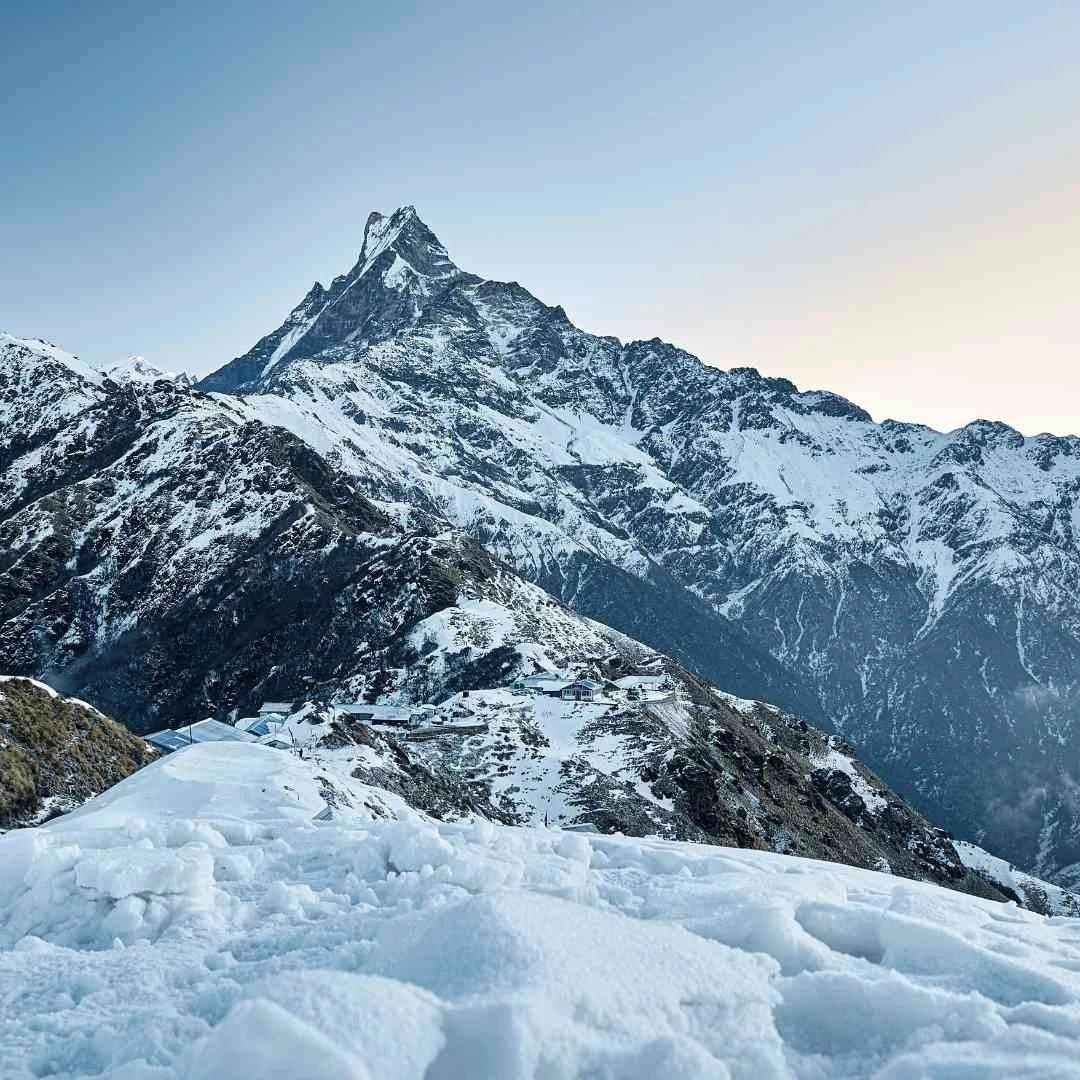
Yes. November weather raises the effort of the Mardi Himal Trek in 4 ways: cold, short days, ridge wind, and icy mornings. Dry trails offset the extra effort by removing mud, leeches, and rain.
Cold slows the morning warm-up and drains stamina, because the body burns calories to stay warm.
Daylight compresses the walking window to about 10 hours 45 minutes, and the last hour into High Camp is the coldest of the day.
Wind on the ridge above Badal Danda adds fatigue and chills hands within minutes.
Frost glazes the steps and rocks on the Base Camp climb before 9 a.m.
The dry trail gives something back. Paths hold firm, rivers stay low, and no one wades through monsoon mud. Net effect: November feels like a moderate trek with a cold-weather surcharge.
What Should You Pack for the Mardi Himal Trek in November?
Pack for the Mardi Himal Trek in November with a 4-layer clothing system, a sleeping bag with a -10°C comfort rating, and 8 to 10 kg of gear per trekker. Pokhara shops rent or sell most items, but boots need breaking in at home.
A porter carries one duffel for two trekkers, with a combined limit near 20 kg. You carry a 30 to 40 L daypack with water, a camera, a down jacket, snacks, and a rain shell. Pack the duffel in plastic liners, because duffels travel on the porter's back in morning mist.
What Clothing Is Suitable for November Temperatures of Mardi Himal Trek?
Clothing for the Mardi Himal Trek in November follows a layering system: a moisture-wicking base, an insulating fleece, a down jacket rated to -10°C, and a waterproof shell. Add a warm hat, insulated gloves, and wool socks.
The full list:
Base layers: 2 merino or synthetic tops and 1 thermal bottom
Mid layer: 1 fleece or lightweight synthetic jacket
Insulation: 1 down jacket with 650 fill power or higher
Shell: 1 waterproof jacket and 1 pair of light rain pants
Trekking pants: 2 quick-dry pairs
Headwear and hands: 1 beanie, 1 sun hat, 1 neck gaiter, liner gloves, and insulated mitts
Socks: 3 pairs of mid-weight wool and 1 sleeping pair
Footwear: waterproof mid-cut boots, broken in, and insulated camp shoes
The most common mistake we see: a heavy jacket worn over a thin base layer from the first step. The climber sweats, stops for photos, and chills within minutes. Start cold, strip a layer at the first rest, and put the down jacket on the moment you stop at altitude.
What Trekking Gear Is Essential on Mardi Himal Trek for November?
Essential trekking gear for the Mardi Himal Trek in November includes a 30 to 40 L daypack, trekking poles, a headlamp with spare batteries, two insulated 1 L bottles, water purification tablets, UV-rated sunglasses, and a power bank.
The headlamp does real work. Summit day starts at 4:15 a.m., and cold drains batteries faster than warm air does. Poles save the knees on the 1,830 m descent. Sunglasses matter more than most people expect: according to the World Health Organization, UV intensity rises roughly 10 to 12 percent for every 1,000 m of altitude, so Base Camp at 4,500 m delivers about 50 percent more UV than sea level.
Add SPF 50 sunscreen, lip balm, a small first-aid kit, and a rain cover for the daypack. Microspikes are optional and rarely used in November, except after a rare snowfall. Charging costs NPR 200 to 400 per device at higher lodges and runs slowly, so a 10,000 mAh power bank covers most trekkers for six days.
Do You Need Sleeping Bags or Other Cold-Weather Equipment in Mardi Himal Trek?
Yes. Bring a sleeping bag with a comfort rating of -10°C. Teahouse rooms above Low Camp have no heating, and the blankets lodges supply do not hold heat when night temperatures reach -5°C.
Choose by comfort rating, not by extreme rating. A bag labelled "-15°C extreme" often delivers comfort only to -5°C. Pokhara rental shops lend quality bags for about $1 to $3 per day, so buying one makes little sense for a single trip. A fleece liner adds another 3 to 5°C.
Four small items change the night. A bottle of boiled water in the sleeping bag works as a heater until midnight. Chemical hand warmers fit inside socks. A dedicated set of dry sleeping clothes prevents damp base layers from stealing heat. A beanie worn to bed keeps the head, the biggest source of heat loss, covered.
What Is the Mardi Himal Trek Itinerary in November?
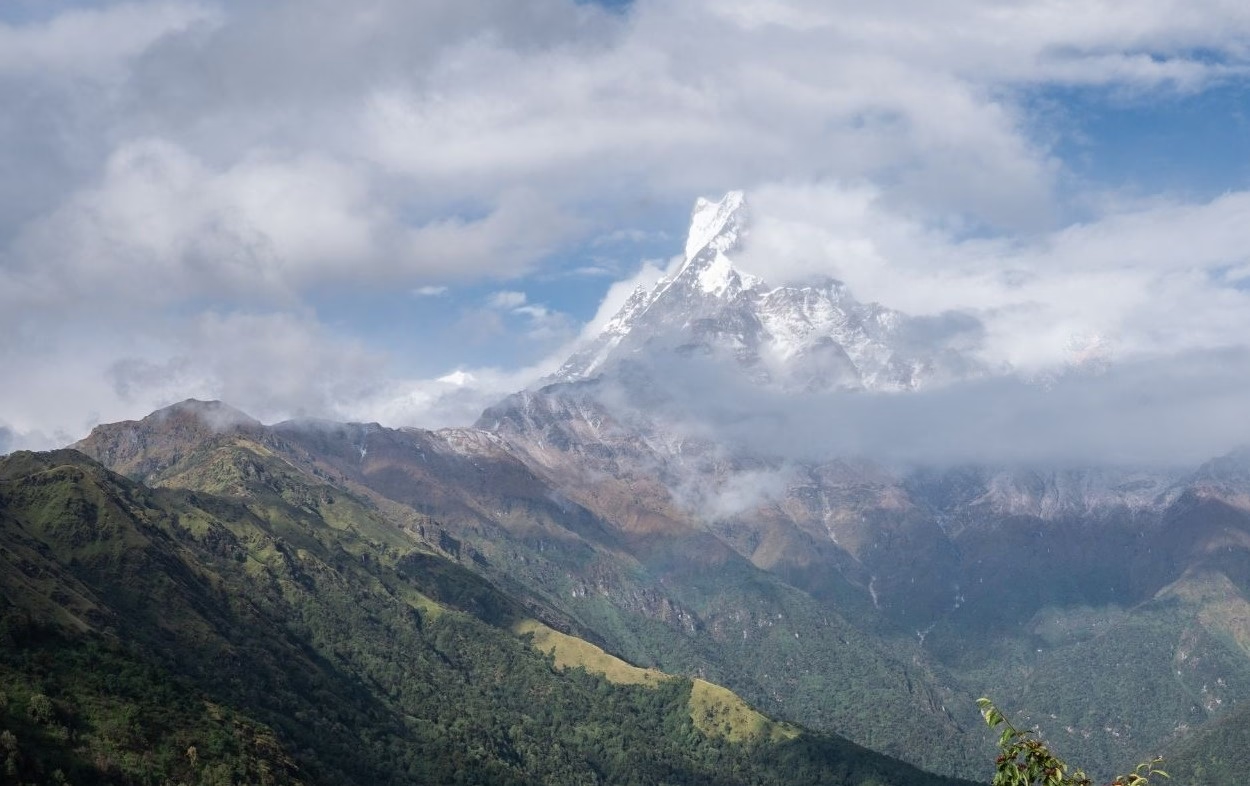
The standard Mardi Himal Trek itinerary in November runs 6 trekking days: Kande to Deurali, Forest Camp, Low Camp, High Camp, a Base Camp round trip, and a descent to Siding with a drive to Pokhara.
The route starts low on purpose. Sleeping at 2,100 m on the first night, instead of pushing to Forest Camp, protects the lungs and the legs when cold weather has already narrowed margins.
What Happens on Each Day of the Mardi Himal Trek?
Each day on the Mardi Himal Trek covers a distinct landscape, from terraced hillsides on Day 1 to the 4,500 m ridge on Day 5.
Day 1, Pokhara to Deurali (2,100 m). A one-hour jeep ride reaches Kande (1,770 m). The trail then climbs 3 to 3.5 hours through Australian Camp, where Machapuchare appears for the first time. The short day eases the body into altitude.
Day 2, Deurali to Forest Camp (2,550 m). Oak, bamboo, and rhododendron close in around the path for 3.5 to 4 hours. Lunch comes at Forest Camp, followed by a slow afternoon.
Day 3, Forest Camp to Low Camp (3,050 m). The forest thins and the first open views arrive. Low Camp's teahouses sit on a shoulder with long views south. Aim to arrive by 1 p.m., before the cold settles in.
Day 4, Low Camp to High Camp (3,580 m). Trees disappear and the ridge begins. Badal Danda comes after about 90 minutes. A 30-minute walk above High Camp in the afternoon begins the "climb high, sleep low" routine.
Day 5, High Camp to Base Camp (4,500 m) and back. Leave at 4:15 a.m. Upper Viewpoint arrives near 6:15, Base Camp by 7:45, and High Camp again by noon. The rest of the day belongs to tea and sleep.
Day 6, High Camp to Siding (1,750 m). The descent takes 6 to 7 hours down the Siding trail through terraced fields, followed by a 2-hour jeep ride to Pokhara.
Which Trekking Route and Acclimatization Stops Are Recommended on Mardi Himal Trek?
The recommended route is Kande, Deurali, Forest Camp, Low Camp, High Camp, Base Camp, and Siding, with sleeping altitudes of 2,100 m, 2,550 m, 3,050 m, and 3,580 m. Each night's gain stays close to the CDC guideline of 500 m.
According to the CDC Yellow Book, travellers above 3,000 m increase their sleeping altitude by 300 to 500 m per night and add a rest day every 3 to 4 days. The route meets that rule on Day 3 (500 m) and exceeds it by 30 m on Day 4 (530 m). Day 5 repairs the gap through its "climb high, sleep low" pattern: the body visits 4,500 m and then sleeps 920 m lower.
Walking the route in reverse, from Siding up to High Camp, compresses the climb into less time. We do not recommend it. A Phedi start, instead of Kande, adds about 45 minutes of road-side walking and no scenic value. Trekkers who want a margin add a rest day at Low Camp, which turns the plan into a 7-day trek.
Can You Customize the November Mardi Himal Trek Itinerary?
Yes. We customize the November Mardi Himal Trek itinerary around fitness, group size, Tihar dates, and weather windows. Options range from a 5-day fast version to a 9-day combination with Poon Hill.
The common adjustments:
Add a rest day at Low Camp for a 7-day version with a wider altitude margin
Compress to 5 days by combining Day 2 and Day 3, a plan for trekkers with prior altitude experience
Combine the trek with Ghorepani Poon Hill, which adds 3 to 4 days
Shift the start date to avoid Tihar or the 12 to 20 November crowd
Stop at High Camp and skip Base Camp when snow or wind closes the ridge
Extend the stay in Pokhara with a Phewa Lake morning or a sunrise visit to Sarangkot
Decide before departure. The best November itinerary is the one chosen with a clear head in Pokhara, not rebuilt on the ridge in a cold wind.
What Are the Teahouses and Food Like on the Mardi Himal Trek in November?
Teahouses on the Mardi Himal Trek in November are family-run lodges with twin rooms, shared bathrooms, and menus built on dal bhat. Comfort falls with every 500 m of altitude, and rooms above Low Camp have no heating.
Rooms are plywood-walled twins with foam mattresses and a pillow. Doors lock. Windows rarely seal. Facilities improve noticeably at Forest Camp and fade above Low Camp, where the lodges sit on a ridge with all supplies carried up by porters.
Are Teahouses Open Along the Mardi Himal Route in November?
Yes. Teahouses stay open along the Mardi Himal route through November, from Deurali to High Camp. The exception is Tihar, from about 6 to 11 November 2026, when some lower lodges close for family celebrations.
Forest Camp holds a dozen or more teahouses, and High Camp around 14. Demand drops after 20 November, and some upper lodges consolidate guests into fewer buildings to save fuel. No teahouse operates at Base Camp (4,500 m), so every trekker sleeps at High Camp and returns after the climb. Prebooking through an agency removes the guesswork, especially in the first two weeks of the month.
What Food and Drinks Are Available During the Mardi Himal Trek?
Food on the Mardi Himal Trek centres on dal bhat, noodles, momos, soups, eggs, and porridge, with hot drinks at every stop. Prices rise with altitude because porters carry supplies uphill.
Dal bhat, the lentil, rice, and vegetable set meal, comes with free refills and costs around NPR 600 at Forest Camp and NPR 900 to 1,000 at High Camp. Other reliable orders include thukpa (noodle soup), vegetable momos, fried rice, Tibetan bread, and porridge. Hot drinks include ginger-lemon-honey tea, black tea, and hot chocolate. Garlic soup is a trail tradition, although evidence for any altitude benefit is thin.
Stick with vegetarian meals. Meat reaches the high lodges after days of carrying without refrigeration. For water, buy boiled water (NPR 150 to 400 per litre at higher lodges) or treat your own with purification tablets, which also cuts down on plastic bottles on the ridge.
How Should You Prepare for Limited Facilities at Higher Elevations of Mardi Himal Trek?
Prepare for limited facilities above Low Camp by carrying NPR 10,000 to 15,000 (about $75 to $115) in cash, offline maps, a power bank, toilet paper, and hand sanitiser. Hot showers, charging, and Wi-Fi cost extra and often fail in cold weather.
No ATM operates on the trail, and lodges accept cash only. A hot bucket shower at High Camp costs NPR 400 to 700 when fuel is available, and water pipes freeze after dark in late November, so fill bottles before 4 p.m. Nepal Telecom and Ncell coverage is patchy on the ridge. A local SIM bought in Pokhara works at Forest Camp and Low Camp, and fails in pockets near High Camp. Bathrooms are shared squat toilets, and the queue at 4:30 a.m. on summit morning is real.
What Should You Know Before Trekking to Mardi Himal in November?
Three preparations matter most before the Mardi Himal Trek in November: valid permits, an altitude plan, and insurance that covers helicopter evacuation. All three are settled before leaving Pokhara.
What Permits Are Required for the Mardi Himal Trek?
The Mardi Himal Trek requires an Annapurna Conservation Area Permit (ACAP), which costs NPR 3,000 (about $23) for foreign nationals. A Digital TIMS (E-TIMS) card is strictly mandatory for the Mardi Himal Trek. For 2026, the fee is NPR 2,000 (approx. $15) for foreign nationals and must be processed digitally through a registered trekking agency before you start the trek.
According to the Annapurna Conservation Area Project, which the National Trust for Nature Conservation manages, every trekker entering the conservation area needs an ACAP. Checkpoints charge double when a trekker arrives without one, and children under 10 are exempt. Nepal's permit system is now fully managed through a Centralized Digital Trekking Portal. You no longer need to queue with physical passport photos or cash at the permit office; your trekking agency uploads your documents and processes the E-TIMS digitally, providing you with a QR code for checkpoint scanning.
A licensed guide from a registered agency is legally mandatory for all foreign trekkers on the Mardi Himal route. Following the Nepal Tourism Board's strict regulations, the 2026 digital permit system enforces a "No Guide, No Trek" policy across the Annapurna Conservation Area. Beyond legal compliance, a licensed guide is essential in November: they read the cold, set the pace, manage teahouse bookings, and monitor altitude safety. Nepal Intrepid Treks includes a licensed guide and arranges ACAP and TIMS as part of every Mardi Himal booking.
How Can You Prepare for Altitude on the November Mardi Himal Trek?
Prepare for altitude on the Mardi Himal Trek by walking slowly, drinking 3 to 4 litres of water daily, following the climb-high-sleep-low rule, and descending when symptoms worsen. The route gains 1,810 m from Kande to High Camp in 3 days.
Acute mountain sickness (AMS) begins with a headache plus nausea, dizziness, or poor sleep above 2,500 m. Mild AMS improves with rest and fluids. Worsening symptoms demand descent: ataxia (stumbling), confusion, or breathlessness at rest signal serious illness and require immediate loss of altitude. Descent from High Camp is quick, though helicopters cannot fly at night or in cloud, so the early morning clear window matters.
Talk to a doctor about acetazolamide (Diamox) four to six weeks before departure. Avoid alcohol above 3,000 m, and skip sleeping pills. Eat well even when appetite drops: the body burns more calories in the cold.
What Travel Insurance Is Recommended for Mardi Himal Trek?
Recommended insurance for the Mardi Himal Trek covers trekking to 5,000 m, emergency helicopter evacuation, medical treatment, and trip cancellation, with 24-hour assistance. Standard policies often exclude trekking above 3,000 m.
Read the policy for three phrases: "trekking up to 5,000 m", "helicopter evacuation", and "direct payment to provider". Helicopter evacuation from the Annapurna region typically costs $2,500 to $5,000, and operators often demand a guarantee before the aircraft leaves. In 2026, comprehensive travel insurance is legally compulsory for all trekkers, regardless of the region.
Your policy must be uploaded to the digital permit portal before your E-TIMS can be issued. Ensure your cover explicitly includes trekking up to 5,000 m and emergency helicopter evacuation. Keep the policy number and the assistance phone line on paper, not only on a dying phone.
How Can Nepal Intrepid Treks Help With the Mardi Himal Trek in November?
Nepal Intrepid Treks handles the 5 logistics that decide a cold-season trek: licensed guides, permits, transport, teahouse bookings, and safety planning. You arrive in Pokhara, and the operational work is already done.
The team provides:
Licensed guides who read altitude symptoms and weather windows
Porters who carry duffels, with fair load limits
Permits for ACAP and TIMS, filed before departure
Transfers between Pokhara, Kande, and Siding
Prebooked teahouses, including High Camp rooms in the busy first two weeks of November
A pre-trek briefing that covers gear checks, sleeping bag rental, and the emergency plan
In real-world use, the biggest value shows on cold mornings. A guide who knows when to delay the Base Camp start by 30 minutes, or when to turn back at Upper Viewpoint, prevents far more problems than any gear upgrade.
Can Nepal Intrepid Treks Arrange a Mardi Himal Trek in November?
Yes. Nepal Intrepid Treks arranges private and small-group Mardi Himal treks in November, with flexible dates around Tihar and itineraries from 5 to 9 days.
Booking takes four steps: share your dates and group size, describe your trekking experience, review the proposed itinerary, and confirm permits and rooms. Early-November dates benefit from booking 3 to 4 weeks ahead. Late-November dates leave more room for short notice.
Planning the Mardi Himal Trek in November? Send your dates, group size, and fitness background through the Nepal Intrepid Treks website. We reply with a tailored 6-day or 7-day itinerary and a clear price.
What Are the Key Takeaways About the Mardi Himal Trek in November?
The Mardi Himal Trek in November offers dry weather, clear Annapurna views, and quiet trails after 20 November, in exchange for freezing nights above 3,500 m. The 8 points that decide the trip:
Choose early November for warmer nights and late November for empty viewpoints
Expect night lows of -2 to -5°C at High Camp and -10°C before sunrise at Base Camp
Plan 6 trekking days, or 7 days for a rest buffer at Low Camp
Leave High Camp at 4:15 a.m. on Base Camp day for a safer, warmer climb
Pack a 4-layer system, a down jacket, and a -10°C comfort sleeping bag
Carry NPR 10,000 to 15,000 in cash for showers, charging, and extras
Secure an ACAP (NPR 3,000) and insurance that covers helicopter evacuation to 5,000 m
Descend at once when altitude symptoms worsen
The Mardi Himal Trek in November rewards trekkers who pack for the cold and walk slowly. The ridge is ready from the first week of the month.