Nepal is one of the most accessible countries in the world for first-time high-altitude trekking, offering beginner-friendly Himalayan routes through the Annapurna Region, Langtang Valley, and Everest Region. With established teahouse trails, mapped trekking corridors, licensed guides, and mountain villages connected by established trekking infrastructure, Nepal allows new trekkers to experience major Himalayan landscapes without technical climbing skills. Popular beginner routes such as Ghorepani Poon Hill, Annapurna Base Camp, and Langtang Valley Trek combine panoramic mountain views, cultural villages, and manageable trekking distances, making Nepal the starting point for many first Himalayan expeditions.
A successful first trek in Nepal depends on preparation long before arrival. Route selection, seasonal timing, altitude acclimatization, permits, physical training, equipment choices, guide support, and realistic budgeting directly shape safety and overall experience on Himalayan trails above 3,000 meters. Beginners who understand how daily elevation gain affects the body, how trekking seasons change trail conditions, and how to prepare for long uphill and downhill walking are significantly more likely to complete routes safely. This guide explains everything first-time trekkers need to know before trekking in Nepal, including the best beginner routes, required permits, fitness expectations, gear systems, altitude safety, and practical costs for planning a confident first Himalayan trek.
Why Is Nepal a Top Destination for First-Time Trekkers?
Nepal ranks as the world's premier trekking destination because it concentrates 8 of the 14 highest mountains on Earth within a single country, yet offers trail infrastructure and teahouse networks accessible to non-technical hikers. The combination of dramatic altitude gain, cultural depth through Sherpa and Gurung villages, and a well-established trekking tourism industry makes Nepal uniquely suited to beginners.
The Nepal Tourism Board recorded 1.1 million trekking visitors in 2023, a figure that reflects not just scenic appeal but genuine logistical accessibility. Most beginner-friendly routes in Nepal connect teahouses every 2–4 walking hours, eliminating the need for camping equipment or technical navigation skills.
The Nepal Tourism Board's official Nepal Tourism Statistics 2023, recorded 1,014,876 total international arrivals in 2023, a figure that reflects not just scenic appeal but genuine logistical accessibility (note: trekking and mountaineering visitors are a subset of this total, tracked separately through TIMS and conservation-area permit data).
What Makes Nepal's Trekking Routes Beginner-Friendly?
Nepal's beginner-friendly trekking routes share 4 defining characteristics: consistent teahouse accommodation, clear trail signage, established rescue infrastructure, and progressive altitude gain that allows proper acclimatization. The Annapurna and Langtang circuits in particular feature trails wide enough for mule trains, meaning paths are well-maintained and rarely overgrown.
Teahouses, locally operated guesthouses that serve meals and accommodation, exist at nearly every major stopping point on popular routes. A first-time trekker on the Ghorepani Poon Hill trail, for example, passes through 6 established teahouse villages within a 4-day circuit, requiring zero wilderness camping experience.
Which Regions Are Most Popular for New Trekkers?
The 3 most popular trekking regions for beginners in Nepal are the Annapurna region, the Langtang region, and the Khumbu (Everest) region. Each region offers entry-level routes alongside advanced options.
Annapurna region (Pokhara as gateway): home to Poon Hill and Annapurna Base Camp, with the most developed teahouse network in Nepal
Langtang region (Kathmandu as gateway): closest major trekking region to the capital, with culturally rich Tamang villages and gentle lower elevation trails
Khumbu region (flight to Lukla required): higher base altitudes demand stronger fitness but reward with Everest proximity; less recommended for absolute beginners
The Annapurna region attracts approximately 60% of all trekking permit holders in Nepal annually, making it the de facto starting point for most first-time trekkers.
Which Trek in Nepal Is Best for First-Time Trekkers?
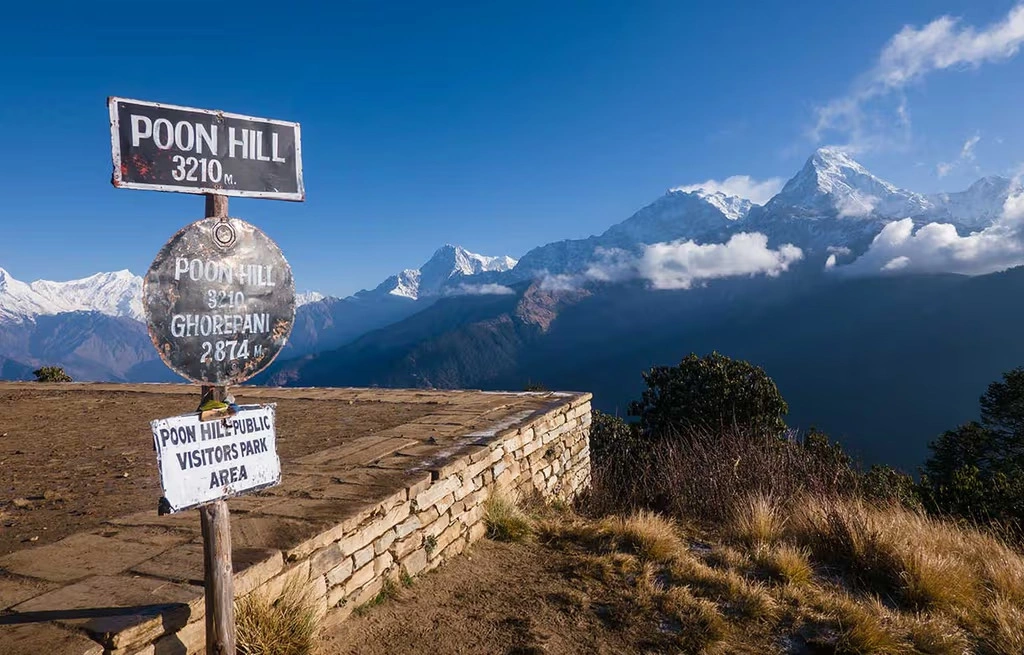
The best trek in Nepal for first-time trekkers is the Ghorepani Poon Hill Trek, a 4–5 day circuit reaching 3,210 meters with moderate daily elevation gain, reliable teahouse infrastructure, and outstanding Dhaulagiri and Annapurna panoramas. Trekkers seeking a longer challenge with higher altitude should consider Annapurna Base Camp (10–12 days, 4,130 meters) or Langtang Valley (7–8 days, 3,870 meters).
Is Annapurna Base Camp Suitable for Beginners?
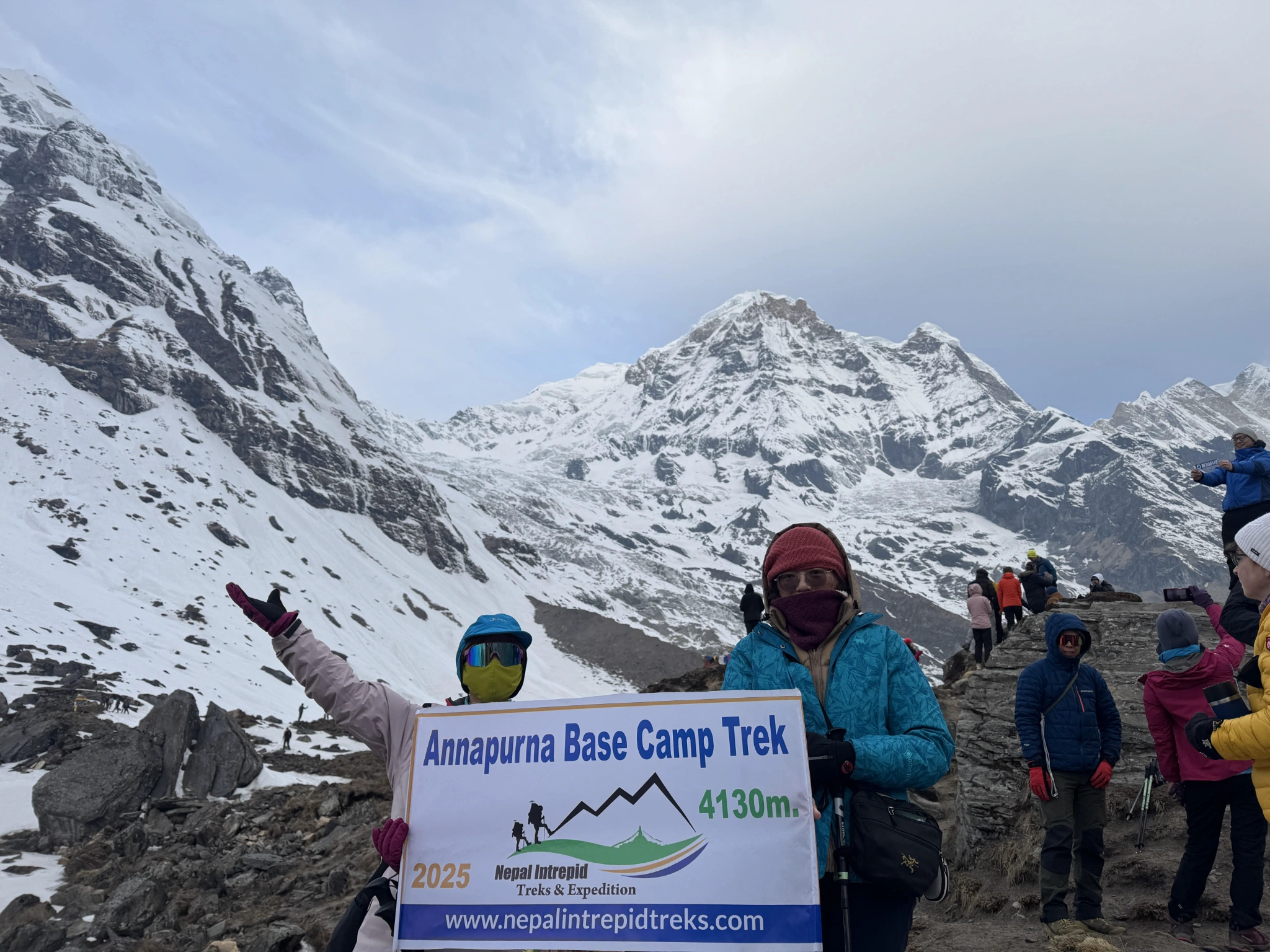
The Annapurna Base Camp Trek is suitable for beginners with good cardiovascular fitness and 10–12 days available. The trail ascends to 4,130 meters, reaching the glacial amphitheater surrounded by 7,000+ meter peaks including Annapurna I, Machhapuchchhre, and Hiunchuli.
The key consideration for beginners at ABC: the final ascent from Machapuchare Base Camp (3,700m) to ABC (4,130m) covers 430 meters of elevation gain in a single morning. Trekkers without prior altitude experience above 3,500 meters sometimes experience mild AMS (Acute Mountain Sickness) symptoms here. Building a rest day at Chhomrong (2,170m) reduces this risk significantly.
Daily walking distances on the ABC route average 5–7 hours across 12–16 km sections, demanding but achievable for anyone who trains consistently for 8–12 weeks before departure.
Is Ghorepani Poon Hill Trek Easier for First-Timers?
The Ghorepani Poon Hill Trek is the easiest major trek in Nepal for first-timers, operating at a maximum altitude of 3,210 meters across 4–5 days with 10–15 km of daily walking. The trail runs through Rhododendron forest corridors between Nayapul and Ghorepani, ascending gradually through Tikhedhunga, Ulleri, and Banthanti.
The pre-dawn summit push to Poon Hill (3,210m) from Ghorepani (2,860m) takes 45–60 minutes and rewards trekkers with a 270-degree panorama of Dhaulagiri (8,167m), Annapurna South (7,219m), Hiunchuli (6,441m), and Machhapuchchhre (6,993m) at sunrise.
What most guides omit: the Ulleri staircase, a 3,200-step stone ascent from Tikhedhunga (1,540m), is psychologically the hardest section for unprepared beginners despite being relatively short in distance. Trekkers who know this in advance pace themselves through it without panic.
Is Langtang Valley Trek a Good First Himalayan Trek?
The Langtang Valley Trek is an excellent first Himalayan trek for trekkers based in Kathmandu, covering 7–8 days with a maximum altitude of 3,870 meters at Kyanjin Gompa. The trailhead at Syabrubesi is a 7-hour bus ride from Kathmandu, making it the most accessible major trek without a domestic flight.
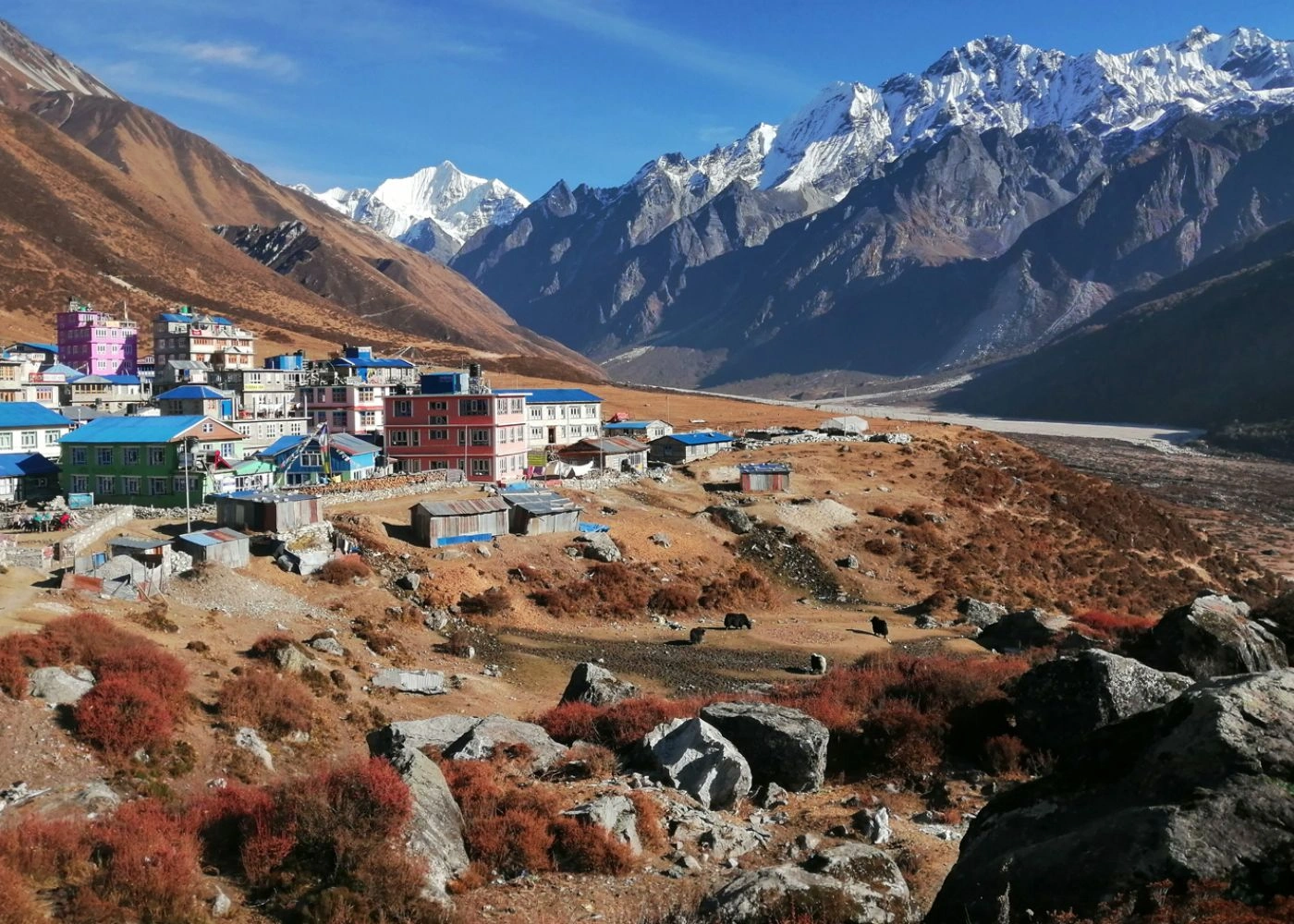
The 2015 earthquake destroyed the original Langtang village, and the rebuilt settlement now serves as both a cultural site and a moving memorial. Trekkers walking this route engage with a community still rebuilding, an experience that carries emotional and historical weight beyond standard trekking.
Kyanjin Ri (4,773m) above Kyanjin Gompa is an optional day hike that experienced beginners attempt on acclimatization rest days. It offers one of the closest views of Langtang Lirung (7,227m) available without technical climbing equipment.
Should Beginners Consider Everest Base Camp Trek?
Beginners with strong fitness and 14–16 days available can complete the Everest Base Camp Trek, but it carries higher altitude risk than Annapurna or Langtang routes due to its 5,364 -meter summit elevation. The Khumbu region's baseline altitude - the trail begins at Lukla (2,860m) after a 35-minute mountain flight - means trekkers start higher than the summit of most Annapurna beginner routes.
EBC demands 2 mandatory acclimatization days (at Namche Bazaar, 3,440m, and Dingboche or Pheriche, 4,200–4,280m), adding non-negotiable rest days that many budget-conscious beginners underestimate. The return journey via Gorak Shep to Lukla requires 5 descending days of knee-intensive downhill terrain.
Recommendation for beginners: complete one lower-altitude Nepal trek (Poon Hill or Langtang) before attempting EBC. The altitude experience is not something fitness training fully replicates, understanding your body's actual response to thin air at 3,500+ meters is irreplaceable preparation.
When Is the Best Time to Trek in Nepal for Beginners?
The best trekking seasons in Nepal for beginners are October to November (autumn) and March to May (spring), when trails are dry, mountain views are consistently clear, and teahouses operate at full capacity. These two windows represent Nepal's primary trekking seasons and align with stable weather patterns between the monsoon and winter periods.
Why Is Spring Ideal for First-Time Trekkers?
Spring (March–May) delivers warm daytime temperatures between 10°C and 20°C at mid-elevations, full rhododendron bloom across trail corridors, and excellent pre-monsoon visibility. March and April are peak blooming months in the Annapurna and Langtang regions, where over 30 species of rhododendron, Nepal's national flower, color the forest canopy.
Temperature ranges in spring: Pokhara base (24°C average), Ghorepani (8–12°C), Annapurna Base Camp (0–5°C daytime, -10°C at night). Layering strategies must account for this 34°C differential across a single trek.
Late May brings pre-monsoon instability. Afternoon cloud buildup after 13:00 is normal, and smart trekkers begin daily walking by 06:00–07:00 to summit viewpoints before cloud obstruction.
Is Autumn Better Than Spring for Clear Mountain Views?
Autumn (October–November) delivers the clearest mountain visibility of any season in Nepal. A peer-reviewed ARIMA forecasting study of Nepal tourist arrivals, found that November records the highest monthly tourist arrivals of the year (132,116), with October also running well above the annual average, confirming that October and November are Nepal's busiest trekking months.
The trade-off: October and November are Nepal's busiest trekking months. Popular teahouses on the Poon Hill and EBC routes book out 1–2 months in advance. First-time trekkers who arrive in October without reservations risk sleeping in dining rooms or walking extra hours to less-congested villages.
November becomes progressively colder above 3,500 meters. Night temperatures at Annapurna Base Camp drop to -15°C to -20°C in late November, manageable with proper sleeping bags rated to -10°C comfort, but a genuine risk for trekkers who underpack.
Should Beginners Avoid Monsoon or Winter Treks?
Beginners should avoid June through September (monsoon) and December through February (winter) as primary trekking periods, though both seasons have specific exceptions.
Monsoon season brings 4 specific hazards for beginners: leeches on lower trails below 2,500m, trail erosion and landslide risk on steep sections, limited mountain visibility due to cloud cover, and humidity levels that degrade gear and footwear rapidly. The Mustang region (Upper Mustang) is a rain-shadow exception, it sits north of the Annapurna massif and receives minimal monsoon rainfall, making it a viable alternative for adventurous beginners.
Winter trekking (December–February) is viable on lower routes like Poon Hill but becomes genuinely dangerous above 3,500 meters, where snowpack and icy trails create fall risk without crampons or microspikes. Beginner trekkers who attempt ABC or EBC in January without appropriate footwear add technical mountaineering risk to a non-technical route.
How Fit Do You Need to Be for Your First Trek in Nepal?
First-time trekkers in Nepal need aerobic fitness sufficient for 5–7 hours of continuous uphill walking per day, carrying a 7–10 kg daypack, across 7–12 consecutive days. This is not elite athletic performance, it is sustained moderate exertion that most adults can achieve with 8–12 weeks of structured preparation.
What Level of Endurance Is Usually Required?
The endurance baseline for Nepal trekking requires the ability to walk 12–16 km daily with 600–1,000 meters of ascent, maintaining pace across multiple consecutive days without recovery days at lowland altitudes. Cardiovascular efficiency, not muscle strength, determines success above 3,000 meters.
The practical test: if you can comfortably complete a 3-hour stair-intensive hike at home without requiring the next day for recovery, your baseline fitness is sufficient for Poon Hill. For Annapurna Base Camp or Langtang, extend that test to back-to-back days.
Altitude changes the equation. At 3,500 meters, air oxygen partial pressure drops to approximately 65% of sea-level values. A fit trekker who runs 10 km three times per week at sea level will notice breathing effort increase significantly at this elevation, not because fitness declined, but because the atmosphere delivers less oxygen per breath.
How Can You Prepare Physically Before Arrival?
Physical preparation for a Nepal trek centers on 3 training pillars: cardiovascular endurance, leg strength for descent loading, and loaded pack habituation. Begin training 10–12 weeks before departure for beginner routes, and 16 weeks for high-altitude routes like EBC.
The most overlooked preparation: downhill training. Descending 1,500 meters over 4–5 hours loads the quadriceps eccentrically in ways that flat-ground or gym training does not replicate. Trekkers who train only on uphill sections consistently report severe quad soreness during the descent phases of ABC and EBC, sometimes forcing rest days that disrupt return flight schedules.
What Training Should You Start Before the Trek?
The 12-week training plan for Nepal trekking beginners includes 4 progressive phases:
Weeks 1–3 (Base Building): 3 walks per week at 60–90 minutes on flat terrain, progressing to light hills. Daily step count target: 10,000–12,000 steps.
Weeks 4–6 (Elevation Introduction): 2 hilly walks per week with 300–500m cumulative ascent, plus 1 stair session. Begin carrying a 5 kg daypack.
Weeks 7–9 (Load Progression): Back-to-back hiking days on weekends (Saturday + Sunday), increase pack weight to 8 kg. Add 1 longer walk of 4–5 hours mid-week.
Weeks 10–12 (Peak Simulation): 3 consecutive hiking days once during this phase. Practice full Nepal gear setup. Include a timed stair climb to simulate the Ulleri steps or similar sustained ascent.
Strength training supports this plan but does not replace it. Squats, lunges, and single-leg step-ups build the structural leg strength needed for steep descent loading. Knee health deserves specific attention, trekking poles reduce knee joint load by up to 25% on descents, making them training equipment, not just trail accessories.
Trekking poles reduce knee joint load and lower-extremity joint loading by up to 16% on descents, according to a systematic review of gait-lab studies published in Wilderness & Environmental Medicine, making them training equipment, not just trail accessories.
What Permits and Rules Should First-Time Trekkers Know?
First-time trekkers in Nepal require 2 to 3 permits depending on the trekking region: a TIMS card (Trekkers' Information Management System), and at least 1 conservation area or national park permit. Some restricted routes like Upper Mustang and Manaslu Circuit require additional special permits issued through registered trekking agencies.
Which Trekking Permits Are Required?
The standard permit requirements for Nepal's major beginner routes are as follows:
Trek | TIMS Card | Conservation/Park Permit | Special Permit |
Poon Hill (Ghorepani) | Yes | ACAP (Annapurna Conservation Area Project) | No |
Annapurna Base Camp | Yes | ACAP | No |
Langtang Valley | Yes | Langtang National Park | No |
Everest Base Camp | Yes | Sagarmatha National Park | No |
Upper Mustang | Yes | ACAP | Yes (USD 50 per day) |
For general trekking areas, TIMS cards are issued through NTB and TAAN offices and government-registered trekking companies in Kathmandu and Pokhara; restricted-area trekking permits must be obtained from the Department of Immigration in Kathmandu. Passport photos (2 copies) and passport copies are required for all permit applications.
How Do TIMS and Conservation Permits Work?
The TIMS card (Trekkers' Information Management System) is a safety registration system that logs trekker identity, route, and emergency contact details into a national database. TIMS cards cost NPR 2,000 (approximately USD 15) for individual trekkers and NPR 1,000 for trekkers using registered agencies.
Conservation area permits, such as the ACAP permit for Annapurna, fund trail maintenance, waste management, and conservation programs within protected zones. The ACAP permit costs NPR 3,000 (approximately USD 22). Sagarmatha National Park (Everest region) permits cost NPR 3,000 as well.
Permit checkpoints appear at multiple points along all major trails. Checkpoint staff record permit numbers and trekker details, this data is how rescue teams locate missing or overdue trekkers. Carrying permits in a waterproof document holder and photographing them on a phone provides critical backup.
What Recent Trekking Regulations Affect Beginners?
Nepal's trekking regulations have evolved in 3 significant ways affecting beginners:
Mandatory Guide Requirement (2023): The Nepal government mandated that solo trekkers on major routes hire a licensed guide. This regulation, designed to improve trekker safety and reduce disappearance incidents, primarily affects independent budget trekkers. As of 2024, enforcement varies by region but is stricter on EBC and Annapurna Circuit routes.
Plastic Ban: Single-use plastic bottles are prohibited inside all national parks and conservation areas. Trekkers carry reusable water bottles and use water purification tablets or UV purifiers (SteriPen devices) at teahouses. Teahouses sell boiled water refills for NPR 50–150 per liter.
Waste Management Deposits: Some restricted areas require a refundable waste management deposit (USD 200–500) collected through registered agencies to ensure trekkers carry out all non-biodegradable waste.
What Gear Should First-Time Trekkers Pack for Nepal?
First-time trekkers in Nepal need 4 gear categories: weather-appropriate layering clothing, trekking-specific footwear and equipment, health and safety essentials, and trail comfort items. The total pack weight for a teahouse trek should not exceed 9–11 kg in the main backpack, with daily essentials transferred to a 20–25L daypack carried on trail.
Which Clothing Is Essential for High-Altitude Weather?
Essential clothing for Nepal trekking uses a 3-layer system: a moisture-wicking base layer, an insulating mid-layer, and a waterproof/windproof outer shell. This system adapts to the 20–34°C temperature variation between trailhead and summit elevations on most beginner routes.
The 8 non-negotiable clothing items for Nepal trekking:
Moisture-wicking base layers (2 tops, 2 bottoms): merino wool or synthetic, never cotton
Insulating mid-layer: 600-fill-power down jacket or synthetic equivalent rated to -5°C
Waterproof hardshell jacket: Gore-Tex or equivalent, taped seams
Waterproof hardshell trousers: packable, fits over trekking pants
Trekking trousers (2 pairs): convertible zip-off style for temperature management
Warm hat and balaclava: for above 3,500 meters in any season
Liner gloves + warm outer gloves: double-layer system for cold pre-dawn summit hikes
Wool or synthetic trekking socks (4–6 pairs): Darn Tough, Smartwool, or equivalent; no cotton
What Trekking Equipment Should You Not Skip?
The 7 pieces of trekking equipment that beginners most commonly skip, and regret skipping:
Trekking poles: Reduce knee load by up to 25% on descents and provide trail stability on wet or loose terrain. Adjustable aluminum or carbon fiber poles (Black Diamond, Leki) are the standard.
Headlamp with spare batteries: Pre-dawn Poon Hill summit hikes begin at 04:00–05:00. Power outages are common in mountain teahouses. A 200–400 lumen headlamp (Petzl Actik, Black Diamond Spot) is essential.
Water purification: UV purifier (SteriPen) or iodine tablets eliminate Giardia and bacterial contamination from stream or tap sources on trail.
Sleeping bag liner: Many teahouses provide blankets but not sleeping bags. A silk or fleece liner adds 3–8°C warmth and provides a hygiene barrier.
Blister prevention kit: Leukotape and thin liner socks prevent hot spots during the first 3 days before feet adapt to boots.
Sunscreen SPF 50+ and UV-blocking sunglasses: UV radiation increases approximately 4% per 300-meter elevation gain. At 4,000 meters, UV exposure is roughly 50% more intense than at sea level.
Diamox (Acetazolamide) with medical consultation: A prescribed altitude sickness preventive medication recommended by many wilderness medicine physicians for trekkers ascending above 3,000 meters.
What Common Packing Mistakes Should Beginners Avoid?
The 5 most common packing mistakes made by first-time Nepal trekkers are:
Overpacking clothing: Trekkers routinely pack 10–14 days of clothing for a 7-day trek. Teahouses provide laundry service for NPR 200–400 per load. Pack 3–4 days of clothes maximum.
Bringing new boots on the trail: Unbroken boots cause blisters within the first 2 days. Boots require 40–60 hours of break-in time on varied terrain before a Nepal trek.
Skipping a daypack: Trekkers who carry a single large pack cannot send luggage ahead to the next teahouse via porter or yak. A 20–25L daypack carried on trail with essentials is the operational standard.
Underestimating cold at altitude: A t-shirt trekker who packs insufficiently for the -10°C Annapurna Base Camp night is not a frugal packer, they are a safety risk. The insulating layer and sleeping bag are non-negotiable regardless of season.
Forgetting cash: ATMs exist in Namche Bazaar (EBC route) and Pokhara but not in higher villages. Most teahouses above 3,000 meters operate cash-only. Carry sufficient Nepali Rupees (NPR) for 3–4 days of accommodation and meals beyond the last ATM point.
How Can First-Time Trekkers Stay Safe in Nepal?
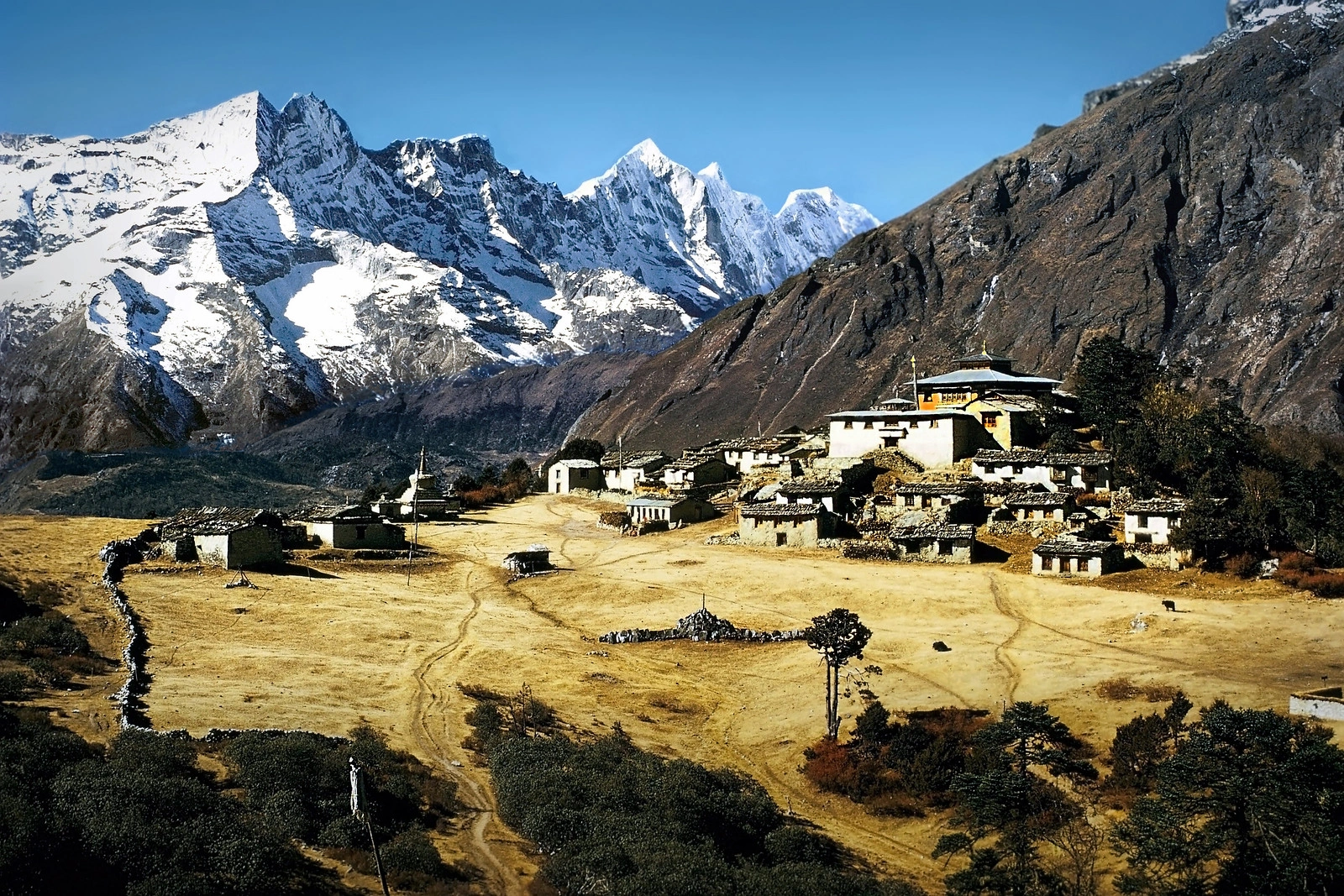
First-time trekkers in Nepal stay safe by following 3 core safety protocols: ascending gradually to prevent altitude sickness, monitoring weather conditions before and during each walking day, and registering with emergency contact systems before departure. Nepal's major trekking routes have well-established rescue infrastructure, but the terrain between rescue points demands self-sufficiency.
What Is Altitude Sickness and How Can You Prevent It?
Altitude sickness in the Himalaya is a physiological response to reduced oxygen availability above 2,500 meters, characterized by headache, nausea, fatigue, dizziness, and disturbed sleep. AMS develops when the rate of ascent exceeds the body's capacity to acclimatize, not when a specific altitude is reached.
The ascent-rate protocol behind this guidance comes from the 2024 Wilderness Medical Society Clinical Practice Guidelines for Acute Altitude Illness, co-authored with Himalayan Rescue Association physicians: ascend no more than 300–500 meters of sleeping altitude per day above 3,000 meters, with one rest day for every 1,000 meters of cumulative gain.
The universally accepted acclimatization rule: ascend no more than 300–500 meters of sleeping altitude per day above 3,000 meters, with one rest day inserted for every 1,000 meters of cumulative gain. On the EBC route, this translates to the mandatory acclimatization days at Namche (3,440m) and Dingboche (4,410m).
AMS prevention involves 4 evidence-based strategies:
Ascend slowly: Follow the 300–500m daily sleeping altitude rule without shortcuts
Hydrate consistently: 3–4 liters of water per day reduces AMS risk; dehydration accelerates symptoms
Avoid alcohol and sedatives above 3,000m: Both suppress respiratory drive, reducing overnight oxygen uptake
Recognize warning signs early: Persistent headache not relieved by ibuprofen, vomiting, confusion, or loss of coordination indicate progression toward High Altitude Cerebral Edema (HACE), a life-threatening condition requiring immediate descent
Diamox (Acetazolamide, 125–250mg twice daily) is prescribed by wilderness medicine physicians as a prophylactic for high-risk ascent profiles. It accelerates acclimatization by stimulating increased respiratory rate. Trekkers with sulfa drug allergies cannot take Diamox and require alternative protocols.
The golden rule of altitude: if symptoms worsen at the same altitude, descend immediately. Descent of 500–1,000 meters typically resolves AMS symptoms within hours.
How Should You Handle Weather and Trail Risks?
Nepal's mountain weather operates on a predictable diurnal cycle during trekking seasons: clear mornings from 05:00–12:00, cloud buildup from noon onward, and afternoon/evening weather events including rain, snow above 4,000m, or thunderstorms in pre-monsoon periods. Starting each day's walking by 06:00–07:00 maximizes clear-weather trekking hours and summit viewpoint windows.
4 specific trail risks that beginners underestimate:
Suspension bridge crossings: Nepal's trails cross numerous suspension bridges over river gorges. Most are engineered for multiple simultaneous users, but mountain bridges warrant single-file crossing, especially during high winds.
Loose rock on steep descents: Wet or frost-covered loose rock above 3,500m creates genuine slip risk. Trekking poles and a slow, deliberate foot placement prevent most falls.
Trail congestion with livestock: Yak and mule trains have right-of-way on all Nepal trails. Position yourself on the uphill (mountain) side when livestock pass, moving to the cliff side risks being pushed over the edge.
Sun exposure at high altitude: Snow blindness (photokeratitis) develops within 1–2 hours of unprotected UV exposure on snow-covered terrain. Category 4 UV-blocking sunglasses (glacier glasses) are essential above 4,000m during spring.
What Emergency Support Is Available on Popular Routes?
Nepal's major trekking routes have 4 layers of emergency support infrastructure: teahouse first aid, ACAP/park checkpoint notification systems, Himalayan Rescue Association (HRA) aid posts, and helicopter rescue services.
The Himalayan Rescue Association operates aid posts at 2 critical high-altitude locations:
Manang (3,519m) on the Annapurna Circuit
Pheriche (4,240m) on the EBC route
Both posts are staffed by volunteer physicians during peak trekking seasons; the Himalayan Rescue Association's own trekker brochure, recommends 3–4 liters of fluid intake per day and explicitly warns against sedatives and alcohol at altitude as part of its four golden rules of AMS prevention.
Helicopter evacuation in Nepal costs USD 3,000–6,000 per rescue, a figure that makes trekking insurance with helicopter evacuation coverage non-negotiable. Standard travel insurance rarely covers high-altitude rescue. Policies from providers such as World Nomads, True Traveller, or Global Rescue specifically address Himalayan rescue scenarios and are recommended for all Nepal trekkers.
Should First-Time Trekkers Hire a Guide or Porter in Nepal?
First-time trekkers in Nepal benefit significantly from hiring a licensed guide, and the 2023 government mandate on major routes formalizes this recommendation into regulation. A licensed guide provides route navigation, teahouse booking assistance, altitude monitoring, cultural interpretation, and emergency coordination, functions that inexperienced trekkers cannot reliably self-manage.
What Are the Benefits of Trekking With a Guide?
Trekking with a licensed guide in Nepal delivers 5 measurable advantages:
Altitude safety monitoring: Experienced guides recognize early AMS symptoms before trekkers self-report them and enforce descent decisions without negotiation
Teahouse negotiation and booking: Peak season teahouses on popular routes fill by afternoon; guides with relationships book preferred rooms in advance
Trail knowledge at junctions: Many Nepal trails have poorly marked junctions where wrong turns add 2–5 hours of extra distance; guides eliminate navigation errors
Cultural access: Guides from local ethnic communities (Sherpa, Gurung, Tamang) provide access to monastery visits, village customs, and conversations that independent trekkers cannot replicate
Emergency coordination: A guide who speaks Nepali and knows the local rescue network dramatically accelerates emergency response time
Licensed guides are certified by the Nepal Tourism Board and carry photo identification. Guide rates average USD 25–40 per day including food and accommodation costs covered by the trekker.
When Is Hiring a Porter Worth It?
Hiring a porter is worth it when the trekker's pack weight exceeds 9–10 kg or when any physical limitation makes carrying a heavy pack a safety concern during ascent or descent. Porters carry loads of 20–25 kg on most routes, typically transporting the trekker's main backpack while the trekker carries only a 20–25L daypack with daily essentials.
Porter rates range from USD 15–25 per day, including their own food and accommodation covered by the trekking party. Ethical porter treatment, providing adequate clothing for altitude, ensuring they sleep in warm accommodation, and not exceeding weight limits, is both a legal obligation and a professional standard in Nepal's trekking industry.
A combined guide-porter, one person who guides and carries, works for parties of 1–2 trekkers on shorter routes but becomes logistically limiting on longer treks where the guide's primary role is safety and navigation, not load-bearing.
Can Beginners Trek Independently in Nepal?
Independent trekking in Nepal, without a guide, remains physically possible on non-restricted routes, though the 2023 guide mandate limits legal solo trekking on most major circuits. The practical reality: independent trekkers on clear routes like Poon Hill face minimal navigation challenges but lose the altitude safety monitoring and emergency coordination that guides provide.
The 4 routes where independent trekking carries the highest risk for beginners are high-altitude or technical approaches: Everest Base Camp above Namche, Annapurna Circuit above Thorong La (5,416m), Mera Peak approaches, and any restricted area route. On these routes, the guide requirement is not bureaucratic formality, it reflects documented rescue incident patterns.
How Much Does a First Trek in Nepal Cost?
A first trek in Nepal costs USD 800–1,800 total for a 7–10 day beginner route, including international flights, permits, guide/porter, accommodation, food, and gear. The variance reflects route choice, guide arrangement, accommodation preference, and pre-existing gear ownership.
What Is the Typical Budget for a Beginner Trek?
The per-day cost breakdown for a beginner teahouse trek in Nepal (excluding international flights and gear):
Expense Category | Budget Range (USD/day) |
Teahouse accommodation | 5–15 |
Meals (breakfast, lunch, dinner) | 15–25 |
Guide fee | 25–40 |
Porter fee (optional) | 15–25 |
Bottled/boiled water | 3–8 |
Miscellaneous (tips, snacks, charging fees) | 3–7 |
Daily total (with guide, no porter) | 51–95 |
A 7-day Poon Hill trek with a guide costs approximately USD 360–665 in on-trail expenses. Adding permits (TIMS + ACAP: ~USD 37) brings the trail total to USD 400–700. Kathmandu accommodation (2–3 nights pre/post trek at USD 15–50/night) and domestic transport add USD 100–200.
Which Costs Are Often Overlooked?
The 5 most consistently overlooked costs in first-time Nepal trekking budgets are:
Gear purchase or rental: A complete trekking kit (boots, jacket, poles, sleeping bag liner, pack) from scratch costs USD 400–900 if purchased new. Thamel district in Kathmandu offers rental gear at USD 1–5 per item per day.
Trekking insurance: A 14-day Nepal trek policy with helicopter evacuation coverage costs USD 80–150, often budgeted as an afterthought rather than a core expense.
Teahouse electricity and Wi-Fi fees: Charging phones and camera batteries at teahouses above 3,000m costs NPR 200–400 per charge. Wi-Fi vouchers cost NPR 500–800 for limited data access.
Guide and porter tips: The industry standard tip is USD 5–10 per day for guides and USD 3–7 per day for porters. On a 7-day trek, this adds USD 35–70 per guide.
Kathmandu pre-trek costs: Permit processing, gear shopping, visa fees (USD 30–50), and 1–3 pre-trek Kathmandu nights accumulate quickly for trekkers who budget only for trail expenses.
How Can You Save Money Without Risking Comfort?
4 legitimate strategies to reduce Nepal trek costs without compromising safety or experience:
Rent gear in Kathmandu's Thamel district instead of buying: Down jackets, sleeping bags, trekking poles, and boots are available for USD 1–5/day, reducing gear expenditure by 60–80% for trekkers without existing kit.
Travel during shoulder season (late September or late November): Accommodation rates are 20–30% lower than peak October, and trail congestion is significantly reduced.
Join a small group trek through a Kathmandu agency: Group permits and shared guide costs reduce per-person expenses by USD 100–200 versus a private arrangement.
Book teahouses directly on arrival for lower routes: Ghorepani and Langtang routes below 3,500m have sufficient capacity outside of peak October weeks that walk-in bookings succeed without guide-arranged reservations.
Never cut costs on trekking insurance, guide licensing verification, or altitude medicine access. These three items represent a combined cost of USD 120–200 and protect against consequences that cost 20–50x more when things go wrong.
How Should You Plan Your First Trekking Experience in Nepal?
Planning a first trekking experience in Nepal follows a structured 6-step sequence: route selection based on fitness and timeline, seasonal timing confirmation, permit and guide arrangement, gear preparation, physical training, and pre-departure safety registration. Beginning this sequence 3–4 months before departure ensures no critical element is rushed or omitted.
Can Nepal Tourism Board Resources Help You Prepare?
The Nepal Tourism Board (NTB) provides 4 categories of officially verified planning resources:
Route maps and permit information at ntb.gov.np: updated seasonally with current trail conditions and permit fee schedules
Licensed guide and agency verification: the NTB maintains a searchable database of licensed trekking agencies and individual guides that allows trekkers to confirm credentials before hiring
Travel advisories: the NTB coordinates with the Department of Immigration and Tourism Ministry to publish route closures, weather warnings, and safety alerts
Trekker registration: the TIMS system, managed through NTB offices in Kathmandu and Pokhara, registers trekker details into a national safety database
Beyond NTB, the Himalayan Rescue Association (himalayanrescue.org) publishes altitude sickness prevention protocols authored by wilderness medicine physicians. Reading their Altitude Sickness Prevention document before departure takes 20 minutes and directly reduces AMS risk on the trail.
What Are the Key Takeaways for First-Time Trekking in Nepal?
First-time trekking in Nepal is accessible, transformative, and manageable when approached with the right information and preparation. The 8 most critical decisions that determine a successful first Nepal trek are:
Choose a route matched to your current fitness level, not your aspirational fitness level. Poon Hill for moderate beginners, ABC for fit beginners, EBC only after prior altitude experience.
Trek in October–November or March–May, these two windows provide the safety, visibility, and infrastructure conditions that make beginner trekking viable.
Train specifically for 10–12 weeks before departure, prioritizing back-to-back hiking days and downhill descent loading over gym sessions.
Secure all required permits before entering the trail, TIMS card, conservation or national park permit, and special permits where applicable.
Hire a licensed, NTB-registered guide, both legally required on major routes and genuinely valuable for safety, navigation, and cultural experience.
Pack the 3-layer clothing system and non-negotiable safety gear; review our Nepal trekking equipment checklist for trekking poles, headlamp, water purification, and appropriate insulation for the altitude profile of your route.
Follow the 300–500m daily altitude gain rule strictly; no itinerary shortcut justifies ascending faster than acclimatization physiology allows.
Purchase trekking insurance with helicopter evacuation coverage before departure, treating this as optional is the most common and consequential mistake first-time Nepal trekkers make.
Nepal rewards the prepared. The trails, the mountain views from Poon Hill at sunrise, the glacial silence of Annapurna Base Camp, and the cultural depth of a Sherpa village above 3,500 meters are experiences that justify every kilometer of preparation training.
Start with the route that fits where you are today. The Himalayas will be there for every trek that follows.