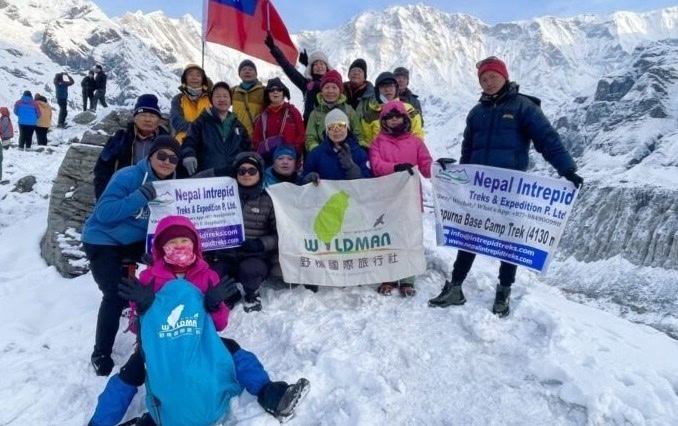
Nepal is one of the world’s most geographically and culturally diverse travel destinations, combining Himalayan mountains, ancient civilizations, rare wildlife ecosystems, and adventure tourism within a single country between India and China. Home to Mount Everest and 8 of the world’s 14 peaks above 8,000 meters, Nepal attracts travelers seeking Everest Base Camp trekking, Annapurna hiking routes, Himalayan landscapes, and high-altitude adventure experiences that cannot be replicated elsewhere in South Asia. Beyond the mountains, Nepal contains 142 ethnic groups, 124 spoken languages, UNESCO World Heritage Sites, medieval temple cities, and sacred Buddhist and Hindu pilgrimage centers that create one of Asia’s richest concentrations of living cultural heritage.
Travelers visit Nepal for far more than trekking. Kathmandu Valley’s historic architecture, Pokhara’s lakeside adventure sports, Lumbini’s Buddhist significance, Chitwan National Park’s Bengal tiger and one-horned rhinoceros safaris, and Mustang’s Tibetan-influenced desert landscapes position Nepal as a complete travel destination for culture, spirituality, wildlife, and nature exploration. Affordable travel costs, extensive teahouse trekking networks, year-round tourism infrastructure, and welcoming local communities make Nepal accessible to both budget travelers and luxury visitors. From Himalayan expeditions and wildlife encounters to spiritual journeys and cultural immersion, Nepal delivers an unmatched density of travel experiences within a compact Himalayan nation.
What Makes Nepal a Unique Travel Destination?
Nepal is unique as a travel destination because it combines 8 of the world's 14 peaks above 8,000 meters, 142 officially recognized ethnic groups, and 4 UNESCO World Heritage Sites within a geographic range that transitions from 60 meters above sea level in the Terai plains to 8,848.86 meters at the summit of Mount Everest.
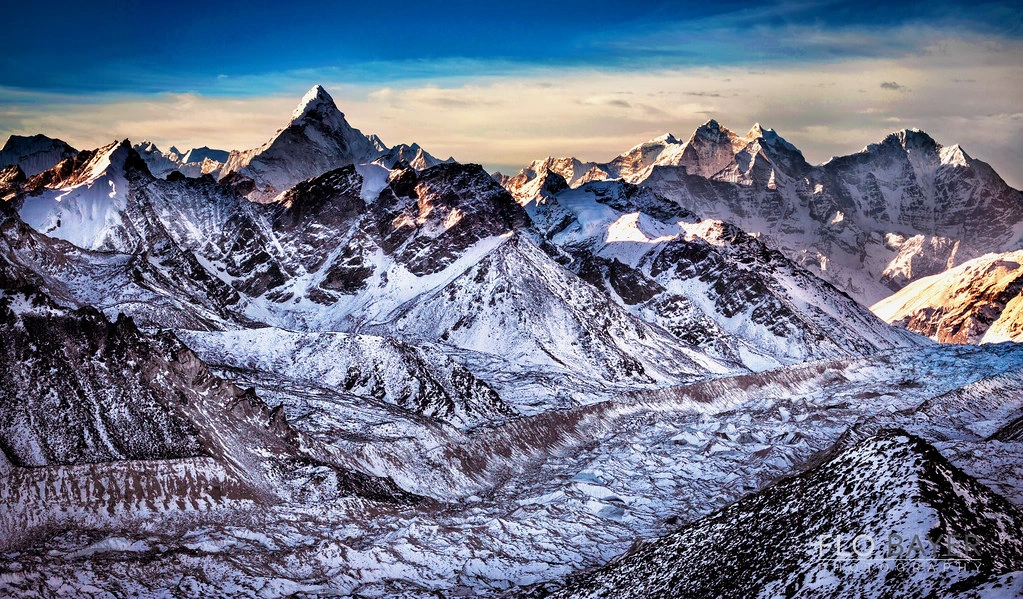
Nepal (formally: the Federal Democratic Republic of Nepal) is a sovereign nation established in its current constitutional form in 2015. It occupies a 147,516 -square-kilometer territory along the southern slopes of the Himalayas. Nepal borders the Tibet Autonomous Region of China to the north and India to the east, south, and west.
This geographic position creates 3 distinct ecological zones within one country:
Terai Zone: flat, subtropical lowlands at 60–300 meters elevation, home to Chitwan National Park and Lumbini
Hill Zone: mid-altitude terrain at 1,000–3,000 meters, containing Kathmandu Valley and Pokhara
Himalayan Zone: alpine and glacial terrain at 3,000–8,848 meters, containing Sagarmatha and Langtang National Parks
Nepal recorded 1,014,882 international arrivals in 2023, and NTB’s latest 2026 reports show 92,573 arrivals in January and 105,441 in February.
No other country in the world concentrates altitude diversity, ethnic plurality, and wildlife density within a comparable land area.
Why Is Nepal Famous for the Himalayas and Mount Everest?
Nepal is famous for the Himalayas because 8 of the world's 14 eight-thousanders, peaks exceeding 8,000 meters, stand within its borders, including Mount Everest at 8,848.86 meters, the highest point on earth's surface, confirmed by a joint China-Nepal geodetic survey in December 2020.
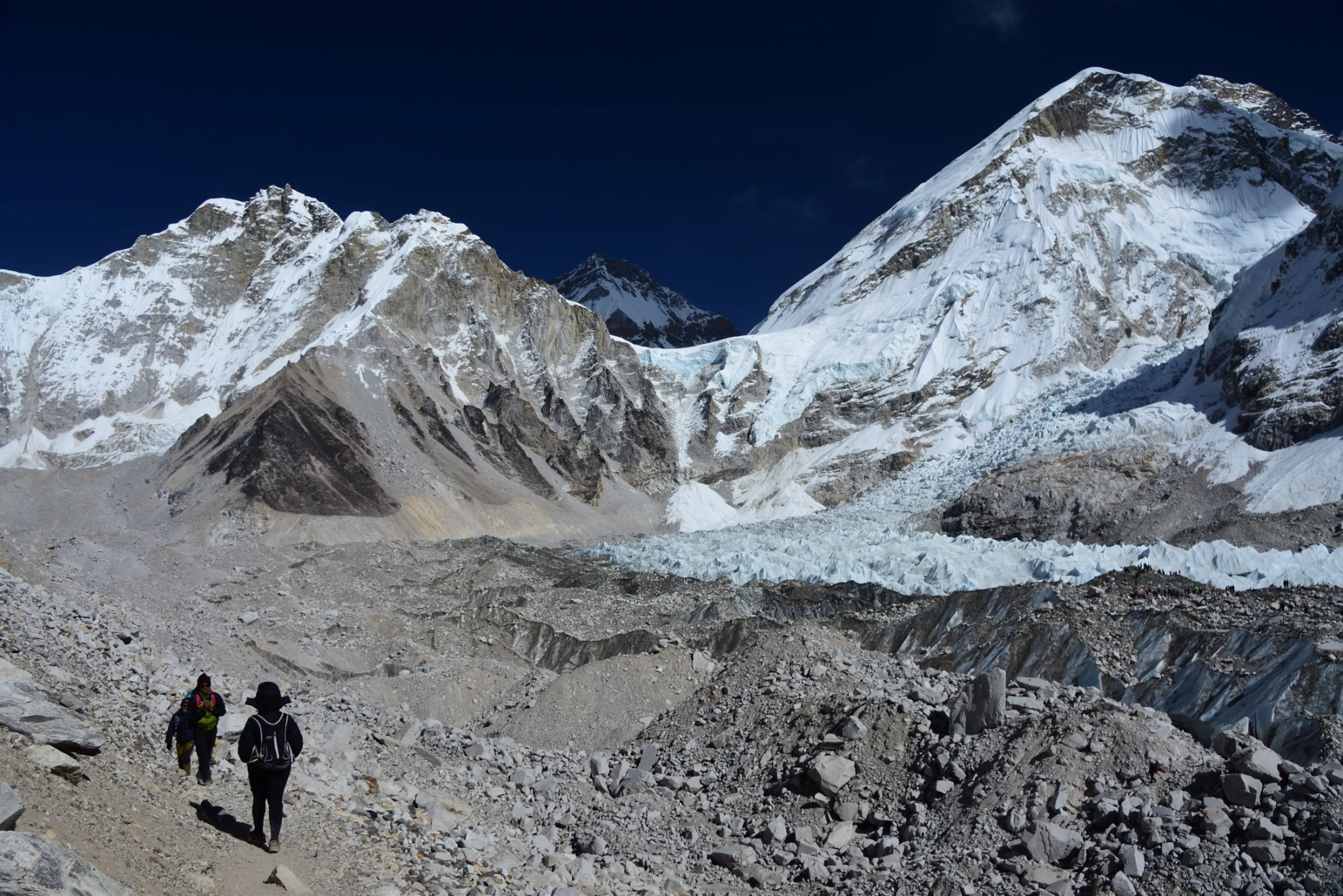
The Himalayas (Sanskrit origin: "hima" meaning snow and "ālaya" meaning abode; first documented as a mountain range descriptor by Indian scholars circa 400 BCE) form a 2,400-kilometer arc across South Asia. Nepal contains the densest concentration of Himalayan peaks on the range.
The 8 eight-thousanders located fully or partially in Nepal are:
Mount Everest: 8,848.86 m (Sagarmatha Zone, Solukhumbu District)
Kangchenjunga: 8,586 m (Taplejung District, Nepal-India border)
Lhotse: 8,516 m (Solukhumbu District)
Makalu: 8,485 m (Sankhuwasabha District)
Cho Oyu: 8,188 m (Solukhumbu District, Nepal-China border)
Dhaulagiri I: 8,167 m (Myagdi District)
Manaslu: 8,163 m (Gorkha District)
Annapurna I: 8,091 m (Kaski and Myagdi Districts)
Everest Base Camp on the southern (Nepali) side sits at 5,364 meters. Trekkers reach it without technical climbing equipment, making Himalayan proximity accessible to non-mountaineers.
According to the Department of Tourism of Nepal, 668 climbers summited Everest in the spring 2024 season alone, a record for a single season.
What Cultural Experiences Can You Expect in Nepal?
Nepal delivers 142 officially recognized ethnic cultures, 124 spoken languages, and a living heritage of Newari architecture, Tharu traditions, and Sherpa customs concentrated in Kathmandu Valley's 7 UNESCO-listed monument zones, all accessible within a single travel itinerary.
Nepal's cultural diversity (cultural diversity: the presence of multiple distinct ethnic groups, languages, and traditions within a single political territory) ranks among the highest per-capita concentrations in Asia.
The Nepal Census 2021 documented these primary ethnic clusters:
Chhetri: 16.6% of population (Indo-Aryan origin, predominantly Hindu)
Brahman-Hill: 12.2% of population (Indo-Aryan Brahmin lineage)
Magar: 7.1% of population (Tibeto-Burman origin, Buddhist and animist traditions)
Tharu: 6.6% of population (indigenous Terai plains communities)
Tamang: 5.8% of population (Tibeto-Burman, predominantly Buddhist)
Newar: 5.0% of population (Kathmandu Valley indigenous group, creators of Newari architecture)
The UNESCO World Heritage Sites of Nepal include the 7 monument zones of Kathmandu Valley: Pashupatinath Temple, Boudhanath Stupa, Swayambhunath, Changu Narayan, and the Durbar Squares of Kathmandu, Patan (Lalitpur), and Bhaktapur, all clustering within a 30-kilometer radius.
Newari architecture (Newari: architectural tradition developed by the Newar people of Kathmandu Valley, characterized by tiered pagoda structures, carved wooden lattice windows, and courtyard temple complexes dating to the 12th century CE) represents one of Asia's most intact pre-modern urban architectural traditions.
Festivals active in Nepal in 2026 include Indra Jatra (September), Tihar (October–November), Dashain (October), Holi (March), and Buddha Jayanti (May), each offering direct public participation for travelers.
How Does Nepal Offer Spiritual and Religious Experiences?
Nepal offers spiritual experiences at 4 UNESCO-listed sacred sites, Pashupatinath Temple, Lumbini, Boudhanath Stupa, and Swayambhunath, where Hindu cremation rituals, Buddhist pilgrimage circuits, and living monastic communities operate continuously and are openly accessible to international visitors.
Nepal holds significance in 2 of the world's major religions:
For Hinduism: Pashupatinath Temple (located in Kathmandu, established circa 5th century CE) is one of the 4 most sacred Shiva temples on earth. Daily cremation rituals (Antyesti) take place on the Bagmati River ghats adjacent to the main temple complex. The temple receives approximately 1 million Hindu pilgrims annually from Nepal, India, and the broader South Asian diaspora.
For Buddhism: Lumbini (located in Rupandehi District, southwestern Nepal) is the birthplace of Siddhartha Gautama, the historical Buddha, born circa 563 BCE. The Mayadevi Temple within Lumbini marks the exact birth location, confirmed by archaeological excavations in 1996 supervised by the UNESCO Lumbini Development Trust.
Boudhanath Stupa (Tibetan: Jangchub Chorten; height: 36 meters; base circumference: 100 meters) is the largest stupa in Nepal and the largest spherical stupa in the world. It serves as the center of Tibetan Buddhist exile culture in South Asia. Approximately 50 active monasteries surround the stupa within a 1-kilometer radius.
Swayambhunath Stupa, located 3 kilometers west of central Kathmandu at 77 meters above the valley floor, dates to the 5th century CE and integrates Hindu and Buddhist iconography, a physical representation of Nepal's syncretic religious tradition.
What Adventure Activities Can You Do in Nepal?
Nepal provides 7 categories of adventure activity, trekking, mountaineering, white-water rafting, paragliding, mountain biking, bungee jumping, and zip-lining, operating across 3 ecological zones, with 23 designated trekking routes regulated by the Department of Tourism and rivers graded up to Class V for rafting.
Adventure tourism in Nepal (adventure tourism: travel involving physical challenge, exposure to natural environments, and measurable risk within regulated frameworks) generated NPR 127 billion (approximately USD 955 million) in 2023, representing 31% of Nepal's total tourism revenue.
The 7 primary adventure categories available in Nepal in 2026:
Trekking: 23 regulated routes, ranging 3 days (Ghorepani Poon Hill) to 21+ days (Everest Base Camp)
Mountaineering: 414 peaks open for climbing under permit, including 8 eight-thousanders
White-water rafting: 12 commercially rafted rivers including Trishuli (Class III–IV) and Bhote Koshi (Class IV–V)
Paragliding: primary launch site at Sarangkot, Pokhara; average flight duration 30–45 minutes over Phewa Lake
Mountain biking: Annapurna Circuit, Mustang, and Kathmandu Valley routes totaling 800+ mapped kilometers
Bungee jumping: The Last Resort (144 meters above Bhote Koshi River, one of Asia's longest bungee drops)
Zip-lining: ZipFlyer Nepal at Sarangkot (1.8 km length, 120 km/h speed, 600-meter vertical drop)
Why Is Nepal Ideal for Trekking and Hiking?
Nepal is ideal for trekking because its 23 regulated routes pass through 10 national parks and 2 conservation areas, cover altitudes from 800 meters to 5,545 meters (Kala Patthar viewpoint), and include teahouse lodge networks that eliminate the need for tents or external catering on all major routes.
Trekking in Nepal (trekking: multi-day hiking on designated mountain trails with overnight stays at lodges, teahouses, or campsites, distinct from technical mountaineering) operates on a teahouse system developed across the Everest, Annapurna, and Langtang regions between 1960 and 1985.
The 5 most-trekked routes in Nepal by 2026 permit data:
Trek Route | Distance | Duration | Max Altitude | Difficulty |
Everest Base Camp | 130 km (round trip) | 14–21 days | 5,545 m (Kala Patthar) | Moderate–Strenuous |
Annapurna Circuit | 160–230 km | 15–21 days | 5,416 m (Thorong La Pass) | Moderate–Strenuous |
Annapurna Base Camp | 110 km (round trip) | 9–12 days | 4,130 m | Moderate |
Langtang Valley | 65 km (round trip) | 7–10 days | 3,870 m (Kyanjin Gompa) | Moderate |
Ghorepani Poon Hill | 45 km (circuit) | 3–5 days | 3,210 m | Easy–Moderate |
The above table presents route-specific data compiled from Nepal Tourism Board permit records and trekking agency databases active in 2026.
Trekking permits required in 2026:
TIMS Card (Trekkers' Information Management System): NPR 2,000 (approximately USD 15) for independent trekkers
Sagarmatha National Park Entry: NPR 15,000 (approximately USD 113) for non-SAARC nationals
Annapurna Conservation Area Entry: NPR 3,000 (approximately USD 23) for non-SAARC nationals
Teahouses on major routes provide accommodation from NPR 300–800 (USD 2.25–6) per night and meals (dal bhat, noodles, soups) from NPR 300–600 (USD 2.25–4.50) per plate.
What Wildlife and Nature Can You Explore in Nepal?
Nepal's protected area system covers 23.23% of its total land area across 10 national parks, 3 wildlife reserves, 6 conservation areas, and 1 hunting reserve, harboring 902 bird species (the most per unit area in Asia), 208 mammal species, and self-sustaining populations of Bengal tigers and one-horned rhinoceroses.
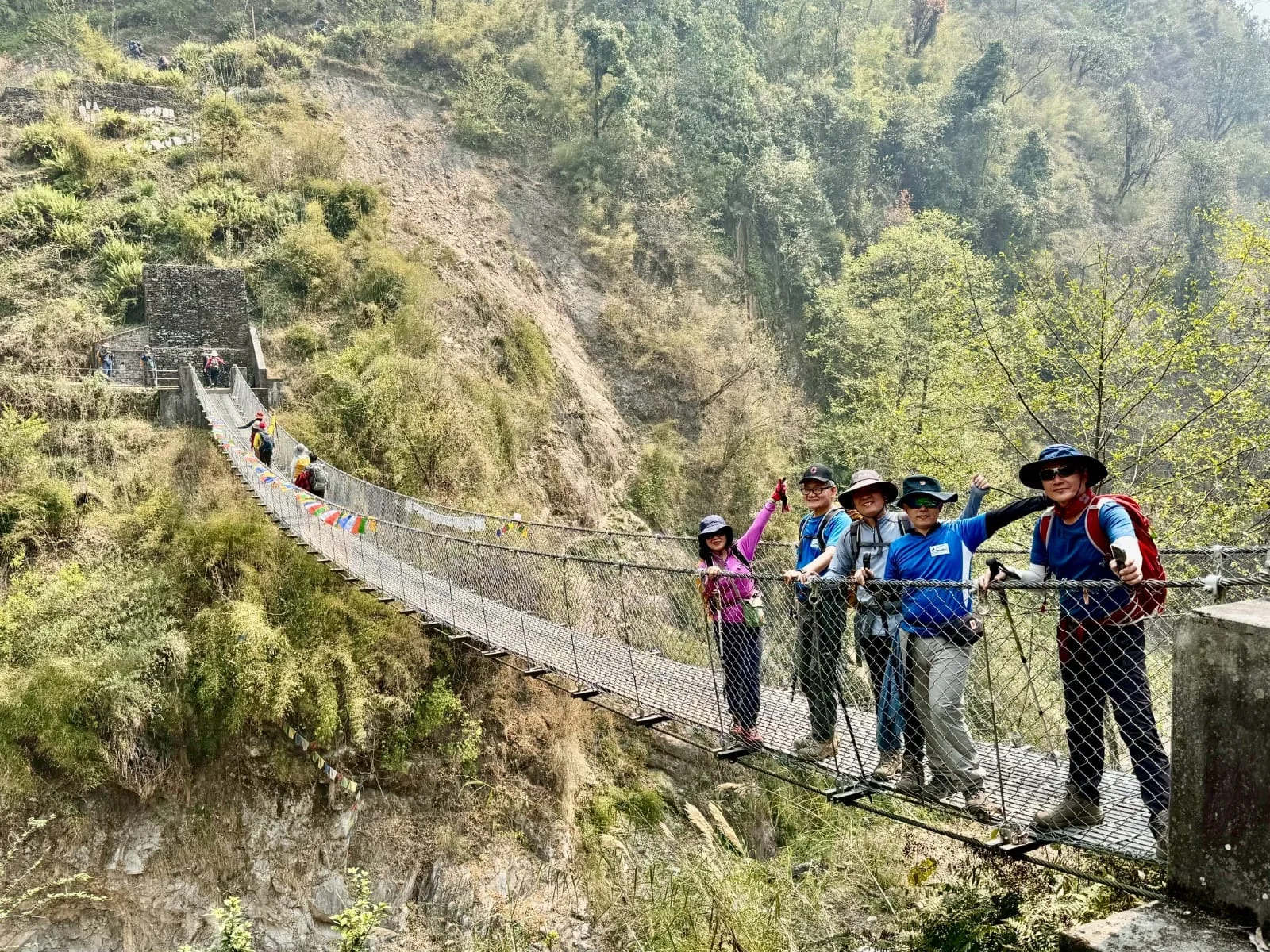
Nepal's protected areas (protected area: land designated under national or international law to restrict human activity for the purpose of biodiversity conservation) form a contiguous network from the Terai lowlands to the Himalayan alpine zone.
The 4 flagship wildlife species in Nepal in 2026:
Bengal Tiger (Panthera tigris tigris): Nepal's tiger population reached 355 individuals in the 2022 government census, exceeding Nepal's 2022 conservation target by 42 animals. Chitwan National Park holds the highest density.
One-Horned Rhinoceros (Rhinoceros unicornis): Nepal's rhino population reached 752 individuals in the 2021 census. Chitwan National Park holds 694; Bardia National Park holds 58.
Snow Leopard (Panthera uncia): Estimated 397 individuals in Nepal (WWF Nepal, 2022), concentrated in Mustang, Humla, and Dolpa districts above 3,000 meters.
Red Panda (Ailurus fulgens): Estimated 1,000 individuals in Nepal, concentrated in Kangchenjunga Conservation Area and Langtang National Park.
Chitwan National Park (established: 1973; area: 952.63 square kilometers; UNESCO World Heritage Site: 1984) delivers the most accessible wildlife viewing in Nepal. A Chitwan jungle safari, whether by jeep, elephant-back, or canoe on the Rapti River, operates year-round with peak wildlife visibility from October to March.
Nepal's 902 documented bird species represent 9.4% of the world's total bird species (global total: 10,000+ species, per the International Ornithologists' Union 2024 checklist) within 0.1% of the earth's land surface.
How Affordable Is Traveling in Nepal?
Nepal ranks as one of Asia's most affordable travel destinations in 2026, with a complete daily budget of USD 25–40 covering accommodation, 3 meals, local transport, and entry fees for budget travelers, and USD 60–120 for mid-range travelers including guided tours and comfortable hotels.
Affordability in Nepal stems from 3 structural economic factors: a low cost-of-living index relative to South Asian neighbors, a domestic hospitality industry built on volume rather than margin, and a Nepali Rupee (NPR) exchange rate that favors major international currencies.
The following table presents 2026 average costs across traveler categories in Kathmandu:
Expense Category | Budget (USD) | Mid-Range (USD) | Comfort (USD) |
Accommodation (per night) | $5–15 (guesthouse) | $25–60 (hotel) | $80–200 (boutique/5-star) |
Meal (per plate, local restaurant) | $1.50–3.50 | $5–12 | $15–35 |
Local transport (taxi, per trip) | $1–3 | $3–8 | $8–20 |
Trekking guide (per day) | $20–25 | $25–35 | $35–60 |
National park entry (per visit) | $8–113 (varies by park) | Same | Same |
The above table presents cost data averaged from 2026 pricing reports by the Nepal Tourism Board, Kathmandu-based trekking agency associations, and independent traveler expenditure surveys.
Nepal's tipping culture is established but not mandatory. Guides receive NPR 500–1,500 (USD 3.75–11.25) per day as standard gratuity. Porters receive NPR 300–800 (USD 2.25–6) per day.
Visa costs in 2026 remain at:
15-day visa on arrival: USD 30
30-day visa on arrival: USD 50
90-day visa on arrival: USD 125
Nepal accepts visa applications on arrival at Tribhuvan International Airport (Kathmandu) and at 6 designated land border crossings for nationals of most countries.
When Is the Best Time to Visit Nepal?
The 2 optimal seasons to visit Nepal are autumn (mid-September to late November) and spring (March to May), when post-monsoon clarity and pre-monsoon visibility produce stable mountain views, temperatures of 10°C–25°C in Kathmandu, and dry trail conditions across all trekking zones. For a month-by-month breakdown of weather patterns, trail conditions, and festival calendars, see our full guide on the best season to visit Nepal.
Nepal experiences 4 distinct seasonal phases:
Autumn (September–November): Post-monsoon air clarity delivers the sharpest Himalayan views of the year. Temperatures in Kathmandu average 15°C–25°C. Trail surfaces are dry and stable. This season hosts Nepal's 3 largest festivals: Dashain, Tihar, and Chhath Puja. October is the single busiest trekking month.
Spring (March–May): Pre-monsoon season coincides with Himalayan rhododendron bloom below 4,000 meters, Nepal has 32 rhododendron species, more than any other country. Temperatures match autumn. The Everest climbing season peaks in May; the spring 2024 season produced a record 668 summits.
Winter (December–February): Kathmandu Valley temperatures drop to 2°C–15°C. High-altitude passes above 4,000 meters carry snow and ice. Lower-altitude treks (Ghorepani Poon Hill, Langtang, Chitwan) remain fully accessible. Accommodation rates drop 20–35% from peak season pricing.
Monsoon (June–August): Rainfall averages 1,600 millimeters in Kathmandu and 2,500 millimeters in eastern Nepal between June and August. Trail conditions above 3,000 meters become hazardous. Rain-shadow destinations, Mustang, Dolpo, Manang, remain dry and accessible, receiving fewer than 250 millimeters of annual rainfall.
What Are the Must-Visit Places in Nepal?
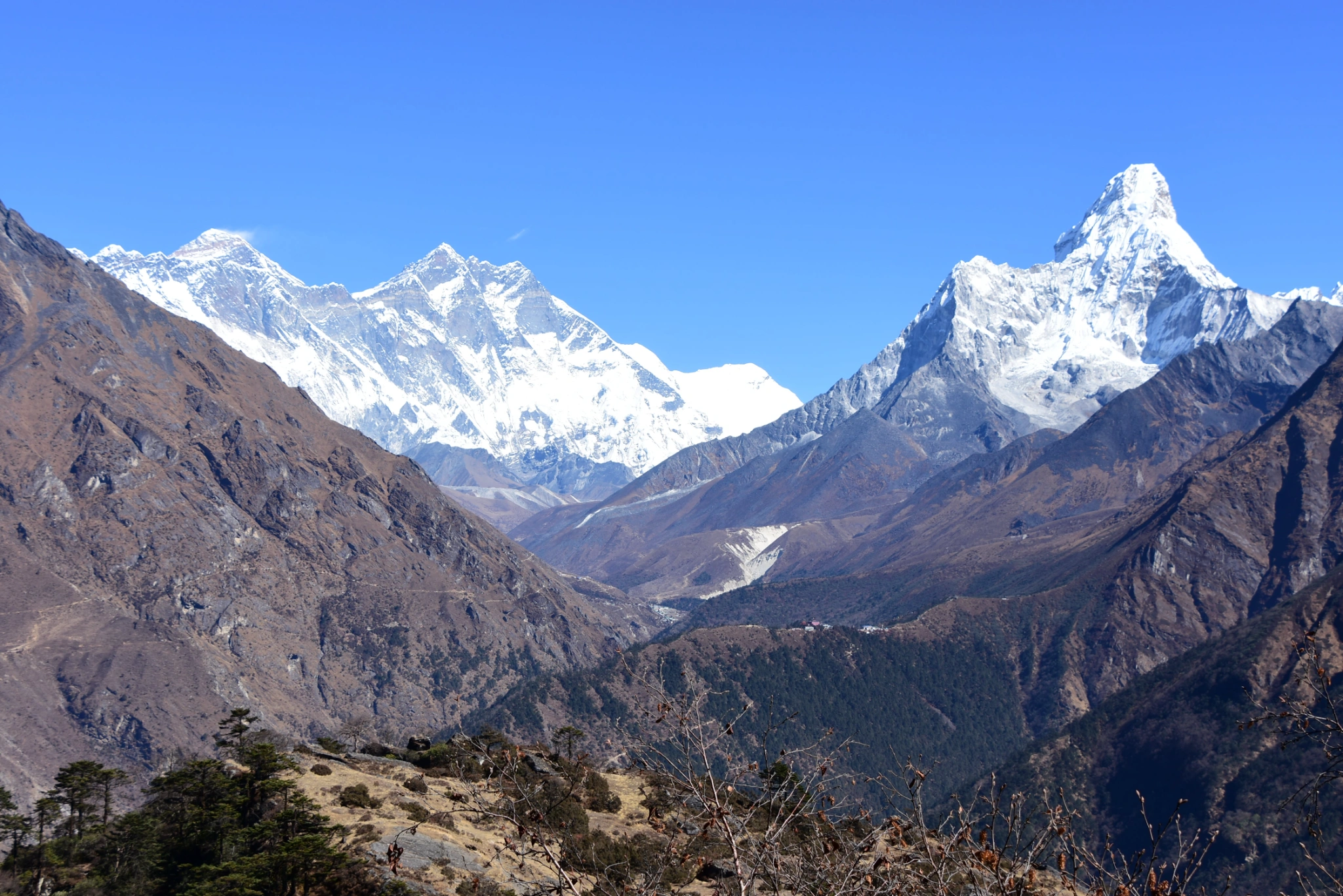
The 8 must-visit destinations in Nepal are Kathmandu Valley, Pokhara, Chitwan National Park, Lumbini, Everest Base Camp trek, Annapurna Circuit, Bardia National Park, and Mustang, each representing a distinct ecological zone, cultural heritage layer, or geographic feature unavailable elsewhere in the country.
Nepal's 8 essential destinations in 2026:
Kathmandu Valley: Nepal's capital region (area: 665 square kilometers; elevation: 1,400 meters) contains 7 UNESCO-listed monument zones, 3 ancient cities (Kathmandu, Patan, Bhaktapur), and Tribhuvan International Airport. Distance between the 3 Durbar Squares: 12 kilometers by road.
Pokhara: Nepal's second city (population: 518,000; elevation: 827 meters) sits 200 kilometers west of Kathmandu along the Seti River. Phewa Lake (area: 4.43 square kilometers) reflects the Annapurna massif directly. Pokhara serves as the departure point for all Annapurna trekking routes and Machhapuchhre (6,993 meters) viewings.
Chitwan National Park: Located in the Terai lowlands (area: 952.63 square kilometers; elevation: 100–815 meters), Chitwan provides jeep safari, canoe, and jungle walk access to Bengal tigers, one-horned rhinos, gharial crocodiles, and the Gaur (world's largest wild cattle species).
Lumbini: UNESCO World Heritage Site (designated: 1997) and birthplace of the historical Buddha. The Mayadevi Temple marks the exact birth site. The Sacred Garden surrounding the temple contains the Ashoka Pillar, erected by Emperor Ashoka in 249 BCE.
Everest Base Camp Trek: The 14–21-day route from Lukla (2,860 meters) to Everest Base Camp (5,364 meters) passes through Namche Bazaar, Tengboche Monastery, and Khumjung Village. The Kala Patthar viewpoint (5,545 meters) delivers a direct, unobstructed view of Everest's summit pyramid.
Annapurna Circuit: The 160–230-kilometer circuit crosses Thorong La Pass at 5,416 meters, the highest motorable pass regularly crossed by trekkers. The route descends through the Kali Gandaki Gorge, the world's deepest gorge at 5,571 meters depth between Dhaulagiri and Annapurna.
Bardia National Park: Located in far-western Nepal (area: 968 square kilometers), Bardia receives fewer than 30,000 visitors annually compared to Chitwan's 200,000+. Tiger sightings in Bardia occur at a higher frequency per visitor due to lower tourist density. The Karnali River running through the park supports the Gangetic dolphin (Platanista gangetica).
Mustang (Upper Mustang): A restricted area (permit required: USD 500 for 10 days) in the Himalayan rain shadow north of the Annapurna massif. The Upper Mustang Trek takes you into the former Kingdom of Lo (capital: Lo Manthang; elevation: 3,840 meters), where Tibetan Buddhist monastery murals, cliff-cave settlements, and an arid landscape reminiscent of the Tibetan plateau await-annual visitor cap: 1,000 foreign nationals.
How Safe and Welcoming Is Nepal for Tourists?
Nepal ranks as one of South Asia's safest destinations for international travelers, with a Global Peace Index 2024 score placing it 77th of 163 nations, above regional neighbors Pakistan (ranked 146th) and India (ranked 116th), and a tourism crime rate that the Nepal Police Bureau documented at 0.3 incidents per 1,000 tourist arrivals in 2023.
Nepal's safety profile rests on 4 documented factors:
Low violent crime rate against tourists. The Nepal Police Tourist Service Center (established 2002, operating in Kathmandu, Pokhara, and Chitwan) received 847 tourist-related complaint cases in 2023, of which 91% involved property theft (bag snatching, pickpocketing) rather than physical assault.
Established rescue infrastructure. The Himalayan Rescue Association (HRA, founded 1973) operates 3 aid posts along Everest and Annapurna trekking routes. Nepal Army Aviation and private helicopter operators conduct an average of 600 rescue evacuations annually from trekking zones.
Cultural hospitality tradition. The Nepali concept of "Atithi Devo Bhava" (Sanskrit: "the guest is equivalent to God") is embedded in both Hindu and Buddhist cultural practice across Nepal's ethnic groups. This tradition operates as a behavioral norm rather than a commercial hospitality standard.
Women traveler safety record. According to Nepal Tourism Board data from 2024, 38% of all trekking permit holders are solo female travelers, the highest proportion in Nepal's recorded trekking history.
Travelers exercise standard urban precautions in Thamel (Kathmandu's tourist district), Lakeside (Pokhara), and bus terminals. Altitude sickness (acute mountain sickness: AMS) is the primary medical risk above 3,000 meters, not crime. The Wilderness Medical Society's 2022 guidelines recommend ascending no faster than 300–500 meters per day above 3,000 meters.
What Food Experiences Await You in Nepal?
Nepal's food landscape presents 4 distinct culinary traditions, Nepali hill cuisine, Newari cuisine, Tibetan-influenced mountain food, and Terai Madhesi dishes, with Dal Bhat (lentil soup, rice, vegetable curry, and pickles) as the national dish consumed twice daily by 78% of the Nepali population according to the 2021 Nepal Living Standards Survey.
Nepali cuisine (Nepali cuisine: the food traditions of Nepal's hill, mountain, and Terai populations, shaped by Hindu dietary codes, Buddhist vegetarianism, altitude-driven ingredient availability, and Indian and Tibetan border influences) prioritizes legumes, rice, seasonal vegetables, and fermented condiments.
The 8 essential food and drink experiences in Nepal in 2026:
Dal Bhat: National dish. Composition: steamed rice, lentil soup (dal), 2–4 vegetable curries, achar (pickle) and papad. Served on a thali plate. Price range: NPR 150–400 (USD 1.13–3) at local restaurants; unlimited refills standard.
Momo: Tibetan-origin steamed or fried dumpling adopted as Nepal's most popular street food. Filled with buffalo, chicken, vegetables, or cheese. Served with tomato-sesame dipping sauce. Price: NPR 80–200 (USD 0.60–1.50) per plate of 10.
Newari Feast (Newa Bhoj): A 16-course ceremonial meal of the Newar ethnic group including wo (lentil pancakes), choila (spiced grilled meat), yomari (steamed rice flour dumpling filled with molasses and sesame), and aila (Newari rice spirit). Served at Newari cultural restaurants in Bhaktapur and Patan.
Thukpa: Tibetan noodle soup with broth, vegetables, and meat or tofu. Standard meal at altitudes above 3,000 meters on trekking routes where rice is replaced by noodles due to cooking efficiency.
Sel Roti: Ring-shaped deep-fried rice bread made from fermented rice batter. Prepared primarily during Tihar and Dashain festivals. Available at local bakeries in Kathmandu year-round.
Tongba: Millet-based hot fermented beverage of the Limbu ethnic group (eastern Nepal and Sikkim border regions). Consumed by inserting a bamboo straw into a wooden vessel filled with fermented millet, then adding boiling water repeatedly.
Butter Tea (Po Cha): Tibetan-origin hot beverage of yak butter, salt, and tea. Standard drink at tea houses above 4,000 meters in Everest and Langtang regions.
Yomari: Sacred Newari steamed dumpling (rice flour exterior + chaku molasses and sesame interior) eaten during Yomari Punhi festival (December full moon). Available at Bhaktapur's heritage bakeries year-round.
Food safety standard: boiled or filtered water is mandatory above 2,500 meters. All major teahouse routes provide filtered water refill stations at NPR 50–100 (USD 0.37–0.75) per liter, replacing single-use plastic water bottles.
How Does Nepal Blend Tradition and Modernity?
Nepal blends tradition and modernity through 3 coexisting structural systems: a UNESCO-protected heritage city core in Kathmandu, a growing tech and startup economy (Kathmandu ranks 3rd in South Asia for startup density per capita in 2025), and a tourism infrastructure that integrates ancient pilgrimage routes with satellite-connected teahouse lodges above 4,000 meters.
Nepal's modernization trajectory accelerated after the adoption of its federal democratic constitution in September 2015, which restructured governance into 7 provinces and 753 local government units.
The 4 domains where tradition and modernity intersect in Nepal:
Architecture: Kathmandu's Durbar Squares sit adjacent to glass-facade commercial buildings. The Newari pagoda construction technique (post-and-beam timber with fired brick) remains in active use for heritage restoration under UNESCO oversight while concrete construction dominates residential expansion outside the monument zones.
Communication: Mobile internet penetration in Nepal reached 78% of the population in 2024 (Nepal Telecommunications Authority report). Above 4,000 meters, Ncell and Nepal Telecom 4G service covers 89% of Everest Base Camp trekking route waypoints. Teahouses at Namche Bazaar (3,440 meters) and Tengboche (3,867 meters) offer Wi-Fi and solar-powered device charging.
Economy: Nepal's remittance economy (USD 9.3 billion in 2023–24, representing 26.8% of GDP per Nepal Rastra Bank data) funds household modernization across rural areas while traditional subsistence agriculture and pastoralism continue in mountain districts. This dual structure produces villages where satellite dishes and yak herds occupy the same landscape.
Religious practice: Pashupatinath Temple's 5th-century Hindu rituals, daily Puja at 5:00 AM, cremation rites on the Bagmati ghats, Maha Shivaratri gathering of 1 million+ pilgrims, operate unchanged alongside smartphone-equipped priests who manage digital temple donation systems.
What Travel Challenges Should You Be Aware of in Nepal?
Travelers to Nepal face 5 documented challenges: altitude sickness above 3,000 meters, monsoon-season trail closures from June to August, infrastructure limitations outside Kathmandu Valley, seismic risk (Nepal lies on an active tectonic collision zone), and permit bureaucracy requiring advance planning for restricted areas like Mustang and Manaslu.
Each challenge carries specific mitigation protocols:
Altitude Sickness (Acute Mountain Sickness: AMS): AMS affects 25–50% of trekkers ascending above 3,500 meters without proper acclimatization, per Himalayan Rescue Association clinic data from Pheriche (4,371 meters). Symptoms include headache, nausea, fatigue, and insomnia. Understanding altitude sickness in the Himalaya, including prevention protocols, medications, and acclimatization schedules, is essential preparation before any high-altitude trek. Severe progression produces High Altitude Pulmonary Edema (HAPE) or High Altitude Cerebral Edema (HACE), both life-threatening. Standard protocol: ascend no faster than 300–500 meters per day above 3,000 meters; include 1 acclimatization rest day for every 1,000 meters gained; descend immediately at worsening symptoms.
Monsoon Trail Hazards: Nepal's monsoon (June–August) delivers 80% of annual rainfall in 3 months. Landslides close sections of the Arniko Highway (Kathmandu–Tibet) and Prithvi Highway (Kathmandu–Pokhara) on average 18 times per monsoon season (Department of Roads, Nepal, 2023 data). High-altitude trails above 4,000 meters experience flash flooding and leeches below the treeline. Monsoon trekking in Mustang, Manang, and Dolpo remains feasible due to rain-shadow geography.
Infrastructure Gaps Tribhuvan International Airport (Kathmandu) operates a single runway, creating chronic flight delays during peak season (October–November) and weather disruptions. The Lukla Airport (2,860 meters), the primary access point for Everest trekking, holds the designation of one of the world's most technically demanding commercial airports. Power outages in Kathmandu Valley average 2–4 hours daily during dry season (December–February) when hydroelectric output drops.
Seismic Risk Nepal sits on the India-Eurasia tectonic collision boundary, the geologic process responsible for forming the Himalayas. The 2015 Gorkha Earthquake (magnitude 7.8) killed 8,964 people and damaged 600,000 structures. The Nepal National Seismological Centre monitors seismic activity continuously. Heritage sites including Kathmandu's Durbar Squares sustained significant structural damage in 2015 and remain in active UNESCO-supervised reconstruction as of 2026.
Permit Bureaucracy Restricted area permits require booking through government-registered trekking agencies. Upper Mustang permits (USD 500 for 10 days) and Manaslu Circuit permits (USD 100–200 per week, season-dependent) sell out 4–6 months in advance for peak season travel. Travelers without advance agency arrangements face permit unavailability during October and November.
How Should You Approach Visiting Nepal with Travel Services?
Approaching Nepal through registered travel services, licensed by Nepal Tourism Board under the Tourism Act 2035 (1978), reduces the 5 core logistical risks: permit processing errors, altitude emergency response delays, accommodation unavailability in peak season, restricted area access failures, and transportation disruptions during weather events.
Nepal's travel service sector comprises 3 government-regulated categories:
Trekking Agencies: registered with the Trekking Agencies' Association of Nepal (TAAN); 1,847 registered agencies as of 2024
Travel Agencies: registered with the Nepal Association of Tour and Travel Agents (NATTA)
Mountaineering Expedition Operators: registered with the Nepal Mountaineering Association (NMA) for peak permits above 5,500 meters
Travelers verify agency legitimacy through the Nepal Tourism Board's online agency registry (ntb.gov.np), which lists license numbers, renewal status, and complaint records for all registered operators.
Can Travel Services Help You Plan a Trip to Nepal?
Registered Nepal travel services cover 8 logistical functions: visa documentation support, flight and domestic transport booking, accommodation reservations across all trek routes, trekking and national park permit processing, licensed guide and porter hiring, altitude emergency evacuation insurance coordination, customized itinerary design, and restricted area permit acquisition.
Travel service engagement covers 3 traveler profiles in 2026:
Independent Travelers: TIMS cards (NPR 2,000) and standard national park permits are processable independently at Kathmandu's Nepal Tourism Board offices. Teahouse bookings on the Everest Base Camp and Annapurna routes require no advance reservations outside of October peak (when booking 3–6 months in advance is standard).
Guided Trek Travelers: Licensed guide daily rates average USD 25–35 for English-speaking guides certified by the Nepal Mountaineering Association or Trekking Agencies' Association of Nepal. Porter rates average USD 15–20 per day with standard load limits of 25 kilograms. Agencies arrange guide-porter teams, teahouse bookings, and emergency response protocols as package components.
Restricted Area Travelers: Upper Mustang, Manaslu Circuit, Kanchenjunga, Dolpo, and Nar Phu require agency-arranged group permits. Solo applications for restricted area permits are not accepted under Nepal's Tourism Act. A minimum 2-person group is mandatory for permit issuance in all restricted zones.
Travel insurance covering helicopter evacuation (minimum coverage: USD 100,000 per incident) is a non-negotiable requirement for all trekkers above 3,500 meters, enforced by most registered trekking agencies as a booking prerequisite since 2022.
What Are the Key Takeaways About Visiting Nepal?
Nepal delivers a combination unavailable in any other single country: 8 eight-thousanders including Mount Everest at 8,848.86 meters, 142 ethnic cultures, 902 bird species, 4 UNESCO World Heritage Sites, complete budget accessibility from USD 25 per day, and 2 optimal travel seasons (autumn and spring) that together cover 6 months of year-round visitability.
The 10 essential facts about visiting Nepal in 2026:
Geography: Nepal occupies 147,516 square kilometers between India and China, spanning 3 ecological zones from 60 meters (Terai) to 8,848.86 meters (Everest summit).
Mountains: 8 of the world's 14 peaks above 8,000 meters stand within Nepal's borders.
Culture: 142 ethnic groups speak 124 languages; 7 UNESCO monument zones concentrate within 30 kilometers in Kathmandu Valley.
Wildlife: 10 national parks and 6 conservation areas protect 355 Bengal tigers, 752 one-horned rhinos, 397 snow leopards, and 902 bird species.
Trekking: 23 regulated routes operate across 3 trekking seasons; the Everest Base Camp route (130 km) reaches 5,545 meters without technical climbing equipment. For those seeking Himalayan immersion at a more moderate altitude, the Annapurna Base Camp Trek reaches 4,130 meters through diverse terrain and rhododendron forests, making it one of Nepal's most rewarding shorter routes.
Cost: Budget daily expenditure averages USD 25–40; a 30-day visa costs USD 50 on arrival.
Seasons: Autumn (September–November) and spring (March–May) deliver optimal trekking and mountain-viewing conditions.
Safety: Nepal ranks 77th on the 2024 Global Peace Index with a tourist crime rate of 0.3 incidents per 1,000 arrivals.
Spirituality: 4 UNESCO-listed sacred sites (Pashupatinath, Lumbini, Boudhanath, Swayambhunath) are open to international visitors with no faith prerequisites.
Access: Tribhuvan International Airport (Kathmandu) connects to 40 international destinations; Pokhara Regional International Airport opened in January 2023, adding direct international access to the Annapurna trekking gateway.
Nepal's position as a lifetime travel destination rests on the density of irreplaceable experiences per unit of cost, geographic area, and travel time. No alternative destination combines Himalayan altitude, UNESCO heritage concentration, wildlife diversity, spiritual heritage, and sub-USD 40 daily budgets within a single national boundary. Ready to start planning? Our Everest Base Camp Trek remains Nepal's most iconic route, and the one experience that makes every traveler's Nepal trip unforgettable.