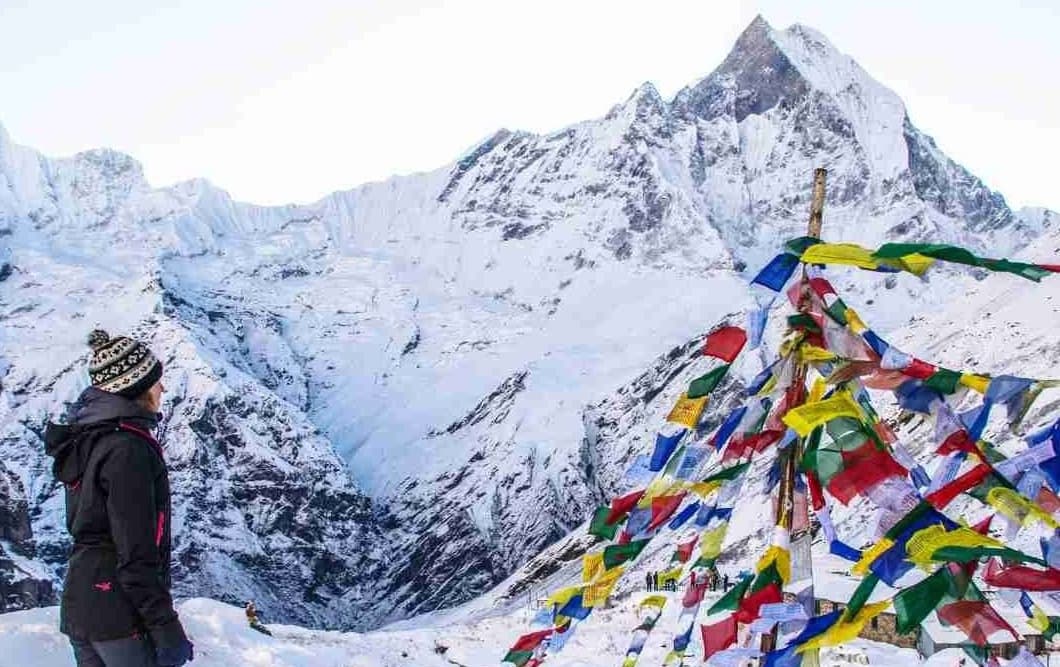
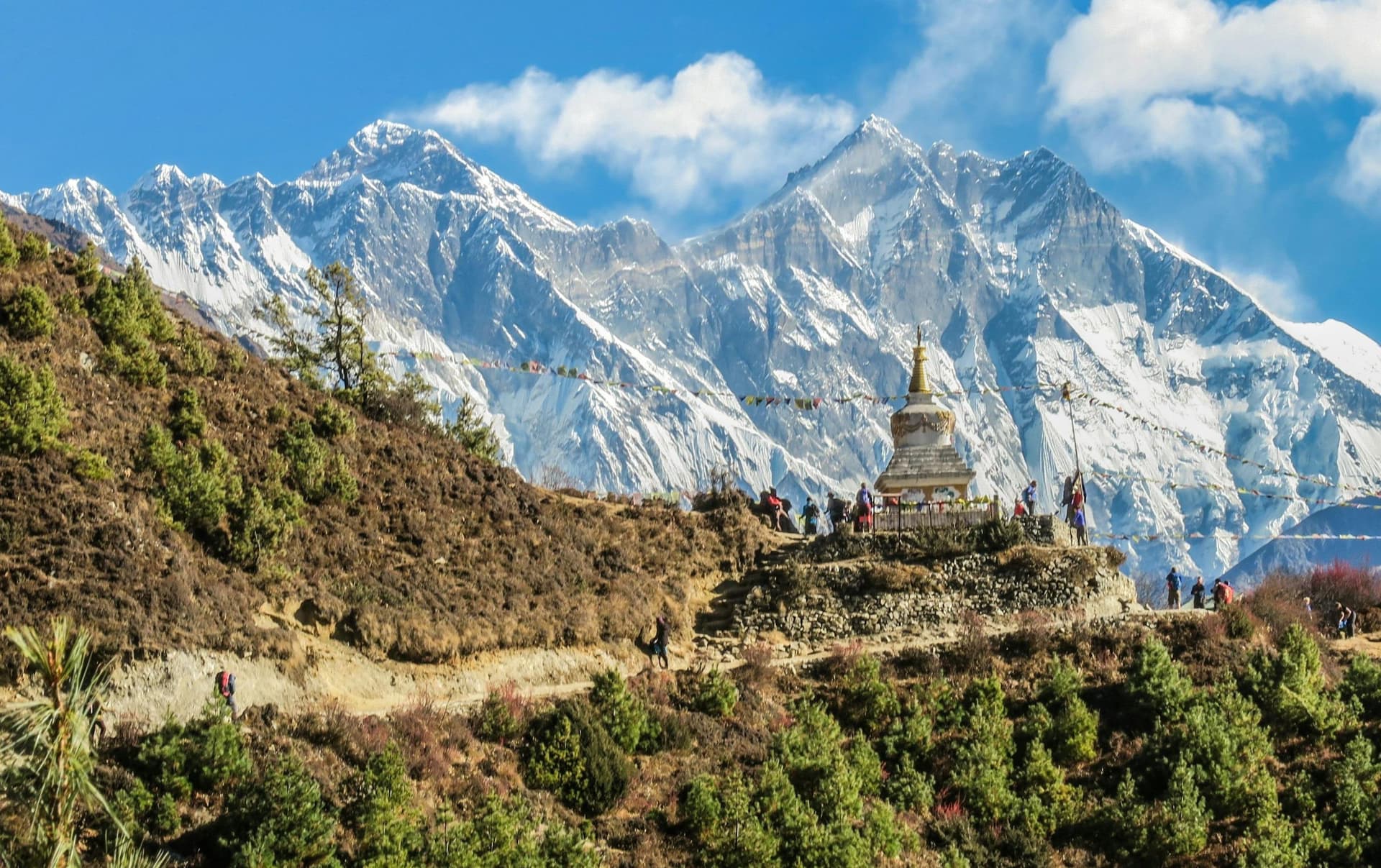
Nepal is one of the world’s most geographically diverse mountain countries, where snowfall occurs across multiple Himalayan elevations, from alpine valleys above 3,000 meters to permanent glaciers above 5,000 meters. The country rises from the subtropical Terai plains at 60 meters to the summit of Mount Everest at 8,848.86 meters, creating strong climate contrasts that determine where snow falls, how long it remains, and which regions experience heavy winter accumulation. High-altitude destinations such as Everest Base Camp, Annapurna Base Camp, Langtang Valley, and Upper Mustang receive regular seasonal snowfall, while lower cities including Kathmandu and Pokhara rarely see snow on the valley floor.
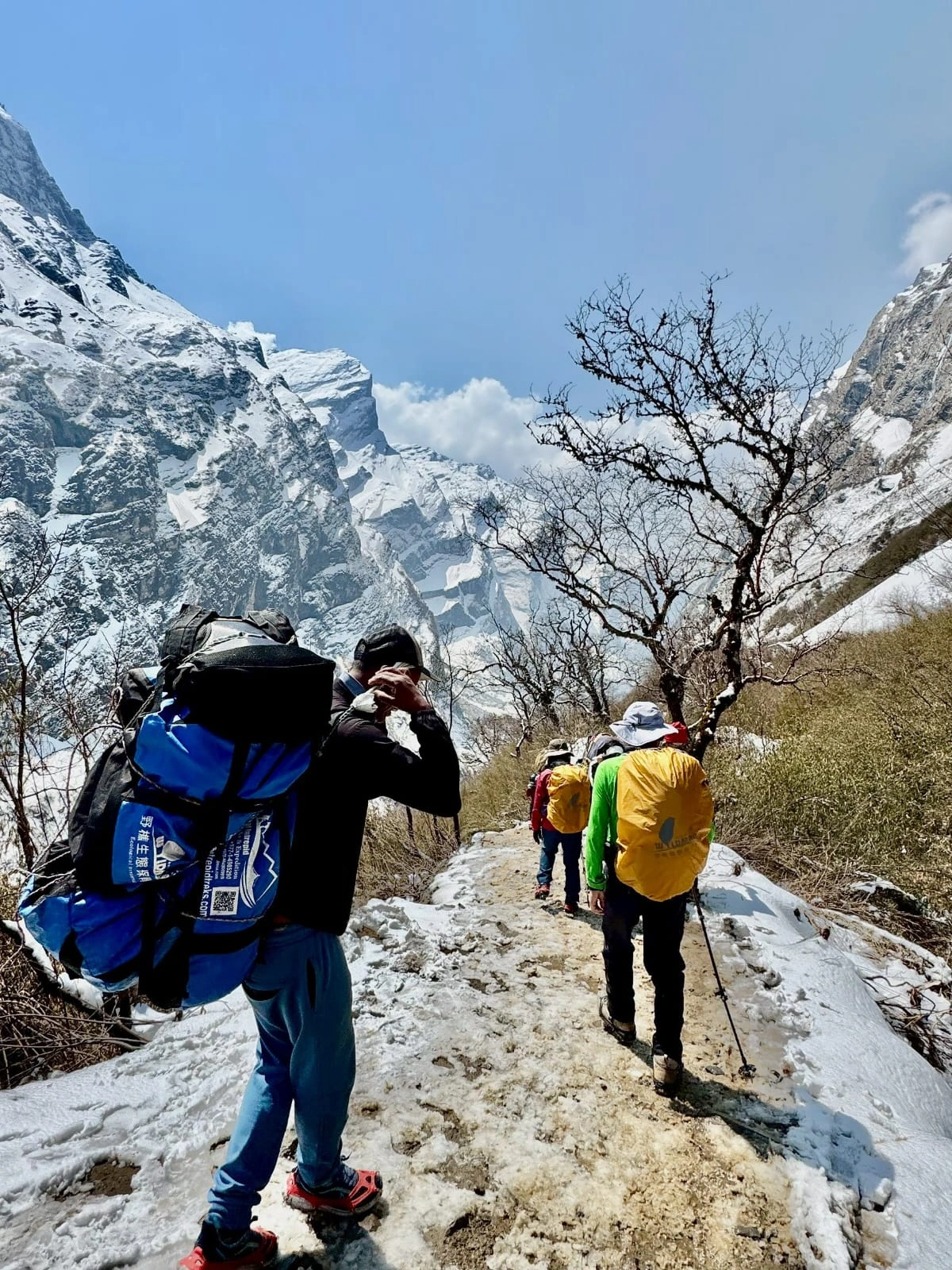
Snow in Nepal is shaped by elevation, monsoon moisture, and western winter disturbances, making snowfall patterns highly localized across trekking routes, mountain passes, and trans-Himalayan districts. Understanding when snow falls, which regions receive the deepest accumulation, and how winter conditions affect roads, flights, and trekking access is essential for travelers planning snow experiences in the Nepal Himalayas. From short snow hikes near Pokhara to glacier landscapes near Everest, Nepal offers some of the most accessible high-altitude snow destinations in the world, while ongoing climate change is already shifting snowlines, glacier coverage, and seasonal snowfall reliability across the country.
Where Does It Snow in Nepal?
Snow in Nepal falls primarily in 3 geographic zones: the High Himalayan region above 5,000 meters, the trans-Himalayan valleys between 3,500 and 5,000 meters, and the high mountain passes above 4,000 meters. Below 3,000 meters, snow is rare and typically short-lived.
Which Regions in Nepal Get the Most Snow?
The 3 regions in Nepal that receive the most snow are Mustang, the Khumbu Valley, and the Manang district. These high-altitude zones sit at elevations where temperatures remain below freezing for 4 to 6 months annually. Mustang, located in the rain shadow of the Annapurna and Dhaulagiri ranges, receives dry snow with low moisture content. Khumbu, near Everest, receives both monsoon-driven snowfall and winter precipitation. Manang sits at the edge of the Tibetan Plateau, receiving cold, continental air masses from October through March.
The Dolpo region in far western Nepal also receives significant snowfall, with some passes remaining snow-covered from November through May. Trekkers attempting the Shey Phoksundo circuit regularly encounter waist-deep snow at Numa La Pass (5,190 m) and Baga La Pass (5,070 m) during winter months.
Which Mountain Areas in the Himalayas Receive Snowfall?
All mountain areas in the Nepalese Himalayas above 3,500 meters receive snowfall. The 8 Himalayan eight-thousanders located fully or partially in Nepal, Everest (8,848.86 m), Kangchenjunga (8,586 m), Lhotse (8,516 m), Makalu (8,485 m), Cho Oyu (8,188 m), Dhaulagiri (8,167 m), Manaslu (8,163 m), and Annapurna I (8,091 m), receive snowfall year-round above their base camps.
Below the permanent snow line (approximately 5,000 meters on south-facing slopes, 4,500 meters on north-facing slopes), seasonal snowfall occurs between October and April. Passes such as Thorong La (5,416 m), Renjo La (5,360 m), and Kongma La (5,535 m) accumulate 1 to 3 meters of snow during peak winter. These accumulations directly affect trekking accessibility from December through February.
When Does It Snow in Nepal?
Snowfall in Nepal occurs across two distinct seasons: the winter snowfall period from November to February and the monsoon-influenced high-altitude snowfall from June to September. The winter period delivers dry, cold snow at elevations above 3,500 meters. The monsoon season pushes heavy moisture-laden snowfall to peaks above 5,000 meters between June and August.
Which Months Are Snowiest in Nepal?
The 4 snowiest months in Nepal are January, February, December, and March, in that order. January and February deliver the deepest snowfall at high-altitude trekking zones. Specific data by region:
Month | Elevation Zone | Expected Snowfall Depth |
January | Above 4,000 m | 30–80 cm per event |
February | Above 3,500 m | 20–60 cm per event |
December | Above 4,500 m | 15–50 cm per event |
March | Above 4,000 m | 10–40 cm per event |
June–August | Above 5,500 m | 20–100 cm (monsoon) |
March snowfall is particularly deceptive. Days begin warm, creating a false sense of clear conditions, while afternoon storms deposit 20 to 40 cm of snow at passes above 4,000 meters within 3 to 4 hours. For a complete month-by-month breakdown, our guide on the best time to visit Nepal for snow covers each region's optimal windows in detail.
Does It Snow During Winter Across Nepal?
Winter snowfall is concentrated above 3,000 meters elevation. Below this threshold, winter precipitation falls primarily as cold rain or freezing rain in the mid-hill zones (1,500–3,000 m). The Terai lowlands (below 300 m) experience no snowfall during winter. Pokhara, at 822 meters, receives frost and sub-zero morning temperatures but rarely sees actual snowfall in the valley itself.
.webp)
The winter of 2014–2015 was one of the most documented snow events in recent Nepal history, when an unusual low-pressure system pushed snowfall as low as 2,000 meters elevation, affecting several mid-hill districts.
Why Does Snowfall Vary Across Nepal?
Snowfall variation across Nepal results from 3 intersecting factors: elevation gradient, monsoon moisture patterns, and orographic lift dynamics. These factors operate simultaneously and produce distinctly different snowfall behaviors across regions separated by only 50 to 100 kilometers.
How Does Elevation Affect Snow in Nepal?
Elevation is the primary determinant of snowfall frequency and depth in Nepal. The relationship between elevation and snowfall follows a clear pattern across 4 altitude bands:
Below 2,000 meters: Snow is rare, occurring once every 5 to 10 years in valley floors and lasting less than 24 hours when it does fall.
2,000–3,500 meters: Snow falls 3 to 8 times per year during winter months, with accumulations of 5 to 20 cm that melt within 2 to 4 days.
3,500–5,000 meters: Snow falls 15 to 30 times annually. Accumulations persist for days to weeks, creating compacted snow layers on trails.
Above 5,000 meters: Permanent snowfields dominate. Fresh snowfall occurs year-round, with major accumulation events 40 to 60 times annually.
For every 1,000 meters of elevation gain, average annual temperatures drop by approximately 6.5°C. At Namche Bazaar (3,440 m), the average January temperature is −5°C. At Gorak Shep (5,164 m), it drops to −17°C. This temperature gradient directly determines whether precipitation falls as rain or snow.
How Does Climate Influence Snowfall in Nepal?
Nepal sits at the intersection of 2 dominant climate systems: the South Asian Monsoon from the Bay of Bengal and the mid-latitude westerly disturbances from the Mediterranean and Central Asia. Each system delivers snow through different mechanisms.
The South Asian Monsoon remains Nepal’s dominant precipitation driver: the country’s Department of Hydrology and Meteorology recorded 122% of normal monsoon precipitation in 2024, versus just 19.8% of normal precipitation during that year’s winter season. Above 5,000 meters, this precipitation falls entirely as snow. The western disturbances deliver winter snowfall from November through March, affecting high mountain zones without the moisture intensity of the monsoon but with more consistent frequency.
The rain shadow effect is a third critical factor. The Annapurna and Dhaulagiri ranges block monsoon moisture from reaching Mustang, Upper Dolpo, and the Tibetan Plateau border areas. These trans-Himalayan zones receive only 200 to 300 mm of annual precipitation, but a higher proportion falls as snow due to the extreme cold.
Does It Snow in Kathmandu?
In most Himalayan trekking regions, January and February are typically the snowiest months, followed by December and March, although conditions vary by elevation and year.
Kathmandu receives snow extremely rarely. The Kathmandu Valley sits at 1,400 meters elevation. Temperatures in Kathmandu drop to 2°C to 5°C during January nights, but the atmospheric conditions that produce snowfall at this elevation are uncommon. The last widely documented snowfall in Kathmandu Valley occurred in February 2007, when a thin layer of snow covered Shivapuri Hill and some northern valley edges.
Has Kathmandu Ever Had Snow?
Measurable snowfall in Kathmandu has been exceptionally rare over the past century, with only a handful of documented events reported in historical records. Historical accounts reference snowfall events in 1944, 1975, and 2007. Each event was associated with an unusually strong western disturbance pushing cold Arctic air southward combined with sufficient moisture. None of these events produced accumulations exceeding 5 cm in the valley floor.
The northern ridges of Kathmandu Valley, including Shivapuri (2,732 m) and Phulchoki (2,760 m), receive light snow 2 to 4 times per winter. These areas are visible from the city and appear snow-dusted during cold winter mornings, creating the impression of snowfall closer to the urban center than actually occurs.
Why Is Snow Rare in Kathmandu?
Snow is rare in Kathmandu because the valley's elevation of 1,400 meters keeps surface temperatures above freezing most of the time, even in winter. Three specific conditions must simultaneously occur for snow to fall on the valley floor: surface temperatures at or below 0°C, sufficient atmospheric moisture above 70% relative humidity, and a cold precipitation-generating weather system. These 3 conditions aligning together happens less than once per decade.
The urban heat island effect of Kathmandu, a city of approximately 3 million people, further raises local temperatures by 1°C to 3°C compared to surrounding rural areas, making snowfall in the city center even less likely than on the valley periphery.
Which Places in Nepal Are Best for Seeing Snow?
The 5 best places in Nepal to see snow are Annapurna Base Camp (4,130 m), Everest Base Camp (5,364 m), Gosaikunda Lake (4,380 m), Langtang Valley (3,500–4,800 m), and Gokyo Lakes (4,750 m). Each location offers reliable snow presence during winter months with accessible trekking routes.
Does Pokhara Get Snow Nearby?
Pokhara city itself does not receive snow, but snow is visible and accessible within 40 to 70 kilometers from the city. The Annapurna Sanctuary trek departing from Pokhara reaches snow-covered terrain at Deurali (3,230 m) during January and February. The Poon Hill viewpoint at 3,210 meters, a 2-day trek from Pokhara, occasionally sees light snowfall during January and offers direct views of snow-capped Dhaulagiri (8,167 m) and Annapurna South (7,219 m).
The Mardi Himal trek (4,500 m), reachable in 5 to 6 days from Pokhara, maintains a consistent snow cover from December through March. This trek is increasingly popular for travelers wanting accessible snow views without committing to a 14-day itinerary.
Can You See Snow in Annapurna Base Camp?
Annapurna Base Camp (ABC) at 4,130 meters is snow-covered from November through April. The camp sits in a glacial amphitheater surrounded by 7 peaks above 6,000 meters. Fresh snowfall at ABC occurs 3 to 5 times per month during January and February, with individual events depositing 20 to 50 cm.
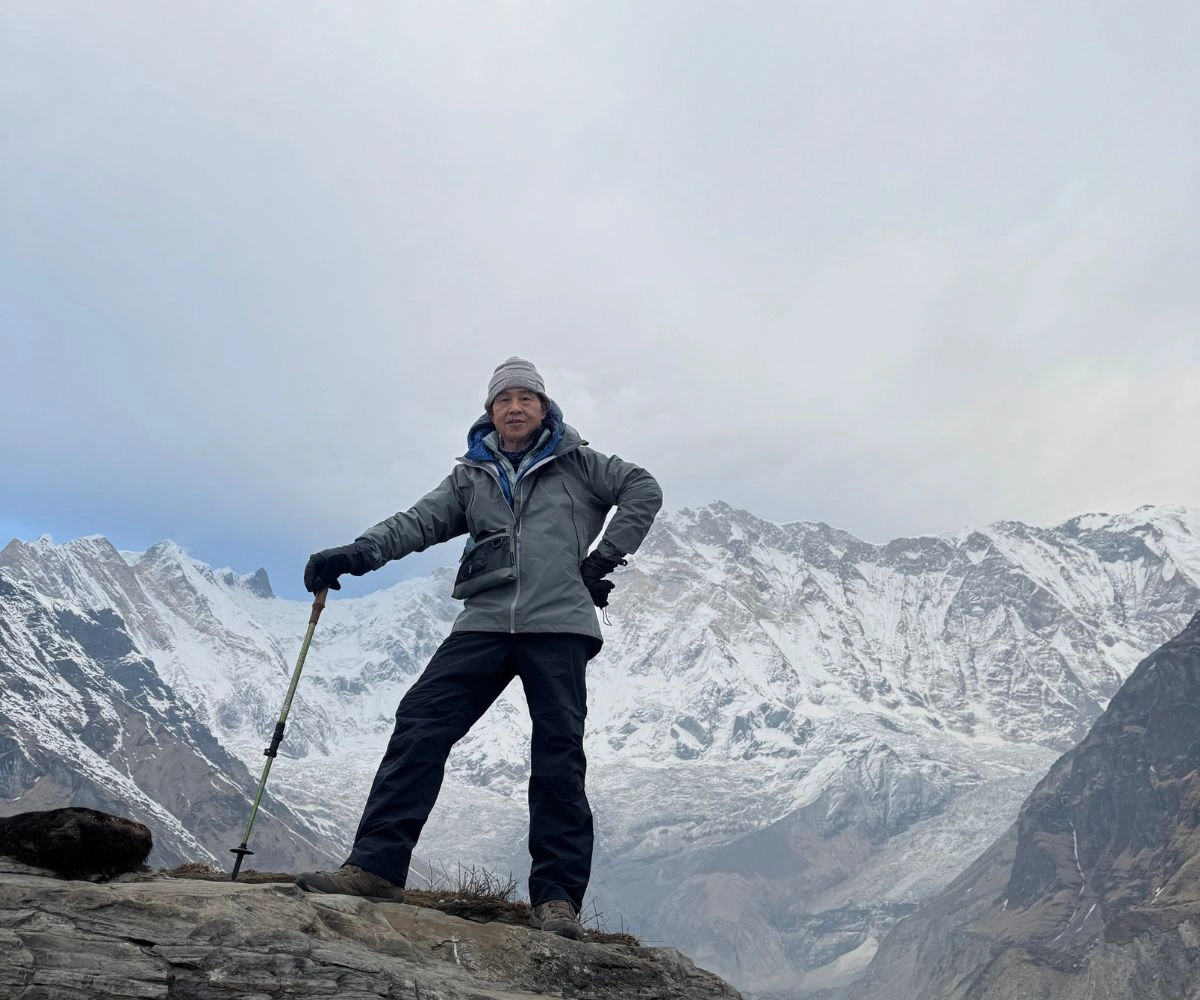
The trail approaching ABC through the Annapurna Sanctuary crosses avalanche-prone slopes above Machhapuchhre Base Camp (3,700 m). During January and February, trek agencies close this section when fresh snow depth exceeds 30 cm due to avalanche risk. The October–November window and March–April window offer snow views at ABC with lower avalanche risk. Our full Annapurna Base Camp Trek itinerary is designed around these safe seasonal windows.
Is Everest Base Camp Snowy Year-Round?
Everest Base Camp (EBC) at 5,364 meters receives snow in every month of the year, but the depth and frequency vary significantly. October and November deliver 5 to 15 cm snowfall events with clear skies between storms, the most popular trekking window. January and February see temperatures dropping to −25°C with blizzard conditions possible.
The Khumbu Icefall above EBC is permanently snow and ice-covered. The trail from Lukla (2,860 m) to EBC passes through snow terrain above Dingboche (4,360 m) during winter months. Lobuche (4,940 m) and Gorak Shep (5,164 m), the final stops before EBC, remain snow-covered for 5 to 6 months annually.
How Much Snow Falls in Nepal?
Annual snowfall in Nepal ranges from near zero in the Terai lowlands to over 10 meters of accumulated snowfall at high-altitude base camps above 5,000 meters. The figure varies dramatically by region, elevation, and aspect (north-facing versus south-facing slopes).
Which Areas Receive Heavy Snowfall?
The 4 areas receiving the heaviest snowfall in Nepal are:
Khumbu Region (Everest area): 3 to 6 meters of annual snow accumulation above 5,000 meters. Major storms deposit 60 to 100 cm in 24 hours during monsoon and winter.
Annapurna Sanctuary: 2 to 4 meters annually at base camp level. The surrounding cirque channels wind and precipitation, increasing deposition.
The Langtang Valley Trek routes pass through a zone receiving 1.5 to 3 meters of annual snowfall between 3,500 and 4,500 meters. The valley's proximity to the Tibetan Plateau exposes it to both monsoon and westerly disturbance snowfall.
Dolpo and Upper Mustang: 0.5 to 1.5 meters annually despite rain shadow conditions. The trans-Himalayan location means snowfall comes from westerly disturbances, not monsoon systems.
How Does Annual Snowfall Compare by Region?
The table below compares annual snowfall across Nepal's major trekking and high-altitude regions:
Region | Elevation Range | Annual Snowfall | Primary Snow Season |
Terai (Chitwan, Lumbini) | 60–300 m | 0 cm | None |
Kathmandu Valley | 1,300–1,500 m | 0–5 cm (rare) | Jan–Feb (rare) |
Pokhara Valley | 800–900 m | 0 cm | None |
Poon Hill / Ghorepani | 3,200 m | 20–50 cm | Dec–Feb |
Annapurna Base Camp | 4,130 m | 100–200 cm | Nov–Apr |
Langtang Valley | 3,500–4,500 m | 80–180 cm | Nov–Mar |
Namche Bazaar | 3,440 m | 30–70 cm | Dec–Feb |
Everest Base Camp | 5,364 m | 200–400 cm | Year-round |
Upper Mustang | 3,800–4,500 m | 50–150 cm | Oct–Apr |
Dolpo | 4,000–5,200 m | 100–300 cm | Oct–May |
How Does Snow Affect Travel in Nepal?
Snow affects travel in Nepal through 4 primary mechanisms: road closures, flight cancellations, trail hazards, and accommodation availability changes. Each affects a different layer of travel planning, from international arrivals to final-day trek segments.
Which Roads Close During Snowfall?
The 5 road corridors most frequently closed by snowfall in Nepal are:
Kali Gandaki Highway (Mustang Road): Closes at Ghasa and Tatopani when snowfall pushes below 2,500 meters, typically 3 to 7 times per winter season.
Araniko Highway (Kathmandu–Tibet border): The Kodari border crossing at 1,873 meters closes following heavy snowfall in Tibet, restricting cross-border truck traffic 10 to 20 days annually.
Solu-Khumbu Roads: The gravel roads leading to Salleri and Phaplu close when snow accumulates above 2,000 meters, affecting supply routes to Everest region lodges.
Humla and Jumla Roads: Far-western Nepal road links experience 30 to 60 days of snow-related closures annually, making air access the primary option from November to March.
Langtang Road (Syabrubesi): The final road section to Syabrubesi closes 5 to 10 times per winter when snowfall reaches the 1,500-meter zone north of Kathmandu.
Flight operations at Lukla (2,840 m), Jomsom (2,720 m), and Dolpo (2,400 m) airports face interruptions when snowfall reduces runway visibility below 1,600 meters or accumulates on unpaved runway surfaces. Winter weather frequently causes flight delays and cancellations at mountain airports such as Lukla and Jomsom, particularly during January and February.
How Does Snow Impact Trekking Seasons?
Snow reshapes the trekking calendar across 3 major trek categories in Nepal:
Classic Himalayan Treks (EBC, ABC, Langtang): The optimal trekking windows are October–November and March–April. December to February remains open but requires microspikes, gaiters, insulated sleeping gear rated to −20°C, and awareness of avalanche zones. Guide agencies experienced with winter trekking can navigate these conditions safely.
High Passes (Three Passes Trek, Circuit Treks): Thorong La Pass on the Annapurna Circuit reaches full closure risk between December 15 and March 1 when snow depth exceeds 1.5 meters. Crossing remains possible with experienced guides and correct timing (crossing by 7:00 AM before afternoon weather deterioration), but the risk profile increases substantially.
Remote and Technical Treks (Dolpo, Kanchenjunga, Makalu): These routes close entirely from November through April at their critical high sections. The Great Himalaya Trail's high route becomes impassable above 4,500 meters during winter without mountaineering equipment.
What most travelers overlook is that snowfall impacts don't only close routes, they also create extraordinary visual experiences. A fresh snowfall at Namche Bazaar or along the Langtang Valley transforms the landscape within hours, offering photographic conditions that peak trekking season crowds never encounter.
Is Snowfall in Nepal Changing?
Snowfall patterns in Nepal are changing, with measurable shifts documented at multiple high-altitude monitoring stations since the 1970s. The changes are not uniform, some regions show reduced snowfall, while others record more intense but shorter snow events.
Is Climate Change Affecting Snow Patterns?
Climate change affects Nepal's snowfall through 4 documented mechanisms:
Rising snowline elevation: The permanent snowline in the Nepal Himalayas is rising, with a 2024 Landsat-based study of the Langtang Basin showing the snowline climbing roughly 2.24 meters a year between 1988 and 2024, according to a satellite study of the Langtang River basin.
Accelerated glacial melt: Nepal’s 3,252 glaciers cover 5,323 square kilometers. Glaciers across Nepal have experienced accelerated mass loss and retreat in recent decades, with ICIMOD’s 2026 Hindu Kush Himalaya glacier assessment recording a 12% reduction in regional glacier area between 1990 and 2020 and ice-loss rates doubling since 2000.
Increased precipitation variability: Monsoon snowfall events at high altitude are becoming more intense but less frequent. Some research suggests that the timing and intensity of winter westerly disturbances are becoming more variable, although long-term trends remain under study.
Black carbon deposition: Soot particles from South Asian urban air pollution settle on snowfields, reducing albedo (reflectivity) and accelerating surface melt independent of air temperature changes.
Are Winters Becoming Less Snowy?
Winter snowfall is decreasing at elevations below 4,000 meters in Nepal, while remaining relatively stable or showing increased intensity above 5,000 meters. Specific observed changes include:
Studies from the Everest region suggest that lower-elevation winter snowfall has generally declined over recent decades, although trends vary by location and dataset.
Langtang Glacier has long been in retreat, and a 2026 study tracing the catchment’s glacier extent from the Little Ice Age to 2023 found the area shrinking at 0.50% per year during 2016–2023, up to 20 times faster than the long-term historical average.
Observations indicate that snowfall below about 3,000 meters has become less frequent in many parts of Nepal as temperatures have warmed.
High-altitude snowfall above 5,500 meters during the pre-monsoon period (March–May) has shown a slight increase, attributed to shifting westerly disturbance patterns.
These trends carry direct practical implications for trekkers, mountain farmers, and hydropower generation. Snowmelt remains a critical water source for Nepal, but it is under growing strain: ICIMOD’s 2025 HKH Snow Update found regional snow persistence 23.6% below normal, the lowest level recorded in 23 years, with snowmelt contributing roughly 23% of total annual river flow.
How Should You Plan a Snow Trip in Nepal?
Planning a snow trip to Nepal requires aligning 4 variables: target elevation, preferred snow experience type, acceptable risk level, and logistical flexibility. Each variable filters the optimal destination and timing.
For casual snow viewing with minimal risk, travel to Ghorepani (Poon Hill) in January or February. The 4-day Poon Hill trek from Pokhara reaches 3,210 meters, delivers regular light snowfall, and returns to Pokhara before conditions become severe.
For immersive high-altitude snow trekking, plan the Everest Base Camp trek in October–November or target the Langtang Valley in late October. These windows offer fresh snow at altitude combined with stable weather.
For deep winter snow experience, trek to Gosaikunda Lake (4,380 m) in January with a licensed guide. The lake freezes completely. Snow depth on the trail above Sing Gompa (3,250 m) reaches 60 to 80 cm. This is the closest substantial winter snow experience to Kathmandu, accessible in 4 to 5 days from the city. The combined Langtang Gosaikunda Lake Trek pairs the frozen lake with the glacial valley in a single 15-day itinerary.
Pack these 6 essential items for any Nepal snow trek: insulated waterproof boots (rated to −20°C), microspikes or crampons for icy trail sections, trekking poles with powder baskets, layering system including a down jacket rated to −15°C, UV-protective glacier glasses, and high-SPF sunscreen for snow reflection at altitude.
Can Local Travel Services Help You Reach Snow Destinations?
Local travel agencies in Kathmandu and Pokhara provide critical logistical support for reaching Nepal's snow destinations. Reputable agencies arrange 6 key services: licensed high-altitude guide assignment, porter hiring, accommodation pre-booking along the route, emergency evacuation insurance, permit acquisition (TIMS card, National Park entry permits, ACAP permits), and real-time weather monitoring for route safety decisions.
Helicopter rescue services operate from Kathmandu and Pokhara with coverage to most trekking zones. Response time to high-altitude zones averages 45 to 90 minutes depending on weather. Travel insurance covering high-altitude evacuation is a non-negotiable requirement for any snow trek above 4,000 meters. For a broader look at cold-season activities beyond trekking, explore our guide on things to do in winter in Nepal.
What Are the Key Takeaways About Snow in Nepal?
Nepal receives snowfall across a wide range of elevations and seasons, with 6 core facts defining the complete picture:
Snow falls reliably above 3,500 meters from November through April, with the heaviest accumulations in January and February at trekking destinations including Annapurna Base Camp, Everest Base Camp, and Langtang Valley.
Kathmandu and the lowlands rarely see snow. The Kathmandu Valley has recorded measurable snowfall fewer than 6 times in the past century. Snow in the city is not a realistic expectation during a standard visit.
Elevation is the strongest predictor of snowfall. For every 1,000 meters of elevation gain, the probability of snow increases substantially and the duration of snow cover extends from days to months.
Two climate systems drive Nepal's snowfall. The South Asian Monsoon deposits high-altitude snowfall from June to September. Western disturbances create winter snowfall from November to March. Both systems operate at different elevations and with different moisture profiles.
Snowfall actively shapes travel logistics. Road closures, flight cancellations, and trail hazards from snowfall affect 30 to 40% of mountain destinations during winter months. Flexible itineraries and local guide expertise are the two most reliable buffers against snow-related disruption.
Climate change is altering Nepal's snow landscape. The permanent snowline has risen, glacier coverage has reduced by 20 to 30% over five decades, and winter snowfall frequency below 4,000 meters is declining. These changes make real-time local knowledge more valuable than historical averages when planning snow-focused travel in Nepal.
Nepal remains one of the most accessible countries in the world for experiencing high-altitude snowfall. The infrastructure of teahouse lodges, trained local guides, and well-marked trails makes snow trekking achievable for fit travelers without mountaineering experience, provided the planning reflects the genuine demands of the mountain environment.