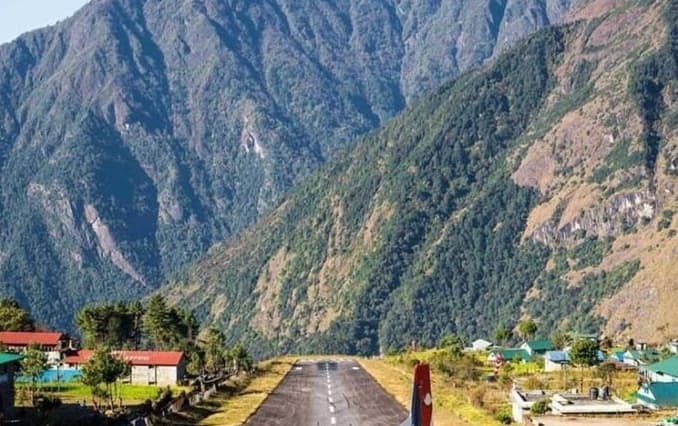
Travel insurance for Everest Base Camp is specialized adventure travel coverage designed to protect trekkers against high-altitude medical emergencies, trekking injuries, helicopter rescue, and emergency evacuation in Nepal's Himalayas. Because the standard Everest Base Camp route reaches 5,364 meters and Kala Patthar rises to 5,545 meters, trekkers need a policy that explicitly covers activities up to at least 5,600 meters, including altitude sickness (AMS, HAPE, and HACE), emergency hospitalization, and medical repatriation.
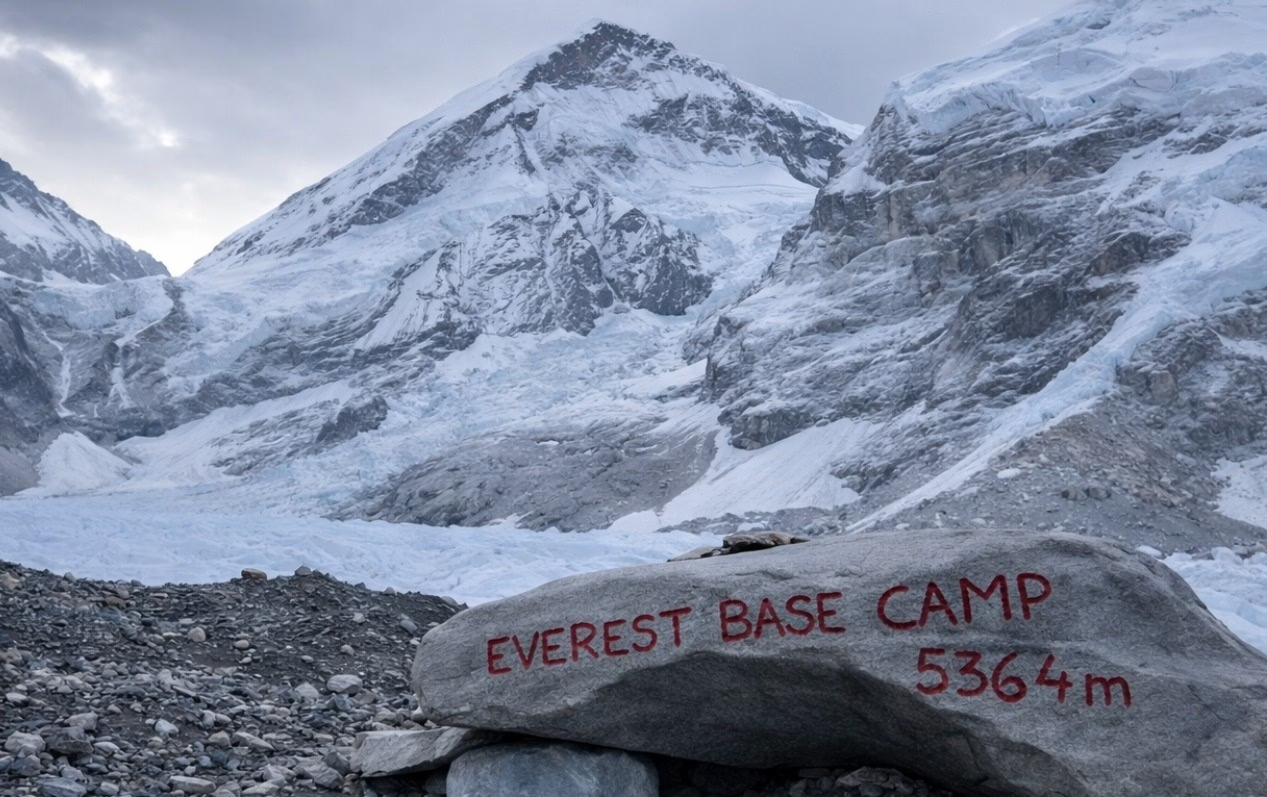
Choosing the right Everest Base Camp travel insurance also means checking helicopter evacuation limits, search and rescue benefits, pre-existing medical conditions, trip cancellation, and policy exclusions. A rescue helicopter from the remote Khumbu Valley can cost 3,000–10,000, making comprehensive coverage essential. In this 2026 guide, discover the required insurance coverage, typical policy costs of $100–$300 for a 2–3 week trek, and the essential conditions to check before trekking to Everest Base Camp.
Why Is Travel Insurance Essential for the Everest Base Camp Trek?
Travel insurance is essential for the Everest Base Camp trek because the route reaches 5,545 m, days from the nearest hospital, and a single helicopter evacuation costs $3,000–$10,000. A $100–$300 premium converts that exposure into a fixed, small cost.
The Khumbu valley has no road above Lukla. Every patient moves by foot, horse, or helicopter. Helicopter operators ask for a guarantee of payment before dispatch, and an insurer's assistance team provides that guarantee in minutes. An uninsured trekker or guide produces cash or a card deposit instead.
Is insurance a legal requirement? Standard EBC permits do not legally require personal travel insurance (unlike peak-climbing permits), though agencies make it a booking condition. Rules at permit counters change often, so confirm the current position with your agency before you fly. The practical answer stays the same: trek insured.
What Risks and Emergencies Can Occur During the Everest Base Camp Trek?
The 7 main emergencies on the Everest Base Camp trail are altitude illness, injuries, stomach infections, chest infections, cold injuries, flight disruption, and flare-ups of existing medical conditions.
Each one has a trail-specific form:
Altitude illness: acute mountain sickness (AMS), high altitude pulmonary edema (HAPE), and high altitude cerebral edema (HACE)
Injuries: sprained ankles on moraine, falls on icy steps, and collisions with yaks on suspension bridges
Stomach infections: traveler's diarrhea and food poisoning, most common between Namche and Dingboche
Chest infections: the dry "Khumbu cough" from cold, thin, dusty air
Cold injuries: hypothermia and frostbite on Kala Patthar sunrise climbs, which start in the dark in sub-zero temperatures
Flight disruption: Lukla cancellations that push you past an international departure
Flare-ups: asthma, heart conditions, and diabetes under physical stress
Most of these resolve with rest, fluids, and a day's descent. A small share do not. Insurance covers the small share.
How Does High Altitude Increase the Risk of Trekking Emergencies?
High altitude increases emergency risk because air pressure at Everest Base Camp (5,364 m) delivers roughly half the oxygen per breath available at sea level. Ascending faster than the body acclimatizes triggers AMS, which progresses to HAPE or HACE.
Fitness does not protect you, because altitude tolerance varies between individuals.
According to a 1999 study by Basnyat, Lemaster, and Litch of the Himalayan Rescue Association, 29.8% of 550 trekkers surveyed at Pheriche (4,243 m) met the diagnosis for AMS. The same study found that each additional night spent between Lukla and Pheriche cut AMS risk by 18.7%. Nights buy safety.
The CDC Yellow Book 2026 and the Wilderness Medical Society's 2024 guidelines give the benchmark: once above 3,000 m, raise your sleeping altitude by no more than 500 m per night, and add a rest day every 3–4 days (roughly every 1,000 m gained). A well-built itinerary respects both rules. Nepal Intrepid Treks' 16-day plan, for example, schedules rest days at Namche Bazaar (3,443 m) and Dingboche (4,450 m).
What Medical and Financial Risks Can Uninsured Trekkers Face?
Uninsured trekkers face helicopter bills of $3,000–$10,000, hospital bills of up to $5,000 for a 2–3 day stay, and repatriation costs that can exceed $100,000. They also lose every non-refundable trip payment if illness ends the trek.
The table below lists the main cost exposures an uninsured trekker carries on the Everest Base Camp route, with the typical range reported for each. Figures come from published 2025–2026 operator estimates and reporting by the British Mountaineering Council (BMC).
Exposure | Typical cost (USD) | Who pays without insurance |
Helicopter evacuation, Khumbu to Kathmandu | $3,000–$10,000 | You, before or at dispatch |
Post-evacuation check-up | Up to $800 | You |
Hospital stay, 2–3 days, Kathmandu | Up to $5,000 | You |
Medical repatriation with escort | $100,000+ | You |
Non-refundable trek and flight costs | Package price + airfare | You |
A $5,000–$8,000 helicopter flight equals 3 to 5 times the price of a typical $1,500 trek package. Insurance costs a fraction of one flight.
What Altitude Coverage Do You Need for the Everest Base Camp Trek?
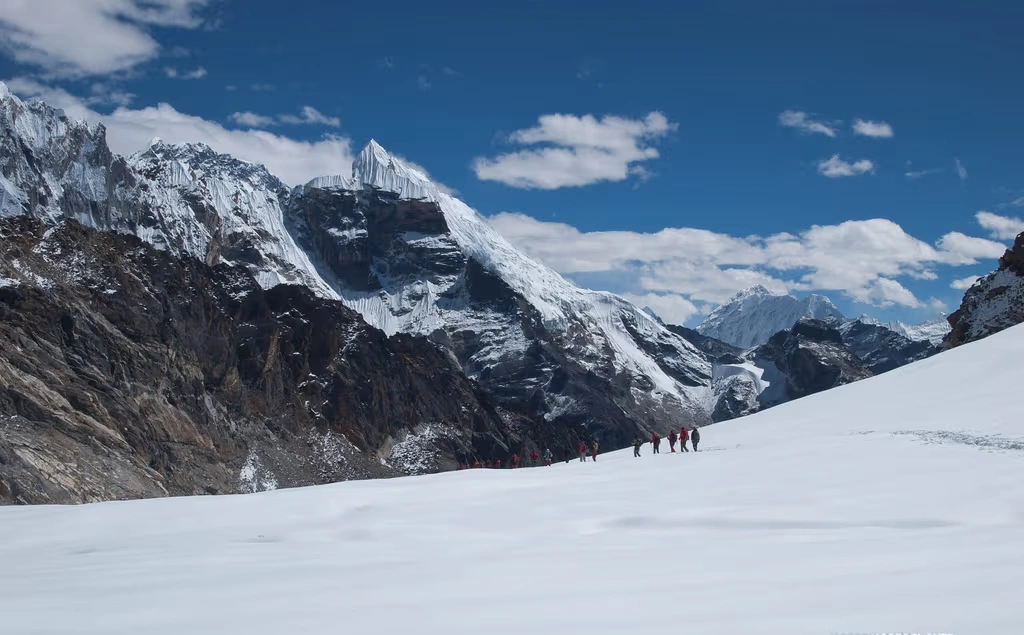
Altitude coverage for the Everest Base Camp trek must reach at least 5,600 meters, which clears Kala Patthar at 5,545 m. Policies capped at 4,500 m or 5,000 m leave the final push to Base Camp uninsured.
Altitude is the clause that decides whether your claim pays. Every other limit matters less once an insurer rules that you were above your cap.
Does Standard Travel Insurance Cover High-Altitude Trekking?
Standard travel insurance usually does not cover high-altitude trekking. Most standard policies, and almost all credit-card policies, exclude trekking above 2,500–4,000 m and omit helicopter evacuation from remote terrain.
According to a 2026 altitude-coverage analysis by Air Traveler Club, ordinary policies almost always exclude both trekking above 3,000–4,000 m and helicopter evacuation. Credit-card insurance typically stops at about 2,500 m. Lukla sits at 2,850 m, so a credit-card policy ends before the trek begins.
Three traveler types make the same mistake. First-time trekkers read "hiking" on the activity list and miss the altitude footnote. Annual-policy holders assume the plan extends to trekking, but most need a paid altitude rider. Credit-card holders assume premium cards include evacuation. Search the policy PDF for "altitude" and "trekking" before you buy.
What Maximum Trekking Altitude Should Your Insurance Cover?
Your insurance must cover a maximum trekking altitude of at least 5,600 m. That figure clears Kala Patthar (5,545 m), the highest point of the standard route, with a 55 m margin. A 6,000 m tier adds a 455 m margin.
Insurers sell altitude in round-number tiers. The table below defines each tier against the stages of the 16-day Everest Base Camp itinerary and marks where cover stops. A tick means the stage sits at or below the cap.
Stage | Elevation | 3,500 m cap | 4,500 m cap | 5,000 m cap | 5,500 m cap | 6,000 m cap |
Lukla | 2,850 m | ✓ | ✓ | ✓ | ✓ | ✓ |
Namche Bazaar | 3,443 m | ✓ | ✓ | ✓ | ✓ | ✓ |
Tengboche | 3,885 m | ✗ | ✓ | ✓ | ✓ | ✓ |
Pheriche | 4,243 m | ✗ | ✓ | ✓ | ✓ | ✓ |
Dingboche | 4,450 m | ✗ | ✓ | ✓ | ✓ | ✓ |
Lobuche | 4,910 m | ✗ | ✗ | ✓ | ✓ | ✓ |
Nangkartshang Hill hike | 5,100 m | ✗ | ✗ | ✗ | ✓ | ✓ |
Gorak Shep | 5,180 m | ✗ | ✗ | ✗ | ✓ | ✓ |
Everest Base Camp | 5,364 m | ✗ | ✗ | ✗ | ✓ | ✓ |
Kala Patthar | 5,545 m | ✗ | ✗ | ✗ | ✗ | ✓ |
Read the table row by row. A 3,500 m cap ends 57 m above Namche Bazaar. A 5,000 m cap excludes the Dingboche acclimatization hike. A 5,500 m cap falls 45 m short of the Kala Patthar sunrise, the photo most trekkers walk 16 days to take.
(official Nepal Survey Department elevations vary slightly by 5–40 m depending on the village reference point)
Confirm whether the clause measures maximum altitude or sleeping altitude, because wording differs between insurers. The Three Passes variation peaks at roughly 5,535 m at Kongma La, so the 5,600 m threshold holds. Peak climbs such as Island Peak (6,189 m) need a mountaineering policy.
Does Insurance Cover Acute Mountain Sickness (AMS)?
Yes, trekking insurance covers acute mountain sickness treatment when you stay within the policy's altitude cap. Cover includes clinic consultations, oxygen, medication given by a doctor, and evacuation if descent fails to resolve symptoms.
AMS is a headache combined with at least one other symptom: gastrointestinal issues (nausea, vomiting, or loss of appetite), fatigue or weakness, or dizziness (the Lake Louise criteria). It is the most common altitude illness on the Everest Base Camp trail.
Three situations void AMS claims:
Exceeding the cap. A trekker insured to 4,500 m who develops AMS at 5,180 m (Gorak Shep) loses cover for the whole episode.
Climbing against advice. Insurers deny claims when you ascend after a guide or doctor told you to descend or rest.
Undeclared conditions. A previous AMS or HAPE episode sits in the risk section of many applications.
Preventive medication such as acetazolamide is a personal expense. Ask your doctor about it before you leave home.
Does Travel Insurance Cover High Altitude Pulmonary Edema (HAPE) and High Altitude Cerebral Edema (HACE)?
Yes, specialist trekking insurance covers HAPE and HACE as emergency medical conditions, including evacuation, provided the policy has no "altitude illness" exclusion and you are below the altitude cap.
HAPE is fluid in the lungs. Its signs are breathlessness at rest, a wet cough, and blue lips. HACE is swelling of the brain. Its signs are confusion, severe headache, and loss of balance, the classic test being the inability to walk a straight heel-to-toe line. Both are life-threatening, and the first-line treatment for both is immediate descent, with oxygen and drugs given alongside it.
According to the Wilderness Medical Society's 2024 guidelines, anyone with a past HAPE or HACE episode carries a high risk on every future ascent, regardless of the ascent rate. A previous episode triggers a pre-existing condition review, and some insurers exclude it outright.
Hunt for the phrases "altitude sickness excluded" and "illness caused by altitude". Either one voids the cover you are buying.
Why Must You Check Altitude Exclusions and Coverage Limits?
You must check altitude exclusions and coverage limits because insurers deny claims on technicalities, not on severity. A policy that lists the right altitude but excludes unguided trekking, alcohol, or unreported symptoms pays nothing when the emergency arrives.
The table below defines five clauses that appear in trekking policies and shows what to look for in each.
Clause | What to look for | Why it matters on the EBC trail |
Maximum altitude | 5,600 m or higher, stated per policy | Kala Patthar is 5,545 m |
Trekking vs. mountaineering | "Trekking" defined without ropes or axes | Standard route is non-technical |
Guide requirement | Whether an unguided trek voids cover | Some policies require a licensed guide |
Alcohol and drugs | Intoxication exclusion | Applies to any injury while drinking |
Against medical advice | Ascending after warning | Voids AMS and HAPE claims |
Ask the insurer to confirm in writing: the maximum altitude, that helicopter evacuation is included, that the cap applies to your exact route, and that your pre-existing conditions are accepted. A written answer settles disputes. A phone answer does not.
Does Travel Insurance Cover Helicopter Evacuation From Everest Base Camp?
Yes, specialist trekking insurance covers helicopter evacuation from Everest Base Camp when the policy names helicopter rescue, covers your altitude, and the evacuation is medically necessary. Standard policies and credit cards usually exclude it.
Helicopter evacuation is the most expensive and most disputed benefit on the trail, and insurers and Nepal's government now scrutinize it closely.
When Is Helicopter Evacuation Necessary During the EBC Trek?
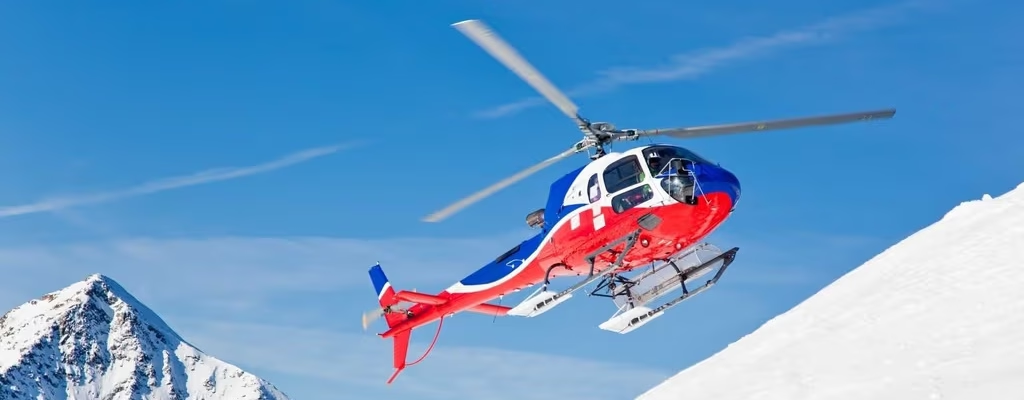
Helicopter evacuation is necessary when a trekker has HAPE, HACE, severe AMS that does not improve after descent, a serious injury such as a fracture, or an emergency that walking, porter-carry, or horse transfer cannot resolve in time.
Five situations justify a flight:
Pulmonary edema (HAPE): breathlessness at rest and a wet cough
Cerebral edema (HACE): confusion, loss of balance, or drowsiness
Severe AMS: symptoms that persist or worsen after descending
Major injury: a leg fracture above Lobuche, or head trauma
Other emergencies: chest pain, bleeding, or inability to walk with no safe way down
Mild AMS, fatigue, sore knees, and a tired spirit do not qualify. Descending 300–500 m resolves mild AMS in most cases, and the Joint Trauma System's 2024 altitude guideline calls descent the most appropriate treatment in all altitude illnesses.
In April 2026, Nepal police charged 32 people in an alleged $19.69 million scam, according to AFP. Investigators said operators filed multiple claims for one flight and pressured trekkers into airlifts for minor illness, and some trekkers were allegedly made sick to justify a flight. Police found no evidence that Everest guides took part, and the Nepal Mountaineering Association reported no verified cases of food poisoning or Diamox overdosing among climbers.
Fraud exists, and genuine rescues save lives. A reputable operator and a clear paper trail protect you on both counts.
Does Travel Insurance Cover Emergency Helicopter Rescue in Nepal?
Travel insurance covers emergency helicopter rescue in Nepal only when the policy states it, the insurer's doctor confirms medical necessity, and your altitude and route fall inside the terms. Most policies now carry a $500–$1,500 excess on rescue flights.
According to Honeyguide's March 2026 guide, most trekking policies now apply an excess of $500–$1,500 to helicopter evacuations in Nepal, a response to unnecessary flights. A few insurers still offer cashless evacuation with no excess.
Look for three terms:
Evacuation limit: Nepal-based operators commonly specify at least $100,000
Payment method: direct billing by the insurer beats reimbursement after the fact
Medical-necessity test: the insurer's own doctor decides, not the guide
Nepal's rescue guidelines, first issued in 2018 and now policed by a 2026 task force, require helicopter companies, hospitals, and agencies to report rescue flights, treatment, and billing to the Tourist Search and Rescue Committee, Tourist Police, and Department of Tourism within 10 days. They also bar helicopters from carrying anyone on a rescue flight except the patient and one helper or guide, so a second passenger is a red flag for fraud.
What Altitude and Location Restrictions Apply to Helicopter Evacuation?
Helicopter evacuation restrictions fall into two groups: operational limits (daylight, weather, landing sites) and policy limits (altitude cap, pickup location, and evacuation only to the nearest adequate facility). Voluntary helicopter returns are never covered.
Operational limits decide whether a flight launches. Rescue helicopters fly in daylight and in workable visibility. Cloud builds in the Khumbu by late morning, so early hours carry the best odds. Pickups happen at landing spots near Namche, Pheriche, Lobuche, and Gorak Shep.
Policy limits decide whether the bill gets paid. Check that the evacuation benefit applies at your altitude and that the destination is "the nearest appropriate medical facility", which for most claims means a Kathmandu hospital roughly an hour away by air.
The Everest Base Camp helicopter return from Gorak Shep is a popular optional extra. It is a tour, not a rescue, so insurance does not pay for it. Treat any offer of a "covered" fast flight down as a red flag.
Does Insurance Cover Medical Evacuation From Remote Himalayan Areas?
Yes, quality trekking insurance covers medical evacuation from remote Himalayan areas, including stretcher carries, horse transport, helicopter flight, hospital transfers, and air-ambulance repatriation with a medical escort.
Medical evacuation is a chain, not a single flight. A realistic Everest Base Camp case runs from a porter carry or horse transfer to a landing site, a helicopter flight to Kathmandu, hospital treatment, and a medically escorted flight home. Confirm that your policy covers every link, not only the flight. A policy that pays the helicopter but excludes the repatriation escort leaves a five-figure gap at the end. Adventure Consultants, one of the longest-running Everest guiding companies, states that an evacuation without cover or a rescue membership can cost over $100,000.
What Should You Do Before Arranging a Helicopter Rescue?
Before arranging a helicopter rescue, stabilize the patient, begin descent if the patient can walk, call your insurer's 24-hour assistance line, and get written authorization before any flight launches. Never accept a flight on a cash demand.
Follow this sequence:
Stabilize the patient with rest, warmth, fluids, and oxygen if available
Descend at least a few hundred meters when the patient can walk safely
Measure oxygen saturation, pulse, and symptoms, and write the numbers down
Call the insurer's 24-hour assistance line and quote the policy number
Confirm the authorization, the helicopter operator, and the destination hospital
Record the time, location, and every decision
Refuse cash demands, extra passengers, and blank forms
In peak season the Himalayan Rescue Association staffs an aid post at Pheriche (4,243 m), where doctors assess altitude illness. BMC reporting describes guides who bypass such posts because the doctors do not rubber-stamp evacuations. Visit the post when your route passes it. An independent medical opinion strengthens the claim.
What Should You Check Before Buying Everest Base Camp Travel Insurance?
Check eight items before buying Everest Base Camp travel insurance: explicit Nepal trekking cover, emergency medical and hospital cover, repatriation, search and rescue, limits and excess, pre-existing condition rules, cancellation and interruption, and delay and baggage terms.
A policy that fails the first two items fails the trek.
Does Your Policy Explicitly Cover Trekking in Nepal?
Your policy must name trekking, name Nepal or the Himalaya, and state a maximum altitude of at least 5,600 m. Phrases such as "hiking" or "adventure sports" without altitude figures give no real protection.
Search the policy wording for "trekking", "Nepal", and "altitude". Confirm that the cover applies when you walk with a guide and porter, which is how most Everest Base Camp trekkers travel.
Are Emergency Medical Expenses and Hospitalization Covered?
Yes, a suitable policy covers emergency medical expenses and hospitalization with a limit of at least $100,000 and direct billing to the hospital. Hospitals typically ask for a payment guarantee from the insurer.
The BMC reports up to $800 for a straightforward check-up after evacuation and up to $5,000 for 2–3 hospital days. Choose a medical limit well above those figures. Confirm that the policy covers outpatient clinic visits at the Himalayan Rescue Association posts and in Namche, because AMS often ends there rather than in a hospital.
Does Your Policy Include Repatriation and Emergency Transportation?
A strong policy includes repatriation: medical transport home with a qualified escort, plus emergency transport within Nepal. Unfunded repatriation can reach six figures.
Repatriation covers the flight home when a patient needs ongoing treatment. Emergency transportation covers every movement before that: porter carry, horse transfer, helicopter, ambulance, and hospital-to-hospital transfer. Check that both sit under the same evacuation limit, not in separate small sub-limits.
Are Search and Rescue Expenses Included in Your Coverage?
Search and rescue cover pays for locating a missing or injured trekker, which standard "evacuation" wording often omits. Confirm the policy says "search and rescue" in writing.
Search and rescue is a separate cost from evacuation. A missing trekker needs a ground team or aerial search before any evacuation begins, and Nepali agencies bill those hours. Policies that cover only "emergency evacuation" start paying once the patient is located.
What Are the Policy Limits, Deductibles, and Excess Fees?
Check three numbers: the medical limit (at least $100,000), the evacuation limit (at least $100,000), and the excess ($0–$1,500). A low premium often hides a high excess.
Excess is the amount you pay before the insurer pays. For helicopter rescues in Nepal, Honeyguide reports a typical range of $500–$1,500 in 2026. On a $5,000–$8,000 flight, a $1,000 excess equals 12.5% to 20% of the bill. Compare the premium and the excess together, never the premium alone.
Are Pre-Existing Medical Conditions Covered?
Pre-existing conditions are covered only when you declare them and the insurer accepts them in writing. Undeclared conditions give the insurer grounds to refuse any related claim, including altitude-linked emergencies.
Declare asthma, heart disease, diabetes, high blood pressure, and any past altitude illness. Insurers define "stable" differently, commonly 90 to 180 days without a change in treatment. Many policies waive the pre-existing exclusion only if you buy within a set window after your first trip payment. Ask for the written confirmation, and print it.
Does Your Policy Cover Trip Cancellation and Interruption?
Cancellation cover refunds prepaid, non-refundable costs when a covered reason cancels the trip before departure. Interruption cover pays for the unused trek and the return flight when illness or injury ends the trek early.
For Everest Base Camp, the prepaid costs include the trek package, international flights, and domestic Lukla flights. Covered reasons usually include illness, injury, and a family emergency. Change of mind does not qualify. "Cancel for any reason" upgrades return a partial refund for an extra premium.
Are Delays, Lost Baggage, and Personal Belongings Covered?
Delay cover pays for extra hotel and meal costs after a qualifying delay, and baggage cover pays for lost or stolen belongings, both with limits and conditions that Lukla flights often test.
Weather cancels Lukla flights often. Read the weather clause: some policies exclude weather delays, others pay after 6 to 12 hours.
Baggage cover applies conditions as well. Single-item limits commonly sit at $250–$500, and many policies exclude items left unattended in a teahouse or carried by a porter without safeguards.
How Much Does Travel Insurance for Everest Base Camp Cost?
Travel insurance for Everest Base Camp costs $100–$300 for a 2–3 week policy covering trekking to 6,000 m, according to 2026 Nepal operator estimates. Lower-priced quotes start near $58 for two weeks.
Adventure Altitude Treks (November 2025) and Green Valley Nepal Treks (April 2026) both quote $100–$300. HelloSafe's 2026 comparison lists plans from $58.53 for a two-week trek. Budget $100–$300, and treat quotes under $60 as a prompt to check the altitude cap.
What Factors Affect Everest Base Camp Travel Insurance Prices?
Eight factors set the price of Everest Base Camp travel insurance: trip duration, traveler age, altitude tier, medical limit, helicopter excess, trip cost insured, pre-existing conditions, and optional add-ons.
The table below defines each factor and shows how it moves the premium.
Factor | Effect on premium |
Duration | Largest driver for most plans |
Age | Rises sharply after 60–65; hard age caps on some plans |
Altitude tier | 6,000 m costs more than 4,500 m, and it is the wrong place to save |
Medical limit | Higher limit, higher price |
Helicopter excess | Higher excess lowers the premium |
Trip cost insured | Cancellation cover scales with prepaid cost |
Pre-existing conditions | May add a loading |
Add-ons | Gear, baggage, and "cancel for any reason" raise the price |
HelloSafe notes that one plan it highlights keeps the same price up to age 65, with duration doing the moving and the age cap acting as the real stop.
How Does Trekking Duration Affect Insurance Premiums?
Trekking duration is the main premium driver: each extra day adds roughly $5–$19 on typical Everest Base Camp policies. Buy the full trip including international flights, plus 3–5 buffer days for Lukla delays.
The per-day range comes from dividing the $100–$300 total across a 16–21 day policy. A 16-day itinerary like Nepal Intrepid Treks' Everest Base Camp trek needs cover from the day you leave home to the day you return. Adding 3–5 buffer days creates a 19–21 day policy. Most insurers refuse extensions once you are abroad or after a claim begins, and the buffer typically costs only $20–$75.
Is More Expensive Travel Insurance Always Better?
No, more expensive travel insurance is not always better. Altitude cap, helicopter wording, and medical limit decide quality. Extra premium that buys luxury baggage cover while leaving the altitude cap at 5,000 m adds nothing.
For illustration, compare what the extra money buys. A $90 policy capped at 4,500 m is cheaper and useless above Dingboche. A $180 policy covering 6,000 m with explicit helicopter evacuation works on every day of the trek. A $300 policy adds "cancel for any reason", a $0 helicopter excess, and a higher medical limit. The jump from $90 to $180 changes everything. The jump from $180 to $300 changes comfort and flexibility.
Opinions split on structure. National Geographic's Himalaya trekking tips point trekkers to a dedicated evacuation provider and note that the plan costs little next to a rescue. Others prefer one comprehensive policy for simplicity, and many trekkers combine both. Choose the structure that closes your biggest gap.
How Can You Compare Travel Insurance Policies for the EBC Trek?
To compare Everest Base Camp policies, list each quote's altitude cap, helicopter wording, medical and evacuation limits, excess, pre-existing terms, and claims process in one table, then eliminate every quote that fails the altitude and helicopter tests.
Follow this 6-step method:
Collect three to five quotes for identical dates, age, and trip cost
Eliminate any policy with an altitude cap below 5,600 m
Verify that helicopter evacuation is named in the wording
Compare excess, limits, and the cancellation sum
Test the assistance line: call it and time the answer
Record the wording in writing and save a copy offline
Score the survivors on direct billing, 24-hour assistance, and clarity of claim steps. The cheapest survivor usually wins. The cheapest overall quote usually does not survive step 2.
How Can You Buy and Use Travel Insurance for the Everest Base Camp Trek?
Buy Everest Base Camp travel insurance when you pay your first trip deposit, carry the certificate and emergency number on the trail, and call the insurer before arranging any evacuation. Early purchase unlocks cancellation and pre-existing cover.
The process has four stages: purchase, preparation, emergency contact, and claim.
When Should You Purchase Travel Insurance Before Trekking?
Purchase travel insurance within 10–21 days of your first trip payment and no later than 2 weeks before departure. Cancellation cover starts at purchase, and many pre-existing condition waivers expire after the purchase window.
Peak seasons run March–May and September–November, so book flights and cover early. Cancellation cover protects you only from the moment the policy starts, so a policy bought on departure day protects nothing that went wrong before it. Insurers also refuse to cover an event or condition that has already begun.
What Documents Should You Carry During the EBC Trek?
Carry seven sets of documents on the Everest Base Camp trek: policy papers, insurer emergency numbers, identity papers, permits, medical details, contacts, and a payment card.
Keep digital copies offline on your phone and one printed set in your daypack, not in the porter's duffle:
Policy papers: the certificate, policy number, and claims email
Emergency numbers: the insurer's 24-hour line with the country code, plus a second number
Identity papers: passport and visa copies
Trekking permits: Sagarmatha National Park and local municipality; see Everest Base Camp Trek Permit Cost 2026: Fees & How to Apply
Medical details: medication list with generic names, blood type, allergies, conditions
Contacts: family, agency, and guide, saved in two places
Payment card: with enough limit for a deposit
How Do You Contact Your Insurance Provider During an Emergency?
Contact your insurer by calling its 24-hour assistance line first, then by WhatsApp or email for written confirmation. Your guide or lodge can place the call when the patient cannot.
Connectivity decides the plan. Mobile signal and paid lodge Wi-Fi weaken on the upper trail, and a local SIM or satellite messenger closes the gap. Test your insurer's number before you leave Kathmandu.
When the call connects, expect this sequence:
Identify the patient, policy number, and exact location
Describe symptoms, oxygen saturation, and timeline
Authorize the insurer's doctor to speak to the guide or clinic
Receive the insurer's decision on the helicopter
Confirm the operator and hospital before launch
Notify the insurer within 24 hours, even for a clinic visit. Late notice is the most avoidable reason for a denied claim.
What Information Should You Provide When Filing a Rescue Claim?
Provide incident, medical, flight, hospital, and witness records: timeline, treating doctor's report, helicopter invoice with flight log, itemized hospital bills, and the guide's written account.
Rescue claims face close scrutiny in 2026, so collect proof while you are still in Kathmandu:
Incident record: date, time, altitude, location, and symptoms
Medical records: the treating doctor's report, diagnosis, and oxygen readings
Flight records: the helicopter company's itemized invoice and flight log
Hospital records: admission, discharge summary, and itemized bills
Witness record: the guide's signed statement
Request itemized invoices from every provider. Check that the flight hours match the route and that the invoice lists one patient. Submit within the insurer's deadline, commonly 30 to 90 days.
How Can Nepal Intrepid Treks Help You Prepare for the Everest Base Camp Trek With Proper Insurance?
Nepal Intrepid Treks helps you prepare by publishing the elevation of every stage of its 16-day Everest Base Camp trek and by listing exactly what the package includes and excludes, so you can match an insurance quote to the route.
Nepal Intrepid Treks is a Kathmandu-based operator with more than 10 years of experience and a 5.0 rating on TripAdvisor. Its Everest Base Camp Trek runs 16 days as a private trip for one person or more, with acclimatization days at Namche Bazaar (3,443 m) and Dingboche (4,450 m) and a maximum elevation of 5,545 m at Kala Patthar.
Can Nepal Intrepid Treks Help You Prepare for Insurance Requirements and Emergency Evacuation?
Yes. The Nepal Intrepid Treks package page gives stage-by-stage elevations for checking an altitude cap, and states that travel insurance and rescue costs are paid separately from the package price.
Three practical points come from the package terms:
Insurance is not in the package price. International travel insurance is an exclusion. Buy a policy covering at least 5,600 m.
Staff insurance is included. The guide and porters are covered by the company. That cover does not extend to you.
Rescue costs sit outside the price. Helicopter and rescue expenses are listed as exclusions, so your policy carries them.
Use the itinerary's elevations with the altitude table in this guide to test any quote line by line. Check the full includes and excludes list before you buy cover, and read about the Lukla leg in Lukla Flights for EBC: Kathmandu vs Ramechhap (Manthali).
Plan your Everest Base Camp trek with the right cover
Ask our team for the full altitude profile and the inclusions list, then check your insurance quote against both.
What Are the Key Travel Insurance Considerations Before Trekking to Everest Base Camp?
The key travel insurance considerations before trekking to Everest Base Camp are altitude cover to at least 5,600 m, named helicopter evacuation, $100,000 medical and evacuation limits, declared pre-existing conditions, and a written claims process you tested before departure.
Seven actions turn travel insurance for Everest Base Camp from a document into protection:
Confirm the altitude cap reaches 5,600 m or higher
Verify that helicopter evacuation and search and rescue are named
Set medical and evacuation limits at $100,000 or more
Declare every pre-existing condition and keep the written acceptance
Compare excess and premium together, not the premium alone
Buy within the purchase window after your first deposit
Carry the certificate, emergency number, and policy number in your daypack
The numbers on this page repeat the same message. The trek climbs 2,695 m from Lukla to Kala Patthar. Rescue costs $3,000–$10,000. The right policy costs $100–$300. In 2026 Nepal polices rescue fraud harder than ever, so a genuine claim backed by clean records stands on firm ground. Choose cover that matches the trail, trek at the pace your body allows, and carry the paperwork that proves it.