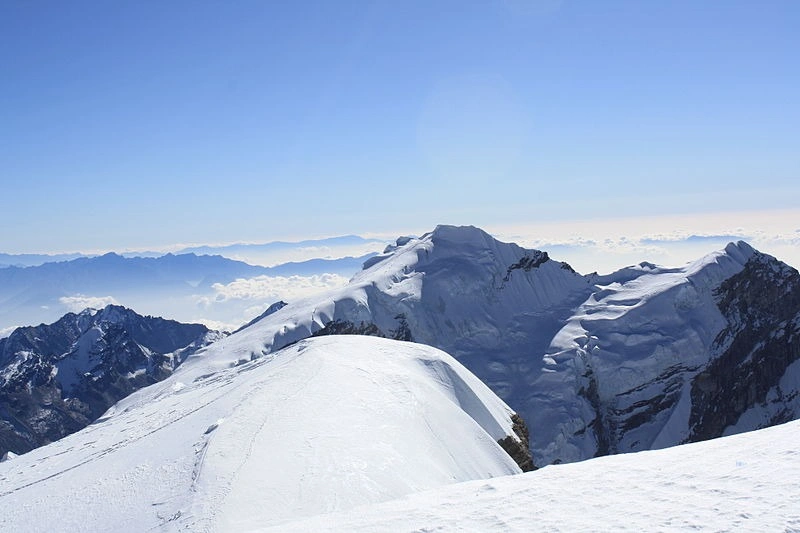
Mera Peak Trek is Nepal's highest trekking peak adventure, leading climbers to an elevation of 6,476 meters (21,246 feet) in the remote Hinku Valley of the Everest region. Officially recognized by the Nepal Mountaineering Association (NMA) as a trekking peak, Mera Peak combines high-altitude trekking, glacier travel, and a straightforward alpine ascent that is achievable for fit trekkers without advanced mountaineering experience. The climb is best known for its exceptional summit panorama, where Mount Everest, Lhotse, Makalu, Cho Oyu, and Kanchenjunga can all be seen from a single viewpoint, making it one of Nepal's most rewarding Himalayan climbing objectives.
Planning a successful Mera Peak Trek requires more than reaching the summit. Choosing the right itinerary, allowing sufficient acclimatization, understanding permit requirements, preparing with appropriate fitness and climbing gear, and trekking during the best weather windows all play a vital role in summit success and safety. This complete guide covers every stage of the journey, including the trekking route through Lukla, Zatrawala Pass, Kothe, Tangnang, Khare, and High Camp, detailed day-by-day itinerary, climbing costs, required permits, seasonal conditions, altitude preparation, equipment checklist, and expert tips to help you plan a safe, well-organized, and rewarding Mera Peak adventure in Nepal.
Why Is Mera Peak Trek Popular Among Himalayan Climbers?
Mera Peak Trek attracts climbers worldwide because it offers Nepal's highest summit accessible without advanced technical alpine skills. At 6,476 meters, the peak delivers unobstructed sightlines to 5 of the world's 14 eight-thousanders from a single vantage point, a panoramic reward no lower-altitude Himalayan trek matches.
What Makes Mera Peak the Highest Trekking Peak in Nepal?
Mera Peak holds the official classification as Nepal's highest trekking peak, designated by the Nepal Mountaineering Association (NMA). The NMA divides peaks below 7,000 meters into 2 categories: trekking peaks and expedition peaks. Mera Peak falls into the trekking category at 6,476 meters, meaning climbers obtain standard trekking-class permits rather than full expedition licenses.
3 attributes define this classification:
Summit elevation: 6,476 meters (21,246 feet), highest in the trekking peak category
Technical grade: PD (Peu Difficile), rated minimally difficult on the UIAA alpine scale
Route type: Non-technical ridge and glacier ascent on fixed ropes above High Camp
Mera Peak has 3 distinct summits: Mera North at 6,476 m, Mera Central at 6,461 m, and Mera South at 6,065 m. Climbing groups almost universally target Mera Central (6,461 m) as the primary summit goal, avoiding the heavily crevassed and highly technical terrain of Mera North. The Hinku Valley surrounding Mera Peak lies within the Makalu Barun National Park buffer zone, ecological diversity here runs from rhododendron forests at 3,500 meters to active glacier terrain at 5,500 meters.
Why Do Trekkers Choose Mera Peak Adventure?
Trekkers choose Mera Peak because it delivers a genuine high-altitude summit experience with a low technical barrier. The route demands crampon use, glacier travel, and rope management, but requires no vertical rock climbing, no prior alpine certification, and no supplemental oxygen.
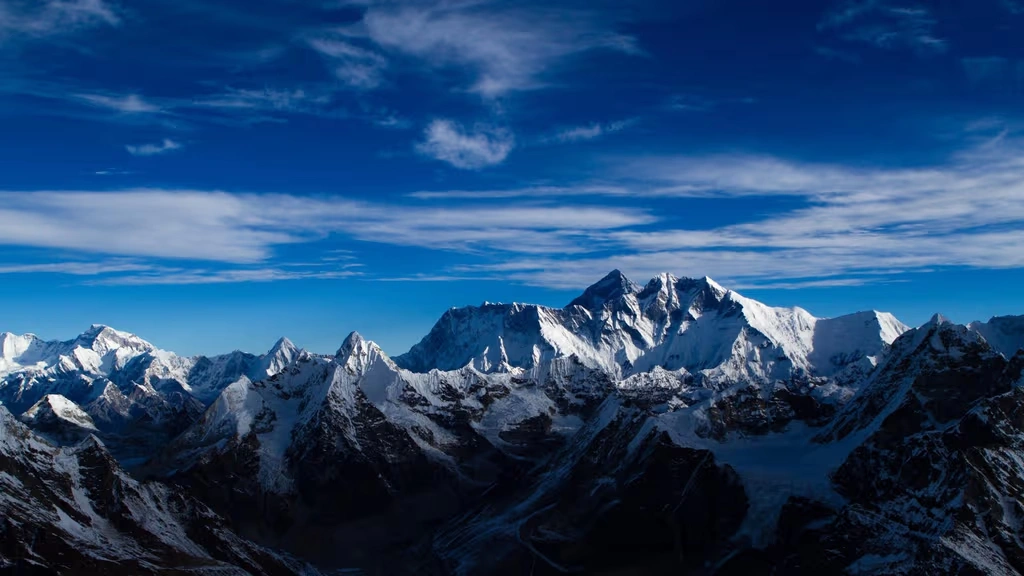
From the Mera Summit, climbers see all 5 of these eight-thousanders simultaneously:
Mount Everest at 8,849 m
Mount Kanchenjunga at 8,586 m
Mount Lhotse at 8,516 m
Mount Makalu at 8,463 m
Mount Cho Oyu at 8,201 m
This summit panorama across 5 peaks above 8,000 meters makes Mera Peak the most accessible high-altitude viewpoint in the entire Himalayan range.
The Hinku Valley trail remains measurably less crowded than the Everest Base Camp corridor. Peak-season days on the EBC trail see 300+ trekkers passing through. The Mera Peak approach averages 30–40 trekkers daily, a concrete difference in wilderness experience that experienced trekkers actively seek.
What Is the Complete Mera Peak Trek Route?
The complete Mera Peak Trek route runs from Kathmandu to Lukla, then through Chhutanga, Zatrabok via Zatrawala Pass, Kothe, Tangnang, Khare, High Camp, the summit at 6,476 m, and returns along the same corridor to Lukla. Total trekking distance covers approximately 100 kilometers round-trip across 14–15 active walking days.
Where Does the Mera Peak Trek Begin and End?
The trek begins with a 35-minute mountain flight from Kathmandu's Tribhuvan International Airport to Lukla's Tenzing-Hillary Airport at 2,850 meters. This flight operates on Tara Air and Summit Air routes and remains weather-dependent, a scheduling variable that makes Day 12's contingency buffer operationally important.
The route ends back at Lukla for the return flight to Kathmandu. The descent follows the same trail: High Camp → Khare → Kothe → Zatrabok → Chhutanga → Lukla. The itinerary allows 15 full days on the ground before the return flight.
A detail most route guides omit: Lukla airport sits at 2,850 meters, already above the altitude threshold where unacclimatized individuals feel initial physiological effects. The first walking day to Chhutanga at 3,500 meters gains 650 vertical meters, which falls within safe acclimatization limits when paced appropriately.
What Are the Main Villages and Landscapes Along the Mera Peak Route?
The Mera Peak route passes through 6 primary waypoints across distinct ecological zones:
Chhutanga (3,500 m): A small settlement at the upper edge of rhododendron and juniper forest. Serves as the first overnight stop after Lukla, where the air already carries the scent of high-altitude conifers.
Zatrabok (4,320 m): Reached after crossing the Zatrawala Pass at 4,600 meters. This waypoint delivers the first clear panoramic mountain views of KongdiRi, Numbur Himal, and Karyolung Peak. Most trekkers record their first genuine summit sighting here.
Kothe (3,600 m): Positioned in the Hinku Valley beside the Hinku Khola river. Kothe marks the ecological transition into the high-altitude valley ecosystem and serves as the descent waypoint on Days 5 and 13.
Tangnang (4,350 m): A traditional shepherd community in yak pastures. Kusum Kanguru peak at 6,369 meters dominates the eastern skyline from this settlement. Acclimatization Day 1 takes place here.
Khare (5,045 m): The last permanent settlement before the glacier. Teams stay 2 nights here for acclimatization and technical ice-climbing practice. Khare hosts the NMA permit checkpoint where rangers verify climbing documentation.
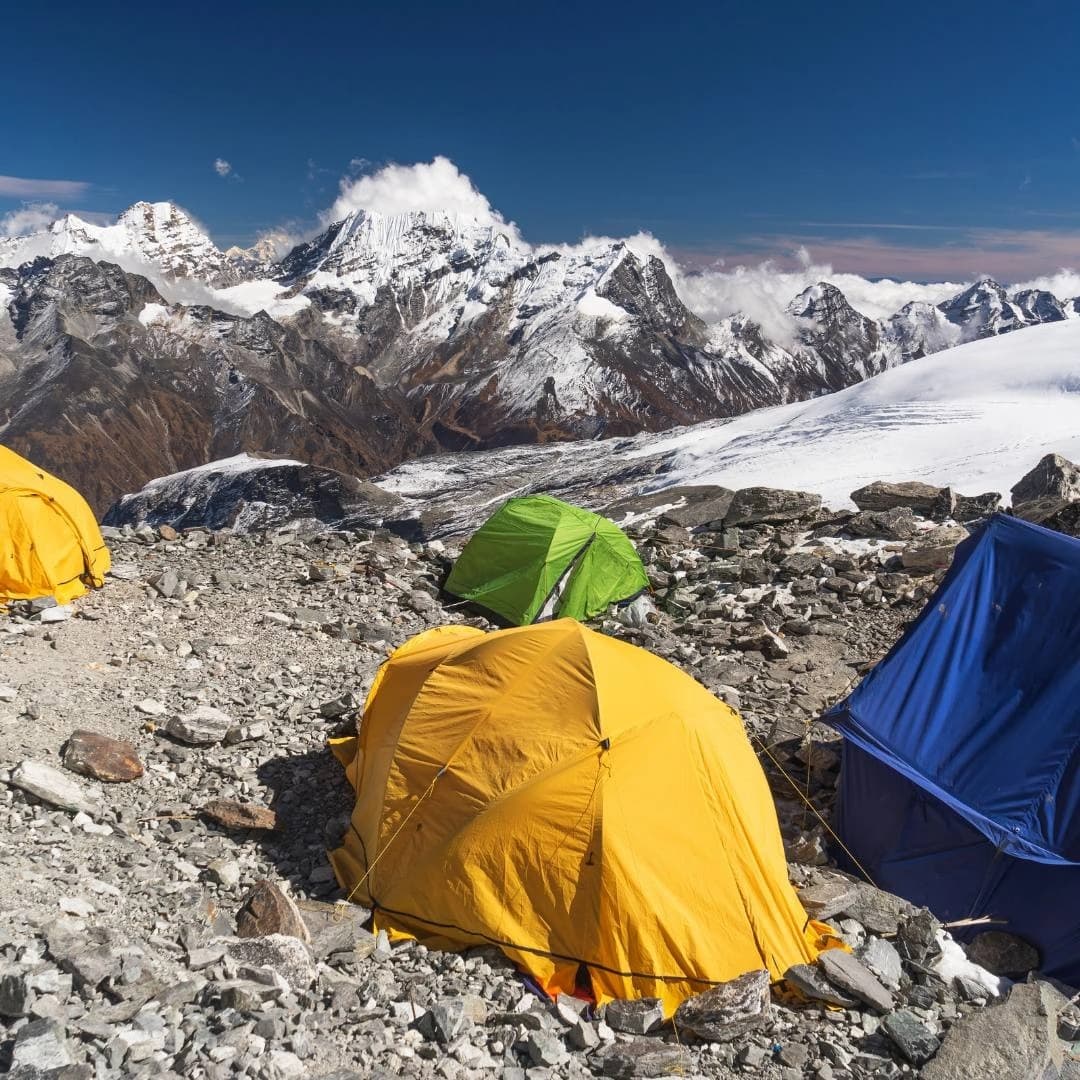
High Camp (5,780 m): A tented camp positioned directly on the Mera Glacier. No permanent structures exist here. Accommodation consists of expedition tents set by the climbing team, with meals prepared on camping stoves.
How Does the Mera Peak Summit Route Work?
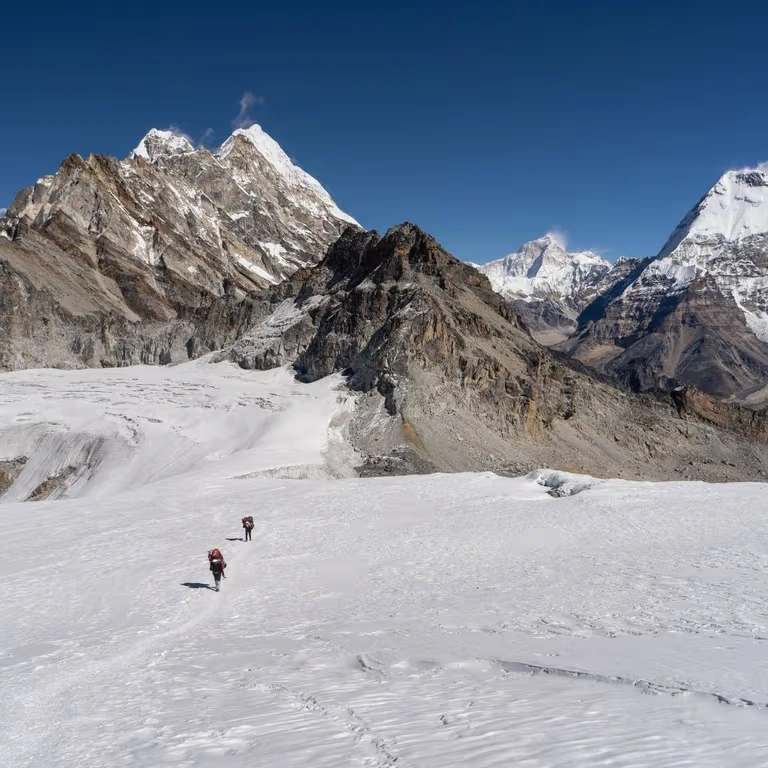
The summit route ascends from High Camp at 5,780 m to the summit at 6,476 m across the Mera Glacier, a 696-meter vertical gain covering approximately 4 kilometers over 4–5 hours. Descent from summit back to Khare takes 3–4 additional hours.
Summit day begins at 2:00–3:00 AM. This pre-dawn start maximizes the stable weather window before jet stream winds build after 10:00–11:00 AM. Guides fix ropes on steeper sections above High Camp. Crampons and ice axes engage from the first 200 meters above camp.
The summit route breaks into 3 technical phases:
Phase 1 (0–400 m above camp): Steady snow slope at 25–35 degrees angle, manageable pace
Phase 2 (400–600 m above camp): Steeper headwall at 40–45 degrees with fixed ropes in use
Phase 3 (final 100 m): Ridge traverse to the true summit at Mera North
Summit success rates average 70–80% for fully acclimatized groups with experienced NMA-certified guides, based on permit-holder completion data. Weather deterioration, not technical difficulty, causes most unsuccessful attempts.
What Is the Best Mera Peak Trek Itinerary?
The best Mera Peak Trek itinerary spans 18 days total from Kathmandu departure to return. This schedule incorporates 2 full acclimatization days, 1 weather contingency reserve, and 14 active trekking days, the minimum structure for safe altitude gain and strong summit readiness.
What Happens During the Day by Day Mera Peak Trek?
The following table presents the complete 18-day itinerary with elevation, daily duration, and primary objective for each stage.
Day | Destination | Elevation | Duration | Objective |
1 | Kathmandu arrival | 1,400 m | — | Airport transfer, team briefing |
2 | Kathmandu | 1,400 m | — | Valley sightseeing, gear inspection |
3 | Lukla → Chhutanga | 3,500 m | 3–4 hrs | Domestic flight, first trekking day |
4 | Chhutanga → Zatrabok | 4,320 m | 6 hrs | Cross Zatrawala Pass at 4,600 m |
5 | Zatrabok → Kothe | 3,600 m | 6 hrs | Descend into Hinku Valley |
6 | Kothe → Tangnang | 4,350 m | 4 hrs | Valley walk to shepherd settlement |
7 | Tangnang (Rest) | 4,350 m | — | Acclimatization Day 1 |
8 | Tangnang → Khare | 5,045 m | 3 hrs | Short, high-gain glacier approach |
9 | Khare (Rest) | 5,045 m | — | Acclimatization Day 2 + ice practice |
10 | Khare → High Camp | 5,780 m | 6–7 hrs | Glacier approach, camp setup |
11 | High Camp → Summit → Khare | 6,476 m | 8–9 hrs | Summit day |
12 | Khare (Reserve) | 5,045 m | — | Contingency / weather buffer |
13 | Khare → Kothe | 3,600 m | 5 hrs | Valley descent |
14 | Kothe → Zatrabok | 4,320 m | 6 hrs | Return traverse |
15 | Zatrabok → Lukla | 2,850 m | 6 hrs | Final trekking day |
16 | Lukla → Kathmandu | 1,400 m | — | Return domestic flight |
17 | Kathmandu (Leisure) | 1,400 m | — | Rest, celebration dinner |
18 | Departure | — | — | Farewell, airport transfer |
How Many Days Are Needed for Mera Peak Trek?
Mera Peak Trek requires a minimum of 18 days from Kathmandu departure to final return. Shortened 14–15 day alternatives exist but eliminate acclimatization days and the contingency buffer, 2 structural components that directly determine summit success rates and altitude safety outcomes.
The 18-day structure works because:
Day 7 acclimatization at Tangnang (4,350 m) prepares the circulatory system for the jump to Khare at 5,045 m
Day 9 rest in Khare allows red blood cell production to reach functional levels before High Camp
Day 12 reserve absorbs weather delays, the primary cause of failed summit attempts, not technical shortfalls
Trekkers on compressed 14-day schedules report significantly higher rates of altitude headaches at Khare compared to those on 18-day programs. Field data from Himalayan rescue organizations consistently identify inadequate acclimatization as the leading cause of medical evacuation on Mera Peak.
What Are the Acclimatization Days in Mera Peak Trek?
Mera Peak Trek includes 2 mandatory acclimatization days, Day 7 at Tangnang (4,350 m) and Day 9 at Khare (5,045 m). These are not optional rest days; both serve specific physiological preparation functions.
Acclimatization at Tangnang follows the "climb high, sleep low" principle. On Day 7, trekkers hike to 4,700–4,800 meters during the morning and return to camp at 4,350 m for the night. This controlled high-point exposure triggers measurable erythropoietin release and red blood cell production within 24–48 hours.
At Khare, Day 9 serves 2 distinct functions:
Altitude acclimatization: The body adjusts to 5,045 meters before the push to High Camp at 5,780 m
Ice-climbing practice: A 2–3 hour guided session on a nearby ice face covering crampon attachment, ice axe self-arrest technique, and rope clipping on fixed lines
The Khare ice practice session is the most consistently under-described component of all Mera Peak itineraries. This training session is the primary technical preparation for the summit headwall. Climbers who arrive at High Camp having practiced crampon use on real ice perform measurably more confidently on summit day than those who encounter glacier travel for the first time above 5,780 m.
What Is the Cost of Mera Peak Trek?
Mera Peak Trek costs between $2,280 and $2,775 per person for a complete 18-day guided package from Kathmandu, depending on group size. Solo travelers pay $2,775. Groups of 16–20 participants pay $2,280 per person, a $495 saving per person against solo pricing.
Group Size | Cost Per Person (USD) |
1 person | $2,775 |
2 persons | $2,550 |
3–6 persons | $2,475 |
7–10 persons | $2,415 |
11–15 persons | $2,350 |
16–20 persons | $2,280 |
What Factors Affect the Mera Peak Trek Cost?
4 primary factors determine total Mera Peak Trek cost: group size, booking season, accommodation tier, and government permit fees. Group size produces the largest single-variable cost reduction, joining a 2-person package rather than booking solo saves $225 per person on identical services.
Seasonal pricing variation: October–November (peak autumn) packages cost 10–15% more than March–April packages for equivalent services, reflecting higher porter and guide demand during peak windows.
Accommodation type affects the budget above Khare:
Teahouse accommodation: included in packages from Lukla to Khare
Camping above Khare: standard from High Camp onward, included in full packages
Kathmandu hotel: 2–3 nights in a 3-star hotel included in standard packages
Permit fees represent a fixed cost regardless of operator chosen. The NMA climbing permit runs $250 per person in autumn season and $125 per person in spring season, a $125 per-person difference that makes spring trekking financially attractive for budget-conscious climbers.
What Is Included and Excluded in the Mera Peak Trek Package?
Standard 18-day Mera Peak packages include: Kathmandu airport transfers, Kathmandu–Lukla–Kathmandu domestic flights, Kathmandu hotel accommodation, all teahouse and camping accommodation during the trek, full board meals (breakfast, lunch, dinner every day), licensed NMA climbing guide, assistant guide, porter services, group climbing equipment, and all 3 mandatory permits.
The following items fall outside standard packages:
International airfares to Kathmandu
Nepal visa fees: $30 for 15 days, $50 for 30 days, $125 for 90 days
Personal climbing gear: crampons, ice axe, harness, helmet
Travel and emergency medical insurance with helicopter evacuation coverage
Personal medications and altitude sickness prescriptions
Tips for guides and porters
Personal snacks and extra beverages beyond included meals
The most financially impactful exclusion most first-time Mera Peak trekkers underestimate: personal climbing gear. Quality crampons, ice axes, and harnesses cost $80–$150 to rent in Kathmandu's Thamel district for the full 18-day trip. Purchasing the same equipment new costs $300–$600. Budget this amount before departure rather than discovering the gap on arrival.
Tipping is customary and expected: guides receive $10–$15 per day; porters receive $5–$8 per day. An 18-day trek with 1 lead guide and 2 porters requires $360–$702 in gratuity allocation, a meaningful line item in total trip budgeting.
How Can You Reduce Mera Peak Trek Expenses?
3 proven strategies reduce Mera Peak Trek costs without compromising safety or experience quality:
Join a group package: 2-person bookings pay $2,550 versus $2,775 solo, an immediate $225 saving. Groups of 7–10 reach $2,415, saving $360 per person. Connecting with other solo trekkers through trekking forums before departure and booking as a 2–3 person group unlocks the next pricing tier.
Travel in shoulder season: Late September (pre-peak autumn) and late November (post-peak autumn) deliver 5–10% savings on operator packages with comparable visibility windows to peak October weeks. March in spring offers full NMA permit season at lower prices than April and May.
Rent gear in Kathmandu: Thamel district outfitters carry complete high-altitude gear sets for rental at $80–$120 for 20–25 days. Inspect crampons for frame integrity and boot binding compatibility before signing any rental agreement.
What Permits Are Required for Mera Peak Trek?
Mera Peak Trek requires 3 main permits: the Mera Peak Climbing Permit from the Nepal Mountaineering Association, the Makalu Barun National Park Entry Permit, and the Local Rural Municipality Fee (which is paid on-site in the Everest region, replacing the traditional TIMS Card). All 3 are mandatory and verified at checkpoints in Lukla and Khare.
Which Trekking Permits Are Needed for Mera Peak Region?
The following table presents all 3 required permits with their issuing authority, current cost, and processing location:
Permit | Issuing Authority | Cost (USD) | Obtained At |
Mera Peak Climbing Permit | Nepal Mountaineering Association (NMA) | $250 autumn / $125 spring | NMA Office, Naxal, Kathmandu |
Makalu Barun National Park Permit | Dept. of National Parks & Wildlife Conservation | $30 | Kathmandu or park entrance |
Local Rural Municipality Fee | Local Rural Municipality | NPR 2,000 | Khumbu Pasang Lhamu Rural Municipality counter |
Registered operators process all 3 permits as part of their full-service package. Solo independent trekkers apply directly at NMA headquarters in Kathmandu's Naxal district, plan 1 full working day for application, photo submission, and permit issuance.
What Are the Rules for Mera Peak Climbing Permits?
The NMA Mera Peak climbing permit carries 6 binding compliance rules that all permit holders must observe:
All climbers ascend under the direct leadership of an NMA-licensed climbing guide
Each permit covers 1 summit attempt and remains valid for a maximum of 1 month (30 days) from the date of issue, rather than an entire season.
A maximum of 10 climbers per licensed guide applies on technical sections above High Camp
An environmental bond (garbage deposit) of $500 per team is deposited at permit issuance and refunded upon verified waste compliance on descent.
Permits are non-transferable between individuals
The physical permit document must be carried to the summit, NMA rangers inspect documents at the Khare checkpoint
The environmental bond requirement receives almost no coverage in standard trek guides. Every climbing group must carry all waste generated above the Makalu Barun National Park boundary out of the valley. Rangers verify waste bags and conduct spot checks at Khare on descent days. Bond refund processing takes 2–5 working days after submission in Kathmandu.
What Is the Best Time for Mera Peak Trek?
The best time for Mera Peak Trek is October–November for the clearest summit conditions and March–May for warmer temperatures with rhododendron forest scenery. Autumn delivers the highest summit success rates at 75–80%; spring provides the second-highest at 65–75%.
Which Seasons Offer the Best Mera Peak Conditions?
Autumn (October–November) delivers post-monsoon clarity with visibility extending 100+ kilometers at summit elevation. October temperatures at High Camp average -10°C to -15°C overnight and -5°C to 0°C during daylight hours. Summit day wind speeds average 20–40 km/h in October, manageable with proper layering. November cools significantly, with High Camp nights reaching -20°C.
Spring (March–May) offers the secondary prime window. March remains cold, High Camp nights drop to -20°C, but pre-monsoon weather patterns produce stable 6–8 day clear windows. April and May bring warmer conditions with rhododendron forests below 4,000 meters in full bloom, adding a visual landscape dimension entirely absent in autumn.
Winter (December–February) presents extreme conditions. High Camp temperatures fall to -25°C to -35°C with sustained winds. The NMA reports fewer than 50 permit holders across December and January combined. Experienced winter alpinists complete Mera Peak in this period, but the conditions demand significantly greater cold-weather experience and gear investment.
Monsoon season (June–September) is not suitable for the Mera Peak climb. NMA climbing permits do not cover monsoon months. Trail sections in the Hinku Valley experience partial flooding. Leech infestation intensifies below 3,500 meters from June through August. Persistent cloud cover eliminates summit visibility.
How Does Weather Affect Mera Peak Trekking?
Weather on Mera Peak operates through 3 predictable daily patterns that experienced guides use to time the summit attempt:
Pre-dawn stable window: Conditions at the summit are calmest between midnight and 10:00 AM. The standard 2:00–3:00 AM summit departure from High Camp targets this stability window. Groups departing after 4:00 AM increasingly risk encountering rising winds and building clouds as they near the summit.
Afternoon cloud buildup: Clear summit mornings transition to cloud formation below the peak by 1:00–2:00 PM, even on otherwise clear days. Successful summiteers descend through dissipating clouds. Groups still ascending after noon face reduced visibility and whiteout risk on the ridge traverse.
Periodic snowfall events: October records 1–2 snowfall events per month in the Everest region, each depositing 20–40 centimeters of fresh snow on the High Camp to summit route. Each snowfall requires guide teams to re-establish the trail before clients ascend. Day 12's contingency reserve absorbs these 1–2 day delays without disrupting the return flight schedule.
What Preparation Is Needed for Mera Peak Trek?
Mera Peak Trek preparation requires 3–6 months of structured fitness training combined with technical familiarization, permit documentation, and gear acquisition. Physical readiness directly determines acclimatization speed, summit performance, and overall safety margin.
What Fitness Level Is Required for Mera Peak Trek?
Mera Peak demands a solid intermediate fitness level: the ability to walk 6–8 hours daily with a 5–8 kg daypack for 10 consecutive days, ascending 600–800 vertical meters each day. Trekkers who meet this benchmark consistently complete the approach to Khare without medical incidents.
Trekkers without prior high-altitude experience complete Mera Peak successfully at a rate of approximately 60–65%, versus 80%+ for those with prior experience above 4,500 meters. The difference reflects acclimatization adaptation speed, not technical skill. A prior altitude experience baseline, Annapurna Circuit, Everest Base Camp, Mount Kilimanjaro, or any peak above 4,500 m, significantly accelerates adaptation in the 5,000+ meter band.
A critical distinction most preparation guides misrepresent: sea-level cardiovascular fitness does not translate directly to high-altitude performance. A marathon runner with no altitude experience adapts at the same physiological rate as a moderately fit non-runner at altitude. Aerobic capacity above 4,500 meters depends on acclimatization duration, not baseline fitness level.
Age does not disqualify Mera Peak candidates. Trekkers in their 50s, 60s, and occasionally 70s summit Mera Peak annually, provided they maintain aerobic fitness baselines and respect the 18-day acclimatization schedule.
What Training Helps Before Mera Peak Climbing?
6 training categories build Mera Peak-specific readiness when followed for 12–16 weeks before departure:
Cardiovascular endurance: 3–4 weekly sessions of 45–90 minute continuous aerobic activity, running, cycling, or rowing, sustained at 60–70% maximum heart rate. Target: completing 60-minute sessions without stopping before departure week.
Leg strength: Weighted squats, lunges, and step-ups 3 sessions per week. Strong quadriceps reduce knee joint stress on 1,200–1,500 meter descent days from High Camp to Kothe.
Loaded hiking: 2 full-day hikes per month carrying a 10–12 kg pack on uneven terrain. This training specifically replicates trekking conditions at realistic loads rather than gym approximations.
Anaerobic threshold training: Stair climbing or hill sprint intervals 2 sessions per week. Summit headwall sections push acclimatized trekkers to 80–90% maximum heart rate, anaerobic threshold work prepares the cardiovascular system for these effort spikes.
Technical climbing familiarization: A 1–2 day crampon and ice axe course at an alpine training center before departure builds confidence. Training options include facilities in Chamonix (France), Innsbruck (Austria), and the Khumbu Valley itself. The Khare practice session reinforces these skills but works better as a refresher than as a first introduction.
Mental preparation: Altitude above 5,000 meters produces persistent headaches, reduced appetite, fragmented sleep, and fatigue. These symptoms challenge mental resilience more than physical capacity for most trekkers. Familiarity with altitude symptom profiles, acquired through reading or lower-altitude exposure, reduces anxiety-driven decision errors at critical points.
What Gear and Equipment Are Needed for Mera Peak?
Mera Peak requires 4 gear categories: high-altitude clothing layers, technical climbing equipment, mountain footwear, and trek support items.
Clothing layers (5 essential items):
Down jacket rated to -20°C (mandatory for High Camp nights and summit day)
Waterproof shell jacket and matching pants (Gore-Tex or 3-layer laminate equivalent)
3 mid-layers comprising thermal base layers and a fleece or softshell
Insulated outer gloves with separate liner gloves underneath
Balaclava and insulated hat
Technical climbing equipment (5 essential items):
12-point mountaineering crampons (compatible with double-boot sole)
Ice axe, 55–65 cm, T-rated (technical duty)
Sit harness, UIAA-rated, sized correctly for layered clothing
Climbing helmet (rock and ice rated)
Jumar ascender and 3 locking carabiners
Footwear (2 essential items):
Double-boot mountaineering boots with crampon-compatible welt (mandatory above High Camp)
Separate trekking boots for approach days below High Camp
Trek support items (6 essential items):
Trekking poles with interchangeable snow baskets
55–70L expedition backpack with hip belt load transfer
Sleeping bag rated to -25°C comfort rating (not limit rating)
Headlamp with fresh lithium batteries (cold temperatures drain alkaline batteries rapidly)
Sun protection: SPF 50+ sunscreen, UV-400 glacier sunglasses rated Category 4
Hydration system: 2–3L capacity with insulated tube to prevent freezing above 5,000 m
What Challenges Can You Expect During Mera Peak Trek?
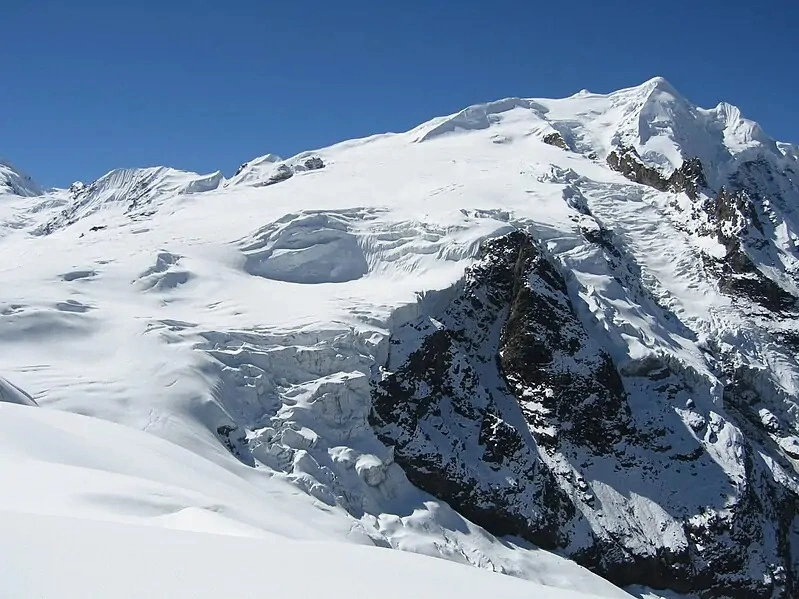
Mera Peak Trek presents 4 primary challenge categories: acute mountain sickness at altitude, glacier terrain navigation, remote trail logistics with limited rescue access, and weather-driven itinerary disruption. Each challenge is manageable with preparation. Underestimating any of the 4 reduces summit probability and elevates safety risk measurably.
How Can You Manage Altitude During Mera Peak Trek?
Altitude management on Mera Peak follows 3 core principles: controlled ascent rate within 300 meters of net gain per night above 3,000 m, daily hydration of 3–4 liters, and immediate recognition of Lake Louise AMS Score 3+ as a descent trigger.
Acute mountain sickness (AMS) is defined by the Lake Louise criteria as headache plus any 1 of 4 symptoms: fatigue, dizziness, difficulty sleeping, and gastrointestinal distress. A combined score of 3 or above at rest triggers a mandatory descent protocol, proceeding upward with an active AMS score above 3 carries genuine cerebral or pulmonary edema risk.
Controlled ascent: The 18-day itinerary averages 300–400 meters of net altitude gain per overnight stop above 3,000 m, matching established acclimatization rate recommendations from the Wilderness Medical Society. Trekkers who rush ahead of the group schedule break this boundary and report AMS symptoms at the highest rates.
Hydration target: Urine color serves as a practical hydration monitoring tool, pale yellow indicates adequate hydration; dark amber indicates dehydration. Carbonated beverages and alcohol dehydrate at altitude and are avoided above 4,000 meters by experienced climbers.
Acetazolamide (Diamox) at 125–250 mg twice daily reduces AMS symptom frequency in predisposed individuals. A travel medicine physician prescribes Diamox before departure, self-administration without medical consultation carries allergy risk for individuals with sulfa drug sensitivities.
Descent protocol: A 500-meter descent resolves most moderate AMS cases within 2–4 hours. Khare at 5,045 m serves as the critical decision point. Trekkers with persistent AMS symptoms at Khare descend to Kothe (3,600 m) rather than attempting High Camp. No summit attempt justifies risking high-altitude cerebral or pulmonary edema.
What Safety Tips Improve the Mera Peak Experience?
6 safety practices consistently separate successful Mera Peak summiteers from those who turn back short of the summit:
Follow guide decisions without argument: NMA-licensed climbing guides hold legal authority and summit experience. Disagreeing with a turnaround decision at altitude, the single most dangerous behavior pattern identified in Himalayan rescue case reviews, has cost lives on Mera Peak and neighboring peaks.
Depart High Camp by 3:00 AM maximum: Groups leaving after 4:00 AM arrive at the summit headwall as jet stream winds strengthen. The 2–3 AM window is a weather-driven operational requirement, not a preference.
Maintain rope team integrity on the glacier: All climbers remain roped together from High Camp to the summit. Crevasses on the Mera Glacier are snow-bridged and invisible from the surface. The rope team catches crevasse falls, individual movement without the rope removes this protection entirely.
Carry emergency medications: Standard personal emergency kits include dexamethasone (high-altitude cerebral edema management), nifedipine (high-altitude pulmonary edema management), and ibuprofen (headache relief). Guides carry group emergency medication; individuals carry personal prescriptions obtained from a travel medicine physician before departure.
Secure helicopter evacuation insurance before arriving in Nepal: Emergency evacuation from Khare to Kathmandu costs $4,000–$7,000 without insurance. No legitimate operator permits uninsured climbers above Lukla. Secure international evacuation coverage through your home country travel insurer before booking.
Download offline maps before Lukla: Mobile data signal disappears above Kothe. Maps.me and Gaia GPS both carry offline Hinku Valley topographic maps. Download before the Lukla flight, not at Lukla where connectivity already weakens.
How Can You Plan Mera Peak Trek with Nepal Intrepid Treks?
Nepal Intrepid Treks organizes complete 18-day Mera Peak climbing packages from Kathmandu, covering all logistics from arrival to summit and return departure. Packages start at $2,550 per person for 2-person private groups and scale to $2,280 per person for groups of 16–20.
Can Nepal Intrepid Treks Help With Mera Peak Trek?
Nepal Intrepid Treks delivers Mera Peak Trek support across 4 service pillars: pre-trek permit and logistics management, NMA-certified climbing guidance, on-trail safety infrastructure, and post-summit documentation.
Pre-trek logistics: Nepal Intrepid Treks processes the mandatory permits, including the NMA climbing permit and Makalu Barun National Park permit, facilitates the Local Rural Municipality Fee, and arranges Kathmandu–Lukla domestic flights. Clients receive a detailed pre-departure gear list, medical form, and team briefing before Day 1.
Certified climbing guidance: Nepal Intrepid Treks assigns NMA-licensed climbing guides with documented Mera Peak summit experience. Guides fix ropes above High Camp, lead rope team progression on summit day, and hold final authority on weather and safety decisions throughout the climb.
On-trail safety infrastructure: Teams carry group emergency medical kits with dexamethasone and nifedipine protocols, pulse oximeters for daily blood oxygen saturation monitoring from Day 3 onward, and Gamow portable hyperbaric bags for emergency AMS treatment before helicopter evacuation.
Post-summit documentation: Nepal Intrepid Treks provides NMA summit certification documentation, the official record of the Mera Peak summit achievement. Day 17 in Kathmandu includes a celebration dinner and team debrief before international departure.
Private group structure: Nepal Intrepid Treks operates Mera Peak packages for private groups with a minimum of 2 participants. Travelers who book solo but want to join an existing group departure contact the team directly for available scheduled trips.
What Are the Key Takeaways About Mera Peak Trek?
Mera Peak Trek delivers Nepal's highest trekking summit at 6,476 meters from a route accessible to non-technical climbers with adequate fitness and full acclimatization time. The complete 18-day journey from Kathmandu covers the Hinku Valley's remote landscape, crosses the Zatrawala Pass at 4,600 m, and rewards summit-day effort with panoramic views of 5 peaks above 8,000 meters.
5 decisions determine Mera Peak success:
Choose the full 18-day itinerary: Compressed 14-day alternatives eliminate acclimatization days and the contingency buffer, reducing summit success rates and increasing AMS risk measurably.
Trek in October or April: These 2 months deliver the highest combined probability of stable weather, summit visibility, and manageable temperatures across the entire season calendar.
Begin structured fitness training 16 weeks before departure: Cardiovascular endurance and leg strength training at this lead time builds the aerobic base that altitude demands above 5,000 m.
Secure helicopter evacuation insurance before booking flights: Every trekker above Lukla carries this coverage. Obtain it through your home country insurer before arriving in Nepal, not after.
Book through an NMA-registered operator: Licensed operators employ NMA-certified guides, carry mandatory emergency equipment, hold permit compliance responsibility, and operate under Nepal's Mountaineering Act framework.
Mera Peak rewards preparation with the most accessible high-altitude summit panorama in the Himalayan range. At 6,476 meters, looking across 5 of the world's 14 eight-thousanders from a single standing point, the summit justifies every training session, every acclimatization rest day, and every early morning departure from High Camp.
Ready to climb Mera Peak? Connect with Nepal Intrepid Treks to arrange your complete 18-day private package with NMA-certified climbing guides, all permits, domestic flights, accommodation, and full-board meals, from Kathmandu departure to summit and return.