The Gokyo Lakes Trek cost in Nepal depends on the route duration, trekking season, group size, accommodation level, transportation, permits, and the services included in a trekking package. A realistic budget ranges from $800 to $2,500 per person, while most trekkers choosing a 12–14-day guided itinerary spend around $1,200–$1,800. The total budget covers the essential expenses of reaching the Gokyo Valley, including Kathmandu–Lukla flights, Sagarmatha National Park and local conservation fees, teahouse accommodation, meals, licensed guide and porter services, and personal trekking expenses. Private treks, peak-season departures, longer itineraries, and higher accommodation standards increase the price, while shared group departures and shoulder-season travel can reduce the per-person cost.
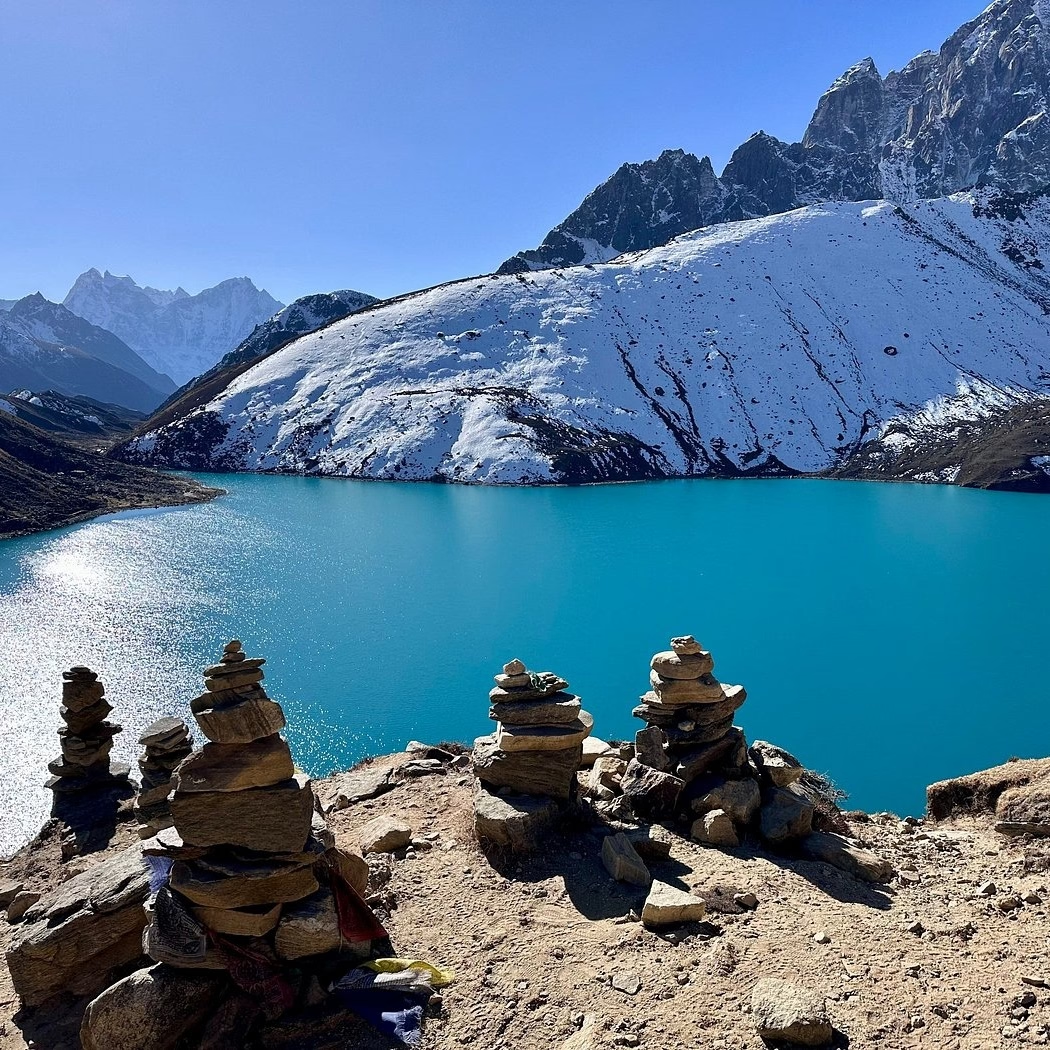
The Gokyo Lakes Trek is a high-altitude Himalayan journey through Nepal's Khumbu region, with the route reaching Gokyo Ri at 5,357 meters and passing through Sagarmatha National Park, a UNESCO World Heritage Site. The budget must therefore account not only for ordinary trekking expenses but also for acclimatization days, appropriate equipment, high-altitude travel insurance, emergency evacuation protection, and unpredictable Lukla flight conditions. This complete cost guide explains the price of every major component, compares group and private trekking, examines seasonal and accommodation differences, identifies package inclusions and exclusions, and shows practical ways to reduce the Gokyo Lakes Trek cost without compromising essential safety and trekking support.
What Is the Average Cost of the Gokyo Lakes Trek?
The average Gokyo Lakes Trek cost ranges from $800 to $2,500 per person. Budget trekkers who arrange services independently spend $800 to $1,200. Mid-range all-inclusive guided packages cost $1,200 to $1,800. Private guided treks with premium services run $1,800 to $2,500.
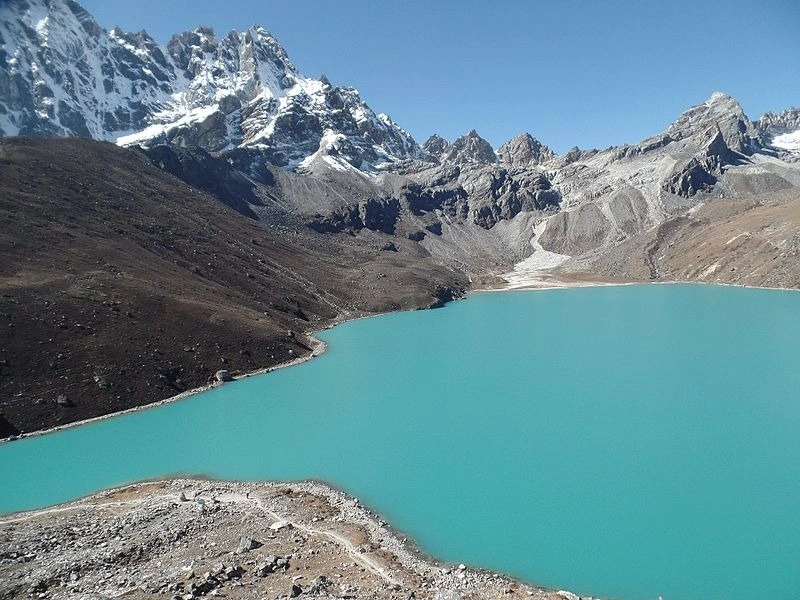
The Gokyo Lakes Trek is a high-altitude trekking route in Nepal's Khumbu region, reaching Gokyo Ri at 5,357 meters above sea level. The route passes through Sagarmatha National Park, a UNESCO World Heritage Site, and crosses 6 glacial lakes, the largest freshwater lake system in the Himalayas above 4,000 meters.
Total costs divide across 5 main categories: permits and fees (approximately $45), domestic flights ($320 to $440 round trip), daily food and accommodation ($35 to $65 per person per day), guide and porter services ($40 to $55 per day combined), and additional personal expenses ($150 to $350 for the full trek).
The biggest source of cost variation is whether you book a private trek or join a group departure. Private arrangements add $400 to $700 per person compared to group packages. Season also matters: peak-season trekking in October to November and March to May costs 10% to 20% more than shoulder-season trekking.
What Does the Gokyo Lakes Trek Package Usually Include?
Standard Gokyo Lakes Trek packages from licensed agencies include 7 core services: airport transfers in Kathmandu, teahouse accommodation, two meals daily (breakfast and dinner), all required trekking permits, a licensed guide, a porter, and domestic Kathmandu-Lukla-Kathmandu flights.
Most mid-range packages also include 1 to 2 nights of Kathmandu accommodation before and after the trek. Nepal government VAT of 13% applies to all agency invoices and is typically incorporated into the quoted package price.
The permits included in standard packages cover the Sagarmatha National Park Entry Permit and the Khumbu Pasang Lhamu Rural Municipality Conservation Fee. (Note: The TIMS card is no longer required for trekkers flying directly into Lukla). Confirm with your agency that both fees are included before booking, since some budget agencies list permit costs separately.
Guide and porter accommodation and meals during the trek are the agency's or trekker's responsibility, separate from the trekker's own food and accommodation costs. Reputable agencies factor these staff expenses into the package price.
What Is Excluded From the Gokyo Lakes Trek Cost?
The 6 most common exclusions from Gokyo Lakes Trek packages are: Nepal entry visa fees, international airfare, travel and rescue insurance, personal trekking gear, lunch meals, and guide and porter tips.
Nepal visa fees are $30 for a 15-day visa or $50 for a 30-day visa, obtained on arrival at Tribhuvan International Airport in Kathmandu. International flights to Kathmandu are always a separate expense.
Travel insurance with helicopter evacuation coverage is excluded from all standard packages. This is the exclusion that matters most. Helicopter rescue from Gokyo altitude costs $3,000 to $8,000 without insurance. Every trekker on this route needs a policy that explicitly covers high-altitude rescue above 5,000 meters.
Lunch meals, personal snacks, hot drinks, bottled water, Wi-Fi sessions, phone charging, hot showers, and alcoholic beverages are excluded from teahouse packages. These daily extras add $15 to $25 per person per day to the trail budget.
Guide and porter tips are not mandatory but are standard practice. The expected tip range is $5 to $10 per day for guides and $3 to $5 per day for porters, paid at the end of the trek.
What Factors Affect the Gokyo Lakes Trek Cost?
5 primary factors determine the total Gokyo Lakes Trek cost: trek duration, group size, trekking season, accommodation standard, and the inclusion of guide and porter services. Each factor shifts the total budget by 15% to 40%.
Understanding these variables before booking gives you control over which costs to optimize and which to protect.
How Does Trek Duration Affect the Total Cost Of Gokyo Lake Trek?
Trek duration multiplies accommodation, meal, guide, and porter costs directly. A standard 12-day Gokyo Lakes Trek costs $1,000 to $1,500 per person. Extending the route to 16 to 18 days to include the Cho La Pass or Three Passes raises the total to $1,500 to $2,200.
Each additional trail day adds $40 to $80 in accommodation and meal costs, $25 to $35 in guide fees, and $15 to $20 in porter fees. A 4-day extension adds $320 to $520 per person.
The standard Gokyo Lakes Trek itinerary runs 12 to 14 days from Lukla. Adding the Renjo La Pass traverse extends this to 16 to 18 days. Combining Gokyo with Everest Base Camp creates a 20 to 22-day route.
Acclimatization rest days are built into every well-planned itinerary. Cutting them shortens the trek and reduces cost by $80 to $120 per day saved, but increases acute mountain sickness (AMS) risk significantly. The financial cost of a helicopter evacuation at $3,000 to $8,000 makes skipping acclimatization days a poor trade-off.
How Does Group Size Change the Gokyo Lake Trekking Cost?
Group size is the most effective cost-reduction lever on the Gokyo Lakes Trek. A group of 4 or more trekkers reduces the per-person cost by 20% to 30% compared to solo private trekking, because guide and porter fees are shared across the group.
Group packages from licensed agencies: $1,200 to $1,600 per person for 4 or more trekkers. Private guided packages for 1 to 2 trekkers: $1,600 to $2,500 per person.
The porter logistics explain this gap clearly. One porter carries a maximum of 25kg and typically serves 1 to 2 trekkers. In a group of 4, 2 porters serve 4 trekkers at $15 to $20 per porter per day, reducing the per-person porter cost to $7.50 to $10 per day versus $15 to $20 per day for a solo trekker.
Solo trekkers who join a group departure from a licensed agency access group pricing without needing to find travel partners independently. Nepal Intrepid Treks offers scheduled group departures throughout peak season where solo travelers pay group rates from $1,210 per person.
How Does the Trek Season Affect Gokyo Lakes Trek Prices?
Peak-season trekking in October to November and March to May costs 10% to 20% more than off-season trekking. Teahouse rates rise, Lukla flights sell out weeks in advance, and last-minute bookings carry premiums of $30 to $70 per flight.
Peak-season teahouses charge NPR 600 to NPR 1,500 per room per night (approximately $4.50 to $11). In shoulder and off-season months, the same rooms cost NPR 300 to NPR 800.
The monsoon season (June to August) offers the lowest teahouse prices, with rates 20% to 30% lower than peak season. Trail conditions during monsoon include muddy paths, reduced visibility, and leeches on lower-elevation sections. Weather windows for mountain views are shorter and less reliable.
Winter trekking (December to February) sits between peak and off-season on price. Teahouse rates are moderate, Lukla flights are available with short notice, but nighttime temperatures at Gokyo drop to -15°C to -20°C. Adequate sleeping gear and down-filled clothing add $100 to $200 to personal equipment costs for winter dates.
How Does Accommodation Affect the Gokyo Lake Trek Cost?
Teahouse accommodation on the Gokyo Lakes Trek costs $5 to $30 per night per room. Basic rooms with shared bathrooms cost $5 to $10. Rooms with attached bathrooms and heated dining access cost $15 to $30 during peak season.
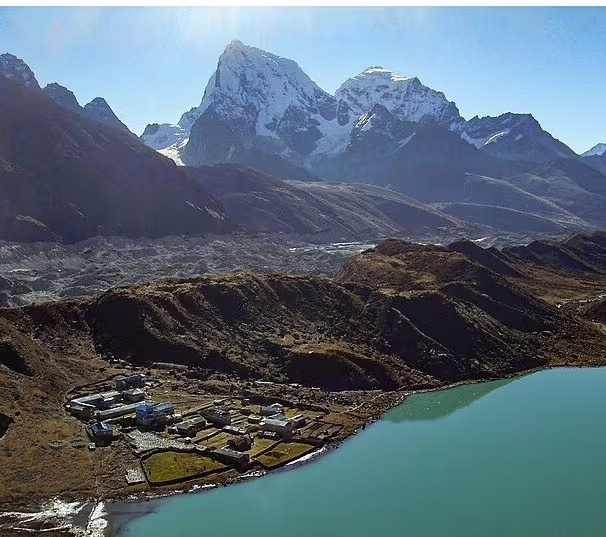
Prices increase with altitude. In Phakding (2,610m), basic rooms cost $5 to $8. In Namche Bazaar (3,440m), rooms cost $8 to $20. In Dole (4,038m) and Machhermo (4,470m), rooms cost $10 to $20. In Gokyo village (4,790m), rooms cost $12 to $25 during peak season.
Most teahouses expect guests to take at least breakfast and dinner in their dining room. This is an unspoken arrangement rather than a policy, but trekkers who stay at a teahouse and eat all meals elsewhere create friction that affects service quality.
At Gokyo altitude, room heating is absent from standard rooms. The dining room is the only warm space. Trekkers with a sleeping bag rated to -10°C or lower tolerate the room temperatures comfortably without paying $3 to $8 per night for heater add-ons that not all teahouses can even provide reliably.
How Much Do Permits and Fees Cost for the Gokyo Lakes Trek?
Trekkers need 2 permits for the Gokyo Lakes Trek. Total permit costs for foreign nationals are NPR 6,000 (approximately $45). The 2 permits are: the Sagarmatha National Park Entry Permit and the Khumbu Pasang Lhamu Rural Municipality Conservation Fee.
Both permits are checked at multiple checkpoints on the route. Trekking past a checkpoint without valid permits results in fines and removal from the trail.
What Does the Sagarmatha National Park Permit Cost During Gokyo Lakes Trek?
The Sagarmatha National Park Entry Permit costs NPR 3,000 per person (approximately $23) for foreign nationals. SAARC (South Asian Association for Regional Cooperation) nationals pay NPR 1,500.
This permit is issued by Nepal's Department of National Parks and Wildlife Conservation. Independent trekkers obtain it from the Nepal Tourism Board office in Kathmandu (at Bhrikutimandap) or at the park entrance checkpoint in Monjo village. Trekking agencies arrange this permit as part of package services.
The Sagarmatha National Park covers 1,148 square kilometers of high-altitude terrain in the Solukhumbu District. It was established in 1976 and designated a UNESCO World Heritage Site in 1979. The park encompasses the entire Gokyo Lakes route, the Gokyo Valley, and portions of the Everest Base Camp approach. Permit revenue funds park conservation, trail maintenance, and wildlife protection programs.
What Other Permits or Local Fees Apply During Gokyo Lakes Trek?
One additional fee applies beyond the National Park permit. The Khumbu Pasang Lhamu Rural Municipality Conservation Fee costs NPR 3,000 per person for the first four weeks.
In the past, the TIMS Card was required for this route, but it has been officially replaced by the local municipality fee. You will not be asked for a TIMS card at any checkpoints if your trek begins in Lukla.
The Khumbu Pasang Lhamu Rural Municipality fee is collected at Lukla or the Monjo checkpoint. Introduced to fund local infrastructure and environmental management in the Khumbu region, this fee is separate from national park revenue. Some agencies include it in their quoted package price; others add it as an on-arrival charge. Confirm which applies to your booking before departing.
How Much Does Transportation to the Gokyo Lakes Trek Cost?
Total transportation for the Gokyo Lakes Trek costs $330 to $480 per person round trip. This covers the domestic flight between Kathmandu and Lukla (the primary cost) and ground transport from your Kathmandu hotel to the domestic terminal.
How Much Does a Flight From Kathmandu to Lukla Cost?
A one-way Kathmandu-Lukla flight costs $160 to $220 per person for foreign nationals, making the round trip $320 to $440. Airlines operating this route include Tara Air, Summit Air, and Sita Air. Prices vary by airline, season, and booking timing.
Tenzing-Hillary Airport in Lukla sits at 2,860 meters elevation with a short, sloped runway regarded as one of the most technically demanding airports in the world. Weather delays and flight cancellations are common, particularly during monsoon and winter. Budget a minimum of 1 extra day in Kathmandu at both the start and end of the trek to absorb cancellations without disrupting international flight connections.
A cost-effective alternative is flying from Ramechhap (Manthali Airport), located 132 kilometers east of Kathmandu. Flights from Ramechhap to Lukla cost $90 to $120 one way, saving $70 to $100 per segment. The trade-off is a 5- to 6-hour road transfer from Kathmandu to Ramechhap, departing at 1:00 AM to 2:00 AM to arrive in time for morning departures. This transfer costs $20 to $40 per person by shared jeep.
From late March through May, the Civil Aviation Authority of Nepal (CAAN) routes many Lukla-bound flights through Ramechhap to reduce Kathmandu airspace congestion. Your agency confirms which airport applies to your departure dates.
What Does Ground Transportation to the Trailhead Cost?
Ground transportation from central Kathmandu to the domestic terminal at Tribhuvan International Airport costs NPR 500 to NPR 1,500 by taxi (approximately $4 to $11). Most agency packages include this airport transfer as a standard service.
Trekkers flying from Ramechhap pay $30 to $50 per person for a private jeep from Kathmandu, or $20 to $30 per person in a shared jeep. Shared jeeps depart from Kathmandu's New Bus Park and require departure times of 1:00 AM to 2:00 AM.
How Much Do Food and Accommodation Cost During the Gokyo Lakes Trek?
Food and accommodation on the Gokyo Lakes Trek cost $35 to $65 per person per day combined. Budget trekkers eating dal bhat twice daily and staying in basic shared-bathroom rooms spend $35 to $45 per day. Trekkers choosing varied meals and attached-bathroom rooms spend $50 to $65 per day.
How Much Do Teahouses Cost Along the Gokyo Lakes Route?
Teahouse accommodation on the Gokyo Lakes route costs $5 to $25 per night, rising with altitude. In Phakding and Monjo on the lower route, basic rooms cost $5 to $8. In Namche Bazaar, rooms cost $8 to $20. In Gokyo village, rooms cost $12 to $25 during peak season.
Room quality at this altitude is functional rather than comfortable. Thin walls, limited insulation, shared squat toilets in budget rooms, and intermittent hot water are standard features at most teahouses above Namche Bazaar. Attached-bathroom rooms cost $3 to $8 more per night and offer meaningful convenience at higher elevations where leaving a warm room at night for a shared toilet at 4,790 meters is genuinely unpleasant.
One pattern that many trekkers overlook: the best-value teahouses with the highest facilities-to-price ratio are between Phakding and Namche Bazaar on the lower route. Save your preference for attached bathrooms and heated rooms for Gokyo, where the altitude makes comfort more medically relevant.
How Much Should You Budget for Meals and Drinks?
Meals at teahouse restaurants cost $5 to $15 per dish, with prices increasing with altitude. Dal bhat costs $7 to $12 and is the most calorie-dense, cost-effective option on the trail. Most teahouses serve dal bhat with unlimited rice and vegetable refills, making it the only fixed-price unlimited meal available.
A sample daily meal cost for one trekker:
Breakfast (eggs, toast, porridge, or oatmeal): $5 to $8. Lunch (noodle soup, fried rice, or sandwich): $6 to $10. Dinner (dal bhat, pasta, or local dish): $7 to $12. Hot drinks (tea, coffee, or hot chocolate) through the day: $5 to $10. Total per day: $23 to $40.
Water is a significant recurring cost that catches most trekkers unprepared. Bottled water costs $1 to $3 per bottle in lower villages and $2 to $4 at altitude above 4,000 meters. A set of water purification tablets bought in Kathmandu for $5 to $10 treats 200 liters of water and eliminates this daily cost for the entire trek. A personal water filter bottle (Sawyer or LifeStraw) bought for $30 to $50 is reusable and pays for itself within 3 to 4 days on the trail.
Alcohol, soda, and energy drinks are available in most teahouses at $3 to $6 per drink. Snacks like chocolate bars, protein bars, and chips purchased at teahouses cost 60% to 70% more than the same items at Thamel shops in Kathmandu. Stock up before the trek starts.
What Extra Charges Should Trekkers Expect at Teahouses?
4 recurring extra charges apply at most Gokyo Lakes teahouses: Wi-Fi fees ($2 to $5 per session), device charging fees ($1 to $3 per charge), hot shower fees ($3 to $7), and electric blanket or room heater fees ($3 to $8 per night).
Wi-Fi service in the Khumbu region runs on Everest Link and NTC satellite connections. Speeds are slow at higher altitudes and frequently drop. Connection fees range from NPR 200 to NPR 500 per session. Daily unlimited plans cost NPR 500 to NPR 1,500 at teahouses that offer them.
Device charging at high-altitude teahouses runs on solar panels or micro-hydro power systems with limited capacity. Teahouses charge per device to manage demand. Arriving at the teahouse before 3:00 PM gives priority access to charging ports before evening demand peaks.
A 20,000mAh power bank bought in Kathmandu for $25 to $45 provides 6 to 8 full smartphone charges and eliminates most paid charging costs. Downloading offline maps (Maps.me or AllTrails), podcasts, and e-books before the trek removes the daily Wi-Fi dependency entirely.
How Much Do Guides and Porters Cost for the Gokyo Lakes Trek?
Guide and porter fees represent 25% to 35% of the total Gokyo Lakes Trek budget for independently arranged treks. A licensed guide plus one porter on a 14-day trek costs $560 to $770 in direct daily fees, before accounting for their accommodation and meals.
How Much Does a Licensed Trekking Guide Cost for Gokyo Lakes Trek?
A licensed trekking guide for the Gokyo Lakes Trek costs $25 to $35 per day. Guides with specific high-altitude Khumbu experience charge $30 to $40 per day. These rates cover the guide's services but not their accommodation or meals, which the agency or trekking party provides.
Licensed guides in Nepal hold certificates from the Tourism and Hotel Management Training Center (THMTC), a government body under the Ministry of Tourism. Unlicensed guides charge $15 to $20 per day but lack the credentials to operate legally inside national parks and typically lack the altitude first-aid training required above 4,000 meters.
On a 14-day Gokyo trek, guide fees total $350 to $490 for one licensed guide. In a group of 4 to 6 trekkers, this guide fee splits equally across the group, reducing the per-person cost to $58 to $123 for the full trek.
Guide accommodation and meals in teahouses add approximately $30 to $50 per day per staff member for independently arranged treks. Agency-managed packages absorb this cost within the quoted package price.
How Much Does Hiring a Porter Cost During Gokyo Lakes Trek?
Porter hire on the Gokyo Lakes Trek costs $15 to $20 per day per porter. Each porter legally carries a maximum load of 25kg. The standard ratio is one porter for every 1 to 2 trekkers.
On a 14-day trek, one porter costs $210 to $280 total in daily fees. In a group of 4 trekkers using 2 porters, the per-person porter cost drops to $105 to $140 for the full trek.
Trekking with a porter is a practical altitude-management decision, not just a convenience. Carrying a load above 15kg at altitudes above 4,000 meters measurably increases fatigue and AMS risk. Most experienced high-altitude trekkers recommend keeping personal carry weight to 8 to 10kg and letting a porter handle the remainder.
Porter welfare standards on Nepal's trekking routes are defined by the International Porter Protection Group (IPPG). These standards require adequate clothing for the altitude, appropriate footwear, proper shelter, and loads not exceeding 25kg. Working with a licensed trekking agency ensures these standards are enforced, since reputable agencies include porter welfare compliance in their operational requirements.
Is Hiring a Guide or Porter Worth the Extra Cost?
Hiring a licensed guide and porter for the Gokyo Lakes Trek is worth the cost for 4 specific reasons: trail navigation, altitude sickness recognition, emergency coordination, and access to local knowledge in remote villages.
The Gokyo valley trail has minimal signage above Namche Bazaar. Multiple paths diverge at several junctions, and the correct route is not always obvious in poor weather or on the return descent. A guide with 20 to 50 route completions navigates these junctions without hesitation.
Altitude sickness impairs judgment before a trekker recognizes the severity of their symptoms. A licensed guide monitors trekkers daily for early AMS signs, including headache pattern, appetite loss, sleep quality, and coordination, and has satellite phone contacts for helicopter evacuation networks when descent is not possible.
For first-time high-altitude trekkers, the combined guide and porter cost of $500 to $770 on a 14-day independently arranged trek is less expensive than a single helicopter evacuation at $3,000 to $8,000.
What Additional Expenses Should You Budget for the Gokyo Lakes Trek?
4 additional expense categories add $150 to $500 to the total Gokyo Lakes Trek budget: gear rental or purchase, Wi-Fi and device costs, travel and rescue insurance, and incidental personal spending.
How Much Should You Budget for Gear Rental or Purchase?
Gear rental in Kathmandu's Thamel district costs $2 to $5 per day for a down jacket and $2 to $3 per day for a sleeping bag. Renting both for a 14-day trek costs $56 to $112. Trekking poles rent for $1 to $2 per day per pole ($14 to $28 for the trek).
Inspect all rental gear before accepting it. Down jackets lose insulation capacity after heavy use, and sleeping bag ratings degrade with wear. Confirm that any rental sleeping bag is rated to at least -10°C for Gokyo altitude. Any bag rated above -5°C is inadequate for Gokyo nights in any season.
Buying gear in Kathmandu costs more upfront but is cost-effective for trekkers planning multiple Himalayan trips. Quality down jackets cost $50 to $150. A -10°C rated sleeping bag costs $60 to $150. Trekking poles cost $20 to $50 for basic pairs. North Face, Sherpa, and local Nepali brands are widely available in Thamel.
2 items are worth owning rather than renting: well-fitted trekking boots broken in at least 3 to 4 weeks before the trek, and moisture-wicking merino wool base layers. Rental boots cause blisters at a high rate because sizing and fit are inconsistent. Blisters on day 3 of a 14-day trek affect the entire itinerary.
What Costs Can Arise From Wi-Fi, Charging, and Hot Showers?
Wi-Fi, device charging, and hot showers add $5 to $15 per person per day at teahouses. Over 14 trail days, these costs total $70 to $210.
Wi-Fi sessions cost NPR 200 to NPR 500 ($1.50 to $3.75) per connection. Daily unlimited plans cost NPR 500 to NPR 1,500 ($4 to $11.50) where available. Above Namche Bazaar, connection quality drops and speed decreases with altitude.
Hot showers at teahouses run on solar water heating. Availability depends on daily sunlight and time of use. Morning showers before peak solar heating (before 12:00 PM) are frequently cold regardless of the fee charged. Afternoon showers between 2:00 PM and 5:00 PM use the warmest water.
A 20,000mAh power bank eliminates most paid charging costs. The device costs $25 to $45 in Kathmandu and weighs 350 to 450 grams, making it a practical and cost-effective carry item for a 14-day trek.
How Much Emergency or Travel Insurance Should You Budget For?
Travel insurance with helicopter evacuation coverage for the Gokyo Lakes Trek costs $100 to $200 per person for a 2- to 3-week Nepal trip. This coverage is non-negotiable for any trek reaching altitudes above 4,000 meters.
Helicopter rescue from Gokyo or above costs $3,000 to $8,000 for a single flight without insurance. Altitude-related medical emergencies, including acute mountain sickness (AMS), high-altitude pulmonary edema (HAPE), and high-altitude cerebral edema (HACE), develop rapidly and require immediate descent or evacuation. There is no ground hospital in the Gokyo valley.
Insurance policies for Nepal trekking must explicitly cover helicopter rescue above 5,000 meters, search and rescue operations, altitude-related medical conditions, and trip interruption caused by weather or medical evacuation. Many generic travel insurance policies exclude helicopter rescue above 4,000 meters. Read the altitude exclusions in the policy document directly rather than relying on summary descriptions.
Three providers commonly used by Nepal trekkers: WorldNomads, World Rescue, and Safety Wing. Confirm the maximum altitude coverage and helicopter rescue inclusion with your insurer before the trek departs.
How Can You Reduce the Gokyo Lakes Trek Cost?
Trekkers reduce the Gokyo Lakes Trek cost through 5 practical strategies: trekking in shoulder season, joining a group departure, bringing a water filtration system, renting gear in Kathmandu instead of buying, and booking directly with a Nepal-licensed agency.
Which Expenses Can You Save On Without Reducing Safety?
3 cost categories offer genuine savings without reducing safety or experience quality: meal choices, water costs, and communication costs.
Dal bhat is the most cost-effective meal on the entire route. At $7 to $12 with unlimited refills, it delivers more calories per dollar than any other teahouse menu item. Trekkers who eat dal bhat for dinner each day save $3 to $6 per meal compared to Western menu options.
Water purification tablets bought in Kathmandu for $8 to $12 eliminate $100 to $150 in bottled water purchases over a 14-day trek. The weight of 200 tablets is under 100 grams.
Offline navigation (Maps.me or AllTrails downloaded before the trek) eliminates most Wi-Fi dependency. Combined with a power bank, this approach saves $50 to $100 over the full trek in Wi-Fi and charging fees.
The cost categories where cutting increases risk: skipping travel insurance saves $100 to $200 but removes protection against $3,000 to $8,000 helicopter rescue costs. Using an unlicensed guide saves $10 per day but removes safety monitoring and emergency coordination at altitude. Dropping acclimatization days saves $80 to $120 per day but raises AMS risk exponentially above 4,000 meters. None of these trade-offs are financially rational.
Is a Group Trek More Affordable Than a Private Trek?
A group trek costs 20% to 35% less per person than a private trek for the same Gokyo Lakes itinerary. Private guided treks cost $1,600 to $2,500 per person. Group departures with 4 to 8 trekkers cost $1,200 to $1,600 per person for equivalent service quality.
Group departures share guide fees equally across the group, negotiate block teahouse rates on popular routes, and spread porter costs across more trekkers. The trade-off is a fixed departure date and a set daily itinerary, compared to the flexible scheduling of a private arrangement.
Solo trekkers without travel partners who want group pricing join scheduled agency departures. This is the single most effective cost-reduction strategy for independent travelers planning the Gokyo Lakes Trek.
How Can Nepal Intrepid Treks Help You Plan Your Gokyo Lakes Trek Cost?
Nepal Intrepid Treks is a Nepal-based licensed trekking agency providing guided Gokyo Lakes Trek packages with transparent, itemized cost structures. The agency handles permit arrangements, licensed guide and porter coordination, teahouse bookings, and domestic flight reservations as a complete service.
Planning the Gokyo Lakes Trek cost requires decisions across 5 variables: route variation, group size, season, accommodation standard, and permit arrangements. Nepal Intrepid Treks consolidates all 5 within a single package price and provides itemized breakdowns on request, covering guide fees, porter fees, permit costs, accommodation standard, and meal inclusions.
All quotes from Nepal Intrepid Treks include 13% Nepal government VAT and carry no additional charges after booking confirmation. Trekkers receive a detailed cost breakdown before payment.
Can Nepal Intrepid Treks Offer a Gokyo Lakes Trek Package?
Nepal Intrepid Treks offers Gokyo Lakes Trek packages starting at $1,210 per person for group departures and $1,690 per person for private guided treks. Both package types include Sagarmatha National Park permits, the Khumbu Pasang Lhamu fee, a licensed guide, a porter, teahouse accommodation, breakfast and dinner daily, and round-trip Kathmandu-Lukla flights.
3 itinerary options are available:
The 12-day standard route covers Lukla to Gokyo and back via the traditional Gokyo valley path. The 14-day route adds a summit day on Gokyo Ri (5,357m), the highest viewpoint on the trek. The 16-day route combines Gokyo Lakes with the Renjo La Pass traverse for an extended loop.
Cost increases between itinerary options range from $200 to $400 per person depending on group size. Each additional itinerary day adds accommodation, meals, and staff costs at the per-day rates detailed throughout this guide.
To receive a personalized cost estimate based on your travel dates, group size, and itinerary preference, contact Nepal Intrepid Treks directly. The team provides detailed responses within 24 hours and adjusts packages for solo travelers, couples, and groups, including dietary requirements and acclimatization-extended schedules.
What Are the Key Takeaways About Gokyo Lakes Trek Cost?
The Gokyo Lakes Trek costs $800 to $2,500 per person total, with most trekkers on a 12 to 14-day guided package spending $1,200 to $1,800 per person. The widest cost variation comes from private versus group arrangements and whether the booking is made directly with a Nepal-based agency or through an international platform.
The 5 most important cost figures to remember:
Permits cost NPR 6,000 total (Sagarmatha National Park permit + Khumbu Pasang Lhamu fee).
Kathmandu-Lukla round-trip flights cost $320 to $440 per person. Daily food and accommodation on the trail costs $35 to $65 per person per day.
A licensed guide costs $25 to $35 per day;
A porter costs $15 to $20 per day.
Travel insurance with helicopter evacuation cover costs $100 to $200 and is mandatory.
Group departures in shoulder season (September or late November) consistently produce the best cost-to-experience ratio. The 2 cost-reduction decisions that carry disproportionate risk are skipping travel insurance and using unlicensed guide services.
The Gokyo Lakes Trek covers 6 glacial lakes in the Gokyo Valley, a summit viewpoint at 5,357 meters on Gokyo Ri, and the Ngozumpa Glacier, the longest glacier in the Himalayas at approximately 36 kilometers. Understanding the full cost structure before booking ensures the trek matches both your budget and your expectations for the experience.