The Mardi Himal Trek is one of Nepal’s most affordable short Himalayan trekking routes, combining panoramic Annapurna views, moderate trekking difficulty, and relatively low overall travel costs compared to routes like Annapurna Base Camp and Everest Base Camp. In 2026, the total Mardi Himal Trek cost ranges from approximately $280 for a basic independent trek to more than $1,500 for a premium guided package with porter support, domestic flights, upgraded tea house accommodation, and comprehensive travel insurance. Trek expenses vary according to itinerary length, trekking season, transport type, accommodation standard, daily food spending, and whether trekkers hire a licensed guide or porter. Most trekkers planning a standard 5-day itinerary from Pokhara to Mardi Himal Base Camp spend between $450 and $700 for a comfortable mid-range experience including permits, meals, transport, and guide services.
A realistic Mardi Himal Trek budget includes far more than basic trail expenses. Trekkers must calculate mandatory Annapurna Conservation Area Project (ACAP) permit and the Trekkers' Information Management System (TIMS) card permit fees, Kathmandu–Pokhara transportation, tea house accommodation costs at different elevations, food and drinking water prices, guide and porter wages, gear rental, charging and Wi-Fi fees, travel insurance, and emergency cash for altitude-related delays or medical situations. Costs also rise significantly above Low Camp and High Camp because supplies are transported manually into remote mountain areas inside the Annapurna Conservation Area Project region. This complete 2026 cost breakdown explains every major expense category, compares budget, mid-range, and premium trekking styles, and shows practical ways to reduce Mardi Himal Trek expenses without compromising safety, acclimatization, or overall trekking experience.
What Is the Average Mardi Himal Trek Budget in 2026?
The average Mardi Himal Trek budget in 2026 is $450–$700 for a 5-day, 4-night mid-range trip, covering permits, transport, accommodation, meals, and a licensed guide. Budget trekkers complete the same route for $280–$420 without a guide. Premium packages with a guide, porter, and insurance reach $1,000–$1,500.
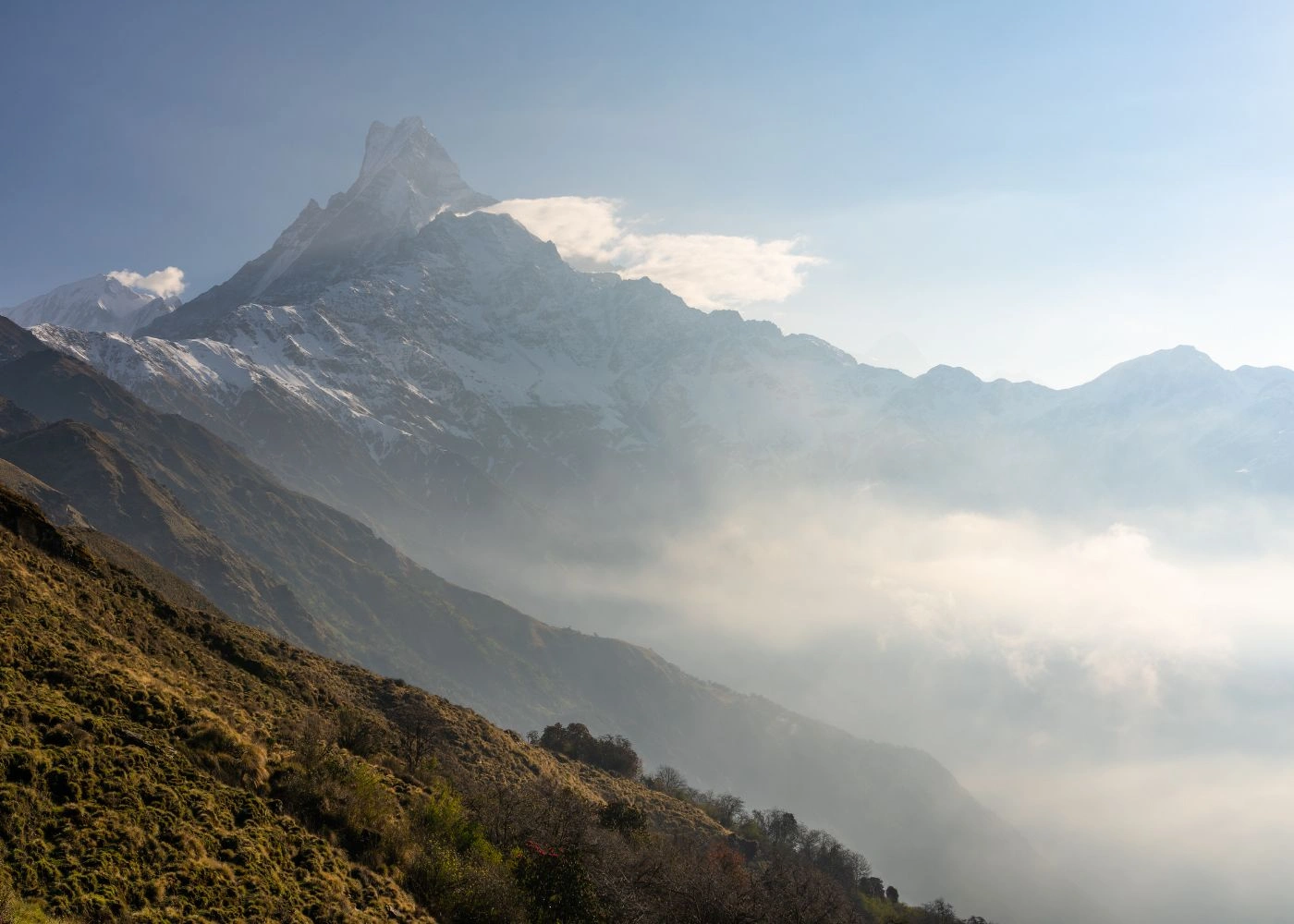
The Mardi Himal Trek is a short-distance high-altitude trekking route in Nepal's Annapurna Conservation Area. It rises from Kande (1,770 m) near Pokhara to Mardi Himal Base Camp (4,500 m) and descends through Sidhing village. The trek is 40–55 km in total trail distance over 5 to 7 days.
How Much Do Budget, Mid-Range, and Premium Trips Cost?
The following table shows the 3 cost tiers for the Mardi Himal Trek in 2026. Each tier reflects accommodation quality, guide inclusion, and daily spending on food and extras. All figures are in USD per person.
Cost Category | Budget Trek | Mid-Range Trek | Premium Trek |
Permits (ACAP + TIMS) | $37 | $37 | $37 |
Kathmandu–Pokhara Transport | $8–$12 | $15–$20 | $60–$115 (flight) |
Pokhara–Kande/Sidhing Transfer | $3–$5 | $5–$10 | $15–$25 |
Accommodation (per night) | $2–$5 | $6–$15 | $20–$40 |
Meals (per day) | $8–$14 | $15–$22 | $25–$40 |
Guide (per day) | Not included | $25–$35 | $30–$45 |
Porter (per day) | Not included | Not included | $18–$25 |
5-Day Total (per person) | $280–$420 | $500–$750 | $1,000–$1,500 |
Budget trekkers share dormitory rooms, carry their own gear, and eat dal bhat at local tea houses. Mid-range trekkers stay in private rooms and hire a licensed guide. Premium trekkers hire both a guide and a porter, choose the best available tea houses at each stop, and carry comprehensive travel insurance.
What Does a Typical 5-Day or 7-Day Trek Cost?
A 5-day Mardi Himal Trek costs $280–$1,500 per person in 2026. A 7-day version costs $380–$1,900, as 2 additional nights on the trail add accommodation, meal, and guide costs of approximately $50–$200 per extra day, depending on tier.
The 5-day Mardi Himal itinerary covers 4 key overnight stops: Forest Camp (2,550 m), Low Camp (3,300 m), High Camp (3,580 m), and descent to Sidhing (1,900 m). The 7-day itinerary adds an acclimatization rest day at High Camp and an optional night at Mardi Himal Base Camp (4,500 m), increasing altitude-inflated food and accommodation costs by 25–40%.
What Does Each Day of the Mardi Himal Trek Actually Cost?
A day-by-day Mardi Himal spending breakdown shows daily costs range from NPR 1,400–5,300 ($10–$40) per person, rising from the lowest spend on Day 5 descent to the highest on Day 3 at High Camp, driven by altitude-inflated food prices, facility surcharges, and porter-carried supply costs above 3,300 m.
The 5-day daily cost breakdown below covers room, 3 meals, water, and essential facility charges per person, excluding guide fees.
Day 1: Pokhara to Forest Camp (2,550 m)
Expense | Cost (NPR) | Cost (USD) |
Private taxi or shared jeep (Pokhara–Kande) | 400–2,000 | $3–$15 |
Room at Forest Camp | 300–600 | $2–$4.50 |
3 meals (breakfast + lunch + dinner) | 1,050–1,650 | $8–$12.50 |
Water + tea | 300–500 | $2.25–$3.75 |
Hot shower | 200–400 | $1.50–$3 |
Day 1 Total | 2,250–5,150 | $17–$39 |
Day 2: Forest Camp to Low Camp (3,300 m)
Expense | Cost (NPR) | Cost (USD) |
Room at Low Camp | 400–800 | $3–$6 |
3 meals | 1,200–2,100 | $9–$16 |
Water + tea | 400–600 | $3–$4.50 |
Device charging (1 device) | 200–400 | $1.50–$3 |
Day 2 Total | 2,200–3,900 | $17–$30 |
Day 3: Low Camp to High Camp (3,580 m)
Expense | Cost (NPR) | Cost (USD) |
Room at High Camp | 500–1,000 | $3.75–$7.50 |
3 meals | 1,650–2,700 | $12.50–$20.50 |
Bottled water + altitude snacks | 600–1,200 | $4.50–$9 |
Device charging (solar panel rate) | 200–400 | $1.50–$3 |
Day 3 Total | 2,950–5,300 | $22–$40 |
Day 4: High Camp to Mardi Himal Base Camp (4,500 m) and return
Expense | Cost (NPR) | Cost (USD) |
No room charge (return to High Camp) | 0 | $0 |
3 meals at Base Camp + High Camp | 1,800–3,000 | $13.50–$22.50 |
Water + altitude snacks | 800–1,500 | $6–$11.25 |
Day 4 Total | 2,600–4,500 | $20–$34 |
Day 5: High Camp to Sidhing (1,900 m) to Pokhara
Expense | Cost (NPR) | Cost (USD) |
2 meals at Sidhing | 700–1,400 | $5.25–$10.50 |
Shared jeep (Sidhing–Pokhara) | 400–600 | $3–$4.50 |
Optional room if overnight at Sidhing | 300–600 | $2–$4.50 |
Day 5 Total | 1,400–2,600 | $10.50–$20 |
The 5-day cash total for trail costs alone, excluding guide fees and permits, runs NPR 11,400–21,450 ($85–$160) per person. Day 3 and Day 4 consume 40–45% of that total because supply transport costs above Low Camp inflate every item on the menu and every charge on the facilities board.
Which Permit Fees Apply to Mardi Himal in 2026?
Mardi Himal trekkers require 2 permits in 2026: the Annapurna Conservation Area Project (ACAP) permit and the Trekkers' Information Management System (TIMS) card. Combined permit costs total NPR 5,000 (~$37) for foreign nationals and NPR 2,500 (~$18) for SAARC nationals. Both permits are mandatory and checked at trail entry points and trail checkposts.
Do You Need ACAP and TIMS for Mardi Himal?
Yes, both ACAP and TIMS are required for Mardi Himal in 2026. The ACAP permit grants entry to the Annapurna Conservation Area, managed by the National Trust for Nature Conservation (NTNC) since 1986. TIMS registers trekkers for safety tracking and is issued by the Trekking Agencies' Association of Nepal (TAAN) or the Nepal Tourism Board (NTB).
Both permits are issued at the Nepal Tourism Board office in Kathmandu (Bhrikutimandap, Pradarshani Marg) or at the Nepal Tourism Board counter in Pokhara (Lake Side, Baidam). Trekkers applying through a registered trekking agency receive TIMS at no additional fee beyond the permit cost.
How Do Permit Costs Vary for Foreigners and SAARC Trekkers?
The following table shows the 2026 permit fee structure for both categories of trekkers. SAARC nations include India, Pakistan, Bangladesh, Bhutan, Sri Lanka, and the Maldives.
Permit Type | Foreign Nationals | SAARC Nationals |
ACAP Permit | NPR 3,000 (~$22) | NPR 1,500 (~$11) |
TIMS Card (Individual) | NPR 2,000 (~$15) | NPR 1,000 (~$7) |
Combined Total | NPR 5,000 (~$37) | NPR 2,500 (~$18) |
Nepali citizens pay no permit fees for Mardi Himal. Children under 10 years old are exempt from permit fees on the Mardi Himal route. Permits expire after 30 days from the date of issue and are non-transferable between trekkers.
How Much Do Transport Costs Add to a Mardi Himal Trek?
Transport costs for Mardi Himal Trek add $18–$165 per person, covering travel from Kathmandu to Pokhara and from Pokhara to the trailhead at Kande or the exit point at Sidhing. Budget overland travel totals $11–$18. Flight-based travel totals $80–$165.
What Does Kathmandu to Pokhara Travel Cost?
Kathmandu to Pokhara transport costs $6–$115 per person in 2026, depending on transport mode. 3 primary options connect the 2 cities:
Local bus: NPR 800–1,200 (~$6–$9), 7–9 hours, departs from Kathmandu New Bus Park (Gongabu).
Tourist/deluxe bus: NPR 1,200–2,000 (~$9–$15), 6–8 hours, departs from Thamel; includes reclining seats and a rest stop.
Domestic flight: NPR 8,000–15,000 (~$60–$115), 25 minutes, operates from Tribhuvan International Airport (TIA) to Pokhara Regional International Airport (PKR).
Flight prices fluctuate seasonally. Trekking season peak periods, March–May and October–November, show 20–35% higher airfare than off-season months.
What Does Pokhara to Kande or Sidhing Transport Cost?
Pokhara to Kande trailhead transport costs NPR 1,000–2,000 (~$7–$15) per vehicle by private taxi or local jeep. Shared jeep services charge NPR 300–500 (~$2–$4) per person for the same 45-minute route.
Sidhing village, the common exit point for the descent route, sits 14 km from Pokhara city center. A private jeep from Sidhing to Pokhara costs NPR 1,500–2,500 (~$11–$19). A shared jeep from Sidhing costs NPR 400–600 (~$3–$4.50) per person. Local transport from Sidhing operates on irregular schedules; pre-booking a return vehicle through your tea house or guide avoids a 2–4 hour wait.
How Much Do Tea Houses and Meals Cost on the Trail?
Tea house costs on Mardi Himal range from NPR 300–1,200 (~$2–$9) per room per night, rising with altitude. Meal costs range from NPR 350–900 (~$2.50–$6.50) per plate. Daily food spending averages NPR 1,500–3,500 (~$11–$26) per person, depending on elevation and the number of meals per day.
What Do Rooms Cost at Each Overnight Stop?
The following table lists the 5 primary overnight stops on the Mardi Himal Trek, their elevation, average room rate, and the number of tea houses available at each stop in 2026.
Overnight Stop | Elevation | Avg. Room Cost (NPR) | Avg. Room Cost (USD) | Tea Houses Available |
Forest Camp (Kokar) | 2,550 m | 300–600 | $2–$4.50 | 6–8 |
Low Camp | 3,300 m | 400–800 | $3–$6 | 5–7 |
High Camp | 3,580 m | 500–1,000 | $3.75–$7.50 | 4–6 |
Mardi Himal Base Camp | 4,500 m | 700–1,200 | $5.25–$9 | 2–3 |
Sidhing (descent) | 1,900 m | 300–600 | $2–$4.50 | 4–5 |
Tea house rooms on Mardi Himal include a basic bed with 2 blankets. Private rooms with attached bathrooms exist at Forest Camp and Low Camp only. High Camp and Base Camp tea houses provide shared outdoor toilets. Heating inside rooms is not standard; most tea houses heat the dining hall only.
How Do Food and Drink Prices Rise With Altitude?
Food prices on Mardi Himal increase by 30–60% from Forest Camp (2,550 m) to Mardi Himal Base Camp (4,500 m), as all supplies above Low Camp are carried by porter or pack animal. A dal bhat meal at Forest Camp costs NPR 350–550 (~$2.50–$4). The same dal bhat at High Camp costs NPR 550–900 (~$4–$6.50).
4 commonly ordered meals and their price ranges across elevations are as follows:
Dal bhat (lentil soup with rice and vegetables): NPR 350–900 across the route
Pasta or noodle dishes: NPR 400–750 across the route
Fried rice: NPR 350–700 across the route
Tuna or egg sandwiches: NPR 300–600 across the route
What Do Water, Tea, and Snacks Cost Per Day?
Water, tea, and snacks add NPR 500–1,200 (~$3.75–$9) to daily spending on the Mardi Himal Trail. Bottled mineral water (1 liter) costs NPR 100–250 (~$0.75–$1.90) and increases with altitude. Boiled or filtered water from tea houses costs NPR 50–100 ($0.37–$0.75) per liter and is a 60–70% cheaper alternative to bottled water.
Tea and coffee cost NPR 100–200 (~$0.75–$1.50) per cup. Chocolate bars and energy snacks cost NPR 200–400 (~$1.50–$3) per item at High Camp. Trekkers carrying personal snacks from Pokhara's Lakeside market reduce trail snack spending by NPR 500–800 ($3.75–$6) per day.
How Much Should You Budget for a Guide or Porter?
Guide costs on Mardi Himal total $125–$175 for a 5-day trek at $25–$35 per day. Porter costs total $75–$125 for the same duration at $15–$25 per day. Hiring both a guide and a porter for 5 days costs $200–$300 per person before tips.
Is a Guide Required for Mardi Himal in 2026?
A licensed guide is legally mandatory for Mardi Himal in 2026, as the Nepal Tourism Board enforce compulsory guide regulations on this route. Trekkers considering Mardi Himal without a guide should review the full 2026 regulations and current enforcement conditions before departing. The trail is well-marked with painted rock markers and signboards at every junction from Kande to Mardi Himal Base Camp.
3 factors make hiring a guide the recommended choice:
Medical emergencies: A guide contacts rescue services and coordinates helicopter evacuation (altitude sickness affects trekkers above 3,000 m)
Weather windows: Local guides read mountain weather patterns and identify safe ascent days for the High Camp to Base Camp section
Trail accuracy: The High Camp to Base Camp section has 4–6 branching paths; unlicensed local knowledge leads to wrong ridge lines
What Does a Licensed Guide Cost Per Day?
A licensed trekking guide on Mardi Himal costs $25–$35 per day in 2026, inclusive of the guide's food, accommodation, and insurance. A guide hired through a Kathmandu or Pokhara-based registered trekking agency carries a Nepal Mountaineering Association (NMA) or Trekking Agencies' Association of Nepal (TAAN) license.
Guides hired directly in Pokhara's Lakeside area cost $20–$30 per day. Trekkers hiring independently verify the guide's license number against the TAAN member database, accessible at the TAAN office in Pokhara (Damside, Ward No. 14). Unlicensed guides offer rates of $12–$18 per day but carry no rescue coordination authority.
What Does a Porter Cost Per Day?
A porter on Mardi Himal costs $15–$25 per day in 2026, covering porterage of up to 25 kg of trekking gear. The guide agency or porter coordinator covers the porter's food, lodging, and basic accident insurance within that rate.
2 porter categories operate on the Mardi Himal route:
Trail porter: Carries loads between overnight stops only; does not guide or translate; costs $15–$20/day
Guide-porter: Carries loads and provides basic trail navigation; costs $20–$28/day
Trekking packs heavier than 15 kg require porter support above Low Camp (3,300 m), where carrying additional weight increases acute mountain sickness (AMS) risk.
Which Extra Costs Do Trekkers Often Miss?
4 categories of extra costs, facility charges, gear, gratuities, and emergency funds, add $80–$250 to the total Mardi Himal Trek budget for most foreign trekkers. These costs do not appear in standard package quotes and catch budget trekkers off guard above Low Camp. For a full list of common Mardi Himal Trek questions on permits, gear, weather, and hidden fees, the 25-question FAQ covers planning gaps this cost guide does not address.
What Do Showers, Charging, and Wi-Fi Cost?
Hot showers cost NPR 200–500 ($1.50–$3.75) per session at tea houses with solar water heating. Cold showers are free or NPR 50–100 ($0.37–$0.75) at Forest Camp and Low Camp. Hot showers are unavailable above High Camp (3,580 m) due to water scarcity at altitude.
Device charging costs NPR 100–300 ($0.75–$2.25) per device per charge cycle. Tea houses above Low Camp charge NPR 200–400 per cycle because electricity comes from solar panels with limited daily output. Trekkers carrying a 20,000 mAh power bank avoid charging fees for 5-day treks.
Wi-Fi access costs NPR 100–300 ($0.75–$2.25) per day at Forest Camp and Low Camp. High Camp and Base Camp have no Wi-Fi. A Nepal Telecom (NTC) or Ncell SIM card with a data package costs NPR 700–1,000 ($5–$7.50) and provides 3G/4G coverage at Forest Camp and Low Camp only. Signal is absent above 3,400 m.
How Much Should You Budget for Gear, Tips, and Insurance?
Gear rental in Pokhara adds $15–$40 per trekker for a 5-day trip. 4 commonly rented items and their 2026 Pokhara rental rates are:
Sleeping bag (rated to -10°C): NPR 300–500 ($2.25–$3.75) per day
Down jacket: NPR 400–600 ($3–$4.50) per day
Trekking poles (pair): NPR 200–400 ($1.50–$3) per day
Crampons (for winter/post-monsoon trips): NPR 300–500 ($2.25–$3.75) per day
Guide tips of $5–$10 per day are the accepted standard on Nepali trekking routes; porter tips run $3–$5 per day. For a 5-day trek with 1 guide and 1 porter, tip budgets total $40–$75 per trekker.
Travel insurance covering helicopter evacuation up to $100,000 costs $50–$150 for a 10–14 day Nepal trekking policy. World Nomads, Safety Wing, and Alpine Club of Pakistan-affiliated insurers offer Nepal-specific trekking coverage. Helicopter evacuation from Mardi Himal High Camp (3,580 m) costs $2,500–$5,000 without insurance.
How Much Emergency Cash Should You Carry?
Trekkers carry a minimum of $200 (NPR 27,000) in emergency cash on the Mardi Himal Trek. ATMs in Pokhara (Lakeside, Prithvi Chowk) dispense Nepali rupees but are absent along the trail from Kande to Sidhing. Tea house payments are cash-only at every overnight stop.
Emergency cash covers 3 scenarios:
Extended stay: Bad weather at High Camp forces 1–3 unplanned extra nights, costing NPR 2,000–5,000 ($15–$37) per extra day
Medical treatment: Altitude sickness treatment at Pokhara International Mountain Museum's rescue post or Fishtail Hospital costs NPR 5,000–20,000 ($37–$150) for consultation and diamox prescription
Lost permit: Replacement permit fees total NPR 5,000–6,000 ($37–$45) at the NTB Pokhara counter
How Much Cash Does Each Type of Mardi Himal Trekker Actually Need to Carry?
The recommended cash carry amount for Mardi Himal varies by trekker type: solo budget trekkers carry NPR 48,500 ($361), guided mid-range trekkers carry NPR 90,000 ($670), winter trekkers carry NPR 95,000 ($707), and all trekker types hold NPR 27,000 ($200) as a non-negotiable emergency reserve. ATMs are absent from Kande to Sidhing; every transaction on the trail is cash-only.
4 trekker profiles define realistic Mardi Himal cash carry figures for 2026:
Solo budget trekker (no guide, shared rooms, 5 days)
Category | NPR | USD |
Trail costs (accommodation + meals + water) | 15,000–20,000 | $112–$149 |
Permits (ACAP + TIMS) | 5,000 | $37 |
Transport (local bus + shared jeep both ends) | 1,500–2,500 | $11–$19 |
Facility charges (shower + charging) | 1,500–3,000 | $11–$22 |
Emergency reserve | 27,000 | $200 |
Recommended carry total | 50,000–57,500 | $371–$428 |
Guided mid-range trekker (1 licensed guide, private rooms, 5 days)
Category | NPR | USD |
Trail costs | 25,000–40,000 | $186–$298 |
Guide fees (5 days × NPR 3,500–4,500) | 17,500–22,500 | $130–$168 |
Permits + transport | 8,000–10,000 | $60–$74 |
Guide tip (NPR 700–1,000/day) | 3,500–5,000 | $26–$37 |
Emergency reserve | 27,000 | $200 |
Recommended carry total | 81,000–104,500 | $602–$778 |
Winter trekker (December–February, gear rental required, 5 days)
Category | NPR | USD |
Trail costs + guide | 40,000–55,000 | $298–$410 |
Gear rental (sleeping bag + down jacket + poles) | 4,500–8,500 | $33–$63 |
Cold-weather premium on hot drinks + snacks | 3,000–5,000 | $22–$37 |
Extended bad-weather emergency reserve | 35,000 | $260 |
Recommended carry total | 82,500–103,500 | $613–$770 |
Winter trekkers carry NPR 35,000 ($260) rather than the standard NPR 27,000 emergency reserve because High Camp weather forces 1–3 extra unplanned nights on 20–25% of winter treks.
Emergency reserve (mandatory for all trekker types)
The NPR 27,000 ($200) emergency reserve covers 4 specific scenarios and is not a general contingency fund:
Unplanned extra nights at High Camp (3 nights): NPR 6,000–9,000 ($45–$67)
Helicopter evacuation deposit: NPR 10,000–15,000 ($74–$112)
Lost permit replacement at NTB Pokhara counter: NPR 5,000–6,000 ($37–$45)
Medical consultation at Fishtail Hospital, Pokhara: NPR 5,000–20,000 ($37–$149)
Trekkers who withdraw the full emergency reserve before departure and seal it separately from daily spending cash do not dip into operational funds during a trail emergency.
How Can You Lower Mardi Himal Trek Costs Without Risk?
5 proven cost-reduction strategies lower Mardi Himal Trek expenses by 20–40% without compromising safety or trail experience. These strategies apply to transport, accommodation, guiding, and timing.
When Is the Cheapest Time to Trek Mardi Himal?
December, January, and February are the cheapest months to trek Mardi Himal, with tea house occupancy below 30% and accommodation prices 20–30% lower than peak season. Bus fares from Kathmandu to Pokhara drop by 10–15% during winter months.
2 primary trekking seasons define Mardi Himal pricing:
Peak season (March–May, October–November): Highest tea house rates, highest guide demand, 40–60% more trekkers on trail; accommodation books 1–3 weeks in advance
Off-peak season (December–February, June–September): Lower tea house rates, immediate guide availability, 50–70% fewer trekkers; December–February brings cold temperatures at High Camp (−5°C to −15°C overnight) requiring rented gear
Monsoon season (June–September) brings heavy rain, trail flooding between Kande and Forest Camp, and leeches below 2,500 m. Monsoon trekking reduces costs by 30–40% but requires waterproof gear and acceptance of reduced summit views.
How Do Mardi Himal Trek Prices Change Across All 4 Seasons?
Mardi Himal Trek prices vary by 30–50% across 4 seasons. Autumn (October–November) records peak accommodation and guide rates. Winter (December–February) cuts tea house costs by 20–30% but adds NPR 4,500–8,500 ($33–$63) in mandatory gear rental. Monsoon (June–September) reduces total costs by 30–40% but introduces trail flooding and a 60–80% loss of summit visibility.
The following table compares the 3 primary cost categories across all 4 seasons on the Mardi Himal Trek in 2026:
Season | Months | Room Per Night (NPR/USD) | Guide Per Day (NPR/USD) | Meals Per Day (NPR/USD) | Total Cost vs Autumn Peak |
Spring: Peak | March–May | 500–1,000 / $3.75–$7.50 | 3,500–4,500 / $26–$33 | 1,500–3,000 / $11–$22 | −5% to baseline |
Autumn: Peak | October–November | 600–1,200 / $4.50–$9 | 4,500–6,000 / $33–$45 | 1,500–3,000 / $11–$22 | Baseline (highest) |
Winter: Off-peak | December–February | 300–700 / $2.25–$5.25 | 3,000–4,000 / $22–$30 | 1,300–2,500 / $10–$19 | −20–30% |
Monsoon: Off-peak | June–September | 300–600 / $2.25–$4.50 | 2,800–3,800 / $21–$28 | 1,200–2,200 / $9–$16 | −30–40% |
4 seasonal cost conditions define how prices shift on the Mardi Himal route:
Spring (March–May): Second-highest demand, stable pricing
Rhododendron bloom draws peak trekker volume to the Annapurna Conservation Area from the 3rd week of March through the 2nd week of May. Tea houses at High Camp book 7–14 days in advance. Licensed guides in Pokhara book 2–3 weeks in advance. Accommodation prices run 10–15% above listed rates during the peak rhododendron window in April. Flight prices between Kathmandu and Pokhara rise 20–35% above base fare during March–May.
Autumn (October–November): Highest annual prices, highest demand
October records the highest annual trekker density on Mardi Himal. Guide rates peak at NPR 5,000–6,000 ($37–$45) per day during the Dashain-Tihar festival period in mid-to-late October. Tea house accommodation at High Camp reaches NPR 800–1,200 ($6–$9) per room during this 3-week window. Guides available for October hire by September 15 charge standard rates; guides hired after October 1 charge 20–30% above standard. November offers slightly lower demand and prices 5–10% below October across all cost categories.
Winter (December–February): Lowest base costs, highest gear costs
Tea house occupancy falls to 20–30% across all 5 overnight stops. Accommodation discounts of 20–30% apply at Forest Camp, Low Camp, and High Camp without negotiation. Guide availability is immediate, with no advance booking required. The cost reduction in accommodation and guiding is offset by mandatory gear rental: 90% of winter trekkers rent a sleeping bag rated to −10°C, a down jacket, and trekking poles in Pokhara, adding NPR 4,500–8,500 ($33–$63) to the 5-day total. Night temperatures at High Camp fall to −5°C to −15°C from December through February.
Monsoon (June–September): Lowest prices, highest trail risk
Food prices drop 15–25% from the spring peak as trekker numbers fall by 50–70% at every overnight stop. Guide rates fall to NPR 2,800–3,800 ($21–$28) per day, the lowest of any season. Tea house rooms at Forest Camp and Low Camp drop to NPR 300–500 ($2.25–$3.75). Trail sections between Kande (1,770 m) and Forest Camp (2,550 m) flood 3–5 times per month during peak monsoon weeks in July and August. Leeches are present below 2,500 m from late June through mid-September. Cloud cover blocks views of the Mardi Himal summit on 60–80% of trekking days during this season. Waterproof gear, gaiters, and trail sandals for river crossings add NPR 2,000–4,000 ($15–$30) in rental costs for unprepared trekkers.
How Much Can You Save by Sharing Guide and Transport Costs?
A group of 3 trekkers sharing 1 guide saves $16–$23 per person per day compared to 3 individuals hiring separate guides. A group of 4 sharing a private taxi from Pokhara to Kande saves NPR 500–750 ($3.75–$5.50) per person versus individual taxi rates.
Guide rates are per engagement, not per trekker. A guide charging $30/day costs a solo trekker $150 for 5 days. The same guide for a group of 3 costs $50 per person for 5 days, a 67% per-person saving. Teahouse group discounts of 10–20% on accommodation apply for bookings of 4 or more trekkers traveling together.
Should You Book Independently or Choose a Package?
Independent trekking costs 25–40% less than a full agency package, but requires 8–12 hours of pre-trip planning covering permit acquisition, transport booking, guide hiring, and trail itinerary mapping. An independent 5-day mid-range trek costs $400–$600 per person. A full-service agency package for the same trek costs $600–$950 per person.
3 booking models are available for Mardi Himal in 2026:
Fully independent: Book permits at NTB, hire guide directly in Pokhara, book transport separately; lowest cost, highest planning effort
Semi-arranged: Book through a Pokhara-based local agency for guide + permits only; costs $50–$100 in agency fees but saves 6–8 hours of permit and guide coordination
Full package: Includes permits, guide, porter, accommodation, all transport, and insurance; costs $600–$1,200 per person; appropriate for first-time Nepal trekkers
Trekkers comparing Mardi Himal against other Annapurna routes before committing to a budget will find the full cost, difficulty, and duration comparison in our Mardi Himal vs Annapurna Base Camp guide.
How Should You Plan Mardi Himal Costs With Trekking Support?
A registered Pokhara-based trekking agency reduces total Mardi Himal Trek costs by 5–15% through volume accommodation discounts, pre-negotiated guide rates, and permit processing efficiency, compared to a trekker independently purchasing the same components at retail prices.
Can a Local Trekking Agency Help You Budget Mardi Himal Better?
A licensed local trekking agency builds a line-by-line Mardi Himal budget within 24 hours of inquiry, covering all 8 cost categories: permits, transport, accommodation, food, guide, porter, gear, and insurance. Agencies registered with TAAN and the Nepal Tourism Board (NTB) provide itemized quotations binding for 30 days from the issue date.
Agencies also coordinate 4 logistics that independent trekkers often undercost:
Permit processing time: NTB permit offices in Pokhara process same-day; Kathmandu offices take 1 business day; missing processing time adds 1 unplanned hotel night
Trailhead transport timing: The last jeep from Pokhara to Kande departs at 1:00 PM local time; missing it adds a NPR 2,000–3,000 ($15–$22) private taxi cost
High season guide availability: Licensed guides book 2–4 weeks in advance during October and November; last-minute hiring costs 20–30% above standard rates
Insurance documentation: Evacuation insurance purchased through an agency costs 10–15% less than retail trekker insurance portals
What Are the Key Takeaways on Mardi Himal Trek Costs in 2026?
The Mardi Himal Trek costs $280–$1,500 per person in 2026, across 3 budget tiers for a 5-day itinerary. Permit fees total $37 for foreign nationals (ACAP + TIMS). Guide costs run $25–$35 per day. Accommodation rises 30–60% from Forest Camp (2,550 m) to Mardi Himal Base Camp (4,500 m). Emergency cash of $200 minimum covers unplanned stays, lost permits, and basic medical costs.
5 key cost facts summarize the 2026 Mardi Himal Trek budget:
Permits: NPR 5,000 ($37) for all foreign trekkers, non-negotiable and checked at 4 checkposts on the trail
Guide: $25–$35 per day; legally mandatory
Transport: $18–$165 per person depending on bus or flight between Kathmandu and Pokhara
Accommodation + meals: $13–$50 per person per day, rising sharply above Low Camp (3,300 m)
Savings: Group of 3 sharing a guide cuts per-person guide costs by 67%; off-peak season (December–February) reduces accommodation costs by 20–30%
Trekkers planning the Mardi Himal route in 2026 carry NPR 35,000–50,000 ($260–$375) in cash from Pokhara for a budget to mid-range 5-day self-guided trip, and NPR 70,000–100,000 ($520–$745) for a guided mid-range experience including all meals and accommodation.