Gumba in Nepal is a vast, living network of Buddhist monastic institutions rooted in the traditions of Nepal and shaped by the doctrinal framework of Tibetan Buddhism. With more than 6,000 registered monasteries spread across Himalayan valleys and urban centers, gumbas function simultaneously as spiritual sanctuaries, centers of monastic education, repositories of sacred manuscripts, and anchors of cultural identity for mountain communities. From pilgrimage-rich sites like Boudhanath Stupa to high-altitude monasteries such as Tengboche Monastery and education-focused institutions like Kopan Monastery, these complexes form a continuous spiritual geography that connects ritual life, landscape, and community across centuries.
Historically shaped by Tibetan migration, royal patronage, and Newar architectural craftsmanship, gumbas embody a distinctive fusion of spatial design, iconography, and ritual practice that reflects both regional adaptation and doctrinal precision. Their influence extends beyond religion into daily governance, education, healthcare support, and local economies, while their architecture encodes cosmological principles through mandala-based layouts, murals, and symbolic ornamentation. At the same time, gumbas remain dynamic institutions facing modern pressures such as climate vulnerability, shifting monastic populations, tourism dependence, and preservation challenges, making them both enduring cultural foundations and evolving expressions of Himalayan Buddhist civilization.
How Did Gumbas Become Part of Nepalese Culture?
Gumbas became embedded in Nepalese culture through a 1,400-year process of religious migration, royal patronage, and community integration that transformed Buddhism from a visiting faith into a living architectural tradition. The cultural adoption of gumbas accelerated whenever political instability in Tibet pushed monastics southward, embedding Buddhist institutions permanently into Nepal's highlands, trade routes, and village economies.
What Is the Historical Origin of Gumbas in Nepal?
The historical origin of gumbas in Nepal traces to the 7th century CE, when Tibetan king Songtsen Gampo established early Buddhist structures in the regions bordering present-day Nepal. The Licchavi dynasty of the Kathmandu Valley provided early royal support for Buddhist construction, with King Manadeva and later rulers funding monastery complexes that synthesized Newari craftsmanship with Tibetan monastic traditions.
The earliest confirmed gumbas in Nepal predate the Mughal period by several centuries. The Namo Buddha monastery in Kavrepalanchok district traces its founding legends to the time of Shakyamuni Buddha himself, placing gumbas at the geographical heart of South Asian Buddhist origin stories. The Kagyu, Nyingma, Sakya, and Gelug schools of Tibetan Buddhism each established distinct monastery lineages in Nepal between the 10th and 15th centuries, creating the diverse institutional landscape visible today.
What distinguishes Nepalese gumbas from purely Tibetan models is the Newar architectural fusion: local craftsmen applied their own wood-carving traditions, metalwork, and pagoda-influenced roofline techniques to structures that followed Tibetan spatial layouts. This synthesis produced a building typology found nowhere else on earth.
How Did Tibetan Buddhism Influence Gumbas in Nepal?
Tibetan Buddhism shaped gumbas in Nepal across 4 defining dimensions: doctrinal practice, monastic governance, iconographic programs, and spatial organization. The influence intensified after the fall of Guge Kingdom in western Tibet in the 17th century and again following the 1959 Tibetan diaspora, when thousands of Tibetan monks relocated to Nepal and established or revitalized monastery complexes.
The Vajrayana (tantric) school of Tibetan Buddhism dictates the iconographic content of gumba murals, the sequence of ritual spaces from entrance courtyard to inner sanctum, and the daily schedule of monks. The dukhang (assembly hall), the gonkhang (protector deity chapel), and the lhakhang (main deity shrine) follow a spatial grammar established in Tibetan monastic codes (Vinaya tradition). Every Nepalese gumba adhering to Tibetan school rules replicates this grammar, making even a newly built monastery in Dolpo instantly recognizable to a monk trained in Lhasa.
What most visitors overlook: the influence flows both ways. Nepalese tantric traditions, particularly the Newari vajracharya priest system, contributed ritual elements absorbed into some Kathmandu Valley gumbas, creating hybrid institutions that do not exist within Tibet proper.
Why Are Gumbas Significant to Himalayan Communities?
Gumbas are significant to Himalayan communities because they perform 5 simultaneous functions that secular institutions cannot replace: spiritual guidance, conflict mediation, education, healthcare referral, and cultural memory preservation. In villages above 3,000 meters where government services are sparse, the gumba is the single institution that persists across generations.
In Sherpa, Tamang communities, Gurung, and Manangi villages, the head lama of a gumba holds authority comparable to a village elder or mayor. Families bring newborns for blessing ceremonies (namkha rituals), consult lamas during illness, arrange puja ceremonies before high-altitude expeditions, and deposit the ashes of ancestors within gumba grounds. The relationship is not merely devotional, it is a practical dependency woven into daily decision-making.
The economic dimension is equally concrete: gumbas in Nepal's Khumbu region employ an estimated 3,000 to 5,000 people directly as monks, caretakers, cooks, and artisans. The spiritual calendar of a gumba determines the annual rhythm of festivals, trade fairs, and agricultural cycles for entire valleys.
What Architectural Features Define Gumbas in Nepal?
Gumbas in Nepal are defined by 8 core architectural features, whitewashed perimeter walls, layered pagoda-style roofs with gilded finials, a central dukhang assembly hall, a circumambulation path (kora), a forecourt for outdoor ceremonies, a gönkhang protector chapel, a library for sacred texts, and resident quarters for monks. The proportions and materials vary by altitude, school affiliation, and construction era, but these elements appear consistently across the more than 6,000 registered gumbas nationwide.
What Symbols and Designs Are Common in Nepalese Gumbas?
The 12 most common symbols in Nepalese gumbas are the Dharmachakra (Wheel of Dharma), the Endless Knot, the Snow Lion, the Garuda, the Lotus, the Parasol, the Golden Fish pair, the Treasure Vase, the Conch Shell, the Victory Banner, the Eight Auspicious Signs, and the Kalachakra mandala. Each symbol carries a precise doctrinal meaning rather than a decorative one: the Dharmachakra represents the Buddha's first sermon, the Endless Knot represents interdependence, and the Garuda represents the destruction of ignorance.
The exterior walls of most gumbas display the color white (purity, the dharmakaya), with red-painted wooden window frames signifying the energy of tantric practice. Door frames carry threshold guardians, Dharmapala or Dvarapalas, painted in wrathful postures to prevent negative forces from entering the sacred interior. Above the main entrance, a dharma wheel flanked by two deer refers to Deer Park at Sarnath, where the Buddha delivered his first teaching.
Interior ceilings carry thangka paintings and tangkha textile banners depicting lineage lamas, deity mandalas, and cosmological diagrams. The floor plan itself is a three-dimensional mandala: moving from the entrance toward the inner sanctum replicates the meditator's journey from ordinary consciousness toward enlightenment.
How Are Prayer Wheels and Murals Used in Gumbas?
Prayer wheels and murals in gumbas serve active ritual functions, not decorative ones. Prayer wheels (mani chos khor) contain thousands of printed Om Mani Padme Hum mantras on rolled paper or microfilm. A single rotation of a large prayer wheel is considered equivalent to reciting all enclosed mantras aloud, making it a high-density merit-generating practice. The 108-count row of hand prayer wheels lining the kora path at Boudhanath is rotated by thousands of practitioners daily as a kinesthetic form of meditation.
Murals (dechen rigpa) function as permanent teaching aids. The Wheel of Life (Bhavachakra) painted at most gumba entrances depicts the 6 realms of existence, the 12 links of dependent origination, and the 3 poisons (ignorance, attachment, aversion), delivering the core of Buddhist cosmology to illiterate practitioners through visual narrative. Senior monks use these murals in their teaching rounds the same way a professor uses a whiteboard.
What distinguishes gumba murals from other religious art: they follow strict iconometric grids (thig tse) in which every proportion of a deity's body is mathematically determined by canonical texts. A mural painted without these grids is considered spiritually inert regardless of its artistic quality.
Why Are Gumbas Often Built in Mountain Regions?
Gumbas are built in mountain regions for 3 documented reasons: retreat from worldly distraction, strategic control of trade routes, and alignment with sacred geography identified in Buddhist cosmological texts. The Himalayas are mapped in Tibetan Buddhist traditions as beyul, hidden sacred valleys, that correspond to deity mandalas. Building a gumba within a recognized beyul amplifies its spiritual potency.
The practical calculus reinforces the spiritual one. Mountain monasteries in Nubri, Tsum, Dolpo, and Mustang sit above the frost line of agricultural zones, making them accessible only to those with genuine commitment. This elevation filter historically protected institutions from casual disruption and military raids that devastated lowland monasteries during the medieval period.
A detail most trekking guides omit: the orientation of mountain gumbas follows a precise geomantic analysis (sa dpyad) conducted by a lama before ground is broken. The structure faces east or southeast to receive morning light on the main deity image. The rear wall is built against a cliff or mountain ridge, symbolizing the Buddha's bodhimanda tree, the immovable point from which he would not retreat.
Which Are the Most Famous Gumbas in Nepal?
The most internationally recognized gumbas in Nepal are Monastery around Boudhanath (Kathmandu), Tengboche Monastery (Khumbu), Kopan Monastery (Kathmandu Valley), Thrangu Tashi Yangtse (Namo Buddha), and Tashi Lhunpo replica monastery (Shigatse-Mustang region). Each represents a distinct school of Tibetan Buddhism and attracts a different visitor profile, from urban day-trippers to high-altitude trekkers to serious meditation retreatants.
What makes the monastery around Boudhanath Important?
Monastery around Boudhanath, technically the complex of monasteries surrounding the Boudhanath Stupa (Jyarung Khashor), is important because it functions as the largest active Tibetan Buddhist settlement outside the Tibetan Plateau, housing more than 50 distinct monastery institutions within a 500-meter radius of the stupa. UNESCO designated the Boudhanath Stupa a World Heritage Site in 1979, one of only 7 cultural heritage zones within Nepal to receive that designation.
The stupa itself predates most surrounding monastery buildings by approximately 1,400 years. Its original construction date is debated among scholars, with estimates ranging from the 5th to the 14th century CE. The structure measures 36 meters in height and sits on a 3-tiered mandala base measuring 100 meters in diameter, making it one of the largest stupas in Asia. The eyes painted on the four cardinal directions of the harmika (top tower) are not the Buddha's eyes but represent Prajna (wisdom) and are specific to Newar Buddhist iconography.
For the Tibetan diaspora community, Boudhanath is a de facto cultural capital: the Kagyu, Nyingma, and Sakya schools all maintain headquarters monasteries here, including Shechen Tennyi Dargyeling (Nyingma) and Ka-Nying Shedrub Ling (Kagyu/Nyingma). Religious teachers of global reputation, including Chokyi Nyima Rinpoche and Shechen Rabjam Rinpoche, conduct regular teachings accessible to the public.
Why Is Tengboche Monastery Popular Among Visitors?
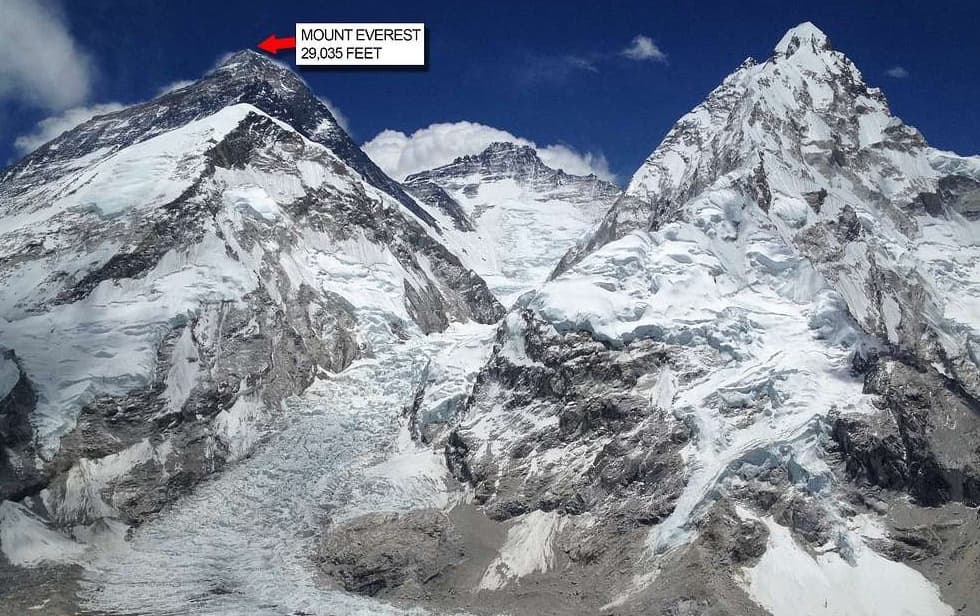
Tengboche Monastery (Dawa Choling Gompa) is popular among visitors because it occupies a dramatically located ridge at 3,867 meters in the Khumbu region, within direct sight of Ama Dablam (6,812 m), Lhotse (8,516 m), and Everest (8,849 m). The monastery serves as the spiritual center of Sherpa culture and the primary pre-expedition blessing site for Everest climbers, an estimated 40,000 to 50,000 trekkers and climbers pass through annually on the Everest Base Camp trail.
The monastery belongs to the Nyingma school and was founded in 1916 by Lama Gulu, a student of the revered Trulshik Rinpoche lineage. It was destroyed by fire in 1934 following an earthquake, rebuilt, then partially damaged again in the 1989 earthquake, and fully restored in 1993. This history of destruction and revival gives Tengboche a particular cultural resonance: it embodies the Himalayan Buddhist principle that sacred institutions persist through collective will.
The Mani Rimdu festival, held here in October/November, draws up to 3,000 spectators to watch masked cham dance performances that dramatize the defeat of evil forces by Padmasambhava. For trekkers timing their visit to Khumbu, attending Mani Rimdu at Tengboche is consistently rated the single most memorable cultural experience in the region by Himalayan travel specialists.
What Can Visitors Experience at Kopan Monastery?
Visitors at Kopan Monastery (Kopan Gönpa), situated on a hill 6 kilometers north of Boudhanath, experience structured Dharma education in English, something unavailable at most Nepalese gumbas. The monastery was founded in 1969 by Lama Thubten Yeshe and Lama Zopa Rinpoche of the Gelug school and is affiliated with the Foundation for the Preservation of the Mahayana Tradition (FPMT), which operates 160 centers in 40 countries.
Kopan offers 4 distinct visitor experiences: day visits to the monastery and garden, residential meditation retreats ranging from 1 week to 1 month, a year-round Buddhist studies program taught in English, and a 10-day annual November course that consistently enrolls 400+ international students. The November course, offered since 1971, is credited with introducing tens of thousands of Westerners to Tibetan Buddhist practice, making Kopan the single most significant gateway institution for the globalization of Himalayan Buddhism.
What distinguishes Kopan from other well-known gumbas: it operates a publishing arm, a library of 5,000+ Buddhist texts, and a medical clinic serving the surrounding Nepali community, demonstrating that the monastery functions as a multifaceted social institution, not merely a tourist attraction.
What Religious Practices Take Place in Gumbas?
The primary religious practices in Nepalese gumbas are daily liturgical chanting (puja), individual meditation, ritual debate, sacred dance (cham), deity visualization (sadhana), and text memorization. These 6 practice forms constitute the full training arc of a Tibetan Buddhist monk and occur simultaneously across the daily, monthly, and annual ritual calendar.
How Do Monks Live and Study in Gumbas?
Monks in Nepalese gumbas live and study within a structured residential curriculum that typically spans 20 years from novice ordination to full geshé or khenpo qualification. The daily schedule begins at 5:00 AM with individual prayers, proceeds through group morning puja, breakfast, scripture study, debate sessions, afternoon work duties, and evening liturgy, concluding by 9:00 PM.
Young novices (rabjung) enter gumbas as young as 6 years old, often from rural families who see monastic education as the highest available investment in a child's future. In Nepal's mountain communities, particularly Sherpa, Tamang, Manangi, and Mustangi villages, sending one child to a monastery remains a common family strategy, combining spiritual merit with the practical benefit of an educated son who can serve as community advisor.
The curriculum across most Nepalese gumbas follows a 3-phase structure:
Phase 1 (years 1–5): Tibetan literacy, memorization of 300+ pages of canonical ritual texts, basic logic, and monastic conduct rules (Vinaya).
Phase 2 (years 6–12): Madhyamaka philosophy, Prajnaparamita (Perfection of Wisdom) texts, Abhidharma (phenomenology), and advanced debate.
Phase 3 (years 13–20): Tantric initiation, retreat practice (drubdra), and scholarly specialization leading to formal qualification.
The financial model of gumba education deserves attention: most Nepalese gumbas charge no tuition. Monks receive room, board, robes, and education in exchange for participating in the ritual life of the institution. External funding comes from lay donations, tourism revenue, and international Buddhist foundations, a precarious economic equation that makes financial sustainability a chronic concern for monastery administrators.
What Rituals and Festivals Are Celebrated in Gumbas?
The 8 most significant rituals and festivals celebrated in Nepalese gumbas are Losar (Tibetan New Year), Saga Dawa (Buddha's birth, enlightenment, and parinirvana), Mani Rimdu (Nyingma festival), Dumje (Sherpa community festival), Chhokhor Düchen (First Teaching Day), Lhabab Düchen (Buddha's descent from heaven), Drupchen (intensive group practice), and Kangso (protector deity ceremonies). Each festival marks a specific event in the Buddhist cosmological calendar and generates merit for participants through attendance, offering, and service.
Losar, falling in February or March depending on the lunar calendar, is the most socially significant: gumbas host 3-day ceremonial programs including Gutor (expulsion of the old year's negativities), offering ceremonies, and public mask dances. Families travel from surrounding villages to make offerings, receive blessings, and renew community bonds.
Saga Dawa, the fourth lunar month (May/June), is the most spiritually significant. All merit-generating activities, prayers, prostrations, charity, circumambulation, are believed to multiply by 100,000 during this month. The pilgrimage circuits (kora) around Boudhanath and Swayambhunath Stupa in Kathmandu attract tens of thousands of practitioners during Saga Dawa, with gumbas conducting around-the-clock group chanting sessions.
How Is Meditation Practiced in Nepalese Gumbas?
Meditation in Nepalese gumbas is practiced through 2 primary systems: shamatha (calm abiding) and vipassana (insight meditation) as foundational practices, and Vajrayana deity yoga (sadhana) as the advanced system. The distinction matters: most popular meditation retreat centers globally teach shamatha or vipassana. Nepalese gumbas affiliated with Tibetan schools teach all three, with Vajrayana techniques accessible only after initiation (wang) from a qualified lama.
Shamatha practice in gumbas begins with breath awareness, progresses through 9 stages of mental stabilization, and aims for a state of effortless, single-pointed concentration (samadhi). The traditional measure of shamatha mastery is the capacity to sustain undistracted focus for 4 continuous hours, a threshold that typically requires 3 to 5 years of daily practice.
Sadhana practice involves visualizing a specific deity (yidam) in precise iconographic detail, reciting their mantra tens of thousands of times, and ultimately recognizing one's own awareness as identical to the deity's wisdom mind. Gumbas track monk practitioners through structured ngöndro (preliminary practices) requiring 111,111 repetitions each of 4 foundational exercises before Vajrayana initiation is granted.
How Do Gumbas Support Tourism in Nepal?
Gumbas support tourism in Nepal by functioning as primary destination anchors on 7 of Nepal's 12 major trekking circuits: the Everest Base Camp, Annapurna Circuit, Langtang, Manaslu, Mustang, Tsum Valley, and Dolpo routes all pass through significant monastery complexes that motivate trekkers to extend their itineraries and increase per-visitor expenditure in surrounding communities.
Why Do Travelers Visit Gumbas in the Himalayas?
Travelers visit gumbas in the Himalayas for 4 distinct motivations: spiritual seeking (approximately 35% of gumba visitors), cultural tourism (approximately 40%), trekking waypoints (approximately 20%), and meditation retreats (approximately 5%). These categories overlap considerably, a trekker who stops at Tengboche for a blessing before ascending to Everest Base Camp occupies the cultural tourism and trekking waypoint categories simultaneously.
The experiential value of a gumba visit cannot be replicated by museum exhibitions or documentary films. The sensory environment, juniper incense smoke, butter lamp heat, the resonance of gyaling horns and dungchen long trumpets, the physical weight of a lama's blessing, generates what anthropologists term embodied knowledge of Buddhist practice. This irreplaceable quality drives repeat visitation: travelers who visit Tengboche on the Everest Base Camp trail frequently plan returns specifically to attend Mani Rimdu.
International visitor data from Nepal Tourism Board indicates that cultural and pilgrimage tourism, of which gumba visits form a major component, generates an average per-visitor expenditure 23% higher than standard trekking tourism due to longer stays, guide services, and retreat enrollment fees.
What Should Visitors Know Before Entering a Gumba?
Visitors entering a gumba follow 7 essential protocols that demonstrate respect and ensure access to all areas of the complex:
Remove footwear at the main entrance threshold, floor-level deities are considered present throughout the interior.
Dress modestly, cover shoulders and knees; many gumbas provide wraps at the entrance for visitors who arrive underprepared.
Circumambulate clockwise, always walk the kora path and interior circuits in a clockwise direction, as counter-clockwise circumambulation is specific to Bön practice.
Do not touch statues or sacred objects unless invited by a monk.
Silence during active puja, when monks are chanting, observe silently; photography during active ritual requires specific permission.
Offer a monetary donation, placing a small offering in the donation box is not optional courtesy but a standard reciprocal gesture in Himalayan hospitality culture.
Never point feet toward altars or lamas, sit cross-legged or with feet tucked away when seated in the assembly hall.
The most common mistake international visitors make: entering the gönkhang (protector deity chapel) without permission. This room houses wrathful deities and is considered dangerous for uninitiated visitors. Most gumbas keep the gönkhang locked except during specific ritual periods. A monk's refusal of access is not unfriendliness, it is a protective courtesy.
How Do Gumbas Contribute to Local Economies?
Gumbas contribute to local economies through 5 economic mechanisms: direct employment of monks and lay staff, generation of visitor expenditure in surrounding lodges and teahouses, production and sale of ritual objects (thangka paintings, prayer flags, incense, statues), land management of monastery-owned agricultural terraces, and administration of credit and grain storage for surrounding communities.
In the Khumbu Sherpa economy, Nepal's most thoroughly studied high-altitude community, research by anthropologist Sherry Ortner documents that Tengboche Monastery historically functioned as the region's primary credit institution before commercial banks reached the area. Monastery grain stores provided emergency food security during failed harvests. These non-spiritual economic functions are rarely discussed in tourism literature but remain active in remote gumba communities in Mustang, Dolpo, and Tsum Valley.
The craft economy deserves particular emphasis: a single high-quality thangka painting produced by monastery-trained artists sells for USD 500 to USD 15,000 depending on size, complexity, and gold work. Approximately 3,000 professional thangka artists in the Kathmandu Valley trace their training lineages directly to monastery art programs. The gumba system is, functionally, the art school that sustains a multi-million-dollar export industry.
What Challenges Do Gumbas in Nepal Face Today?
Nepalese gumbas face 6 documented systemic challenges in 2025: earthquake damage and reconstruction debt, declining monastic enrollment, climate change effects on mountain infrastructure, intellectual property theft of sacred art, over-tourism pressure on fragile sites, and funding dependency on foreign Buddhist organizations that impose doctrinal conditions. No single challenge is existential alone, but their combination creates institutional stress unprecedented in the 1,400-year history of Himalayan monasticism.
How Do Natural Disasters Affect Historic Gumbas?
Natural disasters affect historic gumbas in Nepal through direct structural damage and secondary economic disruption that compounds across years. The April 2015 Gorkha Earthquake (7.8 magnitude) destroyed or severely damaged 133 monastery and temple structures across 14 districts, according to UNESCO's Post-Disaster Needs Assessment. The estimated replacement cost for damaged religious heritage exceeded USD 208 million, a figure that has been only partially recovered as of 2025.
Tengboche Monastery sustained roof damage in 2015. The historic Thamo and Rimijung gumbas in the Khumbu lost sections of their perimeter walls. In Kathmandu, the 15th-century Uku Bahal monastery complex sustained irreparable damage to its woodcarving facade. Some smaller rural gumbas, particularly in Gorkha and Sindhupalchok districts, were completely leveled with no reconstruction funding available.
The secondary damage is less visible but equally severe: earthquake disruption collapses the tourist visit numbers that fund monastery operations for 2 to 3 years after the event. The 2015 earthquake reduced trekking permit sales by 45% in the 2015–2016 fiscal year, directly cutting monastery income from visitor donations at the precise moment when reconstruction costs peaked.
What Preservation Efforts Protect Ancient Gumbas?
The 4 primary preservation efforts protecting ancient gumbas in Nepal are the UNESCO World Heritage Programme, the Kathmandu Valley Preservation Trust (KVPT), the Nepal Trust (UK-based), and the Rubin Museum Himalayan Art Conservation Initiative. Each addresses a distinct preservation domain: UNESCO focuses on World Heritage site maintenance frameworks, KVPT executes on-ground conservation of specific structures, Nepal Trust funds remote monastery stabilization in Dolpo and Mustang, and the Rubin Museum initiative conserves movable heritage (thangkas, statues, manuscripts).
The KVPT, founded in 1991 with support from the World Monuments Fund, has completed more than 74 restoration projects across the Kathmandu Valley, training 120+ Nepalese conservation specialists in traditional masonry, woodcarving, and metalwork restoration methods. This knowledge transfer is the most underreported achievement of preservation work: the project creates a domestic expert workforce capable of maintaining gumbas without permanent foreign technical dependency.
Traditional materials are a non-negotiable requirement of authentic restoration: dachi apa (lime plaster mixed with jute fiber), sal wood structural members, handmade terracotta tiles, and locally sourced stone must be used in certified historic restoration projects. Substituting concrete or synthetic paint, which some monastery communities do under budget pressure, accelerates deterioration of adjacent original materials and disqualifies the structure from future UNESCO conservation funding.
How Is Modernization Changing Traditional Gumbas?
Modernization is changing traditional gumbas through 4 measurable transformations: electrification and LED lighting replacing butter lamps as primary illumination, social media presence creating new financial channels (online donation platforms), diaspora monk communities conducting digital Dharma teachings that reduce local congregation attendance, and satellite television exposure creating lifestyle competition for novice monk recruitment.
The electricity issue is subtler than it appears. Butter lamp light (approximately 400–500 lux at altar level) was not a limitation to be overcome, it was a designed feature that made golden deity statues glow in ways that electric LED light cannot replicate. Several monastery communities that switched to LED lighting have reported that congregation members describe the ritual atmosphere as "less sacred," leading some gumbas to maintain butter lamps for ceremonies while using electric light for practical functions.
Monk recruitment presents the most significant structural challenge. In 1990, approximately 1 in 8 Sherpa male children entered monastic life. By 2023, UNESCO-sponsored demographic research indicated that figure had declined to approximately 1 in 22. Economic development, school expansion, and career opportunities in trekking, aviation, and urban employment now compete directly with the monastery as a life path, particularly for families with only 2 to 3 children who weigh each child's economic contribution carefully.
How Can You Explore Gumbas in Nepal Responsibly?
Exploring gumbas in Nepal responsibly means visiting with informed cultural sensitivity, contributing economically to monastery communities rather than extracting cultural content without reciprocity, and supporting preservation-conscious travel operators who employ local guides trained in Buddhist cultural literacy rather than generalist trekking guides who provide surface-level commentary.
Responsible gumba exploration follows 3 practical principles: schedule visits during open hours (most gumbas open 6:00 AM–12:00 PM and 2:00 PM–6:00 PM), hire a monastery-certified guide where available (Kopan, Boudhanath, and Tengboche all have guide programs that channel fees directly to the institution), and purchase authentic monastery-produced crafts rather than mass-produced tourist items from Thamel shops, the revenue difference reaches the artisan community directly.
Photography ethics require specific attention. Interior monastery photography is prohibited during active puja at virtually every gumba in Nepal without exception. Photographing monks without consent, particularly young novices, violates the monastery's community privacy norms even when the exterior of the building is publicly accessible. A camera visible around the neck is not permission to use it inside.
For travelers seeking one of Nepal's most immersive monastery experiences, the Tsum Valley with Manaslu Trek combines ancient gumbas such as Mu Gompa and Rachen Gompa with the remote grandeur of the Manaslu Conservation Area, a rare combination of high-altitude trekking and living Buddhist culture in a single itinerary.
Can Local Travel Services Help You Visit Gumbas in Nepal?
Local travel services offer structured expertise that independent gumba visitors consistently underutilize. Knowledgeable local operators provide monastery-specific pre-trip briefings, relationships with head lamas that open access to areas and teachings unavailable to walk-in visitors, and logistical support for remote gumba treks in Upper Mustang, Dolpo, and Tsum Valley that require restricted area permits (Tsum Valley costs NPR 3,000 per week in 2025; Upper Mustang costs USD 500 for 10 days).
The practical difference between guided and independent gumba visits is measurable: independent visitors typically access the courtyard and main assembly hall only, spending 30–60 minutes per site. Guided visitors with pre-arranged introductions access the library, the gönkhang, private audience rooms, and sometimes receive a brief teaching or blessing from resident lamas, transforming a sightseeing stop into a genuine cultural exchange. Connecting with a reputable Nepal-based cultural travel specialist before your trip significantly expands what you can experience at every gumba on your itinerary.
What Are the Key Takeaways About Gumbas in Nepal?
Gumbas in Nepal are active spiritual institutions, not museums, monuments, or trekking waypoints, that have sustained Himalayan Buddhist civilization for 1,400 years while simultaneously serving as schools, cultural memory archives, economic anchors, and community governance centers. The 6,000+ gumbas across Nepal represent the largest intact living tradition of Vajrayana Buddhist practice on earth.
The 7 most important facts to carry forward:
Gumbas originate from a 7th-century fusion of Tibetan Buddhist monastic tradition and Newar architectural craftsmanship unique to Nepal.
Every architectural element carries doctrinal meaning, from spatial layout to mural iconography to paint color.
Boudhanath, Tengboche, and Kopan represent 3 distinct gumba models: urban pilgrimage complex, mountain cultural center, and international education monastery.
Monk education spans 20 years within a structured curriculum covering philosophy, debate, ritual, and meditation.
Natural disasters and modernization represent the 2 most urgent threats to institutional continuity, outpacing preservation funding significantly.
Responsible visitation means reciprocal economic contribution, cultural preparation, and guide-assisted access rather than passive observation.
Gumbas are living institutions: attending a puja, receiving a blessing, or enrolling in a short retreat transforms a cultural visit into direct participation in one of the world's most sophisticated contemplative traditions.
Nepal's gumbas endure because communities protect them, monks animate them, and travelers who encounter them carry something forward. The most meaningful gumba experience is not the photograph at the monastery gate, it is the silence inside the assembly hall when 40 monks begin chanting in unison at dawn, and the world outside briefly falls away.