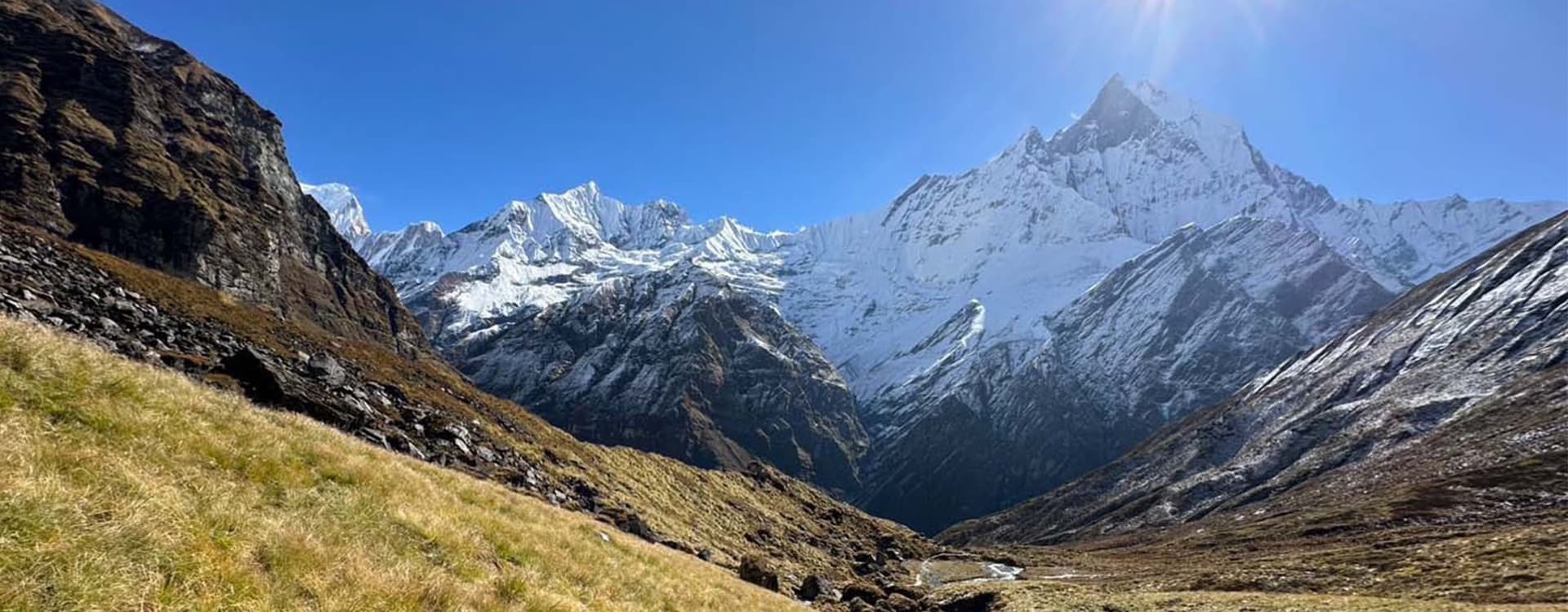
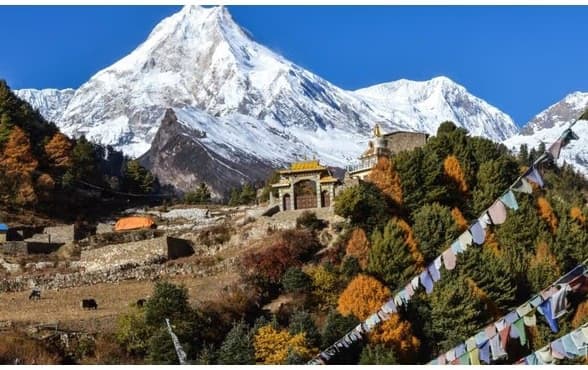
September is one of the most varied times to travel through Nepal because the country is shifting from the monsoon season into autumn. Early September can still bring rain, humid lowland weather, slippery trekking trails, leeches, cloud-covered mountain views, and occasional flight disruptions, while conditions generally become drier and clearer toward the final weeks of the month. The changing weather creates different travel opportunities across Nepal, from Kathmandu's UNESCO heritage sites and September festivals to Pokhara's lakes and Himalayan viewpoints, Chitwan National Park's wildlife, and Nagarkot's accessible mountain panoramas. Hill towns such as Bandipur and tea-growing Ilam offer quieter cultural and nature experiences, while Lumbini provides Buddhist heritage in the Terai and Mustang remains comparatively dry because of the Annapurna-Dhaulagiri rain shadow.
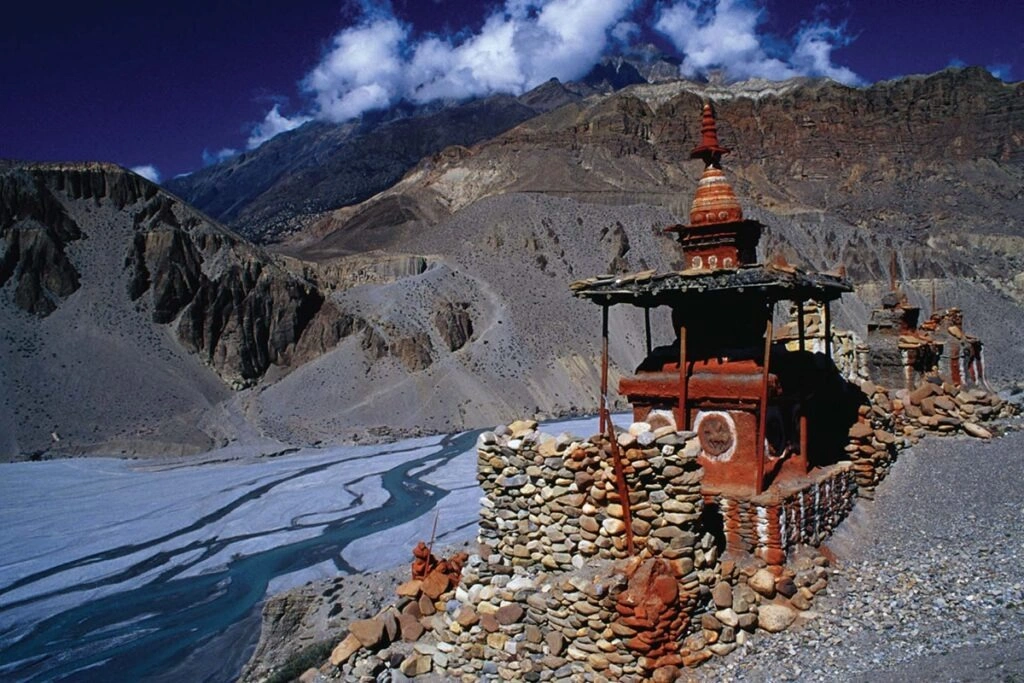
The best places to visit in Nepal in September therefore depend not only on where you want to go, but also on when you travel within the month and what type of experience you want. Annapurna and Everest treks become increasingly attractive as trails dry and Himalayan visibility improves, although altitude, trail conditions, permits, and Lukla flight reliability still require careful planning. Mustang offers a different trekking environment with dry high-desert trails, Tibetan Buddhist culture, and Restricted Area Permit requirements, while Kathmandu, Pokhara, Chitwan, Nagarkot, Bandipur, Lumbini, and Ilam can be combined into cultural, wildlife, scenic, and lowland itineraries. This guide compares the 10 best places to visit in Nepal in September, covering what to see, weather and trail conditions, activities, costs, permits, and practical timing so you can match each destination with the conditions it offers during your travel dates.
1. Kathmandu
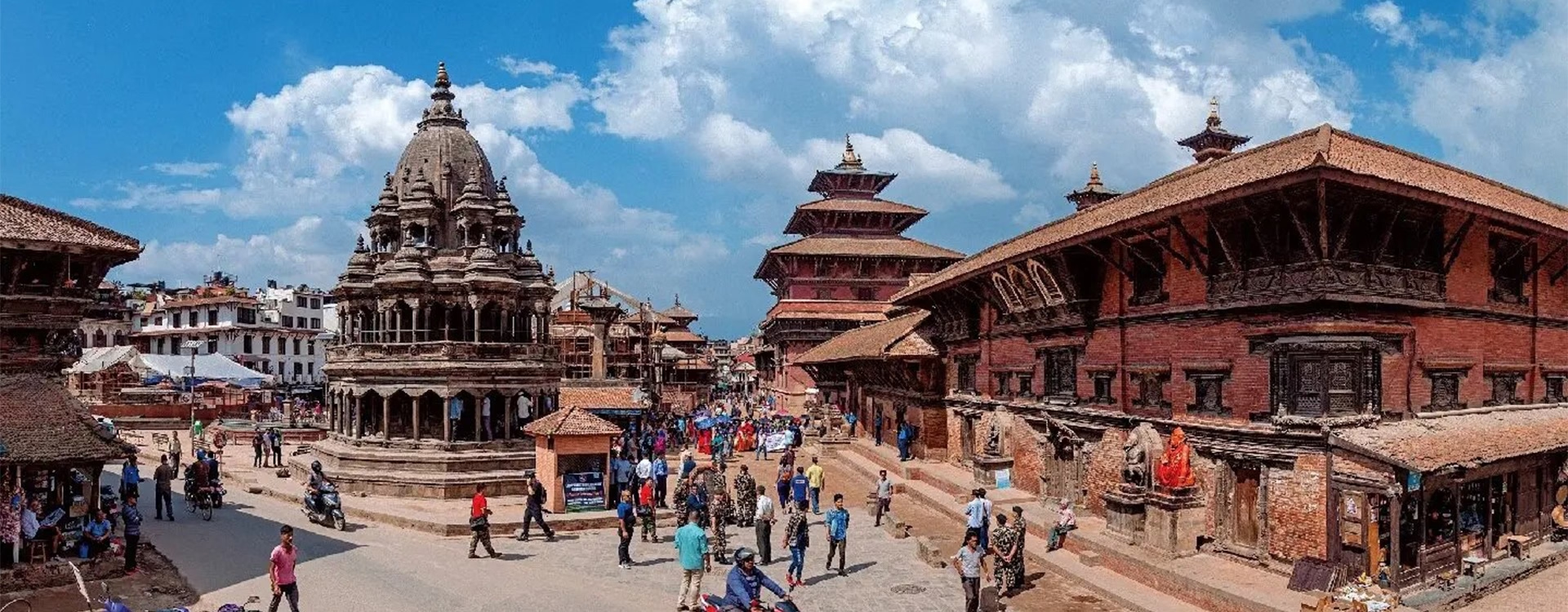
Kathmandu works in September because the Valley's festival calendar and its monsoon-recovery period land in the same four weeks, giving visitors both cultural intensity and clearing skies in one stop.
What Are the Best Cultural Attractions to Visit in Kathmandu?
Kathmandu's four essential cultural sites are Kathmandu Durbar Square, Pashupatinath Temple, Boudhanath Stupa, and Swayambhunath. Kathmandu Durbar Square is a UNESCO World Heritage Site built around the former royal palace complex, Hanuman Dhoka, and remains the ceremonial center of the city. Pashupatinath Temple, on the Bagmati River, is one of Hinduism's most important Shiva temples and a functioning cremation site, not a museum piece. Boudhanath Stupa anchors Kathmandu's Tibetan Buddhist community and draws pilgrims who circle it clockwise at dawn and dusk. Swayambhunath, known locally as the Monkey Temple, sits on a hilltop above the Valley and pairs a 5th-century stupa with sweeping city views.
What most first-time visitors miss is sequencing. Pashupatinath is at its most atmospheric in the early morning, before tour groups arrive and while cremation rituals are still in progress along the ghats. Boudhanath works best at dusk, when butter lamps light the stupa's base and the resident monks begin evening prayers. Save Durbar Square for midday, when the palace museum sections are open and the light is best for the wood carvings on the temple struts.
Kathmandu sits at roughly 1,400 meters above sea level, which keeps September daytime temperatures in a comfortable 23–27°C range even while the lowlands further south stay hot and humid. Much of Durbar Square's surviving architecture dates from the Malla dynasty period between the 15th and 18th centuries, though the 2015 earthquake damaged several structures; ongoing restoration work means a handful of temples may still be scaffolded, which is worth expecting rather than treating as a disappointment.
What Can You Experience in Kathmandu After the Monsoon?
Kathmandu after the monsoon offers two major Newar festivals in 2026: Teej, running September 13 to 16, and Indra Jatra, beginning around September 25. Teej is the great women's festival of the year: married women fast and gather in red saris at Shiva temples, with Pashupatinath drawing the largest crowds on the main fasting day. Indra Jatra, also called Yenya, is an eight-day street festival built around masked Lakhey dances and the chariot procession of the Kumari, Kathmandu's living goddess, through the old city lanes around Durbar Square.
A common mistake is treating a September Kathmandu stop as a one-day layover before heading to the mountains. Rainfall in the capital drops to roughly 200mm spread across about 15 days in September, well below July's peak, and by the third week the air has cleared enough for genuinely good photography and rooftop views of the surrounding hills. If your dates overlap with either festival, add a full extra day; both involve street closures and are far better experienced slowly than rushed between sightseeing stops.
2. Pokhara
Pokhara in September is a city in transition: still Nepal's rainiest destination, but also the base from which the clearest Annapurna views of the year begin to appear.
What Are the Best Places to See in Pokhara?
Pokhara's five key sights are Phewa Lake, Sarangkot, the World Peace Pagoda, the International Mountain Museum, and Davis Falls with Gupteshwor Cave. Phewa Lake, the city's centerpiece, offers boating with a reflected view of Machapuchare (Fishtail Peak) on clear mornings. Sarangkot, a hilltop 1,600 meters above the lake, is Pokhara's classic sunrise viewpoint over the Annapurna range. The World Peace Pagoda sits across the lake on a forested ridge and combines a short uphill walk with a panoramic payoff. The International Mountain Museum covers Himalayan mountaineering history in detail, useful on a cloudy day when the peaks themselves are hidden. Davis Falls plunges into an underground channel that reappears inside the adjacent Gupteshwor Cave, a rare pairing of waterfall and cave system in one stop.
The trade-off most visitors don't plan for: September's frequent afternoon cloud makes museums, the cave, and lakeside cafés the better midday choice, while mountain viewpoints like Sarangkot and the Peace Pagoda belong at dawn.
Can You See the Himalayas Clearly From Pokhara in September?
Himalayan visibility from Pokhara improves sharply through September: the first half is often hazy or cloud-covered, while the last week regularly delivers clear, sharp views of Annapurna and Machapuchare. Pokhara receives around 640mm of rain in September on average, still substantial but well down from July's 940mm peak, and most of that rain falls in short, early-month bursts rather than sustained days. Daytime temperatures hold near 25–29°C with overnight lows around 20–21°C, and humidity drops noticeably in the final third of the month.
What most guides don't say clearly enough: visibility is a morning phenomenon, not an all-day one. Even in late September, afternoon convective cloud can build up and hide the range by early afternoon. If mountain views matter more to you than anything else on this list, book Sarangkot sunrise for your last morning in Pokhara rather than your first, giving the weather the best chance to have already cleared.
3. Chitwan National Park
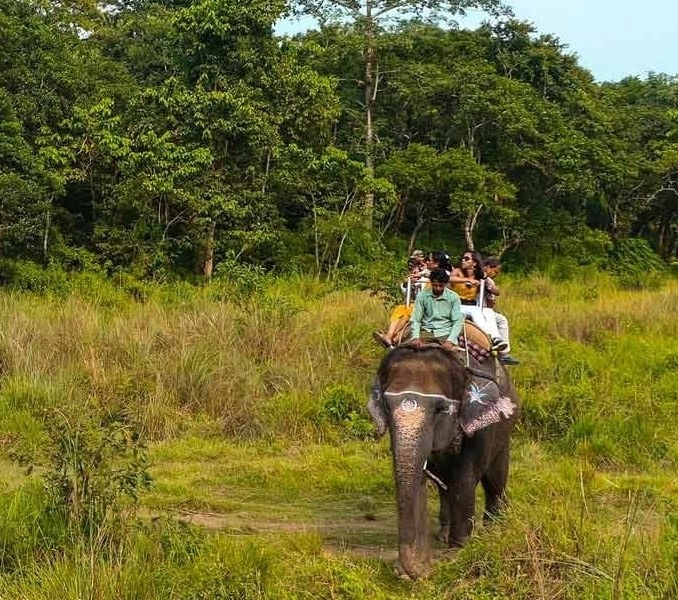
Chitwan trades altitude for wildlife, and September is one of the few months when the park is quiet, green, and still fully accessible before the October crowds arrive.
What Wildlife Can You See in Chitwan National Park?
Chitwan National Park protects the greater one-horned rhinoceros, Bengal tigers, gharial and mugger crocodiles, and more than 540 recorded bird species. Established in 1973 as Nepal's first national park and later listed as a UNESCO World Heritage Site, Chitwan holds one of Asia's largest surviving populations of the greater one-horned rhino. Sightings on a jeep safari are common; tiger sightings are rare and usually a matter of tracks or calls rather than a direct view. Canoe trips along the Rapti River carry a very high chance of spotting basking gharials and mugger crocodiles, alongside kingfishers and other waterbirds.
Something worth knowing before you book: since around 2022, growing welfare concerns have led many lodges to stop offering elephant-back safaris entirely, replacing them with jeep safaris, guided walks, and visits to the Elephant Breeding Center, where elephants are observed rather than ridden.
What Activities Can You Enjoy in Chitwan in September?
Chitwan's core September activities are the jeep safari, the Rapti River canoe trip, a guided jungle walk, and an evening Tharu cultural performance. Park entry costs NPR 2,000 (roughly US$15) per day for foreign nationals, with SAARC nationals and Nepali citizens paying less. A half-day shared jeep safari runs NPR 5,000–7,000 (about US$38–52) including the guide and park fee, while a canoe trip adds another NPR 1,000–2,500. A realistic two-night, three-day Chitwan stopover, including lodging, meals, and the main activities, costs US$150–300 per person at mid-range lodges.
The scheduling trick locals use: book your jeep safari and canoe trip for the same park day whenever your itinerary allows, since the NPR 2,000 entry fee is charged once per day rather than per activity. September's grass is still tall from the monsoon, which lowers visibility slightly compared with the cut-grass months of February and March, but it also means far fewer visitors competing for the same jeep.
4. Nagarkot
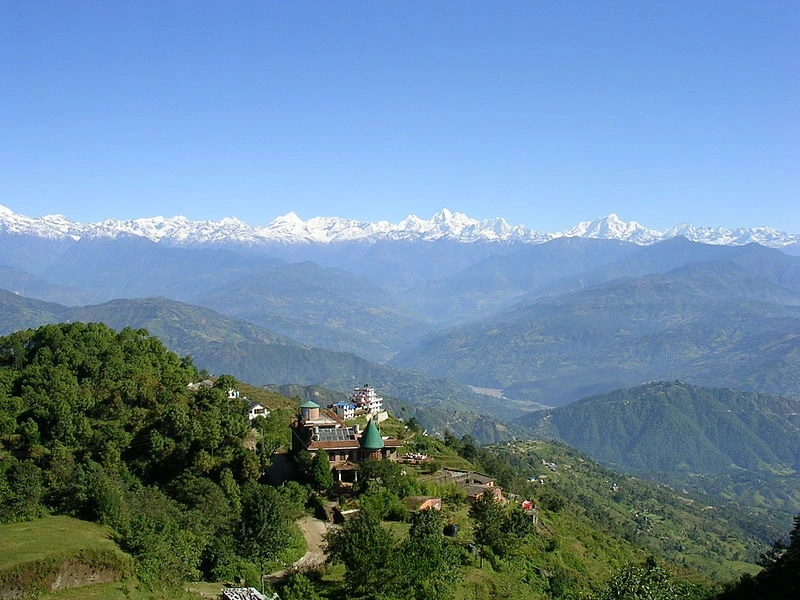
Nagarkot solves a specific problem: how to get a genuine Himalayan sunrise without committing to a multi-day trek, all within a half-day of Kathmandu.
What Mountain Views Can You Expect From Nagarkot?
Nagarkot's viewpoint, at roughly 2,175 meters above the Kathmandu Valley, delivers sunrise panoramas of the Langtang and Annapurna ranges, with Mount Everest visible on the clearest days. The village sits on a ridge northeast of Kathmandu, and its main watchtower faces directly into the Himalayan skyline rather than off to one side, which is what makes it Nepal's most reliable short-trip viewpoint rather than just a pleasant hillside.
The gap between expectation and reality here is real: during the peak monsoon months of June through August, cloud cover blocks the mountains on most mornings. September changes that gradually, and by the final ten days of the month, clear sunrise views become the norm rather than the exception.
Nagarkot's viewing tower stands a short, well-marked walk from most of the village's guesthouses, so reaching it before sunrise doesn't require a guide or transport, unlike most other Himalayan viewpoints on this list. This accessibility is a large part of why families, older travelers, and anyone recovering from a long flight tend to choose Nagarkot over a multi-day trek for their first Himalayan panorama.
Is Nagarkot Suitable for a Short Nepal Trip in September?
Nagarkot suits a short Nepal trip well: it sits roughly 32 kilometers from Kathmandu, about a 90-minute drive, and rewards even a single overnight stay. Travelers with two or three days in the country, or those adding one non-trekking mountain experience to a cultural itinerary, get the most value from Nagarkot in September specifically, since it is one of the first viewpoints near Kathmandu to clear once the rains ease.
A frequent planning mistake: arriving at Nagarkot at midday and leaving the next morning without ever seeing a sunrise or sunset. The viewpoint rewards an overnight stay far more than a drive-through visit, because both golden hours, not just one, are within walking distance of most lodges.
5. Annapurna Region
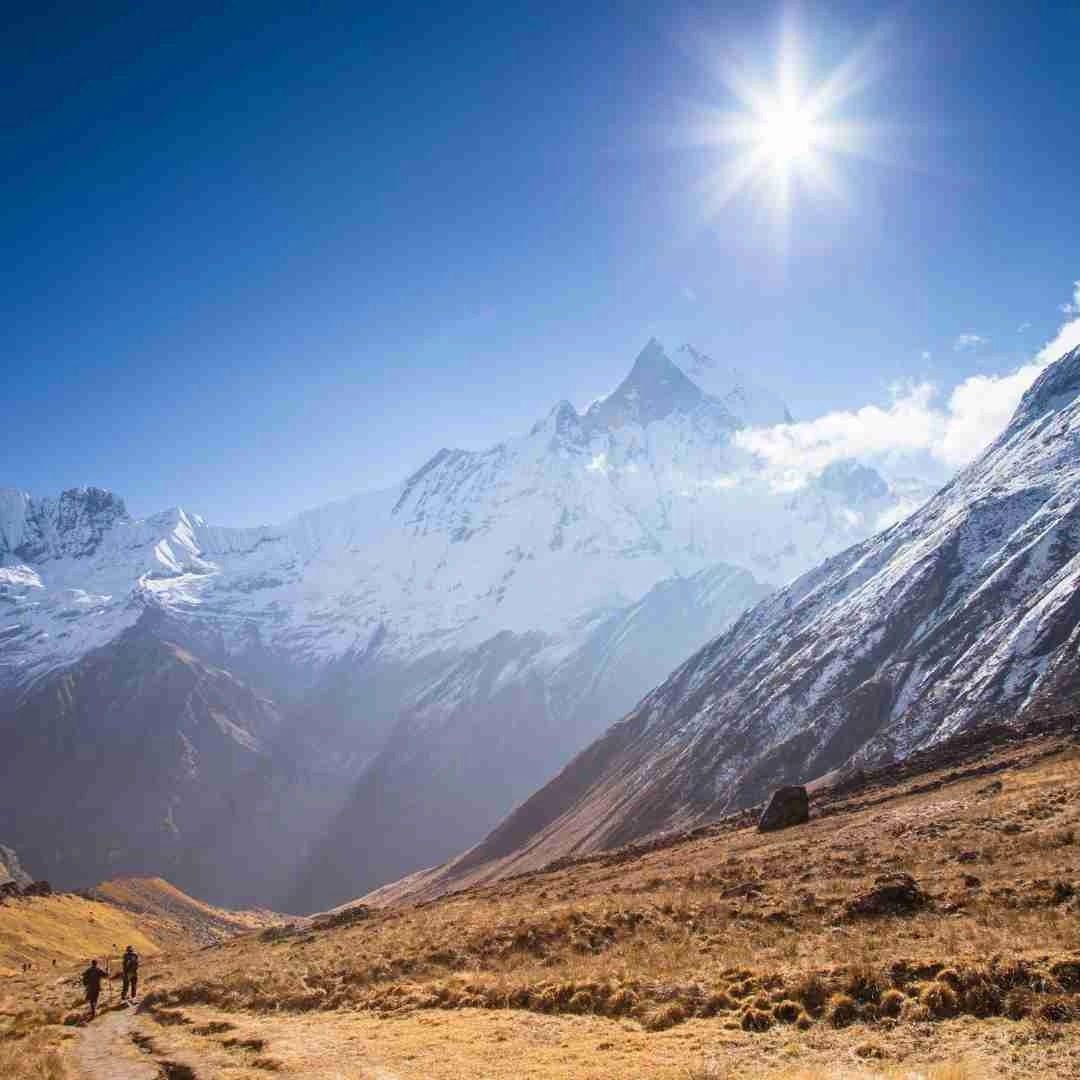
The Annapurna region in September is the classic transitional trek: wetter and greener at the start of the month, then dramatically clearer by the third week, with the change happening almost week by week.
Which Annapurna Treks Are Best in September?
The best Annapurna treks for September are Poon Hill, Mardi Himal, Annapurna Base Camp, and the Annapurna Circuit, roughly in order of increasing length and altitude exposure. Poon Hill, a short 4–5 day trek to a 3,210-meter viewpoint, carries the lowest risk from lingering monsoon conditions because most of the route stays under 3,000 meters. Mardi Himal and Annapurna Base Camp add several more days and higher elevation but remain manageable by mid-September. The Annapurna Circuit, at 14–18 days including the 5,416-meter Thorong La Pass, is the most weather-sensitive of the four and benefits most from waiting until the third week of the month.
What experienced guides watch for that first-timers don't: the Bamboo-to-Dovan stretch of the Modi Khola valley on the way to Annapurna Base Camp is the region's most landslide-prone section in early September, and it is worth checking conditions with a local guide before committing to that day's itinerary rather than assuming the trail is unchanged from a guidebook description.
What Weather and Trail Conditions Should You Expect in Annapurna?
Early September in the Annapurna region still carries monsoon leftovers, including leeches below roughly 2,000 meters and slippery lower trails, while mid-to-late September brings dry ground, firmer footing, and Thorong La Pass in safe crossing condition. Temperatures vary sharply by elevation: 18–26°C by day at lower elevations, dropping to 5–12°C by day and near freezing at night above 4,000 meters. Rainfall on the eastern approach roughly halves compared with August, while the Mustang side of the circuit, sitting in a rain shadow, stays dry throughout the month regardless of what the rest of the region is doing.
The trade every trekker faces here: earlier September dates mean fewer people on the trail and lower teahouse prices, but a real chance of leeches and mud on the first few days. A guide who knows the current trail state is worth more in September than in any other trekking month, because conditions can differ meaningfully from one week to the next.
6. Everest Region
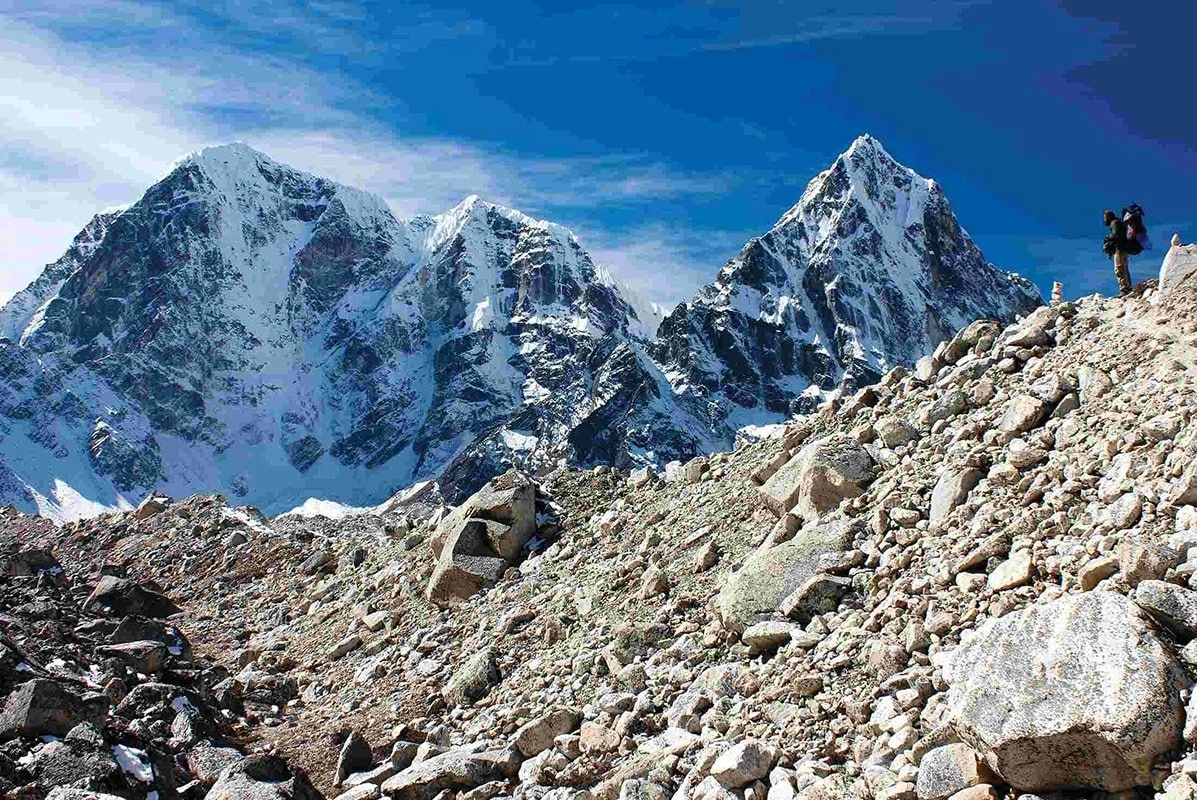
The Everest region rewards patience in September more than any other destination on this list: the same trail can be genuinely difficult in the first week and genuinely excellent in the last.
Which Everest Treks Are Suitable for September?
Everest Base Camp, the Gokyo Lakes trek, and the Three Passes trek are all suitable for September, provided the itinerary favors the second half of the month. Everest Base Camp remains the most popular choice and the best-supported in terms of teahouses and guide availability. Gokyo Lakes offers comparable Everest and Cho Oyu views with a gentler overall profile. The Three Passes trek, crossing Kongma La, Cho La, and Renjo La, is the most demanding of the three and benefits the most from waiting until late September, when the passes are clear of lingering monsoon moisture.
The distinction most operators don't spell out: none of these treks change in core difficulty because of the season. Altitude gain and daily distances stay the same in September as in October. What changes is the condition of the lower trail and the reliability of Lukla flights, not the trek's fundamental demands.
What Should You Know About September Weather in the Everest Region?
September in the Everest region divides roughly in half: the first two weeks carry mud, occasional leeches below Namche Bazaar, and Lukla flight delays from lingering cloud, while the last two weeks bring drying trails, clearer skies, and more stable flying conditions. The Sagarmatha National Park entry permit costs NPR 3,000 for foreign trekkers, and the Khumbu Pasang Lhamu Rural Municipality permit adds roughly NPR 2,000–3,000 more, for a combined cost near NPR 6,000 (about US$45). The TIMS card, required in most other trekking regions, is not required here; these two local permits replaced it starting in 2018.
What surprises trekkers who've done other Himalayan routes in September: leeches on the Everest route are a minor, lower-altitude nuisance easily managed with gaiters and salt, not a trip-defining problem. The bigger practical risk is a delayed or cancelled Lukla flight in the first half of the month, which is why every well-run September Everest itinerary builds in at least one buffer day near Kathmandu or Ramechhap before flying in.
September does not change the risk of altitude sickness above Namche Bazaar; the acclimatization schedule that applies in October and November applies here as well, and skipping a rest day because the trail felt easy lower down is one of the more common mistakes on early-autumn Everest treks. Namche Bazaar itself averages around 15°C by day and closer to 6°C at night in September, mild enough that a mid-weight down layer, rather than full winter gear, covers most of the trek below Gorak Shep.
7. Bandipur
Bandipur is the destination on this list most visitors have never heard of before booking, and that obscurity is exactly its appeal in September.
What Can You See and Do in Bandipur?
Bandipur is a preserved hilltop Newari trading town with cobblestone streets, the Bindabasini Temple, Thani Mai viewpoint, and the limestone Siddha Cave nearby. The town sits on a ridge between Kathmandu and Pokhara and was bypassed by the modern highway decades ago, which is precisely why its 18th- and 19th-century Newari architecture survived largely intact instead of being replaced. Thani Mai, a short walk above the main bazaar, opens onto a wide panorama that includes Manaslu, the Annapurna range, and Himalchuli on clear days. Siddha Cave, roughly an hour's walk from town, is one of Nepal's largest cave chambers and a straightforward add-on for visitors with half a day to spare.
The comparison worth making before you commit: Bandipur offers a similar hilltop, mountain-view, old-town atmosphere to Bhaktapur or parts of Pokhara, but with a fraction of the foot traffic, which matters more in shoulder season, when travelers are actively looking to avoid crowds rather than find them.
Why Is Bandipur Ideal for Culture and Mountain Views?
Bandipur pairs intact Newari culture with genuine mountain views in a single overnight stop, which is a combination few other Nepal destinations offer without a multi-day trek attached. Most travelers slot it in as a one-night stay between Kathmandu and Pokhara rather than a standalone destination, and that positioning suits September well: it breaks up the drive, gives the day's rain a chance to clear before an evening viewpoint walk, and avoids the crowd pressure that builds in Pokhara and Kathmandu around the mid-September festival dates.
What people often overlook is timing the Thani Mai walk for late afternoon rather than midday. September's afternoon cloud tends to build over the Kathmandu Valley side first, leaving Bandipur's western-facing mountain panorama clear for longer than the sightlines closer to Kathmandu.
8. Lumbini
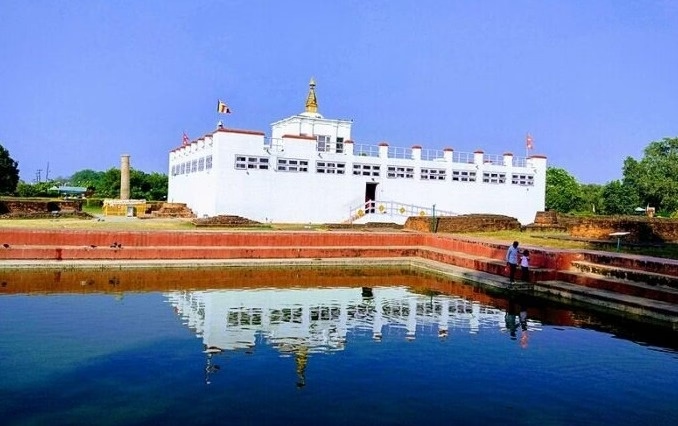
Lumbini asks for a different kind of patience in September: the sites themselves are unaffected by the season, but the lowland heat and humidity change how you should move through your day.
What Buddhist Sites Can You Explore in Lumbini?
Lumbini's core sites are the Maya Devi Temple, the Ashoka Pillar, the Sacred Garden, and the Monastic Zone, home to monasteries built by more than a dozen Buddhist nations. The Maya Devi Temple, a UNESCO World Heritage Site, marks the traditional birthplace of Siddhartha Gautama, the historical Buddha, around 623 BCE by traditional dating. The Ashoka Pillar nearby was erected by the Mauryan emperor Ashoka around 249 BCE to commemorate his pilgrimage to the site and carries one of the earliest known inscriptions confirming Lumbini's identity. The Sacred Garden surrounds both monuments with a reflecting pool and ancient tree cover. The Monastic Zone, divided into eastern Theravada and western Mahayana sections, holds monasteries built by countries including Myanmar, Sri Lanka, Korea, Japan, Germany, and Cambodia, each reflecting a distinct national architectural style.
What visitors from outside Buddhist-majority countries often don't expect: the site rewards slow, contemplative movement rather than a checklist tour, and pilgrims from across Asia are frequently present performing rituals rather than sightseeing, which is worth being mindful of when photographing.
How Can You Enjoy Lumbini Despite September Weather?
Lumbini sits in Nepal's lowland Terai belt, where September temperatures reach 32–35°C with high humidity, so the practical strategy is visiting the outdoor Sacred Garden in early morning or late afternoon and reserving midday for the covered, shaded Monastic Zone. Rain arrives as short, intense monsoon-tail showers rather than all-day downpours, and most visitors find them a brief interruption rather than a reason to change plans.
A pairing few itineraries mention: Lumbini and Chitwan sit close enough together in Nepal's lowlands that combining them into a single southern loop, rather than treating them as separate side trips from Kathmandu or Pokhara, cuts significant travel time and avoids doubling back through the hills.
9. Mustang Region
Mustang is the one destination on this list where September's monsoon barely matters, and that single fact makes it worth understanding on its own terms.
What Makes Mustang Special in September?
Mustang sits in the rain shadow of the Annapurna-Dhaulagiri massif, so it stays dry through September while most of Nepal is still finishing its monsoon, with annual rainfall below 300mm compared with over 3,000mm in nearby Pokhara. The region is the former Kingdom of Lo, a semi-autonomous Tibetan Buddhist monarchy founded around 1380 CE by Ame Pal, and its walled capital, Lo Manthang, still holds centuries-old cave monasteries with original wall paintings. The high-desert landscape, wind-carved cliffs, and Tibetan Buddhist culture make Mustang feel closer to the Tibetan plateau than to the rest of Nepal, both geographically and visually.
What makes this genuinely useful for trip planning: while trekkers elsewhere in Nepal are choosing September dates around when the rain is expected to ease, Mustang trekkers are choosing dates around wind and cold instead, since the region's exposed high-desert terrain gets increasingly windy from late morning onward.
What Should You Know About Mustang Trail Conditions?
Upper Mustang requires a Restricted Area Permit (RAP), which costs a flat US$500 per person for the first 10 days, plus US$50 for each additional day. Trekkers also need the Annapurna Conservation Area Permit (ACAP), priced at NPR 3,000. Because the US$500 base fee applies regardless of whether you trek for 5 days or 10, it is highly recommended to plan a full 10-day itinerary to get the maximum value out of your permit.
Trail conditions themselves stay firm and dusty rather than muddy throughout September, since the rain shadow that keeps Mustang dry in summer keeps it dry in the shoulder season too. The trade-off is wind, not water: afternoon gusts through the Kali Gandaki gorge, the world's deepest, pick up from around 11 a.m. most days, which is why guides schedule the day's walking for the morning and treat the afternoon as arrival and rest time rather than flexible trekking hours.
10. Ilam
Ilam closes out this list as the destination most likely to surprise visitors who assume Nepal in September means only mountains and temples.
What Can You Experience in Ilam's Tea Gardens?
Ilam's main tea attractions are the Kanyam Tea Estate, Fikkal's market town, and Antu Danda, a 2,328-meter viewpoint above the plantations. Ilam's commercial tea heritage dates back to 1863 with the establishment of its first tea estates. Today, its orthodox black and green teas are highly regarded globally and frequently compared to Darjeeling, grown just across the nearby Indian border in similar hill conditions. Kanyam offers walkable rows of tea bushes with panoramic photo points, while Fikkal serves as the district's trading hub for processed leaf. Antu Danda adds a working sunrise and sunset viewpoint over both the tea hills and, on clear days, the distant profile of Kanchenjunga.
What separates a good Ilam visit from an average one: booking time to actually walk into the gardens and talk with the families who tend them, rather than photographing the rows from the roadside, since Ilam is one of the few tea regions in the world that welcomes hands-on visitor participation in picking and processing.
Why Is Ilam a Good Choice for Nature Lovers in September?
Ilam suits nature lovers in September because its eastern hill climate is milder and less crowded than Pokhara's, and the region's tourist season, running September through December and again March through May, is only just beginning as the rest of Nepal's shoulder season starts. The combination of tea-covered hills, pine forest, and the Mai Pokhari wetland nearby gives visitors a genuinely different landscape from the rest of this list, closer in feel to the eastern Himalayan foothills than to central Nepal.
The trade-off worth knowing in advance: Ilam sits far from Kathmandu, roughly a short flight to Bhadrapur followed by a 2–3 hour drive, or a long overland journey otherwise, which is exactly why it remains one of Nepal's least crowded September destinations.
How Can You Plan a Nepal Trip in September With Nepal Intrepid Treks?
Planning a September Nepal trip means sequencing destinations around the month's monsoon-to-autumn shift, securing the right permits for each region, and building in flexible days for Lukla flights and mountain roads. Nepal utilizes an online visa application portal that streamlines your entry. Most travelers should complete this electronic form up to 15 days before arrival, which generates a barcode. You present this barcode at Tribhuvan International Airport to quickly process your Visa on Arrival. Tourist visa fees remain US$30 (15 days), US$50 (30 days), or US$125 (90 days). Permit requirements still vary by region: Everest needs the Sagarmatha National Park and Khumbu local permits, Annapurna needs ACAP plus a TIMS card, and Upper Mustang needs the 2026 daily-rate Restricted Area Permit on top of ACAP.
Planning this yourself works, but coordinating permits, guides, and internal flights across ten different regions in a single trip is where most independent itineraries lose time.
Can Nepal Intrepid Treks Help You Explore These September Destinations?
Nepal Intrepid Treks, a Kathmandu-based, TAAN-registered trekking agency operating for more than a decade, arranges permits, licensed guides, and full itineraries across every region on this list, from a Kathmandu-Pokhara-Bandipur cultural loop to a full Everest or Mustang trek. We build September itineraries around the month's specific weather pattern rather than a generic trekking calendar, which means adjusting departure dates toward the clearer second half of the month where a destination calls for it, and toward the drier rain-shadow routes where an earlier date works better. If you want a September Nepal itinerary built around your available days rather than a fixed template, reach out to plan the route with us directly.
What Are the Key Takeaways About the Best Places to Visit in Nepal in September?
September in Nepal is a month of two halves: the first two weeks still carry monsoon leftovers, and the final two weeks open into some of the clearest, greenest conditions of the entire year. Kathmandu, Pokhara, Chitwan, Nagarkot, and Bandipur all work well throughout the month with minor adjustments. The Annapurna and Everest regions reward waiting until the third week for their higher, more exposed sections. Mustang sidesteps the monsoon question almost entirely thanks to its rain-shadow position. Lumbini and Ilam add lowland heat and eastern-hill contrast, respectively, rounding out a month that offers far more variety than its "shoulder season" label suggests.
The single most useful planning principle across all ten destinations: match your dates within September to each region's specific recovery pattern, rather than picking one date range and applying it to the whole trip.