Kathmandu is Nepal's cultural and spiritual capital, home to seven UNESCO World Heritage Sites, centuries-old Newari cities, active Hindu and Buddhist pilgrimage centers, and one of South Asia's richest concentrations of living heritage. The capital contains seven UNESCO World Heritage Sites, centuries-old Hindu and Buddhist pilgrimage centers, medieval Newari cities, and one of the highest concentrations of living religious and cultural traditions in Asia. Ancient stupas, royal squares, monasteries, temples, craft communities, and traditional neighborhoods coexist within the Kathmandu Valley, creating experiences that extend far beyond conventional sightseeing. Visitors who spend time exploring the city often discover that Kathmandu's greatest appeal lies not only in its landmarks, but also in the rituals, architecture, food, and everyday life that continue to shape them.
The best things to do in Kathmandu reflect this unique blend of history, spirituality, and local culture. From sacred sites such as Boudhanath Stupa, Pashupatinath Temple, and Swayambhunath to the heritage squares of Kathmandu, Patan, and Bhaktapur, the city offers opportunities to experience Nepal's artistic traditions, Newari cuisine, meditation practices, and vibrant street life. Whether you are visiting for a few days before a trek or planning a longer stay, these experiences provide a deeper understanding of why Kathmandu remains one of South Asia's most culturally significant and rewarding destinations.
1. Visit Boudhanath Stupa
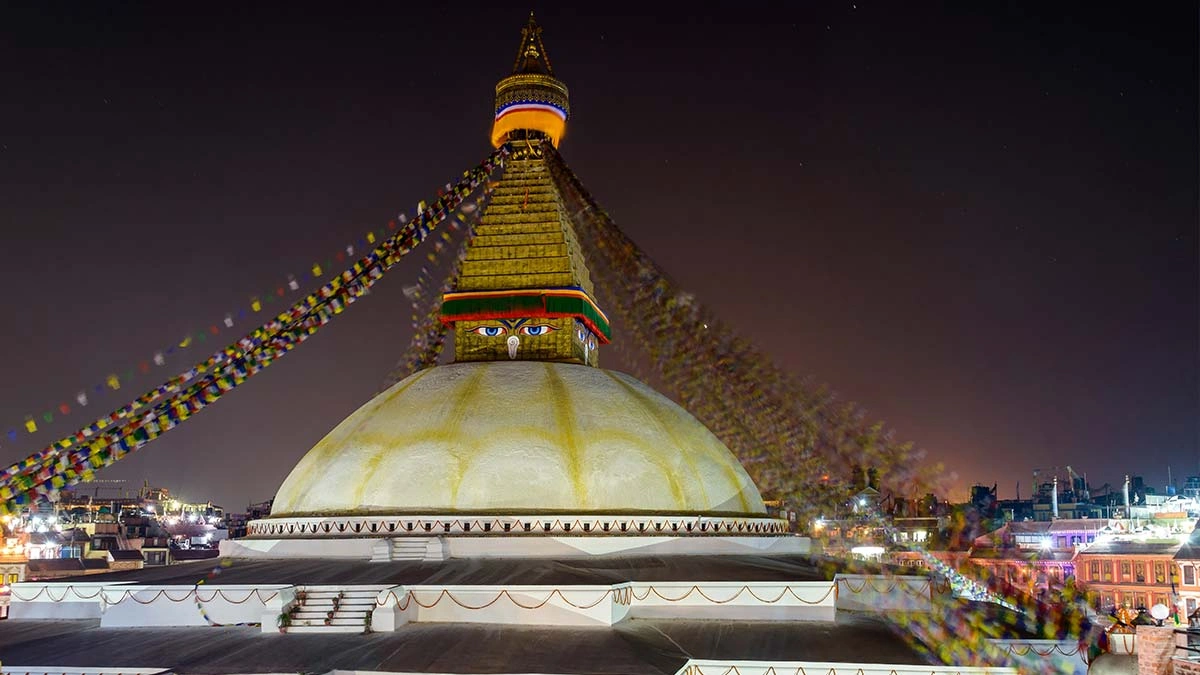
Boudhanath Stupa is the largest stupa in Nepal and among the largest Buddhist monuments in Asia, with a base circumference of 100 meters. Over 50 Tibetan Buddhist monasteries operate within a 500-meter radius, making it the most concentrated Tibetan Buddhist settlement outside Tibet.
Approximately 20,000 Tibetan refugees settled in the surrounding neighborhoods after 1959, sustaining an active daily kora practice where pilgrims continuously circle the stupa spinning prayer wheels along the base perimeter. The optimal visiting window is 6:30 AM, when hundreds of monks and nuns complete morning kora in low light before organized tour groups arrive at 9:00 AM.
What Makes Boudhanath Stupa One of Kathmandu's Most Iconic Landmarks?
Boudhanath Stupa is the largest stupa in Nepal and among the largest Buddhist monuments in Asia, with a base circumference of 100 meters. It gained UNESCO World Heritage recognition in 1979 and dates to the 5th century CE. Following the 2015 Gorkha earthquake, which damaged its spire, a full restoration was completed and consecrated in 2016.
What separates Boudhanath from other Kathmandu landmarks is that it is not preserved behind barriers or roped off for photography. Pilgrims circle it continuously throughout the day in a practice called kora, spinning prayer wheels mounted along the base perimeter. Visitors walk alongside them. The site remains fully operational as a place of worship, not a museum exhibit, which is the experience most visitors describe as the one they did not expect.
Approximately 20,000 Tibetan refugees settled in the neighborhoods surrounding the stupa after 1959. That community built over 50 Tibetan Buddhist monasteries (gompas) within a 500-meter radius, making Boudhanath the most concentrated Tibetan Buddhist settlement outside Tibet itself.
What Can You Experience Around Boudhanath Stupa?
Dawn is the peak activity period. Arriving by 6:30 AM places you among hundreds of monks, nuns, and local Tibetans completing morning kora in low light, before the area opens to tour groups.
3 things most visitors do not realize they can access at Boudhanath:
Rooftop cafes surrounding the stupa offer eye-level views of the painted Buddha eyes above the mandala base, showing architectural details invisible from street level.
Morning and evening pujas at several gompas are open to respectful visitors who arrive early and observe basic etiquette, remove shoes, remain quiet, do not photograph without permission.
Early morning market prices inside the inner shops are set for locals and run 30 to 50 percent below the tourist-facing prices available from 9 AM onward.
The quietest window on the stupa falls between 7:30 and 9:00 AM after the morning rush, and again between 5:00 and 7:00 PM during evening kora. Both are worth prioritizing over midday visits.
2. Explore Pashupatinath Temple
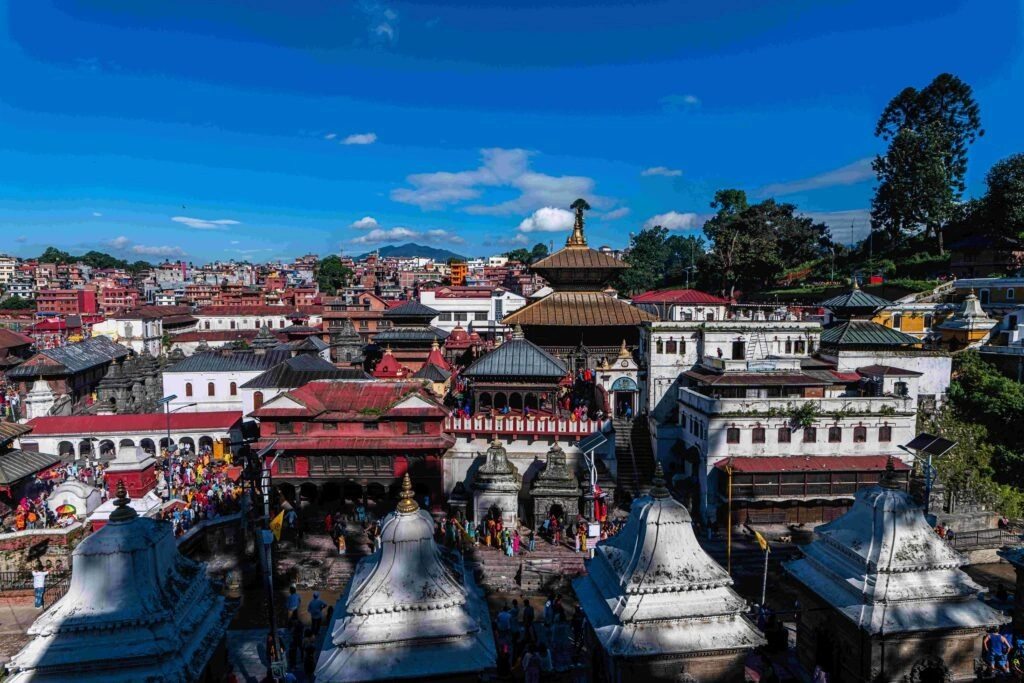
Pashupatinath Temple is Nepal's most sacred Hindu temple and one of the most prominent Shiva shrines in South Asia, situated on the holy Bagmati River in eastern Kathmandu. Open-air cremation ghats operate along both riverbanks throughout the day, delivering a direct encounter with Hindu death ritual unmatched at any comparable sacred site in the region.
Morning aarti runs from 6:00 to 8:00 AM and evening aarti from 6:00 to 7:00 PM, both performed before the Shiva lingam inside the main temple complex. A minimum visit of 2 to 3 hours covers the forested sadhu encampment, the elevated opposite-bank ghats, and the downstream shrines that most visitors bypass entirely.
What Is the Religious Importance of Pashupatinath Temple?
Pashupatinath Temple is the most sacred Hindu temple in Nepal and is revered globally as the head of the 12 Jyotirlingas, making it a central pilgrimage site alongside major temples like Kedarnath, Somnath, and Kashi Vishwanath. The deity Pashupati, meaning "Lord of Animals", is a form of Shiva venerated across the subcontinent. The main temple structure dates to the 17th century CE, though the site appears in Sanskrit religious texts from the 5th century CE.
The temple sits on the Bagmati River, a tributary considered holy in Hinduism because of its eventual confluence with the Ganges. Open-air cremation ghats operate along both riverbanks throughout the day and night. Witnessing this is confronting for first-time visitors. It is one of the most direct encounters with death ritual in any publicly accessible space in the region, and it is genuinely unlike anything available at comparable sacred sites that have been sanitized for tourism.
Only Hindus enter the inner sanctum of the main temple. Non-Hindu visitors access the surrounding complex, the elevated ghats on the opposite bank, and the forested area behind the temple housing dozens of smaller shrines and the permanent community of sadhus (Hindu holy men) who reside there.
What Should Visitors Know Before Exploring Pashupatinath Temple?
3 practical facts that determine the quality of a Pashupatinath visit:
Dress is enforced at the entry. Shoulders and knees must be covered for both men and women. A cotton shirt and lightweight trousers meet the requirement for most of the year.
Photographing cremations is a judgment call, not a prohibition. The far bank position used by most visitors is technically permitted for photography, but the appropriate approach is to ask cremation attendants or observe whether families present are comfortable. Many are not.
Sadhus residing in the temple complex photograph for a fee. This is their livelihood. They are genuine residents, not performers, and a rate of NPR 100 to 200 per photograph is standard.
Morning aarti (the lamp-and-incense ceremony before the Shiva lingam) runs from 6:00 to 8:00 AM. Evening aarti runs from 6:00 to 7:00 PM. Both are worth attending. The morning version is smaller and less crowded. Budget 2 to 3 hours minimum for a visit that includes the forested sadhu encampment and the downstream shrines that most visitors skip entirely.
3. Climb to Swayambhunath
Swayambhunath is a 2,500-year-old Buddhist stupa complex rising 77 meters above the Kathmandu Valley floor, predating the formal arrival of Buddhism in Nepal. The hilltop platform delivers a 270-degree panorama of the valley, with Himalayan peaks above 7,000 meters visible from October through February.
The 365-step stone staircase on the eastern approach is the traditional ascent route, flanked by over 200 rhesus macaque monkeys that inhabit the forested hillside and are treated as sacred by local Hindus. Arriving by 6:00 AM from October through December places visitors at an empty stupa platform as Himalayan peaks emerge in morning light, the visit consistently described as the most underused experience in Kathmandu.
What Makes Swayambhunath Temple Special?
Swayambhunath is a 2,500-year-old Buddhist stupa complex built on a hilltop 77 meters above the Kathmandu Valley floor, predating the formal arrival of Buddhism in Nepal. According to the Swayambhu Purana, a Buddhist scripture with manuscripts dating back to the 15th century CE, the hilltop grew from a primordial lotus that made the entire valley sacred.
The site carries equal religious weight for Hindus and Buddhists. The stupa, prayer flags, and Buddhist shrines coexist with a Hindu temple dedicated to Harati Mata at the main platform. This is not an accident of geography. It reflects Nepal's deep tradition of religious syncretism, where Buddhist and Hindu practice have shared and layered the same sacred sites for over a millennium.
The 200-plus rhesus macaque monkeys that inhabit the forested hillside give the site its informal name: Monkey Temple. They are treated as sacred by local Hindus. They are also persistent thieves of food, sunglasses, and water bottles, which is worth knowing before arriving with a bag of snacks open.
The 365-step stone staircase on the eastern approach is the traditional and most rewarding route up. A road reaches the western entrance for visitors with mobility limitations, but it bypasses the processional quality of the ascent.
What Views Can You Enjoy From Swayambhunath?
The hilltop platform offers a 270-degree panorama of the Kathmandu Valley. On clear days, typically October through February, when the post-monsoon sky stabilizes, the Langtang and Ganesh Himal ranges are visible to the north at elevations above 7,000 meters.
The direct view below captures Kathmandu's urban density in a way that no ground-level experience can communicate. The Bagmati River threads south. Boudhanath's white dome is visible on the eastern flats. Nagarjun Forest rises on the northwest. Seeing the city from this height makes subsequent navigation on the ground considerably more intuitive.
Sunrise at Swayambhunath is consistently underused compared to the midday tourist peak. Arriving by 6:00 AM from October through December means watching the Himalayan range appear as morning light builds behind it. The stupa is empty at that hour. This is the visit worth making.
4. Discover Kathmandu Durbar Square
Kathmandu Durbar Square contains 50 distinct monuments constructed between the 12th and 18th centuries by the Malla dynasty, including palaces, pagoda temples, and the residence of Nepal's living goddess Kumari. The square functioned as the royal administrative and ceremonial center of the Kingdom of Kathmandu for 600 years until 1768.
The 2015 Gorkha earthquake collapsed or significantly damaged 17 of the square's monuments, with reconstruction by Nepal's Department of Archaeology ongoing as of 2026 in partnership with UNESCO and bilateral international partners. Entry for foreign nationals costs NPR 1,000 (approximately USD 7.50), with the ticket permitting multiple re-entries on the same day.
What Historical Sites Can You See in Kathmandu Durbar Square?
Kathmandu Durbar Square contains 50 distinct monuments built between the 12th and 18th centuries during the Malla dynasty's rule, including palaces, courtyard complexes, and temples in both pagoda and shikhara architectural styles. The central structures are the Old Royal Palace (Hanuman Dhoka), the Taleju Temple (the square's tallest structure, restricted to non-Hindus except during the Indra Jatra festival), and the Kumari Ghar.
The Kumari Ghar is the residence of the living goddess Kumari, a pre-pubescent girl selected from the Shakya caste of Newari Buddhists through a formal religious process. She lives in the building year-round. Visitors who wait at the inner courtyard entrance occasionally see her appear briefly at one of the carved wooden windows. This is among the most singular cultural encounters available in Nepal, and it requires no advance arrangement, only patience.
The 2015 Gorkha earthquake collapsed or significantly damaged 17 of the square's monuments. Reconstruction by Nepal's Department of Archaeology, with international support from UNESCO and bilateral partners, was ongoing as of 2026. Scaffolding on certain structures is part of visiting the square in its current state.
Why Is Kathmandu Durbar Square Important to Nepal's Heritage?
Kathmandu Durbar Square served as the royal administrative and ceremonial center of the Kingdom of Kathmandu from the 12th century until 1768, when Prithvi Narayan Shah unified the Nepal Valley kingdoms under the Shah dynasty. Every major coronation, royal procession, and state festival in that 600-year period took place within its courtyards and in front of its temples.
The square holds the most complete surviving record of Newari architecture across multiple centuries. Pagoda temples with tiered roofs, shikhara spires influenced by North Indian temple design, and palace facades covered in intricately carved wooden lattice screens occupy the same ground. No comparable concentration of pre-modern Newari architectural tradition survives in a single accessible location anywhere in Nepal.
Entry for foreign nationals costs NPR 1,000 (approximately USD 7.50 as of 2026). Retain the ticket as it permits multiple re-entries on the same day.
5. Wander Through the Lively Streets of Thamel
Thamel is Kathmandu's 1-square-kilometer tourist district, operating as a traveler hub since the 1970s with gear shops, bookshops, restaurants, and cultural performance venues within walking distance of each other. Authentic handcrafted items, including hand-hammered singing bowls, iconographically precise thangka paintings, and genuine pashmina, are sold alongside machine-made goods at similar price points.
Classical dance performances run nightly at 4 venues across the district, with programs of Newari and Nepali traditional dance forms beginning at 6:30 PM. Thamel's lanes peak between 7:00 and 10:00 PM, when restaurants operate at full capacity and small food stalls near Chhetrapati Chowk serve sel roti, samosas, and momo primarily to local residents.
What Can You Do While Wandering Through Thamel?
Thamel is Kathmandu's primary tourist district, a dense 1-square-kilometer neighborhood of narrow lanes that has operated as a traveler hub since the 1970s, when Kathmandu was a stop on the overland Hippie Trail from Europe to South Asia. Today it concentrates gear shops, restaurants, guesthouses, bookshops, and cultural performance venues within easy walking distance of each other.
6 things worth doing in Thamel beyond buying trekking supplies:
Browse Pilgrims Book House and Vajra Books for rare Himalayan travelogues, Tibetan religious texts, and out-of-print mountaineering accounts unavailable in most international markets.
Eat daal bhaat at a side-lane local restaurant, look for places with handwritten menus in Nepali and prices between NPR 150 and 300. These serve unlimited refills to working locals.
Book a traditional Ayurvedic massage at a reputable spa center. A 60-minute session costs NPR 1,200 to 2,500. Price is not a reliable quality indicator here, reviews and word-of-mouth from other travelers are.
Attend a classical dance performance at one of 4 venues running nightly programs of Newari and Nepali traditional dance forms, typically starting at 6:30 PM.
Walk the lanes at night. Thamel's atmosphere peaks between 7:00 and 10:00 PM when restaurants operate at full capacity and the lanes reach their most active state.
Find the small food stalls near Chhetrapati Chowk at the square's southern edge. These serve sel roti, samosas, and momo to locals and operate primarily in the early evening.
Where Can You Shop and Experience Local Culture in Thamel?
The practical challenge in Thamel is that machine-made goods and authentic handcrafted items are displayed side by side at similar prices. Knowing the difference saves money and ensures the craft tradition you are supporting is genuine.
3 reliable tests for 3 of Thamel's most purchased items:
Singing bowls: Authentic hand-hammered bowls show irregular hammer marks on the interior surface and produce layered, sustained harmonic tones. Machine-pressed bowls have smooth interiors and thin, metallic ring tones. Ask the seller to demonstrate.
Thangka paintings: Authentic thangkas follow precise iconographic rules governing proportions, mudras (hand gestures), and color assignments. Ask which Tibetan Buddhist school's iconography the painting follows. A trained thangka artist answers immediately and specifically.
Pashmina scarves: Real pashmina is derived from Changthangi goat underfleece from the Himalayan plateau. It passes a burn test, singes and smells like hair rather than melting like synthetic fiber. It also pulls through a ring when folded. A seller who insists a NPR 200 scarf is "pure pashmina" is selling acrylic.
6. Relax in the Garden of Dreams
The Garden of Dreams is a 3,000-square-meter neoclassical garden built in the early 20th century by Field Marshal Kaiser Shumsher Jung Bahadur Rana and fully restored between 1999 and 2007 through Austrian Development Cooperation funding. Located 30 steps from Thamel's most active lanes, it reduces ambient urban noise by approximately 80 percent and provides structured quiet unavailable anywhere else in central Kathmandu.
The garden's 3 Edwardian pavilions, central reflecting pond, and mature tree canopy providing 30 percent ground shade document a specific architectural period when Rana rulers returned from European travel and translated Baroque design into local materials. Entry costs NPR 400 (approximately USD 3), which includes access to the Kaisar Café operating inside the grounds, the most cost-effective hour of recovery available in central Kathmandu.
What Makes the Garden of Dreams a Peaceful Escape?
The Garden of Dreams is a 6-ropani (approximately 3,000 square meter) neoclassical garden built in the early 20th century by Field Marshal Kaiser Shumsher Jung Bahadur Rana, located immediately adjacent to Thamel's northern boundary. Walking 30 steps from Thamel's most active lanes into the garden's entrance cuts approximately 80 percent of the ambient urban noise.
The garden was neglected for decades after the fall of the Rana regime. A restoration project between 1999 and 2007, funded through a partnership between the Nepal government and Austrian Development Cooperation, returned it to the original Edwardian plan: 3 pavilions, a central pond, curved gravel pathways, mature shade trees, and ornamental ironwork throughout.
The garden is one of the few remaining physical traces of the Rana era's distinctive architectural aesthetic, a blend of European Baroque design with local materials and tropical planting. That historical context is available free with the NPR 400 (approximately USD 3 as of 2026) entry fee, which also covers access to the Kaisar Café operating inside the grounds.
What Activities Can Visitors Enjoy at the Garden of Dreams?
The garden functions simultaneously as 3 different things for 3 different types of visitor.
For the traveler who needs a break, the garden provides genuine quiet in the middle of the city between 12:00 and 3:00 PM, when Kathmandu's streets and squares are at their most intense. The mature tree canopy provides 30 percent ground shade throughout the grounds.
For the photographer, the garden's western pavilion archways and the central pond reflecting the surrounding trees offer favorable light between 4:30 and 6:00 PM.
For anyone interested in Nepali architectural history, the three pavilions document a specific period, the early 20th century, when Rana rulers traveled extensively to Europe and returned with design ideas translated into local materials.
Budget 45 to 90 minutes here. Longer stays are possible but the garden's value comes from its contrast with Kathmandu's intensity, not from extended exploration.
7. Take a Cultural Trip to Patan Durbar Square
.webp)
Patan Durbar Square holds the finest concentration of Newari architecture in Nepal, anchored by the 1637 Krishna Mandir, widely considered the most exquisite all-stone shikhara temple in the country and access to 136 historic courtyards. The Patan Museum, housed in the former royal palace complex, displays over 1,400 traditional Newari metal sculptures spanning the 5th through 20th centuries.
4 additional sites within 15 minutes walking distance extend the visit: Kwa Bahal (Golden Temple), a 12th-century Buddhist monastery with an 800-year continuous monastic history; Mahabouddha Temple, built from approximately 9,000 individual terracotta bricks each bearing the face of the Buddha; Rato Machhindranath Temple, Patan's largest pagoda; and Oku Bahal, a pre-medieval courtyard monastery receiving almost no tourist visitors. Patan sits 5 kilometers south of central Kathmandu, accessible by taxi for NPR 300 to 500 or micro-bus from Ratna Park for NPR 25 to 40.
What Architectural Highlights Can You Discover in Patan Durbar Square?
Patan Durbar Square contains the finest concentration of Newari architecture in Nepal, including the Royal Palace of Patan, 3 primary stone temples (Krishna Mandir, Vishwanath Temple, and Bhimsen Temple), and access to over 136 historic courtyards (bahals and chowks) linked by the city's medieval street plan.
The Krishna Mandir, built in 1637 by King Siddhinarasimha Malla, is the only temple in Nepal constructed entirely in stone using shikhara architecture. Its 21 pinnacles and stone frieze panels depicting scenes from the Ramayana and Mahabharata represent a level of technical and artistic achievement that stands without parallel in Nepal's remaining built heritage. The quality of the carving on the lowest frieze, visible at eye level, rewards close inspection.
Patan is 5 kilometers south of central Kathmandu, accessible by taxi (NPR 300 to 500) or micro-bus from Ratna Park (NPR 25 to 40). The main square entry fee for foreign nationals is NPR 1,000.
What Museums and Temples Can You Visit in Patan?
The Patan Museum occupies the former royal palace complex directly adjacent to the main square. It holds over 1,400 objects of traditional Newari metal sculpture and ceremonial artifacts, spanning bronze, gilt copper, and stone work from the 5th through 20th centuries. The interpretive design, completed with Austrian assistance in 1997, produces genuine contextual understanding of the religious and cultural function of each object. It is the best museum in the Kathmandu Valley.
4 additional sites within 15 minutes walking distance of the main square:
Kwa Bahal (Golden Temple): A 12th-century Buddhist monastery with 3-story gilded facades and an active monastic community that has operated continuously for over 800 years.
Mahabouddha Temple: Built entirely from terracotta brick, with the face of the Buddha pressed into each of approximately 9,000 individual bricks covering the exterior surface.
Kumbeshwar Temple is the largest pagoda in Patan at five stories, while the highly revered Rato Machhindranath Temple is home to the deity most closely associated with rain and agricultural harvest.
Oku Bahal: A pre-medieval courtyard monastery that predates the main square's primary structures and receives almost no tourist visitors.
8. Visit Bhaktapur Durbar Square
Bhaktapur is the best-preserved medieval city in Nepal, protected by a motorized traffic ban on its historic core enacted in the 1970s and sustained by lower 20th-century urban development pressure compared to Kathmandu. The Nyatapola Temple in Taumadhi Square stands as Nepal's tallest pagoda at 30 meters, flanked by 5 pairs of stone guardians of increasing mythological power.
Street pottery production continues daily in Suryamadhi Tole using foot-kick wheels, traditional Newari dress is worn as daily clothing by a significant portion of the population, and juju dhau, Bhaktapur's buffalo-milk king curd, is produced through a fermentation method unique to the old city's dairies, resulting in a product distinctly richer and thicker than any yogurt available elsewhere in Nepal. A minimum allocation of 4 hours covers the 5 distinct monument zones across the historic area.
What Attractions Should You See in Bhaktapur Durbar Square?
Bhaktapur's historic area contains 5 distinct monument zones: Durbar Square, Taumadhi Square, Dattatreya Square, Tachupal Tole, and the active pottery production area of Suryamadhi. Visiting only the main square misses most of what distinguishes Bhaktapur from Kathmandu and Patan.
The 55-Window Palace, built between 1696 and 1700 by King Bhupatindra Malla, is the architectural centerpiece of Durbar Square. Its carved wooden windows, each unique in design, represent the highest documented level of Newari woodcarving technique. The Nyatapola Temple in Taumadhi Square is the tallest pagoda in Nepal at 30 meters, with 5 tiered roofs and a flanking staircase guarded by 5 pairs of stone guardians of increasing mythological power.
Entry for foreign nationals costs NPR 2,000 (approximately USD 15 as of 2026), enforced at checkpoints on all main entry roads into the historic area.
How Does Bhaktapur Preserve Traditional Newari Culture?
Bhaktapur is the best-preserved medieval city in Nepal and one of the best-preserved in South Asia. Two factors explain this: reduced 20th-century urban development pressure compared to Kathmandu, and an active ban on motorized traffic from the historic core enacted in the 1970s. The traffic prohibition prevented the road widening and building demolition that fragmented the old cities of Kathmandu and Patan across subsequent decades.
4 things visible in Bhaktapur today that are largely gone from Kathmandu:
Street pottery production continues daily in Suryamadhi Tole, where potters use foot-kick wheels in front of their homes as their families have done for centuries.
Traditional Newari dress, haku patasi (black-and-red sari) for women, daura suruwal for men, is worn as daily clothing by a significant portion of the population, not reserved for festivals.
Roof-drying of grains and dried fish on traditional woven mats continues across rooftops in the residential quarters.
Juju dhau (king curd) is produced in the old city's dairies from buffalo milk using a fermentation method unique to Bhaktapur. It is thicker, slightly sweeter, and distinctly richer than yogurt available anywhere else in Nepal.
Allow a minimum of 4 hours at Bhaktapur. A full day is a reasonable allocation for anyone with genuine interest in architecture or craft culture.
9. Join a Yoga and Meditation Class in Kathmandu
Kathmandu's yoga and meditation offerings span 3 distinct formats: drop-in studio classes costing NPR 500 to 1,500 per session, 3-to-10-day residential retreats at centers including Kopan Monastery, and free early-morning meditation sessions at Boudhanath-area gompas. Visitors exploring Yoga in Kathmandu will find that pranayama-based practice during the first 2 days at the city's 1,400-meter elevation supports measurable acclimatization for trekking regions above 3,000 meters.
Kopan Monastery's Introduction to Buddhism residential courses have operated continuously since 1971, drawing participants from over 40 countries annually with accommodation and meals included at the monastery. 20 to 30 minutes of pranayama practice before bed demonstrably improves sleep quality at altitude, a practical benefit for visitors whose first-night sleep in Kathmandu is disrupted by the city's ambient noise and air quality combined with elevation change.
What Types of Yoga and Meditation Experiences Are Available?
Kathmandu offers 3 structurally different categories of yoga and meditation experience, each serving a different purpose and requiring a different level of time commitment.
Drop-in yoga classes run at studios throughout Thamel and Lazimpat, costing NPR 500 to 1,500 per session. Styles available include Hatha, Vinyasa, Yin, and Kundalini. Average class size runs 6 to 12 participants. These require no advance booking at most studios.
Residential retreat programs at centers outside the urban core, including the Nagarjun Forest area, Pharping, and Kopan Monastery above Boudhanath, run for 3, 7, or 10 days and combine formal instruction with structured silence. Kopan Monastery's Introduction to Buddhism courses have run since 1971. They include accommodation and meals at the monastery and attract participants from over 40 countries annually.
Monastery practice sessions at several Boudhanath-area gompas welcome visitors to morning meditation practice at no fixed fee. These are not tourist programs. They are the monastery's actual daily schedule, open to visitors willing to follow it: arrive by 5:30 AM, dress conservatively, remain silent, do not photograph.
How Can Wellness Activities Enhance Your Kathmandu Trip?
Kathmandu sits at 1,400 meters above sea level. Visitors who arrive from low-elevation cities and plan to continue to trekking regions above 3,000 meters benefit from intentional acclimatization during their first 2 days in the city. Structured yoga practice, particularly sessions emphasizing pranayama (controlled breathing techniques), serves this function more systematically than general sightseeing, which rarely involves the conscious breath regulation useful for altitude adjustment.
2 documented benefits from even a single wellness session in Kathmandu:
Sleep quality at altitude improves for most visitors who practice pranayama techniques for 20 to 30 minutes before bed. Kathmandu's ambient noise and air quality both affect first-night sleep for visitors arriving from quieter, lower-elevation environments.
Mental decompression from Kathmandu's density, its traffic, sensory overload, and constant street activity, is genuinely needed by many visitors after 2 or more days in the city. A 90-minute session at a quiet studio provides structured recovery that additional sightseeing does not.
10. Sample Authentic Nepali Cuisine at Local Restaurants
Nepal's national dish daal bhaat combines lentil soup, steamed rice, vegetable curry, and pickled condiments into a nutritionally complete meal served with unlimited refills at working-lunch restaurants for NPR 120 to 250. Kathmandu's 3 most authentic eating formats are Newari bhatti taverns in Asan and Indrachowk, weekday daal bhaat restaurants near Ratna Park, and formal Newari thali restaurants in Patan's Mangalbazaar area.
8 dishes extend the Kathmandu food experience beyond daal bhaat: jhol momo (steamed buffalo dumplings in spiced tomato-sesame broth), chatamari (thin rice flour crepe with egg or minced meat topping), gundruk (fermented sun-dried mustard leaves), dhido (buckwheat or millet porridge), sel roti (deep-fried rice bread rings), yomari (steamed wheat dumplings filled with molasses and sesame), kwati (sprouted 9-bean soup), and aila (distilled grain alcohol produced by Newari families in the old city). Formal Newari thali restaurants in Patan's Mangalbazaar area, including Tewa Restaurant and Bhojan Griha, present all components in a single sitting for NPR 1,000 to 2,000 per person.
What Are Famous Authentic Nepali Cuisine?
Nepal's national dish is daal bhaat, a complete meal combining lentil soup, steamed rice, vegetable curry (tarkari), and pickled condiments (achar). Most Nepali families eat it twice daily. Its nutritional design, protein from lentils, complex carbohydrates from rice, vitamins from vegetables, and probiotic function from achar, reflects centuries of adaptation to the physical demands of Himalayan agriculture and mountain life.
8 dishes worth eating in Kathmandu beyond daal bhaat:
Momo: Steamed or fried dumplings with buffalo, chicken, or vegetable filling. The Kathmandu-specific preparation, jhol momo, serves them in a spiced tomato-sesame broth.
Sel roti: Deep-fried rice bread shaped into rings, sweet and crisp, sold at street stalls daily.
Yomari: Steamed wheat dumplings filled with chaku (molasses) and sesame, unique to Newari culture and associated with the Yomari Punhi festival in December.
Gundruk: Fermented and sun-dried leafy greens (typically mustard or radish leaves) with a sharp, sour flavor used as a side dish or soup base.
Dhido: Buckwheat or millet porridge eaten in Nepal's hill communities, served with fermented vegetables and meat as a rice substitute.
Chatamari: A thin rice flour crepe topped with egg, minced meat, or vegetables. It is the definitive Newari fast food and a direct product of the valley's rice-growing tradition.
Kwati: A sprouted 9-bean soup eaten during the Janai Purnima festival in August. Its combination of beans is considered nutritionally complete in Ayurvedic dietary tradition.
Aila: A distilled grain alcohol produced by Newari families in the old city, traditionally made from rice or millet. It is the standard accompaniment to formal Newari festival meals.
Which Local Restaurants Offer Traditional Nepali Dishes?
3 types of eating places offer the most authentic food in Kathmandu, each at a distinct price point and formality level:
Bhatti restaurants are Newari taverns operating in the old city neighborhoods of Asan, Indrachowk, and Boudhanath. They serve chatamari, bara (black lentil patties), choila (spiced grilled buffalo), and aila from communal tables with verbal menus. Dishes cost NPR 100 to 400. They are not designed for tourists and are better for it.
Working-lunch daal bhaat restaurants near Ratna Park, Asan Bazaar, and New Road serve unlimited-refill daal bhaat sets for NPR 120 to 250. This is where Kathmandu residents eat on weekdays.
Formal Newari thali restaurants in Patan's Mangalbazaar area, including Tewa Restaurant and Bhojan Griha, present a full Newari thali meal with 15 to 20 components: the complete scope of the cuisine in a single sitting. Budget NPR 1,000 to 2,000 per person.
How Can You Make the Most of Your Time in Kathmandu?
Plan a minimum of 3 full days in Kathmandu, with 5 days as the better allocation. The city's major sites divide across 3 geographic areas: central Kathmandu (Thamel, Durbar Square, Garden of Dreams), the eastern religious corridor (Pashupatinath Temple, Boudhanath Stupa), and the valley's secondary cities (Patan, Bhaktapur). Combining more than 2 of these areas in a single day produces exhausted visitors who retain less of what they see.
4 logistical facts that most visitors learn after wasting time:
Kathmandu traffic follows predictable peak patterns, morning congestion runs from 8:00 to 10:00 AM, evening congestion from 5:00 to 7:30 PM. Scheduling temple and heritage site visits outside these windows saves 30 to 45 minutes per journey.
Pollution protection matters in central Kathmandu and on major ring roads, PM2.5 readings near Ratna Park regularly exceed WHO daily safe limits during the winter months of November through February. A basic N95 mask makes a measurable difference.
Local micro-buses cover every major route for NPR 25 to 50 per trip. They are crowded, they do not have air conditioning, and they show the city at ground level in a way that taxi rides do not.
Nepal's electricity grid is officially free of scheduled load shedding, though occasional power outages still occur due to technical faults or severe weather. A backup power bank keeps navigation and communication functional during outages.
Can Guided Tours and Local Experiences Enhance Your Visit?
A local guide changes what is visible at any of the 10 sites listed above. The difference is not just additional information, it is access. Guides with established relationships at monasteries, temple complexes, and craft workshops open doors that remain closed to unaccompanied visitors. A thangka workshop visit arranged through a guide typically includes the artist explaining their iconographic practice and the years of training behind it. The same workshop visited independently is a shop.
2 guided experience formats that consistently produce better outcomes than independent visits:
Half-day walking tours of Kathmandu Durbar Square and the surrounding old city neighborhoods run at approximately USD 30 to 60 per person with licensed guides registered with Nepal's Tourism Board.
Kathmandu Valley day tours covering Pashupatinath, Boudhanath, and either Patan or Bhaktapur run at USD 50 to 100, including transportation. Combining both Patan and Bhaktapur in a single day is possible logistically but produces the depth problem described above.
The Nepal Tourism Board maintains a directory of licensed guides at ntb.gov.np. Licensed guides carry photo identification cards issued by the Board. Always verify the card before agreeing on a rate.
What Are the Key Takeaways About the Top 10 Things to Do in Kathmandu?
Kathmandu concentrates more culturally, religiously, and architecturally significant sites per square kilometer than almost any city in Asia. The 10 experiences above cover the full range of what the city offers: 3 UNESCO World Heritage Sites accessible within the city limits, 2 living religious sites in continuous daily use by local communities, 1 restored Rana-era garden, the 2 finest medieval Newari cities in the valley, a wellness tradition rooted directly in Himalayan practice, and a cuisine that most visitors admit they underestimated before arriving.
The decisions that shape a Kathmandu visit most significantly are timing, pacing, and depth over breadth. Three hours at Bhaktapur produces a different experience than 45 minutes. Arriving at Boudhanath before 7:00 AM shows a different site than arriving at 11:00 AM with organized tour groups. Eating in a Newari bhatti in Asan gives a different understanding of Nepali food culture than ordering momo from a tourist menu.
Kathmandu rewards visitors who move slowly, eat where locals eat, and stay curious past the first impression. The city has survived earthquakes, rapid urbanization, and decades of political change. What remains is still extraordinary, and still intact for those who give it the time it deserves.