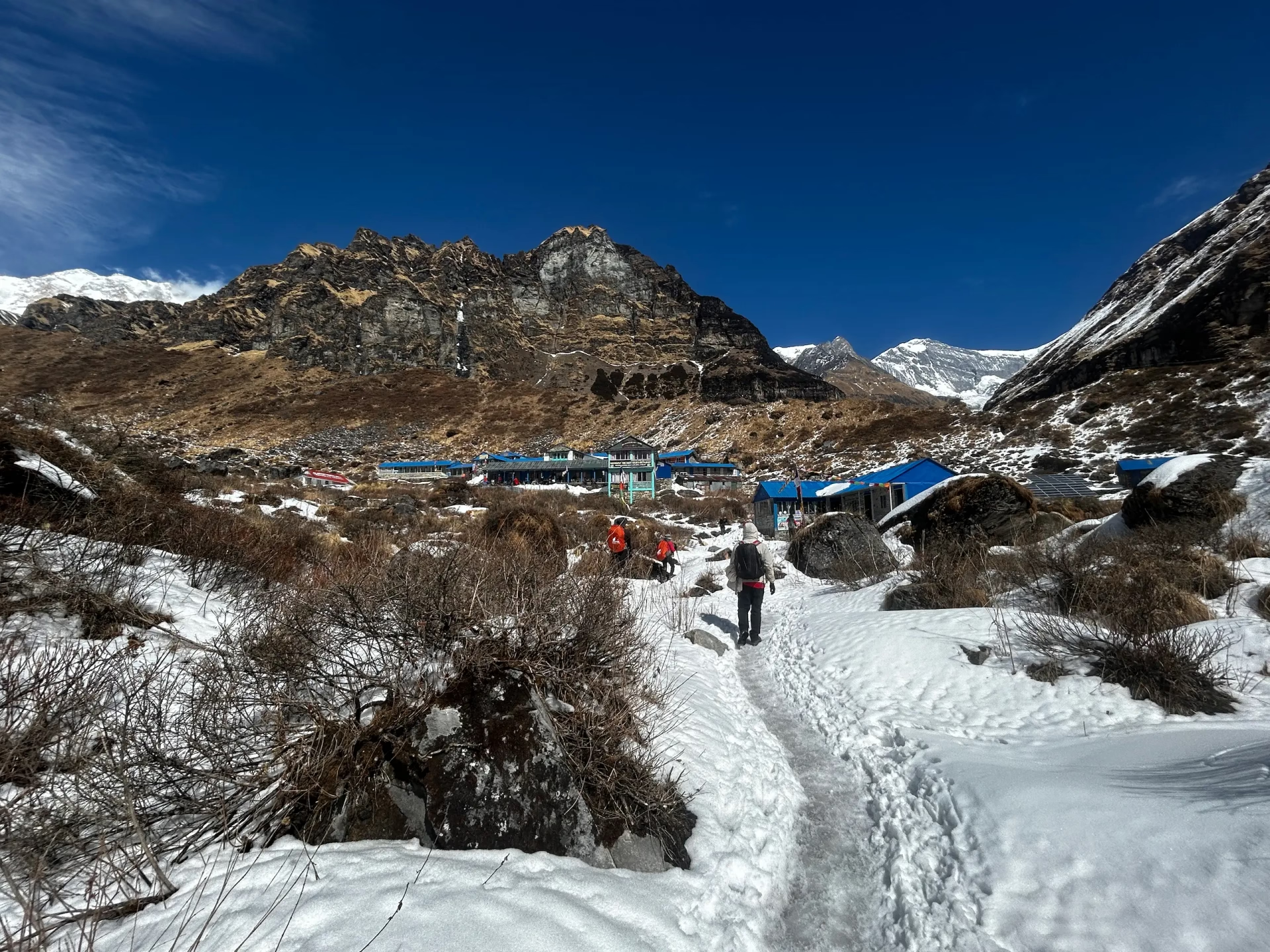
Nepal in October is the country's peak autumn travel period, defined by the transition from monsoon to dry Himalayan weather, clear mountain visibility, and favorable trekking conditions from the mid-hills to high-altitude routes. Kathmandu and Pokhara generally experience warm, comfortable days around 22–26°C, while trekking destinations become progressively colder with elevation, from mild conditions around Lukla and Namche Bazaar to sub-zero nights around Everest Base Camp, Thorong La, and Larkya La. The clearer atmosphere improves views of Everest, Annapurna, Manaslu, Machhapuchhre, and Langtang Lirung, making October a major season for the Everest Base Camp Trek, Annapurna Circuit, Annapurna Base Camp, Manaslu Circuit, Langtang Valley, Mardi Himal, and Poon Hill Trek.
.avif)
October travel in Nepal also means navigating the practical demands of peak season. Lukla and Jomsom flights, teahouses, trekking permits, guides, and hotels face their strongest annual demand, while popular trails become substantially busier during the second and third weeks of the month. Travelers can combine Himalayan trekking with Dashain, Kathmandu Valley's UNESCO heritage sites, Chitwan National Park wildlife safaris, Pokhara paragliding, and Trisuli River rafting, but high-altitude itineraries require careful acclimatization and cold-weather preparation. This guide covers October weather and rainfall, trekking routes and trail conditions, temperatures by elevation, packing requirements, festivals, permits, visa and guide requirements, trekking costs, flight logistics, accommodation demand, altitude risks, and advance-booking timelines for planning a Nepal trip around the country's busiest trekking month.
Why Is October Considered One of the Best Months to Visit Nepal?
October ranks as Nepal's single best travel month because post-monsoon air is at its cleanest, daytime temperatures stay comfortable between 13°C and 26°C, and both major Hindu festivals of autumn intersect with peak mountain visibility. Dry trails, minimal rainfall, and unobstructed views of Everest, Annapurna, and Manaslu combine to pull the year's highest visitor numbers into this single window.
What Makes October a Peak Travel Season in Nepal?
Three factors converge to create Nepal's peak season: cleared monsoon skies, stable high-pressure weather systems, and school-holiday timing across Europe, North America, and India. The monsoon typically withdraws from Nepal in the first ten days of October, replaced by dry continental air that holds through November. Trekking agencies report their highest booking volumes of the year for October departures, and Lukla, Jomsom, and Pokhara flights sell out weeks ahead. Domestic airlines add extra rotations, and Kathmandu's Tribhuvan International Airport runs at its highest daily traffic of the calendar year.
What Are the Main Advantages and Drawbacks of Visiting Nepal in October?
October's advantages outweigh its drawbacks for most travelers, but both are concrete and worth planning around rather than discovering on arrival.
Advantages:
Delivers the clearest mountain visibility of the year, with the Himalaya visible from Kathmandu Valley viewpoints on most mornings
Provides dry trails across nearly every trekking region, cutting the risk of landslides and leech-heavy lower forests
Coincides with Dashain, Nepal's longest and most significant festival, in 2026
Offers comfortable daytime trekking temperatures without the bitter cold of December and January
Extends daylight hours compared to winter, giving trekkers more usable trail time per day
Drawbacks:
Books out teahouses along Everest Base Camp, Annapurna Circuit, and Annapurna Base Camp routes weeks in advance
Pushes Lukla and Jomsom flight prices and cancellation-rebooking competition to their yearly peak
Raises accommodation rates in Kathmandu, Pokhara, and along popular trails during the second and third weeks
Closes many government offices and transport services during the core Dashain holidays in mid-October
Crowds summit viewpoints like Kala Patthar and Poon Hill at sunrise with the year's largest trekking groups
What Is the Weather Like in Nepal in October?
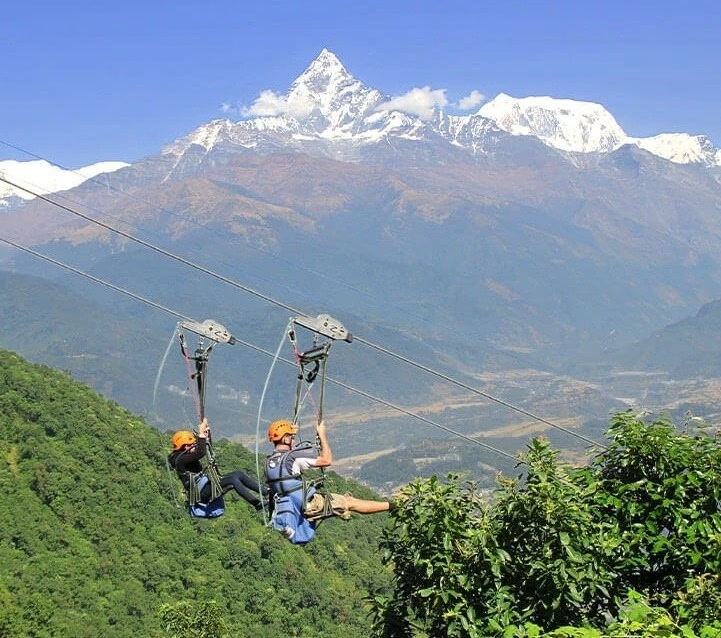
Nepal's October weather transitions from the tail end of monsoon to dry, stable autumn conditions, with Kathmandu and Pokhara averaging daytime highs of 23–26°C and nighttime lows of 10–14°C. Rainfall drops sharply after the first week, total monthly precipitation in the mid-hills falls to roughly 45–95mm, and high-altitude regions turn cold and dry with strong day-to-night temperature swings.
What Temperatures Can You Expect Across Nepal in October?
Temperature in Nepal in October depends primarily on elevation, dropping approximately 6°C for every 1,000 meters gained. The Terai lowlands around Chitwan and Bardiya stay warm, with daytime highs near 30–32°C. The mid-hills, including Kathmandu and Pokhara, sit in the comfortable 22–27°C daytime range. High-altitude trekking regions swing from mild afternoons to sub-zero nights once elevation passes 3,500 meters.
Location | Elevation | Daytime High | Nighttime Low |
Kathmandu | 1,400 m | 24°C | 11°C |
Pokhara | 827 m | 26°C | 14°C |
Chitwan (Sauraha) | 150 m | 31°C | 20°C |
Lukla | 2,840 m | 17°C | 6°C |
Namche Bazaar | 3,440 m | 13°C | 1°C |
Tengboche | 3,860 m | 10°C | -2°C |
Dingboche | 4,360 m | 8°C | -6°C |
Gorak Shep / EBC | 5,170–5,364 m | 5°C | -9°C |
Manang (Annapurna) | 3,540 m | 14°C | -1°C |
Thorong La Pass | 5,416 m | 0°C or below | -15°C or lower |
These figures represent typical multi-year averages. Early October runs several degrees warmer than late October at every elevation, and a single cold front can drop overnight lows by 5–10°C at short notice above 4,000 meters.
How Much Rainfall Does Nepal Get in October?
Rainfall in Nepal in October falls sharply compared to the monsoon months, averaging 45mm in Kathmandu and rising to roughly 150–160mm in Pokhara, which sits on the windward side of the Annapurna range and receives Nepal's highest precipitation nationwide. Most of this rain concentrates in the first one to two weeks, before the monsoon fully withdraws. Kathmandu typically records rain on only two to three days across the entire month. Trekkers starting after October 10 encounter dry trails on the large majority of trekking days, while those departing in the first week carry a higher chance of a lingering afternoon shower or thunderstorm at lower elevations.
What Is the Weather Like in Kathmandu and Pokhara in October?
Kathmandu and Pokhara share similar October weather patterns, with Pokhara running slightly warmer and wetter due to its lower elevation and position against the Annapurna foothills. Kathmandu opens the month with highs near 28°C and closes it closer to 22°C, while nighttime lows drop from around 16°C to 10°C as the month progresses. Pokhara mirrors this curve a few degrees warmer, with highs around 27°C and lows near 14°C. Both cities offer sunny mornings, building cloud in the afternoon, and clear evenings ideal for mountain photography from Kathmandu's Nagarkot viewpoint or Pokhara's Sarangkot ridge.
What Is the Weather Like in Nepal's High-Altitude Trekking Regions?
High-altitude trekking regions in Nepal experience a dramatically wider daily temperature range than the valleys, often swinging 20°C or more between a sunny midday and a clear, radiational-cooling night. In the Khumbu (Everest region), Lukla stays relatively mild while Gorak Shep and Everest Base Camp drop below -10°C most nights by late October. In the Annapurna region, Manang and the approach to Thorong La follow the same pattern, with the pass itself frequently sitting at or below freezing even at midday. Wind chill compounds these figures on exposed ridgelines and pass crossings, making the effective temperature considerably colder than the thermometer reading alone suggests.
Is October a Good Month for Trekking in Nepal?
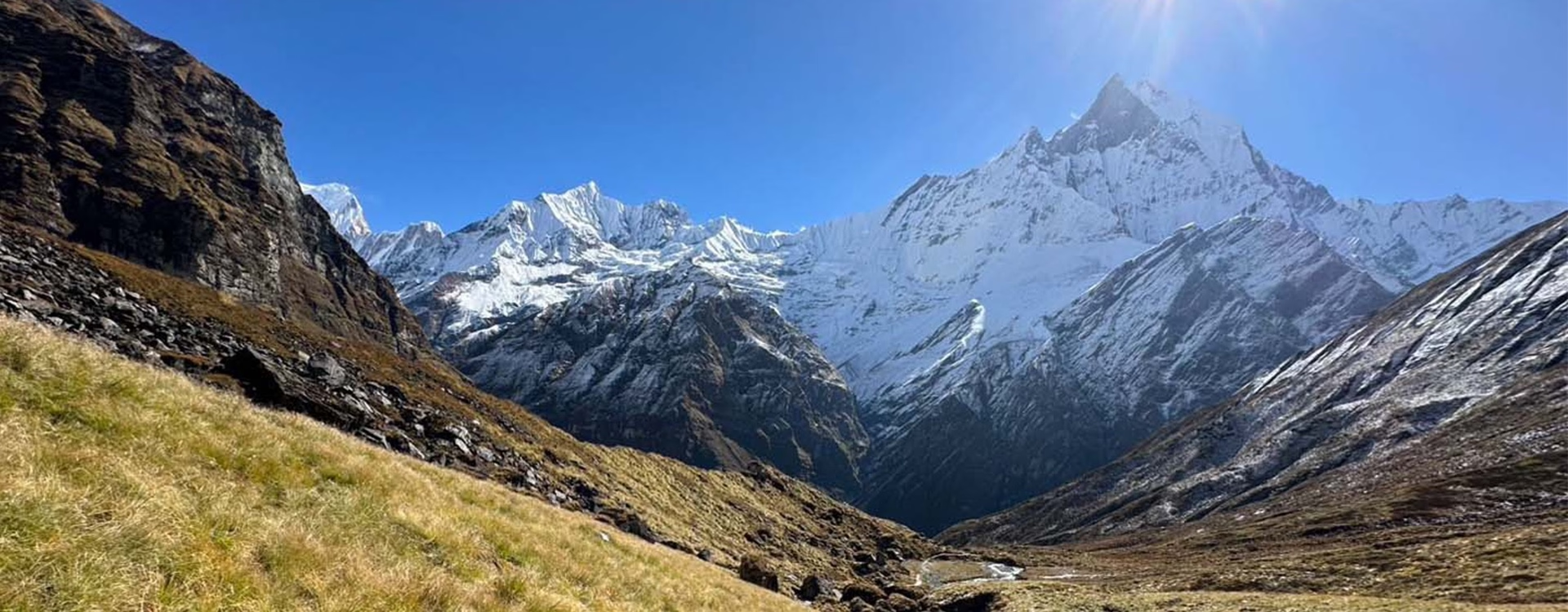
October is Nepal's single best trekking month for the majority of routes, combining maximum mountain visibility, dry trails, and stable weather systems that reduce the risk of the flight cancellations and trail washouts common in the monsoon. The trade-off is the year's highest trail traffic, requiring earlier permit processing, teahouse bookings, and flight reservations than any other season.
Why Is October Ideal for Himalayan Trekking?
October suits Himalayan trekking because the monsoon's moisture has cleared the atmosphere without yet bringing winter's extreme cold or heavy snow loads to the high passes. Visibility on a typical October morning extends well beyond 50 kilometers, revealing peaks that remain hazy or hidden for most of the summer. Trail surfaces dry out fully by mid-month, cutting the risk of the slippery, leech-infested lower sections common during the rains. Daytime trekking temperatures at moderate elevations of 2,500–4,000 meters stay comfortable for multi-hour walking days without heavy insulation.
Which Trekking Routes Are Best in Nepal in October?
The best trekking routes in Nepal in October include the Everest Base Camp Trek, the Annapurna Circuit Trek, the Annapurna Base Camp Trek, the Manaslu Circuit Trek, the Langtang Valley Trek, and the shorter Poon Hill and Mardi Himal treks. Each route benefits from the same post-monsoon clarity, though crowd levels, permit requirements, and difficulty vary significantly between them. Trekkers prioritizing solitude over classic mountain views often shift toward Manaslu or Langtang, since both see markedly fewer trekkers than Everest Base Camp or the Annapurna Circuit during the same weeks.
Travelers with limited time still get a genuine Himalayan payoff in October on the shorter routes. The Poon Hill Trek runs 4–5 days from Pokhara through Ulleri and Ghorepani, climbing to the 3,210-meter Poon Hill viewpoint for a sunrise panorama of Dhaulagiri and the Annapurna range, and suits trekkers with limited acclimatization time since it never exceeds 3,300 meters. The Mardi Himal Trek covers similar ground in 5–6 days, reaching a 4,500-meter base camp beneath Machhapuchhre with noticeably fewer trekkers than Poon Hill during the same October weeks, since it sits off the main Annapurna Base Camp corridor.
Is the Everest Base Camp Trek Good in October?
The Everest Base Camp Trek performs exceptionally well in October, delivering the year's most reliable Lukla flight operations alongside the clearest views of Everest, Lhotse, Nuptse, and Ama Dablam. A standard itinerary runs 12–14 days round-trip from Lukla (2,840m) through Namche Bazaar, Tengboche, Dingboche, and Lobuche to Everest Base Camp (5,364m) and the Kala Patthar viewpoint (5,545m). During the peak autumn weeks, fixed-wing Lukla flights operate out of Manthali/Ramechhap airstrip rather than Kathmandu, adding a four- to five-hour night drive with a 1–3am pickup to the start of the trek. Guided packages for 12–14 days typically run USD 1,300–2,200 per person, and teahouses along the route fill fastest in the second and third weeks of October, making advance booking essential rather than optional.
Is the Annapurna Circuit Trek Good in October?
The Annapurna Circuit Trek reaches peak form in October, with the Thorong La Pass (5,416m) crossing at its most reliable success rate of the year during the second and third weeks. The full circuit runs 14–21 days from Besisahar through Chame, Pisang, and Manang, over the pass, and down through Muktinath and Jomsom to Pokhara. Operators who track multi-year pass-crossing data report notably higher completion rates in the middle two weeks of October than in the first or last week, when early monsoon remnants or the first winter snow can force delays. The road access into Manang and Mustang stays in good condition through the month, and the popular Tilicho Lake side trip adds three days and roughly USD 200–250 to a standard itinerary.
Is the Manaslu Circuit Trek Good in October?
The Manaslu Circuit Trek suits October well, offering Himalayan scenery comparable to Annapurna with a fraction of the trail traffic, though at a materially higher permit cost during the autumn peak season. The route crosses the Larkya La Pass (5,106m) and requires a Restricted Area Permit priced at USD 100 for the first seven days plus USD 15 per additional day between September and November, roughly 30–35% higher than the off-season rate. Trekkers must travel with a registered agency and licensed guide, and the route's remoteness means fewer teahouse options than Everest or Annapurna, so October's crowding shows up less as trail congestion and more as the need to book lodging ahead at the handful of villages along the way.
Is the Langtang Valley Trek Good in October?
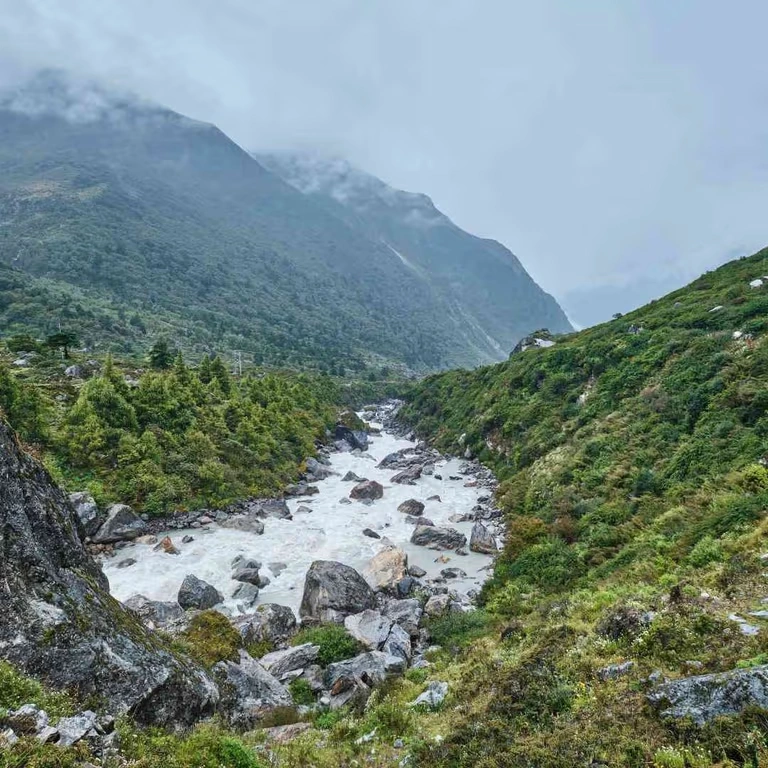
The Langtang Valley Trek offers one of Nepal's best October options for travelers with limited time, reaching alpine scenery, glacial views of Langtang Lirung, and Tibetan-influenced villages within a 7–10 day round trip from Kathmandu, roughly half the duration of Everest Base Camp or the full Annapurna Circuit. The valley sits close enough to Kathmandu to skip domestic flights entirely, removing the Lukla and Jomsom booking pressure that affects the other major routes. Rebuilt after the 2015 earthquake damaged much of Langtang village, the trail now combines modern lodges with the same close-up Himalayan views, at consistently lower trekker volumes than the Everest or Annapurna corridors during the same October weeks.
What Are Trekking Conditions Like on High Mountain Passes in October?
High mountain passes in Nepal, including Thorong La (5,416m), Larkya La (5,106m), and the Everest Three Passes, offer their most stable crossing conditions of the year in October, though they remain genuine high-altitude hazards rather than routine walks. On October 14, 2014, a rare, unseasonal cyclone remnant dumped heavy snow on the Thorong La Pass, triggering avalanches and whiteout conditions that killed at least 43 trekkers, porters, and guides in Nepal's deadliest trekking disaster on record. The event remains an outlier rather than the norm, but it illustrates why guides monitor forecasts closely even in a historically reliable month, and why proper cold-weather gear and a pre-dawn start on pass-crossing days remain non-negotiable regardless of how settled the preceding week has looked.
What Should You Pack for Trekking in Nepal in October?
October trekking gear centers on a layering system built for a temperature swing from roughly 20°C at midday to below -10°C at night above 4,000 meters, paired with a lightweight rain shell for the first week's residual monsoon moisture. Down insulation, a four-season sleeping bag, and solid ankle-support boots form the non-negotiable core of an October packing list.
What Clothing Do You Need for Nepal's October Weather?
Nepal's October weather calls for a three-layer clothing system: a moisture-wicking base layer, an insulating mid-layer such as fleece or light down, and a waterproof, windproof outer shell. Trekkers heading above 3,500 meters add a heavyweight down jacket, insulated trekking pants, a wool or synthetic hat, and liner plus insulated gloves for camp mornings and pass crossings. Lower-elevation days in Kathmandu, Pokhara, or the Langtang lower valley call for lighter layers: a long-sleeve shirt, light trousers, and a warm layer for evenings once the sun drops behind the ridgelines.
What Trekking Gear Is Essential for October?
Essential October trekking gear includes broken-in leather or synthetic trekking boots with ankle support, a four-season sleeping bag rated to at least -15°C for high-altitude routes, trekking poles for the steep, dry, occasionally loose descents common in autumn, a headlamp with spare batteries for pre-dawn pass or summit-viewpoint starts, and a hydration system that resists freezing overnight above 4,000 meters. Sun protection matters more in October than most trekkers expect: UV exposure at altitude combines with reflective terrain and clear autumn skies to produce sunburn risk even in cool air, making sunglasses with side coverage and a high-SPF sunscreen standard items rather than optional extras.
Do You Need Rain Gear for Trekking in October?
Rain gear remains necessary for October trekking in Nepal, particularly during the first one to two weeks while the monsoon fully withdraws. A lightweight, packable waterproof jacket and a pack cover handle the occasional afternoon shower or thunderstorm at lower elevations without adding significant weight for the drier weeks that follow. Trekkers departing after October 10 carry rain gear more as an insurance policy than a daily necessity, since precipitation drops to just two or three rain days across the entire month in most trekking regions.
What Can You Do in Nepal Besides Trekking in October?
October opens Nepal's full range of non-trekking activities alongside its trails, from Kathmandu Valley's UNESCO heritage sites and Dashain festival celebrations to Chitwan National Park wildlife safaris, whitewater rafting, and Pokhara paragliding, all benefiting from the same clear, dry autumn weather. Travelers combining a shorter trek with cultural and wildlife time get the fullest picture of Nepal in a single trip.
Which Cultural Experiences Are Worth Having in October?
Kathmandu Valley's seven UNESCO World Heritage Sites, including Boudhanath Stupa, Pashupatinath Temple, Swayambhunath, and the Durbar Squares of Kathmandu, Patan, and Bhaktapur, offer their most active cultural calendar of the year in October, coinciding with Dashain preparations and celebrations. Newar communities across the valley perform traditional dances, temple processions, and family rituals throughout the month, giving visitors a direct window into living religious practice rather than a staged tourist performance. Bhaktapur's pottery squares and traditional Newari architecture reward a full unhurried day, particularly in the softer, haze-free light that October's clear skies provide.
Which Festivals and Events Can You Experience in Nepal in October?
Dashain, Nepal's longest and most significant festival, begins with Ghatasthapana on October 11, 2026, and peaks with Vijaya Dashami on October 21, when elders place tika and jamara blessings on younger family members, before officially concluding on Kojagrat Purnima. Tihar, the five-day festival of lights, follows shortly after but falls in November 2026, running from November 7 to 11, so travelers visiting only in October experience Dashain rather than both major autumn festivals. During Dashain's peak days, expect reduced public transport, closed government offices, and quieter city streets as families travel home, alongside kite-flying, bamboo swings, and open-air feasts in villages and neighborhoods across the country.
What Wildlife and Adventure Activities Are Available in October?
Chitwan National Park enters its prime wildlife-viewing season in October, when the dry season begins and vegetation thins enough to improve sightings of the one-horned rhinoceros, Bengal tiger, and over 500 recorded bird species. Guided jeep safaris, canoe rides on the Rapti River, and jungle walks form the core activities, and booking a day or two ahead is standard practice once October's peak season begins.
Whitewater rafting on the Trisuli River, roughly three hours from Kathmandu, suits all experience levels and pairs naturally with a Chitwan add-on. Paragliding above Pokhara's Phewa Lake also enters one of its strongest windows in October, when clear autumn skies and steady thermals combine with unobstructed Annapurna views during the descent.
What Should You Know Before Traveling to Nepal in October?
Traveling to Nepal in October means competing for the year's most limited flights, teahouse beds, and permit-processing slots, alongside the highest domestic travel prices and altitude-related health risks that rise sharply above 4,500 meters regardless of season. Booking two to three months ahead, budgeting for peak-season rates, and treating altitude preparation seriously are the three practical priorities.
How Busy Are Nepal's Popular Trekking Routes in October?
Nepal's popular trekking routes reach their highest annual trail traffic in October, with the Everest Base Camp and Annapurna Circuit trails visibly busier than any other month, including the spring peak in April and May. Teahouse dining rooms fill to capacity most evenings along the standard overnight stops, sunrise viewpoints such as Kala Patthar and Poon Hill draw the year's largest crowds, and popular lodges in Namche Bazaar, Dingboche, and Manang routinely sell out on short notice during the second and third weeks. Manaslu and Langtang stay comparatively quiet through the same period, offering a practical route for trekkers prioritizing solitude over the classic Everest or Annapurna panoramas.
How Far in Advance Should You Book Accommodation and Flights?
Booking accommodation and flights two to three months ahead of an October Nepal trip secures both availability and standard, rather than inflated, pricing. Lukla and Jomsom flight seats sell out first, followed by teahouse reservations along the Everest Base Camp and Annapurna Circuit routes, and finally Kathmandu and Pokhara hotel rooms during Dashain week itself. International flights into Kathmandu also cost more in October than in the November or March shoulder months, so early booking captures savings on that leg as well as on domestic logistics.
What Travel Costs Should You Expect in Nepal in October?
Travel costs in Nepal rise across the board during October's peak season, from permit fees and guided trek packages to teahouse rates and domestic flights, though Nepal remains inexpensive relative to comparable Himalayan destinations. A Nepal tourist visa costs USD 30 for 15 days, USD 50 for 30 days, or USD 125 for 90 days, paid in cash USD on arrival, with all three options valid for multiple entries.
Permit or Fee | Region | Typical Cost (Foreign Trekkers) |
Sagarmatha National Park Permit | Everest / Khumbu | NPR 3,000 (~US$22) |
Khumbu Pasang Lhamu Rural Municipality Fee | Everest / Khumbu | NPR 3,000 (~US$23) |
Annapurna Conservation Area Permit (ACAP) | Annapurna | NPR 3,000 (~US$22) |
TIMS Card | Langtang, Manaslu, far-west routes | NPR 2,000 (~US$15) |
Manaslu Restricted Area Permit (Sept–Nov) | Manaslu | US$100 for 7 days + US$15/extra day |
Manaslu Conservation Area Permit (MCAP) | Manaslu | US$30 |
Tourist Visa | Nationwide | US$30 / US$50 / US$125 (15/30/90 days) |
Guided trek packages reflect this permit structure directly: a 12–14 day Everest Base Camp package typically runs USD 1,300–2,200 per person, while a comparable Manaslu Circuit package runs somewhat higher once the restricted-area permit is factored in. Licensed guide fees add roughly USD 25–35 per day for a standard guide, rising to USD 40–60 per day for senior, high-altitude-specialized guides.
Domestic transport costs also carry an October premium. A Kathmandu–Lukla or Ramechhap–Lukla flight typically costs around USD 250–300 each way during peak autumn weeks, while the Kathmandu–Pokhara route runs roughly USD 100–125 by air or as little as USD 8–10 on a tourist bus for travelers with a spare six to seven hours. Basic teahouse trekking, excluding permits and guide fees, runs approximately USD 25–40 per day for meals and lodging along the popular routes, with prices climbing at higher, more remote stops such as Gorak Shep or Thorong Phedi.
What Altitude and Safety Considerations Matter in October?
Altitude sickness risk in Nepal's trekking regions rises sharply above 4,500 meters regardless of season, making acclimatization planning as important in October as in any other month. A peer-reviewed altitude study of trekkers in the Solu-Khumbu region recorded acute mountain sickness (AMS) incidence of 0% between 2,500–3,000 meters, climbing to 10% between 3,000–4,000 meters, 15% between 4,000–4,500 meters, and jumping to 51% between 4,500–5,000 meters before settling at 34% above 5,000 meters.
Everest Base Camp (5,364m), Kala Patthar (5,545m), and Thorong La (5,416m) all sit within or above this highest-risk band, which is why standard itineraries build in dedicated acclimatization days at Namche Bazaar and Dingboche or Manang rather than pushing straight uphill. Common mistakes that raise AMS risk include skipping acclimatization days to shorten a trip, ascending more than 500 meters in sleeping elevation per day above 3,000 meters, and ignoring early symptoms such as headache and nausea in the belief that they will resolve on their own overnight.
What Travel Documents and Permits Do You Need for Nepal?
Nepal requires a valid passport with at least six months' remaining validity, a tourist visa obtained on arrival or online in advance, and route-specific trekking permits obtained before departure for any national park, conservation area, or restricted zone. Since April 1, 2023, a licensed guide has been mandatory for foreign trekkers in most national parks and conservation areas, a rule fully enforced through the 2026 season in regions like Annapurna, Langtang, and Manaslu. However, local authorities in the Everest (Khumbu) region continue to permit independent trekking. Restricted areas such as Manaslu, Upper Mustang, and Upper Dolpo require booking through a government-registered trekking agency, since these permits cannot be self-applied for at a border checkpoint. Trekking without the correct permit and guide arrangement risks fines, removal from the trail, and complications re-entering regulated areas later in the same trip.
How Can Nepal Intrepid Treks Help You Plan a Nepal Trip in October?
Nepal Intrepid Treks handles the permit applications, licensed-guide arrangements, and teahouse or lodge bookings that October's peak season makes time-sensitive, so travelers spend their planning time choosing a route rather than chasing paperwork and availability. Local trip planners track real-time flight schedules, trail conditions, and lodge capacity across the Everest, Annapurna, Manaslu, and Langtang regions throughout the autumn season.
Working with a registered agency matters more in October than in quieter months, since the mandatory-guide rule, restricted-area permit timelines, and teahouse booking windows all tighten under peak demand. Nepal Intrepid Treks builds itineraries around a client's fitness level, available time, and priorities, whether that means the classic Everest Base Camp route, a quieter Manaslu or Langtang alternative, or a combined trekking-and-Chitwan itinerary that fits within a two-week trip.
Can Nepal Intrepid Treks Help You Choose the Right October Trek?
Nepal Intrepid Treks matches trekkers to the right October route based on available days, fitness level, and altitude tolerance, rather than defaulting every client to the most famous option. A traveler with seven to ten days and a preference for fewer crowds is generally steered toward Langtang Valley or the Manaslu Circuit's shorter variations, while a traveler with two to three weeks and a bucket-list focus on Everest is guided toward a 12–14 day Everest Base Camp itinerary with built-in acclimatization days and a buffer for possible Lukla flight delays. Reach out directly to compare October departure dates, current permit costs, and realistic itinerary lengths before booking flights.
What Are the Key Takeaways for Visiting Nepal in October?
October offers Nepal's clearest skies, driest trails, and most significant cultural festival of the year, at the cost of the year's highest crowds and prices. The core facts to plan around are:
Daytime temperatures run 22–26°C in the mid-hills and drop below -10°C at night above 5,000 meters
Rainfall falls to roughly 45–95mm for the month, concentrated in the first one to two weeks
Dashain 2026 runs October 11–21, while Tihar falls in November and is missed by October-only trips
Everest Base Camp, Annapurna Circuit, Manaslu, and Langtang all offer strong October conditions, with Manaslu and Langtang carrying the lightest crowds
AMS risk jumps from roughly 15% at 4,000–4,500 meters to 51% at 4,500–5,000 meters, making acclimatization days non-negotiable regardless of how settled the weather looks
A licensed guide has been mandatory in all national parks, conservation areas, and restricted areas since April 1, 2023
Booking flights, teahouses, and permits two to three months ahead avoids both sold-out availability and inflated peak-season pricing
Nepal in October rewards early planning more than any other month on the calendar. Travelers who lock in permits, guides, and accommodation ahead of the second and third weeks get the clear skies and dry trails without the last-minute scramble that catches unprepared visitors every year.