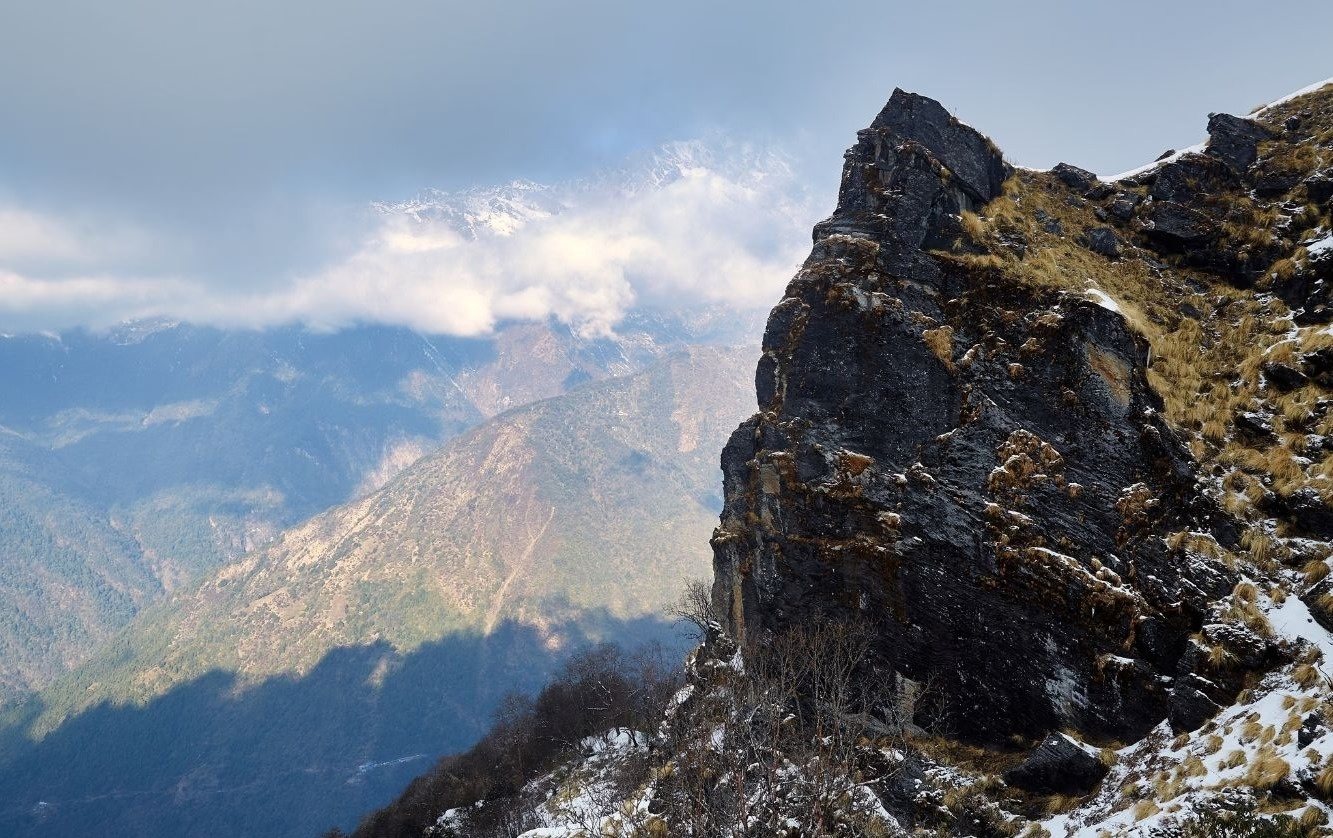
Mardi Himal Trek vs Poon Hill Trek is a decision-focused comparison of two short Himalayan routes in the Annapurna Conservation Area, designed to help trekkers choose based on fitness level, time availability, altitude tolerance, and trekking goals. Both treks begin from Pokhara and deliver high-value mountain experiences within one week, but they differ significantly in elevation profile, trail structure, scenery style, crowd density, and overall comfort.

Mardi Himal Trek is a high-altitude ridge trek reaching 4,500 m, suited for trekkers seeking fewer crowds, sustained panoramic exposure, and physically demanding terrain near Machhapuchhre. Poon Hill Trek is a lower-altitude loop trek reaching 3,210 m, ideal for beginners, families, and short itineraries, with a concentrated sunrise viewpoint showcasing peaks such as Annapurna I and Dhaulagiri I.
This guide compares duration, distance, altitude gain, difficulty, scenery, cost, permits, accommodation standards, seasonal conditions, and trekker profiles to identify which Annapurna trek delivers the best outcome for your specific travel priorities.
What Are the Biggest Differences Between Mardi Himal Trek and Poon Hill Trek?
The 3 biggest differences between Mardi Himal Trek and Poon Hill Trek are trail duration, maximum altitude, and crowd density. Mardi Himal Trek takes 6–7 days and reaches 4,500 m with low foot traffic. Poon Hill Trek takes 4–5 days and peaks at 3,210 m with high foot traffic on a well-established route used by over 100,000 trekkers annually.
How do route length and trek duration compare between Mardi Himal Trek and Poon Hill Trek?
Mardi Himal Trek covers 55 km over 6–7 days. Poon Hill Trek covers 42 km over 4–5 days. Both routes depart from Pokhara, Nepal's second-largest city, located 200 km west of Kathmandu. The table below compares the 2 routes by key distance and duration metrics.
The following table shows the route length and duration comparison between the 2 treks, including daily walking averages and starting points.
Metric | Mardi Himal Trek | Poon Hill Trek |
Total Distance | 55 km | 42 km |
Duration | 6–7 days | 4–5 days |
Daily Walking Average | 8–10 km | 8–12 km |
Starting Point | Kande or Phedi | Nayapul |
Finishing Point | Lwang or Phedi | Nayapul (loop) |
Route Type | One-way ridge trail | Loop circuit |
Poon Hill Trek follows a classic loop circuit through Ghorepani (2,874 m) and Tadapani (2,520 m), returning to Nayapul. Mardi Himal Trek follows a one-way ridge trail through Forest Camp (2,550 m), Low Camp (3,300 m), High Camp (3,580 m), and Mardi Himal Base Camp (4,500 m), then descends to Lwang village or Siding village.

How do altitude and daily climbs compare between Mardi Himal Trek and Poon Hill Trek?
Mardi Himal Trek reaches 4,500 m at base camp, gaining 1,950 m in altitude above Poon Hill Trek's maximum of 3,210 m. Daily altitude gain on Mardi Himal Trek averages 500–700 m between camps. Daily altitude gain on Poon Hill Trek averages 400–600 m between villages, with a 2-hour pre-dawn climb of 400 vertical meters on the Poon Hill summit day.
Altitude sickness, clinically termed Acute Mountain Sickness (AMS), affects trekkers above 2,500 m. Mardi Himal Trek spends 3 consecutive nights above 3,000 m, increasing AMS exposure compared to Poon Hill Trek's 2 nights above 2,800 m. Proper acclimatization reduces AMS risk on both routes.
How do trail style, crowds, and pace compare between Mardi Himal Trek and Poon Hill Trek?
Understanding the Mardi Himal Trek difficulty is essential, as it uses a narrow ridge trail with sparse tea house infrastructure. In contrast, the Poon Hill Trek uses a wide stone-paved trail with dense tea house spacing every 2–3 km. Trail width on Mardi Himal averages 1–2 m across the ridge section. Trail width on Poon Hill averages 2–4 m with stone steps on steep sections. Poon Hill receives 100,000–120,000 trekkers annually. Mardi Himal receives 8,000 –15,000 trekkers annually, making it 87% less crowded.
Which Trek Has Better Views and Scenery: Mardi Himal Trek or Poon Hill Trek?
Both treks deliver panoramic Himalayan views, but from different vantage points and elevations. Mardi Himal Trek provides continuous 360-degree ridge views over 3 days from High Camp to Base Camp. Poon Hill Trek delivers a concentrated sunrise panorama from Poon Hill Viewpoint (3,210 m) on 1 designated morning.
What mountain views can you expect on Mardi Himal Trek?
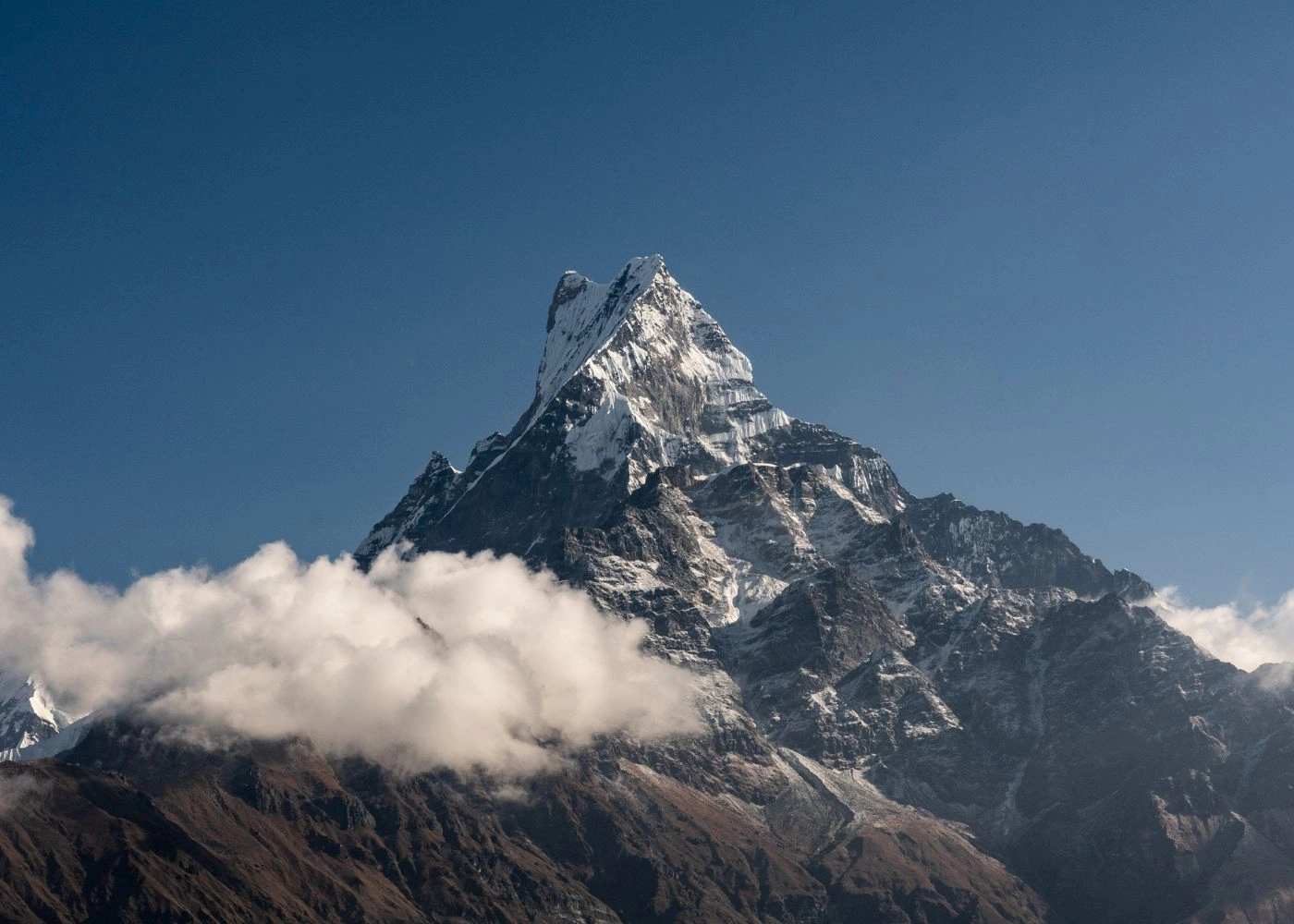
Mardi Himal Trek offers unobstructed views of 7 major Himalayan peaks from ridge elevations between 3,300 m and 4,500 m. The 7 visible peaks are Annapurna South (7,219 m), Annapurna I (8,091 m), Hiunchuli (6,441 m), Machhapuchhre (6,993 m), Gangapurna (7,455 m), Mardi Himal (5,587 m), and Tent Peak (5,695 m). Machhapuchhre, known as Fishtail Mountain due to its twin-summited profile, dominates the trail's western horizon from Low Camp to Base Camp across a 20 km visual span.
The Mardi Himal ridge trail exposes trekkers to unbroken skyline views for 14–18 hours across 3 ridge-walking days. Cloud formation in the Annapurna region begins at 10:00–11:00 AM daily, making early morning starts between 05:30 and 06:00 AM essential for clear mountain photography.
What mountain views can you expect on Poon Hill Trek?
Poon Hill Viewpoint (3,210 m) delivers a sunrise panorama of 18–20 Himalayan peaks, including 3 peaks above 8,000 m. The 3 peaks exceeding 8,000 m visible from Poon Hill are Dhaulagiri I (8,167 m), Annapurna I (8,091 m), and Manaslu (8,163 m). Poon Hill provides the widest Himalayan panorama accessible in under 5 days of trekking in Nepal, covering a 180-degree mountain horizon from northwest to east.
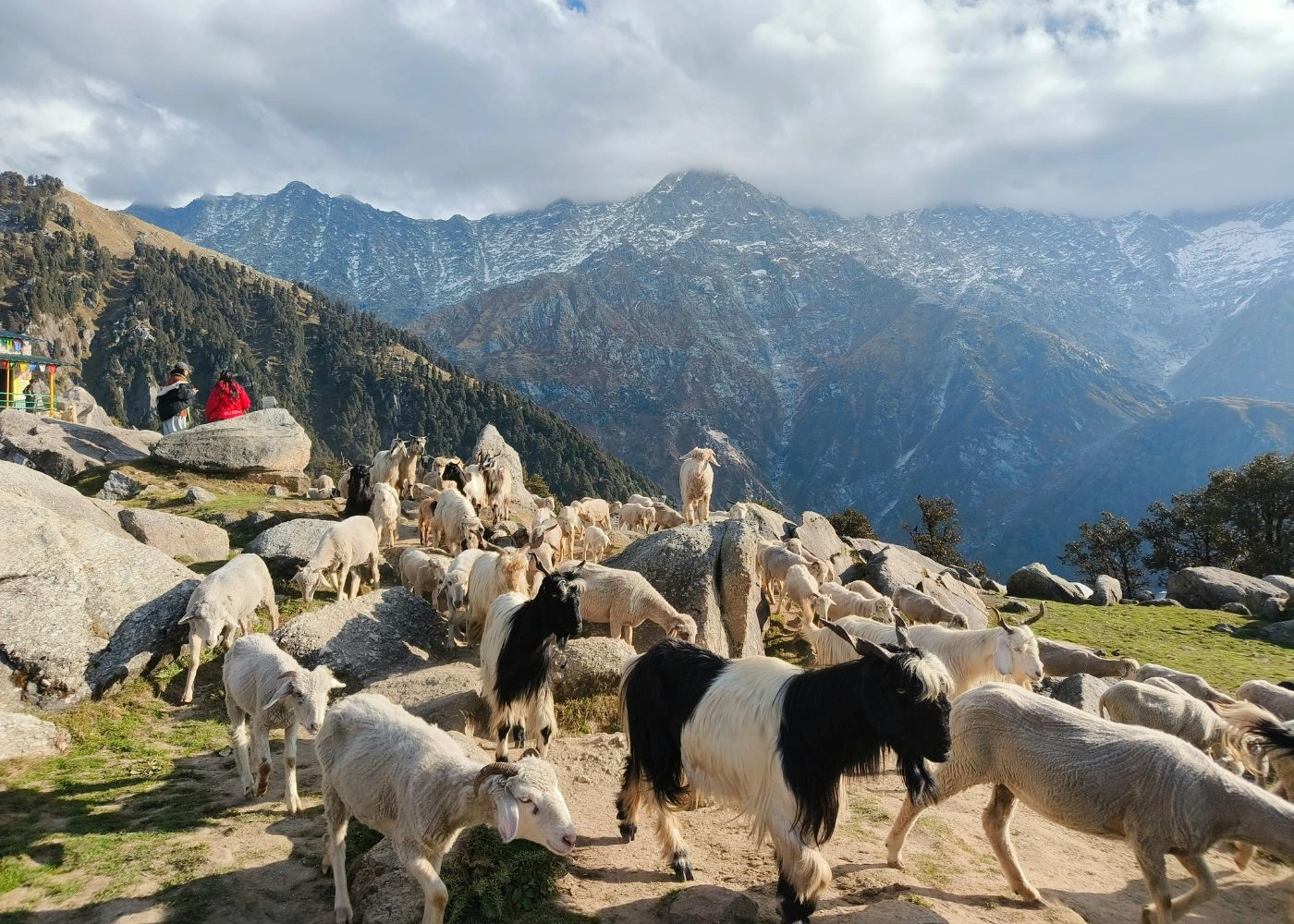
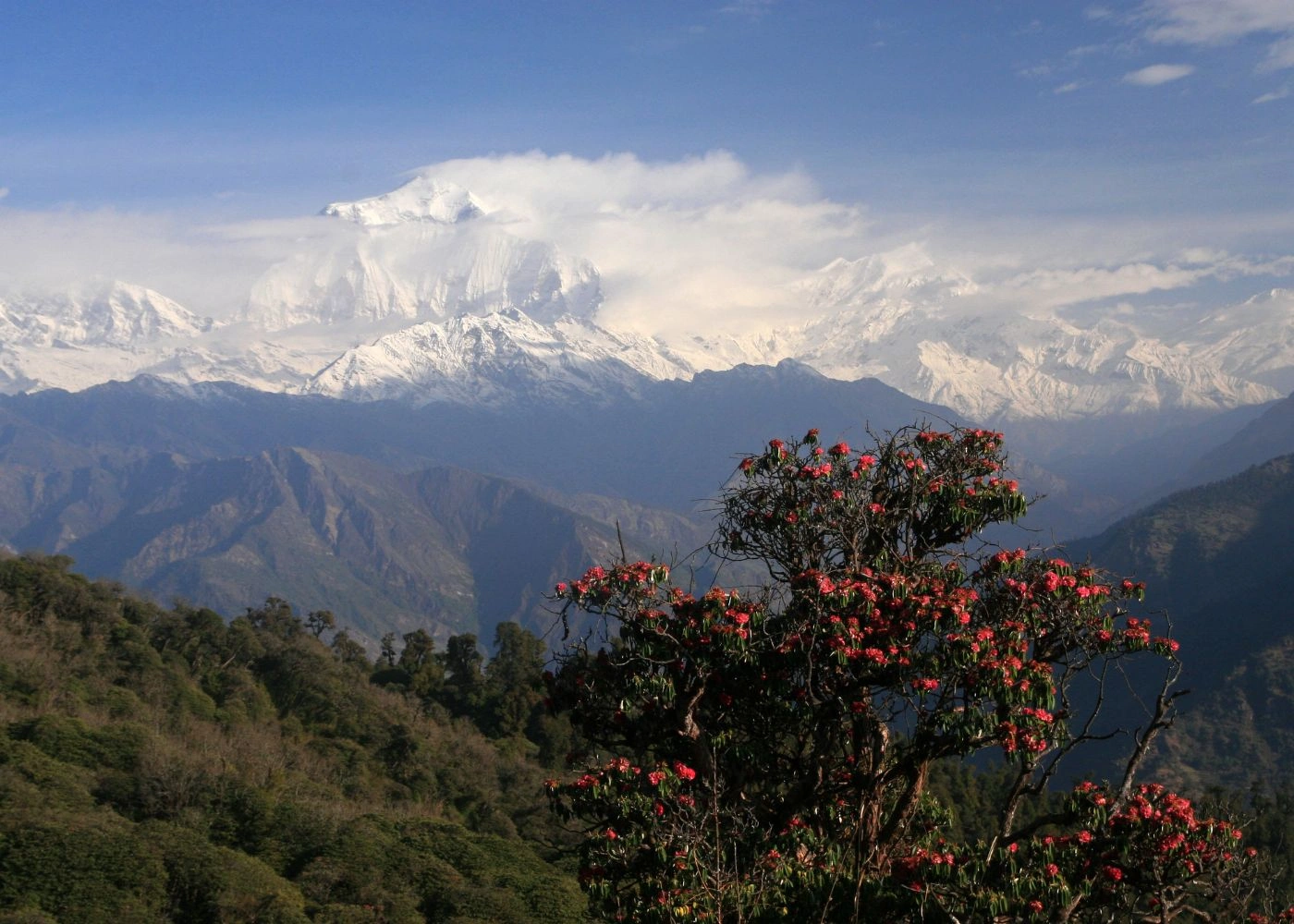
Additional scenery on Poon Hill Trek includes 2 rhododendron forests, the Ghorepani Rhododendron Forest and the Tadapani Forest, with 24 species of rhododendron flowering between March and April. The Kali Gandaki Valley, one of the world's deepest gorges at 5,571 m depth, is visible from the Ghorepani ridge section on day 2 of the trek.
Which trek is better for sunrise and photography: Mardi Himal Trek or Poon Hill Trek?
Poon Hill Trek ranks as the primary sunrise photography destination in the Annapurna region due to its 180-degree unobstructed eastern horizon. Sunrise at Poon Hill occurs between 06:10 AM (December) and 05:30 AM (June), with golden hour lasting 20–35 minutes. Over 500 trekkers gather at the Poon Hill tower each morning during peak season (October–November), creating crowded photography conditions.
Mardi Himal Trek provides 3 consecutive mornings of photography opportunities from High Camp and Base Camp with fewer than 20–30 trekkers present. The Mardi Himal Base Camp angle captures Machhapuchhre's twin summit from 7 km direct distance, producing a closer and more dramatic foreground compared to Poon Hill's 35 km viewing distance to the same peak.
Which Trek Is Easier for Beginners: Mardi Himal Trek or Poon Hill Trek?
Poon Hill Trek is easier for first-time trekkers due to its lower maximum altitude of 3,210 m, shorter duration of 4–5 days, and dense tea house availability every 2–3 km. Mardi Himal Trek is classified as moderate-to-challenging for beginners because it reaches 4,500 m, includes 3 exposed ridge sections with limited shelter, and requires 6–7 days of sustained physical effort.
How difficult is Mardi Himal Trek for first-time trekkers?
Mardi Himal Trek is rated moderate-to-challenging with a total ascent of 2,400 m over 3 uphill days. The 3 technical sections are the Pitam Deurali to Forest Camp climb (700 m ascent over 5 km), the Forest Camp to High Camp climb (1,030 m ascent over 7 km), and the High Camp to Base Camp push (420 m ascent over 4 km). Trail surface transitions from forest floor to rocky ridge above Low Camp (3,300 m), requiring trekking poles and firm ankle-support boots.
First-time trekkers complete Mardi Himal Trek successfully with 4–6 weeks of prior conditioning. When deciding between solo vs guided trekking, beginners often find that a professional guide provides essential safety support on the exposed ridge sections. Conditioning exercises include stair climbing, loaded hiking, and cardiovascular training. Altitude acclimatization stops are built into the itinerary at Forest Camp and High Camp.
How difficult is Poon Hill Trek for first-time trekkers?
Poon Hill Trek is rated easy-to-moderate with a total ascent of 1,400 m spread across 4 uphill days. Maximum daily ascent reaches 800 m on day 2 (Tikhedhunga to Ghorepani via Ulleri), which includes the Ulleri stone staircase, a 45-minute climb of 3,000 stone steps at a 30-degree gradient. All other daily ascents remain below 600 m, with well-graded stone paths and frequent rest stops.
First-time trekkers with basic fitness complete Poon Hill Trek without specialized training. Minimum fitness preparation includes 2 weeks of daily 30-minute walks with a light daypack. Tea houses at Tikhedhunga (1,540 m), Ghorepani (2,874 m), Tadapani (2,520 m), Chhomrong (2,170 m), and Nayapul (1,070 m) provide food, accommodation, and emergency descent options at every major stage.
Which trek is better for families or casual hikers: Mardi Himal Trek or Poon Hill Trek?
Poon Hill Trek is better for families and casual hikers due to 4 specific advantages: shorter duration, lower altitude, frequent villages for rest, and established emergency infrastructure. Families with children aged 10 and above complete Poon Hill Trek without difficulty. Mardi Himal Trek is recommended for families with children aged 14 and above due to its exposed ridge sections and 4,500 m altitude.
Helicopter rescue services from Ghorepani (Poon Hill base) respond within 25–40 minutes from Pokhara Airport. Helicopter rescue from Mardi Himal High Camp responds within 35–50 minutes. Both rescue response times fall within the 60-minute critical window for altitude emergency management.
Which Trek Is Better for Time, Budget, and Comfort: Mardi Himal Trek or Poon Hill Trek?
Poon Hill Trek fits tighter time and budget constraints with a 4–5 day itinerary and a total cost of $300–$500 USD per person. For those seeking a higher ridge experience, the Mardi Himal Trek cost averages $400–$650 USD per person for a 6–7 day journey. Both cost estimates include permits, guide fees, tea house accommodation, and 3 meals per day.
Which trek is better for a shorter itinerary: Mardi Himal Trek or Poon Hill Trek?
A standard Poon Hill Trek itinerary completes in 4 days minimum, making it the right choice for trekkers with 5 or fewer available days. The 4-day route covers Nayapul to Tikhedhunga, Ghorepani for sunrise, and returns via Tadapani. Mardi Himal Trek requires 6 days minimum, with no safe route modification that reduces the itinerary below 5 days.
Express transport connects Pokhara to Nayapul (Poon Hill trailhead) in 1.5 hours by private car or 2 hours by local bus, costing NPR 1,500 ($11 USD) to NPR 5,000 ($37 USD). Mardi Himal Trek begins at Kande, located 1 hour from Pokhara by private car, costing NPR 2,000–3,500 ($15–$26 USD).
How do permits, transport, and total costs compare between Mardi Himal Trek and Poon Hill Trek?
Both treks require 2 identical permits: the Annapurna Conservation Area Permit (ACAP) at NPR 3,000 ($22 USD) and the TIMS Card (Trekkers' Information Management System) at NPR 2,000 ($15 USD). Total permit cost for both treks equals NPR 5,000 ($37 USD) per person. The ACAP permit, issued by the Annapurna Conservation Area Project under Nepal's National Trust for Nature Conservation, covers all trekking within the 7,629 km² Annapurna Conservation Area.
The following table shows the detailed cost breakdown for both treks per person, based on mid-range spending in 2024.
Cost Category | Mardi Himal Trek | Poon Hill Trek |
Permits (ACAP + TIMS) | $37 USD | $37 USD |
Guide Fee (per day) | $25–$35 USD | $25–$35 USD |
Porter Fee (per day) | $18–$22 USD | $18–$22 USD |
Tea House Accommodation | $5–$15 USD/night | $5–$10 USD/night |
Meals (3 per day) | $15–$25 USD/day | $12–$20 USD/day |
Total Estimate (no guide) | $200–$350 USD | $150–$250 USD |
Total Estimate (with guide) | $400–$650 USD | $300–$500 USD |
Tea house prices increase with altitude on Mardi Himal Trek. A standard double room at High Camp (3,580 m) costs NPR 400–600 ($3–$4.50 USD) per night, while a standard double room in Ghorepani (Poon Hill base) costs NPR 300–500 ($2.25–$3.75 USD) per night.
How do tea houses, food, and sleeping conditions compare between Mardi Himal Trek and Poon Hill Trek?
Poon Hill Trek tea houses offer 3 distinct comfort levels, basic, mid-range, and lodge-style, with 24-hour electricity and hot showers at Ghorepani and Tadapani. Mardi Himal Trek tea houses above Low Camp (3,300 m) provide basic wooden rooms with 2–4 beds, shared pit toilets, and no guaranteed hot water. Solar-charged electricity at High Camp and Base Camp supports phone charging but not heating.
Food menus on Poon Hill Trek cover 40–60 dishes including Nepali dal bhat, pasta, noodle soup, pancakes, and continental breakfast. Food menus on Mardi Himal Trek above Forest Camp cover 15–25 dishes due to supply chain limitations at altitude. Dal bhat, steamed rice with lentil soup, vegetable curry, and pickles, costs NPR 400–700 ($3–$5 USD) on both routes and provides complete protein and carbohydrate balance for high-altitude trekking.
When Is the Best Time to Choose Mardi Himal Trek and Poon Hill Trek?
The 2 optimal trekking seasons in Nepal's Annapurna region are autumn (October–November) and spring (March–April). Both Mardi Himal Trek and Poon Hill Trek operate year-round, but trail quality, visibility, and safety vary significantly by month. Monsoon season (June–September) reduces visibility and makes both trails slippery, while winter (December–February) adds snowfall above 3,000 m.
Which seasons work best for Mardi Himal Trek?
Mardi Himal Trek performs best in October, November, March, and April, with October delivering the highest trail-to-summit visibility rate of 85–90%. Snow above 4,000 m closes the Mardi Himal Base Camp section from late December to late February, reducing the accessible itinerary to High Camp (3,580 m) during winter months. Spring season (March–April) combines stable weather with rhododendron bloom at Forest Camp and Low Camp elevations, adding botanical scenery to ridge panoramas.
December and January trekking on Mardi Himal Trek remains feasible to High Camp with micro-spikes and layered insulation gear. Night temperatures at High Camp drop to -10°C to -15°C in January. November night temperatures at High Camp average -4°C to -7°C, requiring a 3-season sleeping bag rated to -10°C.
Which seasons work best for Poon Hill Trek?
Poon Hill Trek delivers optimal conditions in October–November, with a sunrise visibility rate of 80–85% and average daytime temperatures of 12°C–18°C at Ghorepani. Spring season (March–April) ranks second, offering 70–80% visibility and peak rhododendron blooming across the 24-species forest between Ulleri and Ghorepani. Winter trekking (December–February) remains accessible because Poon Hill's maximum altitude of 3,210 m stays below the permanent snowline in most years.
Monsoon season (June–September) reduces Poon Hill sunrise visibility to 20–30% due to cloud cover. Trail surfaces on the Tikhedhunga-to-Ghorepani stone staircase become slippery during monsoon rainfall, increasing fall risk on the 3,000-step Ulleri section. August records the highest monthly rainfall in Pokhara at 680 mm, directly affecting both trail surfaces and mountain visibility.
How do weather, crowds, and trail conditions affect the choice between Mardi Himal Trek and Poon Hill Trek?
Crowds peak on Poon Hill Trek in October and November with 400–600 trekkers per day at Ghorepani, while Mardi Himal Trek sees 30–80 trekkers per day in the same season. Trekkers seeking solitude choose Mardi Himal Trek in October–November to combine peak visibility with low footfall. Trekkers prioritizing clear mountain views over solitude choose Poon Hill Trek in October, the single month with the highest combination of visibility, temperature, and trail stability.
Trail conditions affect pack weight on Mardi Himal Trek more directly than Poon Hill Trek. The Mardi Himal ridge section above Low Camp carries no porter road access, requiring self-sufficiency in rain gear, warm layers, and snacks for 6–8 hour ridge days. Poon Hill trail porters carry loads throughout the entire route, including the Ulleri stone staircase section.
Who Should Choose Mardi Himal Trek or Poon Hill?
Trekker fitness level, available time, and primary goal determine which of the 2 routes delivers the highest satisfaction. Mardi Himal Trek suits trekkers with 6–7 days, moderate fitness, and a goal of solitude or extended ridge photography. Poon Hill Trek suits trekkers with 4–5 days, basic fitness, and a goal of panoramic sunrise views or family trekking.
Who will enjoy Mardi Himal Trek the most?
Mardi Himal Trek delivers the highest satisfaction for 5 trekker profiles: solo adventurers seeking isolation, intermediate trekkers training for 5,000 m peaks, wildlife observers, ridge photographers, and trekkers on a second Nepal visit. The Annapurna Conservation Area along the Mardi Himal ridge hosts 441 bird species, including the Himalayan Monal (Nepal's national bird), the Blood Pheasant, and the Satyr Tragopan, making it one of Nepal's 3 premier bird-watching trekking routes alongside Langtang and Kanchenjunga.
Trekkers using Mardi Himal Trek as acclimatization preparation for Annapurna Base Camp Trek (4,130 m) or Island Peak (6,189 m) benefit from 3 nights above 3,000 m and 1 night at 4,500 m without the pressure of a technical summit. The Mardi Himal ridge's high-altitude exposure at 4,500 m provides measurable red blood cell adaptation over 6–7 days.
Who will enjoy Poon Hill Trek the most?
Poon Hill Trek delivers the highest satisfaction for 5 trekker profiles: first-time Nepal visitors, families with children aged 10 and above, photographers prioritizing single-day sunrise panoramas, trekkers with 4-day windows, and trekkers combining Nepal trekking with cultural visits. Ghorepani village (2,874 m), the midpoint of Poon Hill Trek, belongs to the Magar ethnic community, one of Nepal's 59 indigenous nationalities, offering trekkers access to traditional Magar architecture, stone-carved water systems, and local wheat cultivation at altitude.
Poon Hill Trek connects directly to Annapurna Base Camp Trek at Chhomrong (2,170 m), allowing trekkers to extend their itinerary by 7–8 days into a 12-day combined route covering both Poon Hill sunrise and Annapurna Base Camp glacier views. This combined route represents one of Nepal's 5 most-trekked extended itineraries.
Which trek is better for solitude or social trekking: Mardi Himal Trek or Poon Hill Trek?
Mardi Himal Trek provides solitude trekking with an average of 30–80 daily trekkers on the ridge section. Poon Hill Trek provides social trekking with 400–600 daily trekkers at Ghorepani during October–November. Tea houses on Mardi Himal Trek above Forest Camp accommodate 10–25 guests per night, creating small-group dining environments. Tea houses at Ghorepani accommodate 80–200 guests per night, creating high-energy social environments with trekkers from 20–30 nationalities during peak season.
Trekkers seeking conversation, group dynamics, and cultural exchange from fellow international travelers rate Poon Hill Trek higher on social experience. Trekkers seeking quiet mornings, unshared viewpoints, and self-paced ridge walking rate Mardi Himal Trek higher on solitude experience.
How Should You Plan Mardi Himal Trek or Poon Hill Trek Choice With a Guided Trek?
A licensed Nepali trekking company reduces planning complexity for both Mardi Himal Trek and Poon Hill Trek by managing 6 logistics: ACAP and TIMS permits, trailhead transport, guide and porter hire, tea house reservations, emergency protocol, and itinerary customization. Independent trekking is legal on both routes, but guided trekking reduces decision load and increases safety response capacity, particularly above 3,500 m on Mardi Himal Trek.
Can a local trekking company help you choose the right trek?
A Pokhara-based or Kathmandu-based trekking company assesses 4 variables to match trekkers to the correct route: fitness level, available days, altitude history, and photography goals. Reputable trekking companies registered with the Nepal Tourism Board (NTB) and the Trekking Agencies' Association of Nepal (TAAN) provide pre-departure fitness assessments, altitude briefings, and itinerary adjustments based on trekker profiles.
Licensed guides on both routes carry first aid certification, altitude illness recognition training, and satellite communication devices. Nepal's Department of Tourism registers over 1,200 licensed trekking companies, with over 400 based in Pokhara for direct Annapurna region departures. Selecting a TAAN-registered company with assigned guides for Mardi Himal Trek ensures route familiarity above Low Camp, where trail markers are sparse on the open ridge.
What are the key takeaways about Mardi Himal vs Poon Hill Trek?
Mardi Himal Trek and Poon Hill Trek represent 2 complementary, not competing, trekking experiences in Nepal's Annapurna Conservation Area. The 6 key takeaways from the full comparison are:
Duration: Poon Hill Trek takes 4–5 days. Mardi Himal Trek takes 6–7 days.
Altitude: Poon Hill reaches 3,210 m. Mardi Himal reaches 4,500 m.
Crowds: Poon Hill sees 100,000–120,000 annual trekkers. Mardi Himal sees 8,000–15,000.
Difficulty: Poon Hill is easy-to-moderate. Mardi Himal is moderate-to-challenging.
Cost: Poon Hill costs $300–$500 USD with a guide. Mardi Himal costs $400–$650 USD with a guide.
Best Season: Both treks peak in October–November and March–April.
Trekkers choosing Mardi Himal Trek gain a 3-day ridge walk at altitude, isolation, and closer proximity to Machhapuchhre's twin summit. Trekkers choosing Poon Hill Trek gain a 180-degree Himalayan sunrise panorama, cultural immersion in Magar villages, and a flexible itinerary adaptable to first-time Nepal visitors. Both Mardi Himal Trek and Poon Hill Trek depart from Pokhara, are accessible year-round with seasonal caution above 3,000 m, and require the same 2 permits, making the decision a matter of personal trekking goals, not logistical complexity.