Mardi Himal Trek vs Langtang Valley Trek defines a comparison between two moderate Himalayan trekking routes in Nepal, designed for scenic mountain exploration and cultural immersion. Mardi Himal Trek for short-duration ridge trekking offers a 7–8 day route in the Annapurna region with continuous panoramic views of Machapuchhre and Annapurna South. Langtang Valley Trek for extended valley trekking delivers a 10–11 day journey inside Langtang National Park with glacier landscapes, Tamang villages, and Tibetan-influenced culture. Distinct Himalayan trekking experiences differ in terrain type, route length, biodiversity zones, and accessibility from Pokhara or Kathmandu, making this comparison essential for selecting the ideal Nepal trek.

Mardi Himal Trek for short-duration Himalayan views suits trekkers seeking a 7–8 day scenic route with continuous mountain panoramas and minimal logistics. Langtang Valley Trek for cultural immersion and landscape diversity suits trekkers with 10–11 days who want glacier views, Tibetan-influenced villages, and multi-zone terrain. Both treks reach elevations above 4,500 meters, fall under moderate difficulty, require licensed guides as of 2026, and provide authentic teahouse trekking experiences within a similar budget range of USD 400–950.
Choosing between Mardi Himal and Langtang Valley depends on four core factors: available time, preferred scenery (ridge vs valley), cultural depth, and altitude ambition.
How Do Mardi Himal and Langtang Valley Compare Overall?
Mardi Himal Trek and Langtang Valley Trek are both moderate-level Himalayan treks in Nepal, but they differ across 6 critical dimensions: terrain type, cultural depth, access logistics, duration, maximum altitude, and landscape variety.
The table below defines the core comparison data for both treks.
|
Factor |
Mardi Himal Trek |
Langtang Valley Trek |
|
Region |
Annapurna, Pokhara |
Langtang National Park, Kathmandu |
|
Maximum Altitude |
4,500 m (Mardi Himal Base Camp) |
4,773 m (Kyanjin Ri) / 4,984 m (Tsergo Ri) |
|
Duration |
7–8 days |
10–11 days |
|
Total Distance |
40–70 km (route-dependent) |
75–80 km |
|
Trail Type |
Ridge walk |
Valley floor traverse |
|
Difficulty |
Moderate |
Moderate |
|
Access Point |
Pokhara (Kande/Phedi) |
Kathmandu (Syabrubesi, 122 km) |
|
Dominant Culture |
Gurung villages |
Tamang/Tibetan Buddhist villages |
|
Peak Season Permits |
ACAP + TIMS |
Langtang NP Entry + TIMS |
|
Permit Cost (Foreigners) |
USD 37–50 |
USD 45–50 |
|
Package Cost Range |
USD 350–760 |
USD 450–950 |
|
Guide Requirement |
Mandatory (2023 policy) |
Mandatory (February 2025 policy) |
Mardi Himal Trek is shorter, costs less, and starts directly from Pokhara without a flight. Langtang Valley Trek covers more distance, reaches a higher viewpoint, and delivers deeper cultural immersion into the Tamang heritage zone.
What Makes Mardi Himal Trek Unique?
Mardi Himal Trek is unique because it delivers a continuous ridge walk at 4,000+ meters elevation for 4 consecutive days, a landscape combination of dense rhododendron forest, alpine meadow, and close-proximity Himalayan panoramas unavailable on any other short trek in the Annapurna region.
Mardi is the only trek in Nepal that exposes trekkers to diverse landscapes in a short range after just 4 days at 4,000-meter-plus elevation. The experience of lush forests, alpine meadows, and dramatic high-mountain scenery in a compact route is not achievable even on the Annapurna Base Camp trek.
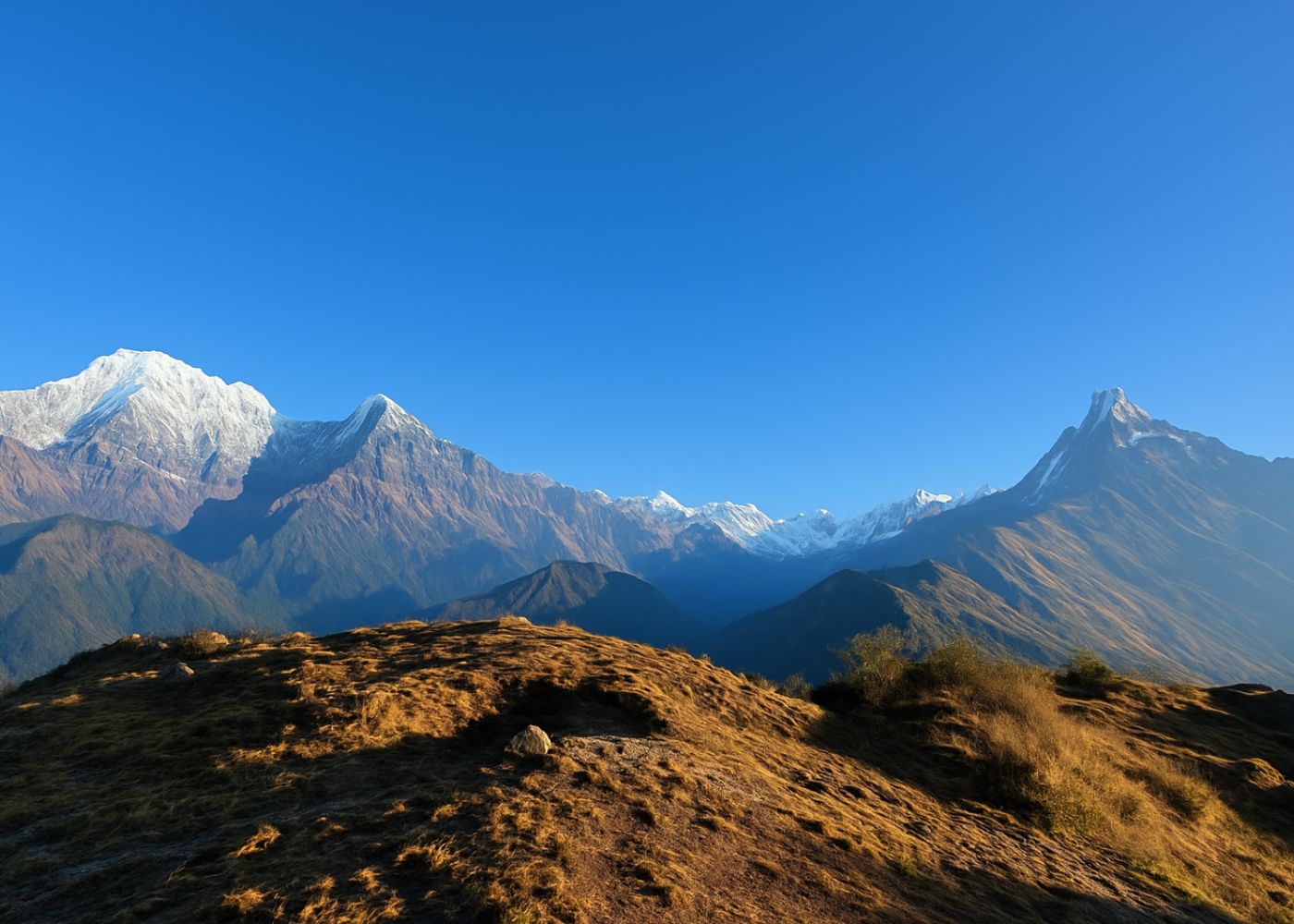
3 defining features separate Mardi Himal from all other short treks in Nepal:
-
Ridge-walk terrain: The trail climbs a single mountain spine from Kande (1,700 m) to Mardi Himal Base Camp (4,500 m), with almost no descent until the final day.
-
Machapuchhre proximity: Trekkers stand within direct line-of-sight of Machapuchhre (6,993 m), one of the world's most visually striking peaks, from High Camp and Base Camp.
-
Pokhara-based access: The trek starts within 1.5–2 hours of Pokhara by jeep, eliminating flight costs and long road journeys.
The Mardi Himal trekking route follows the ridge from the trailhead at Phedi, climbing continuously to 4,500 meters above sea level with minimal descent. The great advantage of a ridge walk is the abundance of stunning views throughout the ascent. When not looking at Himalayan giants like Dhaulagiri and Annapurna I, trekkers walk through magical old-growth rhododendron forest with mossy branches and, when in season, red flowers all around.
What Makes Langtang Valley Trek Unique?
Langtang Valley Trek is unique because it is the closest high-altitude Himalayan valley trek to Kathmandu, accessible without a domestic flight, and passes through the Tamang Heritage Zone the most Tibetan-influenced cultural corridor in Nepal outside the restricted Upper Mustang.
Langtang Valley is referred to as the "valley of glaciers" and is the third most popular trekking region in Nepal after Everest and the Annapurna regions. The valley borders Tibet and is governed by Buddhist culture and religious practices, with Tamang and Sherpa as the major residents.
4 defining features make Langtang Valley Trek structurally different from Mardi Himal:
-
Tibetan cultural immersion: The trail passes through authentic Tamang villages, ancient monasteries, Mani walls, and Chortens reflecting centuries of Tibetan Buddhist tradition.
-
Glacier access: Several glaciers at low elevations, including the Yala Glacier and Lirung Glacier, are visible from the valley, along with holy lakes like Gosaikunda, Surya Kunda, and Dev Kunda.
-
Wildlife biodiversity: Langtang National Park protects musk deer, Himalayan Thar, red pandas, snow leopards, and over 250 bird species biodiversity unavailable on the Mardi Himal route.
-
Modular extension options: Trekkers extend the Langtang Valley core route with Gosaikunda Lake (4,380 m), the Tamang Heritage Trail, or Yala Peak (5,520 m) climbing without extra permits.
Which Trek Suits Different Travel Styles Best?
Mardi Himal Trek suits photography-focused and view-driven trekkers with 4–7 days. Langtang Valley Trek suits culturally immersive and wildlife-interested trekkers with 7–10 days. Both treks suit first-time Himalayan trekkers at moderate fitness levels.
The following 5 traveler profiles map clearly to each trek:
-
Time-constrained trekkers (under 7 days): Mardi Himal Trek is the correct choice. The 7-day standard itinerary delivers a complete Himalayan base camp experience without requiring a 10-day commitment.
-
Cultural immersion seekers: Langtang Valley Trek is the correct choice. The Tamang Heritage corridor between Syabrubesi and Kyanjin Gompa exposes trekkers to 5+ distinct ethnic villages with intact Tibetan-influenced traditions.
-
Budget-first trekkers: Mardi Himal Trek costs less due to shorter duration and Pokhara-based logistics that eliminate flight expenses.
-
Wildlife and nature enthusiasts: Langtang Valley Trek is the correct choice. Langtang National Park's biodiversity red pandas, Himalayan Thar, over 250 bird species has no equivalent on the Mardi Himal ridge.
-
Panoramic view seekers wanting a high-altitude summit climb: Langtang Valley Trek wins with Tsergo Ri at 4,984 m delivering a 360-degree panorama of the Langtang Himal range.
Which Trek Is Easier for Beginners?
Mardi Himal Trek is easier for beginners due to its shorter duration (7–8 days), lower maximum altitude (4,500 m vs 4,984 m), and more gradual ridge ascent. Langtang Valley Trek ascends 2,000+ meters within the first 2 days, creating a steeper acclimatization challenge for first-time trekkers.
How Difficult Is Mardi Himal Trek?
The difficulty level of Mardi Himal Trek is categorized as moderate. The trek is well-marked, but features steep ascents and descents, particularly above Forest Camp and before reaching High Camp. Trekkers walk at elevations ranging from 1,700 meters to almost 4,500 meters. With basic fitness and proper pacing along with acclimatization, the trek is achievable over 7–8 days.
Mardi Himal Trek presents 3 specific difficulty challenges that every beginner must prepare for:
-
Altitude gain from High Camp to Base Camp: The push to Base Camp (4,500 m) involves gaining nearly 1,000 meters in a single morning, with roughly 40% less oxygen than at sea level. At High Camp elevation (3,550 m), trekkers experience shortness of breath even while tying shoelaces.
-
Continuous ascent structure: The descent from High Camp to Sidhing is the hardest section, where trekkers drop nearly 1,700 meters in a single day to the Mardi River valley.
-
Daily walking hours: On average, trekkers walk 5–7 hours per day, with the push from High Camp to the viewpoint and back running as long as 8 hours.
Beginners can definitely trek to Mardi Himal. Compared to other high-altitude trekking routes in Nepal, Mardi Himal is less challenging. The risk of altitude sickness is lower, as the elevation is not as extreme as Everest Base Camp or the Annapurna Circuit.
How Difficult Is Langtang Valley Trek?
The Langtang Valley Trek is fairly difficult due to height increase. There are several sudden and prolonged ascents throughout the course, with an elevation gain of more than 2,000 meters within the first two days. Trekkers must be able to walk 6 to 7 hours each day while carrying light backpacks.
Langtang Valley Trek presents 4 distinct difficulty factors:
-
Rapid early elevation gain: The trail ascends from Syabrubesi (1,450 m) to Langtang Village (3,430 m) within 3 days a gain of 1,980 meters.
-
High-altitude day hikes: Optional ascents to Kyanjin Ri (4,773 m) and Tsergo Ri (4,984 m) add significant altitude challenges on rest days.
-
Daily distance: Most trekkers walk around 5 to 7 hours per day, covering 10 to 15 kilometers along terrain that shifts from forest paths to stone steps to open alpine areas.
-
Weather variability: Mornings are often clear and calm, but clouds or wind appear later in the day. At higher points like Kyanjin Gompa or Tsergo Ri, temperatures drop quickly, especially in the early morning.
Which Trek Needs Better Fitness and Preparation?
Langtang Valley Trek demands better aerobic fitness than Mardi Himal Trek. The 10–11 day duration, multi-day consecutive walking at altitudes above 3,400 meters, and optional summit climbs to Tsergo Ri (4,984 m) require a higher baseline cardiovascular capacity.
Physical and mental preparation for Langtang Valley Trek requires aerobic conditioning, elevation training, and strength endurance exercises including jump squats, hip rolls, step-ups, and aerobic workouts like swimming, jogging, cycling, and brisk walking.
For Mardi Himal Trek, consistent walking for 5–6 hours per day on uneven terrain for 5 consecutive days forms the minimum fitness baseline. Both treks require 4–6 weeks of pre-trek aerobic training for sedentary individuals.
Which Trek Has Better Views and Landscapes?
Mardi Himal Trek delivers the best intimate, close-proximity Himalayan peak views. Langtang Valley Trek delivers the best wide-panoramic, multi-range valley and glacier landscapes. Neither trek is objectively superior they serve different visual preferences.
What Mountain Views Can You Expect on Mardi Himal Trek?
The highest point of Mardi Himal Trek offers amazing views of Machapuchare (Fishtail), Annapurna South, and other giant peaks. As trekkers ascend, the views become clearer and larger, with snow-capped peaks dominating the horizon. The best views of Machapuchare and Mardi Himal are from High Camp and the Mardi Himal Base Camp.
6 major peaks visible from Mardi Himal High Camp and Base Camp:
-
Machapuchhre (Fishtail): 6,993 m high directly in front of Base Camp
-
Annapurna I: 8,091 m high visible to the west
-
Annapurna South: 7,219 m high prominent throughout the ridge
-
Gangapurna: 7,454 m high visible from upper elevations
-
Hiunchuli: 6,441 m high visible from Base Camp
-
Mardi Himal: 5,587 m high the trek's namesake peak, directly accessible
From Mardi Himal Base Camp at 4,500 meters, trekkers can look into the Annapurna Sanctuary. The panorama is spectacular, showing the south face of Annapurna and all the peaks in the Sanctuary, as well as Hiunchuli and Machhapuchhre (Fishtail).
What Scenery Defines the Langtang Valley Trek?
The Langtang Valley Trek unfolds panoramic views of Langtang Lirung (7,227 m), Langshisha Ri (6,810 m), Dorje Lakpa (6,966 m), and Yala Peak (5,520 m). The trek's biodiversity highlights dense forests adorned with vibrant rhododendron blooms, with diverse wildlife including elusive red pandas and Himalayan Thars.
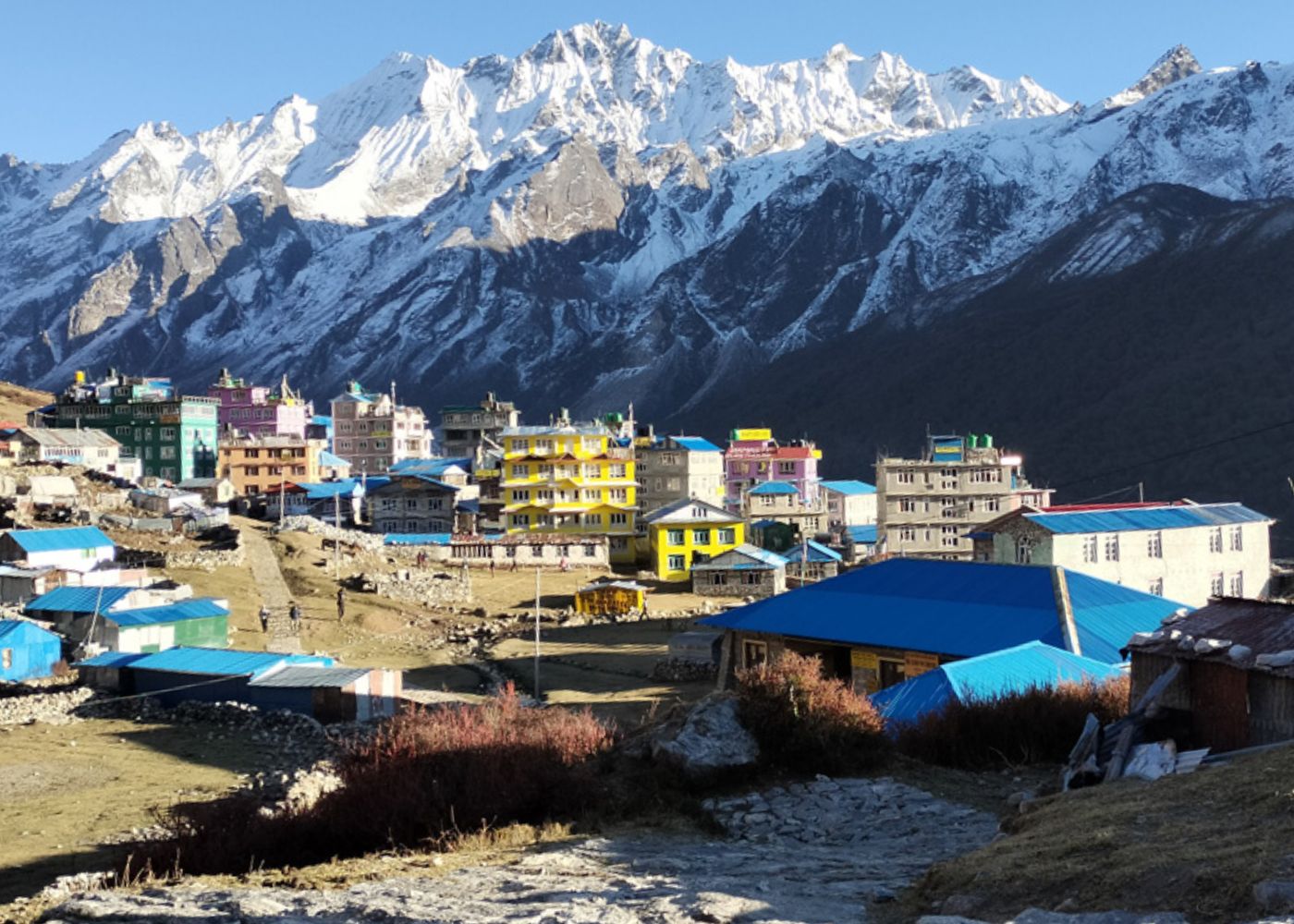
5 landscape zones distinguish the Langtang Valley scenery:
-
Subtropical forest zone (Syabrubesi to Lama Hotel): Oak, deodar cedar, blue pine, and rhododendron corridors along the Bhote Koshi and Langtang Khola rivers.
-
Bamboo and broadleaf forest zone (Lama Hotel to Ghoda Tabela): Dense canopy with Himalayan black bear, langur monkeys, and red panda habitats.
-
Alpine meadow zone (Ghoda Tabela to Langtang Village): Open grasslands where yaks graze, with Langtang Lirung's north face dominating the skyline.
-
High-altitude moraine zone (Langtang Village to Kyanjin Gompa): Rocky terrain with glacier moraines and Lirung Glacier access.
-
Summit panorama zone (Kyanjin Ri / Tsergo Ri): 360-degree views of the Langtang Himal and Ganesh Himal ranges.
Which Trek Offers More Variety in Natural Beauty?
Langtang Valley Trek offers more variety in natural beauty. It traverses 5 distinct vegetation and terrain zones from subtropical forest to glacial moraine over 75–80 km. Mardi Himal Trek primarily delivers rhododendron forest and alpine ridge terrain across 40–70 km.
Mardi Himal compensates with unmatched proximity to Machapuchhre. No other non-restricted trek in Nepal positions trekkers this close to the Annapurna massif.
Which Trek Offers a Better Cultural Experience?
Langtang Valley Trek offers a richer and more immersive cultural experience than Mardi Himal Trek. The Tamang Heritage zone preserves intact Tibetan Buddhist traditions monasteries, cheese factories, Mani walls, Chortens, and villages practicing centuries-old customs unavailable on the Gurung-culture Mardi Himal corridor.
What Local Culture Can You Experience on Mardi Himal Trek?
The Mardi Himal Trek provides opportunities to explore hidden valleys and visit Gurung and Magar villages while connecting with the unique local culture. Trekkers encounter traditional Gurung villages, including Dhampus, Lwang, Siding, and Australian Camp, each offering insight into mountain farming and Gurung hospitality.
3 cultural encounter types characterize the Mardi Himal trail:
-
Gurung village life: Dhampus village (a traditional Gurung settlement) features stone houses, terraced fields, and locals who have historically served as Gurkha soldiers.
-
Rhododendron and forest culture: Local guides share botanical knowledge of the Annapurna Conservation Area's 22 rhododendron species blooming along the ridge in March–April.
-
Viewpoint tea culture: High Camp and Low Camp teahouses are family-run operations where trekkers share meals with Gurung and Magar hosts at communal dining tables.
Cultural depth on Mardi Himal is lighter than on Langtang. The trail's primary draw is scenery, not ethnographic immersion.
What Tamang Heritage Can You Explore in Langtang Valley?
Indigenous Tamang and Sherpa communities populate numerous ethnic villages along the Langtang Valley route. These welcoming villagers enthusiastically share their culture, which is heavily influenced by Tibetan Buddhism. The Langtang region borders Tibet, and Buddhist culture and religious practices govern local life.
6 specific cultural heritage elements available exclusively on the Langtang Valley route:
-
Kyanjin Gompa: An ancient Buddhist monastery at 3,830 m, staffed by resident monks, with active prayer ceremonies and traditional thangka paintings.
-
Yak Cheese Factory (Kyanjin Gompa): A functioning high-altitude dairy where trekkers observe traditional yak milk processing into hard cheese a centuries-old Tamang practice.
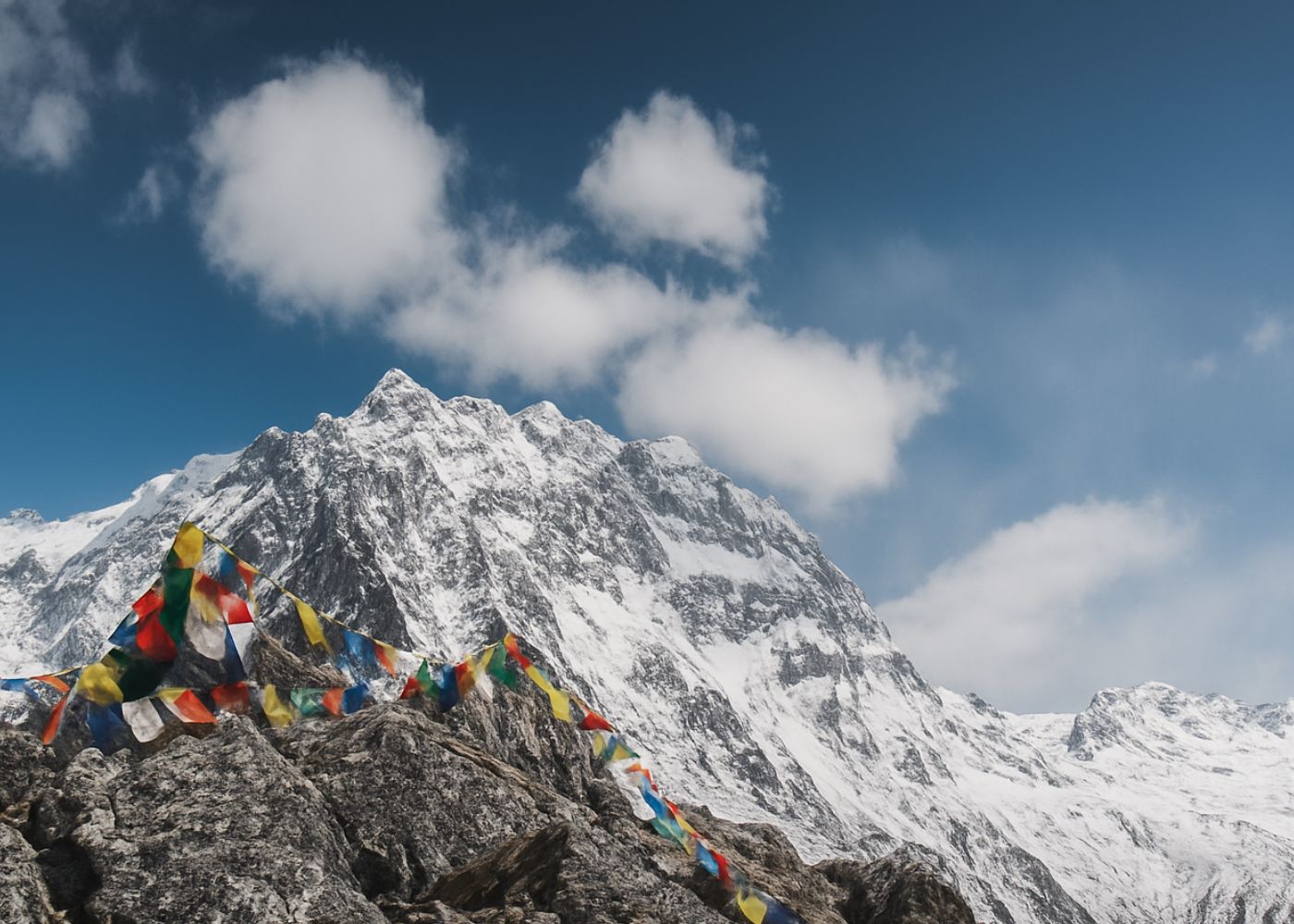
-
Mani Walls: Hundreds of stone walls inscribed with the Tibetan Buddhist mantra "Om Mani Padme Hum" line the trail from Lama Hotel to Kyanjin Gompa.
-
Chortens (Stupas): White-domed religious monuments mark every major village, walked clockwise as a sign of respect.
-
Langtang Village (3,430 m): The oldest traditional Tamang village in the Langtang Valley, heavily significant due to its cultural and religious aspects, with Chortens and Mani Walls before and after the village. The village was devastated by the 2015 earthquake and has been rebuilt by surviving residents.
-
Tibetan-style architecture: Prayer flags, wooden-carved door frames, flat-roofed stone houses, and painted mandalas characterize every Tamang settlement along the route.
Which Trek Feels More Immersive Culturally?
Langtang Valley Trek feels more immersive culturally. Trekkers spend 10–11 days walking between 4–6 distinct Tamang villages with functioning monasteries, live religious ceremonies, traditional food production, and direct engagement with a Tibetan-Buddhist living culture. Mardi Himal Trek's cultural encounters are shorter and less ethnographically structured.
Which Trek Is Better for Time, Access, and Logistics?
Mardi Himal Trek wins on time, access, and logistics. It starts from Pokhara Nepal's second-largest tourist hub without a domestic flight, costs USD 15–20 by tourist bus from Kathmandu, and completes in 7–8 days. Langtang Valley Trek requires a 5–6 hour road journey from Kathmandu to Syabrubesi on a rough mountain road.
How Long Does Mardi Himal Trek Usually Take?
The standard five-day itinerary of the Mardi Himal Trek is perfect for beginners and pro-hikers who want to enjoy the trek without rushing. The four-day Mardi Himal Trek itinerary is only recommended to experienced hikers who want a fast-paced route. The seven-day Mardi Himal Trek is perfect for trekkers who want to explore all the villages in the lower Mardi Himal region.
The 3 standard Mardi Himal Trek durations are:
-
4 days (Pokhara-based, fast pace): Recommended only for experienced trekkers.
-
5 days (standard itinerary): Covers Kande → Forest Camp → Low Camp → High Camp → Mardi Himal Base Camp → descent to Siding or Lwang.
-
7 days (extended itinerary): Adds village exploration in Lwang, Siding, and Kalimati for a culturally richer experience.
How Long Does Langtang Valley Trek Usually Take?
The total distance of the Langtang Valley Trek is about 80 kilometers. On average, trekkers walk about 14 kilometers per day. The trip normally starts with a drive from Kathmandu to Syabrubesi, which takes about 6 hours to cover the 122-kilometer distance.
The 3 standard Langtang Valley Trek durations are:
-
7 days: Fast-paced option reaching Kyanjin Gompa with 1 rest day and no summit hike.
-
10–11 days: Standard itinerary including Kyanjin Ri (4,773 m) summit and 2 rest days for acclimatization.
-
12–14 days: Extended itinerary adding Tsergo Ri (4,984 m) or Gosaikunda Lake extension.
Which Trek Is Easier to Reach and Organize?
Mardi Himal Trek is significantly easier to reach and organize. Key logistics comparison across 4 factors:
-
Transport to trailhead: Pokhara (Mardi) requires 6–8 hours by tourist bus (USD 15–20) or 25-minute flight (USD 90–100) from Kathmandu. Syabrubesi (Langtang) requires 7–9 hours by local bus (USD 8–10) or shared jeep (USD 12–20) on a rough mountain road.
-
Permit complexity: Mardi Himal requires ACAP + TIMS (both obtainable in Kathmandu or Pokhara). Langtang requires National Park Entry Permit + TIMS (obtainable in Kathmandu or at Dhunche checkpoint).
-
Trailhead access: Mardi Himal starts 1.5–2 hours from Pokhara by jeep (USD 40–100 private). Langtang starts directly at Syabrubesi after the 7–9 hour road drive.
-
Urban base amenities: Pokhara offers superior gear rental, medical services, and trekking agencies compared to Syabrubesi.
Which Trek Has Better Accommodation and Trail Comfort?
Langtang Valley Trek teahouses offer slightly better comfort at the final destination (Kyanjin Gompa), while Mardi Himal Trek teahouses are more basic at higher elevations but sufficient for the shorter duration.
What Tea House Experience Can You Expect on Mardi Himal?
The tea houses along the Mardi Himal Trek are simple but hospitable. These are small lodges run by local families. Most offer basic rooms with twin beds, a blanket, and a pillow. While the walls are generally thin with no heating, they feel cozy after a long day of walking. Carrying a warm sleeping bag is recommended, especially for the higher camps.
Mardi Himal teahouse standards vary by altitude:
-
Kande / Pothana (1,700–1,870 m): Standard teahouses with private rooms, attached bathrooms, and Wi-Fi.
-
Forest Camp (2,520 m): Basic rooms, shared bathrooms, minimal Wi-Fi.
-
Low Camp (2,985 m): Simple teahouses with wood stoves in dining halls; very cold nights.
-
High Camp (3,580 m): The most basic lodges on the route; limited menu, no Wi-Fi, sub-zero nights.
Room rates range from USD 4–16 per night. Teahouses along Mardi Himal cost USD 10–15 (NPR 1,500–2,500) per night depending on room type. Meals cost USD 6–10 per meal.
What Tea House Experience Can You Expect in Langtang Valley?
Perhaps surprisingly, some of the very best accommodations on the Langtang Valley Trek can be found near the trail's end. The little villages of Langtang, Mundu, and Kyanjin Gompa experience a nearly year-round influx of visitors from all over the world. Because most visitors stay for multiple nights, guesthouse owners in this part of the valley have refined their hospitality offerings, solid timber construction, warm dining rooms, and the company of fellow travelers from many countries.
Langtang Valley teahouse standards by zone:
-
Syabrubesi / Lama Hotel (1,500–2,400 m): Standard teahouses with reasonable Wi-Fi and hot water.
-
Ghoda Tabela (3,000 m): Basic teahouses; hot meals and beds available.
-
Langtang Village (3,430 m): Improved teahouses rebuilt post-2015 earthquake, with bakeries and small shops.
-
Kyanjin Gompa (3,830 m): The best teahouses on the route, with yak-cheese products available.
Basic teahouses on the Langtang trek cost approximately USD 5–10 per night, with mid-range lodges around USD 15–20. Luxury teahouses, very rare on the route, start at about USD 25 per night.
Which Trek Feels More Comfortable on the Trail?
Langtang Valley Trek feels more comfortable on the trail overall. The valley-floor terrain is gentler than Mardi Himal's continuous ridge ascent. Daily distances on Langtang average 10–15 km, while Mardi Himal's steep daily elevation gains of up to 1,000 meters demand greater exertion per kilometer covered.
Which Trek Is Better in Different Seasons?
Both treks perform best in Spring (March–May) and Autumn (September–November). Mardi Himal Trek performs better in Winter than Langtang Valley Trek. Langtang Valley Trek performs better during the early Monsoon shoulder season (late September) due to post-rain clarity.
When Is the Best Time for Mardi Himal Trek?
The best month for Mardi Himal Trek is shortly after the monsoon ends mid-September when the atmosphere is cleared by monsoon rain, the lowlands are still green, and the white peaks appear against superb blue skies. The other best month is April, when widely blooming rhododendrons ornate the route. Autumn (mid-September, October, and November) is Nepal's peak season and the best time to trek. March–May is the second-best season.
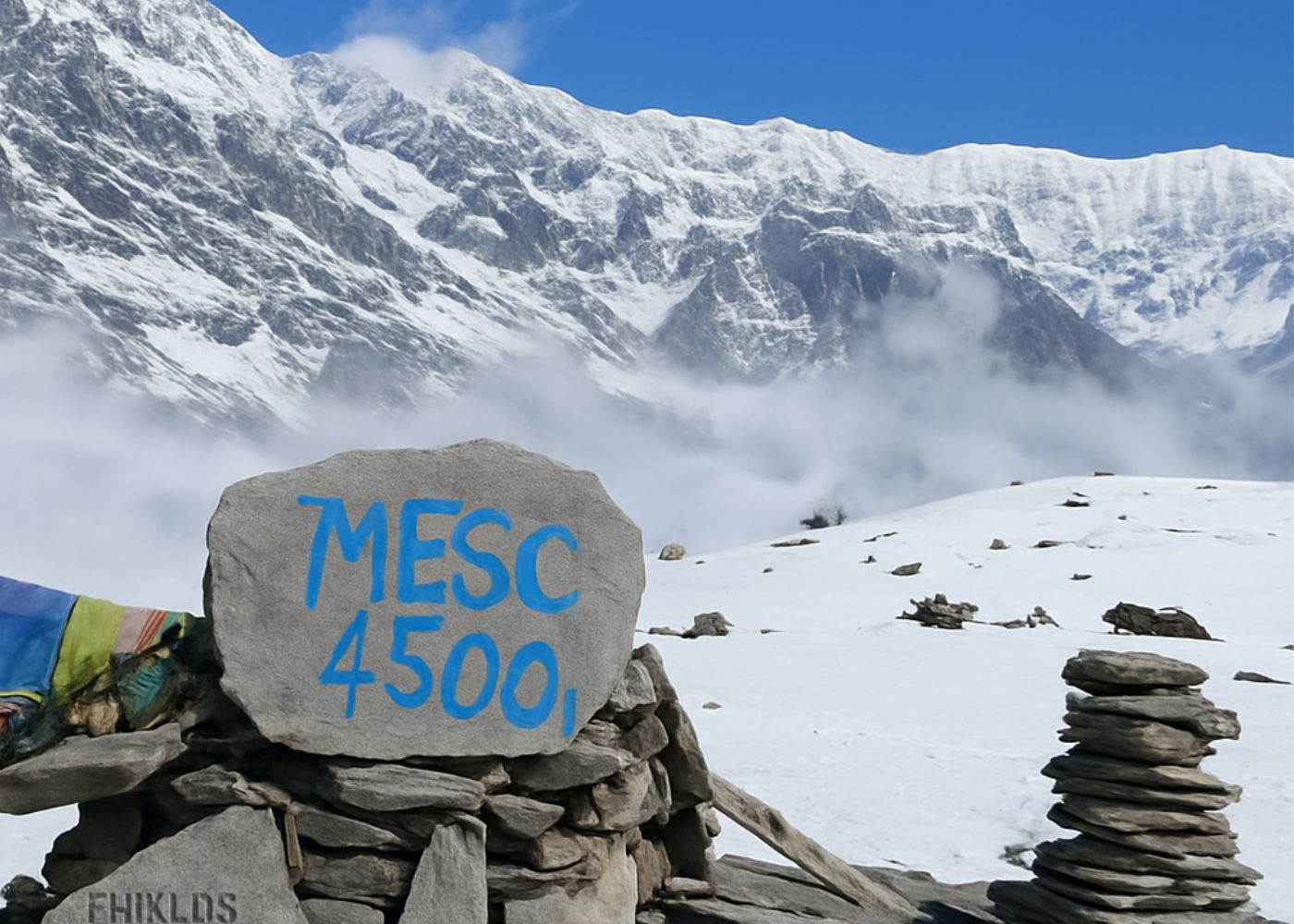
4 seasons on Mardi Himal Trek:
-
Spring (March–May): Best for rhododendron blooms (22 species). Daytime temperatures 10°C–20°C at lower altitudes. Trail moderately crowded.
-
Summer/Monsoon (June–August): The upper region of Mardi Himal Trek seldom gets rain, making it one of few Nepal treks that remains viable in Monsoon though the lower regions are hot and wet below 2,000 meters.
-
Autumn (September–November): Peak season. Clear skies, festival atmosphere. Dashain and Tihar celebrations create vivid cultural encounters.
-
Winter (December–February): During winter nights, temperatures drop to around -5°C to 0°C (23°F to 32°F). Trails above 3,000 meters may get snow. A licensed guide is strongly recommended for winter trekking on Mardi Himal.
When Is the Best Time for Langtang Valley Trek?
The first best season for Langtang Valley Trek is Autumn (September to November) for pleasant weather, clear skies, and stunning views. The second-best time is Spring (March to May), with good views but some afternoon cloudiness over the mountains. Trekking during the Monsoon involves rain and potential landslides. Winter is cold with potential snowfall at higher elevations, and teahouse owners may migrate to lower elevations to avoid extreme cold.
4 seasons on Langtang Valley Trek:
-
Spring (March–May): Rhododendron and wildflower blooms, warmer weather, stable conditions.
-
Monsoon (June–August): Dampness, slick trails, leeches at lower elevations, and risk of landslides on the Syabrubesi approach road.
-
Autumn (September–November): Best overall season for clear skies, crisp air, and optimum photography conditions.
-
Winter (December–February): Cold and harsh, particularly at Kyanjin Gompa (3,870 m). Thick snow on trails creates significant difficulty.
Which Trek Performs Better in Spring, Autumn, or Winter?
-
Spring: Mardi Himal wins for rhododendron color on the ridge. Langtang wins for valley-wide wildflower diversity.
-
Autumn: Both treks perform equally well. Mardi Himal benefits from festival encounters near Pokhara; Langtang benefits from post-monsoon clarity over the Langtang Himal range.
-
Winter: Mardi Himal performs better because the ridge route above 3,000 m receives less snow than Langtang Valley's approach from Kathmandu, and the shorter duration reduces cold-weather exposure.
Which Trek Gives Better Value for Your Budget?
Mardi Himal Trek gives better value for budget-first trekkers due to shorter duration, lower total cost, and Pokhara-based logistics that eliminate domestic flight expenses. Langtang Valley Trek gives better value for experience-first trekkers who prioritize cultural depth and landscape variety per trekking day.
What Does Mardi Himal Trek Usually Cost?
The Mardi Himal Trek cost in 2026 ranges from USD 270 to over USD 760, depending on the package chosen budget, standard, or luxury. Budget options cover essential services like teahouse accommodation and a guide. To trek Mardi Himal, trekkers need the Annapurna Conservation Area Permit (ACAP) and a TIMS card, costing USD 30 and USD 20 respectively for foreigners, totaling USD 50.
Mardi Himal Trek cost breakdown for a standard 5–7 day trek:
|
Cost Component |
Budget Range (USD) |
|
ACAP Permit |
USD 30 |
|
TIMS Card |
USD 10–20 |
|
Transport (Kathmandu–Pokhara) |
USD 15–100 |
|
Transport (Pokhara–Kande) |
USD 2–100 |
|
Accommodation (4–6 nights) |
USD 25–100 |
|
Meals (5–7 days) |
USD 80–150 |
|
Licensed Guide |
USD 125–245 |
|
Porter (optional) |
USD 100–175 |
|
Total Estimated Range |
USD 350–760 |
The Mardi Himal Trek costs around USD 500 to USD 650, depending on the service quality and package chosen. This typically includes permits, lodging, meals, transportation, and guide expenses.
What Does Langtang Valley Trek Usually Cost?
The average cost for Langtang Valley Trek typically ranges between USD 450 to USD 900 per person, depending on the mode of trekking (independent or guided), duration, level of comfort, and season.
Langtang Valley Trek cost breakdown for a standard 7–10 day trek:
|
Cost Component |
Budget Range (USD) |
|
Langtang National Park Permit |
USD 25–30 |
|
TIMS Card |
USD 10–17 |
|
Transport (Kathmandu–Syabrubesi round trip) |
USD 16–70 |
|
Accommodation (7–9 nights) |
USD 35–90 |
|
Meals (7–10 days) |
USD 175–300 |
|
Licensed Guide |
USD 175–315 |
|
Porter (optional) |
USD 140–225 |
|
Total Estimated Range |
USD 450–950 |
For 2026, the total estimated cost for a 7–10 day Langtang Trek ranges from USD 450 to USD 950 per person. A budget-conscious independent trekker might spend around USD 40–50 per day. A mid-range experience with a guide or package costs between USD 60–90 per day.
Which Trek Offers More Value for the Experience?
Mardi Himal Trek offers better value per day spent (USD 70–130 per day). Langtang Valley Trek offers a better value per experience category covering more cultural zones, wildlife habitats, landscape types, and altitude options for a similar total spend.
For trekkers choosing between a 5-day Mardi Himal trek at USD 500 and a 10-day Langtang Valley trek at USD 800, the Langtang delivers 2x the duration, 5 landscape zones, and 6+ cultural heritage sites for approximately 60% more cost.
Which Trek Is Safer and More Suitable for Solo Travelers?
Neither trek permits solo trekking without a licensed guide as of 2026. Mardi Himal Trek is more suitable for solo travelers due to shorter duration, Pokhara-based emergency access, and lower altitude risk. Langtang Valley Trek requires mandatory guide hire enforced by law since February 15, 2025.
What Safety Factors Should You Know About Mardi Himal?
Mardi Himal Trek presents 4 primary safety considerations:
-
Altitude sickness risk: AMS (Acute Mountain Sickness) can occur above 2,500 meters. The trek reaches 4,500 meters, where 40% less oxygen than sea level is available.
-
High Camp to Base Camp section: The High Camp elevation (3,550 m) to Mardi Himal Base Camp (4,500 m) push gains nearly 1,000 meters in a single morning the most challenging section requiring close monitoring of AMS symptoms.
-
Weather changes: Above 3,000 meters, weather can change rapidly. Snowfall above High Camp occurs even in spring and autumn.
-
Guide requirement: As of the 2023 policy change, independent trekkers cannot obtain a TIMS card without a licensed guide on routes such as Mardi Himal. The purpose of this rule is to reduce rescue risks and improve trail management.
What Safety Factors Should You Know About Langtang Valley?
Langtang Valley Trek presents 5 primary safety considerations:
-
Mandatory guide law: Solo trekking in Langtang is prohibited from February 15, 2025. The Nepal government has made it mandatory for all trekkers, including foreign and Nepali nationals, to hire a licensed guide to enter Langtang National Park. This rule applies to Langtang Valley, Tamang Heritage, and Gosainkunda Lake routes.
-
Rapid altitude gain in the first 2 days: The ascent from Syabrubesi (1,450 m) to above Lama Hotel (2,400 m) on Day 1 is 6–7 hours and challenging for new arrivals.
-
Rough approach road: The 122 km Kathmandu–Syabrubesi road includes mountain switchbacks and can be affected by landslides during Monsoon season.
-
2015 earthquake legacy: Langtang Village was devastated by the April 2015 earthquake and subsequent landslide. The Langtang area has been rebuilt since the earthquake, and trails have improved. Trekkers must be informed of altitude sickness as a possible issue, fast-changing weather conditions, and the need for proper equipment and guidance.
-
Tsergo Ri summit altitude (4,984 m): The optional summit push approaches 5,000 meters, requiring full acclimatization at Kyanjin Gompa before attempting.
Which Trek Is Better for Solo or First-Time Trekkers?
Mardi Himal Trek is better for solo and first-time trekkers across 4 measurable factors:
-
Duration: 7–8 days vs 10–11 days reduces cumulative fatigue risk for first-timers.
-
Altitude ceiling: 4,500 m vs 4,984 m (Tsergo Ri) means lower altitude sickness probability.
-
Urban base: Pokhara, a medical-service-rich city, is 1.5–2 hours from the trailhead for emergency descent.
-
Trail marking: Mardi Himal's ridge route is clear and well-marked with fewer navigation decisions than Langtang Valley's multi-day valley traverse.
Both treks now require licensed guides, equalizing solo trekker safety protocols as of 2026.
How Should You Choose Between These Treks With Expert Help?
Can a Trekking Company Help You Pick the Right Trek?
Yes. A registered Nepal trekking company performs the 4 critical pre-trip functions that determine which trek suits each individual trekker.
These 4 functions are:
-
Fitness and timeline assessment: Agencies match trek duration and altitude profile to the trekker's fitness level and available days. Mardi Himal suits 5–10 available days; Langtang suits 10–14 available days including Kathmandu arrival and departure.
-
Permit acquisition: Both ACAP + TIMS (Mardi Himal) and Langtang National Park + TIMS (Langtang) are processed directly by registered agencies, eliminating the risk of checkpoint refusal.
-
Licensed guide provision: As of 2025, both treks legally require licensed guides. Registered agencies employ guides with Wilderness First Responder (WFR) certification and altitude medicine training.
-
Customized itinerary design: Agencies extend or condense the standard itineraries for Mardi Himal (7–8 days) and Langtang Valley (10–11 days) based on trekker preferences for cultural stops, summit hikes, or wildlife detours.
Booking through a Government of Nepal-registered trekking agency (verifiable through the Nepal Tourism Board) ensures certified guides, ethical porter wages, and permitted routes the 3 non-negotiable criteria for a safe Himalayan trek in 2026.
Contact the Nepal Intrepid Treks for Booking.
What Are the Key Takeaways About These Two Treks?
Mardi Himal Trek and Langtang Valley Trek are both excellent moderate-level Himalayan treks in Nepal, with clearly different strengths serving different trekker needs.
The 8 key decision points summarized:
-
Choose Mardi Himal Trek if the available time is 7–8 days, the starting point is Pokhara, the primary motivation is close-up Machapuchhre views and Annapurna panoramas, and the budget priority is minimizing total cost.
-
Choose Langtang Valley Trek if the available time is 10–11 days, the base is Kathmandu, the primary motivation is Tamang cultural immersion and multi-zone landscape diversity, and the priority is the highest-elevation panorama available on a moderate trek (Tsergo Ri, 4,984 m).
-
Both treks require licensed guides as of 2026, eliminating fully independent solo trekking from both routes.
-
Both treks perform best in Spring (March–May) and Autumn (September–November), with Mardi Himal holding a slight Winter advantage due to shorter cold-weather exposure.
-
Both treks are classified moderate accessible to fit beginners who prepare with 4–6 weeks of consistent aerobic exercise before departure.
-
Mardi Himal Trek costs USD 350–760 for a complete package; Langtang Valley Trek costs USD 450–950, both excluding international flights.
-
Neither trek requires technical climbing experience, ropes, or mountaineering gear only physical stamina, acclimatization discipline, and the guidance of a licensed trekking professional.
-
Both treks reward preparation: trekkers who hydrate adequately (3–4 liters per day), ascend slowly, and carry proper layered clothing complete both routes safely and memorably.
The correct trek is the one aligned with the available time, preferred landscape type, cultural interest, and budget, not the one with a higher difficulty rating or longer marketing reputation.