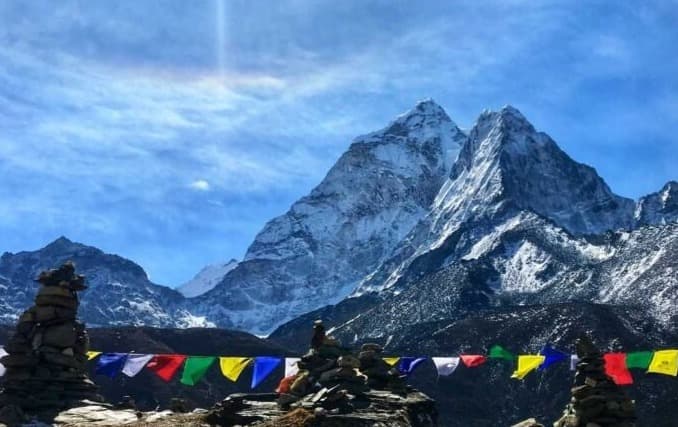
The Mardi Himal Trek packing list is a practical gear system for a short Himalayan teahouse trek that climbs from the lower Annapurna foothills to Mardi Himal High Camp at 3,580 meters. Packing for Mardi Himal requires more than a basic trekking checklist because the route combines warm trail sections near Pokhara and Siding, steep forest ascents, exposed ridgelines, cold nights, limited charging access, and changing mountain weather across spring, autumn, winter, and monsoon seasons. A complete Mardi Himal packing plan includes a 40–50L backpack, moisture-wicking base layers, warm insulation, a waterproof shell, broken-in trekking boots, a season-rated sleeping bag, trekking poles, sun protection, a first aid kit, offline GPS navigation, and mandatory Annapurna Conservation Area Project (ACAP) and TIMS (Trekkers' Information Management System) card permit documents.
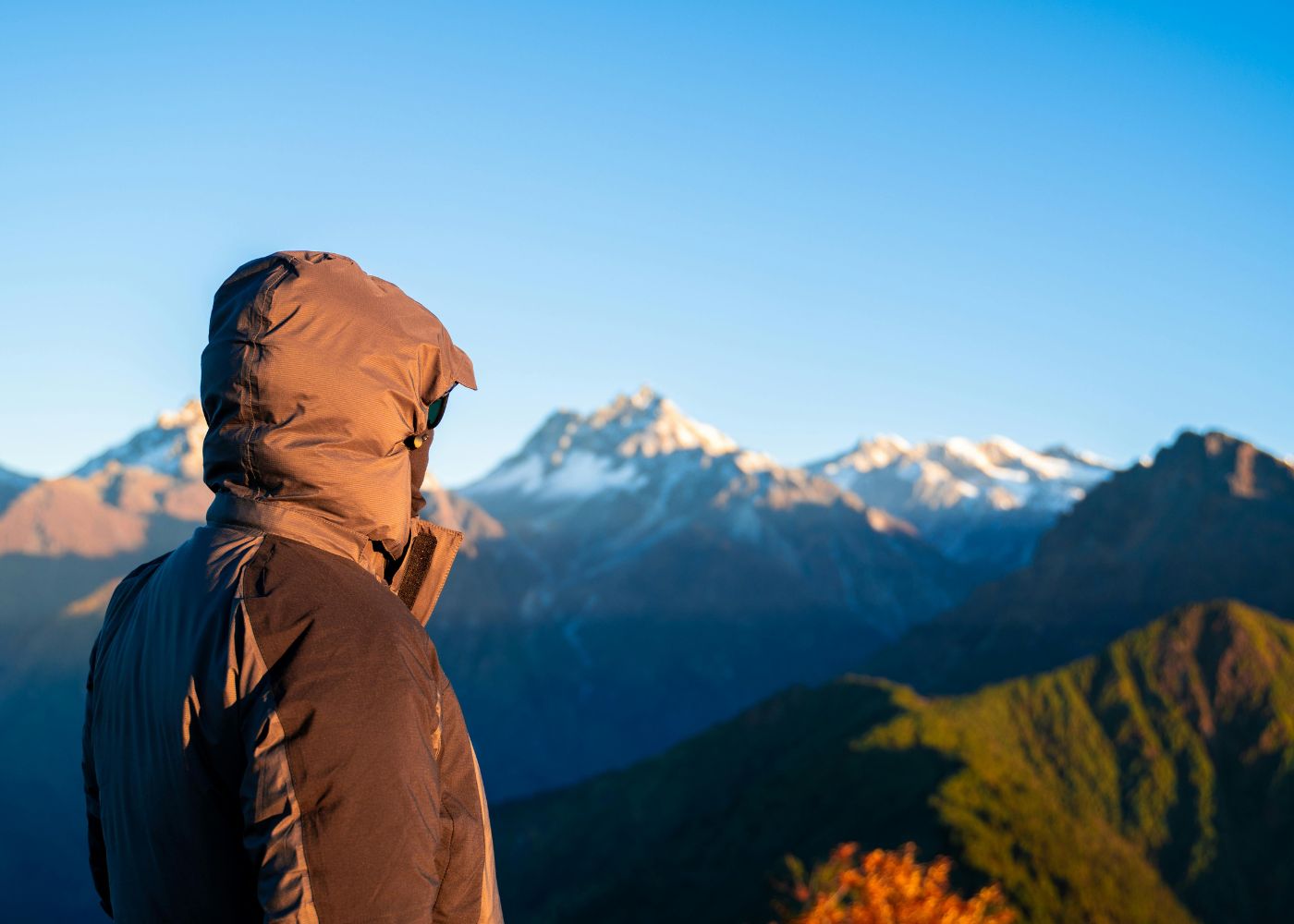
A well-built Mardi Himal Trek packing list also balances safety, comfort, and low pack weight for 5–7 days on the trail. Most trekkers perform best with a total carry weight under 10–12 kg while prioritizing layered clothing, reliable footwear, essential medicines, cash for teahouses, power backup for electronics, and weather-specific equipment for altitude above 3,500 meters. Gear choices also change by trekking style, since solo trekkers, porter-assisted trekkers, and winter trekkers need different load distribution, protection levels, and emergency preparation. The guide below explains exactly what to pack, what to skip, and how to adjust every item for season, route conditions, and personal trekking style.
How Should You Choose Your Main Backpack and Daypack?
The Mardi Himal Trek requires a 40–50L main backpack and a 20–25L daypack. The main pack carries multi-day gear between teahouses. The daypack carries summit-push essentials, water, snacks, and a camera on day hikes from base camps. Both packs require hip belt support and padded shoulder straps.
What Backpack Size Works Best for Mardi Himal?
A 40–50L backpack is the correct size for the Mardi Himal Trek. This volume accommodates 5–7 days of clothing, a sleeping bag, toiletries, electronics, and a first aid kit without exceeding the 12 kg comfort threshold. Packs in the 60–70L range add unnecessary bulk on narrow ridgeline trails above 3,500m.
Recommended backpack attributes include:
-
Hip belt load transfer above 30% of total weight
-
Rain cover compatibility or built-in waterproof coating
-
External compression straps for sleeping bag attachment
-
Hydration reservoir sleeve with hose routing port
Brands such as Osprey Atmos 50, Deuter Aircontact 45+10, and Gregory Baltoro 45 meet these 4 attributes for Mardi Himal conditions.
Should You Bring a Daypack, Rain Cover, and Dry Bags?
A daypack of 20–25L, a separate rain cover rated at 15,000mm hydrostatic head, and 3 dry bags (5L, 10L, 20L) protect gear at all altitude zones on Mardi Himal. Rain cover attachment reduces moisture penetration above Sidhing village, where afternoon precipitation occurs on 70% of monsoon-season trekking days.
Dry bags serve 3 distinct functions:
-
5L dry bag: protects electronics, passport, and permits
-
10L dry bag: keeps clothing dry in main pack
-
20L dry bag: liner for entire main pack contents
How Can You Keep Your Gear Light but Complete?
The target base weight for Mardi Himal is 8–10 kg, achieved by selecting gear with dual-purpose functions and eliminating single-use items. A packable down jacket replaces both a heavy fleece and a separate camp sweater. Merino wool base layers replace 3 cotton T-shirts. Trekking poles double as tent poles for ultralight shelters.
Weight reduction follows 4 principles:
-
Select: choose items performing 2 or more functions
-
Eliminate: remove any item duplicated by another
-
Downsize: carry travel-size toiletries under 100ml each
-
Share: divide group items like first aid kits between 2 trekkers
Which Clothing Layers Are Best for the Mardi Himal Trek?
The 3-layer clothing system, moisture-wicking base layer, insulating mid layer, and waterproof outer shell, manages temperature swings from 20°C at Pokhara (820m) to -10°C at Mardi Himal High Camp (3,580 m). Each layer performs a specific thermal function without adding redundant weight.
What Base Layers Should You Pack for Changing Temperatures?
Pack 2 base layer sets: one lightweight (150g/m²) merino wool long-sleeve top and one midweight (200g/m²) thermal set for cold mornings above 3,000m. Merino wool regulates temperature across a 15°C range, resists odor for 3 consecutive days of trekking, and dries 40% faster than polyester blends in humid Himalayan conditions.
Base layer selection follows 2 criteria:
-
Fabric weight: 150g/m² for spring/autumn, 200g/m² for winter
-
Fit: next-to-skin fit without restriction at full stride length
Synthetics such as Patagonia Capilene 3 and Icebreaker 200 Oasis Merino deliver equivalent performance at different price points.
Which Mid Layers and Insulation Pieces Do You Need?
Pack 1 fleece jacket (300g weight, 200-series fleece), 1 lightweight down or synthetic insulation jacket (400–600g fill weight, 700-fill power minimum), and 1 softshell mid-layer for active hiking days. These 3 insulation pieces cover all thermal scenarios from 5°C windy ridgelines to -10°C teahouse nights.
The insulation jacket requires 3 attributes:
-
700+ fill power down or 150g synthetic fill equivalent
-
Packable to its own chest pocket
-
DWR (Durable Water Repellent) coating rated at 10 washes minimum
What Waterproof and Windproof Outer Layers Should You Bring?
Pack 1 waterproof-breathable jacket rated at 20,000mm hydrostatic head and 20,000g/m²/24hr breathability, plus 1 pair of waterproof trekking pants. The jacket's breathability rating directly determines comfort during ascents above 4,000m, where sweat accumulation at lower breathability ratings causes rapid chilling on descent.
Gore-Tex Pro, eVent DVStorm, and Pertex Shield+ represent the 3 top waterproof breathable membrane technologies for Himalayan trekking.
How Many Trekking Shirts, Pants, and Undergarments Are Enough?
Pack 3 trekking shirts, 2 trekking pants (1 convertible zip-off style), and 4 sets of moisture-wicking undergarments. This quantity supports 5–7 days of trekking with a 2-day washing cycle at lower-altitude teahouses between Siding (1,700m) and Forest Camp (2,600m).
Clothing quantities by category:
-
Trekking shirts: 3 (2 short-sleeve, 1 long-sleeve sun-protection UPF 50+)
-
Trekking pants: 2 (1 zip-off convertible, 1 thermal softshell for cold days)
-
Undergarments: 4 pairs moisture-wicking boxer briefs or merino underwear
-
Thermal leggings: 1 pair for use under trekking pants above 3,500m
Cotton clothing is absent from this list. Cotton retains moisture at 27 times the rate of merino wool and increases hypothermia risk when wet above 3,000m.
Which Warm Accessories Help at Higher Altitudes?
Pack 4 essential warm accessories: 1 merino wool beanie, 1 insulated balaclava, 1 pair of lightweight liner gloves, and 1 pair of waterproof insulated gloves. Temperature at Mardi Himal High Camp (3,580 m) drops to -15°C on winter nights, making head and hand insulation as critical as jacket insulation.
Accessory layering at altitude follows this sequence:
-
Liner gloves: worn during active trekking above 3,500m
-
Insulated gloves: worn over liner gloves during rest stops
-
Balaclava: covers neck, chin, and lower face in wind above 4,000m
-
Beanie: worn under helmet or hood for summit-push mornings
What Footwear and Trail Accessories Do You Need?
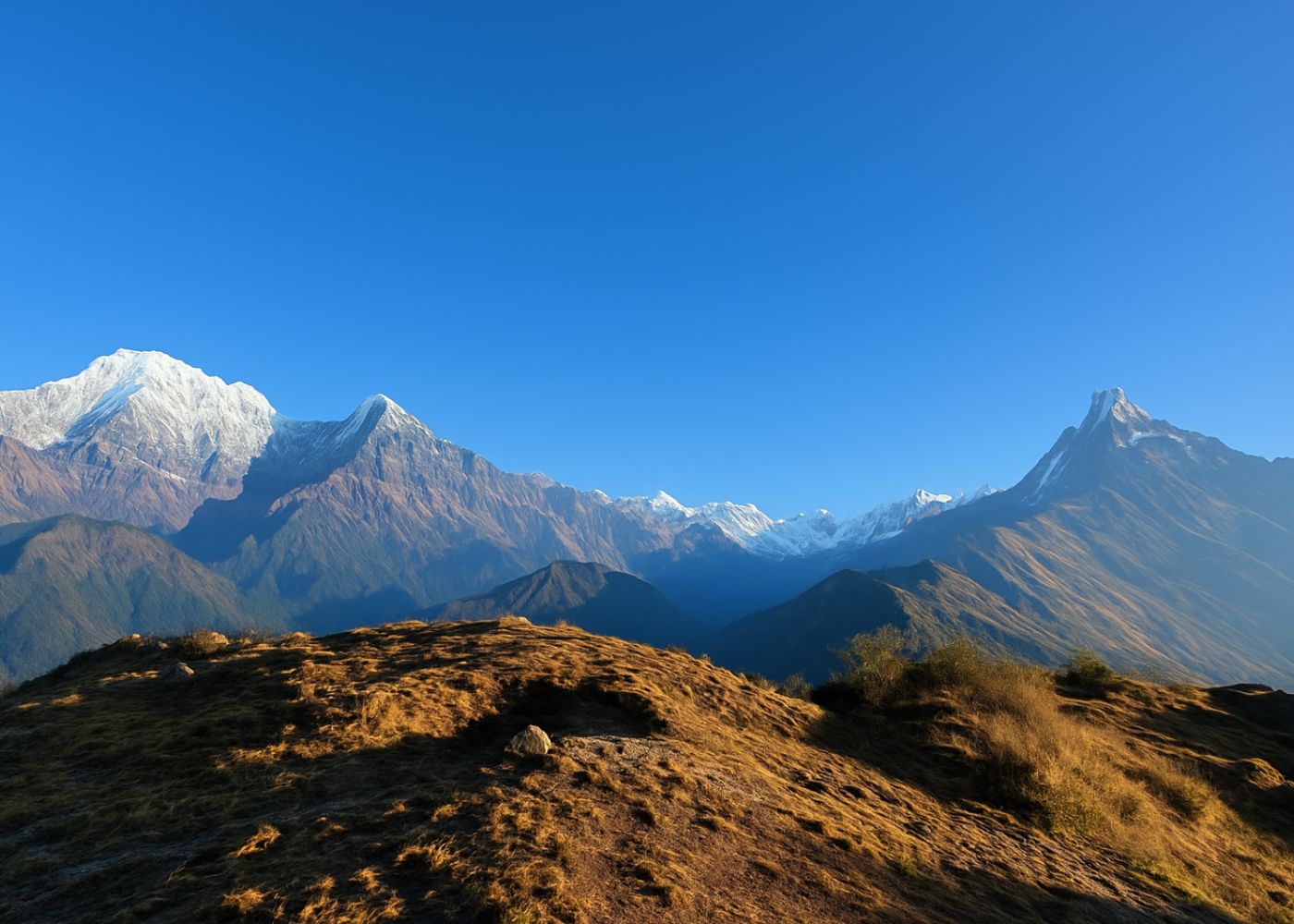
Mardi Himal Trek footwear requires waterproof trekking boots with B1 or B2 crampon compatibility, 4mm lugged outsoles, and ankle support rated for 5–7 hours of daily use on mixed terrain. Trail accessories include 4 pairs of trekking socks, 1 pair of gaiters, and 1 pair of camp sandals.
Which Trekking Boots or Shoes Are Best for Mardi Himal?
Waterproof leather or synthetic boots with a Gore-Tex liner, B1 crampon compatibility, and 4–5mm Vibram outsole lugs provide the traction, ankle support, and waterproofing required for Mardi Himal's terrain between 1,700m and 4,500m. Wet stone slabs between Siding and Low Camp are the primary terrain requiring 4mm lug depth.
Boot selection follows 3 criteria:
-
Break-in period: minimum 40km of hiking before the trek
-
Waterproof membrane: Gore-Tex or eVent liner rated at 10,000mm
-
Ankle cuff height: mid-high (above ankle bone) for rocky ascents
Salomon Quest 4 GTX, La Sportiva Trango Tech GTX, and Scarpa Zodiac Plus GTX represent 3 boots meeting all criteria for Mardi Himal terrain.
How Many Socks Should You Pack for Comfort and Warmth?
Pack 4 pairs of trekking socks: 2 midweight merino wool pairs (200g/m² weight) for daily trekking and 2 heavyweight pairs for teahouse nights and camp above 3,500m. Wool socks reduce blister incidence by 62% compared to cotton socks in multi-day trekking studies, according to a 2018 Journal of Sports Science analysis.
Sock-layering system for cold sections:
-
Liner sock (silk or thin merino): worn directly against skin to reduce friction
-
Midweight outer sock: worn over liner for main trekking days
-
Heavyweight sock: worn over liner sock at High Camp and Base Camp nights
Do You Need Gaiters, Sandals, or Camp Shoes?
Pack 1 pair of low gaiters for post-monsoon trail debris and winter snow above 3,500m, plus 1 pair of lightweight sandals (230–280g) for teahouse evenings. Gaiters prevent 95% of stone, twig, and snow entry at the boot-trouser interface on descent sections from Mardi Himal High Camp.
Gaiter selection criteria:
-
Height: low gaiters (15cm) cover boot collar for trail debris and light snow
-
Fastening: hook-and-ring underfoot attachment and Velcro front closure
-
Weight: under 200g per pair for the Mardi Himal approach trail
Crocs, Birkenstock Arizonas, and Teva Hurricane XLT represent 3 popular camp footwear options under 300g.
Which Trekking Poles and Micro Gear Improve Stability?
Telescoping carbon fiber trekking poles (weighing 240–280g per pole) with anti-shock baskets reduce knee joint impact by 25% on descent sections according to a 2019 biomechanics study published in Gait and Posture. Mardi Himal's 1,200m descent from High Camp to Low Camp in a single day makes poles essential, not optional.
Trekking pole selection attributes:
-
Material: carbon fiber (lighter) or aluminum (more durable at lower cost)
-
Locking system: Flicklock or twist-lock rated for 100kg lateral force
-
Basket type: trekking basket (standard) for summer, snow basket for winter
What Sleep and Teahouse Essentials Should You Bring?
Mardi Himal teahouses provide blankets at lower sections below 3,000m but inadequate insulation above Forest Camp (2,600m) and High Camp (3,580 m), where a personal sleeping bag rated to -10°C is required. Teahouse rooms average 6–8°C at night above 3,500m in autumn and winter seasons.
Do You Need a Sleeping Bag for Mardi Himal Teahouses?
A personal sleeping bag rated to -10°C is required for teahouse stages above Low Camp (3,100m) on the Mardi Himal Trek. Teahouse blankets above this altitude are shared, thin, and insufficient during October–February temperature drops. A sleeping bag liner adds 3–5°C warmth to any bag rating at 180g additional weight.
Sleeping bag attributes for Mardi Himal:
-
Fill: 800-fill power down or 200g synthetic fill equivalent
-
Shape: mummy cut (retains 15% more heat than rectangular cut)
-
Packed size: under 4L compressed volume for 40–50L pack integration
What Sleeping Bag Rating Works Best by Season?
The correct sleeping bag comfort rating by Mardi Himal season is: -5°C for spring (March–May) and autumn (September–November), -15°C for winter (December–February), and +5°C for summer monsoon (June–August). EN 13537 comfort ratings are the internationally standardized measure for sleeping bag temperature performance.
The following table shows sleeping bag ratings matched to Mardi Himal seasons, altitude zones, and expected teahouse temperatures.
|
Season |
Altitude Zone |
Teahouse Temp (Night) |
Required Comfort Rating |
|
Spring (Mar–May) |
Up to 4,500m |
4–8°C |
-5°C comfort |
|
Autumn (Sep–Nov) |
Up to 4,500m |
2–6°C |
-5°C comfort |
|
Winter (Dec–Feb) |
Up to 4,500m |
-5 to -10°C |
-15°C comfort |
|
Monsoon (Jun–Aug) |
Up to 4,500m |
8–14°C |
+5°C comfort |
Women-specific sleeping bags from Sea to Summit, Rab, and Western Mountaineering include 10% additional fill weight compared to unisex models to account for physiological temperature differences.
Which Small Comfort Items Make Evenings Easier?
Pack 5 teahouse comfort items: a silk sleeping bag liner, an inflatable travel pillow, foam earplugs, a microfiber towel (40x80cm), and a headlamp (300-lumen minimum) for navigating shared teahouse bathrooms at night. These 5 items add under 600g total and directly improve sleep quality, which accelerates acclimatization above 3,500m.
Should You Pack Earplugs, a Liner, or a Travel Pillow?
Pack all 3, foam earplugs (NRR 33 rating), a silk sleeping bag liner, and a 60g inflatable travel pillow. Mardi Himal teahouses are shared dormitory environments at busy periods during peak autumn trekking season (October–November), when 80% of annual Mardi Himal traffic occurs. Earplugs reduce sound by 33 decibels, a sufficient reduction for shared-room sleeping.
Which Health, Hygiene, and Safety Items Should You Pack?
The Mardi Himal Trek health and safety kit includes a personal first aid kit (600g maximum), altitude sickness medications, sun protection rated SPF 50+, water purification tablets, a personal locator beacon (PLB) or satellite communicator, and 5 essential hygiene items. Medical facilities are absent above Pokhara city on the Mardi Himal route.
What First Aid Supplies Are Most Useful on Mardi Himal?
The 12 most useful first aid supplies for Mardi Himal are: adhesive bandages (10 assorted), blister treatment (Compeed patches ×6), elastic bandage (1×5m), antiseptic wipes (10), triangular bandage (1), trauma dressing (2), medical tape (1 roll), tweezers, safety pins (4), SAM splint (1), nitrile gloves (4 pairs), and a first aid manual. These 12 items address the 4 most common trek injuries: blisters, sprains, cuts, and wound infection.
Which Medicines Help With Altitude, Stomach, and Pain Issues?
Pack 5 medicine categories: Acetazolamide (Diamox) 250mg for AMS prevention, Ibuprofen 400mg for pain and inflammation, Oral Rehydration Salts (ORS) ×10 sachets for dehydration, Loperamide 2mg for acute diarrhea, and a broad-spectrum antibiotic (Ciprofloxacin 500mg) prescribed by a physician before departure.
Acute Mountain Sickness (AMS) is defined as headache plus one of the following: nausea, fatigue, dizziness, or sleep disturbance at altitudes above 2,500m. The Lake Louise AMS Score measures severity on a 0–12 scale; a score of 3 or above indicates clinical AMS requiring descent.
Medication purposes and standard dosing:
-
Acetazolamide 125–250mg: taken 1–2 days before ascent above 3,000m, reduces AMS incidence by 52% in clinical trials
-
Ibuprofen 400mg: taken every 8 hours for AMS headache, comparable efficacy to Acetazolamide for headache relief
-
ORS sachets: dissolved in 1L water, replaces electrolytes lost during 6–8 hours of high-altitude trekking
-
Loperamide 2mg: controls diarrhea caused by food contamination at teahouses without refrigeration above 3,000m
Consult a physician before obtaining Acetazolamide and Ciprofloxacin, as both require prescription in Nepal and most countries.
What Sun, Lip, and Skin Protection Should You Carry?
Pack SPF 50+ sunscreen (100ml), SPF 30 lip balm, UV-protective glacier glasses (CE EN 172 Category 4 lens), and zinc oxide cream for high-altitude sun exposure above 3,500m. UV radiation intensity increases 10–12% per 1,000m elevation gain. At 4,500m on Mardi Himal, UV exposure is 50% higher than at Pokhara's 820m elevation.
Sun protection items and quantities:
-
Sunscreen SPF 50+: 100ml tube, reapplied every 2 hours above 3,000m
-
Lip balm SPF 30: 1 stick, applied every 90 minutes at High Camp
-
Glacier glasses: Category 3 or 4 lens (transmitting 3–8% visible light)
-
Buff/sun hat: broad-brim hat (7.5cm minimum brim width) for trail sections
Which Hygiene Items Matter Most on a Multi-Day Trek?
The 7 essential hygiene items for Mardi Himal are: biodegradable camp soap (50ml), toothbrush and toothpaste (travel size 30ml), unscented wet wipes (30 total), hand sanitizer (60ml), a microfiber towel (40x80cm), toilet paper (4 rolls in zip-lock bags), and a trowel for wilderness toilet use below treeline.
Teahouses between Siding (1,700m) and Low Camp (3,100m) provide basic squat toilets. Above Low Camp, outdoor facilities require trowel use with Leave No Trace protocol: dig 15cm cat holes at least 60m from water sources.
What Emergency and Backup Safety Items Should You Include?
Pack 4 emergency items: a Garmin inReach Mini 2 satellite communicator (or equivalent PLB rated for -20°C operation), a signal mirror, an emergency bivy sack (SOL Escape Bivy weighing 241g), and a whistle (Fox 40 Classic, 115 decibels). These 4 items address evacuation, location signaling, overnight emergency shelter, and distress signaling, the 4 survival priorities on remote Himalayan trekking routes.
The Garmin inReach Mini 2 enables 2-way satellite messaging via the Iridium satellite network, operates at temperatures down to -20°C, and provides GPS tracking with a 100-hour battery life on expedition tracking mode.
What Documents, Money, and Electronics Should You Carry?
The Mardi Himal Trek requires 3 mandatory documents: a valid national passport, an Annapurna Conservation Area Project (ACAP) permit, and a TIMS (Trekkers' Information Management System) card. Electronics include a 20,000mAh power bank, universal adapter, headlamp, and offline GPS maps downloaded via Maps.me or Gaia GPS.
Which Permits and ID Documents Do You Need for Mardi Himal?
The 2 mandatory permits for Mardi Himal Trek are: the ACAP permit (NPR 3,000 / USD 22 for SAARC nationals, NPR 3,000 / USD 22 standard fee) and the TIMS card (NPR 2,000 / USD 15 for individual trekkers, NPR 1,000 / USD 8 for group trekkers). Both permits are obtainable at the Nepal Tourism Board office in Pokhara's Lakeside district (Damside, Pokhara 33700) and at Kathmandu's Tourism Board office at Bhrikuti Mandap.
Document checklist for permit registration:
-
Original passport (valid for 6+ months beyond trek start date)
-
2 passport-size photographs per permit
-
Completed trekking permit application form
-
Emergency contact information (full name, phone, relationship)
Carry 2 photocopies of all permits and passport identity pages in a separate waterproof document pouch from originals.
How Much Cash Should You Bring for the Trek?
Carry NPR 15,000–25,000 (approximately USD 115–190) cash for a 5–7 day Mardi Himal Trek, covering teahouse accommodation (NPR 200–500/night), meals (NPR 400–900/meal), hot showers (NPR 200–500), and porter tips. ATMs are available in Pokhara city (Lakeside district) but absent on the entire Mardi Himal trail from Kande trailhead onward.
Daily trek expense breakdown:
-
Accommodation: NPR 200–500 per night (teahouse double room)
-
Breakfast: NPR 400–600 (dal bhat, eggs, porridge)
-
Lunch: NPR 500–800 (noodles, soup, mo:mo dumplings)
-
Dinner: NPR 600–900 (dal bhat tarkari recommended at altitude)
-
Hot shower: NPR 200–500 per shower above Low Camp
-
Charging fee: NPR 100–300 per device charge above 3,000m
Which Power Banks, Chargers, and Adapters Are Worth Packing?
Pack 1 power bank with 20,000mAh capacity (Anker PowerCore 20100 or equivalent), 1 universal adapter compatible with Nepal's Type C, D, and M plugs (230V/50Hz standard), and 1 solar charger panel (10W output) for High Camp stages without electrical charging. Above Low Camp (3,100m), teahouse electricity is solar-generated and often limited to 2–3 hours per evening.
Device charging priority at high-altitude teahouses:
-
Priority 1: Satellite communicator (safety-critical, charge first)
-
Priority 2: Headlamp batteries (navigation-critical)
-
Priority 3: Phone (navigation and photography)
-
Priority 4: Camera (secondary, lower priority)
Do You Need a Headlamp, Phone, Camera, or Offline Maps?
Pack 1 headlamp with 300-lumen minimum output (Black Diamond Spot 400 or Petzl Actik Core), 1 smartphone with offline Mardi Himal maps downloaded via Gaia GPS, and 1 camera with extra battery (cold temperatures at -10°C reduce lithium battery capacity by 50%). Offline maps are non-negotiable. Cellular coverage on Mardi Himal is limited to Ncell 4G signal below Low Camp and absent above 3,500m.
Electronics list with weights:
-
Headlamp (300 lumens): 91g (Black Diamond Spot 400)
-
Smartphone (offline maps): 200g average
-
Camera body + 1 lens: 400–600g (mirrorless systems recommended)
-
Power bank (20,000mAh): 356g (Anker PowerCore 20100)
-
Total electronics weight: 1,047–1,247g
How Should Your Packing List Change by Season and Style?
The Mardi Himal Trek packing list adjusts across 3 core parameters by season: sleeping bag temperature rating (from +5°C in monsoon to -15°C in winter), insulation jacket fill weight (from 150g in spring to 400g in winter), and waterproofing priority (highest in monsoon, moderate in autumn). Style variables, solo vs. group, porter vs. porter-free, further modify gear quantities.
What Should You Pack Differently in Spring and Autumn?
Spring (March–May) and autumn (September–November) trekkers pack the same core gear list with 2 seasonal differences: spring requires rain protection from 50mm average monthly precipitation and warmer layers for sub-zero High Camp nights, while autumn offers stable skies and requires lighter insulation below 3,500m. Both seasons are the primary Mardi Himal trekking seasons, together accounting for 75% of annual trail traffic.
Spring-specific additions:
-
Trekking umbrella (300g): effective against light rain on lower trail sections
-
Gaiters: more critical for wet trail debris from spring snowmelt runoff
Autumn-specific considerations:
-
Dust protection: bandana or buff for dry trail sections below 2,500m
-
Early start times: summit push before 10:00am avoids afternoon cloud buildup
How Does Winter Trekking Change Your Gear Checklist?
Winter trekking (December–February) on Mardi Himal requires 6 additional or upgraded gear items: a -15°C sleeping bag, 4-season trekking boots with B2 crampon compatibility, 12-point microspikes or crampons, a high-fill insulation jacket (800+ fill power), full-face balaclava, and heated glove liners or expedition mittens.
Snow accumulation above 3,500m averages 30–60cm in January. This depth covers trail markers and requires micro-spike traction devices on all sections from Low Camp to High Camp. Mardi Himal winter trekking permits the same ACAP and TIMS documentation as other seasons.
What Can You Skip During the Monsoon Season?
Monsoon trekking (June–August) on Mardi Himal allows removal of 4 items from the standard packing list: the -10°C sleeping bag (replace with +5°C bag or liner only), the down jacket (replace with a 200g synthetic insulation piece), microspikes, and the balaclava. A quality umbrella (300g) replaces some waterproof jacket functionality for trail sections without technical terrain.
Monsoon-specific additions not on the standard list:
-
Trekking umbrella: 300g, used for 70% of trail hours
-
Leech socks: 60g, essential below 2,500m from June–August
-
Gaiters: mandatory for muddy trail sections below Forest Camp
-
Extra zip-lock bags: 10 additional bags for separating wet gear
What Extra Gear Helps if You Hire a Porter or Trek Independently?
Porter-assisted trekkers carry a 20–25L daypack only, delegating the 40–50L main pack to a porter. Independent (porter-free) trekkers carry the full 40–50L system and require stricter weight discipline, targeting a maximum 10 kg pack weight. Porter rates on Mardi Himal average NPR 800–1,200 (USD 6–9) per day, covering one trekker's main backpack load up to 25 kg.
Independent trekkers add 2 items not required with porter support:
-
Trekking pack rain cover: essential because the trekker handles pack exposure personally
-
Hip belt water bottle pockets: allow hydration access without removing pack
Porter-assisted trekkers add 1 item:
-
Porter payment cash: budget NPR 5,000–8,400 for 5–7 porter days plus 15–20% tip
What Should You Leave Out of Your Mardi Himal Packing List?
Remove 4 categories from any Mardi Himal packing list: cotton clothing, heavy camp luxuries, duplicate gear performing identical functions, and fragile or high-value irreplaceable items. These 4 categories add 3–6 kg without improving trek safety or comfort above 3,000m.
Which Heavy Items Are Usually Unnecessary on This Trek?
The 6 heaviest items typically packed unnecessarily for Mardi Himal are: a full-size DSLR kit (1.5–2kg versus 400–600g for mirrorless), a laptop or tablet (1.2–1.8kg), a hardback book (400–600g), a camp stove and cookset (800g–1.2kg), a water filter pump (300g versus 15g iodine tablets), and a dedicated GPS device (200g versus smartphone offline maps).
Teahouses on Mardi Himal provide all meals, making a camp stove and cookset completely redundant. Libraries exist at teahouses from Siding to High Camp. Water purification at teahouse water sources uses boiling, making a pump filter unnecessary when purification tablets serve as backup.
What Duplicate Gear Can You Remove to Save Weight?
Duplicate gear categories to eliminate from Mardi Himal packing lists include: a second pair of trekking boots (1.2–1.5kg savings), a separate fleece and down jacket when one packable insulation piece serves both roles (300–400g savings), 2 identical headlamps (91g savings), and both a paper map and printed trek notes when Gaia GPS offline maps serve both navigation functions (200g savings).
Deduplication saves 1.8–2.2 kg, a reduction sufficient to move a 12 kg pack into the 10 kg comfort range for the Mardi Himal climb profile.
Which Cotton, Luxury, or Fragile Items Are Best Left Behind?
Leave behind all cotton clothing, including cotton T-shirts, jeans, and cotton underwear. Cotton absorbs moisture 8x faster than merino wool per gram of fabric weight and retains 70% of that moisture after 2 hours of air drying at 15°C. Wet cotton at altitude creates a rapid chilling effect on descent from High Camp to Low Camp.
Luxury items to exclude:
-
Full-sized shampoo and conditioner bottles (replace with 30ml solid shampoo bar)
-
Electric toothbrush (replace with manual travel toothbrush, 14g)
-
Hardback books (replace with Kindle Paperwhite, 182g, storing 1,000 titles)
-
Jewelry or watches with sentimental or monetary value over NPR 30,000
How Can Trek Preparation Support Improve Your Packing Plan?
Trek preparation support from a licensed Nepal trekking company provides 4 concrete packing advantages: a pre-trek gear review session, seasonal packing list updates, gear rental for high-cost items (sleeping bags, poles, boots), and pre-departure altitude acclimatization scheduling. Companies registered with the Nepal Tourism Board (NTB) and the Trekking Agencies Association of Nepal (TAAN) provide standardized pre-trek briefings.
Can a Local Trek Company Help You Pack for Mardi Himal?
A Nepal-based trekking company provides a tailored Mardi Himal packing list based on the specific departure date, group size, and fitness level of each trekker, adjusting for seasonal conditions not reflected in generic packing guides. Local companies also offer gear rental services in Pokhara's Lakeside district, where sleeping bags (-10°C rated), trekking poles, and waterproof jackets are available at NPR 200–500 per day.
Gear rental items available in Pokhara for Mardi Himal:
-
Down sleeping bag (-10°C): NPR 200–300/day
-
Trekking poles (pair): NPR 100–200/day
-
Waterproof jacket (Gore-Tex equivalent): NPR 300–500/day
-
Trekking boots (mid-high, waterproof): NPR 300–500/day
Rental gear reduces upfront packing costs by NPR 1,500–4,000 for a 5–7 day Mardi Himal Trek compared to purchasing equivalent gear before departure.
What Are the Key Packing Takeaways for Mardi Himal?
The Mardi Himal Trek packing list centers on 5 priorities: a 40–50L pack under 12 kg, a 3-layer clothing system, a sleeping bag rated for the season's High Camp temperatures, mandatory ACAP and TIMS documentation, and NPR 15,000–25,000 cash. These 5 priorities remain constant across solo, group, porter-assisted, and porter-free trekking styles.
Complete Mardi Himal Trek packing checklist summary:
-
Backpack and carry system: 40–50L main pack, 20–25L daypack, rain cover, 3 dry bags
-
Clothing layers: 2 base layer sets (merino wool), fleece mid-layer, down insulation jacket, waterproof-breathable shell, 3 trekking shirts, 2 trekking pants, 4 undergarments, warm accessories
-
Footwear: Waterproof trekking boots (broken in), 4 sock pairs, low gaiters, camp sandals, trekking poles
-
Sleep system: Season-rated sleeping bag, silk liner, travel pillow, earplugs, headlamp
-
Health and safety: First aid kit (12 items), 5 medicine categories, SPF 50+ sun protection, 7 hygiene items, satellite communicator
-
Documents and money: Passport, ACAP permit, TIMS card, NPR 15,000–25,000 cash, 2 permit photocopies
-
Electronics: 300-lumen headlamp, smartphone with offline maps, 20,000mAh power bank, universal Nepal adapter
Mardi Himal Trek packing preparation begins with this list and adjusts for departure season, trekking style, and personal fitness level to create a complete, weight-optimized carry system for one of Nepal's most rewarding short Himalayan treks.