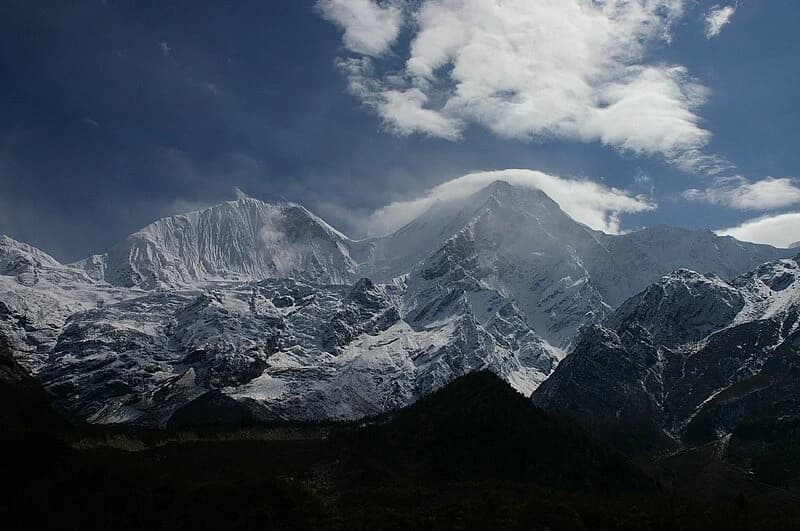
The Mardi Himal Trek in winter is a Himalayan trekking adventure in Nepal's Annapurna region, offering snow-covered forests, quiet mountain trails, and spectacular views of Machhapuchhre (6,993 m), Annapurna South, and the surrounding Himalayan peaks. Reaching elevations of up to 4,500 m, this 5-day trek combines winter landscapes, panoramic mountain viewpoints, and challenging high-altitude walking through the Mardi Himal ridge.
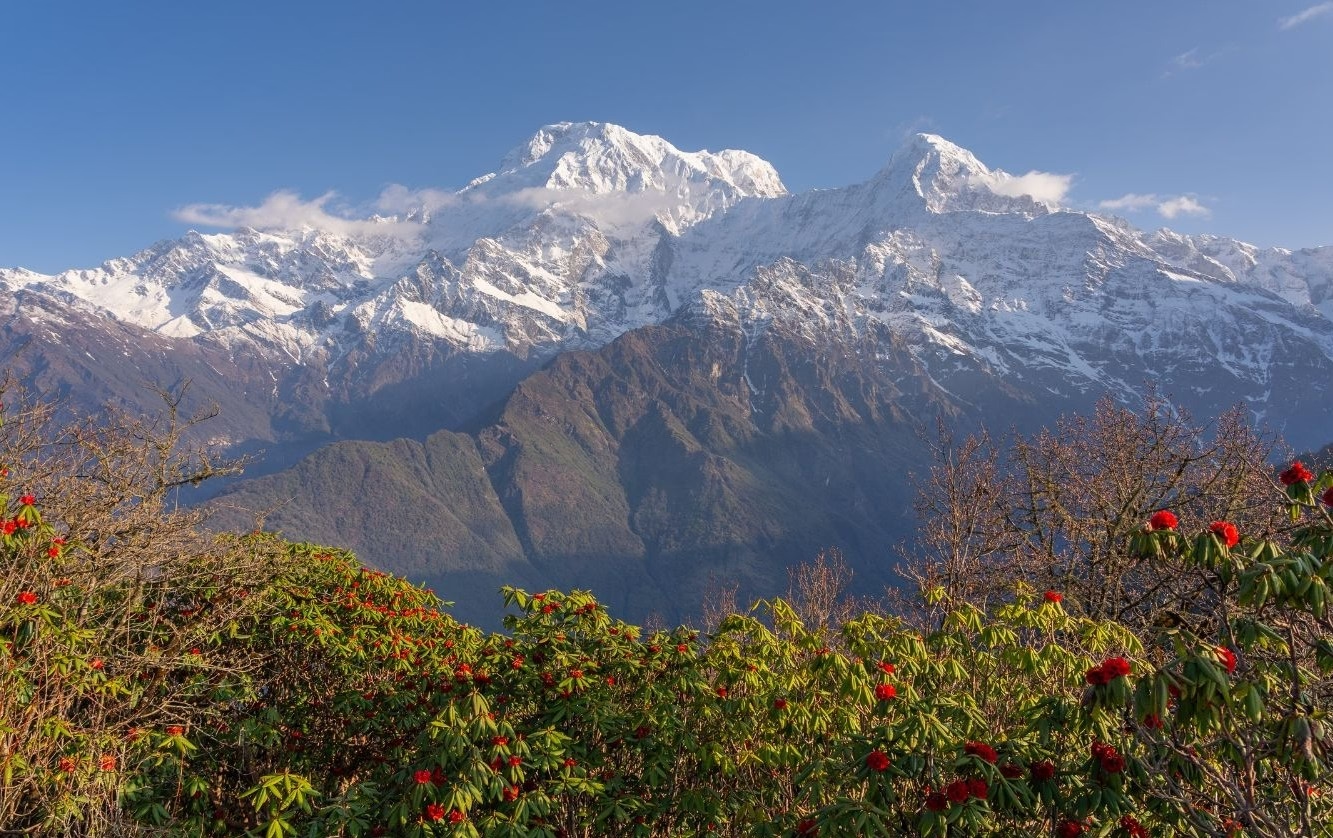
Winter trekking on Mardi Himal requires preparation for freezing temperatures, snowfall, icy trails, and changing mountain weather, particularly between December and February. Understanding the best trekking season, route conditions, daily itinerary, essential winter gear, permits, costs, and altitude safety helps trekkers plan a rewarding journey. This guide covers everything you need to prepare for the Mardi Himal winter trek with Nepal Intrepid Treks.
What Makes Mardi Himal Trek in Winter Unique?
Mardi Himal in winter is unique because it pairs snow-covered Himalayan scenery, near-empty trails, and sunrise views of Machhapuchhre (6,993 m) from 4,500 m with a trailhead only 1 hour's drive from Pokhara.
Mardi Himal is a 5,587 m peak inside the Annapurna Conservation Area, Nepal's largest protected area at 7,629 km². The trekking route opened in 2012 and climbs from oak-rhododendron forest at 1,770 m to an open alpine ridge above 3,500 m. Winter changes 3 things on that ridge: air clarity, trail traffic, and risk level.
Why Do Trekkers Choose Mardi Himal During Winter?
Trekkers choose Mardi Himal in winter for 4 reasons: dry air with sharp visibility, quiet trails, a short 5-day walking window, and a snow experience at moderate altitude.
Dry air comes first. Pokhara receives under 30 mm of rain per month from December to February, against several hundred millimetres per month in the June–September monsoon. Dry air carries less dust and moisture, so peaks look closer and ridgelines look sharper.
Quiet trails come second. Lodges that fill by mid-afternoon in October often sit half empty in January, and the ridge carries a fraction of autumn foot traffic.
Time is the third reason. The walking section takes 5 days, so Christmas, New Year, and Lunar New Year (6 February 2027) breaks cover the full trip.
The fourth reason is the snow itself. Mardi Himal gives first-time snow trekkers real winter conditions at 3,500–4,500 m without the -20°C nights of Everest Base Camp.
Common mistake we see: travellers book winter because the trek is short, then pack for autumn. Short does not mean mild. Nights at High Camp (3,550 m) sit more than 30°C below daytime Pokhara.
What Makes Winter Landscapes and Snow Views Special on Mardi Himal?
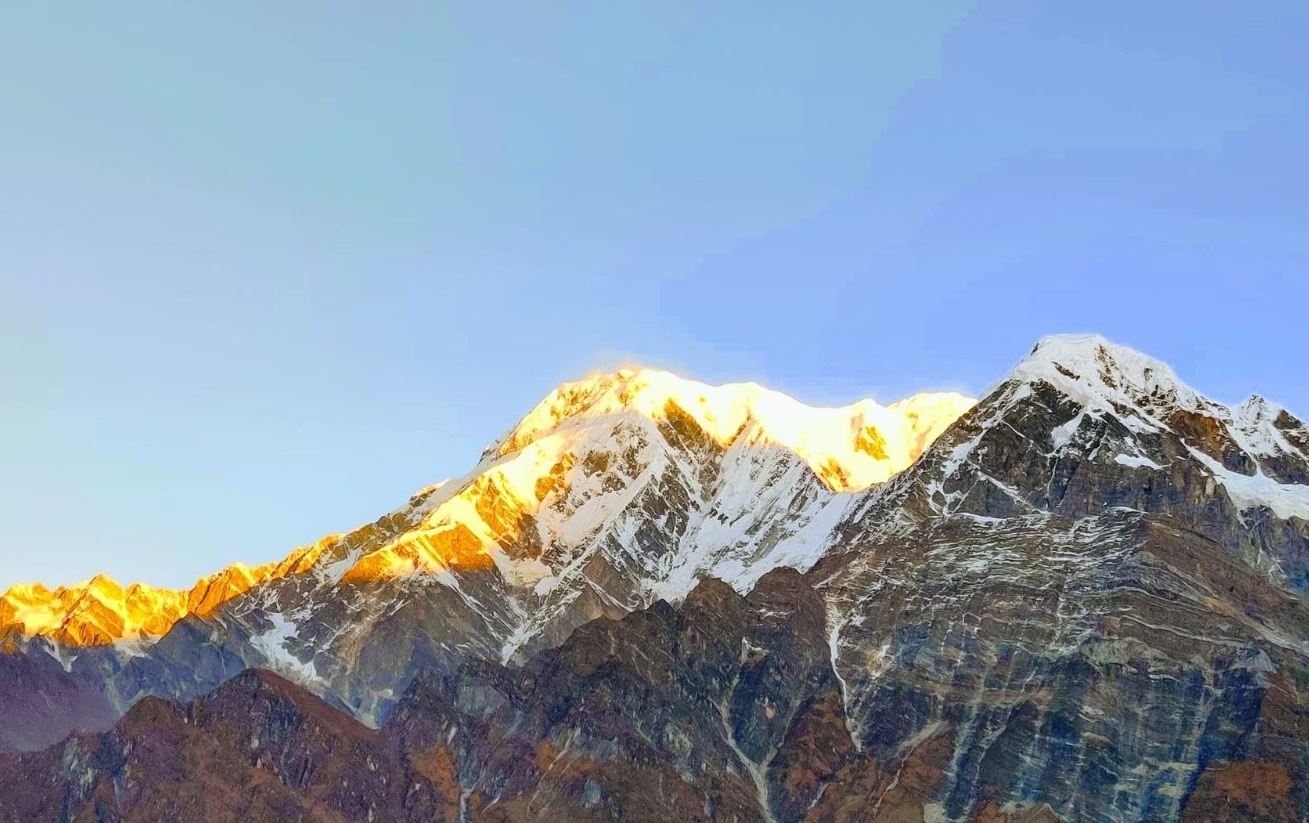
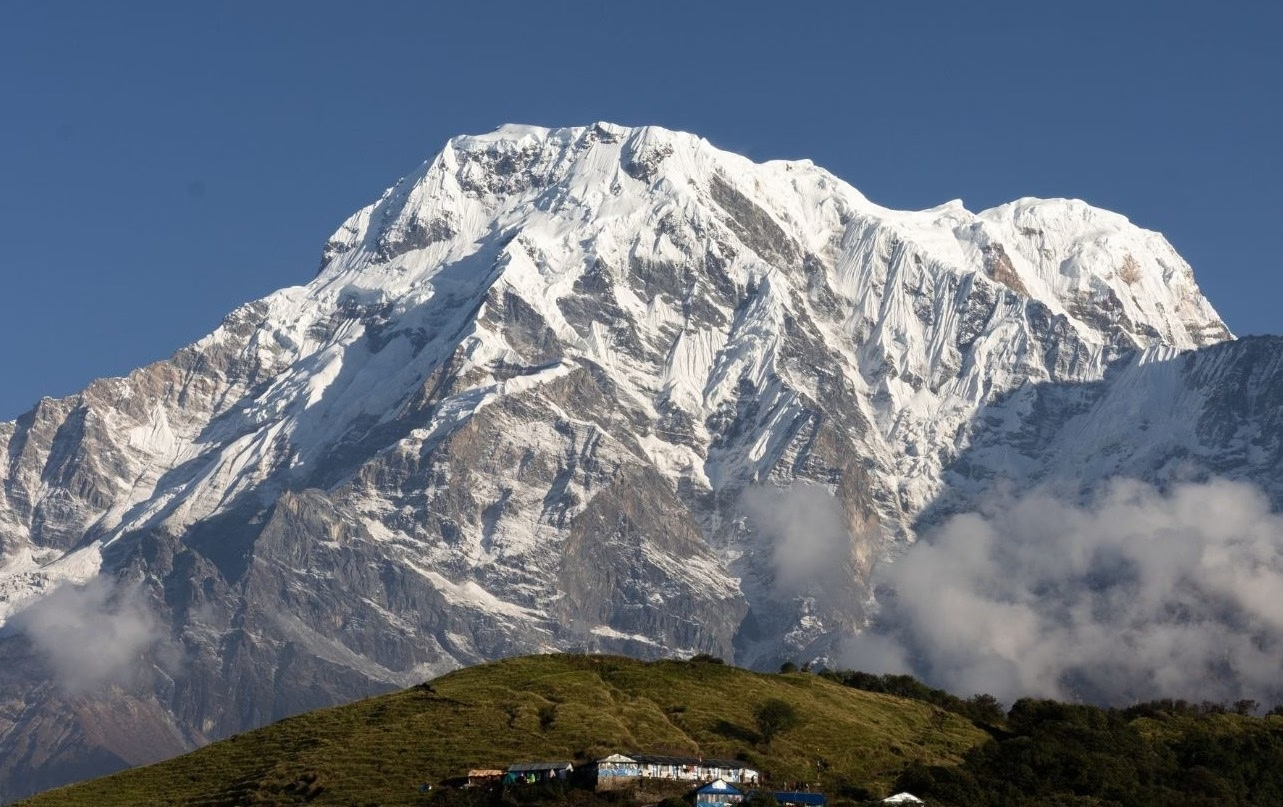
Winter turns the Mardi Himal ridge into a white corridor: snow loads the rhododendron forest above 3,000 m, frost glazes the trail at dawn, and snow plumes stream off Machhapuchhre in the morning wind.
Low winter sun angles stretch shadows across the slopes and light the summit pyramid orange roughly 30 minutes before the sun clears the horizon around 7:00 am in January. Photographers get 2 colour windows per day instead of the single harsh midday glare of spring.
The forest changes character too. Between 2,600 m and 3,200 m, snow bends rhododendron branches into tunnels, and the trail goes silent. Above 3,500 m, wind scours the ridge crest bare in places and drifts snow 1 m deep in the hollows.
What most people overlook: the best light arrives after a storm. Western disturbances, the winter weather systems that cross Nepal from the west, usually leave 2–3 clear days behind them. A freshly whitened ridge under a cloudless sky is the picture most winter trekkers remember.
Which Himalayan Peaks Can You See During the Winter Mardi Himal Trek?
The winter Mardi Himal Trek shows 6 major peaks: Machhapuchhre (6,993 m), Annapurna South (7,219 m), Hiunchuli (6,441 m), Annapurna III (7,555 m), Gangapurna (7,455 m), and Mardi Himal itself (5,587 m).
The following list shows each peak with its height and where it dominates the view.
Machhapuchhre, 6,993 m: the Fishtail peak, which fills the northern sky from High Camp and Upper Viewpoint.
Annapurna South, 7,219 m: the broad white massif to the west of Machhapuchhre.
Hiunchuli, 6,441 m: the sharp summit beside Annapurna South.
Annapurna III, 7,555 m: the high peak to the east that appears as the trail gains altitude.
Gangapurna, 7,455 m: a glaciated summit visible from the upper ridge.
Mardi Himal, 5,587 m: the namesake peak, rising directly above Base Camp.
Machhapuchhre carries a climbing ban. A British team led by Jimmy Roberts stopped about 50 m below the summit in 1957, and Nepal has kept the mountain closed to climbers since. Trekkers on Mardi Himal therefore see one of the few major Himalayan peaks that no one stands on.
On a clear January dawn, the Pokhara valley also appears 2,700 m below the ridge. That view, with the snowline above it, is exclusive to this route.
How Does Mardi Himal Compare With Other Winter Treks in Nepal?
Mardi Himal offers the best ratio of mountain proximity to winter risk among 6 popular Nepal treks: it reaches 4,500 m in 5 walking days, avoids the avalanche corridors of Annapurna Base Camp, and skips the 5,000 m+ nights of Everest and Thorong La.
The table below compares winter conditions across the most requested Nepal treks.
Trek | Max elevation | Walking days | Winter difficulty | Main winter risk |
Poon Hill | 3,210 m | 4–5 | Easy | Icy stone steps |
Mardi Himal | 4,500 m | 5 | Moderate | Snow on the upper ridge |
Annapurna Base Camp | 4,130 m | 7–10 | Moderate–hard | Avalanche zones near Deurali |
Langtang Valley | 3,870 m | 7 | Moderate | Heavy snow above 3,500 m |
Everest Base Camp | 5,364 m | 12 | Hard | -20°C nights, flight disruption |
Annapurna Circuit | 5,416 m | 12–15 | Hard | Thorong La closure |
Mardi Himal wins on proximity and logistics: no flight into a mountain airstrip, no pass to cross, and a retreat route that drops 1,000 m in a single day. Poon Hill is easier but stops 1,300 m lower. Annapurna Base Camp offers a bigger amphitheatre but adds avalanche exposure on its approach in January and February. Compare the full ABC itinerary on the Annapurna Base Camp Trek page.
What Is the Weather Like on Mardi Himal Trek in Winter?
Winter weather on Mardi Himal is dry, cold, and clear: daytime highs run from 18–22°C in Pokhara to below 0°C at Base Camp, nights fall to -10°C to -15°C at High Camp, and snow arrives in short storms followed by 2–3 clear days.
Temperature falls about 6.5°C for every 1,000 m of altitude gain, a figure called the lapse rate. The route climbs 2,728 m from Pokhara (822 m) to High Camp (3,550 m), so the same January afternoon drops by roughly 18°C between the airport and the lodge. That arithmetic explains why a trekker in a T-shirt in Pokhara needs a down jacket by 4 pm at High Camp.
What Are the Average Daytime and Nighttime Temperatures of Mardi Himal Trek in Winter?
Average winter daytime temperatures on Mardi Himal run from 18–22°C in Pokhara to -8°C to 0°C at Base Camp, and average nighttime temperatures run from 6–9°C in Pokhara to -10°C to -15°C at High Camp.
The following table lists typical December–February ranges at each overnight stop. Ranges vary by 3–5°C between early December and late January.
Location | Elevation | Daytime | Nighttime |
Pokhara | 822 m | 18–22°C | 6–9°C |
Pitam Deurali | 2,100 m | 10–14°C | 0–4°C |
Rest Camp (Forest Camp) | 2,650 m | 8–12°C | -3°C to 1°C |
Low Camp | 3,000 m | 5–10°C | -5°C to -8°C |
High Camp | 3,550 m | 2–8°C | -10°C to -15°C |
Base Camp (day visit) | 4,500 m | -8°C to 0°C | Not used for sleeping |
Daytime numbers apply to sunny hours. Cloud or wind removes 5–10°C from them in minutes.
How Cold Does It Get at High Altitudes During Winter?
At High Camp (3,550 m), January nights reach -10°C to -15°C, and wind chill on the Base Camp ridge pushes the felt temperature to between -18°C and -25°C before sunrise.
Wind drives most of the cold. A 25 km/h breeze at -8°C feels close to -18°C on exposed skin, which is why the first 90 minutes of the summit climb feel colder than the thermometer reads.
Cold changes small things first. Water bottles freeze solid in 1–2 hours outside the sleeping bag. Phone and camera batteries lose roughly 30% of their charge near -10°C. Boots left on the floor overnight stiffen into ice-lined shells.
Lodge dining rooms heat with a single stove, usually lit from 5 pm to 9 pm. Bedrooms have no heating. Plan for 10 hours of sleep in unheated rooms at -5°C to -12°C air temperature.
How Much Snowfall Can You Expect on the Mardi Himal Trail?
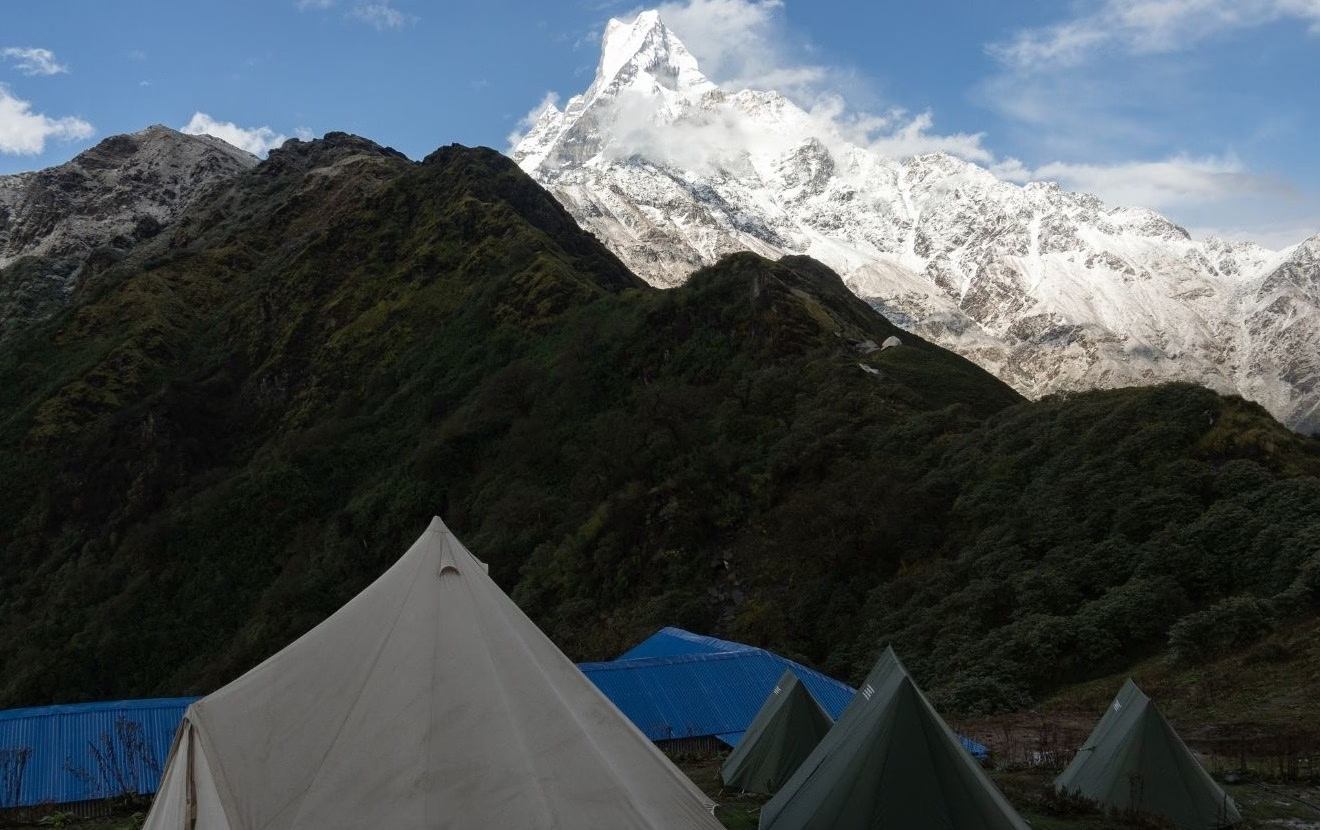
Snowfall on the Mardi Himal Trail begins above 3,000 m from late December, typically leaves 30–80 cm at High Camp after a storm, and closes the upper trail for 1–2 days after heavy falls.
Snow does not fall evenly. Pokhara and Kande stay snow-free all winter. Rest Camp (2,650 m) sees an occasional dusting. Low Camp, High Camp, and the ridge above collect the real depth.
Guides on this route report 3 patterns. Cover thickens from mid-January. Wind redistributes snow so the ridge crest stays thin while hollows fill. Settled snow from mid-February is firmer and easier to walk than fresh powder in December.
Snow totals change every year. A dry winter leaves bare ridges and a clean trail, and a wet winter delivers 1 m of cover and a closed viewpoint. Check conditions with your guide 48 hours before the upper section.
How Do Winter Weather Conditions Affect Mardi Himal Trekking?
Winter conditions affect Mardi Himal trekking in 5 ways: slower pace, shorter daylight, frozen surfaces, flight delays, and reduced lodge services at High Camp.
Pace: Snow and cold cut walking speed by 30–50% above 3,000 m, so a 5-hour summer stage becomes 7 hours.
Daylight: December days last about 10 h 20 min, so every stage must finish by 4:30 pm.
Surfaces: Frozen stone steps and shaded forest sections hold ice until noon.
Flights: Morning fog in Kathmandu and Pokhara delays or cancels domestic flights several times per winter.
Services: Some High Camp lodges close or shrink their menus after heavy snow, so food choices narrow to dal bhat, noodles, and soup.
Build a 1-night buffer between the trek and your international flight.
When Is the Best Time to Do Mardi Himal Trek in Winter?
The best time for the Mardi Himal Trek in winter is mid-January to mid-February for peak clarity and consolidated snow, while early-to-mid December offers the mildest nights and the most reliable trail access.
The table below sets the 3 winter months side by side.
Month | Daylight | High Camp night | Snow above 3,000 m | Views | Crowd level |
December | 10 h 20 min – 10 h 30 min | -5°C to -10°C | Light, then moderate after mid-month | Very clear | Moderate (holiday peak) |
January | 10 h 30 min – 10 h 50 min | -10°C to -15°C | Deepest | Sharpest | Low |
February | 10 h 50 min – 11 h 25 min | -8°C to -12°C | Moderate, settled | Clear, hazier late month | Low–moderate |
Is December a Good Month for Mardi Himal Trek?
December is a good month for the Mardi Himal Trek: early December stays dry and stable, High Camp nights hold at -5°C to -10°C, and the first meaningful snow lands above 3,000 m in the second half of the month.
December suits first-time winter trekkers. Lodges are fully open, trails are packed down by autumn traffic, and Base Camp is usually reachable without microspikes before mid-month. Holiday weeks fill High Camp lodges, so book rooms through your operator 3–4 weeks ahead.
The trade-off is daylight. December holds the year's shortest days, which compresses the summit day. Start at 4:00 am and carry a headlamp with spare lithium batteries.
What Can You Expect During Mardi Himal Trek in January?
Expect the coldest and quietest trekking of the year during the Mardi Himal Trek in January: -10°C to -15°C nights at High Camp, snow cover from Low Camp upward, crisp air, and a trail shared with a handful of other groups.
January demands full winter kit. Microspikes become standard above Low Camp, and a sleeping bag rated to -15°C comfort turns from advice into a requirement. Trail closures after storms occur most often in this month, so a spare day protects both the summit attempt and the flight home.
The reward is clarity. Humidity bottoms out, and mornings frequently deliver a cloudless view of Machhapuchhre from sunrise to 10:00 am.
Is February Better Than December and January for Mardi Himal Trekking?
February is better than December and January for trekkers who want warmer afternoons, about 1 hour more daylight than late December, and firmer snow underfoot, but it trades some clarity for afternoon cloud and early haze.
Nights ease by 3–5°C from January, and settled snow gives better grip than December powder. Lower forest sections between 1,800 m and 2,600 m begin to show red rhododendron buds in the last 10 days of the month, a preview of spring.
Afternoon cloud builds more often after mid-February, and haze creeps up from the plains in the last week. Plan to finish summit photography before 10:00 am regardless of the month.
Which Winter Month Offers the Best Snow and Mountain Views on Mardi Himal Trek?
January offers the best snow and mountain views on the Mardi Himal Trek: the deepest cover, the driest air, and the highest chance of a cloudless sunrise at Upper Viewpoint.
Pick the month by your priority:
Choose late January for the deepest, most photogenic snow.
Choose mid-January for the clearest air and the sharpest summit outlines.
Choose mid-February for firmer snow, longer days, and slightly warmer nights.
Choose early December for the gentlest introduction to winter trekking.
What most people overlook: the best 3 days of a winter trek follow a storm, not precede one. Flexible dates and a spare day matter more than the exact calendar week.
What Is the Mardi Himal Trek in Winter Route and Itinerary?
The winter Mardi Himal route is a 5-day ascent and descent from Kande to Sidhing via Pitam Deurali, Rest Camp, High Camp, Base Camp, and Badal Danda, packaged as an 8-day Kathmandu-to-Kathmandu itinerary with 1 spare day recommended.
Where Does the Mardi Himal Winter Trek Start and End?
The Mardi Himal winter trek starts at Kande (1,770 m), a 1-hour drive from Pokhara, and ends at Sidhing, from where a road transfer of about 2 hours returns trekkers to Pokhara.
Kande sits on the Pokhara–Baglung road. Some operators start at Phedi or Dhampus, which adds 1–2 hours of walking on day 1. Winter's short days favour the Kande start.
The one-way route avoids retracing steps. You climb through forest on the Pitam Deurali side and descend the ridge toward Sidhing, so scenery never repeats.
What Is the Recommended 8-Day Mardi Himal Winter Itinerary?
The recommended 8-day Mardi Himal winter itinerary covers Kathmandu arrival, a flight to Pokhara, 5 trekking days to 4,500 m, a drive and flight back, and a final departure day, with a spare day built in by adding Low Camp or a Pokhara buffer.
The table below shows the Nepal Intrepid Treks standard route with winter walking times.
Day | Route | Sleeping elevation | Winter walking time |
1 | Arrive Kathmandu | 1,355 m | - |
2 | Fly to Pokhara, drive to Kande, trek to Pitam Deurali | 2,100 m | 3–4 hours |
3 | Pitam Deurali to Rest Camp | 2,650 m | 4–5 hours |
4 | Rest Camp to High Camp via Low Camp | 3,550 m | 5–6 hours |
5 | High Camp to Base Camp (4,500 m), descend to Badal Danda | 3,210 m | 10–12 hours |
6 | Badal Danda to Sidhing, drive to Pokhara | 822 m | 5–6 hours + 2 hours drive |
7 | Fly to Kathmandu | 1,355 m | - |
8 | Final departure | - | - |
Two winter adjustments change this plan for the better.
First, day 4 climbs 900 m in sleeping elevation (2,650 m to 3,550 m). According to the CDC Yellow Book, trekkers above 3,000 m increase sleeping elevation by no more than 500 m per day. Splitting day 4 with a night at Low Camp (3,000 m) brings the route within that guideline and lowers altitude sickness risk. The cost is 1 extra day.
Second, day 5 is the longest day of the trip. Start at 3:30–4:00 am, reach Upper Viewpoint (4,200 m) around 7:00 am, and set a hard turnaround at 10:00 am wherever you stand. The descent to Badal Danda cuts net sleeping elevation by 340 m, a good acclimatisation move.
What Are the Major Stops Along the Winter Mardi Himal Trekking Route?
The 9 major stops on the winter Mardi Himal route are Kande, Pitam Deurali, Rest Camp, Low Camp, High Camp, Upper Viewpoint, Base Camp, Badal Danda, and Sidhing.
Kande, 1,770 m: the trailhead, snow-free all winter.
Pitam Deurali, 2,100 m: the first overnight stop, with forest lodges and mild nights.
Rest Camp (also called Forest Camp), 2,650 m: dense oak-rhododendron forest where ice persists in shade.
Low Camp, 3,000 m: the last tree-line lodges and the first reliable snow.
High Camp, 3,550 m: the highest lodges, with close views of Machhapuchhre and the coldest nights.
Upper Viewpoint, about 4,200 m: the standard summit objective for many winter trekkers.
Base Camp, 4,500 m: the true high point, 1.5 hours beyond Upper Viewpoint.
Badal Danda, 3,210 m: a ridge-top lodge stop with views over the Pokhara valley.
Sidhing, the roadhead: a village where jeep transport waits.
How Difficult Is the Trail From High Camp to Mardi Himal Viewpoint?
The trail from High Camp to Mardi Himal Viewpoint is moderate to hard in winter: it gains 650 m (3,550 m to 4,200 m) in 3–4 hours on a steep, exposed ridge where snow, wind, and cold add one grade of difficulty.
The ascent needs no ropes or technical skill. The challenge comes from combining 650 m of climbing, thin air, and sub-zero temperatures before breakfast. A trekker who walks 300 m of ascent per hour in summer averages 150–200 m per hour in snow.
The path narrows to 1–2 m wide in 3 short sections with drop-offs on both sides. Poles, microspikes, and a guide-set pace handle all of them. Reaching Base Camp adds another 300 m of gain and 1.5 hours each way.
Pacing rule: breathe through the nose, keep conversation possible, and stop for 1 minute every 20 minutes. Trekkers who rush the first hour often stop at the foot of the final climb.
Can Beginners Complete the Mardi Himal Trek in Winter?
Beginners can complete the Mardi Himal Trek in winter when they hold a baseline of fitness (5–6 hours of walking with a 6–8 kg daypack), accept cold nights, and travel with a licensed guide.
Prepare for 8 weeks. Walk 3 times per week for 90 minutes, climb stairs with a loaded pack twice per week, and add one 3–4 hour hill hike every second weekend. Break in boots over 50+ km before departure.
Beginners succeed when they accept flexibility. A successful winter trek ends at High Camp or Upper Viewpoint with a safe return, not necessarily at Base Camp. Seek medical advice before booking when you have heart or lung conditions, circulation problems such as Raynaud's disease, or previous altitude illness.
What Are the Main Challenges of Mardi Himal Trek in Winter?
The 4 main challenges of Mardi Himal Trek in winter are snow and ice on the upper trail, avalanche and trail-closure risk after storms, extreme cold at night, and altitude between 3,550 m and 4,500 m.
Each challenge is manageable with the right gear, schedule, and guide decisions. Each also scales with a trekker's preparation, so the sections below give a specific response to every one.
How Does Snow and Ice Affect the Mardi Himal Trekking Trail?
Snow and ice slow walking by 30–50% above 3,000 m, hide trail edges, and turn stone steps into slick surfaces, which makes microspikes and poles the 2 essential tools.
The worst ice often sits lower than expected. Shaded forest between Rest Camp and Low Camp (2,650–3,000 m) holds frozen stone steps until noon because sunlight rarely reaches the ground. Many slips happen here, on the way up, at 9 am.
Use the flat-foot technique: place the whole sole on each step, shorten your stride, and keep trekking poles planted ahead on the downhill side. Put microspikes on at the first sustained ice, not after the first fall.
Is There a Risk of Avalanches or Winter Trail Closures?
Avalanche risk on the Mardi Himal ridge is low compared with Annapurna Base Camp, but 30 cm or more of fresh snow creates local slab and cornice hazards, and trail closures of 1–2 days follow heavy snowfall.
The route follows a ridge crest rather than a valley floor, so large avalanche paths rarely cross it. The danger sits at the edges: wind-loaded slopes beside the path and cornices, which are overhanging snow shelves on the ridge's lee side.
Nepal publishes no public avalanche bulletin. Guides therefore judge safety from 4 field signals: depth of new snow, wind direction, recent slab activity, and reports from lodge owners at High Camp. Stay on the packed trail, never cut across a slope, and wait out any storm in a lodge.
How Can Trekkers Deal With Extreme Cold and Freezing Nights?
Trekkers deal with extreme cold and freezing nights by combining 4 tactics: a sleeping bag rated to -15°C comfort, a hot-water bottle inside the bag, dry sleeping clothes kept separate from trekking clothes, and 3–4 litres of fluid per day.
Fill a 1-litre bottle with boiled water at dinner and place it by your feet. It stays warm for 6–8 hours. Keep boots, batteries, and your water bottle inside the sleeping bag footwell.
Frostbite starts at fingers, toes, nose, and ears. Hard, waxy, white skin means stop and rewarm immediately. Avoid alcohol, which widens blood vessels and speeds heat loss.
Stoves in winter lodges burn wood, kerosene, or charcoal. Crack a window in any sleeping room with a stove, because carbon monoxide poisoning is a known and avoidable winter hazard.
What Altitude-Related Challenges Should Trekkers Prepare For?
Altitude challenges on Mardi Himal start above 3,000 m: the day 4 gain of 900 m exceeds the CDC's 500 m-per-day guideline, and the Base Camp push to 4,500 m exposes trekkers to acute mountain sickness (AMS).
Acute mountain sickness is a cluster of headache plus nausea, fatigue, dizziness, or disturbed sleep that appears 6–12 hours after reaching a new altitude. Mild AMS is common above 3,500 m, and cold, dehydration, and rapid ascent make it worse.
Prepare by sleeping at Low Camp, drinking steadily, and eating full dinners. Your guide checks oxygen saturation and symptoms each evening at High Camp.
What Should You Pack for Mardi Himal Trek in Winter?
Pack 5 gear groups for Mardi Himal in winter: a 4-layer clothing system, B2–B3 insulated boots with gaiters, microspikes and poles, a -15°C comfort sleeping bag, and cold-weather accessories such as mittens, goggles, and a headlamp.
Which Winter Clothing Layers Are Essential?
The essential winter layers for Mardi Himal are 5 pieces: a merino base layer, a fleece mid-layer, a down jacket, a waterproof shell, and insulated trousers over thermal bottoms.
Layer | What to bring | Specification |
Base | Merino top and bottom | 150–200 g/m² |
Mid | Fleece or synthetic jacket | 200–300 g/m² |
Insulation | Down jacket with hood | 700–800 fill power, rated to -15°C |
Shell | Waterproof, breathable jacket and trousers | 10,000 mm+ waterproof rating |
Hands | Liner gloves plus insulated mittens | Mittens warm 1 grade better than gloves |
Head | Beanie, balaclava, buff, sun hat | Wool or fleece |
Avoid cotton everywhere. Wet cotton conducts heat away from the body 25 times faster than dry air.
What Trekking Boots and Snow Gear Do You Need?
Mardi Himal in winter needs waterproof B2–B3 trekking boots with stiff soles, 3–4 pairs of merino socks, and knee-high gaiters.
Buy boots a half size larger than usual to fit thick socks without squeezing circulation. Trail runners and light summer boots freeze feet within 2 hours at High Camp. Gaiters keep snow out of boot tops and add 2–3°C of warmth around the ankle.
Add a pair of sunglasses rated Category 4. Snow reflects up to 80% of ultraviolet light, and a single day without eye protection causes snow blindness.
Are Crampons, Microspikes, and Trekking Poles Necessary?
Microspikes and trekking poles are necessary on Mardi Himal from January; full crampons are not, and an ice axe is optional on the standard winter route.
Microspikes are chain-and-spike devices that stretch over boots and grip packed snow and ice. Models with 10–12 spikes handle the whole route. Rent a pair in Pokhara for roughly $2–4 per day, or buy a set before departure.
Poles cut knee load on the descent by about 20% and double as balance on icy steps. Fit snow baskets in January.
Full crampons add weight and cost without improving safety on this non-technical ridge. Guides carry any extra equipment when a section demands it.
What Sleeping Gear and Personal Essentials Should You Bring?
Bring 8 sleeping and personal items for winter: a -15°C comfort sleeping bag, a fleece or silk liner, a 1-litre bottle for hot water, a headlamp with spare batteries, a power bank, sunscreen SPF 50+, lip balm, and water-purification tablets.
Lodges supply blankets, but 2 blankets do not replace a proper bag in January. A liner adds 3–8°C depending on fabric.
Pack a personal first-aid kit with blister plasters, ibuprofen, rehydration salts, and any prescription medication. Ask a doctor about acetazolamide before departure. Carry NPR 15,000–20,000 in small notes, since no ATMs operate above Pokhara.
How Much Does Mardi Himal Trek in Winter Cost?
A Mardi Himal winter trek costs about $350–550 for a budget guided walk from Pokhara and $710–940 per person for a Kathmandu-to-Kathmandu package with flights, based on 2026 rates; winter adds $20–60 for gear rental and a spare day.
What Is the Average Cost of a Mardi Himal Winter Trek?
The average cost of a Mardi Himal winter trek is $450–800 per person depending on style: $350–550 for a budget Pokhara start, $500–750 with guide and porter, and $710–940 for a full package from Kathmandu.
Costs scale with group size. Guide and transport costs spread across more people, so a couple pays much less per head than a solo trekker. Winter adds 3 costs on top of the autumn price: rental of a -15°C sleeping bag and down jacket ($1–$2 per day each), microspikes ($2–$4 per day), and an extra lodge night when storms delay the descent.
What Do Trekking Permits, Accommodation, Meals, and Transportation Cost?
Permits cost NPR 3,000–5,000 (about $22–38), teahouse rooms cost $3–10 per night, meals cost $20–30 per day, and transport costs $15–35 per leg between Pokhara and the trail.
The table below lists the 2026 cost items for a trek from Pokhara.
Item | Cost (NPR) | Cost (US$) |
ACAP permit (foreign nationals) | 3,000 | about $22–25 |
TIMS card, Foreign / SAARC nationals | 2,000 / 1,000 | about $15 / $8 |
Pokhara–Kande transfer | 2,500–4,500 | about $20–35 |
Sidhing–Pokhara jeep | 2,500–4,500 | about $20–35 |
Teahouse room, per night | 400–1,300 | about $3–10 |
Meals, per day | 2,700–4,000 | about $20–30 |
Hot shower, charging, Wi-Fi | 300–700 each | about $2–5 each |
Kathmandu–Pokhara flight, one way | - | about $110–125 |
Prices climb with altitude because porters and mules carry supplies. A dal bhat costs about NPR 600–800 at Pitam Deurali and NPR 900–1,200 at High Camp. Dal bhat includes unlimited refills of rice and lentils, so it remains the best-value meal on the trail.
Permit rules shift. ACAP is mandatory. TIMS enforcement on Annapurna routes varies by checkpoint, and agency packages usually include both. Add Nepal's visa fee: $30 for 15 days, $50 for 30 days, or $125 for 90 days.
Is Hiring a Guide or Porter Necessary During Winter?
Hiring a guide is mandatory for the Mardi Himal Trek under the Nepal Tourism Board's 2023 nationwide regulations for TIMS-required regions; a porter is optional.
A licensed guide costs $25–35 per day. In winter the guide earns the fee on 4 tasks: reading snow stability, choosing the turnaround time, spotting early frostbite and AMS, and navigating when a whiteout hides the ridge path.
A porter costs $20–25 per day and carries up to 20 kg, shared between 2 trekkers at 10 kg each. Winter kit weighs 3–5 kg more than autumn kit, so a shared porter pays off for couples and families. Solo trekkers carry their own daypack of 6–8 kg and send the rest ahead.
Check current compliance details with your operator before booking. Beyond the legal requirement, a winter trek on this exposed ridge is significantly safer with a professional guiding your pace and route.
How Can You Reduce the Cost of a Winter Mardi Himal Trek?
Reduce the cost of a winter Mardi Himal trek by joining a group, starting from Pokhara, renting gear, sharing a porter, and trekking in early December or late February.
Join a group of 5–8 to cut the per-person guide and transport share.
Start from Pokhara to skip the $220–250 return domestic flight (use the Kathmandu–Pokhara tourist bus at $10–20 instead).
Rent bags, jackets, and spikes in Pokhara rather than buying.
Share a porter between 2 trekkers.
Choose early December or late February, when shoulder pricing applies.
Refill from lodge boiled-water stations at NPR 100–200 per litre instead of buying bottled water at NPR 200–300.
Never cut costs on boots, the sleeping bag, travel insurance, or the guide. Those 4 items control safety.
What Safety Tips Should You Follow for Mardi Himal Trek in Winter?
Follow 7 safety rules on Mardi Himal in winter: climb slowly, drink 3–4 litres daily, start by 4:00 am for Base Camp, turn around by 10:00 am, wear microspikes on ice, report symptoms immediately, and carry insurance with helicopter evacuation cover to 4,500 m.
How Can You Prevent Altitude Sickness During the Mardi Himal Trek?
Prevent altitude sickness on Mardi Himal by limiting sleeping-elevation gains to 500 m per day above 3,000 m, drinking 3–4 litres of fluid daily, avoiding alcohol, and descending at the first sign of worsening symptoms.
According to the Wilderness Medical Society's 2024 clinical practice guidelines, slow ascent remains the most effective prevention, and medication supplements pacing rather than replacing it. Discuss acetazolamide with a doctor before travel.
Know 3 conditions. Mild AMS brings headache, nausea, and poor sleep: rest and do not climb higher. Worsening AMS adds vomiting and unsteady walking: descend 300–500 m immediately. High-altitude cerebral edema (HACE) causes confusion and loss of coordination, and high-altitude pulmonary edema (HAPE) causes breathlessness at rest and a wet cough: both are emergencies requiring immediate descent and evacuation.
What Should You Do During Sudden Snowstorms or Severe Weather?
During sudden snowstorms on Mardi Himal, stop at the nearest lodge, stay with your guide, move only while visibility exceeds 50 m, and wait 24 hours after snowfall ends before climbing above High Camp.
When a whiteout starts on the ridge, stop moving and call your guide. Pull on shell layers, drink warm fluid, and eat sugar. Retreat down the path you climbed, never across untested slopes.
Carry a whistle (3 blasts signals distress), a downloaded offline map, and a power bank kept inside your jacket. Nepal's Tourist Police line is 1144. Call your insurer's emergency line as early as possible to start helicopter coordination. Helicopters fly only in clear windows, so a storm delay of 1–2 days is normal.
Is It Safe to Trek to Mardi Himal Viewpoint in Heavy Snow?
Trekking to Mardi Himal Viewpoint in heavy snow is unsafe during active snowfall or within 24 hours of 30 cm or more of new snow; guides decide using 5 checks: visibility, wind, new-snow depth, trail definition, and group condition.
Go only when all 5 checks pass. Visibility must exceed 50 m, wind must stay below 40 km/h, new snow must settle for 24 hours, the packed trail must stay visible, and every member must feel well.
Accept the alternative. Sunrise from High Camp (3,550 m) gives a full view of Machhapuchhre and Annapurna South in clear weather, and it requires no ridge climb. A turned-back summit attempt is a correct decision, not a failure.
What Permits and Trekking Regulations Apply to Mardi Himal?
Mardi Himal requires the Annapurna Conservation Area Permit (ACAP, NPR 3,000 for foreign nationals) and a TIMS card (NPR 2,000 for foreign nationals, NPR 1,000 for SAARC nationals); under Nepal's 2023 regulations, the TIMS card must be issued through a registered agency.
The Nepal Tourism Board in Kathmandu and the ACAP counter in Pokhara issue permits. Carry your passport, 2 passport photos, and your trekking route details. Rules shift between seasons, so confirm requirements with Nepal Tourism Board before departure.
Follow 4 on-trail regulations. Carry out non-biodegradable waste, stay on marked paths, avoid wood-fuelled showers where wood is scarce, and photograph people only after asking permission.
How Can Nepal Intrepid Treks Help You Experience Mardi Himal Trek in Winter?
Nepal Intrepid Treks provides an 8-day Kathmandu-to-Kathmandu Mardi Himal package that includes domestic flights, a licensed English-speaking guide, porter service, ACAP and TIMS permits, teahouse stays, and full-board trek meals, from $710 per person for 2–4 travellers.
Plan with local support. Nepal Intrepid Treks runs private winter departures every day on request. Group departures run in spring and autumn, so winter bookings are private. Request a winter quote on WhatsApp at +977 9849009919.
The 2026 published rates fall as group size rises:
Group size | Price per person |
1 traveller | $940 |
2–4 travellers | $710 |
5–8 travellers | $685 |
9–12 travellers | $635 |
13–20 travellers | $585 |
Confirm winter-specific pricing and any gear rental at booking.
Why Choose Nepal Intrepid Treks for Your Mardi Himal Winter Adventure?
Choose Nepal Intrepid Treks for 5 reasons: a Kathmandu office at Nayabazar-16, 12+ years of local operation, a 5.0 rating across 167 TripAdvisor reviews, flexible itineraries, and permit handling included in the package price.
In our guiding work on this ridge, we adjust 3 variables for winter: the day 4 acclimatisation stop at Low Camp, the day 5 start time, and the turnaround hour. Guides carry first-aid kits and monitor symptoms each evening. We cover guide and porter salary, insurance, meals, and lodging, so staff are never forced to cut a safety margin to save money.
Reviewers from April 2026 describe the 4,500 m day as demanding and credit the crew's attention to altitude symptoms. That attention is what a winter itinerary buys.
What Can You Expect From a Guided Mardi Himal Winter Trek Package?
A guided Mardi Himal winter package delivers airport transfers, hotels in Kathmandu and Pokhara, both domestic flights, a private drive to Kande, teahouse lodging, breakfast, lunch, and dinner on trek days, a guide, porter service, and ACAP and TIMS permits.
Excluded items: Nepal visa, international airfare, travel insurance, personal gear, drinks, hot showers, charging, tips, and extra hotel nights. Trek days run 4–6 hours on average, and the guide sets the pace.
Winter requests we accommodate: a Low Camp night before High Camp, a 6–7 day route with extra acclimatisation, hotel upgrades, and a spare day in Pokhara. Send your age, fitness level, travel dates, and gear list for a tailored plan and an honest verdict on whether the trek suits you.
What Should You Know Before Planning Your Mardi Himal Trek in Winter?
Before planning your Mardi Himal Trek in winter, know 7 facts: January is coldest and clearest, High Camp nights reach -15°C, microspikes are necessary, day 4 gains 900 m, Base Camp needs a 4:00 am start, a spare day protects your flight, and a guide is mandatory.
Use this checklist before you book:
Select dates between early December and late February, with mid-January to mid-February as the best window.
Budget $450–800 for a guided trek, or $710–940 for a full Kathmandu package.
Pack a -15°C sleeping bag, a 700+ fill down jacket, B2–B3 boots, microspikes, and poles.
Add a Low Camp night to stay within the 500 m-per-day sleeping-elevation guideline.
Hold insurance with helicopter evacuation cover to 4,500 m.
Keep 1 spare day before your international flight.
Confirm permits, TIMS, and the guide rule with your operator.
The Mardi Himal Trek in winter rewards preparation with empty trails, snow-lit ridges, and a face-to-face view of Machhapuchhre at sunrise. Pack for -15°C, plan for a storm day, and let the guide decide the turnaround. Start your plan with the Mardi Himal Trek itinerary, then message the Nepal Intrepid Treks team with your dates when you are ready for a quote.