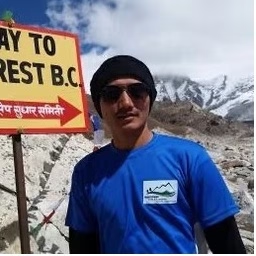
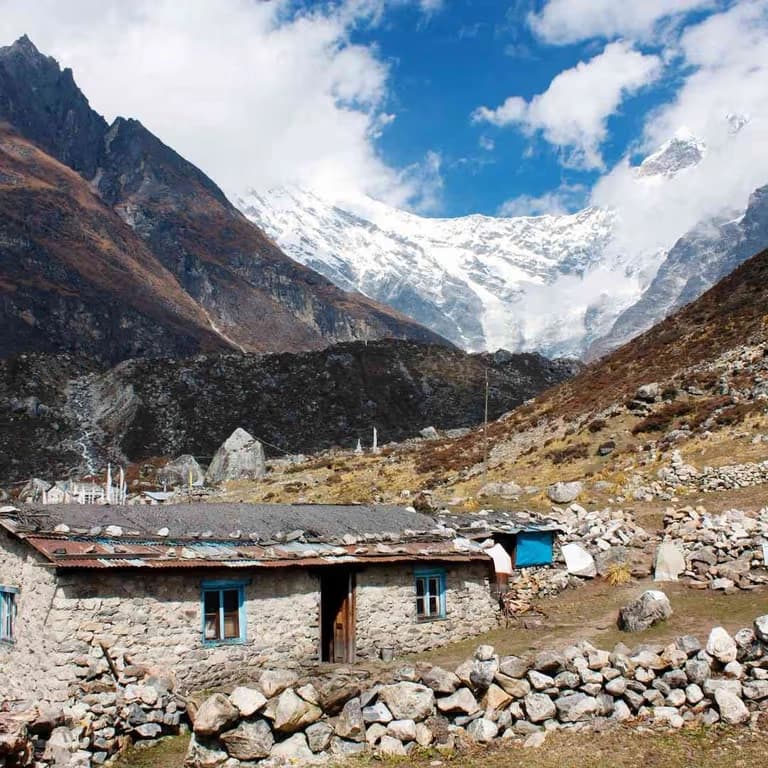
The Annapurna Base Camp trek in December is a 10–12-day winter trek in Nepal that reaches 4,130 m through the Annapurna Sanctuary. The route offers clear Himalayan views, snow-covered trails, quieter teahouses, and panoramic scenery of Annapurna I, Annapurna South, and Machhapuchhre. Daytime temperatures vary with altitude, while nights at base camp can drop to around −13°C. Snowfall, icy stone steps, shorter daylight hours, and possible avalanche hazards make winter preparation essential.
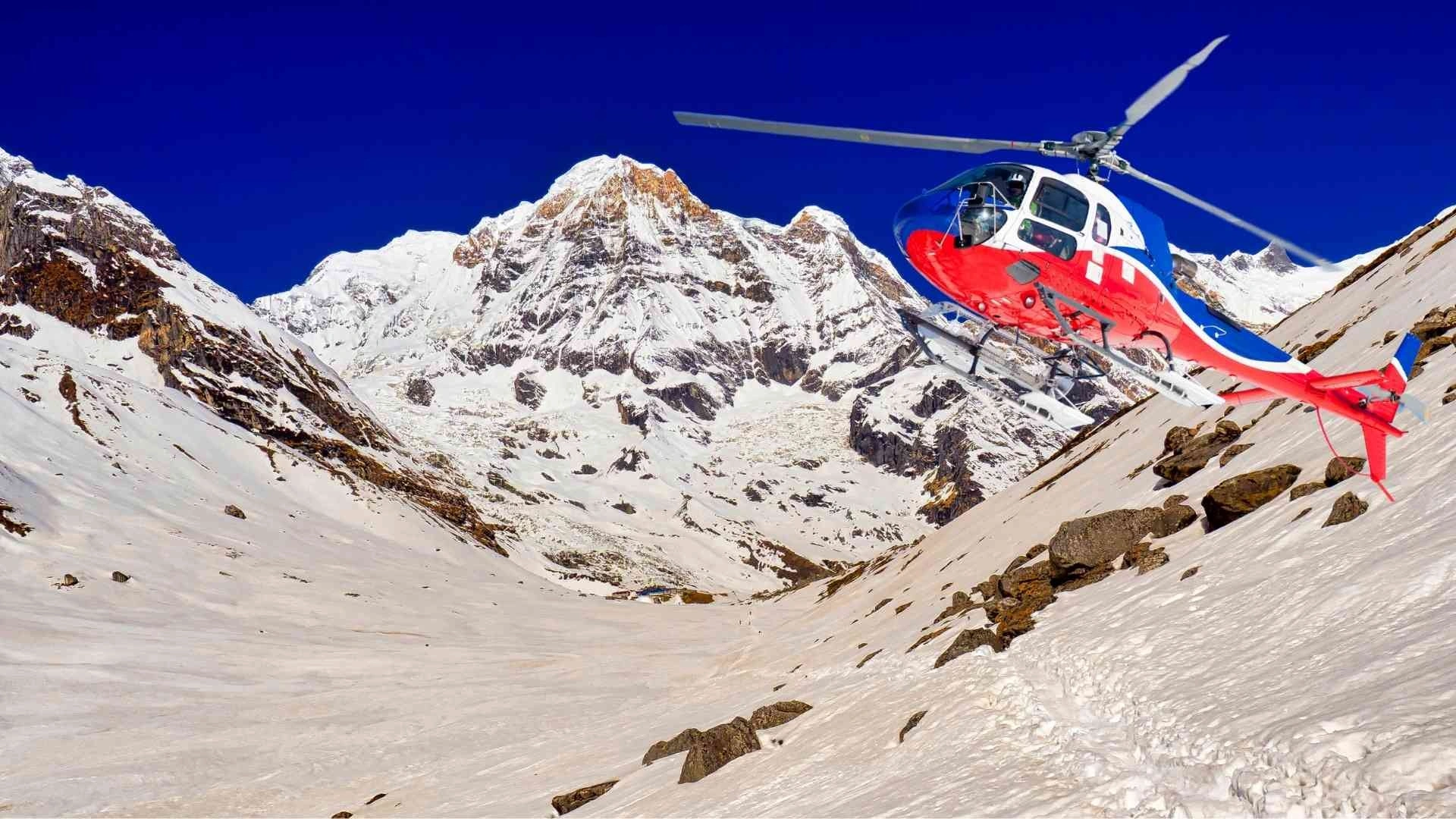
The trek is suitable for fit beginners and experienced hikers who prepare for cold conditions, trek with a licensed guide, and allow flexibility for weather delays. Choosing the right itinerary, carrying insulated clothing and microspikes, and planning gradual acclimatization help make the journey safer and more comfortable. This guide covers December weather, temperatures, trekking difficulty, mountain views, 10-day and 12-day itineraries, packing essentials, permits, safety, and costs to help you plan your Annapurna Base Camp winter trek.
What Is the Annapurna Base Camp Trek in December Like?
The Annapurna Base Camp trek in December is a cold, dry, quiet winter trek to 4,130 m. Skies stay clear on most days, snow covers the trail above 3,000 m, lodges sit half empty, and Himalayan views reach their sharpest of the year.
Annapurna Base Camp (ABC) is the high point of the Annapurna Sanctuary route, which starts near Pokhara (822 m) and climbs through Gurung villages, bamboo forest, and a glacial gorge. December changes the experience in 4 ways: colder nights, shorter days, fewer trekkers, and cleaner air.
Pokhara Airport records 11.5 mm of rain across 1 rainy day in December, according to the 1991–2020 climate normals. Daylight hovers between 10 hours 22 minutes and 10 hours 28 minutes across the month, based on solar calculations for Pokhara. Walking days run 5 to 7 hours, so lodge arrival by 16:00 becomes the daily target to beat the fading light.
In real-world use, the December rhythm repeats: wake at 06:00, eat breakfast beside a wood stove, walk by 07:00, reach the next lodge by early afternoon, and spend the evening in a dining room with a pot of ginger tea. Evenings run long and cold. Bring a book.
What Is the Weather Like on the Annapurna Base Camp Trek in December?
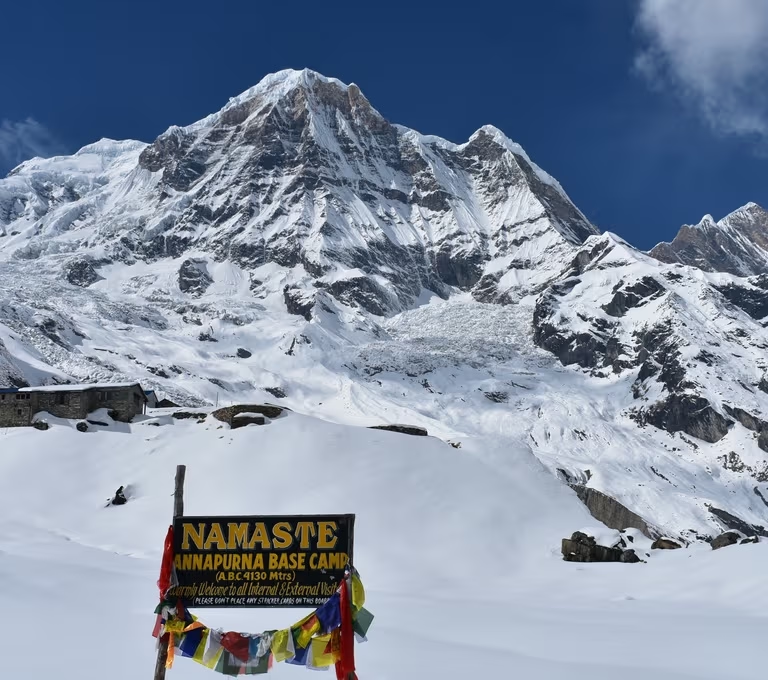
December weather on the Annapurna Base Camp trek is dry and stable below 3,000 m and freezing above it. Pokhara averages 21°C by day and 8.3°C by night, while base camp falls to roughly −13°C at night. Each 1,000 m of climbing removes about 6.5°C.
Storms arrive as discrete events rather than continuous bad weather. A front brings 1 to 2 days of cloud and snow, then clears. Itineraries with a buffer day absorb this pattern. Itineraries without one force trekkers to walk in poor conditions.
What Are the Average Temperatures Along the Annapurna Base Camp Trek?
Average December temperatures along the Annapurna Base Camp trek range from 21°C by day in Pokhara to about −1°C by day at base camp, and from 8°C to −13°C at night. The estimates apply the standard lapse rate of 6.5°C per 1,000 m.
The table below lists estimated December highs and night lows for 7 stops. The figures start from the Pokhara Airport 1991–2020 normals (21.0°C high, 8.3°C low) and subtract 6.5°C for every 1,000 m of altitude gain, following the ICAO standard atmosphere.
Stop | Altitude | Estimated daytime high | Estimated night low |
Pokhara | 822 m | 21°C | 8°C |
Chhomrong | 2,170 m | 12°C | 0°C |
Bamboo | 2,317 m | 11°C | −1°C |
Tadapani | 2,630 m | 9°C | −3°C |
Ghorepani | 2,880 m | 8°C | −5°C |
Deurali | 3,200 m | 6°C | −7°C |
Annapurna Base Camp | 4,130 m | −1°C | −13°C |
Real conditions differ in 3 ways. Cold air pools in the Sanctuary basin, so ABC nights run colder than the formula predicts. Direct sun reaches the lodges well after sunrise and leaves before sunset, because the wall of peaks above 7,000 m blocks the low winter sun. Wind chill adds 5°C to 10°C of perceived cold on exposed ridges. Treat the table as a planning baseline, then check the Nepal Department of Hydrology and Meteorology forecast 5 days before departure.
How Cold Does It Get at Annapurna Base Camp in December?
Annapurna Base Camp reaches about −13°C at night in December by lapse-rate calculation, and trek operators report lows between −10°C and −20°C. Daytime highs hover near 0°C in sun and fall well below freezing in shade or wind.
Cold at ABC hits equipment before it hits people. Water bottles freeze overnight. Phone batteries drain fast. Boot laces stiffen. Wet socks freeze in the dining-room corner.
Four habits control the cold:
Sleep with the water bottle, phone, and power bank inside the sleeping bag
Keep a dry pair of socks for bed only
Eat a hot dinner before 18:30 and drink 3 litres of fluid across the day
Pull the hood of the down jacket up before the sun leaves the lodge
Late December runs colder than early December. Nepal Alternative Treks reports sub-zero daytime temperatures and fog in the last week of the month, so departures after 20 December plan for the lower end of every range.
Does It Snow on the Annapurna Base Camp Trek in December?
Yes. Snow falls above about 2,500 m during December storms and lies on the trail above 3,000 m for most of the month. Lower sections around Ghandruk and Chhomrong stay dry, with occasional icy stone steps in shaded morning hours.
Peregrine Treks reports that winter storms deliver snow as low as 2,300 m. Nepal Alternative Treks reports that higher trails stay snow-covered, icy, and slippery. The line between dry trail and snow trail sits near 2,500 m to 3,000 m, and it moves downhill after each front.
What most people overlook: snow itself is easy to walk on. Ice under a thin layer of snow causes the falls. Guides read the surface color, test it with a pole, and take short steps on the shaded stair sections between Chhomrong and Bamboo.
What Are the Main Highlights of the Annapurna Base Camp Trek in December?
The 5 main highlights are Poon Hill sunrise at 3,210 m, snow-covered peaks from Chhomrong to base camp, the Annapurna Sanctuary amphitheater at 4,130 m, hot springs at Jhinu Danda, and quiet villages with no queues at viewpoints or lodges.
Each highlight gains from December conditions. Cold air holds less moisture, so peaks appear closer and sharper. Autumn remains the peak season, so December trails run noticeably quieter, and busy stops such as Ghorepani and ABC have free rooms.
Can You Enjoy Snow-Covered Himalayan Views on the Annapurna Base Camp Trek in December?
Yes. Early December delivers the clearest snow-covered views of the year, with Annapurna I, Annapurna South, and Machhapuchhre standing sharp against a deep blue sky. Morning offers the best window, because cloud builds after 10:00.
Annapurna I rises 8,091 m above sea level and stands 3,960 m above ABC. Snow lies on every face of the Sanctuary wall, and light changes minute by minute at sunrise. Alpenglow, the pink and orange light on high snow before direct sun arrives, fades within minutes.
Late December brings mixed outcomes. Nepal Alternative Treks notes that fog and cold wind obstruct views in the last week of the month. Photographers who value clear air choose the first 2 weeks. Photographers who value storm light and snow-heavy foregrounds accept the late-month risk of lost views. Stand at the viewpoint 30 minutes before sunrise and keep spare batteries warm inside a jacket pocket.
Which Mountains Can You See During the Annapurna Base Camp Trek?
The trek reveals 9 named peaks, including Annapurna I (8,091 m), Dhaulagiri I (8,167 m), Annapurna South (7,219 m), Gangapurna (7,455 m), Annapurna III (7,555 m), Machhapuchhre (6,993 m), and Hiunchuli (6,441 m).
Machhapuchhre, called Fishtail for its twin summit, stands closed to climbers and dominates the view from Chhomrong to ABC. Hiunchuli flanks the Modi Khola gorge opposite it. The table lists each peak and its best vantage point.
Peak | Height | Best vantage point |
Dhaulagiri I | 8,167 m | Poon Hill |
Annapurna I | 8,091 m | Poon Hill, Annapurna Base Camp |
Annapurna III | 7,555 m | Annapurna Base Camp |
Gangapurna | 7,455 m | Annapurna Base Camp |
Annapurna South | 7,219 m | Poon Hill, Chhomrong, Annapurna Base Camp |
Nilgiri | 7,061 m | Poon Hill |
Machhapuchhre | 6,993 m | Chhomrong to Annapurna Base Camp |
Hiunchuli | 6,441 m | Chhomrong, Bamboo, Deurali |
Tent Peak (Tharpu Chuli) | 5,663 m | Annapurna Base Camp |
Can You Experience the Annapurna Sanctuary and Natural Hot Springs in December?
Yes. The Annapurna Sanctuary stays open all December, and the natural hot springs at Jhinu Danda (1,780 m) stay open too. The springs sit 20 to 30 minutes below Jhinu village and reward cold muscles after the 9.6 km trek from Bamboo, completing the long descent from base camp.
The Annapurna Sanctuary is a glacial basin ringed by peaks above 7,000 m, entered through the Modi Khola gorge between Machhapuchhre and Hiunchuli. It sits inside the Annapurna Conservation Area, a 7,629 km² protected region and the largest conservation area in Nepal. The 12-day itinerary from Nepal Intrepid Treks places the hot springs on Day 9, before the drive to Pokhara.
A common mistake: soaking at dusk, then climbing back to the lodge in the dark. Soak at midday, carry a headlamp regardless, and keep a dry towel and a warm layer in the daypack. Alcohol, altitude, and hot water make a poor combination. Save the beer for Pokhara.
Is the Annapurna Base Camp Trek Difficult in December?
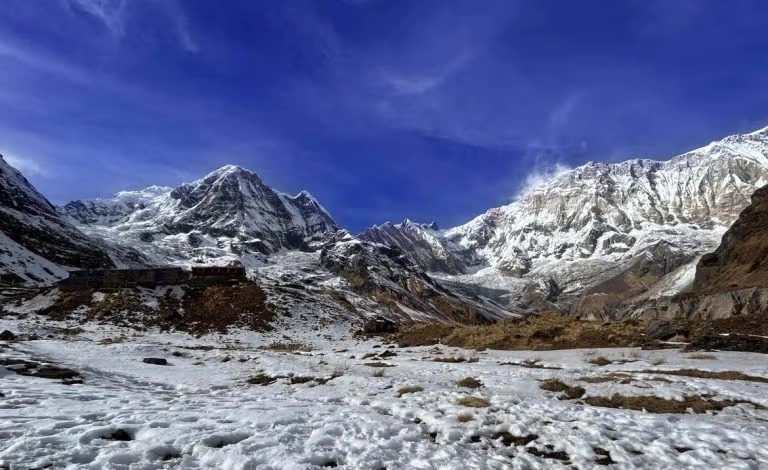
The Annapurna Base Camp trek is a moderate trek in any season, and December raises the effort by one notch. Cold, icy stairs, and 10-hour days add strain, but no technical climbing skills are required.
The route covers 6.3 to 16.4 km per day over 4 to 7 hours of walking, according to the Nepal Intrepid Treks itinerary. More than 3,000 stone steps appear on the route, according to Nepal Alternative Treks, and many sit between Chhomrong and Bamboo, where knees feel every one in both directions.
How Many Days Does the Annapurna Base Camp Trek Take in December?
The Annapurna Base Camp trek takes 10 to 12 days from Kathmandu to Kathmandu, including 7 to 8 trekking days. The 12-day version adds Poon Hill sunrise and a spare day in Kathmandu for weather-delayed flights.
The shortest realistic schedule has 7 walking days from the Nayapul trailhead. Anything shorter pushes the Deurali to base camp climb into an unsafe ascent rate. In December, add 1 buffer day to whichever plan you choose. Winter flights between Pokhara and Kathmandu now operate under Instrument Flight Rules (IFR) following the airport upgrade, significantly reducing the traditional morning fog delays, though severe winter storms can still impact schedules.
What Is the Maximum Altitude of the Annapurna Base Camp Trek?
The maximum altitude of the Annapurna Base Camp trek is 4,130 m at Annapurna Base Camp itself. Poon Hill reaches 3,210 m on Day 3 of the 12-day itinerary, and Deurali sits at 3,200 m, the last night below base camp.
Everest Base Camp (South) sits at 5,364 m, which puts ABC 1,234 m lower. The Sanctuary route still climbs fast: Bamboo (2,317 m) to ABC gains 1,813 m in 2 days. Above 3,000 m, the air holds about 70% of sea-level oxygen. Above 4,000 m, it holds about 60%.
Is the Annapurna Base Camp Trek Suitable for Beginners in December?
Yes, with conditions. Beginners complete the Annapurna Base Camp trek in December when they train for 8 to 12 weeks, hire a licensed guide, carry winter-rated gear, and choose a 12-day itinerary. First-timers with no hiking history do better in October or November.
No rope work, glacier travel, or camping is involved. Teahouses (family-run mountain lodges with twin rooms, dining rooms, and meals) replace tents, so a first-time trekker carries only a daypack.
Training that prepares beginners:
Walk 3 times per week for 8 to 12 weeks, with 1 session of 5 hours
Climb stairs with a 6 kg pack for 30 minutes, twice per week
Practice descents, because Day 8 covers 16.4 km down to Bamboo
Break in boots across at least 50 km before departure
Common beginner mistakes: cotton base layers, new boots, an overstuffed duffel, and rushing the final ascent.
What Are the Main Challenges of Trekking to Annapurna Base Camp in Winter?
The 6 main winter challenges are cold nights, icy stone steps, short daylight, altitude, avalanche zones, and limited lodge services. Each challenge has a specific countermeasure, and none requires mountaineering skill.
Cold nights. A −15°C-rated sleeping bag, a liner, and a hot water bottle handle −13°C at ABC.
Icy stone steps. Microspikes, poles, and short steps reduce slips on refrozen stairs.
Short daylight. A 07:00 start secures a 16:00 arrival within the roughly 10.5 hours of available light.
Altitude. Acute mountain sickness (AMS), the illness caused by rapid ascent, affects trekkers above 3,000 m. A paced ascent and a pulse oximeter reduce the risk.
Avalanche zones. Three sections carry risk after snowfall, and a guide decides when to move.
Limited services. Upper lodges thin out as snow deepens, and menus shrink.
What Is the Best December Itinerary for the Annapurna Base Camp Trek?
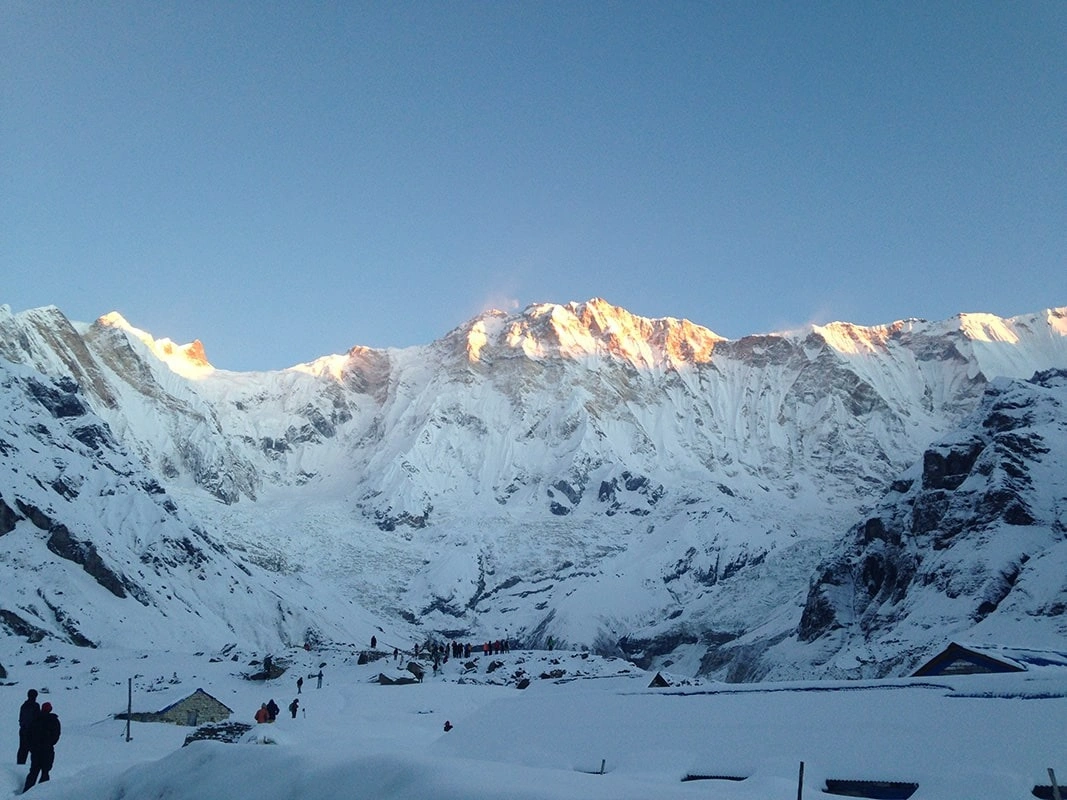
The best December itinerary is the 12-day route: 1 Poon Hill sunrise, 8 trekking days from Banthati to Jhinu, 2 nights above 3,000 m, and 1 spare day in Kathmandu. A 10-day route works for fit trekkers with flexible flights.
Both itineraries follow the Modi Khola valley. The 12-day plan mirrors the Nepal Intrepid Treks package, including the Poon Hill detour. The 10-day plan trims both the buffer days and the total distance by skipping Poon Hill and taking the direct route through Ghandruk.
What Does a 10-Day Annapurna Base Camp Trek Itinerary Include?
A 10-day Annapurna Base Camp trek itinerary includes 7 trekking days from Nayapul to Jhinu, 1 night at Deurali, a base camp arrival on Day 6, and a return flight or drive to Kathmandu on Day 9. It carries zero spare days.
The table shows the compressed route through Ghandruk, which skips Poon Hill.
Day | Route | Sleeping altitude | Walking time |
1 | Arrive in Kathmandu, trip briefing | 1,355 m | None |
2 | Fly to Pokhara, drive to Nayapul, trek to Ghandruk | 1,940 m | 4–5 hours |
3 | Ghandruk to Chhomrong | 2,170 m | 5–6 hours |
4 | Chhomrong to Dovan | 2,600 m | 5–6 hours |
5 | Dovan to Deurali | 3,200 m | 4–5 hours |
6 | Deurali to Annapurna Base Camp | 4,130 m | 5 hours |
7 | Annapurna Base Camp to Bamboo | 2,317 m | 6–7 hours |
8 | Bamboo to Jhinu, drive to Pokhara | 822 m | 5 hours + 3 hours drive |
9 | Fly or drive to Kathmandu | 1,355 m | None |
10 | Departure | — | None |
This plan suits trekkers with altitude experience, a flexible return flight, and a start date in the first half of December. Private departures allow the schedule. The trade-off is plain: a single storm day at Deurali pushes the return into the departure date.
What Does a 12-Day Annapurna Base Camp Trek Itinerary Include?
A 12-day Annapurna Base Camp trek itinerary includes Poon Hill sunrise on Day 3, base camp on Day 7, the Jhinu hot springs on Day 9, and a spare Kathmandu day on Day 11. It totals 8 trekking days across 4 to 7 hours each.
The table follows the Nepal Intrepid Treks Annapurna Base Camp Trek itinerary.
Day | Route | Altitude | Distance | Time |
1 | Arrive in Kathmandu | 1,355 m | — | Airport transfer |
2 | Fly to Pokhara, drive to Banthati, trek to Ghorepani | 2,880 m | 6.3 km | 3–4 hours trek |
3 | Poon Hill sunrise, trek to Tadapani | 3,210 m / 2,630 m | 11.1 km | 5–6 hours |
4 | Tadapani to Chhomrong | 2,170 m | 8.6 km | 5 hours |
5 | Chhomrong to Bamboo | 2,317 m | 7.6 km | 5 hours |
6 | Bamboo to Deurali | 3,200 m | 7.1 km | 5 hours |
7 | Deurali to Annapurna Base Camp | 4,130 m | 9.3 km | 5 hours |
8 | Annapurna Base Camp to Bamboo | 2,317 m | 16.4 km | 6–7 hours |
9 | Bamboo to Jhinu, drive to Pokhara | 1,780 m / 822 m | 9.6 km | 5 hours + 3 hours drive |
10 | Fly to Kathmandu | 1,355 m | — | 25 minutes flight |
11 | Leisure day in Kathmandu | 1,355 m | — | Free |
12 | Departure | — | — | Airport transfer |
Three December details sharpen the plan. Day 3 climbs to 3,210 m for sunrise, then descends to sleep at 2,630 m, which adds altitude exposure without a high sleeping altitude. Day 8 covers 16.4 km, so a 07:00 start protects the 16:00 arrival. Day 11 absorbs weather-delayed flights.
The standard Deurali to ABC push gains 930 m in one day. According to the Wilderness Medical Society guidelines summarized by the American Academy of Family Physicians in 2020, trekkers who sleep above 3,000 m should ideally limit their gain per night to 500 m. Because standard 10-day and 12-day itineraries jump straight from Deurali to ABC, they exceed this conservative guideline. Trekkers with a history of altitude trouble should request a private departure to add an extra night at Machhapuchhre Base Camp (3,700 m), splitting the climb into 500 m and 430 m.
Which Villages and Teahouses Are Included Along the Annapurna Base Camp Trek?
The trek passes 9 main stops: Banthati, Ghorepani, Tadapani, Chhomrong, Bamboo, Dovan, Deurali, Machhapuchhre Base Camp, and Annapurna Base Camp, plus Jhinu Danda for hot springs. Each stop offers a family-run teahouse with twin rooms and a dining stove.
The stops differ in character:
Ghorepani (2,880 m): Gateway to Poon Hill, with the largest cluster of lodges on the route
Tadapani (2,630 m): Forest village with views of Annapurna South and Machhapuchhre
Chhomrong (2,170 m): Gurung village and last major settlement, with an ACAP checkpost and well-stocked shops
Bamboo (2,317 m): Forest stop where the Sanctuary climb begins
Deurali (3,200 m): Last stop before the avalanche-prone Hinku section
Teahouses offer twin-sharing rooms with blankets, attached bathrooms at lower lodges, shared bathrooms higher up, and a dining room with a stove at the center. Menus include dal bhat with refills, noodles, soups, fried rice, momos, and pancakes. Choices narrow and prices rise with altitude.
December adds one variable: upper-section lodge openings. Peregrine Treks reports that some teahouses close in mid-December when snow deepens. Ask your operator to confirm the status of Deurali, MBC, and ABC lodges 7 days before departure.
What Should You Pack for the Annapurna Base Camp Trek in December?
Pack 4 clothing layers (base, mid, insulation, shell), a sleeping bag rated to −15°C, insulated waterproof boots, 2 pairs of gloves, sunglasses for snow glare, and microspikes. Keep the duffel near 10 kg per trekker.
December packing favors warm and dry over light and fast. A wet layer at 4,000 m does not dry overnight. Pack in sealed bags, and protect the sleeping system above all else.
Which Winter Clothing Layers Are Essential for the Annapurna Base Camp Trek?
The 4 essential winter layers are a merino or synthetic base layer, a fleece mid layer, a down insulation jacket, and a waterproof shell. Add insulated trousers for evenings and a spare dry base layer for sleeping.
The system, from skin outward:
Base layer: 2 merino or synthetic tops and 2 bottoms, 200 g/m² weight
Mid layer: 1 fleece jacket for walking
Insulation layer: 1 down jacket, rated to −15°C or lower
Shell layer: 1 waterproof jacket and 1 pair of shell trousers
Extremities: 3 pairs of wool socks, liner gloves, insulated mittens, a beanie, a neck gaiter, and a sun hat
Nepal Intrepid Treks provides the down jacket and sleeping bag on the 12-day package, so trekkers pack the other layers and extremities.
Common mistakes we see: cotton T-shirts that stay wet, a single pair of gloves soaked by Day 6, and a shell jacket without an adjustable hood. Pack 2 pairs of gloves and rotate them. Category 3 or 4 sunglasses matter more than most trekkers expect. Fresh snow reflects up to 80% of ultraviolet light, and a day without eye protection risks snow blindness.
What Trekking Gear and Equipment Do You Need for the ABC Trek?
The ABC trek requires 10 pieces of equipment: waterproof boots, a 25 to 30 L daypack, trekking poles, a headlamp, 2 insulated bottles, water purification, a power bank, microspikes, sunscreen, and a first-aid kit.
Priorities for December:
Boots: Waterproof, ankle-supporting, with stiff soles for stone stairs and snow
Poles: A pair, with snow baskets for deep snow
Headlamp: With lithium spare batteries, because alkaline cells fail in cold
Bottles: 2 insulated 1 L bottles, stored upside down so the lid does not freeze
Water treatment: Purification tablets or a filter, as filtered or boiled water is usually available but not guaranteed
Power bank: 10,000 mAh, kept inside the sleeping bag overnight
Skin protection: SPF 50+ sunscreen and SPF lip balm
Medical kit: Blister tape, rehydration salts, and personal medicines
One field trick earns its space: a labeled wide-mouth 1 L bottle saves a 02:00 walk to an outdoor toilet at −10°C.
Do You Need Microspikes or Crampons for Snow and Ice?
Carry microspikes for snow and ice from Chhomrong upward in December. Skip crampons. Microspikes grip packed snow on stone stairs, while crampons belong on glaciers and steep ice that the standard ABC trail never crosses.
Microspikes are elastic rubber frames with small chain-and-spike traction elements that stretch over trekking boots and weigh 300 to 500 g. Crampons are rigid steel frames with 10 to 12 spikes for glacier or steep-ice travel, and they require technique to use safely.
Microspikes earn their place on 3 sections: the shaded stairs between Chhomrong and Bamboo, the snow slopes above Deurali, and the final approach to the Sanctuary floor. Put them on before the first icy step, not after the first slip. Rent or buy them in Thamel (Kathmandu) or Lakeside (Pokhara), and test the fit on your boots before departure.
Is the Annapurna Base Camp Trek Safe in December?
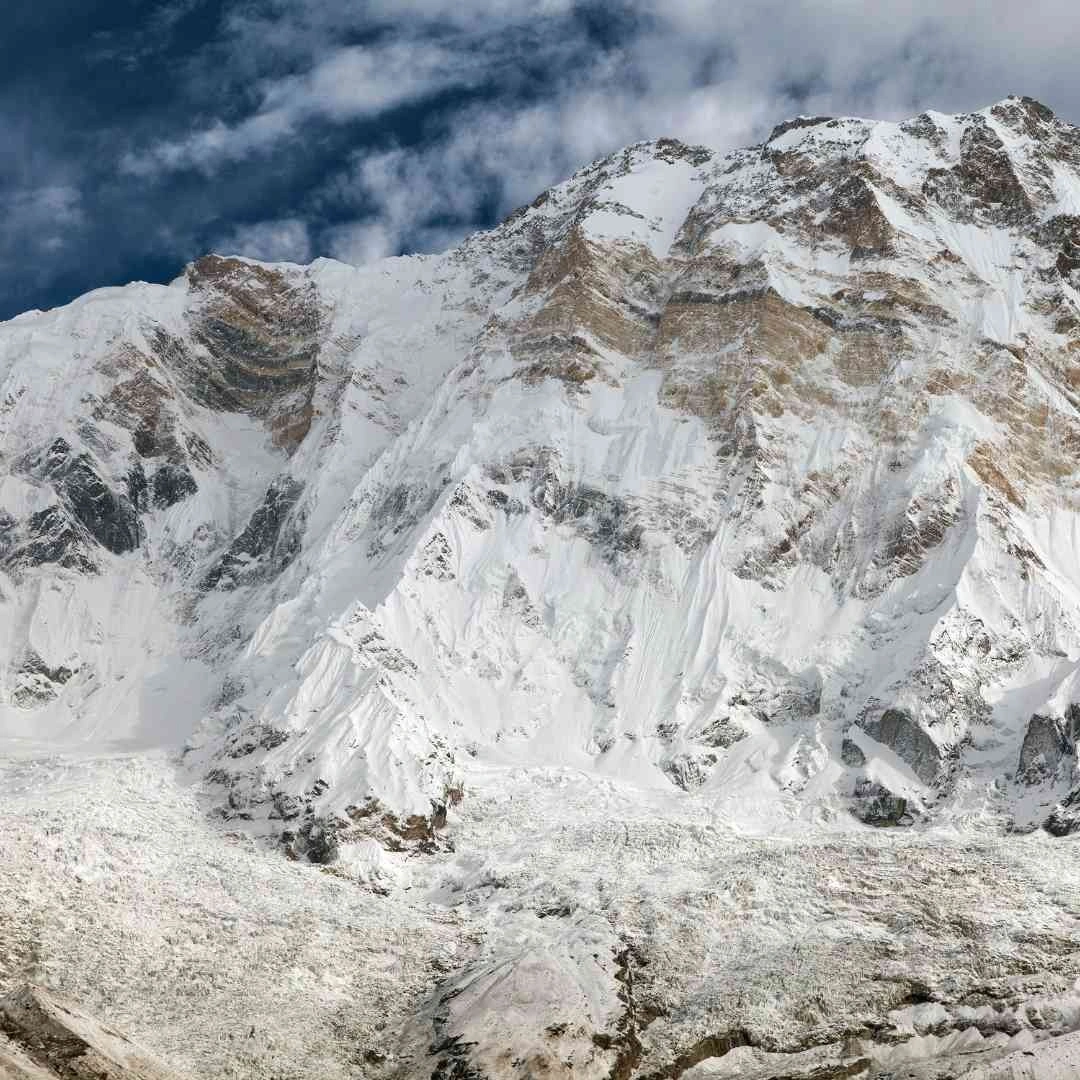
The Annapurna Base Camp trek in December is safe for trekkers who hire a licensed guide, use a flexible itinerary, and respect 3 hazards: altitude sickness, icy trails, and avalanche zones. Preparation reduces each hazard; none disappears.
The Annapurna Conservation Area Project (ACAP) recorded a record 299,831 visitors in 2025, up from 244,045 in 2024, according to ACAP data reported by Sharesansar in January 2026. The ABC route ranks among the best-supported in Nepal, with lodges at every stage and checkposts at Birethanti, Ghorepani, and Chhomrong. Winter still adds hazards that October does not carry.
What Are the Risks of Snowfall, Icy Trails, and Avalanches?
The 3 main snow-related risks are slips on icy stairs, trail blockage after heavy snowfall, and avalanches in 3 named sections: Hinku Cave to Deurali, Deurali to Machhapuchhre Base Camp (MBC), and Machhapuchhre Base Camp to ABC.
The 3 avalanche zones differ in danger:
Hinku Cave to Deurali: A steep, narrow valley where snow funnels downslope and gathers after storms
Deurali to Machhapuchhre Base Camp (MBC): The most notorious avalanche zone on the route, where steep gulleys release heavy snow and ice directly over the trail after winter storms.
Machhapuchhre Base Camp to ABC: Steeper slopes that release snow, rock, and ice after fresh snowfall
In January 2020, an avalanche in the upper Annapurna Sanctuary buried 7 trekkers, 4 South Koreans and 3 Nepali guides, who had set out on 15 January despite weather warnings. The lesson holds: weather warnings override schedules.
Four decisions reduce avalanche exposure:
Start early, so the group crosses slopes before midday warming
Hold at Deurali or MBC for 1 to 2 days after heavy snowfall
Cross exposed sections one person at a time with wide spacing
Turn around when the guide says turn around, however close ABC looks
A trek that ends 2 hours short of ABC is a successful trek.
How Can You Prevent Altitude Sickness During the Annapurna Base Camp Trek?
Prevent altitude sickness by limiting sleeping-altitude gain above 3,000 m to 500 m per night, resting 1 day for every 1,000 m gained, drinking 3 litres of fluid daily, and descending at the first sign of worsening symptoms.
According to the Wilderness Medical Society guidelines summarized by the American Academy of Family Physicians in 2020, trekkers who sleep above 3,000 m and then climb more than 500 m above the previous night without a rest day face high risk of AMS. The guidelines list acetazolamide, 125 mg every 12 hours, as adult prevention started the day before ascent. Acetazolamide is a prescription drug, so a doctor sets the dose.
Symptoms of AMS include headache, nausea, vomiting, fatigue, dizziness, and insomnia. High-altitude cerebral edema (HACE) adds ataxia and confusion. High-altitude pulmonary edema (HAPE) adds breathlessness at rest and pink, frothy sputum. Both are emergencies that require immediate descent.
Four habits protect trekkers on this route:
Walk slowly, at a pace that allows full sentences
Climb high and sleep low, as Day 3 Poon Hill does
Avoid alcohol and sleeping pills above 3,000 m
Tell the guide about every symptom, including mild ones
A pulse oximeter, which the Nepal Intrepid Treks package carries, measures blood oxygen saturation. Readings of 80% to 90% are common at 4,000 m, so a reading informs a decision while symptoms make it. A trekker who worsens at Deurali descends to Bamboo, an 883 m drop, and often recovers within hours.
Do You Need a Guide and Permits for the Annapurna Base Camp Trek?
The trek requires an ACAP permit (NPR 3,000, about US$23) and a TIMS card (NPR 2,000, about US$15), totaling NPR 5,000 or about US$38. Nepal's rules since 1 April 2023 direct foreign trekkers to hire a licensed guide through a registered agency.
The Trekkers' Information Management System (TIMS) card records trekker details for rescue coordination. Children under 10 pay no ACAP fee, and SAARC nationals pay NPR 1,000 for each permit.
Permits are administered through separate systems, but they can be acquired in 3 ways:
Nepal Tourism Board offices: Damside in Pokhara and Bhrikutimandap in Kathmandu, open 7 days a week (including public holidays) from 10:00 to 17:00, cash only in NPR.
ACAP's online e-permit portal: Issues the ACAP permit only (live since October 2024, with a 2.9% online fee).
A registered trekking agency: The simplest route, as they issue both the ACAP and TIMS cards on your behalf, which is the method the Nepal Intrepid Treks package follows.
Operators report strict enforcement at checkposts, particularly for TIMS cards at Birethanti, as this is the primary method authorities use to verify compliance with the mandatory guide regulation. The practical answer stays the same: hire a licensed guide. A guide reads avalanche terrain, manages altitude symptoms, and handles evacuation logistics. Confirm current rules with the Nepal Tourism Board before booking, as regulations continue to change.
How Much Does the Annapurna Base Camp Trek Cost in December?
The 12-day Annapurna Base Camp trek from Nepal Intrepid Treks starts at US$920 per person for 2 travelers. Solo travelers pay US$1,120, and groups of 13 to 20 pay US$765 each. International flights, insurance, and tips cost extra.
The table lists per-person prices for the 12-day package.
Group size | Price per person |
1 traveler | US$1,120 |
2–4 travelers | US$920 |
5–8 travelers | US$875 |
9–12 travelers | US$815 |
13–20 travelers | US$765 |
What Is Included in the Annapurna Base Camp Trek Package?
The package includes airport transfers, 4 hotel nights, Kathmandu to Pokhara flights, 3 meals daily on the trek, lodge accommodation, TIMS and Sanctuary permits, a licensed guide, a porter for every 2 trekkers, and a sleeping bag and down jacket.
The inclusions on the Nepal Intrepid Treks package page:
Airport pickup, drop-off, and all ground transport
3 nights in Kathmandu and 1 night in Pokhara at 3-star hotels, with breakfast
Round-trip flights between Kathmandu and Pokhara
Breakfast, lunch, and dinner on the trek, with tea and seasonal fruit
An English-speaking guide and 1 porter per 2 trekkers, with salary, food, accommodation, and insurance covered
A first-aid kit, pulse oximeter, duffel bag, trekking map, and trip certificate
The 1:2 porter ratio carries the main bags while each trekker carries a daypack, which protects knees on the 3,000-step stone staircases.
What Additional Expenses Should You Budget For on the Annapurna Base Camp Trek?
Budget for 7 extra costs: international flights, travel insurance with helicopter evacuation, tips, personal gear, drinks and snacks, hot showers and charging, and Kathmandu or Pokhara meals. Personal spending runs US$10 to US$20 per trek day.
The package excludes these items:
International airfare: Varies by origin
Travel insurance: Must cover emergency helicopter evacuation up to 4,500 m
Tips: Trekkers typically tip US$10 to US$15 per day for a guide and US$5 to US$10 per day for a porter
Personal equipment: Boots, poles, microspikes, and base layers
Drinks and snacks: Bottled water, soft drinks, and chocolate, priced higher with altitude
Hot showers and device charging: Typically US$2 to US$5 per use at teahouses
Lunch and dinner in Kathmandu and Pokhara: Typically US$5 to US$15 per meal
Nepal's tourist visa costs US$50 for 30 days, according to the Department of Immigration. Confirm at booking whether the operator handles the fee. Carry Nepali rupees in small notes, because lodges above Chhomrong do not accept cards and struggle to break large bills.
How Does the Annapurna Base Camp Trek in December Compare With Other Months?
December is the quietest and clearest month with the coldest nights. Compared with October, December has 93% less rain and a 9°C lower night low in Pokhara. Compared with November, it has 4°C colder nights and fewer trekkers.
The table summarizes Pokhara Airport climate normals for 1991–2020, the lowland baseline for the route.
Month | Daytime high | Night low | Rainfall | Rainy days | Sunshine |
October | 27.9°C | 17.2°C | 159.2 mm | 8.0 | 189.1 hours |
November | 24.4°C | 12.3°C | 17.2 mm | 1.3 | 222.0 hours |
December | 21.0°C | 8.3°C | 11.5 mm | 1.0 | 220.1 hours |
January | 19.9°C | 7.1°C | 21.6 mm | 2.4 | 204.6 hours |
November and December produce the most sunshine, and December records the least rain. January brings the deepest cold and sits inside the winter avalanche window.
Is December Better Than October or November for the ABC Trek?
December beats October for clarity, solitude, and snow scenery, and it loses to November for warmth. Choose December for fewer crowds and snow-covered views. Choose November for gentler nights and fewer lodge closures.
October remains the busiest month and carries the monsoon tail: 159.2 mm of rain and 8 rainy days in Pokhara. November sits between the extremes. Night lows at Pokhara average 12.3°C, 4°C warmer than December, upper lodges stay open, and views run nearly as clear.
Three traveler profiles guide the choice:
First-time trekkers: Choose November for the widest margin of error
Photographers: Choose early December for clean light and fresh snow
Solitude seekers and budget travelers: Choose December for empty trails and room choice
Is Early December Better Than Late December for Annapurna Base Camp?
Yes. Early December (1 to 12 December) delivers clearer skies, warmer nights, and open lodges. Late December (20 to 31 December) delivers deeper snow, colder temperatures, and holiday crowds, with a higher chance of fog and closed upper lodges.
Daylight barely changes across the month. Pokhara receives 10 hours 28 minutes on 1 December and 10 hours 22 minutes on 31 December, a gap of 6 minutes. Temperature and snow cover change far more.
Peregrine Treks describes early December as a pre-winter window and mid-December as unstable, with the first lodge closures. Nepal Alternative Treks reports sub-zero daytime temperatures and fog that blocks views in late December.
Late December carries cultural interest. Tamu Lhosar, the Gurung New Year, falls on 30 December, and Gurung villages such as Ghandruk and Chhomrong hold celebrations. Pick 1 to 12 December for views and comfort, and 25 to 31 December for festivals and deep-snow scenery, with a spare day built in.
How Can Nepal Intrepid Treks Help You Plan the Annapurna Base Camp Trek in December?
Nepal Intrepid Treks plans the Annapurna Base Camp trek in December through a 12-day package with licensed guides, 1 porter per 2 trekkers, permits, hotels, flights, and a first-aid kit with a pulse oximeter. The company operates from Nayabazar-16, Kathmandu.
Nepal Intrepid Treks has more than 12 years of experience organizing treks in Nepal and holds a 5.0 out of 5 rating from 159 TripAdvisor reviews, according to its package page. The company displays affiliations with the Nepal Tourism Board (NTB), the Nepal Mountaineering Association (NMA), and the Trekking Agencies' Association of Nepal (TAAN).
Can Nepal Intrepid Treks Organize a Guided Annapurna Base Camp Winter Trek?
Yes. Nepal Intrepid Treks organizes guided Annapurna Base Camp treks on group departures and private dates, with an English-speaking guide, a 1:2 porter ratio, permits, and a sleeping bag and down jacket supplied for winter conditions.
Private dates matter most in December, because weather and flight schedules decide the calendar. A private departure lets a group choose an early-December window, add a night at Machhapuchhre Base Camp to follow the 500 m-per-night guideline, or build a second spare day.
What Should You Know Before Booking the Annapurna Base Camp Trek in December?
Before booking, confirm 7 points: insurance with helicopter evacuation, a buffer day, the status of upper lodges, gear provided, permit handling, flight flexibility, and the guide's winter experience. Each answer shapes safety more than price does.
The 7 checks, in order of importance:
Insurance: Helicopter evacuation cover to 4,500 m
Buffer: 1 spare day for weather and delayed flights
Lodges: Open status of Deurali, MBC, and ABC
Gear: Sleeping bag rating and down jacket included
Permits: ACAP and TIMS costs inside the package
Flights: A flexible international return
Guide: Winter and avalanche experience
The Annapurna Base Camp trek in December rewards preparation with sharper mountains, quieter trails, and a Sanctuary that few trekkers see in winter.
Plan your dates: Send a short brief to the Nepal Intrepid Treks team with your travel window, group size, and fitness background. The team builds a December itinerary around your schedule.