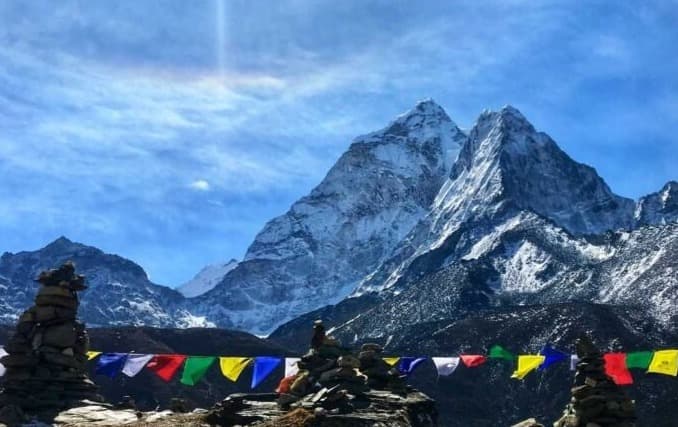
Mardi Himal Trek is one of the best short treks in Nepal for travelers who want close Himalayan views, moderate difficulty, and a manageable itinerary in the Annapurna region. The route leads from the hills above Pokhara to Mardi Himal Base Camp through forest, rhododendron trails, ridge sections, and high mountain viewpoints facing Machhapuchhre, Annapurna South, and Hiunchuli. Trekkers choose Mardi Himal Trek for its quieter trail, tea-house experience, and strong balance between accessibility, scenery, and adventure.
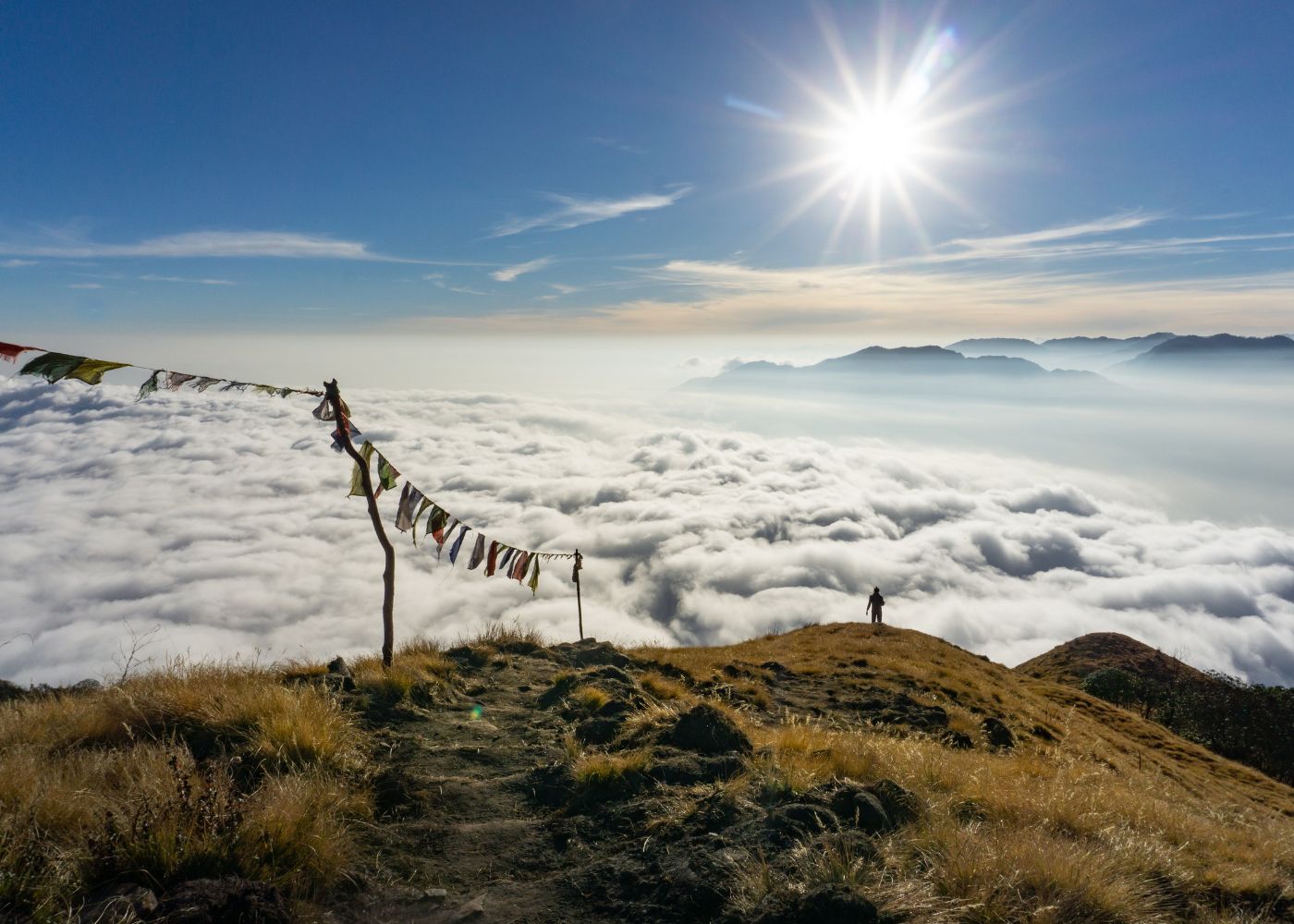
This guide answers the most important Mardi Himal Trek questions in one place, including route details, trek duration, difficulty, fitness level, best season, permits, guide requirements, cost, packing list, accommodation, food, drinking water, and agency support. It is designed for beginners, independent trekkers, and organized groups who need clear information before planning the trek. By the end, readers can understand whether Mardi Himal Trek matches their time, budget, fitness, and trekking goals.
What Is the Mardi Himal Trek and Why Is It Popular?
The Mardi Himal Trek is a moderate-difficulty trekking route in Nepal's Annapurna region that ascends to the base of Mardi Himal, a peak of 5,587m in the Annapurna Himalayan range. The route gained official recognition in 2012 and attracts trekkers seeking panoramic Himalayan views without the crowd density of the Annapurna Base Camp Trek.
Mardi Himal Trek combines 4 distinct landscape zones: subtropical forest, rhododendron woodland, alpine meadow, and glacial moraine. The trek delivers direct views of Machhapuchhre (6,993m), Annapurna South (7,219m), and Hiunchuli (6,441m) from High Camp and the upper viewpoint at 4,200m.
The route ranks among Nepal's less-commercialized trekking destinations. Tea house density along the trail is lower than on the Annapurna Circuit, meaning trail conditions remain quieter on all days except peak festival weeks in October and April.
3 primary reasons explain its popularity:
-
Accessibility: The trek starts from Kande (1,750m), reachable by a 45-minute drive from Pokhara.
-
Duration: A 5-day itinerary completes the full route, fitting short-vacation schedules.
-
Views: The High Camp to Base Camp section delivers unobstructed 270-degree Himalayan panoramas.
Where Is the Mardi Himal Trek Located?
The Mardi Himal Trek is located in Kaski District, Gandaki Province, Nepal, within the Annapurna Conservation Area (ACA). The Annapurna Conservation Area is Nepal's largest protected conservation zone, covering 7,629 sq km and managed by the National Trust for Nature Conservation (NTNC).
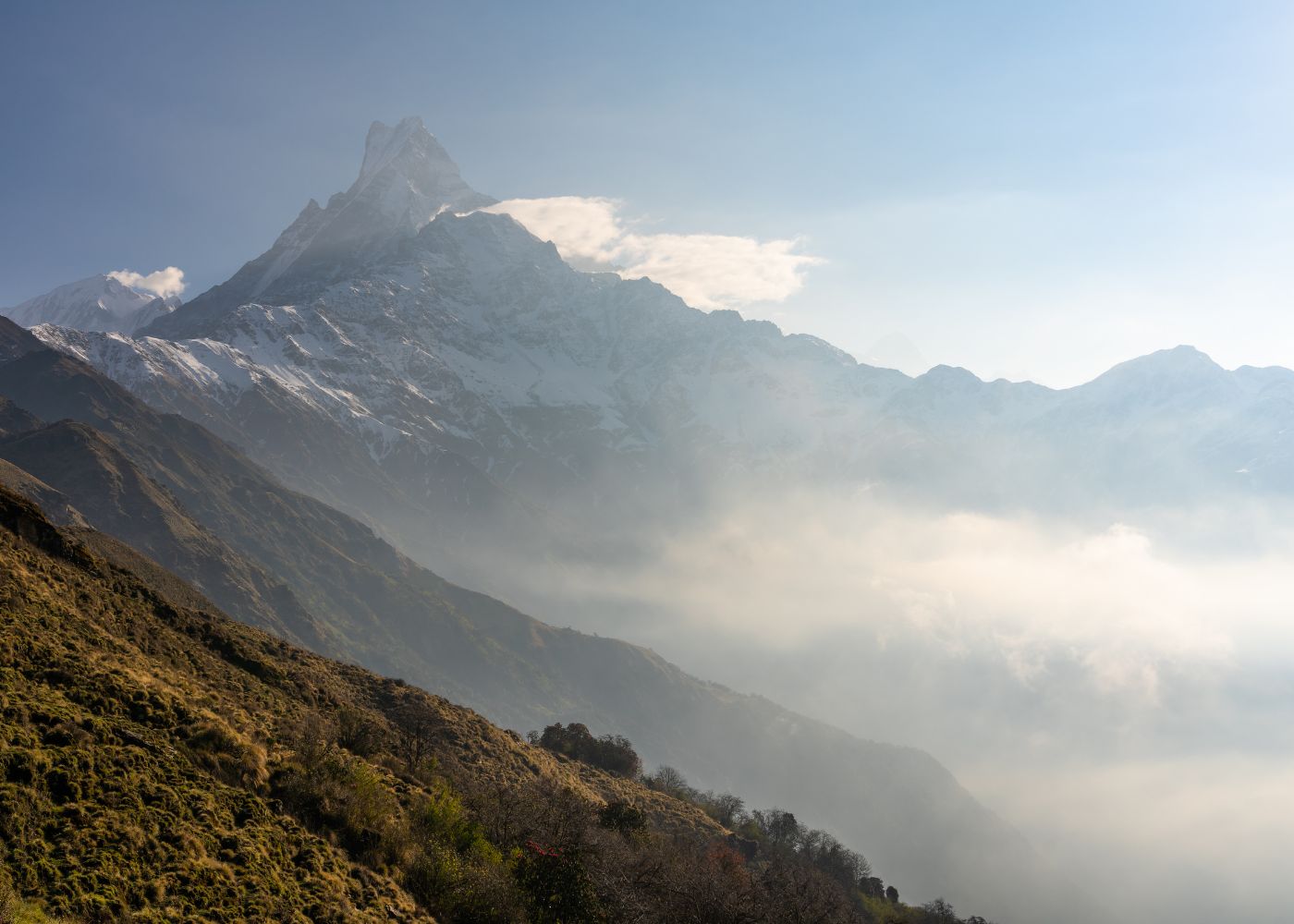
The trek starts at Kande village (1,750m), located 25 km northeast of Pokhara city. The route ascends along the southeastern ridge of Mardi Himal and ends at the Mardi Himal Base Camp upper viewpoint (4,200m). The trekking zone sits east of the Annapurna Base Camp trail and north of the Seti River gorge.
GPS coordinates of the trek start point (Kande): 28.2960° N, 83.9220° E.
How Many Days Does the Mardi Himal Trek Take?
The Mardi Himal Trek takes 5 days at minimum and 7 days at maximum, depending on the itinerary variation and acclimatization approach. A 5-day schedule covers the core route from Kande to Mardi Himal Base Camp and returns via Sidhing village. A 7-day schedule adds 2 acclimatization and exploration days at High Camp and Forest Camp.
The table below shows the 3 most common trek duration options:
|
Duration |
Route Covered |
Best For |
|
5 days |
Kande → Forest Camp → Low Camp → High Camp → Base Camp → Sidhing |
Experienced trekkers with limited time |
|
6 days |
Kande → Australian Camp → Forest Camp → Low Camp → High Camp → Base Camp → Pokhara |
Standard trekkers with moderate fitness |
|
7 days |
Full 6-day route with 1 extra day at High Camp for acclimatization |
Beginner trekkers or altitude-sensitive individuals |
A 5-day trek covers all primary viewpoints. Adding 1 or 2 days improves altitude acclimatization above 3,500m and allows a sunrise ascent to the upper viewpoint.
When Is the Best Time to Do the Mardi Himal Trek?
The best time for the Mardi Himal Trek is March to May and October to November. These 2 seasons deliver stable weather, clear mountain visibility, and moderate temperatures at High Camp (ranging from −5°C to 10°C). The trek operates across all 12 months, but weather and trail conditions vary significantly by season.
Is the Trek Good in Spring and Autumn?
Spring (March–May) and autumn (October–November) are the 2 optimal seasons for the Mardi Himal Trek. Both seasons offer clear skies, minimal precipitation, and safe trail conditions from Kande (1,750m) to High Camp (3,580m).
Spring adds a visual advantage: rhododendron forests between 2,000m and 3,000m bloom in red, pink, and white from mid-March through April. This 6-week bloom window makes the Forest Camp section particularly scenic.
Autumn delivers the clearest mountain views. Post-monsoon air clarity between October and November provides the sharpest visibility of Machhapuchhre and the Annapurna massif from the upper viewpoint (4,200m). Daytime temperatures at High Camp range from 5°C to 12°C in October, dropping to −8°C at night by late November.
Can You Do the Mardi Himal Trek in Winter or Monsoon?
The Mardi Himal Trek is possible in winter (December–February) and monsoon (June–September), but both seasons present specific challenges that increase risk and reduce trail comfort.
Winter conditions at High Camp (3,580m) include nighttime temperatures falling to −15°C, snow-covered trails above 3,000m, and limited tea house availability, with some lodges closing between January and early February. Trekkers completing the winter route carry crampons and microspikes for icy sections above Low Camp (3,050m).
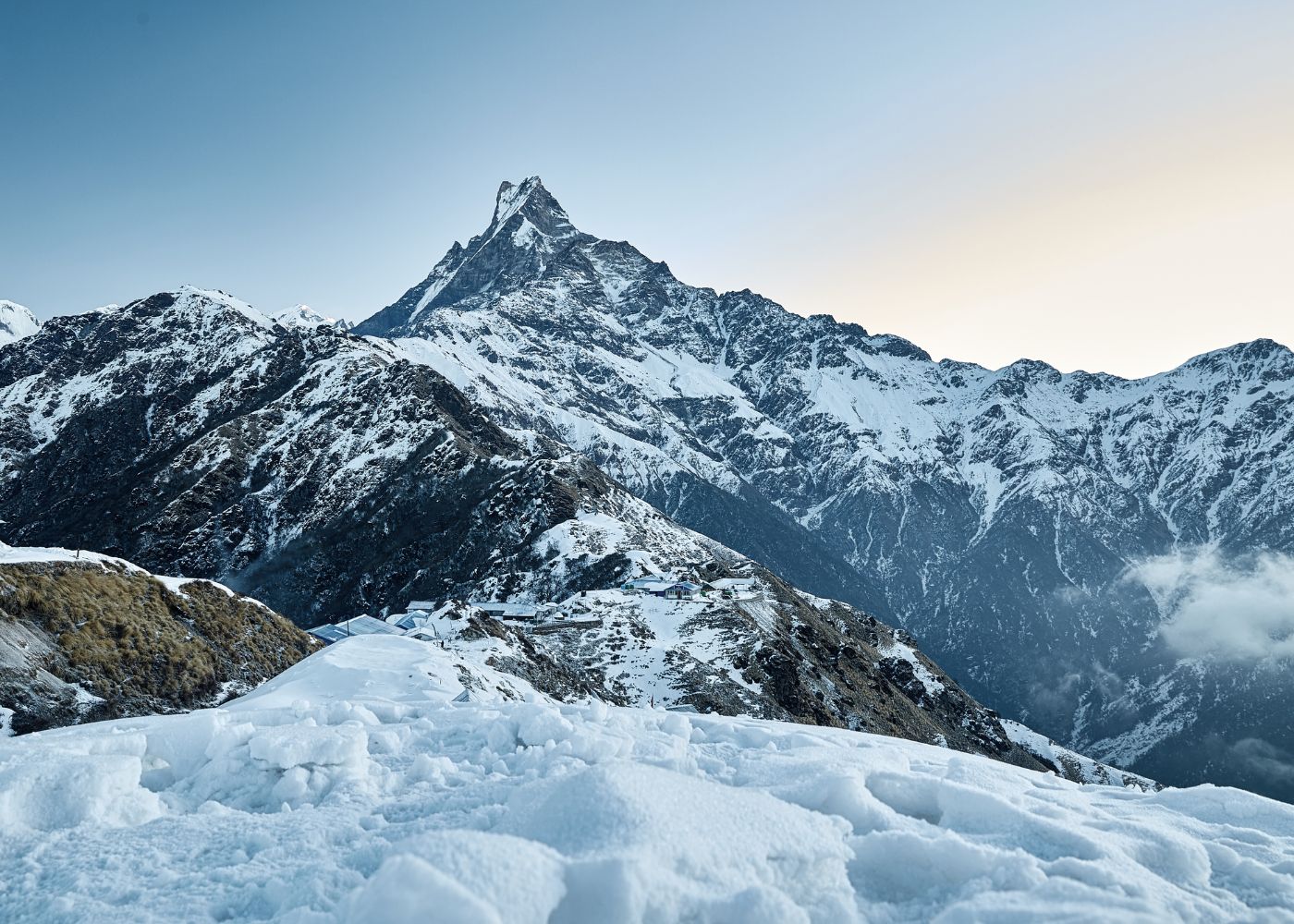
Monsoon season brings daily rainfall between 1,400m and 2,500m, trail landslide risk on the lower route, and persistent cloud cover that blocks mountain views from High Camp and Base Camp. Leeches are present on forested sections between Forest Camp and Low Camp from June through August. Despite these conditions, the monsoon route attracts experienced trekkers who prefer solitude and green landscape photography.
How Difficult Is the Mardi Himal Trek?
The Mardi Himal Trek is rated moderate difficulty, involving daily elevation gains of 500m to 800m, trail conditions ranging from stone-paved paths to loose rocky terrain above High Camp, and a maximum altitude of 4,200m at Mardi Himal Base Camp. The trek requires 4 to 6 hours of walking per day across 7 to 11 km per stage.
Is the Mardi Himal Trek Suitable for Beginners?
The Mardi Himal Trek is suitable for beginners with a basic fitness baseline. The route does not require technical climbing skills, prior Himalayan trekking experience, or specialized mountaineering equipment. The 5 overnight stops, Australian Camp, Forest Camp, Low Camp, High Camp, and Sidhing, provide regular rest intervals that prevent overexertion.
Beginners benefit from starting with a 6-day or 7-day itinerary. The additional days reduce daily elevation gain from 700m to 450m per stage, decreasing the risk of altitude sickness symptoms: headache, nausea, and fatigue.
A beginner completing the Mardi Himal Trek prepares by completing at least 3 weeks of cardiovascular training before departure, including 5 km daily walks with a loaded daypack.
How Fit Do You Need to Be for This Trek?
The Mardi Himal Trek requires a moderate cardiovascular fitness level, defined as the ability to walk 5 to 6 hours continuously with a 5 to 7 kg pack on uneven terrain. Trekkers who walk or jog 3 to 5 km daily for 4 to 6 weeks before the trek complete all sections without excessive fatigue.
The physically demanding sections are:
-
Low Camp to High Camp: 530m elevation gain over 5 km, with rocky trail surfaces and exposed ridgeline walking
-
High Camp to Mardi Himal Base Camp viewpoint: 620m elevation gain over 4 km at altitude above 3,500m
Trekkers with pre-existing cardiac conditions, chronic respiratory conditions, or prior altitude sickness episodes consult a physician before registering for the trek.
What Route and Distance Should You Expect?
The Mardi Himal Trek covers approximately 52 km round trip from Kande (1,750m) to Mardi Himal Base Camp upper viewpoint (4,200m) and returns via Sidhing village to Pokhara. The route follows a single ridgeline trail running northwest to southeast along the Mardi Himal massif, with no technical junctions requiring route-finding skills.
What Is the Standard Mardi Himal Trek Itinerary?
The standard 6-day Mardi Himal Trek itinerary covers 6 overnight destinations, ascending from 1,750m to 4,200m across 3 days and descending via a different trail on Day 5.
The following table defines each stage, distance, elevation, and estimated walking time:
|
Day |
Route |
Distance |
Elevation |
Walking Time |
|
Day 1 |
Pokhara → Kande → Australian Camp |
8 km |
1,750m → 1,950m |
3–4 hrs |
|
Day 2 |
Australian Camp → Forest Camp |
9 km |
1,950m → 2,550m |
4–5 hrs |
|
Day 3 |
Forest Camp → Low Camp → High Camp |
11 km |
2,550m → 3,580m |
5–6 hrs |
|
Day 4 |
High Camp → Mardi HB Camp (Upper Viewpoint) → return to High Camp |
8 km |
3,580m → 4,200m → 3,580m |
5–6 hrs |
|
Day 5 |
High Camp → Sidhing Village |
10 km |
3,580m → 1,700m |
5–6 hrs |
|
Day 6 |
Sidhing → Pokhara |
6 km + drive |
1,700m → 820m |
1 hr walk + 2 hr drive |
The ascent trail and descent trail differ between Day 3 and Day 5. The ascent follows the eastern ridgeline; the descent via Sidhing follows a forested lower valley trail.
How Many Hours Do You Walk Each Day?
The Mardi Himal Trek involves 3 to 6 hours of walking per day, with the longest day occurring on the High Camp to Mardi Himal Base Camp summit push and return (Day 4). Day 1 from Kande to Australian Camp is the shortest stage at 3 hours.
Walking hours per day depend on 3 variables: trekker pace, rest stop frequency, and weather conditions. Strong wind and snow above 3,500m extend walking time on Day 3 and Day 4 by 1 to 2 hours.
What Permits and Rules Do You Need to Know?
The Mardi Himal Trek requires 2 mandatory permits: the Annapurna Conservation Area Permit (ACAP) and the TIMS (Trekkers' Information Management System) card. Both documents are compulsory under Nepal's Department of Tourism regulations for all foreign and domestic trekkers entering the Annapurna Conservation Area.
What Permits Are Required for the Mardi Himal Trek?
2 permits are required for the Mardi Himal Trek: the ACAP permit and the TIMS card. Both are checked at entry checkpoints at Kande and at High Camp.
ACAP Permit:
-
Issued by: Annapurna Conservation Area Project office, Pokhara
-
Cost for SAARC nationals: NPR 3,000 (approximately USD 22)
-
Cost for international trekkers: NPR 6,600 (approximately USD 50)
-
Valid for: single entry into the Annapurna Conservation Area
TIMS Card:
-
Issued by: Nepal Tourism Board office or registered trekking agency in Pokhara
-
Cost for independent trekkers: NPR 2,000 (approximately USD 15)
-
Cost for agency-organized trekkers: NPR 1,000 per person (approximately USD 8)
-
Valid for: one trekking route within Nepal
Both permits are obtained at the Nepal Tourism Board office in Pokhara's Lakeside district or through a registered trekking agency. Required documents for permit issuance: valid passport, 2 passport-sized photographs, and travel insurance documentation.
Do You Need a Guide for the Mardi Himal Trek?
A guide is not legally required for the Mardi Himal Trek as of 2024, but Nepal's Department of Tourism recommends hiring a certified guide for solo trekkers and first-time visitors to the Annapurna region. The trail is well-marked with signboards at all major junctions between Kande and High Camp.
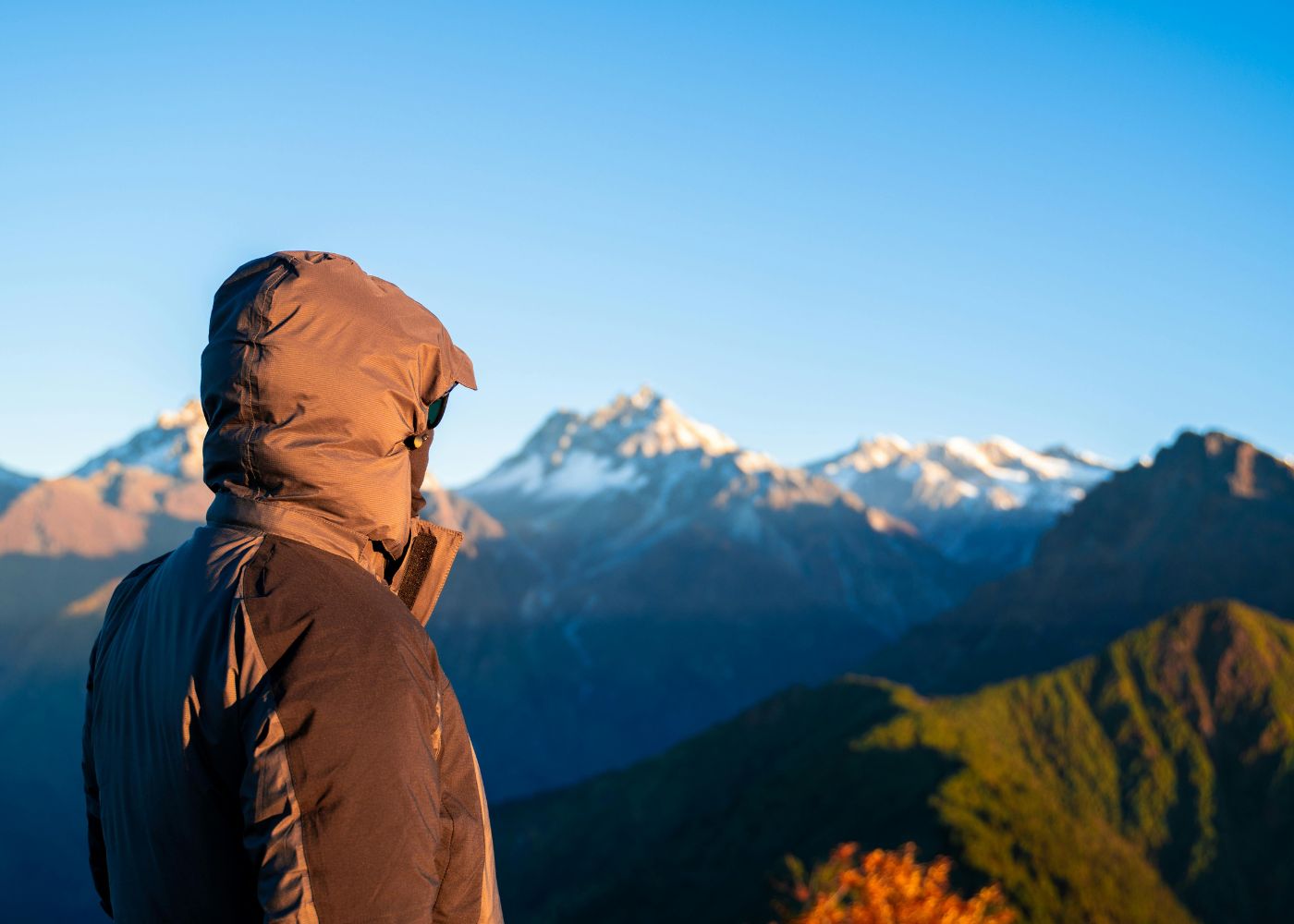
A licensed guide charges NPR 2,500 to NPR 3,500 per day (USD 19–26). A porter charges NPR 1,500 to NPR 2,500 per day (USD 11–19) and carries a maximum load of 25 kg.
Hiring a guide provides 3 practical benefits:
-
Navigation assistance on the High Camp to Base Camp section, where the trail becomes less defined above 3,800m
-
Emergency communication in cases of altitude sickness or injury above Low Camp
-
Cultural interpretation at Gurung village settlements along the lower trail
Independent trekkers without a guide register their trek details at the Kande checkpoint and at the Pokhara Nepal Tourism Board office before departure.
How Much Does the Mardi Himal Trek Cost?
The total cost of the Mardi Himal Trek ranges from USD 300 to USD 800, depending on whether the trekker books an organized package or treks independently. Independent trekking costs USD 300–450 for a 6-day trip; organized agency packages cost USD 500–800 for the same duration including guide, porter, permits, and accommodation.
What Is Usually Included in a Trek Package?
A standard Mardi Himal Trek package includes 7 services: ACAP and TIMS permits, certified guide, porter (1 porter per 2 trekkers), tea house accommodation, breakfast and dinner daily, all government taxes, and airport transfers in Pokhara.
Services excluded from most standard packages include: lunch on trekking days, personal travel insurance, equipment rental (sleeping bag, trekking poles, down jacket), hot showers at tea houses (charged separately at NPR 200–400 per use), and beverages beyond purified water.
Trekkers review the package inclusions document before booking. A reputable agency provides a written itemized breakdown of inclusions and exclusions before accepting payment.
How Much Money Should You Budget Per Day?
Independent trekkers budget USD 25 to USD 35 per day on the Mardi Himal Trek, covering accommodation (NPR 500–800 per night), 3 meals per day (NPR 400–600 per meal), and purified water (NPR 100–200 per liter above 2,500m).
The following cost table provides a daily expense reference for the 2024/2025 trekking season:
|
Expense Category |
Low Estimate (NPR) |
High Estimate (NPR) |
|
Tea house accommodation |
500 |
800 |
|
Breakfast |
350 |
500 |
|
Lunch |
400 |
600 |
|
Dinner |
400 |
700 |
|
Purified water (1.5 L) |
100 |
250 |
|
Hot shower |
200 |
400 |
|
Daily Total |
1,950 |
3,250 |
|
USD Equivalent |
~USD 15 |
~USD 25 |
Prices increase by 15–25% above High Camp due to transportation costs of supplies. Trekkers carry NPR 20,000–30,000 in cash, as ATMs are unavailable beyond Kande.
What Should You Pack for the Mardi Himal Trek?
The Mardi Himal Trek requires a trekking pack of 40–50 liters containing layered clothing for temperatures ranging from 20°C at Kande (1,750m) to −10°C at High Camp (3,580m) at night, along with navigation tools, first aid supplies, and water treatment equipment. Total pack weight stays under 10 kg for independent trekkers without a porter.
What Clothing and Gear Are Essential?
8 clothing and equipment categories are essential for the Mardi Himal Trek: base layers, insulation layers, waterproof outer shells, trekking footwear, headwear, hand protection, UV-protection eyewear, and trekking socks.
The complete packing list by category:
Clothing (9 items):
-
2 moisture-wicking base layer tops (merino wool or synthetic)
-
1 fleece mid-layer jacket (300g minimum)
-
1 down jacket (500-fill or higher for temperatures below 0°C)
-
1 waterproof hardshell jacket and trousers (Gore-Tex or equivalent)
-
2 pairs of trekking trousers (zip-off convertible for Day 1–2)
-
1 warm beanie hat covering ears
-
1 pair of waterproof trekking gloves
-
2 pairs of thick trekking socks (wool blend)
Footwear (2 items):
-
1 pair of waterproof mid-ankle trekking boots (broken in before the trek)
-
1 pair of lightweight camp sandals or shoes for tea house use
Equipment (6 items):
-
Trekking poles (adjustable aluminum or carbon fiber)
-
Headlamp with 2 spare batteries
-
Sunglasses with UV400 protection (essential above 3,000m)
-
Water bottles (2 × 1-liter capacity) or hydration reservoir
-
First aid kit (blister plasters, ibuprofen, oral rehydration salts, altitude medication)
-
Power bank (10,000 mAh minimum) for device charging above Low Camp
Do You Need Trekking Poles, Crampons, or a Sleeping Bag?
Trekking poles are recommended but not mandatory; crampons and a sleeping bag are conditionally required depending on season and tea house selection.
-
Trekking poles: Recommended for all trekkers on the steep descent from High Camp to Sidhing (Day 5), where 900m of elevation loss over 10 km stresses knee joints. Poles reduce knee strain by distributing 20–25% of body weight through the arms on steep descents.
-
Crampons: Required only for the High Camp to Mardi Himal Base Camp section when trekking between December and February, when snow and ice cover the trail above 3,800m. Microspikes (chain crampons) provide sufficient traction for the non-technical terrain on this route.
-
Sleeping bag: Recommended but not always required. Tea houses at High Camp and Forest Camp supply blankets rated to −5°C. A sleeping bag rated to −10°C provides additional warmth during January–February nights at High Camp, where temperatures fall to −15°C.
Where Do You Sleep and Eat on the Trek?
Trekkers sleep in tea house lodges along the Mardi Himal Trek route, with tea house accommodation available at 5 primary stops: Australian Camp (1,950m), Forest Camp (2,550m), Low Camp (3,050m), High Camp (3,580m), and Sidhing village (1,700m). A total of 18 registered tea houses operate on the route as of the 2024 trekking season.
Are Tea Houses Available Along the Route?
Tea houses are available at all 5 overnight stops on the Mardi Himal Trek route. Each tea house provides a private or shared room with a bed, blanket, and pillow. Private rooms accommodate 1 to 2 trekkers. Shared dormitories hold 4 to 6 trekkers per room.
Tea house facilities differ by elevation:
|
Location |
Elevation |
Private Room Cost |
Electricity |
Hot Shower |
|
Australian Camp |
1,950m |
NPR 500–700 |
Available |
Available |
|
Forest Camp |
2,550m |
NPR 500–700 |
Solar/limited |
Available (paid) |
|
Low Camp |
3,050m |
NPR 600–800 |
Solar/limited |
Available (paid) |
|
High Camp |
3,580m |
NPR 700–1,000 |
Solar only |
Unavailable in winter |
|
Sidhing |
1,700m |
NPR 500–700 |
Available |
Available |
Tea houses at High Camp operate from March to December. 3 to 4 tea houses at High Camp close between January and mid-February due to snow access difficulties.
What Kind of Food and Drinking Water Can You Expect?
Tea houses along the Mardi Himal Trek serve Nepali and international trekking cuisine from a standardized menu of 20 to 35 items including dal bhat, pasta, noodle soup, fried rice, porridge, and pancakes. Dal bhat, steamed rice with lentil soup, vegetable curry, and pickle, provides the highest caloric value at NPR 400–600 per serving and includes unlimited refills.
Trekkers follow this drinking water protocol:
-
Below 2,500m: purified water is available at tea houses via filtration systems (NPR 100–150 per liter)
-
Above 2,500m: carry a water purification method, either iodine tablets (5-minute treatment time) or a UV-C purification pen (SteriPen, 90-second treatment time), as filtered water availability becomes intermittent at High Camp
Drinking unboiled stream water above any altitude on the Mardi Himal Trek causes gastrointestinal illness in 90% of cases, according to documented cases treated at the Manipal Teaching Hospital Pokhara outpatient trekking clinic.
Menu prices increase by altitude: a plate of fried rice costs NPR 400 at Forest Camp and NPR 600 at High Camp. Carrying 4 to 6 energy bars per trekking day supplements tea house meals on long ascent days (Day 3 and Day 4).
How Should You Plan the Mardi Himal Trek With a Trekking Agency?
Planning the Mardi Himal Trek with a trekking agency involves 5 sequential steps: selecting a Nepal Tourism Board-registered agency, specifying the trek duration and start date, confirming package inclusions in writing, completing permit documentation, and confirming a pre-departure briefing date in Pokhara.
Trekkers confirm agency registration status at the Nepal Tourism Board website (ntb.gov.np) before making any payment. Registered agencies hold a valid Tourism License issued by the Nepal Government's Department of Tourism.
Booking 4 to 8 weeks in advance secures preferred departure dates during peak season (October and April), when High Camp tea house capacity is limited to 40–60 trekkers simultaneously.
Can a Trekking Agency Help You Plan the Mardi Himal Trek?
A trekking agency handles 6 logistical components that independent trekkers manage individually: permit procurement, guide and porter recruitment, tea house pre-booking, transportation from Pokhara to Kande, emergency evacuation coordination, and itinerary customization for fitness level and group size.
The 3 strongest reasons to use a trekking agency for the Mardi Himal Trek:
-
Permit efficiency: Agencies collect ACAP and TIMS permits in 1 to 2 hours. Independent trekkers queue at 2 separate offices and spend 2 to 4 hours on permit day.
-
Emergency preparedness: Registered agencies maintain communication with the Himalayan Rescue Association and coordinate helicopter evacuation in cases of High Altitude Pulmonary Edema (HAPE) or High Altitude Cerebral Edema (HACE) above Low Camp.
-
Itinerary flexibility: Agencies adjust daily stages based on trekker performance, adding rest days at High Camp or shortening the Day 4 summit push for acclimatization.
Trekkers booking with an agency verify that the assigned guide holds a valid Nepal Mountaineering Association (NMA) or Trekking Agency Association of Nepal (TAAN) guide license before the trek departs.
What Are the Key Takeaways About the Mardi Himal Trek?
The Mardi Himal Trek is a 5 to 7-day, 52 km moderate trekking route in Nepal's Annapurna Conservation Area, reaching 4,200m at Mardi Himal Base Camp upper viewpoint. It delivers panoramic views of 6 Himalayan peaks above 6,900m, operates year-round with peak seasons in spring and autumn, and requires 2 permits (ACAP and TIMS) totaling USD 23–58 depending on nationality.
6 essential facts summarize the Mardi Himal Trek:
-
Location: Kaski District, Gandaki Province, Nepal, 25 km from Pokhara
-
Duration: 5 days minimum, 7 days with full acclimatization
-
Difficulty: Moderate, suitable for beginners with 4 to 6 weeks of pre-trek fitness preparation
-
Permits: ACAP (NPR 6,600 for internationals) + TIMS card (NPR 1,000–2,000)
-
Cost: USD 25–35 per day independently, USD 500–800 for an organized package
-
Best months: March, April, May (spring) and October, November (autumn)
Trekkers who complete the Mardi Himal Trek gain direct access to uncrowded Himalayan terrain, close-range views of Machhapuchhre (6,993m), and a documented high-altitude trekking experience that serves as preparation for longer routes such as the Annapurna Base Camp Trek (10–12 days) or the Annapurna Circuit Trek (14–21 days).