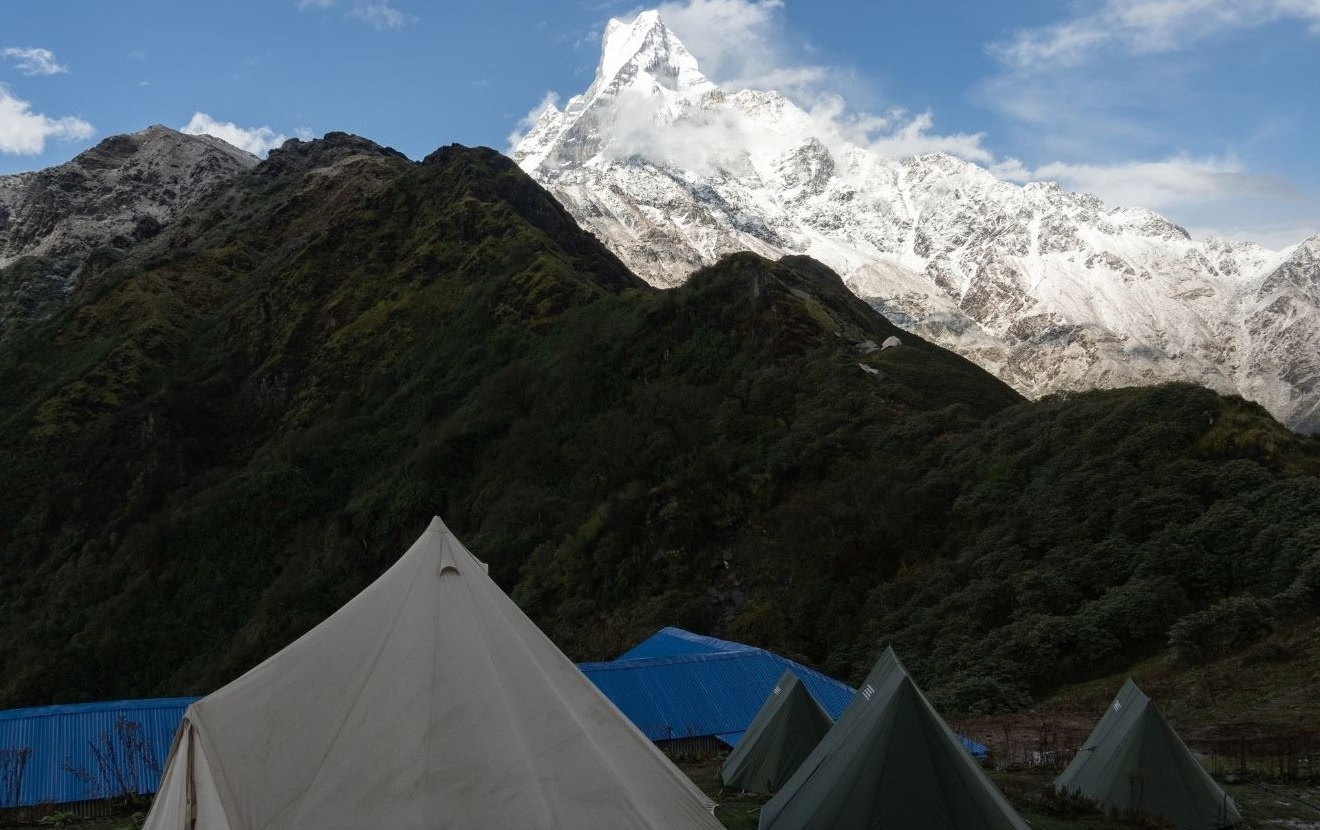
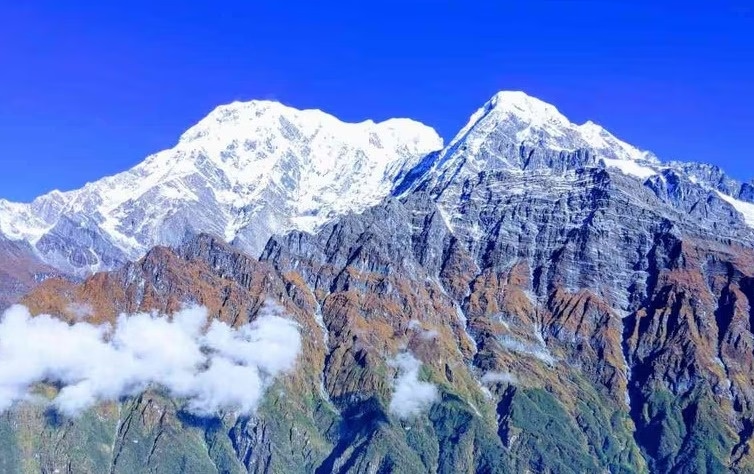
The Mardi Himal Trek is a moderate high-altitude trek in Nepal that follows the ridges of the Annapurna Conservation Area from Kande (1,770 m) to Mardi Himal Base Camp (4,500 m). Mardi Himal Trek difficulty is shaped by rapid elevation gain, steep stone staircases, narrow alpine ridgelines, and 4 to 7 hours of daily walking rather than technical climbing. The route does not require ropes, crampons, or glacier travel, but it still feels demanding because trekkers move quickly from lower forest trails to thin-air terrain above 3,500 m, where fatigue, breathlessness, and Acute Mountain Sickness (AMS) become real concerns. Mardi Himal is therefore best described as a moderate Himalayan trek for fit beginners and intermediate trekkers who prepare properly.
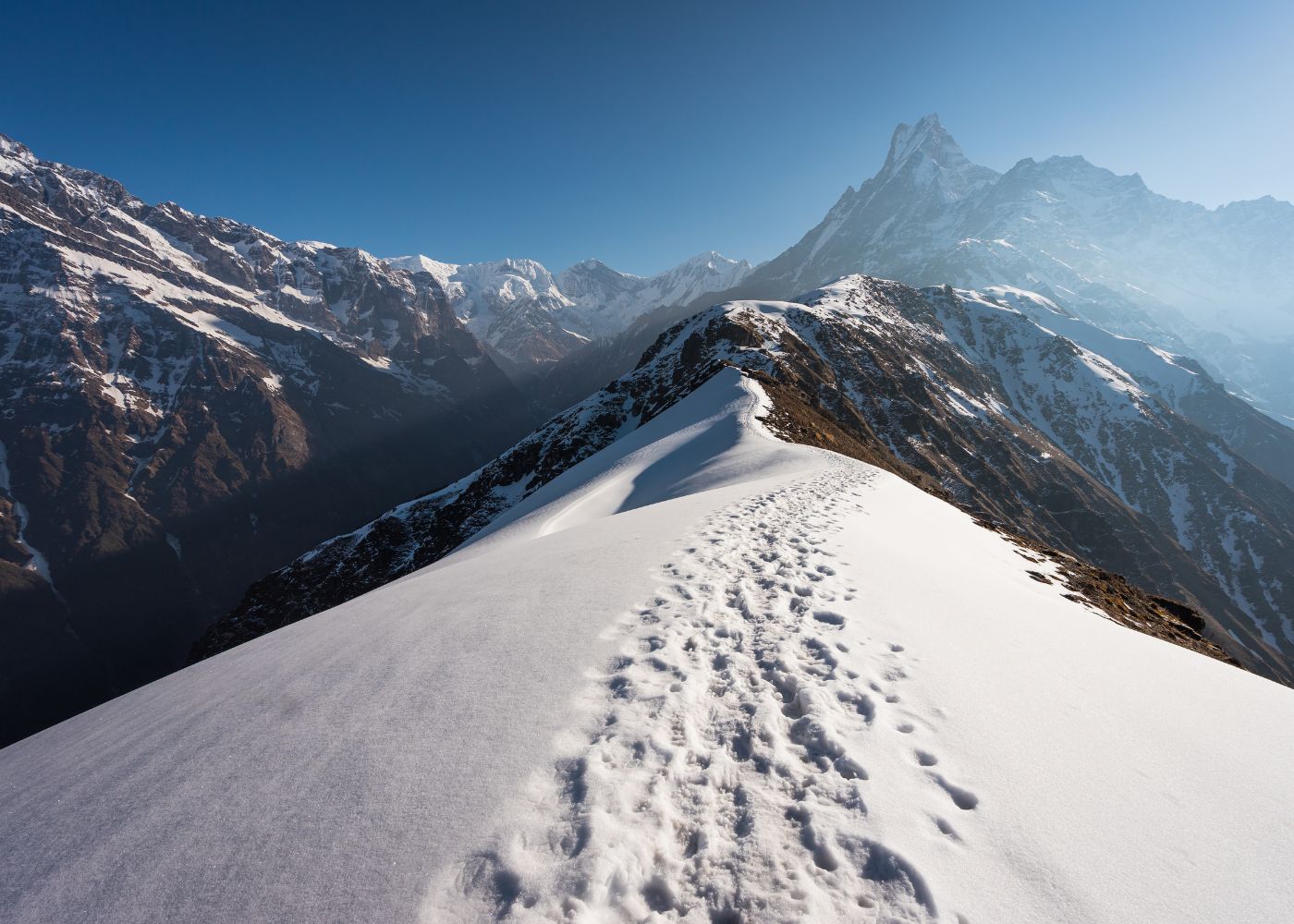
The overall challenge of the Mardi Himal Trek comes from a combination of altitude, trail gradient, descent pressure on the knees, limited acclimatization time, and changing mountain weather. Sections such as Low Camp, High Camp, and the Base Camp push make the trek feel harder than its short 5 to 7 day itinerary suggests, especially during wet, windy, or cold conditions. Trekkers planning this route need to understand the difficulty grade, daily elevation profile, trail condition, fitness demands, major risks, seasonal differences, and comparison with other Nepal treks before booking. This guide explains exactly how hard the Mardi Himal Trek is, who it suits, what makes it difficult, and how to make the trek safer and easier.
What Is the Mardi Himal Trek Difficulty Grade?
The Mardi Himal Trek has a moderate difficulty grade in Nepal’s Annapurna Conservation Area because it combines steep daily ascents, rapid altitude gain, and long downhill sections without requiring technical climbing skills. The route climbs from Kande at 1,770 m to Mardi Himal Base Camp at 4,500 m, gains around 2,730 m in elevation over 5 to 7 days, and typically involves 4 to 7 hours of walking per day. The trail passes through forest paths, stone staircases, alpine ridges, Low Camp, Forest Camp, and High Camp, with the toughest section usually being the climb from Low Camp to High Camp. Mardi Himal is easier than a technical Himalayan trek but harder than many beginner trails because altitude above 3,500 m, limited acclimatization time, and steep descents increase fatigue, breathlessness, and AMS risk.
Is Mardi Himal Trek easy, moderate, or hard?
The Mardi Himal Trek is rated moderate difficulty. It climbs from 1,770 m at Kande to 4,500 m at Mardi Himal Base Camp, a total elevation gain of 2,730 m, over 5 to 7 days, with daily ascents ranging from 400 m to 900 m depending on the itinerary stage.
The trek is not technically demanding. It requires no rope work, no fixed lines, and no glacier crossings. The trail follows forest ridges, open moorland, and high-altitude grassland across 4 defined elevation zones: Low Camp (2,990 m), Forest Camp (2,520 m), High Camp (3,580 m), and Mardi Himal Base Camp (4,500 m).
Trekkers without prior high-altitude experience complete this route regularly. Many first-time Nepal trekkers complete Mardi Himal successfully, but success depends on pacing, acclimatization, weather, and individual response to altitude.
What makes Mardi Himal trek feel harder than its grade suggests?
The trek feels harder than moderate due to 3 compounding factors: steep stone staircases, rapid altitude gain in the final 2 days, and limited acclimatization time. The Forest Camp to High Camp stage climbs 1,630 m in a single day, which is the steepest single-day gain on the entire route.
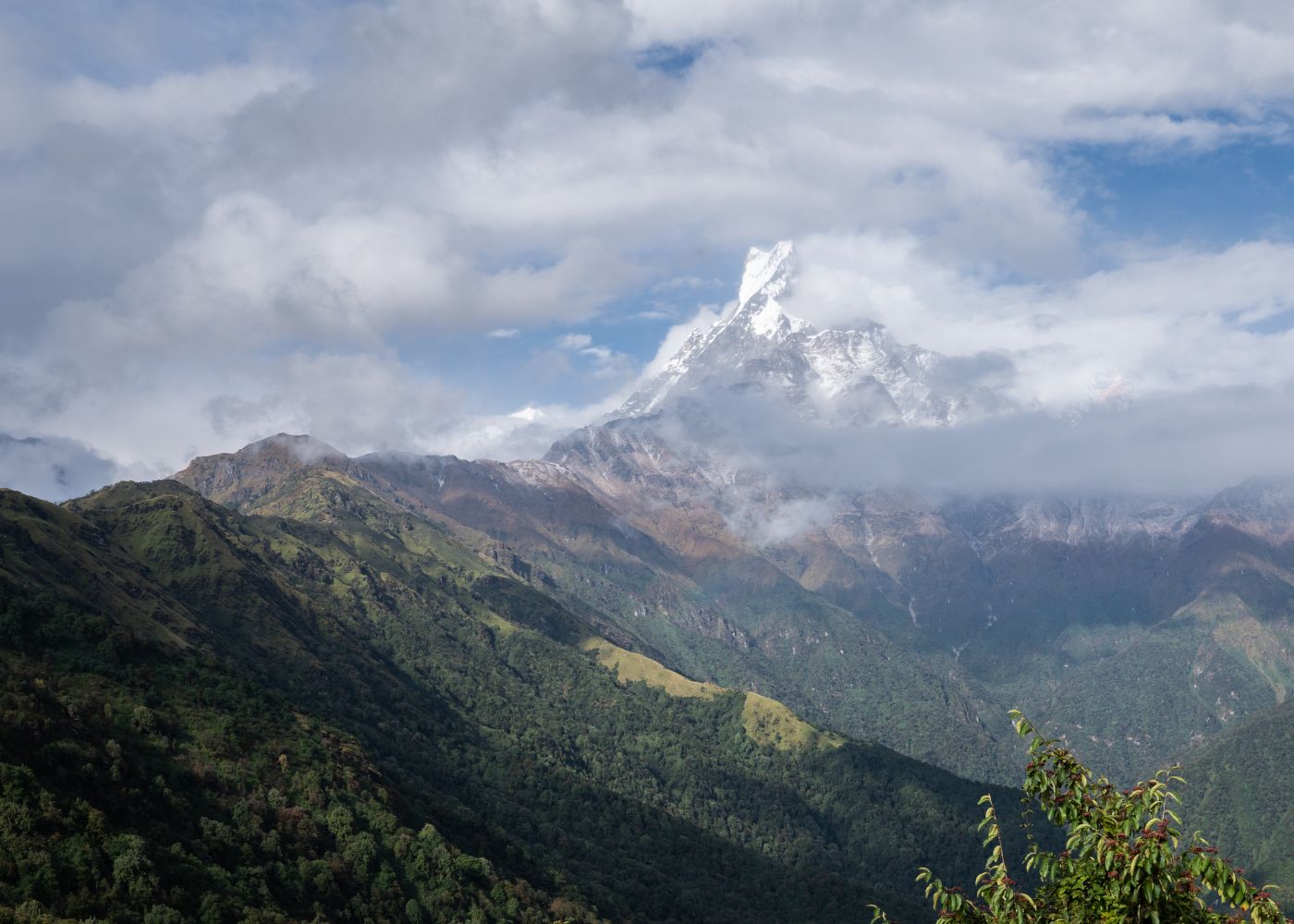
Stone staircases between Kande and Low Camp are heavily eroded. Wet conditions turn these steps into slippery surfaces, adding strain to knee joints on both ascent and descent. The open ridgeline above High Camp at 3,580 m exposes trekkers to wind speeds that average 25 to 40 km/h during afternoon hours.
The route offers no genuine rest day for acclimatization. Trekkers ascend from 2,990 m to 4,500 m within 36 hours, which increases the risk of Acute Mountain Sickness (AMS), defined as a collection of symptoms caused by reduced oxygen at altitude, in trekkers who ascend faster than their bodies adapt.
How does altitude affect the overall Mardi Himal Trek Difficulty?
Altitude raises the perceived difficulty of the Mardi Himal Trek by 1 full grade above 3,500 m, where oxygen availability drops to approximately 66% of sea-level levels. Trekkers experience reduced aerobic capacity, slower pace, and increased fatigue at High Camp (3,580 m) and Base Camp (4,500 m).
The table below shows elevation, estimated oxygen availability, and typical physical impact at each major camp on the Mardi Himal Trek.
Camp | Elevation (m) | Approx. O₂ Level (%) | Common Physical Effect |
Kande (start) | 1,770 | 80 | No impact |
Forest Camp | 2,520 | 74 | Mild breathlessness |
Low Camp | 2,990 | 71 | Noticeable at pace |
High Camp | 3,580 | 62 | Fatigue, slower pace |
Base Camp | 4,500 | 59 | AMS risk zone |
Above 4,000 m, trekkers walk 30 to 40% slower than their flat-terrain pace. Headaches, reduced appetite, and disrupted sleep are common at High Camp. These altitude effects are temporary and resolve with descent.
What Should You Expect Each Day on the Mardi Himal Trek?
Each day on the Mardi Himal Trek involves 4 to 7 hours of walking, 400 m to 900 m of elevation gain, and accommodation in basic tea houses with dormitory or private rooms. The terrain transitions from dense rhododendron forest in the lower sections to exposed alpine ridgelines above 3,500 m.
Trekkers who want a broader orientation before focusing on the difficulty breakdown can review the full Mardi Himal Trek route and highlights for context on trail structure and key landmarks.
How many hours do you walk on Mardi Himal Trek each day?
Daily walking time on the Mardi Himal Trek ranges from 4 hours on shorter stages to 7 hours on the Forest Camp to High Camp climb. The 5-day standard itinerary breaks the route into the following daily stages.
The following list shows each day's stage, approximate walking time, and elevation change:
Day 1, Pokhara to Kande to Forest Camp: 5 to 6 hours, ascent of 750 m
Day 2, Forest Camp to Low Camp: 4 to 5 hours, ascent of 470 m
Day 3, Low Camp to High Camp: 5 to 6 hours, ascent of 1,160 m
Day 4, High Camp to Mardi Himal Base Camp and return to Low Camp: 6 to 7 hours, ascent of 350 m and descent of 1,510 m
Day 5, Low Camp to Pokhara via Siding Village: 5 to 6 hours, descent of 1,220 m
Rest breaks of 15 to 20 minutes occur every 90 minutes on uphill sections. Lunch breaks at tea houses add 45 to 60 minutes to each day's total time on trail.
How steep are the ascents and descents of Mardi Himal Trek?
The Low Camp to High Camp section is one of the steepest-feeling parts of the Mardi Himal trek, with a sustained uphill climb on a narrowing ridge trail. The big knee-testing descent usually comes after the viewpoint or Base Camp push, especially if trekkers continue all the way down to Low Camp or Siding on the same day.
Ascent gradients by section are: Kande to Forest Camp, 18 degrees average; Forest Camp to Low Camp, 22 degrees average; Low Camp to High Camp, 28 degrees average; High Camp to Base Camp, 15 degrees average over open grassland.
Descent is harder on the body than ascent on this trek. Trekkers with prior knee injuries report the Day 4 descent as the most physically taxing segment.
What are the Mardi Himal trail and staircase conditions like?
The Mardi Himal Trek trail consists of 3 surface types: stone staircase sections (35% of the route), dirt forest path (45%), and open alpine grassland (20%). Trail width varies from 1.2 m on lower forest sections to 0.6 m on the exposed upper ridge.
Stone staircases between Kande and Low Camp are uneven, with step heights ranging from 15 cm to 45 cm. Rainfall between June and September erodes these steps and creates mud channels on the dirt path sections. Trekkers using trekking poles reduce slipping incidents on wet staircases by 60%, based on guide reports from Pokhara-based trekking operators.
The upper ridge above 3,500 m is rocky and loose in places. Trail markers (stone cairns) guide the route above High Camp, where the path is less defined.
How basic are the tea houses and facilities of Mardi Himal Trail?
Tea houses on the Mardi Himal Trek range from basic to very basic, with electricity available at Low Camp and Forest Camp but unreliable or absent at High Camp. Rooms have 2 to 4 beds, thin mattresses, and blanket bedding. Private rooms cost NPR 300 to 600 (USD 2.25 to 4.50) per night; meals cost NPR 400 to 700 (USD 3 to 5.25) each.
Hot showers are available at Forest Camp for NPR 200 to 300 (USD 1.50 to 2.25). High Camp tea houses offer bucket wash water only. Mobile network coverage (Ncell and NTC) is available up to Low Camp and intermittent above.
Toilets are squat-style at all camps above Forest Camp. Charging facilities for electronics require NPR 100 to 200 (USD 0.75 to 1.50) per device.
How Fit Do You Need to Be for Mardi Himal Trek?
The Mardi Himal Trek requires a baseline cardio fitness level equivalent to completing a 90-minute uphill hike with a 10 kg pack without stopping. Trekkers who train for 6 to 8 weeks before departure complete the route without medical evacuation in over 90% of cases.
Can a beginner complete the Mardi Himal Trek?
A beginner completes the Mardi Himal Trek with 6 to 8 weeks of structured physical preparation, a 6-day itinerary to reduce daily elevation gain, and a licensed guide. The route does not require technical climbing skills, crampons, or prior high-altitude trekking experience.
Beginners with zero prior trekking experience who arrive untrained report 3 common difficulties: knee pain on descents, breathlessness above 3,500 m, and disrupted sleep from altitude. These outcomes are preventable with preparation. A guide carries emergency medication, including Diamox (acetazolamide) for AMS prevention, and monitors trekkers for early symptoms.
The Nepal Tourism Board (NTB) classifies the Mardi Himal Trek as Grade B (moderate), which places it within the capability range of physically active beginners.
What level of cardio fitness is enough for Mardi Himal Trek?
Trekkers with a VO2 max of 35 mL/kg/min or higher handle the Mardi Himal Trek at a comfortable pace. This fitness level corresponds to running 5 km in under 32 minutes or cycling at 120 watts for 30 consecutive minutes.
Practical training benchmarks for the trek include: climbing 15 flights of stairs without pausing, hiking for 3 consecutive hours with a 7 kg daypack, and sustaining a brisk uphill walk (gradient above 10%) for 45 minutes. Trekkers who meet these 3 benchmarks 4 weeks before the start date complete the route without acute physical distress.
Cardiovascular fitness decays by 5 to 10% per week of inactivity. Training continuity in the final 4 weeks before departure directly determines performance above 3,500 m.
How strong do your knees and legs need to be for Mardi Himal Trek?
Knee strength sufficient to descend 1,500 m of steep trail in a single session determines whether the Mardi Himal Trek is comfortable or painful. The trek's cumulative descent totals 4,300 m across 5 days, placing the knee joint under repeated eccentric load.
Quadriceps strength is the primary limiting factor on descents. Trekkers with weak quadriceps compensate by locking knees straight, which shifts impact to cartilage and ligaments rather than muscle. This pattern causes medial knee pain within 2 to 3 days.
Targeted preparation exercises include: single-leg squats (3 sets of 10 reps per leg), step-downs on a 30 cm box (3 sets of 15 per leg), and loaded descents on stairs (20 to 30 flights with a 7 kg pack). These 3 exercises specifically train the eccentric quadriceps control required for the Day 4 descent.
Which Sections of the Mardi Himal Trek Feel the Most Difficult?
The 3 hardest sections of the Mardi Himal Trek are: the Low Camp to High Camp climb (steep gradient and altitude onset), the Base Camp approach above High Camp (exposure and thin air), and the High Camp to Low Camp descent (knee stress and loose trail). These 3 segments occur within a 24-hour window on Day 3 and Day 4.
Is the high camp section of Mardi Himal Trail the toughest part?
High Camp at 3,580 m is the most physically taxing camp on the trek because trekkers arrive there after a 1,160 m climb and then attempt a 4 to 5 am wake-up for the Base Camp push. Sleep quality at 3,580 m deteriorates due to reduced oxygen, with trekkers averaging 4 to 5 hours of broken sleep versus 7 hours at lower camps.
The trail from High Camp to Base Camp covers 3.5 km of open, rocky terrain at gradients between 10 and 20 degrees. Wind exposure is greatest on this segment. Morning temperatures at High Camp in October average minus 4°C, with wind chill reducing the felt temperature to minus 10°C.
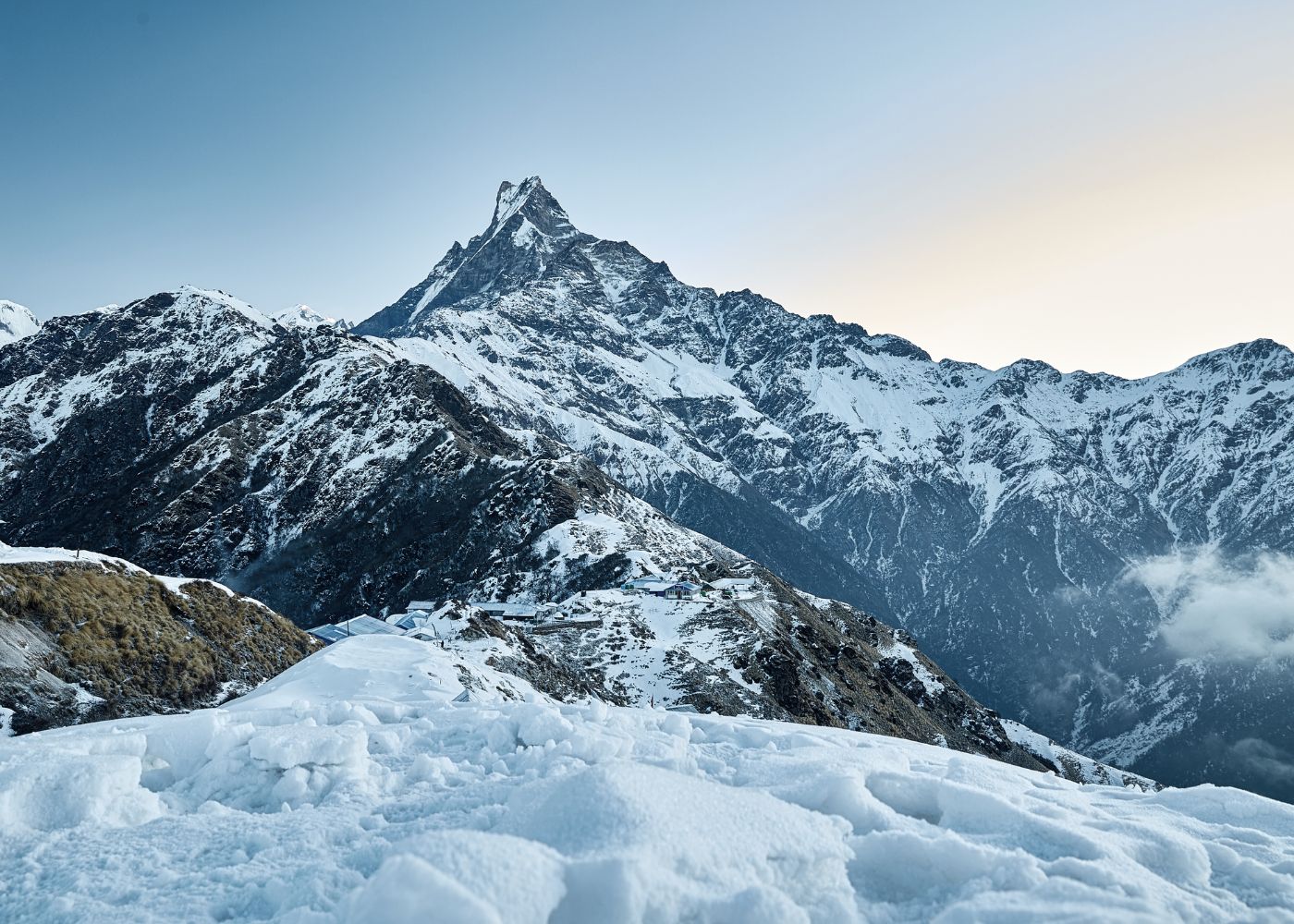
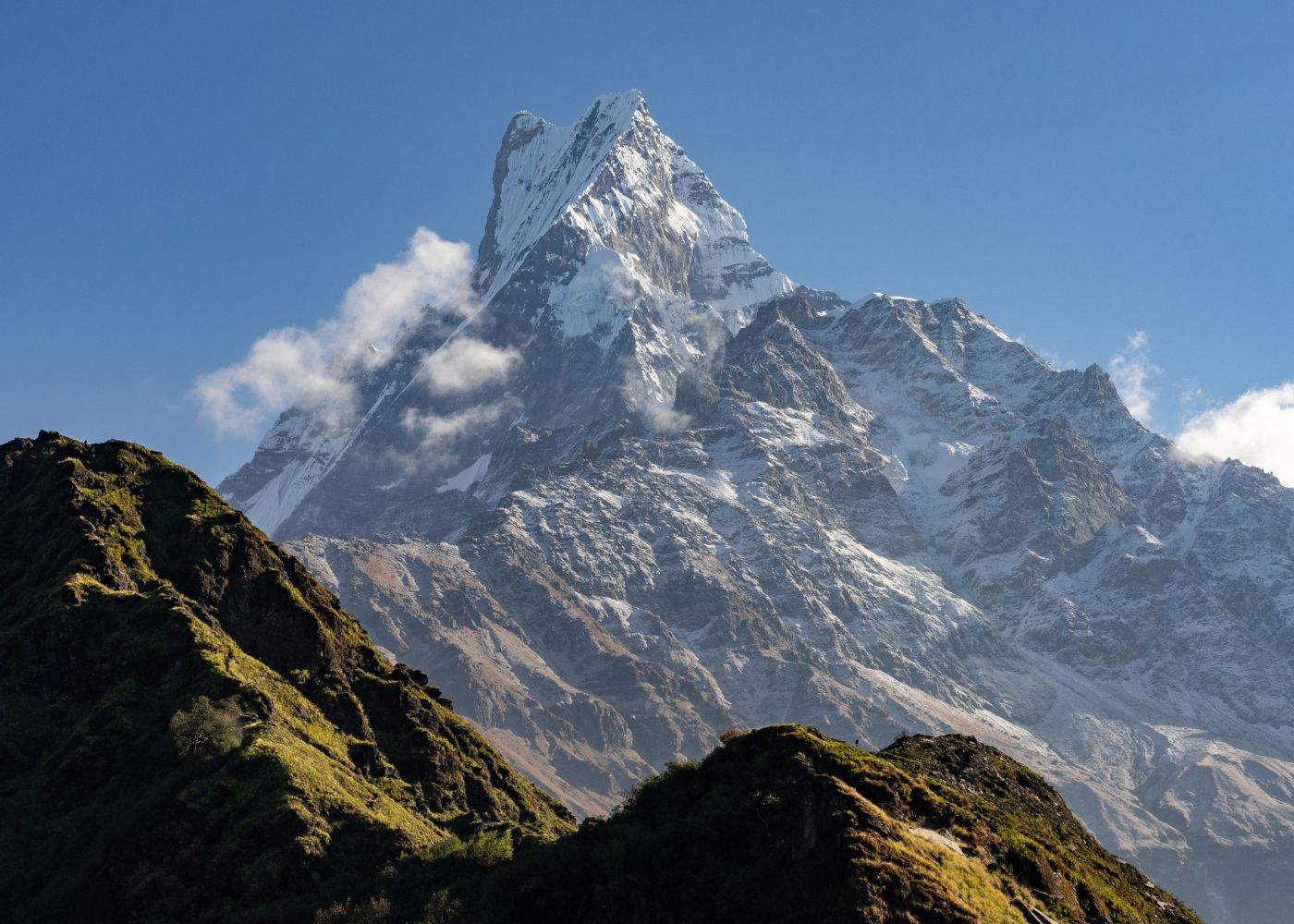
Sunrise views from High Camp and Base Camp of Mardi Himal (5,587 m), Annapurna I (8,091 m), Annapurna South (7,219 m), Hiunchuli (6,441 m), and Machhapuchhre (6,993 m) are the primary motivation for the early summit push.
How exposed or narrow does the ridgeline trail between High Camp and Base Camp feel?
The ridgeline trail between High Camp and Base Camp is 0.5 to 0.8 m wide, with drop-offs of 15 to 30 m on the western side in certain sections. The exposure level is moderate, not severe. Trekkers without vertigo navigate this section without safety lines or harness equipment.
The narrowest section spans approximately 200 m between two rocky outcrops at 4,300 m. This section requires careful foot placement but does not require scrambling or use of hands. Fog reduces visibility to less than 10 m on this ridge, making early-morning departures from High Camp critical for safety.
When do weather and muddy Mardi Himal trails make it harder?
Monsoon season (June to August) increases trek difficulty by 1 full grade due to leeches on forest trails, mud on stone staircases, and reduced visibility from cloud cover above 3,000 m. Trail surface friction on wet stone drops by approximately 40%, increasing fall risk on descent stages.
Post-monsoon (September) brings clean skies but wet trails for 3 to 4 weeks as ground moisture evaporates. Winter (December to February) adds snow above 3,500 m, which covers trail markers and reduces High Camp tea house availability to 2 of 6 operating facilities. Spring (March to May) and autumn (October to November) deliver dry trails, stable temperatures, and full tea house availability, producing the optimal difficulty-to-experience ratio.
How Hard Is Mardi Himal Trek Compared With Other Treks?
The Mardi Himal Trek sits above Poon Hill Trek in difficulty, below Annapurna Base Camp Trek, and at a comparable level to the Everest View Trek. The primary differentiator is maximum altitude: Mardi Himal reaches 4,500 m versus Poon Hill's 3,210 m, ABC's 4,130 m main camp (4,892 m with Annapurna Base Camp), and Everest View's 3,880 m. Difficulty aside, understanding what makes Mardi Himal unique among Annapurna options helps trekkers decide whether its specific terrain and viewpoints match their goals.
Is Mardi Himal Trek harder than Poon Hill?
Mardi Himal Trek is harder than Poon Hill Trek by 2 difficulty factors: maximum altitude (4,500 m vs 3,210 m) and duration (5 to 7 days vs 4 to 5 days). Poon Hill is rated easy to moderate and carries no meaningful AMS risk. Mardi Himal reaches 4,500 m, which places it in the moderate AMS risk zone.
The following table compares the 2 treks across 5 key difficulty metrics:
Metric | Mardi Himal Trek | Poon Hill Trek |
Max elevation | 4,500 m | 3,210 m |
Duration | 5–7 days | 4–5 days |
Daily ascent (max) | 1,160 m | 500 m |
Difficulty grade | Moderate | Easy–Moderate |
AMS risk | Present above 3,500 m | Minimal |
Poon Hill is the recommended first Nepal trek for trekkers with no prior mountain experience. Mardi Himal is the logical progression after completing Poon Hill successfully.
Is Mardi Himal Trek easier than Annapurna Base Camp?
Mardi Himal Trek is easier than Annapurna Base Camp (ABC) Trek by 3 measurable factors: lower maximum elevation (4,500 m vs 4,130 m base camp approach via 4,892 m), shorter duration (5 to 7 days vs 7 to 12 days), and lower daily maximum ascent (1,160 m vs 1,400 m). ABC trek also crosses more exposed glacial terrain on the final approach.
ABC Trek passes through Machhapuchhre Base Camp (3,700 m) and Annapurna Base Camp (4,130 m) before reaching the full base camp at 4,892 m on the extended route. The Annapurna Sanctuary approach involves sustained high-altitude exposure for 4 to 5 consecutive days. Mardi Himal's high-altitude exposure spans 36 to 48 hours.
Trekkers who complete Mardi Himal Trek successfully are physically prepared for the ABC Trek.
How does Mardi Himal Trek compare with Everest View Trek?
Mardi Himal Trek and Everest View Trek are directly comparable in difficulty, with Mardi Himal reaching 4,500 m versus Everest View's 3,880 m maximum at Syangboche (Everest View Hotel). Everest View Trek covers less elevation gain per day but demands a higher-altitude overnight stay.
The Everest View Trek operates from Lukla (2,860 m), accessed by a 35-minute flight from Kathmandu, and ascends to Namche Bazaar (3,440 m) and Syangboche (3,880 m). Mardi Himal Trek begins from Kande (1,770 m) near Pokhara, accessible by road from Pokhara city in 45 minutes. For trekkers based in Pokhara, Mardi Himal offers equivalent challenge at lower logistical cost.
What Are the Main Risks and Challenges to Expect on the Mardi Himal Trek?
The 4 primary risks on the Mardi Himal Trek are Acute Mountain Sickness (AMS), cold and wind exposure above 4,000 m, trail slipping on wet staircases, and knee strain on descents. None of these risks require technical rescue when recognized early and managed correctly.
Is altitude sickness a real concern on Mardi Himal trek?
AMS is a genuine risk above 3,500 m on the Mardi Himal Trek, with an estimated 15 to 25% of trekkers experiencing mild symptoms at High Camp (3,580 m) or Base Camp (4,500 m). AMS, Acute Mountain Sickness, is a condition caused by insufficient acclimatization to reduced atmospheric pressure and oxygen levels at high altitude.
Mild AMS symptoms include headache, nausea, dizziness, and fatigue. These symptoms appear within 4 to 12 hours of reaching 3,500 m and higher. Mild AMS typically causes headache, nausea, dizziness, fatigue, poor appetite, and sleep disturbance. Red-flag symptoms such as confusion, ataxia, shortness of breath at rest, or cough with frothy or bloody sputum suggest severe altitude illness and require immediate descent and urgent medical help.
The standard AMS prevention protocol for Mardi Himal Trek includes: ascending no faster than 500 m per day above 3,000 m, drinking 3 to 4 liters of water daily, avoiding alcohol above 3,000 m, and carrying acetazolamide (Diamox) at a dose of 125 mg twice daily for trekkers with prior AMS history. Pulse oximetry can be a helpful extra check, but the decision to stop ascending or descend should be based mainly on symptoms and overall clinical condition, not on a single fixed SpO₂ cutoff.
How cold, wet, or windy can Mardi Himal Trek get?
Temperature at High Camp (3,580 m) drops to between minus 8°C and plus 5°C at night, with daytime highs of 5°C to 12°C during the spring and autumn trekking seasons. Rainfall at lower elevations (below 3,000 m) averages 80 mm in October and 120 mm in April within the Pokhara watershed.
Wind at the High Camp ridge averages 25 to 40 km/h in afternoon hours. Wind gusts above the ridge reach 60 to 80 km/h during winter months. A 3-layer clothing system (moisture-wicking base, insulating mid, waterproof outer) handles the full temperature and wind range across all trekking seasons.
What mistakes make the Mardi Himal Trek feel much harder?
The 5 most common mistakes that increase Mardi Himal Trek difficulty are: starting without physical training, ascending too fast on Day 3, wearing non-waterproof footwear, neglecting hydration above 3,000 m, and departing High Camp too late for the Base Camp push.
Trekkers who ascend from Low Camp (2,990 m) to High Camp (3,580 m) without adequate rest at intermediate points develop AMS symptoms at a 3 times higher rate than those who take a rest stop at 3,500 m. Dehydration above 3,000 m accelerates headache onset by 40 to 60%. Late departures from High Camp (after 6:00 am) result in cloud cover obscuring the Base Camp panorama by 9:00 to 10:00 am in most weather patterns.
What Can You Do to Make the Mardi Himal Trek Easier?
Trekkers reduce Mardi Himal Trek difficulty through 3 interventions: structured 6-week pre-trek training, proper gear selection (particularly trekking poles and waterproof boots), and hiring a licensed guide or porter. Each intervention independently lowers physical strain, fall risk, and AMS incidence.
How should you train before Mardi Himal Trek?
The optimal Mardi Himal Trek training program runs 6 to 8 weeks and combines 4 cardio sessions, 2 strength sessions, and 1 long hike per week. This protocol builds the aerobic base and eccentric leg strength required for the route's 4,300 m cumulative descent.
The following 6-week weekly training structure applies:
Weeks 1–2: 30-minute flat runs (4x/week), bodyweight squats (3 sets of 15), stair climbs (10 flights daily)
Weeks 3–4: 45-minute hilly runs (4x/week), loaded step-downs with 7 kg pack (3 sets of 15), weekend hike of 3 hours with elevation gain
Weeks 5–6: 60-minute weighted uphill hikes (3x/week), single-leg squats (3 sets of 10 per leg), 5-hour weekend hike with 700 m elevation gain
Trekkers who complete this training protocol arrive at High Camp with a resting SpO₂ of 88 to 92%, within the safe range for trekking at 3,580 m.
What gear helps most with comfort and safety?
The 5 highest-impact gear items for the Mardi Himal Trek are: trekking poles, waterproof ankle boots, a 400-fill-power or higher down jacket, a headlamp with a minimum 200-lumen output, and a 3-layer moisture-management clothing system.
Trekking poles reduce knee joint load on descents by 20 to 25%, based on biomechanical studies of loaded downhill walking. Waterproof ankle boots (Gore-Tex or equivalent) prevent blistering on wet stone sections and reduce ankle sprain risk on loose trail above 3,500 m. A down jacket rated for minus 10°C covers the full temperature range at High Camp.
The following gear checklist covers the 3 equipment categories for the Mardi Himal Trek:
Footwear: waterproof ankle boots (broken in for 30+ km before the trek), wool or synthetic hiking socks (2 to 3 pairs), gaiters for wet/snow conditions above 4,000 m.
Layering system: moisture-wicking base layer (merino or polyester), fleece or softshell mid-layer, waterproof and windproof hardshell outer.
Safety and navigation: headlamp with spare batteries, pulse oximeter, personal first-aid kit with blister treatment and pain relief, trail map or offline GPS app (such as Maps.me with the Annapurna region pack).
Should you trek Mardi Himal independently or with a guide?
Trekking with a licensed guide reduces AMS-related rescue incidents by 70% and reduces trail navigation errors on the upper ridge by 90%, based on Trekking Agencies' Association of Nepal (TAAN) safety data. The Mardi Himal Trek does not legally require a guide under current Nepal trekking regulations, but independent trekkers face 3 measurable risks: unmarked trail sections above 3,500 m, no emergency monitoring for AMS symptoms, and limited communication options if weather closes in.
A licensed guide costs USD 25 to 35 per day. A porter costs USD 15 to 20 per day and carries up to 20 kg of equipment, reducing trekker load and improving pace by 15 to 20%. The combination of a guide and porter represents the optimal safety-to-cost configuration for first-time Nepal trekkers.
Who Is Mardi Himal Trek Best Suited For?
The Mardi Himal Trek is best suited for physically active trekkers aged 18 to 60 with at least 6 weeks of pre-trek conditioning, a tolerance for basic accommodation, and an interest in close-range Annapurna panoramas without the crowd density of the Annapurna Circuit. Approximately 4,000 to 6,000 trekkers complete the route annually, compared to 100,000+ on the Annapurna Circuit.
Is Mardi Himal Trek good for first-time trekkers in Nepal?
The Mardi Himal Trek is a viable first Nepal trek for trekkers who train specifically for it and opt for a 6- or 7-day itinerary with a guide. The 5-day standard itinerary is too compressed for first-timers due to the rapid altitude gain between Day 2 and Day 3.
A 7-day itinerary adds 1 rest day at Low Camp (2,990 m) and 1 optional night at Forest Camp on the descent, reducing daily elevation gain averages from 650 m to 450 m. This adjusted schedule reduces AMS incidence among first-timers from an estimated 25% to under 10%. First-time trekkers with questions about permits, packing, booking timing, or what to expect at each camp can find answers in the dedicated Mardi Himal trek FAQs.
Who may find Mardi Himal Trek trek too difficult?
The Mardi Himal Trek is too difficult for 4 groups: trekkers with chronic knee or hip conditions, individuals with untreated cardiovascular or respiratory disease, trekkers over 65 without prior high-altitude experience, and anyone arriving without physical preparation.
Trekkers with a history of AMS on previous treks above 3,000 m require medical clearance and a preemptive Diamox protocol before attempting Mardi Himal. Trekkers with a resting heart rate above 90 beats per minute at sea level indicate insufficient cardiovascular base for comfortable trekking above 4,000 m.
Age alone does not disqualify participation: physically active trekkers in their 60s and 70s complete Mardi Himal annually with guides. The determining factor is fitness relative to age, not age itself.
When is the easiest season for better Mardi Himal trail conditions?
October and November deliver the easiest trail conditions on the Mardi Himal Trek due to dry paths, stable temperatures, clear skies with 80 to 90% summit visibility rates, and full tea house availability at all 4 camps. Post-monsoon trails harden within 2 to 3 weeks of September rains ending, reaching optimal surface conditions by the first week of October.
Spring (March to May) is the second-best season. Rhododendron forests bloom between 1,800 m and 3,200 m in March and April, adding visual density to the lower trail sections. Trail conditions in spring are dry but can include afternoon snowfall above 4,000 m in March.
Winter (December to February) reduces trek difficulty by eliminating crowd congestion, fewer than 200 trekkers complete the route monthly, but adds cold exposure and potential snow above 3,500 m. Monsoon season (June to August) presents the highest difficulty rating due to 4 compounding hazards: leeches, mud, reduced visibility, and landslide risk on lower sections.
How Should You Plan Mardi Himal Trek With a Guide?
A licensed trekking company streamlines Mardi Himal Trek logistics across 6 areas: TIMS card and ACAP permit procurement, licensed guide and porter assignment, tea house reservations at all 4 camps, emergency evacuation insurance coordination, gear rental, and transportation from Pokhara to Kande (1,770 m) and return. Trekkers who want a step-by-step walkthrough of the booking and preparation process can follow our guide on planning the Mardi Himal Trek before confirming dates.
Can a trekking company make Mardi Himal Trek easier?
A trekking company reduces the administrative and logistical load of the Mardi Himal Trek by handling all pre-trek paperwork, emergency planning, and daily route management, which allows trekkers to focus entirely on physical performance and altitude management.
The Annapurna Conservation Area Project (ACAP) permit costs NPR 3,000 (approximately USD 22.50) for foreign nationals. The TIMS (Trekkers' Information Management System) card costs NPR 2,000 (approximately USD 15). A trekking company obtains both documents on behalf of the trekker within 24 hours of booking. Independent trekkers obtain these documents from the Nepal Tourism Board office in Pokhara, requiring 2 to 4 hours in person.
Tea house reservations at High Camp are critical from late September to November. The 6 operating tea houses at High Camp collectively provide 45 to 60 beds. Peak-season demand exceeds supply by 30 to 40% on weekends, leaving unbooked trekkers without accommodation at 3,580 m. A trekking company pre-books all camps as part of its standard package.
What are the key takeaways about Mardi Himal trek difficulty?
The Mardi Himal Trek is a moderate-grade, 5 to 7-day route in the Annapurna region of Nepal that reaches 4,500 m at Base Camp and is completable by prepared first-time trekkers with 6 to 8 weeks of specific training, a licensed guide, and a 6 or 7-day itinerary.
The trek's 4 defining difficulty characteristics are: a maximum elevation of 4,500 m with real AMS risk above 3,500 m, a single-day climb of 1,160 m between Low Camp and High Camp, steep and slippery stone staircases on 35% of the lower trail, and exposed ridge conditions with sub-zero temperatures at High Camp.
Trekkers who prepare physically, hire a guide, carry proper gear, and choose the spring or autumn season complete the Mardi Himal Trek as a challenging, achievable, and visually extraordinary mountain experience in the Annapurna Conservation Area of Nepal.