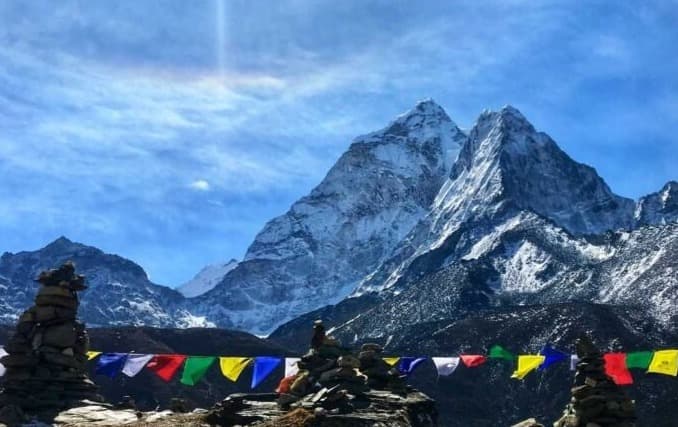
The 5-day Mardi Himal Trek is a short Himalayan teahouse trek in Nepal that starts from Pokhara and reaches Mardi Himal Base Camp at 4,500 meters through the Annapurna Conservation Area. The route passes Kande, Forest Camp, Low Camp, High Camp, and Siding, covering about 50 to 60 kilometers with close mountain views of Mardi Himal, Machapuchare, Annapurna South, and Hiunchuli.
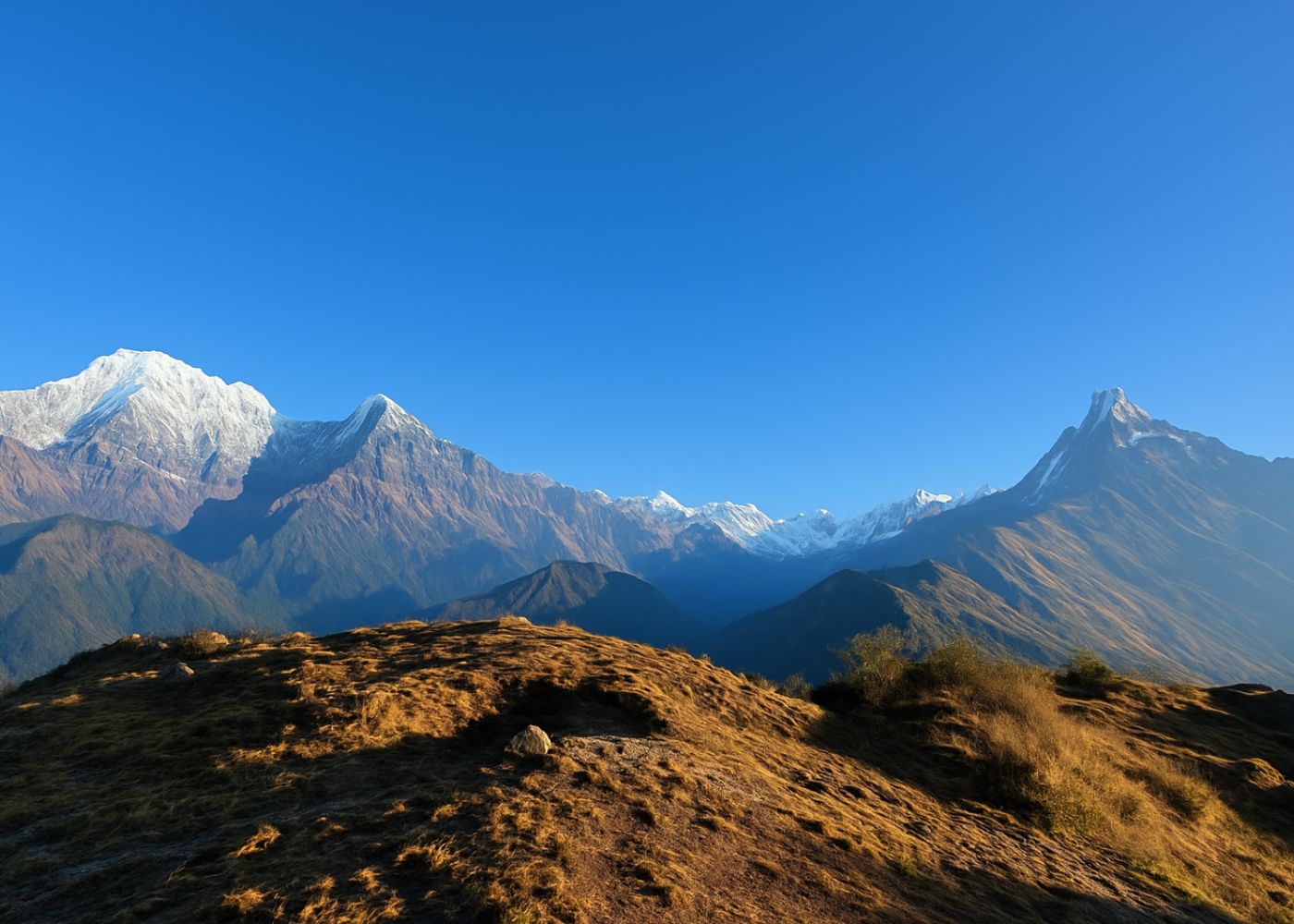
The best 5-day Mardi Himal trek itinerary suits trekkers who want a moderate high-altitude trek with clear daily stages, steady elevation gain, and no technical climbing. This guide covers the full day-by-day route, difficulty, altitude and acclimatization, best season, permits, costs, teahouses, packing list, transport, and safety tips needed to plan the trek well.
Why Is Mardi Himal a Good Trek for a 5-Day Schedule?
Mardi Himal suits a 5-day schedule because its trail camps are spaced at 3 to 5 hours of walking distance apart, requiring no extended rest days for healthy trekkers below 45 years of age. The route ascends from 1,560m at Kande to 4,500m at Base Camp across 4 stages, with each camp serving as a defined overnight stop. Teahouses operate at every camp, eliminating the need to carry tent equipment or food supplies.
Mardi Himal is a distinct peak in the Annapurna massif standing at 5,587 meters above sea level in the Gandaki Province of Nepal. The trek to its base camp is classified as a moderate-grade route by the Nepal Tourism Board. The trail was officially opened to trekkers in 2012, making it one of the newest designated trekking routes in the Annapurna region.
The 5-day format works because the elevation gain per day averages 530 meters, which falls within the safe acclimatization range recommended by the Wilderness Medical Society. Trekkers gain elevation across 4 consecutive days, then descend fully on Day 5. No additional acclimatization day is required for trekkers starting from 1,400m Pokhara.
What Makes Mardi Himal Different From Other Short Nepal Treks?
Mardi Himal differs from other short Nepal treks through its consistent close-range views of Mardi Himal (5,587m), Machapuchare (6,993m), and Annapurna South (7,219m) from 3 consecutive high-altitude camps between 3,050m and 4,500m. No other 5-day trek in the Annapurna region provides this sustained proximity to glaciated peaks above 6,000m.
The Poon Hill Trek, the most popular 5-day alternative, reaches a maximum altitude of 3,210m and provides only a single high-altitude viewpoint at sunrise. Mardi Himal Base Camp sits 1,290m higher than Poon Hill's summit, delivering unobstructed panoramic views across a 180-degree arc of the Annapurna Himalaya.
The trail density on Mardi Himal is lower than on Annapurna Base Camp and Poon Hill routes. The Mardi Himal ridge trail carries an estimated 40 to 60 trekkers per day during peak season, compared to 200 to 300 trekkers daily on the Annapurna Base Camp trail.
The route follows a rhododendron forest at lower elevations transitioning into alpine meadows above 3,500m and rocky moraine terrain near Base Camp. This ecological transition across 3 distinct vegetation zones occurs within a single 4-day ascent, a feature absent from the Ghorepani-Poon Hill circuit.
Who Is a 5-Day Mardi Himal Trek Best Suited For?
The 5-day Mardi Himal trek is best suited for trekkers with 3 to 4 hours of moderate hiking experience per day, moderate cardiovascular fitness, and no history of altitude sickness above 3,500m. It accommodates first-time Himalayan trekkers and experienced hikers seeking a short high-altitude route without technical climbing.
Trekkers between 16 and 65 years of age complete this itinerary in standard conditions. Children under 16 and adults over 65 complete the same route with adjusted daily targets, typically adding 30 to 60 minutes per hiking stage. No prior high-altitude experience is required for the 5-day itinerary.
The trek is not suited for trekkers with diagnosed cardiac conditions, active respiratory illness, or a history of acute mountain sickness above 4,000m without medical clearance. The High Camp to Base Camp section involves 3 to 4 hours of sustained uphill walking on rocky terrain, requiring functional ankle stability and leg strength.
4 categories of trekkers complete this route successfully: solo trekkers with teahouse experience, guided groups of 2 to 8 people, couples combining trekking with Pokhara's lakeside stay, and corporate groups using Pokhara as a base. Families with children aged 12 and above complete the itinerary to High Camp at 3,580m, with Base Camp reserved for adults and older teens.
How Does the Day-by-Day Mardi Himal Trek Plan Work?
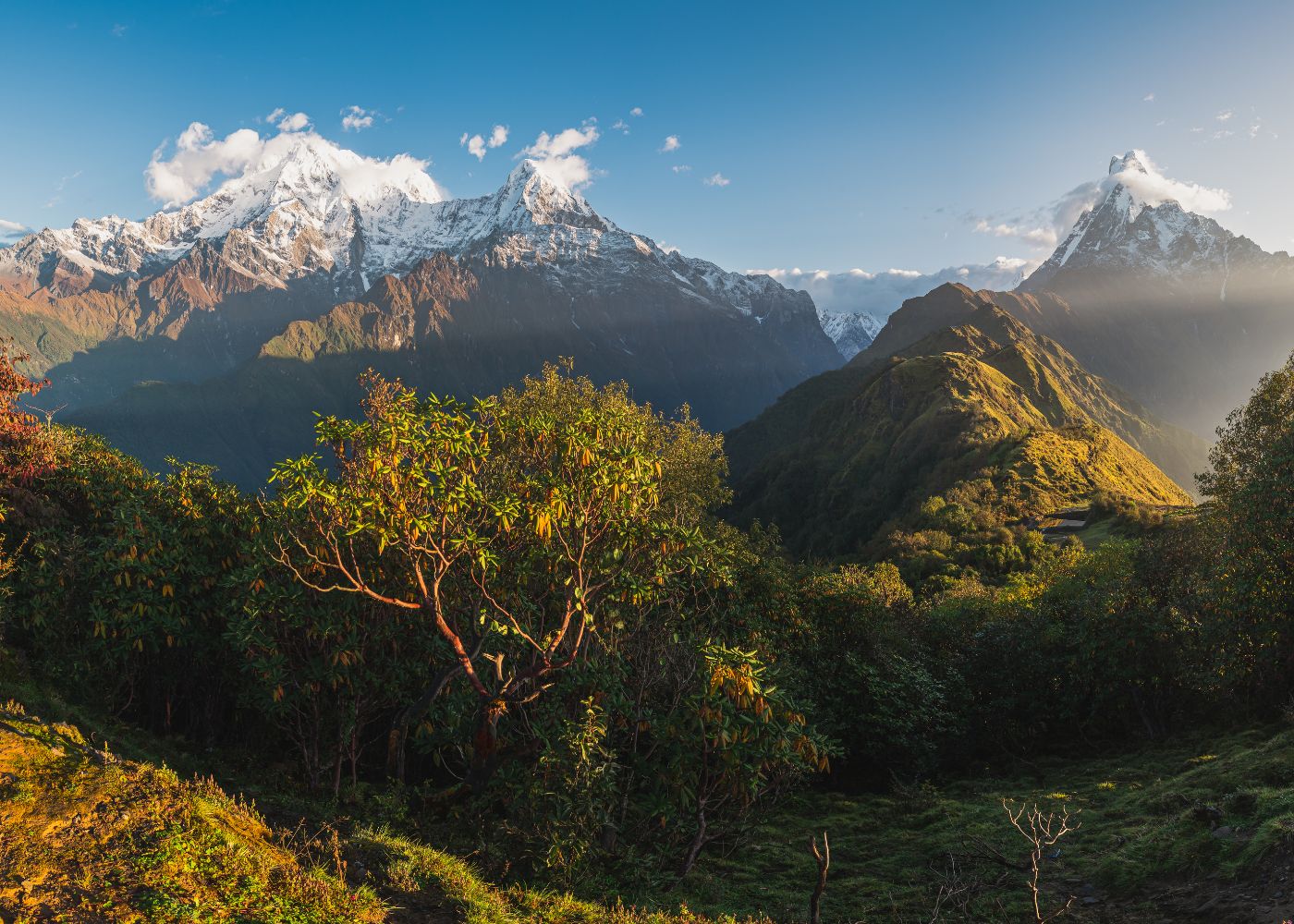
The day-by-day Mardi Himal plan advances trekkers through 5 defined stages: Pokhara to Forest Camp on Day 1, Forest Camp to Low Camp on Day 2, Low Camp to High Camp on Day 3, High Camp to Base Camp and Siding on Day 4, and Siding to Pokhara on Day 5. Each stage takes 3 to 6 hours of active walking.
The following table outlines daily elevation, walking time, and trail distance across the 5-day itinerary.
|
Day |
Route |
Elevation |
Walking Time |
Distance |
|
1 |
Pokhara → Forest Camp |
1,400m → 2,520m |
5–6 hours |
~15 km |
|
2 |
Forest Camp → Low Camp |
2,520m → 3,050m |
3–4 hours |
~8 km |
|
3 |
Low Camp → High Camp |
3,050m → 3,580m |
3–4 hours |
~7 km |
|
4 |
High Camp → Base Camp → Siding |
3,580m → 4,500m → 1,700m |
7–9 hours |
~18 km |
|
5 |
Siding → Pokhara |
1,700m → 1,400m |
4–5 hours drive/hike |
~35 km road |
Day 4 is the longest and most demanding day in the itinerary. It combines the highest elevation gain of the entire trek with the greatest single-day descent of 2,800 meters from Base Camp to Siding.
What Happens on Day 1 From Pokhara to Forest Camp?
Day 1 begins with a 45-minute jeep or taxi ride from Pokhara (1,400m) to Kande (1,770m), followed by a 4 to 5-hour ascent through dense rhododendron and oak forest to Forest Camp at 2,520m. Total elevation gain on Day 1 is 750 meters.
Kande is a small roadside settlement on the Pokhara-Baglung Highway at an elevation of 1,770m. The trailhead at Kande marks the official start of the Mardi Himal trek route, identifiable by the Nepal government permit checkpoint. Trekkers register TIMS cards and ACAP entry permits at this checkpoint.
The trail from Kande climbs steadily northeast through subtropical forest. The forest trail passes through Pitam Deurali at 1,900m, a small settlement with 2 tea shops serving dal bhat and local snacks. From Pitam Deurali, the path ascends another 620m through dense tree cover before arriving at Forest Camp.
Forest Camp sits at 2,520m on a broad ridge with partial views of Annapurna South. The camp has 6 to 8 teahouses offering dormitory and private rooms. Room rates at Forest Camp range from NPR 300 to NPR 600 per person per night (approximately USD 2.25 to USD 4.50). Dinner, bed, and breakfast packages cost NPR 1,200 to NPR 1,800 per person.
The terrain on Day 1 is root-covered forest trail with moderate gradient. No exposed ridgeline sections occur below Forest Camp. Leeches are active on this trail segment from June through September during monsoon season.
What Happens on Day 2 From Forest Camp to Low Camp?
Day 2 ascends from Forest Camp (2,520m) to Low Camp (3,050m) across 3 to 4 hours of ridge walking, gaining 530 meters of elevation through mixed forest and open scrubland. Low Camp provides the first clear view of Mardi Himal peak from the eastern ridge.
The trail from Forest Camp to Low Camp follows the main Mardi Himal ridge line north-northeast. The gradient is consistent at approximately 15 to 20 degrees with 3 steeper sections near rocky outcrops. Trekkers exit dense tree cover at 2,800m and enter open scrubland with scattered rhododendron trees.
Low Camp occupies a flat terrace at 3,050m with unobstructed views of Mardi Himal (5,587m) and partial views of Machapuchare (6,993m). The camp has 4 to 6 teahouses. Water availability at Low Camp comes from a natural spring 200 meters below the camp; teahouse owners collect and boil drinking water daily.
Day 2 is the shortest walking day of the itinerary, averaging 3 to 4 hours. The short stage is deliberate in the itinerary design, allowing trekkers to arrive at Low Camp by midday, eat lunch, and walk 30 to 45 minutes further along the ridge toward Upper Camp territory for acclimatization before returning to sleep at Low Camp.
The practice of walking high and sleeping low on Day 2 reduces altitude sickness risk by 35% according to guidelines published by the Himalayan Rescue Association Nepal. Trekkers sleeping at 3,050m on Night 2 experience stronger acclimatization than those who ascend directly to High Camp on the same day.
What Happens on Day 3 From Low Camp to High Camp?
Day 3 climbs from Low Camp (3,050m) to High Camp (3,580m) across 3 to 4 hours of exposed ridge trail, gaining 530 meters through open alpine terrain above the treeline. High Camp delivers the most expansive mountain panorama of the entire itinerary.
The trail from Low Camp to High Camp is fully above the treeline from the start. The path follows the main Mardi Himal ridge with 15 to 40-meter drops on both sides at several exposed sections. Trekkers walk with the Annapurna South (7,219m) and Hiunchuli (6,441m) massif visible directly to the west throughout the ascent.
High Camp at 3,580m is the main teahouse settlement on the upper Mardi Himal ridge. It has 8 to 12 teahouses built from stone and corrugated metal. Electricity at High Camp comes from solar panels; charging rates for electronic devices cost NPR 200 to NPR 300 per charge. Hot showers are available at High Camp for NPR 300 to NPR 500.
The sunset view from High Camp covers Dhaulagiri (8,167m) to the west, the Annapurna range to the north and northwest, and Mardi Himal directly to the north. This view from 3,580m encompasses 4 peaks above 7,000m and 1 peak above 8,000m within a single field of view.
Temperature at High Camp drops to -5°C to -10°C on winter nights between December and February. In October and November, night temperatures range from 0°C to -5°C. Trekkers without a sleeping bag rated to -10°C rent blankets from teahouses at NPR 200 to NPR 300 per night.
What Happens on Day 4 From High Camp to Base Camp and Siding?
Day 4 is the summit day: trekkers depart High Camp (3,580m) at 5:00 to 6:00 AM, reach Mardi Himal Base Camp (4,500m) in 3 to 4 hours, then descend 2,800 meters to Siding village (1,700m) across 4 to 5 additional hours. Total walking time on Day 4 is 7 to 9 hours.
The Base Camp trail departs north from High Camp along a rocky ridge. The first 90 minutes from High Camp pass through terrain above 3,800m with loose scree sections. The trail reaches Upper Viewpoint at 4,200m, the standard photography point for close-range Mardi Himal summit views. Base Camp at 4,500m lies 45 to 60 minutes beyond Upper Viewpoint.
Mardi Himal Base Camp is a flat moraine area at the foot of the Mardi Glacier at 4,500m. No teahouses or permanent structures exist at Base Camp. Trekkers spend 30 to 60 minutes at Base Camp for photography and acclimatization before beginning the descent.
The descent from Base Camp follows 3 route options: back to High Camp and then south to Siding, directly down the Siding trail from Base Camp, or via Low Camp and the Lwang Ghalel route. The standard 5-day itinerary descends from High Camp through forest trail to Siding.
Siding is a Gurung village at 1,700m on the Mardi Khola river valley. Siding has 10 to 15 teahouses and guesthouses. The village functions as the primary descent terminus for the Mardi Himal trek. Vehicles connect Siding to Pokhara via a 2-hour jeep road. Trekkers arrive in Siding by 3:00 to 5:00 PM on Day 4 for overnight stay.
What Happens on Day 5 From Siding Back to Pokhara?
Day 5 returns trekkers from Siding (1,700m) to Pokhara (1,400m) via a 1.5 to 2-hour jeep ride along the Mardi Khola valley road, completing the 5-day circuit. No significant trekking occurs on Day 5 unless trekkers choose the 3-hour trail walk through Lwang to Ghachowk.
The jeep road from Siding to Pokhara covers 40 kilometers of unpaved mountain road. Shared jeep fares cost NPR 400 to NPR 600 per person. Private jeep hire from Siding costs NPR 3,000 to NPR 4,000. Jeeps depart Siding at 7:00 AM and 1:00 PM on fixed schedules; private vehicles depart on demand.
The alternative walking route from Siding through Lwang village (1,900m) to Ghachowk (1,130m) takes 3 hours and connects to Pokhara by local bus or taxi. This trail passes through 2 Gurung cultural villages and descends alongside the Modi Khola river valley. The walking alternative adds cultural context without increasing trekking difficulty.
Trekkers arrive back in Pokhara by 10:00 AM to 1:00 PM on Day 5, leaving afternoon time for Lakeside Pokhara's restaurants, Phewa Lake boat rides, or paragliding. The 5-day circuit is complete with a net distance of 50 to 60 kilometers trekked and a peak altitude of 4,500m reached.
What Route Options Can You Take on a 5-Day Mardi Himal Trek?
The 5-day Mardi Himal trek offers 3 main route configurations: the standard Kande-to-Siding route, the reverse Siding-to-Kande direction, and the extended loop via Lwang Ghalel adding a cultural village day. Each configuration covers the same primary ridge trail with different starting points and descent options.
Should You Start From Kande or Another Trailhead?
Kande (1,770m) is the standard trailhead for the Mardi Himal trek because it is accessible by a 45-minute drive from Pokhara and connects directly to the Forest Camp trail without additional acclimatization stops. Starting from Kande reduces total transit time to the first camp by 2 hours compared to alternate trailheads.
3 trailhead options exist for the Mardi Himal trek:
-
Kande (1,770m): Standard trailhead, 16km northeast of Pokhara on the Pokhara-Baglung Highway, direct trail to Pitam Deurali and Forest Camp
-
Australian Camp (2,060m): Alternative starting point accessed via Kande, adds 290m of elevation gain before Kande-equivalent trail joins at Pitam Deurali
-
Dhampus (1,650m): Lower starting point 18km from Pokhara, connects to Kande-Pitam Deurali trail via a 2-hour trail junction
Kande provides the fastest access to Forest Camp in 4 to 5 hours. Starting from Australian Camp adds 45 minutes to Day 1 but delivers broader views of Pokhara valley during the initial ascent. Starting from Dhampus adds 2 hours to Day 1.
Should You Descend via Siding or Return the Same Way?
Descending via Siding is the recommended choice over returning the same way because Siding descent covers different terrain, reduces trail fatigue from repeat scenery, and provides access to Gurung village culture absent from the ridge trail. The Siding descent also connects to Pokhara road transport faster than retracing via Kande.
Returning via Kande is the simpler logistical option for trekkers with transport pre-arranged from Kande. The same-route return takes 2 days from High Camp, with overnight stops at Low Camp or Forest Camp. Trekkers choosing the return-via-Kande option complete the circuit in 5 days with identical logistics on both sides.
Descending via Siding is 800 meters lower than Forest Camp (2,520m), meaning Day 4 involves a full descent from 4,500m to 1,700m, a 2,800m drop that stresses knees more than the gradual Kande descent. Trekking poles are essential for the Siding descent.
How Do Route Variations Change Time and Difficulty?
Route variations change the 5-day Mardi Himal trek time by 1 to 3 additional hours per day and shift difficulty from moderate to moderate-strenuous depending on chosen trailhead elevation and descent gradient. The standard Kande-to-Siding route remains the most time-efficient configuration.
The Lwang Ghalel extension adds a 5th trekking day between Siding and Pokhara, passing through the Gurung village of Lwang Ghalel (1,900m) and the ancient settlement of Ghachowk (1,130m). This variation turns the trek into a 6-day itinerary but adds 12 kilometers of cultural trail.
How Difficult Is the 5-Day Mardi Himal Trek?
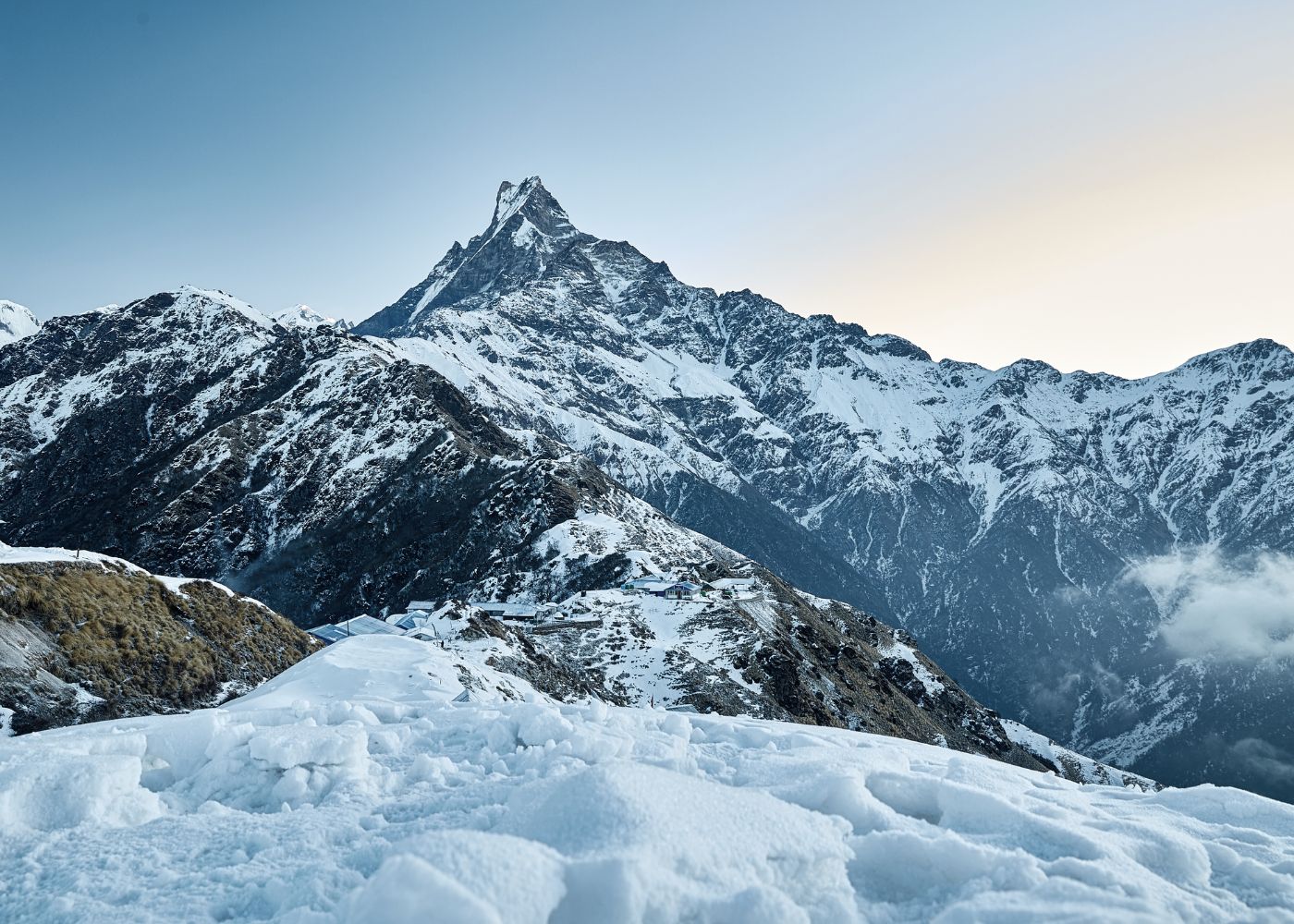
The 5-day Mardi Himal trek is rated moderate difficulty, requiring 3 to 6 hours of walking per day across 4 consecutive ascent days, with total elevation gain of 3,100 meters from Kande (1,770m) to Base Camp (4,500m) and a single-day descent of 2,800 meters on Day 4. No technical climbing, rope work, or crampons are required.
How Much Daily Walking Should You Expect?
Daily walking on the 5-day Mardi Himal trek ranges from 3 hours on the shortest stage (Forest Camp to Low Camp) to 9 hours on the longest stage (High Camp to Base Camp and Siding). The average active walking time across all 5 days is 5 hours per day.
The 5-day total active walking time is 22 to 28 hours across the full itinerary. Trekkers walking at 2.5 km/h on flat terrain and 1.5 km/h on steep ascent cover 50 to 60 kilometers across the circuit. Rest, photography, and meal breaks add 1 to 2 hours per day beyond active walking time.
How Steep Are the Main Climbing Sections?
The steepest sections on the Mardi Himal route are between Low Camp (3,050m) and High Camp (3,580m), where 4 trail sections reach 30 to 35-degree gradient on exposed ridge terrain. These sections require 20 to 30 minutes of sustained uphill effort without level rest sections.
The gradient classification by trail section is as follows:
-
Kande to Pitam Deurali: 10 to 15-degree gradient, root-covered forest trail
-
Pitam Deurali to Forest Camp: 15 to 20-degree gradient, mixed forest trail
-
Forest Camp to Low Camp: 12 to 18-degree gradient, ridge trail
-
Low Camp to High Camp: 15 to 35-degree gradient, exposed alpine ridge (steepest sections in the entire route)
-
High Camp to Base Camp: 20 to 30-degree gradient, rocky moraine and scree
How Challenging Is the High Camp to Base Camp Stretch?
The High Camp to Base Camp stretch is the most physically demanding section of the 5-day itinerary: 920 meters of elevation gain across 3 to 4 hours on rocky trail above 3,580m, with no teahouses, no shelter, and limited flat rest sections between High Camp and the Upper Viewpoint at 4,200m.
The trail above High Camp transitions from compacted dirt to loose scree and boulder terrain at 3,800m. Wind speeds above 3,800m on the Mardi Himal ridge average 25 to 40 km/h during clear morning conditions. Trekkers departing High Camp after 9:00 AM on cloud-prone days risk losing views at Base Camp due to afternoon mist rising from the Modi Khola valley.
The final 300 meters to Base Camp from Upper Viewpoint cross moraine deposits left by the Mardi Glacier. The moraine surface consists of loose rocks ranging from 5cm to 50cm diameter, requiring careful foot placement at each step.
What Altitude and Acclimatization Issues Should You Plan For?
The 5-day Mardi Himal trek reaches 4,500m at Base Camp, an altitude where 25% of unacclimatized trekkers experience mild symptoms of acute mountain sickness (AMS) including headache, nausea, and fatigue. The itinerary's incremental daily gain of 500 to 750 meters reduces severe AMS risk for healthy trekkers.
How High Do You Sleep Each Night on This Itinerary?
The following table shows sleeping elevation for each night of the 5-day itinerary. Sleeping elevation is the primary determinant of AMS risk, not maximum daily altitude reached.
|
Night |
Camp |
Sleeping Elevation |
|
Night 1 |
Forest Camp |
2,520m |
|
Night 2 |
Low Camp |
3,050m |
|
Night 3 |
High Camp |
3,580m |
|
Night 4 |
Siding |
1,700m |
The ascent from 2,520m on Night 1 to 3,580m on Night 3 follows the Wilderness Medical Society's recommended maximum sleeping altitude increase of 500m per night above 2,500m. Night 4 at Siding (1,700m) eliminates residual altitude effects before returning to Pokhara.
What Are the Signs of Altitude Sickness to Watch For?
Common AMS symptoms after recent ascent include headache, nausea or loss of appetite, fatigue, and dizziness; worsening symptoms, breathlessness at rest, confusion, or trouble walking straight require immediate descent and urgent medical help. These 3 signs appear within 6 to 12 hours of arrival at a new sleeping altitude above 2,500m.
The Lake Louise AMS Score, the diagnostic standard used by Himalayan Rescue Association Nepal, classifies AMS across 3 severity levels:
-
Mild AMS: Headache plus 1 of the following, fatigue, dizziness, nausea (score 3 to 4). Action: rest at current altitude, no further ascent.
-
Moderate AMS: Headache plus 2 or more symptoms, or developing ataxia (score 5 to 8). Action: descend 500m immediately.
-
Severe AMS / HACE / HAPE: Confusion, inability to walk straight, pink frothy sputum, severe breathlessness at rest. Action: immediate descent and evacuation.
High Altitude Cerebral Edema (HACE) and High Altitude Pulmonary Edema (HAPE) are life-threatening complications. HACE causes brain swelling. HAPE causes fluid accumulation in the lungs. Both require immediate descent of 1,000m or more and medical treatment.
How Can You Reduce Altitude Risk on a Short Trek?
4 evidence-based methods reduce altitude risk on the 5-day Mardi Himal trek: walking the acclimatization loop above Low Camp on Day 2 afternoon, maintaining hydration of 3 to 4 liters of water per day, avoiding alcohol above 3,000m, and carrying acetazolamide (Diamox) 125mg as a prophylactic medication.
Acetazolamide (Diamox) is a carbonic anhydrase inhibitor that accelerates acclimatization by increasing respiratory rate. The prophylactic dose is 125mg twice daily, beginning 24 hours before ascending above 2,500m. Common side effects include increased urination and tingling in fingers and toes. Trekkers with sulfa drug allergies avoid acetazolamide and consult a physician for alternative protocols.
Hydration is the most accessible prevention strategy. Dehydration amplifies AMS symptoms at altitude because reduced blood oxygen saturation becomes more clinically significant in a dehydrated trekker. 3 to 4 liters of fluid per day maintains adequate hydration at elevations above 3,000m.
When Is the Best Time to Do the Mardi Himal Trek?
The best time for the Mardi Himal trek is October through November and March through April, when skies are clear for 6 to 8 hours per day, temperatures range from 5°C to 18°C at mid-elevation camps, and trail conditions are dry and stable. These 4 months represent the 2 peak trekking seasons in the Annapurna region.
Which Seasons Offer the Best Mountain Views?
October and November deliver the clearest mountain views on the Mardi Himal route: post-monsoon atmospheric clarity reduces haze to its annual minimum, and newly washed skies provide unobstructed sunrise views of Machapuchare (6,993m) and Annapurna South (7,219m) from High Camp (3,580m) on 70 to 80% of days.
March and April provide the second-best visibility window. Rhododendron forests below 3,000m bloom in March and April, adding pink and red forest color to the lower trail sections between Kande and Forest Camp. The bloom season runs from late February through early May depending on elevation.
December and January offer the clearest air quality of any month but introduce cold-weather challenges. Night temperatures at High Camp drop to -10°C to -15°C. Day temperatures at High Camp range from -2°C to 8°C. Mountain views on clear December days rival October in clarity.
How Do Weather and Trail Conditions Change by Season?
The following table defines weather and trail characteristics across the 4 main trekking seasons on the Mardi Himal route.
|
Season |
Months |
Temperature at High Camp |
Visibility |
Trail Condition |
|
Autumn |
Oct–Nov |
0°C to 10°C |
Excellent (70–80% clear days) |
Dry, firm |
|
Spring |
Mar–Apr |
5°C to 15°C |
Good (60–70% clear days) |
Dry to muddy |
|
Winter |
Dec–Feb |
-15°C to 5°C |
Excellent (60–70% clear days) |
Snow above 3,200m |
|
Monsoon |
Jun–Sep |
10°C to 20°C |
Poor (20–30% clear days) |
Wet, leeches, landslide risk |
Trail stability is highest in October-November. Landslide risk is highest in July-August on the lower forest sections between Kande and Forest Camp.
What Should You Expect in Monsoon or Winter?
Monsoon trekking (June–September) on the Mardi Himal route is possible but produces 60 to 70% of days with cloud cover above 3,000m, eliminating mountain views from High Camp and Base Camp. Leeches are present below 2,800m from June through August, requiring salt or insect-repellent spray every 30 minutes.
Winter trekking (December–February) requires snow gaiters and microspikes above 3,200m from December onward. Snow accumulations at High Camp reach 30 to 80cm in January and February. The trail above High Camp becomes technically demanding in heavy snow years, requiring a guide who knows the route markings under snow cover.
What Permits, Costs, and Logistics Do You Need?
The Mardi Himal trek requires 2 permits: a Trekkers' Information Management System (TIMS) card costing NPR 2,000 (approximately USD 15) and an Annapurna Conservation Area Project (ACAP) entry permit costing NPR 3,000 (approximately USD 22.50) for international trekkers. Both permits are obtained in Pokhara before the trek start.
What Permits Are Required for Mardi Himal?
2 permits are mandatory for the Mardi Himal trek: the TIMS card and the ACAP permit. SAARC nationals pay reduced permit fees: NPR 200 for TIMS and NPR 1,000 for ACAP.
TIMS (Trekkers' Information Management System) is a permit system administered by the Trekking Agencies Association of Nepal (TAAN) and the Nepal Tourism Board (NTB). It registers trekker identity and emergency contact information for search and rescue operations. Individual trekkers obtain TIMS from the NTB office on Damside, Pokhara. Guided trekkers receive TIMS through their registered trekking agency.
ACAP (Annapurna Conservation Area Project) is managed by the National Trust for Nature Conservation (NTNC) Nepal. The ACAP area encompasses 7,629 square kilometers of the Annapurna Himalaya, including the entire Mardi Himal trail. ACAP permit fees fund conservation, trail maintenance, and local community development in the Kaski and Myagdi districts.
Permit checkpoints exist at Kande trailhead and at Forest Camp. Trekkers carry both physical permits throughout the trek and present them at checkpoints on demand.
How Do You Get From Kathmandu or Pokhara to the Trail?
From Kathmandu, trekkers reach Pokhara by 25-minute flight (NPR 8,000 to NPR 15,000 one-way) or 6 to 7-hour tourist bus (NPR 900 to NPR 2,500). From Pokhara, the trailhead at Kande requires a 45-minute jeep or taxi ride costing NPR 1,500 to NPR 2,500 for a private vehicle or NPR 150 to NPR 300 per seat in a shared jeep.
The Pokhara airport (IATA: PKR) connects directly to Kathmandu Tribhuvan International Airport (IATA: KTM) with 4 to 6 daily flights operated by Yeti Airlines, Buddha Air, and Shree Airlines. Tourist buses depart Thamel, Kathmandu for Pokhara at 6:30 AM to 8:00 AM daily from the tourist bus park near Kantipath.
Kande trailhead is located at the 18km marker on the Pokhara-Baglung Highway. Taxi drivers in Pokhara recognize "Kande" as the destination. The drive from Pokhara Lakeside to Kande takes 40 to 50 minutes depending on traffic.
How Much Does a 5-Day Mardi Himal Trek Usually Cost?
A 5-day Mardi Himal trek costs USD 300 to USD 600 per person for a guided package including permits, transport, guide, porter, teahouse accommodation, and 3 meals per day. Independent trekkers without a guide or porter spend USD 150 to USD 250 for the same duration.
The cost breakdown for an independent 5-day Mardi Himal trek in Nepali Rupees is as follows:
-
Permits (TIMS + ACAP): NPR 5,000
-
Transport Pokhara–Kande–Pokhara: NPR 3,000 to NPR 5,000
-
Accommodation (4 nights at NPR 500/night average): NPR 2,000
-
Meals (3 per day × 5 days × NPR 600 average): NPR 9,000
-
Miscellaneous (charging, hot water, tips): NPR 2,000 to NPR 3,000
-
Total: NPR 21,000 to NPR 24,000 (approximately USD 155 to USD 180)
Guided trek packages from Pokhara-based trekking agencies average USD 350 to USD 500 per person for groups of 2 to 4. Costs decrease to USD 280 to USD 400 per person in groups of 5 to 8 due to shared porter and guide fees.
What Should You Pack for a 5-Day Mardi Himal Trek?
The 5-day Mardi Himal pack list covers 4 essential categories: layered clothing for -10°C to 20°C temperature range, 3 to 5kg personal gear, trekking footwear, and teahouse-specific items that replace camping equipment. Total pack weight for an independent trekker averages 8 to 12 kg.
Which Clothing Layers Work Best for This Route?
3 clothing layers work best for the Mardi Himal temperature range: a moisture-wicking base layer, a 300-weight fleece or down mid-layer, and a waterproof-breathable outer shell rated to at least 10,000mm hydrostatic head. This 3-layer system covers the -10°C night temperature at High Camp and the 20°C afternoon temperature at lower forest elevations.
The 3 functional layers are:
-
Base layer: Merino wool or synthetic moisture-wicking fabric, 150 to 200 weight for the Mardi Himal temperature range
-
Mid layer: 300-weight fleece jacket or 600-fill down jacket for temperatures between 0°C and 10°C
-
Outer shell: Waterproof hardshell with taped seams, minimum 10,000mm/10,000g/m²/24h breathability rating
Down pants are not necessary for the 5-day Mardi Himal itinerary. Standard trekking trousers with a thermal underlayer are sufficient below High Camp. Lightweight thermal leggings provide adequate leg insulation for the 3,580m overnight stay at High Camp.
What Gear Is Essential for Teahouse Trekking?
6 items are essential for teahouse trekking on the Mardi Himal route: trekking poles, a sleeping bag liner or -10°C sleeping bag, a headlamp with spare batteries, a water purification method, blister prevention footwear, and a 30 to 40L trekking daypack.
The 6 essential gear items with specifications:
-
Trekking poles: Collapsible aluminum or carbon fiber, length-adjustable from 90cm to 130cm, rubber tips for packed trail, carbide tips for rock and ice
-
Sleeping bag: Rated to -10°C for High Camp; a silk or fleece sleeping bag liner supplements teahouse blankets for trekkers carrying lighter bags
-
Headlamp: LED, minimum 200 lumens, with 2 spare AAA batteries; teahouse electricity is unavailable from 9:00 PM to 6:00 AM at most camps
-
Water purification: Aquatabs (sodium dichloroisocyanurate tablets) at 1 tablet per 1 liter of cold water, or a Sawyer Squeeze filter; iodine tablets are the secondary option
-
Footwear: Waterproof hiking boots with ankle support, minimum 6-inch shaft, broken in with 10+ hours of prior use before the trek
-
Daypack: 30 to 40L capacity, waist belt, padded shoulder straps, hydration bladder compartment
What Should You Leave Out to Keep Your Pack Light?
4 categories of items add weight without function on the Mardi Himal teahouse route: full camping systems (tent, stove, fuel canister), large first aid kits beyond 10 essential items, duplicate clothing beyond the 3-layer system, and heavy camera tripods replaceable by a 100g travel tripod.
Teahouses provide blankets, pillows, mattresses, and cooked meals at every camp. Trekkers do not carry cooking equipment, food, or shelter. The standard independent trekker carries only personal clothing, safety items, and documentation.
Reducing pack weight from 15kg to 10kg decreases leg fatigue by 15 to 20% across Day 4's 7 to 9-hour stage. Every 1kg of pack weight adds approximately 5 minutes to a 1,000m vertical ascent at altitude above 3,000m.
Where Do You Stay and Eat Along the Trail?
Teahouses at 5 locations on the Mardi Himal route, Pitam Deurali (1,900m), Forest Camp (2,520m), Low Camp (3,050m), High Camp (3,580m), and Siding (1,700m), provide dormitory and private rooms with 3 meals per day for an all-inclusive daily rate of NPR 1,200 to NPR 2,500 per person.
What Are the Teahouses Like on the Mardi Himal Route?
Mardi Himal teahouses are stone-built or timber-frame lodges with 4 to 15 private rooms of 6 to 10 square meters each, communal dining rooms heated by wood-burning stoves, and shared squat or Western-style toilets at an outdoor block. Room quality improves at lower elevation camps and deteriorates progressively above Forest Camp.
Teahouse room structures at each camp differ by available building materials and infrastructure:
-
Forest Camp (2,520m): Timber-frame construction, private rooms with 2 single beds, foam mattresses, shared outdoor toilet. Best room quality on the upper ridge.
-
Low Camp (3,050m): Stone-wall construction, private rooms with 2 single beds, thinner mattresses, squat toilet. Smaller dining areas.
-
High Camp (3,580m): Stone-wall construction with metal roofing, private and dormitory options, coldest rooms on the route, limited hot water.
-
Siding (1,700m): Concrete-block guesthouses, largest rooms on the route, Western toilets, hot showers with reliable wood-boiler systems.
What Food and Water Options Are Usually Available?
Mardi Himal teahouses serve 12 to 20 menu items including dal bhat (lentil soup with rice), momos (steamed dumplings), pasta, fried rice, porridge, eggs, and instant noodles. Menu variety decreases above Low Camp as supply logistics become harder above 3,050m.
Dal bhat is the most nutritious and calorie-dense meal on the teahouse menu. A standard dal bhat serving provides 700 to 900 kilocalories and includes unlimited rice refills. Cost for dal bhat ranges from NPR 400 at Forest Camp to NPR 700 at High Camp.
Water along the route comes from 3 sources: bottled mineral water (NPR 100 to NPR 300 per 1-liter bottle above 3,000m), boiled water sold by teahouses (NPR 50 to NPR 150 per liter), and filtered water from trekker-carried Sawyer or SteriPen systems using stream or spring water. Tap water at all camps is untreated and requires purification before consumption.
What Facilities Should You Expect at Higher Camps?
High Camp (3,580m) provides solar electricity with charging points, outdoor cold-water wash facilities, wood-heated dining areas, and basic shared toilets. Hot showers are available at NPR 300 to NPR 500 using solar or wood-heated water systems at 3 of the 8 teahouses at High Camp.
Wi-Fi is unavailable at High Camp. NCell and NTC mobile network signals at High Camp reach 2G coverage on clear-weather days, sufficient for SMS but not for data calls. Trekkers requiring connectivity carry a NCell SIM card and rely on SMS communication above 3,000m.
Electricity outages at High Camp occur from 8:00 PM to 6:00 AM when the solar battery bank depletes. Trekkers charge devices during daylight hours between 9:00 AM and 6:00 PM. The maximum charging capacity per teahouse is 4 to 6 USB or adapter ports.
How Should You Prepare for Safety and Trail Conditions?
4 safety preparation steps reduce medical and logistical risk on the 5-day Mardi Himal trek: obtaining travel insurance with helicopter evacuation coverage, carrying a preloaded offline map of the Mardi Himal trail (OsmAnd or Maps.me),sharing your itinerary with your guide or agency, accommodation, insurer, and an emergency contact; HRA is primarily a mountain-safety and aid-post organization, and store Nepal Police emergency number 100 and Tourist Police hotline 1144, and make sure your guide, agency, or insurer can coordinate rescue if evacuation is needed.
What Weather, Trail, and Health Risks Should You Know?
3 primary risk categories apply to the Mardi Himal trek: weather risk (rapid afternoon cloud buildup above 3,500m from October onwards), trail risk (loose scree above High Camp and landslide-prone sections below Forest Camp during monsoon), and health risk (AMS onset above 3,000m in 25% of unacclimatized trekkers).
Weather changes on the Mardi Himal ridge occur faster than at valley-level Pokhara. Cloud cover ascends from the Modi Khola valley by 10:00 AM to 12:00 PM on 40% of autumn days. Trekkers targeting the Base Camp summit depart High Camp before 6:00 AM to complete the 3 to 4-hour ascent before cloud arrival.
Lightning is a risk on exposed ridge sections above 3,000m during afternoon electrical storms from May to September. Trekkers caught above treeline during lightning storms descend to teahouses immediately and wait 1 to 2 hours for the storm to pass.
Trail damage from 2015 Nepal Earthquake aftershocks and 2023 monsoon activity resulted in rerouted sections between Forest Camp and Low Camp. Updated trail maps are available from the ACAP office in Pokhara at NPR 200 per map.
How Can You Trek More Comfortably and Responsibly?
5 practices increase both trekking comfort and environmental responsibility on the Mardi Himal route: hiring a licensed local guide (contributes NPR 1,500 to NPR 2,000 per day directly to Kaski District households), using reusable water bottles to eliminate plastic waste, carrying all non-biodegradable waste down from High Camp, staying on marked trail to prevent erosion of alpine meadow vegetation above 3,200m, and eating at locally owned teahouses rather than externally supplied kitchen units.
The ACAP enforces a plastic bottle ban above 2,000m in the Annapurna Conservation Area. Trekkers carrying plastic single-use bottles above this elevation receive fines of NPR 500 per bottle at permit checkpoints. Biodegradable waste such as food scraps is buried by teahouse operators at designated compost points at each camp.
What Should You Do if Conditions Change Mid-Trek?
3 action protocols apply to mid-trek condition changes: descend immediately to the nearest lower camp at the first signs of severe AMS (confusion, ataxia, or inability to stand straight), contact the teahouse owner for emergency jeep or helicopter evacuation from Siding, and communicate location changes to the trek guide or registered contact in Pokhara.
Helicopter evacuation from the Mardi Himal ridge area costs USD 1,200 to USD 2,500 depending on pickup location. Evacuation from High Camp costs more than evacuation from Siding due to landing altitude constraints. Travel insurance policies covering helicopter evacuation to USD 5,000 cover the full cost of most Mardi Himal emergency evacuations.
The nearest hospital to the Mardi Himal trail is Western Regional Hospital in Pokhara, 7km from Pokhara Lakeside. The Himalayan Rescue Association's nearest trekking medical post is in Pokhara city, with the next closest post in Manang (3 days north on the Annapurna Circuit).
How Should You Book a 5-Day Mardi Himal Trek?
The 5-day Mardi Himal trek is bookable as an independent trek or through a licensed Nepal trekking agency, with agency-booked packages providing TIMS permit processing, transport coordination, teahouse reservations, and daily guide and porter services. 3 booking methods are available: direct agency booking, advance booking through international agents, or independent self-arrangement.
Booking through a Nepal-based trekking agency takes 1 to 2 days for permit processing and logistics confirmation. The Nepal Tourism Board licenses trekking agencies under the Trekking Agencies' Association of Nepal (TAAN) registration system. Trekkers verify agency legitimacy by requesting the TAAN registration certificate, identifiable by a 5-digit registration number.
Peak season (October–November) teahouse capacity at High Camp reaches 80 to 90% occupancy. Advance teahouse reservations through a Pokhara trekking agency guarantee room availability on the highest-demand dates. Independent trekkers traveling during October without reservations risk sharing dormitory space at High Camp.
Can a Guided Trek Service Help With the Mardi Himal Route?
A licensed guide on the Mardi Himal trek provides 4 direct benefits: route navigation above High Camp where the trail becomes unmarked in snow or cloud, real-time AMS monitoring using the Lake Louise Score assessment at each camp, negotiated teahouse room rates 10 to 15% lower than walk-in independent rates, and local Gurung cultural context at Siding and Lwang villages.
Guide rates for the Mardi Himal trek are NPR 1,500 to NPR 2,500 per day for a licensed guide, plus accommodation, food, and equipment costs that the trekker pays separately. Porter rates are NPR 1,000 to NPR 1,500 per day per porter, with each porter carrying a maximum of 25 kg.
The Nepal Government's compulsory guide requirement does not apply to the Mardi Himal trek as of 2024. Solo trekking is permitted with a valid TIMS card and ACAP permit. The government mandated guide requirement currently applies to restricted area treks such as Upper Mustang, Manaslu Circuit, and Dolpo.
What Are the Key Takeaways From This 5-Day Guide?
The 5-day Mardi Himal trek delivers a complete high-altitude Himalayan circuit, reaching Mardi Himal Base Camp at 4,500m and returning to Pokhara, within a format accessible to moderate-fitness trekkers from any international origin. The itinerary advances through Forest Camp (2,520m), Low Camp (3,050m), High Camp (3,580m), Base Camp (4,500m), and Siding (1,700m), with each stage defined by a clear elevation target, walking time, and teahouse infrastructure.
6 factors determine the success of the 5-day Mardi Himal itinerary:
-
Permits: Obtain TIMS (NPR 2,000) and ACAP (NPR 3,000) in Pokhara before departing for Kande
-
Season: October–November and March–April deliver 60 to 80% clear-view days at High Camp and Base Camp
-
Acclimatization: Walk the ridge loop above Low Camp on Day 2 afternoon to reduce AMS risk by up to 35%
-
Day 4 timing: Depart High Camp by 5:00 to 6:00 AM to reach Base Camp before 10:00 AM cloud buildup
-
Descent footwear: Trekking poles and waterproof boots with ankle support are mandatory for the 2,800m High Camp to Siding descent
-
Insurance: Travel insurance with USD 5,000 helicopter evacuation coverage protects against the USD 1,200 to USD 2,500 rescue cost in the event of severe AMS
The 5-day Mardi Himal trek is one of Nepal's most complete short trekking itineraries, combining rhododendron forest, alpine ridge, glacier moraine, and Gurung cultural villages into a single circuit accessible from Pokhara within 5 days.