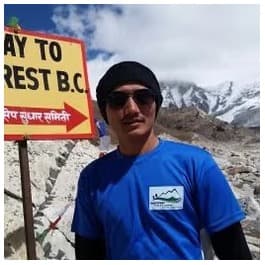
The Manaslu Circuit is a moderately hard trek that demands good cardiovascular fitness, altitude tolerance, and mental resilience. The 14 to 18-day journey crosses the Larkya La Pass at 5,106 meters, navigates remote terrain with basic facilities, and challenges trekkers with long ascent that can stretch 7 to 8 hours. You face thin air, rocky trails, and limited rescue infrastructure yet the route remains achievable for determined first-timers who prepare properly and acclimatize wisely.
The Manaslu Circuit sits in the "moderate to challenging" band of Himalayan treks. You walk 150 to 177 kilometers over 14 to 18 days, sleep at elevations climbing from 700 meters in Soti Khola to 4,460 meters at Dharmasala, and cross the Larkya La Pass at 5,106 meters. Daily walking hours range from 4 to 8, with past days pushing beyond 4-7 hours when you factor in the pre-dawn start and the long descent to Bimthang.
Manaslu Trek Difficulty at a Glance: Days, Distance, Highest Point, and Daily Hours
|
Metric |
Details |
|
Duration |
14 to 16 days (trail time; add buffer days for transport and contingency) |
|
Total Distance |
150 to 177 km, depending on starting point and side excursions |
|
Highest Point |
Larkya La Pass, 5,106 m |
|
Daily Walking Hours |
4 to 7 hours; pass day exceeds 7-8 hours |
|
Highest Sleep Altitude |
Dharamsala/Larkya Phedi (4,460 m) |
|
Elevation Gain/Loss |
Cumulative ascent ~8,000 m; cumulative descent ~7,500 m (varies by route) |
|
Trail Surface |
Mix of forest paths, rocky switchbacks, scree slopes, suspension bridges, and snow/ice near the pass in shoulder seasons |
Is the Manaslu Circuit Good for Beginners?
Verdict: The Manaslu Circuit is not beginner-friendly in the traditional sense, but it is achievable for motivated first-time trekkers who invest 8 to 12 weeks in preparation and commit to a conservative itinerary.
Readiness Checklist:
-
Cardiovascular Base: You comfortably hike 6 to 8 hours on consecutive days with a 7 to 10 kg pack.
-
Altitude Experience: You have slept above 3,500 m at least once (even a shorter trek) and know how your body responds to thin air.
-
Mental Resilience: You accept basic teahouse facilities, cold nights, simple meals, and limited communication for two weeks.
-
Physical Integrity: Your knees, ankles, and back handle sustained downhill descents without injury history flaring up.
-
Acclimatization Discipline: You follow rest days and recognize early altitude illness symptoms.
Beginners who skip preparation or rush acclimatization often struggle on past days and risk acute mountain sickness (AMS). We recommend adding a guide, scheduling extra acclimatization hikes, and building a fitness foundation before booking.
What "Hard" Means on the Manaslu Circuit: Stamina, Altitude Tolerance, Basic Trekking Skills, and Mindset
"Hard" on the Manaslu Circuit breaks into four dimensions:
-
Stamina: Long days with sustained ascent or descent tax your cardiovascular system and leg muscles. Pass day starts around 3:00 AM, climbs 700 vertical meters over 3 hours, then descends 1,600 meters over 4 hours and your quads absorb brutal impact.
-
Altitude Tolerance: The barometric pressure at 5,106 m is roughly half that at sea level. You breathe twice as hard to extract the same oxygen, even when you are aerobically fit. Headaches, nausea, sleep disruption, and fatigue appear between 3,500 m and 4,500 m for most trekkers.
-
Basic Trekking Skills: You navigate loose scree, narrow cliff-side trails, wobbly suspension bridges, and icy patches near the pass. Trekking poles become essential; microspikes or crampons are necessary in winter or early spring.
-
Mindset: Remoteness means you cannot bail easily. Evacuation options thin out beyond Samagaon. You tolerate discomfort, cold showers, squat toilets, power outages, and days without phone signal without letting frustration derail your pace or morale.
Manaslu vs Annapurna Circuit vs Everest Base Camp: Which Feels Harder and Why
Manaslu Circuit feels harder than Annapurna Circuit because of remoteness and steeper daily elevation profiles. Annapurna offers more villages, better lodges, and road access at multiple points; Manaslu stays wild, with teahouses that are simpler and fewer fallback routes. The Larkya La Pass is lower than Thorong La (5,416 m), but Thorong La's approach from Manang is gentler than the steep push from Samdo to Dharamsala.
Everest Base Camp (EBC) reaches 5,364 m but does not cross a high pass in the same way. EBC's daily elevation gains are more gradual, and the Khumbu's infrastructure helicopters, clinics, oxygen supplies, luxury lodges reduces logistical difficulty. Manaslu's remoteness and sustained ascent/descent cycles make it feel harder physically, even though EBC's absolute altitude is higher.
Manaslu demands more self-reliance and raw endurance than Annapurna Circuit; it feels more committed than EBC despite EBC's higher endpoint. Trekkers who found EBC manageable often rate Manaslu harder because of past days and the cumulative fatigue from long ascent/descent stretches.
What Makes the Manaslu Circuit Hard: Altitude, Terrain, and Remoteness
Three factors dominate the Manaslu Circuit trek difficulty: altitude physiology, terrain characteristics, and the consequences of remoteness.
Altitude Explained Simply: Why You Can Feel Weak Even If You're Fit
Air pressure drops as you climb. At 5,106 m, the atmospheric pressure is roughly 50 percent of sea level, so each breath delivers half the oxygen molecules. Your heart rate climbs 20 to 30 percent, your breathing rate doubles, and your muscles fatigue faster even when you are aerobically fit.
Altitude affects everyone, regardless of fitness. A marathon runner can develop AMS at 4,000 m, while a recreational hiker who acclimatizes slowly may sail through. Genetics, hydration, sleep quality, and ascent rate matter more than your VO₂ max.
Symptoms start subtly: mild headache, reduced appetite, broken sleep. You feel sluggish, as though you ran a hard workout the day before. This is a normal adaptation. Pushing through worsening symptoms ignoring a pounding headache, vomiting, or ataxia escalates risk into life-threatening territory.
Altitude Sickness (AMS): Early Symptoms, Danger Signs, and When You Must Descend
Early Symptoms of Acute Mountain Sickness (mild AMS, common above 3,500 m):
-
Headache (frontal or temple pressure)
-
Nausea or reduced appetite
-
Dizziness or lightheadedness
-
Sleep disruption (waking frequently, Cheyne-Stokes breathing)
-
Fatigue disproportionate to exertion
Management: Halt ascent, hydrate, rest. Symptoms should stabilize or improve within 24 hours. Descend 300 to 500 m if they worsen.
Danger Signs (moderate to severe AMS, high-altitude cerebral edema [HACE], high-altitude pulmonary edema [HAPE]):
-
Severe headache unresponsive to ibuprofen or paracetamol
-
Vomiting that prevents hydration
-
Ataxia (loss of balance; heel-to-toe walk test failure)
-
Confusion or altered mental state
-
Wet cough, chest tightness, or resting breathlessness (HAPE)
-
Blue lips or fingernails (hypoxia)
Action: Descend immediately 300 to 500 m minimum. Do not wait for morning. HACE and HAPE can kill within hours. Dexamethasone (4 mg oral) and nifedipine (for HAPE) are emergency drugs, not substitutes for descent. Oxygen helps, but descent is the definitive treatment.
Prevention: Climb high, sleep low. Schedule acclimatization days at Samagaon (3,530 m) and, if time allows, Samdo (3,860 m). Drink 3 to 4 liters of water daily. Avoid alcohol and sleeping pills above 3,000 m. Walk slowly at "pole pole" pace and breathe deeply.
Terrain Pain Points: Long Ups and Downs, Rocky Sections, Narrow Trails, Bridges, and Snow/Ice Near the Pass
-
Long Ascents and Descents: The trek from Namrung to Samagaon climbs 870 m over 6 to 7 hours through mixed pine forest and open slopes. The descent from Larkya La to Bimthang drops 1,396 m over 3 hours, pounding your knees and testing your downhill braking technique.
-
Rocky Sections: Above Samagaon, trails become rockier and less maintained. Loose scree near the pass requires careful foot placement; a twisted ankle here means a multi-day evacuation.
-
Narrow Trails and Cliff Exposure: Between Philim and Deng, the trail clings to cliff faces above the Budhi Gandaki gorge. A single misstep could be catastrophic. Trekking poles improve balance; take your time when yak caravans pass.
-
Suspension Bridges: Steel-cable bridges sway over the Budhi Gandaki. Most are sturdy, but ice or monsoon damage can make crossings unnerving. One person crosses at a time; detach camera straps and pole wrist loops to avoid entanglement.
-
Snow and Ice Near the Pass: In winter (December to February) and early spring (March to early April), the pass accumulates snow. The final 300 m to the cairn can be icy; microspikes or crampons are essential. In heavy snow years, the pass closes until local guides break trail.
Remoteness Factor: Limited Facilities, Simple Teahouses, and Fewer "Backup Options"
-
Limited Facilities: Teahouses above Samagaon are basic plywood walls, foam mattresses, squat toilets, and no showers. You eat dal bhat, noodles, and potatoes for two weeks. Electricity comes from solar panels or micro-hydro; expect blackouts and no heating in common rooms.
-
Fewer Backup Options: Helicopter evacuation is available from Samagaon and Samdo, but weather windows are narrow, and costs run USD $3,000 to $5,000. Below Samagaon, you rely on porter or yak rescue to a road-head, then a rough jeep ride to Kathmandu. Travel insurance with helicopter cover is non-negotiable.
-
Communication: Mobile signals appear sporadically at Samagaon, Samdo, and a few other villages, but do not count on daily contact. Satellite phones or inReach devices add safety margins for emergencies.
Where the Manaslu Trek Gets Hardest: Day-by-Day Difficulty Peaks
Understanding where difficulty peaks helps you pace nutrition, hydration, and rest throughout the trek.
The Hardest Days on Manaslu: Pass Day and Other "Tough Stretches"
Pass Day (Dharamsala/Larkya Phedi to Bimthang via Larkya La, 9 to 11 hours):
You wake at 2:30 AM, eat a light breakfast, and start by headlamp around 3:30 AM. The trail climbs 700 m over 4 hours, slow, relentless switchbacks through scree and snow. Air temperature hovers around –10°C to –15°C; wind chill can drop the effective temperature to –20°C. You reach the pass at sunrise (around 7:00 AM in autumn), snap photos, then descend 1,396 m to Bimthang over 3 hours. Your quads scream; trekking poles absorb some impact, but fatigue accumulates. You arrive in Bimthang (3,710 m), exhausted, dehydrated, and sunburned despite sunscreen.
Other Tough Stretches on the Manaslu Circuit:
-
Deng to Namrung (6 to 7 hours, 800 m ascent): Sustained climb through rhododendron forest, then open hillside. Altitude starts to bite above 3,000 m.
-
Jagat to Deng (20 Kilometres) (6 to 7 hours, 520 m ascent): Longer horizontal distance, but altitude slows pace. Deng sits at 1,860 m.
-
Samagaon Acclimatization Hikes (Pungyen Gompa or Manaslu Base Camp): Optional side trips add 3 to 5 hours and 400 to 600 m of elevation gain. These hikes are essential for adaptation but feel hard when you are already tired from consecutive trekking days.
Manaslu Circuit Itinerary: Day, Hours, Sleep Altitude, and Why That Day Feels Hard
|
Day |
Route |
Walking Hours |
Sleep Altitude (m) |
Why It Feels Hard |
|
1 |
Soti Khola → Machha Khola |
6–7 |
900 |
River crossings, suspension bridges, humidity |
|
2 |
Machha Khola → Jagat |
6–7 |
1,340 |
Steep ascent/descent cycles, narrow cliff trails |
|
3 |
Jagat → Deng |
6–7 |
1,860 |
Rocky trail, exposure, altitude begins |
|
4 |
Deng → Namrung |
6–7 |
2,660 |
900 m ascent, sustained climb, thin air starts |
|
5 |
Namrung → Samagaon |
6–7 |
3,530 |
Long distance, altitude slows pace, first AMS risk |
|
6 |
Samagaon Rest/Acclimatization |
3–5 (side hike) |
3,530 |
Pungyen Gompa or Manaslu BC hike taxes energy |
|
7 |
Samagaon → Samdo |
4–5 |
3,860 |
Shorter but higher; altitude headache common |
|
8 |
Samdo Rest or → Dharamsala |
3–4 |
4,460 |
Sleep altitude near 4,500 m; broken sleep, nausea |
|
9 |
Dharamsala → Bimthang via Larkya La |
9–11 |
3,710 |
Pre-dawn start, 700 m ascent, 1,600 m descent, extreme cold, thin air, exhaustion |
|
10 |
Bimthang → Tilije |
5–6 |
2,300 |
Knee-pounding descent, fatigue lingers |
|
11 |
Tilije → Dharapani |
2-3 |
1,860 |
Long descent, joins Annapurna Circuit route |
Acclimatization Hikes That Add Difficulty: Samagaon Side Trips and Why They Help
Samagaon Rest Day: Most itineraries include a rest day at Samagaon, but "rest" means a 3 to 5-hour acclimatization hike. Two popular options exist:
Pungyen Gompa (3,950 m): 3 to 4 hours round trip, 430 m gain. Steep trail, prayer flags, views of Manaslu North Face.
Manaslu Base Camp (4,800 m): 5 to 6 hours round trip, 1,280 m gain. Long, rocky approach; exhausting but critical for pass-day success.
These hikes feel hard because you climb 400 to 1,200 m and return to Samagaon the same day. Legs ache, appetite drops, and sleep is restless. Yet they accelerate adaptation, reducing AMS risk when you push to Samdo and Dharamsala.
Samdo Acclimatization: Some itineraries add a half-day hike to a viewpoint above Samdo (4,200 m). This extra elevation exposure helps, but it adds fatigue. Skip it only if you already spent 2 nights at Samagaon and feel strong.
Pacing Strategy: How to Walk the Hard Days (Start Time, Breaks, Food, Water, Layering)
-
Start Time: On pass day, leave by 3:30 AM to summit by sunrise and descend before afternoon winds pick up.
-
Breaks: Take 5-minute breaks every 45 to 60 minutes. Sip water, eat a snack (energy bar, dried fruit, chocolate), and breathe deeply. On past days, stop every 30 to 40 minutes on the ascent; thin air forces a slower pace.
-
Food: Eat breakfast even when you lack appetite. Carry 500 to 700 calories in snacks (nuts, bars, glucose tablets). Your body burns 4,000 to 5,000 calories on pass day; under-fueling accelerates fatigue and AMS.
-
Water: Drink 3 to 4 liters daily. Fill bottles at teahouses or purify stream water with tablets or a filter. Dehydration thickens blood, worsening altitude symptoms.
-
Layering: Start pass day in a base layer, insulated jacket, windproof shell, hat, and gloves. You shed layers as you climb and the sun rises, then add them back during descent into Bimthang's shaded valley.
Logistics That Affect Manaslu Circuit Difficulty: Permits, Guide Rules, and Transport
Permits, guide requirements, and transport logistics shape the trek's complexity and cost. Poor planning here turns moderate difficulty into a logistical nightmare.
Manaslu Restricted-Area Permits in Plain English: What You Need and Why It Complicates Planning
The Manaslu region is a restricted area. You cannot trek solo or without permits.
Required Permits for Manaslu Circuit:
-
Manaslu Restricted Area Permit (RAP): Fee varies by season. September to November costs USD $100 for the first 7 days, USD $15 per day thereafter. December to August costs USD $75 for the first 7 days, USD $10 per day thereafter.
-
Manaslu Conservation Area Permit (MCAP): NPR 3,000 (~USD $22 to $23).
-
Annapurna Conservation Area Permit (ACAP): NPR 3,000 (~USD $22 to $23), required because the trek exits through the Annapurna region after Bimthang.
-
Total Permit Cost: Approximately USD $145 to $170, depending on season and trekking days.
-
Processing: Permits are issued through registered trekking agencies. You must provide 2 passport photos, passport copy, and insurance details. Processing takes 1 to 2 business days in Kathmandu.
-
Check Points: Immigration and park officers check permits at Jagat, Samagaon, and Dharapani. Carry laminated copies in case the originals get wet or lost.
Can You Trek Manaslu Solo? (Rules, Group Requirements, and Realistic Options)
No. The Manaslu Restricted Area Permit requires you to trek with a licensed guide and in a group of at least 2 trekkers. "Solo" here means you cannot go without a guide; you can, however, book as a solo traveler and join a small group or hire a private guide.
Group Requirements: Minimum 2 trekkers (including yourself) per permit application. Some agencies waive this by pairing solo trekkers or by treating you as a group of one with a guide check agency policy.
Why This Matters: The guide rule increases safety (local knowledge, AMS recognition, evacuation coordination) but adds cost. Budget USD $25 to $35 per day for a licensed guide.
Guide vs Porter vs Both: How Support Changes Fatigue, Safety, and Daily Comfort
Licensed Guide (USD $25 to $35 per day):
-
Navigates trail, secures teahouse beds, translates with locals
-
Recognizes AMS symptoms and enforces rest days
-
Coordinates helicopter evacuation when needed
-
Shares cultural insights and trail stories
Porter (USD $18 to $25 per day):
-
Carries your main duffel (up to 20 kg; split between 2 trekkers)
-
You carry a daypack (5 to 7 kg: water, snacks, camera, jacket)
-
Reduces physical load but does not provide navigation or medical support
Guide + Porter (USD $43 to $60 per day total): Optimal setup for first-timers or trekkers over 50. The guide manages logistics and safety; the porter removes the physical burden. You walk lighter, conserve energy for altitude, and reduce knee strain on descents.
Solo Trekker Cost Impact: You hire a private guide and porter, so you pay their wages solo rather than splitting them across a group. This adds USD $600 to $840 to a 14-day trek.
The Underrated Hard Part: Rough Road Transfers to and from Trailheads (Time and Motion Fatigue)
Kathmandu to Soti Khola (5 to 6 hours): Rough jeep ride on unpaved roads. Dusty, bumpy, nausea-inducing. Start at 8:00 AM; arrive at Soti Khola by 3:00 PM. You are exhausted before you start trekking.
Dharapani to Besisahar to Kathmandu (7 to 8 hours): After finishing at Dharapani, you catch a jeep to Besisahar (2 to 3 hours), then a tourist bus to Kathmandu (5 to 6 hours). The jeep leg is brutal potholed roads, overcrowded vehicles, and frequent breakdowns.
Mitigation: Book a private jeep (more expensive, but you control stops and luggage). Build a buffer day in Kathmandu post-trek; do not schedule international flights the same day you return from the trail.
How to Prepare for the Manaslu Circuit: Fitness Plan and Gear That Makes It Easier
Preparation is the single biggest difficulty reducer. Trekkers who invest 8 to 12 weeks in fitness, gear dialing, and mental conditioning find the circuit challenging but manageable.
Trek-Ready Fitness Benchmark: What You Should Comfortably Do Before You Go
Before booking, you should comfortably complete the following:
-
Hike 6 to 8 hours on consecutive days with a 7 to 10 kg pack, including at least 1,000 m of elevation gain per day.
-
Climb stairs or hills for 45 to 60 minutes without stopping, maintaining a conversational pace.
-
Walk 15 to 20 km on flat or rolling terrain in a single day.
Your resting heart rate should be below 70 bpm, and you should recover from moderate exertion within 5 to 10 minutes.
Four to Eight-Week Training Plan for Manaslu Circuit: Hills, Stairs, Long Walks, Strength, and Pack Practice
Weeks 1–2 (Base Building):
-
Sessions: 3 to 4 per week; 45 to 60-minute hikes or walks on rolling terrain with a light pack (5 kg).
-
Stair Work: 1 session per week; 30 to 40 minutes continuous.
-
Strength (optional): 2 sessions of bodyweight squats, lunges, calf raises, and core planks (20 to 30 minutes each).
Weeks 3–4 (Volume Increase):
-
Sessions: 4 to 5 per week; 60 to 90-minute hikes with a 7 kg pack.
-
Long Hike: 1 per week; 4 to 5 hours with 600 to 800 m elevation gain.
-
Stair Sessions: Increase to 45 to 50 minutes, adding intervals (fast 2 minutes, slow 1 minute).
-
Strength: Add step-ups, single-leg deadlifts, and hip bridges to strengthen stabilizers.
Weeks 5–6 (Peak Load):
-
Sessions: 5 to 6 per week; include one back-to-back weekend (5 to 6 hours Saturday, 4 to 5 hours Sunday) to simulate consecutive trekking days.
-
Pack Weight: Increase to 8 to 10 kg.
-
Hills/Stairs: 60-minute sessions with sustained effort; practice pole technique.
Weeks 7–8 (Taper and Pack Practice):
-
Reduce Volume: Reduce by 30 percent; 3 to 4 sessions, 60 to 75 minutes each.
-
Final Long Hike: 6 to 7 hours with a full pack (10 kg) to test boots, poles, layering, and snacks.
-
Rest: Rest 3 to 4 days before departure; depart fresh, not fatigued.
Injury Prevention: Knees, Ankles, Blisters, and How to Reduce Downhill Pain
Knees: Strengthen quadriceps and hamstrings to stabilize the joint. Practice downhill braking technique small steps, knees slightly bent, weight on heels. Use trekking poles to absorb 20 to 25 percent of downhill impact.
Ankles: Include balance exercises (single-leg stands, wobble board) to strengthen proprioception. Wear mid-height boots with ankle support.
Blisters: Break in boots over 50 to 100 km before departure. Use liner socks plus wool outer socks. Apply blister tape or moleskin to hot spots immediately; do not wait for blisters to form.
Downhill Pain: Eccentric quad training (slow downhill walking or step-downs) prepares muscles for the pounding. On the trek, shorten your stride and use poles aggressively.
Gear That Reduces Difficulty: Boots, Poles, Layers, Sleeping Warmth, and (When Needed) Microspikes
Boots: Mid-height, waterproof, broken-in hiking boots with stiff soles. Test them on 20 km+ hikes before departure. Poor boots equal blisters, twisted ankles, and misery.
Trekking Poles: Adjustable poles with cork or foam grips reduce knee strain by 25 percent on descents and improve balance on scree and ice. Practice using them on downhill sections during training.
Layering System:
-
Base Layer: Merino wool or synthetic, moisture-wicking
-
Mid Layer: Fleece or light down jacket
-
Shell: Waterproof, windproof jacket and pants (for rain and snow)
-
Insulation: Heavy down jacket (–15°C to –20°C comfort rating) for teahouses and pass day
Sleeping Warmth: Teahouse blankets are thin. Bring a –10°C sleeping bag or a liner to boost warmth. Poor sleep worsens AMS and fatigue.
Microspikes or Crampons: Essential in winter (December to February) and early spring (March to early April). Light aluminum crampons or rubber-strap microspikes add 300 g but prevent slips on icy pass sections.
Headlamp: Past day's pre-dawn start. Bring spare batteries; cold drains lithium cells fast.
Season, Safety, and Smart Alternatives: Reduce Risk and Increase Success
Timing, safety discipline, and backup plans transform a risky adventure into a calculated challenge.
Best Season for "Easier" Conditions: Spring vs Autumn (What Changes on the Trail)
Autumn (Late September to November):
-
Weather: Clear skies, stable barometric pressure, minimal precipitation
-
Temperature: Daytime 10°C to 15°C at 3,500 m; nighttime –5°C to –10°C; pass-day summit –15°C
-
Trail Condition: Dry, firm, minimal snow on the pass (unless early or late-season storm)
-
Crowds: Moderate; busier than spring but still quieter than EBC or Annapurna Circuit
-
Difficulty Modifier: Easier stable weather reduces uncertainty, dry trails improve footing, clear visibility aids navigation.
Spring (Late March to May):
-
Weather: Generally clear, but afternoon clouds and occasional pre-monsoon showers appear in late April and May
-
Temperature: Similar to autumn; slightly warmer daytime, colder nighttime early in the season
-
Trail Condition: Snow lingers on the pass through mid-April; microspikes necessary until late April
-
Wildflowers: Rhododendrons bloom from late March through April spectacular scenery
-
Crowds: Lower than autumn
-
Difficulty Modifier: Slightly harder early spring (snow and ice); easier late spring (dry trails, warmer).
Recommendation: October offers the best balance dry trails, stable weather, and manageable cold. Late September and early November are excellent for avoiding peak crowds.
Winter and Shoulder Season Difficulty: Cold Nights, Snow Risk, and Pass Uncertainty
Winter (December to February):
-
Temperature: Daytime 0°C to 5°C at 3,500 m; nighttime –15°C to –20°C; pass-day summit –25°C with windchill
-
Trail Condition: Heavy snow above 4,000 m; pass may be impassable without trail-breaking by local guides
-
Teahouses: Some close; reduced food variety and colder rooms
-
Avalanche Risk: Increased on steep slopes near the pass
-
Crowds: Nearly empty; solitude is guaranteed
-
Difficulty Modifier: Much harder extreme cold, snow navigation, higher AMS risk (cold stress impairs acclimatization), and limited evacuation windows.
Early Spring (March):
-
Snow: Still present on the pass; crampons mandatory
-
Temperature: Warming but still cold at night (–10°C to –15°C)
-
Difficulty Modifier: Hard snow adds technical challenge, but weather begins stabilizing.
Late Autumn (Late November):
-
Temperature: Dropping fast; approaching winter conditions
-
Snow Risk: Early storms can dump snow on the pass
-
Difficulty Modifier: Moderate to hard similar to early spring.
Winter and Shoulder Verdict: Only attempt in winter or shoulder seasons with an experienced guide, full mountaineering gear (crampons, ice axe, insulated sleeping bag rated –20°C), and flexible itinerary. The trek becomes semi-technical and significantly harder.
Safety Plan: Acclimatization Rules of Thumb, Hydration, and What to Do If Symptoms Worsen
Acclimatization Rules of Thumb:
Firstly, ascend slowly: Gain no more than 300 to 500 m of sleeping altitude per day above 3,000 m. Secondly, climb high and sleep low: Take acclimatization hikes that push you 400 to 600 m higher than your sleeping altitude, then descend. Thirdly, schedule rest days: Schedule at least one rest day at Samagaon; add a second at Samdo when your itinerary allows.
-
Listen to Your Body: Mild headache and fatigue are normal; worsening symptoms are not. Descend when symptoms intensify.
-
Hydration: Drink 3 to 4 liters of water daily. Urine should be pale yellow. Dark urine signals dehydration, which worsens AMS.
What to Do When Symptoms Worsen?
-
Stop Ascending: Halt for 24 hours at your current altitude.
-
Hydrate and Rest: Drink water, eat light meals, and avoid exertion.
-
Reassess: Symptoms should stabilize or improve. They worsen, descend 300 to 500 m immediately.
-
Descend for Danger Signs: Severe headache, vomiting, ataxia, confusion, or breathlessness at rest require immediate descent do not delay.
-
Communicate: Inform your guide, notify your teahouse host, and prepare for evacuation when symptoms escalate.
-
Emergency Contacts: Carry helicopter evacuation insurance details (policy number, 24-hour hotline). Share your itinerary with family or friends, including teahouse names and rest-day locations.
Easier Alternatives or Plan B Routes When Manaslu Feels Too Hard (or the Pass Is Not Possible)
You postpone or adjust your plan if the Manaslu Circuit feels too hard.
Easier Himalayan Treks (Gradual Altitude, Better Infrastructure):
-
Annapurna Base Camp (ABC): 12 days, max altitude 4,130 m, better teahouses, shorter daily hours (4 to 7 hours), gentler ascent profile.
-
Langtang Valley: 15 days, max altitude 4,984 m (Tserko Ri viewpoint), closer to Kathmandu, easier access, moderate difficulty.
-
Everest Base Camp: 14 days, max altitude 5,364 m, but slower ascent profile, excellent infrastructure, helicopter backup readily available.
Shorter Manaslu Option (Circuit Cut Short):
-
Manaslu Base Camp Trek: Trek from Maccha Khola to Samagaon, hike to Manaslu Base Camp (4,800 m), then retrace steps. Skips the pass, reduces total days to 10 to 12, and lowers difficulty by removing pass-day strain and the long descent.
Plan B During the Trek (Pass Closure):
Snow, weather, or illness may force you to skip Larkya La. Options:
-
Retreat and Exit: Return from Samagaon or Samdo the way you came, and exit at Soti Khola.
-
Alternative Exit (Rare): In dry conditions, some guides know a lower pass or valley route, but these are not well-marked or guaranteed. Discuss contingencies with your guide before departure.
When to Choose an Alternative:
You feel unprepared, lack 8+ weeks for training, have a history of severe AMS below 4,000 m, or prefer gradual altitude exposure over remote wilderness challenge, then choose ABC or Langtang instead of Manaslu. You can always return to Manaslu once you have built altitude experience and confidence.
The Manaslu Circuit is hard on sugarcoating. It tests your cardiovascular endurance, altitude tolerance, mental grit, and logistical planning. Yet it rewards you with solitude, raw Himalayan landscapes, and the satisfaction of crossing a 5,106-meter pass in one of Nepal's most remote corners. Prepare thoroughly, acclimatize wisely, and respect the mountains. You will find the circuit challenging, exhausting, and utterly unforgettable.
How hard is the Manaslu Circuit trek compared to Annapurna Circuit and Everest Base Camp?
The Manaslu Circuit trek difficulty often feels tougher because the route is more remote and has fewer “comfort buffers” like big towns and dense services. The trek’s key high point is Larkya La Pass (~5,160 m), while Annapurna’s high point is Thorong La (5,416 m) and Everest Base Camp sits at 5,364 m. The altitude numbers are similar, but Manaslu adds “logistics difficulty” through restricted-area rules and longer quiet sections. The right comparison depends on whether your main limiter is altitude, long walking days, or coping with isolation.
Is the Manaslu Circuit trek suitable for beginners?
The Manaslu Circuit can suit beginners when a beginner follows a slow itinerary and builds fitness before arrival. Most itineraries demand 4–8 hours of walking per day, and the pass day can run longer in bad conditions. A beginner reduces difficulty by choosing a 14–16 day plan with acclimatization days rather than rushing. A beginner succeeds when the beginner trains for hills, carries a light pack, and respects altitude signals.
What is the hardest day on the Manaslu Circuit (Larkya La Pass day)?
The hardest day is usually the Dharamsala/Larke Phedi → Larkya La Pass → Bimthang day because altitude and duration peak together. Larkya La sits at about 5,106 m, and many itineraries estimate 7–8 hours of trekking on the crossing day. The body feels the day as “hard” because cold wind, thin air, and long descent combine into one continuous effort. A trekker makes the day easier by starting very early, keeping a steady pace, and layering clothing before the wind hits.
What is the highest point on the Manaslu Circuit, and how high do you sleep?
The highest point on the Manaslu Circuit is Larkya La Pass at ~5,106 m, and that crossing defines the trek’s difficulty headline. Most trekkers sleep the night before at Dharamsala/Larke Phedi around ~4,460 m, which is already high enough to feel thin air. The body responds to this jump because sleep altitude affects recovery and oxygen saturation overnight. A safer plan keeps the approach slow so your body arrives at Dharamsala feeling stable, not exhausted.
How many days does the Manaslu Circuit take, and how many hours do you walk per day?
A typical Manaslu Circuit itinerary takes roughly 12–18 days, depending on acclimatization days and side trips. Many trekkers walk about 4–8 hours per day, with the past day sometimes stretching longer. The trek feels harder when an itinerary compresses days because the body loses acclimatization time. The trek feels easier when the trek adds rest days and keeps daily pacing consistent.
How fit do you need to be for the Manaslu Circuit trek?
A trekker needs endurance fitness that supports steady walking for 4–8 hours on repeated days. A trekker needs leg strength because steep descents increase knee load and fatigue accumulation. A trekker improves readiness by training hills or stairs and practicing with a loaded daypack to simulate trail demands. A trekker reduces perceived difficulty when the trekker arrives with aerobic base fitness and disciplined pacing habits.
Can you trek Manaslu Circuit without a guide (is solo trekking allowed)?
The Manaslu Circuit is a restricted-area trek, and the permit system limits independent travel. Government-linked permit rules are commonly summarized as “no solo trekking,” plus a minimum of two trekkers with a licensed guide arranged through a registered agency. The rule increases “planning difficulty” because permits and paperwork become part of the trek experience. A traveler avoids last-minute stress by booking early so the agency can process permits and coordinate the team.
What permits are required for the Manaslu Circuit, and why is it a restricted area?
The Manaslu Circuit typically requires a Restricted Area Permit (RAP) plus conservation-area permits that agencies arrange with the application. The region is treated as restricted because border security and cultural/environmental protection influence access controls. Permits add difficulty because the process requires an agency and a compliant group setup rather than a walk-in solo plan. A clean permit plan reduces friction when the trekker carries printed copies and follows checkpoint routines.
How risky is altitude sickness on Manaslu, and what are the warning signs?
Altitude sickness risk rises on Manaslu because the route climbs above 3,500 m and crosses a 5,106 m pass. Common warning signs include headache, nausea, dizziness, fatigue, and sleep disturbance, and those signs should trigger “stop and assess” behavior. Major medical guidance says worsening symptoms at the same altitude require stopping ascent and often require descent for safety. A smart trekker treats new symptoms seriously and prioritizes descent over summit goals when symptoms worsen.
What acclimatization days or side hikes are best for reducing difficulty?
Acclimatization works because the body adapts to altitude when the itinerary includes rest days at key villages. Many itineraries place a primary acclimatization stop at Samagaon (~3,530 m) and often add an extra rest option near Samdo, which spreads the altitude load. Side hikes like Manaslu Base Camp can help acclimatization when the hike follows “climb high, sleep low” behavior. A trekker reduces overall difficulty when the trekker chooses a schedule that rewards patience rather than speed.
What is the best season for an easier Manaslu Circuit trek (spring vs autumn)?
Spring and autumn usually feel “easier” because stable skies and safer trail conditions reduce stress at high altitude. Guides commonly recommend spring (March–May) and autumn (September–November) for clearer views and safer pass crossings. Autumn often feels smoother because trails tend to be drier and weather tends to be more predictable. Your easiest window is the window that matches your cold tolerance, crowd preference, and flexibility for delays.
Is Manaslu Circuit harder in winter or the shoulder seasons due to snow/ice?
Winter usually increases Manaslu difficulty because snow and ice raise slip risk and slow down the pass approach. High-season conditions can still produce light snow, but winter conditions more often demand traction and warm gear. Some winter guidance explicitly highlights slippery trails near Larkya La and recommends microspikes and poles. A trekker lowers winter risk by adding buffer days and accepting that the pass can become unsafe in heavy snowfall.
Do you need microspikes/crampons for Larkya La Pass?
Microspikes are not always required, but microspikes become highly useful when snow or ice covers the approach to Larkya La. Some trekking guidance specifically recommends microspikes in early spring or late autumn when the pass can hold light snow. Winter-focused guidance often lists microspikes as essential gear because trails can be snow-covered and slippery around the pass. The safest approach is “conditions-based gear,” where your guide checks reports and arranges traction if ice is likely.
Is the Manaslu Circuit more physically hard or mentally hard (remoteness and comfort level)?
Manaslu feels physically hard because long hiking days and steep descents demand endurance and leg strength. Manaslu feels mentally hard because remote valleys reduce entertainment, reduce choices, and increase dependence on the group’s routine. The mind experiences “hard” when cold nights, basic teahouses, and quiet stretches remove familiar comforts. The trek becomes easier when the trekker defines success as steady progress rather than constant speed.
What is better for difficulty: hiring a porter, a guide, or both?
A porter reduces physical difficulty by removing pack weight and protecting knees on descents. A guide reduces planning and safety difficulty by managing permits, pacing, acclimatization decisions, and route choices. A guide-plus-porter setup often creates the easiest experience because one person manages logistics and another person reduces physical load. The best choice depends on budget, confidence, and how much self-management you want on a remote trail.
How difficult are the road transfers to/from the Manaslu trailhead?
Road transfers feel difficult because the journey often involves long hours on rough mountain roads before trekking begins. Many itineraries describe a drive of around 5–6 hours to reach Machha Khola (or nearby starts), and that motion fatigue can affect day-one energy. The transfer adds difficulty because it compresses rest time and can reduce sleep quality. The transfer becomes easier when a trekker plans an early start, packs motion-sickness basics, and keeps the first trekking day conservative.
What are the most common injuries on Manaslu (knees, blisters), and how do you prevent them?
Knee pain is common because long descents increase repetitive impact on joints. Blisters are common because wet socks, friction, and poor boot fit create hotspots over many hours. Prevention works when boots are broken in, socks are managed, and trekking poles reduce downhill load. The trek feels easier when the trekker treats “small problems” early instead of hiking through them.
What are easier alternatives if the Manaslu Circuit feels too hard?
An alternative reduces difficulty when the alternative lowers altitude, reduces remoteness, or shortens daily hours. Popular “easier-feeling” Nepal options include lower-altitude panoramas (like Ghorepani–Poon Hill) or shorter teahouse routes (like Langtang Valley) depending on season and time. A safer alternative also keeps flexibility for weather by avoiding a single high pass as the main bottleneck. The best alternative is the trek that matches your fitness, acclimatization comfort, and trip length.