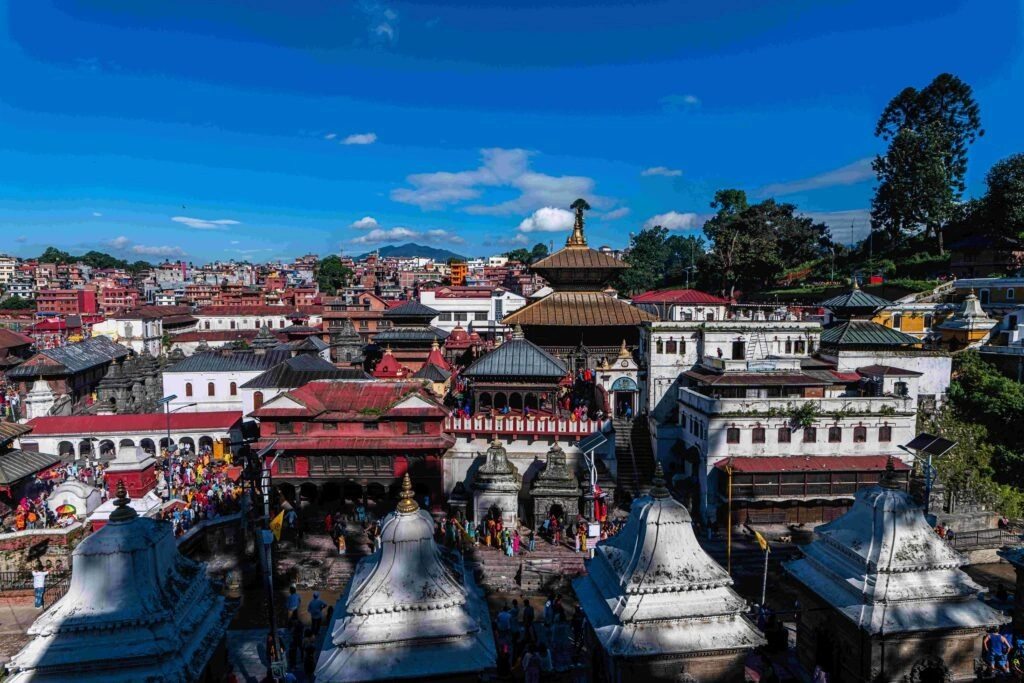
Maha Shivaratri is the most sacred festival dedicated to Lord Shiva, drawing hundreds of thousands of devotees and spiritual seekers to Pashupatinath Temple in Kathmandu, Nepal's holiest Hindu pilgrimage site and one of the most revered Shiva shrines in the world. Celebrated on the fourteenth night of the waning moon in the month of Phalguna, the festival transforms the UNESCO World Heritage temple complex into a center of devotion, where pilgrims, Sadhus, priests, and worshippers gather for all-night vigils, sacred fire rituals, Shiva Lingam abhishekam ceremonies, and continuous chanting along the banks of the Bagmati River. The event represents one of the largest expressions of living Shaiva tradition and offers a rare opportunity to witness Nepal's spiritual heritage at its most vibrant and authentic.
The Maha Shivaratri Festival Tour Nepal 2027 combines this extraordinary religious celebration with an immersive cultural journey through the Kathmandu Valley's most important UNESCO World Heritage Sites. Scheduled from March 4 to March 9, 2027, the 6-day experience allows travelers to participate in the Great Night of Shiva at Pashupatinath while exploring Kathmandu Durbar Square, Bhaktapur Durbar Square, Patan Durbar Square, Swoyambhunath, Bauddhanath, and Nagarkot. Blending pilgrimage, history, architecture, Himalayan scenery, and local cultural insight, the journey provides a comprehensive introduction to Nepal's Hindu traditions, Buddhist heritage, and centuries-old Newari civilization during one of the country's most significant annual festivals.
Why Is Maha Shivaratri on March 06, 2027, Special in Nepal?
Maha Shivaratri on March 6, 2027, coincides with the Phalguna Krishna Chaturdashi, the 14th night of the waning moon in the Hindu month of Phalguna, marking the annual convergence of over 1 million pilgrims at Pashupatinath Temple, the most sacred Shaiva site in Nepal and one of the 4 Char Dham Shiva temples on Earth.
The 2027 date carries significance for 3 specific reasons:
The festival falls during a particularly auspicious lunar alignment classified in the Hindu Panchanga as deeply favorable for Shiva worship, intensifying the overnight vigil participation among Nepali Hindus.
Nepal's Department of Tourism recorded 800,000+ domestic pilgrims and 15,000+ international visitors at the 2024 Maha Shivaratri, and the country's broader tourism recovery remains steady rather than explosive: the Nepal Tourism Board's October 2025 Tourism Insights report shows international arrivals growing just 3.3% year-on-year and reaching 95.8% of pre-pandemic 2019 levels, a trend likely to shape realistic visitor expectations for the 2027 festival.
Pashupatinath holds the status of Char Dham, one of 4 major Shiva pilgrimage sites in the world, giving this specific date global devotional weight well beyond Nepal's own borders.
For international travelers, March 6 represents 1 of 12 Shivaratris occurring annually, but Maha Shivaratri (the Great Night of Shiva) is the only one that includes all-night ceremonial abhishekam (ritual bathing of the Shiva Lingam), mass Sadhu gatherings, and public fire rituals accessible to visitors. Missing this date means waiting a full 12 months.
What Is the Religious Significance of Maha Shivaratri?
Maha Shivaratri is the most spiritually potent night in the Hindu calendar for Shaiva devotees. The festival marks Lord Shiva's cosmic Tandava dance, the divine union of Shiva and Parvati, and the night when Shiva is believed to be closest to the material world: absorbing prayers, dissolving karma, and granting liberation (moksha) to sincere worshippers.
The religious framework of Maha Shivaratri rests on 4 core practices:
Upavasa (fasting): Devotees abstain from food and water for 24 hours, purifying the body before the nighttime vigil
Jaagran (all-night vigil): Staying awake through 4 prahar (3-hour watches) from dusk to dawn, reciting Om Namah Shivaya
Abhishekam (ritual bathing): Pouring milk, honey, water, and bel patra (wood apple leaves) over the Shiva Lingam
Deepdan (lamp offering): Lighting diyas (oil lamps) around the temple complex to honor Shiva's divine light
Hindu scriptures, including the Shiva Purana, Skanda Purana, and Linga Purana, state that sincere observance of Maha Shivaratri equals the merit of 12 full years of daily Shiva worship. The Linga Purana specifically describes this night as one when the boundary between the mortal and divine realms thins to its minimum, making prayer exponentially more effective in the eyes of devoted practitioners.
What most introductory guides omit: Maha Shivaratri is not a mourning festival. It is a celebration of creation, transformation, and cosmic wholeness, the night when opposites unite, destruction becomes renewal, and the universe resets its spiritual balance.
Why Is Nepal a Top Destination for Maha Shivaratri Celebrations?
Nepal hosts the world's largest Maha Shivaratri celebration outside Varanasi because Pashupatinath, one of the seven Monument Zones that make up the Kathmandu Valley property on UNESCO's official World Heritage List, is described by UNESCO itself as an extensive Hindu temple precinct along the banks of the sacred Bagmati River.
5 factors distinguish Nepal's Maha Shivaratri from all other global celebrations:
Pashupatinath's Char Dham status: Only Pashupatinath, Kedarnath, Kashi Vishwanath, and Somnath carry this designation. Nepali Hindus hold that a single Darshan (sacred viewing) at Pashupatinath on Maha Shivaratri equals 1,000 visits on ordinary days.
India's Sadhu community: Over 10,000 Sadhus, Naga ascetics, and Aghori monks travel from across India and Nepal annually. Many fast for 40+ days beforehand. Witnessing Naga Sadhus, naked ascetics covered in sacred ash, performing ancient fire rituals at the Bagmati ghats is an experience unavailable at any other time of year.
Cultural concentration: Kathmandu Valley contains 3 Durbar Squares, 2 UNESCO-listed Buddhist stupas, and 7 UNESCO zones within a 30 km² radius, making it possible to combine festival attendance with major heritage site visits in a single 6-day window.
Open-access festival: Unlike many Indian temple festivals that restrict non-Hindu visitors from inner sanctums, Pashupatinath's Maha Shivaratri allows international travelers to observe the ghats, sadhu camps, and public rituals from designated viewing areas without restriction.
Elevation and climate: Kathmandu sits at 1,400 meters above sea level. In early March, daytime temperatures average 18°C, nights drop to 7°C, and Himalayan views clear after winter haze, conditions that make the overnight vigil physically manageable and visually spectacular simultaneously.
What Can Visitors Expect During Maha Shivaratri at Pashupatinath?
Visitors at Pashupatinath on Maha Shivaratri encounter 3 distinct zones of activity: the inner sanctum (restricted to Hindus), the outer temple complex with active sadhu camps and ritual fires, and the Bagmati River ghats where cremations, bathing rituals, and public ceremonies unfold simultaneously throughout the night.
The Pashupatinath complex spans 264 hectares. On Maha Shivaratri, this space organizes into 5 functional ritual areas:
Arya Ghat: The primary cremation ghat where sacred fires burn continuously; sadhus meditate in circles beside the flames
Main Temple Forecourt: 4 Vedic priest groups rotate abhishekam ceremonies every 3 hours through the night, with live music and chanting
Kailashnath Mahadev Area: Sadhu camps hosting Naga Babas, Aghori practitioners, and Shaiva pilgrims from 8 Indian states
Bachhareshwari Temple Section: Female devotees' overnight prayer gatherings on the eastern bank
Guheswari Temple Path: Shakti pilgrim route connecting the Devi temple to Pashupatinath's eastern gate
What most visitors overlook: the most powerful ritual atmosphere occurs between midnight and 3 AM, the second and third prahar. Daytime visitors and early-evening tourists leave, and the festival returns to its original intimate character. Nepal Intrepid Treks' guides keep the group at the festival through this specific window by design.
The scene is intense but organized: South Asian arrivals alone reached 29,060 in a single month according to the Nepal Tourism Board's October 2025 Tourism Insights, underscoring why Nepal Police restrict vehicle access within 1 km of the temple from 6 PM to manage the pedestrian crowds on Maha Shivaratri night.
Why Celebrate The Night of Shiva, Maha Shivaratri?
Celebrating Maha Shivaratri in Nepal provides 3 irreplaceable experiences: direct exposure to living Tantric and Vedic traditions traceable to 2,500 years of unbroken practice, participation in the world's largest non-Kumbh Mela Hindu festival gathering, and access to a visual and spiritual landscape that no other calendar date in Nepal replicates.
Travelers returning from Maha Shivaratri at Pashupatinath consistently describe 3 defining impressions:
The single highest-density cultural experience in South Asian travel, where 3 distinct religious traditions (Shaivism, Tantrism, and Vedic Brahminism) operate visibly and simultaneously in one space
The only night where Sadhus openly perform rituals that remain private throughout the rest of the year, including fire meditations, ash-body practices, and Rudra chanting ceremonies
A cultural immersion that creates lasting personal perspective, not merely a sightseeing memory
For travelers with Hindu heritage, this night reconnects family traditions spanning 2 or 3 generations. For non-Hindu international visitors, it provides unfiltered access to a living ancient tradition that still functions exactly as it did in medieval Nepal, unchanged in ritual structure for over 700 years since the Malla dynasty formalized Pashupatinath's ceremonial protocols.
Nepal Intrepid Treks guides every group through a pre-festival briefing covering essential customs: removing footwear at temple peripheries, avoiding pointing at sacred objects, maintaining silence near active cremation ghats, and dressing in dark or muted colors to blend respectfully with the overnight crowd.
What is the True Story of Shiva on the Night of Maha Shivaratri?
The Maha Shivaratri origin story, recorded in the Shiva Purana and Linga Purana, describes the cosmic event of Shiva performing the Tandava Nritya, his 7-step divine dance of creation, preservation, and dissolution, on this specific lunar night, making it the moment when the universe's deepest energy most directly permeates the material world.
Hindu scriptures preserve 3 primary narratives explaining this night's significance:
The Cosmic Jyotirlinga Account
The Linga Purana records that Brahma and Vishnu disputed supremacy over creation until an infinite column of fire, the Jyotirlinga, appeared between them on this exact lunar night. Shiva emerged from the pillar, revealing himself as the consciousness beyond all creation and dissolution. The Shiva Lingam worshipped at every Shaiva temple, including Pashupatinath, commemorates this event. The 12 Jyotirlinga temples across India derive their sacred status from this founding revelation.
The Divine Union of Shiva and Parvati
The Shiva Purana dates the marriage of Shiva and Parvati to the Phalguna Krishna Chaturdashi. Devotees celebrate this union as the cosmic completion of masculine consciousness (Shiva) and feminine creative energy (Shakti/Parvati), making Maha Shivaratri a night of divine wholeness rather than austerity alone. Temple rituals at Pashupatinath reflect this dual aspect: both the severe night vigil and the joyful abhishekam celebrate the same cosmic event from opposite poles.
The Hunter Lubdhaka's Accidental Vigil
A hunter named Lubdhaka, stranded in a forest on this lunar night, sheltered in a Bel tree directly above a Shiva Lingam. Unknowingly, he plucked and dropped Bel leaves onto the Lingam throughout the night and wept tears of fear that fell on it as natural abhishekam. Shiva granted him liberation despite his complete absence of conscious devotion, establishing the theological teaching that sincere presence on Maha Shivaratri, even imperfect or unintentional, carries full spiritual merit.
These 3 narratives collectively explain why fasting, Bel patra offering, overnight wakefulness, and emotional sincerity form the 4 structural pillars of every Maha Shivaratri observance worldwide.
What Are the Highlights of the 6-Day Maha Shivaratri Festival Tour in Nepal?
The 6-day Maha Shivaratri Festival Tour Nepal 2027 includes 6 UNESCO World Heritage Sites, 1 live overnight festival experience at Pashupatinath, 1 Himalayan sunrise viewpoint at Nagarkot (2,175 m elevation), and full cultural explorations of Kathmandu, Bhaktapur, and Patan, delivered by Nepal Intrepid Treks' government-certified local guides.
The tour's 8 primary highlights:
Overnight Maha Shivaratri vigil experience at Pashupatinath Temple on March 6
Swoyambhunath Stupa visit with panoramic Kathmandu Valley sunrise views
Bauddhanath Stupa: the largest stupa in Nepal and a living Tibetan Buddhist center
Kathmandu Durbar Square: 55+ monuments and temples in a single historic plaza
Bhaktapur Durbar Square: the best-preserved medieval city in South Asia, unchanged since the 17th century
Nagarkot sunrise with direct Himalayan range views spanning 180° (80% clear-day probability in March)
Patan Durbar Square: the finest Newari courtyard architecture in Nepal
Expert local guide interpretation of each site's religious and architectural history across the full 6 days
Which Cultural and Heritage Sites Are Included in the Journey?
The tour covers all 3 Durbar Squares in the Kathmandu Valley, forming one continuous architectural timeline from the 12th to 18th centuries. Each site operates as a distinct cultural ecosystem with its own religious traditions, architectural vocabulary, and community identity.
Kathmandu Durbar Square (Hanuman Dhoka): Built across Licchavi and Malla dynasty eras, the square contains 55 temples including the Kumari Ghar (residence of Nepal's living goddess), the Taleju Temple (restricted to non-Hindus except during Indra Jatra), and the original Hanuman Dhoka Palace Museum. The square sits at 1,310 meters elevation in the historical center of Kathmandu.
Bhaktapur Durbar Square: The crown jewel of Newari art. Bhaktapur's square preserves the 55-Window Palace, the Golden Gate (Sun Dhoka), and the Nyatapola Temple, a 5-story pagoda standing 30 meters tall, constructed in 1702 CE without a single iron nail. The town's medieval street grid and artisan quarters survive intact, unlike Kathmandu's more modernized urban core.
Patan Durbar Square: The Krishna Mandir (a complete stone shikhara temple completed in 1636 CE) and the Hiranya Varna Mahavihara (Golden Temple, dating to the 12th century) distinguish Patan's square. Its 20+ temples and 136 bahals (monastery courtyards) span 7 uninterrupted centuries of royal patronage.
Swoyambhunath: The 2,000-year-old stupa crowning a 365-step hilltop provides the best aerial view of the Kathmandu Valley. Its all-seeing Buddha eyes painted on the stupa spire form Nepal's most globally recognized architectural symbol.
Bauddhanath: With a 120-meter circumference base, Bauddhanath is the largest stupa in Nepal. The UNESCO site serves as the living center of Nepal's Tibetan Buddhist diaspora, with 50+ active monasteries in immediate orbit around its mandala base.
Pashupatinath Temple: The oldest and holiest Shaiva temple in Nepal, established in the 5th century CE along the banks of the Bagmati River. The compound spans 264 hectares and contains 518 individual temples and 492 Shiva Lingas within its outer walls.
How Does the Tour Combine Spiritual Experiences and Sightseeing?
The 6-day structure creates a deliberate rhythm: 2 orientation days before the festival, 1 full festival day and night, and 2 cultural exploration days after. This sequence prevents festival experience from overwhelming the broader cultural sites and ensures travelers carry historical context into the Maha Shivaratri night itself.
Day 2's sightseeing, Swoyambhunath, Bauddhanath, and Kathmandu Durbar Square, introduces Nepal's 3 dominant religious traditions (Shaivism, Vajrayana Buddhism, and Tantric synthesis) before the festival. When travelers reach Pashupatinath on Day 3, they recognize iconography, understand ritual purpose, and engage meaningfully rather than observing passively from a distance.
Days 4 and 5 shift the tour's pace intentionally. Bhaktapur operates as a functioning medieval town, pottery workshops, Newari thangka painting studios, and curd shops unchanged since the 17th century. Nagarkot provides physical recovery at 2,175 meters after the overnight festival vigil. Patan closes the journey with Nepal's most internationally recognized museum collections and courtyard architecture.
What Makes This Itinerary Unique for International Travelers?
3 structural decisions distinguish this itinerary from standard Kathmandu cultural tours:
Festival-timed arrival: Most Kathmandu city tours visit Pashupatinath in a standard 2-hour daytime temple visit. This tour positions Pashupatinath as the itinerary's central event, allocating a full day and night specifically for Maha Shivaratri, with pre-event temple orientation and guided post-midnight access windows when genuine ritual immersion peaks.
Nagarkot integration: Few 6-day Kathmandu itineraries include an overnight Nagarkot stay. Placing it on Day 4, directly after the overnight festival, gives travelers physical recovery with mountain air, Himalayan sunrise views, and quiet village surroundings before the final cultural day in Patan.
UNESCO-sequenced exploration: 6 UNESCO sites visited in a logical order that builds cultural comprehension chronologically. The architectural timeline runs from Licchavi-era Swoyambhunath through Malla-era Bhaktapur to Shah-era Patan, creating a coherent historical narrative rather than a checklist of disconnected monuments.
Maha Shivaratri Festival Itinerary
This 6-day journey begins with arrival in Kathmandu and cultural exploration of UNESCO World Heritage Sites. Travelers experience the vibrant Maha Shivaratri celebrations at Pashupatinath Temple on March 6, 2027. The itinerary also includes visits to Bhaktapur, Patan, and the Himalayan viewpoint of Nagarkot. The tour concludes with a farewell transfer after an immersive blend of spirituality, culture, and heritage.
Day 01 / March 04: Arrival
Arrival in Kathmandu at Tribhuvan International Airport (elevation: 1,338 m). Nepal Intrepid Treks' representative meets all travelers at the arrival hall with a name card and transfers directly to the hotel in Thamel or Lazimpat, depending on the booking category.
The first evening is intentionally unscheduled. Thamel's pedestrian zone, 10 minutes from most central Kathmandu hotels, provides a first cultural orientation without formal obligations. Local restaurants serve dal bhat thali, tukpa (Tibetan noodle soup), and Newari set meals at NPR 300–450 per plate.
Nepal Intrepid Treks provides a detailed festival briefing document at hotel check-in, covering March 6 dress code, sacred site protocols, the overnight schedule, and the recommended items to carry for the Maha Shivaratri vigil.
Day 02 / March 05: Kathmandu Valley Sightseeing (Kathmandu Durbar Square, Swoyambhunath, Bauddhanath)
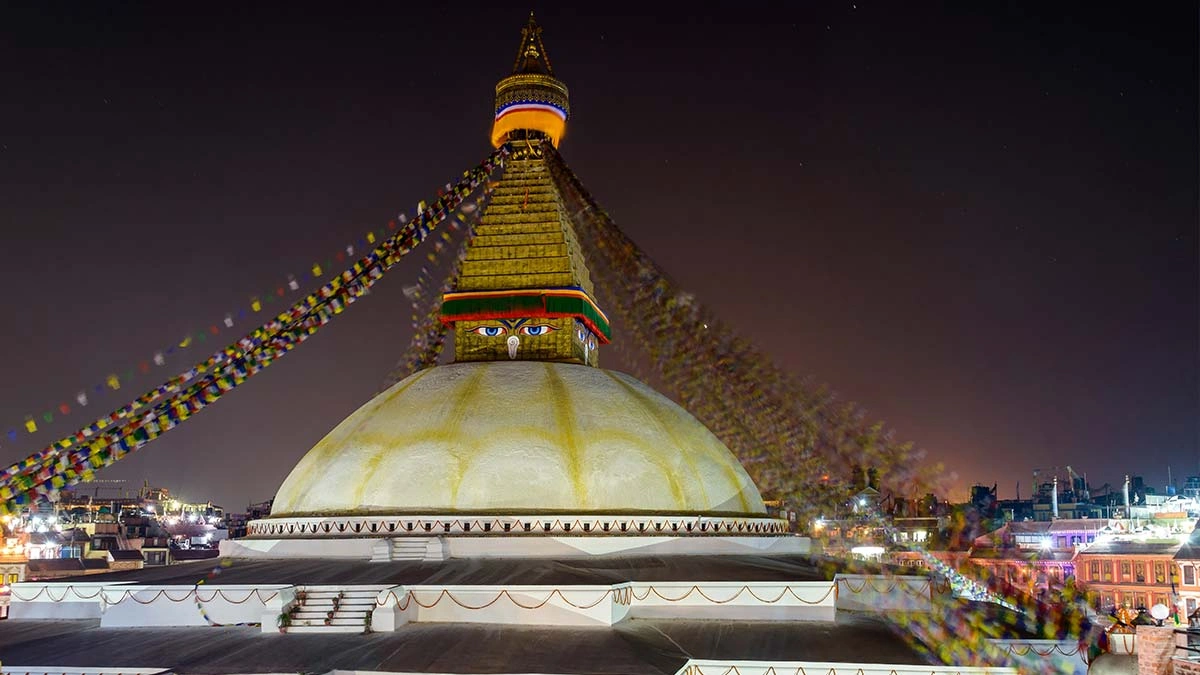
Day 2 covers 3 major UNESCO sites in a single full-day itinerary spanning 18 km across Kathmandu's urban valley, beginning at Swoyambhunath at 7:30 AM for morning light photography and ending at Bauddhanath for the evening circumambulation ritual (pradakshina).
Swoyambhunath (7:30 AM – 10:00 AM): The climb up 365 stone steps takes 12 minutes. Rhesus macaques inhabit the stupa's upper terraces (earning the site's Western nickname "Monkey Temple"). The view from the main stupa platform covers all 4 cardinal directions of the Kathmandu Valley and, on clear March mornings, reveals Langtang Himal (7,227 m) and Ganesh Himal (7,422 m) to the north. Entry fee for international visitors: USD 3.
Kathmandu Durbar Square (10:30 AM – 1:00 PM): The guide presents the square as 3 distinct palace complexes built across 400 years: the Kasthamandap (the sala from which Kathmandu derives its name, built from a single Sal tree), the Kumari Ghar, and the Hanuman Dhoka Palace Museum with its 10 interior courtyards. Entry fee for international visitors: USD 15.
Bauddhanath (3:00 PM – 6:00 PM): Arrive for the pre-sunset circumambulation, when 5,000+ devotees walk clockwise around the stupa's mandala base spinning 108 prayer wheels in the lower prayer wheel corridor. The surrounding Tibetan enclave's restaurants serve authentic Tibetan butter tea, thukpa, and freshly made momos at NPR 150–250 per plate. Entry fee: USD 3.
Day 03 / March 06: Explore Maha Shivaratri in Pashupatinath
Maha Shivaratri day begins at Pashupatinath by 4:00 PM and continues through all 4 prahar vigil watches until 6:00 AM on March 7, the single most culturally immersive 14-hour window in Nepal's annual calendar, centered on the Bagmati River's sacred ghats.
The day divides into 3 distinct phases:
Afternoon Phase (4:00 PM – 8:00 PM): Sadhu camps activate as thousands of ascetics perform ablutions in the Bagmati River, light dhuni (ritual fires), and begin the first rounds of Om Namah Shivaya chanting. Nepal Intrepid Treks' guide identifies each visible sadhu sect: Naga Babas (Shaiva ascetics who renounce all clothing), Aghoris (Tantric practitioners of the left-hand path), and Dashanami Sannyasis who constitute the mainstream Shaiva monastic order.
Night Phase (8:00 PM – 2:00 AM): The main abhishekam ceremonies unfold at Pashupatinath's inner sanctum. External devotees queue for Darshan; wait times reach 2–3 hours at peak periods between 9 PM and midnight. The guide positions the group at Arya Ghat's viewing terraces where the convergence of cremation fires, ritual oil lamps, and sadhu meditation circles creates the night's most visually and spiritually significant atmosphere.
Late Night Phase (2:00 AM – 6:00 AM): Crowds thin by 50% after 2 AM. This window offers the closest unobstructed access to active sadhu meditations and the most direct experience of the festival's original contemplative character: undiluted by daytime tourism volume. This is the phase most guides skip. Nepal Intrepid Treks keeps groups present precisely here.
Day 04 / March 07: Visit to Bhaktapur Durbar Square and Drive to Nagarkot
Day 4 transitions from overnight festival recovery to medieval city exploration. Bhaktapur Durbar Square (17 km east of Kathmandu) absorbs a 5-hour focused visit, followed by a 35-minute mountain drive to Nagarkot at 2,175 m elevation for overnight accommodation.
Bhaktapur (10:00 AM – 3:00 PM): A relaxed morning breakfast precedes the 45-minute drive east. Bhaktapur's entry fee for international visitors stands at USD 15. The itinerary prioritizes 5 landmarks: the Golden Gate (Sun Dhoka, featuring a gilded 18th-century relief of Taleju), the 55-Window Palace, the Nyatapola Temple, Dattatreya Square (7 minutes from the main square), and the traditional pottery yard where local artisans use foot-pedal wheels unchanged from 16th-century design.
Nagarkot (4:00 PM arrival): The drive covers 24 km from Bhaktapur, ascending 800 vertical meters through terraced hillside villages. Nagarkot's hotel terraces face east and north, offering direct sightlines to Langtang Himal, Dorje Lakpa (6,966 m), and on exceptionally clear March days, Mount Everest (8,849 m) at a straight-line distance of 58 km.
Day 05 / March 08: See Sunrise, Breakfast and Drive to Patan for Sightseeing Then Head to Kathmandu
Day 5 begins at the Nagarkot sunrise point at 5:30 AM for the Himalayan panorama, returns to the hotel for a full breakfast, then drives 32 km southwest to Patan for the valley's finest museum and temple complex before returning to Kathmandu by evening.
Nagarkot Sunrise (5:30 AM – 7:00 AM): March mornings at Nagarkot average 4°C at dawn. The ridgeline sunrise tower operates as an open public viewing platform. The Himalayan range visible from this elevation spans 180° from Dhaulagiri (8,167 m) in the west to Kanchenjunga (8,586 m) in the east: the widest single-viewpoint Himalayan panorama accessible by road from Kathmandu.
Patan (10:00 AM – 2:00 PM): Patan Durbar Square (Mangal Bazar) contains 20 major temples and 136 monastery courtyards. The Patan Museum, housed in the restored Malla palace's western wing, is internationally recognized as Nepal's finest cultural institution, displaying Newari bronze casting and gilded metal art spanning 1,400 years of continuous craft tradition. Museum entry: USD 10.
Return to Kathmandu hotel by 4:00 PM. The final evening is free for personal exploration, last-minute shopping in Thamel, or a farewell dinner at a Newari heritage restaurant. Krishnarpan at Dwarika's Hotel offers a 22-course Newari tasting menu and requires advance reservation.
Day 06 / March 09: Farewell
Departure day transfers are organized by Nepal Intrepid Treks according to each traveler's confirmed flight schedule. Early morning flights departing before 9:00 AM require hotel departure by 6:30 AM; afternoon departures allow a final Thamel walk or hotel breakfast before the airport transfer.
Nepal Intrepid Treks' standard hotel checkout time is 12:00 PM. Luggage storage facilities at partner hotels allow travelers with afternoon or evening departures to continue exploring Thamel's markets, Durbar Marg's galleries, or the Garden of Dreams park (entry NPR 400) without managing checked bags.
What Should Travelers Know Before Joining the Maha Shivaratri Festival Tour Nepal 2027?
Travelers should be prepared for large crowds and an overnight spiritual celebration at Pashupatinath Temple during Maha Shivaratri. Early March offers pleasant daytime weather, but warm layers are essential for cool evenings and the night vigil. Respectful clothing and cultural etiquette are important when visiting sacred sites. Booking early is recommended: according to the Ministry of Culture, Tourism & Civil Aviation's Nepal Tourism Statistics 2023 report, Nepal's tourist arrivals show pronounced seasonal peaks around major cultural festivals, a pattern that historically tightens Kathmandu hotel availability well ahead of Maha Shivaratri.
What Is the Weather Like in Nepal During Early March?
Kathmandu Valley in early March records average daytime temperatures of 18–22°C and nighttime lows of 6–9°C, with 4–6 hours of clear sunshine daily. The Maha Shivaratri festival night (March 6) requires planning for temperatures dropping below 8°C by midnight, with wind chill at the Bagmati River reducing apparent temperatures to 4°C.
The weather pattern across all 6 tour days:
Date | Location | Day Temp | Night Temp | Expected Conditions |
March 4 | Kathmandu | 20°C | 8°C | Clear, light haze |
March 5 | Kathmandu | 21°C | 8°C | Clear, good visibility |
March 6 | Kathmandu | 22°C | 7°C | Clear; festival crowds from afternoon |
March 7 | Bhaktapur / Nagarkot | 19°C | 3°C | Clear mountain views likely |
March 8 | Nagarkot / Patan | 18°C | 6°C | Clear sunrise, 80% probability |
March 9 | Kathmandu | 20°C | 8°C | Clear |
Nagarkot on March 7–8 drops to 3°C at night and 4°C at the pre-dawn sunrise point. Festival night at Pashupatinath demands warm layering; specifically, the riverside setting increases wind exposure throughout the overnight vigil. Travelers planning other Nepal trips beyond March can refer to our full guide on the best season to visit Nepal for a breakdown of trekking and touring conditions across all four seasons.
What Should You Pack for This Cultural Journey?
Pack 12 essential items for this specific itinerary, prioritizing thermal layers for the overnight festival vigil, respectful loose-fitting temple clothing, and comfortable walking footwear capable of handling 6–8 km of daily cobblestone site exploration.
The 12 essential items:
Thermal base layer: for the overnight Maha Shivaratri vigil (temperatures drop below 8°C post-midnight)
Mid-layer fleece: packable, for Nagarkot sunrise at 4°C dawn temperature
Windproof outer jacket: Bagmati River wind chill during the overnight festival
Loose cotton trousers or salwar kameez: required attire for temple entry at Pashupatinath, Swoyambhunath, and all Patan temples
Comfortable walking shoes: minimum 6–8 km of daily cobblestone walking at heritage sites
Slip-on sandals: for quick removal at the 12+ temple entry points requiring bare feet
Small daypack: for water, camera, and layering items during sightseeing days
Reusable water bottle: safe filtered water at hotels; avoid unfiltered sources
Headlamp or clip-on torch: essential for overnight festival navigation in low-light ghat areas
Sunscreen SPF 30+: high UV index at 1,400 m elevation even in March
Cash in Nepali Rupees (NPR): most sadhu camps, street vendors, and small donation points accept NPR only; ATMs available throughout Thamel and USD accepted at major sites
Lightweight rain cover for daypack: March occasionally sees brief late-afternoon showers in the valley
Are Any Permits, Entry Fees, or Travel Documents Required?
International travelers to Nepal require a valid passport with 6+ months' validity and a Nepal Tourist Visa; per the Department of Immigration's official Visa Fee and Documents schedule (updated January 2026), on-arrival tourist visas cost USD 30 for 15 days or USD 50 for 30 days, with children under 10 and first-time SAARC visitors eligible for a free Gratis visa.
No trekking permit applies to the Kathmandu Valley cultural circuit. Pashupatinath's outer temple complex has historically waived the standard international visitor fee on Maha Shivaratri night, though the inner temple management accepts donations for the dharmasala (pilgrim rest house) at the main gate.
Entry fee summary for the 6-day itinerary:
Site | International Entry Fee |
Kathmandu Durbar Square | USD 7.50 |
Pashupatinath Temple | USD 10 (standard; often waived on festival night) |
Bhaktapur Durbar Square | USD 15 |
Patan Durbar Square (including Museum) | USD 7.50 |
Swoyambhunath | USD 1.50 |
Bauddhanath | USD 3 |
Total estimated | USD 49–59 per person |
All entry fees are paid independently and are not included in Nepal Intrepid Treks' tour package price.
How Should You Plan a Maha Shivaratri Cultural Journey With Nepal Intrepid Treks?
Planning the Maha Shivaratri Festival Tour Nepal 2027 with Nepal Intrepid Treks involves 4 sequential steps: confirming the March 4–9 tour dates, booking the tour package, arranging a Nepal Tourist Visa, and purchasing international flights to Kathmandu (KTM), all completed at least 90 days in advance to secure hotel availability during this peak festival window.
The 4 planning steps:
Book the tour package with Nepal Intrepid Treks by October 2026 at the latest. Maha Shivaratri 2027 hotel inventory in Kathmandu reaches capacity by November 2026 based on 2024 and 2025 historical booking patterns.
Arrange Nepal Tourist Visa: available on arrival at Tribhuvan Airport with no pre-application required for most nationalities, including US, UK, EU, Australian, and Canadian passport holders. Bring 2 passport photos and USD 30 or USD 50 in cash.
Book international flights arriving KTM on March 4, 2027. Recommended airlines serving Kathmandu with direct or single-connection routes: Qatar Airways (via Doha), Emirates (via Dubai), Thai Airways (via Bangkok), and Air India (via Delhi).
Arrange travel insurance covering cultural tours, medical treatment, and Nepal-specific helicopter evacuation. Nepal Intrepid Treks requires travel insurance documentation from all participants before the tour departure.
Can Nepal Intrepid Treks Help You Experience Maha Shivaratri Festival Nepal 2027?
Nepal Intrepid Treks organizes the complete Maha Shivaratri Festival Tour Nepal 2027 package, including Kathmandu airport transfers, 5 nights accommodation, a government-certified bilingual Nepali guide, all private ground transportation, and a fully structured daily itinerary for the 6-day cultural journey.
Nepal Intrepid Treks operates with 15+ years of experience designing Nepal cultural programs and trekking expeditions. The company's Kathmandu-based team maintains direct relationships with Pashupatinath temple management, enabling festival-night access briefings, optimal crowd positioning at Arya Ghat, and emergency protocol coordination for international visitors navigating the overnight festival for the first time.
What Nepal Intrepid Treks provides:
Airport pickup and hotel drop-off on March 4 and March 9
5 nights accommodation in Kathmandu (Days 1–3, 5–6) and Nagarkot (Day 4)
All ground transportation in private vehicle
Government-certified, English-speaking local guide for all 6 days
Pre-festival cultural briefing documentation in English
24/7 emergency contact support throughout the full tour
What travelers arrange independently: International flights, Nepal Tourist Visa, individual site entry fees (USD 49–59 total), personal meals (except where specified in the package), and travel insurance.
To begin planning the Maha Shivaratri Festival Tour Nepal 2027, contact Nepal Intrepid Treks through their official website or WhatsApp helpline to confirm March 4 availability and discuss package customization options for your group size and travel preferences.
What Are the Key Takeaways About the Maha Shivaratri Festival Tour Nepal 2027: 6 Days Cultural Journey?
The Maha Shivaratri Festival Tour Nepal 2027 is a 6-day structured cultural journey from March 4–9 that combines the world's largest Shaiva festival night at Pashupatinath with visits to 6 UNESCO World Heritage Sites across the Kathmandu Valley, designed for international travelers who want religious immersion, heritage depth, and professional local guidance within a single Nepal experience.
The 6 core takeaways for prospective travelers:
Date certainty: March 6, 2027 is confirmed as Maha Shivaratri by the Hindu Panchanga calendar, carrying no date adjustment risk for travelers booking international flights.
Festival access: The overnight vigil from 4 PM to 6 AM on March 6–7 is the itinerary's central event, not an optional side visit. The post-midnight 2 AM–6 AM window holds the deepest ritual atmosphere.
UNESCO density: 6 World Heritage Sites in 6 days, sequenced to build cultural comprehension chronologically across Nepal's 2,000-year architectural and religious history.
Weather window: Early March provides Nepal's finest combination of clear Himalayan views, comfortable 18–22°C daytimes, and manageable festival-night temperatures for the outdoor overnight experience.
Professional support: Nepal Intrepid Treks' certified guides and pre-festival briefings transform an overwhelming million-person crowd event into a structured, meaningful cultural engagement.
Booking timing: Kathmandu hotels for March 2027 require confirmation by October 2026. Early booking guarantees optimal placement near Thamel and Pashupatinath for both convenience and festival-night logistics.
The Maha Shivaratri Festival Tour Nepal 2027 represents the most concentrated single itinerary for experiencing Nepal's living Hindu heritage, ancient Buddhist culture, medieval Newari architecture, and Himalayan landscape within one culturally significant, precisely timed 6-day journey.