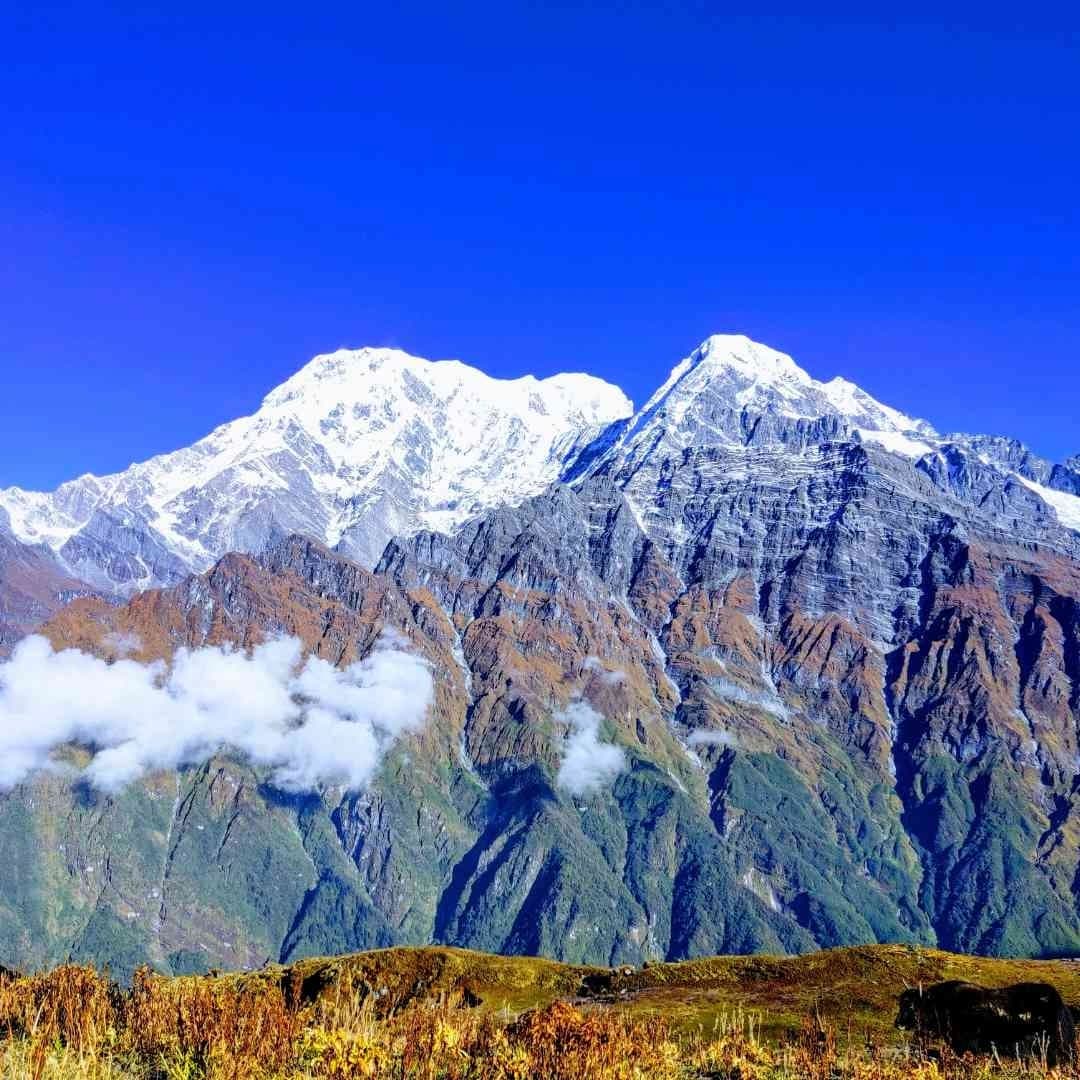
The Langtang Valley Trek in November is a 7–10-day Himalayan trekking adventure in Nepal's Langtang National Park, combining clear mountain views, alpine landscapes, traditional Tamang villages, and comfortable teahouse accommodation. The route from Syabrubesi (1,500 m) to Kyanjin Gompa (3,870 m) passes through forests, glacial valleys, and mountain settlements, with opportunities to hike to Kyanjin Ri (4,773 m) and Tserko Ri (4,984 m). November brings dry trails, excellent visibility of Langtang Lirung (7,227 m) and surrounding Himalayan peaks, and fewer trekkers than October. However, temperatures drop sharply with altitude, with nighttime lows reaching approximately -10°C at Kyanjin Gompa, making warm clothing, suitable trekking equipment, and gradual acclimatization essential.
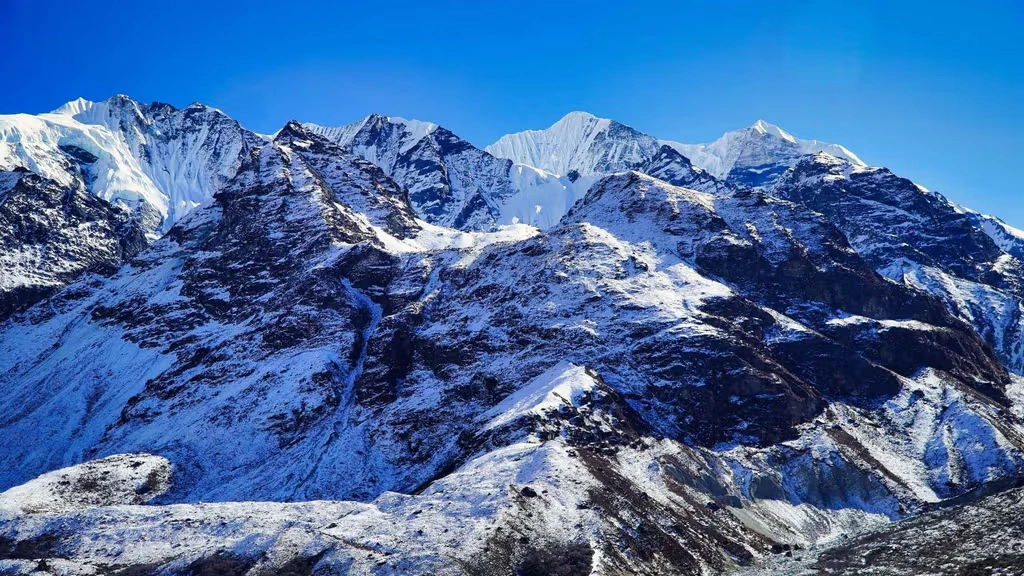
Planning the Langtang Valley Trek in November 2026 also requires careful attention to transportation, trail access, and seasonal safety. Severe monsoon-related flooding in late September 2026 damaged roads and bridges along the Trishuli River corridor, disrupting access to Syabrubesi, the traditional starting point of the trek. Although the route inside Langtang Valley has been reported as intact, departure plans depend on the latest road-repair progress and transport availability. This guide covers November weather and temperatures, the recommended 10-day itinerary, trekking difficulty, altitude sickness prevention, packing essentials, permits, guides, accommodation, food, and estimated costs. It also explains how to verify road conditions, prepare for freezing nights, and organize a safer trek with a registered Nepal trekking agency before confirming your departure.
Why Is November a Good Month for the Langtang Valley Trek?
November is a good month for the Langtang Valley trek because the monsoon moisture has gone, skies stay clear until late morning, trails carry fewer trekkers than in October, and teahouse prices drop slightly. The trade-off is cold: nights at Kyanjin Gompa reach -10°C.
Central Nepal receives most of its rain between June and September. By November, the Langtang range sits in dry northwesterly air, and rainfall is among the lowest of the year, level with December. The combination produces the sharpest visibility of the trekking calendar.
What Makes November Ideal for Mountain Views and Clear Skies on Langtang Valley Trek?
Cold, dry air holds almost no moisture, so cloud forms late in the day and Langtang Lirung (7,227 m), Langtang Ri (7,205 m) and Gangchenpo (6,387 m) stay sharp until about 10 or 11 AM.
The best light arrives at sunrise. Langtang Lirung catches first light before the village does, and the glacier walls above Kyanjin Gompa glow pink minutes later. We start summit walks at 5:30 AM for this reason, and the extra cold is repaid within the first hour.
Cloud builds from the south after 11 AM in most weeks. Trekkers who plan Kyanjin Ri for midday see fog instead of peaks. Keep the afternoon for the monastery and the cheese factory.
How Does November Compare With Other Trekking Months in Langtang?
November ranks second to October for visibility, first for quiet trails, and last of the autumn months for warmth. The table below compares the 5 main trekking periods in Langtang by weather, crowds, mountain views and trail risk.
Period | Weather | Crowds | Mountain views | Main risk |
March to May | Warm, afternoon haze | Moderate | Good in the morning | Haze, rare late snow |
June to August | Monsoon rain, leeches | Very low | Poor | Landslides, flooded trails |
September | Wet early, drying late | Low | Fair | Slippery trails, cloud |
October | Dry, mild | Highest | Excellent | Full lodges, higher prices |
November | Dry, cold | Moderate | Excellent | Cold nights, short days |
December to February | Very cold, snow | Very low | Excellent | Deep snow, lodge closures |
November keeps the visibility of October and removes most of the crowd. Spare rooms also let guides choose the better-heated lodges.
What Are the Main Advantages and Disadvantages of Trekking Langtang Valley Trek in November?
The Langtang Valley trek in November offers 5 advantages and 5 disadvantages. Weigh both lists against your cold tolerance and your calendar.
Advantages:
Clarity: peaks stay visible from the first light to late morning
Stability: rain and landslide risk fall to the lowest level of the year
Space: lodges and trails hold fewer trekkers than in October
Savings: teahouse and package prices run 10 to 15 percent below the October peak
Access: the Kyanjin Ri and Tserko Ri viewpoints stay walkable in most weeks
Disadvantages:
Cold: nights below -5°C above Langtang village
Darkness: about 10.5 hours of daylight by late November
Snow: possible on the Tserko Ri ridge after a western disturbance
Festivals: Tihar (7 to 11 November 2026) raises vehicle demand on the road to Kathmandu
Road: the 2026 flood repairs leave Syabrubesi access uncertain
What Is the Weather Like on the Langtang Valley Trek in November?
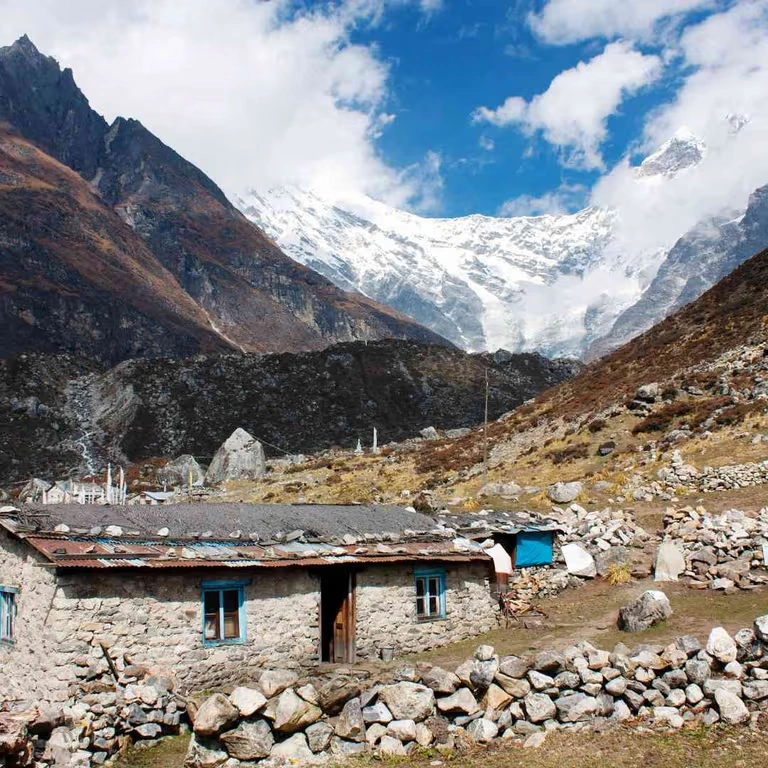
The weather on the Langtang Valley trek in November is dry, clear and cold. Syabrubesi (1,500 m) stays near 20°C by day, Kyanjin Gompa (3,870 m) reaches 4°C to 9°C, and nights fall below freezing above 3,000 m.
Temperature drops about 6.5°C for every 1,000 m of altitude. The route climbs 2,370 m from Syabrubesi to Kyanjin Gompa, so a trekker walks from T-shirt weather to down-jacket weather in 4 days.
What Are the Average Daytime and Nighttime Temperatures of Langtang Valley Trek?
Typical November temperatures run from 15°C to 20°C by day and 5°C to 8°C by night at Syabrubesi, falling to 4°C to 9°C by day and -10°C to -5°C by night at Kyanjin Gompa. The table lists typical ranges at the 4 main overnight stops.
Stop | Altitude | Daytime | Nighttime |
Syabrubesi | 1,500 m | 15°C to 20°C | 5°C to 8°C |
Lama Hotel | 2,470 m | 10°C to 15°C | 0°C to 3°C |
Langtang village | 3,430 m | 6°C to 10°C | -6°C to -2°C |
Kyanjin Gompa | 3,870 m | 4°C to 9°C | -10°C to -5°C |
These ranges are altitude-adjusted estimates, and a clear night runs colder than a cloudy one. Pack for Kyanjin, not for Syabrubesi.
How Cold Does It Get at Kyanjin Gompa in November?
Kyanjin Gompa reaches -10°C to -5°C at night in November, and the dining hall stays warm only in the few hours after the evening stove is lit.
Bedrooms have no heating. Water bottles freeze solid beside the bed, and phone batteries fail first. Trekkers who tuck a hot-water bottle (USD 1 to 2 per refill at most lodges) at their feet sleep through the night. Those who skip it wake at 2 AM.
Wind chill makes the dawn climb to Kyanjin Ri feel several degrees colder than the thermometer reads. Pack liner gloves, a balaclava and chemical hand warmers in the top pocket of the daypack.
How Likely Are Snowfall, Rain, and Freezing Conditions in Langtang Valley Trek?
Rain is unlikely, snowfall is occasional above 3,800 m, and freezing conditions are certain every night above 3,000 m. A western disturbance, a winter weather system that crosses Nepal from the northwest, causes most November snow.
Snow rarely falls below Langtang village. Above it, a light dusting covers Kyanjin Ri and the glacier moraine and lasts a day or two. Frozen mud and black ice form on shaded trail sections between Ghoda Tabela and Langtang village at dawn. Guides carry microspikes for these mornings.
What Are the Daylight Hours and Visibility Like in November Langtang Valley Trek?
November gives the Langtang Valley trek 10.5 to 11 hours of daylight, with sunrise near 6:20 AM and sunset near 5:15 PM in early November. Mountain visibility peaks between 6:30 and 10:30 AM.
Valley walls shorten the usable day further. At Kyanjin Gompa, direct sun leaves the village by about 4 PM, and the temperature drops fast afterwards. Walking days end by 3 PM, and trekkers start between 7 and 8 AM. Carry a headlamp, and keep spare batteries inside your jacket, because cold drains them quickly.
What Is the Langtang Valley Trek Route and Itinerary in November?
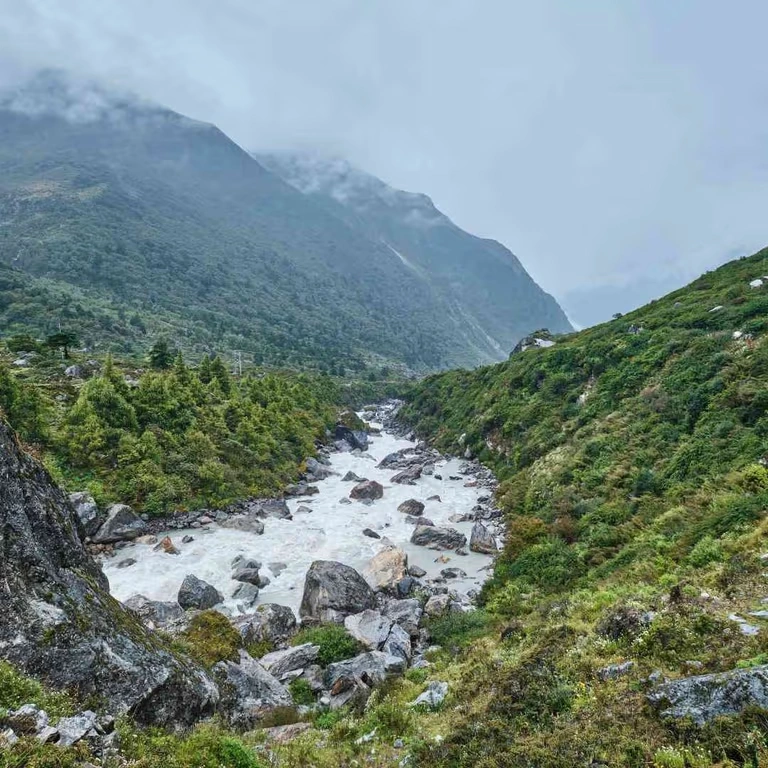
The Langtang Valley trek follows the Langtang Khola river from Syabrubesi (1,500 m) north to Kyanjin Gompa (3,870 m) through rhododendron forest, yak pastures and the rebuilt village of Langtang, then returns on the same trail.
Langtang National Park, established in 1971 and gazetted in 1976, was the first Himalayan national park in Nepal and covers 1,710 square kilometres. The April 2015 earthquake triggered an avalanche from Langtang Lirung that buried the original Langtang village, and residents rebuilt it afterwards.
2026 access note: The classic route starts in Syabrubesi. Until the Betrawati and Dhunche road reaches Syabrubesi again, the start point depends on repair progress. Confirm the status with your agency 7 days before departure.
How Many Days Are Needed to Complete the Langtang Valley Trek?
The Langtang Valley trek takes 7 days at the fastest pace and 10 days with arrival, an acclimatization day and a spare day, which is the plan we recommend for November.
A 7-day schedule drives to Syabrubesi on day 1 and skips the rest day. The 10-day schedule adds a night in Kathmandu before the trek and a buffer day after it. The buffer matters in November because road delays and cold-weather rest days both consume time, and international flights home depend on it.
What Is a Recommended 10-Day Langtang Valley Trek Itinerary?
A recommended 10-day Langtang Valley trek itinerary sleeps at Syabrubesi, Lama Hotel, Langtang village and Kyanjin Gompa on the way up, and returns through Lama Hotel and Syabrubesi.
Day | Route | Sleep | Walking time |
1 | Arrive in Kathmandu, trek briefing | Kathmandu (1,400 m) | None |
2 | Drive Kathmandu to Syabrubesi | Syabrubesi (1,500 m) | 7 to 9 hours drive |
3 | Syabrubesi to Lama Hotel | Lama Hotel (2,470 m) | 5 to 6 hours |
4 | Lama Hotel to Langtang village | Langtang (3,430 m) | 6 hours |
5 | Langtang village to Kyanjin Gompa | Kyanjin (3,870 m) | 3 hours |
6 | Kyanjin Ri or Tserko Ri, return to Kyanjin | Kyanjin (3,870 m) | 5 to 8 hours |
7 | Kyanjin Gompa to Lama Hotel | Lama Hotel (2,470 m) | 6 to 7 hours |
8 | Lama Hotel to Syabrubesi | Syabrubesi (1,500 m) | 4 to 5 hours |
9 | Drive Syabrubesi to Kathmandu | Kathmandu | 7 to 9 hours drive |
10 | Spare day or departure | None | None |
Day 4 carries the steepest sleeping-altitude gain of the trek: 960 m from Lama Hotel to Langtang village. The Wilderness Medical Society advises a sleeping-altitude gain of no more than 300 to 500 m per day above 3,000 m. Trekkers with previous altitude trouble add an 11th day and sleep at Ghoda Tabela (3,000 m) between Lama Hotel and Langtang village. The extra night costs one day and protects the Kyanjin summit day.
What Are the Main Stops From Syabrubesi to Kyanjin Gompa?
The 6 main stops from Syabrubesi to Kyanjin Gompa are Bamboo, Rimche, Lama Hotel, Ghoda Tabela, Langtang village and Mundu, with Kyanjin Gompa as the final stop.
Bamboo (1,960 m) sits inside oak and bamboo forest. Rimche (2,400 m) and Lama Hotel (2,470 m) follow, and the forest around Lama Hotel is the best stretch for langur sightings. Ghoda Tabela (3,000 m) marks the treeline and a checkpoint.
Langtang village (3,430 m) is the largest settlement and holds a memorial for the 2015 avalanche. Mundu (3,543 m) follows, and Kyanjin Gompa closes the climb. Kyanjin holds a small monastery, a yak cheese factory founded in 1955 with Swiss assistance, and the base for every day hike.
Can You Hike to Kyanjin Ri or Tserko Ri in November?
Yes. Kyanjin Ri (4,773 m) is walkable in most weeks of November, and Tserko Ri (4,984 m) is walkable when no fresh snow lies on the ridge. Your guide makes the final call at dawn.
Kyanjin Ri takes 2.5 to 3 hours up and 1.5 hours down from Kyanjin Gompa, a gain of about 900 m. Tserko Ri takes 4 to 5 hours up and 3 hours down for a gain of about 1,100 m, and the exposed ridge near the top has no shelter from wind.
Choose Kyanjin Ri as the default. Choose Tserko Ri when you acclimatize well and carry microspikes. Many trekkers underestimate Tserko Ri after a cold night, and a guide who turns the group back at 4,700 m has made the right decision.
Is the Langtang Valley Trek Difficult in November?
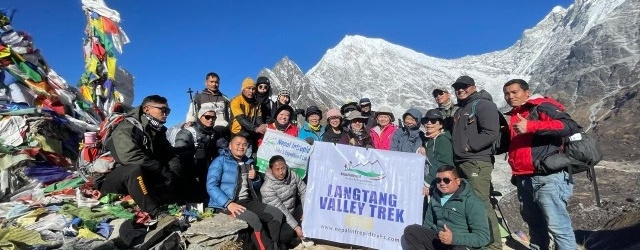
The Langtang Valley trek is a moderate trek in November. Daily walks last 3 to 7 hours, the highest sleeping point is 3,870 m, and the cold adds effort without adding technical difficulty.
No glacier crossing or fixed rope is involved. The challenge comes from 8 consecutive days of walking, the altitude above 3,000 m and the cold nights that reduce sleep quality.
What Fitness Level and Trekking Experience Are Required in Langtang Valley Trek?
The Langtang Valley trek requires the ability to walk 5 to 6 hours a day for 6 days carrying a 6 to 8 kg daypack, and no previous Himalayan experience.
Trekkers who train for 6 to 8 weeks with 3 weekly sessions arrive in good shape. Useful sessions are stair climbing with a loaded pack, hill walks of 2 to 3 hours, and cycling or swimming for aerobic base. First-time trekkers complete this route every season. Our guides see more trouble from poor boots and skipped hydration than from low fitness.
How Does Cold Weather Affect Langtang Valley Trekking Difficulty?
Cold weather raises the difficulty of the Langtang Valley trek by reducing sleep quality, slowing morning starts and increasing energy use on the highest days.
Cold muscles and stiff fingers slow every morning routine, and packing a sleeping bag at 6 AM takes twice as long with gloves on. Trekkers burn extra calories to stay warm, so appetite matters. Eat the full dinner even without hunger. Rest stops also shrink to 10 minutes, and a thermos of hot tea becomes standard equipment.
What Are the Altitude Risks on the Langtang Valley Trek?
The main altitude risk on the Langtang Valley trek is acute mountain sickness (AMS), which affects trekkers above 3,000 m with headache, nausea, dizziness and poor sleep. Severe forms are high altitude cerebral edema (HACE) and pulmonary edema (HAPE).
According to the CDC Yellow Book, AMS appears 6 to 12 hours after reaching a new altitude. Kyanjin Gompa at 3,870 m sits in the range where mild symptoms are common, and the summit days at 4,773 m and 4,984 m raise the risk further.
HACE shows as loss of balance and confusion. HAPE shows as breathlessness at rest and a wet cough. Both require immediate descent of at least 500 m, which is possible in a single day from Kyanjin to Lama Hotel.
How Can You Prevent Altitude Sickness During the Langtang Valley Trek?
Prevent altitude sickness on the Langtang Valley trek by climbing slowly, sleeping no more than 500 m higher each night above 3,000 m, drinking 3 to 4 litres of fluid daily and descending at the first worsening symptom.
According to the Wilderness Medical Society, acetazolamide at 125 mg twice a day lowers AMS risk, and a doctor decides who takes it. Alcohol and sleeping pills reduce breathing at night and add risk.
Garlic soup is a Langtang tradition and tastes good in the cold. No clinical trial shows it prevents AMS. Pacing, hydration and the rest day at Kyanjin do the real work. Our guides carry a pulse oximeter and check oxygen saturation and symptoms every evening above 3,000 m.
What Should You Pack for the Langtang Valley Trek in November?
Pack 4 layers for the Langtang Valley trek in November: a base layer, a mid layer, an insulated down jacket and a waterproof shell, plus a -10°C sleeping bag, warm boots and sun protection.
Pack weight stays at 10 to 12 kg for the porter duffel and 6 to 8 kg for the daypack. Shops in Kathmandu's Thamel district rent down jackets and sleeping bags for about USD 1 to 2 per day.
Which Clothing Layers Are Essential for November Temperatures in Langtang Valley Trek?
The essential layers are a merino or synthetic base layer, a fleece mid layer, a down jacket rated to -10°C, a waterproof shell, insulated trekking trousers, wool socks and a warm hat.
Base layer: 2 long-sleeve tops and 1 thermal bottom
Mid layer: 1 fleece or light synthetic jacket
Insulation: 1 down jacket with 600 fill power or higher
Shell: 1 waterproof and windproof jacket and trousers
Hands and head: liner gloves, insulated gloves, a beanie and a buff
Leave cotton at home. Wet cotton cools the body and dries slowly, and laundry freezes on the line at Kyanjin.
What Trekking Boots and Accessories Should You Bring for Langtang Valley Trek?
Bring waterproof mid-cut trekking boots broken in over 50 km, 2 pairs of wool socks, trekking poles, microspikes, sunglasses with side shields, SPF 50 sunscreen and a 2-litre insulated bottle.
Boots with an insulated midsole keep feet warm on frozen mornings, and gaiters help on snow near Kyanjin Ri. Sun protection matters more than trekkers expect: UV exposure rises about 10 percent per 1,000 m, and snow reflects it back under the chin.
A headlamp, a power bank, water purification tablets and a first-aid kit complete the list. Keep the power bank in your sleeping bag overnight, since cold drains it quickly.
Do You Need a Sleeping Bag Rated for Subzero Temperatures?
Yes. A sleeping bag with a comfort rating of -10°C or lower suits Kyanjin Gompa in November, and a fleece liner adds about 3°C of warmth.
Lodges supply thick blankets, though not enough for nights at -10°C. Check the rating type before buying or renting: the comfort rating gives the temperature at which an average sleeper stays warm, while the limit rating describes survival. Trekkers who sleep cold choose a bag rated to -15°C.
What Permits and Regulations Apply to the Langtang Valley Trek in November?
The Langtang Valley trek requires a Langtang National Park entry permit and a licensed guide hired through a registered trekking agency. A TIMS registration applies where the current system requires it, and your agency confirms this at booking.
Nepal changed trekking registration several times between 2023 and 2026, and published guides disagree on the TIMS card. For that reason, we register every trekker in whichever system applies on the departure date and include the cost in the package.
Which Trekking Permits Are Required for Langtang National Park?
The Langtang National Park entry permit costs a flat NPR 3,000 (about USD 22 to 24) for foreign trekkers, which includes all local taxes. SAARC nationals pay NPR 1,500.
According to the Department of National Parks and Wildlife Conservation, the permit is issued at the Nepal Tourism Board office in Kathmandu and at the park office in Dhunche. Trekkers submit a passport copy, a passport photo and the trek dates. Agencies handle this step.
Checkpoints at Syabrubesi and along the trail verify permits, so keep the document in an accessible pocket.
Do You Need a Licensed Guide for the Langtang Valley Trek?
Yes. Foreign trekkers must walk Langtang National Park with a licensed guide employed by a registered Nepal trekking agency. The Nepal Tourism Board introduced this rule in 2023.
A guide costs USD 25 to 35 per day in 2026, and the daily fee covers the guide's own meals and lodging. Porters cost USD 18 to 25 per day. A guide handles checkpoints, lodge booking, weather decisions and emergency communication. A quote without a licensed guide is not a legal Langtang trek quote.
What Are the Current Trekking Rules for Foreign Visitors in Nepal?
Foreign visitors must hold a valid Nepal visa, trek with a licensed guide in national parks, carry the park permit, register at checkpoints and obtain a separate permit before flying a drone.
Visa: a tourist visa, available on arrival at Kathmandu airport
Guide: a licensed guide from a registered agency
Permit: the park entry permit, carried throughout the trek
Drone: a permit from the relevant authorities before any flight
Insurance: a policy covering trekking to 5,000 m and helicopter evacuation
Insurance is not a legal requirement for tourists, but every reputable agency demands it. Tserko Ri reaches 4,984 m, so a policy capped at 4,000 m leaves a gap.
What Are Accommodation and Food Options on the Langtang Valley Trek in November?
Accommodation on the Langtang Valley trek means family-run teahouses with twin rooms and shared bathrooms, and food means a fixed menu of dal bhat, noodles, momo, soup and bread served in a communal dining hall.
Prices rise with altitude because every kilogram of supplies arrives by porter or yak. A room costs about USD 3 to 10 per night at the lower stops and slightly more at Kyanjin Gompa, and lodges often waive room fees when guests eat dinner and breakfast there.
Are Teahouses and Lodges Open Along the Langtang Valley Trekking Route?
Yes. Teahouses stay open along the whole Langtang Valley route through November, from Syabrubesi to Kyanjin Gompa, and a few close from early December as owners move downhill for winter.
After the 2015 earthquake, owners rebuilt most lodges in Langtang village, Mundu and Kyanjin. In 2026, lodge supplies above the road depend on flood recovery below it, so the supply line from Syabrubesi carries the greatest uncertainty. Dashain and Tihar weeks fill the lodges at Lama Hotel and Langtang village, and our guides phone ahead from the previous stop to confirm beds.
What Meals and Drinks Are Available in November Langtang Valley Trek?
Teahouse menus list dal bhat (rice, lentil soup and vegetables with free refills), Tibetan bread, momo, thukpa, noodle soup, eggs, porridge, pancakes, yak cheese dishes and apple pie.
Dal bhat costs about USD 5 to 9 depending on altitude, and it is the best-value meal on the trail because refills are free. Kyanjin's small factory produces yak cheese that appears in soups, pizzas and sandwiches.
Hot drinks matter in the cold. Ginger tea, lemon tea and hot chocolate cost USD 1 to 3 each, and boiled or filtered water refills cost USD 1 to 3 per litre. Skip alcohol and bottled drinks at altitude, because alcohol worsens sleep and bottles add plastic to a national park.
Should You Carry Extra Cash for Remote Mountain Villages of Langtang Valley Trek?
Yes. Carry NPR 30,000 to 45,000 per person in small notes for 8 trek days. No ATM operates above Syabrubesi, and teahouses along the trail do not accept cards.
Cash covers drinks, snacks, hot showers (USD 2 to 5), device charging (USD 1 to 3), Wi-Fi (USD 3 to 5 per day where it exists) and tips. Bring 100 and 500 rupee notes, since lodge owners rarely carry change for 1,000 rupee notes.
Buy snacks in Kathmandu, because chocolate, nuts and energy bars cost far more at Kyanjin.
How Much Does the Langtang Valley Trek Cost in November?
The Langtang Valley trek costs USD 770 to 1,500 per person in 2026, depending on group size, trek length and service level. November prices run 10 to 15 percent below the October peak.
Group departures at USD 770 to 1,000 cover guide, permits, lodging and transport. Private 10-day treks with a guide, porter and private vehicle land between USD 1,100 and 1,500. Post-flood logistics in 2026 can raise vehicle costs on the Kathmandu to Syabrubesi road.
What Factors Affect the Cost of a November Langtang Valley Trek?
Six factors set the cost of a November Langtang Valley trek: group size, trek length, guide and porter fees, transport type, lodge altitude and gear rental.
Group size: solo trekkers pay the full guide fee, and groups split it
Trek length: each extra day adds USD 40 to 70 for guide, porter, food and lodging
Staff: guides cost USD 25 to 35 per day and porters USD 18 to 25
Transport: a private jeep costs about USD 180 to 250, and a local bus costs far less and takes longer
Lodging: rooms cost USD 3 to 10, with higher prices at Kyanjin Gompa
Gear: down jacket and sleeping bag rentals add USD 30 to 60 for a full trek
Personal spending on the trail runs USD 25 to 40 per day for meals, drinks, showers and charging. Tips for a guide and porter team add USD 40 to 100.
What Is Included in a Guided Langtang Valley Trek Package?
A guided Langtang Valley trek package normally includes the licensed guide, a porter, park permits, teahouse lodging, three meals a day, ground transport and Kathmandu airport transfers.
Check these 4 items before paying: whether the quote includes the Langtang National Park permit, the TIMS or equivalent registration, the Kathmandu hotel nights and the guide's insurance. Packages exclude international flights, visas, personal insurance, tips, drinks and extra snacks.
Ask for the itinerary in writing with the sleeping altitude for each night.
How Can You Stay Safe on the Langtang Valley Trek in November?
Stay safe on the Langtang Valley trek in November by walking with a licensed guide, checking road and trail status before departure, dressing in layers, pacing the ascent and carrying insurance that covers helicopter evacuation.
Most November incidents are cold injuries and altitude illness, not falls. A trekker who recognizes symptoms early and tells the guide the same hour turns most problems into a rest day.
What Trail and Weather Conditions Should You Expect on Langtang Valley Trek?
Expect dry dirt trails, icy patches on shaded sections at dawn, rocky moraine above Langtang village, suspension bridge crossings and occasional landslide zones between Bamboo and Lama Hotel.
The trail climbs steadily with few steep sections. Mornings are the hardest part because frost makes stone steps slippery, and by noon the trail is dry. The 2026 flood hit the road network around Syabrubesi, and operators report the main Langtang trail as intact. Guides re-inspect bridges and landslide sections before the first group of the season.
Weather turns quickly. A clear 8 AM can end in fog by 1 PM.
How Can You Prepare for Cold Nights and Changing Weather of Langtang Valley Trek?
Prepare for cold nights by using a -10°C sleeping bag with a liner, filling a hot-water bottle at dinner, keeping dry clothes for sleeping and storing electronics inside the bag.
Eat dinner before 6:30 PM so digestion warms the body before sleep. Change out of damp base layers before bed, and keep tomorrow's socks and gloves in the sleeping bag. For changing weather, carry a shell, a spare warm layer and snacks in the daypack every day, even on clear mornings. Agree a turn-back time with your guide on summit days.
What Should You Know About Transportation From Kathmandu to Syabrubesi?
Kathmandu to Syabrubesi covers 117 to 122 km and takes 7 to 9 hours by jeep or bus in normal conditions, via Trisuli Bazaar, Betrawati and Dhunche. In 2026, flood damage has closed or restricted sections of this road.
According to reports, the late September 2026 floods destroyed over 40 motorable bridges nationwide, and the Department of Roads has been working to install Bailey bridges to restore access on key routes, including at Betrawati and Syabrubesi. Roads reopen in stages: Betrawati first, then Dhunche, then Syabrubesi.
Treat the road date as the booking date. Vehicles leave Kathmandu at 6 or 7 AM to avoid afternoon landslide delays, and 1 buffer day at the end absorbs slow repairs. When the road to Syabrubesi stays closed on your dates, move the dates or choose an unaffected region such as Annapurna. Nepal Intrepid Treks shares the current road report before collecting a deposit.
How Can Nepal Intrepid Treks Help You Plan the Langtang Valley Trek in November?
Nepal Intrepid Treks is a trekking agency in Nepal that plans Langtang Valley treks with licensed guides, written itineraries, permit handling and road-status checks before each departure.
Planning starts with your dates, fitness level and cold tolerance. We then check the road, the lodges and the weather outlook, and send a day-by-day itinerary with sleeping altitudes and 1 buffer day.
Can Nepal Intrepid Treks Arrange a Guided November Trek in Langtang Valley?
Yes. Nepal Intrepid Treks arranges guided Langtang Valley treks in November for solo trekkers, couples, families and small groups, with private or shared departures and the 10-day itinerary above.
We include the licensed guide, porter support, park permit, lodging, meals, ground transport and a safety briefing. Gear rental in Kathmandu can be added to the package. Departures wait for confirmed road access, so we do not sell a date we cannot reach.
Next step: Send Nepal Intrepid Treks your preferred dates and group size for a current access report and a written Langtang Valley trek itinerary.
What Should You Know Before Booking the Langtang Valley Trek in November?
Before booking the Langtang Valley trek in November, confirm 6 points: road access to Syabrubesi, the permit and registration cost, the guide's license, the sleeping altitudes, the insurance cover to 5,000 m and the refund terms if the road stays closed.
Dashain runs 11 to 25 October 2026, and Tihar follows in the second week of November. Vehicles and guides are busy during both festivals, so early November dates need earlier confirmation. Late November offers the quietest trails and the coldest nights.
The Langtang Valley trek in November rewards trekkers who respect the cold, plan for access and give the altitude time. The route is short, the views are some of the best in Nepal, and the valley is rebuilding with the help of every trekker who walks it. Pack for Kyanjin, confirm the road, and book with an agency that checks both.