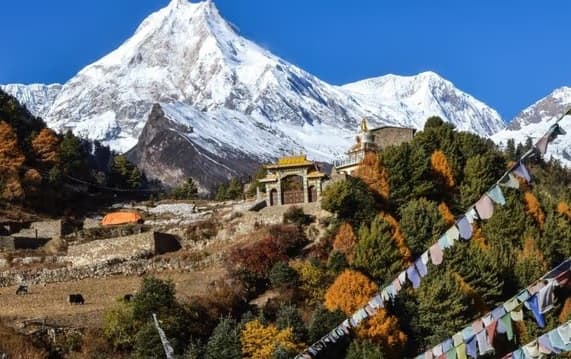
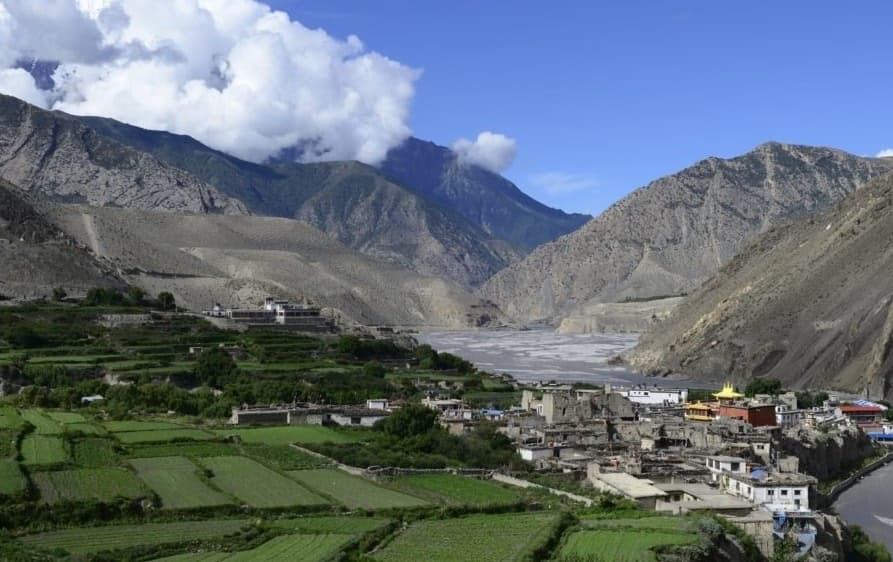
The Manaslu Circuit Trek cost for Indian travelers typically ranges from USD 1,200 to USD 2,000 (approximately INR 1,00,000 to INR 1,65,000) for a standard 14 to 16-day itinerary. While Indian citizens benefit from visa-free entry into Nepal and receive SAARC discounts on selected conservation permits, the overall trekking budget depends on multiple factors, including Restricted Area Permit (RAP) fees, Manaslu Conservation Area Permit (MCAP), Annapurna Conservation Area Permit (ACAP), licensed guide charges, porter services, accommodation, meals, transportation, trekking season, group size, and itinerary duration. Since the Manaslu Circuit is a restricted trekking region, all trekkers must follow Nepal's permit regulations and travel with an authorized trekking agency and licensed guide, making accurate budget planning essential before booking.
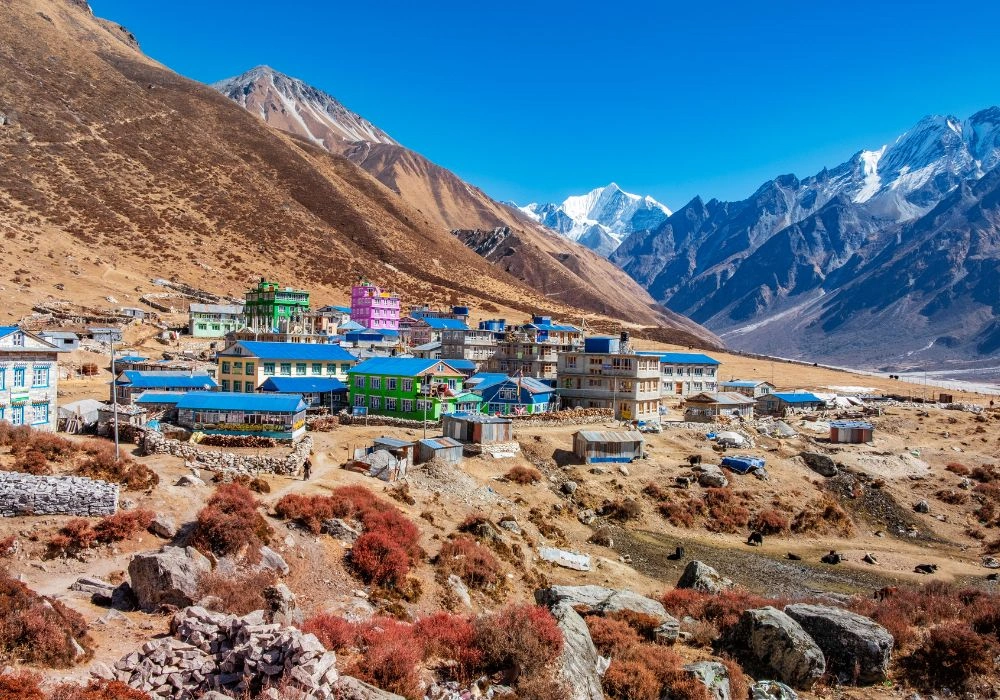
This comprehensive guide explains every expense Indian trekkers should expect, from permit costs and transportation from Kathmandu to teahouse accommodation, food prices, guide and porter fees, travel insurance, equipment rental, tipping practices, and personal spending. It also compares budget, mid-range, and premium trekking costs, highlights seasonal price differences, explains how route extensions like Tsum Valley affect the total budget, and shares practical strategies to reduce expenses through group departures, shoulder-season travel, and overland entry from India. Whether you are planning your first Himalayan trek or comparing Nepal trekking packages, this guide provides a complete cost breakdown to help you budget confidently for the Manaslu Circuit Trek.
How Much Does the Langtang Trek Cost for Nepali Trekkers?
The Langtang Trek costs Nepali trekkers between NPR 15,000 and NPR 52,000 for a standard 7-day trek. The lower end covers a self-guided, budget-style trek using local transport and basic tea house accommodation. The upper end includes a licensed guide, a porter, and comfortable meals throughout the route from Syabrubesi to Kyanjin Gompa.
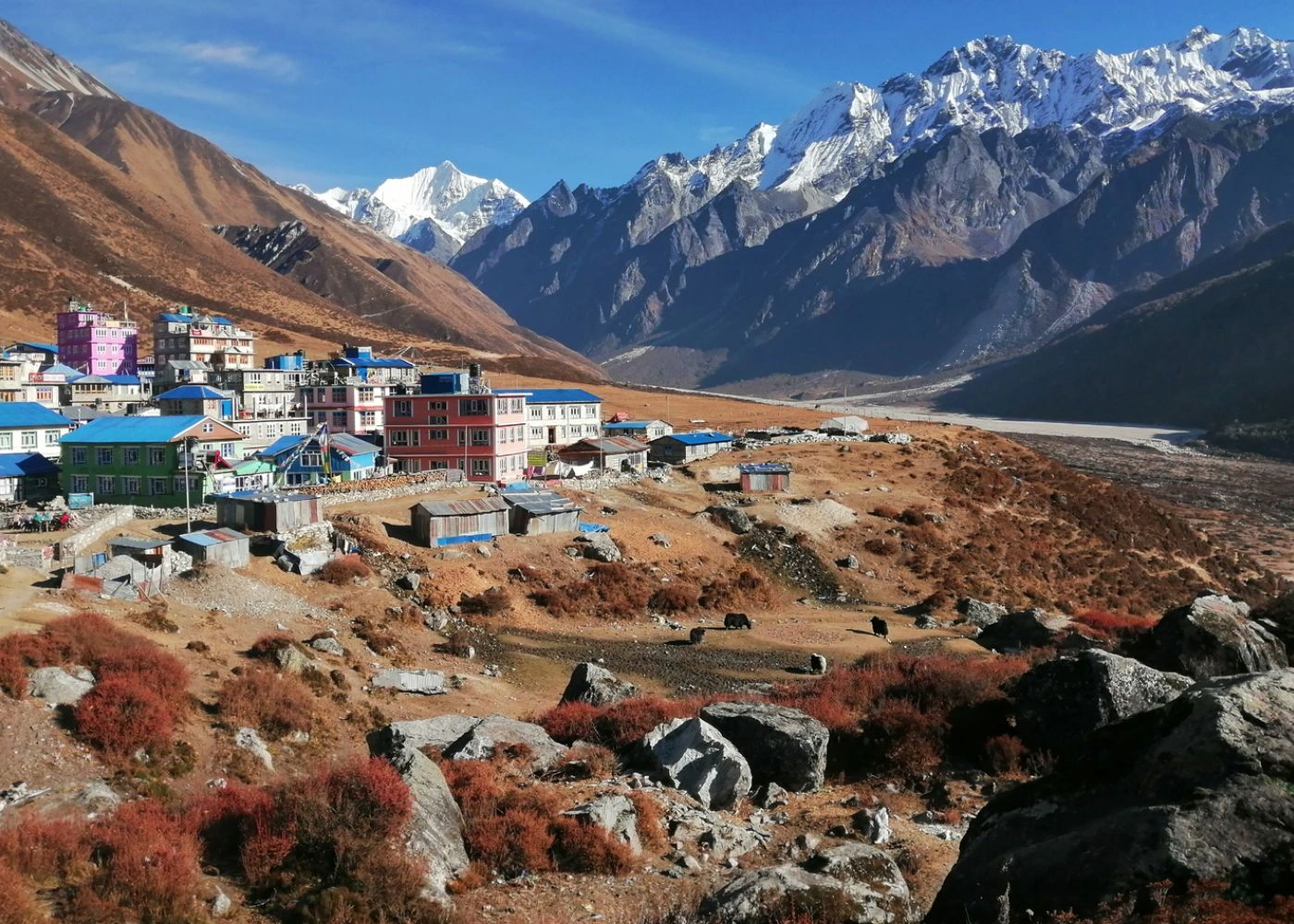
The Langtang Valley, situated within Langtang National Park, approximately 51 kilometers north of Kathmandu, is one of the most accessible high-altitude trekking destinations for Nepali citizens. Syabrubesi, the trailhead, sits at 1,503 meters and connects to Kathmandu via a 7-to-8-hour bus journey along the Pasang Lhamu Highway (BP Highway Extension). This proximity alone significantly reduces the travel budget compared to treks like Annapurna Circuit or Everest Base Camp.
What Is the Average Budget for a Langtang Trek?
The average total cost for a Nepali trekker on the Langtang Trek is NPR 22,000 to NPR 35,000 for a 7-day itinerary including all meals, accommodation, transportation, permits, and a licensed guide. Trekkers who carry their own pack and travel without a guide average NPR 15,000 to NPR 22,000 over the same period.
The 4 primary cost categories, transportation, accommodation, food, and permits, account for NPR 12,000 to NPR 18,000. Guide and porter services are additional and represent the largest single variable in the total budget.
How Does the Total Cost Vary by Trek Duration?
Trek duration directly controls total expenditure. The 3 most common Langtang Trek itineraries carry the following estimated costs for Nepali trekkers:
Trek Duration | Route | Estimated Total Cost (No Guide) | Estimated Total Cost (With Guide) |
5 days | Syabrubesi → Kyanjin Gompa → return | NPR 12,000–16,000 | NPR 22,000–30,000 |
7 days | Standard Langtang Valley Trek | NPR 15,000–22,000 | NPR 28,000–38,000 |
10 days | Langtang + Gosainkunda Lake extension | NPR 22,000–32,000 | NPR 40,000–55,000 |
The 7-day trek, covering the route from Syabrubesi through Lama Hotel, Langtang Village, and up to Kyanjin Gompa at 3,817 meters, is the standard itinerary and the reference point for all cost estimates in this guide.
What Are the Main Expenses for the Langtang Trek?
.webp)
The 4 main expenses for the Langtang Trek are transportation (NPR 1,200–3,200 round trip), accommodation (NPR 300–800 per night), food (NPR 700–1,500 per day), and permits (NPR 100 total). For Nepali trekkers, the permit cost is dramatically lower than for foreign nationals, which is one of the most significant financial advantages of trekking as a citizen.
How Much Does Transportation Cost?
Transportation from Kathmandu to Syabrubesi costs NPR 600–1,600 per person one way, depending on the vehicle type. The round-trip cost ranges from NPR 1,200 to NPR 3,200.
The 3 transportation options available in 2026 are:
Local public bus: NPR 600–800 per person one way; departs from Gongabu Bus Park (New Bus Park) in Kathmandu daily at 6:00–7:00 AM; journey time 7–9 hours
Tourist/express bus: NPR 1,200–1,600 per person one way; more comfortable seating, reserved tickets, slightly faster routing
Private jeep: NPR 8,000–14,000 per vehicle one way; shared among 4–6 trekkers; significantly faster at 5–6 hours; preferred by trekkers with tight schedules
Most Nepali trekkers traveling in pairs or small groups use the local public bus, which cuts total transport costs to under NPR 2,000 per person for the round trip. Travelers from Chitwan, Pokhara, or other regional cities factor in an additional NPR 500–1,500 for intercity travel to Kathmandu before boarding.
What Is the Cost of Accommodation?
Tea house accommodation on the Langtang Valley Trek costs NPR 300–800 per room per night for Nepali trekkers. Prices increase with altitude: lower-elevation stops like Lama Hotel charge NPR 300–500, while Kyanjin Gompa lodges charge NPR 500–800 per night.
The accommodation cost at each key stop along the standard route:
Stop | Elevation | Nightly Cost (NPR) |
Syabrubesi | 1,503 m | NPR 400–700 |
Lama Hotel (Riverside) | 2,380 m | NPR 300–500 |
Langtang Village | 3,430 m | NPR 400–600 |
Mundu | 3,543 m | NPR 400–600 |
Kyanjin Gompa | 3,817 m | NPR 500–800 |
A critical point most trekkers miss: tea house owners expect guests to eat at least 1–2 meals at their lodge. Bringing outside food and sleeping in their rooms without purchasing meals is considered disrespectful and can lead to higher room rates. Budget for 2 meals per night stop to maintain goodwill and normal pricing.
How Much Should You Budget for Food?
Daily food expenditure on the Langtang Trek ranges from NPR 700 to NPR 1,500 for Nepali trekkers, covering breakfast, lunch, and dinner at trail-side tea houses. Over a 7-day trek, total food costs land between NPR 4,900 and NPR 10,500.
The most cost-effective meal on the trail is Dal Bhat (rice, lentil soup, vegetables, pickle). Priced at NPR 500–800, Dal Bhat includes unlimited refills and provides the energy needed for 5–8 hours of daily trekking at altitude. Nepali trekkers who commit to Dal Bhat for every dinner reduce their food budget by 20–30% compared to trekkers who order pasta, pizza, or imported items.
The standard meal cost at tea houses in 2026:
Dal Bhat (with unlimited refills): NPR 500–800
Noodle soup or Thukpa: NPR 400–600
Fried rice or Chow Mein: NPR 450–650
Breakfast (eggs + bread + tea): NPR 300–500
Tibetan bread with butter and honey: NPR 250–400
The most expensive mistake Nepali trekkers make is ordering imported or processed items like pasta with cheese sauce or pizza, which cost NPR 600–1,200 and provide less nutritional value per rupee than local food.
What Are the Costs of Drinks and Snacks?
Drink and snack costs average NPR 300–600 per day on the Langtang Trek. Across a 7-day trek, budget NPR 2,100–4,200 for beverages and between-meal snacks.
The 5 most common drink costs at Langtang tea houses in 2026:
Hot lemon tea or milk tea: NPR 100–200 per cup
Black coffee or Nescafé: NPR 150–250 per cup
Bottled water (1 liter): NPR 150–300 (rises steeply above 3,000 m)
Soft drinks (Coca-Cola, Sprite): NPR 200–400
Local raksi (millet alcohol): NPR 150–300
Water cost is a commonly underestimated expense. Nepali trekkers who carry a UV purifier pen (STERIPEN) or a portable water filter eliminate bottled water costs entirely after the initial NPR 2,000–3,500 equipment investment. Water refills at lodges for filtered or boiled water cost NPR 100–150 per liter, still far cheaper than buying sealed bottles at altitude.
Snacks like Wai Wai noodles, local biscuits, and chocolates sold at trail-side shops cost NPR 100–250 each and are available at most stops through Langtang Village. Above Kyanjin Gompa, resupply is not possible.
Do Nepali Trekkers Need Permits for the Langtang Trek?
Nepali trekkers require only 1 permit for the Langtang Trek: a Langtang National Park Entry Permit, as the TIMS card is not required for Nepali citizens. The National Park Entry Permit is compulsory and is checked at entrance gates and trail checkpoints. Permit costs for Nepali citizens total NPR 100, per the Department of National Parks and Wildlife Conservation's official Langtang National Park brochure of which 30–50% is reinvested directly into buffer-zone community development and conservation under the National Parks and Wildlife Conservation Act, 1973.
Which Permits Are Required?
The mandatory permit for the Langtang Trek for Nepali citizens is:
Langtang National Park Entry Permit: issued by the Department of National Parks and Wildlife Conservation (DNPWC); obtained at the Langtang National Park office in Kathmandu (Babarmahal) or at the park entrance in Syabrubesi
Trekkers adding a Gosainkunda extension to their itinerary do not need additional permits beyond these 2, as Gosainkunda falls within the same Langtang National Park boundary.
How Much Do the Permits Cost for Nepali Citizens?
Permit costs for Nepali citizens total NPR 100, broken down as follows:
Permit | Cost for Nepali Citizens | Cost for Foreign Nationals |
Langtang National Park Entry | NPR 100 | NPR 3,000 |
TIMS Card | — | NPR 2,000 |
Total | NPR 400 | NPR 5,000 |
Nepali citizens pay significantly less than foreign nationals, who must purchase both the park permit and a TIMS card. This difference, NPR 4,900 in savings, is one of the most significant financial advantages of trekking Langtang as a Nepali citizen. Permits are processed within 15–30 minutes and require a passport or citizenship certificate along with 1–2 passport-size photographs.
How Much Does a Guide or Porter Cost?
A licensed trekking guide costs NPR 1,800–2,500 per day, and a porter costs NPR 1,500–2,000 per day on the Langtang Trek. For a 7-day trek with both a guide and a porter, the combined service cost totals NPR 23,100–31,500, including guide and porter food and accommodation, which the hiring trekker typically covers.
Is Hiring a Guide Mandatory?
Hiring a guide was not historically mandatory for Nepali trekkers, but Nepal Tourism Board's official traveler notice confirms that licensed-guide and TIMS requirements have applied nationwide since April 1, 2023, and industry reports indicate Langtang National Park may have extended this specifically to Nepali citizens from February 2025, confirm current requirements with TAAN or DNPWC before trekking without a guide. Nepali citizens with basic trail navigation skills and Nepali language fluency trek Langtang independently every season without any requirement for a licensed guide. Trail signage, tea house owners, and other trekkers provide sufficient directional information.
That said, hiring a guide delivers 3 practical advantages that affect safety more than cost:
Altitude sickness recognition: guides trained in Wilderness First Aid identify early signs of altitude sickness in the Himalayas, including headache, nausea, and ataxia, before they become emergencies
Route knowledge above Kyanjin Gompa: trails toward Tsergo Ri (4,984 m) and Yala Peak (5,500 m) are unmarked; a guide reduces off-route risk significantly
Emergency coordination: guides maintain contact with local tea house networks and can arrange helicopter evacuation if needed
Trekkers with zero high-altitude experience benefit most from a guide. Experienced Nepali trekkers familiar with the route, seasonal conditions, and altitude management trek Langtang solo without meaningful risk increase.
What Are the Typical Guide and Porter Charges?
Standard guide and porter daily rates on the Langtang Trek in 2026 are as follows:
Service | Daily Rate (NPR) | 7-Day Total (NPR) |
Licensed Guide | NPR 1,800–2,500 | NPR 12,600–17,500 |
Porter (carrying up to 20–25 kg) | NPR 1,500–2,000 | NPR 10,500–14,000 |
Guide + Porter (combined) | NPR 3,300–4,500 | NPR 23,100–31,500 |
These daily rates cover the guide's or porter's wage only. Trekkers additionally cover the guide's and porter's:
Accommodation: NPR 300–500 per night (usually shared or basic room)
Meals: NPR 600–900 per day (3 meals)
Total per guide/porter daily: add NPR 900–1,400 per day to the above wage figures
Guides arranged directly through Nepal Intrepid Treks come with government licensing certification, mandatory insurance coverage, and trail-specific training, which protects both the guide and the trekker legally and medically throughout the route.
A common negotiation error: Nepali trekkers sometimes hire unlicensed "helpers" at Syabrubesi at lower rates (NPR 900–1,200/day). These individuals lack formal training, hold no liability coverage, and cannot coordinate official emergency response, a risk not worth the NPR 600–800 daily saving.
What Factors Affect the Langtang Trek Cost?
4 primary factors affect the Langtang Trek cost: season, group size, itinerary length, and accommodation and food choices. Each factor independently shifts total expenditure by NPR 3,000 to NPR 15,000 on a standard 7-day trek.
How Does the Season Influence Prices?
Prices on the Langtang Trek peak during March–May (spring) and September–November (autumn). During these 2 high seasons, tea house accommodation and food prices increase by 15–25% as demand from both domestic and foreign trekkers rises simultaneously.
The 4 seasonal price windows in 2026:
Peak Spring (mid-March to late May): NPR 450–800 per room; 25% premium on food; most lodges at 70–90% capacity
Peak Autumn (October to mid-November): NPR 500–800 per room; 20–25% premium; highest trail traffic of the year
Shoulder (February–early March; late November): NPR 300–550 per room; standard food pricing; 30–50% fewer trekkers on trail
Off-season Winter (December–January): NPR 300–500 per room (lowest rates); several lodges above Langtang Village close; cold temperatures at Kyanjin Gompa reach –10°C to –18°C at night
The monsoon window (June–August) offers the lowest accommodation prices on the trail, but limited trail visibility, leeches below 2,500 meters, and landslide risk on the Syabrubesi road make this season the least suitable.
Does Group Size Reduce Overall Costs?
Group size reduces per-person costs by 20–40% for transportation and guide services. A shared private jeep carrying 5 trekkers costs NPR 2,000–3,000 per person versus NPR 9,000–14,000 if rented solo. A guide's daily wage of NPR 2,000 shared among 4 trekkers brings the per-person guide cost to NPR 500/day, comparable to solo trekkers paying the full rate alone.
Accommodation costs remain relatively fixed per room rather than per person. Nepali trekkers sharing a twin room split the NPR 400–800 nightly cost, saving NPR 200–400 per person per night.
Groups of 4–6 trekkers represent the optimal size for cost efficiency: large enough to split transport and guide costs meaningfully, small enough to secure rooms at busy tea houses during peak season without advance booking conflicts.
How Does the Trek Itinerary Affect the Budget?
Each additional trail day adds NPR 1,700–3,500 to the total budget, covering accommodation, 3 meals, drinks, and guide costs for that day. Itinerary extensions beyond Kyanjin Gompa, such as Tsergo Ri day hike or the Langtang–Gosainkunda traverse, add between 3 and 5 extra trail days.
The Langtang Gosaikunda Lake Trek adds approximately NPR 7,000–15,000 to the total cost and requires crossing the Lauribina Pass at 4,609 meters, which increases cold-weather gear requirements and travel insurance consideration.
Trekkers who rush the itinerary and complete Langtang in 5 days save NPR 5,000–8,000 compared to the 7-day standard but sacrifice acclimatization time. This increases altitude sickness risk above Kyanjin Gompa, a false economy that can result in evacuation costs that exceed the entire original trek budget.
How Can Nepali Trekkers Save Money on the Langtang Trek?
Nepali trekkers save NPR 4,000–10,000 on the Langtang Trek by traveling in shoulder season, choosing local bus transport, eating Dal Bhat consistently, carrying a water filter, and sharing guide costs across a group. These 5 measures combine to reduce total expenditure without compromising safety or experience quality.
When Is the Most Affordable Time to Trek?
February to mid-March and late November are the 2 most affordable windows for the Langtang Trek. These shoulder months offer accommodation at off-season rates (NPR 300–550 per room), uncrowded trail conditions, and clear mountain visibility that matches the peak season experience.
February trekking delivers one additional advantage specific to Langtang: rhododendron forests below Lama Hotel begin flowering in late February, creating scenic value that equals or exceeds the peak spring bloom at a fraction of the cost. Late November offers stable post-monsoon skies without the October crowds.
Which Expenses Can Be Reduced Without Sacrificing Safety?
4 specific expense categories offer meaningful reduction without affecting trekker safety:
Transport: Take the local bus from Gongabu (NPR 600–800) instead of a tourist shuttle (NPR 1,200–1,600), saving NPR 600–1,600 round trip
Accommodation: Book directly at the tea house rather than through apps or agents, no commission markup on the NPR 300–600 base rate
Water: Carry a portable UV purifier or filter, eliminates NPR 150–300/liter bottled water cost; saves NPR 1,000–2,000 over 7 days
Food: Commit to Dal Bhat for lunch and dinner, saves NPR 150–400 per meal compared to imported dishes; unlimited refills prevent mid-trail hunger
Cutting corners on safety-related items, trekking boots, thermal layers, or altitude medicine (Diamox, available at Kathmandu pharmacies for NPR 600–900 per strip), is the one category where budget reduction creates genuine risk.
What Is the Estimated Budget for Different Trek Styles?
Langtang Trek costs for Nepali trekkers fall into 2 practical categories: budget-friendly (NPR 15,000–22,000) and comfortable (NPR 28,000–40,000) over a 7-day itinerary. The difference primarily reflects guide and porter inclusion, meal choices, and transport mode rather than accommodation quality, which remains relatively uniform at NPR 300–800 per room throughout the route.
What Does a Budget-Friendly Langtang Trek Cost?
A budget-friendly 7-day Langtang Trek for a Nepali trekker costs NPR 15,000–22,000 total. This style involves self-guided trekking, local bus transportation, basic tea house accommodation, and Dal Bhat as the primary meal.
Budget-friendly 7-day cost breakdown:
Expense | Cost (NPR) |
Local bus (Kathmandu–Syabrubesi–Kathmandu) | NPR 1,400–1,600 |
Accommodation (6 nights × NPR 400) | NPR 2,400–3,600 |
Food (7 days × NPR 900) | NPR 6,300–9,000 |
Drinks and snacks | NPR 1,500–2,500 |
Permits (National Park) | NPR 100 |
Emergency/miscellaneous | NPR 2,000–3,000 |
Total | NPR 14,000–20,200 |
Trekkers on this budget carry their own gear, navigate the well-marked Langtang trail independently, and use their TIMS registration as emergency contact information with the Nepal Tourism Board.
What Does a Comfortable Langtang Trek Cost?
A comfortable 7-day Langtang Trek with a licensed guide costs NPR 28,000–40,000 per Nepali trekker. Adding a porter raises this to NPR 38,000–52,000. This style uses tourist bus or private jeep transport, mid-range tea house accommodation, a varied meal menu, and professional guide services.
Comfortable 7-day cost breakdown (with guide, no porter):
Expense | Cost (NPR) |
Tourist bus or shared jeep | NPR 2,400–4,000 |
Accommodation (6 nights × NPR 600) | NPR 3,600–4,800 |
Food (7 days × NPR 1,300) | NPR 9,100–11,500 |
Drinks and snacks | NPR 2,500–4,000 |
Permits | NPR 100 |
Guide (7 days × NPR 2,000 wage + NPR 1,200 food/accommodation) | NPR 22,400 |
Emergency/miscellaneous | NPR 3,000 |
Total | NPR 43,400–50,100 |
What Should You Pack to Avoid Extra Expenses?
Bringing the right gear from Kathmandu eliminates NPR 3,000–8,000 in on-trail rental and purchase costs. Trail shops in Syabrubesi and Langtang Village sell and rent trekking gear at rates 2–3 times higher than Kathmandu prices. Preparation at Thamel before departure is consistently the more economical choice.
Which Essential Gear Can You Bring From Home?
6 essential items to carry from Kathmandu that directly reduce on-trail costs:
Trekking poles: trail shops charge NPR 200–400/day to rent; owning a pair eliminates this recurring cost across 6 trekking days
Sleeping bag rated to –5°C or –10°C: tea houses above Langtang Village charge NPR 300–600/night for a blanket rental; a personal sleeping bag costs NPR 1,500–3,500 at Thamel and eliminates this expense
Headlamp with spare batteries: tea houses beyond Kyanjin Gompa have limited electricity; lodges charge NPR 200–400 for power banks or device charging
Water purification device (UV pen or filter): eliminates bottled water purchases above Lama Hotel
Layering system (thermal base layer, fleece, wind jacket): renting a down jacket at Syabrubesi costs NPR 300–500/day; wearing your own eliminates 6–7 days of rental charges
High-calorie Kathmandu snacks (peanuts, Juju Dhau, protein bars, dry fruit): NPR 500–1,200 total; trail snacks at altitude cost 2–3 times more
What Items Are Worth Renting Instead of Buying?
3 items are more economical to rent at Thamel than to purchase outright, particularly for trekkers who do not trek regularly:
Down jacket (heavy-duty, –10°C rated): rent for NPR 100–200/day in Thamel vs. purchase cost of NPR 3,500–6,000; 7-day rental = NPR 700–1,400
Trekking boots (if not already owned): rent for NPR 150–300/day vs. NPR 2,500–6,000 purchase; rental makes sense for first-time trekkers testing the activity
Duffel bag or porter bag: rent for NPR 100/day in Thamel vs. NPR 800–2,000 purchase price; useful if hiring a porter to carry your main bag
Renting directly in Thamel before departure gives trekkers 2 advantages: time to test fit before the trek begins, and access to Kathmandu's broad inventory rather than the limited and poorly maintained stock available at Syabrubesi.
What Are the Most Common Questions About Langtang Trek Costs?
The 3 most commonly asked cost questions from Nepali trekkers cover hidden expenses, cash requirements, and travel insurance. Each of these questions affects budgeting decisions before and during the trek.
Are There Any Hidden Costs to Consider?
Yes, 6 commonly overlooked costs add NPR 2,000–5,000 to the Langtang Trek budget:
Device charging at tea houses: NPR 200–400 per charge; generators above Langtang Village operate 2–3 hours per evening only
Hot shower: NPR 200–400 per shower at lodges with solar heaters (not all lodges offer this; absent above 3,500 m)
Wi-Fi access: NPR 200–500 per day; unreliable above 3,000 meters; NTC and Ncell SIM cards with data packages perform better than Wi-Fi along most of the route
Tips for guide and porter: NPR 500–1,000 per day per person is standard and expected; budget NPR 3,500–7,000 total for tipping over 7 days
Medication for altitude sickness: Diamox (acetazolamide) tablets cost NPR 600–900 per strip in Kathmandu pharmacies; unavailable reliably on trail
Kyanjin Gompa cheese: NPR 400–800 per 100g; the local yak cheese at Kyanjin Ri Cheese Factory is a legitimate cultural experience worth budgeting NPR 500–1,000 for
How Much Cash Should You Carry?
Nepali trekkers carry NPR 20,000–30,000 in cash for a standard 7-day Langtang Trek. ATM access ends at Syabrubesi, and no card payment infrastructure exists on the trail. Digital payment options (eSewa, Khalti) are unavailable at most tea houses beyond Syabrubesi.
The recommended cash breakdown for a 7-day self-guided trek:
Daily expenses (food + accommodation + drinks): NPR 1,800–2,500/day × 7 days = NPR 12,600–17,500
Emergency buffer: NPR 5,000–8,000
Tips (if hiring guide/porter): NPR 3,500–7,000
Withdraw the full amount from a Kathmandu ATM or bank before departure. Banks in Syabrubesi operate limited hours and frequently run out of cash during peak season.
Is Travel Insurance Necessary for Nepali Trekkers?
Travel insurance is not legally mandatory for Nepali trekkers but carries significant practical importance. Helicopter evacuation costs vary by altitude and location, and current industry estimates for 2026 run notably higher than in past years, commonly USD 2,500–8,000, with complex cases exceeding USD 15,000, so trekkers should confirm current evacuation-cost coverage limits with their insurer before departure rather than budgeting to an outdated figure.. A domestic travel and trekking insurance policy from providers like Shikhar Insurance, Nepal Life Insurance, or Prabhu Insurance costs NPR 1,500–3,500 for 10–14 days of coverage including emergency evacuation.
Trekkers who develop severe AMS (Acute Mountain Sickness), HACE (High Altitude Cerebral Edema), or HAPE (High Altitude Pulmonary Edema) above Kyanjin Gompa require immediate evacuation. Without insurance, this cost falls entirely on the trekker's family. With a NPR 2,500 premium, the full evacuation cost transfers to the insurer.
The Himalayan Rescue Association (HRA), a non-profit formed in 1973 to reduce Himalayan trekking casualties, offers membership that provides discounted consultation at its Kathmandu clinic and priority evacuation coordination, confirm current membership pricing directly with HRA.
How Can Nepal Intrepid Treks Help You Plan an Affordable Langtang Trek?
Nepal Intrepid Treks, a Kathmandu-based trekking agency with deep route knowledge across the Langtang, Annapurna, and Everest regions, specializes in cost-transparent trek planning for Nepali citizens. Every trek package quote from Nepal Intrepid Treks itemizes each cost category: transportation, accommodation, permit fees, guide wages, support costs, and emergency contingency, with no hidden markups.
Can Nepal Intrepid Treks Arrange a Cost-Effective Langtang Trek for Nepali Trekkers?
Yes, Nepal Intrepid Treks arranges complete Langtang Trek packages for Nepali trekkers starting from NPR 25,000 per person for a 7-day guided trek including all accommodation, meals, permits, transportation, and a licensed government-certified guide.
Group packages for 4–6 trekkers bring the per-person cost to NPR 20,000–23,000, combining guide fees, transport cost-splitting, and bulk accommodation rates that individual trekkers cannot negotiate independently.
Nepal Intrepid Treks additionally provides:
Pre-trek altitude acclimatization briefing: 45-minute session covering AMS recognition, descent protocols, and medication use
Permit processing assistance: collection of Langtang National Park entry permits on the trekker's behalf in Kathmandu
Licensed and insured guides: all Nepal Intrepid Treks guides hold NTB certification and personal accident insurance
24-hour emergency contact: trekkers receive a direct emergency number active throughout the trek period
Contact Nepal Intrepid Treks to receive a customized itinerary and cost breakdown tailored to your group size, preferred season, and trek duration before committing to any budget.
What Are the Key Takeaways About Langtang Trek Costs for Nepali Trekkers?
The Langtang Trek delivers one of the highest value-to-cost ratios among all best short treks in Nepal for Nepali citizens. The combined permit savings (NPR 4,600 less than foreign nationals), accessible Syabrubesi bus connections (NPR 600–800 one way), and straightforward trail navigation make Langtang the most budget-efficient high-altitude trek accessible from Kathmandu.
The 7 most important cost facts for Nepali trekkers planning the Langtang Trek in 2026:
Total budget range: NPR 15,000–52,000 for 7 days, depending on trekking style and guide inclusion
Permit total: NPR 100 (National Park NPR 100)
Daily trail cost (food + accommodation): NPR 1,200–2,300 per person per day
Guide daily rate: NPR 1,800–2,500; porter NPR 1,500–2,000
Best value season: February–March and late November
Cash to carry: NPR 20,000–30,000; ATM access ends at Syabrubesi
Travel insurance: NPR 1,500–3,500 for 10 days; helicopter evacuation without insurance costs NPR 250,000–400,000
The Langtang Valley, with its Tamang Heritage villages, Kyanjin Gompa monastery, the Langtang Lirung glacier at 7,227 meters, and the Kyanjin Ri Cheese Factory, offers trekkers cultural and natural depth that is fully accessible on any budget. Planning your costs with precision, not guesswork, is the difference between a financially stressful trek and a confident one.
Nepal Intrepid Treks is ready to help you plan your Langtang Trek with a full, honest budget from day one.