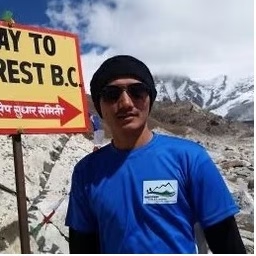
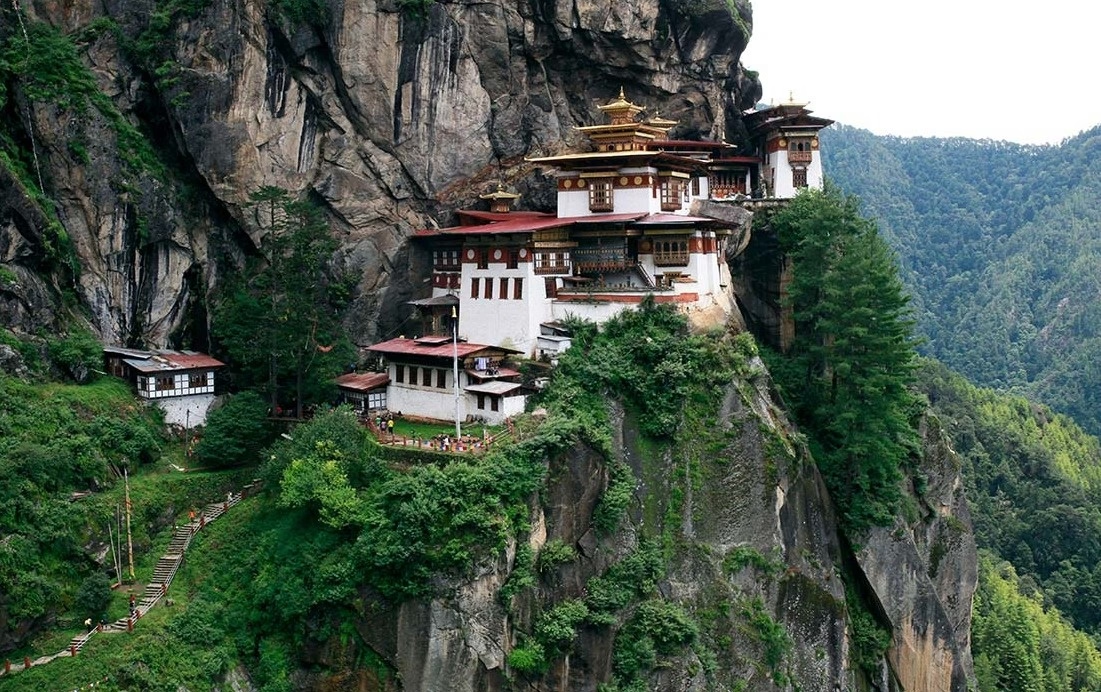
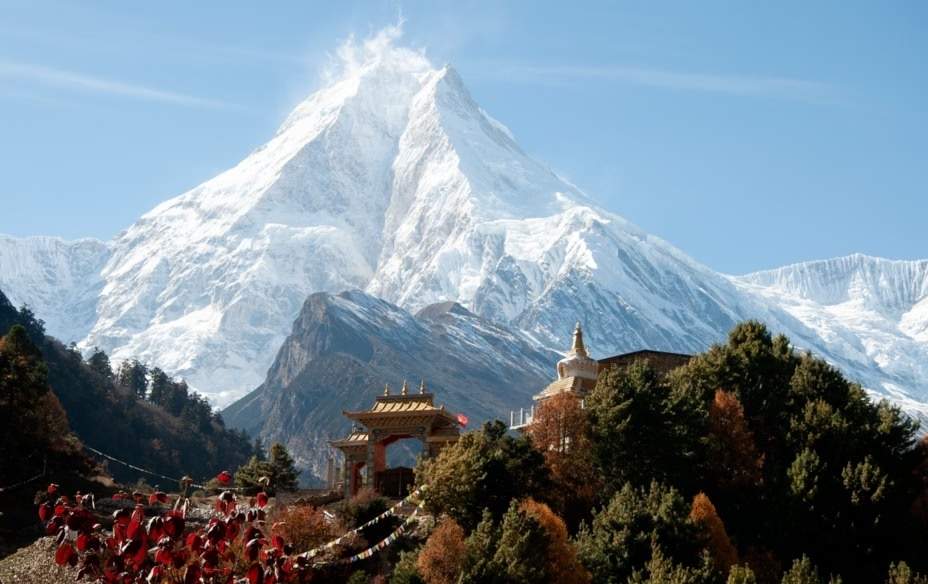
Everest Base Camp (EBC) trek is a high-altitude Himalayan trekking route that runs from Lukla (2,860 m) to Everest Base Camp (5,364 m) across the Khumbu region of Nepal, covering roughly 130 kilometers of round-trip mountain terrain. The route is not technically a climbing expedition, but it is physically demanding due to sustained hiking over 10–14 days at progressively thinner oxygen levels, with most trekkers operating above 3,400 meters for extended periods. The difficulty is defined less by technical climbing skills and more by the cumulative effects of altitude, endurance strain, and environmental exposure across a remote mountain system.
.webp)
The primary risks on the EBC trek emerge from the interaction of four core factors: altitude-induced illnesses (including AMS, HACE, and HAPE), unpredictable Himalayan weather, rugged and unstable terrain such as moraine and rocky descent sections, and the gradual accumulation of physical fatigue over long trekking days. While the route has a high completion rate and relatively low fatality statistics, safety is highly dependent on preparation quality, acclimatization strategy, fitness level, and decision-making at altitude. Trekkers who follow structured itineraries, respect ascent limits, and respond early to physiological warning signs significantly reduce exposure to serious incidents, making risk management the defining element of a successful EBC journey.
What Makes Everest Base Camp Risky?
The Everest Base Camp trek is risky because of 4 converging factors: extreme altitude, unpredictable Himalayan weather, remote terrain with limited medical access, and the cumulative physical demands of a 10–14 day journey above 3,400 meters. No single factor dominates, it is their combination that elevates the danger profile beyond a standard mountain hike.
What Are the Main Natural and Human Factors Behind the Risk?
The natural risk factors on the EBC route are altitude-induced oxygen reduction, sudden storm systems, glacial moraine trails, and sub-zero overnight temperatures. Human factors compound these dangers significantly: trekkers who rush the ascent schedule, ignore early AMS symptoms, underestimate daily exertion, or trek without experienced local guidance account for the majority of serious incidents on the trail.
No government or academic body publishes an official fatality rate for the Base Camp trek itself; the closest peer-reviewed benchmark, drawn from the Mount Everest mortality record, found a 1.3% death rate among climbers operating above base camp over an 86-year period (British Medical Journal), a very different population and risk profile from EBC trekkers.
What most people overlook is the role of decision-making in risk amplification. Trekkers who descend immediately at the first serious AMS symptoms, follow a structured itinerary with mandatory acclimatization days, and work with certified guides face dramatically reduced exposure to each of the primary hazards.
How Do Terrain and Altitude Combine to Increase Danger?
Terrain and altitude increase danger through a compounding mechanism: the body operates under reduced oxygen while simultaneously navigating rocky, uneven ground, steep elevation gains, and glacially carved moraines that demand full physical concentration.
Above 4,000 meters, cognitive function begins to degrade mildly. Trekkers experience slower reaction times, reduced coordination, and impaired judgment, exactly when the trail demands the most focus. The section from Lobuche (4,940 m) to Gorak Shep (5,164 m) involves loose rocky terrain and steep gradient changes that are inherently unstable. Attempting this section while experiencing early AMS symptoms creates a compounded risk profile that explains a significant proportion of trail accidents.
The moraine trail approaching Base Camp itself is particularly technical, large, irregular boulders with no clear path markers in sections, navigated at an altitude where every misstep costs disproportionate energy to recover from.
How Difficult Is the Everest Base Camp Trek?
.webp)
The Everest Base Camp trek is graded as a strenuous high-altitude trekking route, not a technical climbing expedition. It requires no ropes, ice axes, or mountaineering skills. The difficulty stems from elevation, daily hiking duration, and cumulative fatigue over 10–14 consecutive days rather than technical terrain challenges.
How Physically Demanding Is the Everest Base Camp Route?
The route demands 6–8 hours of active hiking per day across uneven, rocky trails with cumulative daily elevation gains averaging 500–800 meters on ascent days. Total elevation gain from Lukla to Base Camp is approximately 2,504 meters. Trekkers carry daypacks of 5–8 kilograms while porters manage heavier gear.
The physical demands are not uniform across the route. The first 3 days from Lukla through Namche Bazaar feel manageable at lower altitude. The strain intensifies sharply after Dingboche (4,410 m), where thinner air converts moderate uphill grades into genuinely exhausting climbs. By Lobuche and Gorak Shep, trekkers routinely report that a 4-hour hiking day feels equivalent to a full 8-hour day at lower elevation.
Common physical complaints beyond AMS include blisters, knee pain on descents (the Namche Bazaar downhill sections are particularly punishing), lower back fatigue from extended daily hiking, and disrupted sleep caused by reduced oxygen saturation at altitude.
How Long Does It Take to Complete the Trek Safely?
A safe Everest Base Camp trek takes a minimum of 12 days, with 14–16 days considered optimal for proper acclimatization and reduced AMS risk. Standard itineraries include 2 mandatory acclimatization days, typically at Namche Bazaar (3,440 m) and Dingboche (4,410 m).
Operators who offer 10-day "express" itineraries compress acclimatization windows in ways that measurably increase AMS risk above 4,500 meters. The guideline established by wilderness medicine practitioners is clear: ascend no more than 300–500 meters per day above 3,000 meters, and build in one rest day for every 3 days of ascent.
Trekkers who extend their itinerary to 14+ days report higher summit rates, lower incidence of serious AMS, and a more sustainable physical experience. The time investment is the single most controllable safety variable on the EBC route.
What Altitude Risks Affect Everest Base Camp Trekkers?
The 3 primary altitude-related risks on the EBC trek are Acute Mountain Sickness (AMS), High Altitude Cerebral Edema (HACE), and High Altitude Pulmonary Edema (HAPE), each representing a progressively more severe response to insufficient oxygen at elevation.
How Does Altitude Sickness Develop During Ascent?
Altitude sickness develops when the body ascends faster than it can physiologically adapt to reduced atmospheric oxygen, a relationship documented in an observational cohort study of Himalayan trekkers in the Everest region (Wilderness & Environmental Medicine, 2020). The 4 hallmark symptoms are persistent headache, nausea or vomiting, dizziness, and disrupted sleep, specifically Cheyne-Stokes breathing patterns that cause repeated waking throughout the night. Understanding how altitude sickness develops is essential, in a 2022 field survey of 366 Everest Base Camp trekkers, 40.5% experienced at least one medical incident during their trip, and almost half of those incidents were AMS (Companion Rescue and Risk Management of Trekkers on the Everest Trek).
AMS becomes dangerous when trekkers continue ascending despite active symptoms. HACE, fluid accumulation in the brain, and HAPE, fluid accumulation in the lungs, are life-threatening conditions that develop from unmanaged AMS. HAPE is the leading cause of altitude-related death on the EBC trek. Its early warning signs include a dry persistent cough, breathlessness at rest, and reduced exercise tolerance, symptoms commonly dismissed as normal tiredness.
The critical decision point: any trekker experiencing two or more moderate AMS symptoms must stop ascending immediately and descend at least 500 meters if symptoms worsen within 24 hours.
Why Is Acclimatization Important on the Route?
Acclimatization is the physiological process by which the body increases red blood cell production, adjusts respiratory rate, and redistributes blood flow in response to hypoxia. Without a structured EBC trek acclimatization schedule, the risk of HACE and HAPE increases exponentially above 4,500 meters.
.webp)
Proper acclimatization on the EBC route follows the "climb high, sleep low" principle. At Namche Bazaar, trekkers typically hike up to the Everest View Hotel at 3,880 meters before returning to sleep at 3,440 meters. At Dingboche, a day hike to Nangkartshang Peak (5,080 m) before sleeping at 4,410 m applies the same principle at a more demanding elevation tier.
Acetazolamide (Diamox), prescribed by a physician before departure, assists acclimatization by stimulating faster breathing. It does not prevent AMS outright, it reduces severity and accelerates adaptation. Trekkers taking Diamox still require the same structured ascent schedule; it is a tool, not a substitute for pacing.
The guideline set out in the Wilderness Medical Society's 2024 Clinical Practice Guidelines is clear: ascend no more than 300-500 meters per day above 3,000 meters, and build in one rest day for every 3 days of ascent (Wilderness Medical Society, 2024 Update).
What Weather Hazards Exist on the Everest Base Camp Route?
The Everest region experiences 4 distinct seasonal weather patterns, and the EBC trek route exposes trekkers to 3 serious weather hazards: acute temperature drops, high-velocity wind events, and rapid storm development that can reduce trail visibility to near-zero within minutes.
How Do Sudden Weather Changes Impact Trekkers?
Sudden weather changes impact trekkers by transforming a clear-sky hiking condition into a cold, high-wind, low-visibility emergency within 30–60 minutes. Afternoon storm development is a consistent pattern in the Khumbu region, where warm morning temperatures, often 10–15°C at Base Camp in spring, give way to afternoon winds exceeding 50 km/h and temperatures that drop below -10°C at elevation after sunset.
The practical implication is straightforward: all high-elevation sections above Gorak Shep are best completed in the morning hours before 1 PM. Trekkers who start the Kala Patthar ascent (5,644 m) after midday regularly encounter whiteout conditions and wind chill temperatures below -20°C that can cause frostbite in exposed skin within minutes.
Precipitation form also changes by altitude. Rain below 3,500 meters becomes snow above 4,000 meters and can accumulate on trails rapidly, making rocky sections slippery and obscuring trail markers in the upper Khumbu. Ground teams and guided parties carry trekking poles as mandatory equipment precisely for these conditions.
When Do Storms and Cold Temperatures Become Dangerous?
Storms and cold become life-threatening on the EBC route during 3 specific scenarios: trekkers caught in the open above 5,000 meters in a white-out, individuals lacking wind-proof and waterproof layering systems when temperatures plunge overnight, and trekkers who push through snowfall on the exposed ridgelines above Lobuche.
The monsoon season (June–August) and post-monsoon instability (late October–November) represent the highest weather-related risk windows. The spring (March–May) and autumn (September–October) trekking windows offer the most stable weather patterns - choosing the best season for EBC trek directly reduces storm exposure, though afternoon storm risk is present year-round.
Night temperatures at Base Camp average -17°C in October and can drop to -25°C in wind-exposed conditions. A sleeping bag rated to at least -20°C and a properly insulated tent or teahouse accommodation are non-negotiable equipment requirements above 5,000 meters.
How Common Are Injuries on the Everest Base Camp Trek?
Trail injuries affect an estimated 10–15% of EBC trekkers, with the 3 most common categories being ankle sprains from rocky terrain, knee injuries from repetitive descent loads, and blister-related skin breakdown that progresses to open wounds in multi-day trekking boots.
What Are the Most Frequent Trekking Injuries?
The most frequent trekking injuries on the EBC route are ankle sprains (occurring most often on the descent from Namche Bazaar and on moraine sections above Lobuche), patellofemoral knee pain from 8+ hours of daily descent repetitions, and sub-ungual hematomas (bruising beneath toenails) caused by ill-fitting boots on steep downhill grades.
Blister management is a genuine safety issue at altitude, not a cosmetic inconvenience. An open foot wound at 4,800 meters in a non-sterile teahouse environment carries infection risk that can be difficult to manage without medical evacuation resources. Most experienced guides carry moleskin, iodine, and sterile dressings as standard equipment.
Head injuries from trail falls, though less common, represent the category with the highest severity when they do occur. The combination of loose scree, altitude-impaired coordination, and limited emergency medical response time at elevation means that a simple fall can escalate quickly.
What Causes Accidents on Mountain Trails?
Trail accidents on the EBC route result from 4 primary causes: fatigue-driven inattention on technical rocky sections, trekkers with AMS-compromised coordination attempting exposed ridge sections, inadequate footwear without ankle support on moraine trails, and poor visibility during afternoon weather events.
The terrain section between Lobuche and Gorak Shep generates the highest frequency of stumbles and minor falls due to its combination of loose boulders, inconsistent path definition, and elevation-induced physical fatigue. Trekking poles reduce fall risk measurably on this section and on all major descent grades.
What experienced guides watch for: trekkers who begin shuffling their feet rather than lifting them properly, a reliable sign of fatigue-driven coordination decline that precedes the majority of trail stumbles.
What Fitness Level Is Required for Everest Base Camp?
Everest Base Camp requires a fitness level characterized by the ability to hike 6–8 hours daily for 12+ consecutive days, climb 500–800 meters of elevation gain in a single day at altitude, and maintain aerobic output at 60–70% VO2 max while breathing approximately 40–50% less oxygen than at sea level.
What Training Prepares You for High-Altitude Trekking?
Effective training for high-altitude trekking concentrates on 3 physical domains: cardiovascular endurance, lower-body muscular strength and stability, and load-bearing capacity under extended exertion. A structured 12-week preparation program is the minimum recommended timeline before EBC departure.
The most effective pre-trek training activities include:
Weighted hiking with a 6–8 kg daypack on varied terrain for 4–5 hours per session, 3 times per week
Stair climbing or step-up exercises to develop the specific quad and glute recruitment patterns used in repeated ascent
Running or cycling at 60–75% max heart rate for 45–60 minutes, 4 times per week, to build the aerobic base needed to sustain effort at altitude
Yoga or dedicated flexibility work targeting hip flexors, hamstrings, and calves to reduce injury risk on uneven trail surfaces
Prior high-altitude experience above 3,500 meters is a genuine advantage. Trekkers who have completed Annapurna Base Camp (4,130 m), Kilimanjaro (5,895 m), or similar high-altitude routes demonstrate significantly lower AMS incidence on EBC and report better overall route management.
How Do Endurance and Stamina Affect Safety?
Endurance and stamina affect EBC safety directly: trekkers with inadequate aerobic base make poor decisions at altitude because physical exhaustion degrades judgment, increases AMS susceptibility, and reduces the coordination needed to navigate technical terrain safely.
A trekker who is physically depleted by day 5 faces compounded risks for the remaining 7–9 days. They are more likely to push through warning signs to avoid feeling left behind, more vulnerable to cold injury from reduced metabolic heat production, and more likely to experience falls from fatigue-related coordination loss.
The critical threshold most guides observe: trekkers who cannot sustain a comfortable conversation during uphill sections, a proxy for aerobic capacity, typically struggle significantly above 4,500 meters. This "talk test" is a reliable field indicator of whether the pace and ascent schedule are appropriate for a given trekker's fitness level.
What Safety Measures Reduce Risk on Everest Base Camp Trek?
The 5 most effective safety measures on the EBC trek are: hiring a certified local guide, using a well-structured 12–14 day itinerary with built-in acclimatization days, carrying a pulse oximeter to monitor blood oxygen saturation, obtaining comprehensive high-altitude trekking insurance with helicopter evacuation coverage, and completing a thorough pre-trek medical assessment.
How Do Guides and Porters Improve Trek Safety?
Certified guides improve trek safety through 4 specific mechanisms: real-time AMS symptom recognition, route knowledge that prevents navigational errors in poor visibility, cultural and logistical access to teahouses and emergency protocols, and the authority to implement mandatory descent decisions when a trekker's condition deteriorates.
Nepal Tourism Board's Revised Provision for Trekking in Nepal made licensed guides mandatory for all foreign trekkers in TIMS-applicable regions effective April 1, 2023 (Nepal Tourism Board). This policy was introduced explicitly in response to safety incidents involving solo trekkers who became lost, developed AMS without anyone to recognize the symptoms, or faced emergencies with no support network. Trekkers without a licensed guide now risk being turned away at park checkpoints.
Porters reduce injury risk by managing loads above 15–20 kilograms, allowing trekkers to conserve energy for altitude adaptation rather than load-bearing. The recommended maximum pack weight for a trekker above 4,000 meters is 7–8 kilograms. Beyond that weight, energy expenditure increases at a rate that accelerates fatigue and increases AMS vulnerability.
What Equipment Is Essential for Risk Reduction?
The essential equipment list for EBC risk reduction includes 8 non-negotiable items (see our full trekking equipment checklist for a comprehensive packing reference):
Pulse oximeter: monitors blood oxygen saturation (SpO2); readings below 80% at rest above 4,000 m warrant immediate attention
Trekking poles: reduce knee load on descents and improve stability on moraine terrain
Layering system: moisture-wicking base layer, insulating mid-layer, and hard-shell waterproof/windproof outer layer rated to -20°C
Sleeping bag: rated to at least -20°C for nights above 5,000 m
High-altitude boots: waterproof, insulated, ankle-supporting footwear broken in over at least 3–4 months of prior use
Blister and wound care kit: moleskin, sterile dressings, iodine, athletic tape
Water purification tablets or filter: to maintain hydration safely from mountain water sources (3–4 liters daily is the recommended minimum above 4,000 m)
Prescription Diamox (acetazolamide): obtained with physician consultation before departure
A satellite communicator or GPS device is increasingly recommended for trekkers above Namche Bazaar, particularly given that cell coverage remains unreliable in the upper Khumbu region.
How Should You Approach Everest Base Camp with Trekking Services?
Approaching EBC through a reputable, licensed trekking service directly reduces the 3 highest-frequency risk categories: AMS mismanagement, route navigation errors, and emergency response delays. Our Everest Base Camp Trek package includes certified guides, pre-planned acclimatization schedules, teahouse booking priority, and established helicopter evacuation contacts.
Can Guided Trekking Services Improve Safety and Success?
Guided trekking services measurably improve both safety outcomes and summit success rates. Trekkers using certified guided services demonstrate approximately 15–20% higher completion rates than solo trekkers, based on operator data from the Khumbu region. The advantage is not merely logistical, it is medical. Guides trained in Wilderness First Responder (WFR) or equivalent high-altitude medicine protocols identify HACE and HAPE precursors before trekkers themselves recognize the danger.
When selecting a trekking service, verify 4 credentials specifically:
Guide certification through the Nepal Tourism Board (NTB) or Trekking Agencies' Association of Nepal (TAAN)
High-altitude first aid training completion within the past 3 years
Helicopter evacuation partnership with a named rescue service such as Fishtail Air or Simrik Airlines
Itinerary structure that includes minimum 2 acclimatization days and a maximum 400-meter sleep elevation gain per day
The decision between a fully guided group trek, a private guided trek, or a teahouse-to-teahouse trek with a local guide affects cost, flexibility, and safety profile differently. A private guide provides the most customized medical monitoring and pace management. Group treks benefit from shared costs and peer accountability. Neither option is categorically superior to the other, but both are superior to attempting EBC without local certified guidance.
Travel insurance with helicopter evacuation coverage is not optional on EBC. A single emergency helicopter evacuation from Base Camp to Kathmandu costs between USD 3,000 and USD 8,000. For a realistic breakdown of all expenses, see our guide to Everest Base Camp trek cost, including insurance, permits, and guide fees.
What Are the Key Takeaways About Everest Base Camp Risk Factors?
The Everest Base Camp trek is a high-altitude adventure with real, quantifiable risks that respond directly to preparation quality, itinerary structure, and local guidance engagement. The 5 core takeaways every trekker must internalize before departure:
First, altitude sickness in the Himalayas is the dominant risk on EBC, not the terrain, not the weather, not the distance. AMS affects 25–50% of trekkers at some point on the route. Descending immediately at serious AMS symptoms is the single most important safety action available.
Second, a 12–14 day itinerary with structured acclimatization days is not a luxury, it is a risk reduction strategy. Compressed 10-day itineraries increase serious AMS incidence above 4,500 meters in ways that shorter acclimatization windows cannot compensate for.
Third, fitness preparation must begin at least 12 weeks before departure, focusing on weighted hiking, cardiovascular endurance, and lower-body strength. Trekkers who arrive undertrained face not just discomfort but genuine medical risk above 4,000 meters.
Fourth, certified local guides are now legally mandated in Nepal's trekking regions and are the most effective single investment a trekker makes in their own safety. Their value is not navigational, it is medical, cultural, and logistical.
Fifth, comprehensive travel insurance with helicopter evacuation coverage must be purchased before departure. An emergency evacuation from Base Camp costs more than most entire trek budgets. Insurance converts a potential financial catastrophe into a managed process.
The EBC trek is not for everyone. But for trekkers who respect its demands, allocate adequate preparation time, follow structured guidance, and maintain honest awareness of their physical condition throughout the route, Everest Base Camp is an achievable, life-defining journey that rewards preparation with an experience no other trek in the world replicates.